
CryptoJargon69
1.2k Postlar

CryptoJargon69
 Square Verified
Shikoyat qilish
Foydalanuvchini bloklash
6 Kuzatilmoqda
213 Kuzatuvchilar
467 Yoqdi
Postlar
Barchasi
Videolar
Tarjimani ko‘rish
BITCOIN · MARKET STRUCTURE
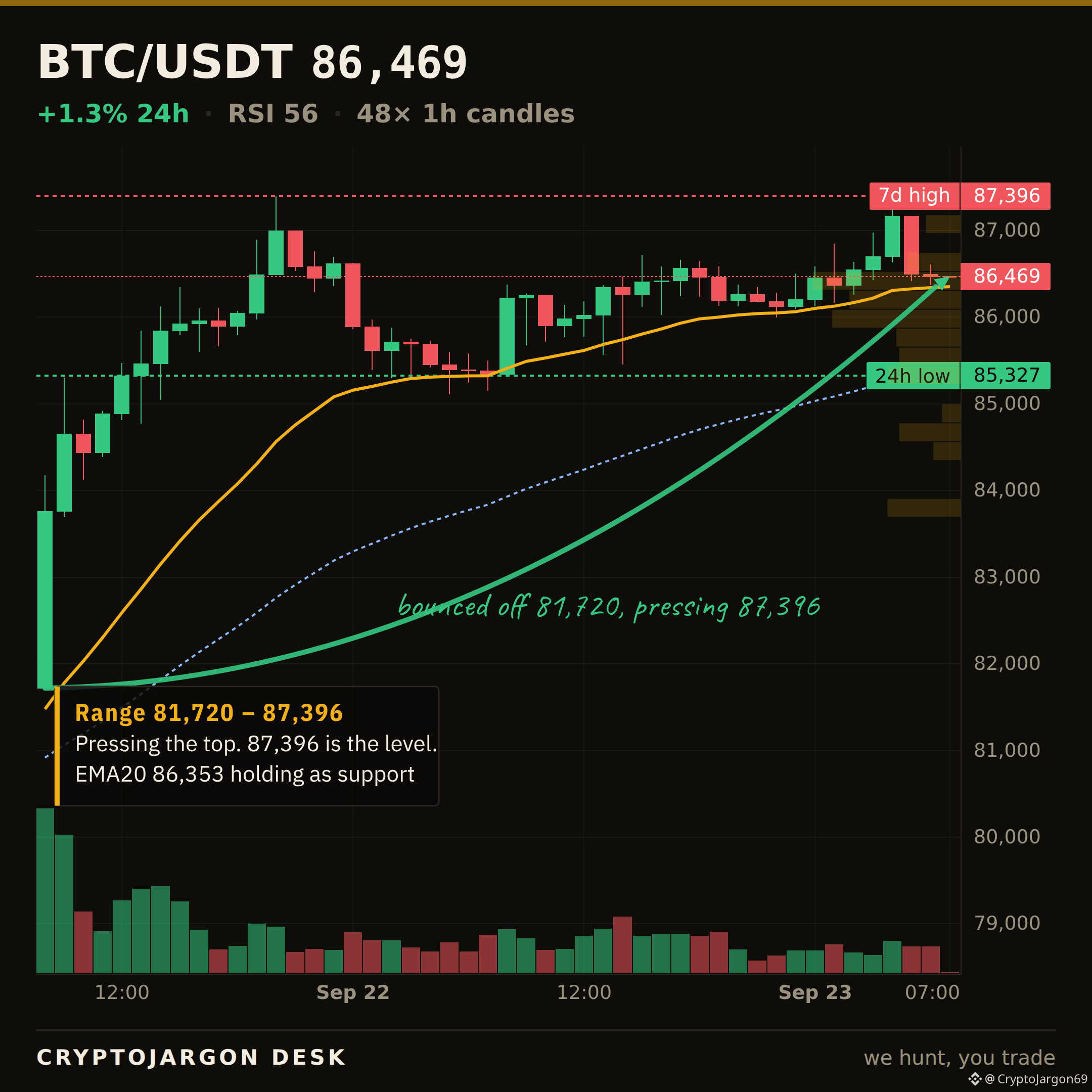
$86,469, +13.5% on the week. Reading it top-down:
Daily: uptrend, above the 20 & 50-EMA, 93% up range.
4H: uptrend, above the 20 & 50-EMA, 92% up range.
1H: RSI 56, holding its 20-EMA.
Levels that frame it: $87,396 recent high (ceiling) · $80,167 daily 20-EMA (the line it rides) · $78,581 monthly open (support).
Above $80,167 the daily trend holds; below it, momentum shifts. Chart: 1H candles, EMA20/50 + levels marked. $BTC
BITCOIN · MARKET STRUCTURE
$86,469, +13.5% on the week. Reading it top-down:
Daily: uptrend, above the 20 & 50-EMA, 93% up range.
4H: uptrend, above the 20 & 50-EMA, 92% up range.
1H: RSI 56, holding its 20-EMA.
Levels that frame it: $87,396 recent high (ceiling) · $80,167 daily 20-EMA (the line it rides) · $78,581 monthly open (support).
Above $80,167 the daily trend holds; below it, momentum shifts. Chart: 1H candles, EMA20/50 + levels marked. $BTC
$86,469, +13.5% on the week. Reading it top-down:
Daily: uptrend, above the 20 & 50-EMA, 93% up range.
4H: uptrend, above the 20 & 50-EMA, 92% up range.
1H: RSI 56, holding its 20-EMA.
Levels that frame it: $87,396 recent high (ceiling) · $80,167 daily 20-EMA (the line it rides) · $78,581 monthly open (support).
Above $80,167 the daily trend holds; below it, momentum shifts. Chart: 1H candles, EMA20/50 + levels marked. $BTC
5
Tarjimani ko‘rish
$ONE · THE LEVEL BROKE
It gave way.
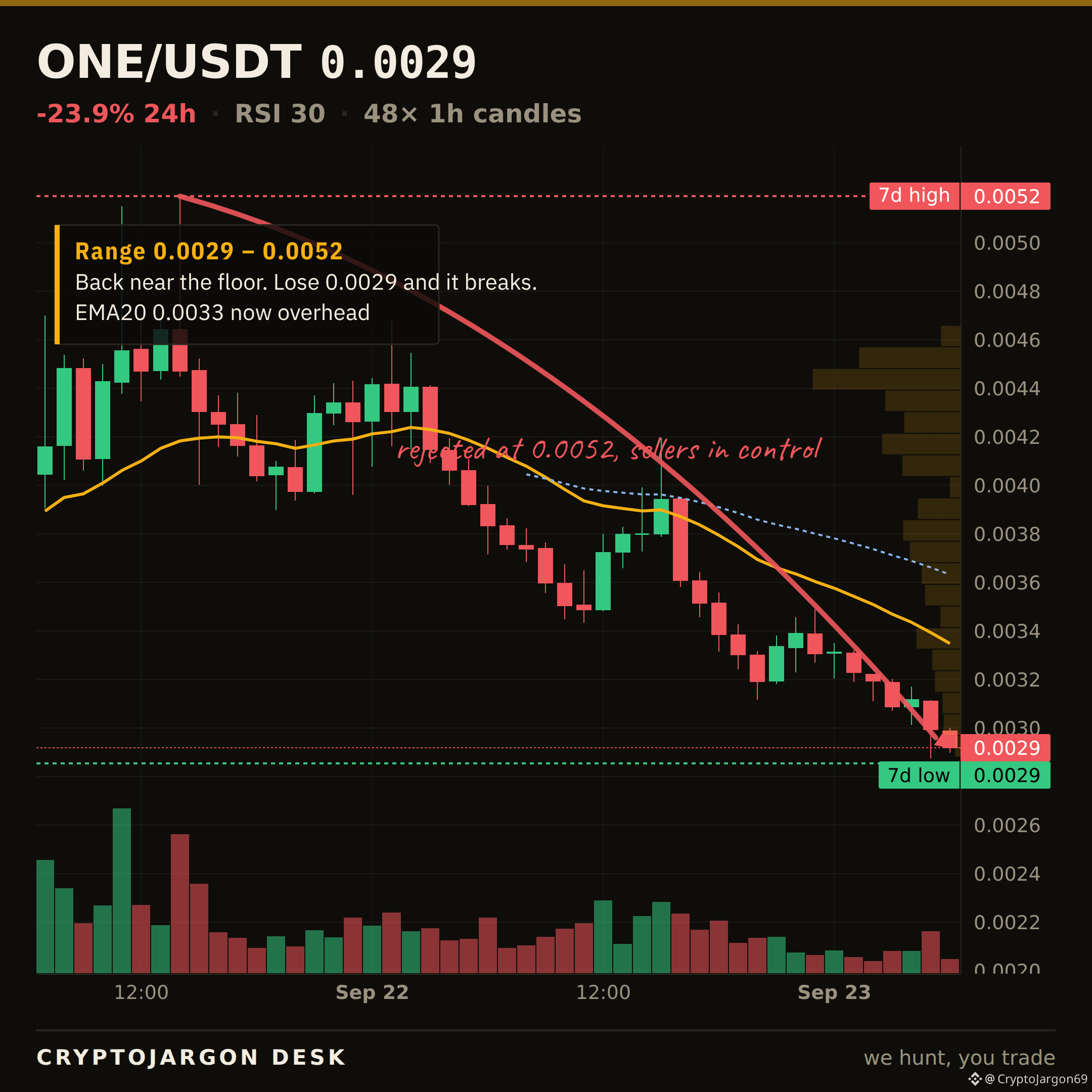
$0.00301 was the floor we flagged on $ONE. Price closed below it — $0.00292 now. The range beneath opens up, and that line flips into the ceiling it has to win back.
Does it reclaim $0.00301, or is that the ceiling now?
$ONE
$ONE · THE LEVEL BROKE
It gave way.
$0.00301 was the floor we flagged on $ONE . Price closed below it — $0.00292 now. The range beneath opens up, and that line flips into the ceiling it has to win back.
Does it reclaim $0.00301, or is that the ceiling now?
$ONE
It gave way.
$0.00301 was the floor we flagged on $ONE . Price closed below it — $0.00292 now. The range beneath opens up, and that line flips into the ceiling it has to win back.
Does it reclaim $0.00301, or is that the ceiling now?
$ONE
481
Tarjimani ko‘rish
$CRV · THE LEVEL BROKE
It gave way.
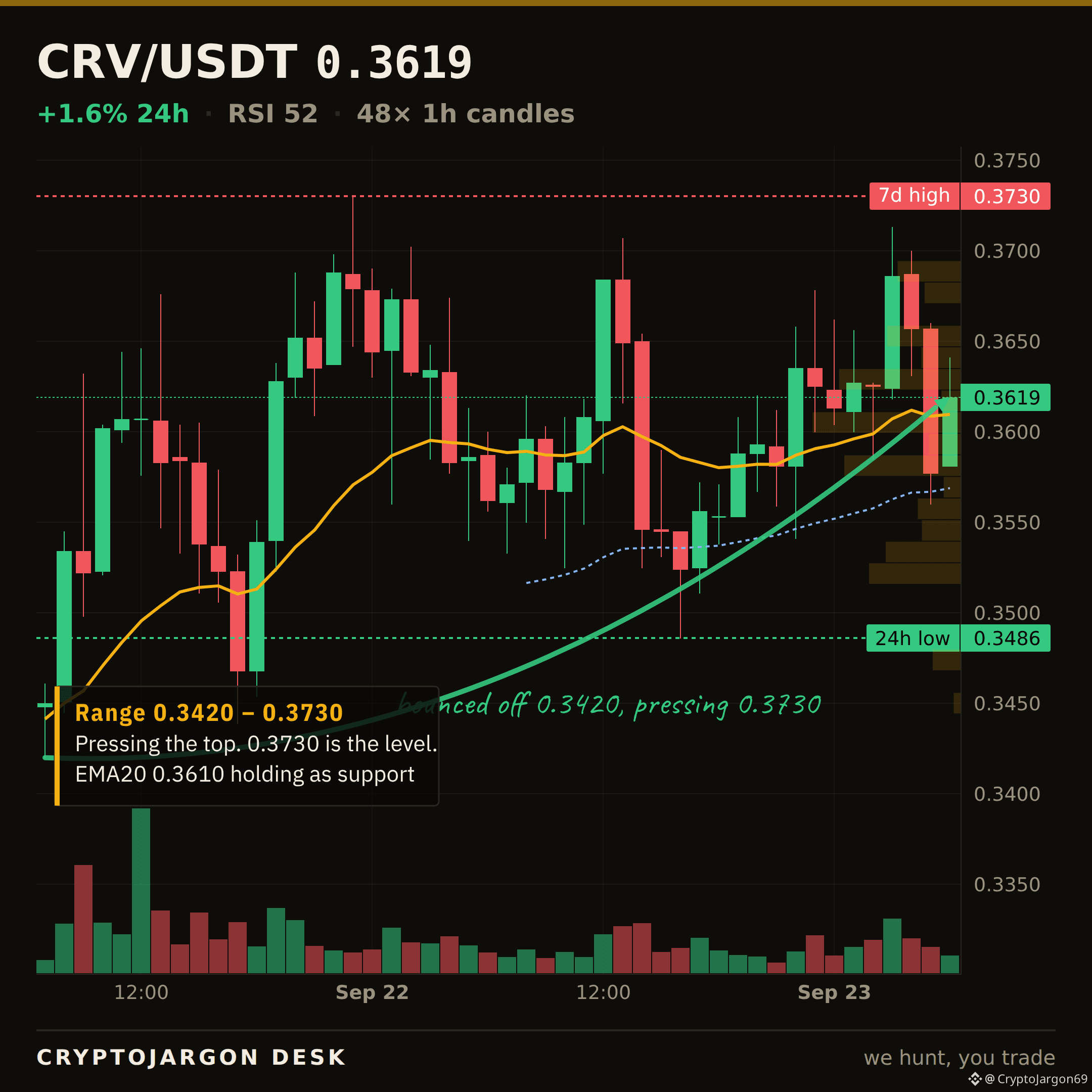
$0.36 was the floor we flagged on $CRV. Price closed below it — $0.362 now. The range beneath opens up, and that line flips into the ceiling it has to win back.
Reclaim from here, or is this the start of the next leg down?
$CRV
$CRV · THE LEVEL BROKE
It gave way.
$0.36 was the floor we flagged on $CRV . Price closed below it — $0.362 now. The range beneath opens up, and that line flips into the ceiling it has to win back.
Reclaim from here, or is this the start of the next leg down?
$CRV
It gave way.
$0.36 was the floor we flagged on $CRV . Price closed below it — $0.362 now. The range beneath opens up, and that line flips into the ceiling it has to win back.
Reclaim from here, or is this the start of the next leg down?
$CRV
292
$MUBARAK · BOZOR TUZILMASI
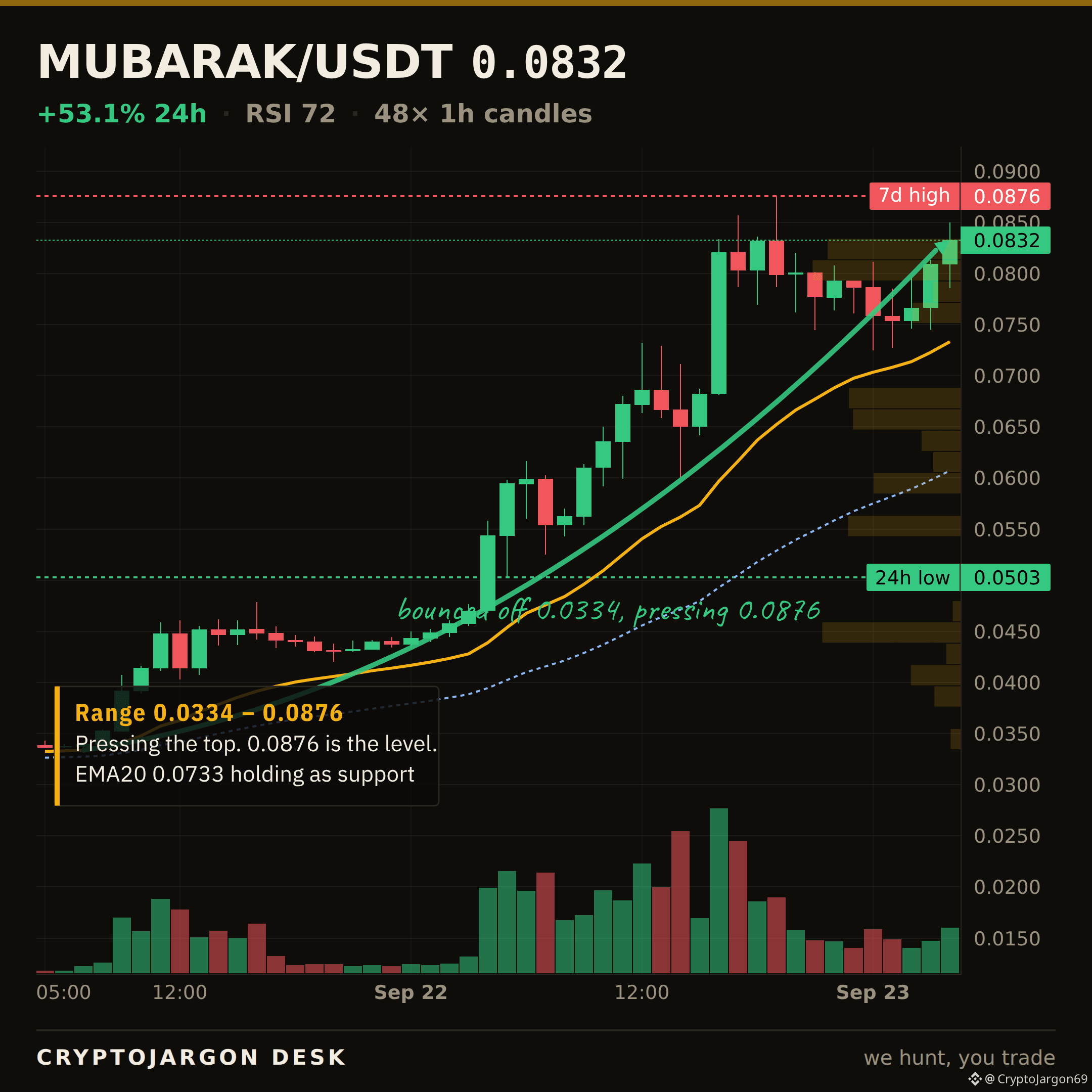
$0.0832, kun davomida +53.1%.
Trend — narx ikkala EMA’dan ham yuqorida, 20 esa 50’dan yuqori.
Momentum — RSI 72.
Oraliq — 24 soatlik diapazonining 88% ga ko‘tarildi ($0.0503–$0.0876).
Trend, momentum va oraliq asosan bir xil yo‘nalishni ko‘rsatadi — yuqoriga tomon moslashgan lenta.
Darajalar: $0.0876 24 soatlik maksimum (shift) · $0.0503 24 soatlik minimum (tayanch) · 7 kunlik diapazon $0.0281–$0.0876.
Grafik: 1H shamlar, EMA20/50 va darajalar belgilangan. $MUBARAK
$MUBARAK · BOZOR TUZILMASI
$0.0832, kun davomida +53.1%.
Trend — narx ikkala EMA’dan ham yuqorida, 20 esa 50’dan yuqori.
Momentum — RSI 72.
Oraliq — 24 soatlik diapazonining 88% ga ko‘tarildi ($0.0503–$0.0876).
Trend, momentum va oraliq asosan bir xil yo‘nalishni ko‘rsatadi — yuqoriga tomon moslashgan lenta.
Darajalar: $0.0876 24 soatlik maksimum (shift) · $0.0503 24 soatlik minimum (tayanch) · 7 kunlik diapazon $0.0281–$0.0876.
Grafik: 1H shamlar, EMA20/50 va darajalar belgilangan. $MUBARAK
$0.0832, kun davomida +53.1%.
Trend — narx ikkala EMA’dan ham yuqorida, 20 esa 50’dan yuqori.
Momentum — RSI 72.
Oraliq — 24 soatlik diapazonining 88% ga ko‘tarildi ($0.0503–$0.0876).
Trend, momentum va oraliq asosan bir xil yo‘nalishni ko‘rsatadi — yuqoriga tomon moslashgan lenta.
Darajalar: $0.0876 24 soatlik maksimum (shift) · $0.0503 24 soatlik minimum (tayanch) · 7 kunlik diapazon $0.0281–$0.0876.
Grafik: 1H shamlar, EMA20/50 va darajalar belgilangan. $MUBARAK
480
Tarjimani ko‘rish
$ONE · LEVEL TO WATCH
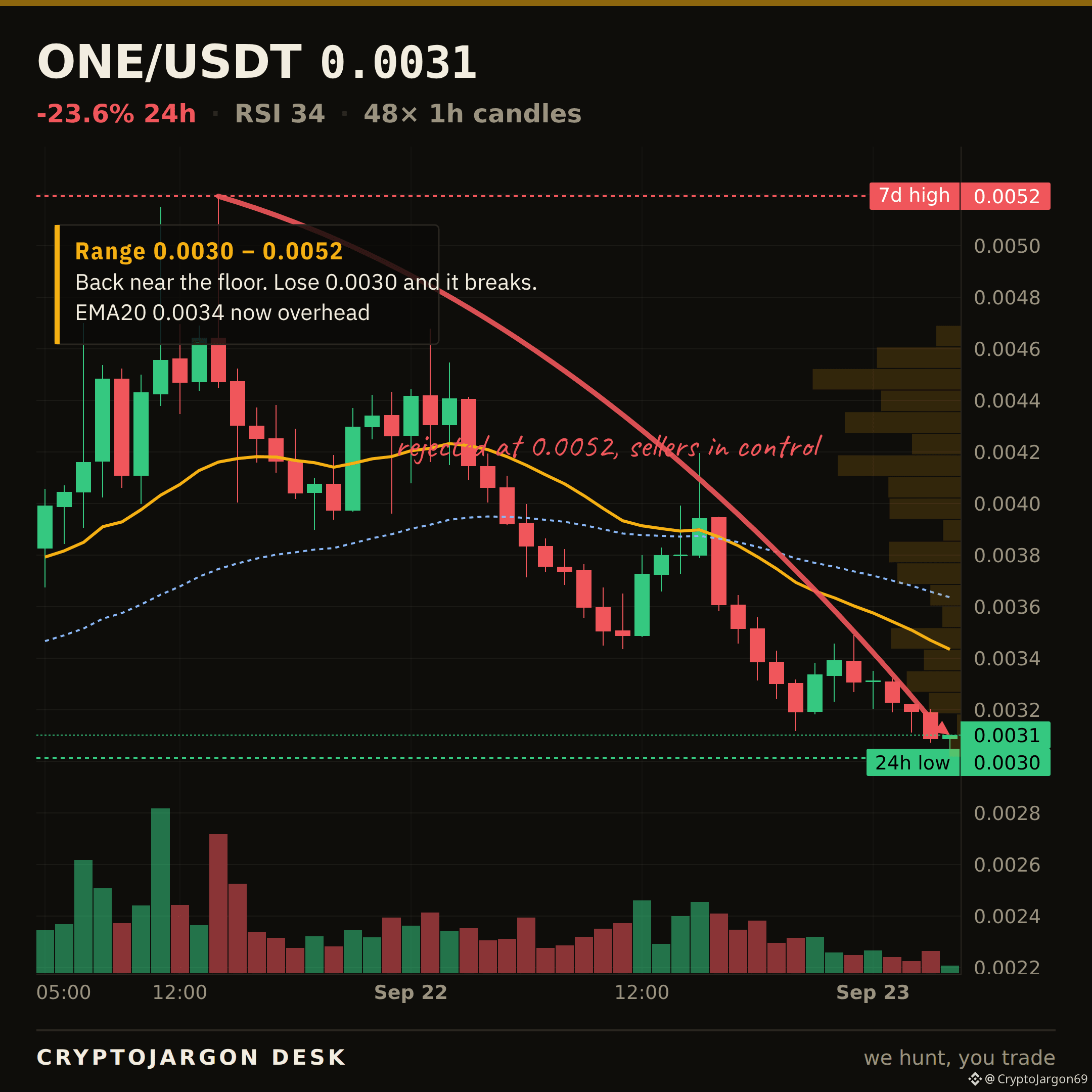
$0.0031 now.
The line that matters is $0.00301 — the 24h low, the floor the tape is sitting on.
Holding $0.00301 keeps the structure intact; a clean close below opens the range beneath it. I'll follow up when it resolves.
Chart: the level is on it. $ONE
$ONE · LEVEL TO WATCH
$0.0031 now.
The line that matters is $0.00301 — the 24h low, the floor the tape is sitting on.
Holding $0.00301 keeps the structure intact; a clean close below opens the range beneath it. I'll follow up when it resolves.
Chart: the level is on it. $ONE
$0.0031 now.
The line that matters is $0.00301 — the 24h low, the floor the tape is sitting on.
Holding $0.00301 keeps the structure intact; a clean close below opens the range beneath it. I'll follow up when it resolves.
Chart: the level is on it. $ONE
1
1
1.3k
Tarjimani ko‘rish
$CRV · LEVEL TO WATCH
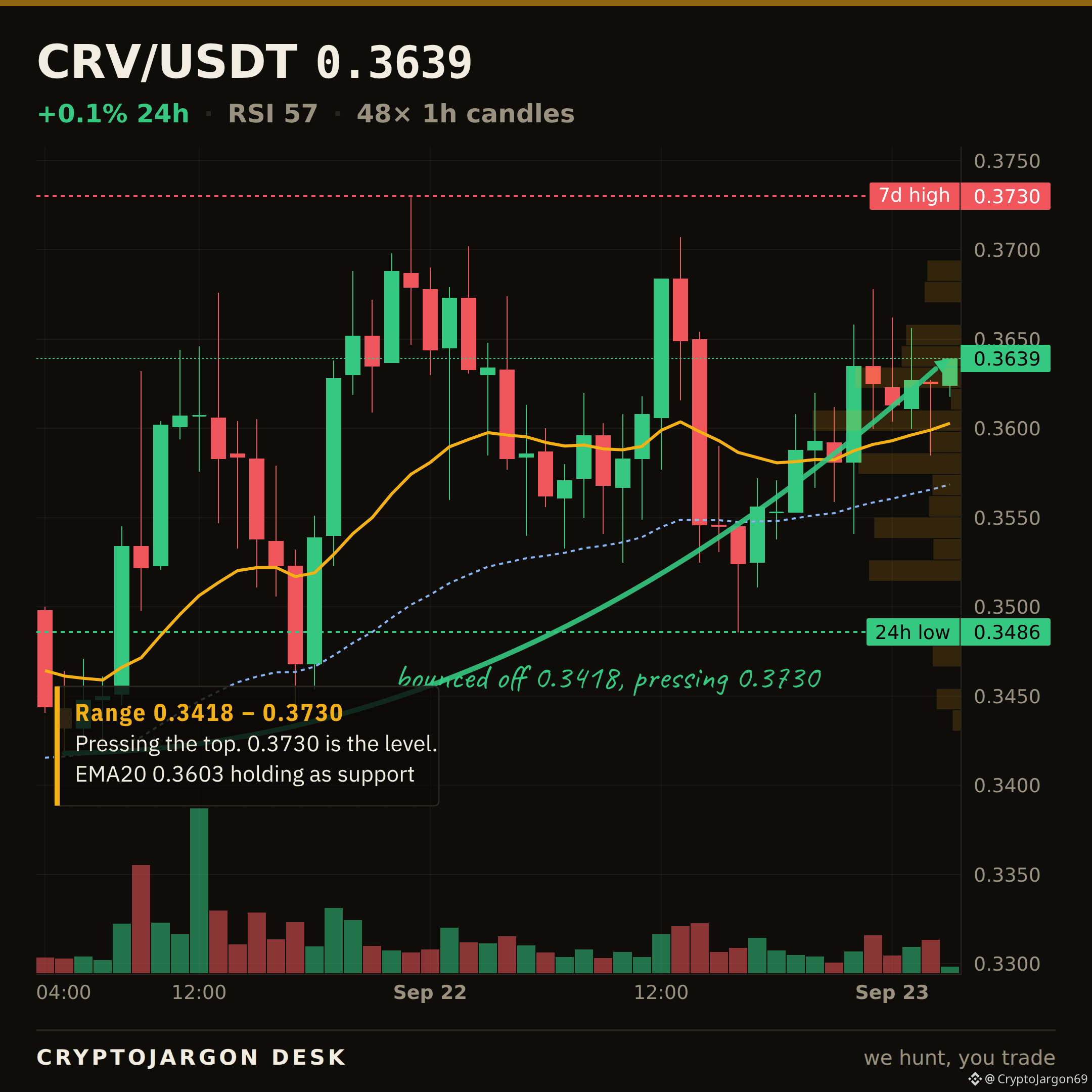
$0.364 now.
The line that matters is $0.36 — the 20-EMA, the floor the tape is sitting on.
Holding $0.36 keeps the structure intact; a clean close below opens the range beneath it. I'll follow up when it resolves.
Chart: the level is on it. $CRV
$CRV · LEVEL TO WATCH
$0.364 now.
The line that matters is $0.36 — the 20-EMA, the floor the tape is sitting on.
Holding $0.36 keeps the structure intact; a clean close below opens the range beneath it. I'll follow up when it resolves.
Chart: the level is on it. $CRV
$0.364 now.
The line that matters is $0.36 — the 20-EMA, the floor the tape is sitting on.
Holding $0.36 keeps the structure intact; a clean close below opens the range beneath it. I'll follow up when it resolves.
Chart: the level is on it. $CRV
335
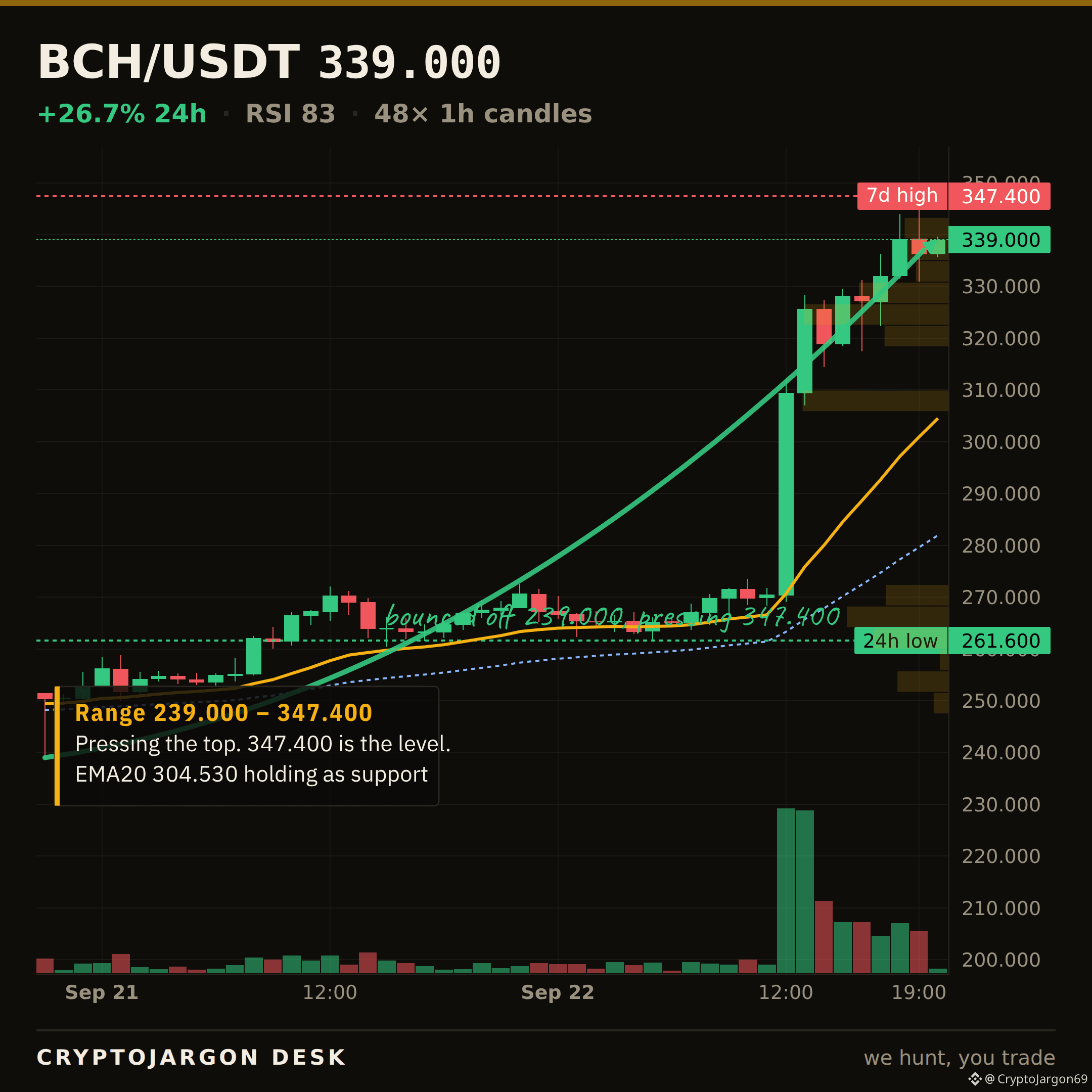
Bitcoin Cash endi $100 mln hajmdagi +27,4% candle’ni bosib chiqardi.
Bu harakat 7 kunlik diapazonni ham kesib o‘tdi, ammo kundalik RSI hozir 83 da. Bu haddan tashqari momentumni ko‘rsatadigan va shunchalik keskin “overbought” signali berayotgan lentalar.
Bunday narx harakati xaridorlar bidini jalb qilish uchun mo‘ljallangan. Butun o‘sish $261 pastidan boshlangan bitta sessiya ichida bo‘ldi va ortidan hech qanday struktura qolmadi.
Bu haqiqiy qayta baholash boshlanishimi yoki dipni sotib olganlar uchun shunchaki exit likvidlikmi?
$BCH
Biz kun davomida, har kuni e’lon qilamiz. Agar foydali bo‘lsa, kuzatib boring.
Bitcoin Cash endi $100 mln hajmdagi +27,4% candle’ni bosib chiqardi.
Bu harakat 7 kunlik diapazonni ham kesib o‘tdi, ammo kundalik RSI hozir 83 da. Bu haddan tashqari momentumni ko‘rsatadigan va shunchalik keskin “overbought” signali berayotgan lentalar.
Bunday narx harakati xaridorlar bidini jalb qilish uchun mo‘ljallangan. Butun o‘sish $261 pastidan boshlangan bitta sessiya ichida bo‘ldi va ortidan hech qanday struktura qolmadi.
Bu haqiqiy qayta baholash boshlanishimi yoki dipni sotib olganlar uchun shunchaki exit likvidlikmi?
$BCH
Biz kun davomida, har kuni e’lon qilamiz. Agar foydali bo‘lsa, kuzatib boring.
Bu harakat 7 kunlik diapazonni ham kesib o‘tdi, ammo kundalik RSI hozir 83 da. Bu haddan tashqari momentumni ko‘rsatadigan va shunchalik keskin “overbought” signali berayotgan lentalar.
Bunday narx harakati xaridorlar bidini jalb qilish uchun mo‘ljallangan. Butun o‘sish $261 pastidan boshlangan bitta sessiya ichida bo‘ldi va ortidan hech qanday struktura qolmadi.
Bu haqiqiy qayta baholash boshlanishimi yoki dipni sotib olganlar uchun shunchaki exit likvidlikmi?
$BCH
Biz kun davomida, har kuni e’lon qilamiz. Agar foydali bo‘lsa, kuzatib boring.
252
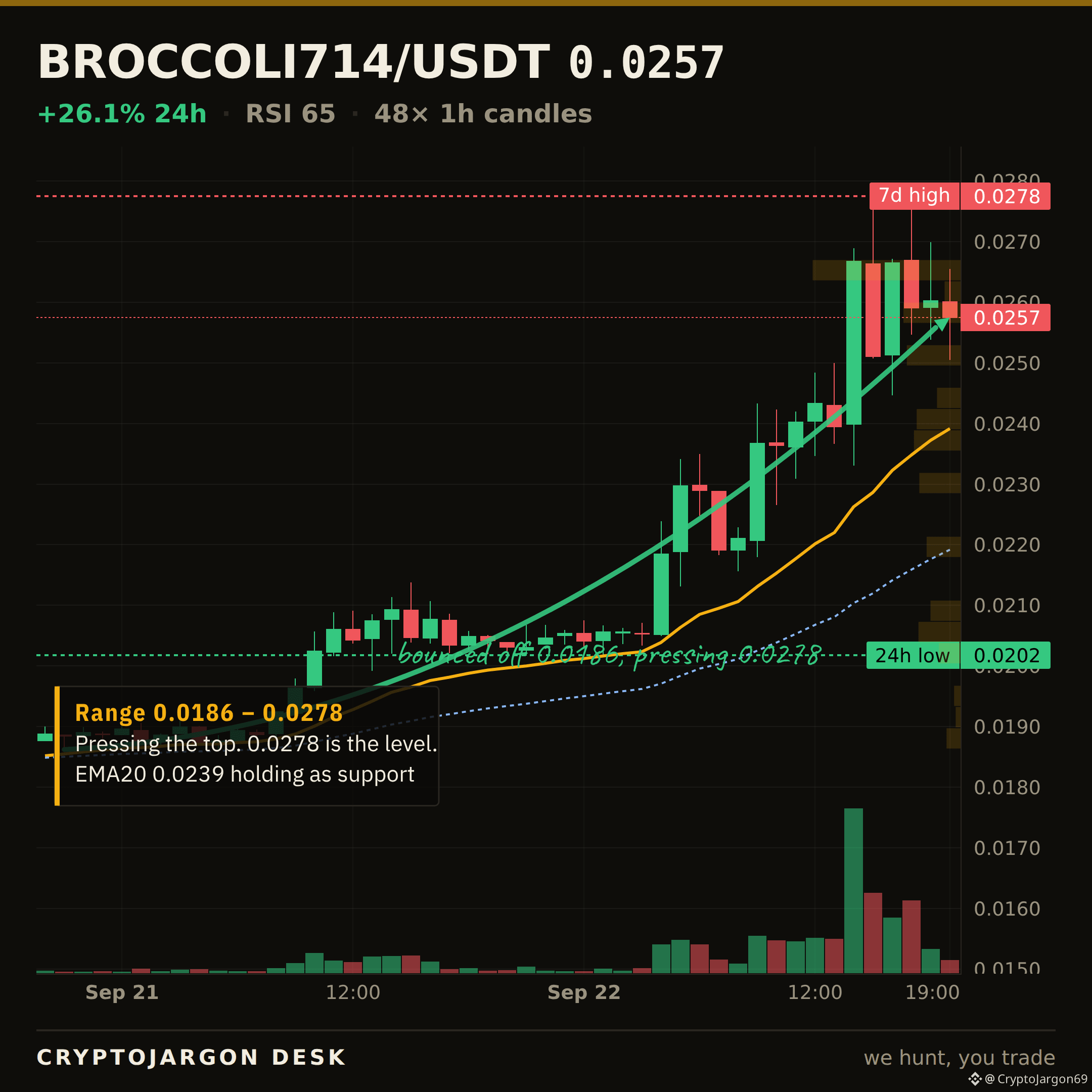
A +26,7% harakati BROCCOLI714 ni 7 kunlik eng yuqori nuqtasi 0.0278 ga juda yaqin olib chiqdi.
Bu yerda gapning butun mohiyati shu. Narx 20 kunlik EMA (0.0239) ustida ushlab turibdi, ammo RSI 65 va bozor bo‘ylab Fear & Greed ko‘rsatkichi 78 bo‘lishi vazifani og‘irlashtiradi. Birinchi urinishdayoq eng yuqorilardan toza “break” qilish qiyin.
Bu haqiqatan ham yangi diapazonni topishga urinishmi, yoki rad etilishdan oldin likvidlikni “supurish”mi?
$BROCCOLI714
Kunning o‘zi bo‘ylab yangi xabarlar. Keyingisini o‘tkazib yubormaslik uchun kuzatib boring.
A +26,7% harakati BROCCOLI714 ni 7 kunlik eng yuqori nuqtasi 0.0278 ga juda yaqin olib chiqdi.
Bu yerda gapning butun mohiyati shu. Narx 20 kunlik EMA (0.0239) ustida ushlab turibdi, ammo RSI 65 va bozor bo‘ylab Fear & Greed ko‘rsatkichi 78 bo‘lishi vazifani og‘irlashtiradi. Birinchi urinishdayoq eng yuqorilardan toza “break” qilish qiyin.
Bu haqiqatan ham yangi diapazonni topishga urinishmi, yoki rad etilishdan oldin likvidlikni “supurish”mi?
$BROCCOLI714
Kunning o‘zi bo‘ylab yangi xabarlar. Keyingisini o‘tkazib yubormaslik uchun kuzatib boring.
Bu yerda gapning butun mohiyati shu. Narx 20 kunlik EMA (0.0239) ustida ushlab turibdi, ammo RSI 65 va bozor bo‘ylab Fear & Greed ko‘rsatkichi 78 bo‘lishi vazifani og‘irlashtiradi. Birinchi urinishdayoq eng yuqorilardan toza “break” qilish qiyin.
Bu haqiqatan ham yangi diapazonni topishga urinishmi, yoki rad etilishdan oldin likvidlikni “supurish”mi?
$BROCCOLI714
Kunning o‘zi bo‘ylab yangi xabarlar. Keyingisini o‘tkazib yubormaslik uchun kuzatib boring.
432
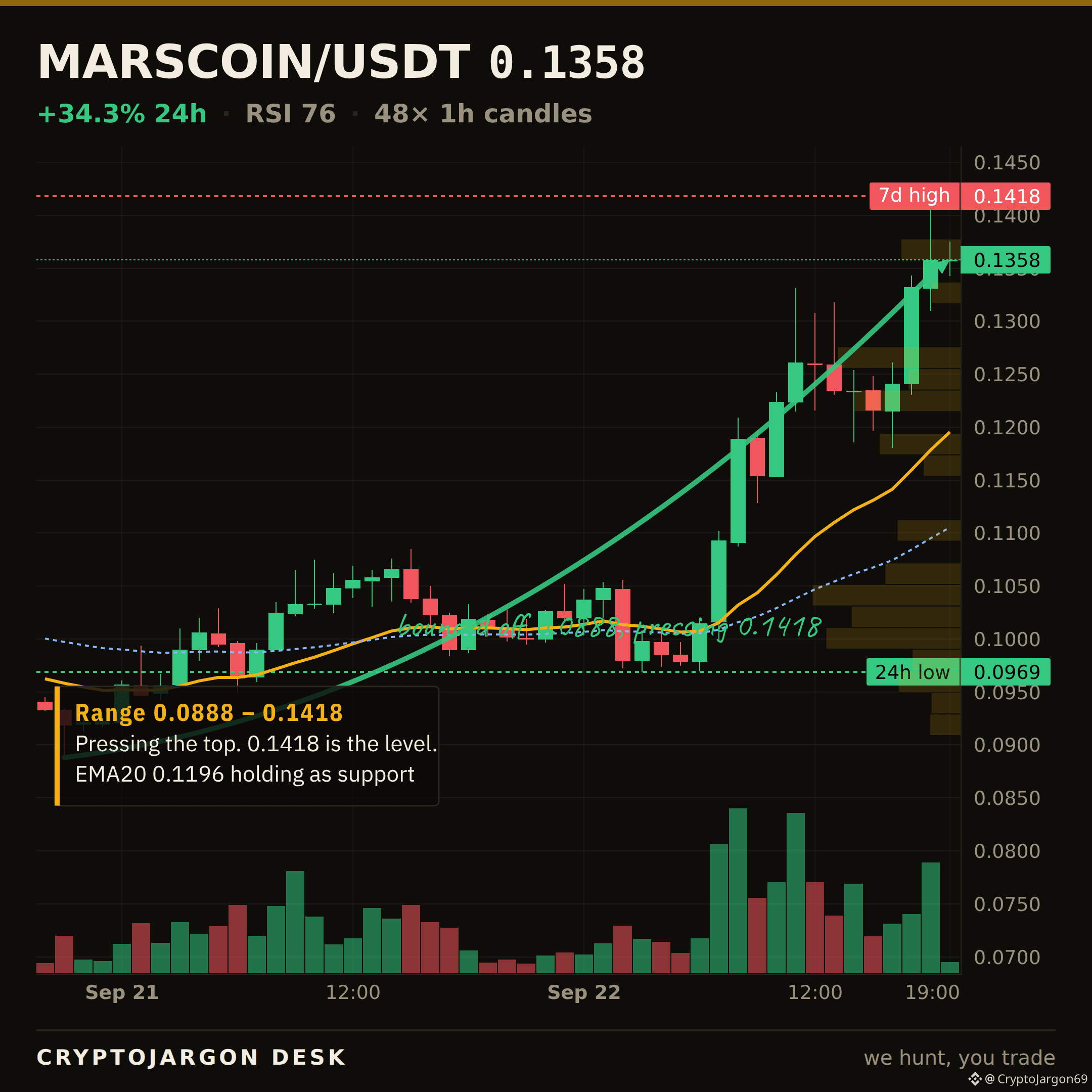
Bugun MARSCOIN uchun 33,2% ga yuqoriga harakat: to‘g‘ridan-to‘g‘ri 7 kunlik eng yuqoriga, 0.142 ga kirib bordi.
Bu yurish RSI’ni 76 gacha olib chiqdi. Narx cho‘zilgan, bozor esa “Extreme Greed” (haddan tashqari ochko‘zlik) holatida, va bularning barchasi bir hafta davomida to‘sib kelgan darajaning aynan ustida turibmiz. Impuls (momentum) va potensial tugash nuqtasi o‘rtasidagi darslikdagi ziddiyat.
Bu breakout’ning (yorib chiqish) boshi-mi yoki exit liquidity (chiqish likvidligi)mi?
$MARSCOIN
Bu stol kun bo‘yi yangilanadi. Buning uchun kuzatib boring.
Bugun MARSCOIN uchun 33,2% ga yuqoriga harakat: to‘g‘ridan-to‘g‘ri 7 kunlik eng yuqoriga, 0.142 ga kirib bordi.
Bu yurish RSI’ni 76 gacha olib chiqdi. Narx cho‘zilgan, bozor esa “Extreme Greed” (haddan tashqari ochko‘zlik) holatida, va bularning barchasi bir hafta davomida to‘sib kelgan darajaning aynan ustida turibmiz. Impuls (momentum) va potensial tugash nuqtasi o‘rtasidagi darslikdagi ziddiyat.
Bu breakout’ning (yorib chiqish) boshi-mi yoki exit liquidity (chiqish likvidligi)mi?
$MARSCOIN
Bu stol kun bo‘yi yangilanadi. Buning uchun kuzatib boring.
Bu yurish RSI’ni 76 gacha olib chiqdi. Narx cho‘zilgan, bozor esa “Extreme Greed” (haddan tashqari ochko‘zlik) holatida, va bularning barchasi bir hafta davomida to‘sib kelgan darajaning aynan ustida turibmiz. Impuls (momentum) va potensial tugash nuqtasi o‘rtasidagi darslikdagi ziddiyat.
Bu breakout’ning (yorib chiqish) boshi-mi yoki exit liquidity (chiqish likvidligi)mi?
$MARSCOIN
Bu stol kun bo‘yi yangilanadi. Buning uchun kuzatib boring.
1
342
$CRV · THE LEVEL BROKE
U joy bo'shab ketdi.
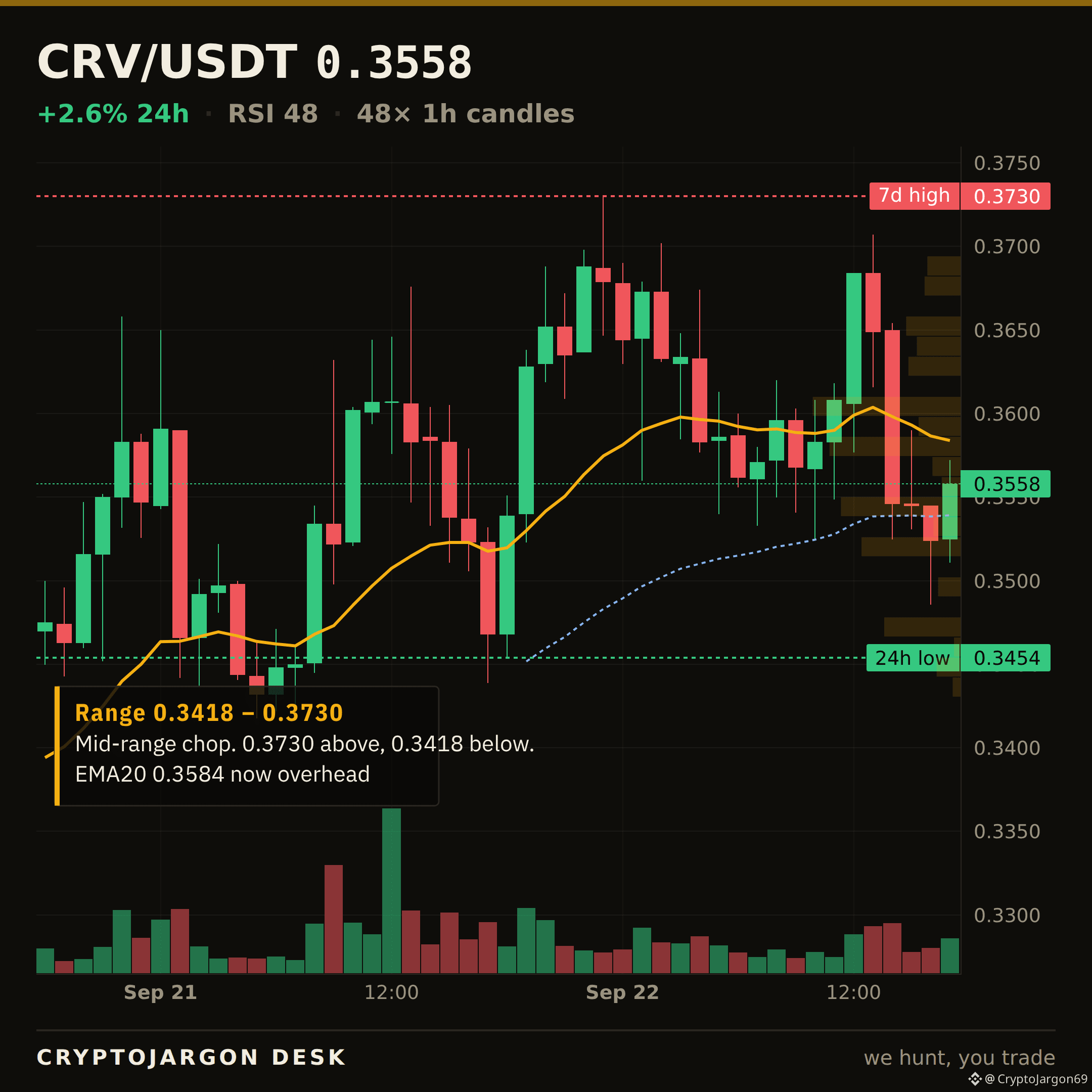
$0.354 biz $CRV bo‘yicha belgilagan pol edi. Narx uning pastiga yopildi — hozir $0.356. O‘sha ostidagi diapazon ochiladi va bu chiziq qayta yutib olishi kerak bo‘lgan ship/shiftga aylanadi.
U $0.354’ni qaytarib oladimi, yoki endi ship shu-mi?
$CRV
$CRV · THE LEVEL BROKE
U joy bo'shab ketdi.
$0.354 biz $CRV bo‘yicha belgilagan pol edi. Narx uning pastiga yopildi — hozir $0.356. O‘sha ostidagi diapazon ochiladi va bu chiziq qayta yutib olishi kerak bo‘lgan ship/shiftga aylanadi.
U $0.354’ni qaytarib oladimi, yoki endi ship shu-mi?
$CRV
U joy bo'shab ketdi.
$0.354 biz $CRV bo‘yicha belgilagan pol edi. Narx uning pastiga yopildi — hozir $0.356. O‘sha ostidagi diapazon ochiladi va bu chiziq qayta yutib olishi kerak bo‘lgan ship/shiftga aylanadi.
U $0.354’ni qaytarib oladimi, yoki endi ship shu-mi?
$CRV
204
$KERNEL · BAZAR TUZILMASI
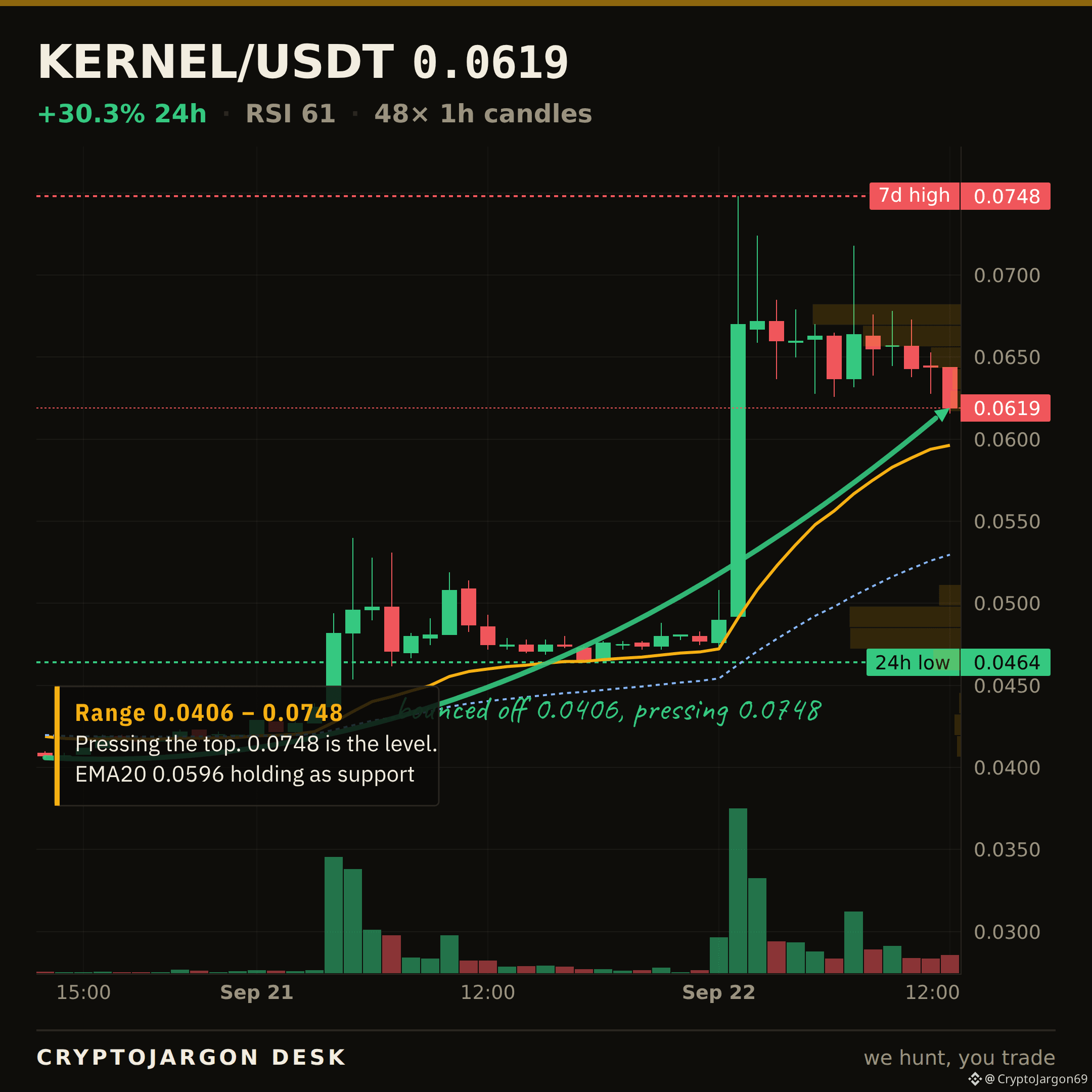
$0.0619, kunda +30.3%.
Trend — narx ikkala EMA dan ham yuqorida, 20 tasi 50 dan yuqoriroq.
Momentum — RSI 61.
Oraliq — 24 soatlik diapazonining 55% ga o‘sgan ($0.0464–$0.0748).
Trend, momentum va oraliq ko‘pincha bir tomonga ishora qiladi — yuqoriga yo‘nalgan mos keluvchi “tasma”.
Darajalar: $0.0748 24 soatlik eng yuqori nuqta (shift) · $0.0464 24 soatlik eng past nuqta (tayanch) · 7 kunlik diapazon $0.0372–$0.0748.
Grafik: 1H shamlar, EMA20/50 va darajalar belgilangan. $KERNEL
$KERNEL · BAZAR TUZILMASI
$0.0619, kunda +30.3%.
Trend — narx ikkala EMA dan ham yuqorida, 20 tasi 50 dan yuqoriroq.
Momentum — RSI 61.
Oraliq — 24 soatlik diapazonining 55% ga o‘sgan ($0.0464–$0.0748).
Trend, momentum va oraliq ko‘pincha bir tomonga ishora qiladi — yuqoriga yo‘nalgan mos keluvchi “tasma”.
Darajalar: $0.0748 24 soatlik eng yuqori nuqta (shift) · $0.0464 24 soatlik eng past nuqta (tayanch) · 7 kunlik diapazon $0.0372–$0.0748.
Grafik: 1H shamlar, EMA20/50 va darajalar belgilangan. $KERNEL
$0.0619, kunda +30.3%.
Trend — narx ikkala EMA dan ham yuqorida, 20 tasi 50 dan yuqoriroq.
Momentum — RSI 61.
Oraliq — 24 soatlik diapazonining 55% ga o‘sgan ($0.0464–$0.0748).
Trend, momentum va oraliq ko‘pincha bir tomonga ishora qiladi — yuqoriga yo‘nalgan mos keluvchi “tasma”.
Darajalar: $0.0748 24 soatlik eng yuqori nuqta (shift) · $0.0464 24 soatlik eng past nuqta (tayanch) · 7 kunlik diapazon $0.0372–$0.0748.
Grafik: 1H shamlar, EMA20/50 va darajalar belgilangan. $KERNEL
1
309
$CRV · KUZATILADIGAN DARAJA
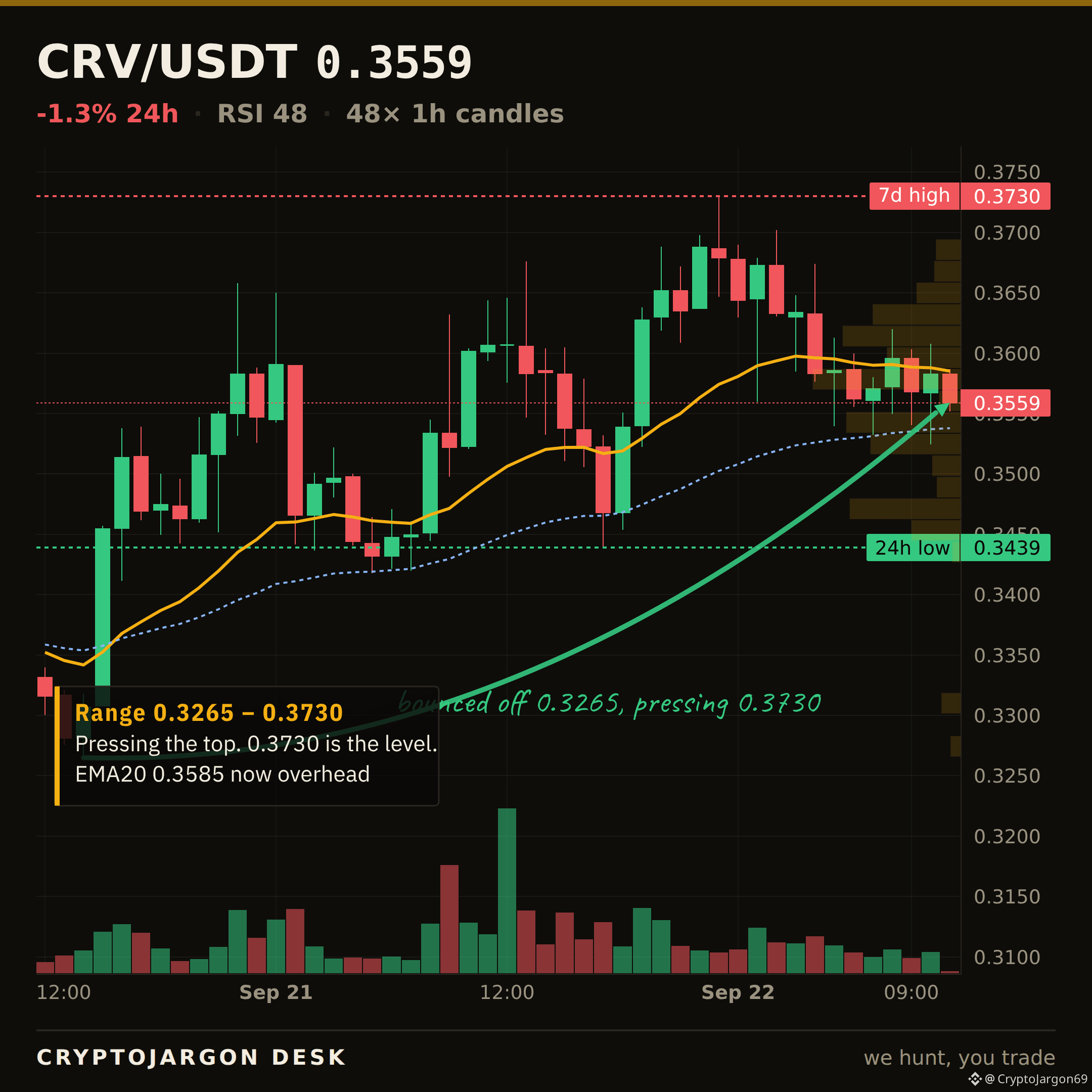
Hozir $0.356.
Muhim bo‘lgani $0.354 — 50-EMA, lentа turgan pol.
$0.354 ni ushlab turish struktura buzilmaydi; uning ostidan toza yopilish esa uning tagidagi diapazonni ochadi. Yechilgach, kuzatib boraman.
Grafik: daraja uning ustida. $CRV
$CRV · KUZATILADIGAN DARAJA
Hozir $0.356.
Muhim bo‘lgani $0.354 — 50-EMA, lentа turgan pol.
$0.354 ni ushlab turish struktura buzilmaydi; uning ostidan toza yopilish esa uning tagidagi diapazonni ochadi. Yechilgach, kuzatib boraman.
Grafik: daraja uning ustida. $CRV
Hozir $0.356.
Muhim bo‘lgani $0.354 — 50-EMA, lentа turgan pol.
$0.354 ni ushlab turish struktura buzilmaydi; uning ostidan toza yopilish esa uning tagidagi diapazonni ochadi. Yechilgach, kuzatib boraman.
Grafik: daraja uning ustida. $CRV
1
206
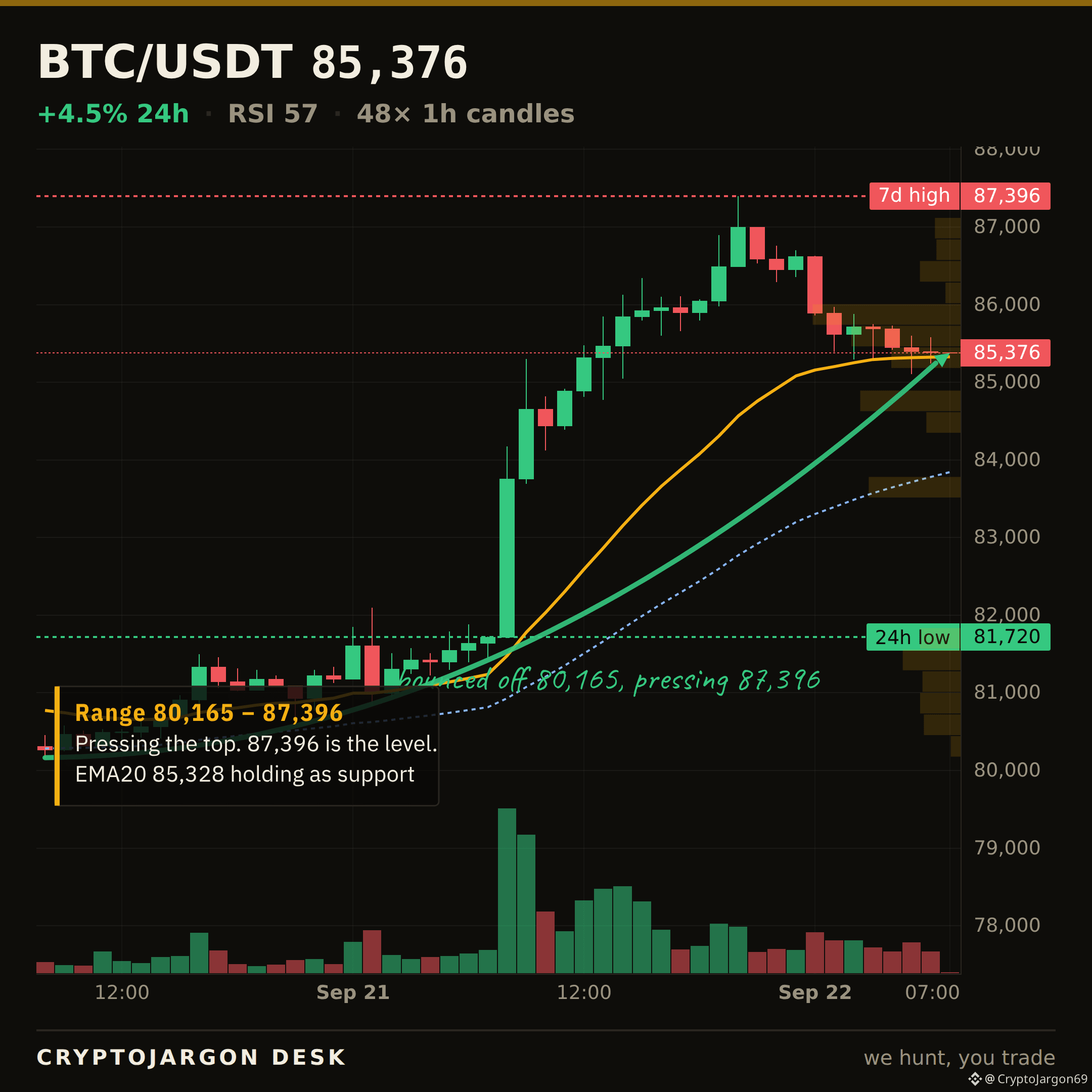
BITCOIN · BOZOR TUZILMASI
$85,376, +12.9% hafta davomida. Yuqoridan pastga o‘qish:
Kunlik: o‘sish tendensiyasi, 20 va 50-EMA’lar ustida, 84% o‘sish diapazoni.
4H: o‘sish tendensiyasi, 20 va 50-EMA’lar ustida, 84% o‘sish diapazoni.
1H: RSI 57, 20-EMA’sini ushlab turibdi.
Uni belgilab beradigan darajalar: $87,396 yaqinda erishilgan eng yuqori nuqta (shift) · $79,422 kunlik 20-EMA (narvon yurib borayotgan chiziq) · $78,581 oylik ochilish (tayanch).
$79,422’dan yuqorida kunlik trend saqlanadi; undan pastda impuls o‘zgaradi. Grafik: 1H shamchalar, EMA20/50 va darajalar belgilangan. $BTC
BITCOIN · BOZOR TUZILMASI
$85,376, +12.9% hafta davomida. Yuqoridan pastga o‘qish:
Kunlik: o‘sish tendensiyasi, 20 va 50-EMA’lar ustida, 84% o‘sish diapazoni.
4H: o‘sish tendensiyasi, 20 va 50-EMA’lar ustida, 84% o‘sish diapazoni.
1H: RSI 57, 20-EMA’sini ushlab turibdi.
Uni belgilab beradigan darajalar: $87,396 yaqinda erishilgan eng yuqori nuqta (shift) · $79,422 kunlik 20-EMA (narvon yurib borayotgan chiziq) · $78,581 oylik ochilish (tayanch).
$79,422’dan yuqorida kunlik trend saqlanadi; undan pastda impuls o‘zgaradi. Grafik: 1H shamchalar, EMA20/50 va darajalar belgilangan. $BTC
$85,376, +12.9% hafta davomida. Yuqoridan pastga o‘qish:
Kunlik: o‘sish tendensiyasi, 20 va 50-EMA’lar ustida, 84% o‘sish diapazoni.
4H: o‘sish tendensiyasi, 20 va 50-EMA’lar ustida, 84% o‘sish diapazoni.
1H: RSI 57, 20-EMA’sini ushlab turibdi.
Uni belgilab beradigan darajalar: $87,396 yaqinda erishilgan eng yuqori nuqta (shift) · $79,422 kunlik 20-EMA (narvon yurib borayotgan chiziq) · $78,581 oylik ochilish (tayanch).
$79,422’dan yuqorida kunlik trend saqlanadi; undan pastda impuls o‘zgaradi. Grafik: 1H shamchalar, EMA20/50 va darajalar belgilangan. $BTC
8
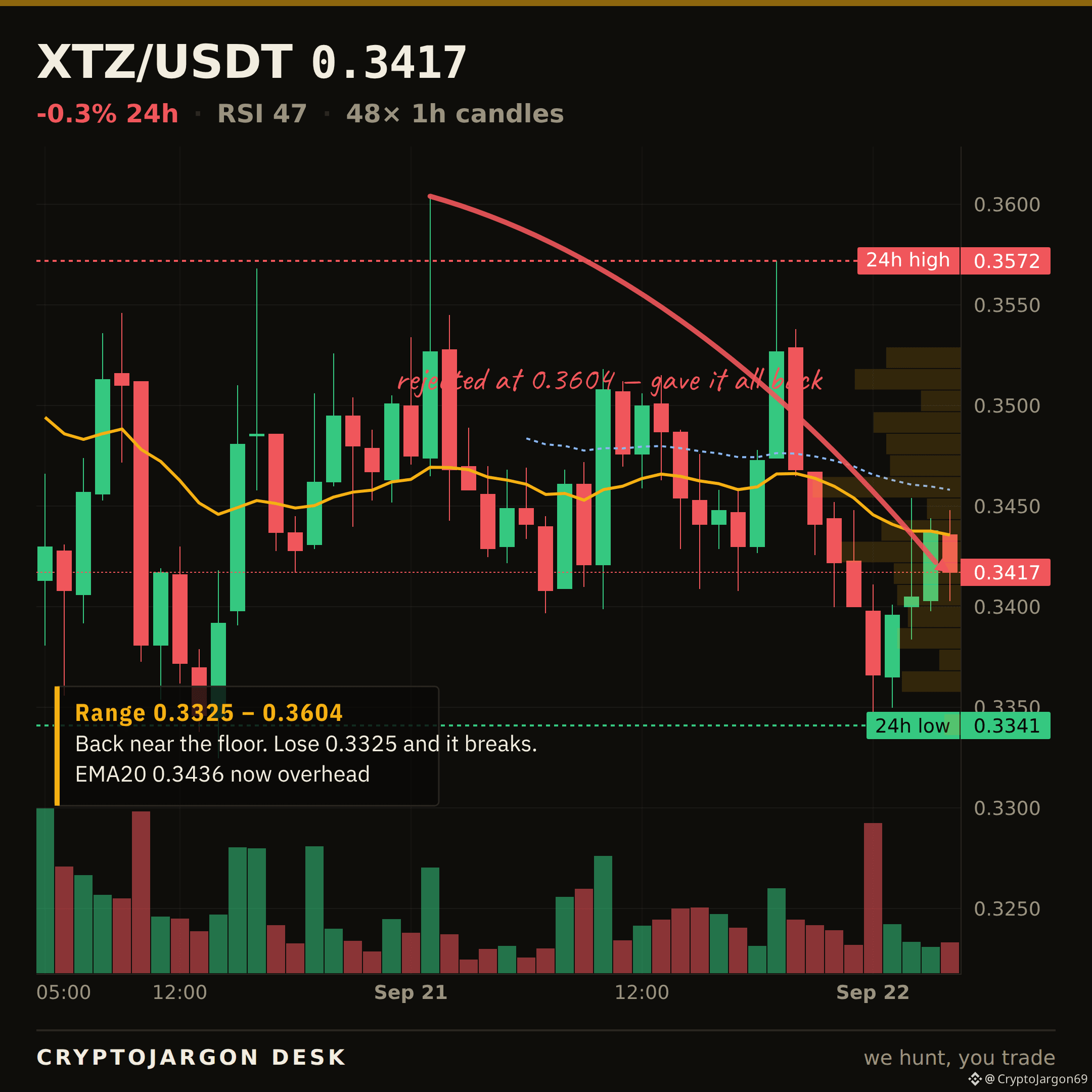
$XTZ · DARAJA TOZALANDI
Yuqoriga qaytdi.
$0.341 biz $XTZ bo‘yicha belgilagan shift (tavan) edi. Narx unga yana tepaga yopildi — $0.342 hozir. U ushlab turilishi kerak bo‘lgan poll (pol)ga aylanadi, va u bajargan paytda yuqori diapazon ochiladi.
Toza uzilishmi, yoki $0.341 ni qayta tekshirish uchun qaytib keladimi?
$XTZ
$XTZ · DARAJA TOZALANDI
Yuqoriga qaytdi.
$0.341 biz $XTZ bo‘yicha belgilagan shift (tavan) edi. Narx unga yana tepaga yopildi — $0.342 hozir. U ushlab turilishi kerak bo‘lgan poll (pol)ga aylanadi, va u bajargan paytda yuqori diapazon ochiladi.
Toza uzilishmi, yoki $0.341 ni qayta tekshirish uchun qaytib keladimi?
$XTZ
Yuqoriga qaytdi.
$0.341 biz $XTZ bo‘yicha belgilagan shift (tavan) edi. Narx unga yana tepaga yopildi — $0.342 hozir. U ushlab turilishi kerak bo‘lgan poll (pol)ga aylanadi, va u bajargan paytda yuqori diapazon ochiladi.
Toza uzilishmi, yoki $0.341 ni qayta tekshirish uchun qaytib keladimi?
$XTZ
70
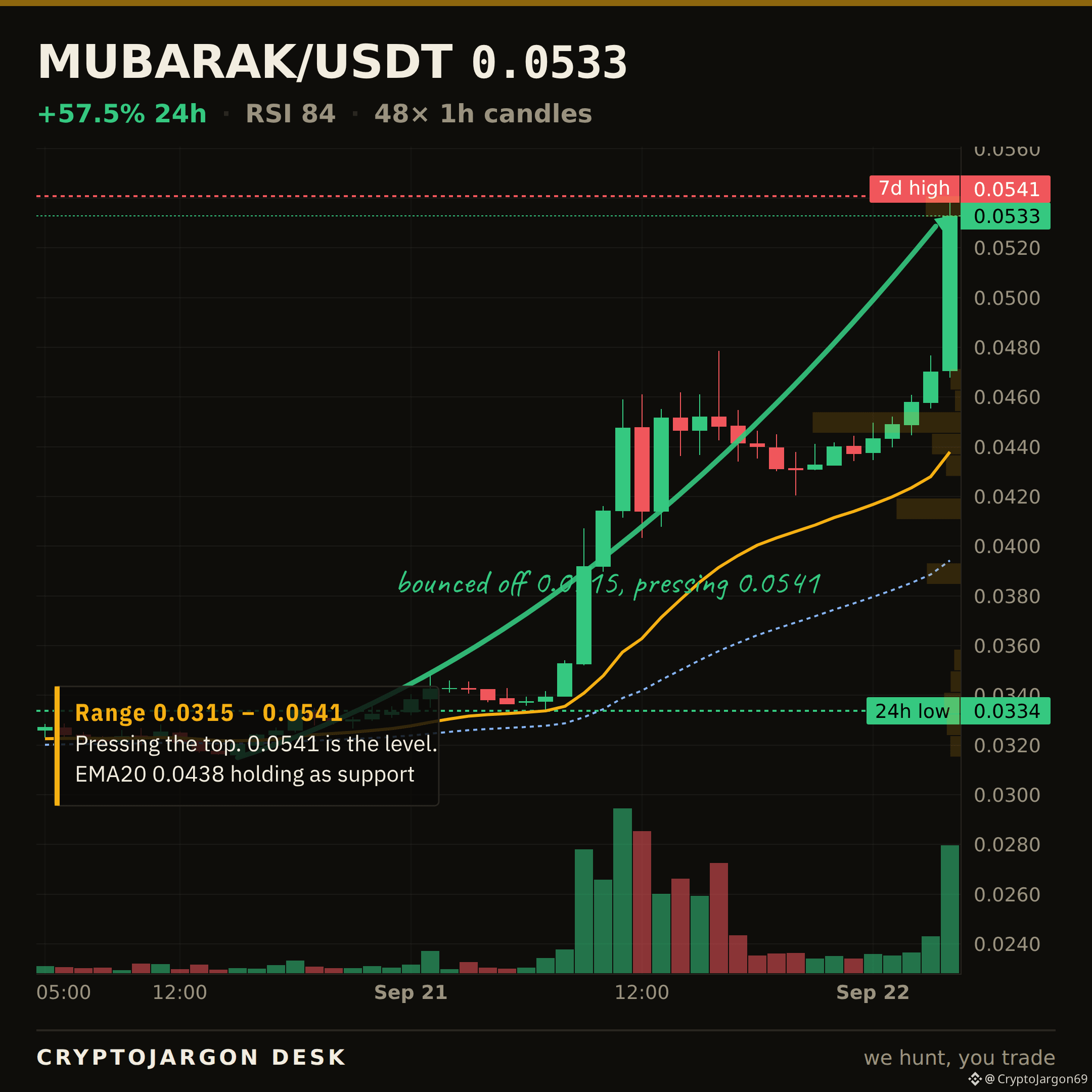
$MUBARAK · BOZOR TUZILMASI
$0.0533, kuniga +57.5%.
Trend — narx ikkala EMAdan ham yuqori, 20 esa 50dan ustun.
Momentum — RSI 84.
Diapazon — 24 soatlik diapazoni doirasining 96% ( $0.0334–$0.0541 ).
Trend, momentum va diapazon asosan bir xil yo‘nalishni ko‘rsatadi — yuqoriga tomon mos kelgan lenta.
Darajalar: $0.0541 24 soatlik eng yuqori (ship) · $0.0334 24 soatlik eng past (tayanch) · 7 kunlik diapazon $0.0281–$0.0541.
Grafik: 1H shamlar, EMA20/50 va darajalar belgilangan. $MUBARAK
$MUBARAK · BOZOR TUZILMASI
$0.0533, kuniga +57.5%.
Trend — narx ikkala EMAdan ham yuqori, 20 esa 50dan ustun.
Momentum — RSI 84.
Diapazon — 24 soatlik diapazoni doirasining 96% ( $0.0334–$0.0541 ).
Trend, momentum va diapazon asosan bir xil yo‘nalishni ko‘rsatadi — yuqoriga tomon mos kelgan lenta.
Darajalar: $0.0541 24 soatlik eng yuqori (ship) · $0.0334 24 soatlik eng past (tayanch) · 7 kunlik diapazon $0.0281–$0.0541.
Grafik: 1H shamlar, EMA20/50 va darajalar belgilangan. $MUBARAK
$0.0533, kuniga +57.5%.
Trend — narx ikkala EMAdan ham yuqori, 20 esa 50dan ustun.
Momentum — RSI 84.
Diapazon — 24 soatlik diapazoni doirasining 96% ( $0.0334–$0.0541 ).
Trend, momentum va diapazon asosan bir xil yo‘nalishni ko‘rsatadi — yuqoriga tomon mos kelgan lenta.
Darajalar: $0.0541 24 soatlik eng yuqori (ship) · $0.0334 24 soatlik eng past (tayanch) · 7 kunlik diapazon $0.0281–$0.0541.
Grafik: 1H shamlar, EMA20/50 va darajalar belgilangan. $MUBARAK
1.3k
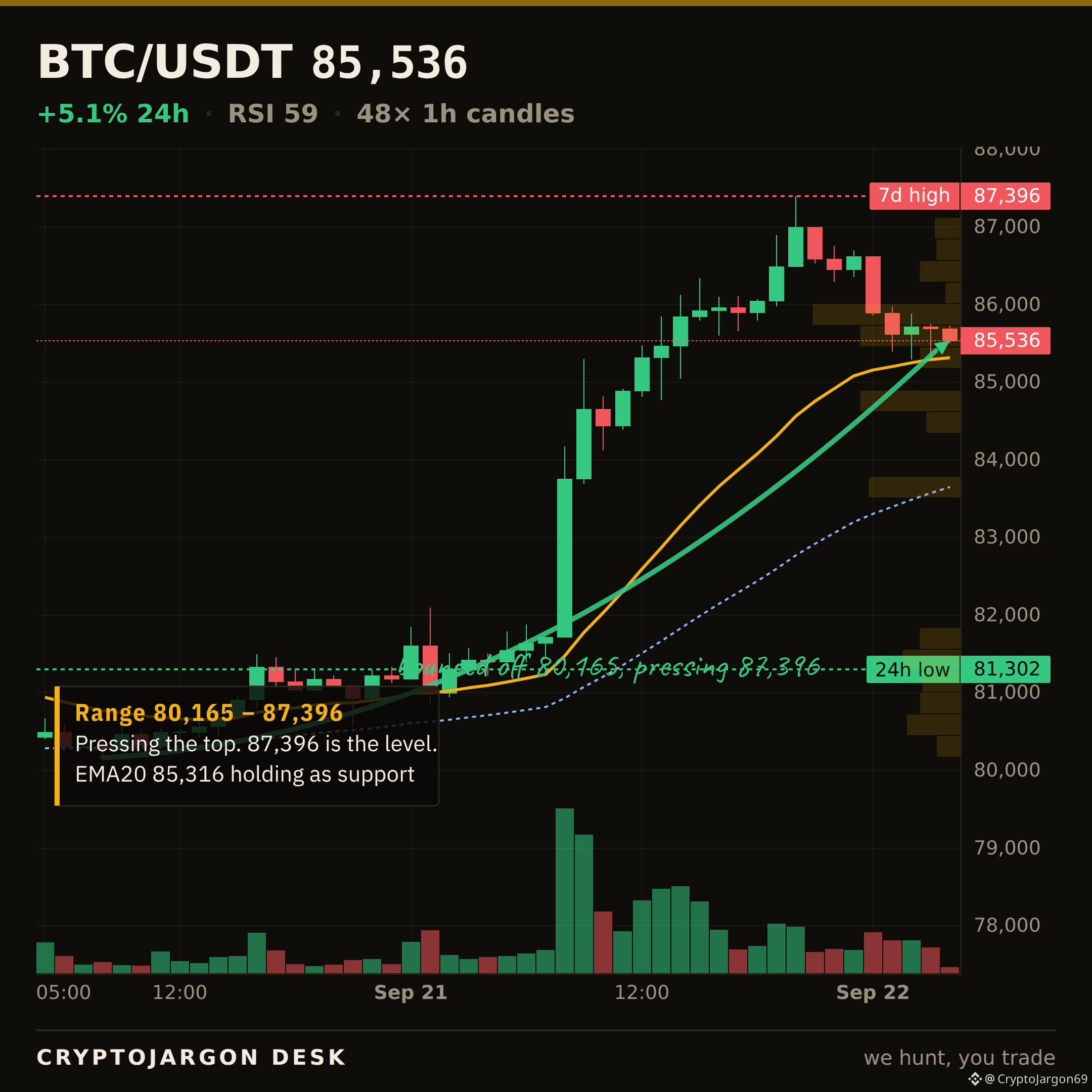
$BTC · KO‘ZLANADIGAN DARAJA
Hozir $85,536.
Muhim bo‘layotgani $85,316 — 20-EMA, ya’ni narx lentasi (tape) turgan asos/pol.
$85,316 ni ushlab turish strukturaning butunligini saqlaydi; uning ostidan toza yopilish pastdagi diapazonni ochadi. Qaror bo‘lganda kuzatib beraman.
Grafik: daraja uning ustida. $BTC
$BTC · KO‘ZLANADIGAN DARAJA
Hozir $85,536.
Muhim bo‘layotgani $85,316 — 20-EMA, ya’ni narx lentasi (tape) turgan asos/pol.
$85,316 ni ushlab turish strukturaning butunligini saqlaydi; uning ostidan toza yopilish pastdagi diapazonni ochadi. Qaror bo‘lganda kuzatib beraman.
Grafik: daraja uning ustida. $BTC
Hozir $85,536.
Muhim bo‘layotgani $85,316 — 20-EMA, ya’ni narx lentasi (tape) turgan asos/pol.
$85,316 ni ushlab turish strukturaning butunligini saqlaydi; uning ostidan toza yopilish pastdagi diapazonni ochadi. Qaror bo‘lganda kuzatib beraman.
Grafik: daraja uning ustida. $BTC
918
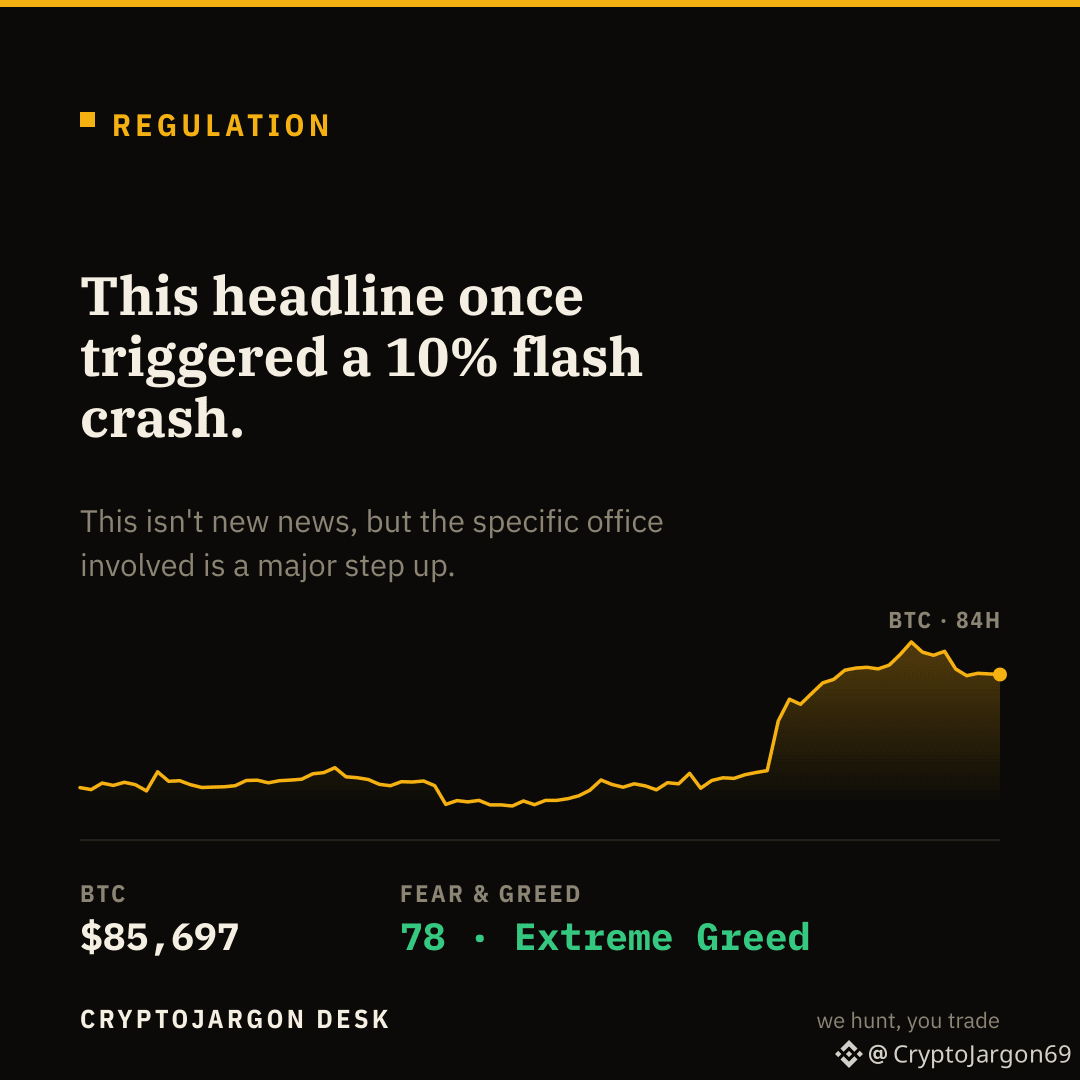
Binance yangi keskinlikka duch keldi: Manxettendagi AQSh prokuraturasi endi Eron sanksiyalarini tekshiryapti.
Bu yangilik emas, lekin jalb etilgan aniq idora — katta darajaga ko‘tarilgan qadam. Shunga qaramay, bozor befarq.
BTC 85 ming dollarda turibdi. Fear & Greed ko‘rsatkichi 78 ga yetgan. Bu sarlavha ilgari 10% lik tezkor (flash) qulashni keltirib chiqarardi. Endi esa hech narsa yo‘q. Bozor buni bir necha oy oldin narxga kiritib bo‘lgan, yoki juda optimistik (bullish) bo‘lgani uchun e’tibor bermayapti.
Regulyator “FUD” savdo uchun o‘lik. Yoki bozor shunchaki juda ochko‘z (greedy) bo‘lgani uchun buni sezmayaptimi?
$BTC
Keyingi o‘qish uchun kuzatib boring — lenta (tape) harakat qilgan paytning o‘zida e’lon qilindi.
Binance yangi keskinlikka duch keldi: Manxettendagi AQSh prokuraturasi endi Eron sanksiyalarini tekshiryapti.
Bu yangilik emas, lekin jalb etilgan aniq idora — katta darajaga ko‘tarilgan qadam. Shunga qaramay, bozor befarq.
BTC 85 ming dollarda turibdi. Fear & Greed ko‘rsatkichi 78 ga yetgan. Bu sarlavha ilgari 10% lik tezkor (flash) qulashni keltirib chiqarardi. Endi esa hech narsa yo‘q. Bozor buni bir necha oy oldin narxga kiritib bo‘lgan, yoki juda optimistik (bullish) bo‘lgani uchun e’tibor bermayapti.
Regulyator “FUD” savdo uchun o‘lik. Yoki bozor shunchaki juda ochko‘z (greedy) bo‘lgani uchun buni sezmayaptimi?
$BTC
Keyingi o‘qish uchun kuzatib boring — lenta (tape) harakat qilgan paytning o‘zida e’lon qilindi.
Bu yangilik emas, lekin jalb etilgan aniq idora — katta darajaga ko‘tarilgan qadam. Shunga qaramay, bozor befarq.
BTC 85 ming dollarda turibdi. Fear & Greed ko‘rsatkichi 78 ga yetgan. Bu sarlavha ilgari 10% lik tezkor (flash) qulashni keltirib chiqarardi. Endi esa hech narsa yo‘q. Bozor buni bir necha oy oldin narxga kiritib bo‘lgan, yoki juda optimistik (bullish) bo‘lgani uchun e’tibor bermayapti.
Regulyator “FUD” savdo uchun o‘lik. Yoki bozor shunchaki juda ochko‘z (greedy) bo‘lgani uchun buni sezmayaptimi?
$BTC
Keyingi o‘qish uchun kuzatib boring — lenta (tape) harakat qilgan paytning o‘zida e’lon qilindi.
283
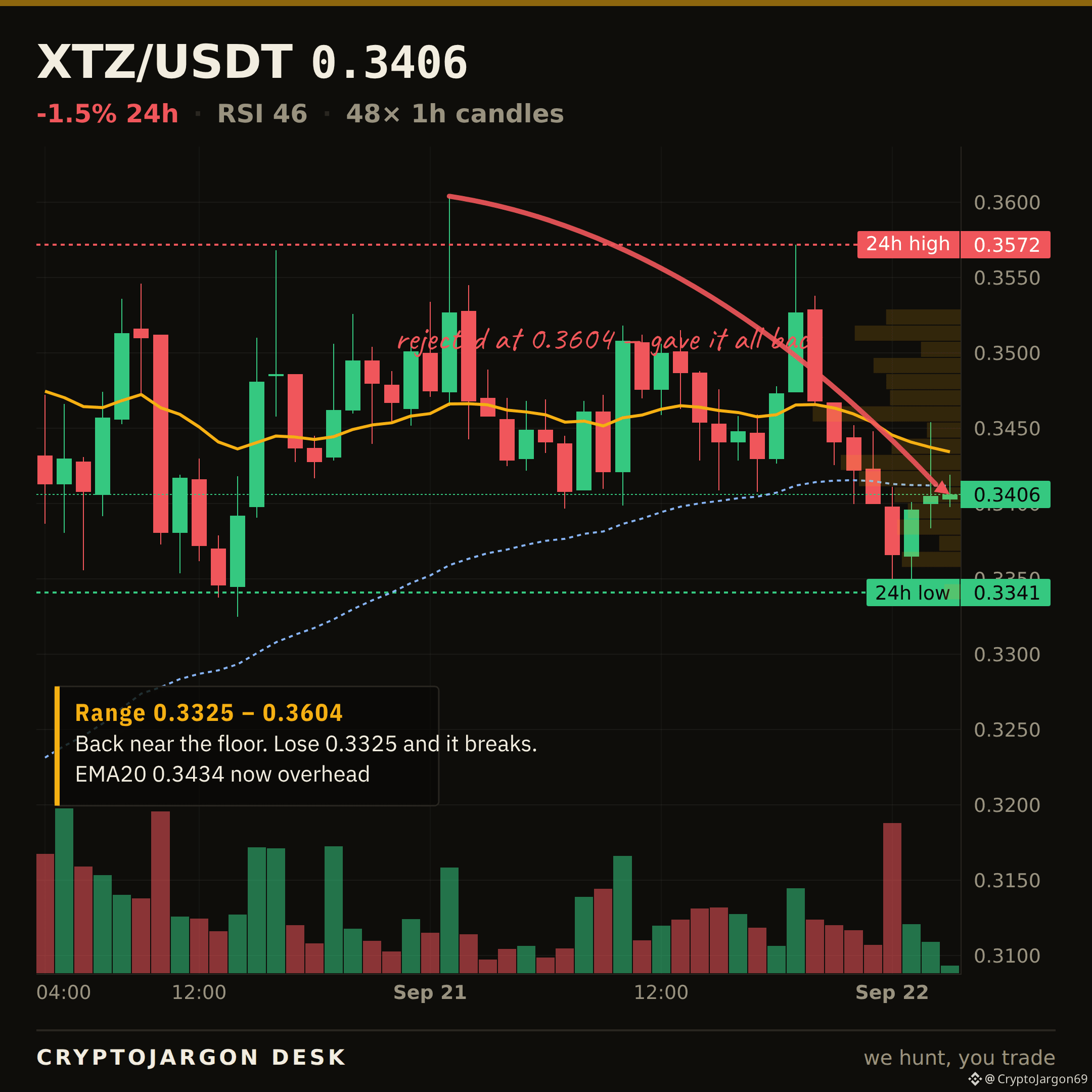
$XTZ · KUZATILADIGAN DARAJA
Hozir $0.341.
Muhim bo‘lgan chiziq $0.341 — 50-EMA, lenta pastdan bosayotgan tomonga turtib turadigan shift (chegara).
$0.341 dan yuqoriga aniq qayta yopilish yuqori diapazonni ochadi; u yerda to‘xtab qolsa, bu diapazon bo‘lib qoladi. U aniqlashganda kuzatib boraman.
Grafik: daraja aynan shu yerda. $XTZ
$XTZ · KUZATILADIGAN DARAJA
Hozir $0.341.
Muhim bo‘lgan chiziq $0.341 — 50-EMA, lenta pastdan bosayotgan tomonga turtib turadigan shift (chegara).
$0.341 dan yuqoriga aniq qayta yopilish yuqori diapazonni ochadi; u yerda to‘xtab qolsa, bu diapazon bo‘lib qoladi. U aniqlashganda kuzatib boraman.
Grafik: daraja aynan shu yerda. $XTZ
Hozir $0.341.
Muhim bo‘lgan chiziq $0.341 — 50-EMA, lenta pastdan bosayotgan tomonga turtib turadigan shift (chegara).
$0.341 dan yuqoriga aniq qayta yopilish yuqori diapazonni ochadi; u yerda to‘xtab qolsa, bu diapazon bo‘lib qoladi. U aniqlashganda kuzatib boraman.
Grafik: daraja aynan shu yerda. $XTZ
439
Maqola
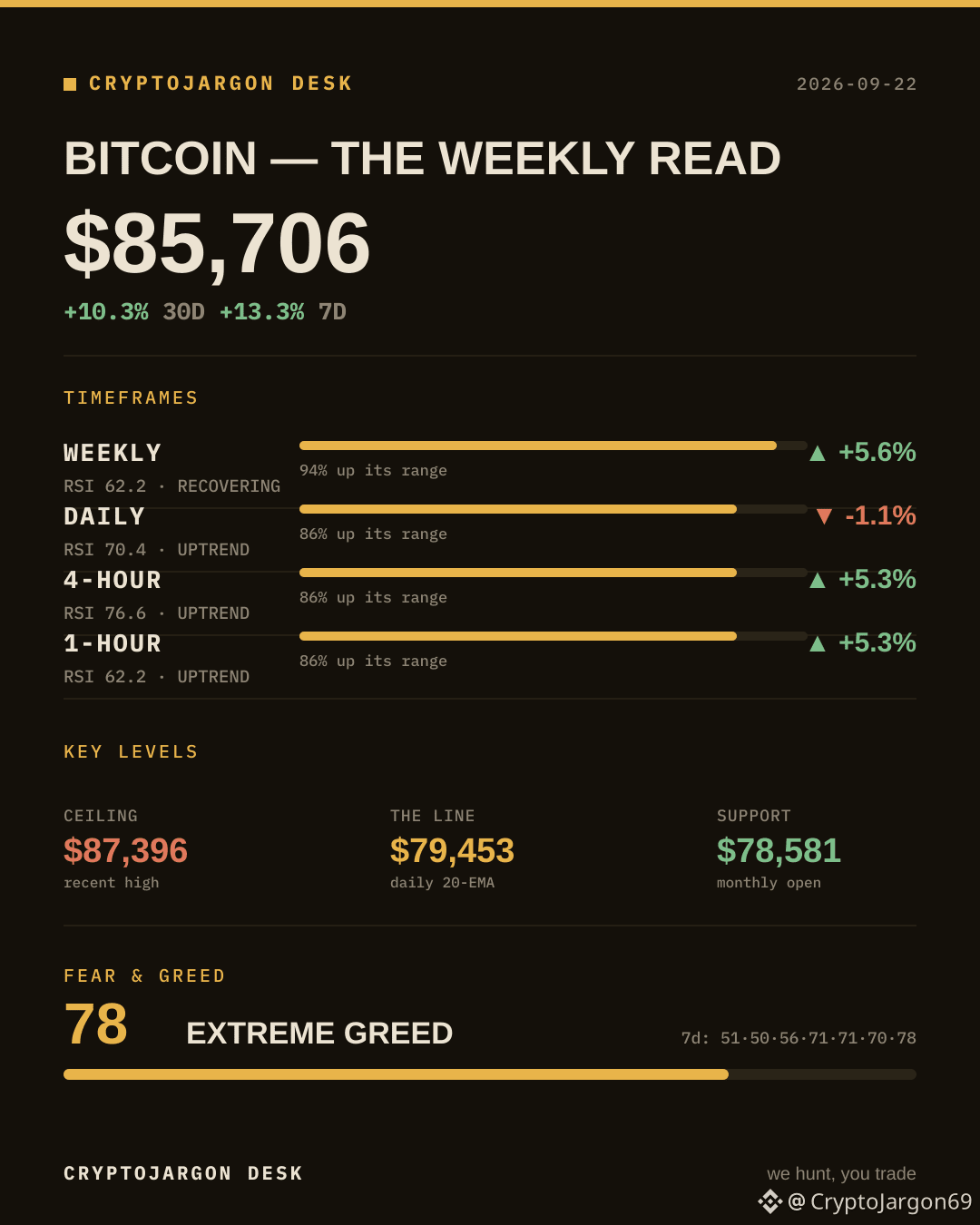
Bitcoin: Haftalik o‘qish — Bitta xaritada har bir vaqt oralig‘iBitkoin $85,706 atrofida. O'ttiz kun ichida u +10.3% ga, haftada esa +13.3% ga yuqoriroq. Qo‘rquv va ochko‘zlik ko‘rsatkichi 78 (Juda ochko‘zlik). Har bir vaqt oralig‘i aslida nima deyayotganini yuqoridan pastga qarab ko‘rib chiqamiz.
30 KUNLIK / 7 KUNLIK Vaqt oralig‘i
O'ttiz kun ichida +10.3%, haftada esa +13.3%. Oylik trend, haftalik esa uning atrofidagi shovqin. Ikkalasini ham nazarda tuting — yuqori vaqt oralig‘lari yo‘nalishni belgilaydi, pastdagilar esa tebranishlarni olib yuradi.
MAKRO FON
Bu haftadagi kayfiyat institutsional qabulning kuchayishi va bozor spekulyatsiyasining ortib borayotgani haqidagi ikki tomonlama rivoyat bilan shakllanmoqda. Institutsional tomonda, yangi ishlanmalar Bitkoinning garov sifatida kredit olish uchun va an’anaviy aksiyalarni tokenlashtirilgan platformalar orqali ko‘priklash uchun foydaliligini kengaytirmoqda. Shu bilan birga, derivativlar bozori leverage (moliyaviy yelkani) ortib borayotganini ko‘rsatmoqda va bu spekulyativ faollikning kuchayganidan dalolat beradi. Mazkur muhit altsenteklar (altcoin) bo‘yicha ayrim narativlarga kuchli qiziqishni ham kuchaytirmoqda, ayniqsa sun’iy intellekt va maxfiylik kabi rivojlanayotgan texnologiyalarga yo‘naltirilganlari.
Bitcoin: Haftalik o‘qish — Bitta xaritada har bir vaqt oralig‘i
Bitkoin $85,706 atrofida. O'ttiz kun ichida u +10.3% ga, haftada esa +13.3% ga yuqoriroq. Qo‘rquv va ochko‘zlik ko‘rsatkichi 78 (Juda ochko‘zlik). Har bir vaqt oralig‘i aslida nima deyayotganini yuqoridan pastga qarab ko‘rib chiqamiz.
30 KUNLIK / 7 KUNLIK Vaqt oralig‘i
O'ttiz kun ichida +10.3%, haftada esa +13.3%. Oylik trend, haftalik esa uning atrofidagi shovqin. Ikkalasini ham nazarda tuting — yuqori vaqt oralig‘lari yo‘nalishni belgilaydi, pastdagilar esa tebranishlarni olib yuradi.
MAKRO FON
Bu haftadagi kayfiyat institutsional qabulning kuchayishi va bozor spekulyatsiyasining ortib borayotgani haqidagi ikki tomonlama rivoyat bilan shakllanmoqda. Institutsional tomonda, yangi ishlanmalar Bitkoinning garov sifatida kredit olish uchun va an’anaviy aksiyalarni tokenlashtirilgan platformalar orqali ko‘priklash uchun foydaliligini kengaytirmoqda. Shu bilan birga, derivativlar bozori leverage (moliyaviy yelkani) ortib borayotganini ko‘rsatmoqda va bu spekulyativ faollikning kuchayganidan dalolat beradi. Mazkur muhit altsenteklar (altcoin) bo‘yicha ayrim narativlarga kuchli qiziqishni ham kuchaytirmoqda, ayniqsa sun’iy intellekt va maxfiylik kabi rivojlanayotgan texnologiyalarga yo‘naltirilganlari.
30 KUNLIK / 7 KUNLIK Vaqt oralig‘i
O'ttiz kun ichida +10.3%, haftada esa +13.3%. Oylik trend, haftalik esa uning atrofidagi shovqin. Ikkalasini ham nazarda tuting — yuqori vaqt oralig‘lari yo‘nalishni belgilaydi, pastdagilar esa tebranishlarni olib yuradi.
MAKRO FON
Bu haftadagi kayfiyat institutsional qabulning kuchayishi va bozor spekulyatsiyasining ortib borayotgani haqidagi ikki tomonlama rivoyat bilan shakllanmoqda. Institutsional tomonda, yangi ishlanmalar Bitkoinning garov sifatida kredit olish uchun va an’anaviy aksiyalarni tokenlashtirilgan platformalar orqali ko‘priklash uchun foydaliligini kengaytirmoqda. Shu bilan birga, derivativlar bozori leverage (moliyaviy yelkani) ortib borayotganini ko‘rsatmoqda va bu spekulyativ faollikning kuchayganidan dalolat beradi. Mazkur muhit altsenteklar (altcoin) bo‘yicha ayrim narativlarga kuchli qiziqishni ham kuchaytirmoqda, ayniqsa sun’iy intellekt va maxfiylik kabi rivojlanayotgan texnologiyalarga yo‘naltirilganlari.
302
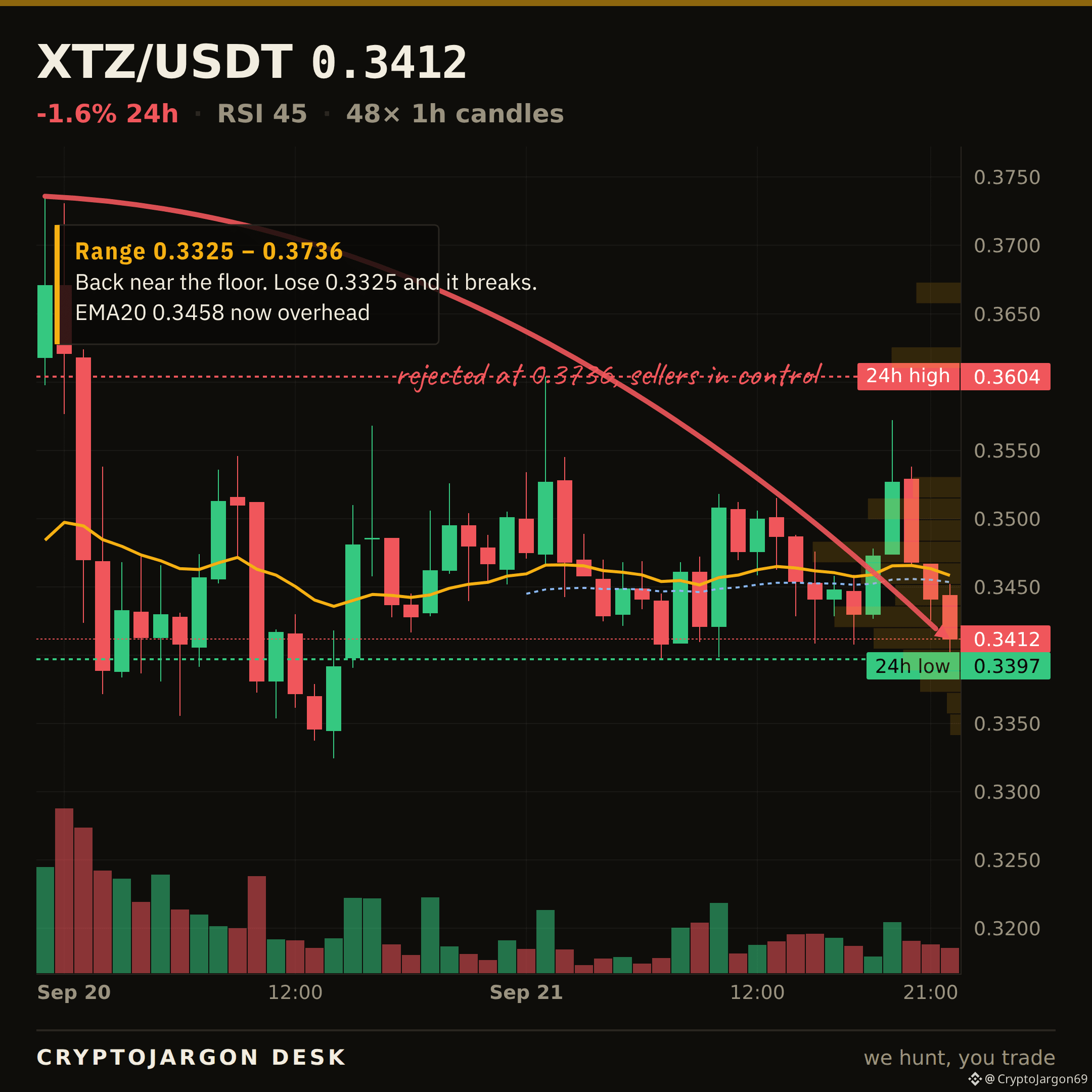
$XTZ · THE LEVEL BROKE
U ushlanmadi.
$0.347 — biz $XTZ bo‘yicha belgilab qo‘ygan pol. Narx uning ostida yopildi — endi $0.341. Quyidagi oraliq ochiladi va bu chiziq qaytib uni yutib olish kerak bo‘lgan shipga aylanadi.
Bu yerdan qaytib oling, yoki bu pastga tushishning keyingi bosqichimi boshlangan?
$XTZ
$XTZ · THE LEVEL BROKE
U ushlanmadi.
$0.347 — biz $XTZ bo‘yicha belgilab qo‘ygan pol. Narx uning ostida yopildi — endi $0.341. Quyidagi oraliq ochiladi va bu chiziq qaytib uni yutib olish kerak bo‘lgan shipga aylanadi.
Bu yerdan qaytib oling, yoki bu pastga tushishning keyingi bosqichimi boshlangan?
$XTZ
U ushlanmadi.
$0.347 — biz $XTZ bo‘yicha belgilab qo‘ygan pol. Narx uning ostida yopildi — endi $0.341. Quyidagi oraliq ochiladi va bu chiziq qaytib uni yutib olish kerak bo‘lgan shipga aylanadi.
Bu yerdan qaytib oling, yoki bu pastga tushishning keyingi bosqichimi boshlangan?
$XTZ
88
Ko‘proq kontentni ko‘rish uchun tizimga kiring
Binance Square'da global kriptovalyuta foydalanuvchilariga qo‘shiling
⚡️ Kriptovalyuta haqida eng so‘nggi va foydali ma’lumotlarni oling.
💬 Dunyoning eng yirik kriptovalyuta birjasi tomonidan ishonchli deb topilgan.
👍 Tasdiqlangan mualliflardan haqiqiy tahlillarni kashf eting.
Email / telefon raqami
Trenddagi mavzular
AIStocksWhatNext
593,361 marta koʻrilgan
4,467 muhokama qilmoqda
Trendlashayotgan xeshteglar kampaniyamizda “Share & Win” trafik mukofotini qo‘lga kiriting
✨Mavzu: AI aksiya kurslari o‘sishda davom etayotgan bir paytda yana qanday investitsiya imkoniyatlari bor?
👉Qanday qo‘shilish:
#AIStocksWhatNext xeshtegi bilan qisqa post yoki maqola joylang
Siz bu holatda bullish tomondamisiz yoki bearish — shuni ayting va AI aksiyalaringiz bo‘yicha portfelingizni yoki treydlaringizni ulashing; treyd vidjeti sizning ishtirokingizga moslikni oshirishi mumkin.
Shuningdek, postingizni ma’lumotlar yoki grafiklar bilan boyitib, AI tomonidan yaratilgan rasmlardan foydalanmaslik orqali kuchaytira olasiz.
✍️Quyidagi yo‘nalishlardan kelib chiqib kontent yarating:
- Nvidia chip sotuvlari kelasi yili ikki baravar bo‘lishini aytdi, eng yirik AI kompaniyalar esa rekord darajadagi daromadlarni qayd etishda davom etyapti — ortidagi hisoblash xarajatlari ham juda katta. AIga talab haqiqatan ham shiddat bilan oshyaptimi? Bu qancha davom etishi mumkin? AI aksiyalar hamma joyda o‘sishda. Bu haqiqiy “breakout”mi yoki faqat qisqa muddatli sakrashmi?
- Tarmoq yetakchilari AI rivojlanishini sekinlashtirishga chaqirmoqda, Trump esa “AI Force” barpo etishni rejalashtirib, AI kelajakda AQSh YAIMning 25%ini tashkil qilishi mumkinligini aytmoqda. Siz qaysi tomondsiz? Davlat darajasidagi qo‘llab-quvvatlash AI aksiyalar uchun uzoq muddatli yutuq bo‘ladimi?
- Siz AI aksiyalarini sotib olyapsizmi? Bizning trade sharing vidjetimiz orqali AI’ga oid treydingiz/ulushingizni ulashing.
⏰Kampaniya davri:
- 2026-09-22 7:00 - 2026-09-24 4:00 UTC
🎁Mukofot:
- Yuqoridagi ko‘rsatmalarga mos keladigan va 100 tadan ko‘p so‘zdan iborat malakali postlar ko‘rib chiqiladi hamda 500 dan 3 000 gacha bo‘lgan tasodifiy trafik oshiruvchi qo‘shimcha olishi mumkin. Postingiz tanlansa, feed kotibingizdan bildirishnoma olasiz.
- Binance Square Official’da maqolangizni namoyish qilish imkoniyatiga ega bo‘ling
Postingiz uchun g‘oyalar kerakmi? Mavzu sahifasiga kiring #AIStocksWhatNext yoki Square Guide on How to Post for Better Reach.
Binance Square Official
·461 ta layk
·1.2M marta koʻrilgan
21SharesLaunchesEuropesFirstZcashETP
4,145 marta koʻrilgan
210 muhokama qilmoqda
CardanoJoinsX402PaymentStandard
2,967 marta koʻrilgan
174 muhokama qilmoqda