
CoinPhoton
7.8k Postlar
CoinPhoton
 Square Verified+
Shikoyat qilish
Foydalanuvchini bloklash

Creator of the Year

Level 2 Creator
Ochiq savdo
Vaqti-vaqti bilan savdo qiluvchi
7.6 yil
15 Kuzatilmoqda
146.5K+ Kuzatuvchilar
146.6K+ Yoqdi
2 Nishonlar
Postlar
Portfel
Barchasi
Iqtiboslar
Videolar
Jonli
·
--
StoneX Robinhood’ga “Sotib olish” (Buy) tavsiyasi va 170 dollar narx maqsadini berdi, bu esa seshanba kunidagi yopilishdan taxminan 45% upside (potensial o‘sish)ni anglatadi.
Analitik Mark Palmer Robinhood’dagi deyarli barcha muhim operatsion ko‘rsatkichlar tezlashayotganini aytib o‘tdi va Robinhood Chain hamda prognoz (prediction) bozorlarini asosiy yangi o‘sish dvigatellari sifatida ko‘rsatdi.
StoneX’ning hisob-kitoblariga ko‘ra, Robinhood Chain 2029-moliya yiliga kelib yillik daromadi 980 million dollargacha yetishi mumkin, marja esa 85% bo‘ladi. Layer 2 tarmog‘i yaqinda Ethereum’ning eng yuqori komissiya (fee) ishlab chiqaradigan zanjirlaridan biriga aylandi.
Prognoz bozorlaridan (prediction markets) yana bir muhim omil. Robinhood Q2 da 13,6 milliardta event shartnomasini (event contracts) savdoga chiqardi va bu taxminan 156 million dollar daromad keltirdi; bu ko‘rsatkich chorak avvalgisiga nisbatan 50%ga oshgan.
Ijobiy (bullish) chaqiriq Bernstein’ning yaqinda bergan 160 dollar narx maqsiyasidan keyin kelib, Robinhood’ning an’anaviy chakana savdo (retail trading)dan tashqariga kengayishi atrofida Wall Street’da kayfiyat kuchayayotganini mustahkamlaydi.
StoneX Robinhood’ga “Sotib olish” (Buy) tavsiyasi va 170 dollar narx maqsadini berdi, bu esa seshanba kunidagi yopilishdan taxminan 45% upside (potensial o‘sish)ni anglatadi.
Analitik Mark Palmer Robinhood’dagi deyarli barcha muhim operatsion ko‘rsatkichlar tezlashayotganini aytib o‘tdi va Robinhood Chain hamda prognoz (prediction) bozorlarini asosiy yangi o‘sish dvigatellari sifatida ko‘rsatdi.
StoneX’ning hisob-kitoblariga ko‘ra, Robinhood Chain 2029-moliya yiliga kelib yillik daromadi 980 million dollargacha yetishi mumkin, marja esa 85% bo‘ladi. Layer 2 tarmog‘i yaqinda Ethereum’ning eng yuqori komissiya (fee) ishlab chiqaradigan zanjirlaridan biriga aylandi.
Prognoz bozorlaridan (prediction markets) yana bir muhim omil. Robinhood Q2 da 13,6 milliardta event shartnomasini (event contracts) savdoga chiqardi va bu taxminan 156 million dollar daromad keltirdi; bu ko‘rsatkich chorak avvalgisiga nisbatan 50%ga oshgan.
Ijobiy (bullish) chaqiriq Bernstein’ning yaqinda bergan 160 dollar narx maqsiyasidan keyin kelib, Robinhood’ning an’anaviy chakana savdo (retail trading)dan tashqariga kengayishi atrofida Wall Street’da kayfiyat kuchayayotganini mustahkamlaydi.
Analitik Mark Palmer Robinhood’dagi deyarli barcha muhim operatsion ko‘rsatkichlar tezlashayotganini aytib o‘tdi va Robinhood Chain hamda prognoz (prediction) bozorlarini asosiy yangi o‘sish dvigatellari sifatida ko‘rsatdi.
StoneX’ning hisob-kitoblariga ko‘ra, Robinhood Chain 2029-moliya yiliga kelib yillik daromadi 980 million dollargacha yetishi mumkin, marja esa 85% bo‘ladi. Layer 2 tarmog‘i yaqinda Ethereum’ning eng yuqori komissiya (fee) ishlab chiqaradigan zanjirlaridan biriga aylandi.
Prognoz bozorlaridan (prediction markets) yana bir muhim omil. Robinhood Q2 da 13,6 milliardta event shartnomasini (event contracts) savdoga chiqardi va bu taxminan 156 million dollar daromad keltirdi; bu ko‘rsatkich chorak avvalgisiga nisbatan 50%ga oshgan.
Ijobiy (bullish) chaqiriq Bernstein’ning yaqinda bergan 160 dollar narx maqsiyasidan keyin kelib, Robinhood’ning an’anaviy chakana savdo (retail trading)dan tashqariga kengayishi atrofida Wall Street’da kayfiyat kuchayayotganini mustahkamlaydi.
339
·
--
Tasdiqlangan
Tron bilan bog‘langan AQSh ro‘yxatiga kiritilgan birinchi “staked” ETF chorshanba kuni TRXS ticker ostida ishga tushiriladi va investorlarni TRXga an’anaviy bozorlardagi yo‘l orqali ta’sir qilish imkonini beradi.
Canary Staked TRX ETF, shuningdek, Tron’ning proof-of-stake tarmog‘i orqali yaratiladigan staking mukofotlarini ham qamrab oladi; ushbu mukofotlar fondning sof aktiv qiymatida aks ettiriladi.
Hozirda TRXning bozor kapitallashuvi taxminan 32,1 mlrd. dollarni tashkil etadi va bu uni eng yirik kriptovalutalar orasida sakkizinchi o‘ringa qo‘yadi.
Canary Capital ta’kidlashicha, mahsulot TRXning o‘ziga bo‘lgan ta’sirdan tashqari, kengroq Tron tarmog‘ining o‘sishiga ham qiziqadigan investorlar uchun mo‘ljallangan; Tron esa stablecoin to‘lovlari va hisob-kitoblarda keng qo‘llaniladi. $TRX
{future}(TRXUSDT)
Tron bilan bog‘langan AQSh ro‘yxatiga kiritilgan birinchi “staked” ETF chorshanba kuni TRXS ticker ostida ishga tushiriladi va investorlarni TRXga an’anaviy bozorlardagi yo‘l orqali ta’sir qilish imkonini beradi.
Canary Staked TRX ETF, shuningdek, Tron’ning proof-of-stake tarmog‘i orqali yaratiladigan staking mukofotlarini ham qamrab oladi; ushbu mukofotlar fondning sof aktiv qiymatida aks ettiriladi.
Hozirda TRXning bozor kapitallashuvi taxminan 32,1 mlrd. dollarni tashkil etadi va bu uni eng yirik kriptovalutalar orasida sakkizinchi o‘ringa qo‘yadi.
Canary Capital ta’kidlashicha, mahsulot TRXning o‘ziga bo‘lgan ta’sirdan tashqari, kengroq Tron tarmog‘ining o‘sishiga ham qiziqadigan investorlar uchun mo‘ljallangan; Tron esa stablecoin to‘lovlari va hisob-kitoblarda keng qo‘llaniladi. $TRX
Canary Staked TRX ETF, shuningdek, Tron’ning proof-of-stake tarmog‘i orqali yaratiladigan staking mukofotlarini ham qamrab oladi; ushbu mukofotlar fondning sof aktiv qiymatida aks ettiriladi.
Hozirda TRXning bozor kapitallashuvi taxminan 32,1 mlrd. dollarni tashkil etadi va bu uni eng yirik kriptovalutalar orasida sakkizinchi o‘ringa qo‘yadi.
Canary Capital ta’kidlashicha, mahsulot TRXning o‘ziga bo‘lgan ta’sirdan tashqari, kengroq Tron tarmog‘ining o‘sishiga ham qiziqadigan investorlar uchun mo‘ljallangan; Tron esa stablecoin to‘lovlari va hisob-kitoblarda keng qo‘llaniladi. $TRX
1
1.9k
·
--
Binance Square’da ko‘p post qilyapsiz, lekin baribir ko‘rishlar pastmi? Siz platforma aniq talab qiladigan bitta narsani o'tkazib yuborgandirsiz: o‘z fikringiz.
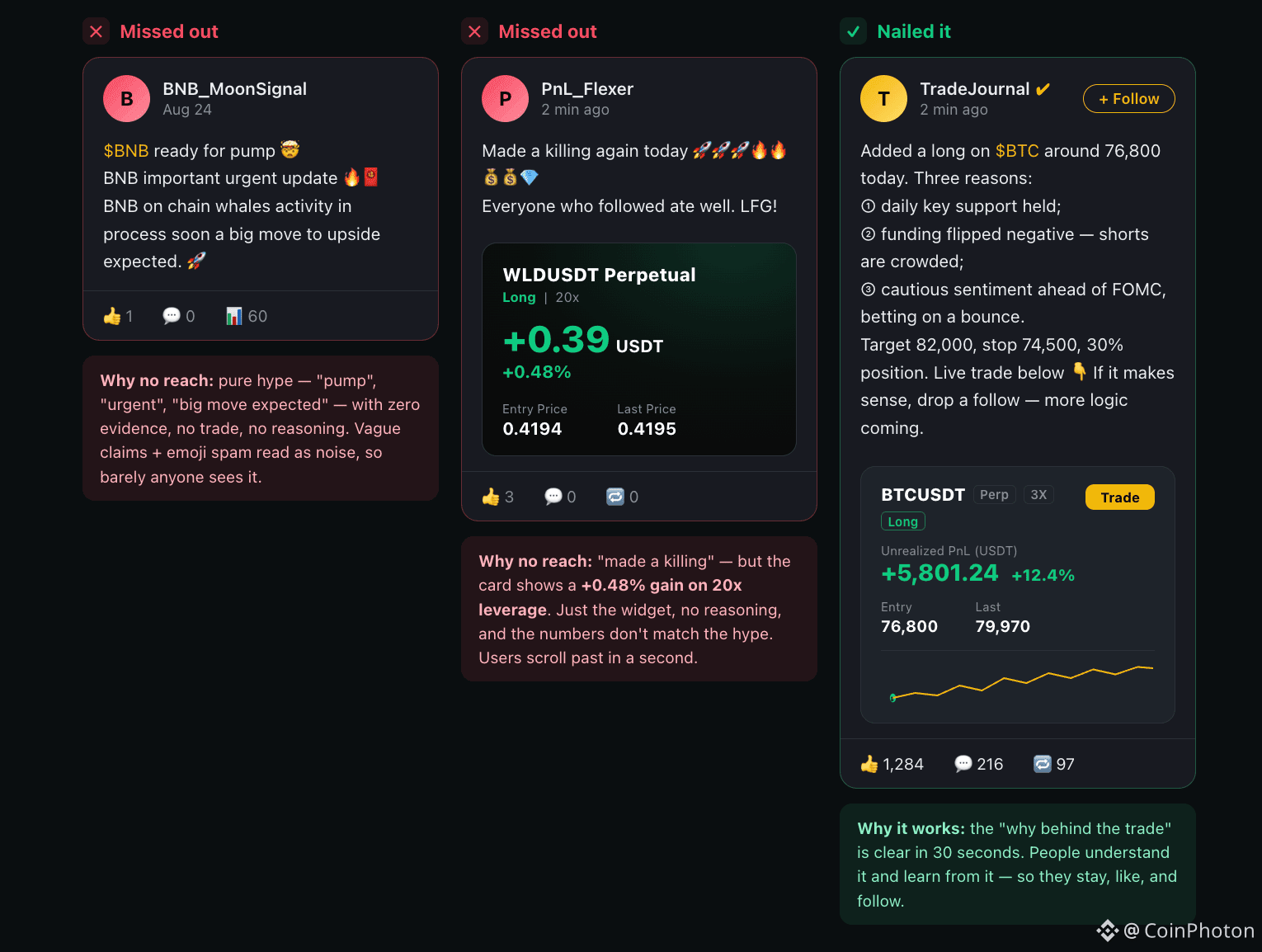
Binance Square’ning Creator Academy ko‘proq reach (ko‘rish) olish uchun foydali rejani bo‘lib berdi. Eng katta xulosa oddiy: faqat yangilik yoki “issiq” tikkerlarni post qilishning o‘zi yetmaydi.
Yaxshiroq natija uchun:
Savdo postlari: harakatni ayting → o‘z fikringizni tushuntiring → nima qilganingizni ko‘rsating → CTA (harakatga chaqiruv) qo‘shing.
Agar treydlarni ulashsangiz, ularni real qiling. Soxta screenshotlar, mos kelmaydigan pozitsiyalar yoki sun’iy faollik akkauntingizning reach’iga salbiy ta’sir qilishi mumkin.
Yangilik postlari uchun, faqat sarlavhani qayta ulashmang. Kamida 50 ta so‘zdan iborat o‘z tahlilingizni qo‘shing: Nega bu muhim? Qaysi token yoki sektor foyda ko‘rishi mumkin? Nimalarga qarayapsiz yoki keyingi nima qilmoqchisiz?
Dastlabki 3 soniya eng muhim. Kuchli post bo‘lsa ham, sust “hook” uni barbod qilishi mumkin.
Ticker spamlari, bir xil yangiliklarni takrorlash, haddan tashqari emoji va majburiy “BREAKING” clickbaitdan saqlaning.
Vaqt o‘tib auditoriya shakllantirishni xohlasangiz, oxirida follow CTA bilan tabiiy yakunlang.
Mening eng katta xulosam: Binance Square shunchaki yangilikni qayta tarqatadigan akkauntlardan ko‘ra, qaror va harakat qo‘shadigan creatorlarni mukofotlaydiganga o‘xshaydi.
Ikki kishi bir xil story post qilishi mumkin, lekin nima uchun u muhimligini va u haqda nima qilishni rejalayotganini tushuntirib bergan odam o‘quvchilarni ko‘proq ushlab qolishi va ko‘rishlarni obunachilarga aylantirishi ancha ehtimol.
Men faqat sarlavha post qilish o‘rniga, yangilik + bozor ta’siri + shaxsiy fikrimga ko‘proq e’tibor qarataman.
Ko‘proq kripto yangiliklari, bozor tahlillari va treydga yo‘naltirilgan yangilanishlar uchun follow qiling.
#CreatorAcademy #BinanceSquare #crypto #bitcoin #trading $BNB
{future}(BNBUSDT)
Binance Square’da ko‘p post qilyapsiz, lekin baribir ko‘rishlar pastmi? Siz platforma aniq talab qiladigan bitta narsani o'tkazib yuborgandirsiz: o‘z fikringiz.
Binance Square’ning Creator Academy ko‘proq reach (ko‘rish) olish uchun foydali rejani bo‘lib berdi. Eng katta xulosa oddiy: faqat yangilik yoki “issiq” tikkerlarni post qilishning o‘zi yetmaydi.
Yaxshiroq natija uchun:
Savdo postlari: harakatni ayting → o‘z fikringizni tushuntiring → nima qilganingizni ko‘rsating → CTA (harakatga chaqiruv) qo‘shing.
Agar treydlarni ulashsangiz, ularni real qiling. Soxta screenshotlar, mos kelmaydigan pozitsiyalar yoki sun’iy faollik akkauntingizning reach’iga salbiy ta’sir qilishi mumkin.
Yangilik postlari uchun, faqat sarlavhani qayta ulashmang. Kamida 50 ta so‘zdan iborat o‘z tahlilingizni qo‘shing: Nega bu muhim? Qaysi token yoki sektor foyda ko‘rishi mumkin? Nimalarga qarayapsiz yoki keyingi nima qilmoqchisiz?
Dastlabki 3 soniya eng muhim. Kuchli post bo‘lsa ham, sust “hook” uni barbod qilishi mumkin.
Ticker spamlari, bir xil yangiliklarni takrorlash, haddan tashqari emoji va majburiy “BREAKING” clickbaitdan saqlaning.
Vaqt o‘tib auditoriya shakllantirishni xohlasangiz, oxirida follow CTA bilan tabiiy yakunlang.
Mening eng katta xulosam: Binance Square shunchaki yangilikni qayta tarqatadigan akkauntlardan ko‘ra, qaror va harakat qo‘shadigan creatorlarni mukofotlaydiganga o‘xshaydi.
Ikki kishi bir xil story post qilishi mumkin, lekin nima uchun u muhimligini va u haqda nima qilishni rejalayotganini tushuntirib bergan odam o‘quvchilarni ko‘proq ushlab qolishi va ko‘rishlarni obunachilarga aylantirishi ancha ehtimol.
Men faqat sarlavha post qilish o‘rniga, yangilik + bozor ta’siri + shaxsiy fikrimga ko‘proq e’tibor qarataman.
Ko‘proq kripto yangiliklari, bozor tahlillari va treydga yo‘naltirilgan yangilanishlar uchun follow qiling.
#CreatorAcademy #BinanceSquare #crypto #bitcoin #trading $BNB
Binance Square’ning Creator Academy ko‘proq reach (ko‘rish) olish uchun foydali rejani bo‘lib berdi. Eng katta xulosa oddiy: faqat yangilik yoki “issiq” tikkerlarni post qilishning o‘zi yetmaydi.
Yaxshiroq natija uchun:
Savdo postlari: harakatni ayting → o‘z fikringizni tushuntiring → nima qilganingizni ko‘rsating → CTA (harakatga chaqiruv) qo‘shing.
Agar treydlarni ulashsangiz, ularni real qiling. Soxta screenshotlar, mos kelmaydigan pozitsiyalar yoki sun’iy faollik akkauntingizning reach’iga salbiy ta’sir qilishi mumkin.
Yangilik postlari uchun, faqat sarlavhani qayta ulashmang. Kamida 50 ta so‘zdan iborat o‘z tahlilingizni qo‘shing: Nega bu muhim? Qaysi token yoki sektor foyda ko‘rishi mumkin? Nimalarga qarayapsiz yoki keyingi nima qilmoqchisiz?
Dastlabki 3 soniya eng muhim. Kuchli post bo‘lsa ham, sust “hook” uni barbod qilishi mumkin.
Ticker spamlari, bir xil yangiliklarni takrorlash, haddan tashqari emoji va majburiy “BREAKING” clickbaitdan saqlaning.
Vaqt o‘tib auditoriya shakllantirishni xohlasangiz, oxirida follow CTA bilan tabiiy yakunlang.
Mening eng katta xulosam: Binance Square shunchaki yangilikni qayta tarqatadigan akkauntlardan ko‘ra, qaror va harakat qo‘shadigan creatorlarni mukofotlaydiganga o‘xshaydi.
Ikki kishi bir xil story post qilishi mumkin, lekin nima uchun u muhimligini va u haqda nima qilishni rejalayotganini tushuntirib bergan odam o‘quvchilarni ko‘proq ushlab qolishi va ko‘rishlarni obunachilarga aylantirishi ancha ehtimol.
Men faqat sarlavha post qilish o‘rniga, yangilik + bozor ta’siri + shaxsiy fikrimga ko‘proq e’tibor qarataman.
Ko‘proq kripto yangiliklari, bozor tahlillari va treydga yo‘naltirilgan yangilanishlar uchun follow qiling.
#CreatorAcademy #BinanceSquare #crypto #bitcoin #trading $BNB
4
1.6k
·
--
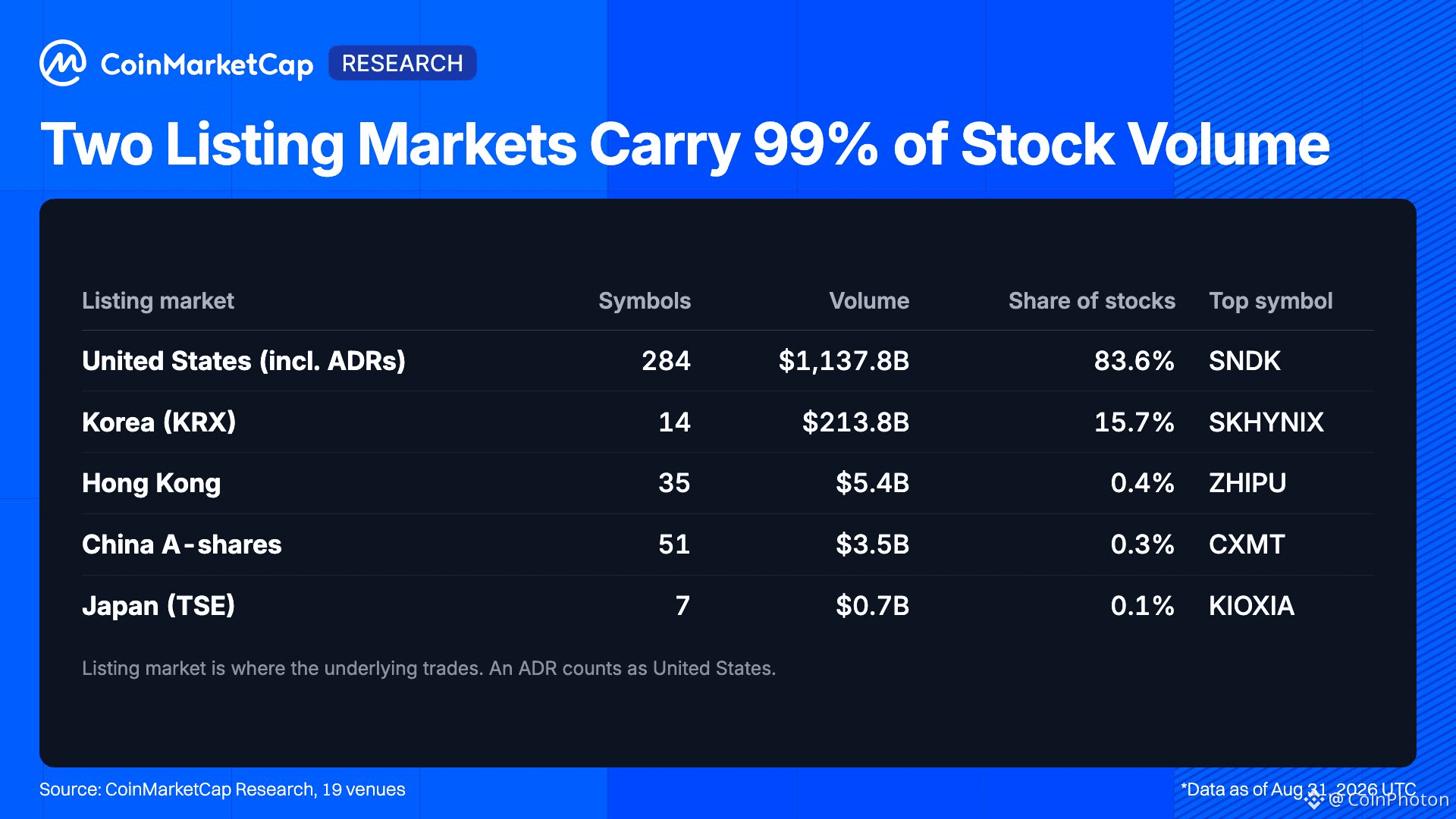
AQSh va Koreya aksiyalari umumiy RWA aksiyalar-perpetual (abadiy) savdo hajmining 99% dan ko‘prog‘ini tashkil etadi, bu esa rivojlanayotgan bozorning haddan tashqari jamlanganini ko‘rsatadi.
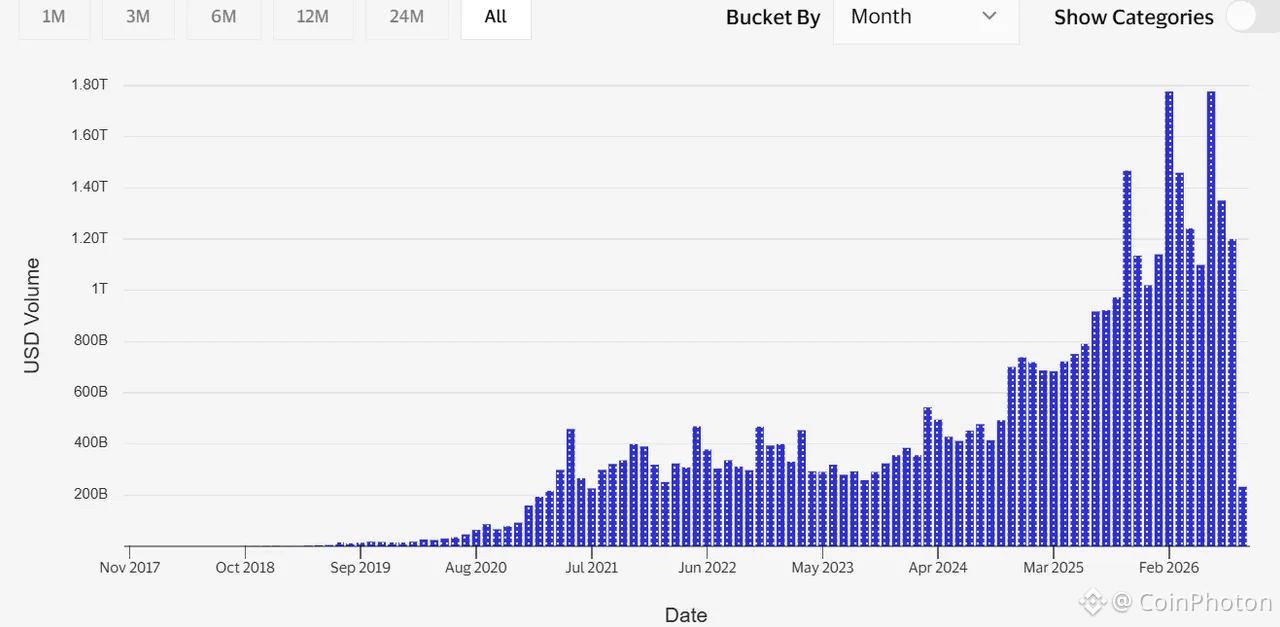
ADR-larni ham o‘z ichiga olgan AQSh ro‘yxatiga kiritilgan aksiyalar 284 ta simvol bo‘yicha taxminan 1,14 trillion dollar ishlab topdi va bu umumiy stock-perp hajmining 83,6% ini tashkil etadi. Faollik atigi 14 ta tickerda jamlanganiga qaramay, Koreya 213,8 milliard dollar bilan ikkinchi o‘rinni egalladi.
Birgalikda AQSh va Koreya bozordagi ulushning 99,3% ini tashkil qiladi, Gonkong, Xitoyning A-aktsiyalari va Tokyo esa kollektiv ravishda 1% dan kamroqni beradi, holbuki ular yana 93 ta qo‘shimcha simvoldan iborat.
Koreyadagi faollik ayniqsa jamlangan: hajmning aksariyati mamlakatning aksiyalar bozoriga keng ta’sir ko‘rsatishdan ko‘ra, xususan xotira-chiplar (memory-chip) savdosi hisobiga yuzaga keladi.
AQSh va Koreya aksiyalari umumiy RWA aksiyalar-perpetual (abadiy) savdo hajmining 99% dan ko‘prog‘ini tashkil etadi, bu esa rivojlanayotgan bozorning haddan tashqari jamlanganini ko‘rsatadi.
ADR-larni ham o‘z ichiga olgan AQSh ro‘yxatiga kiritilgan aksiyalar 284 ta simvol bo‘yicha taxminan 1,14 trillion dollar ishlab topdi va bu umumiy stock-perp hajmining 83,6% ini tashkil etadi. Faollik atigi 14 ta tickerda jamlanganiga qaramay, Koreya 213,8 milliard dollar bilan ikkinchi o‘rinni egalladi.
Birgalikda AQSh va Koreya bozordagi ulushning 99,3% ini tashkil qiladi, Gonkong, Xitoyning A-aktsiyalari va Tokyo esa kollektiv ravishda 1% dan kamroqni beradi, holbuki ular yana 93 ta qo‘shimcha simvoldan iborat.
Koreyadagi faollik ayniqsa jamlangan: hajmning aksariyati mamlakatning aksiyalar bozoriga keng ta’sir ko‘rsatishdan ko‘ra, xususan xotira-chiplar (memory-chip) savdosi hisobiga yuzaga keladi.
ADR-larni ham o‘z ichiga olgan AQSh ro‘yxatiga kiritilgan aksiyalar 284 ta simvol bo‘yicha taxminan 1,14 trillion dollar ishlab topdi va bu umumiy stock-perp hajmining 83,6% ini tashkil etadi. Faollik atigi 14 ta tickerda jamlanganiga qaramay, Koreya 213,8 milliard dollar bilan ikkinchi o‘rinni egalladi.
Birgalikda AQSh va Koreya bozordagi ulushning 99,3% ini tashkil qiladi, Gonkong, Xitoyning A-aktsiyalari va Tokyo esa kollektiv ravishda 1% dan kamroqni beradi, holbuki ular yana 93 ta qo‘shimcha simvoldan iborat.
Koreyadagi faollik ayniqsa jamlangan: hajmning aksariyati mamlakatning aksiyalar bozoriga keng ta’sir ko‘rsatishdan ko‘ra, xususan xotira-chiplar (memory-chip) savdosi hisobiga yuzaga keladi.
1
538
·
--
Hyperliquid’ning umumiy ochiq foizi $14,3 milliardga qaytadan ko‘tarildi va 2025-yil 10-oktabrdagi tarixiy qulashi oldidan kuzatilgan darajalardan atigi 3%ga orqada qolmoqda.
O‘sha qulash paytida Hyperliquid’ning OI bir kun ichida taxminan 56%ga pasaydi: $14,7 milliarddan $6,5 milliardgacha. Tiklanish dastlab HIP-3 bozorlaridagi o‘sish bilan boshlandi va so‘nggi olti oy ichida platforma OI o‘sishining taxminan 30%ini tashkil etdi.
Biroq, yaqinda o‘sish yana Hyperliquid’ning asosiy kripto perpetual bozorlariga qaytdi. Ehtimoliy katalizatorlar sifatida Coinbase’ning Base App foydalanuvchilarini Hyperliquid’ga yo‘naltirishi va AQSh regulyatorlari oxir-oqibat onshor (ichki) xizmatga mos keladigan kirishni ta’minlashi mumkinligi haqidagi kutishlar tilga olinadi.
Bu siljish ayniqsa HYPE uchun muhim, chunki Hyperliquid’ning asosiy kripto perps bozorlaridan keladigan to‘lovlarning qariyb 97% i HYPE’ning qaytarib sotib olishlariga yo‘naltiriladi; shuning uchun core-market o‘sishi token uchun HIP-3 faoliyatidan ko‘ra qimmatroq.
HYPE bu oy 50%dan ko‘proqqa o‘sib, $88 atrofida tarixiy eng yuqori darajaga chiqdi va bozor kapitalizatsiyasi deyarli $20 milliardga yetdi. $HYPE
{future}(HYPEUSDT)
Hyperliquid’ning umumiy ochiq foizi $14,3 milliardga qaytadan ko‘tarildi va 2025-yil 10-oktabrdagi tarixiy qulashi oldidan kuzatilgan darajalardan atigi 3%ga orqada qolmoqda.
O‘sha qulash paytida Hyperliquid’ning OI bir kun ichida taxminan 56%ga pasaydi: $14,7 milliarddan $6,5 milliardgacha. Tiklanish dastlab HIP-3 bozorlaridagi o‘sish bilan boshlandi va so‘nggi olti oy ichida platforma OI o‘sishining taxminan 30%ini tashkil etdi.
Biroq, yaqinda o‘sish yana Hyperliquid’ning asosiy kripto perpetual bozorlariga qaytdi. Ehtimoliy katalizatorlar sifatida Coinbase’ning Base App foydalanuvchilarini Hyperliquid’ga yo‘naltirishi va AQSh regulyatorlari oxir-oqibat onshor (ichki) xizmatga mos keladigan kirishni ta’minlashi mumkinligi haqidagi kutishlar tilga olinadi.
Bu siljish ayniqsa HYPE uchun muhim, chunki Hyperliquid’ning asosiy kripto perps bozorlaridan keladigan to‘lovlarning qariyb 97% i HYPE’ning qaytarib sotib olishlariga yo‘naltiriladi; shuning uchun core-market o‘sishi token uchun HIP-3 faoliyatidan ko‘ra qimmatroq.
HYPE bu oy 50%dan ko‘proqqa o‘sib, $88 atrofida tarixiy eng yuqori darajaga chiqdi va bozor kapitalizatsiyasi deyarli $20 milliardga yetdi. $HYPE
O‘sha qulash paytida Hyperliquid’ning OI bir kun ichida taxminan 56%ga pasaydi: $14,7 milliarddan $6,5 milliardgacha. Tiklanish dastlab HIP-3 bozorlaridagi o‘sish bilan boshlandi va so‘nggi olti oy ichida platforma OI o‘sishining taxminan 30%ini tashkil etdi.
Biroq, yaqinda o‘sish yana Hyperliquid’ning asosiy kripto perpetual bozorlariga qaytdi. Ehtimoliy katalizatorlar sifatida Coinbase’ning Base App foydalanuvchilarini Hyperliquid’ga yo‘naltirishi va AQSh regulyatorlari oxir-oqibat onshor (ichki) xizmatga mos keladigan kirishni ta’minlashi mumkinligi haqidagi kutishlar tilga olinadi.
Bu siljish ayniqsa HYPE uchun muhim, chunki Hyperliquid’ning asosiy kripto perps bozorlaridan keladigan to‘lovlarning qariyb 97% i HYPE’ning qaytarib sotib olishlariga yo‘naltiriladi; shuning uchun core-market o‘sishi token uchun HIP-3 faoliyatidan ko‘ra qimmatroq.
HYPE bu oy 50%dan ko‘proqqa o‘sib, $88 atrofida tarixiy eng yuqori darajaga chiqdi va bozor kapitalizatsiyasi deyarli $20 milliardga yetdi. $HYPE
315
·
--
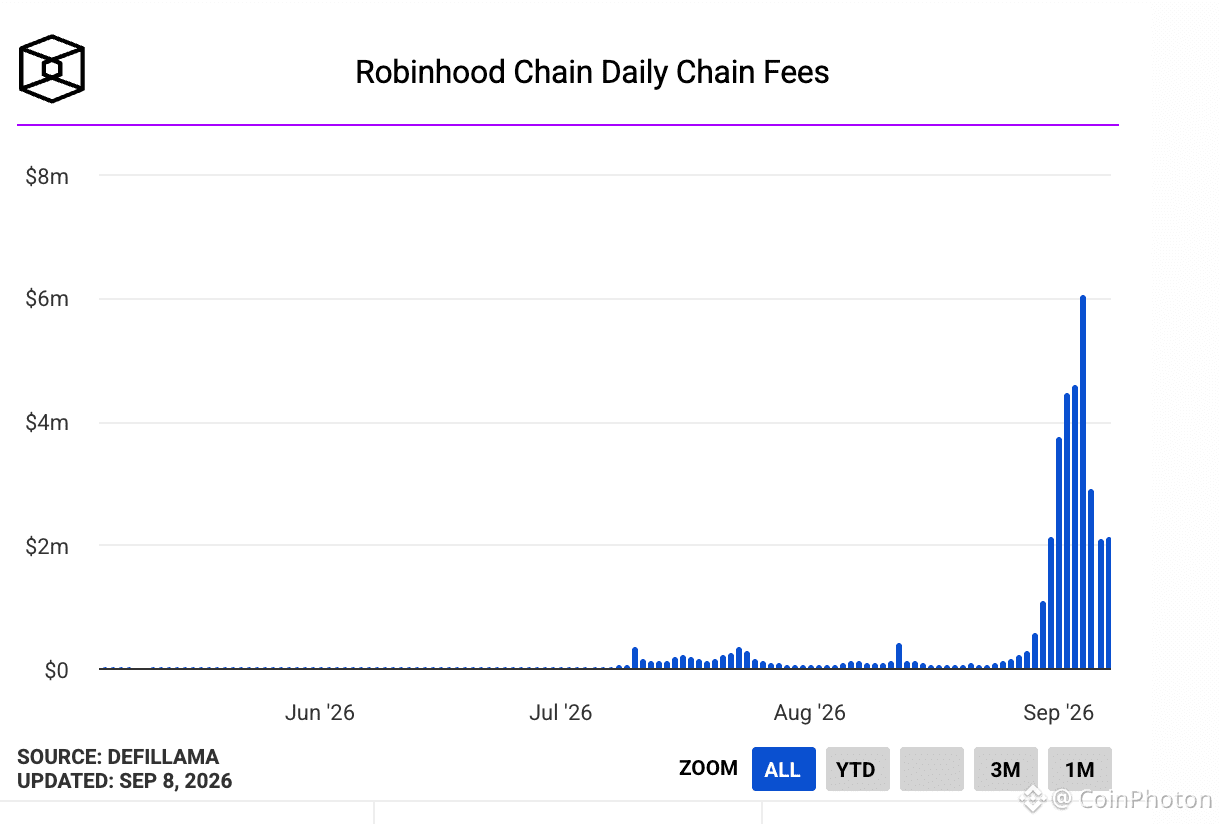
PONS Robinhood Chain’da faollik keskin oshib ketishi fonida 970 million dollardan yuqori bo‘lgan rekord darajadagi (hammasi vaqtdagi eng yuqori) baholashga sakradi va bu haftalik tarmoq to‘lovlarini 17 baravar ko‘tarib yubordi.
Robinhood Chain 4-sentabr kuni to‘lovlardan rekord 6 million dollar ishlab topdi, yetti kunlik to‘lovlar esa avvalgi haftadagi atigi 1,4 million dollarga nisbatan taxminan 25 million dollarga yetdi. Haftalik DEX hajmi ham 12,4 milliard dollargacha oshib, ikki baravaridan ko‘proqqa ko‘tarildi.
O‘sishga asosan Pons sabab bo‘ldi — u hozir Robinhood Chain’dagi yetakchi token launchpad hisoblanadi. Faqat 3-sentabr kuni Pons deyarli 6 million dollar miqdorida to‘lov ishlab topdi va o‘sha kunning o‘zida Pump.fun hamda Hyperliquid’ni ortda qoldirdi.
PONS bir hafta ichida 200% dan ko‘proqqa o‘sdi. Pons daromadining qariyb 80% tokenlarni qayta sotib olishga (buyback) sarflanadi, token ta’minotining esa 28% dan ortig‘i botdayeb yuborilgan (burn qilingan) — bu platformadagi faollik bilan bevosita bog‘langan kuchli buyback-and-burn mexanizmini yaratadi.
PONS Robinhood Chain’da faollik keskin oshib ketishi fonida 970 million dollardan yuqori bo‘lgan rekord darajadagi (hammasi vaqtdagi eng yuqori) baholashga sakradi va bu haftalik tarmoq to‘lovlarini 17 baravar ko‘tarib yubordi.
Robinhood Chain 4-sentabr kuni to‘lovlardan rekord 6 million dollar ishlab topdi, yetti kunlik to‘lovlar esa avvalgi haftadagi atigi 1,4 million dollarga nisbatan taxminan 25 million dollarga yetdi. Haftalik DEX hajmi ham 12,4 milliard dollargacha oshib, ikki baravaridan ko‘proqqa ko‘tarildi.
O‘sishga asosan Pons sabab bo‘ldi — u hozir Robinhood Chain’dagi yetakchi token launchpad hisoblanadi. Faqat 3-sentabr kuni Pons deyarli 6 million dollar miqdorida to‘lov ishlab topdi va o‘sha kunning o‘zida Pump.fun hamda Hyperliquid’ni ortda qoldirdi.
PONS bir hafta ichida 200% dan ko‘proqqa o‘sdi. Pons daromadining qariyb 80% tokenlarni qayta sotib olishga (buyback) sarflanadi, token ta’minotining esa 28% dan ortig‘i botdayeb yuborilgan (burn qilingan) — bu platformadagi faollik bilan bevosita bog‘langan kuchli buyback-and-burn mexanizmini yaratadi.
Robinhood Chain 4-sentabr kuni to‘lovlardan rekord 6 million dollar ishlab topdi, yetti kunlik to‘lovlar esa avvalgi haftadagi atigi 1,4 million dollarga nisbatan taxminan 25 million dollarga yetdi. Haftalik DEX hajmi ham 12,4 milliard dollargacha oshib, ikki baravaridan ko‘proqqa ko‘tarildi.
O‘sishga asosan Pons sabab bo‘ldi — u hozir Robinhood Chain’dagi yetakchi token launchpad hisoblanadi. Faqat 3-sentabr kuni Pons deyarli 6 million dollar miqdorida to‘lov ishlab topdi va o‘sha kunning o‘zida Pump.fun hamda Hyperliquid’ni ortda qoldirdi.
PONS bir hafta ichida 200% dan ko‘proqqa o‘sdi. Pons daromadining qariyb 80% tokenlarni qayta sotib olishga (buyback) sarflanadi, token ta’minotining esa 28% dan ortig‘i botdayeb yuborilgan (burn qilingan) — bu platformadagi faollik bilan bevosita bog‘langan kuchli buyback-and-burn mexanizmini yaratadi.
510
·
--
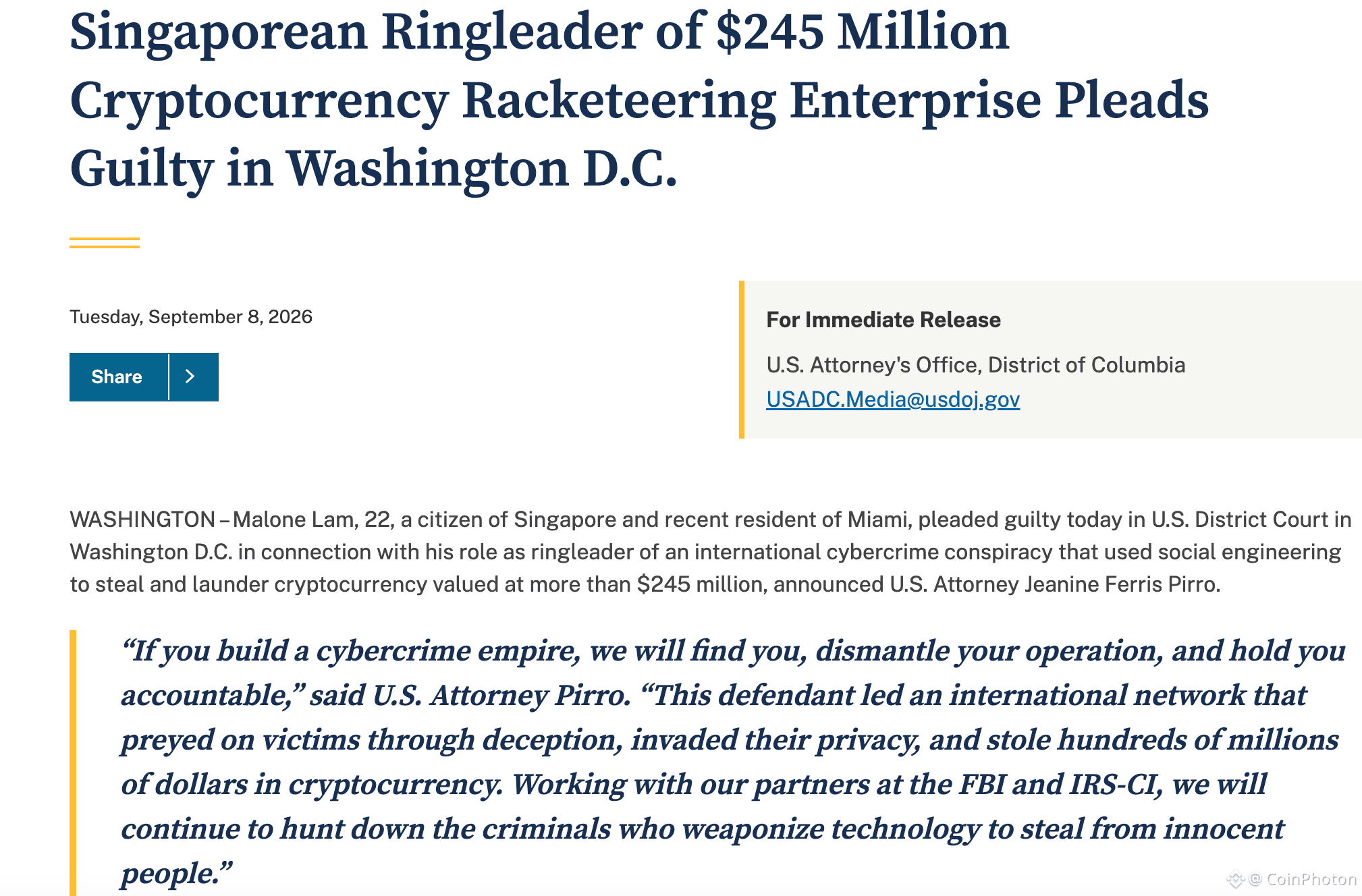
22 yoshli singapurlik erkak xalqaro ijtimoiy muhandislik operatsiyasini boshqarishda aybiga iqror bo‘ldi; u 245 million dollardan ortiq kriptovalyutani o‘g‘irlab, uni legallashtirgan.
AQShning Kolumbiya okrugi bo‘yicha prokuraturasi ma’lumotiga ko‘ra, Malone Lam “Anne Hathaway”, “$$$” va “King Greavy” kabi taxalluslardan foydalangan va federal reket conspiratsiyasi (uyushgan jinoyat) bo‘yicha bitta bandga aybiga iqror bo‘lgan.
Prokurorlarning aytishicha, Lam jabrdiydalarni aniqlagan va sxemaning ishtirokchilarini muvofiqlashtirgan. O‘g‘irlangan mablag‘lar taxminan har kechasi 500 000 dollarga yaqin bo‘lgan hashamatli mashinalar, soatlar, sumkalar, yuqori darajadagi ijaraga beriladigan uy-joylar hamda tungi klub hisoblariga sarflangani aytilmoqda.
Lam sud tomonidan 20 yilgacha qamoq jazosi bilan jazolanishi mumkin; 8-dekabrga status bo‘yicha eshituv belgilangan.
22 yoshli singapurlik erkak xalqaro ijtimoiy muhandislik operatsiyasini boshqarishda aybiga iqror bo‘ldi; u 245 million dollardan ortiq kriptovalyutani o‘g‘irlab, uni legallashtirgan.
AQShning Kolumbiya okrugi bo‘yicha prokuraturasi ma’lumotiga ko‘ra, Malone Lam “Anne Hathaway”, “$$$” va “King Greavy” kabi taxalluslardan foydalangan va federal reket conspiratsiyasi (uyushgan jinoyat) bo‘yicha bitta bandga aybiga iqror bo‘lgan.
Prokurorlarning aytishicha, Lam jabrdiydalarni aniqlagan va sxemaning ishtirokchilarini muvofiqlashtirgan. O‘g‘irlangan mablag‘lar taxminan har kechasi 500 000 dollarga yaqin bo‘lgan hashamatli mashinalar, soatlar, sumkalar, yuqori darajadagi ijaraga beriladigan uy-joylar hamda tungi klub hisoblariga sarflangani aytilmoqda.
Lam sud tomonidan 20 yilgacha qamoq jazosi bilan jazolanishi mumkin; 8-dekabrga status bo‘yicha eshituv belgilangan.
AQShning Kolumbiya okrugi bo‘yicha prokuraturasi ma’lumotiga ko‘ra, Malone Lam “Anne Hathaway”, “$$$” va “King Greavy” kabi taxalluslardan foydalangan va federal reket conspiratsiyasi (uyushgan jinoyat) bo‘yicha bitta bandga aybiga iqror bo‘lgan.
Prokurorlarning aytishicha, Lam jabrdiydalarni aniqlagan va sxemaning ishtirokchilarini muvofiqlashtirgan. O‘g‘irlangan mablag‘lar taxminan har kechasi 500 000 dollarga yaqin bo‘lgan hashamatli mashinalar, soatlar, sumkalar, yuqori darajadagi ijaraga beriladigan uy-joylar hamda tungi klub hisoblariga sarflangani aytilmoqda.
Lam sud tomonidan 20 yilgacha qamoq jazosi bilan jazolanishi mumkin; 8-dekabrga status bo‘yicha eshituv belgilangan.
484
·
--
Jek Dorsi asos solgan Block, Inc. Builders Bank & Trust, N.A. deb nomlangan federal tartibga solinadigan milliy ishonch bankini tashkil etish uchun ariza berdi.
To‘lovlar kompaniyasi o‘z arizasini Valyuta nazorati bo‘yicha boshqarma (OCC)ga topshirdi. Agar tasdiqlansa, sug‘urtalanmagan milliy ishonch banki kripto va stablecoinlar uchun qo‘llab-quvvatlashni ham o‘z ichiga olgan holda, saqlash va ishonch (fidutsiar) xizmatlarini ko‘rsatadi.
Block kompaniyaga federal litsenziya raqamli aktivlarni saqlash va u bilan bog‘liq bo‘lgan faoliyatlar uchun kompaniya hozirning o‘zida taqdim etayotgan xizmatlariga nisbatan butun mamlakat bo‘ylab yanada aniqroq huquqiy asos berishini aytdi.
Ushbu qadam ko‘proq fintech va kripto kompaniyalari federal bank litsenziyalarini izlayotgani fonida amalga oshmoqda. OCC raqamli aktivlar sohasiga bo‘lgan ishtirokini kengaytirayotgani sababli Coinbase, Paxos, BitGo, Ripple, Circle va Revolut kabi kompaniyalar ham OCCga murojaat qilgan yoki ularning tasdiqlarini olgan. $BTC
{future}(BTCUSDT)
Jek Dorsi asos solgan Block, Inc. Builders Bank & Trust, N.A. deb nomlangan federal tartibga solinadigan milliy ishonch bankini tashkil etish uchun ariza berdi.
To‘lovlar kompaniyasi o‘z arizasini Valyuta nazorati bo‘yicha boshqarma (OCC)ga topshirdi. Agar tasdiqlansa, sug‘urtalanmagan milliy ishonch banki kripto va stablecoinlar uchun qo‘llab-quvvatlashni ham o‘z ichiga olgan holda, saqlash va ishonch (fidutsiar) xizmatlarini ko‘rsatadi.
Block kompaniyaga federal litsenziya raqamli aktivlarni saqlash va u bilan bog‘liq bo‘lgan faoliyatlar uchun kompaniya hozirning o‘zida taqdim etayotgan xizmatlariga nisbatan butun mamlakat bo‘ylab yanada aniqroq huquqiy asos berishini aytdi.
Ushbu qadam ko‘proq fintech va kripto kompaniyalari federal bank litsenziyalarini izlayotgani fonida amalga oshmoqda. OCC raqamli aktivlar sohasiga bo‘lgan ishtirokini kengaytirayotgani sababli Coinbase, Paxos, BitGo, Ripple, Circle va Revolut kabi kompaniyalar ham OCCga murojaat qilgan yoki ularning tasdiqlarini olgan. $BTC
To‘lovlar kompaniyasi o‘z arizasini Valyuta nazorati bo‘yicha boshqarma (OCC)ga topshirdi. Agar tasdiqlansa, sug‘urtalanmagan milliy ishonch banki kripto va stablecoinlar uchun qo‘llab-quvvatlashni ham o‘z ichiga olgan holda, saqlash va ishonch (fidutsiar) xizmatlarini ko‘rsatadi.
Block kompaniyaga federal litsenziya raqamli aktivlarni saqlash va u bilan bog‘liq bo‘lgan faoliyatlar uchun kompaniya hozirning o‘zida taqdim etayotgan xizmatlariga nisbatan butun mamlakat bo‘ylab yanada aniqroq huquqiy asos berishini aytdi.
Ushbu qadam ko‘proq fintech va kripto kompaniyalari federal bank litsenziyalarini izlayotgani fonida amalga oshmoqda. OCC raqamli aktivlar sohasiga bo‘lgan ishtirokini kengaytirayotgani sababli Coinbase, Paxos, BitGo, Ripple, Circle va Revolut kabi kompaniyalar ham OCCga murojaat qilgan yoki ularning tasdiqlarini olgan. $BTC
418
·
--
Visa o‘zining settlement tarmog‘i bilan onchain kreditlashni integratsiya qilmoqda, bu esa stablecoin bilan bog‘langan karta dasturlariga aylanma mablag‘ (working capital)ga kirish uchun yangi imkoniyat yaratadi.
To‘lovlar bo‘yicha gigant VisaNet’dan olingan ma’lumotlar blokcheyn asosidagi kreditlash infratuzilmasi bilan birlashtirilishini aytdi. Natijada kreditorlar qarzdorlarni baholashda Visa’ning settlement yozuvlari va onchain tranzaksiya ma’lumotlaridan foydalanib, keyin ularning to‘lov majburiyatlarini moliyalashtiradi.
Visa Credit Coop’ni erta misol sifatida keltirdi. Blokcheyn kreditlash protokoli 2023-yildan beri 3 000 dan ortiq qarz olish holatlari (borrowing events) bo‘yicha jami hisoblangan settlement hajmida 2,5 milliard dollardan ko‘proq mablag‘ni moliyalashtirgan.
Bu qadam Visa’ning stablecoin biznesi jadallashayotgan paytga to‘g‘ri keldi. Hozirda uning tarmog‘ida stablecoin bilan bog‘langan 160 dan ortiq karta dasturi ishlaydi; to‘lov hajmi esa yiliga solishtirganda deyarli 200% ga oshgan. Shu bilan birga, stablecoin settlement hajmi yillik hisobda 20 milliard dollardan oshib ketdi.
Visa o‘zining settlement tarmog‘i bilan onchain kreditlashni integratsiya qilmoqda, bu esa stablecoin bilan bog‘langan karta dasturlariga aylanma mablag‘ (working capital)ga kirish uchun yangi imkoniyat yaratadi.
To‘lovlar bo‘yicha gigant VisaNet’dan olingan ma’lumotlar blokcheyn asosidagi kreditlash infratuzilmasi bilan birlashtirilishini aytdi. Natijada kreditorlar qarzdorlarni baholashda Visa’ning settlement yozuvlari va onchain tranzaksiya ma’lumotlaridan foydalanib, keyin ularning to‘lov majburiyatlarini moliyalashtiradi.
Visa Credit Coop’ni erta misol sifatida keltirdi. Blokcheyn kreditlash protokoli 2023-yildan beri 3 000 dan ortiq qarz olish holatlari (borrowing events) bo‘yicha jami hisoblangan settlement hajmida 2,5 milliard dollardan ko‘proq mablag‘ni moliyalashtirgan.
Bu qadam Visa’ning stablecoin biznesi jadallashayotgan paytga to‘g‘ri keldi. Hozirda uning tarmog‘ida stablecoin bilan bog‘langan 160 dan ortiq karta dasturi ishlaydi; to‘lov hajmi esa yiliga solishtirganda deyarli 200% ga oshgan. Shu bilan birga, stablecoin settlement hajmi yillik hisobda 20 milliard dollardan oshib ketdi.
To‘lovlar bo‘yicha gigant VisaNet’dan olingan ma’lumotlar blokcheyn asosidagi kreditlash infratuzilmasi bilan birlashtirilishini aytdi. Natijada kreditorlar qarzdorlarni baholashda Visa’ning settlement yozuvlari va onchain tranzaksiya ma’lumotlaridan foydalanib, keyin ularning to‘lov majburiyatlarini moliyalashtiradi.
Visa Credit Coop’ni erta misol sifatida keltirdi. Blokcheyn kreditlash protokoli 2023-yildan beri 3 000 dan ortiq qarz olish holatlari (borrowing events) bo‘yicha jami hisoblangan settlement hajmida 2,5 milliard dollardan ko‘proq mablag‘ni moliyalashtirgan.
Bu qadam Visa’ning stablecoin biznesi jadallashayotgan paytga to‘g‘ri keldi. Hozirda uning tarmog‘ida stablecoin bilan bog‘langan 160 dan ortiq karta dasturi ishlaydi; to‘lov hajmi esa yiliga solishtirganda deyarli 200% ga oshgan. Shu bilan birga, stablecoin settlement hajmi yillik hisobda 20 milliard dollardan oshib ketdi.
162
·
--
Meksikada to‘rt kishini o‘ldirishda gumon qilingan ikki shaxs, millionlab dollar qiymatdagi Bitcoin bor deb hisoblagan “cold wallet” (sovuq hamyon)ni qidirayotganda hujumni amalga oshirgan.
Prokurorlarning aytishicha, qurbonlar orasida Camilo Séptimo klaviaturachisi Jonathan Meléndez, uning homilador rafiqasi, qizi va Atizapán de Zaragoza shahridagi uyida ishlaydigan xodim ham bor. Oila itining ham o‘ldirilgani aytilmoqda.
Gumonlilardan biri xabarlarga ko‘ra qurbonlardan birining biznes hamkori bo‘lib, bu aloqadan foydalanib mulkka kirish huquqini qo‘lga kiritgan.
Ish “crypto wrench” deb ataladigan hujumlar keskin ko‘paygan davrga to‘g‘ri kelmoqda: jinoyatchilar raqamli aktivlarni o‘g‘irlash uchun jismoniy zo‘ravonlik yoki tahdidlardan foydalanadi. CertiK 2026-yilning birinchi yarmida dunyo bo‘ylab bunday 52 ta hujumni qayd etgan — bu o‘tgan yilga nisbatan 33% ga ko‘p. Chainalysis esa mazkur davrda bu hodisalar orqali 30 million dollardan ortiq kripto o‘g‘irlanganini hisoblaydi. $BTC
{future}(BTCUSDT)
Meksikada to‘rt kishini o‘ldirishda gumon qilingan ikki shaxs, millionlab dollar qiymatdagi Bitcoin bor deb hisoblagan “cold wallet” (sovuq hamyon)ni qidirayotganda hujumni amalga oshirgan.
Prokurorlarning aytishicha, qurbonlar orasida Camilo Séptimo klaviaturachisi Jonathan Meléndez, uning homilador rafiqasi, qizi va Atizapán de Zaragoza shahridagi uyida ishlaydigan xodim ham bor. Oila itining ham o‘ldirilgani aytilmoqda.
Gumonlilardan biri xabarlarga ko‘ra qurbonlardan birining biznes hamkori bo‘lib, bu aloqadan foydalanib mulkka kirish huquqini qo‘lga kiritgan.
Ish “crypto wrench” deb ataladigan hujumlar keskin ko‘paygan davrga to‘g‘ri kelmoqda: jinoyatchilar raqamli aktivlarni o‘g‘irlash uchun jismoniy zo‘ravonlik yoki tahdidlardan foydalanadi. CertiK 2026-yilning birinchi yarmida dunyo bo‘ylab bunday 52 ta hujumni qayd etgan — bu o‘tgan yilga nisbatan 33% ga ko‘p. Chainalysis esa mazkur davrda bu hodisalar orqali 30 million dollardan ortiq kripto o‘g‘irlanganini hisoblaydi. $BTC
Prokurorlarning aytishicha, qurbonlar orasida Camilo Séptimo klaviaturachisi Jonathan Meléndez, uning homilador rafiqasi, qizi va Atizapán de Zaragoza shahridagi uyida ishlaydigan xodim ham bor. Oila itining ham o‘ldirilgani aytilmoqda.
Gumonlilardan biri xabarlarga ko‘ra qurbonlardan birining biznes hamkori bo‘lib, bu aloqadan foydalanib mulkka kirish huquqini qo‘lga kiritgan.
Ish “crypto wrench” deb ataladigan hujumlar keskin ko‘paygan davrga to‘g‘ri kelmoqda: jinoyatchilar raqamli aktivlarni o‘g‘irlash uchun jismoniy zo‘ravonlik yoki tahdidlardan foydalanadi. CertiK 2026-yilning birinchi yarmida dunyo bo‘ylab bunday 52 ta hujumni qayd etgan — bu o‘tgan yilga nisbatan 33% ga ko‘p. Chainalysis esa mazkur davrda bu hodisalar orqali 30 million dollardan ortiq kripto o‘g‘irlanganini hisoblaydi. $BTC
91
·
--
Tasdiqlangan
StablecoinX kompaniyasi sobiq Franklin Templeton raqamli aktivlar bo‘yicha rahbari Kristofer Jensenni bosh direktor etib tayinladi va uni Ethena’ning ENA tokenini eng yirik korporativ ushlovchisi rahbarligiga qo‘ydi.
Jensen StablecoinX kompaniyasini iyun oyida Nasdaq’da ro‘yxatdan o‘tkazgan hamda boshqaruv raisi bo‘lib qoladigan Ted Chendan o‘rin oladi.
StablecoinX $USDE
{spot}(USDEUSDT)
ticker (qisqartma) ostida savdo qiladi
, kompaniya esa taxminan 3.03 milliard $ENA
{future}(ENAUSDT)
ta tokenni ushlab turadi; bu ENA’ning umumiy taklifining qariyb 20%iga teng.
Jensen ilgari Franklin Templeton’da portfel menejeri va raqamli aktivlar tadqiqoti direktori bo‘lib ishlagan; u yerda kompaniyaning raqamli aktivlar bo‘linmasini rivojlantirishga yordam bergan va urug‘ bosqichidagi investitsiyasi orqali Ethena’ga dastlabki darajada yaqin bo‘lish imkoniyatiga ega bo‘lgan.
Tayinlov Ethena o‘z ekotizimini Ethena Pay bilan kengaytirayotgan paytda amalga oshirildi. ENA esa so‘nggi bir oy ichida 80% dan ko‘proqqa oshib, qariyb 0.16 dollarga yetdi; shunga qaramay, yil boshidan buyon u hali ham taxminan 20% ga past.
StablecoinX kompaniyasi sobiq Franklin Templeton raqamli aktivlar bo‘yicha rahbari Kristofer Jensenni bosh direktor etib tayinladi va uni Ethena’ning ENA tokenini eng yirik korporativ ushlovchisi rahbarligiga qo‘ydi.
Jensen StablecoinX kompaniyasini iyun oyida Nasdaq’da ro‘yxatdan o‘tkazgan hamda boshqaruv raisi bo‘lib qoladigan Ted Chendan o‘rin oladi.
StablecoinX $USDE
ticker (qisqartma) ostida savdo qiladi
, kompaniya esa taxminan 3.03 milliard $ENA
ta tokenni ushlab turadi; bu ENA’ning umumiy taklifining qariyb 20%iga teng.
Jensen ilgari Franklin Templeton’da portfel menejeri va raqamli aktivlar tadqiqoti direktori bo‘lib ishlagan; u yerda kompaniyaning raqamli aktivlar bo‘linmasini rivojlantirishga yordam bergan va urug‘ bosqichidagi investitsiyasi orqali Ethena’ga dastlabki darajada yaqin bo‘lish imkoniyatiga ega bo‘lgan.
Tayinlov Ethena o‘z ekotizimini Ethena Pay bilan kengaytirayotgan paytda amalga oshirildi. ENA esa so‘nggi bir oy ichida 80% dan ko‘proqqa oshib, qariyb 0.16 dollarga yetdi; shunga qaramay, yil boshidan buyon u hali ham taxminan 20% ga past.
Jensen StablecoinX kompaniyasini iyun oyida Nasdaq’da ro‘yxatdan o‘tkazgan hamda boshqaruv raisi bo‘lib qoladigan Ted Chendan o‘rin oladi.
StablecoinX $USDE
ticker (qisqartma) ostida savdo qiladi
, kompaniya esa taxminan 3.03 milliard $ENA
ta tokenni ushlab turadi; bu ENA’ning umumiy taklifining qariyb 20%iga teng.
Jensen ilgari Franklin Templeton’da portfel menejeri va raqamli aktivlar tadqiqoti direktori bo‘lib ishlagan; u yerda kompaniyaning raqamli aktivlar bo‘linmasini rivojlantirishga yordam bergan va urug‘ bosqichidagi investitsiyasi orqali Ethena’ga dastlabki darajada yaqin bo‘lish imkoniyatiga ega bo‘lgan.
Tayinlov Ethena o‘z ekotizimini Ethena Pay bilan kengaytirayotgan paytda amalga oshirildi. ENA esa so‘nggi bir oy ichida 80% dan ko‘proqqa oshib, qariyb 0.16 dollarga yetdi; shunga qaramay, yil boshidan buyon u hali ham taxminan 20% ga past.
1
668
·
--
Seshanba kuni Bitcoin 78 000 dollardan biroz pastga tushdi. Buning ortidan Yaqin Sharqdagi keskinliklar kuchayib, global risk aktivlariga bosim o‘tkazdi va neft narxlarini keskin yuqoriga itardi.
BTC 77 600 dollargacha tushdi, bu 3-sentabrdan beri eng zaif daraja bo‘ldi. Shu bilan birga, S&P 500 va Nasdaq ham Saudiya Arabistonining shaharlari hamda neft infratuzilmasiga nisbatan Husi raketa zarbalari haqidagi xabarlar ortidan pasaydi.
Neft bozorlarida kuchli reaksiya kuzatildi: WTI xomashyosi bir barrel uchun 95 dollarga yaqinlashdi — bu uch oylik eng yuqori ko‘rsatkich. Brent esa 100 dollarga yaqinlashdi. Energiya narxlarining oshishi juma kuni AQSh CPI (iste’mol narxlari indeksi) hisobotidan oldin inflyatsiya xavotirlarini kuchaytirmoqda.
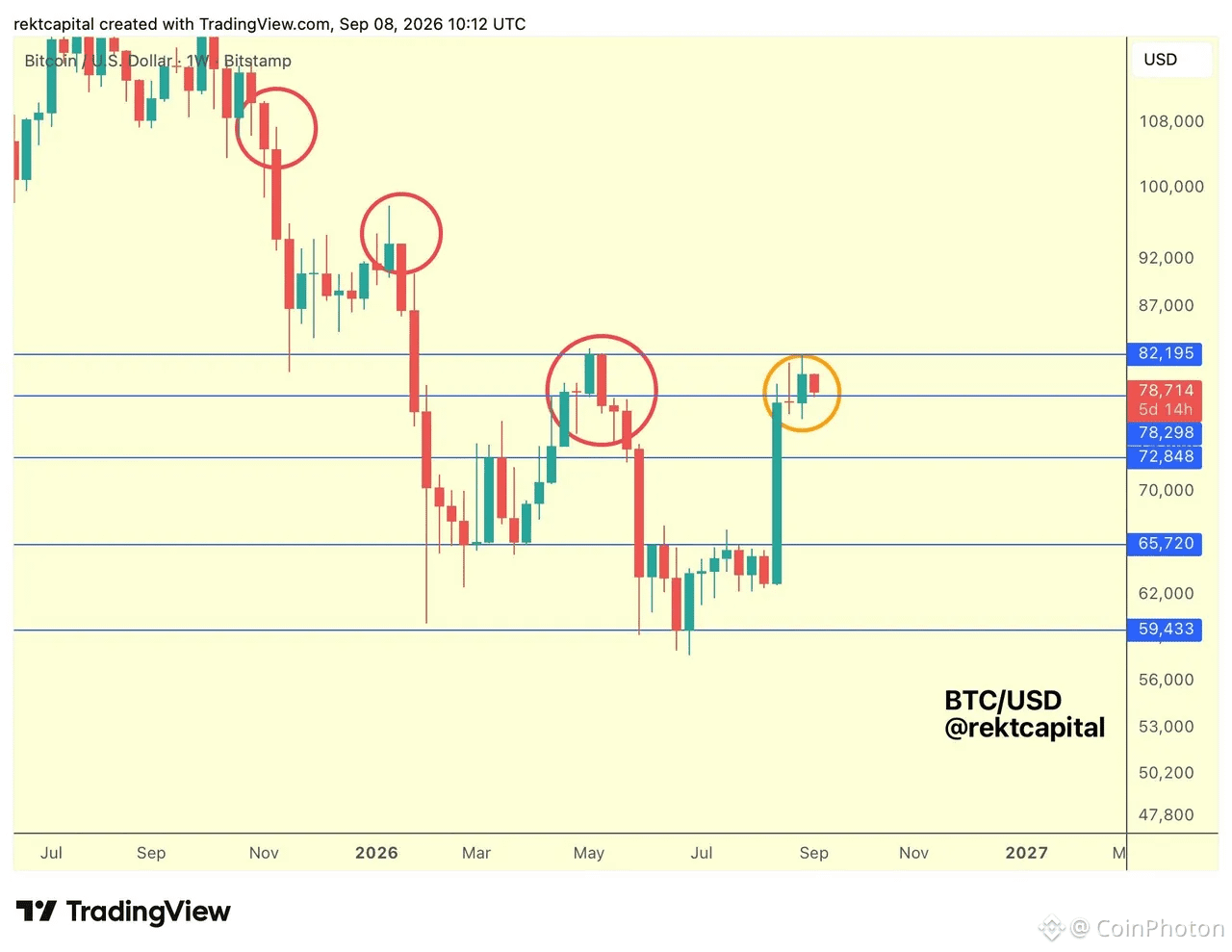
Bitcoin hozir 78 300 dollar atrofidagi muhim tayanch zonasini sinovdan o‘tkazmoqda. Analitik Rekt Capital, agar ushbu darajadan pastda bir haftalik yopilish bo‘lsa va keyin muvaffaqiyatsiz qayta sinov kuzatilsa, May oyidagiga o‘xshash yana bir tushishni tasdiqlashi mumkinligini aytdi. O‘sha paytda BTC oxir-oqibat 57 000 dollarga tomon tushgan edi. $BTC
{future}(BTCUSDT)
Seshanba kuni Bitcoin 78 000 dollardan biroz pastga tushdi. Buning ortidan Yaqin Sharqdagi keskinliklar kuchayib, global risk aktivlariga bosim o‘tkazdi va neft narxlarini keskin yuqoriga itardi.
BTC 77 600 dollargacha tushdi, bu 3-sentabrdan beri eng zaif daraja bo‘ldi. Shu bilan birga, S&P 500 va Nasdaq ham Saudiya Arabistonining shaharlari hamda neft infratuzilmasiga nisbatan Husi raketa zarbalari haqidagi xabarlar ortidan pasaydi.
Neft bozorlarida kuchli reaksiya kuzatildi: WTI xomashyosi bir barrel uchun 95 dollarga yaqinlashdi — bu uch oylik eng yuqori ko‘rsatkich. Brent esa 100 dollarga yaqinlashdi. Energiya narxlarining oshishi juma kuni AQSh CPI (iste’mol narxlari indeksi) hisobotidan oldin inflyatsiya xavotirlarini kuchaytirmoqda.
Bitcoin hozir 78 300 dollar atrofidagi muhim tayanch zonasini sinovdan o‘tkazmoqda. Analitik Rekt Capital, agar ushbu darajadan pastda bir haftalik yopilish bo‘lsa va keyin muvaffaqiyatsiz qayta sinov kuzatilsa, May oyidagiga o‘xshash yana bir tushishni tasdiqlashi mumkinligini aytdi. O‘sha paytda BTC oxir-oqibat 57 000 dollarga tomon tushgan edi. $BTC
BTC 77 600 dollargacha tushdi, bu 3-sentabrdan beri eng zaif daraja bo‘ldi. Shu bilan birga, S&P 500 va Nasdaq ham Saudiya Arabistonining shaharlari hamda neft infratuzilmasiga nisbatan Husi raketa zarbalari haqidagi xabarlar ortidan pasaydi.
Neft bozorlarida kuchli reaksiya kuzatildi: WTI xomashyosi bir barrel uchun 95 dollarga yaqinlashdi — bu uch oylik eng yuqori ko‘rsatkich. Brent esa 100 dollarga yaqinlashdi. Energiya narxlarining oshishi juma kuni AQSh CPI (iste’mol narxlari indeksi) hisobotidan oldin inflyatsiya xavotirlarini kuchaytirmoqda.
Bitcoin hozir 78 300 dollar atrofidagi muhim tayanch zonasini sinovdan o‘tkazmoqda. Analitik Rekt Capital, agar ushbu darajadan pastda bir haftalik yopilish bo‘lsa va keyin muvaffaqiyatsiz qayta sinov kuzatilsa, May oyidagiga o‘xshash yana bir tushishni tasdiqlashi mumkinligini aytdi. O‘sha paytda BTC oxir-oqibat 57 000 dollarga tomon tushgan edi. $BTC
3
3
711
·
--
Oʻzbekiston HUMO yordamida toʻlovlarni sinovdan oʻtkazish uchun pilot ishga tushirdi. HUMO — 1:1 nisbatda Oʻzbek soʻmiga bogʻlangan stablecoin bo‘lib, davlat qimmatli qog‘ozlari bilan ta’minlangan.
Istiqbolli loyihalar bo‘yicha Milliy agentligi Humo Digitalni markaziy bank bilan birgalikda nazorat qilinadigan maxsus tartibga muvofiq roʻyxatdan oʻtkazdi. Pilot HUMO’ning emissiyasi, muomalasi va qaytarib sotib olinishi (redemption)ni sinovdan oʻtkazadi; toʻlov tokenini tovarlar va xizmatlar uchun qabul qilishga tayyor bo‘lgan 20 dan ortiq savdogarlar bor.
Ishtirokchi banklar toʻlovni qayta ishlash tizimlarini blokcheyn infratuzilmasi bilan integratsiya qiladi, litsenziyalangan kripto birjasi Asterium esa loyiha hamkori sifatida xizmat qiladi.
Dastlabki sinov 12 oy davom etadi, umumiy loyiha esa uch yil bilan cheklanadi. Nizomiy organlar garov ta’minoti kafolatlari, kiberxavfsizlik, iste’molchilarni himoya qilish, AML (jinoyat yoʻli bilan olingan daromadlarni legallashtirishga qarshi) nazorati hamda moliyaviy va narx barqarorligiga bogʻliq potentsial risklarni baholaydi.
Oʻzbekiston HUMO yordamida toʻlovlarni sinovdan oʻtkazish uchun pilot ishga tushirdi. HUMO — 1:1 nisbatda Oʻzbek soʻmiga bogʻlangan stablecoin bo‘lib, davlat qimmatli qog‘ozlari bilan ta’minlangan.
Istiqbolli loyihalar bo‘yicha Milliy agentligi Humo Digitalni markaziy bank bilan birgalikda nazorat qilinadigan maxsus tartibga muvofiq roʻyxatdan oʻtkazdi. Pilot HUMO’ning emissiyasi, muomalasi va qaytarib sotib olinishi (redemption)ni sinovdan oʻtkazadi; toʻlov tokenini tovarlar va xizmatlar uchun qabul qilishga tayyor bo‘lgan 20 dan ortiq savdogarlar bor.
Ishtirokchi banklar toʻlovni qayta ishlash tizimlarini blokcheyn infratuzilmasi bilan integratsiya qiladi, litsenziyalangan kripto birjasi Asterium esa loyiha hamkori sifatida xizmat qiladi.
Dastlabki sinov 12 oy davom etadi, umumiy loyiha esa uch yil bilan cheklanadi. Nizomiy organlar garov ta’minoti kafolatlari, kiberxavfsizlik, iste’molchilarni himoya qilish, AML (jinoyat yoʻli bilan olingan daromadlarni legallashtirishga qarshi) nazorati hamda moliyaviy va narx barqarorligiga bogʻliq potentsial risklarni baholaydi.
Istiqbolli loyihalar bo‘yicha Milliy agentligi Humo Digitalni markaziy bank bilan birgalikda nazorat qilinadigan maxsus tartibga muvofiq roʻyxatdan oʻtkazdi. Pilot HUMO’ning emissiyasi, muomalasi va qaytarib sotib olinishi (redemption)ni sinovdan oʻtkazadi; toʻlov tokenini tovarlar va xizmatlar uchun qabul qilishga tayyor bo‘lgan 20 dan ortiq savdogarlar bor.
Ishtirokchi banklar toʻlovni qayta ishlash tizimlarini blokcheyn infratuzilmasi bilan integratsiya qiladi, litsenziyalangan kripto birjasi Asterium esa loyiha hamkori sifatida xizmat qiladi.
Dastlabki sinov 12 oy davom etadi, umumiy loyiha esa uch yil bilan cheklanadi. Nizomiy organlar garov ta’minoti kafolatlari, kiberxavfsizlik, iste’molchilarni himoya qilish, AML (jinoyat yoʻli bilan olingan daromadlarni legallashtirishga qarshi) nazorati hamda moliyaviy va narx barqarorligiga bogʻliq potentsial risklarni baholaydi.
114
·
--
Maykl Saylornın strategiyasi o‘zining haftalik Bitkoin xaridlarini to‘xtatib, o‘rniga 176,3 million dollarni STRC imtiyozli aksiyalarini qayta sotib olishga yo‘naltirdi.
31-avgustdan 7-sentabrgacha Strategy 1,8 millionta STRC aksiyasini qaytarib sotib oldi va raqamli kredit bo‘yicha qayta sotib olish dasturini 2 milliard dollarga qadar ikki barobarga oshirdi.
Yangi Bitkoin xarid qilinmagan holda, Strategy 845 050 BTC’ni ushlab turishda davom etmoqda; ushbu Bitkoinlar taxminan 63,6 milliard dollarga, BTC uchun o‘rtacha 75 412 dollar narxda sotib olingan.
Mazkur qadam STRC o‘zining 100 dollarlik nominal qiymatidan past savdo qilayotgan bir paytda sodir bo‘ldi va bu Strategy’ning imtiyozli aksiyalar sotish orqali yangi kapital jalb qilish imkoniyatini cheklaydi. STRC kompaniyaning uzoq muddatli Bitkoinni jamg‘arish strategiyasi uchun asosiy moliyalashtirish vositalaridan biridir.
Maykl Saylornın strategiyasi o‘zining haftalik Bitkoin xaridlarini to‘xtatib, o‘rniga 176,3 million dollarni STRC imtiyozli aksiyalarini qayta sotib olishga yo‘naltirdi.
31-avgustdan 7-sentabrgacha Strategy 1,8 millionta STRC aksiyasini qaytarib sotib oldi va raqamli kredit bo‘yicha qayta sotib olish dasturini 2 milliard dollarga qadar ikki barobarga oshirdi.
Yangi Bitkoin xarid qilinmagan holda, Strategy 845 050 BTC’ni ushlab turishda davom etmoqda; ushbu Bitkoinlar taxminan 63,6 milliard dollarga, BTC uchun o‘rtacha 75 412 dollar narxda sotib olingan.
Mazkur qadam STRC o‘zining 100 dollarlik nominal qiymatidan past savdo qilayotgan bir paytda sodir bo‘ldi va bu Strategy’ning imtiyozli aksiyalar sotish orqali yangi kapital jalb qilish imkoniyatini cheklaydi. STRC kompaniyaning uzoq muddatli Bitkoinni jamg‘arish strategiyasi uchun asosiy moliyalashtirish vositalaridan biridir.
31-avgustdan 7-sentabrgacha Strategy 1,8 millionta STRC aksiyasini qaytarib sotib oldi va raqamli kredit bo‘yicha qayta sotib olish dasturini 2 milliard dollarga qadar ikki barobarga oshirdi.
Yangi Bitkoin xarid qilinmagan holda, Strategy 845 050 BTC’ni ushlab turishda davom etmoqda; ushbu Bitkoinlar taxminan 63,6 milliard dollarga, BTC uchun o‘rtacha 75 412 dollar narxda sotib olingan.
Mazkur qadam STRC o‘zining 100 dollarlik nominal qiymatidan past savdo qilayotgan bir paytda sodir bo‘ldi va bu Strategy’ning imtiyozli aksiyalar sotish orqali yangi kapital jalb qilish imkoniyatini cheklaydi. STRC kompaniyaning uzoq muddatli Bitkoinni jamg‘arish strategiyasi uchun asosiy moliyalashtirish vositalaridan biridir.
1
245
·
--
To‘qqizta shveytsariyalik kompaniya CHFD — dasturlashtiriladigan to‘lovlar va raqamli aktivlarni hisob-kitob qilish uchun mo‘ljallangan shveytsariyalik frank stablekoini — bo‘yicha sandbox testlarini boshladi.
Ushbu pilot dasturlashtiriladigan to‘lovlar onlayn bozorlarda firibgarlikni kamaytirishga, tadbir chiptalariga adolatliroq kirishni yaxshilashga va davlat sektori to‘lovlarini yanada samaraliroq qilishga yordam beradimi-yo‘qligini o‘rganadi.
Moliyaviy bozor infratuzilmasi operatori SIX va to‘lovlar ilovasi TWINT tashabbusga qo‘shildi; tashabbus birinchi marta aprel oyida boshlangan.
Loyiha Shveytsariyaning real hayotdagi moliyaviy ilovalarda tokenlashtirilgan pul va blokcheinga asoslangan to‘lov infratuzilmasini sinovdan o‘tkazishga qaratilgan kengroq sa’y-harakatlariga qo‘shimcha bo‘ladi.
To‘qqizta shveytsariyalik kompaniya CHFD — dasturlashtiriladigan to‘lovlar va raqamli aktivlarni hisob-kitob qilish uchun mo‘ljallangan shveytsariyalik frank stablekoini — bo‘yicha sandbox testlarini boshladi.
Ushbu pilot dasturlashtiriladigan to‘lovlar onlayn bozorlarda firibgarlikni kamaytirishga, tadbir chiptalariga adolatliroq kirishni yaxshilashga va davlat sektori to‘lovlarini yanada samaraliroq qilishga yordam beradimi-yo‘qligini o‘rganadi.
Moliyaviy bozor infratuzilmasi operatori SIX va to‘lovlar ilovasi TWINT tashabbusga qo‘shildi; tashabbus birinchi marta aprel oyida boshlangan.
Loyiha Shveytsariyaning real hayotdagi moliyaviy ilovalarda tokenlashtirilgan pul va blokcheinga asoslangan to‘lov infratuzilmasini sinovdan o‘tkazishga qaratilgan kengroq sa’y-harakatlariga qo‘shimcha bo‘ladi.
Ushbu pilot dasturlashtiriladigan to‘lovlar onlayn bozorlarda firibgarlikni kamaytirishga, tadbir chiptalariga adolatliroq kirishni yaxshilashga va davlat sektori to‘lovlarini yanada samaraliroq qilishga yordam beradimi-yo‘qligini o‘rganadi.
Moliyaviy bozor infratuzilmasi operatori SIX va to‘lovlar ilovasi TWINT tashabbusga qo‘shildi; tashabbus birinchi marta aprel oyida boshlangan.
Loyiha Shveytsariyaning real hayotdagi moliyaviy ilovalarda tokenlashtirilgan pul va blokcheinga asoslangan to‘lov infratuzilmasini sinovdan o‘tkazishga qaratilgan kengroq sa’y-harakatlariga qo‘shimcha bo‘ladi.
132
·
--
DBS va Citi Singapur va Qo‘shma Shtatlar o‘rtasida Swift’ning Digital Ledger platformasi orqali tokenlashtirilgan depozitlar yordamida birinchi hafta oxiridagi USD to‘lovni yakunladi.
5-sentabr kuni DBS va Citi’ning Nyu-Yorkdagi bo‘limi o‘rtasidagi operatsiya daqiqalar ichida yakunlandi, an’anaviy transchegaraviy to‘lovlarda esa ikki ish kunigacha vaqt olishi mumkin edi.
Tizim muassasalarga USD’ni 24/7 uzatish imkonini beradi, dam olish kunlari, bank soatlari va vaqt mintaqalaridagi farqlar sabab bo‘ladigan kechikishlarni chetlab o‘tadi. DBS bu texnologiya e-commerce va raqamli xizmatlar kompaniyalari kabi global bizneslar uchun ayniqsa foydali bo‘lishi mumkinligini aytdi.
Citi iyul oyida Swift’ning tokenlashtirilgan depozitlar bo‘yicha pilot loyihasiga qo‘shildi, DBS esa 2024-yilda DBS Treasury Tokens’ni ishga tushirgandan beri o‘zining blokcheyn asosidagi bank infratuzilmasini kengaytirmoqda.
Ushbu bosqich tokenlashtirilgan bank depozitlari sinovdan chiqib, doimiy ishlaydigan global to‘lovlarda real foydalanishga qanday o‘tib borayotganini ko‘rsatadi.
DBS va Citi Singapur va Qo‘shma Shtatlar o‘rtasida Swift’ning Digital Ledger platformasi orqali tokenlashtirilgan depozitlar yordamida birinchi hafta oxiridagi USD to‘lovni yakunladi.
5-sentabr kuni DBS va Citi’ning Nyu-Yorkdagi bo‘limi o‘rtasidagi operatsiya daqiqalar ichida yakunlandi, an’anaviy transchegaraviy to‘lovlarda esa ikki ish kunigacha vaqt olishi mumkin edi.
Tizim muassasalarga USD’ni 24/7 uzatish imkonini beradi, dam olish kunlari, bank soatlari va vaqt mintaqalaridagi farqlar sabab bo‘ladigan kechikishlarni chetlab o‘tadi. DBS bu texnologiya e-commerce va raqamli xizmatlar kompaniyalari kabi global bizneslar uchun ayniqsa foydali bo‘lishi mumkinligini aytdi.
Citi iyul oyida Swift’ning tokenlashtirilgan depozitlar bo‘yicha pilot loyihasiga qo‘shildi, DBS esa 2024-yilda DBS Treasury Tokens’ni ishga tushirgandan beri o‘zining blokcheyn asosidagi bank infratuzilmasini kengaytirmoqda.
Ushbu bosqich tokenlashtirilgan bank depozitlari sinovdan chiqib, doimiy ishlaydigan global to‘lovlarda real foydalanishga qanday o‘tib borayotganini ko‘rsatadi.
5-sentabr kuni DBS va Citi’ning Nyu-Yorkdagi bo‘limi o‘rtasidagi operatsiya daqiqalar ichida yakunlandi, an’anaviy transchegaraviy to‘lovlarda esa ikki ish kunigacha vaqt olishi mumkin edi.
Tizim muassasalarga USD’ni 24/7 uzatish imkonini beradi, dam olish kunlari, bank soatlari va vaqt mintaqalaridagi farqlar sabab bo‘ladigan kechikishlarni chetlab o‘tadi. DBS bu texnologiya e-commerce va raqamli xizmatlar kompaniyalari kabi global bizneslar uchun ayniqsa foydali bo‘lishi mumkinligini aytdi.
Citi iyul oyida Swift’ning tokenlashtirilgan depozitlar bo‘yicha pilot loyihasiga qo‘shildi, DBS esa 2024-yilda DBS Treasury Tokens’ni ishga tushirgandan beri o‘zining blokcheyn asosidagi bank infratuzilmasini kengaytirmoqda.
Ushbu bosqich tokenlashtirilgan bank depozitlari sinovdan chiqib, doimiy ishlaydigan global to‘lovlarda real foydalanishga qanday o‘tib borayotganini ko‘rsatadi.
1
154
·
--
Cronos 30-avgust kuni Tectonic’da sodir etilgan ekspluatatsiya paytida hujumchi tarmoq to‘xtatilishidan oldin manipulyatsiya qilingan garovdan foydalangan holda 120,4 million dollar miqdorida qarz olganini tasdiqladi.
Post-mortem ma’lumotiga ko‘ra, hujumchi kam likvidli TONIC tokenining narxini sun’iy ravishda oshirib, uni to‘qqizta bozor bo‘yicha aktivlar qarz olish uchun garov sifatida ishlatgan.
Cronos keyin blokcheynni qariyb ikki soatga orqaga qaytardi va ta’sirlangan mablag‘larning taxminan 111,2 million dollarini bekor qildi. Biroq 9,19 million dollar allaqachon off-chain’ga o‘tkazilgan va hanuzgacha qaytarilmagan.
Orqaga qaytarish 10 961 blokni tashlab yubordi hamda o‘sha davrdagi, jumladan hujumga aloqasi bo‘lmagan tranzaksiyalarni ham, barcha tranzaksiyalarni bekor qildi. Cronos ekspluatatsiya boshlanganidan taxminan 11 soat o‘tib bloklar ishlab chiqarishni qayta tikladi va hozirda foydalanuvchilar hech qanday harakat qilishlari shart emasligini aytdi.
Cronos 30-avgust kuni Tectonic’da sodir etilgan ekspluatatsiya paytida hujumchi tarmoq to‘xtatilishidan oldin manipulyatsiya qilingan garovdan foydalangan holda 120,4 million dollar miqdorida qarz olganini tasdiqladi.
Post-mortem ma’lumotiga ko‘ra, hujumchi kam likvidli TONIC tokenining narxini sun’iy ravishda oshirib, uni to‘qqizta bozor bo‘yicha aktivlar qarz olish uchun garov sifatida ishlatgan.
Cronos keyin blokcheynni qariyb ikki soatga orqaga qaytardi va ta’sirlangan mablag‘larning taxminan 111,2 million dollarini bekor qildi. Biroq 9,19 million dollar allaqachon off-chain’ga o‘tkazilgan va hanuzgacha qaytarilmagan.
Orqaga qaytarish 10 961 blokni tashlab yubordi hamda o‘sha davrdagi, jumladan hujumga aloqasi bo‘lmagan tranzaksiyalarni ham, barcha tranzaksiyalarni bekor qildi. Cronos ekspluatatsiya boshlanganidan taxminan 11 soat o‘tib bloklar ishlab chiqarishni qayta tikladi va hozirda foydalanuvchilar hech qanday harakat qilishlari shart emasligini aytdi.
Post-mortem ma’lumotiga ko‘ra, hujumchi kam likvidli TONIC tokenining narxini sun’iy ravishda oshirib, uni to‘qqizta bozor bo‘yicha aktivlar qarz olish uchun garov sifatida ishlatgan.
Cronos keyin blokcheynni qariyb ikki soatga orqaga qaytardi va ta’sirlangan mablag‘larning taxminan 111,2 million dollarini bekor qildi. Biroq 9,19 million dollar allaqachon off-chain’ga o‘tkazilgan va hanuzgacha qaytarilmagan.
Orqaga qaytarish 10 961 blokni tashlab yubordi hamda o‘sha davrdagi, jumladan hujumga aloqasi bo‘lmagan tranzaksiyalarni ham, barcha tranzaksiyalarni bekor qildi. Cronos ekspluatatsiya boshlanganidan taxminan 11 soat o‘tib bloklar ishlab chiqarishni qayta tikladi va hozirda foydalanuvchilar hech qanday harakat qilishlari shart emasligini aytdi.
2
390
·
--
Tasdiqlangan
Ethereum Foundation “Protocol Cluster” tomonidan tuzilgan yangi yo‘l xaritasiga ko‘ra, Ethereumning 1-qavati (Layer 1)ni to‘liq kvantga chidamli qilish uchun 2029-yil dekabriga maqsad qo‘ymoqda. Maqsad Ethereumning uchta asosiy komponentini qamrab oladi: execution (bajarilish), consensus (kelishuv) va data availability (ma’lumotlar mavjudligi).
Foundation 2030-yil atrofida yetarlicha kuchli kvant kompyuterlari paydo bo‘lib, bugungi ayrim kriptografik tizimlarga tahdid solishi mumkinligi ehtimoliga tayyorgarlik ko‘rmoqda. Yo‘l xaritasida Ethereum tranzaksiya arxitekturasi, kelishuv mexanizmi va ma’lumotlar infratuzilmasida katta o‘zgarishlar bilan birga post-kvant imzolarni joriy etish ko‘zda tutilgan.
2026-yil dekabrida kutilayotgan Glamsterdam yangilanishidan keyin, Ethereum to‘liq kvantga chidamlilikka erishish uchun taxminan yana beshta qo‘shimcha hard fork (qattiq fork) talab qilishi mumkin. Keyingi Hegotá yangilanishi ham Ethereumning post-kvant xavfsizlik tomon uzoq muddatli o‘tishi uchun muhim poydevor bo‘lib xizmat qilishi kutilmoqda. $ETH
{future}(ETHUSDT)
Ethereum Foundation “Protocol Cluster” tomonidan tuzilgan yangi yo‘l xaritasiga ko‘ra, Ethereumning 1-qavati (Layer 1)ni to‘liq kvantga chidamli qilish uchun 2029-yil dekabriga maqsad qo‘ymoqda. Maqsad Ethereumning uchta asosiy komponentini qamrab oladi: execution (bajarilish), consensus (kelishuv) va data availability (ma’lumotlar mavjudligi).
Foundation 2030-yil atrofida yetarlicha kuchli kvant kompyuterlari paydo bo‘lib, bugungi ayrim kriptografik tizimlarga tahdid solishi mumkinligi ehtimoliga tayyorgarlik ko‘rmoqda. Yo‘l xaritasida Ethereum tranzaksiya arxitekturasi, kelishuv mexanizmi va ma’lumotlar infratuzilmasida katta o‘zgarishlar bilan birga post-kvant imzolarni joriy etish ko‘zda tutilgan.
2026-yil dekabrida kutilayotgan Glamsterdam yangilanishidan keyin, Ethereum to‘liq kvantga chidamlilikka erishish uchun taxminan yana beshta qo‘shimcha hard fork (qattiq fork) talab qilishi mumkin. Keyingi Hegotá yangilanishi ham Ethereumning post-kvant xavfsizlik tomon uzoq muddatli o‘tishi uchun muhim poydevor bo‘lib xizmat qilishi kutilmoqda. $ETH
Foundation 2030-yil atrofida yetarlicha kuchli kvant kompyuterlari paydo bo‘lib, bugungi ayrim kriptografik tizimlarga tahdid solishi mumkinligi ehtimoliga tayyorgarlik ko‘rmoqda. Yo‘l xaritasida Ethereum tranzaksiya arxitekturasi, kelishuv mexanizmi va ma’lumotlar infratuzilmasida katta o‘zgarishlar bilan birga post-kvant imzolarni joriy etish ko‘zda tutilgan.
2026-yil dekabrida kutilayotgan Glamsterdam yangilanishidan keyin, Ethereum to‘liq kvantga chidamlilikka erishish uchun taxminan yana beshta qo‘shimcha hard fork (qattiq fork) talab qilishi mumkin. Keyingi Hegotá yangilanishi ham Ethereumning post-kvant xavfsizlik tomon uzoq muddatli o‘tishi uchun muhim poydevor bo‘lib xizmat qilishi kutilmoqda. $ETH
788
·
--
YANGILANISH: Liquid Network hodisasi ortida turgan deb taxmin qilingan “oq qalpoq” xakerlar onchain muzokaralardan so‘ng Blockstream bilan kelishib, Federatsiya hamyoniga 3,400 BTC, ya’ni mablag‘larning taxminan 85 foizini qaytarib bergan.
Guruh taxminan 598 BTC, qiymati taxminan 47 million dollarni esa ko‘rinishidan mukofot (bounty) sifatida ushlab qolgan.
Bu voqea Liquid federatsiya hamyonidan dastlab qariyb 4,000 BTC yechib olinganidan keyin Bitcoin yon zanjir (sidechain) operatsiyalarini to‘xtatib qo‘yishga majbur bo‘lgan vaziyatdan so‘ng katta tiklanish belgisidir.
YANGILANISH: Liquid Network hodisasi ortida turgan deb taxmin qilingan “oq qalpoq” xakerlar onchain muzokaralardan so‘ng Blockstream bilan kelishib, Federatsiya hamyoniga 3,400 BTC, ya’ni mablag‘larning taxminan 85 foizini qaytarib bergan.
Guruh taxminan 598 BTC, qiymati taxminan 47 million dollarni esa ko‘rinishidan mukofot (bounty) sifatida ushlab qolgan.
Bu voqea Liquid federatsiya hamyonidan dastlab qariyb 4,000 BTC yechib olinganidan keyin Bitcoin yon zanjir (sidechain) operatsiyalarini to‘xtatib qo‘yishga majbur bo‘lgan vaziyatdan so‘ng katta tiklanish belgisidir.
Guruh taxminan 598 BTC, qiymati taxminan 47 million dollarni esa ko‘rinishidan mukofot (bounty) sifatida ushlab qolgan.
Bu voqea Liquid federatsiya hamyonidan dastlab qariyb 4,000 BTC yechib olinganidan keyin Bitcoin yon zanjir (sidechain) operatsiyalarini to‘xtatib qo‘yishga majbur bo‘lgan vaziyatdan so‘ng katta tiklanish belgisidir.
754
·
--
Tasdiqlangan
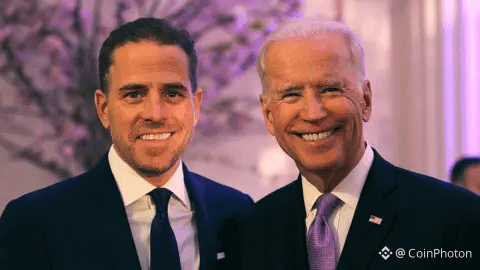
AQSh sobiq prezidenti Jo Baydenning o‘g‘li Hunter Bayden 2020-yilgi AQSh saylovlari oldidan katta siyosiy bahs-munozaraga sabab bo‘lgan noutbukni nazarda tutib, LAPTOP deb nomlangan memecoin ishga tushirishini aytdi.
$LAPTOP tokeni chorshanba kuni 1 milliard token miqdoridagi jami ta’minot bilan ishga tushirilishi kutilmoqda. The Wall Street Journal ma’lumotiga ko‘ra, ta’minotning taxminan 20% Substack obunachilari, mailing-list a’zolari va Donald Trampning TRUMP memecoiniga sarmoya kiritgan investorlariga tarqatiladi.
Ta’sischilar xabarlarga ko‘ra, ta’minotning 30% ini ushlab turishi rejalashtirilgan, muayyan marralarga qarab esa tokenlarning yana 30% i kuydirilishi (burn) mumkin: jumladan 2028-yilda demokratlar prezidentlik g‘alabasiga erishishi, Bitcoin yangi rekord darajaga yetishi yoki LAPTOP’ning fully diluted bahosi TRUMP’niki ustidan chiqishi.
Ishga tushirish payti Hunter Bayden kriptoga nisbatan tobora ko‘proq ochiq gapirayotgan bo‘lsa-da, World Liberty Financial orqali Tramp oilasining sohadagi ishtirokini tanqid qilmoqda.
Reja bo‘yicha ishga tushirilsa, LAPTOP AQSh siyosati va memecoinlar o‘rtasidagi tobora kuchayib borayotgan kesishuvni yanada yorqinroq ko‘rsatishi mumkin, chunki qonunchilar CLARITY Act bo‘yicha 15-sentabr kuni cloture ovoz berishiga tayyorlanmoqda.
AQSh sobiq prezidenti Jo Baydenning o‘g‘li Hunter Bayden 2020-yilgi AQSh saylovlari oldidan katta siyosiy bahs-munozaraga sabab bo‘lgan noutbukni nazarda tutib, LAPTOP deb nomlangan memecoin ishga tushirishini aytdi.
$LAPTOP tokeni chorshanba kuni 1 milliard token miqdoridagi jami ta’minot bilan ishga tushirilishi kutilmoqda. The Wall Street Journal ma’lumotiga ko‘ra, ta’minotning taxminan 20% Substack obunachilari, mailing-list a’zolari va Donald Trampning TRUMP memecoiniga sarmoya kiritgan investorlariga tarqatiladi.
Ta’sischilar xabarlarga ko‘ra, ta’minotning 30% ini ushlab turishi rejalashtirilgan, muayyan marralarga qarab esa tokenlarning yana 30% i kuydirilishi (burn) mumkin: jumladan 2028-yilda demokratlar prezidentlik g‘alabasiga erishishi, Bitcoin yangi rekord darajaga yetishi yoki LAPTOP’ning fully diluted bahosi TRUMP’niki ustidan chiqishi.
Ishga tushirish payti Hunter Bayden kriptoga nisbatan tobora ko‘proq ochiq gapirayotgan bo‘lsa-da, World Liberty Financial orqali Tramp oilasining sohadagi ishtirokini tanqid qilmoqda.
Reja bo‘yicha ishga tushirilsa, LAPTOP AQSh siyosati va memecoinlar o‘rtasidagi tobora kuchayib borayotgan kesishuvni yanada yorqinroq ko‘rsatishi mumkin, chunki qonunchilar CLARITY Act bo‘yicha 15-sentabr kuni cloture ovoz berishiga tayyorlanmoqda.
$LAPTOP tokeni chorshanba kuni 1 milliard token miqdoridagi jami ta’minot bilan ishga tushirilishi kutilmoqda. The Wall Street Journal ma’lumotiga ko‘ra, ta’minotning taxminan 20% Substack obunachilari, mailing-list a’zolari va Donald Trampning TRUMP memecoiniga sarmoya kiritgan investorlariga tarqatiladi.
Ta’sischilar xabarlarga ko‘ra, ta’minotning 30% ini ushlab turishi rejalashtirilgan, muayyan marralarga qarab esa tokenlarning yana 30% i kuydirilishi (burn) mumkin: jumladan 2028-yilda demokratlar prezidentlik g‘alabasiga erishishi, Bitcoin yangi rekord darajaga yetishi yoki LAPTOP’ning fully diluted bahosi TRUMP’niki ustidan chiqishi.
Ishga tushirish payti Hunter Bayden kriptoga nisbatan tobora ko‘proq ochiq gapirayotgan bo‘lsa-da, World Liberty Financial orqali Tramp oilasining sohadagi ishtirokini tanqid qilmoqda.
Reja bo‘yicha ishga tushirilsa, LAPTOP AQSh siyosati va memecoinlar o‘rtasidagi tobora kuchayib borayotgan kesishuvni yanada yorqinroq ko‘rsatishi mumkin, chunki qonunchilar CLARITY Act bo‘yicha 15-sentabr kuni cloture ovoz berishiga tayyorlanmoqda.
1
6
9.7k
Ko‘proq kontentni ko‘rish uchun tizimga kiring
Binance Square'da global kriptovalyuta foydalanuvchilariga qo‘shiling
⚡️ Kriptovalyuta haqida eng so‘nggi va foydali ma’lumotlarni oling.
💬 Dunyoning eng yirik kriptovalyuta birjasi tomonidan ishonchli deb topilgan.
👍 Tasdiqlangan mualliflardan haqiqiy tahlillarni kashf eting.
Email / telefon raqami
Trenddagi mavzular
SaylorHintsStrategyBitcoinBuy
2.2M marta koʻrilgan
12,268 muhokama qilmoqda
#saylorhintsstrategybitcoinbuy
🚨 SAYLOR YAKSHANBA $BTC ISHORASINI TASHLADI 👀
Maykl Saylor yana o‘zining odatiy Bitcoin grafigini qayta joyladi.
Agar tarix takrorlansa, u sariq nuqtalar boshqa Strategy BTC xarid kelayotganidan darak berishi mumkin. 🟠
Saylor sotib olganida esa bozor buni kuzatadi.
🐋 Katta miqdordagi BTC zaxiralari
💰 Akkumulyatsiya qilish bo‘yicha davomiy strategiya
📈 Qisqa muddatli kayfiyatga potensial ijobiy ta’sir
Lekin eng muhim joyi shunda:
Qayta joylash — xarid bo‘yicha tasdiq EMAS.
Haqiqiy signal Strategy rasmiy ravishda tranzaksiyani e’lon qilganda keladi.
🔥 Agar yana bir yirik BTC xarid e’lon qilinsa, bu safar bozor qanday reaksiya qiladi?
Yoki Saylor’ning to‘plashi shu qadar odatiy bo‘lib qoladiki, treyderlar endi deyarli sezmay qo‘yishadimi?
👀 E’longa qarang.
$MSTRB
#BTC #strategy #crypto #BitcoinNews
sdatta
·5 ta layk
·5.5k marta koʻrilgan
BOJRaisesRatesTo31YearHigh
236,592 marta koʻrilgan
3,186 muhokama qilmoqda
BuffettStepsDownAsBerkshireChairman
113,955 marta koʻrilgan
1,703 muhokama qilmoqda