

#staking
staking
2.2M marta koʻrilgan
8,277 muhokama qilmoqda
Ommabop
Eng so‘nggi

·
--
Tarjimani ko‘rish
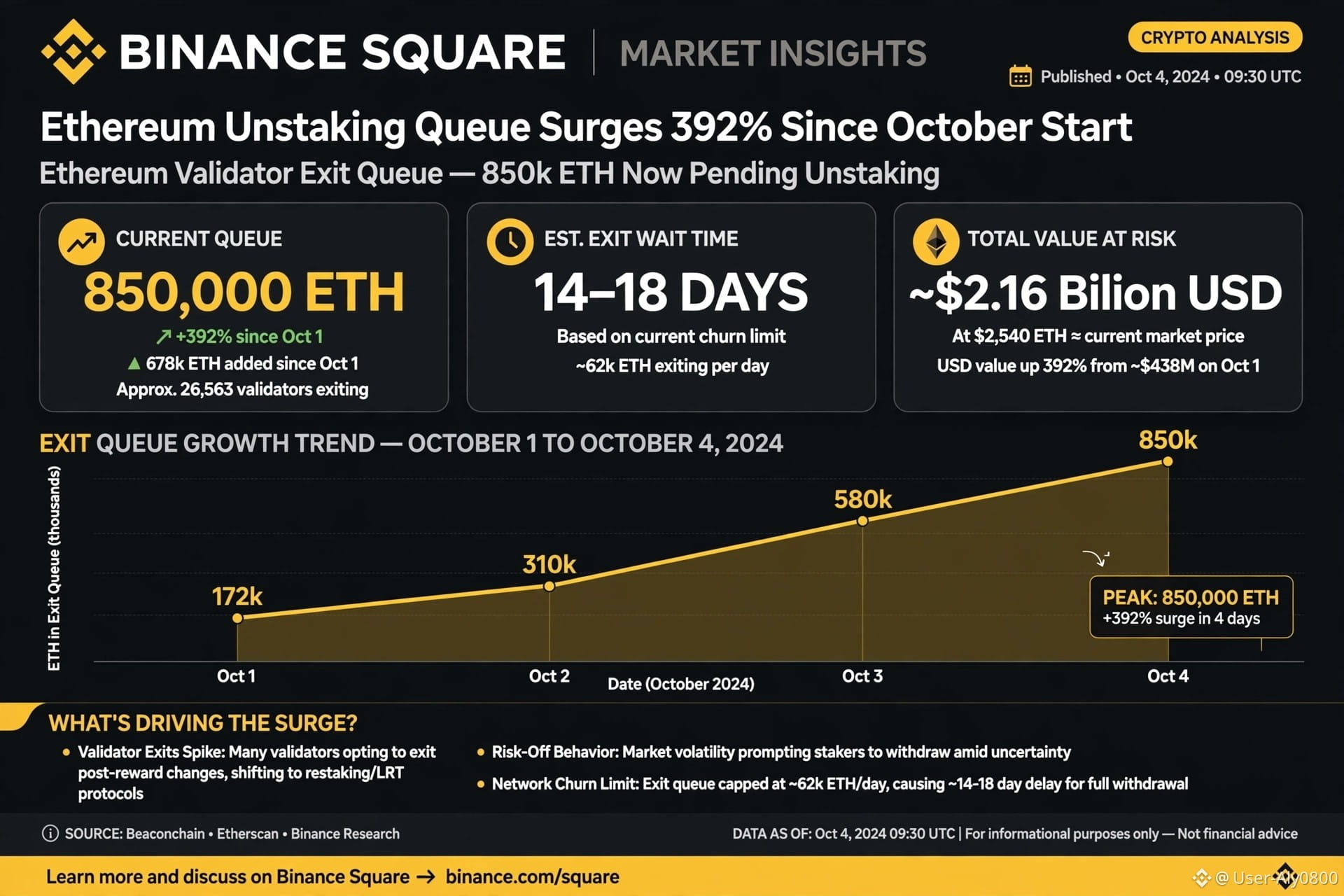
Why is nobody talking about the real reason Ethereum's validator exit queue just jumped 392%?
Every time a fat on-chain number hits the timeline, traders treat it like a sell signal and get shaken out. You watch 850,000 ETH pile into the exit queue and assume $ETH is about to get dumped.
This is a case study in how a headline can lie. The queue surged 392%, with roughly 850,000 ETH waiting to leave the validator set and a wait around 14.8 days. That looks like a vote of no confidence until you ask why they are actually leaving.
A large share of the surge ties back to a recent MetaMask staking infrastructure incident. People are unstaking because of an operational problem, not because they lost faith in the chain. Those coins still sit in a nearly two-week queue before they can even hit the market. Treating this as mass capitulation is how you exit $ETH at the worst possible moment.
The network did not break. One staking setup did. That is a very different story from the panic spreading right now.
Where do you think this goes once that queue actually clears?
#Ethereum #ETH #Staking
Why is nobody talking about the real reason Ethereum's validator exit queue just jumped 392%?
Every time a fat on-chain number hits the timeline, traders treat it like a sell signal and get shaken out. You watch 850,000 ETH pile into the exit queue and assume $ETH is about to get dumped.
This is a case study in how a headline can lie. The queue surged 392%, with roughly 850,000 ETH waiting to leave the validator set and a wait around 14.8 days. That looks like a vote of no confidence until you ask why they are actually leaving.
A large share of the surge ties back to a recent MetaMask staking infrastructure incident. People are unstaking because of an operational problem, not because they lost faith in the chain. Those coins still sit in a nearly two-week queue before they can even hit the market. Treating this as mass capitulation is how you exit $ETH at the worst possible moment.
The network did not break. One staking setup did. That is a very different story from the panic spreading right now.
Where do you think this goes once that queue actually clears?
#Ethereum #ETH #Staking
Every time a fat on-chain number hits the timeline, traders treat it like a sell signal and get shaken out. You watch 850,000 ETH pile into the exit queue and assume $ETH is about to get dumped.
This is a case study in how a headline can lie. The queue surged 392%, with roughly 850,000 ETH waiting to leave the validator set and a wait around 14.8 days. That looks like a vote of no confidence until you ask why they are actually leaving.
A large share of the surge ties back to a recent MetaMask staking infrastructure incident. People are unstaking because of an operational problem, not because they lost faith in the chain. Those coins still sit in a nearly two-week queue before they can even hit the market. Treating this as mass capitulation is how you exit $ETH at the worst possible moment.
The network did not break. One staking setup did. That is a very different story from the panic spreading right now.
Where do you think this goes once that queue actually clears?
#Ethereum #ETH #Staking

30

·
--
Tarjimani ko‘rish
🚨 ALERT: Ethereum Unstaking Queue EXPLODES +392% — 850K ETH Waiting To Exit! Biggest validator exit queue in 2026. Data from Oct 2 shows ∼850,000 ETH lined up to unstake — up 392% since Oct 1. Wait time now 14 to77 days.
What happened?
The surge is NOT normal profit-taking alone. On Sep 30, MetaMask Staking disclosed infrastructure compromise — 0.36 ETH in block rewards diverted across 18 blocks. No wallets hacked, but as precaution: 👉 MetaMask is exiting ∼17,000 validators holding ∼523,000 ETH 👉 Of the 850K
{spot}(ETHUSDT)
ETH in queue, 523K ETH is from MetaMask alone — 61% of total! 👉 Heavy tie to Lido operations. Context: - Total Staked: 43.6M ETH across 878K validators - Exiting: ∼2% of all staked supply = ∼$3.9B at peak last cycle, ∼$2.1B now - In late Sep, queue was only 100K-172K ETH. Now 850K. Market Impact? Bullish twist: $ETH held stable $2,686 - $2,725 during this panic. Because of churn limit (∼62K ETH/day), any sell pressure is spread over 15 days, not instant dump. MetaMask exits complete by Oct 7, then queue should shrink fast — unless more follow. One infra provider = can shake 2% of Ethereum staking. Centralization risk showing? Are you worried or buying this dip? 👇
$ETH #Ethereum #Staking #MetaMask
🚨 ALERT: Ethereum Unstaking Queue EXPLODES +392% — 850K ETH Waiting To Exit! Biggest validator exit queue in 2026. Data from Oct 2 shows ∼850,000 ETH lined up to unstake — up 392% since Oct 1. Wait time now 14 to77 days.
What happened?
The surge is NOT normal profit-taking alone. On Sep 30, MetaMask Staking disclosed infrastructure compromise — 0.36 ETH in block rewards diverted across 18 blocks. No wallets hacked, but as precaution: 👉 MetaMask is exiting ∼17,000 validators holding ∼523,000 ETH 👉 Of the 850K
ETH in queue, 523K ETH is from MetaMask alone — 61% of total! 👉 Heavy tie to Lido operations. Context: - Total Staked: 43.6M ETH across 878K validators - Exiting: ∼2% of all staked supply = ∼$3.9B at peak last cycle, ∼$2.1B now - In late Sep, queue was only 100K-172K ETH. Now 850K. Market Impact? Bullish twist: $ETH held stable $2,686 - $2,725 during this panic. Because of churn limit (∼62K ETH/day), any sell pressure is spread over 15 days, not instant dump. MetaMask exits complete by Oct 7, then queue should shrink fast — unless more follow. One infra provider = can shake 2% of Ethereum staking. Centralization risk showing? Are you worried or buying this dip? 👇
$ETH #Ethereum #Staking #MetaMask
What happened?
The surge is NOT normal profit-taking alone. On Sep 30, MetaMask Staking disclosed infrastructure compromise — 0.36 ETH in block rewards diverted across 18 blocks. No wallets hacked, but as precaution: 👉 MetaMask is exiting ∼17,000 validators holding ∼523,000 ETH 👉 Of the 850K
ETH in queue, 523K ETH is from MetaMask alone — 61% of total! 👉 Heavy tie to Lido operations. Context: - Total Staked: 43.6M ETH across 878K validators - Exiting: ∼2% of all staked supply = ∼$3.9B at peak last cycle, ∼$2.1B now - In late Sep, queue was only 100K-172K ETH. Now 850K. Market Impact? Bullish twist: $ETH held stable $2,686 - $2,725 during this panic. Because of churn limit (∼62K ETH/day), any sell pressure is spread over 15 days, not instant dump. MetaMask exits complete by Oct 7, then queue should shrink fast — unless more follow. One infra provider = can shake 2% of Ethereum staking. Centralization risk showing? Are you worried or buying this dip? 👇
$ETH #Ethereum #Staking #MetaMask
38
·
--
Tarjimani ko‘rish
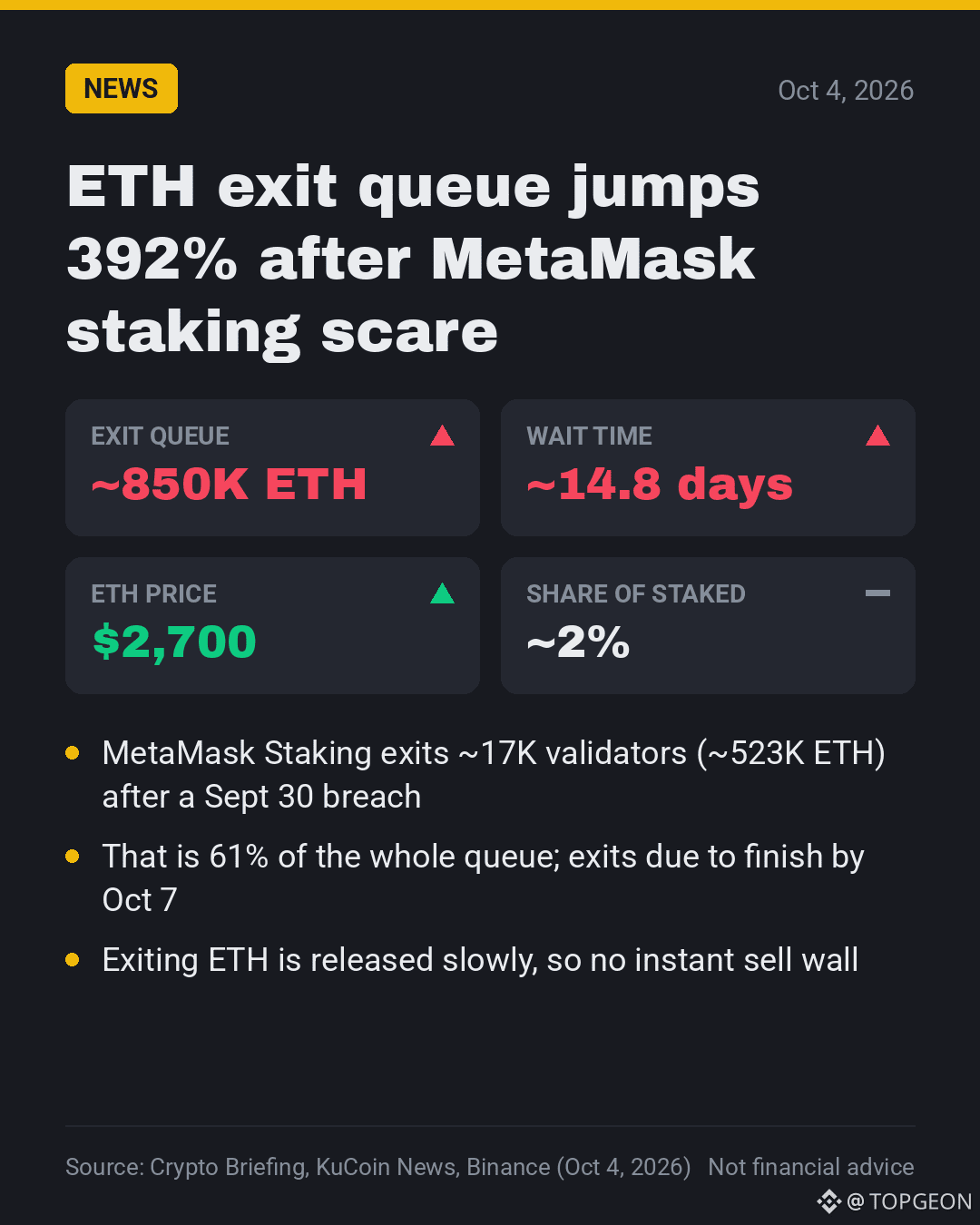
🚨 $ETH exit queue up 392% in days, yet price holds $2,700
• ~850K ETH now waiting to leave staking (~14.8-day wait)
• MetaMask Staking pulls ~17K validators after a Sept 30 breach
• That alone is ~523K ETH, 61% of the queue; done by Oct 7
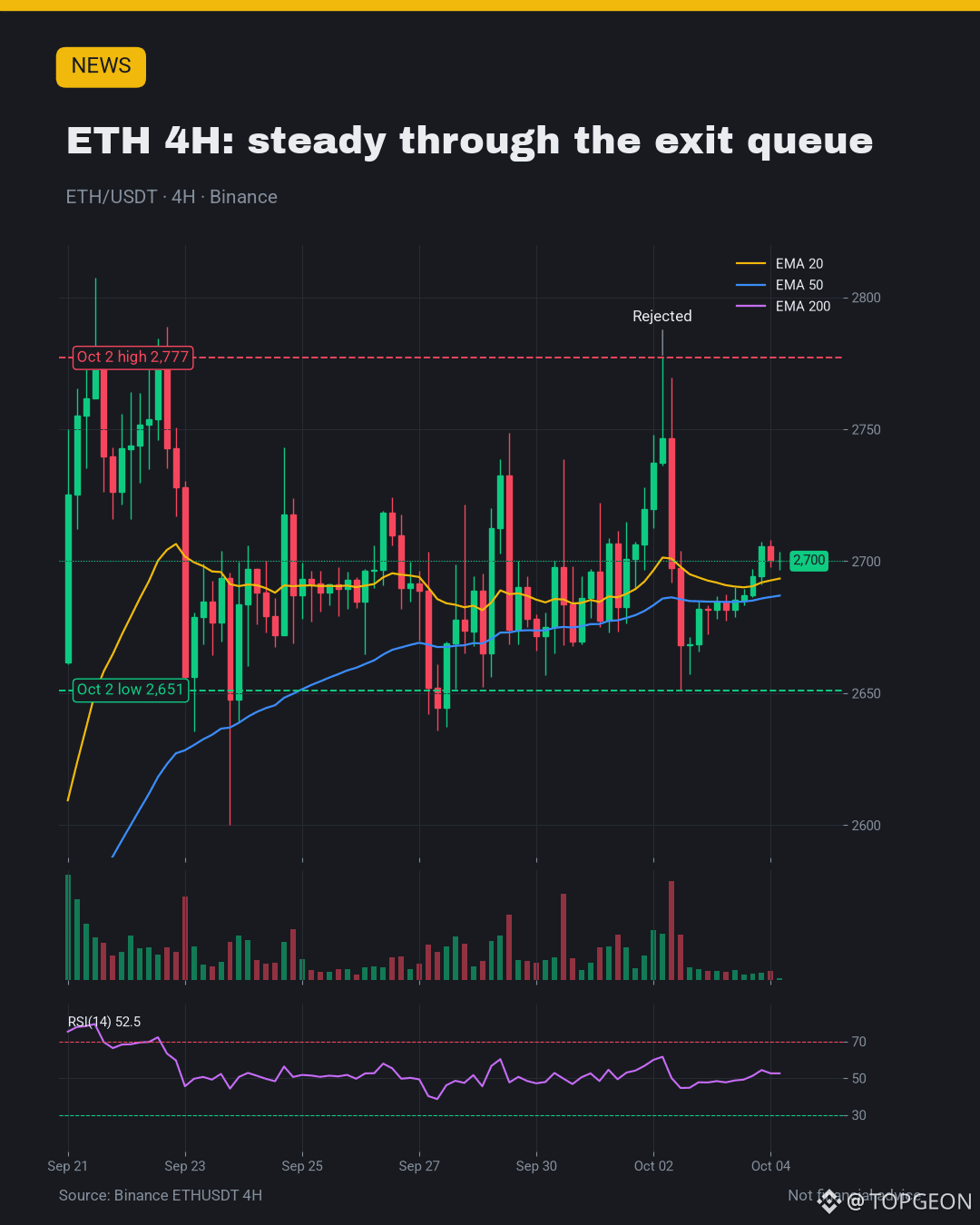
• Queue is only ~2% of 43.6M staked ETH; 4H RSI 52
🎯 My take: slow exits, no panic; $2,651 floor, $2,777 lid
💬 Does a big exit queue worry you, or is it noise? 👇
#Ethereum #Staking #MetaMask
🚨 $ETH exit queue up 392% in days, yet price holds $2,700
• ~850K ETH now waiting to leave staking (~14.8-day wait)
• MetaMask Staking pulls ~17K validators after a Sept 30 breach
• That alone is ~523K ETH, 61% of the queue; done by Oct 7
• Queue is only ~2% of 43.6M staked ETH; 4H RSI 52
🎯 My take: slow exits, no panic; $2,651 floor, $2,777 lid
💬 Does a big exit queue worry you, or is it noise? 👇
#Ethereum #Staking #MetaMask
• ~850K ETH now waiting to leave staking (~14.8-day wait)
• MetaMask Staking pulls ~17K validators after a Sept 30 breach
• That alone is ~523K ETH, 61% of the queue; done by Oct 7
• Queue is only ~2% of 43.6M staked ETH; 4H RSI 52
🎯 My take: slow exits, no panic; $2,651 floor, $2,777 lid
💬 Does a big exit queue worry you, or is it noise? 👇
#Ethereum #Staking #MetaMask
2
34
·
--
O‘suvchi
Tarjimani ko‘rish
#EthereumValidatorExitQueueJumps392%
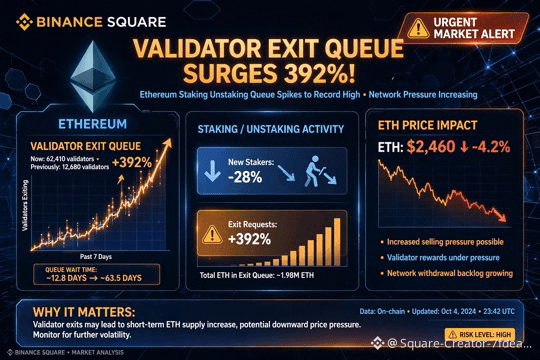
#EthereumValidatorExitQueueJumps392% 🚨 تنبيه عاجل!
طابور خروج مدققي الإيثيريوم انفجر بنسبة 392%!
الأرقام:
من 12,680 مدقق إلى 62,410 مدقق في طابور الخروج
وقت الانتظار: من 12.8 يوم إلى 63.5 يوم!
إجمالي ETH في الطابور: ~1.98 مليون ETH
ماذا يعني؟
المدققون يسحبون عملاتهم من الستاكينغ بكميات كبيرة. هذا قد يسبب ضغط بيع على المدى القصير.
لكن ليس كل خروج = بيع مباشر. كثير منهم يعيدون تنظيم المحافظ أو ينتقلون لمنصات ستاكينغ ثانية بعوائد أعلى.
توقعي: ضغط مؤقت على ETH ثم ارتداد قوي.
هل أنت مع البيع أو الشراء في هذا الخبر؟
#ETH #Ethereum #Staking
$BTC $ETH
{future}(ETHUSDT)
{future}(BTCUSDT)
#EthereumValidatorExitQueueJumps392%
#EthereumValidatorExitQueueJumps392% 🚨 تنبيه عاجل!
طابور خروج مدققي الإيثيريوم انفجر بنسبة 392%!
الأرقام:
من 12,680 مدقق إلى 62,410 مدقق في طابور الخروج
وقت الانتظار: من 12.8 يوم إلى 63.5 يوم!
إجمالي ETH في الطابور: ~1.98 مليون ETH
ماذا يعني؟
المدققون يسحبون عملاتهم من الستاكينغ بكميات كبيرة. هذا قد يسبب ضغط بيع على المدى القصير.
لكن ليس كل خروج = بيع مباشر. كثير منهم يعيدون تنظيم المحافظ أو ينتقلون لمنصات ستاكينغ ثانية بعوائد أعلى.
توقعي: ضغط مؤقت على ETH ثم ارتداد قوي.
هل أنت مع البيع أو الشراء في هذا الخبر؟
#ETH #Ethereum #Staking
$BTC $ETH
#EthereumValidatorExitQueueJumps392% 🚨 تنبيه عاجل!
طابور خروج مدققي الإيثيريوم انفجر بنسبة 392%!
الأرقام:
من 12,680 مدقق إلى 62,410 مدقق في طابور الخروج
وقت الانتظار: من 12.8 يوم إلى 63.5 يوم!
إجمالي ETH في الطابور: ~1.98 مليون ETH
ماذا يعني؟
المدققون يسحبون عملاتهم من الستاكينغ بكميات كبيرة. هذا قد يسبب ضغط بيع على المدى القصير.
لكن ليس كل خروج = بيع مباشر. كثير منهم يعيدون تنظيم المحافظ أو ينتقلون لمنصات ستاكينغ ثانية بعوائد أعلى.
توقعي: ضغط مؤقت على ETH ثم ارتداد قوي.
هل أنت مع البيع أو الشراء في هذا الخبر؟
#ETH #Ethereum #Staking
$BTC $ETH
1
1.5k

·
--
Tarjimani ko‘rish
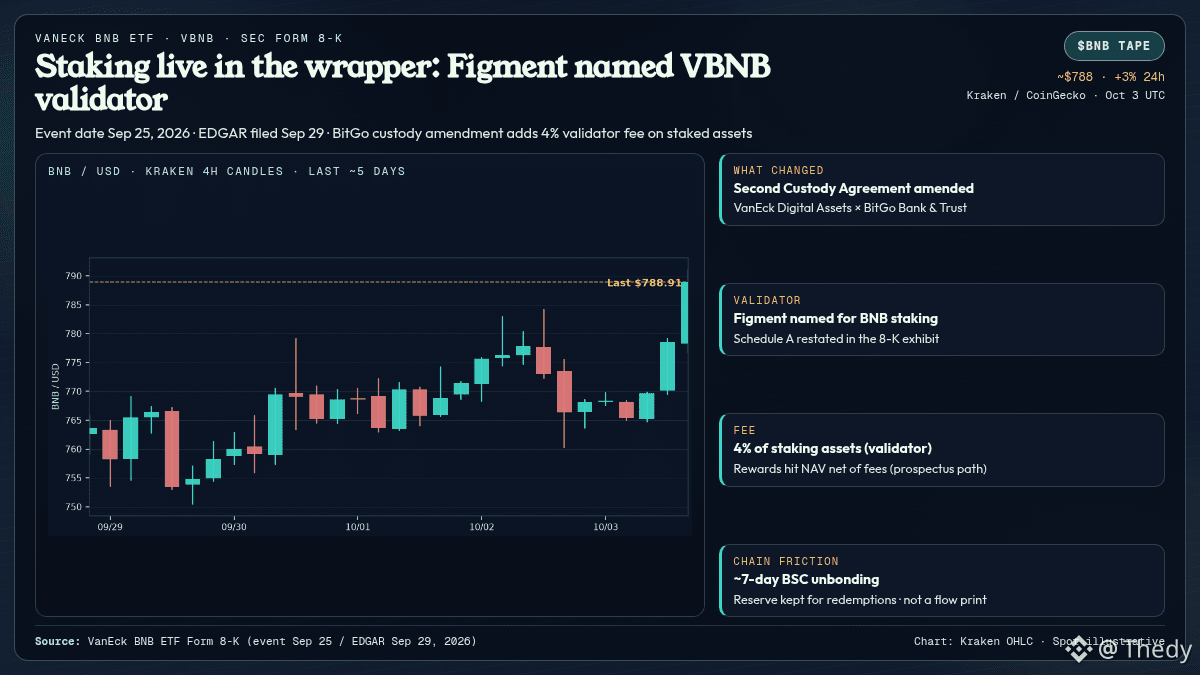
VanEck BNB ETF (VBNB) : le staking entre dans le wrapper US.
FAITS (SEC Form 8-K, date d'événement 25/09/2026, dépôt EDGAR 29/09/2026):
• VanEck Digital Assets a amendé le Second Custody Agreement avec BitGo Bank & Trust (second custodian BNB du Trust).
• Figment est nommé validator pour les activités de staking BNB du fonds.
• Frais validator : 4% des actifs stakés. Le reste de l'accord de custodie reste inchangé.
• Sur BNB Smart Chain, unstaking implique une période de unbonding d'environ 7 jours; une réserve reste hors staking pour les rachats.
Tape (~18:55 UTC 03/10, Kraken / CoinGecko): $BNB ≈ 788-789 $, +environ 3% sur 24h (session haute Kraken ≈ 791 $). VBNB (Nasdaq) coté autour de 29,8 $ (Yahoo).
INTERPRÉTATION: c'est une mise à jour de structure (custody + validator), pas un print de flux ETF. Le signal utile est « yield possible dans le wrapper », pas « vagues d'inflows institutionnels ». L'AUM du produit reste à surveiller avant d'extrapoler.
SCÉNARIOS
• Base: staking progressif, rewards nets de frais reflétés dans la NAV
• Extension: le yield différencie VBNB et attire des créations de parts
• Risk: unbonding + frais 4% + AUM encore limité freinent l'effet court terme
Le staking VBNB change-t-il votre lecture de $BNB, ou vous restez sur le spot / les perps ?
#BNB #ETF #Staking
VanEck BNB ETF (VBNB) : le staking entre dans le wrapper US.
FAITS (SEC Form 8-K, date d'événement 25/09/2026, dépôt EDGAR 29/09/2026):
• VanEck Digital Assets a amendé le Second Custody Agreement avec BitGo Bank & Trust (second custodian BNB du Trust).
• Figment est nommé validator pour les activités de staking BNB du fonds.
• Frais validator : 4% des actifs stakés. Le reste de l'accord de custodie reste inchangé.
• Sur BNB Smart Chain, unstaking implique une période de unbonding d'environ 7 jours; une réserve reste hors staking pour les rachats.
Tape (~18:55 UTC 03/10, Kraken / CoinGecko): $BNB ≈ 788-789 $, +environ 3% sur 24h (session haute Kraken ≈ 791 $). VBNB (Nasdaq) coté autour de 29,8 $ (Yahoo).
INTERPRÉTATION: c'est une mise à jour de structure (custody + validator), pas un print de flux ETF. Le signal utile est « yield possible dans le wrapper », pas « vagues d'inflows institutionnels ». L'AUM du produit reste à surveiller avant d'extrapoler.
SCÉNARIOS
• Base: staking progressif, rewards nets de frais reflétés dans la NAV
• Extension: le yield différencie VBNB et attire des créations de parts
• Risk: unbonding + frais 4% + AUM encore limité freinent l'effet court terme
Le staking VBNB change-t-il votre lecture de $BNB , ou vous restez sur le spot / les perps ?
#BNB #ETF #Staking
FAITS (SEC Form 8-K, date d'événement 25/09/2026, dépôt EDGAR 29/09/2026):
• VanEck Digital Assets a amendé le Second Custody Agreement avec BitGo Bank & Trust (second custodian BNB du Trust).
• Figment est nommé validator pour les activités de staking BNB du fonds.
• Frais validator : 4% des actifs stakés. Le reste de l'accord de custodie reste inchangé.
• Sur BNB Smart Chain, unstaking implique une période de unbonding d'environ 7 jours; une réserve reste hors staking pour les rachats.
Tape (~18:55 UTC 03/10, Kraken / CoinGecko): $BNB ≈ 788-789 $, +environ 3% sur 24h (session haute Kraken ≈ 791 $). VBNB (Nasdaq) coté autour de 29,8 $ (Yahoo).
INTERPRÉTATION: c'est une mise à jour de structure (custody + validator), pas un print de flux ETF. Le signal utile est « yield possible dans le wrapper », pas « vagues d'inflows institutionnels ». L'AUM du produit reste à surveiller avant d'extrapoler.
SCÉNARIOS
• Base: staking progressif, rewards nets de frais reflétés dans la NAV
• Extension: le yield différencie VBNB et attire des créations de parts
• Risk: unbonding + frais 4% + AUM encore limité freinent l'effet court terme
Le staking VBNB change-t-il votre lecture de $BNB , ou vous restez sur le spot / les perps ?
#BNB #ETF #Staking
41

·
--
Tarjimani ko‘rish
Staking yields are one of the most overlooked macro signals in crypto — and right now they deserve serious attention.
When native staking APRs across major proof-of-stake networks compress, it tells you two things: validator sets are growing (more capital locking up) and demand for on-chain yield is rising. That dual dynamic tends to precede periods of reduced liquid supply hitting exchanges.
$ETH currently processes a significant share of its supply through validators. As restaking via EigenLayer and similar protocols layers additional yield on top, the stickiness of that capital deepens. Rational actors don't unstake and sell when they can earn a spread on restaked capital.
$ADA operates under similar logic — staking participation rates near all-time highs effectively shrink circulating float. When float shrinks and demand stays constant, the price math is straightforward.
$SOL staking compounds this further: liquid staking tokens (LSTs) let stakers participate in DeFi simultaneously, so yield-seekers face no opportunity cost. The result is a larger portion of supply that simply doesn't reach sell-side pressure.
The signal to watch: if staking APRs start rising sharply, it means validators are unstaking — float expands and sell pressure returns. Until then, compressed yields across PoS chains are quietly tightening the supply screw.
Follow the validator economics, not just the price.
#Staking #ProofOfStake #CryptoMacro #OnChainSignals #ValidatorEconomics
Staking yields are one of the most overlooked macro signals in crypto — and right now they deserve serious attention.
When native staking APRs across major proof-of-stake networks compress, it tells you two things: validator sets are growing (more capital locking up) and demand for on-chain yield is rising. That dual dynamic tends to precede periods of reduced liquid supply hitting exchanges.
$ETH currently processes a significant share of its supply through validators. As restaking via EigenLayer and similar protocols layers additional yield on top, the stickiness of that capital deepens. Rational actors don't unstake and sell when they can earn a spread on restaked capital.
$ADA operates under similar logic — staking participation rates near all-time highs effectively shrink circulating float. When float shrinks and demand stays constant, the price math is straightforward.
$SOL staking compounds this further: liquid staking tokens (LSTs) let stakers participate in DeFi simultaneously, so yield-seekers face no opportunity cost. The result is a larger portion of supply that simply doesn't reach sell-side pressure.
The signal to watch: if staking APRs start rising sharply, it means validators are unstaking — float expands and sell pressure returns. Until then, compressed yields across PoS chains are quietly tightening the supply screw.
Follow the validator economics, not just the price.
#Staking #ProofOfStake #CryptoMacro #OnChainSignals #ValidatorEconomics
When native staking APRs across major proof-of-stake networks compress, it tells you two things: validator sets are growing (more capital locking up) and demand for on-chain yield is rising. That dual dynamic tends to precede periods of reduced liquid supply hitting exchanges.
$ETH currently processes a significant share of its supply through validators. As restaking via EigenLayer and similar protocols layers additional yield on top, the stickiness of that capital deepens. Rational actors don't unstake and sell when they can earn a spread on restaked capital.
$ADA operates under similar logic — staking participation rates near all-time highs effectively shrink circulating float. When float shrinks and demand stays constant, the price math is straightforward.
$SOL staking compounds this further: liquid staking tokens (LSTs) let stakers participate in DeFi simultaneously, so yield-seekers face no opportunity cost. The result is a larger portion of supply that simply doesn't reach sell-side pressure.
The signal to watch: if staking APRs start rising sharply, it means validators are unstaking — float expands and sell pressure returns. Until then, compressed yields across PoS chains are quietly tightening the supply screw.
Follow the validator economics, not just the price.
#Staking #ProofOfStake #CryptoMacro #OnChainSignals #ValidatorEconomics
148

Maqola
Tarjimani ko‘rish
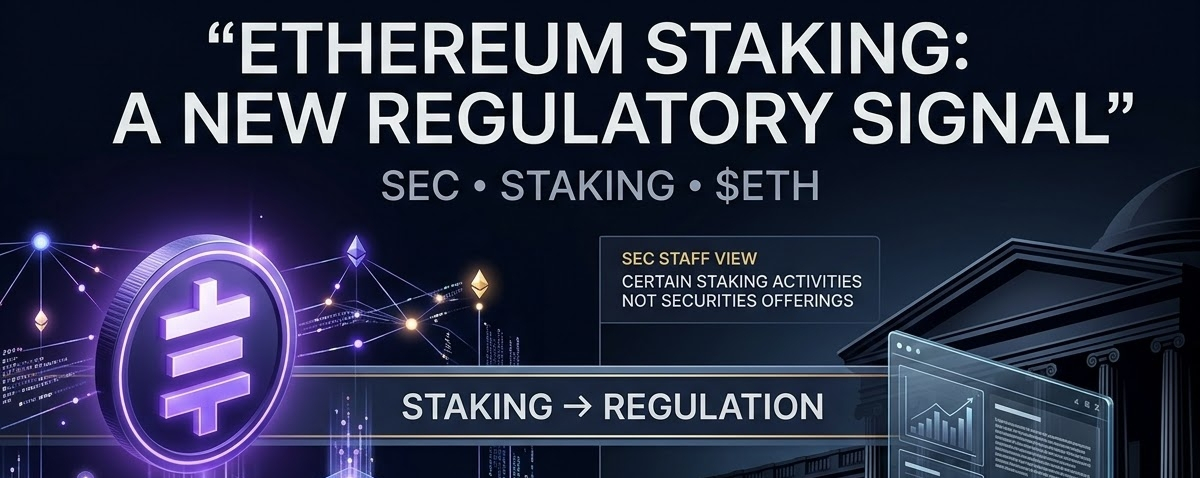
⚡ ETHEREUM STAKING JUST GOT AN IMPORTANT REGULATORY SIGNAL{spot}(ETHUSDT)
The conversation around Ethereum staking and U.S. securities law is evolving again.
Recent reports indicate that SEC staff have said certain Ethereum staking activities do not constitute securities offerings. That matters because staking has been one of the areas where crypto businesses have faced significant uncertainty around U.S. securities rules.
But there is an important distinction:
This is staff-level guidance or views, not a new law passed by Congress, and the exact legal treatment can depend on how a particular staking arrangement is structured.
The SEC’s broader March 2026 crypto interpretation also established a framework for analyzing different types of crypto assets and transactions, including protocol staking.
For Ethereum, the implications go beyond $ETH price charts.
If regulatory uncertainty around legitimate staking activity continues to decrease, it could influence how exchanges, custodians, funds and other financial businesses design Ethereum-related products.
📌 The bigger story:
Crypto regulation is increasingly moving from “Is this allowed?” toward “Exactly how should this activity be regulated?”
That shift could be just as important as the next market move.
#Ethereum #ETH #EthereumStaking #CryptoRegulation #Staking #DeFi #Web3 #CryptoNews #BinanceSquare
⚡ ETHEREUM STAKING JUST GOT AN IMPORTANT REGULATORY SIGNAL
The conversation around Ethereum staking and U.S. securities law is evolving again.
Recent reports indicate that SEC staff have said certain Ethereum staking activities do not constitute securities offerings. That matters because staking has been one of the areas where crypto businesses have faced significant uncertainty around U.S. securities rules.
But there is an important distinction:
This is staff-level guidance or views, not a new law passed by Congress, and the exact legal treatment can depend on how a particular staking arrangement is structured.
The SEC’s broader March 2026 crypto interpretation also established a framework for analyzing different types of crypto assets and transactions, including protocol staking.
For Ethereum, the implications go beyond $ETH price charts.
If regulatory uncertainty around legitimate staking activity continues to decrease, it could influence how exchanges, custodians, funds and other financial businesses design Ethereum-related products.
📌 The bigger story:
Crypto regulation is increasingly moving from “Is this allowed?” toward “Exactly how should this activity be regulated?”
That shift could be just as important as the next market move.
#Ethereum #ETH #EthereumStaking #CryptoRegulation #Staking #DeFi #Web3 #CryptoNews #BinanceSquare
Recent reports indicate that SEC staff have said certain Ethereum staking activities do not constitute securities offerings. That matters because staking has been one of the areas where crypto businesses have faced significant uncertainty around U.S. securities rules.
But there is an important distinction:
This is staff-level guidance or views, not a new law passed by Congress, and the exact legal treatment can depend on how a particular staking arrangement is structured.
The SEC’s broader March 2026 crypto interpretation also established a framework for analyzing different types of crypto assets and transactions, including protocol staking.
For Ethereum, the implications go beyond $ETH price charts.
If regulatory uncertainty around legitimate staking activity continues to decrease, it could influence how exchanges, custodians, funds and other financial businesses design Ethereum-related products.
📌 The bigger story:
Crypto regulation is increasingly moving from “Is this allowed?” toward “Exactly how should this activity be regulated?”
That shift could be just as important as the next market move.
#Ethereum #ETH #EthereumStaking #CryptoRegulation #Staking #DeFi #Web3 #CryptoNews #BinanceSquare
61


Tarjimani ko‘rish
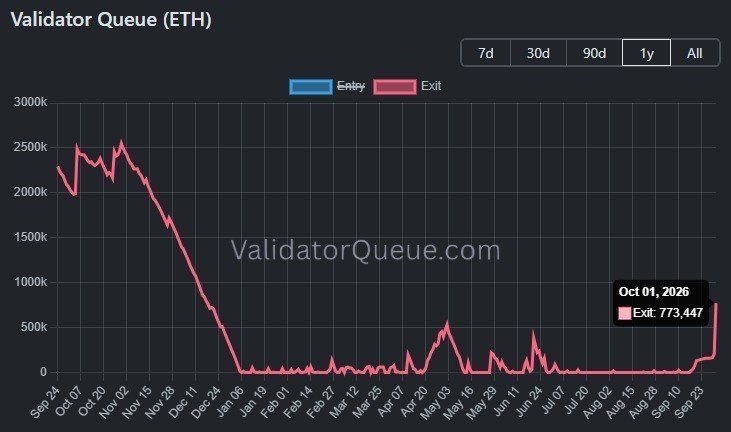
🚨 ETHEREUM’S EXIT QUEUE HAS HIT A 2026 HIGH
The Ethereum validator exit queue has climbed to approximately **773,447 ETH**.
That is the highest level recorded in 2026.
The estimated waiting time has also increased to nearly **two weeks**.
This means a large number of validators are trying to exit Ethereum staking at the same time.
Why does this matter?
A rising exit queue can signal:
• Reduced confidence among stakers
• Increased demand for liquidity
• Possible profit-taking
• Future ETH supply becoming available
• Short-term pressure on market sentiment
But there is an important distinction:
ETH in the exit queue is not the same as ETH being sold immediately.
Ethereum’s protocol limits how quickly validators can exit, which spreads withdrawals over time.
The key question is what happens next.
If new staking deposits remain strong, the exit queue may eventually normalize.
If exits continue rising while entry demand weakens, more ETH could gradually return to liquid markets.
That could create additional selling pressure.
Watch these metrics closely:
ETH exit queue
ETH entry queue
Staking participation
Exchange balances
ETH/BTC ratio
Ethereum ETF flows
Validator activity
The exit queue is not an automatic sell signal.
But a sudden increase in unstaking demand is a clear sentiment warning.
Ethereum’s next major move may depend on whether new stakers absorb the exits—or whether more supply reaches the market.
Aasim Majeed AMC
$ETH
{future}(ETHUSDT)
#Ethereum #ETH #Crypto #staking #DeFi
🚨 ETHEREUM’S EXIT QUEUE HAS HIT A 2026 HIGH
The Ethereum validator exit queue has climbed to approximately **773,447 ETH**.
That is the highest level recorded in 2026.
The estimated waiting time has also increased to nearly **two weeks**.
This means a large number of validators are trying to exit Ethereum staking at the same time.
Why does this matter?
A rising exit queue can signal:
• Reduced confidence among stakers
• Increased demand for liquidity
• Possible profit-taking
• Future ETH supply becoming available
• Short-term pressure on market sentiment
But there is an important distinction:
ETH in the exit queue is not the same as ETH being sold immediately.
Ethereum’s protocol limits how quickly validators can exit, which spreads withdrawals over time.
The key question is what happens next.
If new staking deposits remain strong, the exit queue may eventually normalize.
If exits continue rising while entry demand weakens, more ETH could gradually return to liquid markets.
That could create additional selling pressure.
Watch these metrics closely:
ETH exit queue
ETH entry queue
Staking participation
Exchange balances
ETH/BTC ratio
Ethereum ETF flows
Validator activity
The exit queue is not an automatic sell signal.
But a sudden increase in unstaking demand is a clear sentiment warning.
Ethereum’s next major move may depend on whether new stakers absorb the exits—or whether more supply reaches the market.
Aasim Majeed AMC
$ETH
#Ethereum #ETH #Crypto #staking #DeFi
The Ethereum validator exit queue has climbed to approximately **773,447 ETH**.
That is the highest level recorded in 2026.
The estimated waiting time has also increased to nearly **two weeks**.
This means a large number of validators are trying to exit Ethereum staking at the same time.
Why does this matter?
A rising exit queue can signal:
• Reduced confidence among stakers
• Increased demand for liquidity
• Possible profit-taking
• Future ETH supply becoming available
• Short-term pressure on market sentiment
But there is an important distinction:
ETH in the exit queue is not the same as ETH being sold immediately.
Ethereum’s protocol limits how quickly validators can exit, which spreads withdrawals over time.
The key question is what happens next.
If new staking deposits remain strong, the exit queue may eventually normalize.
If exits continue rising while entry demand weakens, more ETH could gradually return to liquid markets.
That could create additional selling pressure.
Watch these metrics closely:
ETH exit queue
ETH entry queue
Staking participation
Exchange balances
ETH/BTC ratio
Ethereum ETF flows
Validator activity
The exit queue is not an automatic sell signal.
But a sudden increase in unstaking demand is a clear sentiment warning.
Ethereum’s next major move may depend on whether new stakers absorb the exits—or whether more supply reaches the market.
Aasim Majeed AMC
$ETH
#Ethereum #ETH #Crypto #staking #DeFi
84
·
--
Staking daromadlari an’anaviy belgilangan daromad (fixed income) bilan sokin raqobatlashmoqda — va ko‘pchilik makroinvestorlar hali buni sezmagan.
Fed funds stavkasi nolga yaqin bo‘lgan paytda staking APY’lari 4–7% bo‘lib, “g‘ayrioddiy” ko‘ringan. Endi an’anaviy risk-free stavkalar yana siqilgach, o‘sha staking daromadlari tuzilmaviy jihatdan jozibador ko‘rinadi — ayniqsa asosiy aktivning uzoq muddatli qimmatlashi ehtimoli bo‘lsa, treasury obligatsiyasi esa bunday qobiliyatga ega emas.
$ETH staking hozirda mahalliy (native) ko‘rinishda taxminan 3–4% daromad keltirmoqda. $SOL validator mukofotlari 6–7% oralig‘ida. $ADA delegatsiya esa lock-up (qulflanish) yo‘qligida 3–4% taklif qiladi. Bu yashirin impermanent-loss xatari bo‘lgan DeFi leverage (kredit/leveraj) daromadlari emas — bular tarmoq xavfsizligida ishtirok etishga bog‘langan protokolga xos mukofotlardir.
Makro manzara ham muhim: real stavkalar pasaysa, kapital daromad tomon oqadi. Staking kriptoda daromadni ham qo‘lga kiritib, aktivga nisbatan yo‘nalishiy ekspozitsiyani ham saqlab qolish mumkin bo‘lgan kam joylardan biri. Aynan shu kombinatsiya — carry + convexity (konvekslik) — makro-allocaterlar izlaydigan narsadir.
Kapitalning aylanish (rotation) tezi faqat institutlarning Bitcoin spot’ini sotib olishi haqida emas. Gap shundaki, daromad izlayotgan kapital staking aktivni qimmatlashi bilan birga pozitsiyani “langar”lab berishi mumkinligini anglaydi. Bu spekulyativ emas, tuzilmaviy (strukturaviy) talab.
Etakchi indikator sifatida staking oqimlariga qarab boring. Aqlli pul miqyosda daromad keltiradigan pozitsiyalarni shakllantirayotgan bo‘lsa, ular kelasi oy sotishni rejalashtirmayotgan bo‘lishadi.
#Staking #CryptoYield #ETH #DeFi #CryptoInvesting
Staking daromadlari an’anaviy belgilangan daromad (fixed income) bilan sokin raqobatlashmoqda — va ko‘pchilik makroinvestorlar hali buni sezmagan.
Fed funds stavkasi nolga yaqin bo‘lgan paytda staking APY’lari 4–7% bo‘lib, “g‘ayrioddiy” ko‘ringan. Endi an’anaviy risk-free stavkalar yana siqilgach, o‘sha staking daromadlari tuzilmaviy jihatdan jozibador ko‘rinadi — ayniqsa asosiy aktivning uzoq muddatli qimmatlashi ehtimoli bo‘lsa, treasury obligatsiyasi esa bunday qobiliyatga ega emas.
$ETH staking hozirda mahalliy (native) ko‘rinishda taxminan 3–4% daromad keltirmoqda. $SOL validator mukofotlari 6–7% oralig‘ida. $ADA delegatsiya esa lock-up (qulflanish) yo‘qligida 3–4% taklif qiladi. Bu yashirin impermanent-loss xatari bo‘lgan DeFi leverage (kredit/leveraj) daromadlari emas — bular tarmoq xavfsizligida ishtirok etishga bog‘langan protokolga xos mukofotlardir.
Makro manzara ham muhim: real stavkalar pasaysa, kapital daromad tomon oqadi. Staking kriptoda daromadni ham qo‘lga kiritib, aktivga nisbatan yo‘nalishiy ekspozitsiyani ham saqlab qolish mumkin bo‘lgan kam joylardan biri. Aynan shu kombinatsiya — carry + convexity (konvekslik) — makro-allocaterlar izlaydigan narsadir.
Kapitalning aylanish (rotation) tezi faqat institutlarning Bitcoin spot’ini sotib olishi haqida emas. Gap shundaki, daromad izlayotgan kapital staking aktivni qimmatlashi bilan birga pozitsiyani “langar”lab berishi mumkinligini anglaydi. Bu spekulyativ emas, tuzilmaviy (strukturaviy) talab.
Etakchi indikator sifatida staking oqimlariga qarab boring. Aqlli pul miqyosda daromad keltiradigan pozitsiyalarni shakllantirayotgan bo‘lsa, ular kelasi oy sotishni rejalashtirmayotgan bo‘lishadi.
#Staking #CryptoYield #ETH #DeFi #CryptoInvesting
Fed funds stavkasi nolga yaqin bo‘lgan paytda staking APY’lari 4–7% bo‘lib, “g‘ayrioddiy” ko‘ringan. Endi an’anaviy risk-free stavkalar yana siqilgach, o‘sha staking daromadlari tuzilmaviy jihatdan jozibador ko‘rinadi — ayniqsa asosiy aktivning uzoq muddatli qimmatlashi ehtimoli bo‘lsa, treasury obligatsiyasi esa bunday qobiliyatga ega emas.
$ETH staking hozirda mahalliy (native) ko‘rinishda taxminan 3–4% daromad keltirmoqda. $SOL validator mukofotlari 6–7% oralig‘ida. $ADA delegatsiya esa lock-up (qulflanish) yo‘qligida 3–4% taklif qiladi. Bu yashirin impermanent-loss xatari bo‘lgan DeFi leverage (kredit/leveraj) daromadlari emas — bular tarmoq xavfsizligida ishtirok etishga bog‘langan protokolga xos mukofotlardir.
Makro manzara ham muhim: real stavkalar pasaysa, kapital daromad tomon oqadi. Staking kriptoda daromadni ham qo‘lga kiritib, aktivga nisbatan yo‘nalishiy ekspozitsiyani ham saqlab qolish mumkin bo‘lgan kam joylardan biri. Aynan shu kombinatsiya — carry + convexity (konvekslik) — makro-allocaterlar izlaydigan narsadir.
Kapitalning aylanish (rotation) tezi faqat institutlarning Bitcoin spot’ini sotib olishi haqida emas. Gap shundaki, daromad izlayotgan kapital staking aktivni qimmatlashi bilan birga pozitsiyani “langar”lab berishi mumkinligini anglaydi. Bu spekulyativ emas, tuzilmaviy (strukturaviy) talab.
Etakchi indikator sifatida staking oqimlariga qarab boring. Aqlli pul miqyosda daromad keltiradigan pozitsiyalarni shakllantirayotgan bo‘lsa, ular kelasi oy sotishni rejalashtirmayotgan bo‘lishadi.
#Staking #CryptoYield #ETH #DeFi #CryptoInvesting
117

·
--
🚨 ETH: STAKINGDAN CHIQISH NAVBATI REKORD — NIMA BO‘LYAPTI? 💎
📊 Asosiy ma’lumotlar:
- Chiqish (withdrawal) navbati: 850.000 ETH → maksimum 2026 yilgacha
- Kutish vaqti: 14,77 kun → shuningdek, yil davomida eng yuqorisi
- Hozirgi narx: $2.724,10 (+0,79%)
💡 Bu nimani anglatadi?
Jiang Zhuoer (Leibit asoschisi) fikricha, uzoq muddatli ko‘plab egalari hozirgi narxni yuqori deb hisoblaydi va stakingdagi ETH’ni yechib, sotish orqali foydani “qulfdan chiqarish”ni istaydi. Ko‘proq yechimlar = potentsial sotuv bosimi ko‘proq ⚠️
👁️ Nimalarni kutish kerak?
- Agar bu sotuvlar yuzaga chiqsa → qisqa muddatli tuzatish ehtimoli
- Agar bozor bosimni yutib yuborsa → konsolidatsiya bo‘lib, narx yana ko‘tarilishi mumkin
- Navbat noaniqlikni ko‘rsatadi, bu darhol tushishni anglatmasligi ham mumkin
Sen qanday o‘ylaysan? Bu sotish signallimi yoki faqat foydani olishmi? 👇
🟢 ETH ko‘tarilmoqda
🔴 Tuzatish yaqin
— HadesCripto ₿🔥
#Ethereum #ETH🔥🔥🔥🔥🔥🔥 #staking #MercadoCripto #HadesCripto
🚨 ETH: STAKINGDAN CHIQISH NAVBATI REKORD — NIMA BO‘LYAPTI? 💎
📊 Asosiy ma’lumotlar:
- Chiqish (withdrawal) navbati: 850.000 ETH → maksimum 2026 yilgacha
- Kutish vaqti: 14,77 kun → shuningdek, yil davomida eng yuqorisi
- Hozirgi narx: $2.724,10 (+0,79%)
💡 Bu nimani anglatadi?
Jiang Zhuoer (Leibit asoschisi) fikricha, uzoq muddatli ko‘plab egalari hozirgi narxni yuqori deb hisoblaydi va stakingdagi ETH’ni yechib, sotish orqali foydani “qulfdan chiqarish”ni istaydi. Ko‘proq yechimlar = potentsial sotuv bosimi ko‘proq ⚠️
👁️ Nimalarni kutish kerak?
- Agar bu sotuvlar yuzaga chiqsa → qisqa muddatli tuzatish ehtimoli
- Agar bozor bosimni yutib yuborsa → konsolidatsiya bo‘lib, narx yana ko‘tarilishi mumkin
- Navbat noaniqlikni ko‘rsatadi, bu darhol tushishni anglatmasligi ham mumkin
Sen qanday o‘ylaysan? Bu sotish signallimi yoki faqat foydani olishmi? 👇
🟢 ETH ko‘tarilmoqda
🔴 Tuzatish yaqin
— HadesCripto ₿🔥
#Ethereum #ETH🔥🔥🔥🔥🔥🔥 #staking #MercadoCripto #HadesCripto
📊 Asosiy ma’lumotlar:
- Chiqish (withdrawal) navbati: 850.000 ETH → maksimum 2026 yilgacha
- Kutish vaqti: 14,77 kun → shuningdek, yil davomida eng yuqorisi
- Hozirgi narx: $2.724,10 (+0,79%)
💡 Bu nimani anglatadi?
Jiang Zhuoer (Leibit asoschisi) fikricha, uzoq muddatli ko‘plab egalari hozirgi narxni yuqori deb hisoblaydi va stakingdagi ETH’ni yechib, sotish orqali foydani “qulfdan chiqarish”ni istaydi. Ko‘proq yechimlar = potentsial sotuv bosimi ko‘proq ⚠️
👁️ Nimalarni kutish kerak?
- Agar bu sotuvlar yuzaga chiqsa → qisqa muddatli tuzatish ehtimoli
- Agar bozor bosimni yutib yuborsa → konsolidatsiya bo‘lib, narx yana ko‘tarilishi mumkin
- Navbat noaniqlikni ko‘rsatadi, bu darhol tushishni anglatmasligi ham mumkin
Sen qanday o‘ylaysan? Bu sotish signallimi yoki faqat foydani olishmi? 👇
🟢 ETH ko‘tarilmoqda
🔴 Tuzatish yaqin
— HadesCripto ₿🔥
#Ethereum #ETH🔥🔥🔥🔥🔥🔥 #staking #MercadoCripto #HadesCripto


Binance News
·
--
ETH Exit Queue 850 000 taga yetdi, kutish vaqti 14,77 kun — Jiang Zhuoer aytdi
Foresight News xabariga ko‘ra, Leibit Mining Pool asoschisi Jiang Zhuoer POS stakingdan chiqishni kutayotgan ETH miqdori 850 000 taga yetganini, kutish vaqti esa 14,77 kunni tashkil qilganini aytgan — bu ikkalasi ham 2026-yildagi eng yuqori ko‘rsatkichlar. Foresight News’ga ko‘ra, Jiang buni joriy narx nisbatan yuqori deb hisoblaydigan va foydani “qulf”ga olish uchun sotmoqchi bo‘lgan uzoq muddatli egalarning bir guruhi bilan izohlagan.
51

ANTI-ANSIEDАLIK QULFI: Nega men Stakingni tanladim 🔒🧠
Kripto bozorida investorning eng katta dushmanlaridan biri grafikning o‘zgaruvchanligi emas, balki ekraningizdagi har bir soniyani nazorat qilish istagidan keladigan o‘zingizdagi tashvishdir. Kun bo‘yi ilovani ochib, narxning ko‘tarilib-tushishini kuzatish ulkan hissiy charchoq keltiradi va shoshilinch qarorlar uchun yo‘l ochadi. 📉⚡
Shuning uchun men Stakingni nafaqat passiv daromad vositasi sifatida, balki men uchun haqiqiy Anti-Ansiedadik Qulf sifatida qabul qildim. 🛡️✨
Bu tanlov bozor kundalik hayotingizni qanday o‘zgartiradi:
1. Impulse Trade vasvasasining barham topishi: Aktivni daromad keltirishga qo‘ysangiz (u flexible bo‘ladimi yoki bloklangan bo‘ladimi), e’tibor “shoshilib sotib olish va sotish”dan chalg‘ib, boylik yaratishga yo‘naltiriladi.
2. Volatilitetda ruhiy xotirjamlik: Bozor birdan tushib ketdimi yoki ko‘tarildimi? Kapitalingiz joylangan va uzoq muddatga yo‘naltirilganlar faqat chang tinchiy boshlashini kuzatadi — xayoliy yo‘qotishlarni to‘xtatish ilinjidagi umidsizliksiz.
3. Pul o‘zi ishlaydi: Ong dam olayotgan paytda, tizim avtomatik ravishda kapitalni don-don qilib daromad keltirib ishlatadi.
Haqiqiy moliyaviy erkinlik har bir ko‘tarilishning cho‘qqisini topishdan kelmaydi, balki strategiya kelajagingiz foydasiga ishlayotganini bilib, xotirjam uxlashga imkon beradigan ruhiy osoyishtalikdan keladi. ⏳🚀
Siz-chi? Bozor kayfiyati baland kunlarda tashvish bilan qanday kurashasiz? Quyidagi so‘rovnomada ovozingizni qoldiring va izohlarda ayting! 👇💬
#Staking #SquareBinance #PazPisicologica
ANTI-ANSIEDАLIK QULFI: Nega men Stakingni tanladim 🔒🧠
Kripto bozorida investorning eng katta dushmanlaridan biri grafikning o‘zgaruvchanligi emas, balki ekraningizdagi har bir soniyani nazorat qilish istagidan keladigan o‘zingizdagi tashvishdir. Kun bo‘yi ilovani ochib, narxning ko‘tarilib-tushishini kuzatish ulkan hissiy charchoq keltiradi va shoshilinch qarorlar uchun yo‘l ochadi. 📉⚡
Shuning uchun men Stakingni nafaqat passiv daromad vositasi sifatida, balki men uchun haqiqiy Anti-Ansiedadik Qulf sifatida qabul qildim. 🛡️✨
Bu tanlov bozor kundalik hayotingizni qanday o‘zgartiradi:
1. Impulse Trade vasvasasining barham topishi: Aktivni daromad keltirishga qo‘ysangiz (u flexible bo‘ladimi yoki bloklangan bo‘ladimi), e’tibor “shoshilib sotib olish va sotish”dan chalg‘ib, boylik yaratishga yo‘naltiriladi.
2. Volatilitetda ruhiy xotirjamlik: Bozor birdan tushib ketdimi yoki ko‘tarildimi? Kapitalingiz joylangan va uzoq muddatga yo‘naltirilganlar faqat chang tinchiy boshlashini kuzatadi — xayoliy yo‘qotishlarni to‘xtatish ilinjidagi umidsizliksiz.
3. Pul o‘zi ishlaydi: Ong dam olayotgan paytda, tizim avtomatik ravishda kapitalni don-don qilib daromad keltirib ishlatadi.
Haqiqiy moliyaviy erkinlik har bir ko‘tarilishning cho‘qqisini topishdan kelmaydi, balki strategiya kelajagingiz foydasiga ishlayotganini bilib, xotirjam uxlashga imkon beradigan ruhiy osoyishtalikdan keladi. ⏳🚀
Siz-chi? Bozor kayfiyati baland kunlarda tashvish bilan qanday kurashasiz? Quyidagi so‘rovnomada ovozingizni qoldiring va izohlarda ayting! 👇💬
#Staking #SquareBinance #PazPisicologica
Kripto bozorida investorning eng katta dushmanlaridan biri grafikning o‘zgaruvchanligi emas, balki ekraningizdagi har bir soniyani nazorat qilish istagidan keladigan o‘zingizdagi tashvishdir. Kun bo‘yi ilovani ochib, narxning ko‘tarilib-tushishini kuzatish ulkan hissiy charchoq keltiradi va shoshilinch qarorlar uchun yo‘l ochadi. 📉⚡
Shuning uchun men Stakingni nafaqat passiv daromad vositasi sifatida, balki men uchun haqiqiy Anti-Ansiedadik Qulf sifatida qabul qildim. 🛡️✨
Bu tanlov bozor kundalik hayotingizni qanday o‘zgartiradi:
1. Impulse Trade vasvasasining barham topishi: Aktivni daromad keltirishga qo‘ysangiz (u flexible bo‘ladimi yoki bloklangan bo‘ladimi), e’tibor “shoshilib sotib olish va sotish”dan chalg‘ib, boylik yaratishga yo‘naltiriladi.
2. Volatilitetda ruhiy xotirjamlik: Bozor birdan tushib ketdimi yoki ko‘tarildimi? Kapitalingiz joylangan va uzoq muddatga yo‘naltirilganlar faqat chang tinchiy boshlashini kuzatadi — xayoliy yo‘qotishlarni to‘xtatish ilinjidagi umidsizliksiz.
3. Pul o‘zi ishlaydi: Ong dam olayotgan paytda, tizim avtomatik ravishda kapitalni don-don qilib daromad keltirib ishlatadi.
Haqiqiy moliyaviy erkinlik har bir ko‘tarilishning cho‘qqisini topishdan kelmaydi, balki strategiya kelajagingiz foydasiga ishlayotganini bilib, xotirjam uxlashga imkon beradigan ruhiy osoyishtalikdan keladi. ⏳🚀
Siz-chi? Bozor kayfiyati baland kunlarda tashvish bilan qanday kurashasiz? Quyidagi so‘rovnomada ovozingizni qoldiring va izohlarda ayting! 👇💬
#Staking #SquareBinance #PazPisicologica
🟢 Staking Bloqueado
0%
🔵 Staking Flex
0%
🔴 Spot
0%
0 Ovozlar • Ovoz berish yopildi
61

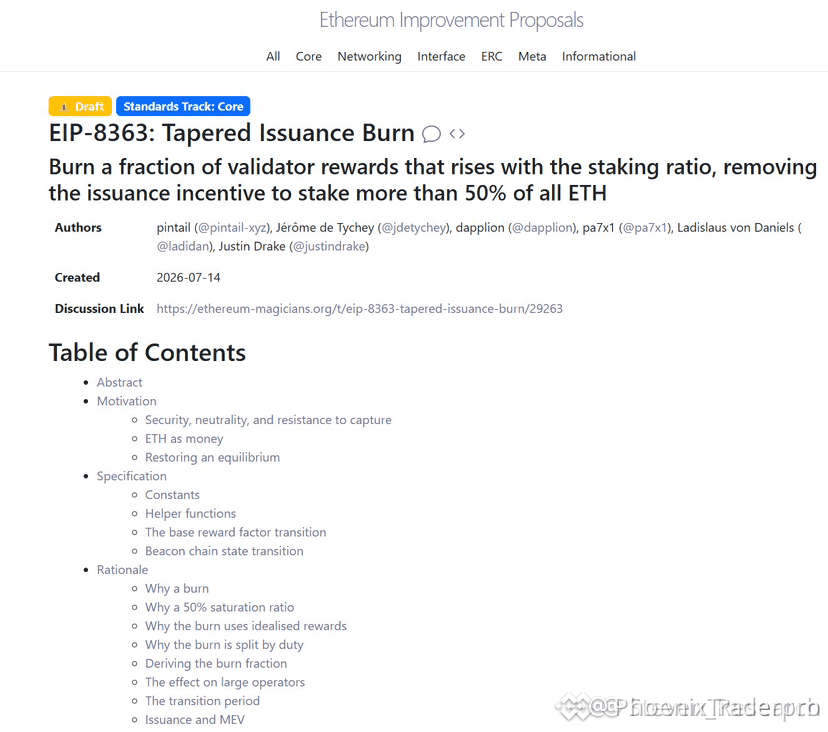
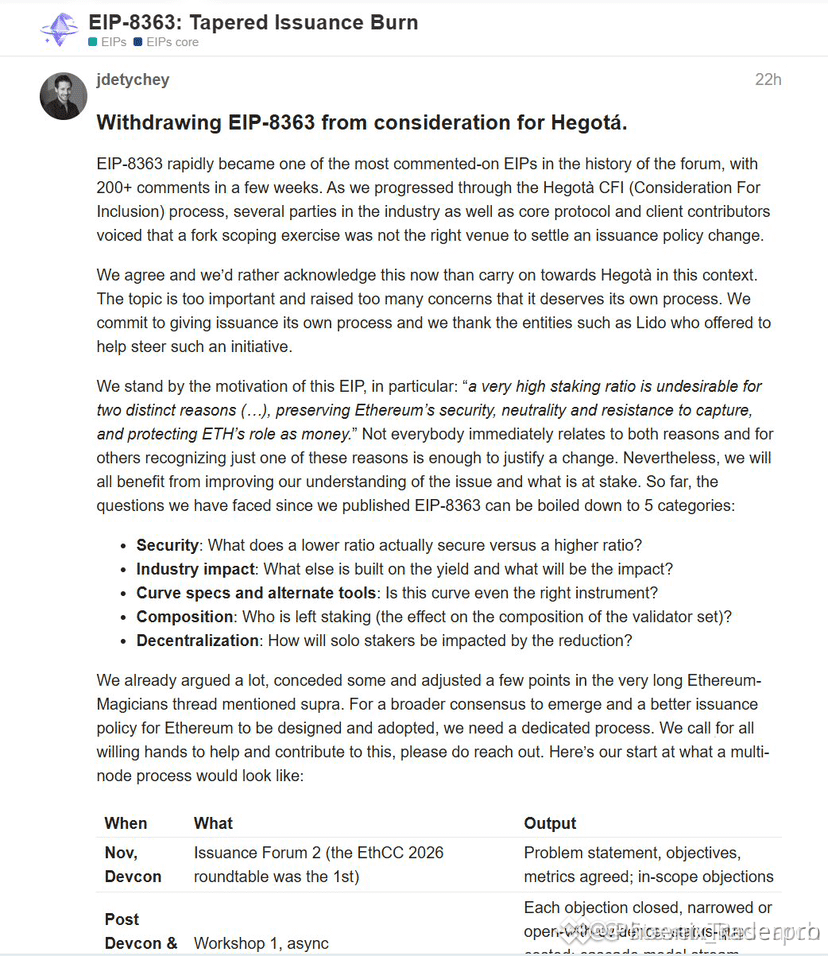
⚡ $ETH DEVELOPERS SHELVE CONTROVERSIAL STAKING REWARD BURN PROPOSAL AHEAD OF HEGOTA UPGRADE! 📊
Yaqinda ishlab chiquvchilar EIP-8363 ni Hegota yangilanishi tekshiruv ro‘yxatidan olib tashlashdi va validator daromadlarini darhol ta’minot yoqib yuborish bo‘yicha jarimadan asrashdi. 💡 Asosiy chiqarishdagi o‘zgarishlarni oddiy forkinga tiqishtirish o‘rniga, core jamoa staking suyultirilishi (dilution) bo‘yicha bahs uchun alohida maydon ochmoqda.
Bu qaror liquid staking protokollarini birdan marja siqilishi yuzaga kelishidan himoya qiladi, shu bilan birga hosildorlik (yield) bo‘yicha tarkibiy bahsni fon fonida davom ettiradi. 🌊 Aqlli pul bu protseduraviy siljishni order oqimi (order flow) uchun barqarorlashtiruvchi omil sifatida ko‘rmoqda, tokenomika esa uzoq muddatda moslashtiriladi. 💬 Bu kechikish xaridorlarga yield’ni to‘plash uchun yashil chiroqmi, yoki narx harakatini ustidan monetar noaniqlik osilib turibdimi? 👇
⚠️ Moliyaviy maslahat emas. Har doim risklaringizni boshqaring. 🛡️
🏷️ #ETH #Ethereum #Staking #Crypto
🔥 💎
⚡ $ETH DEVELOPERS SHELVE CONTROVERSIAL STAKING REWARD BURN PROPOSAL AHEAD OF HEGOTA UPGRADE! 📊
Yaqinda ishlab chiquvchilar EIP-8363 ni Hegota yangilanishi tekshiruv ro‘yxatidan olib tashlashdi va validator daromadlarini darhol ta’minot yoqib yuborish bo‘yicha jarimadan asrashdi. 💡 Asosiy chiqarishdagi o‘zgarishlarni oddiy forkinga tiqishtirish o‘rniga, core jamoa staking suyultirilishi (dilution) bo‘yicha bahs uchun alohida maydon ochmoqda.
Bu qaror liquid staking protokollarini birdan marja siqilishi yuzaga kelishidan himoya qiladi, shu bilan birga hosildorlik (yield) bo‘yicha tarkibiy bahsni fon fonida davom ettiradi. 🌊 Aqlli pul bu protseduraviy siljishni order oqimi (order flow) uchun barqarorlashtiruvchi omil sifatida ko‘rmoqda, tokenomika esa uzoq muddatda moslashtiriladi. 💬 Bu kechikish xaridorlarga yield’ni to‘plash uchun yashil chiroqmi, yoki narx harakatini ustidan monetar noaniqlik osilib turibdimi? 👇
⚠️ Moliyaviy maslahat emas. Har doim risklaringizni boshqaring. 🛡️
🏷️ #ETH #Ethereum #Staking #Crypto
🔥 💎
Yaqinda ishlab chiquvchilar EIP-8363 ni Hegota yangilanishi tekshiruv ro‘yxatidan olib tashlashdi va validator daromadlarini darhol ta’minot yoqib yuborish bo‘yicha jarimadan asrashdi. 💡 Asosiy chiqarishdagi o‘zgarishlarni oddiy forkinga tiqishtirish o‘rniga, core jamoa staking suyultirilishi (dilution) bo‘yicha bahs uchun alohida maydon ochmoqda.
Bu qaror liquid staking protokollarini birdan marja siqilishi yuzaga kelishidan himoya qiladi, shu bilan birga hosildorlik (yield) bo‘yicha tarkibiy bahsni fon fonida davom ettiradi. 🌊 Aqlli pul bu protseduraviy siljishni order oqimi (order flow) uchun barqarorlashtiruvchi omil sifatida ko‘rmoqda, tokenomika esa uzoq muddatda moslashtiriladi. 💬 Bu kechikish xaridorlarga yield’ni to‘plash uchun yashil chiroqmi, yoki narx harakatini ustidan monetar noaniqlik osilib turibdimi? 👇
⚠️ Moliyaviy maslahat emas. Har doim risklaringizni boshqaring. 🛡️
🏷️ #ETH #Ethereum #Staking #Crypto
🔥 💎
14

·
--
🚨 EIP-8363 mualliflari 6-avgust kuni Lido’ning so‘rovidan keyin Hegotá yangilanishidan ETH staking mukofotini kuydirish mexanizmini olib tashlashdi. Bu qadam ETH ta’minoti o‘sish sur’atini kamaytirishi mumkin bo‘lgan deflyatsion mexanizmni bartaraf etadi. Bozor, chiqarilish kuydirishlarining kamayishi tufayli, ETH’ga nisbatan yuqoriga bosim kamroq bo‘lishini ko‘rishi mumkin. Staking daromadliligi bo‘yicha kutilmalar va validatorlar xatti-harakatidagi o‘zgarishlarni kuzating.
Bu ETH’ning uzoq muddatli ta’minot dinamikasiga qanday ta’sir qiladi?
#Staking
$ETH #TradingSignal #CryptoAnalysis
🚨 EIP-8363 mualliflari 6-avgust kuni Lido’ning so‘rovidan keyin Hegotá yangilanishidan ETH staking mukofotini kuydirish mexanizmini olib tashlashdi. Bu qadam ETH ta’minoti o‘sish sur’atini kamaytirishi mumkin bo‘lgan deflyatsion mexanizmni bartaraf etadi. Bozor, chiqarilish kuydirishlarining kamayishi tufayli, ETH’ga nisbatan yuqoriga bosim kamroq bo‘lishini ko‘rishi mumkin. Staking daromadliligi bo‘yicha kutilmalar va validatorlar xatti-harakatidagi o‘zgarishlarni kuzating.
Bu ETH’ning uzoq muddatli ta’minot dinamikasiga qanday ta’sir qiladi?
#Staking
$ETH #TradingSignal #CryptoAnalysis
Bu ETH’ning uzoq muddatli ta’minot dinamikasiga qanday ta’sir qiladi?
#Staking
$ETH #TradingSignal #CryptoAnalysis

4

·
--
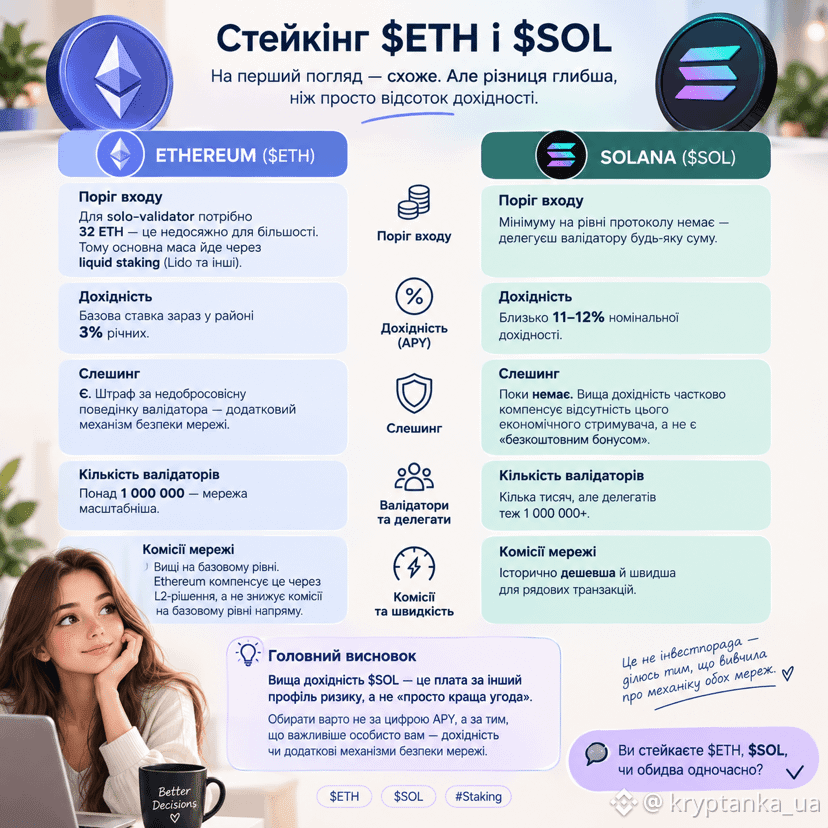
Staking $ETH i SOL foizi bo‘yicha, xolos, degan edim😅. Mexanizmini solishtirib ko‘rdim — farq esa ancha chuqurroq ekan.
Kirish chegarasi — birinchi farq. ETHni o‘zingiz stak qilish uchun 32 ETH kerak — aksariyat uchun bu hamyonbop emas, shuning uchun ko‘pchilik liquid staking orqali o‘tadi. SOLda esa protokol darajasida minimal summa yo‘q — istalgan miqdorni validatorda delegatsiya qilasiz.
Daromadlilik ham Ethereum foydasiga emas: ETHning bazaviy stavkasi taxminan 3% atrofida, SOL esa taxminan 11-12% taklif qiladi. Lekin bir nozik jihat bor:
— ETHda slashing bor — validatordagi vijdonsiz xatti-harakat uchun jarima, qo‘shimcha xavfsizlik mexanizmi;
— SOLda slashing hozircha yo‘q, ya’ni yuqoriroq daromadlilik bu «tormoz»ning yo‘qligi qisman o‘rnini qoplaydi, ya’ni «bepul bonus» emas;
— Ethereumdagi validatorlar soni bo‘yicha ko‘lam kattaroq — milliondan oshiq, Solanada esa bir necha ming.
Komissiyalar haqida: Solana odatda oddiy tranzaksiyalar uchun tarixan arzonroq va tezroq, Ethereum esa buni bevosita komissiyani tushirish orqali emas, L2 orqali qoplaydi.
O‘zim uchun xulosa: APY raqamiga qarab tanlamaslik kerak, eng muhimini — daromadlilikmi yoki tarmoqning xavfsizlik mexanizmlari muhimligini — shuni ustun qo‘yish kerak.
Bu investitsiya bo‘yicha maslahat emas — ikkala tarmoq mexanikasi haqida o‘rganganlarimni bo‘lyapman.
Siz $ETH, $SOL stak qilasizmi yoki ikkalasini bir vaqtda?👇
$ETH $SOL #Staking
Staking $ETH i SOL foizi bo‘yicha, xolos, degan edim😅. Mexanizmini solishtirib ko‘rdim — farq esa ancha chuqurroq ekan.
Kirish chegarasi — birinchi farq. ETHni o‘zingiz stak qilish uchun 32 ETH kerak — aksariyat uchun bu hamyonbop emas, shuning uchun ko‘pchilik liquid staking orqali o‘tadi. SOLda esa protokol darajasida minimal summa yo‘q — istalgan miqdorni validatorda delegatsiya qilasiz.
Daromadlilik ham Ethereum foydasiga emas: ETHning bazaviy stavkasi taxminan 3% atrofida, SOL esa taxminan 11-12% taklif qiladi. Lekin bir nozik jihat bor:
— ETHda slashing bor — validatordagi vijdonsiz xatti-harakat uchun jarima, qo‘shimcha xavfsizlik mexanizmi;
— SOLda slashing hozircha yo‘q, ya’ni yuqoriroq daromadlilik bu «tormoz»ning yo‘qligi qisman o‘rnini qoplaydi, ya’ni «bepul bonus» emas;
— Ethereumdagi validatorlar soni bo‘yicha ko‘lam kattaroq — milliondan oshiq, Solanada esa bir necha ming.
Komissiyalar haqida: Solana odatda oddiy tranzaksiyalar uchun tarixan arzonroq va tezroq, Ethereum esa buni bevosita komissiyani tushirish orqali emas, L2 orqali qoplaydi.
O‘zim uchun xulosa: APY raqamiga qarab tanlamaslik kerak, eng muhimini — daromadlilikmi yoki tarmoqning xavfsizlik mexanizmlari muhimligini — shuni ustun qo‘yish kerak.
Bu investitsiya bo‘yicha maslahat emas — ikkala tarmoq mexanikasi haqida o‘rganganlarimni bo‘lyapman.
Siz $ETH , $SOL stak qilasizmi yoki ikkalasini bir vaqtda?👇
$ETH $SOL #Staking
Kirish chegarasi — birinchi farq. ETHni o‘zingiz stak qilish uchun 32 ETH kerak — aksariyat uchun bu hamyonbop emas, shuning uchun ko‘pchilik liquid staking orqali o‘tadi. SOLda esa protokol darajasida minimal summa yo‘q — istalgan miqdorni validatorda delegatsiya qilasiz.
Daromadlilik ham Ethereum foydasiga emas: ETHning bazaviy stavkasi taxminan 3% atrofida, SOL esa taxminan 11-12% taklif qiladi. Lekin bir nozik jihat bor:
— ETHda slashing bor — validatordagi vijdonsiz xatti-harakat uchun jarima, qo‘shimcha xavfsizlik mexanizmi;
— SOLda slashing hozircha yo‘q, ya’ni yuqoriroq daromadlilik bu «tormoz»ning yo‘qligi qisman o‘rnini qoplaydi, ya’ni «bepul bonus» emas;
— Ethereumdagi validatorlar soni bo‘yicha ko‘lam kattaroq — milliondan oshiq, Solanada esa bir necha ming.
Komissiyalar haqida: Solana odatda oddiy tranzaksiyalar uchun tarixan arzonroq va tezroq, Ethereum esa buni bevosita komissiyani tushirish orqali emas, L2 orqali qoplaydi.
O‘zim uchun xulosa: APY raqamiga qarab tanlamaslik kerak, eng muhimini — daromadlilikmi yoki tarmoqning xavfsizlik mexanizmlari muhimligini — shuni ustun qo‘yish kerak.
Bu investitsiya bo‘yicha maslahat emas — ikkala tarmoq mexanikasi haqida o‘rganganlarimni bo‘lyapman.
Siz $ETH , $SOL stak qilasizmi yoki ikkalasini bir vaqtda?👇
$ETH $SOL #Staking
2
3.5k

·
--
"stETH egalari tomonidan hech qanday choralar talab etilmaydi" to‘g‘ri, va baribir qandaydir xarajat bor
MetaMask 30-sentabr kuni o‘z infratuzilmasining bir qismida xavfsizlik hodisasi haqida ma’lum qildi va ta’sirlangan validatorlarni, jumladan Lido’ni ham, olib tashlayapti
u client stake uchun withdrawal (yechib olish) kalitlariga ega emas va hamyonlarga darhol tahdid yo‘qligini ko‘ryapti
qonun loyihasi — vaqt masalasi
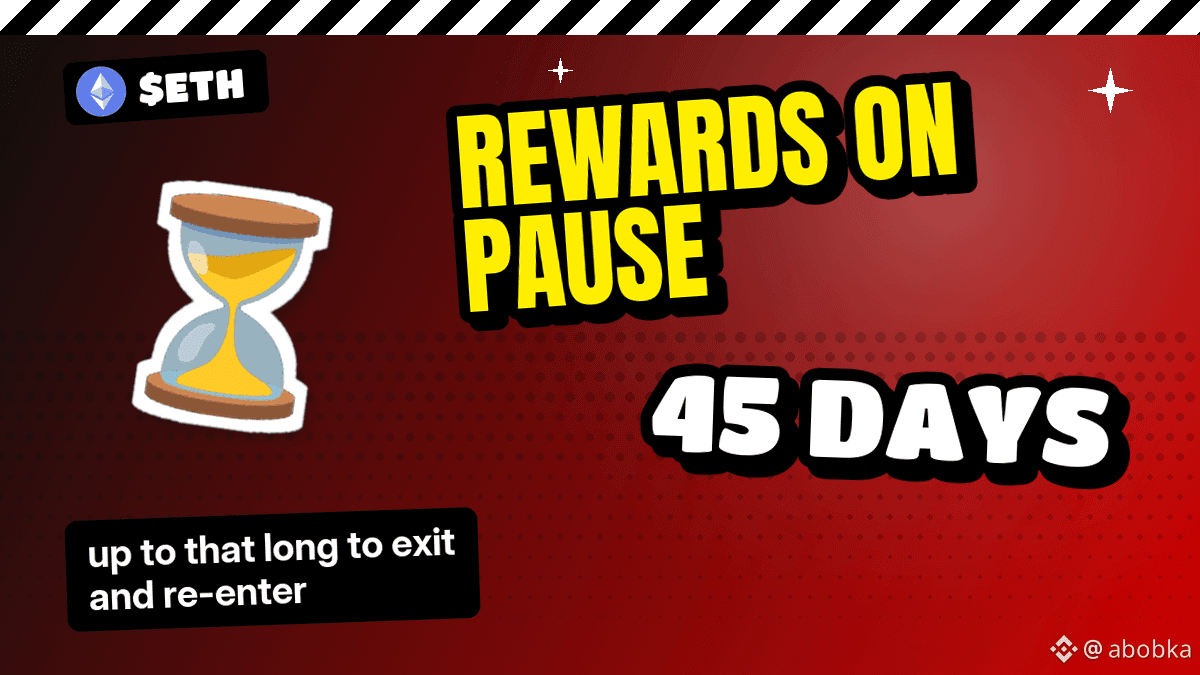
chiqish va qayta kirish taxminan 45 kun olishi mumkin
bu validatorlar kutib turgan paytda staking mukofotlari bo‘lmaydi, downtime bo‘yicha jarimalar ham mumkin
taqsirlangan so‘nggilari 7-oktabr oxirigacha chiqib ketadi
hali oshkor qilinmagan: bu qanday sodir bo‘lgani, nechta validator, $ETH miqdori qancha, har qanday ma’lumotlar kirib olinganmi-yo‘qmi
hozir mening sumkamda (bags) nol ETH bor. Lido ($LDO ) 45 kungacha tushuntirishga sarflashi mumkin
stETH egalari: o‘sha validatorlardagi mukofotlarning yetishmasligi sizni aylantirib (rotate) yuborish uchun yetarlimi?
#MetaMask #Lido #staking #Ethereum
"stETH egalari tomonidan hech qanday choralar talab etilmaydi" to‘g‘ri, va baribir qandaydir xarajat bor
MetaMask 30-sentabr kuni o‘z infratuzilmasining bir qismida xavfsizlik hodisasi haqida ma’lum qildi va ta’sirlangan validatorlarni, jumladan Lido’ni ham, olib tashlayapti
u client stake uchun withdrawal (yechib olish) kalitlariga ega emas va hamyonlarga darhol tahdid yo‘qligini ko‘ryapti
qonun loyihasi — vaqt masalasi
chiqish va qayta kirish taxminan 45 kun olishi mumkin
bu validatorlar kutib turgan paytda staking mukofotlari bo‘lmaydi, downtime bo‘yicha jarimalar ham mumkin
taqsirlangan so‘nggilari 7-oktabr oxirigacha chiqib ketadi
hali oshkor qilinmagan: bu qanday sodir bo‘lgani, nechta validator, $ETH miqdori qancha, har qanday ma’lumotlar kirib olinganmi-yo‘qmi
hozir mening sumkamda (bags) nol ETH bor. Lido ($LDO ) 45 kungacha tushuntirishga sarflashi mumkin
stETH egalari: o‘sha validatorlardagi mukofotlarning yetishmasligi sizni aylantirib (rotate) yuborish uchun yetarlimi?
#MetaMask #Lido #staking #Ethereum
MetaMask 30-sentabr kuni o‘z infratuzilmasining bir qismida xavfsizlik hodisasi haqida ma’lum qildi va ta’sirlangan validatorlarni, jumladan Lido’ni ham, olib tashlayapti
u client stake uchun withdrawal (yechib olish) kalitlariga ega emas va hamyonlarga darhol tahdid yo‘qligini ko‘ryapti
qonun loyihasi — vaqt masalasi
chiqish va qayta kirish taxminan 45 kun olishi mumkin
bu validatorlar kutib turgan paytda staking mukofotlari bo‘lmaydi, downtime bo‘yicha jarimalar ham mumkin
taqsirlangan so‘nggilari 7-oktabr oxirigacha chiqib ketadi
hali oshkor qilinmagan: bu qanday sodir bo‘lgani, nechta validator, $ETH miqdori qancha, har qanday ma’lumotlar kirib olinganmi-yo‘qmi
hozir mening sumkamda (bags) nol ETH bor. Lido ($LDO ) 45 kungacha tushuntirishga sarflashi mumkin
stETH egalari: o‘sha validatorlardagi mukofotlarning yetishmasligi sizni aylantirib (rotate) yuborish uchun yetarlimi?
#MetaMask #Lido #staking #Ethereum
148
·
--
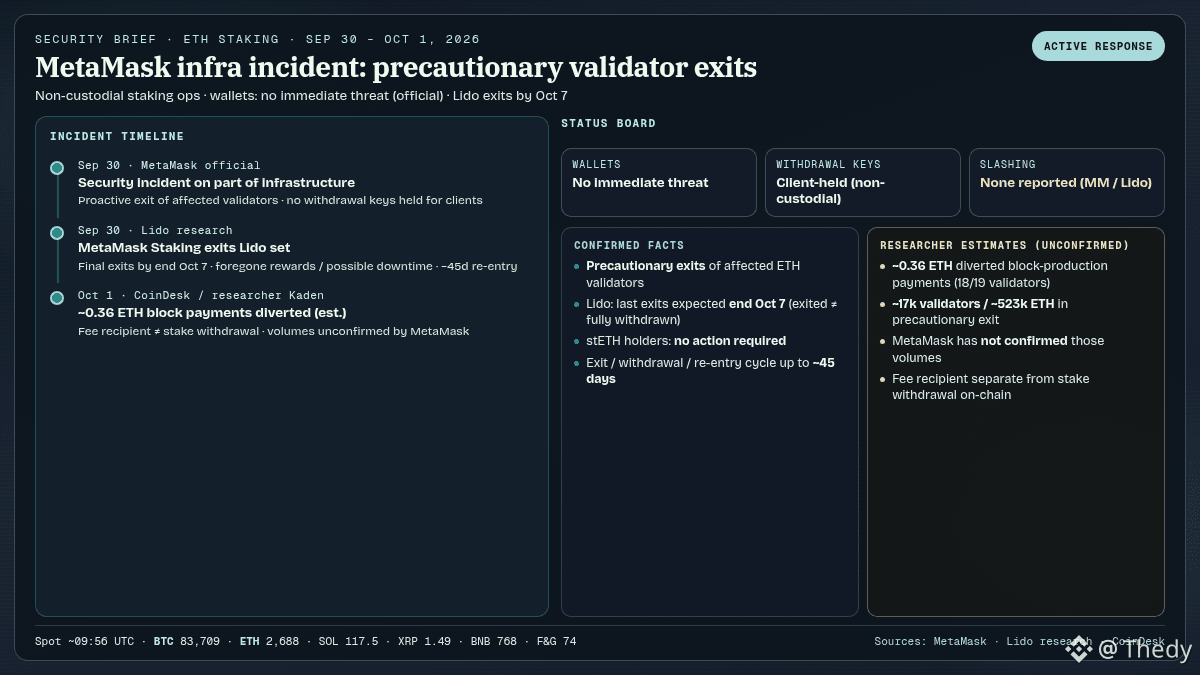
MetaMask Ethereum validatorlarini oldindan xavfsiz tarzda saralab (chetlab) olmoqda. Rasmiy xabar: hamyonlar bo‘yicha darhol tahdid yo‘q.
30/09 kuni MetaMask o‘z infratuzilmasining bir qismida xavfsizlik hodisasi yuz berganini tasdiqladi. Ko‘rilgan chorа: non-custodial staking (vakolatsiz) da tegishli validatorlarni exit qilish. Muhim nuqta: MetaMask mijozlarning withdrawal keys (yechim/chiqish kalitlari) ni boshqarmaydi.
Lido tomoni (forum research, 30/09): MetaMask Staking (avval Consensys Staking) validatorlarini setdan chiqaradi. Oxirgi exitlar 7 oktyabr oxirigacha kutiladi (exited — albatta fully withdrawn bo‘lishi shart emas). O‘tkazib yuborilgan rewardlar + agar juda erta offline bo‘lib qolinsa, ehtimoliy downtime penaltisi. Exit / withdrawal / re-entry sikli ~45 kun (entry queue) gacha. « stETH egalari uchun hech qanday action talab qilinmaydi ».
CoinDesk (01/10) researcher Kaden’ga tayanib keltiradi: ~0,36 ETH block-production to‘lovlari yo‘naltirilgan (18/19 ta MetaMask validatorlari earning qilgan). Bu researcher taxmini bo‘lib, MetaMask tomonidan tasdiqlanmagan: ~17k validator / ~523k ETH oldindan exit qilingan. Fee recipient ≠ stake’ning withdrawal manzili (on-chain alohida). MetaMask/Lido tomonidan maqola paytida slashing qayd etilmagan.
Spot (~09:57 UTC, Kraken/CoinGecko): $BTC ~83 709 · $ETH ~2 688 · SOL ~117,55 · XRP ~1,488 · BNB ~768. Qo‘rquv va ochko‘zlik 74 (Greed).
Kuzatish kerak bo‘lgan ssenariylar:
1) Tezkor bartaraf etish, exitlar nazoratda, stETH holder tomonda o‘zgarmaydi
2) Uzoqroq tekshiruv, operator setida yo‘qotilgan rewardlar ko‘proq ko‘rinadi
3) Bozorda “wallet hack qilingan” degan tushunmovchilik, holbuki MetaMask “no immediate threat” deb aniq aytgan
Siz ko‘proq staking signalini (exitlar / queue’lar) kuzatyapsizmi yoki $ETH dagi wallet xabarini?
#Ethereum #Staking #MetaMask
MetaMask Ethereum validatorlarini oldindan xavfsiz tarzda saralab (chetlab) olmoqda. Rasmiy xabar: hamyonlar bo‘yicha darhol tahdid yo‘q.
30/09 kuni MetaMask o‘z infratuzilmasining bir qismida xavfsizlik hodisasi yuz berganini tasdiqladi. Ko‘rilgan chorа: non-custodial staking (vakolatsiz) da tegishli validatorlarni exit qilish. Muhim nuqta: MetaMask mijozlarning withdrawal keys (yechim/chiqish kalitlari) ni boshqarmaydi.
Lido tomoni (forum research, 30/09): MetaMask Staking (avval Consensys Staking) validatorlarini setdan chiqaradi. Oxirgi exitlar 7 oktyabr oxirigacha kutiladi (exited — albatta fully withdrawn bo‘lishi shart emas). O‘tkazib yuborilgan rewardlar + agar juda erta offline bo‘lib qolinsa, ehtimoliy downtime penaltisi. Exit / withdrawal / re-entry sikli ~45 kun (entry queue) gacha. « stETH egalari uchun hech qanday action talab qilinmaydi ».
CoinDesk (01/10) researcher Kaden’ga tayanib keltiradi: ~0,36 ETH block-production to‘lovlari yo‘naltirilgan (18/19 ta MetaMask validatorlari earning qilgan). Bu researcher taxmini bo‘lib, MetaMask tomonidan tasdiqlanmagan: ~17k validator / ~523k ETH oldindan exit qilingan. Fee recipient ≠ stake’ning withdrawal manzili (on-chain alohida). MetaMask/Lido tomonidan maqola paytida slashing qayd etilmagan.
Spot (~09:57 UTC, Kraken/CoinGecko): $BTC ~83 709 · $ETH ~2 688 · SOL ~117,55 · XRP ~1,488 · BNB ~768. Qo‘rquv va ochko‘zlik 74 (Greed).
Kuzatish kerak bo‘lgan ssenariylar:
1) Tezkor bartaraf etish, exitlar nazoratda, stETH holder tomonda o‘zgarmaydi
2) Uzoqroq tekshiruv, operator setida yo‘qotilgan rewardlar ko‘proq ko‘rinadi
3) Bozorda “wallet hack qilingan” degan tushunmovchilik, holbuki MetaMask “no immediate threat” deb aniq aytgan
Siz ko‘proq staking signalini (exitlar / queue’lar) kuzatyapsizmi yoki $ETH dagi wallet xabarini?
#Ethereum #Staking #MetaMask
30/09 kuni MetaMask o‘z infratuzilmasining bir qismida xavfsizlik hodisasi yuz berganini tasdiqladi. Ko‘rilgan chorа: non-custodial staking (vakolatsiz) da tegishli validatorlarni exit qilish. Muhim nuqta: MetaMask mijozlarning withdrawal keys (yechim/chiqish kalitlari) ni boshqarmaydi.
Lido tomoni (forum research, 30/09): MetaMask Staking (avval Consensys Staking) validatorlarini setdan chiqaradi. Oxirgi exitlar 7 oktyabr oxirigacha kutiladi (exited — albatta fully withdrawn bo‘lishi shart emas). O‘tkazib yuborilgan rewardlar + agar juda erta offline bo‘lib qolinsa, ehtimoliy downtime penaltisi. Exit / withdrawal / re-entry sikli ~45 kun (entry queue) gacha. « stETH egalari uchun hech qanday action talab qilinmaydi ».
CoinDesk (01/10) researcher Kaden’ga tayanib keltiradi: ~0,36 ETH block-production to‘lovlari yo‘naltirilgan (18/19 ta MetaMask validatorlari earning qilgan). Bu researcher taxmini bo‘lib, MetaMask tomonidan tasdiqlanmagan: ~17k validator / ~523k ETH oldindan exit qilingan. Fee recipient ≠ stake’ning withdrawal manzili (on-chain alohida). MetaMask/Lido tomonidan maqola paytida slashing qayd etilmagan.
Spot (~09:57 UTC, Kraken/CoinGecko): $BTC ~83 709 · $ETH ~2 688 · SOL ~117,55 · XRP ~1,488 · BNB ~768. Qo‘rquv va ochko‘zlik 74 (Greed).
Kuzatish kerak bo‘lgan ssenariylar:
1) Tezkor bartaraf etish, exitlar nazoratda, stETH holder tomonda o‘zgarmaydi
2) Uzoqroq tekshiruv, operator setida yo‘qotilgan rewardlar ko‘proq ko‘rinadi
3) Bozorda “wallet hack qilingan” degan tushunmovchilik, holbuki MetaMask “no immediate threat” deb aniq aytgan
Siz ko‘proq staking signalini (exitlar / queue’lar) kuzatyapsizmi yoki $ETH dagi wallet xabarini?
#Ethereum #Staking #MetaMask
1
174

·
--
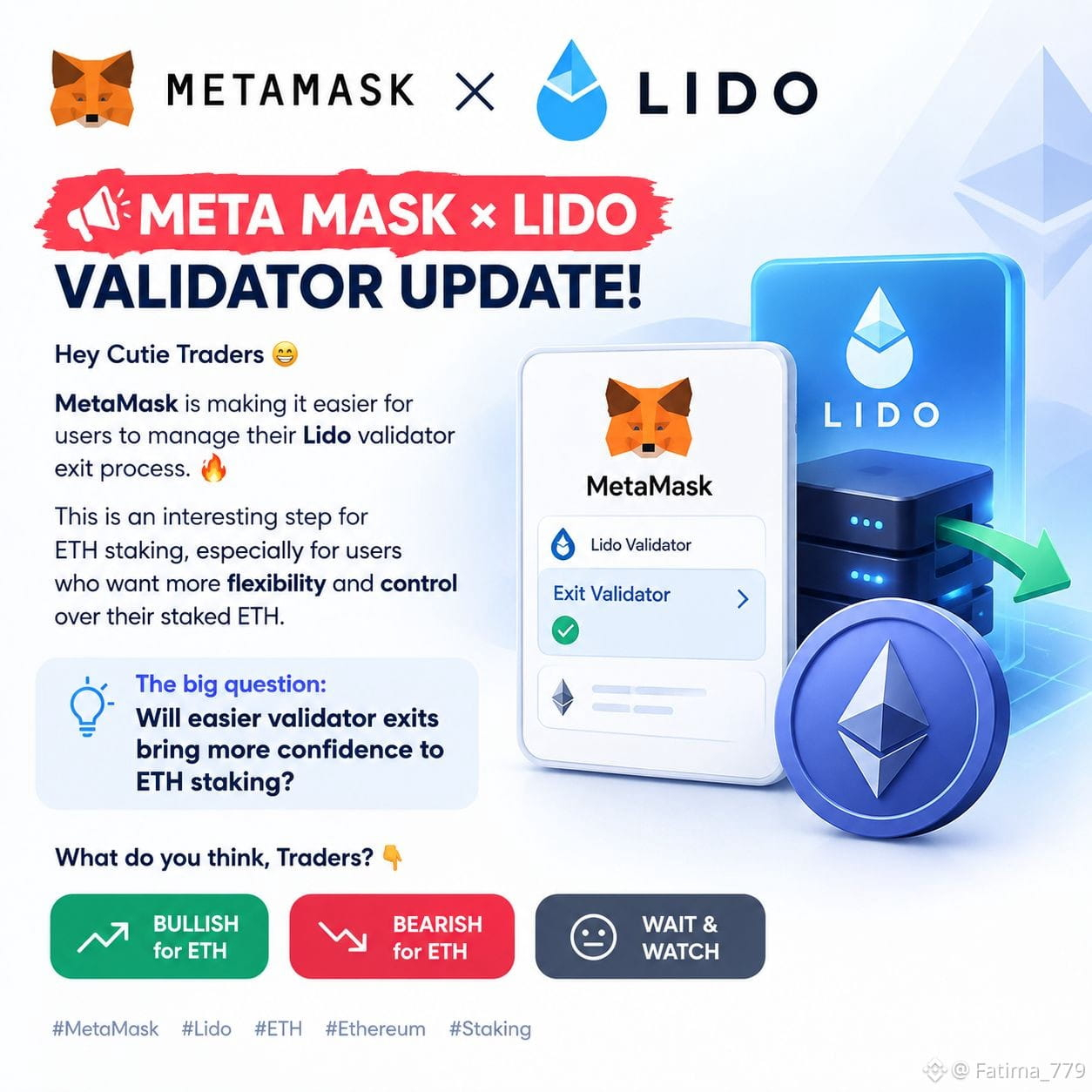
META MASK × LIDO VALIDATOR YANGILANISHI! 👀
Salom, qiziquvchi treyderlar 😁
MetaMask foydalanuvchilarga Lido validator exit (chiqish) jarayonini boshqarishni yanada osonlashtirmoqda.
Bu ETH staking (staking) uchun qiziqarli qadam, ayniqsa staked ETH’ga ko‘proq moslashuvchanlik va nazoratni xohlaydiganlar uchun.
Eng katta savol:
Validator exit’larning osonlashuvi ETH staking’ga ko‘proq ishonch olib keladimi?
Siz nima deb o‘ylaysiz, treyderlar? 👇
📈 ETH uchun BULLISH
📉 ETH uchun BEARISH
🤔 KUTING VA KUZATING
#MetaMask #Lido #MetaMaskExitsLidoValidatorsAfterSecurityIncident #Ethereum #Staking $MOVR
{future}(MOVRUSDT)
$NEAR
{future}(NEARUSDT)
$ETH
{future}(ETHUSDT)
META MASK × LIDO VALIDATOR YANGILANISHI! 👀
Salom, qiziquvchi treyderlar 😁
MetaMask foydalanuvchilarga Lido validator exit (chiqish) jarayonini boshqarishni yanada osonlashtirmoqda.
Bu ETH staking (staking) uchun qiziqarli qadam, ayniqsa staked ETH’ga ko‘proq moslashuvchanlik va nazoratni xohlaydiganlar uchun.
Eng katta savol:
Validator exit’larning osonlashuvi ETH staking’ga ko‘proq ishonch olib keladimi?
Siz nima deb o‘ylaysiz, treyderlar? 👇
📈 ETH uchun BULLISH
📉 ETH uchun BEARISH
🤔 KUTING VA KUZATING
#MetaMask #Lido #MetaMaskExitsLidoValidatorsAfterSecurityIncident #Ethereum #Staking $MOVR
$NEAR
$ETH
Salom, qiziquvchi treyderlar 😁
MetaMask foydalanuvchilarga Lido validator exit (chiqish) jarayonini boshqarishni yanada osonlashtirmoqda.
Bu ETH staking (staking) uchun qiziqarli qadam, ayniqsa staked ETH’ga ko‘proq moslashuvchanlik va nazoratni xohlaydiganlar uchun.
Eng katta savol:
Validator exit’larning osonlashuvi ETH staking’ga ko‘proq ishonch olib keladimi?
Siz nima deb o‘ylaysiz, treyderlar? 👇
📈 ETH uchun BULLISH
📉 ETH uchun BEARISH
🤔 KUTING VA KUZATING
#MetaMask #Lido #MetaMaskExitsLidoValidatorsAfterSecurityIncident #Ethereum #Staking $MOVR
$NEAR
$ETH
1
312
🚨 METAMASK $ETH VALIDATORLARDA XAVFSIZLIK INTSIDENTIDAN SO‘NG STAKING INFRASTRUKTURASINI O‘ZGARTIRMOQDA ⚠️
MetaMask yaqinda infratuzilma buzilishi haqida ogohlantirdi va foydalanuvchi mablag‘larini himoya qilish uchun darhol $ETH da’vogarlardan (komprometatsiyalangan validatorlardan) chiqib ketmoqda. Hozircha faol hamyon balanslari xavf ostida emas, ammo staking infratuzilmasi ortda likvidlikni faol tarzda qayta yo‘naltirmoqda. 🏦
Katta ekotizim ishtirokchilari validatorlardan chiqib kelganda, daromad mexanikasida va tarmoqdan chiqish navbatlarida nozik o‘zgarishlar yuz beradi. Aqlli pul validatorlar harakatini diqqat bilan kuzatib, kapital keyin qayerga qayta joylashishini bilib olmoqda. 🔍
💬 Infrastrukturadagi muammolar paytida siz $ETH ni likvid (suyuqlik) holatda ushlab turasizmi yoki notinchlikdan o‘tib ushlab turasizmi? 👇
⚠️ Moliyaviy maslahat emas. Har doim riskingizni boshqaring. 🛡️
🏷️ #ETH #Ethereum #Staking #Crypto
🛡️ 👁️
🚨 METAMASK $ETH VALIDATORLARDA XAVFSIZLIK INTSIDENTIDAN SO‘NG STAKING INFRASTRUKTURASINI O‘ZGARTIRMOQDA ⚠️
MetaMask yaqinda infratuzilma buzilishi haqida ogohlantirdi va foydalanuvchi mablag‘larini himoya qilish uchun darhol $ETH da’vogarlardan (komprometatsiyalangan validatorlardan) chiqib ketmoqda. Hozircha faol hamyon balanslari xavf ostida emas, ammo staking infratuzilmasi ortda likvidlikni faol tarzda qayta yo‘naltirmoqda. 🏦
Katta ekotizim ishtirokchilari validatorlardan chiqib kelganda, daromad mexanikasida va tarmoqdan chiqish navbatlarida nozik o‘zgarishlar yuz beradi. Aqlli pul validatorlar harakatini diqqat bilan kuzatib, kapital keyin qayerga qayta joylashishini bilib olmoqda. 🔍
💬 Infrastrukturadagi muammolar paytida siz $ETH ni likvid (suyuqlik) holatda ushlab turasizmi yoki notinchlikdan o‘tib ushlab turasizmi? 👇
⚠️ Moliyaviy maslahat emas. Har doim riskingizni boshqaring. 🛡️
🏷️ #ETH #Ethereum #Staking #Crypto
🛡️ 👁️
MetaMask yaqinda infratuzilma buzilishi haqida ogohlantirdi va foydalanuvchi mablag‘larini himoya qilish uchun darhol $ETH da’vogarlardan (komprometatsiyalangan validatorlardan) chiqib ketmoqda. Hozircha faol hamyon balanslari xavf ostida emas, ammo staking infratuzilmasi ortda likvidlikni faol tarzda qayta yo‘naltirmoqda. 🏦
Katta ekotizim ishtirokchilari validatorlardan chiqib kelganda, daromad mexanikasida va tarmoqdan chiqish navbatlarida nozik o‘zgarishlar yuz beradi. Aqlli pul validatorlar harakatini diqqat bilan kuzatib, kapital keyin qayerga qayta joylashishini bilib olmoqda. 🔍
💬 Infrastrukturadagi muammolar paytida siz $ETH ni likvid (suyuqlik) holatda ushlab turasizmi yoki notinchlikdan o‘tib ushlab turasizmi? 👇
⚠️ Moliyaviy maslahat emas. Har doim riskingizni boshqaring. 🛡️
🏷️ #ETH #Ethereum #Staking #Crypto
🛡️ 👁️

21

·
--
Staking kriptoingizni blokcheyn tarmog‘ini himoyalashga yordam beradigan tarzda vaqtincha “qulf”ga qo‘yib, mukofotlar (rewardlar) topish imkonini beradi. Buni yuqori foizli jamg‘arma hisobiga pul qo‘yishga o‘xshating — lekin bank o‘rniga siz markazlashmagan tarmoqni qo‘llab-quvvatlayapsiz. Validatorlar tranzaksiyalarni qayta ishlaydi va yangi bloklar yaratadi; siz esa mukofotlarning bir qismi evaziga ularga tokenlaringizni delegatsiya qilasiz.
Ommabop variantlar orasida Beacon Chain orqali yoki Lido kabi liquid staking protokollari (3–5% APY) orqali Ethereum (ETH); validatorlar orqali yoki Marinade Finance orqali Solana (SOL) (6–8% APY); hamda Binance Earn yoki markazlashtirilgan birjalar kabi qo‘llab-quvvatlanadigan platformalarda Quant (QNT) (4–7% APY) bor. Bu konservativ yillik taxminlar — real daromad tarmoq faolligi va token narxiga qarab o‘zgaradi.
Xavf haqida ogohlantirish: Slashing (jarima) validatorlar noto‘g‘ri ish qilsa yoki oflayn bo‘lib qolsa, asosiy mablag‘ingizni kamaytirishi mumkin va qulflangan tokenlar bozorda pasayish paytida sotib bo‘lmaydi.
Mablag‘ kiritishdan oldin har doim validatorning faoliyatini, unbonding davrlarini va platforma xavfsizligini o‘rganing. Ta’sir (risk)ni boshqarish uchun turli tarmoq (chain) va usullar bo‘yicha diversifikatsiya qiling.
Hozir siz biror kripto staking qilyapsizmi? Sevimli koiningizni pastga yozib qoldiring!
#CryptoTips #BeginnerCrypto #Staking #PassiveIncome
Staking kriptoingizni blokcheyn tarmog‘ini himoyalashga yordam beradigan tarzda vaqtincha “qulf”ga qo‘yib, mukofotlar (rewardlar) topish imkonini beradi. Buni yuqori foizli jamg‘arma hisobiga pul qo‘yishga o‘xshating — lekin bank o‘rniga siz markazlashmagan tarmoqni qo‘llab-quvvatlayapsiz. Validatorlar tranzaksiyalarni qayta ishlaydi va yangi bloklar yaratadi; siz esa mukofotlarning bir qismi evaziga ularga tokenlaringizni delegatsiya qilasiz.
Ommabop variantlar orasida Beacon Chain orqali yoki Lido kabi liquid staking protokollari (3–5% APY) orqali Ethereum (ETH); validatorlar orqali yoki Marinade Finance orqali Solana (SOL) (6–8% APY); hamda Binance Earn yoki markazlashtirilgan birjalar kabi qo‘llab-quvvatlanadigan platformalarda Quant (QNT) (4–7% APY) bor. Bu konservativ yillik taxminlar — real daromad tarmoq faolligi va token narxiga qarab o‘zgaradi.
Xavf haqida ogohlantirish: Slashing (jarima) validatorlar noto‘g‘ri ish qilsa yoki oflayn bo‘lib qolsa, asosiy mablag‘ingizni kamaytirishi mumkin va qulflangan tokenlar bozorda pasayish paytida sotib bo‘lmaydi.
Mablag‘ kiritishdan oldin har doim validatorning faoliyatini, unbonding davrlarini va platforma xavfsizligini o‘rganing. Ta’sir (risk)ni boshqarish uchun turli tarmoq (chain) va usullar bo‘yicha diversifikatsiya qiling.
Hozir siz biror kripto staking qilyapsizmi? Sevimli koiningizni pastga yozib qoldiring!
#CryptoTips #BeginnerCrypto #Staking #PassiveIncome
Ommabop variantlar orasida Beacon Chain orqali yoki Lido kabi liquid staking protokollari (3–5% APY) orqali Ethereum (ETH); validatorlar orqali yoki Marinade Finance orqali Solana (SOL) (6–8% APY); hamda Binance Earn yoki markazlashtirilgan birjalar kabi qo‘llab-quvvatlanadigan platformalarda Quant (QNT) (4–7% APY) bor. Bu konservativ yillik taxminlar — real daromad tarmoq faolligi va token narxiga qarab o‘zgaradi.
Xavf haqida ogohlantirish: Slashing (jarima) validatorlar noto‘g‘ri ish qilsa yoki oflayn bo‘lib qolsa, asosiy mablag‘ingizni kamaytirishi mumkin va qulflangan tokenlar bozorda pasayish paytida sotib bo‘lmaydi.
Mablag‘ kiritishdan oldin har doim validatorning faoliyatini, unbonding davrlarini va platforma xavfsizligini o‘rganing. Ta’sir (risk)ni boshqarish uchun turli tarmoq (chain) va usullar bo‘yicha diversifikatsiya qiling.
Hozir siz biror kripto staking qilyapsizmi? Sevimli koiningizni pastga yozib qoldiring!
#CryptoTips #BeginnerCrypto #Staking #PassiveIncome
387
·
--
Staking siz o‘z kriptovalyutangizni blokcheynni xavfsiz saqlashga yordam berish uchun vaqtincha qulflab, mukofot olish demakdir. Bu omonat hisobvarag‘ida foiz olishga o‘xshaydi, faqat bu yerda siz tokenlaringizni validator yoki staking poolga topshirasiz. Tarmoq ularni tranzaksiyalarni tasdiqlash uchun ishlatadi va evaziga sizga yangi chiqarilgan coinlar yoki tranzaksiya to‘lovlarining bir qismini beradi. Hozir mashhur variantlar orasida Ethereum’ni Lido orqali staking qilish bor, odatda taxminan 4-5% APY; Binance Coin’ni Binance Earn’da staking qilish, odatda 3-4% APY; va Solana’ni Marinade orqali staking qilish, odatda 5-6% APY. Ayrim investorlar trenddagi Quant’ni ham kuzatishadi, lekin staking imkoniyatlari platformaga qarab farq qiladi. Agar siz ko‘proq konservativ yondashuvni xohlasangiz, shu diapazonlarni realistik kutish sifatida ko‘ring, chunki mukofotlar bozor sharoitiga qarab o‘zgaradi. Eng katta foyda qo‘shimcha daromad olish bo‘lsa-da, xavf ham bor: token narxi tushib ketishi, lock-up muddati bo‘lishi yoki smart contract va validator xatolari zarar keltirishi mumkin. Shuning uchun har doim platformani tekshiring va faqat yo‘qotishga tayyor mablag‘ni staking qiling. Are you staking any crypto right now? Drop your favourite coin below!
#CryptoMarket #BinanceSquare #Staking #PassiveIncome
Staking siz o‘z kriptovalyutangizni blokcheynni xavfsiz saqlashga yordam berish uchun vaqtincha qulflab, mukofot olish demakdir. Bu omonat hisobvarag‘ida foiz olishga o‘xshaydi, faqat bu yerda siz tokenlaringizni validator yoki staking poolga topshirasiz. Tarmoq ularni tranzaksiyalarni tasdiqlash uchun ishlatadi va evaziga sizga yangi chiqarilgan coinlar yoki tranzaksiya to‘lovlarining bir qismini beradi. Hozir mashhur variantlar orasida Ethereum’ni Lido orqali staking qilish bor, odatda taxminan 4-5% APY; Binance Coin’ni Binance Earn’da staking qilish, odatda 3-4% APY; va Solana’ni Marinade orqali staking qilish, odatda 5-6% APY. Ayrim investorlar trenddagi Quant’ni ham kuzatishadi, lekin staking imkoniyatlari platformaga qarab farq qiladi. Agar siz ko‘proq konservativ yondashuvni xohlasangiz, shu diapazonlarni realistik kutish sifatida ko‘ring, chunki mukofotlar bozor sharoitiga qarab o‘zgaradi. Eng katta foyda qo‘shimcha daromad olish bo‘lsa-da, xavf ham bor: token narxi tushib ketishi, lock-up muddati bo‘lishi yoki smart contract va validator xatolari zarar keltirishi mumkin. Shuning uchun har doim platformani tekshiring va faqat yo‘qotishga tayyor mablag‘ni staking qiling. Are you staking any crypto right now? Drop your favourite coin below!
#CryptoMarket #BinanceSquare #Staking #PassiveIncome
#CryptoMarket #BinanceSquare #Staking #PassiveIncome
24
Ko‘proq kontentni ko‘rish uchun tizimga kiring
Binance Square'da global kriptovalyuta foydalanuvchilariga qo‘shiling
⚡️ Kriptovalyuta haqida eng so‘nggi va foydali ma’lumotlarni oling.
💬 Dunyoning eng yirik kriptovalyuta birjasi tomonidan ishonchli deb topilgan.
👍 Tasdiqlangan mualliflardan haqiqiy tahlillarni kashf eting.
Email / telefon raqami
Trenddagi mavzular
1
#BNBSurpasses$790
8,905 marta koʻrilgan
75 muhokama qilmoqda
2
#ZamaRises15.99%ToIntradayHigh$0.09
2,901 marta koʻrilgan
66 muhokama qilmoqda
3
#BitcoinSpotETFsDraw$6.34BInflowsInQ3
3,227 marta koʻrilgan
53 muhokama qilmoqda
4
#EthereumValidatorExitQueueJumps392%
47,637 marta koʻrilgan
619 muhokama qilmoqda
5
#IMFApprovesElSalvador$138MWithBitcoinWaiver
6,265 marta koʻrilgan
38 muhokama qilmoqda
6
#SECHaltsCryptoETFReviewsAmidFundingLapse
197,246 marta koʻrilgan
1,522 muhokama qilmoqda
7
#ZcashETFPostsFirstWeeklyOutflow$93.6M
86,291 marta koʻrilgan
242 muhokama qilmoqda
8
#GreekPoliceBustCryptoScamRingArrest17
325,996 marta koʻrilgan
2,194 muhokama qilmoqda
9
#BitcoinRejectedAt$87K
201,867 marta koʻrilgan
301 muhokama qilmoqda
10
#FedOctoberRateHikeOddsFallTo17%
324,493 marta koʻrilgan
2,326 muhokama qilmoqda