
Crypto Roadmap27
121 Публікації

Crypto Roadmap27
Поскаржитись
Заблокувати користувача
🚀 Daily Crypto Market Insights | Bitcoin • Ethereum • Solana • AI • RWA | Simple Analysis, No Hype | DYOR 📈
4 Підписки
1 Підписники
4 Вподобань
Публікації
Усі
Цитування
Переглянути переклад
🚨 Bitcoin Is Back Above $80K — What Happens Next? 👀
BTC ne strong comeback dikhaya hai, while ETF inflows bhi continue ho rahe hain.
Ab sabse important question:
Can Bitcoin hold above $80K and push toward new highs?
🟢 Yes — $85K+ next 🚀
🔵 BTC consolidates around $80K
🔴 Another pullback is coming
🟡 ETH/Altcoins will outperform BTC
What’s your call? 👇
#Bitcoin #BTC #Crypto #BitcoinETF #CryptoMarket #Altcoins #BinanceSquare
🚨 Bitcoin Is Back Above $80K — What Happens Next? 👀
BTC ne strong comeback dikhaya hai, while ETF inflows bhi continue ho rahe hain.
Ab sabse important question:
Can Bitcoin hold above $80K and push toward new highs?
🟢 Yes — $85K+ next 🚀
🔵 BTC consolidates around $80K
🔴 Another pullback is coming
🟡 ETH/Altcoins will outperform BTC
What’s your call? 👇
#Bitcoin #BTC #Crypto #BitcoinETF #CryptoMarket #Altcoins #BinanceSquare
BTC ne strong comeback dikhaya hai, while ETF inflows bhi continue ho rahe hain.
Ab sabse important question:
Can Bitcoin hold above $80K and push toward new highs?
🟢 Yes — $85K+ next 🚀
🔵 BTC consolidates around $80K
🔴 Another pullback is coming
🟡 ETH/Altcoins will outperform BTC
What’s your call? 👇
#Bitcoin #BTC #Crypto #BitcoinETF #CryptoMarket #Altcoins #BinanceSquare
82
Zcash щойно пробив $800 — чи ZEC стає наступним проривом ETF у криптосвіті?Zcash раптово повернувся в центр уваги.
Криптовалюта, орієнтована на приватність, продемонструвала одне з найсильніших ралі на ринку: вона пробила рівень $800 і ненадовго досягла зони $850 — найвищого рівня з 2018 року.
Але вибухове зростання ціни — це лише одна частина історії.
За цим кроком стоять три ключові каталізатори:
🏦 Просування Grayscale до спотового ZEC ETF
🔐 Поновлений інтерес до криптовалюти, орієнтованої на приватність
📊 Десятки мільярдів доларів активності в деривативах на ZEC
Тож справжнє питання полягає не лише в тому:
“Чи ZEC може й далі продовжувати зростання?”
Zcash щойно пробив $800 — чи ZEC стає наступним проривом ETF у криптосвіті?
Zcash раптово повернувся в центр уваги.
Криптовалюта, орієнтована на приватність, продемонструвала одне з найсильніших ралі на ринку: вона пробила рівень $800 і ненадовго досягла зони $850 — найвищого рівня з 2018 року.
Але вибухове зростання ціни — це лише одна частина історії.
За цим кроком стоять три ключові каталізатори:
🏦 Просування Grayscale до спотового ZEC ETF
🔐 Поновлений інтерес до криптовалюти, орієнтованої на приватність
📊 Десятки мільярдів доларів активності в деривативах на ZEC
Тож справжнє питання полягає не лише в тому:
“Чи ZEC може й далі продовжувати зростання?”
Криптовалюта, орієнтована на приватність, продемонструвала одне з найсильніших ралі на ринку: вона пробила рівень $800 і ненадовго досягла зони $850 — найвищого рівня з 2018 року.
Але вибухове зростання ціни — це лише одна частина історії.
За цим кроком стоять три ключові каталізатори:
🏦 Просування Grayscale до спотового ZEC ETF
🔐 Поновлений інтерес до криптовалюти, орієнтованої на приватність
📊 Десятки мільярдів доларів активності в деривативах на ZEC
Тож справжнє питання полягає не лише в тому:
“Чи ZEC може й далі продовжувати зростання?”
205
Стаття
Переглянути переклад
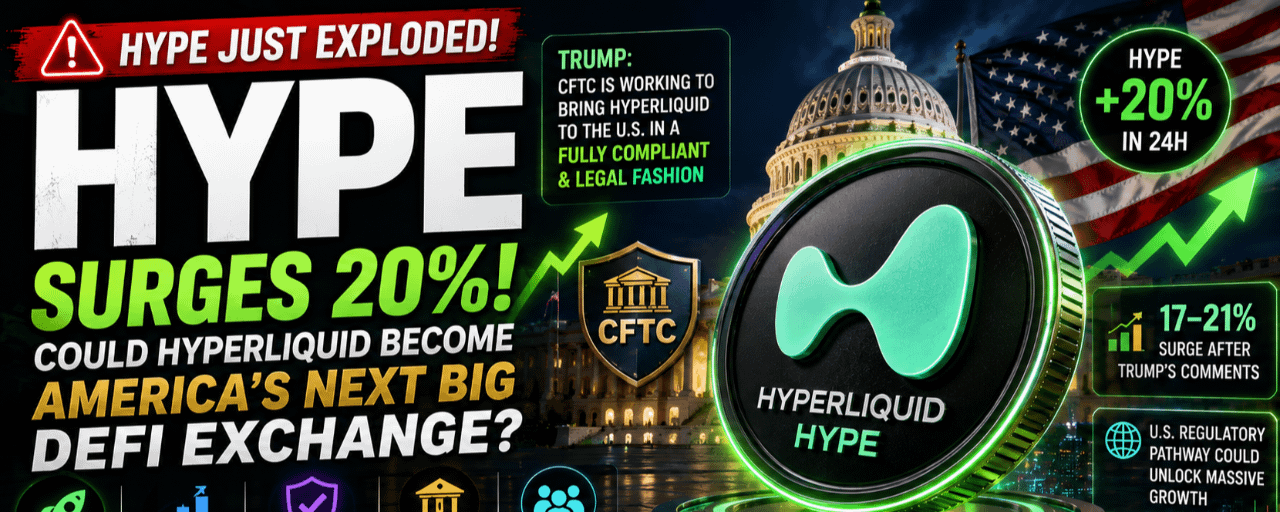
HYPE Just Exploded 20% — Could Hyperliquid Become America’s Next Big DeFi Exchange?Hyperliquid is suddenly at the center of one of crypto’s biggest regulatory stories.
HYPE has surged sharply after U.S. President Donald Trump said that CFTC Chair Michael Selig is working on a path to bring Hyperliquid into the United States in a fully compliant and legal fashion.
The market reacted immediately.
HYPE climbed more than 17% in 24 hours, while other Hyperliquid-linked assets also rallied strongly.
But here's the question that matters:
Is HYPE's rally just another crypto pump—or could Hyperliquid actually become a major regulated U.S. derivatives platform?
🇺🇸 Why Trump's Comments Matter
Hyperliquid has built its reputation around on-chain perpetual futures trading, allowing users to trade derivatives around the clock.
Perpetual futures have become one of crypto's most important markets because traders can gain leveraged exposure without actually holding the underlying asset.
Hyperliquid has become a major player in that market.
And now the possibility of bringing that infrastructure into the U.S. is attracting serious attention.
Trump's comments specifically referenced the CFTC working toward a compliant route for Hyperliquid.
That doesn't mean Hyperliquid has already received approval.
It means the regulatory conversation has moved into a much more interesting phase.
🔥 HYPE's Reaction Was Immediate
HYPE jumped after Trump's remarks, with reports putting the move around 17%–21% depending on the measurement window.
The token moved toward the $70+ area, bringing it close to its previous record levels. One market report placed the recent peak around $76.87.
This is important because traders aren't only betting on today's price.
They're increasingly pricing in a potential future where:
Hyperliquid + U.S. regulation + institutional derivatives = much larger market opportunity.
🏦 Why the U.S. Market Could Be a Game Changer
The U.S. is one of the world's largest financial markets.
If Hyperliquid can eventually offer its on-chain derivatives infrastructure to U.S. traders through a compliant structure, the addressable market could expand dramatically.
And this is happening at a time when regulators are becoming more open to crypto derivatives.
The CFTC has already allowed regulated venues to move forward with bitcoin perpetual-style products, creating an important precedent for the broader derivatives market.
That makes Hyperliquid's situation particularly interesting.
The question is no longer simply:
“Can DeFi compete with centralized exchanges?”
It is becoming:
“Can on-chain markets become part of regulated American financial infrastructure?”
⚡ Hyperliquid Already Has a Major Advantage
Hyperliquid isn't an unknown project suddenly trying to enter the derivatives market.
The platform has already built significant activity around on-chain perpetuals.
Recent reporting estimated around $172.6 billion in 30-day volume, placing Hyperliquid among the dominant venues for on-chain perpetual trading.
That scale matters.
A regulatory pathway would therefore not be creating the business from zero.
It could potentially bring an already-established on-chain trading ecosystem closer to the U.S. financial system.
🧠 The Bigger Story Isn't HYPE's Price
This is where I think traders should look beyond the chart.
HYPE's rally is exciting.
But the more important development is the potential change in market structure.
For years, crypto derivatives were largely divided into:
Traditional centralized exchanges
versus
Offshore/on-chain DeFi platforms.
Hyperliquid represents a third possibility:
High-performance on-chain derivatives infrastructure that could potentially operate within a regulated framework.
If that model succeeds, it could influence how future financial markets are built.
🏦 Could Wall Street Actually Use Hyperliquid?
This is one of the most interesting questions.
Traditional institutions care about several things:
RegulationLiquidityExecution speedRisk controlsCustodyComplianceMarket transparency
Hyperliquid already has a strong argument around liquidity and on-chain execution.
The remaining challenge is the regulatory framework.
If U.S. regulators find a workable structure, institutional participation could become much easier.
And that's potentially far more important than a short-term HYPE price rally.
⚠️ But Don't Confuse “Regulatory Path” With “Approval”
This is probably the most important warning for HYPE traders right now.
Trump's comments do not mean Hyperliquid has already received a U.S. license.
There is currently no confirmed formal approval or launch timetable for a U.S. retail venue.
That distinction matters.
The market may be pricing in a very optimistic future.
But between:
“Regulators are working on a path”
and
“Hyperliquid is approved and operating in the U.S.”
there is potentially a long regulatory process.
⚔️ The Regulatory Debate Could Get Complicated
Hyperliquid's model is fundamentally different from a traditional centralized derivatives exchange.
That creates difficult questions.
Who is responsible for compliance?
How would KYC work?
Who controls access?
How should decentralized infrastructure be registered?
Which entity would actually operate the regulated venue?
These aren't minor technical details.
They could determine whether Hyperliquid can successfully enter the U.S. market.
Recent reporting has highlighted exactly these challenges around KYC, licensing and the legal structure required for a U.S. pathway.
📈 What Could Make the HYPE Bull Case Stronger?
I would watch several developments.
🟢 1. A concrete CFTC framework
If regulators provide a specific pathway rather than general comments, that would be a major development.
🟢 2. Institutional participation
If more traditional financial firms begin using Hyperliquid infrastructure, the thesis becomes stronger.
🟢 3. Sustained trading volume
The platform needs to maintain strong activity after the current excitement fades.
🟢 4. HYPE holds its breakout
If HYPE can consolidate instead of immediately giving back its gains, traders may interpret the move as more than a news-driven spike.
🟢 5. U.S. access becomes realistic
This would be the biggest potential catalyst of all.
🔴 What Could Go Wrong?
The bearish case is just as important.
1. Regulatory delays
The U.S. approval process could take much longer than the market expects.
2. No final approval
A regulatory discussion doesn't guarantee a successful launch.
3. Profit-taking
HYPE has already experienced a very sharp move, so traders could take profits.
4. Competition
CME, Coinbase, Kalshi and other regulated venues are also moving deeper into crypto derivatives.
5. Valuation risk
The market could price in a successful U.S. expansion before the actual business opportunity is proven.
👀 HYPE vs Traditional Exchanges
This is where the story gets especially interesting.
Traditional exchanges have decades of regulatory experience, institutional relationships and established infrastructure.
Hyperliquid has something different:
On-chain settlement + 24/7 markets + crypto-native infrastructure.
If regulators allow the two models to coexist, we could see an entirely new category of financial markets emerge.
Instead of DeFi replacing Wall Street...
DeFi infrastructure could become part of Wall Street.
That's a much bigger narrative.
🚀 Could HYPE Challenge the Major Crypto Exchanges?
It's too early to say.
But Hyperliquid has already demonstrated that traders are willing to use an on-chain platform for serious derivatives activity.
The next challenge is scaling that model into a regulatory environment.
If Hyperliquid succeeds, it could potentially become one of the strongest examples of DeFi moving from an alternative financial system toward mainstream financial infrastructure.
And that would make HYPE's current rally much more meaningful.
🧩 The Real HYPE Investment Thesis
The HYPE story can now be divided into three stages:
Stage 1 — Proven product
Hyperliquid already has significant on-chain derivatives activity.
Stage 2 — Regulatory bridge
U.S. regulators are exploring how on-chain derivatives platforms could operate legally.
Stage 3 — Institutional expansion
If a workable structure emerges, institutional and U.S. market access could potentially expand.
We're somewhere between Stage 1 and Stage 2.
The market, however, may already be thinking about Stage 3.
And that's where both the opportunity and the risk are.
💡 My Take
The most interesting thing about HYPE right now isn't that it jumped 20%.
It's why it jumped.
The market is reacting to the possibility that one of crypto's largest on-chain derivatives platforms could eventually find a legitimate route into the world's biggest financial market.
Trump's comments have opened the door to that possibility, while CFTC officials have already expressed interest in creating a regulatory path for on-chain markets.
But the door being open doesn't mean Hyperliquid has walked through it yet.
There are still major questions around licensing, KYC, market structure and institutional access.
So I wouldn't look at HYPE and simply ask:
“Can it pump again?”
I'd ask something much bigger:
Can Hyperliquid turn its on-chain trading success into regulated U.S. financial infrastructure?
If the answer eventually becomes yes, HYPE could have a much bigger story ahead than today's rally suggests.
If regulatory hurdles prove too difficult, however, the market could quickly reconsider the premium currently being placed on the token.
The price move is exciting.
The regulatory experiment is the real story. 👀
💬 What Do YOU Think?
Could Hyperliquid become a major regulated U.S. derivatives platform?
🟢 Yes — HYPE could become a major winner 🚀
🔵 Regulation will take much longer
🔴 The rally is already overextended
🟡 Too early to tell
👇 Vote and tell me your reason.
#Hyperliquid #HYPE #DeFi #Crypto #CryptoRegulation #CFTC #Bitcoin #Altcoins #Derivatives #CryptoMarket #BinanceSquare
HYPE Just Exploded 20% — Could Hyperliquid Become America’s Next Big DeFi Exchange?
Hyperliquid is suddenly at the center of one of crypto’s biggest regulatory stories.
HYPE has surged sharply after U.S. President Donald Trump said that CFTC Chair Michael Selig is working on a path to bring Hyperliquid into the United States in a fully compliant and legal fashion.
The market reacted immediately.
HYPE climbed more than 17% in 24 hours, while other Hyperliquid-linked assets also rallied strongly.
But here's the question that matters:
Is HYPE's rally just another crypto pump—or could Hyperliquid actually become a major regulated U.S. derivatives platform?
🇺🇸 Why Trump's Comments Matter
Hyperliquid has built its reputation around on-chain perpetual futures trading, allowing users to trade derivatives around the clock.
Perpetual futures have become one of crypto's most important markets because traders can gain leveraged exposure without actually holding the underlying asset.
Hyperliquid has become a major player in that market.
And now the possibility of bringing that infrastructure into the U.S. is attracting serious attention.
Trump's comments specifically referenced the CFTC working toward a compliant route for Hyperliquid.
That doesn't mean Hyperliquid has already received approval.
It means the regulatory conversation has moved into a much more interesting phase.
🔥 HYPE's Reaction Was Immediate
HYPE jumped after Trump's remarks, with reports putting the move around 17%–21% depending on the measurement window.
The token moved toward the $70+ area, bringing it close to its previous record levels. One market report placed the recent peak around $76.87.
This is important because traders aren't only betting on today's price.
They're increasingly pricing in a potential future where:
Hyperliquid + U.S. regulation + institutional derivatives = much larger market opportunity.
🏦 Why the U.S. Market Could Be a Game Changer
The U.S. is one of the world's largest financial markets.
If Hyperliquid can eventually offer its on-chain derivatives infrastructure to U.S. traders through a compliant structure, the addressable market could expand dramatically.
And this is happening at a time when regulators are becoming more open to crypto derivatives.
The CFTC has already allowed regulated venues to move forward with bitcoin perpetual-style products, creating an important precedent for the broader derivatives market.
That makes Hyperliquid's situation particularly interesting.
The question is no longer simply:
“Can DeFi compete with centralized exchanges?”
It is becoming:
“Can on-chain markets become part of regulated American financial infrastructure?”
⚡ Hyperliquid Already Has a Major Advantage
Hyperliquid isn't an unknown project suddenly trying to enter the derivatives market.
The platform has already built significant activity around on-chain perpetuals.
Recent reporting estimated around $172.6 billion in 30-day volume, placing Hyperliquid among the dominant venues for on-chain perpetual trading.
That scale matters.
A regulatory pathway would therefore not be creating the business from zero.
It could potentially bring an already-established on-chain trading ecosystem closer to the U.S. financial system.
🧠 The Bigger Story Isn't HYPE's Price
This is where I think traders should look beyond the chart.
HYPE's rally is exciting.
But the more important development is the potential change in market structure.
For years, crypto derivatives were largely divided into:
Traditional centralized exchanges
versus
Offshore/on-chain DeFi platforms.
Hyperliquid represents a third possibility:
High-performance on-chain derivatives infrastructure that could potentially operate within a regulated framework.
If that model succeeds, it could influence how future financial markets are built.
🏦 Could Wall Street Actually Use Hyperliquid?
This is one of the most interesting questions.
Traditional institutions care about several things:
RegulationLiquidityExecution speedRisk controlsCustodyComplianceMarket transparency
Hyperliquid already has a strong argument around liquidity and on-chain execution.
The remaining challenge is the regulatory framework.
If U.S. regulators find a workable structure, institutional participation could become much easier.
And that's potentially far more important than a short-term HYPE price rally.
⚠️ But Don't Confuse “Regulatory Path” With “Approval”
This is probably the most important warning for HYPE traders right now.
Trump's comments do not mean Hyperliquid has already received a U.S. license.
There is currently no confirmed formal approval or launch timetable for a U.S. retail venue.
That distinction matters.
The market may be pricing in a very optimistic future.
But between:
“Regulators are working on a path”
and
“Hyperliquid is approved and operating in the U.S.”
there is potentially a long regulatory process.
⚔️ The Regulatory Debate Could Get Complicated
Hyperliquid's model is fundamentally different from a traditional centralized derivatives exchange.
That creates difficult questions.
Who is responsible for compliance?
How would KYC work?
Who controls access?
How should decentralized infrastructure be registered?
Which entity would actually operate the regulated venue?
These aren't minor technical details.
They could determine whether Hyperliquid can successfully enter the U.S. market.
Recent reporting has highlighted exactly these challenges around KYC, licensing and the legal structure required for a U.S. pathway.
📈 What Could Make the HYPE Bull Case Stronger?
I would watch several developments.
🟢 1. A concrete CFTC framework
If regulators provide a specific pathway rather than general comments, that would be a major development.
🟢 2. Institutional participation
If more traditional financial firms begin using Hyperliquid infrastructure, the thesis becomes stronger.
🟢 3. Sustained trading volume
The platform needs to maintain strong activity after the current excitement fades.
🟢 4. HYPE holds its breakout
If HYPE can consolidate instead of immediately giving back its gains, traders may interpret the move as more than a news-driven spike.
🟢 5. U.S. access becomes realistic
This would be the biggest potential catalyst of all.
🔴 What Could Go Wrong?
The bearish case is just as important.
1. Regulatory delays
The U.S. approval process could take much longer than the market expects.
2. No final approval
A regulatory discussion doesn't guarantee a successful launch.
3. Profit-taking
HYPE has already experienced a very sharp move, so traders could take profits.
4. Competition
CME, Coinbase, Kalshi and other regulated venues are also moving deeper into crypto derivatives.
5. Valuation risk
The market could price in a successful U.S. expansion before the actual business opportunity is proven.
👀 HYPE vs Traditional Exchanges
This is where the story gets especially interesting.
Traditional exchanges have decades of regulatory experience, institutional relationships and established infrastructure.
Hyperliquid has something different:
On-chain settlement + 24/7 markets + crypto-native infrastructure.
If regulators allow the two models to coexist, we could see an entirely new category of financial markets emerge.
Instead of DeFi replacing Wall Street...
DeFi infrastructure could become part of Wall Street.
That's a much bigger narrative.
🚀 Could HYPE Challenge the Major Crypto Exchanges?
It's too early to say.
But Hyperliquid has already demonstrated that traders are willing to use an on-chain platform for serious derivatives activity.
The next challenge is scaling that model into a regulatory environment.
If Hyperliquid succeeds, it could potentially become one of the strongest examples of DeFi moving from an alternative financial system toward mainstream financial infrastructure.
And that would make HYPE's current rally much more meaningful.
🧩 The Real HYPE Investment Thesis
The HYPE story can now be divided into three stages:
Stage 1 — Proven product
Hyperliquid already has significant on-chain derivatives activity.
Stage 2 — Regulatory bridge
U.S. regulators are exploring how on-chain derivatives platforms could operate legally.
Stage 3 — Institutional expansion
If a workable structure emerges, institutional and U.S. market access could potentially expand.
We're somewhere between Stage 1 and Stage 2.
The market, however, may already be thinking about Stage 3.
And that's where both the opportunity and the risk are.
💡 My Take
The most interesting thing about HYPE right now isn't that it jumped 20%.
It's why it jumped.
The market is reacting to the possibility that one of crypto's largest on-chain derivatives platforms could eventually find a legitimate route into the world's biggest financial market.
Trump's comments have opened the door to that possibility, while CFTC officials have already expressed interest in creating a regulatory path for on-chain markets.
But the door being open doesn't mean Hyperliquid has walked through it yet.
There are still major questions around licensing, KYC, market structure and institutional access.
So I wouldn't look at HYPE and simply ask:
“Can it pump again?”
I'd ask something much bigger:
Can Hyperliquid turn its on-chain trading success into regulated U.S. financial infrastructure?
If the answer eventually becomes yes, HYPE could have a much bigger story ahead than today's rally suggests.
If regulatory hurdles prove too difficult, however, the market could quickly reconsider the premium currently being placed on the token.
The price move is exciting.
The regulatory experiment is the real story. 👀
💬 What Do YOU Think?
Could Hyperliquid become a major regulated U.S. derivatives platform?
🟢 Yes — HYPE could become a major winner 🚀
🔵 Regulation will take much longer
🔴 The rally is already overextended
🟡 Too early to tell
👇 Vote and tell me your reason.
#Hyperliquid #HYPE #DeFi #Crypto #CryptoRegulation #CFTC #Bitcoin #Altcoins #Derivatives #CryptoMarket #BinanceSquare
HYPE has surged sharply after U.S. President Donald Trump said that CFTC Chair Michael Selig is working on a path to bring Hyperliquid into the United States in a fully compliant and legal fashion.
The market reacted immediately.
HYPE climbed more than 17% in 24 hours, while other Hyperliquid-linked assets also rallied strongly.
But here's the question that matters:
Is HYPE's rally just another crypto pump—or could Hyperliquid actually become a major regulated U.S. derivatives platform?
🇺🇸 Why Trump's Comments Matter
Hyperliquid has built its reputation around on-chain perpetual futures trading, allowing users to trade derivatives around the clock.
Perpetual futures have become one of crypto's most important markets because traders can gain leveraged exposure without actually holding the underlying asset.
Hyperliquid has become a major player in that market.
And now the possibility of bringing that infrastructure into the U.S. is attracting serious attention.
Trump's comments specifically referenced the CFTC working toward a compliant route for Hyperliquid.
That doesn't mean Hyperliquid has already received approval.
It means the regulatory conversation has moved into a much more interesting phase.
🔥 HYPE's Reaction Was Immediate
HYPE jumped after Trump's remarks, with reports putting the move around 17%–21% depending on the measurement window.
The token moved toward the $70+ area, bringing it close to its previous record levels. One market report placed the recent peak around $76.87.
This is important because traders aren't only betting on today's price.
They're increasingly pricing in a potential future where:
Hyperliquid + U.S. regulation + institutional derivatives = much larger market opportunity.
🏦 Why the U.S. Market Could Be a Game Changer
The U.S. is one of the world's largest financial markets.
If Hyperliquid can eventually offer its on-chain derivatives infrastructure to U.S. traders through a compliant structure, the addressable market could expand dramatically.
And this is happening at a time when regulators are becoming more open to crypto derivatives.
The CFTC has already allowed regulated venues to move forward with bitcoin perpetual-style products, creating an important precedent for the broader derivatives market.
That makes Hyperliquid's situation particularly interesting.
The question is no longer simply:
“Can DeFi compete with centralized exchanges?”
It is becoming:
“Can on-chain markets become part of regulated American financial infrastructure?”
⚡ Hyperliquid Already Has a Major Advantage
Hyperliquid isn't an unknown project suddenly trying to enter the derivatives market.
The platform has already built significant activity around on-chain perpetuals.
Recent reporting estimated around $172.6 billion in 30-day volume, placing Hyperliquid among the dominant venues for on-chain perpetual trading.
That scale matters.
A regulatory pathway would therefore not be creating the business from zero.
It could potentially bring an already-established on-chain trading ecosystem closer to the U.S. financial system.
🧠 The Bigger Story Isn't HYPE's Price
This is where I think traders should look beyond the chart.
HYPE's rally is exciting.
But the more important development is the potential change in market structure.
For years, crypto derivatives were largely divided into:
Traditional centralized exchanges
versus
Offshore/on-chain DeFi platforms.
Hyperliquid represents a third possibility:
High-performance on-chain derivatives infrastructure that could potentially operate within a regulated framework.
If that model succeeds, it could influence how future financial markets are built.
🏦 Could Wall Street Actually Use Hyperliquid?
This is one of the most interesting questions.
Traditional institutions care about several things:
RegulationLiquidityExecution speedRisk controlsCustodyComplianceMarket transparency
Hyperliquid already has a strong argument around liquidity and on-chain execution.
The remaining challenge is the regulatory framework.
If U.S. regulators find a workable structure, institutional participation could become much easier.
And that's potentially far more important than a short-term HYPE price rally.
⚠️ But Don't Confuse “Regulatory Path” With “Approval”
This is probably the most important warning for HYPE traders right now.
Trump's comments do not mean Hyperliquid has already received a U.S. license.
There is currently no confirmed formal approval or launch timetable for a U.S. retail venue.
That distinction matters.
The market may be pricing in a very optimistic future.
But between:
“Regulators are working on a path”
and
“Hyperliquid is approved and operating in the U.S.”
there is potentially a long regulatory process.
⚔️ The Regulatory Debate Could Get Complicated
Hyperliquid's model is fundamentally different from a traditional centralized derivatives exchange.
That creates difficult questions.
Who is responsible for compliance?
How would KYC work?
Who controls access?
How should decentralized infrastructure be registered?
Which entity would actually operate the regulated venue?
These aren't minor technical details.
They could determine whether Hyperliquid can successfully enter the U.S. market.
Recent reporting has highlighted exactly these challenges around KYC, licensing and the legal structure required for a U.S. pathway.
📈 What Could Make the HYPE Bull Case Stronger?
I would watch several developments.
🟢 1. A concrete CFTC framework
If regulators provide a specific pathway rather than general comments, that would be a major development.
🟢 2. Institutional participation
If more traditional financial firms begin using Hyperliquid infrastructure, the thesis becomes stronger.
🟢 3. Sustained trading volume
The platform needs to maintain strong activity after the current excitement fades.
🟢 4. HYPE holds its breakout
If HYPE can consolidate instead of immediately giving back its gains, traders may interpret the move as more than a news-driven spike.
🟢 5. U.S. access becomes realistic
This would be the biggest potential catalyst of all.
🔴 What Could Go Wrong?
The bearish case is just as important.
1. Regulatory delays
The U.S. approval process could take much longer than the market expects.
2. No final approval
A regulatory discussion doesn't guarantee a successful launch.
3. Profit-taking
HYPE has already experienced a very sharp move, so traders could take profits.
4. Competition
CME, Coinbase, Kalshi and other regulated venues are also moving deeper into crypto derivatives.
5. Valuation risk
The market could price in a successful U.S. expansion before the actual business opportunity is proven.
👀 HYPE vs Traditional Exchanges
This is where the story gets especially interesting.
Traditional exchanges have decades of regulatory experience, institutional relationships and established infrastructure.
Hyperliquid has something different:
On-chain settlement + 24/7 markets + crypto-native infrastructure.
If regulators allow the two models to coexist, we could see an entirely new category of financial markets emerge.
Instead of DeFi replacing Wall Street...
DeFi infrastructure could become part of Wall Street.
That's a much bigger narrative.
🚀 Could HYPE Challenge the Major Crypto Exchanges?
It's too early to say.
But Hyperliquid has already demonstrated that traders are willing to use an on-chain platform for serious derivatives activity.
The next challenge is scaling that model into a regulatory environment.
If Hyperliquid succeeds, it could potentially become one of the strongest examples of DeFi moving from an alternative financial system toward mainstream financial infrastructure.
And that would make HYPE's current rally much more meaningful.
🧩 The Real HYPE Investment Thesis
The HYPE story can now be divided into three stages:
Stage 1 — Proven product
Hyperliquid already has significant on-chain derivatives activity.
Stage 2 — Regulatory bridge
U.S. regulators are exploring how on-chain derivatives platforms could operate legally.
Stage 3 — Institutional expansion
If a workable structure emerges, institutional and U.S. market access could potentially expand.
We're somewhere between Stage 1 and Stage 2.
The market, however, may already be thinking about Stage 3.
And that's where both the opportunity and the risk are.
💡 My Take
The most interesting thing about HYPE right now isn't that it jumped 20%.
It's why it jumped.
The market is reacting to the possibility that one of crypto's largest on-chain derivatives platforms could eventually find a legitimate route into the world's biggest financial market.
Trump's comments have opened the door to that possibility, while CFTC officials have already expressed interest in creating a regulatory path for on-chain markets.
But the door being open doesn't mean Hyperliquid has walked through it yet.
There are still major questions around licensing, KYC, market structure and institutional access.
So I wouldn't look at HYPE and simply ask:
“Can it pump again?”
I'd ask something much bigger:
Can Hyperliquid turn its on-chain trading success into regulated U.S. financial infrastructure?
If the answer eventually becomes yes, HYPE could have a much bigger story ahead than today's rally suggests.
If regulatory hurdles prove too difficult, however, the market could quickly reconsider the premium currently being placed on the token.
The price move is exciting.
The regulatory experiment is the real story. 👀
💬 What Do YOU Think?
Could Hyperliquid become a major regulated U.S. derivatives platform?
🟢 Yes — HYPE could become a major winner 🚀
🔵 Regulation will take much longer
🔴 The rally is already overextended
🟡 Too early to tell
👇 Vote and tell me your reason.
#Hyperliquid #HYPE #DeFi #Crypto #CryptoRegulation #CFTC #Bitcoin #Altcoins #Derivatives #CryptoMarket #BinanceSquare
1
143
Стаття
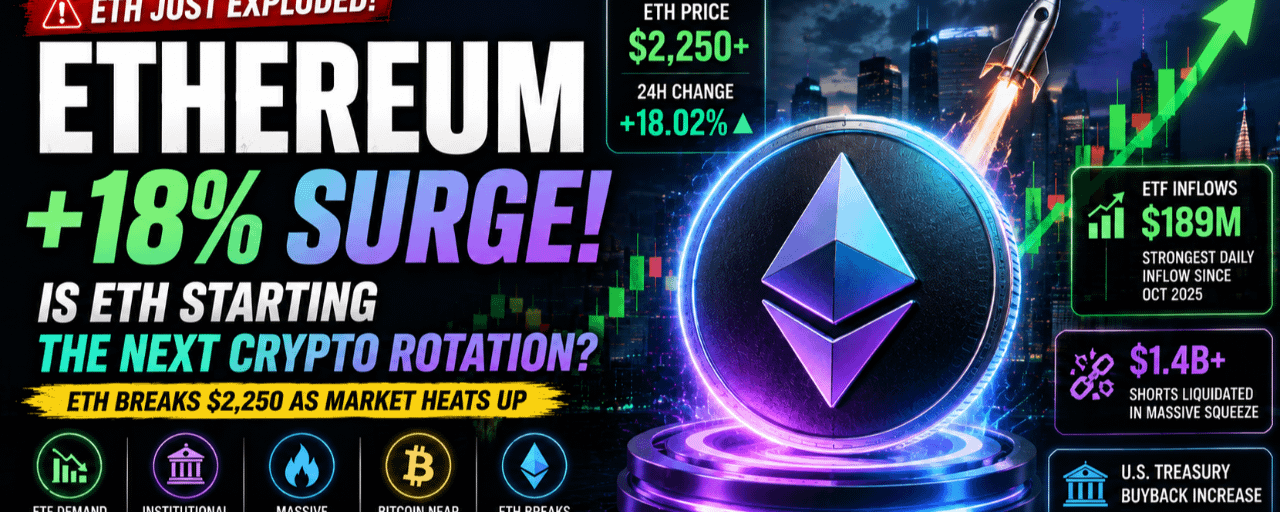
Ethereum щойно вибухнув на 18% — чи ETH починає наступну ротацію крипторинку?Ethereum знову рухається. І цього разу ринку є про що поговорити значно більше, ніж просто зелена свічка.
ETH виріс приблизно на 18%, прорвавши рівень $2 000 і досягнувши близько $2 250, тоді як ширший ринок криптовалют увійшов у потужний ралі. Bitcoin також наближався до $69 000, а майже $1,4 млрд у крипто-коротких позиціях було ліквідовано.
Але ось питання:
Це просто масове коротке стиснення — чи Ethereum нарешті почав набагато більший розворот тренду?
🔥 ETH Раптово Став Увагою №1 На Ринку
Ethereum щойно вибухнув на 18% — чи ETH починає наступну ротацію крипторинку?
Ethereum знову рухається. І цього разу ринку є про що поговорити значно більше, ніж просто зелена свічка.
ETH виріс приблизно на 18%, прорвавши рівень $2 000 і досягнувши близько $2 250, тоді як ширший ринок криптовалют увійшов у потужний ралі. Bitcoin також наближався до $69 000, а майже $1,4 млрд у крипто-коротких позиціях було ліквідовано.
Але ось питання:
Це просто масове коротке стиснення — чи Ethereum нарешті почав набагато більший розворот тренду?
🔥 ETH Раптово Став Увагою №1 На Ринку
ETH виріс приблизно на 18%, прорвавши рівень $2 000 і досягнувши близько $2 250, тоді як ширший ринок криптовалют увійшов у потужний ралі. Bitcoin також наближався до $69 000, а майже $1,4 млрд у крипто-коротких позиціях було ліквідовано.
Але ось питання:
Це просто масове коротке стиснення — чи Ethereum нарешті почав набагато більший розворот тренду?
🔥 ETH Раптово Став Увагою №1 На Ринку
86
Стаття
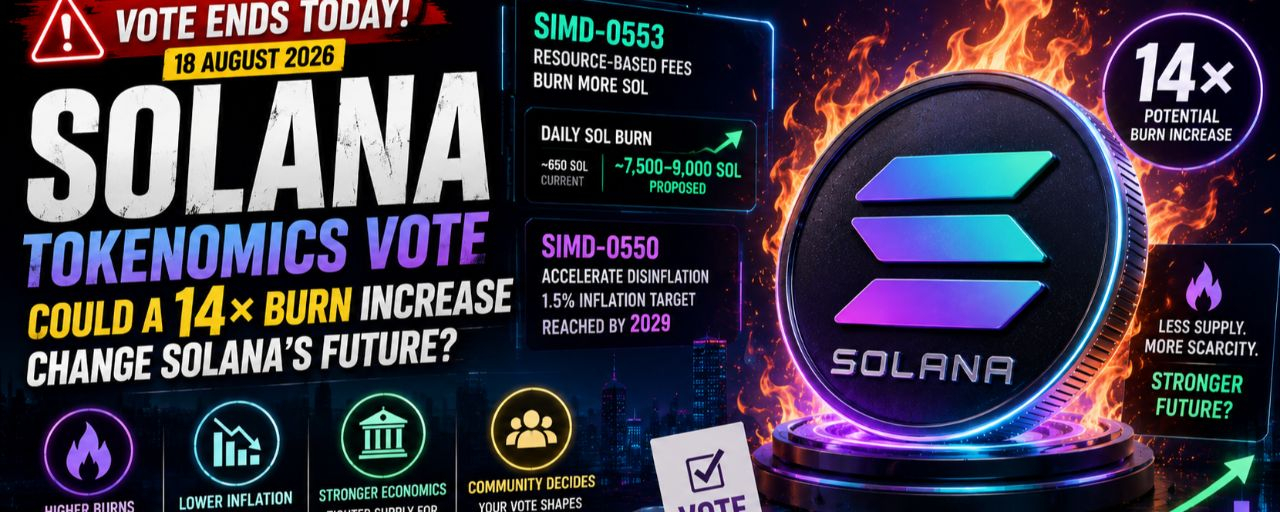
Сьогодні SOL чекає на великий токеномікс-голос — чи може збільшення спалювання в 14 разів назавжди змінити Солану?Солана наближається до потенційно важливого моменту перелому.
Сьогодні, 18 серпня, вікно управлінського голосування для пропозицій, спрямованих на зміну економіки пропозиції SOL, закривається.
Одна пропозиція може суттєво збільшити кількість SOL, що спалюється через комісії за транзакції, тоді як інша прискорить довгострокове скорочення нового випуску SOL мережею.
На перший погляд, це звучить надзвичайно бичачо.
Але є одна пастка:
Більше спалювань автоматично не означає, що SOL стане дефляційним уже за одну ніч.
І саме тут починається справжня історія.
Сьогодні SOL чекає на великий токеномікс-голос — чи може збільшення спалювання в 14 разів назавжди змінити Солану?
Солана наближається до потенційно важливого моменту перелому.
Сьогодні, 18 серпня, вікно управлінського голосування для пропозицій, спрямованих на зміну економіки пропозиції SOL, закривається.
Одна пропозиція може суттєво збільшити кількість SOL, що спалюється через комісії за транзакції, тоді як інша прискорить довгострокове скорочення нового випуску SOL мережею.
На перший погляд, це звучить надзвичайно бичачо.
Але є одна пастка:
Більше спалювань автоматично не означає, що SOL стане дефляційним уже за одну ніч.
І саме тут починається справжня історія.
Сьогодні, 18 серпня, вікно управлінського голосування для пропозицій, спрямованих на зміну економіки пропозиції SOL, закривається.
Одна пропозиція може суттєво збільшити кількість SOL, що спалюється через комісії за транзакції, тоді як інша прискорить довгострокове скорочення нового випуску SOL мережею.
На перший погляд, це звучить надзвичайно бичачо.
Але є одна пастка:
Більше спалювань автоматично не означає, що SOL стане дефляційним уже за одну ніч.
І саме тут починається справжня історія.
54
Переглянути переклад
The crypto industry is evolving beyond trading.
Users are accessing broader markets, using stablecoins as financial infrastructure, and increasingly spending crypto in everyday life.
Innovation matters most when it gives people practical, secure, and meaningful access to opportunity.
The crypto industry is evolving beyond trading.
Users are accessing broader markets, using stablecoins as financial infrastructure, and increasingly spending crypto in everyday life.
Innovation matters most when it gives people practical, secure, and meaningful access to opportunity.
Users are accessing broader markets, using stablecoins as financial infrastructure, and increasingly spending crypto in everyday life.
Innovation matters most when it gives people practical, secure, and meaningful access to opportunity.
42
🚨 ХАЙП РУХАЄТЬСЯ… Але реальна історія може бути про RWA 👀
Біткоїн усе ще тримається в районі $63K–$64K, але цього тижня Hyperliquid (HYPE) привертає до себе дедалі більше уваги.
Ось що, на мою думку, найцікавіше:
🏦 Діяльність у сфері RWA залучила 169 тис. гаманців у H1 2026
📊 Активність, пов’язана з RWA, склала 31,7% серед нових користувачів Hyperliquid
🔥 HYPE демонструє сильніший імпульс, тоді як BTC залишається в діапазоні.
Тож питання не лише в тому:
«Чи може HYPE накачати?»
А в тому:
«Чи можуть реальні активи стати наступним великим двигуном зростання Hyperliquid?» 👀
🟢 Так — RWA може бути колосальним
🔴 Занадто багато конкуренції
🟡 Поки що зарано
А як ти вважаєш? 👇
#HYPE #Hyperliquid #RWA #Crypto #Altcoins #DeFi #Bitcoin #CryptoMarket #BinanceSquare
🚨 ХАЙП РУХАЄТЬСЯ… Але реальна історія може бути про RWA 👀
Біткоїн усе ще тримається в районі $63K–$64K, але цього тижня Hyperliquid (HYPE) привертає до себе дедалі більше уваги.
Ось що, на мою думку, найцікавіше:
🏦 Діяльність у сфері RWA залучила 169 тис. гаманців у H1 2026
📊 Активність, пов’язана з RWA, склала 31,7% серед нових користувачів Hyperliquid
🔥 HYPE демонструє сильніший імпульс, тоді як BTC залишається в діапазоні.
Тож питання не лише в тому:
«Чи може HYPE накачати?»
А в тому:
«Чи можуть реальні активи стати наступним великим двигуном зростання Hyperliquid?» 👀
🟢 Так — RWA може бути колосальним
🔴 Занадто багато конкуренції
🟡 Поки що зарано
А як ти вважаєш? 👇
#HYPE #Hyperliquid #RWA #Crypto #Altcoins #DeFi #Bitcoin #CryptoMarket #BinanceSquare
Біткоїн усе ще тримається в районі $63K–$64K, але цього тижня Hyperliquid (HYPE) привертає до себе дедалі більше уваги.
Ось що, на мою думку, найцікавіше:
🏦 Діяльність у сфері RWA залучила 169 тис. гаманців у H1 2026
📊 Активність, пов’язана з RWA, склала 31,7% серед нових користувачів Hyperliquid
🔥 HYPE демонструє сильніший імпульс, тоді як BTC залишається в діапазоні.
Тож питання не лише в тому:
«Чи може HYPE накачати?»
А в тому:
«Чи можуть реальні активи стати наступним великим двигуном зростання Hyperliquid?» 👀
🟢 Так — RWA може бути колосальним
🔴 Занадто багато конкуренції
🟡 Поки що зарано
А як ти вважаєш? 👇
#HYPE #Hyperliquid #RWA #Crypto #Altcoins #DeFi #Bitcoin #CryptoMarket #BinanceSquare
131
Стаття
Переглянути переклад
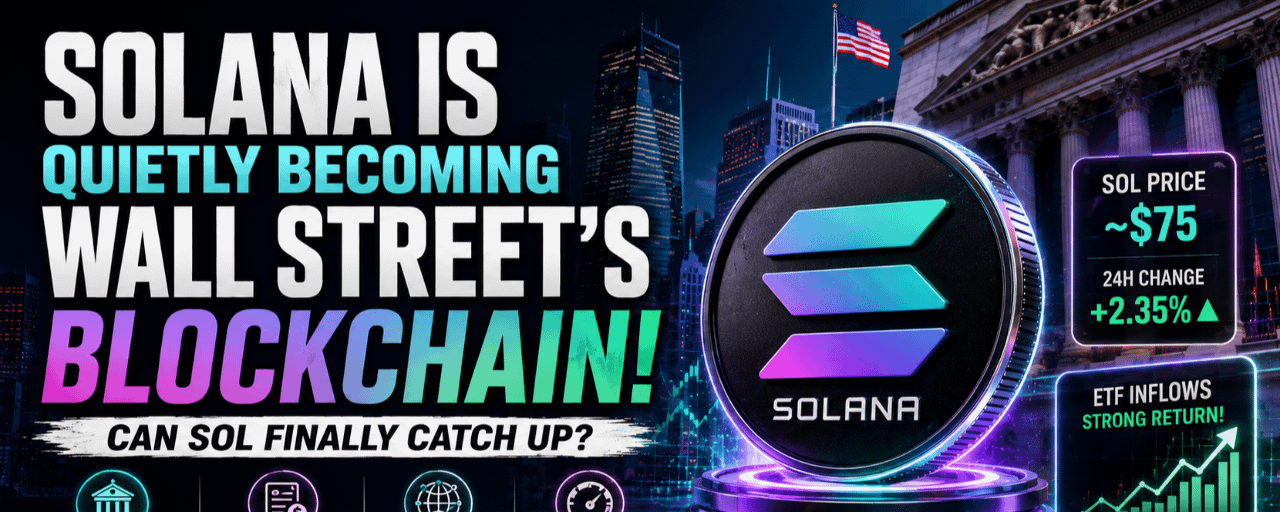
Solana Is Quietly Becoming Wall Street’s Blockchain — Can SOL Finally Catch Up?Solana's price isn't making explosive moves right now.
But underneath the price chart, something much more interesting may be happening.
Institutional money is returning.
Tokenized real-world assets are expanding.
And Solana is continuing to upgrade its infrastructure.
That raises an important question:
Is SOL being overlooked while the network quietly builds one of crypto's strongest institutional narratives?
🏦 ETF Demand Is Coming Back
One of the biggest signals catching traders' attention is the renewed demand for Solana investment products.
Recent data showed Solana spot ETFs recording their strongest single-day inflow since May, with approximately $8.8 million entering on August 10.
Weekly flows have also made Solana stand out among major crypto assets.
Recent market data showed SOL leading weekly crypto ETF inflows during the August 10–15 period, even while the broader market remained relatively quiet.
That's important because price alone doesn't tell the entire story.
If institutional capital is increasing exposure while SOL remains around the mid-$70s, traders have to ask:
Is accumulation happening before the next major move?
💰 But ETF Flows Aren't the Most Interesting Part
The bigger story may actually be tokenization.
Solana is increasingly being used as infrastructure for assets that traditionally live inside financial markets.
And the latest numbers are catching attention.
According to RWA.xyz-linked data, Solana recorded approximately $378 million in net inflows into tokenized U.S. Treasury activity over the latest 30-day period, the largest increase among blockchain networks during that period.
Meanwhile, the broader tokenized Treasury market reached approximately $16.23 billion in distributed value as of August 15.
This changes the Solana narrative.
It's no longer only:
memecoins + DeFi + fast transactions.
The conversation is increasingly becoming:
Treasuries + equities + stablecoins + institutional finance.
🌎 Solana Is Moving Deeper Into Real-World Assets
Solana's own ecosystem reporting has already highlighted strong RWA growth.
In May, Solana reported that its RWA ecosystem had crossed $2.8 billion, while tokenized-equity activity reached a 97% share of cumulative on-chain tokenized-equities spot trading volume at that time.
And the expansion hasn't stopped.
Tokenized stocks and ETFs are increasingly appearing across multiple blockchain networks, with Solana becoming one of the major venues for this activity.
That's potentially a much bigger long-term narrative than another short-lived altcoin pump.
Because if traditional assets increasingly move on-chain, the blockchain providing the infrastructure could become strategically important.
⚡ Another Catalyst: Solana's Agave 4.2 Upgrade
There's another development worth watching this week.
Solana's Agave 4.2 upgrade has a feature-activation window around the week of August 17.
The upgrade is aimed at reducing slot times from roughly 400ms toward 350ms, with a longer-term target around 200ms, while also reducing storage costs.
Why does that matter?
Because institutional adoption doesn't only require liquidity.
It requires infrastructure that can handle increasing demand efficiently.
If Solana can continue improving performance while attracting financial assets, its institutional narrative becomes stronger.
🤔 So Why Isn't SOL Already Exploding?
This is the question bulls need to answer.
SOL is currently around $75, while its previous all-time high was far above today's level.
Yet despite:
ETF inflowsRWA growthTokenized Treasury activityNetwork upgradesStablecoin growth
SOL isn't currently experiencing a massive breakout.
That could mean two things.
🟢 Bullish interpretation
The market hasn't fully priced in Solana's institutional growth yet.
🔴 Bearish interpretation
The positive developments may already be reflected in valuations, while broader crypto liquidity remains weak.
And this is exactly where the debate becomes interesting.
📊 The Biggest Question: Does Network Growth Actually Benefit SOL?
There's an important distinction investors shouldn't ignore.
Solana the network ≠ SOL the token.
A blockchain can attract more assets, users and transactions without the native token necessarily rising immediately.
That's because the market ultimately needs to determine how much of that ecosystem growth translates into sustainable demand for SOL.
This is one of the biggest questions facing the Solana thesis.
Recent analysis has similarly highlighted that strong network activity doesn't automatically translate one-for-one into value flowing to SOL holders.
So the bullish case needs more than impressive adoption statistics.
It needs a stronger connection between:
network growth → economic activity → SOL demand.
🏦 Could Solana Become a Major RWA Settlement Layer?
This may be the most important long-term question.
Imagine a future where:
Treasury bills are tokenized.
Stocks trade on-chain.
Funds settle through blockchain infrastructure.
Stablecoins move billions of dollars globally.
And financial institutions need a fast, scalable network underneath all of it.
If Solana captures even a meaningful portion of that activity, its role in crypto could look very different.
It would no longer be viewed simply as another Layer-1.
It could increasingly be viewed as financial-market infrastructure.
Solana itself describes its network as infrastructure for internet capital markets, payments and crypto applications.
⚠️ But There Are Still Risks
The bullish story isn't guaranteed.
1️⃣ Broader crypto weakness
If Bitcoin and the wider market remain weak, SOL can struggle regardless of fundamentals.
2️⃣ ETF flows can reverse
One strong week doesn't establish a permanent institutional trend.
3️⃣ Competition
Ethereum, BNB Chain and other networks are also competing for tokenized assets.
4️⃣ Valuation
Strong fundamentals don't automatically mean SOL is cheap.
5️⃣ Token-value capture
The biggest question remains how much network growth ultimately benefits SOL itself.
👀 The 5 Things I'm Watching This Week
If I were tracking SOL closely, these would be my main indicators:
1️⃣ ETF flows
Does institutional demand continue?
2️⃣ Tokenized Treasury growth
Can Solana maintain its recent RWA momentum?
3️⃣ Agave 4.2 activation
Does the upgrade deliver the expected infrastructure improvements?
4️⃣ SOL price structure
Can SOL move decisively above its current range?
5️⃣ Bitcoin liquidity
Can the broader market support an altcoin rotation?
These five signals together could tell us much more than simply watching the SOL price.
🚀 Final Take
Solana's most interesting story right now may not be its price.
It's what is happening around the price.
ETF demand has started showing signs of returning.
Tokenized U.S. Treasury activity is accelerating.
The broader RWA ecosystem continues expanding.
And Solana is entering another important infrastructure-upgrade phase.
That creates a fascinating setup.
The network is building.
Institutions are watching.
Tokenized assets are growing.
But SOL still needs to prove that this ecosystem growth can translate into sustained token demand.
That's the real investment debate.
Is Solana quietly building the financial infrastructure of the next crypto cycle — while the market is still focused on the price chart? 👀
💬 What Do YOU Think?
Can Solana become one of the biggest blockchain winners from institutional RWA adoption?
🟢 Yes — SOL is still undervalued 🚀
🔵 Institutional adoption will take time
🔴 Too much is already priced in
🟡 ETH will dominate RWA instead
👇 Vote and tell me your reason.
#Solana #SOL #RWA #Tokenization #CryptoETF #DeFi #Altcoins #Bitcoin #Ethereum #CryptoMarket #BinanceSquare
Solana Is Quietly Becoming Wall Street’s Blockchain — Can SOL Finally Catch Up?
Solana's price isn't making explosive moves right now.
But underneath the price chart, something much more interesting may be happening.
Institutional money is returning.
Tokenized real-world assets are expanding.
And Solana is continuing to upgrade its infrastructure.
That raises an important question:
Is SOL being overlooked while the network quietly builds one of crypto's strongest institutional narratives?
🏦 ETF Demand Is Coming Back
One of the biggest signals catching traders' attention is the renewed demand for Solana investment products.
Recent data showed Solana spot ETFs recording their strongest single-day inflow since May, with approximately $8.8 million entering on August 10.
Weekly flows have also made Solana stand out among major crypto assets.
Recent market data showed SOL leading weekly crypto ETF inflows during the August 10–15 period, even while the broader market remained relatively quiet.
That's important because price alone doesn't tell the entire story.
If institutional capital is increasing exposure while SOL remains around the mid-$70s, traders have to ask:
Is accumulation happening before the next major move?
💰 But ETF Flows Aren't the Most Interesting Part
The bigger story may actually be tokenization.
Solana is increasingly being used as infrastructure for assets that traditionally live inside financial markets.
And the latest numbers are catching attention.
According to RWA.xyz-linked data, Solana recorded approximately $378 million in net inflows into tokenized U.S. Treasury activity over the latest 30-day period, the largest increase among blockchain networks during that period.
Meanwhile, the broader tokenized Treasury market reached approximately $16.23 billion in distributed value as of August 15.
This changes the Solana narrative.
It's no longer only:
memecoins + DeFi + fast transactions.
The conversation is increasingly becoming:
Treasuries + equities + stablecoins + institutional finance.
🌎 Solana Is Moving Deeper Into Real-World Assets
Solana's own ecosystem reporting has already highlighted strong RWA growth.
In May, Solana reported that its RWA ecosystem had crossed $2.8 billion, while tokenized-equity activity reached a 97% share of cumulative on-chain tokenized-equities spot trading volume at that time.
And the expansion hasn't stopped.
Tokenized stocks and ETFs are increasingly appearing across multiple blockchain networks, with Solana becoming one of the major venues for this activity.
That's potentially a much bigger long-term narrative than another short-lived altcoin pump.
Because if traditional assets increasingly move on-chain, the blockchain providing the infrastructure could become strategically important.
⚡ Another Catalyst: Solana's Agave 4.2 Upgrade
There's another development worth watching this week.
Solana's Agave 4.2 upgrade has a feature-activation window around the week of August 17.
The upgrade is aimed at reducing slot times from roughly 400ms toward 350ms, with a longer-term target around 200ms, while also reducing storage costs.
Why does that matter?
Because institutional adoption doesn't only require liquidity.
It requires infrastructure that can handle increasing demand efficiently.
If Solana can continue improving performance while attracting financial assets, its institutional narrative becomes stronger.
🤔 So Why Isn't SOL Already Exploding?
This is the question bulls need to answer.
SOL is currently around $75, while its previous all-time high was far above today's level.
Yet despite:
ETF inflowsRWA growthTokenized Treasury activityNetwork upgradesStablecoin growth
SOL isn't currently experiencing a massive breakout.
That could mean two things.
🟢 Bullish interpretation
The market hasn't fully priced in Solana's institutional growth yet.
🔴 Bearish interpretation
The positive developments may already be reflected in valuations, while broader crypto liquidity remains weak.
And this is exactly where the debate becomes interesting.
📊 The Biggest Question: Does Network Growth Actually Benefit SOL?
There's an important distinction investors shouldn't ignore.
Solana the network ≠ SOL the token.
A blockchain can attract more assets, users and transactions without the native token necessarily rising immediately.
That's because the market ultimately needs to determine how much of that ecosystem growth translates into sustainable demand for SOL.
This is one of the biggest questions facing the Solana thesis.
Recent analysis has similarly highlighted that strong network activity doesn't automatically translate one-for-one into value flowing to SOL holders.
So the bullish case needs more than impressive adoption statistics.
It needs a stronger connection between:
network growth → economic activity → SOL demand.
🏦 Could Solana Become a Major RWA Settlement Layer?
This may be the most important long-term question.
Imagine a future where:
Treasury bills are tokenized.
Stocks trade on-chain.
Funds settle through blockchain infrastructure.
Stablecoins move billions of dollars globally.
And financial institutions need a fast, scalable network underneath all of it.
If Solana captures even a meaningful portion of that activity, its role in crypto could look very different.
It would no longer be viewed simply as another Layer-1.
It could increasingly be viewed as financial-market infrastructure.
Solana itself describes its network as infrastructure for internet capital markets, payments and crypto applications.
⚠️ But There Are Still Risks
The bullish story isn't guaranteed.
1️⃣ Broader crypto weakness
If Bitcoin and the wider market remain weak, SOL can struggle regardless of fundamentals.
2️⃣ ETF flows can reverse
One strong week doesn't establish a permanent institutional trend.
3️⃣ Competition
Ethereum, BNB Chain and other networks are also competing for tokenized assets.
4️⃣ Valuation
Strong fundamentals don't automatically mean SOL is cheap.
5️⃣ Token-value capture
The biggest question remains how much network growth ultimately benefits SOL itself.
👀 The 5 Things I'm Watching This Week
If I were tracking SOL closely, these would be my main indicators:
1️⃣ ETF flows
Does institutional demand continue?
2️⃣ Tokenized Treasury growth
Can Solana maintain its recent RWA momentum?
3️⃣ Agave 4.2 activation
Does the upgrade deliver the expected infrastructure improvements?
4️⃣ SOL price structure
Can SOL move decisively above its current range?
5️⃣ Bitcoin liquidity
Can the broader market support an altcoin rotation?
These five signals together could tell us much more than simply watching the SOL price.
🚀 Final Take
Solana's most interesting story right now may not be its price.
It's what is happening around the price.
ETF demand has started showing signs of returning.
Tokenized U.S. Treasury activity is accelerating.
The broader RWA ecosystem continues expanding.
And Solana is entering another important infrastructure-upgrade phase.
That creates a fascinating setup.
The network is building.
Institutions are watching.
Tokenized assets are growing.
But SOL still needs to prove that this ecosystem growth can translate into sustained token demand.
That's the real investment debate.
Is Solana quietly building the financial infrastructure of the next crypto cycle — while the market is still focused on the price chart? 👀
💬 What Do YOU Think?
Can Solana become one of the biggest blockchain winners from institutional RWA adoption?
🟢 Yes — SOL is still undervalued 🚀
🔵 Institutional adoption will take time
🔴 Too much is already priced in
🟡 ETH will dominate RWA instead
👇 Vote and tell me your reason.
#Solana #SOL #RWA #Tokenization #CryptoETF #DeFi #Altcoins #Bitcoin #Ethereum #CryptoMarket #BinanceSquare
But underneath the price chart, something much more interesting may be happening.
Institutional money is returning.
Tokenized real-world assets are expanding.
And Solana is continuing to upgrade its infrastructure.
That raises an important question:
Is SOL being overlooked while the network quietly builds one of crypto's strongest institutional narratives?
🏦 ETF Demand Is Coming Back
One of the biggest signals catching traders' attention is the renewed demand for Solana investment products.
Recent data showed Solana spot ETFs recording their strongest single-day inflow since May, with approximately $8.8 million entering on August 10.
Weekly flows have also made Solana stand out among major crypto assets.
Recent market data showed SOL leading weekly crypto ETF inflows during the August 10–15 period, even while the broader market remained relatively quiet.
That's important because price alone doesn't tell the entire story.
If institutional capital is increasing exposure while SOL remains around the mid-$70s, traders have to ask:
Is accumulation happening before the next major move?
💰 But ETF Flows Aren't the Most Interesting Part
The bigger story may actually be tokenization.
Solana is increasingly being used as infrastructure for assets that traditionally live inside financial markets.
And the latest numbers are catching attention.
According to RWA.xyz-linked data, Solana recorded approximately $378 million in net inflows into tokenized U.S. Treasury activity over the latest 30-day period, the largest increase among blockchain networks during that period.
Meanwhile, the broader tokenized Treasury market reached approximately $16.23 billion in distributed value as of August 15.
This changes the Solana narrative.
It's no longer only:
memecoins + DeFi + fast transactions.
The conversation is increasingly becoming:
Treasuries + equities + stablecoins + institutional finance.
🌎 Solana Is Moving Deeper Into Real-World Assets
Solana's own ecosystem reporting has already highlighted strong RWA growth.
In May, Solana reported that its RWA ecosystem had crossed $2.8 billion, while tokenized-equity activity reached a 97% share of cumulative on-chain tokenized-equities spot trading volume at that time.
And the expansion hasn't stopped.
Tokenized stocks and ETFs are increasingly appearing across multiple blockchain networks, with Solana becoming one of the major venues for this activity.
That's potentially a much bigger long-term narrative than another short-lived altcoin pump.
Because if traditional assets increasingly move on-chain, the blockchain providing the infrastructure could become strategically important.
⚡ Another Catalyst: Solana's Agave 4.2 Upgrade
There's another development worth watching this week.
Solana's Agave 4.2 upgrade has a feature-activation window around the week of August 17.
The upgrade is aimed at reducing slot times from roughly 400ms toward 350ms, with a longer-term target around 200ms, while also reducing storage costs.
Why does that matter?
Because institutional adoption doesn't only require liquidity.
It requires infrastructure that can handle increasing demand efficiently.
If Solana can continue improving performance while attracting financial assets, its institutional narrative becomes stronger.
🤔 So Why Isn't SOL Already Exploding?
This is the question bulls need to answer.
SOL is currently around $75, while its previous all-time high was far above today's level.
Yet despite:
ETF inflowsRWA growthTokenized Treasury activityNetwork upgradesStablecoin growth
SOL isn't currently experiencing a massive breakout.
That could mean two things.
🟢 Bullish interpretation
The market hasn't fully priced in Solana's institutional growth yet.
🔴 Bearish interpretation
The positive developments may already be reflected in valuations, while broader crypto liquidity remains weak.
And this is exactly where the debate becomes interesting.
📊 The Biggest Question: Does Network Growth Actually Benefit SOL?
There's an important distinction investors shouldn't ignore.
Solana the network ≠ SOL the token.
A blockchain can attract more assets, users and transactions without the native token necessarily rising immediately.
That's because the market ultimately needs to determine how much of that ecosystem growth translates into sustainable demand for SOL.
This is one of the biggest questions facing the Solana thesis.
Recent analysis has similarly highlighted that strong network activity doesn't automatically translate one-for-one into value flowing to SOL holders.
So the bullish case needs more than impressive adoption statistics.
It needs a stronger connection between:
network growth → economic activity → SOL demand.
🏦 Could Solana Become a Major RWA Settlement Layer?
This may be the most important long-term question.
Imagine a future where:
Treasury bills are tokenized.
Stocks trade on-chain.
Funds settle through blockchain infrastructure.
Stablecoins move billions of dollars globally.
And financial institutions need a fast, scalable network underneath all of it.
If Solana captures even a meaningful portion of that activity, its role in crypto could look very different.
It would no longer be viewed simply as another Layer-1.
It could increasingly be viewed as financial-market infrastructure.
Solana itself describes its network as infrastructure for internet capital markets, payments and crypto applications.
⚠️ But There Are Still Risks
The bullish story isn't guaranteed.
1️⃣ Broader crypto weakness
If Bitcoin and the wider market remain weak, SOL can struggle regardless of fundamentals.
2️⃣ ETF flows can reverse
One strong week doesn't establish a permanent institutional trend.
3️⃣ Competition
Ethereum, BNB Chain and other networks are also competing for tokenized assets.
4️⃣ Valuation
Strong fundamentals don't automatically mean SOL is cheap.
5️⃣ Token-value capture
The biggest question remains how much network growth ultimately benefits SOL itself.
👀 The 5 Things I'm Watching This Week
If I were tracking SOL closely, these would be my main indicators:
1️⃣ ETF flows
Does institutional demand continue?
2️⃣ Tokenized Treasury growth
Can Solana maintain its recent RWA momentum?
3️⃣ Agave 4.2 activation
Does the upgrade deliver the expected infrastructure improvements?
4️⃣ SOL price structure
Can SOL move decisively above its current range?
5️⃣ Bitcoin liquidity
Can the broader market support an altcoin rotation?
These five signals together could tell us much more than simply watching the SOL price.
🚀 Final Take
Solana's most interesting story right now may not be its price.
It's what is happening around the price.
ETF demand has started showing signs of returning.
Tokenized U.S. Treasury activity is accelerating.
The broader RWA ecosystem continues expanding.
And Solana is entering another important infrastructure-upgrade phase.
That creates a fascinating setup.
The network is building.
Institutions are watching.
Tokenized assets are growing.
But SOL still needs to prove that this ecosystem growth can translate into sustained token demand.
That's the real investment debate.
Is Solana quietly building the financial infrastructure of the next crypto cycle — while the market is still focused on the price chart? 👀
💬 What Do YOU Think?
Can Solana become one of the biggest blockchain winners from institutional RWA adoption?
🟢 Yes — SOL is still undervalued 🚀
🔵 Institutional adoption will take time
🔴 Too much is already priced in
🟡 ETH will dominate RWA instead
👇 Vote and tell me your reason.
#Solana #SOL #RWA #Tokenization #CryptoETF #DeFi #Altcoins #Bitcoin #Ethereum #CryptoMarket #BinanceSquare
82
Переглянути переклад
🚨 Bitcoin Is Quiet… But SOL Is Getting Attention 👀
BTC is still struggling around the $63K zone.
Meanwhile, Solana is standing out as it leads weekly crypto ETF inflows. 🏦🔥
That raises an interesting question:
Could SOL outperform Bitcoin if the next altcoin rotation begins?
🟢 SOL leads the next move 🚀
🔴 BTC still dominates 📈
🟡 Altcoins need more confirmation
🔵 Market stays sideways
What’s your pick? 👇
#Solana #SOL #Bitcoin #BTC #Crypto #Altcoins #CryptoMarket #BinanceSquare
🚨 Bitcoin Is Quiet… But SOL Is Getting Attention 👀
BTC is still struggling around the $63K zone.
Meanwhile, Solana is standing out as it leads weekly crypto ETF inflows. 🏦🔥
That raises an interesting question:
Could SOL outperform Bitcoin if the next altcoin rotation begins?
🟢 SOL leads the next move 🚀
🔴 BTC still dominates 📈
🟡 Altcoins need more confirmation
🔵 Market stays sideways
What’s your pick? 👇
#Solana #SOL #Bitcoin #BTC #Crypto #Altcoins #CryptoMarket #BinanceSquare
BTC is still struggling around the $63K zone.
Meanwhile, Solana is standing out as it leads weekly crypto ETF inflows. 🏦🔥
That raises an interesting question:
Could SOL outperform Bitcoin if the next altcoin rotation begins?
🟢 SOL leads the next move 🚀
🔴 BTC still dominates 📈
🟡 Altcoins need more confirmation
🔵 Market stays sideways
What’s your pick? 👇
#Solana #SOL #Bitcoin #BTC #Crypto #Altcoins #CryptoMarket #BinanceSquare
69
Стаття
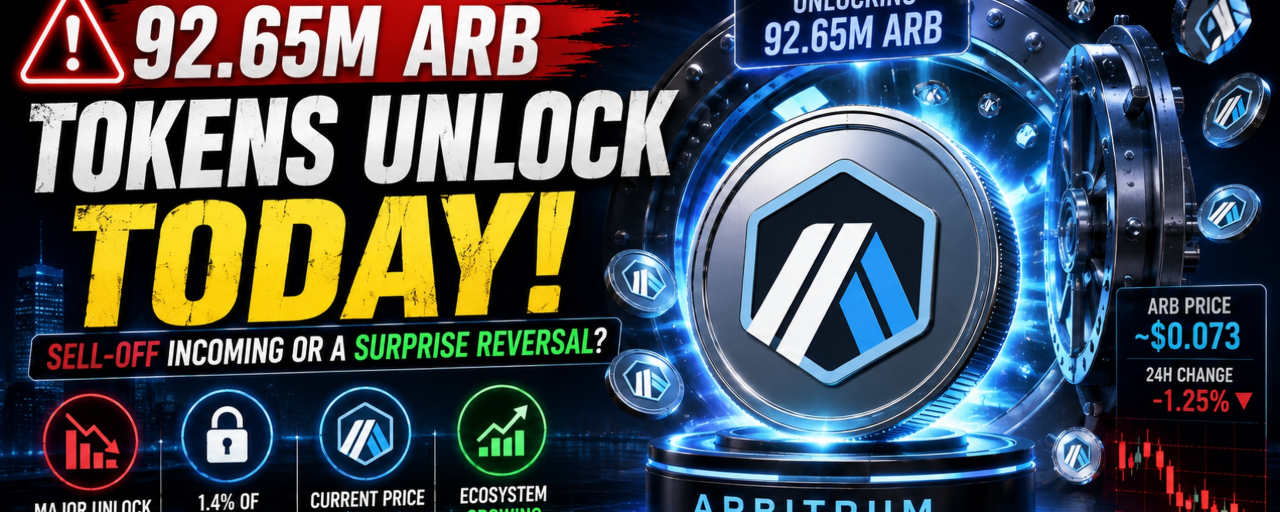
Розблокування 92,65 млн токенів ARB сьогодні — чи прийде розпродаж, або ж Arbitrum нарешті наближається до розвороту?Arbitrum стикається з черговим великим тестом пропозиції.
Повідомляється, що приблизно 92,65 млн токенів ARB буде випущено близько 16 серпня — це приблизно 7 млн доларів за поточними цінами. Це становить близько 1,4% від обігової пропозиції, тож сьогоднішня подія є одним із ключових короткострокових каталізаторів для трейдерів ARB.
А ось де історія стає цікавою:
ARB уже торгується поблизу $0,07 — близько до історично пригнічених рівнів.
Отже, питання не лише в тому, чи розблокування є ведмежим.
Головне питання ось у чому:
Чи ринок уже врахував нову пропозицію?
Розблокування 92,65 млн токенів ARB сьогодні — чи прийде розпродаж, або ж Arbitrum нарешті наближається до розвороту?
Arbitrum стикається з черговим великим тестом пропозиції.
Повідомляється, що приблизно 92,65 млн токенів ARB буде випущено близько 16 серпня — це приблизно 7 млн доларів за поточними цінами. Це становить близько 1,4% від обігової пропозиції, тож сьогоднішня подія є одним із ключових короткострокових каталізаторів для трейдерів ARB.
А ось де історія стає цікавою:
ARB уже торгується поблизу $0,07 — близько до історично пригнічених рівнів.
Отже, питання не лише в тому, чи розблокування є ведмежим.
Головне питання ось у чому:
Чи ринок уже врахував нову пропозицію?
Повідомляється, що приблизно 92,65 млн токенів ARB буде випущено близько 16 серпня — це приблизно 7 млн доларів за поточними цінами. Це становить близько 1,4% від обігової пропозиції, тож сьогоднішня подія є одним із ключових короткострокових каталізаторів для трейдерів ARB.
А ось де історія стає цікавою:
ARB уже торгується поблизу $0,07 — близько до історично пригнічених рівнів.
Отже, питання не лише в тому, чи розблокування є ведмежим.
Головне питання ось у чому:
Чи ринок уже врахував нову пропозицію?
130
🚨 Біткоїн не падає через інфляцію… то що стримує BTC? 👀
BTC тримається біля $63K, навіть після слабших даних інфляції в США.
Тепер дві речі привертають увагу трейдерів:
📉 Слабший попит на ETF
🏛️ Засідання SEC щодо крипторегулювання скасовано
Ринок отримав те макро-полегшення, на яке розраховував — але біткоїну все одно не вдається набрати сильний висхідний імпульс.
Регулювання + слабкий інституційний попит стають більшою проблемою для BTC?
🟢 Тимчасова слабкість — буде прорив 🚀
🔴 Спершу більше зниження 📉
🟡 BTC залишається в межах діапазону
Яка ваша думка? 👇
#Bitcoin #BTC #Crypto #BitcoinETF #SEC #CryptoMarket #BinanceSquare
🚨 Біткоїн не падає через інфляцію… то що стримує BTC? 👀
BTC тримається біля $63K, навіть після слабших даних інфляції в США.
Тепер дві речі привертають увагу трейдерів:
📉 Слабший попит на ETF
🏛️ Засідання SEC щодо крипторегулювання скасовано
Ринок отримав те макро-полегшення, на яке розраховував — але біткоїну все одно не вдається набрати сильний висхідний імпульс.
Регулювання + слабкий інституційний попит стають більшою проблемою для BTC?
🟢 Тимчасова слабкість — буде прорив 🚀
🔴 Спершу більше зниження 📉
🟡 BTC залишається в межах діапазону
Яка ваша думка? 👇
#Bitcoin #BTC #Crypto #BitcoinETF #SEC #CryptoMarket #BinanceSquare
BTC тримається біля $63K, навіть після слабших даних інфляції в США.
Тепер дві речі привертають увагу трейдерів:
📉 Слабший попит на ETF
🏛️ Засідання SEC щодо крипторегулювання скасовано
Ринок отримав те макро-полегшення, на яке розраховував — але біткоїну все одно не вдається набрати сильний висхідний імпульс.
Регулювання + слабкий інституційний попит стають більшою проблемою для BTC?
🟢 Тимчасова слабкість — буде прорив 🚀
🔴 Спершу більше зниження 📉
🟡 BTC залишається в межах діапазону
Яка ваша думка? 👇
#Bitcoin #BTC #Crypto #BitcoinETF #SEC #CryptoMarket #BinanceSquare
71
Стаття
Переглянути переклад
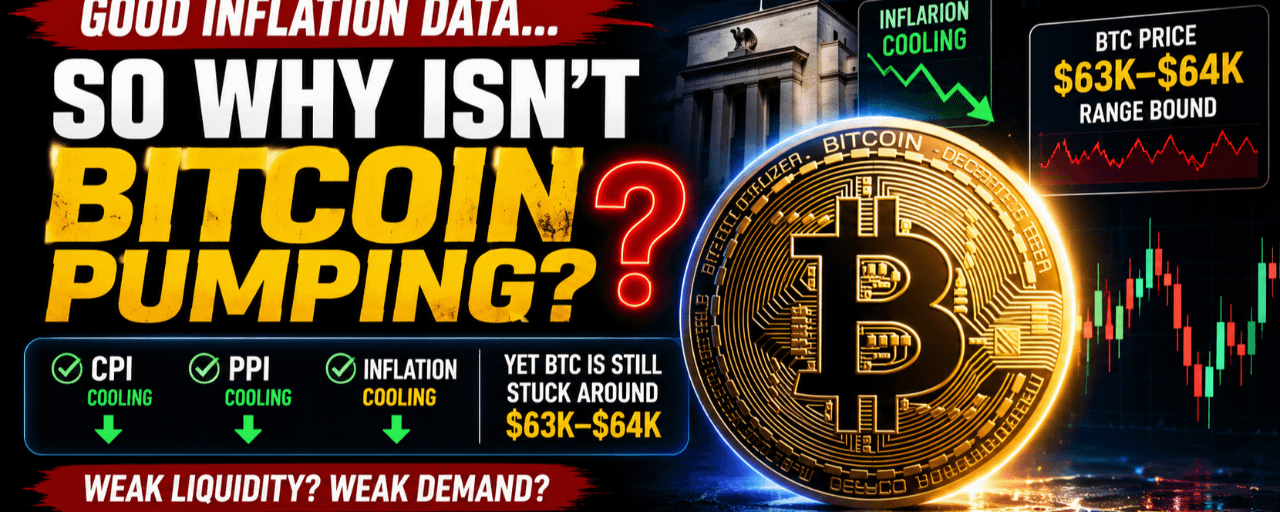
Bitcoin Failed to Rally on Good Inflation Data — Are ETF Outflows the Real Problem Now?Bitcoin Got the Macro Catalyst. The Market Still Sold.
Bitcoin entered this week with a clear catalyst.
Inflation data was relatively friendly.
U.S. July CPI came in at 3.4% year over year, while producer prices were unchanged in July instead of rising as economists had expected. That should have created a more supportive environment for risk assets.
But Bitcoin didn't deliver the breakout bulls were waiting for.
Instead, BTC has slipped toward $62.8K, giving back much of last week's recovery.
And that raises a much more important question:
Is macro no longer the biggest problem for Bitcoin?
🟠 The CPI Test Is Already Over
For days, traders were focused on the U.S. inflation report.
The expectation was simple:
Cooler inflation → lower rate fears → stronger risk appetite → Bitcoin breakout.
But the actual market reaction was very different.
Bitcoin failed to reclaim the $64K area decisively, and the market moved lower instead.
That tells us something important.
A positive macro headline isn't enough when actual crypto demand isn't following.
💰 ETF Flows Are Becoming the Bigger Signal
This may be the most important development to watch.
Spot Bitcoin ETFs recorded back-to-back daily outflows, the first such streak since late July.
One recent session saw approximately $131 million in Bitcoin ETF outflows, according to market reports.
And data covering August 7–14 shows Bitcoin down around 2.39%, with ETF outflows reaching approximately $332 million during that period.
This creates a very different picture from earlier in the month.
Institutional demand had helped support BTC.
Now that support appears less reliable.
📉 Why This Matters
Bitcoin's ETF market has changed the way BTC responds to demand.
When large amounts of capital enter spot ETFs, institutions can gain Bitcoin exposure without directly holding coins on exchanges.
But the opposite is also true.
When investors redeem ETF shares, selling pressure can become an important part of the market's short-term structure.
That's why traders are watching ETF flows almost as closely as price.
And right now:
Price is weakening.
ETF flows are negative.
Volatility is relatively compressed.
That combination deserves attention.
🇺🇸 There's Another Problem: U.S. Crypto Regulation
The market also received disappointing regulatory news.
The U.S. SEC unexpectedly cancelled a scheduled meeting that was expected to address proposed crypto rules, citing an unforeseen scheduling issue. No replacement date has been announced.
Meanwhile, the Senate's CLARITY Act process has been pushed into September after lawmakers failed to complete the process before the August recess.
This matters because clearer rules are widely viewed as an important step toward greater institutional participation.
So Bitcoin is now facing two different questions:
Will institutional money keep flowing?
And:
Will the U.S. regulatory environment become clearer?
🧩 The Strange Part: Stocks Are Doing Fine
Here's where the divergence becomes interesting.
The S&P 500 recently reached a record high, while U.S. equity funds attracted $2.58 billion in net inflows during the week ending August 12.
So this isn't simply a case of every risk asset collapsing.
Traditional markets are showing strength.
Bitcoin isn't.
That makes the crypto-specific factors more important.
ETF flows.
Regulation.
Crypto positioning.
And market liquidity.
👀 What Could Happen Next?
There are two major scenarios.
🟢 Bullish Scenario
If Bitcoin stabilizes around the current area and ETF outflows reverse, buyers could regain confidence.
A move back above the $64K area would be important because BTC has repeatedly struggled to establish momentum above it.
If that happens alongside renewed ETF inflows, the current weakness could eventually look like consolidation rather than the start of a deeper decline.
🔴 Bearish Scenario
If ETF outflows continue and BTC loses the current support zone, sentiment could deteriorate further.
The danger is that traders who bought the earlier rebound may start reducing positions.
That could increase selling pressure.
⚠️ The Biggest Mistake Would Be Chasing the Weekend Move
Bitcoin is trading in a relatively quiet weekend environment.
That means a move lower doesn't automatically confirm a major bear trend.
But it also doesn't mean the weakness should be ignored.
The better signal will be what happens when traditional markets reopen and ETF flows update.
Weekend price action can be noisy.
Institutional flows are harder to ignore.
🔥 What I'm Watching Now
For the next few sessions, I'd focus on five things:
1️⃣ BTC around $62K–$64K
Can Bitcoin reclaim the upper part of this range?
2️⃣ Spot Bitcoin ETF flows
Do outflows continue or reverse?
3️⃣ U.S. regulatory developments
Does the SEC announce a new date?
4️⃣ Ethereum and major altcoins
Can they show relative strength while BTC consolidates?
5️⃣ Traditional risk markets
Does the stock-market rally continue?
These signals together should give us a much clearer picture.
🚀 Final Thoughts
Bitcoin didn't get the clean breakout catalyst traders wanted.
Inflation cooled.
Producer prices were soft.
U.S. stocks remained strong.
Yet BTC still moved toward $62.8K and ETF outflows returned.
That makes the current market much more interesting than a simple bullish-versus-bearish debate.
The key question isn't:
“Will Bitcoin pump tomorrow?”
It's:
“Where will the next real source of demand come from?”
If ETF buyers return, Bitcoin could regain momentum.
If outflows continue, the market may need to find a new source of liquidity before another sustainable rally begins.
And with U.S. crypto regulation also facing delays, the next few weeks could be much more important than one CPI report.
💬 What Do YOU Think?
What is Bitcoin's biggest problem right now? 👀
🟢 ETF outflows
🔴 Regulatory uncertainty
🟡 Weak crypto demand
🔵 BTC is simply consolidating
👇 Vote and tell me your reason.
#Bitcoin #BTC #BitcoinETF #Crypto #CryptoMarket #Ethereum #CryptoRegulation #CLARITYAct #BinanceSquare
Dost, ye angle mujhe aaj ke liye sabse strong lag raha hai because it combines price action + ETF money + macro + regulation instead of another repetitive BTC prediction article.
Bitcoin Failed to Rally on Good Inflation Data — Are ETF Outflows the Real Problem Now?
Bitcoin Got the Macro Catalyst. The Market Still Sold.
Bitcoin entered this week with a clear catalyst.
Inflation data was relatively friendly.
U.S. July CPI came in at 3.4% year over year, while producer prices were unchanged in July instead of rising as economists had expected. That should have created a more supportive environment for risk assets.
But Bitcoin didn't deliver the breakout bulls were waiting for.
Instead, BTC has slipped toward $62.8K, giving back much of last week's recovery.
And that raises a much more important question:
Is macro no longer the biggest problem for Bitcoin?
🟠 The CPI Test Is Already Over
For days, traders were focused on the U.S. inflation report.
The expectation was simple:
Cooler inflation → lower rate fears → stronger risk appetite → Bitcoin breakout.
But the actual market reaction was very different.
Bitcoin failed to reclaim the $64K area decisively, and the market moved lower instead.
That tells us something important.
A positive macro headline isn't enough when actual crypto demand isn't following.
💰 ETF Flows Are Becoming the Bigger Signal
This may be the most important development to watch.
Spot Bitcoin ETFs recorded back-to-back daily outflows, the first such streak since late July.
One recent session saw approximately $131 million in Bitcoin ETF outflows, according to market reports.
And data covering August 7–14 shows Bitcoin down around 2.39%, with ETF outflows reaching approximately $332 million during that period.
This creates a very different picture from earlier in the month.
Institutional demand had helped support BTC.
Now that support appears less reliable.
📉 Why This Matters
Bitcoin's ETF market has changed the way BTC responds to demand.
When large amounts of capital enter spot ETFs, institutions can gain Bitcoin exposure without directly holding coins on exchanges.
But the opposite is also true.
When investors redeem ETF shares, selling pressure can become an important part of the market's short-term structure.
That's why traders are watching ETF flows almost as closely as price.
And right now:
Price is weakening.
ETF flows are negative.
Volatility is relatively compressed.
That combination deserves attention.
🇺🇸 There's Another Problem: U.S. Crypto Regulation
The market also received disappointing regulatory news.
The U.S. SEC unexpectedly cancelled a scheduled meeting that was expected to address proposed crypto rules, citing an unforeseen scheduling issue. No replacement date has been announced.
Meanwhile, the Senate's CLARITY Act process has been pushed into September after lawmakers failed to complete the process before the August recess.
This matters because clearer rules are widely viewed as an important step toward greater institutional participation.
So Bitcoin is now facing two different questions:
Will institutional money keep flowing?
And:
Will the U.S. regulatory environment become clearer?
🧩 The Strange Part: Stocks Are Doing Fine
Here's where the divergence becomes interesting.
The S&P 500 recently reached a record high, while U.S. equity funds attracted $2.58 billion in net inflows during the week ending August 12.
So this isn't simply a case of every risk asset collapsing.
Traditional markets are showing strength.
Bitcoin isn't.
That makes the crypto-specific factors more important.
ETF flows.
Regulation.
Crypto positioning.
And market liquidity.
👀 What Could Happen Next?
There are two major scenarios.
🟢 Bullish Scenario
If Bitcoin stabilizes around the current area and ETF outflows reverse, buyers could regain confidence.
A move back above the $64K area would be important because BTC has repeatedly struggled to establish momentum above it.
If that happens alongside renewed ETF inflows, the current weakness could eventually look like consolidation rather than the start of a deeper decline.
🔴 Bearish Scenario
If ETF outflows continue and BTC loses the current support zone, sentiment could deteriorate further.
The danger is that traders who bought the earlier rebound may start reducing positions.
That could increase selling pressure.
⚠️ The Biggest Mistake Would Be Chasing the Weekend Move
Bitcoin is trading in a relatively quiet weekend environment.
That means a move lower doesn't automatically confirm a major bear trend.
But it also doesn't mean the weakness should be ignored.
The better signal will be what happens when traditional markets reopen and ETF flows update.
Weekend price action can be noisy.
Institutional flows are harder to ignore.
🔥 What I'm Watching Now
For the next few sessions, I'd focus on five things:
1️⃣ BTC around $62K–$64K
Can Bitcoin reclaim the upper part of this range?
2️⃣ Spot Bitcoin ETF flows
Do outflows continue or reverse?
3️⃣ U.S. regulatory developments
Does the SEC announce a new date?
4️⃣ Ethereum and major altcoins
Can they show relative strength while BTC consolidates?
5️⃣ Traditional risk markets
Does the stock-market rally continue?
These signals together should give us a much clearer picture.
🚀 Final Thoughts
Bitcoin didn't get the clean breakout catalyst traders wanted.
Inflation cooled.
Producer prices were soft.
U.S. stocks remained strong.
Yet BTC still moved toward $62.8K and ETF outflows returned.
That makes the current market much more interesting than a simple bullish-versus-bearish debate.
The key question isn't:
“Will Bitcoin pump tomorrow?”
It's:
“Where will the next real source of demand come from?”
If ETF buyers return, Bitcoin could regain momentum.
If outflows continue, the market may need to find a new source of liquidity before another sustainable rally begins.
And with U.S. crypto regulation also facing delays, the next few weeks could be much more important than one CPI report.
💬 What Do YOU Think?
What is Bitcoin's biggest problem right now? 👀
🟢 ETF outflows
🔴 Regulatory uncertainty
🟡 Weak crypto demand
🔵 BTC is simply consolidating
👇 Vote and tell me your reason.
#Bitcoin #BTC #BitcoinETF #Crypto #CryptoMarket #Ethereum #CryptoRegulation #CLARITYAct #BinanceSquare
Dost, ye angle mujhe aaj ke liye sabse strong lag raha hai because it combines price action + ETF money + macro + regulation instead of another repetitive BTC prediction article.
Bitcoin entered this week with a clear catalyst.
Inflation data was relatively friendly.
U.S. July CPI came in at 3.4% year over year, while producer prices were unchanged in July instead of rising as economists had expected. That should have created a more supportive environment for risk assets.
But Bitcoin didn't deliver the breakout bulls were waiting for.
Instead, BTC has slipped toward $62.8K, giving back much of last week's recovery.
And that raises a much more important question:
Is macro no longer the biggest problem for Bitcoin?
🟠 The CPI Test Is Already Over
For days, traders were focused on the U.S. inflation report.
The expectation was simple:
Cooler inflation → lower rate fears → stronger risk appetite → Bitcoin breakout.
But the actual market reaction was very different.
Bitcoin failed to reclaim the $64K area decisively, and the market moved lower instead.
That tells us something important.
A positive macro headline isn't enough when actual crypto demand isn't following.
💰 ETF Flows Are Becoming the Bigger Signal
This may be the most important development to watch.
Spot Bitcoin ETFs recorded back-to-back daily outflows, the first such streak since late July.
One recent session saw approximately $131 million in Bitcoin ETF outflows, according to market reports.
And data covering August 7–14 shows Bitcoin down around 2.39%, with ETF outflows reaching approximately $332 million during that period.
This creates a very different picture from earlier in the month.
Institutional demand had helped support BTC.
Now that support appears less reliable.
📉 Why This Matters
Bitcoin's ETF market has changed the way BTC responds to demand.
When large amounts of capital enter spot ETFs, institutions can gain Bitcoin exposure without directly holding coins on exchanges.
But the opposite is also true.
When investors redeem ETF shares, selling pressure can become an important part of the market's short-term structure.
That's why traders are watching ETF flows almost as closely as price.
And right now:
Price is weakening.
ETF flows are negative.
Volatility is relatively compressed.
That combination deserves attention.
🇺🇸 There's Another Problem: U.S. Crypto Regulation
The market also received disappointing regulatory news.
The U.S. SEC unexpectedly cancelled a scheduled meeting that was expected to address proposed crypto rules, citing an unforeseen scheduling issue. No replacement date has been announced.
Meanwhile, the Senate's CLARITY Act process has been pushed into September after lawmakers failed to complete the process before the August recess.
This matters because clearer rules are widely viewed as an important step toward greater institutional participation.
So Bitcoin is now facing two different questions:
Will institutional money keep flowing?
And:
Will the U.S. regulatory environment become clearer?
🧩 The Strange Part: Stocks Are Doing Fine
Here's where the divergence becomes interesting.
The S&P 500 recently reached a record high, while U.S. equity funds attracted $2.58 billion in net inflows during the week ending August 12.
So this isn't simply a case of every risk asset collapsing.
Traditional markets are showing strength.
Bitcoin isn't.
That makes the crypto-specific factors more important.
ETF flows.
Regulation.
Crypto positioning.
And market liquidity.
👀 What Could Happen Next?
There are two major scenarios.
🟢 Bullish Scenario
If Bitcoin stabilizes around the current area and ETF outflows reverse, buyers could regain confidence.
A move back above the $64K area would be important because BTC has repeatedly struggled to establish momentum above it.
If that happens alongside renewed ETF inflows, the current weakness could eventually look like consolidation rather than the start of a deeper decline.
🔴 Bearish Scenario
If ETF outflows continue and BTC loses the current support zone, sentiment could deteriorate further.
The danger is that traders who bought the earlier rebound may start reducing positions.
That could increase selling pressure.
⚠️ The Biggest Mistake Would Be Chasing the Weekend Move
Bitcoin is trading in a relatively quiet weekend environment.
That means a move lower doesn't automatically confirm a major bear trend.
But it also doesn't mean the weakness should be ignored.
The better signal will be what happens when traditional markets reopen and ETF flows update.
Weekend price action can be noisy.
Institutional flows are harder to ignore.
🔥 What I'm Watching Now
For the next few sessions, I'd focus on five things:
1️⃣ BTC around $62K–$64K
Can Bitcoin reclaim the upper part of this range?
2️⃣ Spot Bitcoin ETF flows
Do outflows continue or reverse?
3️⃣ U.S. regulatory developments
Does the SEC announce a new date?
4️⃣ Ethereum and major altcoins
Can they show relative strength while BTC consolidates?
5️⃣ Traditional risk markets
Does the stock-market rally continue?
These signals together should give us a much clearer picture.
🚀 Final Thoughts
Bitcoin didn't get the clean breakout catalyst traders wanted.
Inflation cooled.
Producer prices were soft.
U.S. stocks remained strong.
Yet BTC still moved toward $62.8K and ETF outflows returned.
That makes the current market much more interesting than a simple bullish-versus-bearish debate.
The key question isn't:
“Will Bitcoin pump tomorrow?”
It's:
“Where will the next real source of demand come from?”
If ETF buyers return, Bitcoin could regain momentum.
If outflows continue, the market may need to find a new source of liquidity before another sustainable rally begins.
And with U.S. crypto regulation also facing delays, the next few weeks could be much more important than one CPI report.
💬 What Do YOU Think?
What is Bitcoin's biggest problem right now? 👀
🟢 ETF outflows
🔴 Regulatory uncertainty
🟡 Weak crypto demand
🔵 BTC is simply consolidating
👇 Vote and tell me your reason.
#Bitcoin #BTC #BitcoinETF #Crypto #CryptoMarket #Ethereum #CryptoRegulation #CLARITYAct #BinanceSquare
Dost, ye angle mujhe aaj ke liye sabse strong lag raha hai because it combines price action + ETF money + macro + regulation instead of another repetitive BTC prediction article.
74
Переглянути переклад
🚨 Bitcoin Got GOOD Inflation Data… So Why Isn’t BTC Pumping? 👀
CPI ✅
PPI ✅
Inflation cooling ✅
Yet Bitcoin is still struggling around $63K–$64K.
That’s the interesting part.
If good macro news can't push BTC higher, is weak liquidity and demand becoming the bigger problem? 📉
The next move could be more important than the current price.
👇 What do you think?
🟢 Breakout is coming 🚀
🔴 Another drop first
🟡 More sideways
#Bitcoin #BTC #Crypto #CryptoMarket #BitcoinETF #Altcoins #BinanceSquare
🚨 Bitcoin Got GOOD Inflation Data… So Why Isn’t BTC Pumping? 👀
CPI ✅
PPI ✅
Inflation cooling ✅
Yet Bitcoin is still struggling around $63K–$64K.
That’s the interesting part.
If good macro news can't push BTC higher, is weak liquidity and demand becoming the bigger problem? 📉
The next move could be more important than the current price.
👇 What do you think?
🟢 Breakout is coming 🚀
🔴 Another drop first
🟡 More sideways
#Bitcoin #BTC #Crypto #CryptoMarket #BitcoinETF #Altcoins #BinanceSquare
CPI ✅
PPI ✅
Inflation cooling ✅
Yet Bitcoin is still struggling around $63K–$64K.
That’s the interesting part.
If good macro news can't push BTC higher, is weak liquidity and demand becoming the bigger problem? 📉
The next move could be more important than the current price.
👇 What do you think?
🟢 Breakout is coming 🚀
🔴 Another drop first
🟡 More sideways
#Bitcoin #BTC #Crypto #CryptoMarket #BitcoinETF #Altcoins #BinanceSquare
58
Стаття
Переглянути переклад
Hyperliquid Wants Into the U.S. Market — Could This Be the Biggest Catalyst for HYPE Yet?A New Chapter Could Be Opening for One of Crypto's Fastest-Growing Trading Networks
Hyperliquid started as a crypto-native perpetual-futures platform.
Now it is trying to solve a much bigger problem:
How can a decentralized derivatives platform reach the U.S. market without losing the advantages that made it successful?
Recent reports indicate that Hyperliquid is exploring a regulatory path with U.S. regulators that could allow regulated firms to offer its perpetual futures to American traders.
If that route succeeds, it could dramatically expand Hyperliquid's addressable market.
And that makes HYPE one of the most interesting altcoins to watch right now.
🇺🇸 Why the U.S. Market Matters So Much
The United States represents one of the world's most important financial markets.
But Hyperliquid currently does not offer its perpetual-futures products directly to U.S. users because of regulatory uncertainty.
That means a successful regulatory structure could potentially unlock:
U.S. tradersInstitutional participationGreater liquidityMore derivatives volumeNew financial partnershipsStronger mainstream visibility
The opportunity isn't simply about adding more users.
It's about connecting Hyperliquid's on-chain trading infrastructure with one of the world's largest regulated financial markets.
⚡ Hyperliquid Already Has Something Traditional Exchanges Want
Hyperliquid's biggest advantage is its trading infrastructure.
The platform offers 300+ perpetual and spot markets, operates fully on-chain and runs 24/7.
That gives traders something traditional markets historically haven't offered in the same way:
continuous, transparent, blockchain-based trading.
And the network has already demonstrated significant economic activity.
Hyperliquid has even generated more weekly blockchain fees than major networks such as Ethereum and Solana during some periods, largely because of its perpetual-futures business.
That makes the U.S. expansion story much more interesting.
This isn't a new protocol searching for product-market fit.
It's an established crypto trading platform trying to enter a much larger market.
💰 HYPE's Fundamentals Are Getting Attention
Price isn't the only reason investors are watching HYPE.
Recent Q2 reporting showed Hyperliquid's net income jumping sharply, with one recent analysis putting quarterly profit at approximately $30.95 million, representing roughly 250% growth.
That matters because crypto valuations are increasingly being compared with actual protocol revenue.
Instead of asking only:
"How much can HYPE pump?"
Investors are increasingly asking:
"How much money does the underlying network generate?"
That's a much more serious investment narrative.
📈 HYPE Is Showing Relative Strength
HYPE has also been performing strongly compared with many major crypto assets.
Recent market data places HYPE around $57, with a market capitalization of roughly $12.7 billion and 24-hour trading volume around $300 million.
The token also gained roughly 5% during the August 13 session while Bitcoin and several major cryptocurrencies were relatively subdued.
That relative strength is important.
When capital starts moving into an altcoin while Bitcoin remains range-bound, traders naturally start asking:
Is a new narrative forming?
🏦 But Wall Street Isn't Completely Bullish
This is where the story gets more interesting.
JPMorgan recently warned that Hyperliquid's competitive position could face pressure as regulated U.S. platforms develop similar perpetual-futures products.
The bank also noted that HYPE ETF inflows, which had been strong in May and June, slowed considerably during July and early August.
So there are two forces working against each other.
🟢 Bullish
U.S. expansion + strong revenue + growing adoption
🔴 Bearish
Regulated competitors + slowing ETF momentum
That's exactly why this is a better article than simply calling HYPE "the next big coin."
There is a genuine debate.
⚔️ The Competition Could Become Brutal
Hyperliquid isn't entering an empty market.
Traditional and crypto-native platforms are also looking at regulated derivatives.
The CFTC has already opened a route for registered exchanges to list similar perpetual-style products in the U.S.
That could bring major competitors into the same market.
The challenge for Hyperliquid is therefore:
Can it preserve its liquidity and user experience while operating within a more regulated environment?
If yes, the opportunity could be enormous.
If not, competitors could capture the U.S. market before Hyperliquid establishes itself.
🔥 Why This Could Be a Major Catalyst for HYPE
A successful U.S. expansion could create several potential growth engines.
1️⃣ More trading volume
More users could mean more perpetual-futures activity.
2️⃣ Greater liquidity
Institutional participation could deepen markets.
3️⃣ Stronger brand recognition
U.S. market access could push Hyperliquid further into mainstream crypto discussions.
4️⃣ More protocol revenue
Higher activity could potentially increase the economic value generated by the network.
5️⃣ Stronger HYPE narrative
Investors could begin valuing HYPE increasingly as a revenue-generating crypto asset, rather than simply an altcoin.
⚠️ But There Is One Huge Question
Even if Hyperliquid gets a path into the U.S., regulatory access doesn't automatically guarantee HYPE price appreciation.
The market will still need to see:
Real users.
Real volume.
Real revenue growth.
Real institutional adoption.
And importantly, Hyperliquid will have to prove that it can compete against regulated platforms with much deeper traditional financial connections.
👀 What I'm Watching Next
For HYPE, these are the five signals I'd watch most closely:
🇺🇸 1. U.S. regulatory progress
Does Hyperliquid actually secure a workable route?
📊 2. Perpetual-futures volume
Does trading activity continue growing?
💰 3. Protocol revenue
Can strong Q2 performance continue?
🏦 4. Institutional demand
Do HYPE funds and institutional products start seeing renewed inflows?
⚔️ 5. Competition
How aggressively do regulated U.S. platforms enter the perpetual-futures market?
These indicators will tell us much more than a single HYPE price candle.
🚀 Final Thoughts
Hyperliquid's U.S. expansion could become one of the most important developments in the HYPE story.
The platform already has:
Strong trading activity.
A major perpetual-futures business.
Growing revenue.
Institutional attention.
Now it is trying to solve the biggest remaining challenge:
U.S. market access.
If Hyperliquid successfully combines its on-chain trading model with a compliant U.S. structure, it could potentially move from being a major crypto derivatives platform to becoming a much broader digital financial infrastructure player.
But the road won't be easy.
Regulated competitors are coming.
ETF momentum has cooled.
And regulatory approval is far from guaranteed.
That's what makes HYPE interesting right now.
The next chapter isn't simply about whether HYPE can pump.
It's about whether Hyperliquid can turn its crypto-native advantage into a genuine U.S. financial-market opportunity.
💬 What Do YOU Think?
If Hyperliquid gets a regulated U.S. route, what happens to HYPE? 👀
🟢 Major bullish catalyst 🚀
🔵 Already priced in
🔴 Competition will limit growth
🟡 Too early to tell
👇 Vote and tell me WHY.
#Hyperliquid #HYPE #Crypto #DeFi #Perpetuals #Altcoins #CFTC #CryptoMarket #BinanceSquare
Hyperliquid Wants Into the U.S. Market — Could This Be the Biggest Catalyst for HYPE Yet?
A New Chapter Could Be Opening for One of Crypto's Fastest-Growing Trading Networks
Hyperliquid started as a crypto-native perpetual-futures platform.
Now it is trying to solve a much bigger problem:
How can a decentralized derivatives platform reach the U.S. market without losing the advantages that made it successful?
Recent reports indicate that Hyperliquid is exploring a regulatory path with U.S. regulators that could allow regulated firms to offer its perpetual futures to American traders.
If that route succeeds, it could dramatically expand Hyperliquid's addressable market.
And that makes HYPE one of the most interesting altcoins to watch right now.
🇺🇸 Why the U.S. Market Matters So Much
The United States represents one of the world's most important financial markets.
But Hyperliquid currently does not offer its perpetual-futures products directly to U.S. users because of regulatory uncertainty.
That means a successful regulatory structure could potentially unlock:
U.S. tradersInstitutional participationGreater liquidityMore derivatives volumeNew financial partnershipsStronger mainstream visibility
The opportunity isn't simply about adding more users.
It's about connecting Hyperliquid's on-chain trading infrastructure with one of the world's largest regulated financial markets.
⚡ Hyperliquid Already Has Something Traditional Exchanges Want
Hyperliquid's biggest advantage is its trading infrastructure.
The platform offers 300+ perpetual and spot markets, operates fully on-chain and runs 24/7.
That gives traders something traditional markets historically haven't offered in the same way:
continuous, transparent, blockchain-based trading.
And the network has already demonstrated significant economic activity.
Hyperliquid has even generated more weekly blockchain fees than major networks such as Ethereum and Solana during some periods, largely because of its perpetual-futures business.
That makes the U.S. expansion story much more interesting.
This isn't a new protocol searching for product-market fit.
It's an established crypto trading platform trying to enter a much larger market.
💰 HYPE's Fundamentals Are Getting Attention
Price isn't the only reason investors are watching HYPE.
Recent Q2 reporting showed Hyperliquid's net income jumping sharply, with one recent analysis putting quarterly profit at approximately $30.95 million, representing roughly 250% growth.
That matters because crypto valuations are increasingly being compared with actual protocol revenue.
Instead of asking only:
"How much can HYPE pump?"
Investors are increasingly asking:
"How much money does the underlying network generate?"
That's a much more serious investment narrative.
📈 HYPE Is Showing Relative Strength
HYPE has also been performing strongly compared with many major crypto assets.
Recent market data places HYPE around $57, with a market capitalization of roughly $12.7 billion and 24-hour trading volume around $300 million.
The token also gained roughly 5% during the August 13 session while Bitcoin and several major cryptocurrencies were relatively subdued.
That relative strength is important.
When capital starts moving into an altcoin while Bitcoin remains range-bound, traders naturally start asking:
Is a new narrative forming?
🏦 But Wall Street Isn't Completely Bullish
This is where the story gets more interesting.
JPMorgan recently warned that Hyperliquid's competitive position could face pressure as regulated U.S. platforms develop similar perpetual-futures products.
The bank also noted that HYPE ETF inflows, which had been strong in May and June, slowed considerably during July and early August.
So there are two forces working against each other.
🟢 Bullish
U.S. expansion + strong revenue + growing adoption
🔴 Bearish
Regulated competitors + slowing ETF momentum
That's exactly why this is a better article than simply calling HYPE "the next big coin."
There is a genuine debate.
⚔️ The Competition Could Become Brutal
Hyperliquid isn't entering an empty market.
Traditional and crypto-native platforms are also looking at regulated derivatives.
The CFTC has already opened a route for registered exchanges to list similar perpetual-style products in the U.S.
That could bring major competitors into the same market.
The challenge for Hyperliquid is therefore:
Can it preserve its liquidity and user experience while operating within a more regulated environment?
If yes, the opportunity could be enormous.
If not, competitors could capture the U.S. market before Hyperliquid establishes itself.
🔥 Why This Could Be a Major Catalyst for HYPE
A successful U.S. expansion could create several potential growth engines.
1️⃣ More trading volume
More users could mean more perpetual-futures activity.
2️⃣ Greater liquidity
Institutional participation could deepen markets.
3️⃣ Stronger brand recognition
U.S. market access could push Hyperliquid further into mainstream crypto discussions.
4️⃣ More protocol revenue
Higher activity could potentially increase the economic value generated by the network.
5️⃣ Stronger HYPE narrative
Investors could begin valuing HYPE increasingly as a revenue-generating crypto asset, rather than simply an altcoin.
⚠️ But There Is One Huge Question
Even if Hyperliquid gets a path into the U.S., regulatory access doesn't automatically guarantee HYPE price appreciation.
The market will still need to see:
Real users.
Real volume.
Real revenue growth.
Real institutional adoption.
And importantly, Hyperliquid will have to prove that it can compete against regulated platforms with much deeper traditional financial connections.
👀 What I'm Watching Next
For HYPE, these are the five signals I'd watch most closely:
🇺🇸 1. U.S. regulatory progress
Does Hyperliquid actually secure a workable route?
📊 2. Perpetual-futures volume
Does trading activity continue growing?
💰 3. Protocol revenue
Can strong Q2 performance continue?
🏦 4. Institutional demand
Do HYPE funds and institutional products start seeing renewed inflows?
⚔️ 5. Competition
How aggressively do regulated U.S. platforms enter the perpetual-futures market?
These indicators will tell us much more than a single HYPE price candle.
🚀 Final Thoughts
Hyperliquid's U.S. expansion could become one of the most important developments in the HYPE story.
The platform already has:
Strong trading activity.
A major perpetual-futures business.
Growing revenue.
Institutional attention.
Now it is trying to solve the biggest remaining challenge:
U.S. market access.
If Hyperliquid successfully combines its on-chain trading model with a compliant U.S. structure, it could potentially move from being a major crypto derivatives platform to becoming a much broader digital financial infrastructure player.
But the road won't be easy.
Regulated competitors are coming.
ETF momentum has cooled.
And regulatory approval is far from guaranteed.
That's what makes HYPE interesting right now.
The next chapter isn't simply about whether HYPE can pump.
It's about whether Hyperliquid can turn its crypto-native advantage into a genuine U.S. financial-market opportunity.
💬 What Do YOU Think?
If Hyperliquid gets a regulated U.S. route, what happens to HYPE? 👀
🟢 Major bullish catalyst 🚀
🔵 Already priced in
🔴 Competition will limit growth
🟡 Too early to tell
👇 Vote and tell me WHY.
#Hyperliquid #HYPE #Crypto #DeFi #Perpetuals #Altcoins #CFTC #CryptoMarket #BinanceSquare
Hyperliquid started as a crypto-native perpetual-futures platform.
Now it is trying to solve a much bigger problem:
How can a decentralized derivatives platform reach the U.S. market without losing the advantages that made it successful?
Recent reports indicate that Hyperliquid is exploring a regulatory path with U.S. regulators that could allow regulated firms to offer its perpetual futures to American traders.
If that route succeeds, it could dramatically expand Hyperliquid's addressable market.
And that makes HYPE one of the most interesting altcoins to watch right now.
🇺🇸 Why the U.S. Market Matters So Much
The United States represents one of the world's most important financial markets.
But Hyperliquid currently does not offer its perpetual-futures products directly to U.S. users because of regulatory uncertainty.
That means a successful regulatory structure could potentially unlock:
U.S. tradersInstitutional participationGreater liquidityMore derivatives volumeNew financial partnershipsStronger mainstream visibility
The opportunity isn't simply about adding more users.
It's about connecting Hyperliquid's on-chain trading infrastructure with one of the world's largest regulated financial markets.
⚡ Hyperliquid Already Has Something Traditional Exchanges Want
Hyperliquid's biggest advantage is its trading infrastructure.
The platform offers 300+ perpetual and spot markets, operates fully on-chain and runs 24/7.
That gives traders something traditional markets historically haven't offered in the same way:
continuous, transparent, blockchain-based trading.
And the network has already demonstrated significant economic activity.
Hyperliquid has even generated more weekly blockchain fees than major networks such as Ethereum and Solana during some periods, largely because of its perpetual-futures business.
That makes the U.S. expansion story much more interesting.
This isn't a new protocol searching for product-market fit.
It's an established crypto trading platform trying to enter a much larger market.
💰 HYPE's Fundamentals Are Getting Attention
Price isn't the only reason investors are watching HYPE.
Recent Q2 reporting showed Hyperliquid's net income jumping sharply, with one recent analysis putting quarterly profit at approximately $30.95 million, representing roughly 250% growth.
That matters because crypto valuations are increasingly being compared with actual protocol revenue.
Instead of asking only:
"How much can HYPE pump?"
Investors are increasingly asking:
"How much money does the underlying network generate?"
That's a much more serious investment narrative.
📈 HYPE Is Showing Relative Strength
HYPE has also been performing strongly compared with many major crypto assets.
Recent market data places HYPE around $57, with a market capitalization of roughly $12.7 billion and 24-hour trading volume around $300 million.
The token also gained roughly 5% during the August 13 session while Bitcoin and several major cryptocurrencies were relatively subdued.
That relative strength is important.
When capital starts moving into an altcoin while Bitcoin remains range-bound, traders naturally start asking:
Is a new narrative forming?
🏦 But Wall Street Isn't Completely Bullish
This is where the story gets more interesting.
JPMorgan recently warned that Hyperliquid's competitive position could face pressure as regulated U.S. platforms develop similar perpetual-futures products.
The bank also noted that HYPE ETF inflows, which had been strong in May and June, slowed considerably during July and early August.
So there are two forces working against each other.
🟢 Bullish
U.S. expansion + strong revenue + growing adoption
🔴 Bearish
Regulated competitors + slowing ETF momentum
That's exactly why this is a better article than simply calling HYPE "the next big coin."
There is a genuine debate.
⚔️ The Competition Could Become Brutal
Hyperliquid isn't entering an empty market.
Traditional and crypto-native platforms are also looking at regulated derivatives.
The CFTC has already opened a route for registered exchanges to list similar perpetual-style products in the U.S.
That could bring major competitors into the same market.
The challenge for Hyperliquid is therefore:
Can it preserve its liquidity and user experience while operating within a more regulated environment?
If yes, the opportunity could be enormous.
If not, competitors could capture the U.S. market before Hyperliquid establishes itself.
🔥 Why This Could Be a Major Catalyst for HYPE
A successful U.S. expansion could create several potential growth engines.
1️⃣ More trading volume
More users could mean more perpetual-futures activity.
2️⃣ Greater liquidity
Institutional participation could deepen markets.
3️⃣ Stronger brand recognition
U.S. market access could push Hyperliquid further into mainstream crypto discussions.
4️⃣ More protocol revenue
Higher activity could potentially increase the economic value generated by the network.
5️⃣ Stronger HYPE narrative
Investors could begin valuing HYPE increasingly as a revenue-generating crypto asset, rather than simply an altcoin.
⚠️ But There Is One Huge Question
Even if Hyperliquid gets a path into the U.S., regulatory access doesn't automatically guarantee HYPE price appreciation.
The market will still need to see:
Real users.
Real volume.
Real revenue growth.
Real institutional adoption.
And importantly, Hyperliquid will have to prove that it can compete against regulated platforms with much deeper traditional financial connections.
👀 What I'm Watching Next
For HYPE, these are the five signals I'd watch most closely:
🇺🇸 1. U.S. regulatory progress
Does Hyperliquid actually secure a workable route?
📊 2. Perpetual-futures volume
Does trading activity continue growing?
💰 3. Protocol revenue
Can strong Q2 performance continue?
🏦 4. Institutional demand
Do HYPE funds and institutional products start seeing renewed inflows?
⚔️ 5. Competition
How aggressively do regulated U.S. platforms enter the perpetual-futures market?
These indicators will tell us much more than a single HYPE price candle.
🚀 Final Thoughts
Hyperliquid's U.S. expansion could become one of the most important developments in the HYPE story.
The platform already has:
Strong trading activity.
A major perpetual-futures business.
Growing revenue.
Institutional attention.
Now it is trying to solve the biggest remaining challenge:
U.S. market access.
If Hyperliquid successfully combines its on-chain trading model with a compliant U.S. structure, it could potentially move from being a major crypto derivatives platform to becoming a much broader digital financial infrastructure player.
But the road won't be easy.
Regulated competitors are coming.
ETF momentum has cooled.
And regulatory approval is far from guaranteed.
That's what makes HYPE interesting right now.
The next chapter isn't simply about whether HYPE can pump.
It's about whether Hyperliquid can turn its crypto-native advantage into a genuine U.S. financial-market opportunity.
💬 What Do YOU Think?
If Hyperliquid gets a regulated U.S. route, what happens to HYPE? 👀
🟢 Major bullish catalyst 🚀
🔵 Already priced in
🔴 Competition will limit growth
🟡 Too early to tell
👇 Vote and tell me WHY.
#Hyperliquid #HYPE #Crypto #DeFi #Perpetuals #Altcoins #CFTC #CryptoMarket #BinanceSquare
103
BTC досі рухається боковиком у зоні $63K–$64K.
Але сьогодні виділяється одна альткоїн-історія:
🔥 Hyperliquid (HYPE)
Оскільки увага зростає до виходу Hyperliquid на ринок перпетуальних контрактів у США, трейдери спостерігають, чи зможе HYPE й далі випереджати, поки основні монети залишаються тихими.
Чи HYPE стає тим альткоїном, за яким варто стежити, поки BTC консолідується? 👀
🟢 Так — HYPE лише починає
🔴 Ні — BTC задасть наступний рух
👇 Як думаєш?
BTC досі рухається боковиком у зоні $63K–$64K.
Але сьогодні виділяється одна альткоїн-історія:
🔥 Hyperliquid (HYPE)
Оскільки увага зростає до виходу Hyperliquid на ринок перпетуальних контрактів у США, трейдери спостерігають, чи зможе HYPE й далі випереджати, поки основні монети залишаються тихими.
Чи HYPE стає тим альткоїном, за яким варто стежити, поки BTC консолідується? 👀
🟢 Так — HYPE лише починає
🔴 Ні — BTC задасть наступний рух
👇 Як думаєш?
Але сьогодні виділяється одна альткоїн-історія:
🔥 Hyperliquid (HYPE)
Оскільки увага зростає до виходу Hyperliquid на ринок перпетуальних контрактів у США, трейдери спостерігають, чи зможе HYPE й далі випереджати, поки основні монети залишаються тихими.
Чи HYPE стає тим альткоїном, за яким варто стежити, поки BTC консолідується? 👀
🟢 Так — HYPE лише починає
🔴 Ні — BTC задасть наступний рух
👇 Як думаєш?
109
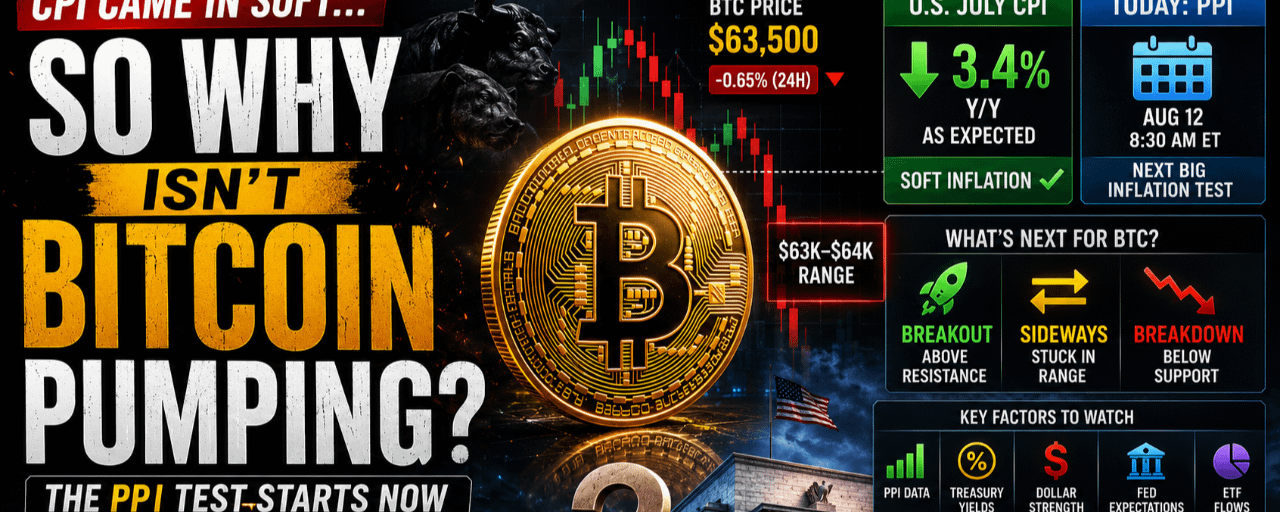
Стаття
CPI вийшов м’якшим — то чому Bitcoin не розганяється? Тест PPI починається зараз🚨 CPI вийшов м’якшим — то чому Bitcoin не розганяється?
Звіт по інфляції виявився хорошим. Але Bitcoin так і не прорвався. Ось чого ринок може не помічати.
Трейдери Bitcoin чекали на звіт США CPI, щоб отримати поштовх для наступного великого руху.
Число нарешті надійшло.
Заголовок за липень щодо CPI склав 3,4% у річному вимірі — загалом відповідає очікуванням.
Але замість масштабного ралі по Bitcoin, BTC досі тримається в районі $63K–$64K.
Ця реакція говорить нам про щось важливе:
Одна лише прохолодніша цифра інфляції може більше бути недостатньою, щоб штовхнути Bitcoin вище.
CPI вийшов м’якшим — то чому Bitcoin не розганяється? Тест PPI починається зараз
🚨 CPI вийшов м’якшим — то чому Bitcoin не розганяється?
Звіт по інфляції виявився хорошим. Але Bitcoin так і не прорвався. Ось чого ринок може не помічати.
Трейдери Bitcoin чекали на звіт США CPI, щоб отримати поштовх для наступного великого руху.
Число нарешті надійшло.
Заголовок за липень щодо CPI склав 3,4% у річному вимірі — загалом відповідає очікуванням.
Але замість масштабного ралі по Bitcoin, BTC досі тримається в районі $63K–$64K.
Ця реакція говорить нам про щось важливе:
Одна лише прохолодніша цифра інфляції може більше бути недостатньою, щоб штовхнути Bitcoin вище.
Звіт по інфляції виявився хорошим. Але Bitcoin так і не прорвався. Ось чого ринок може не помічати.
Трейдери Bitcoin чекали на звіт США CPI, щоб отримати поштовх для наступного великого руху.
Число нарешті надійшло.
Заголовок за липень щодо CPI склав 3,4% у річному вимірі — загалом відповідає очікуванням.
Але замість масштабного ралі по Bitcoin, BTC досі тримається в районі $63K–$64K.
Ця реакція говорить нам про щось важливе:
Одна лише прохолодніша цифра інфляції може більше бути недостатньою, щоб штовхнути Bitcoin вище.
91
🚨 Bitcoin Чекає на тригер CPI 👀
BTC усе ще застряг у зоні близько $63K, тоді як трейдери чекають на сьогоднішні дані з інфляції в США.
Найцікавіше?
Попит на ETF надає підтримку, але макроекономічна невизначеність змушує покупців діяти обережно.
Одна несподіванка в CPI може швидко змінити ринковий настрій. ⚡
Чи нарешті BTC сьогодні прорве свій діапазон?
🟢 Бичачий прорив
🔴 Пробій вниз
🟡 Більше бокової фази
#Bitcoin #BTC #CPI #CryptoMarket #BitcoinETF #BinanceSquare
🚨 Bitcoin Чекає на тригер CPI 👀
BTC усе ще застряг у зоні близько $63K, тоді як трейдери чекають на сьогоднішні дані з інфляції в США.
Найцікавіше?
Попит на ETF надає підтримку, але макроекономічна невизначеність змушує покупців діяти обережно.
Одна несподіванка в CPI може швидко змінити ринковий настрій. ⚡
Чи нарешті BTC сьогодні прорве свій діапазон?
🟢 Бичачий прорив
🔴 Пробій вниз
🟡 Більше бокової фази
#Bitcoin #BTC #CPI #CryptoMarket #BitcoinETF #BinanceSquare
BTC усе ще застряг у зоні близько $63K, тоді як трейдери чекають на сьогоднішні дані з інфляції в США.
Найцікавіше?
Попит на ETF надає підтримку, але макроекономічна невизначеність змушує покупців діяти обережно.
Одна несподіванка в CPI може швидко змінити ринковий настрій. ⚡
Чи нарешті BTC сьогодні прорве свій діапазон?
🟢 Бичачий прорив
🔴 Пробій вниз
🟡 Більше бокової фази
#Bitcoin #BTC #CPI #CryptoMarket #BitcoinETF #BinanceSquare
64
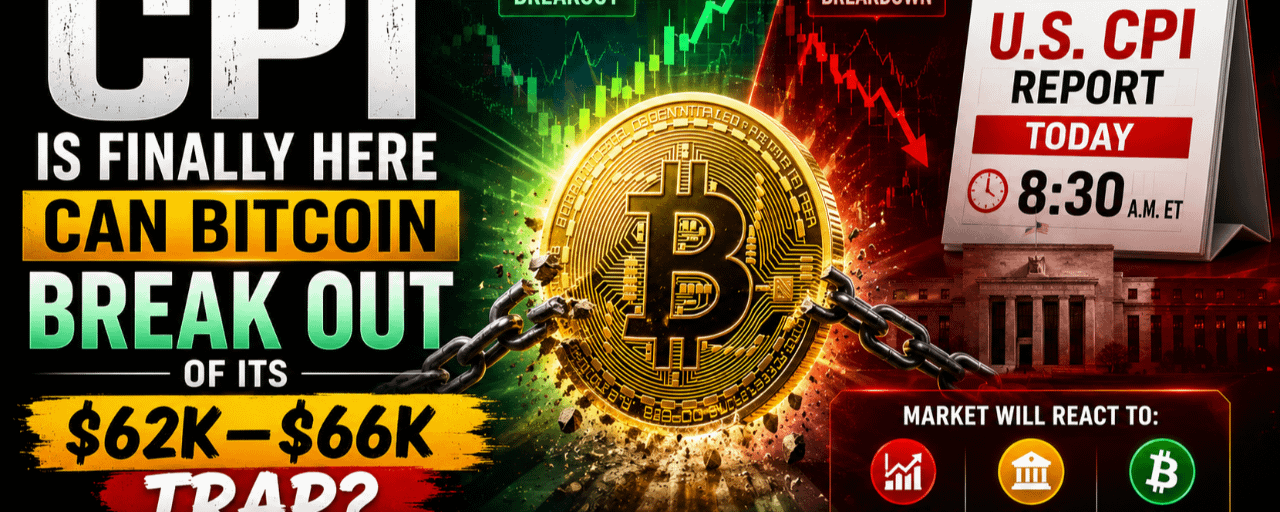
Стаття
CPI Нарешті Тут — чи зможе біткоїн пробити межу пастки $62K–$66K?🚨 Нарешті з’явився CPI — чи зможе біткоїн пробити межу пастки $62K–$66K?
Біткоїн очікує одного з найбільших макро-каталізаторів тижня
Біткоїн виходить у критичну ринкову сесію.
Біткоїн торгується приблизно в районі $63K, тоді як ширший ринок очікує сьогоднішній звіт США за липневим CPI.
Дані заплановано до випуску о 8:30 ранку за східним часом (ET) 12 серпня, і економісти очікують загальну інфляцію в межах приблизно 3,4% у річному вимірі та базовий CPI приблизно 2,5%. citeturn0search12turn0news4
Це означає, що сьогоднішнє значення CPI може стати важливим каталізатором для біткоїна, Ethereum і ширшого ринку криптовалют.
CPI Нарешті Тут — чи зможе біткоїн пробити межу пастки $62K–$66K?
🚨 Нарешті з’явився CPI — чи зможе біткоїн пробити межу пастки $62K–$66K?
Біткоїн очікує одного з найбільших макро-каталізаторів тижня
Біткоїн виходить у критичну ринкову сесію.
Біткоїн торгується приблизно в районі $63K, тоді як ширший ринок очікує сьогоднішній звіт США за липневим CPI.
Дані заплановано до випуску о 8:30 ранку за східним часом (ET) 12 серпня, і економісти очікують загальну інфляцію в межах приблизно 3,4% у річному вимірі та базовий CPI приблизно 2,5%. citeturn0search12turn0news4
Це означає, що сьогоднішнє значення CPI може стати важливим каталізатором для біткоїна, Ethereum і ширшого ринку криптовалют.
Біткоїн очікує одного з найбільших макро-каталізаторів тижня
Біткоїн виходить у критичну ринкову сесію.
Біткоїн торгується приблизно в районі $63K, тоді як ширший ринок очікує сьогоднішній звіт США за липневим CPI.
Дані заплановано до випуску о 8:30 ранку за східним часом (ET) 12 серпня, і економісти очікують загальну інфляцію в межах приблизно 3,4% у річному вимірі та базовий CPI приблизно 2,5%. citeturn0search12turn0news4
Це означає, що сьогоднішнє значення CPI може стати важливим каталізатором для біткоїна, Ethereum і ширшого ринку криптовалют.
79
🚨 Що станеться з біткоїном після CPI США? 👀
🟢 BTC різко зростає 🚀
🔴 BTC різко падає 📉
🟡 Бічний рух / без суттєвих змін
🔵 Занадто непередбачуваний
Підпис:
BTC перебуває під тиском поруч із $64K, тоді як трейдери чекають на показник CPI. Один звіт може швидко змінити настрій ринку. 👀
Твій прогноз? 👇
#Bitcoin #BTC #CPI #Crypto #CryptoMarket #BinanceSquare
🚨 Що станеться з біткоїном після CPI США? 👀
🟢 BTC різко зростає 🚀
🔴 BTC різко падає 📉
🟡 Бічний рух / без суттєвих змін
🔵 Занадто непередбачуваний
Підпис:
BTC перебуває під тиском поруч із $64K, тоді як трейдери чекають на показник CPI. Один звіт може швидко змінити настрій ринку. 👀
Твій прогноз? 👇
#Bitcoin #BTC #CPI #Crypto #CryptoMarket #BinanceSquare
🟢 BTC різко зростає 🚀
🔴 BTC різко падає 📉
🟡 Бічний рух / без суттєвих змін
🔵 Занадто непередбачуваний
Підпис:
BTC перебуває під тиском поруч із $64K, тоді як трейдери чекають на показник CPI. Один звіт може швидко змінити настрій ринку. 👀
Твій прогноз? 👇
#Bitcoin #BTC #CPI #Crypto #CryptoMarket #BinanceSquare
54
🚨 Криптотрейдери чекають ОДНОГО числа 👀
Біткоїн опустився нижче $64K, поки трейдери стали обережнішими перед середовим звітом США з ІСЦ.
Тим часом Bitcoin ETF щойно зафіксували $144,6 млн чистого відпливу після п’яти сесій поспіль з припливами.
А тепер головне питання:
🔥 Чи спровокує ІСЦ наступний прорив BTC — чи ще один розпродаж?
Я уважно стежу за BTC + потоками ETF + інфляцією.
👇 Бичачий чи ведмежий тренд після ІСЦ?
#Bitcoin #BTC #CPI #CryptoMarket #BitcoinETF #BinanceSquare
🚨 Криптотрейдери чекають ОДНОГО числа 👀
Біткоїн опустився нижче $64K, поки трейдери стали обережнішими перед середовим звітом США з ІСЦ.
Тим часом Bitcoin ETF щойно зафіксували $144,6 млн чистого відпливу після п’яти сесій поспіль з припливами.
А тепер головне питання:
🔥 Чи спровокує ІСЦ наступний прорив BTC — чи ще один розпродаж?
Я уважно стежу за BTC + потоками ETF + інфляцією.
👇 Бичачий чи ведмежий тренд після ІСЦ?
#Bitcoin #BTC #CPI #CryptoMarket #BitcoinETF #BinanceSquare
Біткоїн опустився нижче $64K, поки трейдери стали обережнішими перед середовим звітом США з ІСЦ.
Тим часом Bitcoin ETF щойно зафіксували $144,6 млн чистого відпливу після п’яти сесій поспіль з припливами.
А тепер головне питання:
🔥 Чи спровокує ІСЦ наступний прорив BTC — чи ще один розпродаж?
Я уважно стежу за BTC + потоками ETF + інфляцією.
👇 Бичачий чи ведмежий тренд після ІСЦ?
#Bitcoin #BTC #CPI #CryptoMarket #BitcoinETF #BinanceSquare
62
Увійдіть, щоб переглянути інший контент
Приєднуйтесь до користувачів криптовалют по всьому світу на Binance Square
⚡️ Отримуйте актуальну та корисну інформацію про криптовалюти.
💬 Приєднуйтесь до найбільшої у світі криптобіржі.
👍 Відкрийте справжні ідеї від перевірених авторів.
Електронна пошта / номер телефону
Трендові теми
fomcвідстеження
5,478 переглядів
147 обговорюють
Ринок миттєво почервонів: Кевін Ворш включив «яструба» в Джексон-Гоул 🇺🇸📉
Індекс S&P 500 розвернувся в мінус прямо під час сесії. Причина — перша промова Кевіна Ворша на посаді голови ФРС, де він чітко дав зрозуміти, що розслаблятися рано.
Головні тези, які налякали Уолл-стріт:
• Інфляція не сповільнюється: Ворш заявив, що темпи зростання цін усе ще занадто високі та не демонструють переконливого руху до цільових 2%.
• Натяк на жорсткість: Замість очікуваного «голуб'ячого» тону ринок отримав сигнальну ракету про можливе додаткове посилення монетарної політики.
• Миттєва реакція: Теплова карта ринку миттєво залилася червоним — падає все, від техів ($NVDAB ,$TSLAB ) до кібербезпеки та напівпровідників.
Коли традиційний ринок реагує на подібну риторику, ліквідність миттєво стискається і в ризикових активах. Крипта традиційно відчуває такі заяви однією з перших.
#fomcвідстеження
#QatarExtendsLNGForceMajeureByOneMonth
#USCorporateProfitsHitRecordHigh
#TaiwanTAIEXRetakes46500OnChipRally
$AAPLB
VoLoDyMyR7
·5 вподобань
·1.1k переглядів
WarshSaysInflationIsFedTopFocus
4,135 переглядів
211 обговорюють
SOLJumps20%OnTheWeek
22,429 переглядів
668 обговорюють