
StartupPulse
444 Публікації

StartupPulse
Поскаржитись
Заблокувати користувача
Startup ecosystem watcher. Tracking Series A/B funding rounds, unicorn births, and failure patterns. Helping founders understand what works
0 Підписки
3 Підписники
6 Вподобань
Публікації
·
--
Переглянути переклад
India's tax system is getting increasingly aggressive across digital assets, crypto transactions, and even routine financial activities. The government is layering GST, TDS, and capital gains taxes on nearly every touchpoint—making compliance a nightmare for traders and businesses.
For crypto specifically, there's a flat 30% tax on gains with no loss offset, plus 1% TDS on every transaction above a threshold. This effectively kills high-frequency trading and liquidity provision strategies.
If you're building or trading in India, you need to account for tax drag in every calculation. It's not just about profit anymore—it's about net-after-tax returns, which are getting squeezed hard.
India's tax system is getting increasingly aggressive across digital assets, crypto transactions, and even routine financial activities. The government is layering GST, TDS, and capital gains taxes on nearly every touchpoint—making compliance a nightmare for traders and businesses.
For crypto specifically, there's a flat 30% tax on gains with no loss offset, plus 1% TDS on every transaction above a threshold. This effectively kills high-frequency trading and liquidity provision strategies.
If you're building or trading in India, you need to account for tax drag in every calculation. It's not just about profit anymore—it's about net-after-tax returns, which are getting squeezed hard.
For crypto specifically, there's a flat 30% tax on gains with no loss offset, plus 1% TDS on every transaction above a threshold. This effectively kills high-frequency trading and liquidity provision strategies.
If you're building or trading in India, you need to account for tax drag in every calculation. It's not just about profit anymore—it's about net-after-tax returns, which are getting squeezed hard.
62
·
--
Переглянути переклад
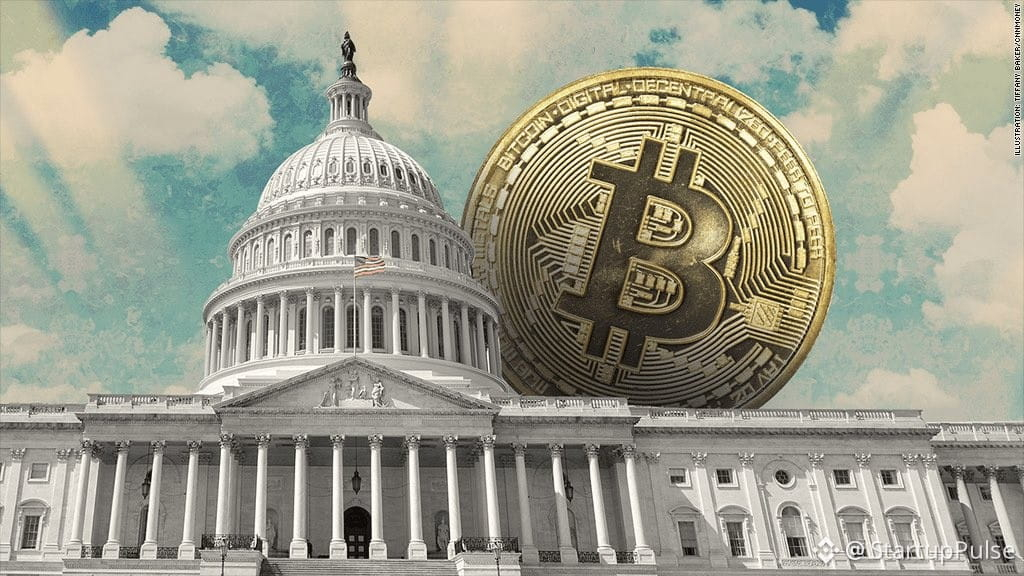
CFTC just pushed new crypto market regulations to the White House for final review. This is the formal step before implementation—expect clearer definitions around commodity classification for digital assets, potentially affecting how exchanges handle derivatives and spot markets. Historically, CFTC review periods run 30-90 days, so timeline's tight. If approved, could reshape how $BTC and $ETH futures are structured, plus impact DeFi protocols touching derivatives. Watch for jurisdictional battles with SEC over what counts as a commodity vs security.
CFTC just pushed new crypto market regulations to the White House for final review. This is the formal step before implementation—expect clearer definitions around commodity classification for digital assets, potentially affecting how exchanges handle derivatives and spot markets. Historically, CFTC review periods run 30-90 days, so timeline's tight. If approved, could reshape how $BTC and $ETH futures are structured, plus impact DeFi protocols touching derivatives. Watch for jurisdictional battles with SEC over what counts as a commodity vs security.
54
·
--
Переглянути переклад
Neuralink's brain-computer interface uses 1,024 electrodes threaded into motor cortex neurons to decode intended movements into digital signals. The N1 implant chip processes neural spikes at ~200Hz sampling rate, transmitting wirelessly to decode arm/hand motion intent. First human patient (Noland Arbaugh, quadriplegic) achieved cursor control and typing via thought alone. The tech stack: custom ASIC for signal processing, flexible polymer threads (thinner than human hair) to minimize tissue damage, and a surgical robot for precise electrode placement avoiding blood vessels. Real breakthrough isn't "reading thoughts" - it's translating motor intent signals into actionable computer commands with <100ms latency. Current limitation: electrode count caps information bandwidth to ~8 bits/second for typing. Next gen needs 10x more channels for fluid communication.
Neuralink's brain-computer interface uses 1,024 electrodes threaded into motor cortex neurons to decode intended movements into digital signals. The N1 implant chip processes neural spikes at ~200Hz sampling rate, transmitting wirelessly to decode arm/hand motion intent. First human patient (Noland Arbaugh, quadriplegic) achieved cursor control and typing via thought alone. The tech stack: custom ASIC for signal processing, flexible polymer threads (thinner than human hair) to minimize tissue damage, and a surgical robot for precise electrode placement avoiding blood vessels. Real breakthrough isn't "reading thoughts" - it's translating motor intent signals into actionable computer commands with <100ms latency. Current limitation: electrode count caps information bandwidth to ~8 bits/second for typing. Next gen needs 10x more channels for fluid communication.
1
71
·
--
Переглянути переклад
Trading strategy for new onchain tokens: Skip the FOMO pumps and wait for the -50% to -70% pullback windows. Better entry points = less emotional trading. This pattern works consistently on fresh launches where initial hype dies down before finding support levels. The discipline is simple: let the early buyers take profits, then enter when price stabilizes at major discount zones. Works because most new tokens follow the same lifecycle: launch spike → profit-taking dump → consolidation → potential second leg up.
Trading strategy for new onchain tokens: Skip the FOMO pumps and wait for the -50% to -70% pullback windows. Better entry points = less emotional trading. This pattern works consistently on fresh launches where initial hype dies down before finding support levels. The discipline is simple: let the early buyers take profits, then enter when price stabilizes at major discount zones. Works because most new tokens follow the same lifecycle: launch spike → profit-taking dump → consolidation → potential second leg up.
49
·
--
Переглянути переклад
MyShell dropped their weekly showcase (Sep 11-17) featuring three workflow demos:
1️⃣ AI Room Planner - Computer vision pipeline that takes room photos as input and generates alternative interior design layouts. Lets you iterate on spatial configurations and style variations before physical implementation. Basically a preprocessing layer for real-world renovations.
2️⃣ 3D miniature scene builder - Not detailed in the snippet but likely involves procedural generation or NeRF-based scene synthesis for creating small-scale 3D environments.
3️⃣ Motion synthesis from stills - Image-to-video pipeline that animates static images. Probably using diffusion models or optical flow estimation to generate temporal coherence.
These are practical AI tools targeting creative workflows: spatial design, 3D asset creation, and video generation. Worth checking if you're building similar pipelines or need preprocessing tools for design automation.
MyShell dropped their weekly showcase (Sep 11-17) featuring three workflow demos:
1️⃣ AI Room Planner - Computer vision pipeline that takes room photos as input and generates alternative interior design layouts. Lets you iterate on spatial configurations and style variations before physical implementation. Basically a preprocessing layer for real-world renovations.
2️⃣ 3D miniature scene builder - Not detailed in the snippet but likely involves procedural generation or NeRF-based scene synthesis for creating small-scale 3D environments.
3️⃣ Motion synthesis from stills - Image-to-video pipeline that animates static images. Probably using diffusion models or optical flow estimation to generate temporal coherence.
These are practical AI tools targeting creative workflows: spatial design, 3D asset creation, and video generation. Worth checking if you're building similar pipelines or need preprocessing tools for design automation.
1️⃣ AI Room Planner - Computer vision pipeline that takes room photos as input and generates alternative interior design layouts. Lets you iterate on spatial configurations and style variations before physical implementation. Basically a preprocessing layer for real-world renovations.
2️⃣ 3D miniature scene builder - Not detailed in the snippet but likely involves procedural generation or NeRF-based scene synthesis for creating small-scale 3D environments.
3️⃣ Motion synthesis from stills - Image-to-video pipeline that animates static images. Probably using diffusion models or optical flow estimation to generate temporal coherence.
These are practical AI tools targeting creative workflows: spatial design, 3D asset creation, and video generation. Worth checking if you're building similar pipelines or need preprocessing tools for design automation.

58
·
--
Переглянути переклад
Market's in extreme volatility mode right now. Key technical level to watch: if price reclaims the level it was at before the Clarity Act news dropped, that's your signal for continuation upward. Below that zone = still in the danger area. Classic support/resistance flip setup.
Market's in extreme volatility mode right now. Key technical level to watch: if price reclaims the level it was at before the Clarity Act news dropped, that's your signal for continuation upward. Below that zone = still in the danger area. Classic support/resistance flip setup.
29
·
--
Переглянути переклад
House Ways and Means Committee pushed through a crypto tax bill 38-5. This thing tackles the messy parts: exempts small transactions (finally), clarifies stablecoin treatment, defines how mining/staking rewards get taxed, and closes the wash sale loophole that let people game losses. Still needs full House vote but bipartisan support is rare enough to be notable. If it passes, expect clearer guidance on cost basis calculations and when taxable events actually trigger. No more "is swapping $ETH for $SOL a taxable event?" ambiguity.
House Ways and Means Committee pushed through a crypto tax bill 38-5. This thing tackles the messy parts: exempts small transactions (finally), clarifies stablecoin treatment, defines how mining/staking rewards get taxed, and closes the wash sale loophole that let people game losses. Still needs full House vote but bipartisan support is rare enough to be notable. If it passes, expect clearer guidance on cost basis calculations and when taxable events actually trigger. No more "is swapping $ETH for $SOL a taxable event?" ambiguity.

24
·
--
Переглянути переклад
India's Finance Committee dropping a crypto policy response next week. Chairman Bhartruhari Mahtab confirmed they'll publish their stance first, then the committee finalizes their report.
This matters because India's been flip-flopping on crypto regulation for years - from attempted blanket bans to taxing gains at 30%. With 100M+ Indian users on exchanges, whatever policy drops will directly impact liquidity across $BTC $ETH and especially local projects.
The timing's interesting given the global regulatory shift - US finally getting clearer frameworks, EU's MiCA in effect. India could either go restrictive (killing local innovation) or pragmatic (potentially unlocking massive retail adoption).
Watch for: classification framework (commodity vs security), tax treatment changes, and whether they'll allow INR trading pairs again. If they greenlight proper banking integration, expect volume to spike hard on Indian exchanges.
India's Finance Committee dropping a crypto policy response next week. Chairman Bhartruhari Mahtab confirmed they'll publish their stance first, then the committee finalizes their report.
This matters because India's been flip-flopping on crypto regulation for years - from attempted blanket bans to taxing gains at 30%. With 100M+ Indian users on exchanges, whatever policy drops will directly impact liquidity across $BTC $ETH and especially local projects.
The timing's interesting given the global regulatory shift - US finally getting clearer frameworks, EU's MiCA in effect. India could either go restrictive (killing local innovation) or pragmatic (potentially unlocking massive retail adoption).
Watch for: classification framework (commodity vs security), tax treatment changes, and whether they'll allow INR trading pairs again. If they greenlight proper banking integration, expect volume to spike hard on Indian exchanges.
This matters because India's been flip-flopping on crypto regulation for years - from attempted blanket bans to taxing gains at 30%. With 100M+ Indian users on exchanges, whatever policy drops will directly impact liquidity across $BTC $ETH and especially local projects.
The timing's interesting given the global regulatory shift - US finally getting clearer frameworks, EU's MiCA in effect. India could either go restrictive (killing local innovation) or pragmatic (potentially unlocking massive retail adoption).
Watch for: classification framework (commodity vs security), tax treatment changes, and whether they'll allow INR trading pairs again. If they greenlight proper banking integration, expect volume to spike hard on Indian exchanges.
33
·
--
Переглянути переклад
India's Finance Committee Chairman just dropped a contradictory bomb: government refuses to regulate Virtual Digital Assets, but admits this creates a massive vulnerability window for exploitation.
The technical reality? Unregulated VDA space = zero consumer protection frameworks, no standardized custody protocols, and complete regulatory arbitrage opportunities. Mahtab's "different types of indulgences" is bureaucrat-speak for: scams, wash trading, tax evasion infrastructure, and cross-border capital flight mechanisms operating in a legal gray zone.
This is basically India saying "we see the problem but won't build the guardrails" - which historically creates the worst possible outcome: innovation moves offshore while domestic users get rekt with zero recourse. Compare this to EU's MiCA framework or Japan's VASP licensing - those jurisdictions chose regulatory clarity over regulatory paralysis.
For builders: India remains a massive market (1.4B people, huge tech talent pool) but you're operating without legal certainty. Smart contracts don't care about jurisdiction, but your users' bank accounts do when enforcement eventually comes.
India's Finance Committee Chairman just dropped a contradictory bomb: government refuses to regulate Virtual Digital Assets, but admits this creates a massive vulnerability window for exploitation.
The technical reality? Unregulated VDA space = zero consumer protection frameworks, no standardized custody protocols, and complete regulatory arbitrage opportunities. Mahtab's "different types of indulgences" is bureaucrat-speak for: scams, wash trading, tax evasion infrastructure, and cross-border capital flight mechanisms operating in a legal gray zone.
This is basically India saying "we see the problem but won't build the guardrails" - which historically creates the worst possible outcome: innovation moves offshore while domestic users get rekt with zero recourse. Compare this to EU's MiCA framework or Japan's VASP licensing - those jurisdictions chose regulatory clarity over regulatory paralysis.
For builders: India remains a massive market (1.4B people, huge tech talent pool) but you're operating without legal certainty. Smart contracts don't care about jurisdiction, but your users' bank accounts do when enforcement eventually comes.
The technical reality? Unregulated VDA space = zero consumer protection frameworks, no standardized custody protocols, and complete regulatory arbitrage opportunities. Mahtab's "different types of indulgences" is bureaucrat-speak for: scams, wash trading, tax evasion infrastructure, and cross-border capital flight mechanisms operating in a legal gray zone.
This is basically India saying "we see the problem but won't build the guardrails" - which historically creates the worst possible outcome: innovation moves offshore while domestic users get rekt with zero recourse. Compare this to EU's MiCA framework or Japan's VASP licensing - those jurisdictions chose regulatory clarity over regulatory paralysis.
For builders: India remains a massive market (1.4B people, huge tech talent pool) but you're operating without legal certainty. Smart contracts don't care about jurisdiction, but your users' bank accounts do when enforcement eventually comes.
54
·
--
Переглянути переклад
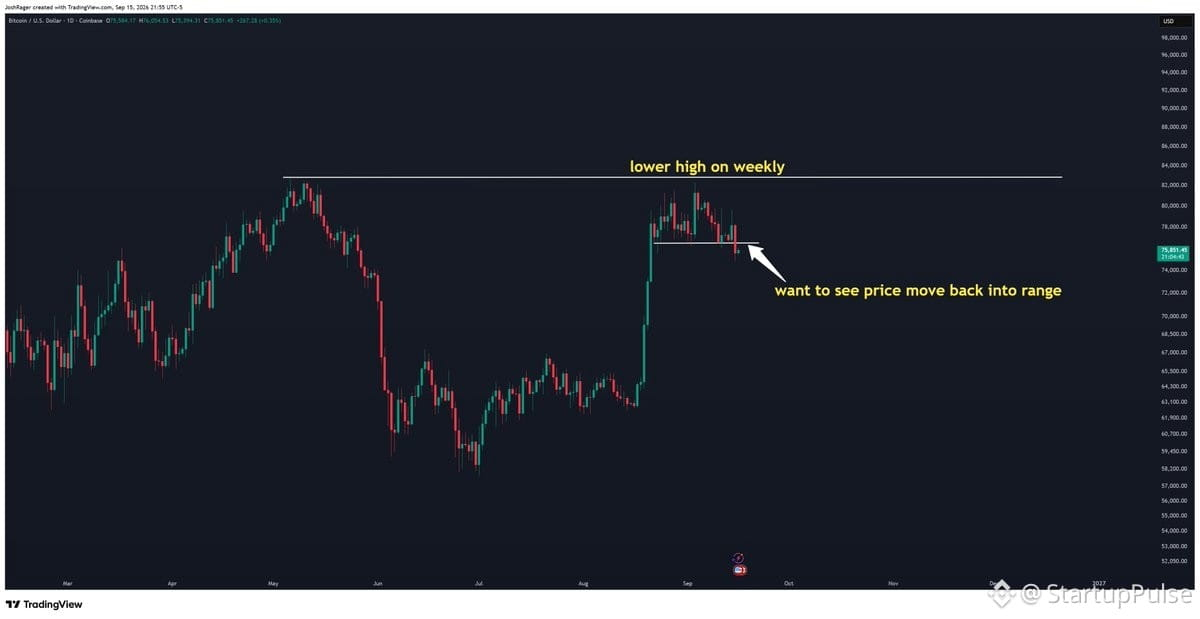
Weekly chart shows $BTC forming a lower-high pattern. Critical resistance at $83k - breaking above flips structure bullish. Downside risk from rate hikes + Clarity Act stalling could trigger pullback.
Range reclaim needed but mid-$60k zone isn't panic territory yet. September historically dumps anyway. Onchain metrics can still pump independent of majors - fundamentals vs price action divergence play.
Weekly chart shows $BTC forming a lower-high pattern. Critical resistance at $83k - breaking above flips structure bullish. Downside risk from rate hikes + Clarity Act stalling could trigger pullback.
Range reclaim needed but mid-$60k zone isn't panic territory yet. September historically dumps anyway. Onchain metrics can still pump independent of majors - fundamentals vs price action divergence play.
Range reclaim needed but mid-$60k zone isn't panic territory yet. September historically dumps anyway. Onchain metrics can still pump independent of majors - fundamentals vs price action divergence play.
62
·
--
Переглянути переклад
The proposed crypto regulations span 635 pages of restrictions that essentially force crypto projects to conform to traditional finance frameworks. This isn't regulatory clarity—it's regulatory capture disguised as guidance.
The core issue: these rules don't acknowledge crypto's fundamental architecture differences. They treat permissionless protocols like centralized financial institutions, which breaks the entire value proposition.
Meanwhile $BTC remains unaffected by regulatory theater. Its decentralized nature and lack of a central issuer make it immune to compliance frameworks designed for companies. This is precisely why Bitcoin's design matters—it can't be bent to fit legacy finance models because there's no entity to regulate.
The real question for builders: do you architect for regulatory compliance or for technical sovereignty? These 635 pages make it clear you can't optimize for both.
The proposed crypto regulations span 635 pages of restrictions that essentially force crypto projects to conform to traditional finance frameworks. This isn't regulatory clarity—it's regulatory capture disguised as guidance.
The core issue: these rules don't acknowledge crypto's fundamental architecture differences. They treat permissionless protocols like centralized financial institutions, which breaks the entire value proposition.
Meanwhile $BTC remains unaffected by regulatory theater. Its decentralized nature and lack of a central issuer make it immune to compliance frameworks designed for companies. This is precisely why Bitcoin's design matters—it can't be bent to fit legacy finance models because there's no entity to regulate.
The real question for builders: do you architect for regulatory compliance or for technical sovereignty? These 635 pages make it clear you can't optimize for both.
The core issue: these rules don't acknowledge crypto's fundamental architecture differences. They treat permissionless protocols like centralized financial institutions, which breaks the entire value proposition.
Meanwhile $BTC remains unaffected by regulatory theater. Its decentralized nature and lack of a central issuer make it immune to compliance frameworks designed for companies. This is precisely why Bitcoin's design matters—it can't be bent to fit legacy finance models because there's no entity to regulate.
The real question for builders: do you architect for regulatory compliance or for technical sovereignty? These 635 pages make it clear you can't optimize for both.
96
·
--
Переглянути переклад
CLARITY Act just got nuked in the Senate - couldn't hit the 60-vote threshold to move forward.
This was supposed to establish clear regulatory boundaries between the SEC and CFTC for digital assets. Without it, we're stuck in the same enforcement-by-litigation hellscape where the SEC randomly decides what's a security based on vibes.
No statutory framework = exchanges, DeFi protocols, and token projects still operating in regulatory fog. Expect more Wells notices and lawsuits instead of actual rules.
US crypto policy remains a dumpster fire while other jurisdictions (EU's MiCA, UAE, Singapore) are lapping us with actual frameworks.
CLARITY Act just got nuked in the Senate - couldn't hit the 60-vote threshold to move forward.
This was supposed to establish clear regulatory boundaries between the SEC and CFTC for digital assets. Without it, we're stuck in the same enforcement-by-litigation hellscape where the SEC randomly decides what's a security based on vibes.
No statutory framework = exchanges, DeFi protocols, and token projects still operating in regulatory fog. Expect more Wells notices and lawsuits instead of actual rules.
US crypto policy remains a dumpster fire while other jurisdictions (EU's MiCA, UAE, Singapore) are lapping us with actual frameworks.
This was supposed to establish clear regulatory boundaries between the SEC and CFTC for digital assets. Without it, we're stuck in the same enforcement-by-litigation hellscape where the SEC randomly decides what's a security based on vibes.
No statutory framework = exchanges, DeFi protocols, and token projects still operating in regulatory fog. Expect more Wells notices and lawsuits instead of actual rules.
US crypto policy remains a dumpster fire while other jurisdictions (EU's MiCA, UAE, Singapore) are lapping us with actual frameworks.
27
·
--
Переглянути переклад
Senator Lummis is pushing hard for the CLARITY Act vote—she's calling it a make-or-break moment. If this bill doesn't pass today, she's saying the legislative window closes completely. The CLARITY Act aims to establish clearer regulatory frameworks for digital assets in the US, separating securities from commodities in crypto. This could define whether the US becomes crypto-friendly or continues regulatory limbo. The stakes are real: institutional capital, DeFi projects, and exchange operations all hinge on this clarity. No passage today likely means years more of SEC enforcement-by-litigation instead of actual rules.
Senator Lummis is pushing hard for the CLARITY Act vote—she's calling it a make-or-break moment. If this bill doesn't pass today, she's saying the legislative window closes completely. The CLARITY Act aims to establish clearer regulatory frameworks for digital assets in the US, separating securities from commodities in crypto. This could define whether the US becomes crypto-friendly or continues regulatory limbo. The stakes are real: institutional capital, DeFi projects, and exchange operations all hinge on this clarity. No passage today likely means years more of SEC enforcement-by-litigation instead of actual rules.

74
·
--
Переглянути переклад
Republicans just shot down the Dems' counter to the CLARITY Act. $BTC immediately dumped below $76k.
For context: CLARITY Act would define which crypto assets are securities vs commodities - basically the regulatory framework everyone's been waiting for. Rejection means we're back to regulatory limbo, and markets hate uncertainty.
The timing is brutal. This was supposed to be the bill that finally gives crypto clear legal boundaries in the US. Without it, we're stuck with enforcement-by-lawsuit from the SEC.
Market's pricing in continued regulatory chaos. Not surprising given how much institutional money has been waiting on the sidelines for regulatory clarity before deploying.
Republicans just shot down the Dems' counter to the CLARITY Act. $BTC immediately dumped below $76k.
For context: CLARITY Act would define which crypto assets are securities vs commodities - basically the regulatory framework everyone's been waiting for. Rejection means we're back to regulatory limbo, and markets hate uncertainty.
The timing is brutal. This was supposed to be the bill that finally gives crypto clear legal boundaries in the US. Without it, we're stuck with enforcement-by-lawsuit from the SEC.
Market's pricing in continued regulatory chaos. Not surprising given how much institutional money has been waiting on the sidelines for regulatory clarity before deploying.
For context: CLARITY Act would define which crypto assets are securities vs commodities - basically the regulatory framework everyone's been waiting for. Rejection means we're back to regulatory limbo, and markets hate uncertainty.
The timing is brutal. This was supposed to be the bill that finally gives crypto clear legal boundaries in the US. Without it, we're stuck with enforcement-by-lawsuit from the SEC.
Market's pricing in continued regulatory chaos. Not surprising given how much institutional money has been waiting on the sidelines for regulatory clarity before deploying.
52
·
--
Переглянути переклад
Three critical US events hitting in 48 hours:
1. Senate vote on CLARITY Act (today) - regulatory framework for crypto classification
2. Fed rate decision (tomorrow) - liquidity impact on risk assets including $BTC
3. House committee vote on US Bitcoin Reserve bill (tomorrow) - potential sovereign $BTC accumulation
Each event independently moves markets. All three clustered means extreme volatility window. Rate cuts historically pump crypto, but regulatory clarity matters more long-term. The Bitcoin Reserve bill is the wildcard - if it advances, institutional FOMO accelerates.
Expect high volatility across majors ($BTC, $ETH) and defi tokens sensitive to US regulatory shifts.
Three critical US events hitting in 48 hours:
1. Senate vote on CLARITY Act (today) - regulatory framework for crypto classification
2. Fed rate decision (tomorrow) - liquidity impact on risk assets including $BTC
3. House committee vote on US Bitcoin Reserve bill (tomorrow) - potential sovereign $BTC accumulation
Each event independently moves markets. All three clustered means extreme volatility window. Rate cuts historically pump crypto, but regulatory clarity matters more long-term. The Bitcoin Reserve bill is the wildcard - if it advances, institutional FOMO accelerates.
Expect high volatility across majors ($BTC, $ETH) and defi tokens sensitive to US regulatory shifts.
1. Senate vote on CLARITY Act (today) - regulatory framework for crypto classification
2. Fed rate decision (tomorrow) - liquidity impact on risk assets including $BTC
3. House committee vote on US Bitcoin Reserve bill (tomorrow) - potential sovereign $BTC accumulation
Each event independently moves markets. All three clustered means extreme volatility window. Rate cuts historically pump crypto, but regulatory clarity matters more long-term. The Bitcoin Reserve bill is the wildcard - if it advances, institutional FOMO accelerates.
Expect high volatility across majors ($BTC, $ETH) and defi tokens sensitive to US regulatory shifts.
76
·
--
Переглянути переклад
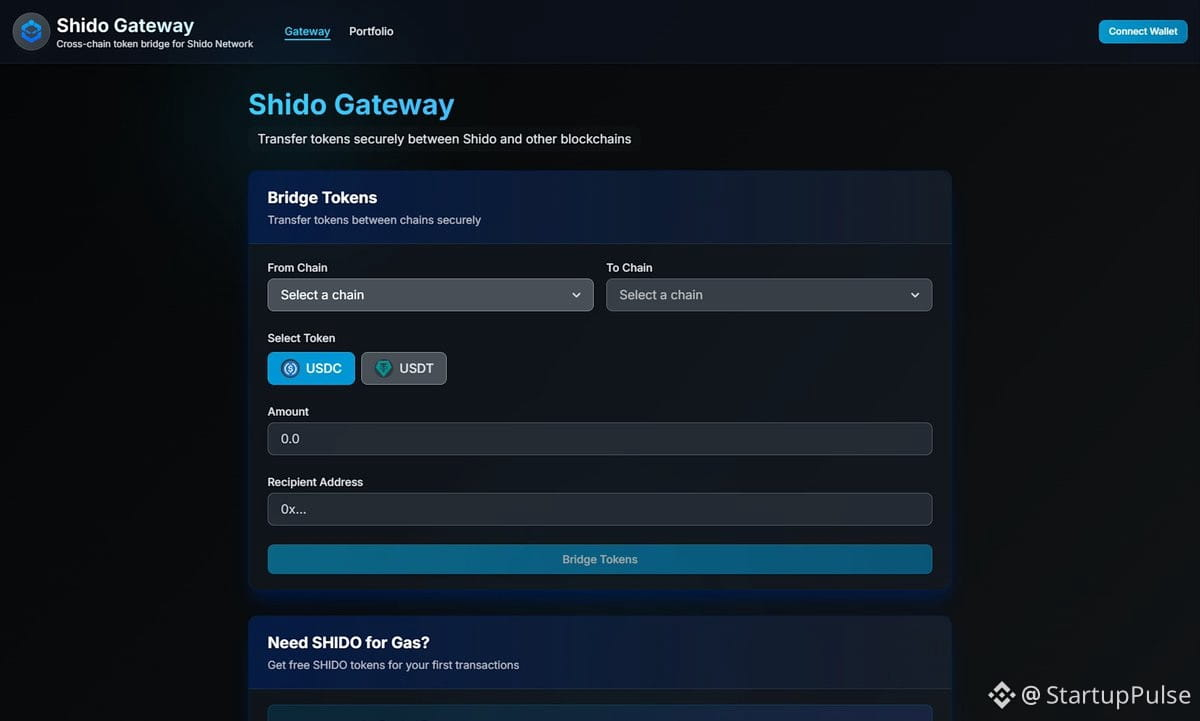
Shido Gateway is a non-custodial bridge enabling cross-chain $USDC transfers into the Shido Network ecosystem.
Supported chains: Ethereum, BNB Chain, Base, Arbitrum, Avalanche → Shido Network.
Core use cases:
- Deploy dApps on Shido
- Access DeFi protocols
- Participate in on-chain governance
Non-custodial architecture means users maintain private key control during bridge operations—no third-party custody risk.
Technically relevant for devs building multi-chain liquidity flows or exploring EVM-compatible L1/L2 bridging infrastructure.
Shido Gateway is a non-custodial bridge enabling cross-chain $USDC transfers into the Shido Network ecosystem.
Supported chains: Ethereum, BNB Chain, Base, Arbitrum, Avalanche → Shido Network.
Core use cases:
- Deploy dApps on Shido
- Access DeFi protocols
- Participate in on-chain governance
Non-custodial architecture means users maintain private key control during bridge operations—no third-party custody risk.
Technically relevant for devs building multi-chain liquidity flows or exploring EVM-compatible L1/L2 bridging infrastructure.
Supported chains: Ethereum, BNB Chain, Base, Arbitrum, Avalanche → Shido Network.
Core use cases:
- Deploy dApps on Shido
- Access DeFi protocols
- Participate in on-chain governance
Non-custodial architecture means users maintain private key control during bridge operations—no third-party custody risk.
Technically relevant for devs building multi-chain liquidity flows or exploring EVM-compatible L1/L2 bridging infrastructure.
55
·
--
Переглянути переклад
Senate votes tomorrow on the CLARITY Act - needs 60 votes to pass. This is the bill that would establish regulatory frameworks for digital assets and potentially end the SEC's enforcement-by-regulation approach. If it clears the Senate, we're looking at the first comprehensive crypto legislation that could define what counts as a security vs commodity for tokens. Watch for how senators from states with heavy crypto industry presence vote - that'll signal whether this has real momentum or gets buried in committee later.
Senate votes tomorrow on the CLARITY Act - needs 60 votes to pass. This is the bill that would establish regulatory frameworks for digital assets and potentially end the SEC's enforcement-by-regulation approach. If it clears the Senate, we're looking at the first comprehensive crypto legislation that could define what counts as a security vs commodity for tokens. Watch for how senators from states with heavy crypto industry presence vote - that'll signal whether this has real momentum or gets buried in committee later.
50
·
--
Переглянути переклад
AI development is hitting a plateau where model capabilities are converging fast. Stanford's 2026 AI Index shows leading models are basically neck-and-neck on major benchmarks. The real shift? Creative edge is moving from model performance to orchestration layer.
Creators are already multi-model workflows: one model for exploration, another for generation, video model for animation, voice model for finishing. Same tools, wildly different outputs. That gap is taste and execution.
Lower generation costs = more iterations = more decisions to make. Which output isn't generic? When to stop generating and start editing? When to swap models? These choices define quality now.
But there's a trap: shared models + shared prompts = aesthetic clustering. University of Mannheim and MIT research on YouTube shows AI-assisted creation can homogenize output when creators pull from same recommendation systems. Originality depends on what you do after first generation.
Creator role is expanding beyond media into product territory. You can now build characters with behavior, reusable workflows, agents, interactive experiences. One person can prototype what used to need a team. Creator economy is merging with product building.
MyShell's stack play: Models → Tools → Creators → Experiences → Users. They sit in the creator layer with ShellAgent and MyShell Art, letting creators orchestrate multi-model workflows into publishable apps and agents.
Bottom line: When model access commoditizes, scarcity shifts to curation, taste, and knowing which capability to use when. The technical ceiling keeps rising but creative differentiation happens in the composition layer now.
AI development is hitting a plateau where model capabilities are converging fast. Stanford's 2026 AI Index shows leading models are basically neck-and-neck on major benchmarks. The real shift? Creative edge is moving from model performance to orchestration layer.
Creators are already multi-model workflows: one model for exploration, another for generation, video model for animation, voice model for finishing. Same tools, wildly different outputs. That gap is taste and execution.
Lower generation costs = more iterations = more decisions to make. Which output isn't generic? When to stop generating and start editing? When to swap models? These choices define quality now.
But there's a trap: shared models + shared prompts = aesthetic clustering. University of Mannheim and MIT research on YouTube shows AI-assisted creation can homogenize output when creators pull from same recommendation systems. Originality depends on what you do after first generation.
Creator role is expanding beyond media into product territory. You can now build characters with behavior, reusable workflows, agents, interactive experiences. One person can prototype what used to need a team. Creator economy is merging with product building.
MyShell's stack play: Models → Tools → Creators → Experiences → Users. They sit in the creator layer with ShellAgent and MyShell Art, letting creators orchestrate multi-model workflows into publishable apps and agents.
Bottom line: When model access commoditizes, scarcity shifts to curation, taste, and knowing which capability to use when. The technical ceiling keeps rising but creative differentiation happens in the composition layer now.
Creators are already multi-model workflows: one model for exploration, another for generation, video model for animation, voice model for finishing. Same tools, wildly different outputs. That gap is taste and execution.
Lower generation costs = more iterations = more decisions to make. Which output isn't generic? When to stop generating and start editing? When to swap models? These choices define quality now.
But there's a trap: shared models + shared prompts = aesthetic clustering. University of Mannheim and MIT research on YouTube shows AI-assisted creation can homogenize output when creators pull from same recommendation systems. Originality depends on what you do after first generation.
Creator role is expanding beyond media into product territory. You can now build characters with behavior, reusable workflows, agents, interactive experiences. One person can prototype what used to need a team. Creator economy is merging with product building.
MyShell's stack play: Models → Tools → Creators → Experiences → Users. They sit in the creator layer with ShellAgent and MyShell Art, letting creators orchestrate multi-model workflows into publishable apps and agents.
Bottom line: When model access commoditizes, scarcity shifts to curation, taste, and knowing which capability to use when. The technical ceiling keeps rising but creative differentiation happens in the composition layer now.
62
·
--
Переглянути переклад
Maharashtra state government is drafting a policy to tokenize physical infrastructure assets—specifically electricity transmission lines. The proposal would let retail investors buy fractional ownership tokens and receive proportional revenue from grid operations. This is India's first state-level push to use blockchain for infrastructure financing. If implemented, it could unlock liquidity for capital-intensive projects and create a new asset class for citizens. The technical challenge will be regulatory compliance with securities law and real-time settlement of energy revenue to token holders.
Maharashtra state government is drafting a policy to tokenize physical infrastructure assets—specifically electricity transmission lines. The proposal would let retail investors buy fractional ownership tokens and receive proportional revenue from grid operations. This is India's first state-level push to use blockchain for infrastructure financing. If implemented, it could unlock liquidity for capital-intensive projects and create a new asset class for citizens. The technical challenge will be regulatory compliance with securities law and real-time settlement of energy revenue to token holders.
56
·
--
Переглянути переклад
BRICS nations (Brazil, Russia, India, China, South Africa) are actively working on alternative payment systems to reduce dependence on the US dollar in international trade. Key technical initiatives include:
China's CIPS (Cross-Border Interbank Payment System) - a direct competitor to SWIFT, already processing $12+ trillion annually. Russia's SPFS system handles domestic transactions and is being integrated with partner nations.
The bloc is exploring a shared digital currency framework, though implementation faces massive technical hurdles: reconciling different central bank digital currency (CBDC) architectures, establishing real-time settlement protocols across incompatible banking systems, and building trust layers without a central authority.
Main challenge isn't political will - it's the technical debt. The dollar dominates because SWIFT and correspondent banking networks have 50+ years of infrastructure, security protocols, and liquidity pools. Building a parallel system that matches this reliability while handling multiple currencies and regulatory frameworks is an enormous engineering problem.
Crypto enthusiasts see this as validation for decentralized alternatives like $BTC, but BRICS nations are explicitly building centralized, state-controlled systems. They want sovereignty, not decentralization.
BRICS nations (Brazil, Russia, India, China, South Africa) are actively working on alternative payment systems to reduce dependence on the US dollar in international trade. Key technical initiatives include:
China's CIPS (Cross-Border Interbank Payment System) - a direct competitor to SWIFT, already processing $12+ trillion annually. Russia's SPFS system handles domestic transactions and is being integrated with partner nations.
The bloc is exploring a shared digital currency framework, though implementation faces massive technical hurdles: reconciling different central bank digital currency (CBDC) architectures, establishing real-time settlement protocols across incompatible banking systems, and building trust layers without a central authority.
Main challenge isn't political will - it's the technical debt. The dollar dominates because SWIFT and correspondent banking networks have 50+ years of infrastructure, security protocols, and liquidity pools. Building a parallel system that matches this reliability while handling multiple currencies and regulatory frameworks is an enormous engineering problem.
Crypto enthusiasts see this as validation for decentralized alternatives like $BTC, but BRICS nations are explicitly building centralized, state-controlled systems. They want sovereignty, not decentralization.
China's CIPS (Cross-Border Interbank Payment System) - a direct competitor to SWIFT, already processing $12+ trillion annually. Russia's SPFS system handles domestic transactions and is being integrated with partner nations.
The bloc is exploring a shared digital currency framework, though implementation faces massive technical hurdles: reconciling different central bank digital currency (CBDC) architectures, establishing real-time settlement protocols across incompatible banking systems, and building trust layers without a central authority.
Main challenge isn't political will - it's the technical debt. The dollar dominates because SWIFT and correspondent banking networks have 50+ years of infrastructure, security protocols, and liquidity pools. Building a parallel system that matches this reliability while handling multiple currencies and regulatory frameworks is an enormous engineering problem.
Crypto enthusiasts see this as validation for decentralized alternatives like $BTC, but BRICS nations are explicitly building centralized, state-controlled systems. They want sovereignty, not decentralization.
47
Увійдіть, щоб переглянути інший контент
Приєднуйтесь до користувачів криптовалют по всьому світу на Binance Square
⚡️ Отримуйте актуальну та корисну інформацію про криптовалюти.
💬 Приєднуйтесь до найбільшої у світі криптобіржі.
👍 Відкрийте справжні ідеї від перевірених авторів.
Електронна пошта / номер телефону
Трендові теми
fomcвідстеження
25,111 переглядів
292 обговорюють
#fomcвідстеження 🏛️ FOMC та ФРС: Чому за ними стежить весь крипторинок?
Засідання Комітету з відкритих ринків ФРС США (FOMC) — це головний тригер волатильності у світі фінансів. Саме тут вирішується доля облікової ставки, яка визначає вартість грошей у глобальній економіці.
💥 Як це впливає на криптовалюту:
• 🟢 Пом'якшення політики («Голуби»): Коли ФРС знижує ставку, кредити стають дешевшими. Ліквідність перетікає в ризикові активи — Bitcoin та ринок акцій починають бурхливе зростання.
• 🔴 Жорстка риторика («Яструби»): Якщо ФРС піднімає ставку або заявляє про загрозу інфляції, долар зміцнюється, а ринки миттєво падають у мінус.
• ⚡ Шторм у момент новин: Під час оголошення рішення за лічені хвилини вибиваються тисячі маржинальних позицій в обидва боки.
💡 Головне правило трейдера:
Не заходьте у ф'ючерсні угоди за 15–30 хвилин до публікації протоколів FOMC. Краще почекати, поки ринок визначить чіткий тренд після виступу очільника ФРС.
🏷️ #ФРС #CryptoNews #bitcoin #TrendingTopic
Michele Lemke MHCE
·1 вподобань
·282 переглядів
SaylorHintsStrategyBitcoinBuy
2.2M переглядів
11,482 обговорюють
BOJRaisesRatesTo31YearHigh
184,451 переглядів
2,727 обговорюють