
宏观资本论
70 Публікації

宏观资本论
聚焦全球宏观、黄金、美元与流动性,追踪资本周期与大类资产机会
0 Підписки
423 Підписники
249 Вподобань
Публікації
Переглянути переклад
Absolute chaos in markets today.
Treasury intervened in bonds. Moderna ripped 177% on cancer vaccine breakthrough. Gold blew past $4,500. $BTC reclaimed $68k. Fed minutes showed officials still can't agree on rates.
And that's just the start.
Here's what actually moved markets today:
1. Treasury stepping into bond market — first direct intervention in years. This changes the game for yields and liquidity.
2. Moderna's cancer vaccine data — 177% move isn't hype, it's a clinical milestone. Pharma suddenly interesting again.
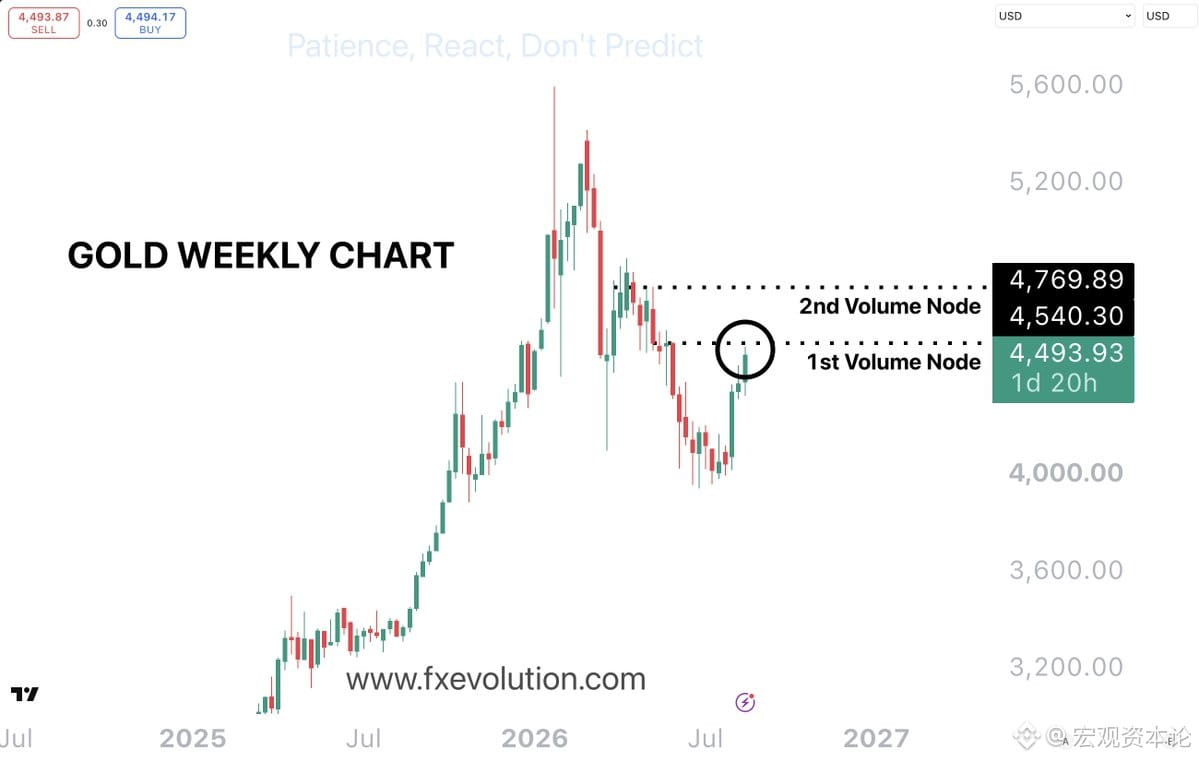
3. Gold above $4,500 — classic safe-haven bid, but also a dollar weakness signal. Watch gold miners here.
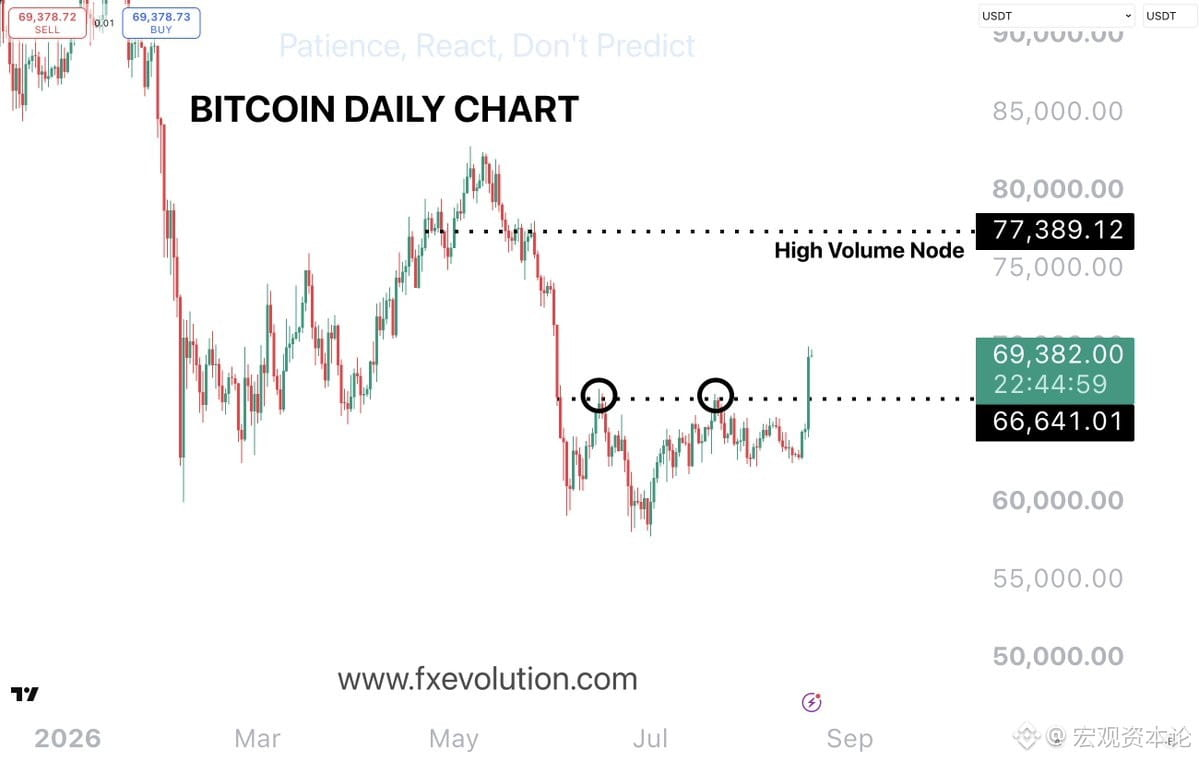
4. $BTC back over $68k — risk-on rotation or just short squeeze? Either way, momentum shifted.
5. Fed minutes exposed deep division — no consensus on next move. That's uncertainty priced in as volatility.
6. Cross-asset volatility spiking — bonds, equities, commodities all moving together. Rare setup.
What I'm watching: Treasury's next move in bonds, whether gold holds $4,500, and if $BTC can sustain above $68k into the weekend. Fed division means more chop ahead.
Days like this separate signal from noise. Focus on the 6 stories that actually matter.
Treasury intervened in bonds. Moderna ripped 177% on cancer vaccine breakthrough. Gold blew past $4,500. $BTC reclaimed $68k. Fed minutes showed officials still can't agree on rates.
And that's just the start.
Here's what actually moved markets today:
1. Treasury stepping into bond market — first direct intervention in years. This changes the game for yields and liquidity.
2. Moderna's cancer vaccine data — 177% move isn't hype, it's a clinical milestone. Pharma suddenly interesting again.
3. Gold above $4,500 — classic safe-haven bid, but also a dollar weakness signal. Watch gold miners here.
4. $BTC back over $68k — risk-on rotation or just short squeeze? Either way, momentum shifted.
5. Fed minutes exposed deep division — no consensus on next move. That's uncertainty priced in as volatility.
6. Cross-asset volatility spiking — bonds, equities, commodities all moving together. Rare setup.
What I'm watching: Treasury's next move in bonds, whether gold holds $4,500, and if $BTC can sustain above $68k into the weekend. Fed division means more chop ahead.
Days like this separate signal from noise. Focus on the 6 stories that actually matter.
Переглянути переклад
Seven market moves today that matter:
1. Treasury just doubled its buyback program for longer-dated bonds—max lifted from $2B to at least $4B per operation through early November. Long yields dropped 9-10 bps instantly. Gold ripped 4.5%+, risk assets followed. Classic liquidity injection playbook.
2. Anthropic reportedly hit $11.6B in Q2 revenue, nearly double the prior quarter, pulling ahead of OpenAI's $6.7B. OpenAI's losses widened to $12.3B. Combined annualized revenue run rate approaching $105B by end of July versus under $20B a year ago. The AI revenue race is getting wild.
3. Moderna and Merck's personalized mRNA cancer vaccine cut melanoma recurrence risk in late-stage trial—first successful late-stage result for this type of therapy. Treatment tailored to each patient's tumor mutations. Stock exploded 175%+ in one session.
4. Volatility Shares filed with SEC to launch 32 ETFs, one per NHL team. Not equity stakes—these use futures tied to on-ice performance metrics like wins. Another step blurring investing, prediction markets, and sports betting. Still proposed, not approved.
5. Fed minutes showed continued debate on inflation risks and whether to hold policy tighter longer. Oil and supply-side pressures still a concern. Markets want cuts, Fed wants sustained evidence inflation is cooling.
6. $BTC jumped back above $68K, up ~6% in one of its strongest sessions since March. Followed Trump's White House meeting with crypto leaders on regulation and legislation. Coinbase +10%, Strategy +13%, Circle +10%.
7. Retail earnings mixed: Estée Lauder surged 16%, Target +4.3%, Lowe's +2%. La-Z-Boy dropped 17% after unexpected quarterly loss. Consumers still spending selectively, but furniture slowdown is a signal worth watching.
Patience, React, Don't Predict.
1. Treasury just doubled its buyback program for longer-dated bonds—max lifted from $2B to at least $4B per operation through early November. Long yields dropped 9-10 bps instantly. Gold ripped 4.5%+, risk assets followed. Classic liquidity injection playbook.
2. Anthropic reportedly hit $11.6B in Q2 revenue, nearly double the prior quarter, pulling ahead of OpenAI's $6.7B. OpenAI's losses widened to $12.3B. Combined annualized revenue run rate approaching $105B by end of July versus under $20B a year ago. The AI revenue race is getting wild.
3. Moderna and Merck's personalized mRNA cancer vaccine cut melanoma recurrence risk in late-stage trial—first successful late-stage result for this type of therapy. Treatment tailored to each patient's tumor mutations. Stock exploded 175%+ in one session.
4. Volatility Shares filed with SEC to launch 32 ETFs, one per NHL team. Not equity stakes—these use futures tied to on-ice performance metrics like wins. Another step blurring investing, prediction markets, and sports betting. Still proposed, not approved.
5. Fed minutes showed continued debate on inflation risks and whether to hold policy tighter longer. Oil and supply-side pressures still a concern. Markets want cuts, Fed wants sustained evidence inflation is cooling.
6. $BTC jumped back above $68K, up ~6% in one of its strongest sessions since March. Followed Trump's White House meeting with crypto leaders on regulation and legislation. Coinbase +10%, Strategy +13%, Circle +10%.
7. Retail earnings mixed: Estée Lauder surged 16%, Target +4.3%, Lowe's +2%. La-Z-Boy dropped 17% after unexpected quarterly loss. Consumers still spending selectively, but furniture slowdown is a signal worth watching.
Patience, React, Don't Predict.
Біткоїн виріс на 8%, Ethereum підскочив на 19%, Coinbase піднялася на 10%, Strategy зросла на 13%, а Circle додала 10%. Сильний день загалом.
$BTC повернувся вище $68 000. $ETH відвоював $2 000.
Крипторегулювання знову активізується у Вашингтоні. Коли політика змінюється, ціна слідує. Класична реакція на ліквідність — капітал перетікає туди, де правила стають чіткішими. Подивіться, як це вплине на ширший настрій risk-on і ослаблення долара. Старомодний урок: регуляторна визначеність = інституційна впевненість = вищі ціни.
$BTC повернувся вище $68 000. $ETH відвоював $2 000.
Крипторегулювання знову активізується у Вашингтоні. Коли політика змінюється, ціна слідує. Класична реакція на ліквідність — капітал перетікає туди, де правила стають чіткішими. Подивіться, як це вплине на ширший настрій risk-on і ослаблення долара. Старомодний урок: регуляторна визначеність = інституційна впевненість = вищі ціни.
Частково правда
Золото й срібло сьогодні просто рвуть. Коли обидва метали рухаються синхронно, це зазвичай щось говорить про реальні ставки, слабкість долара або потоки втечі в безпеку. Слідкуйте, як $GOLD утримує ці рівні — якщо воно консолідується тут, замість того щоб віддати все назад, це буде ваша підказка, що попит справжній. Бета срібла означає, що воно підсилюватиме рух у обидва боки, тож відповідно керуйте розміром позиції.
Переглянути переклад
Market narrative check: Five widely-held assumptions getting stress-tested right now.
$1T DOGE cuts? Sounds clean on paper, but fiscal math doesn't work in a vacuum. Real question: what happens to GDP, tax receipts, and Treasury demand when you yank that much flow out of the system?
U.S. "leverage" as the debtor in a trade war with China? That's a dangerous frame. Yes, we owe in dollars we print—but China holds Treasuries, controls supply chains, and can retaliate asymmetrically. Debtor leverage works until it doesn't.
Iran war wrapping in 3-4 weeks? Wars rarely follow the script. Geopolitical risk doesn't price out on optimism—it prices out on facts. Until then, oil, defense stocks, and safe havens stay bid.
Warsh as a hawk? His track record shows nuance. He's not Powell, not Volcker. Labeling him a hawk oversimplifies. Watch what he does with financial conditions and liquidity, not what the headlines say.
Shifting bond issuance short isn't inflationary? Wrong. It floods the front end, pressures money markets, and forces the Fed's hand on liquidity. It's fiscal dominance in disguise—and it absolutely has inflationary second-order effects.
Bottom line: when consensus gets this loud, start asking what's priced in—and what's not.
$1T DOGE cuts? Sounds clean on paper, but fiscal math doesn't work in a vacuum. Real question: what happens to GDP, tax receipts, and Treasury demand when you yank that much flow out of the system?
U.S. "leverage" as the debtor in a trade war with China? That's a dangerous frame. Yes, we owe in dollars we print—but China holds Treasuries, controls supply chains, and can retaliate asymmetrically. Debtor leverage works until it doesn't.
Iran war wrapping in 3-4 weeks? Wars rarely follow the script. Geopolitical risk doesn't price out on optimism—it prices out on facts. Until then, oil, defense stocks, and safe havens stay bid.
Warsh as a hawk? His track record shows nuance. He's not Powell, not Volcker. Labeling him a hawk oversimplifies. Watch what he does with financial conditions and liquidity, not what the headlines say.
Shifting bond issuance short isn't inflationary? Wrong. It floods the front end, pressures money markets, and forces the Fed's hand on liquidity. It's fiscal dominance in disguise—and it absolutely has inflationary second-order effects.
Bottom line: when consensus gets this loud, start asking what's priced in—and what's not.
Переглянути переклад
Two critical details everyone's missing in today's $UST buyback chatter:
a) Japan could've dumped Treasuries to defend the yen or prop up JGBs — they had that card to play
b) Bessent couldn't — he's stuck issuing T-Bills just to roll over old Treasuries
That asymmetry matters more than most realize. Japan holds real optionality. The U.S. Treasury? Trapped in a refinancing treadmill with zero room to maneuver.
When your biggest creditor has more flexibility than you do, the power dynamic has already shifted. This isn't about rates or deficits anymore — it's about who still has bullets left.
a) Japan could've dumped Treasuries to defend the yen or prop up JGBs — they had that card to play
b) Bessent couldn't — he's stuck issuing T-Bills just to roll over old Treasuries
That asymmetry matters more than most realize. Japan holds real optionality. The U.S. Treasury? Trapped in a refinancing treadmill with zero room to maneuver.
When your biggest creditor has more flexibility than you do, the power dynamic has already shifted. This isn't about rates or deficits anymore — it's about who still has bullets left.
Верифіковано
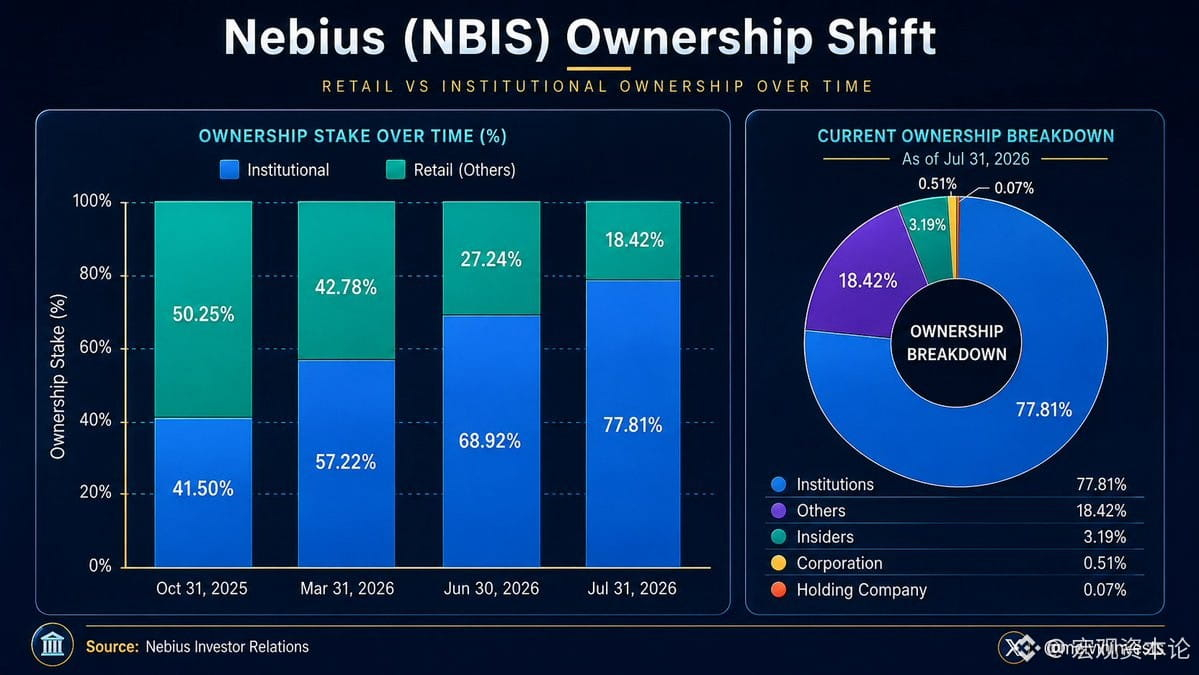
$NBIS частка інституцій у вкладеннях за менше ніж рік підскочила з 41,5% до 77,81% — кожного разу, коли роздрібні інвестори панічно продають, інституції нарощують позиції.
Після оголошення компанією про залучення конвертованих облігацій на 4,5 млрд доларів акції впали приблизно на 10%. Усього це дві частини: 2,75 млрд (строк погашення — 2030 рік) та 1,75 млрд (строк погашення — 2034 рік). Паралельно планують частину старого боргу обміняти на акції класу A. Це третє за рік масштабне залучення конвертованих облігацій на понад 1 млрд доларів — торік у вересні залучили 2,75 млрд, цього року в березні — 4,3 млрд. Тоді теж акції впали на 10,4%, але згодом вони відновилися значно вище, ніж ціна до залучення. Кожного разу, коли в паніці продають роздрібні, вони віддають «пай» тим, хто готовий зібрати відскок. Саме так частка інституцій стрибнула з 41,5% до 77,81%.
Найкраще це ілюструє епізод із Citadel. Наприкінці липня хедж-фонд Situational Awareness, що належить Leopold Aschenbrenner і використовує високе плече, тримав позицію в Nebius на 5,6% вартістю близько 2,6 млрд доларів. Проте через те, що протягом того місяця активи впали з 45 млрд до 10 млрд, його змусили поповнювати маржу. Ken Griffin із Citadel напряму підхопив більшу частину позицій: він не дав йому розвантажити стоси. Як тільки з’явилася інформація, акції того ж дня підскочили на 30%.
Цей сценарій у кожному випадку з конвертованим фінансуванням повторюється в малому масштабі: ліквідаторів із плечем або панічні продавці змушені скидати — виникає короткостроковий «прокол» ціни; а глибококишенькові інституції точно поглинають зібрані «дешевші» акції. Після цього в даних щодо структурі власності видно: частка інституцій зростає, а роздрібних — зменшується. Короткі позиції досі тримаються на рівні 23,79% у плаваючому стані, включно з порожніми позиціями, про які на початку серпня розкрив Michael Burry. Це означає, що паливо для майбутнього squeeze ще достатньо.
Логіка дуже проста: компанія постійно фінансується, бо потреби в обчислювальних потужностях для AI перевищують пропозицію → кожне фінансування запускає хеджувальні механічні продажі → події, коли раніше змушували ліквідувати позиції, в той же день викуповували великі інституції, і акції відскакували на 27%. Короткострокова реакція ринку на ризик розмивання та на те, як «вибухають» позиції хедж-фондів, якраз створює можливість для найбільшого й найвправнішого власника наростити позицію; ціна цього — коли роздрібні інвестори в паніці ріжуть стоп-лос.
Інституції постійно скуповують $NBIS, коли роздрібні панічно продають. Я теж роблю те саме.
Після оголошення компанією про залучення конвертованих облігацій на 4,5 млрд доларів акції впали приблизно на 10%. Усього це дві частини: 2,75 млрд (строк погашення — 2030 рік) та 1,75 млрд (строк погашення — 2034 рік). Паралельно планують частину старого боргу обміняти на акції класу A. Це третє за рік масштабне залучення конвертованих облігацій на понад 1 млрд доларів — торік у вересні залучили 2,75 млрд, цього року в березні — 4,3 млрд. Тоді теж акції впали на 10,4%, але згодом вони відновилися значно вище, ніж ціна до залучення. Кожного разу, коли в паніці продають роздрібні, вони віддають «пай» тим, хто готовий зібрати відскок. Саме так частка інституцій стрибнула з 41,5% до 77,81%.
Найкраще це ілюструє епізод із Citadel. Наприкінці липня хедж-фонд Situational Awareness, що належить Leopold Aschenbrenner і використовує високе плече, тримав позицію в Nebius на 5,6% вартістю близько 2,6 млрд доларів. Проте через те, що протягом того місяця активи впали з 45 млрд до 10 млрд, його змусили поповнювати маржу. Ken Griffin із Citadel напряму підхопив більшу частину позицій: він не дав йому розвантажити стоси. Як тільки з’явилася інформація, акції того ж дня підскочили на 30%.
Цей сценарій у кожному випадку з конвертованим фінансуванням повторюється в малому масштабі: ліквідаторів із плечем або панічні продавці змушені скидати — виникає короткостроковий «прокол» ціни; а глибококишенькові інституції точно поглинають зібрані «дешевші» акції. Після цього в даних щодо структурі власності видно: частка інституцій зростає, а роздрібних — зменшується. Короткі позиції досі тримаються на рівні 23,79% у плаваючому стані, включно з порожніми позиціями, про які на початку серпня розкрив Michael Burry. Це означає, що паливо для майбутнього squeeze ще достатньо.
Логіка дуже проста: компанія постійно фінансується, бо потреби в обчислювальних потужностях для AI перевищують пропозицію → кожне фінансування запускає хеджувальні механічні продажі → події, коли раніше змушували ліквідувати позиції, в той же день викуповували великі інституції, і акції відскакували на 27%. Короткострокова реакція ринку на ризик розмивання та на те, як «вибухають» позиції хедж-фондів, якраз створює можливість для найбільшого й найвправнішого власника наростити позицію; ціна цього — коли роздрібні інвестори в паніці ріжуть стоп-лос.
Інституції постійно скуповують $NBIS, коли роздрібні панічно продають. Я теж роблю те саме.
Скотт Бессент щойно зробив крок за «підручником» для ринків, що розвиваються: це кричить лише одне — СКОРОЧУЙТЕ (SHORT) АМЕРИКАНСЬКІ ОБЛІГАЦІЇ.
Уряд не зміг знайти достатньо покупців для власного довгострокового боргу, тож сам став покупцем. Так діє Аргентина. Так діє Туреччина. А тепер США роблять це за три місяці до виборів, і фінансова преса підносить це як «решучий лідерський крок».
Пояснимо чітко: це тактики валютної кризи. Ефект буде, щонайбільше, тимчасовим. Бессент увійде в історію як один із найвпливовіших міністрів фінансів за всю історію, і історія не буде до нього доброзичливою.
Що вам робити?
📉 Ставте на зниження (SHORT) облігацій. Борговий цикл ламається просто зараз.
🪙 Ви не можете мати достатньо золота. Це класичний хедж «кінцевої гри», коли уряди монетизують власний борг.
Це не сійтельство паніки. Це розпізнавання патернів на основі десятиліть макроісторії. Коли суверени починають купувати власні папери, і валютному, і облігаційному ринку залишається час «у позику».
Уряд не зміг знайти достатньо покупців для власного довгострокового боргу, тож сам став покупцем. Так діє Аргентина. Так діє Туреччина. А тепер США роблять це за три місяці до виборів, і фінансова преса підносить це як «решучий лідерський крок».
Пояснимо чітко: це тактики валютної кризи. Ефект буде, щонайбільше, тимчасовим. Бессент увійде в історію як один із найвпливовіших міністрів фінансів за всю історію, і історія не буде до нього доброзичливою.
Що вам робити?
📉 Ставте на зниження (SHORT) облігацій. Борговий цикл ламається просто зараз.
🪙 Ви не можете мати достатньо золота. Це класичний хедж «кінцевої гри», коли уряди монетизують власний борг.
Це не сійтельство паніки. Це розпізнавання патернів на основі десятиліть макроісторії. Коли суверени починають купувати власні папери, і валютному, і облігаційному ринку залишається час «у позику».
Переглянути переклад
When we published this report on July 28, 2026, DXY was 101.60.
Today, DXY = 98.80.
Given US fiscal dominance, positive 2% US 10y real yields are mathematically certain to trigger a US (& western sovereign) debt spiral.
Let's watch.
美元指数从101.60跌至98.80,这不是小事。在美国财政主导的环境下,10年期实际收益率维持在正2%,数学上必然引发美国及西方主权债务螺旋。
这是债务周期的关键时刻。实际收益率过高,债务成本飙升,财政赤字扩大,最终迫使央行印钞或让美元贬值。美元走弱是缓解债务压力的阀门,但代价是全球流动性重新配置,资金流向黄金、大宗商品、甚至部分股票。
老派投资者都懂:债务螺旋一旦启动,游戏规则就变了。美元贬值对出口型企业利好,对持有海外资产的公司也是正面。同时,黄金、能源、防御性科技股会受益。
技术面上,DXY跌破100是心理关口,下一个支撑在96-97区间。如果实际收益率继续高企,美元只能继续走弱,这是宏观逻辑的必然结果。
关注债务、美元、黄金三角关系。这是大周期的转折点,不是短期波动。
Today, DXY = 98.80.
Given US fiscal dominance, positive 2% US 10y real yields are mathematically certain to trigger a US (& western sovereign) debt spiral.
Let's watch.
美元指数从101.60跌至98.80,这不是小事。在美国财政主导的环境下,10年期实际收益率维持在正2%,数学上必然引发美国及西方主权债务螺旋。
这是债务周期的关键时刻。实际收益率过高,债务成本飙升,财政赤字扩大,最终迫使央行印钞或让美元贬值。美元走弱是缓解债务压力的阀门,但代价是全球流动性重新配置,资金流向黄金、大宗商品、甚至部分股票。
老派投资者都懂:债务螺旋一旦启动,游戏规则就变了。美元贬值对出口型企业利好,对持有海外资产的公司也是正面。同时,黄金、能源、防御性科技股会受益。
技术面上,DXY跌破100是心理关口,下一个支撑在96-97区间。如果实际收益率继续高企,美元只能继续走弱,这是宏观逻辑的必然结果。
关注债务、美元、黄金三角关系。这是大周期的转折点,不是短期波动。

Переглянути переклад
Back in July 2026, when we dropped that report, the dollar index ($DXY) sat at 101.60. Today? 98.80. That's a 2.8-point drop—and it matters more than most realize.
Here's the hard math: With the U.S. running fiscal dominance (spending way beyond tax receipts), positive real yields on the 10-year Treasury become a poison pill. When real rates stay positive while debt keeps piling up, interest costs compound faster than growth can cover them. That's the debt spiral nobody wants to talk about.
This isn't just a U.S. problem. Western sovereigns are all playing the same game. The dollar weakening is one symptom. The real question: How long can real yields stay positive before something breaks?
Watch the dollar. Watch real rates. Watch debt service costs. The math doesn't lie—and it's starting to show up in the currency exchange moves we're seeing right now.
Here's the hard math: With the U.S. running fiscal dominance (spending way beyond tax receipts), positive real yields on the 10-year Treasury become a poison pill. When real rates stay positive while debt keeps piling up, interest costs compound faster than growth can cover them. That's the debt spiral nobody wants to talk about.
This isn't just a U.S. problem. Western sovereigns are all playing the same game. The dollar weakening is one symptom. The real question: How long can real yields stay positive before something breaks?
Watch the dollar. Watch real rates. Watch debt service costs. The math doesn't lie—and it's starting to show up in the currency exchange moves we're seeing right now.

Частково правда
Переглянути переклад
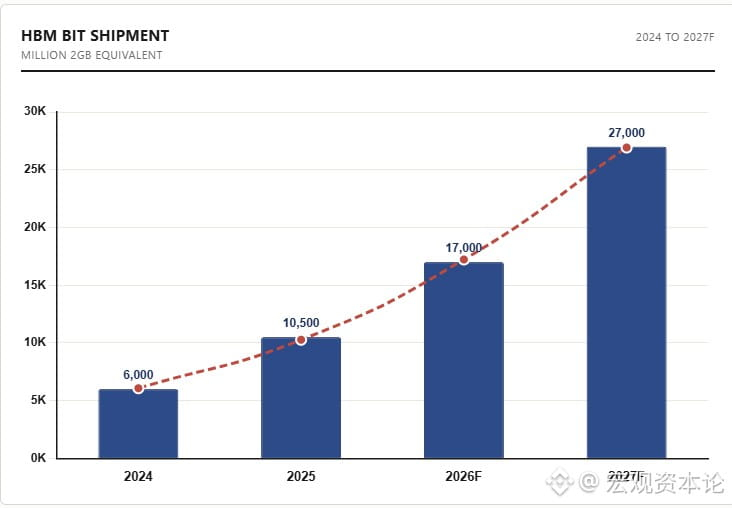
HBM bit shipments are about to explode—projected to jump 4.5x from 6,000 million 2GB equivalent units in 2024 to 27,000 by 2027. That's not a gradual ramp, that's a vertical climb with 60%+ annual growth holding firm even as the base expands.
HBM isn't commodity DRAM. It's the specialized high-bandwidth memory stacked directly onto AI accelerators like Nvidia GPUs. Every new AI data center built needs more of it, and right now supply can't keep up. $MU management already said they're only fulfilling less than half the HBM volume customers are requesting.
That supply-demand mismatch is the setup. If the industry can only ship 17,000 million units in 2026 while real demand runs hotter, and shipments still need to surge another 59% to hit 27,000 in 2027, the shortage doesn't resolve anytime soon.
For memory makers like $MU and SK Hynix, this is the dream scenario: rising volumes and pricing power moving together. HBM commands dramatically higher margins than standard DRAM, so every incremental unit shipped at elevated prices flows straight to the bottom line.
The HBM boom is early innings. Companies that can actually produce this stuff at scale are sitting in a multi-year window where they can keep raising prices while volumes explode simultaneously. That's the exact combination that drives outsized earnings growth.
This is one of the cleanest demand signals in semiconductors right now, and it's structural—not cyclical. The AI buildout isn't slowing down, and the memory layer underneath it is the bottleneck. Track the companies positioned to benefit from this shortage, because the next few years are going to be a tailwind like we haven't seen in memory in a long time.
HBM isn't commodity DRAM. It's the specialized high-bandwidth memory stacked directly onto AI accelerators like Nvidia GPUs. Every new AI data center built needs more of it, and right now supply can't keep up. $MU management already said they're only fulfilling less than half the HBM volume customers are requesting.
That supply-demand mismatch is the setup. If the industry can only ship 17,000 million units in 2026 while real demand runs hotter, and shipments still need to surge another 59% to hit 27,000 in 2027, the shortage doesn't resolve anytime soon.
For memory makers like $MU and SK Hynix, this is the dream scenario: rising volumes and pricing power moving together. HBM commands dramatically higher margins than standard DRAM, so every incremental unit shipped at elevated prices flows straight to the bottom line.
The HBM boom is early innings. Companies that can actually produce this stuff at scale are sitting in a multi-year window where they can keep raising prices while volumes explode simultaneously. That's the exact combination that drives outsized earnings growth.
This is one of the cleanest demand signals in semiconductors right now, and it's structural—not cyclical. The AI buildout isn't slowing down, and the memory layer underneath it is the bottleneck. Track the companies positioned to benefit from this shortage, because the next few years are going to be a tailwind like we haven't seen in memory in a long time.
Переглянути переклад
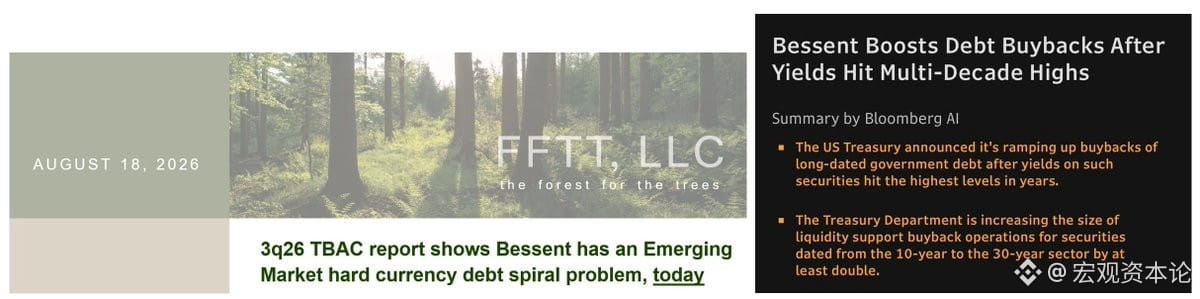
Treasury's got a problem. The TBAC report from Q3 2026 shows Bessent is staring down an emerging market-style hard currency debt spiral—right now. This isn't some future risk. It's here.
Bloomberg confirms this morning: Bessent is ramping up debt buybacks as yields hit multi-decade highs. Translation? The U.S. is acting like a distressed borrower trying to manage runaway costs.
This is textbook EM crisis playbook: when your debt costs explode and markets lose confidence, you start buying back your own bonds to stabilize things. Except this time, it's the United States.
Watch the $USD, watch gold, watch Treasury auctions. The fiscal endgame is accelerating. If you thought the dollar's reserve status was untouchable, you're not paying attention to what the bond market is screaming.
Bessent's moves today are damage control. The question is whether it's enough—or just buying time before something breaks.
Bloomberg confirms this morning: Bessent is ramping up debt buybacks as yields hit multi-decade highs. Translation? The U.S. is acting like a distressed borrower trying to manage runaway costs.
This is textbook EM crisis playbook: when your debt costs explode and markets lose confidence, you start buying back your own bonds to stabilize things. Except this time, it's the United States.
Watch the $USD, watch gold, watch Treasury auctions. The fiscal endgame is accelerating. If you thought the dollar's reserve status was untouchable, you're not paying attention to what the bond market is screaming.
Bessent's moves today are damage control. The question is whether it's enough—or just buying time before something breaks.
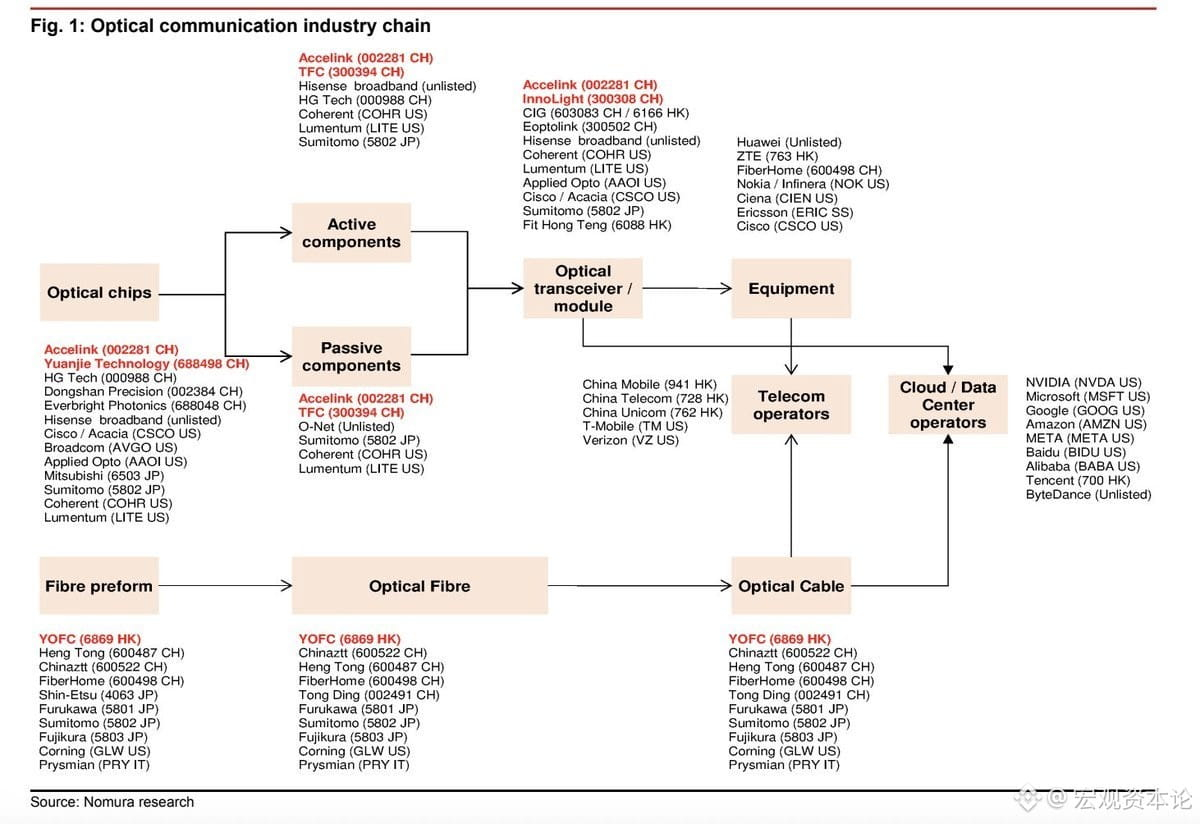
Ця діаграма розкриває всю приховану ланцюжок постачання за AI-центрами обробки даних — і які акції можуть від цього виграти.
Уявіть це як конвеєр на фабриці: зліва — сировина, справа — готова інфраструктура для інтернету, яку врешті обслуговують два типи клієнтів — телекомунікаційні компанії та гіганти хмар/ЦОД ($NVDA $MSFT $GOOGL $AMZN $META).
Ланцюжок починається з оптичних чипів і скляних заготовок для оптоволокна (вихідні напівпровідникові й скляні матеріали), які поєднуються в активні та пасивні компоненти.
Далі ці компоненти збирають у оптичні трансивери — невеликі модулі, що перетворюють електричні сигнали на оптичні, щоб дані надзвичайно швидко передавалися оптоволоконними кабелями.
Трансивери інтегрують у мережеве обладнання, а потім продають Verizon і T-Mobile та іншим телеком-операторам або $NVDA, $MSFT, $GOOGL та іншим хмарним і ЦОД-операторам — їм потрібна величезна пропускна здатність, щоб з’єднувати тисячі GPU всередині AI-центрів обробки даних.
Паралельно заготовки для оптоволокна витягують в оптоволокно, а потім зв’язують у волоконно-оптичні кабелі, які фізично передають світлові сигнали цим телеком- і ЦОД-клієнтам.
Чому це важливо саме зараз? Кожне будівництво AI-ЦОД (від Nebius до CoreWeave і до гіпермасштабних операторів) потребує великої кількості оптичних трансиверів і кабелів для швидкісного з’єднання GPU, тож увесь ланцюжок є прямим бенефіціаром «буму» капзатрат на AI-інфраструктуру.
Як реально інвестувати в цей ланцюжок акціями, розбивши за позицією компаній у ньому:
Рівень трансиверів і модулів (найцінніша частина ланцюжка, адже тут базові компоненти перетворюються на продукти, які реально купують ЦОД): ключові компанії — InnoLight, Accelink, Coherent і Lumentum. Вони майже присутні на кожному етапі на діаграмі та є найбільш диверсифікованими за експозицією компаніями у всьому ланцюжку.
Рівень компонентів (базові модулі, з яких складаються трансивери): Coherent, Lumentum, Applied Optoelectronics і підрозділ Acacia компанії Cisco виграють від зростання попиту на трансивери.
Сторона оптоволокна й кабелів (фізична інфраструктура, що з’єднує все): Corning ($GLW) і Lumentum — західні компанії, які охоплюють етапи скляної заготовки, оптоволокна й кабелів, тоді як компанія Prysmian (Prysmian Group) домінує на китайському ринку.
Рівень обладнання та мереж (куди трансивери інтегрують у комутатори й маршрутизатори, що реально працюють у ЦОД): Ciena та $CSCO — основні публічні американські компанії, орієнтовані на телеком-операторів і клієнтів хмарних ЦОД.
Нарешті, кінцеві клієнти ланцюжка — $NVDA, $MSFT, $GOOGL, $AMZN і $META — фактично купують усе це обладнання для нарощування AI-будівництва, і саме вони є рушіями попиту, що зумовлює зростання виручки кожної з наведених вище компаній.
Я відстежую кожен рівень оптичного ланцюжка постачання, бо кожен новий AI-ЦОД потребує більше. Поєднання «старої школи» фундаментального аналізу та можливостей нових технологій — саме на це має звертати увагу ринковий ветеран.
Уявіть це як конвеєр на фабриці: зліва — сировина, справа — готова інфраструктура для інтернету, яку врешті обслуговують два типи клієнтів — телекомунікаційні компанії та гіганти хмар/ЦОД ($NVDA $MSFT $GOOGL $AMZN $META).
Ланцюжок починається з оптичних чипів і скляних заготовок для оптоволокна (вихідні напівпровідникові й скляні матеріали), які поєднуються в активні та пасивні компоненти.
Далі ці компоненти збирають у оптичні трансивери — невеликі модулі, що перетворюють електричні сигнали на оптичні, щоб дані надзвичайно швидко передавалися оптоволоконними кабелями.
Трансивери інтегрують у мережеве обладнання, а потім продають Verizon і T-Mobile та іншим телеком-операторам або $NVDA, $MSFT, $GOOGL та іншим хмарним і ЦОД-операторам — їм потрібна величезна пропускна здатність, щоб з’єднувати тисячі GPU всередині AI-центрів обробки даних.
Паралельно заготовки для оптоволокна витягують в оптоволокно, а потім зв’язують у волоконно-оптичні кабелі, які фізично передають світлові сигнали цим телеком- і ЦОД-клієнтам.
Чому це важливо саме зараз? Кожне будівництво AI-ЦОД (від Nebius до CoreWeave і до гіпермасштабних операторів) потребує великої кількості оптичних трансиверів і кабелів для швидкісного з’єднання GPU, тож увесь ланцюжок є прямим бенефіціаром «буму» капзатрат на AI-інфраструктуру.
Як реально інвестувати в цей ланцюжок акціями, розбивши за позицією компаній у ньому:
Рівень трансиверів і модулів (найцінніша частина ланцюжка, адже тут базові компоненти перетворюються на продукти, які реально купують ЦОД): ключові компанії — InnoLight, Accelink, Coherent і Lumentum. Вони майже присутні на кожному етапі на діаграмі та є найбільш диверсифікованими за експозицією компаніями у всьому ланцюжку.
Рівень компонентів (базові модулі, з яких складаються трансивери): Coherent, Lumentum, Applied Optoelectronics і підрозділ Acacia компанії Cisco виграють від зростання попиту на трансивери.
Сторона оптоволокна й кабелів (фізична інфраструктура, що з’єднує все): Corning ($GLW) і Lumentum — західні компанії, які охоплюють етапи скляної заготовки, оптоволокна й кабелів, тоді як компанія Prysmian (Prysmian Group) домінує на китайському ринку.
Рівень обладнання та мереж (куди трансивери інтегрують у комутатори й маршрутизатори, що реально працюють у ЦОД): Ciena та $CSCO — основні публічні американські компанії, орієнтовані на телеком-операторів і клієнтів хмарних ЦОД.
Нарешті, кінцеві клієнти ланцюжка — $NVDA, $MSFT, $GOOGL, $AMZN і $META — фактично купують усе це обладнання для нарощування AI-будівництва, і саме вони є рушіями попиту, що зумовлює зростання виручки кожної з наведених вище компаній.
Я відстежую кожен рівень оптичного ланцюжка постачання, бо кожен новий AI-ЦОД потребує більше. Поєднання «старої школи» фундаментального аналізу та можливостей нових технологій — саме на це має звертати увагу ринковий ветеран.
Переглянути переклад
Diesel prices spiking again—classic early inflation signal that hits freight costs before it shows up in CPI. Meanwhile AI compute costs are cratering, which is deflationary for tech but inflationary for energy demand. Walmart pushing toward $1 trillion market cap tells you something about consumer behavior and retail dominance in a bifurcated economy.
Big picture: we're seeing cross-currents. Energy-driven cost pressures versus technology-driven deflation. The dollar, rates, and liquidity conditions will decide which force wins. Watch the second-order effects—diesel up means trucking margins compress, which feeds into goods prices. AI costs down means more adoption, more capex, more power demand.
These aren't isolated data points. They're pieces of the same macro puzzle. Inflation isn't dead, it's just shifting around the economy. And that $WMT valuation? It's a bet on pricing power and scale in a world where smaller players get squeezed.
Big picture: we're seeing cross-currents. Energy-driven cost pressures versus technology-driven deflation. The dollar, rates, and liquidity conditions will decide which force wins. Watch the second-order effects—diesel up means trucking margins compress, which feeds into goods prices. AI costs down means more adoption, more capex, more power demand.
These aren't isolated data points. They're pieces of the same macro puzzle. Inflation isn't dead, it's just shifting around the economy. And that $WMT valuation? It's a bet on pricing power and scale in a world where smaller players get squeezed.
Переглянути переклад
今天抓住我注意力的5件事...
1. 柴油市场开始看起来极端了。美国柴油价格已经爬升到每加仑约5.47美元,而柴油与原油的价差随着全球供应收紧而飙升。美国馏分油库存现在处于约30年来的季节性低点,俄罗斯炼油厂遭受袭击以及霍尔木兹海峡的干扰正在移除供应,而此时农业和取暖需求正在上升。这个问题远不止影响能源市场:柴油驱动卡车、船只、农业设备,最终影响我们消费的大部分商品。
2. 最重要的AI趋势之一没有得到足够的关注:产品本身正在大幅降价。随着OpenAI降价以及DeepSeek和Kimi等公司的廉价模型增加竞争,平均token成本已从5月高点大幅下降。OpenAI最近将一个模型的价格削减了多达80%,随后使用量激增。
3. 美国股市正朝着几乎全天候交易再迈进一步。纳斯达克预计从12月6日起推出新的晚间交易时段(美东时间晚上9点至凌晨4点),创建每周五天、每天23小时的交易日,取决于最终准备情况和监管要求。现有的美东时间凌晨4点至晚上8点交易时段保持不变,仅在晚上8点至9点之间暂停一小时。对于澳大利亚和亚洲的投资者来说,这是美国股票交易方式的一个相当重大的结构性变化。
4. 沃尔玛正悄悄接近美国企业界最大的里程碑之一。股价约为116美元,使这家零售商接近1万亿美元的市值,因为投资者越来越青睐防御性、产生现金流的企业。但真正的考验将在8月20日星期四的财报发布时到来。在美国消费者支出疲软的迹象之后,沃尔玛的数据可能会给我们提供迄今为止最清晰的读数,看看家庭是真的在减少支出,还是只是对花钱的地方更加挑剔。
5. 美联储会议纪要今天美东时间下午2点发布,它们比平时更重要。在7月的会议上,美联储将利率维持在3.50%–3.75%,但12名投票成员中有3人投票反对,支持加息。投资者将寻找迹象,表明鹰派阵营实际上比这三票所显示的更大,特别是围绕能源驱动的通胀和地缘政治风险。
保持耐心,做出反应,不要预测。
1. 柴油市场开始看起来极端了。美国柴油价格已经爬升到每加仑约5.47美元,而柴油与原油的价差随着全球供应收紧而飙升。美国馏分油库存现在处于约30年来的季节性低点,俄罗斯炼油厂遭受袭击以及霍尔木兹海峡的干扰正在移除供应,而此时农业和取暖需求正在上升。这个问题远不止影响能源市场:柴油驱动卡车、船只、农业设备,最终影响我们消费的大部分商品。
2. 最重要的AI趋势之一没有得到足够的关注:产品本身正在大幅降价。随着OpenAI降价以及DeepSeek和Kimi等公司的廉价模型增加竞争,平均token成本已从5月高点大幅下降。OpenAI最近将一个模型的价格削减了多达80%,随后使用量激增。
3. 美国股市正朝着几乎全天候交易再迈进一步。纳斯达克预计从12月6日起推出新的晚间交易时段(美东时间晚上9点至凌晨4点),创建每周五天、每天23小时的交易日,取决于最终准备情况和监管要求。现有的美东时间凌晨4点至晚上8点交易时段保持不变,仅在晚上8点至9点之间暂停一小时。对于澳大利亚和亚洲的投资者来说,这是美国股票交易方式的一个相当重大的结构性变化。
4. 沃尔玛正悄悄接近美国企业界最大的里程碑之一。股价约为116美元,使这家零售商接近1万亿美元的市值,因为投资者越来越青睐防御性、产生现金流的企业。但真正的考验将在8月20日星期四的财报发布时到来。在美国消费者支出疲软的迹象之后,沃尔玛的数据可能会给我们提供迄今为止最清晰的读数,看看家庭是真的在减少支出,还是只是对花钱的地方更加挑剔。
5. 美联储会议纪要今天美东时间下午2点发布,它们比平时更重要。在7月的会议上,美联储将利率维持在3.50%–3.75%,但12名投票成员中有3人投票反对,支持加息。投资者将寻找迹象,表明鹰派阵营实际上比这三票所显示的更大,特别是围绕能源驱动的通胀和地缘政治风险。
保持耐心,做出反应,不要预测。
WMTUS+1,15%
Переглянути переклад
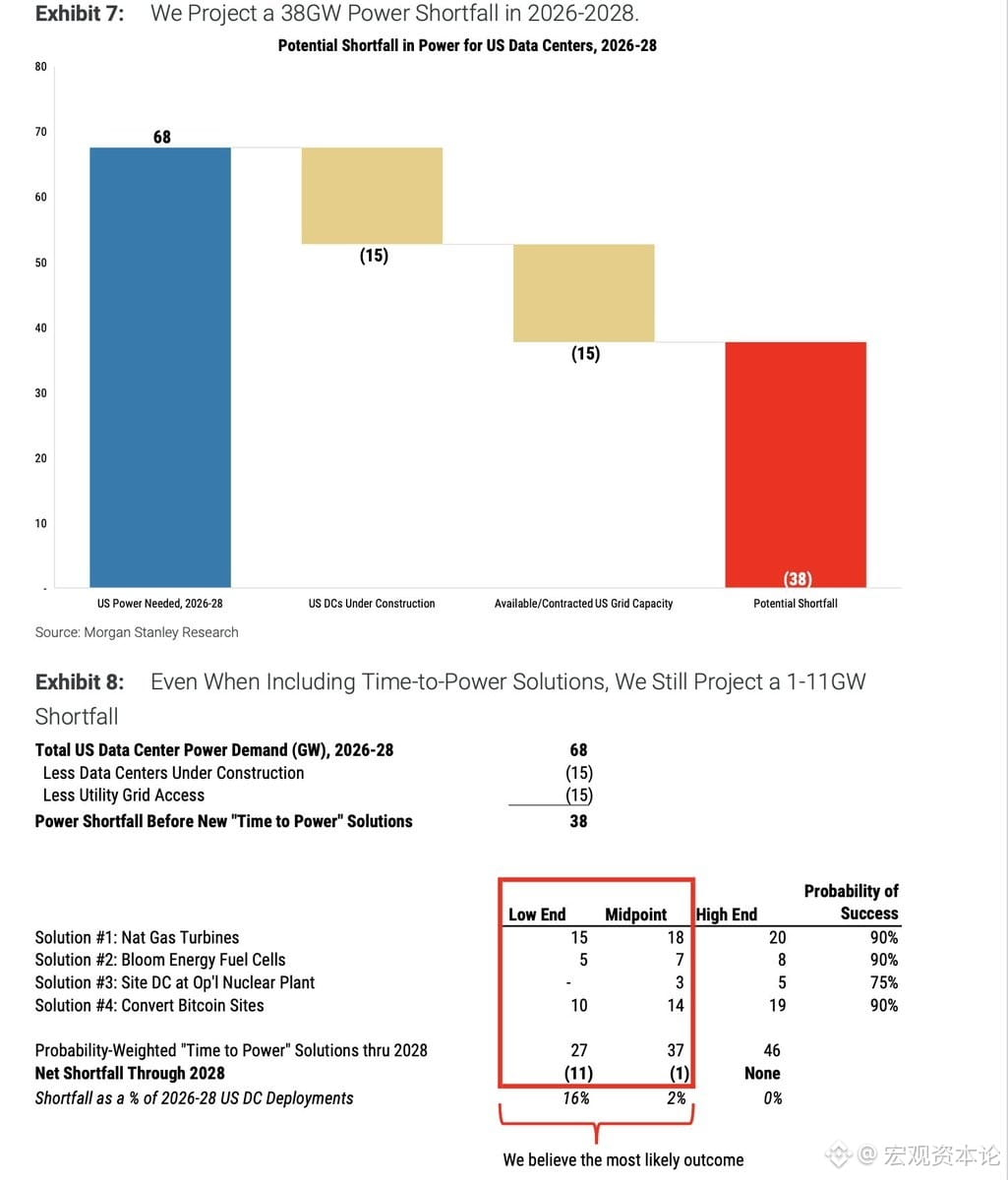
Morgan Stanley says U.S. data centers need 68GW of new power between 2026-2028. That's like building 68 nuclear reactors in three years.
The math:
- 15GW already under construction
- 15GW from contracted grid capacity
- Still short 38GW before any alternatives
Possible solutions:
- Natural gas turbines: 15-20GW
- Bloom Energy fuel cells: 5-8GW
- Nuclear plant colocation: 3-5GW
- Converted Bitcoin mining sites: 10-19GW
Even the best-case scenario leaves a shortfall. Power is the real bottleneck for AI buildout.
The smart play isn't buying utilities like Vistra. They just sell electricity. The value is higher up the stack.
Revenue per megawatt comparison:
- Traditional colocation (Digital Realty): $3M-$4M/MW
- Neoclouds (CoreWeave, Nebius): $9M-$10M/MW
- Nebius Q2 new deals: $40M-$50M/MW
Neoclouds control the full stack: power, GPUs, networking, software. They sell compute, not just space. Compute is where the money is.
OpenAI, Microsoft, Meta need more intelligence = more compute = whoever secures power and turns it into GPU capacity wins.
Nebius and CoreWeave are securing gigawatt power pipelines, building data centers, buying GPUs, and locking in long-term customers. They remove the bottleneck and capture the economics.
Also like Bloom Energy and Bitcoin miners with existing powered infrastructure.
Every megawatt is more valuable. Neoclouds sit closest to where that value gets monetized.
The math:
- 15GW already under construction
- 15GW from contracted grid capacity
- Still short 38GW before any alternatives
Possible solutions:
- Natural gas turbines: 15-20GW
- Bloom Energy fuel cells: 5-8GW
- Nuclear plant colocation: 3-5GW
- Converted Bitcoin mining sites: 10-19GW
Even the best-case scenario leaves a shortfall. Power is the real bottleneck for AI buildout.
The smart play isn't buying utilities like Vistra. They just sell electricity. The value is higher up the stack.
Revenue per megawatt comparison:
- Traditional colocation (Digital Realty): $3M-$4M/MW
- Neoclouds (CoreWeave, Nebius): $9M-$10M/MW
- Nebius Q2 new deals: $40M-$50M/MW
Neoclouds control the full stack: power, GPUs, networking, software. They sell compute, not just space. Compute is where the money is.
OpenAI, Microsoft, Meta need more intelligence = more compute = whoever secures power and turns it into GPU capacity wins.
Nebius and CoreWeave are securing gigawatt power pipelines, building data centers, buying GPUs, and locking in long-term customers. They remove the bottleneck and capture the economics.
Also like Bloom Energy and Bitcoin miners with existing powered infrastructure.
Every megawatt is more valuable. Neoclouds sit closest to where that value gets monetized.
Частково правда
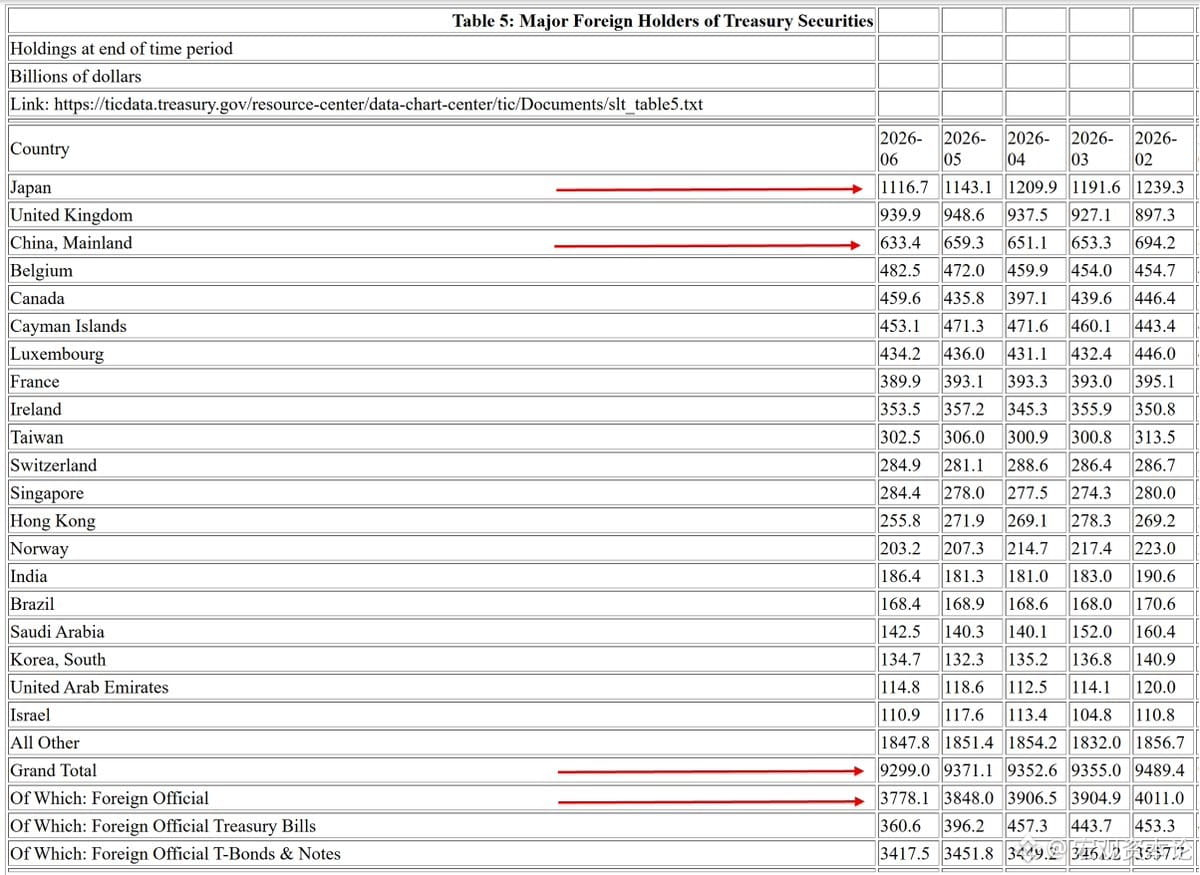
Останні дані звіту Міністерства фінансів США TIC щодо іноземного володіння показують, що з моменту початку іранської війни в лютому:
Японія продала облігацій США на 123 млрд дол.
Китай продав облігацій США на 61 млрд дол.
Загалом іноземні інвестори продали облігацій США на 190 млрд дол. (переважно Японія та Китай)
Іноземні центральні банки продали облігацій США на 233 млрд дол.
Доходність 10-річних облігацій США зросла на 80 базисних пунктів з 27 лютого.
Це типова ознака тиску боргового циклу. Коли іноземні центральні банки — особливо два найбільші тримачі держборгу США, Японія та Китай — одночасно здійснюють масштабне скорочення позицій, ринкова ліквідність звужується, а доходності стрімко злітають. Зростання на 80 базисних пунктів — це не дрібниця: воно напряму впливає на оцінку акцій, вартість фінансування для компаній і силу долара.
З макроекономічного погляду, така хвиля продажів часто передує повороту світової ліквідності. Іноземні центральні банки можуть готуватися захищати власні валюти або враховувати геополітичні ризики. Для інвесторів в акції зростання доходностей тиснутиме на переоцінені акції з потенціалом зростання, але може бути сприятливим для захисних секторів, енергетики та цінних паперів, пов’язаних із золотом.
Ключове питання: як ФРС реагуватиме? Якщо іноземні покупці й надалі відступатимуть, чи зможе внутрішній попит у США компенсувати прогалину? Це вторинні ефекти, за якими в найближчі місяці потрібно уважно стежити.
Японія продала облігацій США на 123 млрд дол.
Китай продав облігацій США на 61 млрд дол.
Загалом іноземні інвестори продали облігацій США на 190 млрд дол. (переважно Японія та Китай)
Іноземні центральні банки продали облігацій США на 233 млрд дол.
Доходність 10-річних облігацій США зросла на 80 базисних пунктів з 27 лютого.
Це типова ознака тиску боргового циклу. Коли іноземні центральні банки — особливо два найбільші тримачі держборгу США, Японія та Китай — одночасно здійснюють масштабне скорочення позицій, ринкова ліквідність звужується, а доходності стрімко злітають. Зростання на 80 базисних пунктів — це не дрібниця: воно напряму впливає на оцінку акцій, вартість фінансування для компаній і силу долара.
З макроекономічного погляду, така хвиля продажів часто передує повороту світової ліквідності. Іноземні центральні банки можуть готуватися захищати власні валюти або враховувати геополітичні ризики. Для інвесторів в акції зростання доходностей тиснутиме на переоцінені акції з потенціалом зростання, але може бути сприятливим для захисних секторів, енергетики та цінних паперів, пов’язаних із золотом.
Ключове питання: як ФРС реагуватиме? Якщо іноземні покупці й надалі відступатимуть, чи зможе внутрішній попит у США компенсувати прогалину? Це вторинні ефекти, за якими в найближчі місяці потрібно уважно стежити.
Переглянути переклад
Bond market tension rising as AI firms now directly compete with the US Treasury for capital — a structural shift worth watching.
Four key market stories unfolding:
1. AI companies bidding against Uncle Sam for funding — this changes the cost of capital equation for both tech and sovereign debt
2. Nasdaq shorts hitting near-record extremes — classic contrarian setup or justified fear? Positioning data matters
3. Oil pushing back above $90 — inflation pressures aren't dead, and energy costs feed through everything
4. Bond market stress building — when private sector growth stories pull capital away from government debt, yields and the dollar react
This isn't just about rates. It's about who gets the money, at what price, and what that means for equity valuations, inflation expectations, and currency flows. The interplay between AI capital hunger, Treasury funding needs, and commodity moves (oil) creates second-order effects across all asset classes.
Watch how the $USD and gold respond to these cross-currents — they're the tell.
Four key market stories unfolding:
1. AI companies bidding against Uncle Sam for funding — this changes the cost of capital equation for both tech and sovereign debt
2. Nasdaq shorts hitting near-record extremes — classic contrarian setup or justified fear? Positioning data matters
3. Oil pushing back above $90 — inflation pressures aren't dead, and energy costs feed through everything
4. Bond market stress building — when private sector growth stories pull capital away from government debt, yields and the dollar react
This isn't just about rates. It's about who gets the money, at what price, and what that means for equity valuations, inflation expectations, and currency flows. The interplay between AI capital hunger, Treasury funding needs, and commodity moves (oil) creates second-order effects across all asset classes.
Watch how the $USD and gold respond to these cross-currents — they're the tell.
Частково правда
Переглянути переклад
今天市场有7件事值得关注:
1. AI热潮正在直接与美国政府争夺资本。投资级公司今年已发行近1.5万亿美元债券,增长36%,其中大型科技公司占约2000亿美元。据估计,AI相关债券发行现在相当于私人投资者净购买美国国债的25%左右,是去年份额的五倍。美银估计,这些额外供应可能使10年期美债收益率上升约30个基点。
2. 压力不仅来自公司债券。长期政府债券收益率持续上升,30年期美债盘中触及5.31%左右,而美国国债接近40万亿美元,相比2007年不到9万亿美元。日本也面临同样问题,10年期国债收益率接近3%,而经济增长仍然疲软。
3. 市场最大的仓位交易之一正在纳斯达克下方累积。最新CFTC持仓数据显示,资产管理公司和杠杆基金持有极大的纳斯达克期货净空头敞口,尽管指数仍接近历史高点。根据合约估值方式,估计综合看跌敞口约为160-200亿美元。
4. Anthropic再次提醒我们AI经济扩张速度有多快。据报道,该公司告诉投资者其7月年化收入运行率达到约650亿美元。
5. 美国消费者开始重新受到关注。7月零售销售下降0.6%,加剧了对高物价和借贷成本最终拖累家庭的担忧。这使得沃尔玛、家得宝和塔吉特即将公布的业绩更受关注。
耐克已经显示出一些压力。$NKE下跌4.5%至约38.86美元的52周新低,2026年迄今下跌约39%,投资者继续质疑其转型速度。
6. 石油和债券再次同步波动。布伦特原油上涨2.7%至90.87美元,WTI上涨2.5%至84.50美元,霍尔木兹海峡周边紧张局势重回焦点。更高的能源价格直接反馈到通胀辩论中,这在长期美债收益率已经高企时尤其令人不安。
7. 与此同时,存储芯片股是当天最强劲的股票之一。SanDisk跳涨约10%,西部数据上涨6.5%,投资者对SanDisk最近的投资者演示和存储需求前景反应积极。这是AI交易的另一个有趣部分:涨势不再只是关于GPU了。
此外,$XLF出现了异常大的交易,据报道是2022年以来最大的暗池交易。单笔大宗交易无法告诉我们机构是看涨还是看跌,但考虑到利率和信贷领域正在发生的一切,金融板块的仓位值得关注。
耐心,应对,不要预测
1. AI热潮正在直接与美国政府争夺资本。投资级公司今年已发行近1.5万亿美元债券,增长36%,其中大型科技公司占约2000亿美元。据估计,AI相关债券发行现在相当于私人投资者净购买美国国债的25%左右,是去年份额的五倍。美银估计,这些额外供应可能使10年期美债收益率上升约30个基点。
2. 压力不仅来自公司债券。长期政府债券收益率持续上升,30年期美债盘中触及5.31%左右,而美国国债接近40万亿美元,相比2007年不到9万亿美元。日本也面临同样问题,10年期国债收益率接近3%,而经济增长仍然疲软。
3. 市场最大的仓位交易之一正在纳斯达克下方累积。最新CFTC持仓数据显示,资产管理公司和杠杆基金持有极大的纳斯达克期货净空头敞口,尽管指数仍接近历史高点。根据合约估值方式,估计综合看跌敞口约为160-200亿美元。
4. Anthropic再次提醒我们AI经济扩张速度有多快。据报道,该公司告诉投资者其7月年化收入运行率达到约650亿美元。
5. 美国消费者开始重新受到关注。7月零售销售下降0.6%,加剧了对高物价和借贷成本最终拖累家庭的担忧。这使得沃尔玛、家得宝和塔吉特即将公布的业绩更受关注。
耐克已经显示出一些压力。$NKE下跌4.5%至约38.86美元的52周新低,2026年迄今下跌约39%,投资者继续质疑其转型速度。
6. 石油和债券再次同步波动。布伦特原油上涨2.7%至90.87美元,WTI上涨2.5%至84.50美元,霍尔木兹海峡周边紧张局势重回焦点。更高的能源价格直接反馈到通胀辩论中,这在长期美债收益率已经高企时尤其令人不安。
7. 与此同时,存储芯片股是当天最强劲的股票之一。SanDisk跳涨约10%,西部数据上涨6.5%,投资者对SanDisk最近的投资者演示和存储需求前景反应积极。这是AI交易的另一个有趣部分:涨势不再只是关于GPU了。
此外,$XLF出现了异常大的交易,据报道是2022年以来最大的暗池交易。单笔大宗交易无法告诉我们机构是看涨还是看跌,但考虑到利率和信贷领域正在发生的一切,金融板块的仓位值得关注。
耐心,应对,不要预测
Верифіковано
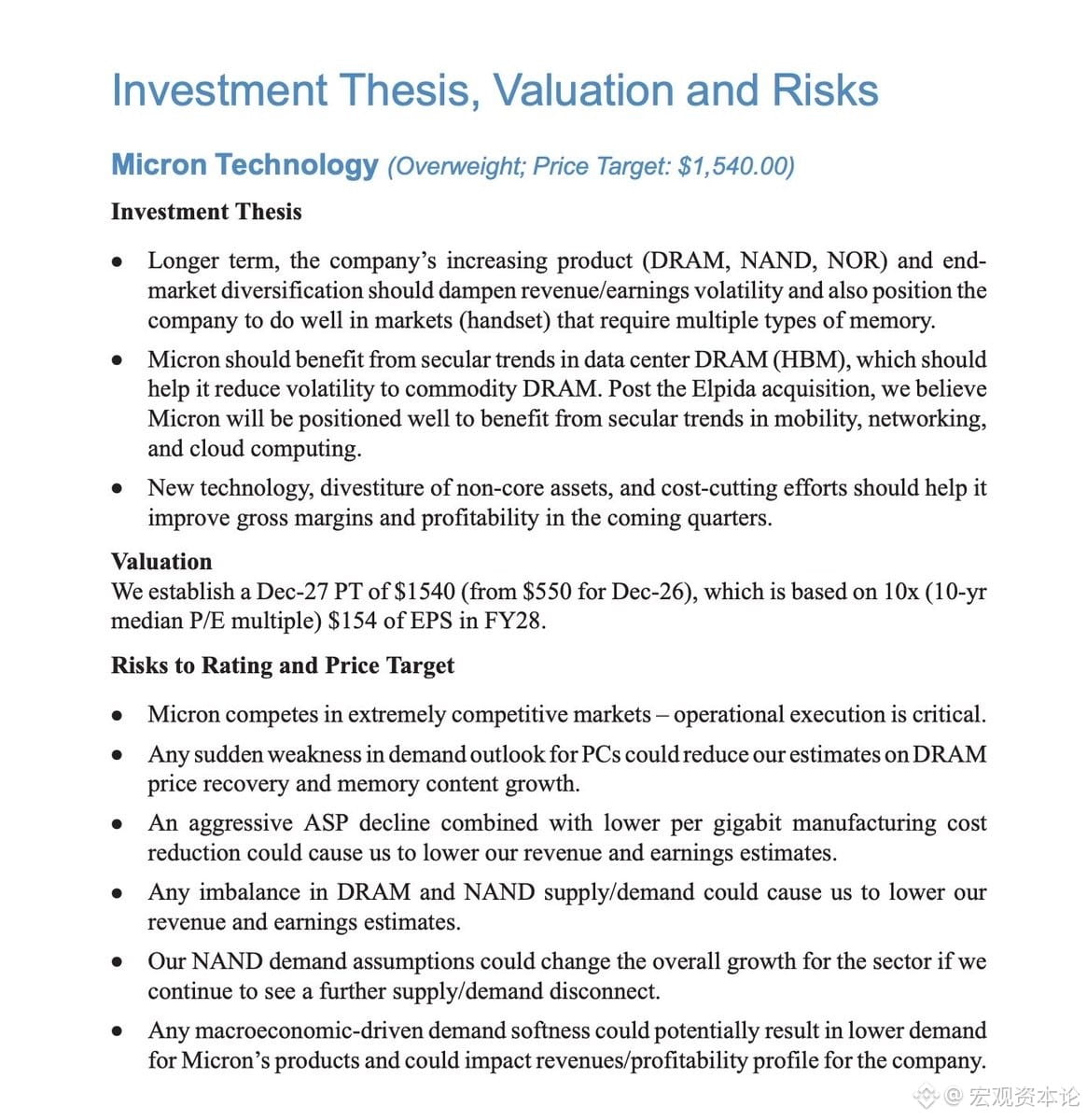
JPMorgan wyznaczył cenę dla Micron ($MU) w wysokości 1540 dolarów — to niemal trzykrotność starego celu. Liczba ta opiera się na EPS w wysokości 154 USD za rok fiskalny 2028 pomnożonym przez 10-krotną dziesięcioletnią mediana wskaźnika C/Z. Jednak dane z tego tygodnia dotyczące pamięci wskazują, że ten cel mógł nadal okazać się zbyt zachowawczy.
Micron w przeszłości sprzedawał głównie DRAM, a zyski drastycznie wahały się wraz z cenami. Teraz portfolio produktów rozszerzyło się o DRAM, NAND i NOR, szczególnie o wysokiej klasy układy HBM do centrów danych pod AI — marże brutto są znacznie wyższe niż w przypadku tradycyjnych układów „towarowych”. Ta dywersyfikacja jest właśnie kluczową logiką, na której JPMorgan opiera przekonanie, że pozwoli ona wygładzić cykl zysków.
Na to wskazują dane w czasie rzeczywistym:
Ceny spot DDR4 i DDR5 wzrosły w ubiegłym tygodniu o kolejne 2% i utrzymują zwyżkę już 18. tydzień z rzędu. Jeszcze bardziej imponujący jest wzrost cen pamięci NAND: analitycy wcześniej zakładali stabilizację lub stopniowe łagodzenie, a tymczasem w ciągu jednego tygodnia układ 1Tb podrożał o 10%. Łańcuch dostaw jest napięty — producenci OEM i wytwórcy modułów jednocześnie wchodzą na rynek spot, aby wykupić zapasy. Ta panika zakupowa może sprawić, że niedobór będzie się samonapędzać.
TrendForce pokazuje, że ceny kontraktowe zwykłego DRAM w I kwartale 2026 r. w ujęciu kwartalnym wzrosły o 90–95%, a w II kwartale jeszcze o 58–63%. Dopiero pod koniec 2027 r. lub na początku 2028 r. mogą pojawić się istotne nowe moce produkcyjne.
Rynek pamięci wciąż nie osiągnął szczytu. Micron udowadnia trwałość tego cyklu.
Micron w przeszłości sprzedawał głównie DRAM, a zyski drastycznie wahały się wraz z cenami. Teraz portfolio produktów rozszerzyło się o DRAM, NAND i NOR, szczególnie o wysokiej klasy układy HBM do centrów danych pod AI — marże brutto są znacznie wyższe niż w przypadku tradycyjnych układów „towarowych”. Ta dywersyfikacja jest właśnie kluczową logiką, na której JPMorgan opiera przekonanie, że pozwoli ona wygładzić cykl zysków.
Na to wskazują dane w czasie rzeczywistym:
Ceny spot DDR4 i DDR5 wzrosły w ubiegłym tygodniu o kolejne 2% i utrzymują zwyżkę już 18. tydzień z rzędu. Jeszcze bardziej imponujący jest wzrost cen pamięci NAND: analitycy wcześniej zakładali stabilizację lub stopniowe łagodzenie, a tymczasem w ciągu jednego tygodnia układ 1Tb podrożał o 10%. Łańcuch dostaw jest napięty — producenci OEM i wytwórcy modułów jednocześnie wchodzą na rynek spot, aby wykupić zapasy. Ta panika zakupowa może sprawić, że niedobór będzie się samonapędzać.
TrendForce pokazuje, że ceny kontraktowe zwykłego DRAM w I kwartale 2026 r. w ujęciu kwartalnym wzrosły o 90–95%, a w II kwartale jeszcze o 58–63%. Dopiero pod koniec 2027 r. lub na początku 2028 r. mogą pojawić się istotne nowe moce produkcyjne.
Rynek pamięci wciąż nie osiągnął szczytu. Micron udowadnia trwałość tego cyklu.
Увійдіть, щоб переглянути інший контент