
CryptoPress
2.1k Публікації

CryptoPress
 Верифіковано+ на Binance Square
Поскаржитись
Заблокувати користувача
News and press releases about Bitcoin, cryptocurrencies, and blockchain.
1 Підписки
31.0K+ Підписники
14.5K+ Вподобань
Публікації
·
--
Переглянути переклад
Circle Agrees to Acquire Cross-Border Payments Firm Tazapay for $400 Million in StockCircle signed a definitive agreement to acquire Singapore-based Tazapay for $400 million in Class A common stock.
Tazapay processes more than $25 billion in annualized payment volume across 100-plus markets, with about 60% of volume already involving stablecoins.
The transaction is expected to close in 2027, subject to Monetary Authority of Singapore approval and other customary conditions.
Circle will grant $25 million in restricted stock units to agreed Tazapay employees after closing and requires at least 75% of identified staff to remain.
Circle Internet Group said Tuesday it has signed a definitive agreement to acquire Singapore-based Tazapay, a business-to-business cross-border payments company, in a $400 million all-stock deal detailed in a Form 8-K filed with the U.S. Securities and Exchange Commission.
The USDC issuer will pay in Circle Class A common stock. The number of shares will equal $400 million — adjusted for Tazapay’s unpaid debt, cash and transaction expenses — divided by Circle’s volume-weighted average closing price over the 20 trading days immediately before close, according to the filing. Circle said the agreement was executed on Sept. 4 through Taurus Acquisition, an indirect wholly owned subsidiary.
Tazapay brings more than $25 billion of annualized payment volume, more than 60 banking and fintech partners, and local payout rails in more than 100 markets, Circle said in its press release. About 60% of Tazapay’s transaction volume already includes stablecoins. The firm has been a design partner for the Circle Payments Network since 2025.
In a post on X, Circle co-founder and chief executive Jeremy Allaire said the deal “accelerates the breadth and depth of CPN globally.” In the company statement, Allaire said: “Stablecoin settlement is becoming core infrastructure in the global economy and combining USDC with Tazapay’s world-class banking relationships, local payout rails, and institutional customer base will accelerate worldwide USDC adoption.”
Tazapay co-founder and CEO Rahul Shinghal said in the same announcement that Circle “has the dollar infrastructure in USDC and the regulatory standing to take what we’ve built further than we could alone.” Circle payments head Irfan Ganchi framed the purchase as a way to originate and terminate payments “near-instant and 24/7” in Asia-Pacific and other emerging markets.
Closing is targeted for 2027 and still requires regulatory approvals, including from the Monetary Authority of Singapore. The 8-K also conditions close on at least 75% of certain identified employees remaining at Tazapay, continued service by specified senior managers, and the effectiveness of a shelf registration statement. Circle will grant $25 million of restricted stock units to agreed Tazapay staff after closing, vesting in eight equal quarterly installments beginning about 27 months later. Five percent of the stock consideration will be held back for general indemnities and another 3% for additional indemnities.
Tazapay customers are slated to see no change in service, APIs, pricing or support while the deal is pending. The acquisition still leaves Circle exposed to a long regulatory clock and to integration risk if approvals slip or key staff depart before close.
The post Circle Agrees to Acquire Cross-Border Payments Firm Tazapay for $400 Million in Stock appeared first on Cryptopress.
Circle Agrees to Acquire Cross-Border Payments Firm Tazapay for $400 Million in Stock
Circle signed a definitive agreement to acquire Singapore-based Tazapay for $400 million in Class A common stock.
Tazapay processes more than $25 billion in annualized payment volume across 100-plus markets, with about 60% of volume already involving stablecoins.
The transaction is expected to close in 2027, subject to Monetary Authority of Singapore approval and other customary conditions.
Circle will grant $25 million in restricted stock units to agreed Tazapay employees after closing and requires at least 75% of identified staff to remain.
Circle Internet Group said Tuesday it has signed a definitive agreement to acquire Singapore-based Tazapay, a business-to-business cross-border payments company, in a $400 million all-stock deal detailed in a Form 8-K filed with the U.S. Securities and Exchange Commission.
The USDC issuer will pay in Circle Class A common stock. The number of shares will equal $400 million — adjusted for Tazapay’s unpaid debt, cash and transaction expenses — divided by Circle’s volume-weighted average closing price over the 20 trading days immediately before close, according to the filing. Circle said the agreement was executed on Sept. 4 through Taurus Acquisition, an indirect wholly owned subsidiary.
Tazapay brings more than $25 billion of annualized payment volume, more than 60 banking and fintech partners, and local payout rails in more than 100 markets, Circle said in its press release. About 60% of Tazapay’s transaction volume already includes stablecoins. The firm has been a design partner for the Circle Payments Network since 2025.
In a post on X, Circle co-founder and chief executive Jeremy Allaire said the deal “accelerates the breadth and depth of CPN globally.” In the company statement, Allaire said: “Stablecoin settlement is becoming core infrastructure in the global economy and combining USDC with Tazapay’s world-class banking relationships, local payout rails, and institutional customer base will accelerate worldwide USDC adoption.”
Tazapay co-founder and CEO Rahul Shinghal said in the same announcement that Circle “has the dollar infrastructure in USDC and the regulatory standing to take what we’ve built further than we could alone.” Circle payments head Irfan Ganchi framed the purchase as a way to originate and terminate payments “near-instant and 24/7” in Asia-Pacific and other emerging markets.
Closing is targeted for 2027 and still requires regulatory approvals, including from the Monetary Authority of Singapore. The 8-K also conditions close on at least 75% of certain identified employees remaining at Tazapay, continued service by specified senior managers, and the effectiveness of a shelf registration statement. Circle will grant $25 million of restricted stock units to agreed Tazapay staff after closing, vesting in eight equal quarterly installments beginning about 27 months later. Five percent of the stock consideration will be held back for general indemnities and another 3% for additional indemnities.
Tazapay customers are slated to see no change in service, APIs, pricing or support while the deal is pending. The acquisition still leaves Circle exposed to a long regulatory clock and to integration risk if approvals slip or key staff depart before close.
The post Circle Agrees to Acquire Cross-Border Payments Firm Tazapay for $400 Million in Stock appeared first on Cryptopress.
Tazapay processes more than $25 billion in annualized payment volume across 100-plus markets, with about 60% of volume already involving stablecoins.
The transaction is expected to close in 2027, subject to Monetary Authority of Singapore approval and other customary conditions.
Circle will grant $25 million in restricted stock units to agreed Tazapay employees after closing and requires at least 75% of identified staff to remain.
Circle Internet Group said Tuesday it has signed a definitive agreement to acquire Singapore-based Tazapay, a business-to-business cross-border payments company, in a $400 million all-stock deal detailed in a Form 8-K filed with the U.S. Securities and Exchange Commission.
The USDC issuer will pay in Circle Class A common stock. The number of shares will equal $400 million — adjusted for Tazapay’s unpaid debt, cash and transaction expenses — divided by Circle’s volume-weighted average closing price over the 20 trading days immediately before close, according to the filing. Circle said the agreement was executed on Sept. 4 through Taurus Acquisition, an indirect wholly owned subsidiary.
Tazapay brings more than $25 billion of annualized payment volume, more than 60 banking and fintech partners, and local payout rails in more than 100 markets, Circle said in its press release. About 60% of Tazapay’s transaction volume already includes stablecoins. The firm has been a design partner for the Circle Payments Network since 2025.
In a post on X, Circle co-founder and chief executive Jeremy Allaire said the deal “accelerates the breadth and depth of CPN globally.” In the company statement, Allaire said: “Stablecoin settlement is becoming core infrastructure in the global economy and combining USDC with Tazapay’s world-class banking relationships, local payout rails, and institutional customer base will accelerate worldwide USDC adoption.”
Tazapay co-founder and CEO Rahul Shinghal said in the same announcement that Circle “has the dollar infrastructure in USDC and the regulatory standing to take what we’ve built further than we could alone.” Circle payments head Irfan Ganchi framed the purchase as a way to originate and terminate payments “near-instant and 24/7” in Asia-Pacific and other emerging markets.
Closing is targeted for 2027 and still requires regulatory approvals, including from the Monetary Authority of Singapore. The 8-K also conditions close on at least 75% of certain identified employees remaining at Tazapay, continued service by specified senior managers, and the effectiveness of a shelf registration statement. Circle will grant $25 million of restricted stock units to agreed Tazapay staff after closing, vesting in eight equal quarterly installments beginning about 27 months later. Five percent of the stock consideration will be held back for general indemnities and another 3% for additional indemnities.
Tazapay customers are slated to see no change in service, APIs, pricing or support while the deal is pending. The acquisition still leaves Circle exposed to a long regulatory clock and to integration risk if approvals slip or key staff depart before close.
The post Circle Agrees to Acquire Cross-Border Payments Firm Tazapay for $400 Million in Stock appeared first on Cryptopress.
174
·
--
Переглянути переклад
Circle Agrees to Acquire Cross-Border Payments Firm Tazapay for $400 Million in Stock<ul><li>Circle signed a definitive agreement to acquire Singapore-based Tazapay for $400 million in Class A common stock.</li><li>Tazapay processes more than $25 billion in annualized payment volume across 100-plus markets, with about 60% of volume already involving stablecoins.</li><li>The transaction is expected to close in 2027, subject to Monetary Authority of Singapore approval and other customary conditions.</li><li>Circle will grant $25 million in restricted stock units to agreed Tazapay employees after closing and requires at least 75% of identified staff to remain.</li></ul><p class="has-drop-cap">Circle Internet Group said Tuesday it has signed a definitive agreement to acquire Singapore-based <a href="https://www.circle.com/pressroom/circle-expands-global-payments-infrastructure-with-agreement-to-acquire-singapore-based-cross-border-payments-platform-tazapay" target="_blank" rel="noopener">Tazapay</a>, a business-to-business cross-border payments company, in a <strong>$400 million</strong> all-stock deal detailed in a <a href="https://www.sec.gov/Archives/edgar/data/1876042/000187604226000267/crcl-20260904.htm" target="_blank" rel="noopener">Form 8-K filed with the U.S. Securities and Exchange Commission</a>.</p><p>The USDC issuer will pay in Circle <strong>Class A common stock</strong>. The number of shares will equal $400 million — adjusted for Tazapay’s unpaid debt, cash and transaction expenses — divided by Circle’s volume-weighted average closing price over the <strong>20 trading days</strong> immediately before close, according to the <a href="https://www.sec.gov/Archives/edgar/data/1876042/000187604226000267/crcl-20260904.htm" target="_blank" rel="noopener">filing</a>. Circle said the agreement was executed on Sept. 4 through Taurus Acquisition, an indirect wholly owned subsidiary.</p><p>Tazapay brings more than <strong>$25 billion</strong> of annualized payment volume, more than <strong>60</strong> banking and fintech partners, and local payout rails in more than <strong>100</strong> markets, Circle said in its <a href="https://www.circle.com/pressroom/circle-expands-global-payments-infrastructure-with-agreement-to-acquire-singapore-based-cross-border-payments-platform-tazapay" target="_blank" rel="noopener">press release</a>. About <strong>60%</strong> of Tazapay’s transaction volume already includes stablecoins. The firm has been a design partner for the Circle Payments Network since 2025.</p><p>In a <a href="https://x.com/jerallaire/status/2097284131352694951" target="_blank" rel="noopener">post on X</a>, Circle co-founder and chief executive Jeremy Allaire said the deal “accelerates the breadth and depth of CPN globally.” In the company statement, Allaire said: “Stablecoin settlement is becoming core infrastructure in the global economy and combining USDC with Tazapay’s world-class banking relationships, local payout rails, and institutional customer base will accelerate worldwide USDC adoption.”</p><p>Tazapay co-founder and CEO Rahul Shinghal said in the same <a href="https://www.circle.com/pressroom/circle-expands-global-payments-infrastructure-with-agreement-to-acquire-singapore-based-cross-border-payments-platform-tazapay" target="_blank" rel="noopener">announcement</a> that Circle “has the dollar infrastructure in USDC and the regulatory standing to take what we’ve built further than we could alone.” Circle payments head Irfan Ganchi framed the purchase as a way to originate and terminate payments “near-instant and 24/7” in Asia-Pacific and other emerging markets.</p><p>Closing is targeted for <strong>2027</strong> and still requires regulatory approvals, including from the <strong>Monetary Authority of Singapore</strong>. The <a href="https://www.sec.gov/Archives/edgar/data/1876042/000187604226000267/crcl-20260904.htm" target="_blank" rel="noopener">8-K</a> also conditions close on at least <strong>75%</strong> of certain identified employees remaining at Tazapay, continued service by specified senior managers, and the effectiveness of a shelf registration statement. Circle will grant <strong>$25 million</strong> of restricted stock units to agreed Tazapay staff after closing, vesting in eight equal quarterly installments beginning about 27 months later. Five percent of the stock consideration will be held back for general indemnities and another <strong>3%</strong> for additional indemnities.</p><p>Tazapay customers are slated to see no change in service, APIs, pricing or support while the deal is pending. The acquisition still leaves Circle exposed to a long regulatory clock and to integration risk if approvals slip or key staff depart before close.</p>
Circle Agrees to Acquire Cross-Border Payments Firm Tazapay for $400 Million in Stock
<ul><li>Circle signed a definitive agreement to acquire Singapore-based Tazapay for $400 million in Class A common stock.</li><li>Tazapay processes more than $25 billion in annualized payment volume across 100-plus markets, with about 60% of volume already involving stablecoins.</li><li>The transaction is expected to close in 2027, subject to Monetary Authority of Singapore approval and other customary conditions.</li><li>Circle will grant $25 million in restricted stock units to agreed Tazapay employees after closing and requires at least 75% of identified staff to remain.</li></ul><p class="has-drop-cap">Circle Internet Group said Tuesday it has signed a definitive agreement to acquire Singapore-based <a href="https://www.circle.com/pressroom/circle-expands-global-payments-infrastructure-with-agreement-to-acquire-singapore-based-cross-border-payments-platform-tazapay" target="_blank" rel="noopener">Tazapay</a>, a business-to-business cross-border payments company, in a <strong>$400 million</strong> all-stock deal detailed in a <a href="https://www.sec.gov/Archives/edgar/data/1876042/000187604226000267/crcl-20260904.htm" target="_blank" rel="noopener">Form 8-K filed with the U.S. Securities and Exchange Commission</a>.</p><p>The USDC issuer will pay in Circle <strong>Class A common stock</strong>. The number of shares will equal $400 million — adjusted for Tazapay’s unpaid debt, cash and transaction expenses — divided by Circle’s volume-weighted average closing price over the <strong>20 trading days</strong> immediately before close, according to the <a href="https://www.sec.gov/Archives/edgar/data/1876042/000187604226000267/crcl-20260904.htm" target="_blank" rel="noopener">filing</a>. Circle said the agreement was executed on Sept. 4 through Taurus Acquisition, an indirect wholly owned subsidiary.</p><p>Tazapay brings more than <strong>$25 billion</strong> of annualized payment volume, more than <strong>60</strong> banking and fintech partners, and local payout rails in more than <strong>100</strong> markets, Circle said in its <a href="https://www.circle.com/pressroom/circle-expands-global-payments-infrastructure-with-agreement-to-acquire-singapore-based-cross-border-payments-platform-tazapay" target="_blank" rel="noopener">press release</a>. About <strong>60%</strong> of Tazapay’s transaction volume already includes stablecoins. The firm has been a design partner for the Circle Payments Network since 2025.</p><p>In a <a href="https://x.com/jerallaire/status/2097284131352694951" target="_blank" rel="noopener">post on X</a>, Circle co-founder and chief executive Jeremy Allaire said the deal “accelerates the breadth and depth of CPN globally.” In the company statement, Allaire said: “Stablecoin settlement is becoming core infrastructure in the global economy and combining USDC with Tazapay’s world-class banking relationships, local payout rails, and institutional customer base will accelerate worldwide USDC adoption.”</p><p>Tazapay co-founder and CEO Rahul Shinghal said in the same <a href="https://www.circle.com/pressroom/circle-expands-global-payments-infrastructure-with-agreement-to-acquire-singapore-based-cross-border-payments-platform-tazapay" target="_blank" rel="noopener">announcement</a> that Circle “has the dollar infrastructure in USDC and the regulatory standing to take what we’ve built further than we could alone.” Circle payments head Irfan Ganchi framed the purchase as a way to originate and terminate payments “near-instant and 24/7” in Asia-Pacific and other emerging markets.</p><p>Closing is targeted for <strong>2027</strong> and still requires regulatory approvals, including from the <strong>Monetary Authority of Singapore</strong>. The <a href="https://www.sec.gov/Archives/edgar/data/1876042/000187604226000267/crcl-20260904.htm" target="_blank" rel="noopener">8-K</a> also conditions close on at least <strong>75%</strong> of certain identified employees remaining at Tazapay, continued service by specified senior managers, and the effectiveness of a shelf registration statement. Circle will grant <strong>$25 million</strong> of restricted stock units to agreed Tazapay staff after closing, vesting in eight equal quarterly installments beginning about 27 months later. Five percent of the stock consideration will be held back for general indemnities and another <strong>3%</strong> for additional indemnities.</p><p>Tazapay customers are slated to see no change in service, APIs, pricing or support while the deal is pending. The acquisition still leaves Circle exposed to a long regulatory clock and to integration risk if approvals slip or key staff depart before close.</p>
142
·
--
Переглянути переклад
Tokenized Stocks Hit $1 Billion in Trading Volume Over Labor Day WeekendTokenized stocks reached roughly $1 billion in trading volume over the Labor Day weekend while traditional financial markets remained closed.
The 42 largest tokenized assets nearly matched traditional equities’ previous Friday session volume, according to on-chain data highlighted by CoinDesk.
Robinhood Chain dominated the activity, capturing 57% of the total volume processed during the holiday weekend window.
Tokenized equities proved their demand as an around-the-clock asset class by generating nearly $1 billion in trading volume over the Labor Day weekend while traditional stock exchanges were shut, as detailed by CoinDesk.
The 42 largest tokenized stock tokens nearly mirrored the liquidity and volume levels seen during the preceding Friday regular trading session. This surge underscores growing trader appetite for continuous, 24/7 access to traditional equities through decentralized ledger technology and blockchain-based wrappers.
Out of the total volume handled while Wall Street was closed, Robinhood Chain captured the lion’s share, taking 57% of the aggregate activity. The figures highlight the rapid expansion of blockchain-based financial products designed to bridge traditional equity markets with decentralized infrastructure, allowing market participants to react to macroeconomic news and events outside of standard trading hours.
The post Tokenized Stocks Hit $1 Billion in Trading Volume Over Labor Day Weekend appeared first on Cryptopress.
Tokenized Stocks Hit $1 Billion in Trading Volume Over Labor Day Weekend
Tokenized stocks reached roughly $1 billion in trading volume over the Labor Day weekend while traditional financial markets remained closed.
The 42 largest tokenized assets nearly matched traditional equities’ previous Friday session volume, according to on-chain data highlighted by CoinDesk.
Robinhood Chain dominated the activity, capturing 57% of the total volume processed during the holiday weekend window.
Tokenized equities proved their demand as an around-the-clock asset class by generating nearly $1 billion in trading volume over the Labor Day weekend while traditional stock exchanges were shut, as detailed by CoinDesk.
The 42 largest tokenized stock tokens nearly mirrored the liquidity and volume levels seen during the preceding Friday regular trading session. This surge underscores growing trader appetite for continuous, 24/7 access to traditional equities through decentralized ledger technology and blockchain-based wrappers.
Out of the total volume handled while Wall Street was closed, Robinhood Chain captured the lion’s share, taking 57% of the aggregate activity. The figures highlight the rapid expansion of blockchain-based financial products designed to bridge traditional equity markets with decentralized infrastructure, allowing market participants to react to macroeconomic news and events outside of standard trading hours.
The post Tokenized Stocks Hit $1 Billion in Trading Volume Over Labor Day Weekend appeared first on Cryptopress.
The 42 largest tokenized assets nearly matched traditional equities’ previous Friday session volume, according to on-chain data highlighted by CoinDesk.
Robinhood Chain dominated the activity, capturing 57% of the total volume processed during the holiday weekend window.
Tokenized equities proved their demand as an around-the-clock asset class by generating nearly $1 billion in trading volume over the Labor Day weekend while traditional stock exchanges were shut, as detailed by CoinDesk.
The 42 largest tokenized stock tokens nearly mirrored the liquidity and volume levels seen during the preceding Friday regular trading session. This surge underscores growing trader appetite for continuous, 24/7 access to traditional equities through decentralized ledger technology and blockchain-based wrappers.
Out of the total volume handled while Wall Street was closed, Robinhood Chain captured the lion’s share, taking 57% of the aggregate activity. The figures highlight the rapid expansion of blockchain-based financial products designed to bridge traditional equity markets with decentralized infrastructure, allowing market participants to react to macroeconomic news and events outside of standard trading hours.
The post Tokenized Stocks Hit $1 Billion in Trading Volume Over Labor Day Weekend appeared first on Cryptopress.
52
·
--
Переглянути переклад
Tokenized Stocks Hit $1 Billion in Trading Volume Over Labor Day Weekend<ul><li>Tokenized stocks reached roughly <strong>$1 billion</strong> in trading volume over the Labor Day weekend while traditional financial markets remained closed.</li><li>The 42 largest tokenized assets nearly matched traditional equities' previous Friday session volume, according to on-chain data highlighted by <a href="https://www.coindesk.com/business/2024/09/03/tokenized-stocks-traded-1b-with-the-market-shut/" target="_blank" rel="noopener">CoinDesk</a>.</li><li><strong>Robinhood Chain</strong> dominated the activity, capturing <strong>57%</strong> of the total volume processed during the holiday weekend window.</li></ul><p class="has-drop-cap">Tokenized equities proved their demand as an around-the-clock asset class by generating nearly <strong>$1 billion</strong> in trading volume over the Labor Day weekend while traditional stock exchanges were shut, as detailed by <a href="https://www.coindesk.com/business/2024/09/03/tokenized-stocks-traded-1b-with-the-market-shut/" target="_blank" rel="noopener">CoinDesk</a>.</p><p>The 42 largest tokenized stock tokens nearly mirrored the liquidity and volume levels seen during the preceding Friday regular trading session. This surge underscores growing trader appetite for continuous, 24/7 access to traditional equities through decentralized ledger technology and blockchain-based wrappers.</p><p>Out of the total volume handled while Wall Street was closed, <strong>Robinhood Chain</strong> captured the lion's share, taking <strong>57%</strong> of the aggregate activity. The figures highlight the rapid expansion of blockchain-based financial products designed to bridge traditional equity markets with decentralized infrastructure, allowing market participants to react to macroeconomic news and events outside of standard trading hours.</p>
Tokenized Stocks Hit $1 Billion in Trading Volume Over Labor Day Weekend
<ul><li>Tokenized stocks reached roughly <strong>$1 billion</strong> in trading volume over the Labor Day weekend while traditional financial markets remained closed.</li><li>The 42 largest tokenized assets nearly matched traditional equities' previous Friday session volume, according to on-chain data highlighted by <a href="https://www.coindesk.com/business/2024/09/03/tokenized-stocks-traded-1b-with-the-market-shut/" target="_blank" rel="noopener">CoinDesk</a>.</li><li><strong>Robinhood Chain</strong> dominated the activity, capturing <strong>57%</strong> of the total volume processed during the holiday weekend window.</li></ul><p class="has-drop-cap">Tokenized equities proved their demand as an around-the-clock asset class by generating nearly <strong>$1 billion</strong> in trading volume over the Labor Day weekend while traditional stock exchanges were shut, as detailed by <a href="https://www.coindesk.com/business/2024/09/03/tokenized-stocks-traded-1b-with-the-market-shut/" target="_blank" rel="noopener">CoinDesk</a>.</p><p>The 42 largest tokenized stock tokens nearly mirrored the liquidity and volume levels seen during the preceding Friday regular trading session. This surge underscores growing trader appetite for continuous, 24/7 access to traditional equities through decentralized ledger technology and blockchain-based wrappers.</p><p>Out of the total volume handled while Wall Street was closed, <strong>Robinhood Chain</strong> captured the lion's share, taking <strong>57%</strong> of the aggregate activity. The figures highlight the rapid expansion of blockchain-based financial products designed to bridge traditional equity markets with decentralized infrastructure, allowing market participants to react to macroeconomic news and events outside of standard trading hours.</p>
96
·
--
Переглянути переклад
Liquid Network Attacker Returns 3,400 BTC After Blockstream Patches Elements BugSelf-described white-hat actors returned 3,400 BTC of the roughly 4,000 BTC withdrawn from Liquid Network’s federation wallet on Sept. 6.
About 598.5 BTC, worth roughly $47 million, remains outstanding as talks continue.
Blockstream said a bug in the Elements software enabled unbacked L-BTC to be minted and pegged out; no federation keys were compromised.
The sidechain remains paused while operators patch nodes, resolve a chain split and prepare a coordinated restart.
A purported white-hat attacker returned 3,400 bitcoin to Liquid Network’s federation wallet on Monday after Blockstream confirmed it had patched the bridge nodes exploited over the weekend, leaving about 598.5 BTC outstanding.
The withdrawal of roughly 4,000 BTC, then worth about $320 million, hit the Blockstream-built Bitcoin sidechain on Sept. 6, draining most of the roughly 4,200 BTC that had backed L-BTC one-for-one. In a statement on X, Liquid said purported white-hat hackers moved the coins through SideSwap’s peg-out authorization key and that the key itself was not compromised. Other Liquid assets, including USDT, DePix and tokenized real-world assets, were unaffected. Operators disabled bridge nodes, paused the network and asked exchanges to freeze L-BTC deposits and withdrawals.
SideSwap said a customer sent 4,000 L-BTC to its peg-out service at 14:05 UTC on Sunday. The platform burned the tokens against a valid authorization, and the federation paid 3,996 BTC to the customer’s bitcoin address 23 minutes later. Blockstream later determined the L-BTC had been created through a bug in Elements, the open-source software that underpins Liquid. SideSwap said its systems had no way to distinguish those coins from legitimate L-BTC.
The actors negotiated in public through Bitcoin OP_RETURN messages and PGP-encrypted text. In one on-chain note they told Blockstream to “fix the bug first” and patch every node before they would send funds back, according to The Block’s reporting. Blockstream answered with a PGP-signed message stating that bridge nodes were patched and it was “safe to return the funds.” The return of 3,400 BTC then landed at the federation address in block 965,950, about 85% of the amount taken.
JAN3 CEO and former Blockstream executive Samson Mow said approximately 598 BTC remains outstanding and that Blockstream continues to engage with the group. “The network remains paused while Blockstream and Federation members make additional fixes and security improvements, resolve the chain split, and prepare for a safe restart,” Mow wrote, adding that users should not send bitcoin to Liquid peg-in addresses until a restart is confirmed. Blockstream’s status page still lists the incident as active.
The retained slice, about 15% of the withdrawn bitcoin and roughly $47 million at recent prices, has not been publicly framed as an agreed bounty. The return eases the immediate backing shortfall for L-BTC, but the federated sidechain used by exchanges remains offline pending a coordinated restart.
The post Liquid Network attacker returns 3,400 BTC after Blockstream patches Elements bug appeared first on Cryptopress.
Liquid Network Attacker Returns 3,400 BTC After Blockstream Patches Elements Bug
Self-described white-hat actors returned 3,400 BTC of the roughly 4,000 BTC withdrawn from Liquid Network’s federation wallet on Sept. 6.
About 598.5 BTC, worth roughly $47 million, remains outstanding as talks continue.
Blockstream said a bug in the Elements software enabled unbacked L-BTC to be minted and pegged out; no federation keys were compromised.
The sidechain remains paused while operators patch nodes, resolve a chain split and prepare a coordinated restart.
A purported white-hat attacker returned 3,400 bitcoin to Liquid Network’s federation wallet on Monday after Blockstream confirmed it had patched the bridge nodes exploited over the weekend, leaving about 598.5 BTC outstanding.
The withdrawal of roughly 4,000 BTC, then worth about $320 million, hit the Blockstream-built Bitcoin sidechain on Sept. 6, draining most of the roughly 4,200 BTC that had backed L-BTC one-for-one. In a statement on X, Liquid said purported white-hat hackers moved the coins through SideSwap’s peg-out authorization key and that the key itself was not compromised. Other Liquid assets, including USDT, DePix and tokenized real-world assets, were unaffected. Operators disabled bridge nodes, paused the network and asked exchanges to freeze L-BTC deposits and withdrawals.
SideSwap said a customer sent 4,000 L-BTC to its peg-out service at 14:05 UTC on Sunday. The platform burned the tokens against a valid authorization, and the federation paid 3,996 BTC to the customer’s bitcoin address 23 minutes later. Blockstream later determined the L-BTC had been created through a bug in Elements, the open-source software that underpins Liquid. SideSwap said its systems had no way to distinguish those coins from legitimate L-BTC.
The actors negotiated in public through Bitcoin OP_RETURN messages and PGP-encrypted text. In one on-chain note they told Blockstream to “fix the bug first” and patch every node before they would send funds back, according to The Block’s reporting. Blockstream answered with a PGP-signed message stating that bridge nodes were patched and it was “safe to return the funds.” The return of 3,400 BTC then landed at the federation address in block 965,950, about 85% of the amount taken.
JAN3 CEO and former Blockstream executive Samson Mow said approximately 598 BTC remains outstanding and that Blockstream continues to engage with the group. “The network remains paused while Blockstream and Federation members make additional fixes and security improvements, resolve the chain split, and prepare for a safe restart,” Mow wrote, adding that users should not send bitcoin to Liquid peg-in addresses until a restart is confirmed. Blockstream’s status page still lists the incident as active.
The retained slice, about 15% of the withdrawn bitcoin and roughly $47 million at recent prices, has not been publicly framed as an agreed bounty. The return eases the immediate backing shortfall for L-BTC, but the federated sidechain used by exchanges remains offline pending a coordinated restart.
The post Liquid Network attacker returns 3,400 BTC after Blockstream patches Elements bug appeared first on Cryptopress.
About 598.5 BTC, worth roughly $47 million, remains outstanding as talks continue.
Blockstream said a bug in the Elements software enabled unbacked L-BTC to be minted and pegged out; no federation keys were compromised.
The sidechain remains paused while operators patch nodes, resolve a chain split and prepare a coordinated restart.
A purported white-hat attacker returned 3,400 bitcoin to Liquid Network’s federation wallet on Monday after Blockstream confirmed it had patched the bridge nodes exploited over the weekend, leaving about 598.5 BTC outstanding.
The withdrawal of roughly 4,000 BTC, then worth about $320 million, hit the Blockstream-built Bitcoin sidechain on Sept. 6, draining most of the roughly 4,200 BTC that had backed L-BTC one-for-one. In a statement on X, Liquid said purported white-hat hackers moved the coins through SideSwap’s peg-out authorization key and that the key itself was not compromised. Other Liquid assets, including USDT, DePix and tokenized real-world assets, were unaffected. Operators disabled bridge nodes, paused the network and asked exchanges to freeze L-BTC deposits and withdrawals.
SideSwap said a customer sent 4,000 L-BTC to its peg-out service at 14:05 UTC on Sunday. The platform burned the tokens against a valid authorization, and the federation paid 3,996 BTC to the customer’s bitcoin address 23 minutes later. Blockstream later determined the L-BTC had been created through a bug in Elements, the open-source software that underpins Liquid. SideSwap said its systems had no way to distinguish those coins from legitimate L-BTC.
The actors negotiated in public through Bitcoin OP_RETURN messages and PGP-encrypted text. In one on-chain note they told Blockstream to “fix the bug first” and patch every node before they would send funds back, according to The Block’s reporting. Blockstream answered with a PGP-signed message stating that bridge nodes were patched and it was “safe to return the funds.” The return of 3,400 BTC then landed at the federation address in block 965,950, about 85% of the amount taken.
JAN3 CEO and former Blockstream executive Samson Mow said approximately 598 BTC remains outstanding and that Blockstream continues to engage with the group. “The network remains paused while Blockstream and Federation members make additional fixes and security improvements, resolve the chain split, and prepare for a safe restart,” Mow wrote, adding that users should not send bitcoin to Liquid peg-in addresses until a restart is confirmed. Blockstream’s status page still lists the incident as active.
The retained slice, about 15% of the withdrawn bitcoin and roughly $47 million at recent prices, has not been publicly framed as an agreed bounty. The return eases the immediate backing shortfall for L-BTC, but the federated sidechain used by exchanges remains offline pending a coordinated restart.
The post Liquid Network attacker returns 3,400 BTC after Blockstream patches Elements bug appeared first on Cryptopress.
39
·
--
Стаття
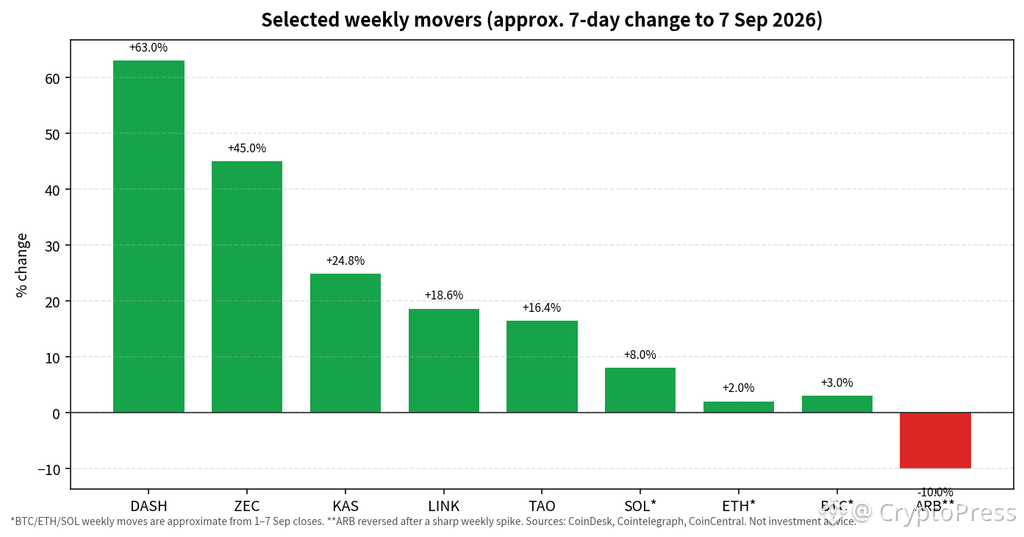
Відтік Liquid на $320 млн і гарний звіт по зайнятості стримують біткоїн біля $79,300Біткоїн торгується поблизу $79,300 у понеділок, 7 вересня 2026 року, після невдачі втримати пробій вище $81,400 упродовж вихідних та зниження на тлі зростання ф’ючерсів на американські акції у святковий День праці. Спотові біткоїн-ETF досі поглинули $986,9 мільйона за тиждень, що завершився 4 вересня, — це третій тиждень поспіль із припливами, лідером став IBIT від BlackRock на $691,5 мільйона — тож стрічка розділена між стійким інституційним попитом і яструбішим макронакладанням. Зарплатні дані за серпень показали 162,000 проти консенсусу приблизно ~56,000; BTC знизився з близько $81,300 до високих $78,000 після виходу релізу. CME FedWatch досі оцінює приблизно 58% імовірності підвищення ставки на 25 б.п. 16 вересня.
Відтік Liquid на $320 млн і гарний звіт по зайнятості стримують біткоїн біля $79,300
Біткоїн торгується поблизу $79,300 у понеділок, 7 вересня 2026 року, після невдачі втримати пробій вище $81,400 упродовж вихідних та зниження на тлі зростання ф’ючерсів на американські акції у святковий День праці. Спотові біткоїн-ETF досі поглинули $986,9 мільйона за тиждень, що завершився 4 вересня, — це третій тиждень поспіль із припливами, лідером став IBIT від BlackRock на $691,5 мільйона — тож стрічка розділена між стійким інституційним попитом і яструбішим макронакладанням. Зарплатні дані за серпень показали 162,000 проти консенсусу приблизно ~56,000; BTC знизився з близько $81,300 до високих $78,000 після виходу релізу. CME FedWatch досі оцінює приблизно 58% імовірності підвищення ставки на 25 б.п. 16 вересня.
815
·
--
Переглянути переклад
Cronos Validators Roll Back Blockchain Following Tectonic Exploit, Recovering 92% of Stolen FundsCronos Layer-1 validators halted and rolled back the network after an exploit on the lending platform Tectonic drained over $120 million in digital assets.
The emergency network rollback successfully enabled the recovery of more than 92% of the stolen funds, according to on-chain data and project updates.
Despite the drastic blockchain reset, an estimated $9 million in assets managed to leave the network before validators could secure the chain.
The Cronos Layer-1 network has managed to recover the vast majority of assets following a catastrophic security incident, though a fraction of the stolen funds successfully slipped past network defenses. According to details shared in the official Cronos updates, validators swiftly intervened to halt the blockchain following an exploit that targeted decentralized finance lending markets.
The security breach originated on Tectonic, a prominent algorithmic money market protocol within the ecosystem. During the exploit, malicious actors successfully manipulated and inflated the collateral value of the native TONIC token. This manipulated valuation allowed the attacker to drain over $120 million from various interconnected lending markets across the network, triggering immediate panic among liquidity providers and protocol developers.
In response to the multi-million dollar drainage, network validators took the drastic step of coordinating a temporary network halt. By executing a blockchain rollback, developers and infrastructure operators were able to effectively freeze state changes and reverse the malicious transactions. On-chain metrics confirm that this aggressive intervention successfully enabled the recovery of over 92% of the stolen funds, neutralizing the vast majority of the attacker’s loot before it could be laundered or bridged away.
However, the emergency measure was not entirely airtight. Despite the rapid rollback of the Cronos Layer-1 ledger, an estimated over $9 million in digital assets managed to evade capture. These funds were successfully transferred or bridged out of the ecosystem before validators could lock down the network state, highlighting the persistent challenges layer-1 networks face when trying to intercept sophisticated cross-chain exploiters in real time.
The incident underscores the growing risks associated with price oracle manipulation and collateral inflation within decentralized lending protocols. As the Cronos team continues to monitor network stability and work on post-mortem analyses, traders and liquidity providers are advised to exercise heightened caution regarding governance token valuations used as collateral backing. Further updates regarding the remaining unrecovered funds and the safe resumption of full network operations are expected to be published through official channels.
The post Cronos Validators Roll Back Blockchain Following Tectonic Exploit, Recovering 92% of Stolen Funds appeared first on Cryptopress.
Cronos Validators Roll Back Blockchain Following Tectonic Exploit, Recovering 92% of Stolen Funds
Cronos Layer-1 validators halted and rolled back the network after an exploit on the lending platform Tectonic drained over $120 million in digital assets.
The emergency network rollback successfully enabled the recovery of more than 92% of the stolen funds, according to on-chain data and project updates.
Despite the drastic blockchain reset, an estimated $9 million in assets managed to leave the network before validators could secure the chain.
The Cronos Layer-1 network has managed to recover the vast majority of assets following a catastrophic security incident, though a fraction of the stolen funds successfully slipped past network defenses. According to details shared in the official Cronos updates, validators swiftly intervened to halt the blockchain following an exploit that targeted decentralized finance lending markets.
The security breach originated on Tectonic, a prominent algorithmic money market protocol within the ecosystem. During the exploit, malicious actors successfully manipulated and inflated the collateral value of the native TONIC token. This manipulated valuation allowed the attacker to drain over $120 million from various interconnected lending markets across the network, triggering immediate panic among liquidity providers and protocol developers.
In response to the multi-million dollar drainage, network validators took the drastic step of coordinating a temporary network halt. By executing a blockchain rollback, developers and infrastructure operators were able to effectively freeze state changes and reverse the malicious transactions. On-chain metrics confirm that this aggressive intervention successfully enabled the recovery of over 92% of the stolen funds, neutralizing the vast majority of the attacker’s loot before it could be laundered or bridged away.
However, the emergency measure was not entirely airtight. Despite the rapid rollback of the Cronos Layer-1 ledger, an estimated over $9 million in digital assets managed to evade capture. These funds were successfully transferred or bridged out of the ecosystem before validators could lock down the network state, highlighting the persistent challenges layer-1 networks face when trying to intercept sophisticated cross-chain exploiters in real time.
The incident underscores the growing risks associated with price oracle manipulation and collateral inflation within decentralized lending protocols. As the Cronos team continues to monitor network stability and work on post-mortem analyses, traders and liquidity providers are advised to exercise heightened caution regarding governance token valuations used as collateral backing. Further updates regarding the remaining unrecovered funds and the safe resumption of full network operations are expected to be published through official channels.
The post Cronos Validators Roll Back Blockchain Following Tectonic Exploit, Recovering 92% of Stolen Funds appeared first on Cryptopress.
The emergency network rollback successfully enabled the recovery of more than 92% of the stolen funds, according to on-chain data and project updates.
Despite the drastic blockchain reset, an estimated $9 million in assets managed to leave the network before validators could secure the chain.
The Cronos Layer-1 network has managed to recover the vast majority of assets following a catastrophic security incident, though a fraction of the stolen funds successfully slipped past network defenses. According to details shared in the official Cronos updates, validators swiftly intervened to halt the blockchain following an exploit that targeted decentralized finance lending markets.
The security breach originated on Tectonic, a prominent algorithmic money market protocol within the ecosystem. During the exploit, malicious actors successfully manipulated and inflated the collateral value of the native TONIC token. This manipulated valuation allowed the attacker to drain over $120 million from various interconnected lending markets across the network, triggering immediate panic among liquidity providers and protocol developers.
In response to the multi-million dollar drainage, network validators took the drastic step of coordinating a temporary network halt. By executing a blockchain rollback, developers and infrastructure operators were able to effectively freeze state changes and reverse the malicious transactions. On-chain metrics confirm that this aggressive intervention successfully enabled the recovery of over 92% of the stolen funds, neutralizing the vast majority of the attacker’s loot before it could be laundered or bridged away.
However, the emergency measure was not entirely airtight. Despite the rapid rollback of the Cronos Layer-1 ledger, an estimated over $9 million in digital assets managed to evade capture. These funds were successfully transferred or bridged out of the ecosystem before validators could lock down the network state, highlighting the persistent challenges layer-1 networks face when trying to intercept sophisticated cross-chain exploiters in real time.
The incident underscores the growing risks associated with price oracle manipulation and collateral inflation within decentralized lending protocols. As the Cronos team continues to monitor network stability and work on post-mortem analyses, traders and liquidity providers are advised to exercise heightened caution regarding governance token valuations used as collateral backing. Further updates regarding the remaining unrecovered funds and the safe resumption of full network operations are expected to be published through official channels.
The post Cronos Validators Roll Back Blockchain Following Tectonic Exploit, Recovering 92% of Stolen Funds appeared first on Cryptopress.
33
·
--
Переглянути переклад
Saudi Arabia Halts Southern Energy Sites Following Unprecedented Drone and Missile AttacksSaudi Arabia has temporarily suspended operations at critical southern energy sites following a series of coordinated drone and missile strikes targeting regional infrastructure.
Global crude benchmarks experienced immediate intraday volatility as traders reassessed geopolitical risk premiums in the Middle East.
Energy authorities have initiated damage assessments while shifting alternative logistical routes to maintain steady export flows and minimize market disruption.
Saudi energy infrastructure faced a major security test as authorities temporarily halted operations at multiple southern energy installations following a barrage of incoming drone and missile attacks. The targeted facilities, vital components of the region’s domestic and export processing network, were struck during early morning hours, prompting immediate emergency shutdowns to contain potential hazards and assess structural integrity.
The swift suspension of activities at these key locations sent immediate shockwaves through traditional commodity markets and filtered into broader macroeconomic sentiment, affecting risk assets including cryptocurrencies. Global crude oil benchmarks surged by over 4% within hours of the initial reports, as energy traders factored in the heightened risk of sustained supply bottlenecks originating from the world’s leading petroleum exporter.
According to updates shared via official statements and local energy monitors, emergency response teams were deployed rapidly to extinguish fires and secure the perimeter around the affected sites. State energy representatives emphasized that while the physical impact is currently being evaluated, robust redundancy measures have been activated to redirect processing loads to alternative operational hubs across the kingdom.
Market analysts note that sustained disruptions in the region historically trigger risk-off behavior across digital asset exchanges, as institutional investors reposition portfolios to hedge against escalating geopolitical tensions and inflationary pressures driven by surging energy costs. Bitcoin and major altcoins experienced minor pullbacks during the initial hours of market trading following the news, reflecting broader risk aversion in global financial corridors.
As the situation develops, industry participants are closely monitoring official updates from regional authorities and energy ministries for timelines regarding the resumption of full operational capacity at the affected southern facilities.
The post Saudi Arabia Halts Southern Energy Sites Following Unprecedented Drone and Missile Attacks appeared first on Cryptopress.
Saudi Arabia Halts Southern Energy Sites Following Unprecedented Drone and Missile Attacks
Saudi Arabia has temporarily suspended operations at critical southern energy sites following a series of coordinated drone and missile strikes targeting regional infrastructure.
Global crude benchmarks experienced immediate intraday volatility as traders reassessed geopolitical risk premiums in the Middle East.
Energy authorities have initiated damage assessments while shifting alternative logistical routes to maintain steady export flows and minimize market disruption.
Saudi energy infrastructure faced a major security test as authorities temporarily halted operations at multiple southern energy installations following a barrage of incoming drone and missile attacks. The targeted facilities, vital components of the region’s domestic and export processing network, were struck during early morning hours, prompting immediate emergency shutdowns to contain potential hazards and assess structural integrity.
The swift suspension of activities at these key locations sent immediate shockwaves through traditional commodity markets and filtered into broader macroeconomic sentiment, affecting risk assets including cryptocurrencies. Global crude oil benchmarks surged by over 4% within hours of the initial reports, as energy traders factored in the heightened risk of sustained supply bottlenecks originating from the world’s leading petroleum exporter.
According to updates shared via official statements and local energy monitors, emergency response teams were deployed rapidly to extinguish fires and secure the perimeter around the affected sites. State energy representatives emphasized that while the physical impact is currently being evaluated, robust redundancy measures have been activated to redirect processing loads to alternative operational hubs across the kingdom.
Market analysts note that sustained disruptions in the region historically trigger risk-off behavior across digital asset exchanges, as institutional investors reposition portfolios to hedge against escalating geopolitical tensions and inflationary pressures driven by surging energy costs. Bitcoin and major altcoins experienced minor pullbacks during the initial hours of market trading following the news, reflecting broader risk aversion in global financial corridors.
As the situation develops, industry participants are closely monitoring official updates from regional authorities and energy ministries for timelines regarding the resumption of full operational capacity at the affected southern facilities.
The post Saudi Arabia Halts Southern Energy Sites Following Unprecedented Drone and Missile Attacks appeared first on Cryptopress.
Global crude benchmarks experienced immediate intraday volatility as traders reassessed geopolitical risk premiums in the Middle East.
Energy authorities have initiated damage assessments while shifting alternative logistical routes to maintain steady export flows and minimize market disruption.
Saudi energy infrastructure faced a major security test as authorities temporarily halted operations at multiple southern energy installations following a barrage of incoming drone and missile attacks. The targeted facilities, vital components of the region’s domestic and export processing network, were struck during early morning hours, prompting immediate emergency shutdowns to contain potential hazards and assess structural integrity.
The swift suspension of activities at these key locations sent immediate shockwaves through traditional commodity markets and filtered into broader macroeconomic sentiment, affecting risk assets including cryptocurrencies. Global crude oil benchmarks surged by over 4% within hours of the initial reports, as energy traders factored in the heightened risk of sustained supply bottlenecks originating from the world’s leading petroleum exporter.
According to updates shared via official statements and local energy monitors, emergency response teams were deployed rapidly to extinguish fires and secure the perimeter around the affected sites. State energy representatives emphasized that while the physical impact is currently being evaluated, robust redundancy measures have been activated to redirect processing loads to alternative operational hubs across the kingdom.
Market analysts note that sustained disruptions in the region historically trigger risk-off behavior across digital asset exchanges, as institutional investors reposition portfolios to hedge against escalating geopolitical tensions and inflationary pressures driven by surging energy costs. Bitcoin and major altcoins experienced minor pullbacks during the initial hours of market trading following the news, reflecting broader risk aversion in global financial corridors.
As the situation develops, industry participants are closely monitoring official updates from regional authorities and energy ministries for timelines regarding the resumption of full operational capacity at the affected southern facilities.
The post Saudi Arabia Halts Southern Energy Sites Following Unprecedented Drone and Missile Attacks appeared first on Cryptopress.
33
·
--
Переглянути переклад
Cronos Validators Roll Back Blockchain Following Tectonic Exploit, Recovering 92% of Stolen Funds<ul><li>Cronos Layer-1 validators halted and rolled back the network after an exploit on the lending platform Tectonic drained over $120 million in digital assets.</li><li>The emergency network rollback successfully enabled the recovery of more than 92% of the stolen funds, according to on-chain data and project updates.</li><li>Despite the drastic blockchain reset, an estimated $9 million in assets managed to leave the network before validators could secure the chain.</li></ul><p class="has-drop-cap">The Cronos Layer-1 network has managed to recover the vast majority of assets following a catastrophic security incident, though a fraction of the stolen funds successfully slipped past network defenses. According to details shared in the <a href="https://cronos.org/blog" target="_blank" rel="noopener">official Cronos updates</a>, validators swiftly intervened to halt the blockchain following an exploit that targeted decentralized finance lending markets.</p><p>The security breach originated on <strong>Tectonic</strong>, a prominent algorithmic money market protocol within the ecosystem. During the exploit, malicious actors successfully manipulated and inflated the collateral value of the native <strong>TONIC</strong> token. This manipulated valuation allowed the attacker to drain <strong>over $120 million</strong> from various interconnected lending markets across the network, triggering immediate panic among liquidity providers and protocol developers.</p><p>In response to the multi-million dollar drainage, network validators took the drastic step of coordinating a temporary network halt. By executing a blockchain rollback, developers and infrastructure operators were able to effectively freeze state changes and reverse the malicious transactions. On-chain metrics confirm that this aggressive intervention successfully enabled the recovery of <strong>over 92%</strong> of the stolen funds, neutralizing the vast majority of the attacker's loot before it could be laundered or bridged away.</p><p>However, the emergency measure was not entirely airtight. Despite the rapid rollback of the Cronos Layer-1 ledger, an estimated <strong>over $9 million</strong> in digital assets managed to evade capture. These funds were successfully transferred or bridged out of the ecosystem before validators could lock down the network state, highlighting the persistent challenges layer-1 networks face when trying to intercept sophisticated cross-chain exploiters in real time.</p><p>The incident underscores the growing risks associated with price oracle manipulation and collateral inflation within decentralized lending protocols. As the Cronos team continues to monitor network stability and work on post-mortem analyses, traders and liquidity providers are advised to exercise heightened caution regarding governance token valuations used as collateral backing. Further updates regarding the remaining unrecovered funds and the safe resumption of full network operations are expected to be published through official channels.</p>
Cronos Validators Roll Back Blockchain Following Tectonic Exploit, Recovering 92% of Stolen Funds
<ul><li>Cronos Layer-1 validators halted and rolled back the network after an exploit on the lending platform Tectonic drained over $120 million in digital assets.</li><li>The emergency network rollback successfully enabled the recovery of more than 92% of the stolen funds, according to on-chain data and project updates.</li><li>Despite the drastic blockchain reset, an estimated $9 million in assets managed to leave the network before validators could secure the chain.</li></ul><p class="has-drop-cap">The Cronos Layer-1 network has managed to recover the vast majority of assets following a catastrophic security incident, though a fraction of the stolen funds successfully slipped past network defenses. According to details shared in the <a href="https://cronos.org/blog" target="_blank" rel="noopener">official Cronos updates</a>, validators swiftly intervened to halt the blockchain following an exploit that targeted decentralized finance lending markets.</p><p>The security breach originated on <strong>Tectonic</strong>, a prominent algorithmic money market protocol within the ecosystem. During the exploit, malicious actors successfully manipulated and inflated the collateral value of the native <strong>TONIC</strong> token. This manipulated valuation allowed the attacker to drain <strong>over $120 million</strong> from various interconnected lending markets across the network, triggering immediate panic among liquidity providers and protocol developers.</p><p>In response to the multi-million dollar drainage, network validators took the drastic step of coordinating a temporary network halt. By executing a blockchain rollback, developers and infrastructure operators were able to effectively freeze state changes and reverse the malicious transactions. On-chain metrics confirm that this aggressive intervention successfully enabled the recovery of <strong>over 92%</strong> of the stolen funds, neutralizing the vast majority of the attacker's loot before it could be laundered or bridged away.</p><p>However, the emergency measure was not entirely airtight. Despite the rapid rollback of the Cronos Layer-1 ledger, an estimated <strong>over $9 million</strong> in digital assets managed to evade capture. These funds were successfully transferred or bridged out of the ecosystem before validators could lock down the network state, highlighting the persistent challenges layer-1 networks face when trying to intercept sophisticated cross-chain exploiters in real time.</p><p>The incident underscores the growing risks associated with price oracle manipulation and collateral inflation within decentralized lending protocols. As the Cronos team continues to monitor network stability and work on post-mortem analyses, traders and liquidity providers are advised to exercise heightened caution regarding governance token valuations used as collateral backing. Further updates regarding the remaining unrecovered funds and the safe resumption of full network operations are expected to be published through official channels.</p>
134
·
--
Переглянути переклад
Saudi Arabia Halts Southern Energy Sites Following Unprecedented Drone and Missile Attacks<ul><li>Saudi Arabia has temporarily suspended operations at critical southern energy sites following a series of coordinated drone and missile strikes targeting regional infrastructure.</li><li>Global crude benchmarks experienced immediate intraday volatility as traders reassessed geopolitical risk premiums in the Middle East.</li><li>Energy authorities have initiated damage assessments while shifting alternative logistical routes to maintain steady export flows and minimize market disruption.</li></ul><p>Saudi energy infrastructure faced a major security test as authorities <a href="https://www.reuters.com/" target="_blank" rel="noopener">temporarily halted operations</a> at multiple southern energy installations following a barrage of incoming drone and missile attacks. The targeted facilities, vital components of the region's domestic and export processing network, were struck during early morning hours, prompting immediate emergency shutdowns to contain potential hazards and assess structural integrity.</p><p>The swift suspension of activities at these key locations sent immediate shockwaves through traditional commodity markets and filtered into broader macroeconomic sentiment, affecting risk assets including cryptocurrencies. <strong>Global crude oil benchmarks surged by over 4%</strong> within hours of the initial reports, as energy traders factored in the heightened risk of sustained supply bottlenecks originating from the world's leading petroleum exporter.</p><p>According to updates shared via official statements and local energy monitors, emergency response teams were deployed rapidly to extinguish fires and secure the perimeter around the affected sites. State energy representatives emphasized that while the physical impact is currently being evaluated, robust redundancy measures have been activated to redirect processing loads to alternative operational hubs across the kingdom.</p><p>Market analysts note that sustained disruptions in the region historically trigger risk-off behavior across digital asset exchanges, as institutional investors reposition portfolios to hedge against escalating geopolitical tensions and inflationary pressures driven by surging energy costs. <strong>Bitcoin and major altcoins experienced minor pullbacks</strong> during the initial hours of market trading following the news, reflecting broader risk aversion in global financial corridors.</p><p>As the situation develops, industry participants are closely monitoring official updates from regional authorities and energy ministries for timelines regarding the resumption of full operational capacity at the affected southern facilities.</p>
Saudi Arabia Halts Southern Energy Sites Following Unprecedented Drone and Missile Attacks
<ul><li>Saudi Arabia has temporarily suspended operations at critical southern energy sites following a series of coordinated drone and missile strikes targeting regional infrastructure.</li><li>Global crude benchmarks experienced immediate intraday volatility as traders reassessed geopolitical risk premiums in the Middle East.</li><li>Energy authorities have initiated damage assessments while shifting alternative logistical routes to maintain steady export flows and minimize market disruption.</li></ul><p>Saudi energy infrastructure faced a major security test as authorities <a href="https://www.reuters.com/" target="_blank" rel="noopener">temporarily halted operations</a> at multiple southern energy installations following a barrage of incoming drone and missile attacks. The targeted facilities, vital components of the region's domestic and export processing network, were struck during early morning hours, prompting immediate emergency shutdowns to contain potential hazards and assess structural integrity.</p><p>The swift suspension of activities at these key locations sent immediate shockwaves through traditional commodity markets and filtered into broader macroeconomic sentiment, affecting risk assets including cryptocurrencies. <strong>Global crude oil benchmarks surged by over 4%</strong> within hours of the initial reports, as energy traders factored in the heightened risk of sustained supply bottlenecks originating from the world's leading petroleum exporter.</p><p>According to updates shared via official statements and local energy monitors, emergency response teams were deployed rapidly to extinguish fires and secure the perimeter around the affected sites. State energy representatives emphasized that while the physical impact is currently being evaluated, robust redundancy measures have been activated to redirect processing loads to alternative operational hubs across the kingdom.</p><p>Market analysts note that sustained disruptions in the region historically trigger risk-off behavior across digital asset exchanges, as institutional investors reposition portfolios to hedge against escalating geopolitical tensions and inflationary pressures driven by surging energy costs. <strong>Bitcoin and major altcoins experienced minor pullbacks</strong> during the initial hours of market trading following the news, reflecting broader risk aversion in global financial corridors.</p><p>As the situation develops, industry participants are closely monitoring official updates from regional authorities and energy ministries for timelines regarding the resumption of full operational capacity at the affected southern facilities.</p>
92
·
--
Атака на Liquid Network: нападник повернув 3,400 BTC після того, як Blockstream виправив помилку в ElementsСамопризначені «білохатні» актори повернули 3,400 BTC із приблизно 4,000 BTC, вилучених із гаманця федерації Liquid Network 6 вересня.Близько 598.5 BTC, вартістю приблизно 47 мільйонів доларів, лишається невідшкодованими, доки тривають переговори.Blockstream заявив, що помилка в програмному забезпеченні Elements дала змогу карбувати незабезпечені L-BTC та виводити їх (pegged out); ключі федерації скомпрометовані не були.Підблокова (sidechain) залишається призупиненою, доки оператори виконують патчі вузлів, усувають розбіжність у ланцюжку (chain split) та готують скоординований перезапуск.Передбачуваний нападник із «білих капелюхів» повернув 3,400 біткоїна на гаманець федерації Liquid Network у понеділок після того, як Blockstream підтвердив, що він виправив вузли мосту, використані протягом вихідних, внаслідок чого залишалося близько 598.5 BTC невідшкодованими.
Атака на Liquid Network: нападник повернув 3,400 BTC після того, як Blockstream виправив помилку в Elements
Самопризначені «білохатні» актори повернули 3,400 BTC із приблизно 4,000 BTC, вилучених із гаманця федерації Liquid Network 6 вересня.Близько 598.5 BTC, вартістю приблизно 47 мільйонів доларів, лишається невідшкодованими, доки тривають переговори.Blockstream заявив, що помилка в програмному забезпеченні Elements дала змогу карбувати незабезпечені L-BTC та виводити їх (pegged out); ключі федерації скомпрометовані не були.Підблокова (sidechain) залишається призупиненою, доки оператори виконують патчі вузлів, усувають розбіжність у ланцюжку (chain split) та готують скоординований перезапуск.Передбачуваний нападник із «білих капелюхів» повернув 3,400 біткоїна на гаманець федерації Liquid Network у понеділок після того, як Blockstream підтвердив, що він виправив вузли мосту, використані протягом вихідних, внаслідок чого залишалося близько 598.5 BTC невідшкодованими.
187
·
--
Переглянути переклад
Chainlink Rallies to Eight-Month High After Bottomline SWIFT Integration, Bitcoin Holds FlatChainlink (LINK) surged to an eight-month high following a major enterprise integration involving financial technology heavyweight Bottomline.
Bottomline, a top-three SWIFT services provider handling $16 trillion annually, integrated the oracle network to enhance its financial messaging capabilities.
Meanwhile, the broader cryptocurrency market experienced a muted start to the week, with Bitcoin remaining largely flat around key technical levels.
Chainlink’s native token LINK outperformed the broader cryptocurrency market to kick off the week, touching an eight-month high on the back of institutional adoption news. The upward momentum follows an announcement that Bottomline, a premier global business payments and SWIFT services provider processing over $16 trillion in annual transactions, has integrated the decentralized oracle network.
While LINK rallied strongly on the enterprise milestone, market bellwether Bitcoin started the week flat, consolidating near recent ranges as traders await clearer macroeconomic catalysts. The divergence highlights a growing decoupling during specific enterprise infrastructure developments, even as macroeconomic uncertainty keeps major layer-1 assets range-bound.
The integration leverages Chainlink’s industry-standard infrastructure to securely connect traditional financial messaging systems with blockchain-based environments. As traditional financial institutions increasingly explore tokenized assets and cross-border settlement rails, collaborations with established providers like Bottomline underscore the growing utility of decentralized oracle networks in bridging legacy finance with distributed ledger technology.
Market analysts note that sustained volume accompanying the recent price action could determine whether LINK maintains its newly established technical levels or experiences a standard market retracement. At the time of reporting, broader crypto market sentiment remains cautiously optimistic as institutional adoption headlines continue to drive episodic rallies across specific altcoin sectors.
The post Chainlink Rallies to Eight-Month High After Bottomline SWIFT Integration, Bitcoin Holds Flat appeared first on Cryptopress.
Chainlink Rallies to Eight-Month High After Bottomline SWIFT Integration, Bitcoin Holds Flat
Chainlink (LINK) surged to an eight-month high following a major enterprise integration involving financial technology heavyweight Bottomline.
Bottomline, a top-three SWIFT services provider handling $16 trillion annually, integrated the oracle network to enhance its financial messaging capabilities.
Meanwhile, the broader cryptocurrency market experienced a muted start to the week, with Bitcoin remaining largely flat around key technical levels.
Chainlink’s native token LINK outperformed the broader cryptocurrency market to kick off the week, touching an eight-month high on the back of institutional adoption news. The upward momentum follows an announcement that Bottomline, a premier global business payments and SWIFT services provider processing over $16 trillion in annual transactions, has integrated the decentralized oracle network.
While LINK rallied strongly on the enterprise milestone, market bellwether Bitcoin started the week flat, consolidating near recent ranges as traders await clearer macroeconomic catalysts. The divergence highlights a growing decoupling during specific enterprise infrastructure developments, even as macroeconomic uncertainty keeps major layer-1 assets range-bound.
The integration leverages Chainlink’s industry-standard infrastructure to securely connect traditional financial messaging systems with blockchain-based environments. As traditional financial institutions increasingly explore tokenized assets and cross-border settlement rails, collaborations with established providers like Bottomline underscore the growing utility of decentralized oracle networks in bridging legacy finance with distributed ledger technology.
Market analysts note that sustained volume accompanying the recent price action could determine whether LINK maintains its newly established technical levels or experiences a standard market retracement. At the time of reporting, broader crypto market sentiment remains cautiously optimistic as institutional adoption headlines continue to drive episodic rallies across specific altcoin sectors.
The post Chainlink Rallies to Eight-Month High After Bottomline SWIFT Integration, Bitcoin Holds Flat appeared first on Cryptopress.
Bottomline, a top-three SWIFT services provider handling $16 trillion annually, integrated the oracle network to enhance its financial messaging capabilities.
Meanwhile, the broader cryptocurrency market experienced a muted start to the week, with Bitcoin remaining largely flat around key technical levels.
Chainlink’s native token LINK outperformed the broader cryptocurrency market to kick off the week, touching an eight-month high on the back of institutional adoption news. The upward momentum follows an announcement that Bottomline, a premier global business payments and SWIFT services provider processing over $16 trillion in annual transactions, has integrated the decentralized oracle network.
While LINK rallied strongly on the enterprise milestone, market bellwether Bitcoin started the week flat, consolidating near recent ranges as traders await clearer macroeconomic catalysts. The divergence highlights a growing decoupling during specific enterprise infrastructure developments, even as macroeconomic uncertainty keeps major layer-1 assets range-bound.
The integration leverages Chainlink’s industry-standard infrastructure to securely connect traditional financial messaging systems with blockchain-based environments. As traditional financial institutions increasingly explore tokenized assets and cross-border settlement rails, collaborations with established providers like Bottomline underscore the growing utility of decentralized oracle networks in bridging legacy finance with distributed ledger technology.
Market analysts note that sustained volume accompanying the recent price action could determine whether LINK maintains its newly established technical levels or experiences a standard market retracement. At the time of reporting, broader crypto market sentiment remains cautiously optimistic as institutional adoption headlines continue to drive episodic rallies across specific altcoin sectors.
The post Chainlink Rallies to Eight-Month High After Bottomline SWIFT Integration, Bitcoin Holds Flat appeared first on Cryptopress.
10
·
--
Переглянути переклад
Biden-Themed Meme Coin Launches on Base With Airdrop Allocation for TRUMP Token LosersA new political meme coin themed around Joe Biden is scheduled to launch on Coinbase’s Layer 2 network, Base, this week.
The project has allocated a significant portion of its token supply specifically to compensate traders who incurred losses on the MAGA-related TRUMP token.
The token rollout capitalizes on the ongoing surge of political meme coins within the decentralized finance ecosystem.
A new political meme coin themed around Joe Biden is set to deploy on Coinbase’s layer-2 network, Base, this week, according to details shared by the project’s team. The token aims to capture ongoing speculative interest in political figures while carving out a niche by directly targeting traders affected by market volatility in competing tokens.
According to the project’s tokenomics, a substantial chunk of the total supply has been earmarked for an airdrop tailored to individuals who can verify losses incurred on the TRUMP meme coin. This recovery-focused distribution strategy is designed to attract disillusioned liquidity providers and community members from rival political factions into the Base ecosystem.
The launch highlights the continuing trend of election-season speculation driving on-chain activity. Base, known for its low transaction fees and high throughput facilitated by Coinbase, has increasingly become a preferred playground for community-driven meme coins and experimental token launches.
Market participants are advised to exercise caution, as political meme coins typically exhibit extreme price volatility, liquidity fluctuations, and speculative trading behavior driven primarily by social media sentiment rather than fundamental utility.
The post Biden-Themed Meme Coin Launches on Base With Airdrop Allocation for TRUMP Token Losers appeared first on Cryptopress.
Biden-Themed Meme Coin Launches on Base With Airdrop Allocation for TRUMP Token Losers
A new political meme coin themed around Joe Biden is scheduled to launch on Coinbase’s Layer 2 network, Base, this week.
The project has allocated a significant portion of its token supply specifically to compensate traders who incurred losses on the MAGA-related TRUMP token.
The token rollout capitalizes on the ongoing surge of political meme coins within the decentralized finance ecosystem.
A new political meme coin themed around Joe Biden is set to deploy on Coinbase’s layer-2 network, Base, this week, according to details shared by the project’s team. The token aims to capture ongoing speculative interest in political figures while carving out a niche by directly targeting traders affected by market volatility in competing tokens.
According to the project’s tokenomics, a substantial chunk of the total supply has been earmarked for an airdrop tailored to individuals who can verify losses incurred on the TRUMP meme coin. This recovery-focused distribution strategy is designed to attract disillusioned liquidity providers and community members from rival political factions into the Base ecosystem.
The launch highlights the continuing trend of election-season speculation driving on-chain activity. Base, known for its low transaction fees and high throughput facilitated by Coinbase, has increasingly become a preferred playground for community-driven meme coins and experimental token launches.
Market participants are advised to exercise caution, as political meme coins typically exhibit extreme price volatility, liquidity fluctuations, and speculative trading behavior driven primarily by social media sentiment rather than fundamental utility.
The post Biden-Themed Meme Coin Launches on Base With Airdrop Allocation for TRUMP Token Losers appeared first on Cryptopress.
The project has allocated a significant portion of its token supply specifically to compensate traders who incurred losses on the MAGA-related TRUMP token.
The token rollout capitalizes on the ongoing surge of political meme coins within the decentralized finance ecosystem.
A new political meme coin themed around Joe Biden is set to deploy on Coinbase’s layer-2 network, Base, this week, according to details shared by the project’s team. The token aims to capture ongoing speculative interest in political figures while carving out a niche by directly targeting traders affected by market volatility in competing tokens.
According to the project’s tokenomics, a substantial chunk of the total supply has been earmarked for an airdrop tailored to individuals who can verify losses incurred on the TRUMP meme coin. This recovery-focused distribution strategy is designed to attract disillusioned liquidity providers and community members from rival political factions into the Base ecosystem.
The launch highlights the continuing trend of election-season speculation driving on-chain activity. Base, known for its low transaction fees and high throughput facilitated by Coinbase, has increasingly become a preferred playground for community-driven meme coins and experimental token launches.
Market participants are advised to exercise caution, as political meme coins typically exhibit extreme price volatility, liquidity fluctuations, and speculative trading behavior driven primarily by social media sentiment rather than fundamental utility.
The post Biden-Themed Meme Coin Launches on Base With Airdrop Allocation for TRUMP Token Losers appeared first on Cryptopress.
22
·
--
Переглянути переклад
Ancient Bitcoin Wallet Wakes Up, Turning a $120 Investment Into $3 MillionAn anonymous Bitcoin wallet created on July 14, 2010, transferred 50 BTC after remaining dormant for over 14 years.
The original holder acquired the coins when Bitcoin was valued at just $2.40 each, turning a $120 investment into roughly $3 million at current market prices.
On-chain data tracked by Whale Alert highlights a growing trend of early crypto miners moving long-held assets.
An early Bitcoin investor who mined 50 BTC during the asset’s infancy in 2010 has moved their holdings after 14 years of absolute dormancy, according to data highlighted by blockchain tracking services. The dormant address, which originally received the block reward when the cryptocurrency traded at roughly $2.40, transferred the entire stash as Bitcoin’s valuation hovered near the $63,000 threshold.
According to on-chain analytics shared by Whale Alert on X, the wallet transferred the 50 BTC block reward minted on July 14, 2010. At the time of mining, the total value of the transaction was a modest $120. Following the recent on-chain movement, those exact coins are now valued at approximately $3 million, representing an astronomical return on investment exceeding 2,500,000%.
The sudden awakening of these so-called “sleeping whales” frequently sparks speculation across the cryptocurrency community. While some analysts monitor these transactions for potential sell-side pressure on major spot exchanges, many early-era coins are simply being moved to modern, secure self-custody setups or multi-signature vaults rather than being dumped onto order books.
Data from analytics providers like Glassnode indicates that supply held by long-term investors remains remarkably resilient, even as occasional decade-old wallets spring back to life. Bitcoin traders and market participants continue to keep a close eye on legacy addresses tied to the Satoshi era, as the movement of coins from 2009 and 2010 remains an exceptionally rare occurrence in digital asset markets.
The post Ancient Bitcoin Wallet Wakes Up, Turning a $120 Investment Into $3 Million appeared first on Cryptopress.
Ancient Bitcoin Wallet Wakes Up, Turning a $120 Investment Into $3 Million
An anonymous Bitcoin wallet created on July 14, 2010, transferred 50 BTC after remaining dormant for over 14 years.
The original holder acquired the coins when Bitcoin was valued at just $2.40 each, turning a $120 investment into roughly $3 million at current market prices.
On-chain data tracked by Whale Alert highlights a growing trend of early crypto miners moving long-held assets.
An early Bitcoin investor who mined 50 BTC during the asset’s infancy in 2010 has moved their holdings after 14 years of absolute dormancy, according to data highlighted by blockchain tracking services. The dormant address, which originally received the block reward when the cryptocurrency traded at roughly $2.40, transferred the entire stash as Bitcoin’s valuation hovered near the $63,000 threshold.
According to on-chain analytics shared by Whale Alert on X, the wallet transferred the 50 BTC block reward minted on July 14, 2010. At the time of mining, the total value of the transaction was a modest $120. Following the recent on-chain movement, those exact coins are now valued at approximately $3 million, representing an astronomical return on investment exceeding 2,500,000%.
The sudden awakening of these so-called “sleeping whales” frequently sparks speculation across the cryptocurrency community. While some analysts monitor these transactions for potential sell-side pressure on major spot exchanges, many early-era coins are simply being moved to modern, secure self-custody setups or multi-signature vaults rather than being dumped onto order books.
Data from analytics providers like Glassnode indicates that supply held by long-term investors remains remarkably resilient, even as occasional decade-old wallets spring back to life. Bitcoin traders and market participants continue to keep a close eye on legacy addresses tied to the Satoshi era, as the movement of coins from 2009 and 2010 remains an exceptionally rare occurrence in digital asset markets.
The post Ancient Bitcoin Wallet Wakes Up, Turning a $120 Investment Into $3 Million appeared first on Cryptopress.
The original holder acquired the coins when Bitcoin was valued at just $2.40 each, turning a $120 investment into roughly $3 million at current market prices.
On-chain data tracked by Whale Alert highlights a growing trend of early crypto miners moving long-held assets.
An early Bitcoin investor who mined 50 BTC during the asset’s infancy in 2010 has moved their holdings after 14 years of absolute dormancy, according to data highlighted by blockchain tracking services. The dormant address, which originally received the block reward when the cryptocurrency traded at roughly $2.40, transferred the entire stash as Bitcoin’s valuation hovered near the $63,000 threshold.
According to on-chain analytics shared by Whale Alert on X, the wallet transferred the 50 BTC block reward minted on July 14, 2010. At the time of mining, the total value of the transaction was a modest $120. Following the recent on-chain movement, those exact coins are now valued at approximately $3 million, representing an astronomical return on investment exceeding 2,500,000%.
The sudden awakening of these so-called “sleeping whales” frequently sparks speculation across the cryptocurrency community. While some analysts monitor these transactions for potential sell-side pressure on major spot exchanges, many early-era coins are simply being moved to modern, secure self-custody setups or multi-signature vaults rather than being dumped onto order books.
Data from analytics providers like Glassnode indicates that supply held by long-term investors remains remarkably resilient, even as occasional decade-old wallets spring back to life. Bitcoin traders and market participants continue to keep a close eye on legacy addresses tied to the Satoshi era, as the movement of coins from 2009 and 2010 remains an exceptionally rare occurrence in digital asset markets.
The post Ancient Bitcoin Wallet Wakes Up, Turning a $120 Investment Into $3 Million appeared first on Cryptopress.
19
·
--
Переглянути переклад
Ancient Bitcoin Wallet Wakes Up, Turning a $120 Investment Into $3 Million<ul><li>An anonymous Bitcoin wallet created on July 14, 2010, transferred 50 BTC after remaining dormant for over 14 years.</li><li>The original holder acquired the coins when Bitcoin was valued at just $2.40 each, turning a $120 investment into roughly $3 million at current market prices.</li><li>On-chain data tracked by <a href="https://x.com/whale_alert/status/1838580213123850551" target="_blank" rel="noopener">Whale Alert</a> highlights a growing trend of early crypto miners moving long-held assets.</li></ul><p>An early Bitcoin investor who mined 50 BTC during the asset's infancy in 2010 has moved their holdings after <strong>14 years of absolute dormancy</strong>, according to data highlighted by <a href="https://www.binance.com/en/square/post/1381335070257" target="_blank" rel="noopener">blockchain tracking services</a>. The dormant address, which originally received the block reward when the cryptocurrency traded at roughly $2.40, transferred the entire stash as Bitcoin's valuation hovered near the <strong>$63,000 threshold</strong>.</p><p>According to on-chain analytics shared by <a href="https://x.com/whale_alert/status/1838580213123850551" target="_blank" rel="noopener">Whale Alert on X</a>, the wallet transferred the <strong>50 BTC block reward</strong> minted on July 14, 2010. At the time of mining, the total value of the transaction was a modest <strong>$120</strong>. Following the recent on-chain movement, those exact coins are now valued at approximately <strong>$3 million</strong>, representing an astronomical return on investment exceeding <strong>2,500,000%</strong>.</p><p>The sudden awakening of these so-called "sleeping whales" frequently sparks speculation across the cryptocurrency community. While some analysts monitor these transactions for potential sell-side pressure on major spot exchanges, many early-era coins are simply being moved to modern, secure self-custody setups or multi-signature vaults rather than being dumped onto order books.</p><p>Data from analytics providers like <a href="https://glassnode.com" target="_blank" rel="noopener">Glassnode</a> indicates that supply held by long-term investors remains remarkably resilient, even as occasional decade-old wallets spring back to life. Bitcoin traders and market participants continue to keep a close eye on legacy addresses tied to the Satoshi era, as the movement of coins from 2009 and 2010 remains an exceptionally rare occurrence in digital asset markets.</p>
Ancient Bitcoin Wallet Wakes Up, Turning a $120 Investment Into $3 Million
<ul><li>An anonymous Bitcoin wallet created on July 14, 2010, transferred 50 BTC after remaining dormant for over 14 years.</li><li>The original holder acquired the coins when Bitcoin was valued at just $2.40 each, turning a $120 investment into roughly $3 million at current market prices.</li><li>On-chain data tracked by <a href="https://x.com/whale_alert/status/1838580213123850551" target="_blank" rel="noopener">Whale Alert</a> highlights a growing trend of early crypto miners moving long-held assets.</li></ul><p>An early Bitcoin investor who mined 50 BTC during the asset's infancy in 2010 has moved their holdings after <strong>14 years of absolute dormancy</strong>, according to data highlighted by <a href="https://www.binance.com/en/square/post/1381335070257" target="_blank" rel="noopener">blockchain tracking services</a>. The dormant address, which originally received the block reward when the cryptocurrency traded at roughly $2.40, transferred the entire stash as Bitcoin's valuation hovered near the <strong>$63,000 threshold</strong>.</p><p>According to on-chain analytics shared by <a href="https://x.com/whale_alert/status/1838580213123850551" target="_blank" rel="noopener">Whale Alert on X</a>, the wallet transferred the <strong>50 BTC block reward</strong> minted on July 14, 2010. At the time of mining, the total value of the transaction was a modest <strong>$120</strong>. Following the recent on-chain movement, those exact coins are now valued at approximately <strong>$3 million</strong>, representing an astronomical return on investment exceeding <strong>2,500,000%</strong>.</p><p>The sudden awakening of these so-called "sleeping whales" frequently sparks speculation across the cryptocurrency community. While some analysts monitor these transactions for potential sell-side pressure on major spot exchanges, many early-era coins are simply being moved to modern, secure self-custody setups or multi-signature vaults rather than being dumped onto order books.</p><p>Data from analytics providers like <a href="https://glassnode.com" target="_blank" rel="noopener">Glassnode</a> indicates that supply held by long-term investors remains remarkably resilient, even as occasional decade-old wallets spring back to life. Bitcoin traders and market participants continue to keep a close eye on legacy addresses tied to the Satoshi era, as the movement of coins from 2009 and 2010 remains an exceptionally rare occurrence in digital asset markets.</p>
15
·
--
Chainlink зростає до восьмимісячного максимуму після інтеграції Bottomline зі SWIFT, Bitcoin тримається на місціChainlink (LINK) виріс до восьмимісячного максимуму після великої інтеграції на рівні підприємства за участю фінтех-гіганта Bottomline.Bottomline, один із трьох провідних постачальників сервісів SWIFT, що обробляє $16 трлн щорічно, інтегрувала оракульну мережу, щоб розширити можливості своєї фінансової системи обміну повідомленнями.Тим часом ширший ринок криптовалют розпочав тиждень мляво: Bitcoin здебільшого залишався без змін біля ключових технічних рівнів.рідний нативний токен Chainlink LINK випередив ширший ринок криптовалют, щоб розпочати тиждень, торкнувшись восьмимісячного максимуму на тлі новин про інституційнe впровадження. Позитивна динаміка триває після повідомлення про те, що Bottomline, провідний глобальний постачальник ділових платежів і сервісів SWIFT, який обробляє понад $16 трлн у щорічних транзакціях, інтегрував децентралізовану оракульну мережу.
Chainlink зростає до восьмимісячного максимуму після інтеграції Bottomline зі SWIFT, Bitcoin тримається на місці
Chainlink (LINK) виріс до восьмимісячного максимуму після великої інтеграції на рівні підприємства за участю фінтех-гіганта Bottomline.Bottomline, один із трьох провідних постачальників сервісів SWIFT, що обробляє $16 трлн щорічно, інтегрувала оракульну мережу, щоб розширити можливості своєї фінансової системи обміну повідомленнями.Тим часом ширший ринок криптовалют розпочав тиждень мляво: Bitcoin здебільшого залишався без змін біля ключових технічних рівнів.рідний нативний токен Chainlink LINK випередив ширший ринок криптовалют, щоб розпочати тиждень, торкнувшись восьмимісячного максимуму на тлі новин про інституційнe впровадження. Позитивна динаміка триває після повідомлення про те, що Bottomline, провідний глобальний постачальник ділових платежів і сервісів SWIFT, який обробляє понад $16 трлн у щорічних транзакціях, інтегрував децентралізовану оракульну мережу.
122
·
--
Частково правда
Мемкоїн у стилі Байдена виходить на Base з розподілом для тих, хто програв на токені TRUMPНовий політичний мемкоїн, присвячений Джо Байдену, цього тижня заплановано до запуску в мережі рівня 2 Coinbase — Base.Проєкт виділив значну частину запасу своїх токенів спеціально, щоб компенсувати трейдерам збитки, яких вони зазнали через токен TRUMP, пов’язаний із MAGA.Розгортання токена скористалося триваючим сплеском політичних мемкоїнів у децентралізованій фінансовій екосистемі.Новий політичний мемкоїн, присвячений Джо Байдену, цього тижня має розгорнутися на мережі рівня 2 Coinbase — Base, про це повідомили деталі, оприлюднені командою проєкту. Токен має на меті використати триваючий спекулятивний інтерес до політичних фігур, водночас створюючи нішу, безпосередньо орієнтуючись на трейдерів, яких торкнулася ринкова волатильність у конкуруючих токенах.
Мемкоїн у стилі Байдена виходить на Base з розподілом для тих, хто програв на токені TRUMP
Новий політичний мемкоїн, присвячений Джо Байдену, цього тижня заплановано до запуску в мережі рівня 2 Coinbase — Base.Проєкт виділив значну частину запасу своїх токенів спеціально, щоб компенсувати трейдерам збитки, яких вони зазнали через токен TRUMP, пов’язаний із MAGA.Розгортання токена скористалося триваючим сплеском політичних мемкоїнів у децентралізованій фінансовій екосистемі.Новий політичний мемкоїн, присвячений Джо Байдену, цього тижня має розгорнутися на мережі рівня 2 Coinbase — Base, про це повідомили деталі, оприлюднені командою проєкту. Токен має на меті використати триваючий спекулятивний інтерес до політичних фігур, водночас створюючи нішу, безпосередньо орієнтуючись на трейдерів, яких торкнулася ринкова волатильність у конкуруючих токенах.
578
·
--
Переглянути переклад
Liquid Network Pauses After Purported White Hats Withdraw $320 Million in BitcoinPurported white-hat hackers withdrew roughly 4,000 BTC, worth about $320 million, from Liquid’s federation wallet on Sept. 6.
The outflow represented about 95% of Liquid’s reported bitcoin reserves of approximately 4,200 BTC.
SideSwap processed a peg-out of 3,996 BTC after 4,000 L-BTC were burned; Blockstream attributed the L-BTC to an Elements software bug.
Liquid disabled bridge nodes and told exchanges to pause L-BTC deposits and withdrawals. USDT, DePix and RWAs were unaffected.
The holders said they would return most of the bitcoin after every node is patched; funds had not been returned as of early Sept. 7.
The Liquid Network said Sunday that purported white-hat hackers withdrew approximately 4,000 bitcoin, worth about $320 million, from its federation wallet, prompting the Bitcoin sidechain to pause activity.
In a Sept. 6 post on X, Liquid said Blockstream was working to contact the parties through an onchain signed message. The network said the funds left via the SideSwap Peg-out Authorization Key, but that key was not compromised, nor were any others.
The withdrawal represented roughly 95% of Liquid’s reported bitcoin reserves, which stood at about 4,200 BTC before the incident, according to CoinDesk. Liquid, launched in 2018 by Blockstream and overseen by a federation of more than 80 exchanges, infrastructure firms and asset managers, issues L-BTC against bitcoin locked in the federation wallet so trades can settle faster than on Bitcoin’s base layer.
SideSwap said a customer sent 4,000 L-BTC to its peg-out service at 14:05 UTC. The service burned the L-BTC under a valid peg-out authorization, and at 14:28 UTC the federation paid 3,996 BTC to the customer’s bitcoin address. SideSwap said Blockstream later established that the L-BTC was created through a bug in the Elements software that underpins Liquid, not through a compromise of SideSwap’s systems.
An onchain message from the receiving address read: “we are whitehats. contact us on chain.” Subsequent OP_RETURN messages compiled by Galaxy Digital’s Alex Thorn said the holders would return most of the funds after the vulnerability was fixed and every node installed the patch. One message stated: “Please fix the bug first. The chain is under risk at latest commit right now. Make sure every node is patched. Then we will transfer the money back safely after confirming the fix.”
Ledger CTO Charles Guillemet questioned the white-hat claim, writing that white hats do not drain a bridge and then solicit onchain contact. Liquid disabled bridge nodes so no new transactions can be submitted and notified exchanges to pause L-BTC deposits and withdrawals. Other assets on Liquid, including USDT, DePix and real-world assets, were unaffected. As of early Monday, the bitcoin had not been returned.
The post Liquid Network Pauses After Purported White Hats Withdraw $320 Million in Bitcoin appeared first on Cryptopress.
Liquid Network Pauses After Purported White Hats Withdraw $320 Million in Bitcoin
Purported white-hat hackers withdrew roughly 4,000 BTC, worth about $320 million, from Liquid’s federation wallet on Sept. 6.
The outflow represented about 95% of Liquid’s reported bitcoin reserves of approximately 4,200 BTC.
SideSwap processed a peg-out of 3,996 BTC after 4,000 L-BTC were burned; Blockstream attributed the L-BTC to an Elements software bug.
Liquid disabled bridge nodes and told exchanges to pause L-BTC deposits and withdrawals. USDT, DePix and RWAs were unaffected.
The holders said they would return most of the bitcoin after every node is patched; funds had not been returned as of early Sept. 7.
The Liquid Network said Sunday that purported white-hat hackers withdrew approximately 4,000 bitcoin, worth about $320 million, from its federation wallet, prompting the Bitcoin sidechain to pause activity.
In a Sept. 6 post on X, Liquid said Blockstream was working to contact the parties through an onchain signed message. The network said the funds left via the SideSwap Peg-out Authorization Key, but that key was not compromised, nor were any others.
The withdrawal represented roughly 95% of Liquid’s reported bitcoin reserves, which stood at about 4,200 BTC before the incident, according to CoinDesk. Liquid, launched in 2018 by Blockstream and overseen by a federation of more than 80 exchanges, infrastructure firms and asset managers, issues L-BTC against bitcoin locked in the federation wallet so trades can settle faster than on Bitcoin’s base layer.
SideSwap said a customer sent 4,000 L-BTC to its peg-out service at 14:05 UTC. The service burned the L-BTC under a valid peg-out authorization, and at 14:28 UTC the federation paid 3,996 BTC to the customer’s bitcoin address. SideSwap said Blockstream later established that the L-BTC was created through a bug in the Elements software that underpins Liquid, not through a compromise of SideSwap’s systems.
An onchain message from the receiving address read: “we are whitehats. contact us on chain.” Subsequent OP_RETURN messages compiled by Galaxy Digital’s Alex Thorn said the holders would return most of the funds after the vulnerability was fixed and every node installed the patch. One message stated: “Please fix the bug first. The chain is under risk at latest commit right now. Make sure every node is patched. Then we will transfer the money back safely after confirming the fix.”
Ledger CTO Charles Guillemet questioned the white-hat claim, writing that white hats do not drain a bridge and then solicit onchain contact. Liquid disabled bridge nodes so no new transactions can be submitted and notified exchanges to pause L-BTC deposits and withdrawals. Other assets on Liquid, including USDT, DePix and real-world assets, were unaffected. As of early Monday, the bitcoin had not been returned.
The post Liquid Network Pauses After Purported White Hats Withdraw $320 Million in Bitcoin appeared first on Cryptopress.
The outflow represented about 95% of Liquid’s reported bitcoin reserves of approximately 4,200 BTC.
SideSwap processed a peg-out of 3,996 BTC after 4,000 L-BTC were burned; Blockstream attributed the L-BTC to an Elements software bug.
Liquid disabled bridge nodes and told exchanges to pause L-BTC deposits and withdrawals. USDT, DePix and RWAs were unaffected.
The holders said they would return most of the bitcoin after every node is patched; funds had not been returned as of early Sept. 7.
The Liquid Network said Sunday that purported white-hat hackers withdrew approximately 4,000 bitcoin, worth about $320 million, from its federation wallet, prompting the Bitcoin sidechain to pause activity.
In a Sept. 6 post on X, Liquid said Blockstream was working to contact the parties through an onchain signed message. The network said the funds left via the SideSwap Peg-out Authorization Key, but that key was not compromised, nor were any others.
The withdrawal represented roughly 95% of Liquid’s reported bitcoin reserves, which stood at about 4,200 BTC before the incident, according to CoinDesk. Liquid, launched in 2018 by Blockstream and overseen by a federation of more than 80 exchanges, infrastructure firms and asset managers, issues L-BTC against bitcoin locked in the federation wallet so trades can settle faster than on Bitcoin’s base layer.
SideSwap said a customer sent 4,000 L-BTC to its peg-out service at 14:05 UTC. The service burned the L-BTC under a valid peg-out authorization, and at 14:28 UTC the federation paid 3,996 BTC to the customer’s bitcoin address. SideSwap said Blockstream later established that the L-BTC was created through a bug in the Elements software that underpins Liquid, not through a compromise of SideSwap’s systems.
An onchain message from the receiving address read: “we are whitehats. contact us on chain.” Subsequent OP_RETURN messages compiled by Galaxy Digital’s Alex Thorn said the holders would return most of the funds after the vulnerability was fixed and every node installed the patch. One message stated: “Please fix the bug first. The chain is under risk at latest commit right now. Make sure every node is patched. Then we will transfer the money back safely after confirming the fix.”
Ledger CTO Charles Guillemet questioned the white-hat claim, writing that white hats do not drain a bridge and then solicit onchain contact. Liquid disabled bridge nodes so no new transactions can be submitted and notified exchanges to pause L-BTC deposits and withdrawals. Other assets on Liquid, including USDT, DePix and real-world assets, were unaffected. As of early Monday, the bitcoin had not been returned.
The post Liquid Network Pauses After Purported White Hats Withdraw $320 Million in Bitcoin appeared first on Cryptopress.
33
·
--
Переглянути переклад
South Korea Sets February 2027 Target for Full Tokenized Securities MarketSouth Korea aims to launch a fully commercialized tokenized securities market by February 2027, according to regulatory timelines outlined by the Financial Services Commission.
The initiative follows ongoing legislative efforts to amend the Electronic Securities Act and the Capital Markets Act to accommodate distributed ledger technology.
Market participants are gearing up for institutional integration, aiming to bring fractional investments and diverse real-world assets on-chain.
South Korea is pushing forward with its digital asset roadmap, targeting a fully commercialized tokenized securities market by February 2027, as detailed in recent updates from local financial authorities. According to reports from CoinDesk, the Financial Services Commission (FSC) is systematically laying the groundwork to integrate blockchain-based asset issuance and trading into the mainstream financial ecosystem.
The ambitious timeline represents a crucial step in South Korea’s broader strategy to modernize its capital markets through distributed ledger technology (DLT). Regulators have been working closely with financial institutions and tech providers to establish legal frameworks that safely support the issuance and distribution of security token offerings (STOs). These upcoming legislative adjustments focus primarily on amendments to the Electronic Securities Act and the Capital Markets Act, which will legally recognize tokenized assets as a valid form of electronic securities.
Market analysts note that the 2027 rollout will likely unlock significant liquidity for alternative asset classes, ranging from real estate and intellectual property to fine art and copyright revenues. By providing a clear regulatory perimeter, South Korea hopes to foster institutional confidence and protect retail investors engaging with fractionalized assets. Several major commercial banks and securities firms in the country have already initiated pilot projects and proof-of-concept tests for tokenized deposits and asset management platforms in anticipation of the official framework.
As the countdown to February 2027 continues, industry stakeholders will monitor upcoming parliamentary sessions for the final approval of the necessary legal amendments. The successful implementation of this commercial market could position South Korea as a leading hub for regulated asset tokenization in the Asia-Pacific region.
The post South Korea Sets February 2027 Target for Full Tokenized Securities Market appeared first on Cryptopress.
South Korea Sets February 2027 Target for Full Tokenized Securities Market
South Korea aims to launch a fully commercialized tokenized securities market by February 2027, according to regulatory timelines outlined by the Financial Services Commission.
The initiative follows ongoing legislative efforts to amend the Electronic Securities Act and the Capital Markets Act to accommodate distributed ledger technology.
Market participants are gearing up for institutional integration, aiming to bring fractional investments and diverse real-world assets on-chain.
South Korea is pushing forward with its digital asset roadmap, targeting a fully commercialized tokenized securities market by February 2027, as detailed in recent updates from local financial authorities. According to reports from CoinDesk, the Financial Services Commission (FSC) is systematically laying the groundwork to integrate blockchain-based asset issuance and trading into the mainstream financial ecosystem.
The ambitious timeline represents a crucial step in South Korea’s broader strategy to modernize its capital markets through distributed ledger technology (DLT). Regulators have been working closely with financial institutions and tech providers to establish legal frameworks that safely support the issuance and distribution of security token offerings (STOs). These upcoming legislative adjustments focus primarily on amendments to the Electronic Securities Act and the Capital Markets Act, which will legally recognize tokenized assets as a valid form of electronic securities.
Market analysts note that the 2027 rollout will likely unlock significant liquidity for alternative asset classes, ranging from real estate and intellectual property to fine art and copyright revenues. By providing a clear regulatory perimeter, South Korea hopes to foster institutional confidence and protect retail investors engaging with fractionalized assets. Several major commercial banks and securities firms in the country have already initiated pilot projects and proof-of-concept tests for tokenized deposits and asset management platforms in anticipation of the official framework.
As the countdown to February 2027 continues, industry stakeholders will monitor upcoming parliamentary sessions for the final approval of the necessary legal amendments. The successful implementation of this commercial market could position South Korea as a leading hub for regulated asset tokenization in the Asia-Pacific region.
The post South Korea Sets February 2027 Target for Full Tokenized Securities Market appeared first on Cryptopress.
The initiative follows ongoing legislative efforts to amend the Electronic Securities Act and the Capital Markets Act to accommodate distributed ledger technology.
Market participants are gearing up for institutional integration, aiming to bring fractional investments and diverse real-world assets on-chain.
South Korea is pushing forward with its digital asset roadmap, targeting a fully commercialized tokenized securities market by February 2027, as detailed in recent updates from local financial authorities. According to reports from CoinDesk, the Financial Services Commission (FSC) is systematically laying the groundwork to integrate blockchain-based asset issuance and trading into the mainstream financial ecosystem.
The ambitious timeline represents a crucial step in South Korea’s broader strategy to modernize its capital markets through distributed ledger technology (DLT). Regulators have been working closely with financial institutions and tech providers to establish legal frameworks that safely support the issuance and distribution of security token offerings (STOs). These upcoming legislative adjustments focus primarily on amendments to the Electronic Securities Act and the Capital Markets Act, which will legally recognize tokenized assets as a valid form of electronic securities.
Market analysts note that the 2027 rollout will likely unlock significant liquidity for alternative asset classes, ranging from real estate and intellectual property to fine art and copyright revenues. By providing a clear regulatory perimeter, South Korea hopes to foster institutional confidence and protect retail investors engaging with fractionalized assets. Several major commercial banks and securities firms in the country have already initiated pilot projects and proof-of-concept tests for tokenized deposits and asset management platforms in anticipation of the official framework.
As the countdown to February 2027 continues, industry stakeholders will monitor upcoming parliamentary sessions for the final approval of the necessary legal amendments. The successful implementation of this commercial market could position South Korea as a leading hub for regulated asset tokenization in the Asia-Pacific region.
The post South Korea Sets February 2027 Target for Full Tokenized Securities Market appeared first on Cryptopress.
8
·
--
Переглянути переклад
AMC CEO Adam Aron Tells Robinhood to Halt Stock Tokens, Gets Told to ‘Send Lawyers’AMC Entertainment CEO Adam Aron launched a scathing attack on Robinhood’s newly surging stock tokens on Thursday evening, branding the crypto-based derivatives as “contemptible, outrageous, disgusting, detestable, inexcusable, and vile.” The theater chain executive followed up on Friday by officially asking the retail brokerage to “voluntarily CEASE AND DECIST the trading of AMC stock tokens,” noting that he had already consulted AMC’s outside securities counsel to explore whether the company could force a halt.
The confrontation quickly escalated when Dan Gallagher, Robinhood’s chief legal officer and a former SEC commissioner who served from November 2011 to October 2015, issued a swift and defiant response at 10:16 a.m. ET. According to industry reports covering the exchange, Gallagher responded: “We know a little something about the U.S. securities laws and will not ‘DECIST.’ Send your lawyers and we’ll educate them.”
The friction comes as onchain activity for the asset explodes. The token’s onchain supply surged to 1,499,255 tokens, marking a massive jump from just 157,844 tokens the evening prior—representing roughly one token for every 600 AMC shares outstanding. Furthermore, trading activity recorded $200.8 million in 24-hour volume spread across 30 liquidity pools, backed by approximately $6.7 million in underlying liquidity.
Market structure dynamics sit at the core of the dispute. Robinhood issues these tokens out of Jersey tailored for non-U.S. buyers without formal registration or direct issuer consent. Because the products operate without a contractual agreement between the issuer and AMC, the film exhibitor faces limited direct corporate levers, leaving regulatory pathways through agencies like the U.S. Securities and Exchange Commission as Aron’s primary remaining avenue.
The post AMC CEO Adam Aron Tells Robinhood to Halt Stock Tokens, Gets Told to ‘Send Lawyers’ appeared first on Cryptopress.
AMC CEO Adam Aron Tells Robinhood to Halt Stock Tokens, Gets Told to ‘Send Lawyers’
AMC Entertainment CEO Adam Aron launched a scathing attack on Robinhood’s newly surging stock tokens on Thursday evening, branding the crypto-based derivatives as “contemptible, outrageous, disgusting, detestable, inexcusable, and vile.” The theater chain executive followed up on Friday by officially asking the retail brokerage to “voluntarily CEASE AND DECIST the trading of AMC stock tokens,” noting that he had already consulted AMC’s outside securities counsel to explore whether the company could force a halt.
The confrontation quickly escalated when Dan Gallagher, Robinhood’s chief legal officer and a former SEC commissioner who served from November 2011 to October 2015, issued a swift and defiant response at 10:16 a.m. ET. According to industry reports covering the exchange, Gallagher responded: “We know a little something about the U.S. securities laws and will not ‘DECIST.’ Send your lawyers and we’ll educate them.”
The friction comes as onchain activity for the asset explodes. The token’s onchain supply surged to 1,499,255 tokens, marking a massive jump from just 157,844 tokens the evening prior—representing roughly one token for every 600 AMC shares outstanding. Furthermore, trading activity recorded $200.8 million in 24-hour volume spread across 30 liquidity pools, backed by approximately $6.7 million in underlying liquidity.
Market structure dynamics sit at the core of the dispute. Robinhood issues these tokens out of Jersey tailored for non-U.S. buyers without formal registration or direct issuer consent. Because the products operate without a contractual agreement between the issuer and AMC, the film exhibitor faces limited direct corporate levers, leaving regulatory pathways through agencies like the U.S. Securities and Exchange Commission as Aron’s primary remaining avenue.
The post AMC CEO Adam Aron Tells Robinhood to Halt Stock Tokens, Gets Told to ‘Send Lawyers’ appeared first on Cryptopress.
The confrontation quickly escalated when Dan Gallagher, Robinhood’s chief legal officer and a former SEC commissioner who served from November 2011 to October 2015, issued a swift and defiant response at 10:16 a.m. ET. According to industry reports covering the exchange, Gallagher responded: “We know a little something about the U.S. securities laws and will not ‘DECIST.’ Send your lawyers and we’ll educate them.”
The friction comes as onchain activity for the asset explodes. The token’s onchain supply surged to 1,499,255 tokens, marking a massive jump from just 157,844 tokens the evening prior—representing roughly one token for every 600 AMC shares outstanding. Furthermore, trading activity recorded $200.8 million in 24-hour volume spread across 30 liquidity pools, backed by approximately $6.7 million in underlying liquidity.
Market structure dynamics sit at the core of the dispute. Robinhood issues these tokens out of Jersey tailored for non-U.S. buyers without formal registration or direct issuer consent. Because the products operate without a contractual agreement between the issuer and AMC, the film exhibitor faces limited direct corporate levers, leaving regulatory pathways through agencies like the U.S. Securities and Exchange Commission as Aron’s primary remaining avenue.
The post AMC CEO Adam Aron Tells Robinhood to Halt Stock Tokens, Gets Told to ‘Send Lawyers’ appeared first on Cryptopress.
AMCUS-0,20%
HOODB-2,63%
13
Увійдіть, щоб переглянути інший контент
Приєднуйтесь до користувачів криптовалют по всьому світу на Binance Square
⚡️ Отримуйте актуальну та корисну інформацію про криптовалюти.
💬 Приєднуйтесь до найбільшої у світі криптобіржі.
👍 Відкрийте справжні ідеї від перевірених авторів.
Електронна пошта / номер телефону