
Crypto Breaking
19.6k Публікації

Crypto Breaking
 Верифіковано+ на Binance Square
Поскаржитись
Заблокувати користувача
Get real-time cryptocurrency news, blockchain updates, market analysis, and expert insights. Explore the latest trends in Bitcoin, Ethereum, DeFi, and Web3.
6 Підписки
32.8K+ Підписники
31.6K+ Вподобань
Публікації
Усі
Цитування

Стаття
Переглянути переклад
Crypto Trade Groups Move to Halt Illinois 0.2% Tax Before Start DateIllinois is facing a fresh legal attempt to pause its new digital asset transaction tax before it begins in January 2027. The Crypto Council for Innovation (CCI) and the Blockchain Association (BA) say they have asked a court to issue a preliminary injunction blocking enforcement of the 0.2% levy, arguing the tax is unconstitutional and that affected companies face immediate, irreversible costs.
In a filing reported by the trade groups on Wednesday, CCI and BA asked the Circuit Court of Sangamon County, Illinois, to prevent the state from imposing the tax while their underlying lawsuit proceeds. The groups contend Illinois has not provided adequate clarity on what exactly is taxed and when—while companies are already being forced to build compliance systems under the threat of criminal penalties.
Key takeaways
CCI and BA have filed for a preliminary injunction to block Illinois’ planned 0.2% tax on crypto transactions before the Jan. 1, 2027 start date.
The groups argue the tax violates constitutional protections and due process rules, and that companies face irreparable harm from near-term compliance spending.
Illinois’ measure, signed by Gov. J.B. Pritzker in June, is structured as a “privilege tax” tied to transaction volume rather than income.
The move escalates a legal dispute that CCI and BA began last month with a constitutional challenge, joined by other industry efforts.
Illinois is also pursuing restrictions related to prediction markets, with separate litigation involving Kalshi and state actions targeting insider-trading concerns.
Why the injunction request matters ahead of January 2027
According to the motion described by the CCI and BA, the central urgency is timing: the tax is scheduled to take effect on Jan. 1, 2027, but companies say they are already being compelled to prepare for it. CCI CEO Ji Hun Kim said in a statement that firms are being asked to invest “millions” in new systems while the dispute over legality remains unresolved.
Kim’s argument, as presented by the groups, is that this creates irreparable harm because resources and employees are being diverted to compliance planning “under the threat of criminal penalties,” even though the tax’s validity is disputed. The contention is not only about whether the levy should ultimately stand, but whether the state should be allowed to proceed before a court determines the legal issues.
Blocking enforcement temporarily would matter to market participants because a transaction tax can increase operational overhead for exchanges, custodians, and other service providers, and can alter how businesses structure fee models and customer reporting. If compliance systems are built and then later ruled unlawful, the industry says those costs cannot easily be recovered.
Illinois’ crypto transaction tax: the legal theory being challenged
Illinois became the first U.S. state to single out cryptocurrency transactions with a dedicated measure, a point highlighted by the trade groups in their broader campaign against the tax.
As previously reported, Gov. Pritzker signed the legislation into law in June as a “privilege tax” as part of the state’s fiscal year 2027 budget. In this framework, crypto users would be taxed based on transaction volume rather than income, according to earlier coverage by Cointelegraph.
Last month, CCI and BA filed a lawsuit challenging the Illinois digital asset tax. The groups said the tax violates multiple legal standards, including the U.S. Constitution and the Illinois constitution, as well as federal and state due process laws. They also cited the federal Internet Tax Freedom Act in their challenge, a position outlined in the complaint linked by the groups. Earlier coverage from Cointelegraph described that lawsuit and the legal grounds behind it, including the claim that the tax improperly targets digital assets and conflicts with constitutional protections.
In Wednesday’s court filing, CCI and BA argued the state’s “basic questions” about what is taxed and when remain unanswered, while the timeline for enforcement is approaching. Their request for a preliminary injunction therefore aims to pause the practical effects of the law while the courts decide whether the measure can be enforced at all.
Industry pushback expands: why Illinois may not be the last to try
Summer Mersinger, CEO of the Blockchain Association, warned that the stakes extend beyond Illinois. As quoted in connection with the legal action, Mersinger said the state “loses very little by waiting,” while other states and market participants could suffer if Illinois’ approach is upheld. The logic, according to the association’s view, is that if the act survives legal challenges, it could become a template for other states to pursue similar transaction-based crypto taxation.
This is a key dynamic investors and builders tend to watch closely: state-level taxes can shape product design and compliance strategy across jurisdictions, especially for companies that serve customers nationally. A successful injunction in Illinois could send an early signal that transaction-tax models may face significant legal obstacles—though the outcome will ultimately depend on what the court determines about the likelihood of constitutional violations and the balance of harms.
Separately, another industry group, the Digital Chamber, filed a similar lawsuit days earlier, according to coverage summarized by Cointelegraph. While this article focuses on CCI and BA’s injunction motion, the parallel litigation suggests a broader coalition is attempting to challenge the same core measure from multiple angles.
Illinois actions beyond crypto: prediction markets litigation and restrictions
Illinois’ regulatory agenda in digital-asset-adjacent areas is not limited to taxation. The state has also targeted prediction markets through a combination of statutory and executive actions.
Cointelegraph previously reported that Kalshi filed a lawsuit against Illinois officials over a law that went into effect on July 1. That law, Kalshi said, “expressly bans sports event contracts,” and the company argued it violates federal law by effectively requiring state licensing.
In addition, Pritzker signed an executive order in April banning state employees from betting on prediction-market platforms. The stated purpose was to reduce the risk of insider trading as online prediction markets and event-based gambling contracts grow.
Together, these developments show Illinois is simultaneously addressing multiple parts of the crypto and digital finance ecosystem—taxing transactions in one lane while restricting certain market activities in another. For participants, this kind of multi-front posture can raise uncertainty about how different categories of digital finance will be treated, and whether compliance requirements will evolve quickly through court challenges.
While CCI and BA seek a near-term halt through a preliminary injunction, the most important next signal for market participants will be what the court decides about whether the case meets the standard to pause enforcement. Until then, the legal fight over the constitutionality of Illinois’ 0.2% transaction tax—and the state’s broader approach to digital finance—remains a developing risk to watch.
This article was originally published as Crypto Trade Groups Move to Halt Illinois 0.2% Tax Before Start Date on Crypto Breaking News – your trusted source for crypto news, Bitcoin news, and blockchain updates.
Crypto Trade Groups Move to Halt Illinois 0.2% Tax Before Start Date
Illinois is facing a fresh legal attempt to pause its new digital asset transaction tax before it begins in January 2027. The Crypto Council for Innovation (CCI) and the Blockchain Association (BA) say they have asked a court to issue a preliminary injunction blocking enforcement of the 0.2% levy, arguing the tax is unconstitutional and that affected companies face immediate, irreversible costs.
In a filing reported by the trade groups on Wednesday, CCI and BA asked the Circuit Court of Sangamon County, Illinois, to prevent the state from imposing the tax while their underlying lawsuit proceeds. The groups contend Illinois has not provided adequate clarity on what exactly is taxed and when—while companies are already being forced to build compliance systems under the threat of criminal penalties.
Key takeaways
CCI and BA have filed for a preliminary injunction to block Illinois’ planned 0.2% tax on crypto transactions before the Jan. 1, 2027 start date.
The groups argue the tax violates constitutional protections and due process rules, and that companies face irreparable harm from near-term compliance spending.
Illinois’ measure, signed by Gov. J.B. Pritzker in June, is structured as a “privilege tax” tied to transaction volume rather than income.
The move escalates a legal dispute that CCI and BA began last month with a constitutional challenge, joined by other industry efforts.
Illinois is also pursuing restrictions related to prediction markets, with separate litigation involving Kalshi and state actions targeting insider-trading concerns.
Why the injunction request matters ahead of January 2027
According to the motion described by the CCI and BA, the central urgency is timing: the tax is scheduled to take effect on Jan. 1, 2027, but companies say they are already being compelled to prepare for it. CCI CEO Ji Hun Kim said in a statement that firms are being asked to invest “millions” in new systems while the dispute over legality remains unresolved.
Kim’s argument, as presented by the groups, is that this creates irreparable harm because resources and employees are being diverted to compliance planning “under the threat of criminal penalties,” even though the tax’s validity is disputed. The contention is not only about whether the levy should ultimately stand, but whether the state should be allowed to proceed before a court determines the legal issues.
Blocking enforcement temporarily would matter to market participants because a transaction tax can increase operational overhead for exchanges, custodians, and other service providers, and can alter how businesses structure fee models and customer reporting. If compliance systems are built and then later ruled unlawful, the industry says those costs cannot easily be recovered.
Illinois’ crypto transaction tax: the legal theory being challenged
Illinois became the first U.S. state to single out cryptocurrency transactions with a dedicated measure, a point highlighted by the trade groups in their broader campaign against the tax.
As previously reported, Gov. Pritzker signed the legislation into law in June as a “privilege tax” as part of the state’s fiscal year 2027 budget. In this framework, crypto users would be taxed based on transaction volume rather than income, according to earlier coverage by Cointelegraph.
Last month, CCI and BA filed a lawsuit challenging the Illinois digital asset tax. The groups said the tax violates multiple legal standards, including the U.S. Constitution and the Illinois constitution, as well as federal and state due process laws. They also cited the federal Internet Tax Freedom Act in their challenge, a position outlined in the complaint linked by the groups. Earlier coverage from Cointelegraph described that lawsuit and the legal grounds behind it, including the claim that the tax improperly targets digital assets and conflicts with constitutional protections.
In Wednesday’s court filing, CCI and BA argued the state’s “basic questions” about what is taxed and when remain unanswered, while the timeline for enforcement is approaching. Their request for a preliminary injunction therefore aims to pause the practical effects of the law while the courts decide whether the measure can be enforced at all.
Industry pushback expands: why Illinois may not be the last to try
Summer Mersinger, CEO of the Blockchain Association, warned that the stakes extend beyond Illinois. As quoted in connection with the legal action, Mersinger said the state “loses very little by waiting,” while other states and market participants could suffer if Illinois’ approach is upheld. The logic, according to the association’s view, is that if the act survives legal challenges, it could become a template for other states to pursue similar transaction-based crypto taxation.
This is a key dynamic investors and builders tend to watch closely: state-level taxes can shape product design and compliance strategy across jurisdictions, especially for companies that serve customers nationally. A successful injunction in Illinois could send an early signal that transaction-tax models may face significant legal obstacles—though the outcome will ultimately depend on what the court determines about the likelihood of constitutional violations and the balance of harms.
Separately, another industry group, the Digital Chamber, filed a similar lawsuit days earlier, according to coverage summarized by Cointelegraph. While this article focuses on CCI and BA’s injunction motion, the parallel litigation suggests a broader coalition is attempting to challenge the same core measure from multiple angles.
Illinois actions beyond crypto: prediction markets litigation and restrictions
Illinois’ regulatory agenda in digital-asset-adjacent areas is not limited to taxation. The state has also targeted prediction markets through a combination of statutory and executive actions.
Cointelegraph previously reported that Kalshi filed a lawsuit against Illinois officials over a law that went into effect on July 1. That law, Kalshi said, “expressly bans sports event contracts,” and the company argued it violates federal law by effectively requiring state licensing.
In addition, Pritzker signed an executive order in April banning state employees from betting on prediction-market platforms. The stated purpose was to reduce the risk of insider trading as online prediction markets and event-based gambling contracts grow.
Together, these developments show Illinois is simultaneously addressing multiple parts of the crypto and digital finance ecosystem—taxing transactions in one lane while restricting certain market activities in another. For participants, this kind of multi-front posture can raise uncertainty about how different categories of digital finance will be treated, and whether compliance requirements will evolve quickly through court challenges.
While CCI and BA seek a near-term halt through a preliminary injunction, the most important next signal for market participants will be what the court decides about whether the case meets the standard to pause enforcement. Until then, the legal fight over the constitutionality of Illinois’ 0.2% transaction tax—and the state’s broader approach to digital finance—remains a developing risk to watch.
This article was originally published as Crypto Trade Groups Move to Halt Illinois 0.2% Tax Before Start Date on Crypto Breaking News – your trusted source for crypto news, Bitcoin news, and blockchain updates.
In a filing reported by the trade groups on Wednesday, CCI and BA asked the Circuit Court of Sangamon County, Illinois, to prevent the state from imposing the tax while their underlying lawsuit proceeds. The groups contend Illinois has not provided adequate clarity on what exactly is taxed and when—while companies are already being forced to build compliance systems under the threat of criminal penalties.
Key takeaways
CCI and BA have filed for a preliminary injunction to block Illinois’ planned 0.2% tax on crypto transactions before the Jan. 1, 2027 start date.
The groups argue the tax violates constitutional protections and due process rules, and that companies face irreparable harm from near-term compliance spending.
Illinois’ measure, signed by Gov. J.B. Pritzker in June, is structured as a “privilege tax” tied to transaction volume rather than income.
The move escalates a legal dispute that CCI and BA began last month with a constitutional challenge, joined by other industry efforts.
Illinois is also pursuing restrictions related to prediction markets, with separate litigation involving Kalshi and state actions targeting insider-trading concerns.
Why the injunction request matters ahead of January 2027
According to the motion described by the CCI and BA, the central urgency is timing: the tax is scheduled to take effect on Jan. 1, 2027, but companies say they are already being compelled to prepare for it. CCI CEO Ji Hun Kim said in a statement that firms are being asked to invest “millions” in new systems while the dispute over legality remains unresolved.
Kim’s argument, as presented by the groups, is that this creates irreparable harm because resources and employees are being diverted to compliance planning “under the threat of criminal penalties,” even though the tax’s validity is disputed. The contention is not only about whether the levy should ultimately stand, but whether the state should be allowed to proceed before a court determines the legal issues.
Blocking enforcement temporarily would matter to market participants because a transaction tax can increase operational overhead for exchanges, custodians, and other service providers, and can alter how businesses structure fee models and customer reporting. If compliance systems are built and then later ruled unlawful, the industry says those costs cannot easily be recovered.
Illinois’ crypto transaction tax: the legal theory being challenged
Illinois became the first U.S. state to single out cryptocurrency transactions with a dedicated measure, a point highlighted by the trade groups in their broader campaign against the tax.
As previously reported, Gov. Pritzker signed the legislation into law in June as a “privilege tax” as part of the state’s fiscal year 2027 budget. In this framework, crypto users would be taxed based on transaction volume rather than income, according to earlier coverage by Cointelegraph.
Last month, CCI and BA filed a lawsuit challenging the Illinois digital asset tax. The groups said the tax violates multiple legal standards, including the U.S. Constitution and the Illinois constitution, as well as federal and state due process laws. They also cited the federal Internet Tax Freedom Act in their challenge, a position outlined in the complaint linked by the groups. Earlier coverage from Cointelegraph described that lawsuit and the legal grounds behind it, including the claim that the tax improperly targets digital assets and conflicts with constitutional protections.
In Wednesday’s court filing, CCI and BA argued the state’s “basic questions” about what is taxed and when remain unanswered, while the timeline for enforcement is approaching. Their request for a preliminary injunction therefore aims to pause the practical effects of the law while the courts decide whether the measure can be enforced at all.
Industry pushback expands: why Illinois may not be the last to try
Summer Mersinger, CEO of the Blockchain Association, warned that the stakes extend beyond Illinois. As quoted in connection with the legal action, Mersinger said the state “loses very little by waiting,” while other states and market participants could suffer if Illinois’ approach is upheld. The logic, according to the association’s view, is that if the act survives legal challenges, it could become a template for other states to pursue similar transaction-based crypto taxation.
This is a key dynamic investors and builders tend to watch closely: state-level taxes can shape product design and compliance strategy across jurisdictions, especially for companies that serve customers nationally. A successful injunction in Illinois could send an early signal that transaction-tax models may face significant legal obstacles—though the outcome will ultimately depend on what the court determines about the likelihood of constitutional violations and the balance of harms.
Separately, another industry group, the Digital Chamber, filed a similar lawsuit days earlier, according to coverage summarized by Cointelegraph. While this article focuses on CCI and BA’s injunction motion, the parallel litigation suggests a broader coalition is attempting to challenge the same core measure from multiple angles.
Illinois actions beyond crypto: prediction markets litigation and restrictions
Illinois’ regulatory agenda in digital-asset-adjacent areas is not limited to taxation. The state has also targeted prediction markets through a combination of statutory and executive actions.
Cointelegraph previously reported that Kalshi filed a lawsuit against Illinois officials over a law that went into effect on July 1. That law, Kalshi said, “expressly bans sports event contracts,” and the company argued it violates federal law by effectively requiring state licensing.
In addition, Pritzker signed an executive order in April banning state employees from betting on prediction-market platforms. The stated purpose was to reduce the risk of insider trading as online prediction markets and event-based gambling contracts grow.
Together, these developments show Illinois is simultaneously addressing multiple parts of the crypto and digital finance ecosystem—taxing transactions in one lane while restricting certain market activities in another. For participants, this kind of multi-front posture can raise uncertainty about how different categories of digital finance will be treated, and whether compliance requirements will evolve quickly through court challenges.
While CCI and BA seek a near-term halt through a preliminary injunction, the most important next signal for market participants will be what the court decides about whether the case meets the standard to pause enforcement. Until then, the legal fight over the constitutionality of Illinois’ 0.2% transaction tax—and the state’s broader approach to digital finance—remains a developing risk to watch.
This article was originally published as Crypto Trade Groups Move to Halt Illinois 0.2% Tax Before Start Date on Crypto Breaking News – your trusted source for crypto news, Bitcoin news, and blockchain updates.
6

Стаття
Переглянути переклад
Hunter Biden Laptop Controversy Spurs New Memecoin LaunchHunter Biden officially launched the politically themed “LAPTOP” memecoin on Wednesday, marking a high-profile entry into the crypto space for a figure long tied to US political drama. Early trading was volatile: the token was reported by CoinGecko at $2.0977 at 3:45 p.m. UTC after opening at $199.50, representing a sharp first-hour slide of 95.7%. CoinGecko also shows more than $13.4 million in volume during that initial period.
On-chain data analyst Bubblemaps said most of the largest holders appear to be wallets funded within the past 10 days, pointing to a rapidly assembled distribution rather than long-term accumulation. The project’s launch quickly drew both backlash and engagement across social media.
Key takeaways
According to CoinGecko, LAPTOP’s opening price of $199.50 fell to $2.0977 within about the first hour, down 95.7% at 3:45 p.m. UTC.
Bubblemaps data indicates a concentration of top holders in recently funded wallets, suggesting short-term positioning around the launch.
Project disclosures describe LAPTOP as a tokenized digital collectible with no utility and no rights to profits, governance, or yield.
Founders received 30% of the 1 billion-token supply, locked for six months and then vested monthly over 24 months.
Airdrop allocations include up to 2% reserved for wallets that lost money on Trump-linked crypto, with eligibility tied to specific conditions outlined in the disclosures.
Launch volatility and early holder concentration
LAPTOP debuted on Ethereum’s Base layer-2 network and saw a rapid, dramatic drawdown from its first trade range. CoinGecko data, cited in the report, shows the token trading at $2.0977 at 3:45 p.m. UTC after an opening at $199.50. Trading activity accelerated quickly, with volume reported above $13.4 million in the early window.
Beyond price action, distribution patterns also stood out. Bubblemaps said that most of the top holders are wallets funded in the past 10 days, implying the token’s early ownership skewed toward accounts that positioned themselves close to the launch rather than participants with longer holding histories.
Such “fresh wallet” clustering is common in memecoin launches, but it can amplify downside risk for new buyers—particularly when supply dynamics include locked founder allocations and marketing-driven initial hype. Traders typically watch for whether holder counts stabilize after the first day and whether liquidity deepens, but those longer-term signals were not part of the early snapshot.
Biden’s response amid backlash over memecoins
Hunter Biden addressed the backlash publicly on X during Wednesday’s market reaction. In a post, he responded to criticism by framing the token’s ticker as “resilience, redemption and recovery.” He also said he understood the cynicism around memecoins and described President Donald Trump’s token as a “grift,” while warning buyers not to expect him—or others—to make LAPTOP more valuable.
The launch campaign is positioned around the “laptop narrative,” referring to a MacBook that Biden reportedly left at a Delaware repair shop in 2019. In the lead-up to the 2020 election, Trump allies promoted material they said came from that device, according to reporting referenced in the article.
Before the official launch, Biden teased the memecoin on Monday by posting the ticker alongside a montage of media coverage related to the laptop. The announcement drew criticism from prominent crypto commentators, including digital investigator Stephen Findeisen (known as Coffeezilla), who urged followers not to buy LAPTOP and called it a “shitcoin.” Other accounts told Biden there was “still time to walk this back,” underscoring that the project entered a market already primed for debate.
Base founder Jesse Pollak also weighed in, saying the project had contacted his team, but that Base made a “conscious decision” not to help with the token’s design or promotion. In other words, while the token launched on Base, the platform’s founder indicated the broader development and promotion workflow was not supported by the network’s team.
What the disclosures say: collectible framing, fixed supply, founder vesting
The project’s own disclosures, published as a PDF, describe LAPTOP as a digital collectible with no utility and no rights to governance, voting, yield, or profit-sharing. The disclosures set a fixed supply of 1 billion tokens, with 350 million tokens circulating at launch.
Founder allocation is central to understanding how the token’s supply may behave after the initial trading frenzy. The disclosures state that founders—including Biden—receive 300 million tokens (30% of the total supply). Those tokens are locked for six months and then vested monthly over the following 24 months. That schedule can matter for investors because it defines when additional tokens may enter the market under the project’s control, potentially affecting liquidity and price pressure during vesting windows.
Another 30% of supply is allocated to a mechanism tied to “political, cultural and crypto predictions,” with tokens burned when specified outcomes occur and released to charity if outcomes do not occur as described. The disclosures also outline airdrop structure, including an initial round representing 10% of total supply.
Within that initial airdrop framework, 2% of the total supply is reserved for wallets that lost money on TRUMP, while 8% is allocated for eligible subscribers to Biden’s “Where’s Hunter” Substack newsletter. The disclosures also describe a separate 10% future airdrop distributed at a foundation’s discretion, which means overall airdrops account for 20% of supply—but the specific TRUMP-loss allocation remains capped at 2%.
For readers assessing risk, the combination of a fixed supply, locked and vested founder tokens, and conditional burning/release mechanisms suggests LAPTOP’s long-term behavior may depend less on external demand shocks and more on whether vesting schedules and outcome-based rules play out as outlined.
Why the TRUMP-loss allocation became part of the narrative
Even before the launch day price action, the memecoin drew attention for tying its distribution to a “reimbursement”-style concept aimed at wallets that lost money on a Trump-linked token. That approach immediately raises questions—especially in memecoins—about eligibility, enforcement, and what qualifies as a “loss.” The disclosures cap the relevant allocation at 2% of total supply, but they do not change the underlying reality that only a limited slice of supply is earmarked for that purpose.
Hunter Biden’s earlier criticism of Trump-adjacent crypto ventures also helped shape the hypocrisy debate surrounding the launch. Earlier posts, as referenced in the article, accused a Trump-linked finance project of leveraging political influence and centralized control to benefit founders. The launch of LAPTOP then positioned Biden as both critic and participant—an asymmetry that appears to have fueled the intensity of social media reactions.
For traders, the key watchpoint is whether the token’s early speculative demand fades into sustained activity, and whether any follow-through occurs around claimed “laptop narrative” momentum beyond day-one attention. For builders and compliance-minded participants, the explicit disclosures are noteworthy: the project is framed plainly as a collectible without utility or profit rights, which can help clarify expectations during ongoing debate about memecoin value propositions.
Going forward, market participants are likely to focus on three things: how much liquidity remains after the initial volatility, whether holder concentration shifts away from newly funded wallets, and how the project’s vesting and airdrop rules—particularly the TRUMP-loss portion capped at 2%—are handled in practice as eligibility and execution become clearer.
This article was originally published as Hunter Biden Laptop Controversy Spurs New Memecoin Launch on Crypto Breaking News – your trusted source for crypto news, Bitcoin news, and blockchain updates.
Hunter Biden Laptop Controversy Spurs New Memecoin Launch
Hunter Biden officially launched the politically themed “LAPTOP” memecoin on Wednesday, marking a high-profile entry into the crypto space for a figure long tied to US political drama. Early trading was volatile: the token was reported by CoinGecko at $2.0977 at 3:45 p.m. UTC after opening at $199.50, representing a sharp first-hour slide of 95.7%. CoinGecko also shows more than $13.4 million in volume during that initial period.
On-chain data analyst Bubblemaps said most of the largest holders appear to be wallets funded within the past 10 days, pointing to a rapidly assembled distribution rather than long-term accumulation. The project’s launch quickly drew both backlash and engagement across social media.
Key takeaways
According to CoinGecko, LAPTOP’s opening price of $199.50 fell to $2.0977 within about the first hour, down 95.7% at 3:45 p.m. UTC.
Bubblemaps data indicates a concentration of top holders in recently funded wallets, suggesting short-term positioning around the launch.
Project disclosures describe LAPTOP as a tokenized digital collectible with no utility and no rights to profits, governance, or yield.
Founders received 30% of the 1 billion-token supply, locked for six months and then vested monthly over 24 months.
Airdrop allocations include up to 2% reserved for wallets that lost money on Trump-linked crypto, with eligibility tied to specific conditions outlined in the disclosures.
Launch volatility and early holder concentration
LAPTOP debuted on Ethereum’s Base layer-2 network and saw a rapid, dramatic drawdown from its first trade range. CoinGecko data, cited in the report, shows the token trading at $2.0977 at 3:45 p.m. UTC after an opening at $199.50. Trading activity accelerated quickly, with volume reported above $13.4 million in the early window.
Beyond price action, distribution patterns also stood out. Bubblemaps said that most of the top holders are wallets funded in the past 10 days, implying the token’s early ownership skewed toward accounts that positioned themselves close to the launch rather than participants with longer holding histories.
Such “fresh wallet” clustering is common in memecoin launches, but it can amplify downside risk for new buyers—particularly when supply dynamics include locked founder allocations and marketing-driven initial hype. Traders typically watch for whether holder counts stabilize after the first day and whether liquidity deepens, but those longer-term signals were not part of the early snapshot.
Biden’s response amid backlash over memecoins
Hunter Biden addressed the backlash publicly on X during Wednesday’s market reaction. In a post, he responded to criticism by framing the token’s ticker as “resilience, redemption and recovery.” He also said he understood the cynicism around memecoins and described President Donald Trump’s token as a “grift,” while warning buyers not to expect him—or others—to make LAPTOP more valuable.
The launch campaign is positioned around the “laptop narrative,” referring to a MacBook that Biden reportedly left at a Delaware repair shop in 2019. In the lead-up to the 2020 election, Trump allies promoted material they said came from that device, according to reporting referenced in the article.
Before the official launch, Biden teased the memecoin on Monday by posting the ticker alongside a montage of media coverage related to the laptop. The announcement drew criticism from prominent crypto commentators, including digital investigator Stephen Findeisen (known as Coffeezilla), who urged followers not to buy LAPTOP and called it a “shitcoin.” Other accounts told Biden there was “still time to walk this back,” underscoring that the project entered a market already primed for debate.
Base founder Jesse Pollak also weighed in, saying the project had contacted his team, but that Base made a “conscious decision” not to help with the token’s design or promotion. In other words, while the token launched on Base, the platform’s founder indicated the broader development and promotion workflow was not supported by the network’s team.
What the disclosures say: collectible framing, fixed supply, founder vesting
The project’s own disclosures, published as a PDF, describe LAPTOP as a digital collectible with no utility and no rights to governance, voting, yield, or profit-sharing. The disclosures set a fixed supply of 1 billion tokens, with 350 million tokens circulating at launch.
Founder allocation is central to understanding how the token’s supply may behave after the initial trading frenzy. The disclosures state that founders—including Biden—receive 300 million tokens (30% of the total supply). Those tokens are locked for six months and then vested monthly over the following 24 months. That schedule can matter for investors because it defines when additional tokens may enter the market under the project’s control, potentially affecting liquidity and price pressure during vesting windows.
Another 30% of supply is allocated to a mechanism tied to “political, cultural and crypto predictions,” with tokens burned when specified outcomes occur and released to charity if outcomes do not occur as described. The disclosures also outline airdrop structure, including an initial round representing 10% of total supply.
Within that initial airdrop framework, 2% of the total supply is reserved for wallets that lost money on TRUMP, while 8% is allocated for eligible subscribers to Biden’s “Where’s Hunter” Substack newsletter. The disclosures also describe a separate 10% future airdrop distributed at a foundation’s discretion, which means overall airdrops account for 20% of supply—but the specific TRUMP-loss allocation remains capped at 2%.
For readers assessing risk, the combination of a fixed supply, locked and vested founder tokens, and conditional burning/release mechanisms suggests LAPTOP’s long-term behavior may depend less on external demand shocks and more on whether vesting schedules and outcome-based rules play out as outlined.
Why the TRUMP-loss allocation became part of the narrative
Even before the launch day price action, the memecoin drew attention for tying its distribution to a “reimbursement”-style concept aimed at wallets that lost money on a Trump-linked token. That approach immediately raises questions—especially in memecoins—about eligibility, enforcement, and what qualifies as a “loss.” The disclosures cap the relevant allocation at 2% of total supply, but they do not change the underlying reality that only a limited slice of supply is earmarked for that purpose.
Hunter Biden’s earlier criticism of Trump-adjacent crypto ventures also helped shape the hypocrisy debate surrounding the launch. Earlier posts, as referenced in the article, accused a Trump-linked finance project of leveraging political influence and centralized control to benefit founders. The launch of LAPTOP then positioned Biden as both critic and participant—an asymmetry that appears to have fueled the intensity of social media reactions.
For traders, the key watchpoint is whether the token’s early speculative demand fades into sustained activity, and whether any follow-through occurs around claimed “laptop narrative” momentum beyond day-one attention. For builders and compliance-minded participants, the explicit disclosures are noteworthy: the project is framed plainly as a collectible without utility or profit rights, which can help clarify expectations during ongoing debate about memecoin value propositions.
Going forward, market participants are likely to focus on three things: how much liquidity remains after the initial volatility, whether holder concentration shifts away from newly funded wallets, and how the project’s vesting and airdrop rules—particularly the TRUMP-loss portion capped at 2%—are handled in practice as eligibility and execution become clearer.
This article was originally published as Hunter Biden Laptop Controversy Spurs New Memecoin Launch on Crypto Breaking News – your trusted source for crypto news, Bitcoin news, and blockchain updates.
On-chain data analyst Bubblemaps said most of the largest holders appear to be wallets funded within the past 10 days, pointing to a rapidly assembled distribution rather than long-term accumulation. The project’s launch quickly drew both backlash and engagement across social media.
Key takeaways
According to CoinGecko, LAPTOP’s opening price of $199.50 fell to $2.0977 within about the first hour, down 95.7% at 3:45 p.m. UTC.
Bubblemaps data indicates a concentration of top holders in recently funded wallets, suggesting short-term positioning around the launch.
Project disclosures describe LAPTOP as a tokenized digital collectible with no utility and no rights to profits, governance, or yield.
Founders received 30% of the 1 billion-token supply, locked for six months and then vested monthly over 24 months.
Airdrop allocations include up to 2% reserved for wallets that lost money on Trump-linked crypto, with eligibility tied to specific conditions outlined in the disclosures.
Launch volatility and early holder concentration
LAPTOP debuted on Ethereum’s Base layer-2 network and saw a rapid, dramatic drawdown from its first trade range. CoinGecko data, cited in the report, shows the token trading at $2.0977 at 3:45 p.m. UTC after an opening at $199.50. Trading activity accelerated quickly, with volume reported above $13.4 million in the early window.
Beyond price action, distribution patterns also stood out. Bubblemaps said that most of the top holders are wallets funded in the past 10 days, implying the token’s early ownership skewed toward accounts that positioned themselves close to the launch rather than participants with longer holding histories.
Such “fresh wallet” clustering is common in memecoin launches, but it can amplify downside risk for new buyers—particularly when supply dynamics include locked founder allocations and marketing-driven initial hype. Traders typically watch for whether holder counts stabilize after the first day and whether liquidity deepens, but those longer-term signals were not part of the early snapshot.
Biden’s response amid backlash over memecoins
Hunter Biden addressed the backlash publicly on X during Wednesday’s market reaction. In a post, he responded to criticism by framing the token’s ticker as “resilience, redemption and recovery.” He also said he understood the cynicism around memecoins and described President Donald Trump’s token as a “grift,” while warning buyers not to expect him—or others—to make LAPTOP more valuable.
The launch campaign is positioned around the “laptop narrative,” referring to a MacBook that Biden reportedly left at a Delaware repair shop in 2019. In the lead-up to the 2020 election, Trump allies promoted material they said came from that device, according to reporting referenced in the article.
Before the official launch, Biden teased the memecoin on Monday by posting the ticker alongside a montage of media coverage related to the laptop. The announcement drew criticism from prominent crypto commentators, including digital investigator Stephen Findeisen (known as Coffeezilla), who urged followers not to buy LAPTOP and called it a “shitcoin.” Other accounts told Biden there was “still time to walk this back,” underscoring that the project entered a market already primed for debate.
Base founder Jesse Pollak also weighed in, saying the project had contacted his team, but that Base made a “conscious decision” not to help with the token’s design or promotion. In other words, while the token launched on Base, the platform’s founder indicated the broader development and promotion workflow was not supported by the network’s team.
What the disclosures say: collectible framing, fixed supply, founder vesting
The project’s own disclosures, published as a PDF, describe LAPTOP as a digital collectible with no utility and no rights to governance, voting, yield, or profit-sharing. The disclosures set a fixed supply of 1 billion tokens, with 350 million tokens circulating at launch.
Founder allocation is central to understanding how the token’s supply may behave after the initial trading frenzy. The disclosures state that founders—including Biden—receive 300 million tokens (30% of the total supply). Those tokens are locked for six months and then vested monthly over the following 24 months. That schedule can matter for investors because it defines when additional tokens may enter the market under the project’s control, potentially affecting liquidity and price pressure during vesting windows.
Another 30% of supply is allocated to a mechanism tied to “political, cultural and crypto predictions,” with tokens burned when specified outcomes occur and released to charity if outcomes do not occur as described. The disclosures also outline airdrop structure, including an initial round representing 10% of total supply.
Within that initial airdrop framework, 2% of the total supply is reserved for wallets that lost money on TRUMP, while 8% is allocated for eligible subscribers to Biden’s “Where’s Hunter” Substack newsletter. The disclosures also describe a separate 10% future airdrop distributed at a foundation’s discretion, which means overall airdrops account for 20% of supply—but the specific TRUMP-loss allocation remains capped at 2%.
For readers assessing risk, the combination of a fixed supply, locked and vested founder tokens, and conditional burning/release mechanisms suggests LAPTOP’s long-term behavior may depend less on external demand shocks and more on whether vesting schedules and outcome-based rules play out as outlined.
Why the TRUMP-loss allocation became part of the narrative
Even before the launch day price action, the memecoin drew attention for tying its distribution to a “reimbursement”-style concept aimed at wallets that lost money on a Trump-linked token. That approach immediately raises questions—especially in memecoins—about eligibility, enforcement, and what qualifies as a “loss.” The disclosures cap the relevant allocation at 2% of total supply, but they do not change the underlying reality that only a limited slice of supply is earmarked for that purpose.
Hunter Biden’s earlier criticism of Trump-adjacent crypto ventures also helped shape the hypocrisy debate surrounding the launch. Earlier posts, as referenced in the article, accused a Trump-linked finance project of leveraging political influence and centralized control to benefit founders. The launch of LAPTOP then positioned Biden as both critic and participant—an asymmetry that appears to have fueled the intensity of social media reactions.
For traders, the key watchpoint is whether the token’s early speculative demand fades into sustained activity, and whether any follow-through occurs around claimed “laptop narrative” momentum beyond day-one attention. For builders and compliance-minded participants, the explicit disclosures are noteworthy: the project is framed plainly as a collectible without utility or profit rights, which can help clarify expectations during ongoing debate about memecoin value propositions.
Going forward, market participants are likely to focus on three things: how much liquidity remains after the initial volatility, whether holder concentration shifts away from newly funded wallets, and how the project’s vesting and airdrop rules—particularly the TRUMP-loss portion capped at 2%—are handled in practice as eligibility and execution become clearer.
This article was originally published as Hunter Biden Laptop Controversy Spurs New Memecoin Launch on Crypto Breaking News – your trusted source for crypto news, Bitcoin news, and blockchain updates.
40

Стаття
Переглянути переклад
U.S. Bank Trial Uses Proprietary Stablecoin for Cross-Border Stellar PaymentsU.S. Bank says it has successfully completed a live cross-border payments pilot using its proprietary USBDC stablecoin issued on the public Stellar network. The test involved transfers between U.S. Bank entities in North America and Europe, while also exercising key stablecoin controls such as minting, redemption, freezing, and clawback.
The bank described the pilot as a validation of its internally developed Digital Asset Platform, which is designed to connect tokenized assets and stablecoin operations with existing banking risk, compliance, and operational systems. U.S. Bank said Wednesday that it is now evaluating additional use cases, including cross-border treasury operations, liquidity management, and moving collateral onchain.
Key takeaways
U.S. Bank completed a live cross-border payment test with USBDC on Stellar, transferring value between entities in North America and Europe.
The pilot included not just transfers, but also operational stablecoin capabilities like minting, redemption, freezing, and clawback.
U.S. Bank framed the exercise as proof of its Digital Asset Platform’s ability to integrate stablecoin workflows with traditional bank controls.
The bank is exploring next-step applications such as onchain collateral movement and cross-border treasury and liquidity management.
USBDC pilot targets real payment and stablecoin controls
According to U.S. Bank, USBDC was issued and transferred on the public Stellar blockchain during the pilot. Unlike smaller demonstrations that focus primarily on technical connectivity, this test centered on a banking-grade flow: moving funds between separate U.S. Bank entities across regions, with the stablecoin acting as the settlement mechanism.
Importantly, U.S. Bank said the trial also validated the stablecoin’s administrative and risk features—specifically minting and redemption, as well as the ability to freeze and claw back funds. For banks, those controls are not optional “nice-to-haves”; they are central to compliance and operational governance when tokenized value is used outside of internal ledgers.
U.S. Bank linked the results to its Digital Asset Platform, a system the bank has been building to bridge tokenized assets and traditional banking infrastructure. The bank’s emphasis on integration with risk, compliance, and day-to-day operations suggests the institution is trying to move beyond proof-of-concept toward something that can fit within existing regulatory and internal control frameworks.
Digital Asset Platform becomes a bridge between banking and token rails
U.S. Bank said the transaction helped confirm that its Digital Asset Platform can connect the stablecoin lifecycle to established banking workflows. In practical terms, that means the institution is working to ensure that token issuance and transfer activity can be managed with the same operational disciplines used for conventional banking systems.
The bank is also exploring broader applications for the platform. U.S. Bank specifically pointed to cross-border treasury operations and liquidity management, along with moving collateral onchain—areas where the operational overhead of settlement and the speed of fund movement can materially affect how financial institutions manage capital and risk.
The bank’s framing matters for investors and market participants because it highlights a recurring theme in institutional stablecoin adoption: the technology itself is only part of the story. The ability to integrate with compliance, governance, and operational monitoring often determines whether a pilot can progress into a repeatable product.
U.S. Bank expands on earlier Stellar work
This cross-border pilot builds on U.S. Bank’s earlier digital asset efforts. The bank said it launched a dedicated Digital Assets and Money Movement organization in October 2025 focused on stablecoin issuance, crypto custody, asset tokenization, and digital money movement. That internal structure indicates the project has been treated as a longer-term initiative rather than a short-lived experimental desk.
U.S. Bank also previously indicated that it has been testing custom stablecoin issuance on Stellar since at least November 2025. In that earlier phase, the bank said it was working alongside PwC and the Stellar Development Foundation. Taken together, the timeline suggests the institution has moved from stablecoin issuance testing on a blockchain to a broader operational exercise that includes cross-border transfers and full stablecoin administrative functions.
Readers watching the institutional stablecoin space should note what appears to be the bank’s progression: first establishing the issuance capability and ecosystem partnerships, then refining operational mechanics, and finally running a live cross-border settlement scenario designed to stress the operational and governance layer.
Broader banking stablecoin momentum continues
U.S. Bank’s announcement lands as the wider banking sector continues to accelerate stablecoin projects, even as parts of the industry have pushed back on how stablecoins should be allowed to behave in markets.
Earlier coverage from Cointelegraph noted that American banks have raised objections to proposals that would let stablecoin issuers and crypto platforms offer yield or rewards. Even so, major lenders and financial institutions are still moving ahead with their own token plans, often positioning them around payments, settlement, and institutional workflows rather than consumer yield incentives.
Cointelegraph also reported that on Sept. 1, 21 large financial institutions—including Bank of America, Citi, Goldman Sachs, Deutsche Bank, and UBS—announced plans to form a company to issue stablecoins. The group’s plan, as described in that reporting, is to launch a U.S. dollar-denominated stablecoin in the first half of 2027 before expanding to other G7 currencies, with a target spanning wholesale, institutional, and retail use cases. The stated focus includes cross-border payments and digital asset settlement.
Separately, Fidelity has already entered the stablecoin market with its Fidelity Digital Dollar (FIDD), issued through Fidelity Digital Assets and available to retail and institutional investors. According to DefiLlama data referenced by the original coverage, FIDD had about $50 million in circulation at the time of writing, with DefiLlama providing ongoing stablecoin supply tracking: DefiLlama—Fidelity Digital Dollar.
For market participants, these parallel efforts underscore that the industry is not waiting for a single “breakthrough” policy moment. Instead, large banks appear to be pursuing stablecoin infrastructure that can support cross-border and settlement use cases while they work through regulatory and market-structure questions.
Next, investors and builders should watch whether pilots like this translate into broader deployments with measurable adoption—such as increased settlement frequency, expanded corridor coverage, or more formal linkage to treasury and collateral workflows—and how institutions manage stablecoin governance features under real-world regulatory scrutiny.
This article was originally published as U.S. Bank Trial Uses Proprietary Stablecoin for Cross-Border Stellar Payments on Crypto Breaking News – your trusted source for crypto news, Bitcoin news, and blockchain updates.
U.S. Bank Trial Uses Proprietary Stablecoin for Cross-Border Stellar Payments
U.S. Bank says it has successfully completed a live cross-border payments pilot using its proprietary USBDC stablecoin issued on the public Stellar network. The test involved transfers between U.S. Bank entities in North America and Europe, while also exercising key stablecoin controls such as minting, redemption, freezing, and clawback.
The bank described the pilot as a validation of its internally developed Digital Asset Platform, which is designed to connect tokenized assets and stablecoin operations with existing banking risk, compliance, and operational systems. U.S. Bank said Wednesday that it is now evaluating additional use cases, including cross-border treasury operations, liquidity management, and moving collateral onchain.
Key takeaways
U.S. Bank completed a live cross-border payment test with USBDC on Stellar, transferring value between entities in North America and Europe.
The pilot included not just transfers, but also operational stablecoin capabilities like minting, redemption, freezing, and clawback.
U.S. Bank framed the exercise as proof of its Digital Asset Platform’s ability to integrate stablecoin workflows with traditional bank controls.
The bank is exploring next-step applications such as onchain collateral movement and cross-border treasury and liquidity management.
USBDC pilot targets real payment and stablecoin controls
According to U.S. Bank, USBDC was issued and transferred on the public Stellar blockchain during the pilot. Unlike smaller demonstrations that focus primarily on technical connectivity, this test centered on a banking-grade flow: moving funds between separate U.S. Bank entities across regions, with the stablecoin acting as the settlement mechanism.
Importantly, U.S. Bank said the trial also validated the stablecoin’s administrative and risk features—specifically minting and redemption, as well as the ability to freeze and claw back funds. For banks, those controls are not optional “nice-to-haves”; they are central to compliance and operational governance when tokenized value is used outside of internal ledgers.
U.S. Bank linked the results to its Digital Asset Platform, a system the bank has been building to bridge tokenized assets and traditional banking infrastructure. The bank’s emphasis on integration with risk, compliance, and day-to-day operations suggests the institution is trying to move beyond proof-of-concept toward something that can fit within existing regulatory and internal control frameworks.
Digital Asset Platform becomes a bridge between banking and token rails
U.S. Bank said the transaction helped confirm that its Digital Asset Platform can connect the stablecoin lifecycle to established banking workflows. In practical terms, that means the institution is working to ensure that token issuance and transfer activity can be managed with the same operational disciplines used for conventional banking systems.
The bank is also exploring broader applications for the platform. U.S. Bank specifically pointed to cross-border treasury operations and liquidity management, along with moving collateral onchain—areas where the operational overhead of settlement and the speed of fund movement can materially affect how financial institutions manage capital and risk.
The bank’s framing matters for investors and market participants because it highlights a recurring theme in institutional stablecoin adoption: the technology itself is only part of the story. The ability to integrate with compliance, governance, and operational monitoring often determines whether a pilot can progress into a repeatable product.
U.S. Bank expands on earlier Stellar work
This cross-border pilot builds on U.S. Bank’s earlier digital asset efforts. The bank said it launched a dedicated Digital Assets and Money Movement organization in October 2025 focused on stablecoin issuance, crypto custody, asset tokenization, and digital money movement. That internal structure indicates the project has been treated as a longer-term initiative rather than a short-lived experimental desk.
U.S. Bank also previously indicated that it has been testing custom stablecoin issuance on Stellar since at least November 2025. In that earlier phase, the bank said it was working alongside PwC and the Stellar Development Foundation. Taken together, the timeline suggests the institution has moved from stablecoin issuance testing on a blockchain to a broader operational exercise that includes cross-border transfers and full stablecoin administrative functions.
Readers watching the institutional stablecoin space should note what appears to be the bank’s progression: first establishing the issuance capability and ecosystem partnerships, then refining operational mechanics, and finally running a live cross-border settlement scenario designed to stress the operational and governance layer.
Broader banking stablecoin momentum continues
U.S. Bank’s announcement lands as the wider banking sector continues to accelerate stablecoin projects, even as parts of the industry have pushed back on how stablecoins should be allowed to behave in markets.
Earlier coverage from Cointelegraph noted that American banks have raised objections to proposals that would let stablecoin issuers and crypto platforms offer yield or rewards. Even so, major lenders and financial institutions are still moving ahead with their own token plans, often positioning them around payments, settlement, and institutional workflows rather than consumer yield incentives.
Cointelegraph also reported that on Sept. 1, 21 large financial institutions—including Bank of America, Citi, Goldman Sachs, Deutsche Bank, and UBS—announced plans to form a company to issue stablecoins. The group’s plan, as described in that reporting, is to launch a U.S. dollar-denominated stablecoin in the first half of 2027 before expanding to other G7 currencies, with a target spanning wholesale, institutional, and retail use cases. The stated focus includes cross-border payments and digital asset settlement.
Separately, Fidelity has already entered the stablecoin market with its Fidelity Digital Dollar (FIDD), issued through Fidelity Digital Assets and available to retail and institutional investors. According to DefiLlama data referenced by the original coverage, FIDD had about $50 million in circulation at the time of writing, with DefiLlama providing ongoing stablecoin supply tracking: DefiLlama—Fidelity Digital Dollar.
For market participants, these parallel efforts underscore that the industry is not waiting for a single “breakthrough” policy moment. Instead, large banks appear to be pursuing stablecoin infrastructure that can support cross-border and settlement use cases while they work through regulatory and market-structure questions.
Next, investors and builders should watch whether pilots like this translate into broader deployments with measurable adoption—such as increased settlement frequency, expanded corridor coverage, or more formal linkage to treasury and collateral workflows—and how institutions manage stablecoin governance features under real-world regulatory scrutiny.
This article was originally published as U.S. Bank Trial Uses Proprietary Stablecoin for Cross-Border Stellar Payments on Crypto Breaking News – your trusted source for crypto news, Bitcoin news, and blockchain updates.
The bank described the pilot as a validation of its internally developed Digital Asset Platform, which is designed to connect tokenized assets and stablecoin operations with existing banking risk, compliance, and operational systems. U.S. Bank said Wednesday that it is now evaluating additional use cases, including cross-border treasury operations, liquidity management, and moving collateral onchain.
Key takeaways
U.S. Bank completed a live cross-border payment test with USBDC on Stellar, transferring value between entities in North America and Europe.
The pilot included not just transfers, but also operational stablecoin capabilities like minting, redemption, freezing, and clawback.
U.S. Bank framed the exercise as proof of its Digital Asset Platform’s ability to integrate stablecoin workflows with traditional bank controls.
The bank is exploring next-step applications such as onchain collateral movement and cross-border treasury and liquidity management.
USBDC pilot targets real payment and stablecoin controls
According to U.S. Bank, USBDC was issued and transferred on the public Stellar blockchain during the pilot. Unlike smaller demonstrations that focus primarily on technical connectivity, this test centered on a banking-grade flow: moving funds between separate U.S. Bank entities across regions, with the stablecoin acting as the settlement mechanism.
Importantly, U.S. Bank said the trial also validated the stablecoin’s administrative and risk features—specifically minting and redemption, as well as the ability to freeze and claw back funds. For banks, those controls are not optional “nice-to-haves”; they are central to compliance and operational governance when tokenized value is used outside of internal ledgers.
U.S. Bank linked the results to its Digital Asset Platform, a system the bank has been building to bridge tokenized assets and traditional banking infrastructure. The bank’s emphasis on integration with risk, compliance, and day-to-day operations suggests the institution is trying to move beyond proof-of-concept toward something that can fit within existing regulatory and internal control frameworks.
Digital Asset Platform becomes a bridge between banking and token rails
U.S. Bank said the transaction helped confirm that its Digital Asset Platform can connect the stablecoin lifecycle to established banking workflows. In practical terms, that means the institution is working to ensure that token issuance and transfer activity can be managed with the same operational disciplines used for conventional banking systems.
The bank is also exploring broader applications for the platform. U.S. Bank specifically pointed to cross-border treasury operations and liquidity management, along with moving collateral onchain—areas where the operational overhead of settlement and the speed of fund movement can materially affect how financial institutions manage capital and risk.
The bank’s framing matters for investors and market participants because it highlights a recurring theme in institutional stablecoin adoption: the technology itself is only part of the story. The ability to integrate with compliance, governance, and operational monitoring often determines whether a pilot can progress into a repeatable product.
U.S. Bank expands on earlier Stellar work
This cross-border pilot builds on U.S. Bank’s earlier digital asset efforts. The bank said it launched a dedicated Digital Assets and Money Movement organization in October 2025 focused on stablecoin issuance, crypto custody, asset tokenization, and digital money movement. That internal structure indicates the project has been treated as a longer-term initiative rather than a short-lived experimental desk.
U.S. Bank also previously indicated that it has been testing custom stablecoin issuance on Stellar since at least November 2025. In that earlier phase, the bank said it was working alongside PwC and the Stellar Development Foundation. Taken together, the timeline suggests the institution has moved from stablecoin issuance testing on a blockchain to a broader operational exercise that includes cross-border transfers and full stablecoin administrative functions.
Readers watching the institutional stablecoin space should note what appears to be the bank’s progression: first establishing the issuance capability and ecosystem partnerships, then refining operational mechanics, and finally running a live cross-border settlement scenario designed to stress the operational and governance layer.
Broader banking stablecoin momentum continues
U.S. Bank’s announcement lands as the wider banking sector continues to accelerate stablecoin projects, even as parts of the industry have pushed back on how stablecoins should be allowed to behave in markets.
Earlier coverage from Cointelegraph noted that American banks have raised objections to proposals that would let stablecoin issuers and crypto platforms offer yield or rewards. Even so, major lenders and financial institutions are still moving ahead with their own token plans, often positioning them around payments, settlement, and institutional workflows rather than consumer yield incentives.
Cointelegraph also reported that on Sept. 1, 21 large financial institutions—including Bank of America, Citi, Goldman Sachs, Deutsche Bank, and UBS—announced plans to form a company to issue stablecoins. The group’s plan, as described in that reporting, is to launch a U.S. dollar-denominated stablecoin in the first half of 2027 before expanding to other G7 currencies, with a target spanning wholesale, institutional, and retail use cases. The stated focus includes cross-border payments and digital asset settlement.
Separately, Fidelity has already entered the stablecoin market with its Fidelity Digital Dollar (FIDD), issued through Fidelity Digital Assets and available to retail and institutional investors. According to DefiLlama data referenced by the original coverage, FIDD had about $50 million in circulation at the time of writing, with DefiLlama providing ongoing stablecoin supply tracking: DefiLlama—Fidelity Digital Dollar.
For market participants, these parallel efforts underscore that the industry is not waiting for a single “breakthrough” policy moment. Instead, large banks appear to be pursuing stablecoin infrastructure that can support cross-border and settlement use cases while they work through regulatory and market-structure questions.
Next, investors and builders should watch whether pilots like this translate into broader deployments with measurable adoption—such as increased settlement frequency, expanded corridor coverage, or more formal linkage to treasury and collateral workflows—and how institutions manage stablecoin governance features under real-world regulatory scrutiny.
This article was originally published as U.S. Bank Trial Uses Proprietary Stablecoin for Cross-Border Stellar Payments on Crypto Breaking News – your trusted source for crypto news, Bitcoin news, and blockchain updates.
71
Стаття
Переглянути переклад
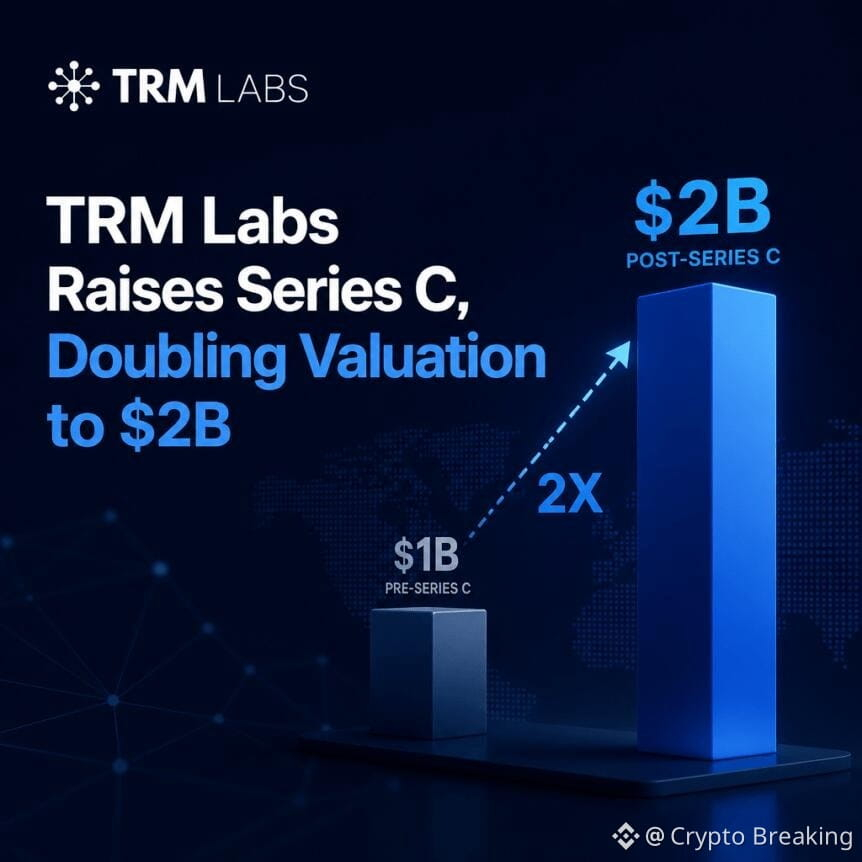
TRM Labs Raises Series C, Doubling Valuation to $2BBlockchain intelligence firm TRM Labs has reportedly doubled its valuation to $2 billion after expanding its Series C funding round led by Blockchain Capital. In an announcement Wednesday, the company said it did not disclose the amount of the latest investment, but stated that its annual recurring revenue has quadrupled over the past three years.
The new financing expansion comes on the heels of a $70 million Series C round in February, which was also led by Blockchain Capital. TRM provides blockchain intelligence and investigation software used by more than 600 government agencies and private-sector organizations across 75 countries, according to the company.
Key takeaways
TRM Labs’ valuation has risen to $2 billion following an expanded Series C round led by Blockchain Capital.
The company did not specify the size of the latest investment, but said its annual recurring revenue has quadrupled in three years.
TRM’s products target investigations into fraud, money laundering, sanctions evasion, and other forms of digital crime.
Federal procurement activity and a legal challenge involving an ICE contract have placed TRM’s role in government-focused intelligence in the spotlight.
Valuation lift tied to revenue growth
For investors, TRM’s disclosed performance metrics matter as much as the valuation headline. The company’s claim that annual recurring revenue has quadrupled over the past three years signals accelerating commercial traction, even though the size of the most recent Series C expansion remains undisclosed.
Before the February round, TRM was valued at $930 million, according to data compiled by Traxcn. It then crossed the $1 billion valuation threshold in a Series C that reportedly included Citi Ventures and Galaxy among the investors, setting up the momentum that now culminates in the doubled valuation.
Why demand is growing for blockchain intelligence
TRM says its AI-powered tools are used to investigate fraud, money laundering, sanctions evasion, and other categories of digital crime. That positioning aligns with the company’s references to broader enforcement and complaint trends.
TRM pointed to reported losses submitted to the FBI’s Internet Crime Complaint Center rising to $21 billion in 2025 from $16 billion in 2024. The firm also said it has observed a 40% year-over-year increase in criminal adoption of AI in 2026, citing its AI-in-Crime Adoption Index.
While those figures are company-provided context rather than independent metrics released alongside the funding update, they help explain why blockchain intelligence vendors are being treated as strategic infrastructure by both public agencies and regulated private institutions.
US government work and the court challenge
The funding expansion arrives roughly two months after US Immigration and Customs Enforcement (ICE) awarded TRM a roughly $95 million, one-year contract for forensic software and support services for Homeland Security Task Force investigations. Such awards can be pivotal for blockchain intelligence firms: they not only provide revenue visibility, but also serve as proof points that government teams can integrate the tools into ongoing operations.
However, TRM’s government role has not been without controversy. Earlier coverage notes that rival Chainalysis challenged ICE’s sole-source award in federal court later that month, alleging the decision was “arbitrary, capricious, and unreasonable.” The dispute underscores a key tension in the government procurement landscape for specialized digital forensics: even when a contractor claims performance and fit, competitors may argue process and selection standards were not met.
For TRM, the court case is important to monitor alongside the commercial narrative of rising revenue. For potential customers and partners, the outcome could influence procurement timelines, contract renewals, and how agencies evaluate alternative vendors for similar intelligence and investigation needs.
What to watch next
With TRM’s valuation now at $2 billion and revenue growth framed as a multi-year trend, the next signals to track are whether the company can sustain its A recurring revenue momentum and how the legal challenge around ICE’s contract develops—especially if it affects future government purchasing decisions.
This article was originally published as TRM Labs Raises Series C, Doubling Valuation to $2B on Crypto Breaking News – your trusted source for crypto news, Bitcoin news, and blockchain updates.
TRM Labs Raises Series C, Doubling Valuation to $2B
Blockchain intelligence firm TRM Labs has reportedly doubled its valuation to $2 billion after expanding its Series C funding round led by Blockchain Capital. In an announcement Wednesday, the company said it did not disclose the amount of the latest investment, but stated that its annual recurring revenue has quadrupled over the past three years.
The new financing expansion comes on the heels of a $70 million Series C round in February, which was also led by Blockchain Capital. TRM provides blockchain intelligence and investigation software used by more than 600 government agencies and private-sector organizations across 75 countries, according to the company.
Key takeaways
TRM Labs’ valuation has risen to $2 billion following an expanded Series C round led by Blockchain Capital.
The company did not specify the size of the latest investment, but said its annual recurring revenue has quadrupled in three years.
TRM’s products target investigations into fraud, money laundering, sanctions evasion, and other forms of digital crime.
Federal procurement activity and a legal challenge involving an ICE contract have placed TRM’s role in government-focused intelligence in the spotlight.
Valuation lift tied to revenue growth
For investors, TRM’s disclosed performance metrics matter as much as the valuation headline. The company’s claim that annual recurring revenue has quadrupled over the past three years signals accelerating commercial traction, even though the size of the most recent Series C expansion remains undisclosed.
Before the February round, TRM was valued at $930 million, according to data compiled by Traxcn. It then crossed the $1 billion valuation threshold in a Series C that reportedly included Citi Ventures and Galaxy among the investors, setting up the momentum that now culminates in the doubled valuation.
Why demand is growing for blockchain intelligence
TRM says its AI-powered tools are used to investigate fraud, money laundering, sanctions evasion, and other categories of digital crime. That positioning aligns with the company’s references to broader enforcement and complaint trends.
TRM pointed to reported losses submitted to the FBI’s Internet Crime Complaint Center rising to $21 billion in 2025 from $16 billion in 2024. The firm also said it has observed a 40% year-over-year increase in criminal adoption of AI in 2026, citing its AI-in-Crime Adoption Index.
While those figures are company-provided context rather than independent metrics released alongside the funding update, they help explain why blockchain intelligence vendors are being treated as strategic infrastructure by both public agencies and regulated private institutions.
US government work and the court challenge
The funding expansion arrives roughly two months after US Immigration and Customs Enforcement (ICE) awarded TRM a roughly $95 million, one-year contract for forensic software and support services for Homeland Security Task Force investigations. Such awards can be pivotal for blockchain intelligence firms: they not only provide revenue visibility, but also serve as proof points that government teams can integrate the tools into ongoing operations.
However, TRM’s government role has not been without controversy. Earlier coverage notes that rival Chainalysis challenged ICE’s sole-source award in federal court later that month, alleging the decision was “arbitrary, capricious, and unreasonable.” The dispute underscores a key tension in the government procurement landscape for specialized digital forensics: even when a contractor claims performance and fit, competitors may argue process and selection standards were not met.
For TRM, the court case is important to monitor alongside the commercial narrative of rising revenue. For potential customers and partners, the outcome could influence procurement timelines, contract renewals, and how agencies evaluate alternative vendors for similar intelligence and investigation needs.
What to watch next
With TRM’s valuation now at $2 billion and revenue growth framed as a multi-year trend, the next signals to track are whether the company can sustain its A recurring revenue momentum and how the legal challenge around ICE’s contract develops—especially if it affects future government purchasing decisions.
This article was originally published as TRM Labs Raises Series C, Doubling Valuation to $2B on Crypto Breaking News – your trusted source for crypto news, Bitcoin news, and blockchain updates.
The new financing expansion comes on the heels of a $70 million Series C round in February, which was also led by Blockchain Capital. TRM provides blockchain intelligence and investigation software used by more than 600 government agencies and private-sector organizations across 75 countries, according to the company.
Key takeaways
TRM Labs’ valuation has risen to $2 billion following an expanded Series C round led by Blockchain Capital.
The company did not specify the size of the latest investment, but said its annual recurring revenue has quadrupled in three years.
TRM’s products target investigations into fraud, money laundering, sanctions evasion, and other forms of digital crime.
Federal procurement activity and a legal challenge involving an ICE contract have placed TRM’s role in government-focused intelligence in the spotlight.
Valuation lift tied to revenue growth
For investors, TRM’s disclosed performance metrics matter as much as the valuation headline. The company’s claim that annual recurring revenue has quadrupled over the past three years signals accelerating commercial traction, even though the size of the most recent Series C expansion remains undisclosed.
Before the February round, TRM was valued at $930 million, according to data compiled by Traxcn. It then crossed the $1 billion valuation threshold in a Series C that reportedly included Citi Ventures and Galaxy among the investors, setting up the momentum that now culminates in the doubled valuation.
Why demand is growing for blockchain intelligence
TRM says its AI-powered tools are used to investigate fraud, money laundering, sanctions evasion, and other categories of digital crime. That positioning aligns with the company’s references to broader enforcement and complaint trends.
TRM pointed to reported losses submitted to the FBI’s Internet Crime Complaint Center rising to $21 billion in 2025 from $16 billion in 2024. The firm also said it has observed a 40% year-over-year increase in criminal adoption of AI in 2026, citing its AI-in-Crime Adoption Index.
While those figures are company-provided context rather than independent metrics released alongside the funding update, they help explain why blockchain intelligence vendors are being treated as strategic infrastructure by both public agencies and regulated private institutions.
US government work and the court challenge
The funding expansion arrives roughly two months after US Immigration and Customs Enforcement (ICE) awarded TRM a roughly $95 million, one-year contract for forensic software and support services for Homeland Security Task Force investigations. Such awards can be pivotal for blockchain intelligence firms: they not only provide revenue visibility, but also serve as proof points that government teams can integrate the tools into ongoing operations.
However, TRM’s government role has not been without controversy. Earlier coverage notes that rival Chainalysis challenged ICE’s sole-source award in federal court later that month, alleging the decision was “arbitrary, capricious, and unreasonable.” The dispute underscores a key tension in the government procurement landscape for specialized digital forensics: even when a contractor claims performance and fit, competitors may argue process and selection standards were not met.
For TRM, the court case is important to monitor alongside the commercial narrative of rising revenue. For potential customers and partners, the outcome could influence procurement timelines, contract renewals, and how agencies evaluate alternative vendors for similar intelligence and investigation needs.
What to watch next
With TRM’s valuation now at $2 billion and revenue growth framed as a multi-year trend, the next signals to track are whether the company can sustain its A recurring revenue momentum and how the legal challenge around ICE’s contract develops—especially if it affects future government purchasing decisions.
This article was originally published as TRM Labs Raises Series C, Doubling Valuation to $2B on Crypto Breaking News – your trusted source for crypto news, Bitcoin news, and blockchain updates.
92
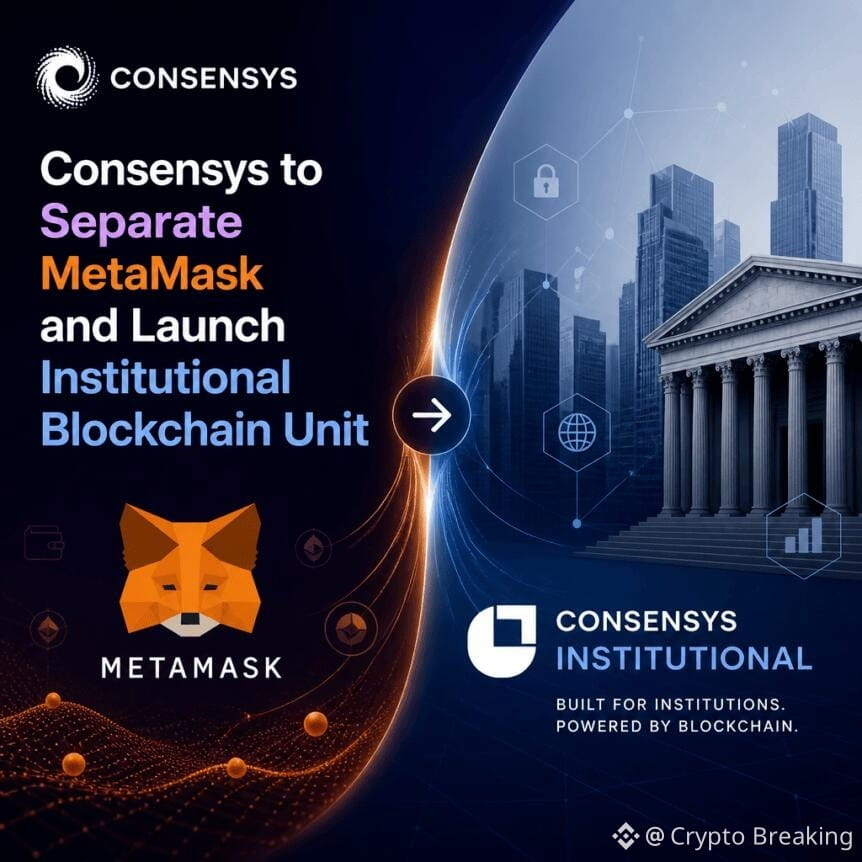
Стаття
Переглянути переклад
Consensys to Separate MetaMask and Launch Institutional Blockchain UnitConsensys Software Inc., the Ethereum-focused firm behind MetaMask, plans to restructure by splitting its consumer-oriented business from its institutional blockchain infrastructure operations. The company says the separation is expected to be completed by the end of 2026, creating two independent companies with distinct leadership and strategic priorities.
According to a Business Wire announcement, Joe Lubin will serve as chairman and CEO of MetaMask while also taking the role of executive chairman of the new Consensys. The institutional business—focused on Ethereum protocols and infrastructure—will be led by Mike Kriak as CEO, with David Cunningham as president.
Key takeaways
Consensys will separate into two independent firms by the end of 2026: MetaMask (consumer self-custody) and a new Consensys (Ethereum protocols and institutional infrastructure).
The new Consensys will house Consensys’ protocol and infrastructure portfolio, including Linea, Besu, and Teku.
MetaMask is positioned to broaden beyond a wallet into payments, savings, investing, and other traditional financial products.
Consensys says MetaMask has surpassed 100 million downloads across about 190 countries and supported “trillions of dollars” in transaction volume.
From one umbrella to two focused companies
The planned reorganization reflects what the company describes as increasingly different objectives between its consumer-facing and institutional-facing teams. In the announcement, Consensys frames the split as a way to allow each business to pursue its own roadmap without competing for shared priorities.
Under the new structure, MetaMask will remain the centerpiece of the consumer division, with an emphasis on self-custody. Consensys also outlined that MetaMask’s expansion is not limited to crypto holdings and decentralized app access; it is intended to extend into areas such as payments, savings, and investing, as well as “traditional financial products.”
Meanwhile, the institutional infrastructure company will consolidate Consensys’ Ethereum protocol and infrastructure activities. The company says this entity will focus on Ethereum infrastructure while supporting financial institutions looking to deploy blockchain technology for tokenization, stablecoins, and other onchain financial services.
What will live under “MetaMask” vs. “the new Consensys”
Consensys’ announcement is explicit about the portfolio split. The new Consensys entity will house the company’s protocols and institutional infrastructure businesses, including Linea, Besu, and Teku.
While the announcement does not detail whether these products will change in scope after the separation, the strategic direction is clear: an infrastructure-first company designed to work with institutions, where the customer is more likely to value deployment, reliability, and enterprise integration over consumer growth metrics.
In contrast, MetaMask’s mandate centers on consumer self-custody and product-led expansion into finance-adjacent services. The company’s messaging suggests that the consumer operation will continue to evolve from a browser extension into a broader interface for onchain and finance-related experiences, including functionality connected to stablecoins and yield strategies—while remaining within a self-custody framework.
Consensys says MetaMask has been downloaded more than 100 million times across roughly 190 countries and facilitated trillions of dollars in transaction volume.
MetaMask’s push into consumer finance features
Part of the logic behind the split appears tied to how MetaMask has expanded beyond its original “wallet for decentralized applications” role. Launched in 2016 as an Ethereum browser extension, MetaMask has added new product lines over the past year, including tools associated with payments, yield, and access to tokenized real-world assets.
In June, Consensys said MetaMask launched Money Account, which it describes as allowing users to earn up to 4% variable APY on eligible mUSD stablecoin balances. The company also stated that the yield is generated through decentralized finance lending strategies rather than interest paid by MetaMask or by the stablecoin issuer.
Earlier in the year, MetaMask added access to tokenized financial products for certain users. In February, Consensys reported support for 200 tokenized US stocks, exchange-traded funds, and commodities via Ondo Global Markets, limited to eligible users outside the United States.
That same month, MetaMask rolled out a Mastercard-enabled spending card across 49 US states. Consensys said the card expanded a previously available product that had already reached markets including Europe, Canada, Mexico, Brazil, and Argentina.
Taken together, these updates help explain why a consumer-first business might benefit from separation: MetaMask’s expanding feature set increasingly resembles a consumer finance platform—while the institutional protocols business is oriented toward deployment infrastructure for enterprise and regulated use cases.
Why the split matters for builders and investors
Restructuring a major Ethereum software provider can matter beyond internal operations, because it shapes where resources and attention flow. A dedicated institutional infrastructure unit may allow teams behind Linea, Besu, and Teku to focus more narrowly on scaling, tooling, and integration work relevant to financial institutions and enterprise networks.
For investors and market participants, the split also provides clearer lines of accountability: MetaMask’s leadership and product execution can be assessed primarily through consumer adoption and the rollout of finance features, while the new Consensys can be evaluated on the delivery of Ethereum infrastructure services and institutional deployment outcomes.
At the same time, Consensys’ own framing highlights that the separation is not simply organizational—it is strategic. The company says the consumer and institutional businesses have “increasingly different priorities,” and the timeline suggests it expects those differences to become more consequential as each unit pursues its own growth and partnerships.
Readers should watch how Consensys handles continuity during the transition, especially how MetaMask’s expanded financial features and the institutional protocols roadmap will evolve up to the end-of-2026 completion target.
With the split planned but not yet finalized, the key near-term question is whether the product lines will remain consistent for users while each company sharpens its focus—particularly as MetaMask continues moving into payments and tokenized asset access, and the institutional unit deepens its work supporting stablecoin and tokenization initiatives.
This article was originally published as Consensys to Separate MetaMask and Launch Institutional Blockchain Unit on Crypto Breaking News – your trusted source for crypto news, Bitcoin news, and blockchain updates.
Consensys to Separate MetaMask and Launch Institutional Blockchain Unit
Consensys Software Inc., the Ethereum-focused firm behind MetaMask, plans to restructure by splitting its consumer-oriented business from its institutional blockchain infrastructure operations. The company says the separation is expected to be completed by the end of 2026, creating two independent companies with distinct leadership and strategic priorities.
According to a Business Wire announcement, Joe Lubin will serve as chairman and CEO of MetaMask while also taking the role of executive chairman of the new Consensys. The institutional business—focused on Ethereum protocols and infrastructure—will be led by Mike Kriak as CEO, with David Cunningham as president.
Key takeaways
Consensys will separate into two independent firms by the end of 2026: MetaMask (consumer self-custody) and a new Consensys (Ethereum protocols and institutional infrastructure).
The new Consensys will house Consensys’ protocol and infrastructure portfolio, including Linea, Besu, and Teku.
MetaMask is positioned to broaden beyond a wallet into payments, savings, investing, and other traditional financial products.
Consensys says MetaMask has surpassed 100 million downloads across about 190 countries and supported “trillions of dollars” in transaction volume.
From one umbrella to two focused companies
The planned reorganization reflects what the company describes as increasingly different objectives between its consumer-facing and institutional-facing teams. In the announcement, Consensys frames the split as a way to allow each business to pursue its own roadmap without competing for shared priorities.
Under the new structure, MetaMask will remain the centerpiece of the consumer division, with an emphasis on self-custody. Consensys also outlined that MetaMask’s expansion is not limited to crypto holdings and decentralized app access; it is intended to extend into areas such as payments, savings, and investing, as well as “traditional financial products.”
Meanwhile, the institutional infrastructure company will consolidate Consensys’ Ethereum protocol and infrastructure activities. The company says this entity will focus on Ethereum infrastructure while supporting financial institutions looking to deploy blockchain technology for tokenization, stablecoins, and other onchain financial services.
What will live under “MetaMask” vs. “the new Consensys”
Consensys’ announcement is explicit about the portfolio split. The new Consensys entity will house the company’s protocols and institutional infrastructure businesses, including Linea, Besu, and Teku.
While the announcement does not detail whether these products will change in scope after the separation, the strategic direction is clear: an infrastructure-first company designed to work with institutions, where the customer is more likely to value deployment, reliability, and enterprise integration over consumer growth metrics.
In contrast, MetaMask’s mandate centers on consumer self-custody and product-led expansion into finance-adjacent services. The company’s messaging suggests that the consumer operation will continue to evolve from a browser extension into a broader interface for onchain and finance-related experiences, including functionality connected to stablecoins and yield strategies—while remaining within a self-custody framework.
Consensys says MetaMask has been downloaded more than 100 million times across roughly 190 countries and facilitated trillions of dollars in transaction volume.
MetaMask’s push into consumer finance features
Part of the logic behind the split appears tied to how MetaMask has expanded beyond its original “wallet for decentralized applications” role. Launched in 2016 as an Ethereum browser extension, MetaMask has added new product lines over the past year, including tools associated with payments, yield, and access to tokenized real-world assets.
In June, Consensys said MetaMask launched Money Account, which it describes as allowing users to earn up to 4% variable APY on eligible mUSD stablecoin balances. The company also stated that the yield is generated through decentralized finance lending strategies rather than interest paid by MetaMask or by the stablecoin issuer.
Earlier in the year, MetaMask added access to tokenized financial products for certain users. In February, Consensys reported support for 200 tokenized US stocks, exchange-traded funds, and commodities via Ondo Global Markets, limited to eligible users outside the United States.
That same month, MetaMask rolled out a Mastercard-enabled spending card across 49 US states. Consensys said the card expanded a previously available product that had already reached markets including Europe, Canada, Mexico, Brazil, and Argentina.
Taken together, these updates help explain why a consumer-first business might benefit from separation: MetaMask’s expanding feature set increasingly resembles a consumer finance platform—while the institutional protocols business is oriented toward deployment infrastructure for enterprise and regulated use cases.
Why the split matters for builders and investors
Restructuring a major Ethereum software provider can matter beyond internal operations, because it shapes where resources and attention flow. A dedicated institutional infrastructure unit may allow teams behind Linea, Besu, and Teku to focus more narrowly on scaling, tooling, and integration work relevant to financial institutions and enterprise networks.
For investors and market participants, the split also provides clearer lines of accountability: MetaMask’s leadership and product execution can be assessed primarily through consumer adoption and the rollout of finance features, while the new Consensys can be evaluated on the delivery of Ethereum infrastructure services and institutional deployment outcomes.
At the same time, Consensys’ own framing highlights that the separation is not simply organizational—it is strategic. The company says the consumer and institutional businesses have “increasingly different priorities,” and the timeline suggests it expects those differences to become more consequential as each unit pursues its own growth and partnerships.
Readers should watch how Consensys handles continuity during the transition, especially how MetaMask’s expanded financial features and the institutional protocols roadmap will evolve up to the end-of-2026 completion target.
With the split planned but not yet finalized, the key near-term question is whether the product lines will remain consistent for users while each company sharpens its focus—particularly as MetaMask continues moving into payments and tokenized asset access, and the institutional unit deepens its work supporting stablecoin and tokenization initiatives.
This article was originally published as Consensys to Separate MetaMask and Launch Institutional Blockchain Unit on Crypto Breaking News – your trusted source for crypto news, Bitcoin news, and blockchain updates.
According to a Business Wire announcement, Joe Lubin will serve as chairman and CEO of MetaMask while also taking the role of executive chairman of the new Consensys. The institutional business—focused on Ethereum protocols and infrastructure—will be led by Mike Kriak as CEO, with David Cunningham as president.
Key takeaways
Consensys will separate into two independent firms by the end of 2026: MetaMask (consumer self-custody) and a new Consensys (Ethereum protocols and institutional infrastructure).
The new Consensys will house Consensys’ protocol and infrastructure portfolio, including Linea, Besu, and Teku.
MetaMask is positioned to broaden beyond a wallet into payments, savings, investing, and other traditional financial products.
Consensys says MetaMask has surpassed 100 million downloads across about 190 countries and supported “trillions of dollars” in transaction volume.
From one umbrella to two focused companies
The planned reorganization reflects what the company describes as increasingly different objectives between its consumer-facing and institutional-facing teams. In the announcement, Consensys frames the split as a way to allow each business to pursue its own roadmap without competing for shared priorities.
Under the new structure, MetaMask will remain the centerpiece of the consumer division, with an emphasis on self-custody. Consensys also outlined that MetaMask’s expansion is not limited to crypto holdings and decentralized app access; it is intended to extend into areas such as payments, savings, and investing, as well as “traditional financial products.”
Meanwhile, the institutional infrastructure company will consolidate Consensys’ Ethereum protocol and infrastructure activities. The company says this entity will focus on Ethereum infrastructure while supporting financial institutions looking to deploy blockchain technology for tokenization, stablecoins, and other onchain financial services.
What will live under “MetaMask” vs. “the new Consensys”
Consensys’ announcement is explicit about the portfolio split. The new Consensys entity will house the company’s protocols and institutional infrastructure businesses, including Linea, Besu, and Teku.
While the announcement does not detail whether these products will change in scope after the separation, the strategic direction is clear: an infrastructure-first company designed to work with institutions, where the customer is more likely to value deployment, reliability, and enterprise integration over consumer growth metrics.
In contrast, MetaMask’s mandate centers on consumer self-custody and product-led expansion into finance-adjacent services. The company’s messaging suggests that the consumer operation will continue to evolve from a browser extension into a broader interface for onchain and finance-related experiences, including functionality connected to stablecoins and yield strategies—while remaining within a self-custody framework.
Consensys says MetaMask has been downloaded more than 100 million times across roughly 190 countries and facilitated trillions of dollars in transaction volume.
MetaMask’s push into consumer finance features
Part of the logic behind the split appears tied to how MetaMask has expanded beyond its original “wallet for decentralized applications” role. Launched in 2016 as an Ethereum browser extension, MetaMask has added new product lines over the past year, including tools associated with payments, yield, and access to tokenized real-world assets.
In June, Consensys said MetaMask launched Money Account, which it describes as allowing users to earn up to 4% variable APY on eligible mUSD stablecoin balances. The company also stated that the yield is generated through decentralized finance lending strategies rather than interest paid by MetaMask or by the stablecoin issuer.
Earlier in the year, MetaMask added access to tokenized financial products for certain users. In February, Consensys reported support for 200 tokenized US stocks, exchange-traded funds, and commodities via Ondo Global Markets, limited to eligible users outside the United States.
That same month, MetaMask rolled out a Mastercard-enabled spending card across 49 US states. Consensys said the card expanded a previously available product that had already reached markets including Europe, Canada, Mexico, Brazil, and Argentina.
Taken together, these updates help explain why a consumer-first business might benefit from separation: MetaMask’s expanding feature set increasingly resembles a consumer finance platform—while the institutional protocols business is oriented toward deployment infrastructure for enterprise and regulated use cases.
Why the split matters for builders and investors
Restructuring a major Ethereum software provider can matter beyond internal operations, because it shapes where resources and attention flow. A dedicated institutional infrastructure unit may allow teams behind Linea, Besu, and Teku to focus more narrowly on scaling, tooling, and integration work relevant to financial institutions and enterprise networks.
For investors and market participants, the split also provides clearer lines of accountability: MetaMask’s leadership and product execution can be assessed primarily through consumer adoption and the rollout of finance features, while the new Consensys can be evaluated on the delivery of Ethereum infrastructure services and institutional deployment outcomes.
At the same time, Consensys’ own framing highlights that the separation is not simply organizational—it is strategic. The company says the consumer and institutional businesses have “increasingly different priorities,” and the timeline suggests it expects those differences to become more consequential as each unit pursues its own growth and partnerships.
Readers should watch how Consensys handles continuity during the transition, especially how MetaMask’s expanded financial features and the institutional protocols roadmap will evolve up to the end-of-2026 completion target.
With the split planned but not yet finalized, the key near-term question is whether the product lines will remain consistent for users while each company sharpens its focus—particularly as MetaMask continues moving into payments and tokenized asset access, and the institutional unit deepens its work supporting stablecoin and tokenization initiatives.
This article was originally published as Consensys to Separate MetaMask and Launch Institutional Blockchain Unit on Crypto Breaking News – your trusted source for crypto news, Bitcoin news, and blockchain updates.
28

Стаття
Екс-CEO Silvergate: тиск з боку Байдена зумовив згортання у 2023 роціКолишній генеральний директор Silvergate Bank Алан Лейн заявляє, що добровільне згортання банком у 2023 році було зумовлене меншою мірою проблемами платоспроможності й значною мірою політичним тиском, пов’язаним із адміністрацією Байдена. У стартовому дописі в Substack, опублікованому у вівторок, Лейн стверджує, що Silvergate міг продовжувати роботу після того, як у другій половині 2022 року задовольнив значні вимоги щодо вилучення коштів — що суперечить суті кількох перевірок регуляторів, які вказували на провали у фінансуванні, управлінні та комплаєнсі.
Суперечка має значення не лише для краху Silvergate, адже вона лежить у центрі ширшої, триваючої дискусії: чи ефективно американські регулятори «продавили» криптоорієнтовані банки шляхом підвищеного контролю за ризик-менеджментом і наглядових дій, чи ж збої були здебільшого внутрішніми. Опис Лейна додає погляд із перших рук до масиву матеріалів, який включає дії зі застосування заходів Федеральної резервної системи та Комісії з цінних паперів і бірж (SEC), а також офіційні огляди, що вказують на слабкі місця в тому, як банк керував своєю концентрованою депозитною базою та зобов’язаннями з дотримання вимог законодавства.
Екс-CEO Silvergate: тиск з боку Байдена зумовив згортання у 2023 році
Колишній генеральний директор Silvergate Bank Алан Лейн заявляє, що добровільне згортання банком у 2023 році було зумовлене меншою мірою проблемами платоспроможності й значною мірою політичним тиском, пов’язаним із адміністрацією Байдена. У стартовому дописі в Substack, опублікованому у вівторок, Лейн стверджує, що Silvergate міг продовжувати роботу після того, як у другій половині 2022 року задовольнив значні вимоги щодо вилучення коштів — що суперечить суті кількох перевірок регуляторів, які вказували на провали у фінансуванні, управлінні та комплаєнсі.
Суперечка має значення не лише для краху Silvergate, адже вона лежить у центрі ширшої, триваючої дискусії: чи ефективно американські регулятори «продавили» криптоорієнтовані банки шляхом підвищеного контролю за ризик-менеджментом і наглядових дій, чи ж збої були здебільшого внутрішніми. Опис Лейна додає погляд із перших рук до масиву матеріалів, який включає дії зі застосування заходів Федеральної резервної системи та Комісії з цінних паперів і бірж (SEC), а також офіційні огляди, що вказують на слабкі місця в тому, як банк керував своєю концентрованою депозитною базою та зобов’язаннями з дотримання вимог законодавства.
Суперечка має значення не лише для краху Silvergate, адже вона лежить у центрі ширшої, триваючої дискусії: чи ефективно американські регулятори «продавили» криптоорієнтовані банки шляхом підвищеного контролю за ризик-менеджментом і наглядових дій, чи ж збої були здебільшого внутрішніми. Опис Лейна додає погляд із перших рук до масиву матеріалів, який включає дії зі застосування заходів Федеральної резервної системи та Комісії з цінних паперів і бірж (SEC), а також офіційні огляди, що вказують на слабкі місця в тому, як банк керував своєю концентрованою депозитною базою та зобов’язаннями з дотримання вимог законодавства.
47
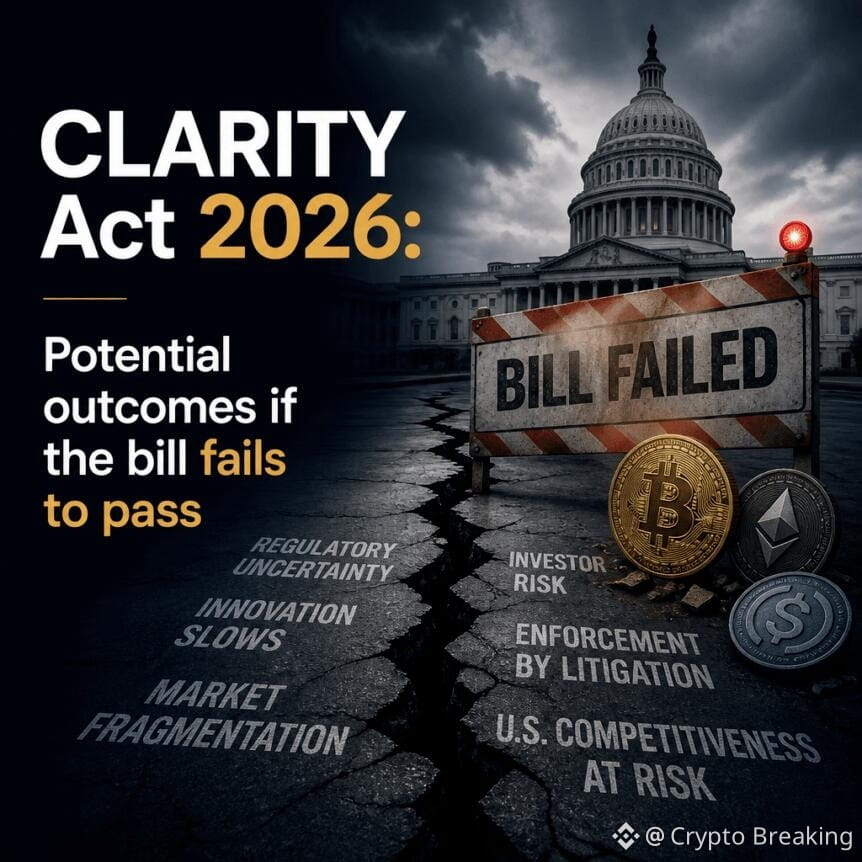
Стаття
Закон CLARITY 2026: Можливі наслідки, якщо законопроєкт не буде ухваленоАмериканські законодавці поспішають ухвалити Закон про чіткість ринку цифрових активів (CLARITY) через Сенат до того, як політичні процеси в Конгресі перезапустяться після проміжних виборів 2026 року. Оскільки Сенат, як заплановано, повернеться до Вашингтона в понеділок, лідер більшості Джон Тьюн встановив голосування щодо клотури на вівторок — це негайне процедурне випробування, яке визначить, чи зможе законопроєкт подолати поріг у 60 голосів, необхідний для подолання філібастеру.
Строки дуже стислі. Якщо CLARITY не просунеться цього сесійного періоду, палата фактично залишиться менш ніж із 36 робочими днями до того, як у 2027 році буде приведено до присяги новий Конгрес, згідно з попередніми повідомленнями, на які посилається ця публікація. Це створює точку прийняття рішень із високими ставками: або просувати законопроєкт зараз, або ризикувати винести його на пізніший Конгрес, де партійний контроль — і пріоритети — можуть виглядати зовсім інакше.
Закон CLARITY 2026: Можливі наслідки, якщо законопроєкт не буде ухвалено
Американські законодавці поспішають ухвалити Закон про чіткість ринку цифрових активів (CLARITY) через Сенат до того, як політичні процеси в Конгресі перезапустяться після проміжних виборів 2026 року. Оскільки Сенат, як заплановано, повернеться до Вашингтона в понеділок, лідер більшості Джон Тьюн встановив голосування щодо клотури на вівторок — це негайне процедурне випробування, яке визначить, чи зможе законопроєкт подолати поріг у 60 голосів, необхідний для подолання філібастеру.
Строки дуже стислі. Якщо CLARITY не просунеться цього сесійного періоду, палата фактично залишиться менш ніж із 36 робочими днями до того, як у 2027 році буде приведено до присяги новий Конгрес, згідно з попередніми повідомленнями, на які посилається ця публікація. Це створює точку прийняття рішень із високими ставками: або просувати законопроєкт зараз, або ризикувати винести його на пізніший Конгрес, де партійний контроль — і пріоритети — можуть виглядати зовсім інакше.
Строки дуже стислі. Якщо CLARITY не просунеться цього сесійного періоду, палата фактично залишиться менш ніж із 36 робочими днями до того, як у 2027 році буде приведено до присяги новий Конгрес, згідно з попередніми повідомленнями, на які посилається ця публікація. Це створює точку прийняття рішень із високими ставками: або просувати законопроєкт зараз, або ризикувати винести його на пізніший Конгрес, де партійний контроль — і пріоритети — можуть виглядати зовсім інакше.
162

Стаття
Біткоїн не дотягує до $80K: сила єни через Bessent впливає на рівень $153У середу біткоїн торгувався обережно в діапазоні нижче $80 000, зважений ширшим настроєм risk-off на тлі ескалації напруженості, пов’язаної з іранськими морськими перевезеннями нафти, та поновленого тиску на умови макроліквідності. Водночас японська єна різко зміцнилася, утримуючи увагу трейдерів на механіці єнового carry-trade та можливості подальшого втручання на валютному ринку.
Рух ринків розгортався так, що акції США знижувалися, а нафта марки Brent зростала після нових ударів США по нафтоналивних танкерах, пов’язаних із Іраном. Brent піднялася вище $101 за барель уперше з кінця липня, тоді як WTI торгувалася вище $96 — на основі рівнів цін, наведених поруч із графіками TradingView.
Біткоїн не дотягує до $80K: сила єни через Bessent впливає на рівень $153
У середу біткоїн торгувався обережно в діапазоні нижче $80 000, зважений ширшим настроєм risk-off на тлі ескалації напруженості, пов’язаної з іранськими морськими перевезеннями нафти, та поновленого тиску на умови макроліквідності. Водночас японська єна різко зміцнилася, утримуючи увагу трейдерів на механіці єнового carry-trade та можливості подальшого втручання на валютному ринку.
Рух ринків розгортався так, що акції США знижувалися, а нафта марки Brent зростала після нових ударів США по нафтоналивних танкерах, пов’язаних із Іраном. Brent піднялася вище $101 за барель уперше з кінця липня, тоді як WTI торгувалася вище $96 — на основі рівнів цін, наведених поруч із графіками TradingView.
Рух ринків розгортався так, що акції США знижувалися, а нафта марки Brent зростала після нових ударів США по нафтоналивних танкерах, пов’язаних із Іраном. Brent піднялася вище $101 за барель уперше з кінця липня, тоді як WTI торгувалася вище $96 — на основі рівнів цін, наведених поруч із графіками TradingView.
119

Стаття
Kalshi подає заявку на запуск безстрокових ф’ючерсів на золото та сріблоKalshi подала документи до Комісії з торгівлі товарними ф’ючерсами (CFTC), щоб запустити два нові безстрокові ф’ючерсні контракти. Прогнозний ринок планує включити до списку GOLDPERP та SILVERPERP 9 вересня. Обидва контракти розраховуються готівкою та не мають дати закінчення.
Безстрокові ф’ючерси на золото входять до лінійки Kalshi
Kalshi подала свою заяву відповідно до Положення 40.2(a) регламенту CFTC. Цей шлях самосертифікації дозволяє біржам розміщувати продукти без попереднього схвалення агентством, тож Kalshi підтвердила дотримання Закону про товарні біржі напряму. Не було необхідності в окремому етапі перегляду до дати лістингу.
Kalshi подає заявку на запуск безстрокових ф’ючерсів на золото та срібло
Kalshi подала документи до Комісії з торгівлі товарними ф’ючерсами (CFTC), щоб запустити два нові безстрокові ф’ючерсні контракти. Прогнозний ринок планує включити до списку GOLDPERP та SILVERPERP 9 вересня. Обидва контракти розраховуються готівкою та не мають дати закінчення.
Безстрокові ф’ючерси на золото входять до лінійки Kalshi
Kalshi подала свою заяву відповідно до Положення 40.2(a) регламенту CFTC. Цей шлях самосертифікації дозволяє біржам розміщувати продукти без попереднього схвалення агентством, тож Kalshi підтвердила дотримання Закону про товарні біржі напряму. Не було необхідності в окремому етапі перегляду до дати лістингу.
Безстрокові ф’ючерси на золото входять до лінійки Kalshi
Kalshi подала свою заяву відповідно до Положення 40.2(a) регламенту CFTC. Цей шлях самосертифікації дозволяє біржам розміщувати продукти без попереднього схвалення агентством, тож Kalshi підтвердила дотримання Закону про товарні біржі напряму. Не було необхідності в окремому етапі перегляду до дати лістингу.
268
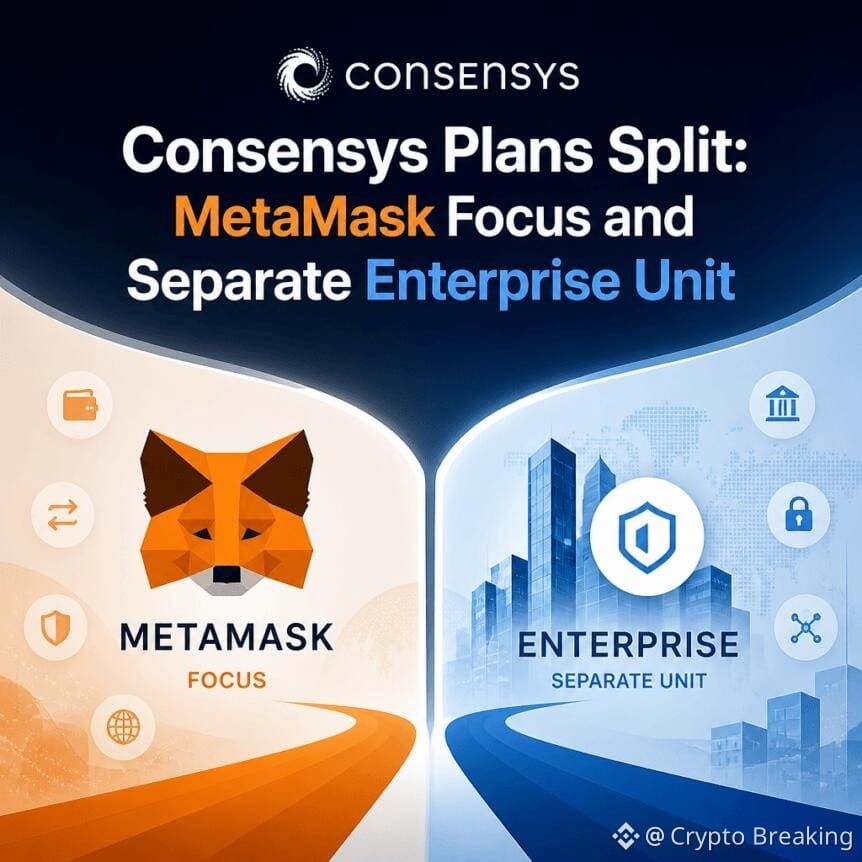
Стаття
Consensys планує розділ: фокус на MetaMask і окремий підрозділ для підприємствConsensys Software Inc., компанія, орієнтована на Ethereum і найвідоміша завдяки MetaMask, планує розділитися на два незалежні бізнеси — відокремивши споживчу платформу MetaMask від своєї інституційної інфраструктури та протокольних операцій. Компанія повідомляє, що реструктуризацію очікують завершити до кінця 2026 року: MetaMask очолюватимуть Джо Любін як голова та генеральний директор споживчої компанії, а також Любін додатково виконуватиме роль виконавчого голови реорганізованої Consensys.
У новій структурі компанія Consensys, що залишиться, фокусуватиметься на протоколах Ethereum та інституційній інфраструктурі. Її портфель включає Linea, Besu та Teku, а керівництво здійснюватимуть генеральний директор Майк Кряак та президент Девід Каннінгем. Компанія подає цей крок як відповідь на розбіжність пріоритетів між продуктами для споживачів і впровадженням enterprise-блокчейнів.
Consensys планує розділ: фокус на MetaMask і окремий підрозділ для підприємств
Consensys Software Inc., компанія, орієнтована на Ethereum і найвідоміша завдяки MetaMask, планує розділитися на два незалежні бізнеси — відокремивши споживчу платформу MetaMask від своєї інституційної інфраструктури та протокольних операцій. Компанія повідомляє, що реструктуризацію очікують завершити до кінця 2026 року: MetaMask очолюватимуть Джо Любін як голова та генеральний директор споживчої компанії, а також Любін додатково виконуватиме роль виконавчого голови реорганізованої Consensys.
У новій структурі компанія Consensys, що залишиться, фокусуватиметься на протоколах Ethereum та інституційній інфраструктурі. Її портфель включає Linea, Besu та Teku, а керівництво здійснюватимуть генеральний директор Майк Кряак та президент Девід Каннінгем. Компанія подає цей крок як відповідь на розбіжність пріоритетів між продуктами для споживачів і впровадженням enterprise-блокчейнів.
У новій структурі компанія Consensys, що залишиться, фокусуватиметься на протоколах Ethereum та інституційній інфраструктурі. Її портфель включає Linea, Besu та Teku, а керівництво здійснюватимуть генеральний директор Майк Кряак та президент Девід Каннінгем. Компанія подає цей крок як відповідь на розбіжність пріоритетів між продуктами для споживачів і впровадженням enterprise-блокчейнів.
35
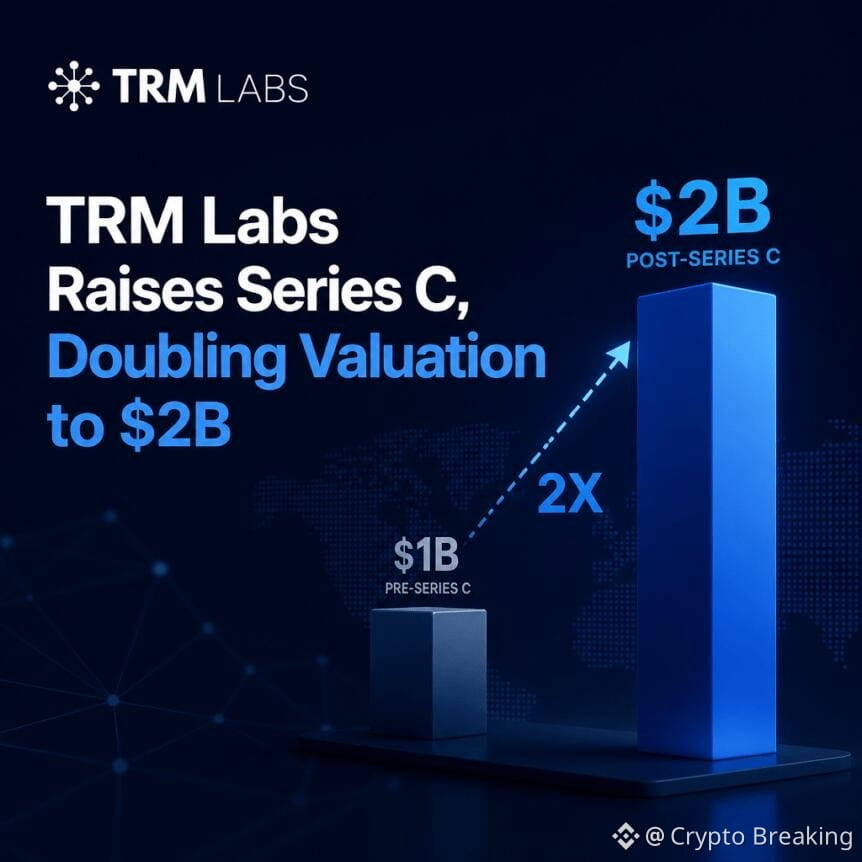
Стаття
TRM Labs залучає серію C, подвоюючи оцінку до $2 млрдTRM Labs, компанія з блокчейн-аналітики, зосереджена на розслідуваннях і комплаєнсі, збільшила свою оцінку більш ніж удвічі — до $2 млрд — після розширення раунду фінансування серії C. Раунд очолив Blockchain Capital, повідомляється в оголошенні, опублікованому в середу. TRM не розкрила суму, яку було залучено під час останнього розширення.
Компанія зазначає, що її щорічний повторюваний дохід зріс у чотири рази протягом останніх трьох років. Розширення фінансування спирається на окрему чергу серії C, оголошену в лютому, коли TRM залучила $70 млн — також за участі Blockchain Capital.
TRM Labs залучає серію C, подвоюючи оцінку до $2 млрд
TRM Labs, компанія з блокчейн-аналітики, зосереджена на розслідуваннях і комплаєнсі, збільшила свою оцінку більш ніж удвічі — до $2 млрд — після розширення раунду фінансування серії C. Раунд очолив Blockchain Capital, повідомляється в оголошенні, опублікованому в середу. TRM не розкрила суму, яку було залучено під час останнього розширення.
Компанія зазначає, що її щорічний повторюваний дохід зріс у чотири рази протягом останніх трьох років. Розширення фінансування спирається на окрему чергу серії C, оголошену в лютому, коли TRM залучила $70 млн — також за участі Blockchain Capital.
Компанія зазначає, що її щорічний повторюваний дохід зріс у чотири рази протягом останніх трьох років. Розширення фінансування спирається на окрему чергу серії C, оголошену в лютому, коли TRM залучила $70 млн — також за участі Blockchain Capital.
35

Стаття
U.S. Bank Тестує Власний Стейблкоїн Для Транскордонних Платежів У Мережі StellarЯк повідомив цього тижня банк, U.S. Bank завершив живий транскордонний платіж, який використовує його власний стейблкоїн USBDC у блокчейні Stellar. У пілотному проєкті кошти було переказано між структурними підрозділами U.S. Bank у Північній Америці та Європі, причому USBDC було емітовано та переміщено в публічній мережі Stellar.
Крім самої передачі, U.S. Bank зазначає, що під час вправи також було протестовано базові можливості стейблкоїна — карбування, погашення та адміністративний контроль, зокрема заморожування й clawback, — водночас пов’язуючи процес із наявними в банку системами управління ризиками, комплаєнсу та операційними системами. Мета — перевірити, чи може стейблкоїн-орієнтована рейкова інфраструктура підтримувати регульовані банківські робочі процеси для транскордонної діяльності з казначейських операцій і розрахунків.
U.S. Bank Тестує Власний Стейблкоїн Для Транскордонних Платежів У Мережі Stellar
Як повідомив цього тижня банк, U.S. Bank завершив живий транскордонний платіж, який використовує його власний стейблкоїн USBDC у блокчейні Stellar. У пілотному проєкті кошти було переказано між структурними підрозділами U.S. Bank у Північній Америці та Європі, причому USBDC було емітовано та переміщено в публічній мережі Stellar.
Крім самої передачі, U.S. Bank зазначає, що під час вправи також було протестовано базові можливості стейблкоїна — карбування, погашення та адміністративний контроль, зокрема заморожування й clawback, — водночас пов’язуючи процес із наявними в банку системами управління ризиками, комплаєнсу та операційними системами. Мета — перевірити, чи може стейблкоїн-орієнтована рейкова інфраструктура підтримувати регульовані банківські робочі процеси для транскордонної діяльності з казначейських операцій і розрахунків.
Крім самої передачі, U.S. Bank зазначає, що під час вправи також було протестовано базові можливості стейблкоїна — карбування, погашення та адміністративний контроль, зокрема заморожування й clawback, — водночас пов’язуючи процес із наявними в банку системами управління ризиками, комплаєнсу та операційними системами. Мета — перевірити, чи може стейблкоїн-орієнтована рейкова інфраструктура підтримувати регульовані банківські робочі процеси для транскордонної діяльності з казначейських операцій і розрахунків.
57

Стаття
Переглянути переклад
Trade Groups Push to Stop Illinois Crypto Tax From Taking Effect in JanuaryCrypto industry trade groups are asking a judge to halt Illinois’ upcoming 0.2% tax on cryptocurrency transactions, arguing the measure is unconstitutional and would force companies to incur substantial compliance costs before the rule even begins.
According to the Crypto Council for Innovation (CCI) and the Blockchain Association (BA), they filed a motion for a preliminary injunction in the Circuit Court of Sangamon County, Illinois, seeking to block enforcement ahead of the tax’s planned start in January 2027. The request comes after the groups previously sued to challenge the law itself.
Key takeaways
CCI and BA have moved for a preliminary injunction to stop Illinois’ 0.2% tax on crypto transaction volume from taking effect in January 2027.
The groups argue the tax would trigger irreparable harm, including major spending on systems and resources while key details remain unclear.
Illinois enacted the digital asset tax in June as part of the state’s FY 2027 budget, described as a “privilege tax.”
The challenge is part of a broader pattern of Illinois regulation targeting crypto-related activity, including prediction markets.
Trade groups seek to pause Illinois’ crypto transaction tax
CCI and BA said in a Wednesday filing that they are seeking immediate court intervention to prevent Illinois from enforcing its 0.2% levy on cryptocurrency transactions before it becomes effective in January 2027. The motion asks the court to block enforcement while the underlying legal dispute continues.
Ji Hun Kim, CEO of CCI, said the clock is forcing companies to act now without sufficient clarity. In his statement, he argued firms are being pressured to build systems for a tax he says violates constitutional rights, under the threat of criminal penalties, and that this diverts employees and other resources from other priorities.
The groups’ central contention in the injunction request is that the compliance burden and related operational disruption amount to “irreparable harm”—a standard courts often require before issuing emergency relief.
Illinois’ tax was enacted as a “privilege tax” in June
Illinois Governor JB Pritzker signed the digital asset tax into law in June, placing it in the state’s fiscal year 2027 budget. As described by related reporting, the measure is structured as a “privilege tax” and taxes crypto users based on transaction volume rather than income.
The timing is at the center of the legal and practical dispute: the tax is set to take effect on Jan. 1, 2027. CCI and BA argue that the state’s early enforcement timeline compels immediate spending even though the law is still contested in court.
Illinois’ approach is also notable for being among the first in the U.S. to single out cryptocurrency transactions for a transaction-based levy rather than treating them through more general tax frameworks.
Legal challenge argues constitutional and statutory violations
The motion for a preliminary injunction follows a lawsuit filed earlier by CCI and BA to challenge Illinois’ digital asset tax. In the complaint and accompanying arguments described in earlier coverage, the groups contend the law violates multiple legal protections, including the U.S. Constitution, the Illinois Constitution, federal and state due process laws, and the federal Internet Tax Freedom Act. (One component of the challenge is reflected in the complaint document published by the groups, linked in earlier reporting.)
Another trade group, the Digital Chamber, also filed a similar lawsuit days earlier. Together, the parallel suits suggest the dispute is not limited to a single industry representative, but rather a broader coalition concerned about how the tax is designed and implemented.
Summer Mersinger, CEO of the Blockchain Association, framed the issue as a wider regulatory risk. He said waiting costs the state little but moving forward could prompt other jurisdictions to adopt similar tactics, given the precedent that Illinois could set.
Illinois also targets prediction markets alongside crypto
While the crypto transaction tax is one of the most immediate issues facing digital asset firms in Illinois, it is not the only area where the state has moved to restrict or regulate activity tied to the broader crypto ecosystem.
Separately, Illinois has also pursued rules affecting prediction markets. Kalshi has filed a lawsuit against Illinois officials over a law that took effect July 1 and “expressly bans sports event contracts,” according to earlier reporting. Kalshi’s complaint argues the state action conflicts with federal law and requires licensing steps that it says it cannot comply with under federal constraints.
In addition, Pritzker signed an executive order in April that banned state employees from betting on platforms associated with prediction markets. The executive action was described as a measure intended to reduce insider trading risk amid the growth of online prediction markets and event-based gambling contracts.
Taken together, these moves illustrate how Illinois’ regulatory posture is extending beyond simple taxation and into conduct restrictions around crypto-adjacent markets.
What to watch next in the court fight
The immediate question for investors and operators is whether the court grants emergency relief—keeping the 0.2% tax from starting in January 2027—while the constitutional challenge proceeds. For firms doing business in Illinois, the outcome may determine whether they must begin large-scale compliance work on a short runway or can pause until the legal issues are resolved.
This article was originally published as Trade Groups Push to Stop Illinois Crypto Tax From Taking Effect in January on Crypto Breaking News – your trusted source for crypto news, Bitcoin news, and blockchain updates.
Trade Groups Push to Stop Illinois Crypto Tax From Taking Effect in January
Crypto industry trade groups are asking a judge to halt Illinois’ upcoming 0.2% tax on cryptocurrency transactions, arguing the measure is unconstitutional and would force companies to incur substantial compliance costs before the rule even begins.
According to the Crypto Council for Innovation (CCI) and the Blockchain Association (BA), they filed a motion for a preliminary injunction in the Circuit Court of Sangamon County, Illinois, seeking to block enforcement ahead of the tax’s planned start in January 2027. The request comes after the groups previously sued to challenge the law itself.
Key takeaways
CCI and BA have moved for a preliminary injunction to stop Illinois’ 0.2% tax on crypto transaction volume from taking effect in January 2027.
The groups argue the tax would trigger irreparable harm, including major spending on systems and resources while key details remain unclear.
Illinois enacted the digital asset tax in June as part of the state’s FY 2027 budget, described as a “privilege tax.”
The challenge is part of a broader pattern of Illinois regulation targeting crypto-related activity, including prediction markets.
Trade groups seek to pause Illinois’ crypto transaction tax
CCI and BA said in a Wednesday filing that they are seeking immediate court intervention to prevent Illinois from enforcing its 0.2% levy on cryptocurrency transactions before it becomes effective in January 2027. The motion asks the court to block enforcement while the underlying legal dispute continues.
Ji Hun Kim, CEO of CCI, said the clock is forcing companies to act now without sufficient clarity. In his statement, he argued firms are being pressured to build systems for a tax he says violates constitutional rights, under the threat of criminal penalties, and that this diverts employees and other resources from other priorities.
The groups’ central contention in the injunction request is that the compliance burden and related operational disruption amount to “irreparable harm”—a standard courts often require before issuing emergency relief.
Illinois’ tax was enacted as a “privilege tax” in June
Illinois Governor JB Pritzker signed the digital asset tax into law in June, placing it in the state’s fiscal year 2027 budget. As described by related reporting, the measure is structured as a “privilege tax” and taxes crypto users based on transaction volume rather than income.
The timing is at the center of the legal and practical dispute: the tax is set to take effect on Jan. 1, 2027. CCI and BA argue that the state’s early enforcement timeline compels immediate spending even though the law is still contested in court.
Illinois’ approach is also notable for being among the first in the U.S. to single out cryptocurrency transactions for a transaction-based levy rather than treating them through more general tax frameworks.
Legal challenge argues constitutional and statutory violations
The motion for a preliminary injunction follows a lawsuit filed earlier by CCI and BA to challenge Illinois’ digital asset tax. In the complaint and accompanying arguments described in earlier coverage, the groups contend the law violates multiple legal protections, including the U.S. Constitution, the Illinois Constitution, federal and state due process laws, and the federal Internet Tax Freedom Act. (One component of the challenge is reflected in the complaint document published by the groups, linked in earlier reporting.)
Another trade group, the Digital Chamber, also filed a similar lawsuit days earlier. Together, the parallel suits suggest the dispute is not limited to a single industry representative, but rather a broader coalition concerned about how the tax is designed and implemented.
Summer Mersinger, CEO of the Blockchain Association, framed the issue as a wider regulatory risk. He said waiting costs the state little but moving forward could prompt other jurisdictions to adopt similar tactics, given the precedent that Illinois could set.
Illinois also targets prediction markets alongside crypto
While the crypto transaction tax is one of the most immediate issues facing digital asset firms in Illinois, it is not the only area where the state has moved to restrict or regulate activity tied to the broader crypto ecosystem.
Separately, Illinois has also pursued rules affecting prediction markets. Kalshi has filed a lawsuit against Illinois officials over a law that took effect July 1 and “expressly bans sports event contracts,” according to earlier reporting. Kalshi’s complaint argues the state action conflicts with federal law and requires licensing steps that it says it cannot comply with under federal constraints.
In addition, Pritzker signed an executive order in April that banned state employees from betting on platforms associated with prediction markets. The executive action was described as a measure intended to reduce insider trading risk amid the growth of online prediction markets and event-based gambling contracts.
Taken together, these moves illustrate how Illinois’ regulatory posture is extending beyond simple taxation and into conduct restrictions around crypto-adjacent markets.
What to watch next in the court fight
The immediate question for investors and operators is whether the court grants emergency relief—keeping the 0.2% tax from starting in January 2027—while the constitutional challenge proceeds. For firms doing business in Illinois, the outcome may determine whether they must begin large-scale compliance work on a short runway or can pause until the legal issues are resolved.
This article was originally published as Trade Groups Push to Stop Illinois Crypto Tax From Taking Effect in January on Crypto Breaking News – your trusted source for crypto news, Bitcoin news, and blockchain updates.
According to the Crypto Council for Innovation (CCI) and the Blockchain Association (BA), they filed a motion for a preliminary injunction in the Circuit Court of Sangamon County, Illinois, seeking to block enforcement ahead of the tax’s planned start in January 2027. The request comes after the groups previously sued to challenge the law itself.
Key takeaways
CCI and BA have moved for a preliminary injunction to stop Illinois’ 0.2% tax on crypto transaction volume from taking effect in January 2027.
The groups argue the tax would trigger irreparable harm, including major spending on systems and resources while key details remain unclear.
Illinois enacted the digital asset tax in June as part of the state’s FY 2027 budget, described as a “privilege tax.”
The challenge is part of a broader pattern of Illinois regulation targeting crypto-related activity, including prediction markets.
Trade groups seek to pause Illinois’ crypto transaction tax
CCI and BA said in a Wednesday filing that they are seeking immediate court intervention to prevent Illinois from enforcing its 0.2% levy on cryptocurrency transactions before it becomes effective in January 2027. The motion asks the court to block enforcement while the underlying legal dispute continues.
Ji Hun Kim, CEO of CCI, said the clock is forcing companies to act now without sufficient clarity. In his statement, he argued firms are being pressured to build systems for a tax he says violates constitutional rights, under the threat of criminal penalties, and that this diverts employees and other resources from other priorities.
The groups’ central contention in the injunction request is that the compliance burden and related operational disruption amount to “irreparable harm”—a standard courts often require before issuing emergency relief.
Illinois’ tax was enacted as a “privilege tax” in June
Illinois Governor JB Pritzker signed the digital asset tax into law in June, placing it in the state’s fiscal year 2027 budget. As described by related reporting, the measure is structured as a “privilege tax” and taxes crypto users based on transaction volume rather than income.
The timing is at the center of the legal and practical dispute: the tax is set to take effect on Jan. 1, 2027. CCI and BA argue that the state’s early enforcement timeline compels immediate spending even though the law is still contested in court.
Illinois’ approach is also notable for being among the first in the U.S. to single out cryptocurrency transactions for a transaction-based levy rather than treating them through more general tax frameworks.
Legal challenge argues constitutional and statutory violations
The motion for a preliminary injunction follows a lawsuit filed earlier by CCI and BA to challenge Illinois’ digital asset tax. In the complaint and accompanying arguments described in earlier coverage, the groups contend the law violates multiple legal protections, including the U.S. Constitution, the Illinois Constitution, federal and state due process laws, and the federal Internet Tax Freedom Act. (One component of the challenge is reflected in the complaint document published by the groups, linked in earlier reporting.)
Another trade group, the Digital Chamber, also filed a similar lawsuit days earlier. Together, the parallel suits suggest the dispute is not limited to a single industry representative, but rather a broader coalition concerned about how the tax is designed and implemented.
Summer Mersinger, CEO of the Blockchain Association, framed the issue as a wider regulatory risk. He said waiting costs the state little but moving forward could prompt other jurisdictions to adopt similar tactics, given the precedent that Illinois could set.
Illinois also targets prediction markets alongside crypto
While the crypto transaction tax is one of the most immediate issues facing digital asset firms in Illinois, it is not the only area where the state has moved to restrict or regulate activity tied to the broader crypto ecosystem.
Separately, Illinois has also pursued rules affecting prediction markets. Kalshi has filed a lawsuit against Illinois officials over a law that took effect July 1 and “expressly bans sports event contracts,” according to earlier reporting. Kalshi’s complaint argues the state action conflicts with federal law and requires licensing steps that it says it cannot comply with under federal constraints.
In addition, Pritzker signed an executive order in April that banned state employees from betting on platforms associated with prediction markets. The executive action was described as a measure intended to reduce insider trading risk amid the growth of online prediction markets and event-based gambling contracts.
Taken together, these moves illustrate how Illinois’ regulatory posture is extending beyond simple taxation and into conduct restrictions around crypto-adjacent markets.
What to watch next in the court fight
The immediate question for investors and operators is whether the court grants emergency relief—keeping the 0.2% tax from starting in January 2027—while the constitutional challenge proceeds. For firms doing business in Illinois, the outcome may determine whether they must begin large-scale compliance work on a short runway or can pause until the legal issues are resolved.
This article was originally published as Trade Groups Push to Stop Illinois Crypto Tax From Taking Effect in January on Crypto Breaking News – your trusted source for crypto news, Bitcoin news, and blockchain updates.
34

Стаття
Переглянути переклад
BitMart Misses Roadmap Deadline, Names Financial AdviserBitMart has appointed restructuring and turnaround firm Alvarez & Marsal as its financial adviser, a move it said it made ahead of a self-imposed Sept. 9 update deadline. However, the exchange has not yet published the restructuring and business resumption roadmap it previously said it was preparing.
In its announcement Wednesday, BitMart said Alvarez & Marsal will coordinate with the exchange’s legal advisers to review BitMart’s assets, financial position, stakeholder issues, and potential routes forward. The review will also assess proposals submitted by third parties, though BitMart did not identify them.
Key takeaways
BitMart named Alvarez & Marsal as financial adviser, but did not release an asset-and-recovery plan alongside the appointment.
The review is expected to cover assets, finances, stakeholder issues, and third-party proposals—details investors and claimants are currently seeking.
BitMart plans to launch a dedicated web portal within five working days to gather user feedback, with further updates rolling out over three weeks.
Echo Base, an ad hoc committee of claimholders, praised the step but criticized the lack of concrete disclosures tied to recovery and withdrawals.
Advisor appointment comes without a published roadmap
BitMart’s Wednesday update framed the appointment as part of its effort to meet its own timetable for providing a clearer picture of what comes next. Yet readers looking for concrete information—such as an inventory of assets, a recovery estimate, or a customer withdrawal schedule—were left waiting.
Echo Base, which has been organizing an ad hoc committee of BitMart claimholders, characterized the decision as BitMart’s most encouraging move since July. Still, Echo Base’s CEO Roshan Dharia said the update amounted to “an advisor appointment and two new deadlines,” without accompanying disclosures that claimants have been requesting.
“What arrived was an advisor appointment and two new deadlines, with no reserve position, no asset inventory, no recovery estimate and no withdrawal timetable,” Roshan Dharia, CEO of Echo Base, told Cointelegraph.
What Alvarez & Marsal will assess
Under BitMart’s announcement, Alvarez & Marsal’s work will focus on evaluating BitMart’s situation from both a financial and strategic angle. According to the exchange, the adviser will partner with BitMart’s legal advisers to examine the company’s assets and financial position, consider stakeholder-related issues, and explore possible paths forward.
BitMart also said the process would consider proposals from unidentified third parties. For users and claimants, the practical implication is that the outcome may not be confined to a single restructuring approach; instead, it could incorporate alternatives submitted by external parties, pending the results of the adviser’s review.
The exchange did not provide additional detail on how quickly the assessment will translate into specific outcomes such as withdrawal prioritization, recovery targets, or a formal restructuring filing.
User feedback portal and rolling updates
In addition to the appointment, BitMart said it will create a dedicated web portal within five working days to collect user feedback on its action plan and future direction. BitMart indicated that updates on the feedback process and action plan would be delivered on a rolling basis over the following three weeks.
This signals an attempt to broaden input beyond claimholders and stakeholders already engaged with the exchange’s internal processes. But the sequence also raises the question of whether user feedback will directly inform the most critical next steps—such as timelines for access to funds—rather than serving as a consultative layer before detailed decisions are released.
Scrutiny since the July wind-down announcement
BitMart’s latest move comes after intense scrutiny of its financial position and handling of customer assets since it announced a wind-down on July 26. Coverage by Cointelegraph noted that users reported withdrawal delays following the wind-down announcement, which contributed to growing concern among traders, investors, and claimants.
Despite those mounting concerns, neither BitMart nor Alvarez & Marsal responded to Cointelegraph’s requests for comment on the story.
For market participants following the case, the key tension remains the gap between process updates and the operational information users need most—confirmation of reserves or asset inventory, an expectation for recovery, and an actionable withdrawal timetable. While appointing a well-known financial adviser can be part of a legitimate restructuring workflow, the credibility of that workflow depends on measurable progress and transparent disclosures, particularly when customer access to funds is at issue.
What to watch next
The immediate watch item is whether BitMart’s feedback portal and the announced rolling updates will culminate in concrete disclosures about assets, reserves, and timelines. With Alvarez & Marsal now involved, claimants and users should pay close attention to when the exchange moves from an assessment phase to publishing verifiable milestones—especially any withdrawal-related schedule or recovery estimate that addresses the concerns Echo Base highlighted.
This article was originally published as BitMart Misses Roadmap Deadline, Names Financial Adviser on Crypto Breaking News – your trusted source for crypto news, Bitcoin news, and blockchain updates.
BitMart Misses Roadmap Deadline, Names Financial Adviser
BitMart has appointed restructuring and turnaround firm Alvarez & Marsal as its financial adviser, a move it said it made ahead of a self-imposed Sept. 9 update deadline. However, the exchange has not yet published the restructuring and business resumption roadmap it previously said it was preparing.
In its announcement Wednesday, BitMart said Alvarez & Marsal will coordinate with the exchange’s legal advisers to review BitMart’s assets, financial position, stakeholder issues, and potential routes forward. The review will also assess proposals submitted by third parties, though BitMart did not identify them.
Key takeaways
BitMart named Alvarez & Marsal as financial adviser, but did not release an asset-and-recovery plan alongside the appointment.
The review is expected to cover assets, finances, stakeholder issues, and third-party proposals—details investors and claimants are currently seeking.
BitMart plans to launch a dedicated web portal within five working days to gather user feedback, with further updates rolling out over three weeks.
Echo Base, an ad hoc committee of claimholders, praised the step but criticized the lack of concrete disclosures tied to recovery and withdrawals.
Advisor appointment comes without a published roadmap
BitMart’s Wednesday update framed the appointment as part of its effort to meet its own timetable for providing a clearer picture of what comes next. Yet readers looking for concrete information—such as an inventory of assets, a recovery estimate, or a customer withdrawal schedule—were left waiting.
Echo Base, which has been organizing an ad hoc committee of BitMart claimholders, characterized the decision as BitMart’s most encouraging move since July. Still, Echo Base’s CEO Roshan Dharia said the update amounted to “an advisor appointment and two new deadlines,” without accompanying disclosures that claimants have been requesting.
“What arrived was an advisor appointment and two new deadlines, with no reserve position, no asset inventory, no recovery estimate and no withdrawal timetable,” Roshan Dharia, CEO of Echo Base, told Cointelegraph.
What Alvarez & Marsal will assess
Under BitMart’s announcement, Alvarez & Marsal’s work will focus on evaluating BitMart’s situation from both a financial and strategic angle. According to the exchange, the adviser will partner with BitMart’s legal advisers to examine the company’s assets and financial position, consider stakeholder-related issues, and explore possible paths forward.
BitMart also said the process would consider proposals from unidentified third parties. For users and claimants, the practical implication is that the outcome may not be confined to a single restructuring approach; instead, it could incorporate alternatives submitted by external parties, pending the results of the adviser’s review.
The exchange did not provide additional detail on how quickly the assessment will translate into specific outcomes such as withdrawal prioritization, recovery targets, or a formal restructuring filing.
User feedback portal and rolling updates
In addition to the appointment, BitMart said it will create a dedicated web portal within five working days to collect user feedback on its action plan and future direction. BitMart indicated that updates on the feedback process and action plan would be delivered on a rolling basis over the following three weeks.
This signals an attempt to broaden input beyond claimholders and stakeholders already engaged with the exchange’s internal processes. But the sequence also raises the question of whether user feedback will directly inform the most critical next steps—such as timelines for access to funds—rather than serving as a consultative layer before detailed decisions are released.
Scrutiny since the July wind-down announcement
BitMart’s latest move comes after intense scrutiny of its financial position and handling of customer assets since it announced a wind-down on July 26. Coverage by Cointelegraph noted that users reported withdrawal delays following the wind-down announcement, which contributed to growing concern among traders, investors, and claimants.
Despite those mounting concerns, neither BitMart nor Alvarez & Marsal responded to Cointelegraph’s requests for comment on the story.
For market participants following the case, the key tension remains the gap between process updates and the operational information users need most—confirmation of reserves or asset inventory, an expectation for recovery, and an actionable withdrawal timetable. While appointing a well-known financial adviser can be part of a legitimate restructuring workflow, the credibility of that workflow depends on measurable progress and transparent disclosures, particularly when customer access to funds is at issue.
What to watch next
The immediate watch item is whether BitMart’s feedback portal and the announced rolling updates will culminate in concrete disclosures about assets, reserves, and timelines. With Alvarez & Marsal now involved, claimants and users should pay close attention to when the exchange moves from an assessment phase to publishing verifiable milestones—especially any withdrawal-related schedule or recovery estimate that addresses the concerns Echo Base highlighted.
This article was originally published as BitMart Misses Roadmap Deadline, Names Financial Adviser on Crypto Breaking News – your trusted source for crypto news, Bitcoin news, and blockchain updates.
In its announcement Wednesday, BitMart said Alvarez & Marsal will coordinate with the exchange’s legal advisers to review BitMart’s assets, financial position, stakeholder issues, and potential routes forward. The review will also assess proposals submitted by third parties, though BitMart did not identify them.
Key takeaways
BitMart named Alvarez & Marsal as financial adviser, but did not release an asset-and-recovery plan alongside the appointment.
The review is expected to cover assets, finances, stakeholder issues, and third-party proposals—details investors and claimants are currently seeking.
BitMart plans to launch a dedicated web portal within five working days to gather user feedback, with further updates rolling out over three weeks.
Echo Base, an ad hoc committee of claimholders, praised the step but criticized the lack of concrete disclosures tied to recovery and withdrawals.
Advisor appointment comes without a published roadmap
BitMart’s Wednesday update framed the appointment as part of its effort to meet its own timetable for providing a clearer picture of what comes next. Yet readers looking for concrete information—such as an inventory of assets, a recovery estimate, or a customer withdrawal schedule—were left waiting.
Echo Base, which has been organizing an ad hoc committee of BitMart claimholders, characterized the decision as BitMart’s most encouraging move since July. Still, Echo Base’s CEO Roshan Dharia said the update amounted to “an advisor appointment and two new deadlines,” without accompanying disclosures that claimants have been requesting.
“What arrived was an advisor appointment and two new deadlines, with no reserve position, no asset inventory, no recovery estimate and no withdrawal timetable,” Roshan Dharia, CEO of Echo Base, told Cointelegraph.
What Alvarez & Marsal will assess
Under BitMart’s announcement, Alvarez & Marsal’s work will focus on evaluating BitMart’s situation from both a financial and strategic angle. According to the exchange, the adviser will partner with BitMart’s legal advisers to examine the company’s assets and financial position, consider stakeholder-related issues, and explore possible paths forward.
BitMart also said the process would consider proposals from unidentified third parties. For users and claimants, the practical implication is that the outcome may not be confined to a single restructuring approach; instead, it could incorporate alternatives submitted by external parties, pending the results of the adviser’s review.
The exchange did not provide additional detail on how quickly the assessment will translate into specific outcomes such as withdrawal prioritization, recovery targets, or a formal restructuring filing.
User feedback portal and rolling updates
In addition to the appointment, BitMart said it will create a dedicated web portal within five working days to collect user feedback on its action plan and future direction. BitMart indicated that updates on the feedback process and action plan would be delivered on a rolling basis over the following three weeks.
This signals an attempt to broaden input beyond claimholders and stakeholders already engaged with the exchange’s internal processes. But the sequence also raises the question of whether user feedback will directly inform the most critical next steps—such as timelines for access to funds—rather than serving as a consultative layer before detailed decisions are released.
Scrutiny since the July wind-down announcement
BitMart’s latest move comes after intense scrutiny of its financial position and handling of customer assets since it announced a wind-down on July 26. Coverage by Cointelegraph noted that users reported withdrawal delays following the wind-down announcement, which contributed to growing concern among traders, investors, and claimants.
Despite those mounting concerns, neither BitMart nor Alvarez & Marsal responded to Cointelegraph’s requests for comment on the story.
For market participants following the case, the key tension remains the gap between process updates and the operational information users need most—confirmation of reserves or asset inventory, an expectation for recovery, and an actionable withdrawal timetable. While appointing a well-known financial adviser can be part of a legitimate restructuring workflow, the credibility of that workflow depends on measurable progress and transparent disclosures, particularly when customer access to funds is at issue.
What to watch next
The immediate watch item is whether BitMart’s feedback portal and the announced rolling updates will culminate in concrete disclosures about assets, reserves, and timelines. With Alvarez & Marsal now involved, claimants and users should pay close attention to when the exchange moves from an assessment phase to publishing verifiable milestones—especially any withdrawal-related schedule or recovery estimate that addresses the concerns Echo Base highlighted.
This article was originally published as BitMart Misses Roadmap Deadline, Names Financial Adviser on Crypto Breaking News – your trusted source for crypto news, Bitcoin news, and blockchain updates.
23

Стаття
Переглянути переклад
Top 10 Unresolved Crypto Mysteries Still Without AnswersCrypto often markets itself as an open ledger where everything can be checked—yet the industry’s history is also packed with missing identities, unresolved thefts, and disappearing funds. From Bitcoin’s origin myth to high-profile exchange collapses and personal stories tied to key loss, the biggest mysteries endure not because they’re unobservable, but because the answers remain incomplete.
A recent roundup highlights ten lingering questions that still lack definitive resolution—from “who” authored Bitcoin’s earliest work to “where” certain assets ultimately went. Even when investigators trace portions of movements, the full picture is often still out of reach.
Key takeaways
Satoshi Nakamoto remains unidentified despite major investigative claims, including a prominent 2026 New York Times report naming Adam Back as a leading candidate.
Early Bitcoin holdings are still partly unexplained, including the “Patoshi” miner theory and the unknown remainder of funds tied to Mt. Gox.
FTX’s alleged post-bankruptcy theft was reported at roughly $415 million, yet the perpetrator’s identity is still not established in the public record.
Several mysteries involve key access rather than lost chains: cases like James Howells show that Bitcoin can remain on-chain even when keys are unrecoverable.
Some stories intertwine with criminal allegations, such as QuadrigaCX, OneCoin’s Ruja Ignatova, and the unresolved circumstances around Nikolai Mushegian’s death.
Bitcoin’s origin stories still don’t add up
The most famous mystery—who created Bitcoin—dates back more than 17 years. The Bitcoin white paper was published in 2008, the genesis block was mined in January 2009, and the figure associated with the “Satoshi Nakamoto” name appeared active in early development before vanishing from public view around 2010.
Over the years, investigators and writers have circulated numerous candidates, ranging from cryptographers to early developers. In April 2026, The New York Times published an investigation that put British cryptographer Adam Back forward as its leading candidate, citing similarities in writing, shared cryptographic interests, Back’s work on Hashcash (which is referenced in the Bitcoin white paper), and other circumstantial connections. Back has denied the allegation.
Other notable claims have included Peter Todd and Hal Finney among historical suspects, and Craig Wright as a self-proclaimed creator who was reportedly ruled by a UK court not to be Satoshi. There are also fringe theories, including online speculation tied to newly released Epstein files; however, the article notes there is no credible evidence supporting the claim that Jeffrey Epstein was Satoshi.
From “Patoshi” to Mt. Gox: missing coins and partial answers
Another early-epoch Bitcoin mystery focuses on who mined a large stash attributed to a single operator. In 2013, blockchain researcher Sergio Lerner reportedly discovered a pattern in how the earliest blocks were mined and linked it to a miner he later dubbed “Patoshi.” Lerner estimated the holder controlled about 1.1 million BTC across roughly 22,000 blocks, making the entity—if the theory is correct—one of the largest Bitcoin holders. The account remains unproven, but it is presented as one of the strongest analytical links connecting early mining behavior to the era’s most influential identity, whether or not that identity is actually Satoshi.
Mt. Gox’s collapse remains another unresolved case with real-world consequences. When the exchange failed in February 2014, it initially claimed around 850,000 BTC had disappeared. Later, Mt. Gox reportedly found about 200,000 BTC in wallets it previously believed were empty. What happened to the rest is still unclear.
Even after more than a decade, creditors have begun receiving some returns, but the “missing” portion hasn’t been completely accounted for. The article references investigative claims and allegations tied to hacking and laundering, including US prosecutors’ assertions that Russian nationals stole and laundered about 647,000 BTC. Yet the broader question—who took the coins, how and when it occurred end-to-end, and where all remaining funds ended up—remains unanswered in full.
Exchange collapses and “missing keys” shape modern crypto mysteries
Some mysteries are about crime; others are about custody and control. The QuadrigaCX story, for example, turned on the claim that founder Gerald Cotten died in December 2018 and left the exchange unable to access customer crypto because private keys were allegedly unrecoverable. A later investigation by the Ontario Securities Commission reportedly concluded that Cotten transferred millions of client funds to personal accounts and used client assets to cover trading losses and expenses.
That finding reframed the mystery from “lost keys at the bottom of a grave” to an account of internal misuse—though it still leaves room for questions about the exact mechanics of the transfers and what, if anything, could have been recovered earlier.
Similarly, the disappearance of large sums after the FTX bankruptcy filing continues to be discussed as an open question of responsibility. After FTX filed for bankruptcy, digital assets began leaving the company’s wallets. According to reporting cited in the piece, about $415 million in crypto was reported stolen. US authorities later seized hundreds of millions in assets linked to the case, and investigators have traced parts of the movements. However, the article emphasizes that the attacker’s identity has not been publicly resolved.
Personal disappearances and “forever on-chain” losses
Not every mystery involves purely technical puzzles. The FBI still lists Ruja Ignatova, founder of OneCoin, as a top fugitive. According to the article, the FBI says the scheme defrauded victims worldwide of more than $4 billion and offers a reward of up to $5 million for information leading to arrest and conviction. Ignatova disappeared after traveling in October 2017, was added to the FBI’s Ten Most Wanted list in 2022, and the FBI maintains she remains at large, describing her as “well-funded” and “well-connected” in a later update.
Other cases show how crypto can make mistakes permanent in a different way. Welsh IT worker James Howells is tied to a long-running attempt to recover a hard drive containing Bitcoin keys. The article says Howells insists the drive ended up in a landfill and that he pursued excavation plans for years, though a High Court judge ruled in January 2025 that he had no realistic prospect of succeeding. The Bitcoin itself, importantly, is still present on the blockchain—accessible only if the keys can be found—illustrating a central tension in self-custody: the ledger may be transparent, but the ability to spend depends on the private keys.
In the DeFi era, the DAO hack from 2016 also remains unresolved. The article describes how an attacker exploited a vulnerability in The DAO’s smart contract to siphon more than 3.6 million ETH into a child DAO before the attack stopped. The attacker was never identified. A later claim by Laura Shin connected the attacker to Austrian programmer Toby Hoenisch, but he denied it and reportedly was never charged. The event reshaped Ethereum’s development and helped set the stage for Ethereum Classic, underscoring how disputes about immutability and governance remain practical—not just philosophical.
Finally, the piece includes a mystery tied to the death of early MakerDAO developer and Balancer co-founder Nikolai Mushegian. He was found dead off Condado Beach in Puerto Rico in October 2022, and local police said strong currents were responsible. But the article highlights that Mushegian had posted alarming messages on Twitter shortly before his death, warning of a possible assassination and alleging involvement by intelligence agencies and others. The Puerto Rico Justice Department reportedly investigated for almost a year and determined no criminal involvement. Still, his online warnings leave unanswered questions about what happened in his final hours.
When funds move to “burn” addresses, the trail can still go cold
Some mysteries are deliberately designed to end the path to recovery. In May 2026, the article says someone sent 107 BTC (reported as worth about $8.5 million at the time referenced) to a Bitcoin address from which the coins were rendered unspendable—effectively destroying them. It also notes that the coins had been acquired around 2014 when Bitcoin traded below $600, making the timing especially unusual given later price appreciation.
The article adds a further complication: one of five wallets reportedly sent about 20 BTC—around $1 million—to what appeared to be a large crypto custodian in March, with roughly the same amount returning three weeks later before the 107 BTC were ultimately burned. The sequence suggests interaction between multiple entities, but without a verified explanation, the motive remains speculative.
For readers, the common thread is that crypto’s transparency doesn’t automatically produce certainty: transactions are visible, but identities, intent, and final custody often remain obscure. The next developments to watch are the cases where authorities, auditors, or on-chain investigators can connect partial traces into complete narratives—especially for large losses where public reporting ends before accountability does.
This article was originally published as Top 10 Unresolved Crypto Mysteries Still Without Answers on Crypto Breaking News – your trusted source for crypto news, Bitcoin news, and blockchain updates.
Top 10 Unresolved Crypto Mysteries Still Without Answers
Crypto often markets itself as an open ledger where everything can be checked—yet the industry’s history is also packed with missing identities, unresolved thefts, and disappearing funds. From Bitcoin’s origin myth to high-profile exchange collapses and personal stories tied to key loss, the biggest mysteries endure not because they’re unobservable, but because the answers remain incomplete.
A recent roundup highlights ten lingering questions that still lack definitive resolution—from “who” authored Bitcoin’s earliest work to “where” certain assets ultimately went. Even when investigators trace portions of movements, the full picture is often still out of reach.
Key takeaways
Satoshi Nakamoto remains unidentified despite major investigative claims, including a prominent 2026 New York Times report naming Adam Back as a leading candidate.
Early Bitcoin holdings are still partly unexplained, including the “Patoshi” miner theory and the unknown remainder of funds tied to Mt. Gox.
FTX’s alleged post-bankruptcy theft was reported at roughly $415 million, yet the perpetrator’s identity is still not established in the public record.
Several mysteries involve key access rather than lost chains: cases like James Howells show that Bitcoin can remain on-chain even when keys are unrecoverable.
Some stories intertwine with criminal allegations, such as QuadrigaCX, OneCoin’s Ruja Ignatova, and the unresolved circumstances around Nikolai Mushegian’s death.
Bitcoin’s origin stories still don’t add up
The most famous mystery—who created Bitcoin—dates back more than 17 years. The Bitcoin white paper was published in 2008, the genesis block was mined in January 2009, and the figure associated with the “Satoshi Nakamoto” name appeared active in early development before vanishing from public view around 2010.
Over the years, investigators and writers have circulated numerous candidates, ranging from cryptographers to early developers. In April 2026, The New York Times published an investigation that put British cryptographer Adam Back forward as its leading candidate, citing similarities in writing, shared cryptographic interests, Back’s work on Hashcash (which is referenced in the Bitcoin white paper), and other circumstantial connections. Back has denied the allegation.
Other notable claims have included Peter Todd and Hal Finney among historical suspects, and Craig Wright as a self-proclaimed creator who was reportedly ruled by a UK court not to be Satoshi. There are also fringe theories, including online speculation tied to newly released Epstein files; however, the article notes there is no credible evidence supporting the claim that Jeffrey Epstein was Satoshi.
From “Patoshi” to Mt. Gox: missing coins and partial answers
Another early-epoch Bitcoin mystery focuses on who mined a large stash attributed to a single operator. In 2013, blockchain researcher Sergio Lerner reportedly discovered a pattern in how the earliest blocks were mined and linked it to a miner he later dubbed “Patoshi.” Lerner estimated the holder controlled about 1.1 million BTC across roughly 22,000 blocks, making the entity—if the theory is correct—one of the largest Bitcoin holders. The account remains unproven, but it is presented as one of the strongest analytical links connecting early mining behavior to the era’s most influential identity, whether or not that identity is actually Satoshi.
Mt. Gox’s collapse remains another unresolved case with real-world consequences. When the exchange failed in February 2014, it initially claimed around 850,000 BTC had disappeared. Later, Mt. Gox reportedly found about 200,000 BTC in wallets it previously believed were empty. What happened to the rest is still unclear.
Even after more than a decade, creditors have begun receiving some returns, but the “missing” portion hasn’t been completely accounted for. The article references investigative claims and allegations tied to hacking and laundering, including US prosecutors’ assertions that Russian nationals stole and laundered about 647,000 BTC. Yet the broader question—who took the coins, how and when it occurred end-to-end, and where all remaining funds ended up—remains unanswered in full.
Exchange collapses and “missing keys” shape modern crypto mysteries
Some mysteries are about crime; others are about custody and control. The QuadrigaCX story, for example, turned on the claim that founder Gerald Cotten died in December 2018 and left the exchange unable to access customer crypto because private keys were allegedly unrecoverable. A later investigation by the Ontario Securities Commission reportedly concluded that Cotten transferred millions of client funds to personal accounts and used client assets to cover trading losses and expenses.
That finding reframed the mystery from “lost keys at the bottom of a grave” to an account of internal misuse—though it still leaves room for questions about the exact mechanics of the transfers and what, if anything, could have been recovered earlier.
Similarly, the disappearance of large sums after the FTX bankruptcy filing continues to be discussed as an open question of responsibility. After FTX filed for bankruptcy, digital assets began leaving the company’s wallets. According to reporting cited in the piece, about $415 million in crypto was reported stolen. US authorities later seized hundreds of millions in assets linked to the case, and investigators have traced parts of the movements. However, the article emphasizes that the attacker’s identity has not been publicly resolved.
Personal disappearances and “forever on-chain” losses
Not every mystery involves purely technical puzzles. The FBI still lists Ruja Ignatova, founder of OneCoin, as a top fugitive. According to the article, the FBI says the scheme defrauded victims worldwide of more than $4 billion and offers a reward of up to $5 million for information leading to arrest and conviction. Ignatova disappeared after traveling in October 2017, was added to the FBI’s Ten Most Wanted list in 2022, and the FBI maintains she remains at large, describing her as “well-funded” and “well-connected” in a later update.
Other cases show how crypto can make mistakes permanent in a different way. Welsh IT worker James Howells is tied to a long-running attempt to recover a hard drive containing Bitcoin keys. The article says Howells insists the drive ended up in a landfill and that he pursued excavation plans for years, though a High Court judge ruled in January 2025 that he had no realistic prospect of succeeding. The Bitcoin itself, importantly, is still present on the blockchain—accessible only if the keys can be found—illustrating a central tension in self-custody: the ledger may be transparent, but the ability to spend depends on the private keys.
In the DeFi era, the DAO hack from 2016 also remains unresolved. The article describes how an attacker exploited a vulnerability in The DAO’s smart contract to siphon more than 3.6 million ETH into a child DAO before the attack stopped. The attacker was never identified. A later claim by Laura Shin connected the attacker to Austrian programmer Toby Hoenisch, but he denied it and reportedly was never charged. The event reshaped Ethereum’s development and helped set the stage for Ethereum Classic, underscoring how disputes about immutability and governance remain practical—not just philosophical.
Finally, the piece includes a mystery tied to the death of early MakerDAO developer and Balancer co-founder Nikolai Mushegian. He was found dead off Condado Beach in Puerto Rico in October 2022, and local police said strong currents were responsible. But the article highlights that Mushegian had posted alarming messages on Twitter shortly before his death, warning of a possible assassination and alleging involvement by intelligence agencies and others. The Puerto Rico Justice Department reportedly investigated for almost a year and determined no criminal involvement. Still, his online warnings leave unanswered questions about what happened in his final hours.
When funds move to “burn” addresses, the trail can still go cold
Some mysteries are deliberately designed to end the path to recovery. In May 2026, the article says someone sent 107 BTC (reported as worth about $8.5 million at the time referenced) to a Bitcoin address from which the coins were rendered unspendable—effectively destroying them. It also notes that the coins had been acquired around 2014 when Bitcoin traded below $600, making the timing especially unusual given later price appreciation.
The article adds a further complication: one of five wallets reportedly sent about 20 BTC—around $1 million—to what appeared to be a large crypto custodian in March, with roughly the same amount returning three weeks later before the 107 BTC were ultimately burned. The sequence suggests interaction between multiple entities, but without a verified explanation, the motive remains speculative.
For readers, the common thread is that crypto’s transparency doesn’t automatically produce certainty: transactions are visible, but identities, intent, and final custody often remain obscure. The next developments to watch are the cases where authorities, auditors, or on-chain investigators can connect partial traces into complete narratives—especially for large losses where public reporting ends before accountability does.
This article was originally published as Top 10 Unresolved Crypto Mysteries Still Without Answers on Crypto Breaking News – your trusted source for crypto news, Bitcoin news, and blockchain updates.
A recent roundup highlights ten lingering questions that still lack definitive resolution—from “who” authored Bitcoin’s earliest work to “where” certain assets ultimately went. Even when investigators trace portions of movements, the full picture is often still out of reach.
Key takeaways
Satoshi Nakamoto remains unidentified despite major investigative claims, including a prominent 2026 New York Times report naming Adam Back as a leading candidate.
Early Bitcoin holdings are still partly unexplained, including the “Patoshi” miner theory and the unknown remainder of funds tied to Mt. Gox.
FTX’s alleged post-bankruptcy theft was reported at roughly $415 million, yet the perpetrator’s identity is still not established in the public record.
Several mysteries involve key access rather than lost chains: cases like James Howells show that Bitcoin can remain on-chain even when keys are unrecoverable.
Some stories intertwine with criminal allegations, such as QuadrigaCX, OneCoin’s Ruja Ignatova, and the unresolved circumstances around Nikolai Mushegian’s death.
Bitcoin’s origin stories still don’t add up
The most famous mystery—who created Bitcoin—dates back more than 17 years. The Bitcoin white paper was published in 2008, the genesis block was mined in January 2009, and the figure associated with the “Satoshi Nakamoto” name appeared active in early development before vanishing from public view around 2010.
Over the years, investigators and writers have circulated numerous candidates, ranging from cryptographers to early developers. In April 2026, The New York Times published an investigation that put British cryptographer Adam Back forward as its leading candidate, citing similarities in writing, shared cryptographic interests, Back’s work on Hashcash (which is referenced in the Bitcoin white paper), and other circumstantial connections. Back has denied the allegation.
Other notable claims have included Peter Todd and Hal Finney among historical suspects, and Craig Wright as a self-proclaimed creator who was reportedly ruled by a UK court not to be Satoshi. There are also fringe theories, including online speculation tied to newly released Epstein files; however, the article notes there is no credible evidence supporting the claim that Jeffrey Epstein was Satoshi.
From “Patoshi” to Mt. Gox: missing coins and partial answers
Another early-epoch Bitcoin mystery focuses on who mined a large stash attributed to a single operator. In 2013, blockchain researcher Sergio Lerner reportedly discovered a pattern in how the earliest blocks were mined and linked it to a miner he later dubbed “Patoshi.” Lerner estimated the holder controlled about 1.1 million BTC across roughly 22,000 blocks, making the entity—if the theory is correct—one of the largest Bitcoin holders. The account remains unproven, but it is presented as one of the strongest analytical links connecting early mining behavior to the era’s most influential identity, whether or not that identity is actually Satoshi.
Mt. Gox’s collapse remains another unresolved case with real-world consequences. When the exchange failed in February 2014, it initially claimed around 850,000 BTC had disappeared. Later, Mt. Gox reportedly found about 200,000 BTC in wallets it previously believed were empty. What happened to the rest is still unclear.
Even after more than a decade, creditors have begun receiving some returns, but the “missing” portion hasn’t been completely accounted for. The article references investigative claims and allegations tied to hacking and laundering, including US prosecutors’ assertions that Russian nationals stole and laundered about 647,000 BTC. Yet the broader question—who took the coins, how and when it occurred end-to-end, and where all remaining funds ended up—remains unanswered in full.
Exchange collapses and “missing keys” shape modern crypto mysteries
Some mysteries are about crime; others are about custody and control. The QuadrigaCX story, for example, turned on the claim that founder Gerald Cotten died in December 2018 and left the exchange unable to access customer crypto because private keys were allegedly unrecoverable. A later investigation by the Ontario Securities Commission reportedly concluded that Cotten transferred millions of client funds to personal accounts and used client assets to cover trading losses and expenses.
That finding reframed the mystery from “lost keys at the bottom of a grave” to an account of internal misuse—though it still leaves room for questions about the exact mechanics of the transfers and what, if anything, could have been recovered earlier.
Similarly, the disappearance of large sums after the FTX bankruptcy filing continues to be discussed as an open question of responsibility. After FTX filed for bankruptcy, digital assets began leaving the company’s wallets. According to reporting cited in the piece, about $415 million in crypto was reported stolen. US authorities later seized hundreds of millions in assets linked to the case, and investigators have traced parts of the movements. However, the article emphasizes that the attacker’s identity has not been publicly resolved.
Personal disappearances and “forever on-chain” losses
Not every mystery involves purely technical puzzles. The FBI still lists Ruja Ignatova, founder of OneCoin, as a top fugitive. According to the article, the FBI says the scheme defrauded victims worldwide of more than $4 billion and offers a reward of up to $5 million for information leading to arrest and conviction. Ignatova disappeared after traveling in October 2017, was added to the FBI’s Ten Most Wanted list in 2022, and the FBI maintains she remains at large, describing her as “well-funded” and “well-connected” in a later update.
Other cases show how crypto can make mistakes permanent in a different way. Welsh IT worker James Howells is tied to a long-running attempt to recover a hard drive containing Bitcoin keys. The article says Howells insists the drive ended up in a landfill and that he pursued excavation plans for years, though a High Court judge ruled in January 2025 that he had no realistic prospect of succeeding. The Bitcoin itself, importantly, is still present on the blockchain—accessible only if the keys can be found—illustrating a central tension in self-custody: the ledger may be transparent, but the ability to spend depends on the private keys.
In the DeFi era, the DAO hack from 2016 also remains unresolved. The article describes how an attacker exploited a vulnerability in The DAO’s smart contract to siphon more than 3.6 million ETH into a child DAO before the attack stopped. The attacker was never identified. A later claim by Laura Shin connected the attacker to Austrian programmer Toby Hoenisch, but he denied it and reportedly was never charged. The event reshaped Ethereum’s development and helped set the stage for Ethereum Classic, underscoring how disputes about immutability and governance remain practical—not just philosophical.
Finally, the piece includes a mystery tied to the death of early MakerDAO developer and Balancer co-founder Nikolai Mushegian. He was found dead off Condado Beach in Puerto Rico in October 2022, and local police said strong currents were responsible. But the article highlights that Mushegian had posted alarming messages on Twitter shortly before his death, warning of a possible assassination and alleging involvement by intelligence agencies and others. The Puerto Rico Justice Department reportedly investigated for almost a year and determined no criminal involvement. Still, his online warnings leave unanswered questions about what happened in his final hours.
When funds move to “burn” addresses, the trail can still go cold
Some mysteries are deliberately designed to end the path to recovery. In May 2026, the article says someone sent 107 BTC (reported as worth about $8.5 million at the time referenced) to a Bitcoin address from which the coins were rendered unspendable—effectively destroying them. It also notes that the coins had been acquired around 2014 when Bitcoin traded below $600, making the timing especially unusual given later price appreciation.
The article adds a further complication: one of five wallets reportedly sent about 20 BTC—around $1 million—to what appeared to be a large crypto custodian in March, with roughly the same amount returning three weeks later before the 107 BTC were ultimately burned. The sequence suggests interaction between multiple entities, but without a verified explanation, the motive remains speculative.
For readers, the common thread is that crypto’s transparency doesn’t automatically produce certainty: transactions are visible, but identities, intent, and final custody often remain obscure. The next developments to watch are the cases where authorities, auditors, or on-chain investigators can connect partial traces into complete narratives—especially for large losses where public reporting ends before accountability does.
This article was originally published as Top 10 Unresolved Crypto Mysteries Still Without Answers on Crypto Breaking News – your trusted source for crypto news, Bitcoin news, and blockchain updates.
304

Стаття
Forex Expo Dubai відбудеться у встановлені дати 22–23 вересня 2026 рокуДев’яте видання відбувається згідно з планом, об’єднуючи галузь, адже сектор проходить через період стрімких змін платформ і технологій.
ДУБАЙ, Об’єднані Арабські Емірати — діловий календар Дубая набирає обертів після літньої паузи, і цієї вересневої пори глобальна спільнота трейдингу та фінтеху зустрінеться на Forex Expo Dubai, який відбудеться 22–23 вересня 2026 року в Dubai World Trade Centre, Зали 1–5.
Чого можуть очікувати учасники
Упродовж п’яти залів захід об’єднує понад 250 експонентів і 150 спікерів — трейдерів, introducing brokers (IB), інвесторів, брокерських компаній, провайдерів ліквідності, платіжних провайдерів і фірм із торгових технологій — спираючись на попередній випуск, який уже встановив Книгу рекордів Гіннеса за відвідуваністю форекс-виставки.
Forex Expo Dubai відбудеться у встановлені дати 22–23 вересня 2026 року
Дев’яте видання відбувається згідно з планом, об’єднуючи галузь, адже сектор проходить через період стрімких змін платформ і технологій.
ДУБАЙ, Об’єднані Арабські Емірати — діловий календар Дубая набирає обертів після літньої паузи, і цієї вересневої пори глобальна спільнота трейдингу та фінтеху зустрінеться на Forex Expo Dubai, який відбудеться 22–23 вересня 2026 року в Dubai World Trade Centre, Зали 1–5.
Чого можуть очікувати учасники
Упродовж п’яти залів захід об’єднує понад 250 експонентів і 150 спікерів — трейдерів, introducing brokers (IB), інвесторів, брокерських компаній, провайдерів ліквідності, платіжних провайдерів і фірм із торгових технологій — спираючись на попередній випуск, який уже встановив Книгу рекордів Гіннеса за відвідуваністю форекс-виставки.
ДУБАЙ, Об’єднані Арабські Емірати — діловий календар Дубая набирає обертів після літньої паузи, і цієї вересневої пори глобальна спільнота трейдингу та фінтеху зустрінеться на Forex Expo Dubai, який відбудеться 22–23 вересня 2026 року в Dubai World Trade Centre, Зали 1–5.
Чого можуть очікувати учасники
Упродовж п’яти залів захід об’єднує понад 250 експонентів і 150 спікерів — трейдерів, introducing brokers (IB), інвесторів, брокерських компаній, провайдерів ліквідності, платіжних провайдерів і фірм із торгових технологій — спираючись на попередній випуск, який уже встановив Книгу рекордів Гіннеса за відвідуваністю форекс-виставки.
1
1
1.4k

Стаття
Переглянути переклад
Strategy Passes Bitcoin Purchase to Reacquire $176M STRC Preferred SharesStrategy, the largest corporate holder of Bitcoin, did not add to its BTC treasury this week. Instead, the company used part of its capital to repurchase $176.3 million worth of its preferred STRC stock, according to a filing with the U.S. Securities and Exchange Commission.
At the same time, Strategy said it has expanded a separate Digital Credit Securities repurchase program to a total of $2 billion—an adjustment that signals continued emphasis on capital management even as its Bitcoin buying pauses.
Key takeaways
Strategy repurchased 1.8 million shares of STRC preferred stock for $176.3 million between Aug. 31 and Sept. 7, per an SEC Form 8-K.
During the same period, Strategy reported no new Bitcoin purchases; its treasury remains at 845,050 BTC purchased for $63.6 billion at an average cost of $75,412 per BTC.
The company doubled its Digital Credit Securities Repurchase Program to $2 billion.
STRC trades below its $100 par value, which can affect Strategy’s ability to raise capital via STRC sales—potentially influencing dividend pressure.
While Strategy paused buys, other corporate treasuries—such as Strive and Capital B—announced sizable Bitcoin acquisitions.
Strategy pauses BTC buying and turns to STRC repurchases
In an SEC filing released Tuesday, Strategy disclosed that it repurchased its STRC preferred shares instead of conducting fresh Bitcoin spot purchases. The company said it bought back 1.8 million STRC shares for an aggregate of $176.3 million over the period from Aug. 31 through Sept. 7.
Strategy’s Bitcoin treasury currently totals 845,050 BTC, acquired for $63.6 billion and reported at an average purchase price of $75,412 per BTC. The absence of new BTC purchases marks a shift from the prior activity noted in earlier reporting: Cointelegraph previously described Strategy’s first Bitcoin acquisition since mid-June, including a $370 million purchase.
For investors tracking corporate Bitcoin strategies, this kind of “pause with repurchase” dynamic matters because it reflects how management balances three competing needs: maintaining BTC exposure, supporting dividend obligations, and managing liquidity. When acquisitions slow, the spotlight often moves to how the company funds distributions and whether it can keep financing its treasury through preferred-share structures.
Why STRC’s discount could tighten funding options
Alongside the repurchase details, market pricing provides additional context for Strategy’s capital approach. The STRC preferred stock was trading around $97.70 in premarket activity on Tuesday, the report notes—about a 2.3% discount to its intended $100 par value. In contrast, Strategy’s Nasdaq-listed MSTR common stock was down more than 3% at last look, according to Yahoo Finance.
STRC is one of the main instruments Strategy uses to raise funds that ultimately support its Bitcoin accumulation. Because the preferred shares trade below par value, selling them may not generate as much capital per share as Strategy would receive if the shares traded at or above par. That pricing dynamic can constrain the company’s ability to raise incremental liquidity through STRC issuance and may increase pressure to maintain—or potentially raise—dividend rates through other means.
Strategy previously laid out a capital framework intended to preserve Bitcoin exposure while allowing Bitcoin sales to fund dividends. In June 29 coverage, Cointelegraph reported that Strategy unveiled this “capital framework” and increased the annual dividend rate on its STRC preferred stock to 12%. The current repurchase activity, combined with the reported discount to par, highlights the balancing act between funding dividends and maintaining the BTC treasury.
Digital Credit Securities repurchase program expands to $2 billion
Beyond STRC, Strategy also updated its capital return strategy. The company said it doubled the size of its Digital Credit Securities Repurchase Program to $2 billion.
While Bitcoin buying and preferred-share repurchases are typically the headline items for Strategy, programmatic repurchases of other securities can influence how much cash remains available for acquisitions, how debt or credit exposure is managed, and how quickly the company can respond to market conditions. For shareholders, these repurchase programs are often viewed as part of a broader approach: keeping capital flexible enough to act when Bitcoin buying opportunities align with financing and dividend needs.
Other corporate treasuries keep adding BTC
Strategy’s pause in new Bitcoin purchases came as other public corporate buyers continued accumulating. The contrast underscores a key feature of the corporate BTC landscape: even when one major player slows down, the broader sector may still be active.
According to CEO Matt Cole, Strive—described in the report as the fifth-largest corporate Bitcoin treasury—acquired 1,375 BTC for $109 million. That purchase brought Strive’s total holdings to 24,531 BTC, with an average cost of $79,281 per BTC. Cole shared the information via X on Monday, as referenced by the report.
France-listed Bitcoin treasury Capital B also revealed a new purchase. The report states that Capital B bought $25 million worth of Bitcoin on Monday—its largest acquisition in nearly a year—lifting its holdings and helping it move ahead of H100 Group among publicly traded BTC holders, based on the framing of the original coverage.
For traders and long-term holders, these parallel moves matter for sentiment and for measuring how concentrated corporate demand may be. If Strategy momentarily steps back, investors may look to competitors for confirmation that institutional-style Bitcoin buying remains steady across the category.
What to watch next is whether Strategy resumes BTC acquisitions after this repurchase-focused week, and how the discount-to-par behavior of STRC influences future funding capacity and dividend decisions—especially if market pricing makes STRC issuance less effective.
This article was originally published as Strategy Passes Bitcoin Purchase to Reacquire $176M STRC Preferred Shares on Crypto Breaking News – your trusted source for crypto news, Bitcoin news, and blockchain updates.
Strategy Passes Bitcoin Purchase to Reacquire $176M STRC Preferred Shares
Strategy, the largest corporate holder of Bitcoin, did not add to its BTC treasury this week. Instead, the company used part of its capital to repurchase $176.3 million worth of its preferred STRC stock, according to a filing with the U.S. Securities and Exchange Commission.
At the same time, Strategy said it has expanded a separate Digital Credit Securities repurchase program to a total of $2 billion—an adjustment that signals continued emphasis on capital management even as its Bitcoin buying pauses.
Key takeaways
Strategy repurchased 1.8 million shares of STRC preferred stock for $176.3 million between Aug. 31 and Sept. 7, per an SEC Form 8-K.
During the same period, Strategy reported no new Bitcoin purchases; its treasury remains at 845,050 BTC purchased for $63.6 billion at an average cost of $75,412 per BTC.
The company doubled its Digital Credit Securities Repurchase Program to $2 billion.
STRC trades below its $100 par value, which can affect Strategy’s ability to raise capital via STRC sales—potentially influencing dividend pressure.
While Strategy paused buys, other corporate treasuries—such as Strive and Capital B—announced sizable Bitcoin acquisitions.
Strategy pauses BTC buying and turns to STRC repurchases
In an SEC filing released Tuesday, Strategy disclosed that it repurchased its STRC preferred shares instead of conducting fresh Bitcoin spot purchases. The company said it bought back 1.8 million STRC shares for an aggregate of $176.3 million over the period from Aug. 31 through Sept. 7.
Strategy’s Bitcoin treasury currently totals 845,050 BTC, acquired for $63.6 billion and reported at an average purchase price of $75,412 per BTC. The absence of new BTC purchases marks a shift from the prior activity noted in earlier reporting: Cointelegraph previously described Strategy’s first Bitcoin acquisition since mid-June, including a $370 million purchase.
For investors tracking corporate Bitcoin strategies, this kind of “pause with repurchase” dynamic matters because it reflects how management balances three competing needs: maintaining BTC exposure, supporting dividend obligations, and managing liquidity. When acquisitions slow, the spotlight often moves to how the company funds distributions and whether it can keep financing its treasury through preferred-share structures.
Why STRC’s discount could tighten funding options
Alongside the repurchase details, market pricing provides additional context for Strategy’s capital approach. The STRC preferred stock was trading around $97.70 in premarket activity on Tuesday, the report notes—about a 2.3% discount to its intended $100 par value. In contrast, Strategy’s Nasdaq-listed MSTR common stock was down more than 3% at last look, according to Yahoo Finance.
STRC is one of the main instruments Strategy uses to raise funds that ultimately support its Bitcoin accumulation. Because the preferred shares trade below par value, selling them may not generate as much capital per share as Strategy would receive if the shares traded at or above par. That pricing dynamic can constrain the company’s ability to raise incremental liquidity through STRC issuance and may increase pressure to maintain—or potentially raise—dividend rates through other means.
Strategy previously laid out a capital framework intended to preserve Bitcoin exposure while allowing Bitcoin sales to fund dividends. In June 29 coverage, Cointelegraph reported that Strategy unveiled this “capital framework” and increased the annual dividend rate on its STRC preferred stock to 12%. The current repurchase activity, combined with the reported discount to par, highlights the balancing act between funding dividends and maintaining the BTC treasury.
Digital Credit Securities repurchase program expands to $2 billion
Beyond STRC, Strategy also updated its capital return strategy. The company said it doubled the size of its Digital Credit Securities Repurchase Program to $2 billion.
While Bitcoin buying and preferred-share repurchases are typically the headline items for Strategy, programmatic repurchases of other securities can influence how much cash remains available for acquisitions, how debt or credit exposure is managed, and how quickly the company can respond to market conditions. For shareholders, these repurchase programs are often viewed as part of a broader approach: keeping capital flexible enough to act when Bitcoin buying opportunities align with financing and dividend needs.
Other corporate treasuries keep adding BTC
Strategy’s pause in new Bitcoin purchases came as other public corporate buyers continued accumulating. The contrast underscores a key feature of the corporate BTC landscape: even when one major player slows down, the broader sector may still be active.
According to CEO Matt Cole, Strive—described in the report as the fifth-largest corporate Bitcoin treasury—acquired 1,375 BTC for $109 million. That purchase brought Strive’s total holdings to 24,531 BTC, with an average cost of $79,281 per BTC. Cole shared the information via X on Monday, as referenced by the report.
France-listed Bitcoin treasury Capital B also revealed a new purchase. The report states that Capital B bought $25 million worth of Bitcoin on Monday—its largest acquisition in nearly a year—lifting its holdings and helping it move ahead of H100 Group among publicly traded BTC holders, based on the framing of the original coverage.
For traders and long-term holders, these parallel moves matter for sentiment and for measuring how concentrated corporate demand may be. If Strategy momentarily steps back, investors may look to competitors for confirmation that institutional-style Bitcoin buying remains steady across the category.
What to watch next is whether Strategy resumes BTC acquisitions after this repurchase-focused week, and how the discount-to-par behavior of STRC influences future funding capacity and dividend decisions—especially if market pricing makes STRC issuance less effective.
This article was originally published as Strategy Passes Bitcoin Purchase to Reacquire $176M STRC Preferred Shares on Crypto Breaking News – your trusted source for crypto news, Bitcoin news, and blockchain updates.
At the same time, Strategy said it has expanded a separate Digital Credit Securities repurchase program to a total of $2 billion—an adjustment that signals continued emphasis on capital management even as its Bitcoin buying pauses.
Key takeaways
Strategy repurchased 1.8 million shares of STRC preferred stock for $176.3 million between Aug. 31 and Sept. 7, per an SEC Form 8-K.
During the same period, Strategy reported no new Bitcoin purchases; its treasury remains at 845,050 BTC purchased for $63.6 billion at an average cost of $75,412 per BTC.
The company doubled its Digital Credit Securities Repurchase Program to $2 billion.
STRC trades below its $100 par value, which can affect Strategy’s ability to raise capital via STRC sales—potentially influencing dividend pressure.
While Strategy paused buys, other corporate treasuries—such as Strive and Capital B—announced sizable Bitcoin acquisitions.
Strategy pauses BTC buying and turns to STRC repurchases
In an SEC filing released Tuesday, Strategy disclosed that it repurchased its STRC preferred shares instead of conducting fresh Bitcoin spot purchases. The company said it bought back 1.8 million STRC shares for an aggregate of $176.3 million over the period from Aug. 31 through Sept. 7.
Strategy’s Bitcoin treasury currently totals 845,050 BTC, acquired for $63.6 billion and reported at an average purchase price of $75,412 per BTC. The absence of new BTC purchases marks a shift from the prior activity noted in earlier reporting: Cointelegraph previously described Strategy’s first Bitcoin acquisition since mid-June, including a $370 million purchase.
For investors tracking corporate Bitcoin strategies, this kind of “pause with repurchase” dynamic matters because it reflects how management balances three competing needs: maintaining BTC exposure, supporting dividend obligations, and managing liquidity. When acquisitions slow, the spotlight often moves to how the company funds distributions and whether it can keep financing its treasury through preferred-share structures.
Why STRC’s discount could tighten funding options
Alongside the repurchase details, market pricing provides additional context for Strategy’s capital approach. The STRC preferred stock was trading around $97.70 in premarket activity on Tuesday, the report notes—about a 2.3% discount to its intended $100 par value. In contrast, Strategy’s Nasdaq-listed MSTR common stock was down more than 3% at last look, according to Yahoo Finance.
STRC is one of the main instruments Strategy uses to raise funds that ultimately support its Bitcoin accumulation. Because the preferred shares trade below par value, selling them may not generate as much capital per share as Strategy would receive if the shares traded at or above par. That pricing dynamic can constrain the company’s ability to raise incremental liquidity through STRC issuance and may increase pressure to maintain—or potentially raise—dividend rates through other means.
Strategy previously laid out a capital framework intended to preserve Bitcoin exposure while allowing Bitcoin sales to fund dividends. In June 29 coverage, Cointelegraph reported that Strategy unveiled this “capital framework” and increased the annual dividend rate on its STRC preferred stock to 12%. The current repurchase activity, combined with the reported discount to par, highlights the balancing act between funding dividends and maintaining the BTC treasury.
Digital Credit Securities repurchase program expands to $2 billion
Beyond STRC, Strategy also updated its capital return strategy. The company said it doubled the size of its Digital Credit Securities Repurchase Program to $2 billion.
While Bitcoin buying and preferred-share repurchases are typically the headline items for Strategy, programmatic repurchases of other securities can influence how much cash remains available for acquisitions, how debt or credit exposure is managed, and how quickly the company can respond to market conditions. For shareholders, these repurchase programs are often viewed as part of a broader approach: keeping capital flexible enough to act when Bitcoin buying opportunities align with financing and dividend needs.
Other corporate treasuries keep adding BTC
Strategy’s pause in new Bitcoin purchases came as other public corporate buyers continued accumulating. The contrast underscores a key feature of the corporate BTC landscape: even when one major player slows down, the broader sector may still be active.
According to CEO Matt Cole, Strive—described in the report as the fifth-largest corporate Bitcoin treasury—acquired 1,375 BTC for $109 million. That purchase brought Strive’s total holdings to 24,531 BTC, with an average cost of $79,281 per BTC. Cole shared the information via X on Monday, as referenced by the report.
France-listed Bitcoin treasury Capital B also revealed a new purchase. The report states that Capital B bought $25 million worth of Bitcoin on Monday—its largest acquisition in nearly a year—lifting its holdings and helping it move ahead of H100 Group among publicly traded BTC holders, based on the framing of the original coverage.
For traders and long-term holders, these parallel moves matter for sentiment and for measuring how concentrated corporate demand may be. If Strategy momentarily steps back, investors may look to competitors for confirmation that institutional-style Bitcoin buying remains steady across the category.
What to watch next is whether Strategy resumes BTC acquisitions after this repurchase-focused week, and how the discount-to-par behavior of STRC influences future funding capacity and dividend decisions—especially if market pricing makes STRC issuance less effective.
This article was originally published as Strategy Passes Bitcoin Purchase to Reacquire $176M STRC Preferred Shares on Crypto Breaking News – your trusted source for crypto news, Bitcoin news, and blockchain updates.
16

Стаття
Переглянути переклад
Bitcoin Volatility Raises Questions for Retirement PlanningFor many crypto believers, retirement planning isn’t about giving up Bitcoin—it’s about deciding whether staking a meaningful portion of future spending power on a volatile asset is actually prudent. A growing debate is emerging at the intersection of personal finance and crypto’s place in mainstream portfolios, with retirement researchers and market participants increasingly focused on the same question: how much (if any) should belong in a long-term retirement allocation?
While some retirement industry professionals argue there is a “sweet spot” near minimal exposure—or even none at all—others say Bitcoin can be integrated more thoughtfully, including as a potential replacement for part of equity risk. The practical challenge is not only whether crypto can deliver returns, but whether investors can survive large drawdowns at the exact moment they need stability most.
Key takeaways
Public sentiment remains cautious: a National Institute on Retirement Security survey found 77% of Americans view cryptocurrency in workplace retirement plans as risky.
Industry views diverge sharply, ranging from MIT finance professor Jonathan Parker’s “yes, zero” stance to portfolio designers who suggest small Bitcoin allocations for risk-tolerant investors.
Financial planners often frame crypto as a small, controllable risk sleeve—commonly capped around 5%—rather than a core retirement holding.
Retirement timelines change the math: volatility that can be absorbed during earning years may become difficult for those near retirement.
Institutions appear to be gaining exposure through regulated vehicles and crypto-adjacent public equities, even when direct participation is limited.
Americans see retirement crypto as risky—so why is exposure growing?
Despite crypto’s increasing visibility in finance, trust is not universal. According to a survey by the National Institute on Retirement Security, 77% of Americans consider cryptocurrency in workplace retirement plans risky. That skepticism exists even as regulators, asset managers, and major institutions have gradually expanded access to crypto-related products over recent years.
BlackRock has argued that a modest Bitcoin allocation—on the order of 1% to 2%—can be reasonable in a diversified portfolio for investors who can tolerate volatility, while Fidelity has suggested higher ranges (2% to 5%) may improve outcomes. The underlying premise in both cases is similar: the position is not meant to dominate retirement planning, but to introduce upside potential while constraining downside.
For investors, the key issue is that these proposals depend on behavior as much as math. A small allocation may be manageable in theory, but retirement is when emotions and cash-flow needs often become least forgiving.
“Yes, zero” versus a capped allocation approach
MIT finance professor Jonathan Parker, whose work spans portfolio choice and retirement finance, is notably blunt about where crypto fits. In the reporting, Parker argues the answer is “Yes, zero,” emphasizing that crypto is not an instrument that naturally serves the role many retirement portfolios are designed to fulfill.
The position contrasts with guidance from some financial planners who treat Bitcoin as an adjustable component within an otherwise conventional asset mix. Ryan Firth, founder of Mercer Street Personal Financial Services and a planner specializing in digital assets, describes Bitcoin not as a stand-alone retirement bet, but as something that could potentially replace a portion of stock exposure rather than simply adding another layer of risk.
Firth tells the magazine that Bitcoin may offer “higher return potential than stocks but with more volatility.” His rule of thumb is that crypto should not exceed 5% of an investor’s investable assets, with a conservative framing: invest only what you could realistically afford to lose.
That advice highlights the difference between “conviction” and “concentration.” Even if someone believes Bitcoin is important to the future of money, retirement planning still requires controlling how much of their lifestyle depends on a single, hard-to-predict market outcome.
Institutions look beyond Bitcoin as a core retirement asset
One reason this debate is moving from academic to practical is that institutional investors are increasingly finding ways to gain exposure. Public filings show pension funds and other large investors holding regulated spot Bitcoin exchange-traded funds (ETFs). Others seek exposure through publicly traded companies tied closely to the crypto ecosystem.
CalPERS, described as the largest public pension fund in the United States, has disclosed an investment in Strategy—identified in the reporting as a major corporate Bitcoin treasury holder—within an index-oriented public equity portfolio. CalSTRS, the largest educator-only pension fund, tells the magazine it has not made direct cryptocurrency investments, but it has invested in firms “some might consider crypto companies,” including Coinbase, a publicly traded company that operates a cryptocurrency exchange platform.
As presented in the article, the nuance is significant: institutional interest may not always be about making Bitcoin a central retirement asset. Instead, some investors may be positioning their portfolios to participate in crypto industry growth or to capture returns through regulated structures and publicly traded equities.
Why timing and withdrawals matter more than long-run belief
Bitcoin’s risk profile is not only about whether prices rise over time, but about whether investors can remain invested through severe drawdowns. The reporting draws a clear line between long investment horizons and the vulnerability created when retirement withdrawals begin.
Bill Bengen—credited for research behind the widely cited 4% retirement withdrawal rule—argues that capital preservation should be the primary priority for retirement portfolios. In the piece, Bengen recommends limiting volatile assets like Bitcoin to no more than 5% in order to “help prevent a disaster.”
Firth also emphasizes that the real question is not simply if Bitcoin recovers, but whether investors have the capacity to tolerate waiting. His concern, as quoted, centers on whether people will stay disciplined when prices inevitably fall, and what happens if the asset’s long-term outcome diverges from expectations.
That “behavioral resilience” point is often overlooked in purely theoretical allocation debates. Retirement planning introduces a new constraint: spending needs can force investors to sell at the worst possible moment, turning a temporary drawdown into permanent damage to future purchasing power.
What if the investment thesis is wrong?
Even among committed holders, a common stress test is unavoidable: what happens if the core thesis fails. The reporting highlights the concern that retirement savings could become too dependent on one idea being correct—whether that means Bitcoin declining under future risks or another technology displacing it.
Parker’s broader critique aligns with that stress test. He suggests investors in retirement should not treat crypto as cash-like peer-to-peer currency, and should not treat it like a substitute for holding cash either. In the article, Parker argues that currencies are for transacting rather than investing, and that investors should prefer assets tied to economic activity that pay interest, coupons, or dividends.
Importantly, Parker’s alternative is not a demand that investors avoid crypto-related exposure altogether. He proposes that those who want exposure to crypto industry success or failure should consider owning equity or debt of companies generating revenue from the sector, rather than holding Bitcoin directly.
Belief and bet don’t have to be the same thing
The underlying message across the different perspectives is that belief in crypto’s long-term role does not automatically translate into a justified retirement allocation. As Firth frames it, crypto does not have to be “all-or-nothing.” Investors may still support the broader thesis for technology or market structure without letting one volatile asset determine whether they can fund decades of spending.
What to watch next is how retirement-focused guidance continues to evolve as more regulated crypto vehicles become familiar to institutions and as lawmakers and regulators weigh in on how (and where) digital asset exposure can fit within retirement accounts—especially during the moments when withdrawals turn portfolio volatility into real-life risk.
This article was originally published as Bitcoin Volatility Raises Questions for Retirement Planning on Crypto Breaking News – your trusted source for crypto news, Bitcoin news, and blockchain updates.
Bitcoin Volatility Raises Questions for Retirement Planning
For many crypto believers, retirement planning isn’t about giving up Bitcoin—it’s about deciding whether staking a meaningful portion of future spending power on a volatile asset is actually prudent. A growing debate is emerging at the intersection of personal finance and crypto’s place in mainstream portfolios, with retirement researchers and market participants increasingly focused on the same question: how much (if any) should belong in a long-term retirement allocation?
While some retirement industry professionals argue there is a “sweet spot” near minimal exposure—or even none at all—others say Bitcoin can be integrated more thoughtfully, including as a potential replacement for part of equity risk. The practical challenge is not only whether crypto can deliver returns, but whether investors can survive large drawdowns at the exact moment they need stability most.
Key takeaways
Public sentiment remains cautious: a National Institute on Retirement Security survey found 77% of Americans view cryptocurrency in workplace retirement plans as risky.
Industry views diverge sharply, ranging from MIT finance professor Jonathan Parker’s “yes, zero” stance to portfolio designers who suggest small Bitcoin allocations for risk-tolerant investors.
Financial planners often frame crypto as a small, controllable risk sleeve—commonly capped around 5%—rather than a core retirement holding.
Retirement timelines change the math: volatility that can be absorbed during earning years may become difficult for those near retirement.
Institutions appear to be gaining exposure through regulated vehicles and crypto-adjacent public equities, even when direct participation is limited.
Americans see retirement crypto as risky—so why is exposure growing?
Despite crypto’s increasing visibility in finance, trust is not universal. According to a survey by the National Institute on Retirement Security, 77% of Americans consider cryptocurrency in workplace retirement plans risky. That skepticism exists even as regulators, asset managers, and major institutions have gradually expanded access to crypto-related products over recent years.
BlackRock has argued that a modest Bitcoin allocation—on the order of 1% to 2%—can be reasonable in a diversified portfolio for investors who can tolerate volatility, while Fidelity has suggested higher ranges (2% to 5%) may improve outcomes. The underlying premise in both cases is similar: the position is not meant to dominate retirement planning, but to introduce upside potential while constraining downside.
For investors, the key issue is that these proposals depend on behavior as much as math. A small allocation may be manageable in theory, but retirement is when emotions and cash-flow needs often become least forgiving.
“Yes, zero” versus a capped allocation approach
MIT finance professor Jonathan Parker, whose work spans portfolio choice and retirement finance, is notably blunt about where crypto fits. In the reporting, Parker argues the answer is “Yes, zero,” emphasizing that crypto is not an instrument that naturally serves the role many retirement portfolios are designed to fulfill.
The position contrasts with guidance from some financial planners who treat Bitcoin as an adjustable component within an otherwise conventional asset mix. Ryan Firth, founder of Mercer Street Personal Financial Services and a planner specializing in digital assets, describes Bitcoin not as a stand-alone retirement bet, but as something that could potentially replace a portion of stock exposure rather than simply adding another layer of risk.
Firth tells the magazine that Bitcoin may offer “higher return potential than stocks but with more volatility.” His rule of thumb is that crypto should not exceed 5% of an investor’s investable assets, with a conservative framing: invest only what you could realistically afford to lose.
That advice highlights the difference between “conviction” and “concentration.” Even if someone believes Bitcoin is important to the future of money, retirement planning still requires controlling how much of their lifestyle depends on a single, hard-to-predict market outcome.
Institutions look beyond Bitcoin as a core retirement asset
One reason this debate is moving from academic to practical is that institutional investors are increasingly finding ways to gain exposure. Public filings show pension funds and other large investors holding regulated spot Bitcoin exchange-traded funds (ETFs). Others seek exposure through publicly traded companies tied closely to the crypto ecosystem.
CalPERS, described as the largest public pension fund in the United States, has disclosed an investment in Strategy—identified in the reporting as a major corporate Bitcoin treasury holder—within an index-oriented public equity portfolio. CalSTRS, the largest educator-only pension fund, tells the magazine it has not made direct cryptocurrency investments, but it has invested in firms “some might consider crypto companies,” including Coinbase, a publicly traded company that operates a cryptocurrency exchange platform.
As presented in the article, the nuance is significant: institutional interest may not always be about making Bitcoin a central retirement asset. Instead, some investors may be positioning their portfolios to participate in crypto industry growth or to capture returns through regulated structures and publicly traded equities.
Why timing and withdrawals matter more than long-run belief
Bitcoin’s risk profile is not only about whether prices rise over time, but about whether investors can remain invested through severe drawdowns. The reporting draws a clear line between long investment horizons and the vulnerability created when retirement withdrawals begin.
Bill Bengen—credited for research behind the widely cited 4% retirement withdrawal rule—argues that capital preservation should be the primary priority for retirement portfolios. In the piece, Bengen recommends limiting volatile assets like Bitcoin to no more than 5% in order to “help prevent a disaster.”
Firth also emphasizes that the real question is not simply if Bitcoin recovers, but whether investors have the capacity to tolerate waiting. His concern, as quoted, centers on whether people will stay disciplined when prices inevitably fall, and what happens if the asset’s long-term outcome diverges from expectations.
That “behavioral resilience” point is often overlooked in purely theoretical allocation debates. Retirement planning introduces a new constraint: spending needs can force investors to sell at the worst possible moment, turning a temporary drawdown into permanent damage to future purchasing power.
What if the investment thesis is wrong?
Even among committed holders, a common stress test is unavoidable: what happens if the core thesis fails. The reporting highlights the concern that retirement savings could become too dependent on one idea being correct—whether that means Bitcoin declining under future risks or another technology displacing it.
Parker’s broader critique aligns with that stress test. He suggests investors in retirement should not treat crypto as cash-like peer-to-peer currency, and should not treat it like a substitute for holding cash either. In the article, Parker argues that currencies are for transacting rather than investing, and that investors should prefer assets tied to economic activity that pay interest, coupons, or dividends.
Importantly, Parker’s alternative is not a demand that investors avoid crypto-related exposure altogether. He proposes that those who want exposure to crypto industry success or failure should consider owning equity or debt of companies generating revenue from the sector, rather than holding Bitcoin directly.
Belief and bet don’t have to be the same thing
The underlying message across the different perspectives is that belief in crypto’s long-term role does not automatically translate into a justified retirement allocation. As Firth frames it, crypto does not have to be “all-or-nothing.” Investors may still support the broader thesis for technology or market structure without letting one volatile asset determine whether they can fund decades of spending.
What to watch next is how retirement-focused guidance continues to evolve as more regulated crypto vehicles become familiar to institutions and as lawmakers and regulators weigh in on how (and where) digital asset exposure can fit within retirement accounts—especially during the moments when withdrawals turn portfolio volatility into real-life risk.
This article was originally published as Bitcoin Volatility Raises Questions for Retirement Planning on Crypto Breaking News – your trusted source for crypto news, Bitcoin news, and blockchain updates.
While some retirement industry professionals argue there is a “sweet spot” near minimal exposure—or even none at all—others say Bitcoin can be integrated more thoughtfully, including as a potential replacement for part of equity risk. The practical challenge is not only whether crypto can deliver returns, but whether investors can survive large drawdowns at the exact moment they need stability most.
Key takeaways
Public sentiment remains cautious: a National Institute on Retirement Security survey found 77% of Americans view cryptocurrency in workplace retirement plans as risky.
Industry views diverge sharply, ranging from MIT finance professor Jonathan Parker’s “yes, zero” stance to portfolio designers who suggest small Bitcoin allocations for risk-tolerant investors.
Financial planners often frame crypto as a small, controllable risk sleeve—commonly capped around 5%—rather than a core retirement holding.
Retirement timelines change the math: volatility that can be absorbed during earning years may become difficult for those near retirement.
Institutions appear to be gaining exposure through regulated vehicles and crypto-adjacent public equities, even when direct participation is limited.
Americans see retirement crypto as risky—so why is exposure growing?
Despite crypto’s increasing visibility in finance, trust is not universal. According to a survey by the National Institute on Retirement Security, 77% of Americans consider cryptocurrency in workplace retirement plans risky. That skepticism exists even as regulators, asset managers, and major institutions have gradually expanded access to crypto-related products over recent years.
BlackRock has argued that a modest Bitcoin allocation—on the order of 1% to 2%—can be reasonable in a diversified portfolio for investors who can tolerate volatility, while Fidelity has suggested higher ranges (2% to 5%) may improve outcomes. The underlying premise in both cases is similar: the position is not meant to dominate retirement planning, but to introduce upside potential while constraining downside.
For investors, the key issue is that these proposals depend on behavior as much as math. A small allocation may be manageable in theory, but retirement is when emotions and cash-flow needs often become least forgiving.
“Yes, zero” versus a capped allocation approach
MIT finance professor Jonathan Parker, whose work spans portfolio choice and retirement finance, is notably blunt about where crypto fits. In the reporting, Parker argues the answer is “Yes, zero,” emphasizing that crypto is not an instrument that naturally serves the role many retirement portfolios are designed to fulfill.
The position contrasts with guidance from some financial planners who treat Bitcoin as an adjustable component within an otherwise conventional asset mix. Ryan Firth, founder of Mercer Street Personal Financial Services and a planner specializing in digital assets, describes Bitcoin not as a stand-alone retirement bet, but as something that could potentially replace a portion of stock exposure rather than simply adding another layer of risk.
Firth tells the magazine that Bitcoin may offer “higher return potential than stocks but with more volatility.” His rule of thumb is that crypto should not exceed 5% of an investor’s investable assets, with a conservative framing: invest only what you could realistically afford to lose.
That advice highlights the difference between “conviction” and “concentration.” Even if someone believes Bitcoin is important to the future of money, retirement planning still requires controlling how much of their lifestyle depends on a single, hard-to-predict market outcome.
Institutions look beyond Bitcoin as a core retirement asset
One reason this debate is moving from academic to practical is that institutional investors are increasingly finding ways to gain exposure. Public filings show pension funds and other large investors holding regulated spot Bitcoin exchange-traded funds (ETFs). Others seek exposure through publicly traded companies tied closely to the crypto ecosystem.
CalPERS, described as the largest public pension fund in the United States, has disclosed an investment in Strategy—identified in the reporting as a major corporate Bitcoin treasury holder—within an index-oriented public equity portfolio. CalSTRS, the largest educator-only pension fund, tells the magazine it has not made direct cryptocurrency investments, but it has invested in firms “some might consider crypto companies,” including Coinbase, a publicly traded company that operates a cryptocurrency exchange platform.
As presented in the article, the nuance is significant: institutional interest may not always be about making Bitcoin a central retirement asset. Instead, some investors may be positioning their portfolios to participate in crypto industry growth or to capture returns through regulated structures and publicly traded equities.
Why timing and withdrawals matter more than long-run belief
Bitcoin’s risk profile is not only about whether prices rise over time, but about whether investors can remain invested through severe drawdowns. The reporting draws a clear line between long investment horizons and the vulnerability created when retirement withdrawals begin.
Bill Bengen—credited for research behind the widely cited 4% retirement withdrawal rule—argues that capital preservation should be the primary priority for retirement portfolios. In the piece, Bengen recommends limiting volatile assets like Bitcoin to no more than 5% in order to “help prevent a disaster.”
Firth also emphasizes that the real question is not simply if Bitcoin recovers, but whether investors have the capacity to tolerate waiting. His concern, as quoted, centers on whether people will stay disciplined when prices inevitably fall, and what happens if the asset’s long-term outcome diverges from expectations.
That “behavioral resilience” point is often overlooked in purely theoretical allocation debates. Retirement planning introduces a new constraint: spending needs can force investors to sell at the worst possible moment, turning a temporary drawdown into permanent damage to future purchasing power.
What if the investment thesis is wrong?
Even among committed holders, a common stress test is unavoidable: what happens if the core thesis fails. The reporting highlights the concern that retirement savings could become too dependent on one idea being correct—whether that means Bitcoin declining under future risks or another technology displacing it.
Parker’s broader critique aligns with that stress test. He suggests investors in retirement should not treat crypto as cash-like peer-to-peer currency, and should not treat it like a substitute for holding cash either. In the article, Parker argues that currencies are for transacting rather than investing, and that investors should prefer assets tied to economic activity that pay interest, coupons, or dividends.
Importantly, Parker’s alternative is not a demand that investors avoid crypto-related exposure altogether. He proposes that those who want exposure to crypto industry success or failure should consider owning equity or debt of companies generating revenue from the sector, rather than holding Bitcoin directly.
Belief and bet don’t have to be the same thing
The underlying message across the different perspectives is that belief in crypto’s long-term role does not automatically translate into a justified retirement allocation. As Firth frames it, crypto does not have to be “all-or-nothing.” Investors may still support the broader thesis for technology or market structure without letting one volatile asset determine whether they can fund decades of spending.
What to watch next is how retirement-focused guidance continues to evolve as more regulated crypto vehicles become familiar to institutions and as lawmakers and regulators weigh in on how (and where) digital asset exposure can fit within retirement accounts—especially during the moments when withdrawals turn portfolio volatility into real-life risk.
This article was originally published as Bitcoin Volatility Raises Questions for Retirement Planning on Crypto Breaking News – your trusted source for crypto news, Bitcoin news, and blockchain updates.
1
232
Верифіковано
Стаття
Переглянути переклад
WSJ: Biden’s Son Plans Memecoin Launch, to Reward Trump HoldersHunter Biden says he is preparing to launch a new memecoin called LAPTOP, using as its namesake the laptop that has been a long-running subject of political and legal controversy.
In a post on X on Monday, Hunter Biden shared the token ticker and indicated a Wednesday launch for the memecoin. The move comes as U.S. crypto legislation and high-profile political crypto projects continue to draw public attention.
Key takeaways
LAPTOP is scheduled to launch on Wednesday, after Hunter Biden posted its ticker on X.
Reporting from The Wall Street Journal says 20% of the one-billion token supply would be directed to substack subscribers, mailing-list members, and investors in Donald Trump’s memecoin Official Trump (TRUMP).
The memecoin is tied to the “infamous laptop” story—an issue that has been widely revisited in U.S. politics and has been subject to legal action involving privacy claims.
According to the same reporting, founders would hold 30% of the supply and could burn up to 30% depending on future conditions.
Any launch would land amid renewed congressional momentum toward the CLARITY Act, with a Senate cloture vote set for Sept. 15.
How Hunter Biden frames the memecoin launch
Hunter Biden’s announcement points to a deliberate blend of crypto marketing and political narrative. The token’s ticker—$LAPTOP—signals that the memecoin’s central theme is the computer associated with allegations surrounding his family during the 2020 election cycle.
That laptop story has remained prominent in parts of the media ecosystem, and its existence and contents have been discussed repeatedly in connection with privacy-related disputes. Biden, according to the article’s background, has pursued two lawsuits tied to privacy laws connected to the laptop narrative.
While the memecoin announcement itself does not resolve the underlying political controversy, it does show how persistent those narratives remain—and how they can be repackaged into tokenized communities.
Token distribution, supply plan, and conditions for potential burns
Coverage from The Wall Street Journal reports additional details about how the token supply may be allocated. The outlet said Biden plans to allocate 20% of the total one-billion token supply to:
substack subscribers
members of a mailing list
investors in President Donald Trump’s memecoin, Official Trump (TRUMP)
TRUMP’s market performance has been under scrutiny as well; the same report states its value is down roughly 97% from its all-time high reached in January 2025.
The article also notes that the LAPTOP founders hold 30% of the token supply and that they could burn up to 30% of the memecoin supply depending on outcomes that include political and market milestones—such as a Democrat winning the presidency in 2028, Bitcoin reaching a new all-time high, and LAPTOP’s fully diluted value exceeding TRUMP.
For investors and traders, these kinds of conditional supply mechanics matter because they can influence perceived scarcity narratives—even when they depend on future events rather than immediate tokenomics. What remains unclear is how these conditions would be measured in practice, and how transparently they would be implemented once the token is live.
Why this timing could resonate with lawmakers
The announcement also arrives during a period when lawmakers are actively working on broader digital asset rules. The article points to U.S. Senate consideration of a comprehensive market structure bill, the Digital Asset Market Clarity Act, known as the CLARITY Act.
According to the provided information, the Senate is scheduled to hold a cloture vote on Sept. 15. A cloture vote is a procedural step that can be used to limit debate and move legislation toward a final vote.
Memecoins that are tied to major political figures and prominent political narratives can quickly become a stress test for regulators: they often combine marketing-driven community incentives with token distribution structures that resemble traditional fundraising dynamics, but without the same level of clarity investors may expect from regulated products.
Earlier coverage in the same ecosystem has also highlighted how politicians’ crypto projects continue to draw scrutiny and controversy, suggesting that legislators may face pressure to define how these tokens should be treated—especially when they appear to be aligned with political stakeholders.
Hunter Biden’s crypto posture and the contrast with World Liberty
Beyond the memecoin itself, the launch fits into a broader pattern described in the article: since Joe Biden left office in January 2025, Hunter Biden has increased his public rhetoric on crypto and blockchain.
The piece highlights criticism from Biden aimed at the Trump family’s involvement with the industry through World Liberty Financial. It cites Biden calling World Liberty “corruption at a scale we’ve never seen,” drawing comparisons to the defunct exchange FTX, and pointing to alleged ties to foreign governments such as the UAE.
It also references comments from June where Biden said “decentralized digital currency and the blockchain are the inevitable future.” In the context of a memecoin launch, those statements underscore an apparent tension: Biden can be both an outspoken critic of certain crypto-linked political enterprises and a promoter of the idea that blockchain networks will continue to expand.
What remains to be seen is how LAPTOP will be positioned once it launches—whether it remains primarily an attention-driven cultural token or evolves into something with more operational transparency that would better satisfy the standards lawmakers may be considering during the CLARITY Act process.
As Wednesday’s release approaches, readers should watch closely for whether the announced distribution and any proposed supply burns are documented clearly on-chain, and how the project’s mechanics are communicated—especially as U.S. regulators move toward potential market-structure rules in the coming weeks.
This article was originally published as WSJ: Biden’s Son Plans Memecoin Launch, to Reward Trump Holders on Crypto Breaking News – your trusted source for crypto news, Bitcoin news, and blockchain updates.
WSJ: Biden’s Son Plans Memecoin Launch, to Reward Trump Holders
Hunter Biden says he is preparing to launch a new memecoin called LAPTOP, using as its namesake the laptop that has been a long-running subject of political and legal controversy.
In a post on X on Monday, Hunter Biden shared the token ticker and indicated a Wednesday launch for the memecoin. The move comes as U.S. crypto legislation and high-profile political crypto projects continue to draw public attention.
Key takeaways
LAPTOP is scheduled to launch on Wednesday, after Hunter Biden posted its ticker on X.
Reporting from The Wall Street Journal says 20% of the one-billion token supply would be directed to substack subscribers, mailing-list members, and investors in Donald Trump’s memecoin Official Trump (TRUMP).
The memecoin is tied to the “infamous laptop” story—an issue that has been widely revisited in U.S. politics and has been subject to legal action involving privacy claims.
According to the same reporting, founders would hold 30% of the supply and could burn up to 30% depending on future conditions.
Any launch would land amid renewed congressional momentum toward the CLARITY Act, with a Senate cloture vote set for Sept. 15.
How Hunter Biden frames the memecoin launch
Hunter Biden’s announcement points to a deliberate blend of crypto marketing and political narrative. The token’s ticker—$LAPTOP—signals that the memecoin’s central theme is the computer associated with allegations surrounding his family during the 2020 election cycle.
That laptop story has remained prominent in parts of the media ecosystem, and its existence and contents have been discussed repeatedly in connection with privacy-related disputes. Biden, according to the article’s background, has pursued two lawsuits tied to privacy laws connected to the laptop narrative.
While the memecoin announcement itself does not resolve the underlying political controversy, it does show how persistent those narratives remain—and how they can be repackaged into tokenized communities.
Token distribution, supply plan, and conditions for potential burns
Coverage from The Wall Street Journal reports additional details about how the token supply may be allocated. The outlet said Biden plans to allocate 20% of the total one-billion token supply to:
substack subscribers
members of a mailing list
investors in President Donald Trump’s memecoin, Official Trump (TRUMP)
TRUMP’s market performance has been under scrutiny as well; the same report states its value is down roughly 97% from its all-time high reached in January 2025.
The article also notes that the LAPTOP founders hold 30% of the token supply and that they could burn up to 30% of the memecoin supply depending on outcomes that include political and market milestones—such as a Democrat winning the presidency in 2028, Bitcoin reaching a new all-time high, and LAPTOP’s fully diluted value exceeding TRUMP.
For investors and traders, these kinds of conditional supply mechanics matter because they can influence perceived scarcity narratives—even when they depend on future events rather than immediate tokenomics. What remains unclear is how these conditions would be measured in practice, and how transparently they would be implemented once the token is live.
Why this timing could resonate with lawmakers
The announcement also arrives during a period when lawmakers are actively working on broader digital asset rules. The article points to U.S. Senate consideration of a comprehensive market structure bill, the Digital Asset Market Clarity Act, known as the CLARITY Act.
According to the provided information, the Senate is scheduled to hold a cloture vote on Sept. 15. A cloture vote is a procedural step that can be used to limit debate and move legislation toward a final vote.
Memecoins that are tied to major political figures and prominent political narratives can quickly become a stress test for regulators: they often combine marketing-driven community incentives with token distribution structures that resemble traditional fundraising dynamics, but without the same level of clarity investors may expect from regulated products.
Earlier coverage in the same ecosystem has also highlighted how politicians’ crypto projects continue to draw scrutiny and controversy, suggesting that legislators may face pressure to define how these tokens should be treated—especially when they appear to be aligned with political stakeholders.
Hunter Biden’s crypto posture and the contrast with World Liberty
Beyond the memecoin itself, the launch fits into a broader pattern described in the article: since Joe Biden left office in January 2025, Hunter Biden has increased his public rhetoric on crypto and blockchain.
The piece highlights criticism from Biden aimed at the Trump family’s involvement with the industry through World Liberty Financial. It cites Biden calling World Liberty “corruption at a scale we’ve never seen,” drawing comparisons to the defunct exchange FTX, and pointing to alleged ties to foreign governments such as the UAE.
It also references comments from June where Biden said “decentralized digital currency and the blockchain are the inevitable future.” In the context of a memecoin launch, those statements underscore an apparent tension: Biden can be both an outspoken critic of certain crypto-linked political enterprises and a promoter of the idea that blockchain networks will continue to expand.
What remains to be seen is how LAPTOP will be positioned once it launches—whether it remains primarily an attention-driven cultural token or evolves into something with more operational transparency that would better satisfy the standards lawmakers may be considering during the CLARITY Act process.
As Wednesday’s release approaches, readers should watch closely for whether the announced distribution and any proposed supply burns are documented clearly on-chain, and how the project’s mechanics are communicated—especially as U.S. regulators move toward potential market-structure rules in the coming weeks.
This article was originally published as WSJ: Biden’s Son Plans Memecoin Launch, to Reward Trump Holders on Crypto Breaking News – your trusted source for crypto news, Bitcoin news, and blockchain updates.
In a post on X on Monday, Hunter Biden shared the token ticker and indicated a Wednesday launch for the memecoin. The move comes as U.S. crypto legislation and high-profile political crypto projects continue to draw public attention.
Key takeaways
LAPTOP is scheduled to launch on Wednesday, after Hunter Biden posted its ticker on X.
Reporting from The Wall Street Journal says 20% of the one-billion token supply would be directed to substack subscribers, mailing-list members, and investors in Donald Trump’s memecoin Official Trump (TRUMP).
The memecoin is tied to the “infamous laptop” story—an issue that has been widely revisited in U.S. politics and has been subject to legal action involving privacy claims.
According to the same reporting, founders would hold 30% of the supply and could burn up to 30% depending on future conditions.
Any launch would land amid renewed congressional momentum toward the CLARITY Act, with a Senate cloture vote set for Sept. 15.
How Hunter Biden frames the memecoin launch
Hunter Biden’s announcement points to a deliberate blend of crypto marketing and political narrative. The token’s ticker—$LAPTOP—signals that the memecoin’s central theme is the computer associated with allegations surrounding his family during the 2020 election cycle.
That laptop story has remained prominent in parts of the media ecosystem, and its existence and contents have been discussed repeatedly in connection with privacy-related disputes. Biden, according to the article’s background, has pursued two lawsuits tied to privacy laws connected to the laptop narrative.
While the memecoin announcement itself does not resolve the underlying political controversy, it does show how persistent those narratives remain—and how they can be repackaged into tokenized communities.
Token distribution, supply plan, and conditions for potential burns
Coverage from The Wall Street Journal reports additional details about how the token supply may be allocated. The outlet said Biden plans to allocate 20% of the total one-billion token supply to:
substack subscribers
members of a mailing list
investors in President Donald Trump’s memecoin, Official Trump (TRUMP)
TRUMP’s market performance has been under scrutiny as well; the same report states its value is down roughly 97% from its all-time high reached in January 2025.
The article also notes that the LAPTOP founders hold 30% of the token supply and that they could burn up to 30% of the memecoin supply depending on outcomes that include political and market milestones—such as a Democrat winning the presidency in 2028, Bitcoin reaching a new all-time high, and LAPTOP’s fully diluted value exceeding TRUMP.
For investors and traders, these kinds of conditional supply mechanics matter because they can influence perceived scarcity narratives—even when they depend on future events rather than immediate tokenomics. What remains unclear is how these conditions would be measured in practice, and how transparently they would be implemented once the token is live.
Why this timing could resonate with lawmakers
The announcement also arrives during a period when lawmakers are actively working on broader digital asset rules. The article points to U.S. Senate consideration of a comprehensive market structure bill, the Digital Asset Market Clarity Act, known as the CLARITY Act.
According to the provided information, the Senate is scheduled to hold a cloture vote on Sept. 15. A cloture vote is a procedural step that can be used to limit debate and move legislation toward a final vote.
Memecoins that are tied to major political figures and prominent political narratives can quickly become a stress test for regulators: they often combine marketing-driven community incentives with token distribution structures that resemble traditional fundraising dynamics, but without the same level of clarity investors may expect from regulated products.
Earlier coverage in the same ecosystem has also highlighted how politicians’ crypto projects continue to draw scrutiny and controversy, suggesting that legislators may face pressure to define how these tokens should be treated—especially when they appear to be aligned with political stakeholders.
Hunter Biden’s crypto posture and the contrast with World Liberty
Beyond the memecoin itself, the launch fits into a broader pattern described in the article: since Joe Biden left office in January 2025, Hunter Biden has increased his public rhetoric on crypto and blockchain.
The piece highlights criticism from Biden aimed at the Trump family’s involvement with the industry through World Liberty Financial. It cites Biden calling World Liberty “corruption at a scale we’ve never seen,” drawing comparisons to the defunct exchange FTX, and pointing to alleged ties to foreign governments such as the UAE.
It also references comments from June where Biden said “decentralized digital currency and the blockchain are the inevitable future.” In the context of a memecoin launch, those statements underscore an apparent tension: Biden can be both an outspoken critic of certain crypto-linked political enterprises and a promoter of the idea that blockchain networks will continue to expand.
What remains to be seen is how LAPTOP will be positioned once it launches—whether it remains primarily an attention-driven cultural token or evolves into something with more operational transparency that would better satisfy the standards lawmakers may be considering during the CLARITY Act process.
As Wednesday’s release approaches, readers should watch closely for whether the announced distribution and any proposed supply burns are documented clearly on-chain, and how the project’s mechanics are communicated—especially as U.S. regulators move toward potential market-structure rules in the coming weeks.
This article was originally published as WSJ: Biden’s Son Plans Memecoin Launch, to Reward Trump Holders on Crypto Breaking News – your trusted source for crypto news, Bitcoin news, and blockchain updates.
891

Стаття
Переглянути переклад
Hunter Biden Laptop Row Spurs Memecoin Boom, Market Traders ReactHunter Biden’s newly launched “LAPTOP” memecoin started trading on Wednesday with sharp losses, dropping 86.5% within the first 30 minutes. The token—issued on Ethereum layer-2 network Base—was trading at $26.88 at 12:30 pm UTC after opening at $199.50, according to CoinGecko, with the rollout accompanied by more than $2.5 million in early trading volume.
In response to backlash, Biden posted on X that the symbol used in an earlier attempt to “end” him had become one of “resilience, redemption and recovery.” He also urged skepticism toward memecoins and described President Donald Trump’s token as a “grift,” warning buyers not to expect him—or anyone else—to make LAPTOP more valuable.
Key takeaways
LAPTOP’s early price action was extremely volatile, falling 86.5% in its first 30 minutes after opening at $199.50.
The token is deployed on Base and, per CoinGecko, drew over $2.5 million in trading volume during the initial window.
Project disclosures describe LAPTOP as a digital collectible with no utility, voting rights, yield, or profit-sharing.
Tokenomics allocate 2% of the total supply to wallets that lost money on Trump-related tokens, with additional allocations tied to subscribers and future foundation discretion.
Base founder Jesse Pollak said Base made a “conscious decision” not to assist with the token’s design or promotion.
Launch chaos and a direct response to critics
The LAPTOP memecoin went live after Biden teased the token on X on Monday with a post featuring the ticker and a montage of media coverage related to the “laptop narrative.” The launch attracted immediate criticism from prominent online commentators, including digital investigator Stephen Findeisen (known as Coffeezilla), who called LAPTOP a “shitcoin” and urged people not to buy.
Despite the sharp selloff, the token quickly became a focal point in political crypto culture. Biden framed the launch as reclaiming a story connected to a MacBook reportedly left at a Delaware repair shop in 2019, with later allegations tied to emails and files published before the 2020 US presidential election. Trump allies used that material in attacks against Hunter Biden and his father, then-presidential candidate Joe Biden.
On Wednesday, Biden’s follow-up message addressed the backlash head-on. He acknowledged widespread cynicism about memecoins, characterized Trump’s crypto efforts as a “grift,” and said buyers should not assume he or anyone else can influence LAPTOP’s value upward.
What the disclosures say about utility—and what they don’t
Project documentation for LAPTOP, hosted as a disclosures PDF, presents the token as a digital collectible with no promised functionality. According to the disclosures, holders receive no utility and do not receive voting rights, yield, or profit-sharing. The token also has a fixed supply of 1 billion, with 350 million tokens circulating at launch.
These terms matter for traders because they clarify that the token’s economic rationale is not tied to revenue generation, staking incentives, or governance mechanics. In practice, memecoins typically rely on attention and liquidity rather than underlying product utility—something the disclosures explicitly align with.
Token allocation, “TRUMP-loss” airdrops, and future governance by discretion
The disclosures allocate 300 million tokens (30% of the total supply) to founders, including Biden. Those tokens are locked for six months and then vested monthly over the following 24 months. Another 30% of the supply is reserved for “political, cultural and crypto predictions,” with tokens burned if specified outcomes occur and released to charity if they do not.
A key point for supporters and skeptics alike is the project’s airdrop plan. The disclosures outline an initial airdrop representing 10% of the total supply. Within that initial allocation, 2% is reserved for wallets that lost money on TRUMP token-related activity, while 8% is earmarked for eligible subscribers to Biden’s “Where’s Hunter” Substack newsletter.
In addition, the disclosures describe a separate 10% future airdrop to be distributed at the foundation’s discretion. Combined, the disclosures suggest that 20% of the total supply is dedicated to airdrops, but the portion specifically linked to “TRUMP-loss” wallets is capped at 2%.
This structure creates an important asymmetry: while the narrative emphasizes reimbursement for those who lost money on TRUMP-related tokens, the explicit cap limits the scale of that outcome. Meanwhile, a meaningful portion remains subject to later discretion, which investors may want to monitor closely—especially if the project’s later criteria become contentious.
Base’s stance and the question of platform involvement
Even with the project deployed on Base, the network’s relationship to the token rollout appears intentionally limited. Base founder Jesse Pollak stated on X that the project contacted his team, but that Base made a “conscious decision” not to help with the token’s design or promotion.
That distinction may influence how readers interpret the launch: while Base hosts the token’s infrastructure, Pollak’s comments suggest it did not provide endorsement or development support. For participants, this is a reminder that token deployments can happen on a chain without the platform taking responsibility for the market outcomes or the promotional strategy surrounding the asset.
Cointelegraph reported that Biden did not respond to its query before publication.
As LAPTOP continues to trade, the next variables readers should watch are straightforward: how liquidity evolves after the initial dump, whether subsequent airdrop criteria and distributions follow the disclosures as written, and how the market reacts to the project’s founder-locked and vested supply schedule.
This article was originally published as Hunter Biden Laptop Row Spurs Memecoin Boom, Market Traders React on Crypto Breaking News – your trusted source for crypto news, Bitcoin news, and blockchain updates.
Hunter Biden Laptop Row Spurs Memecoin Boom, Market Traders React
Hunter Biden’s newly launched “LAPTOP” memecoin started trading on Wednesday with sharp losses, dropping 86.5% within the first 30 minutes. The token—issued on Ethereum layer-2 network Base—was trading at $26.88 at 12:30 pm UTC after opening at $199.50, according to CoinGecko, with the rollout accompanied by more than $2.5 million in early trading volume.
In response to backlash, Biden posted on X that the symbol used in an earlier attempt to “end” him had become one of “resilience, redemption and recovery.” He also urged skepticism toward memecoins and described President Donald Trump’s token as a “grift,” warning buyers not to expect him—or anyone else—to make LAPTOP more valuable.
Key takeaways
LAPTOP’s early price action was extremely volatile, falling 86.5% in its first 30 minutes after opening at $199.50.
The token is deployed on Base and, per CoinGecko, drew over $2.5 million in trading volume during the initial window.
Project disclosures describe LAPTOP as a digital collectible with no utility, voting rights, yield, or profit-sharing.
Tokenomics allocate 2% of the total supply to wallets that lost money on Trump-related tokens, with additional allocations tied to subscribers and future foundation discretion.
Base founder Jesse Pollak said Base made a “conscious decision” not to assist with the token’s design or promotion.
Launch chaos and a direct response to critics
The LAPTOP memecoin went live after Biden teased the token on X on Monday with a post featuring the ticker and a montage of media coverage related to the “laptop narrative.” The launch attracted immediate criticism from prominent online commentators, including digital investigator Stephen Findeisen (known as Coffeezilla), who called LAPTOP a “shitcoin” and urged people not to buy.
Despite the sharp selloff, the token quickly became a focal point in political crypto culture. Biden framed the launch as reclaiming a story connected to a MacBook reportedly left at a Delaware repair shop in 2019, with later allegations tied to emails and files published before the 2020 US presidential election. Trump allies used that material in attacks against Hunter Biden and his father, then-presidential candidate Joe Biden.
On Wednesday, Biden’s follow-up message addressed the backlash head-on. He acknowledged widespread cynicism about memecoins, characterized Trump’s crypto efforts as a “grift,” and said buyers should not assume he or anyone else can influence LAPTOP’s value upward.
What the disclosures say about utility—and what they don’t
Project documentation for LAPTOP, hosted as a disclosures PDF, presents the token as a digital collectible with no promised functionality. According to the disclosures, holders receive no utility and do not receive voting rights, yield, or profit-sharing. The token also has a fixed supply of 1 billion, with 350 million tokens circulating at launch.
These terms matter for traders because they clarify that the token’s economic rationale is not tied to revenue generation, staking incentives, or governance mechanics. In practice, memecoins typically rely on attention and liquidity rather than underlying product utility—something the disclosures explicitly align with.
Token allocation, “TRUMP-loss” airdrops, and future governance by discretion
The disclosures allocate 300 million tokens (30% of the total supply) to founders, including Biden. Those tokens are locked for six months and then vested monthly over the following 24 months. Another 30% of the supply is reserved for “political, cultural and crypto predictions,” with tokens burned if specified outcomes occur and released to charity if they do not.
A key point for supporters and skeptics alike is the project’s airdrop plan. The disclosures outline an initial airdrop representing 10% of the total supply. Within that initial allocation, 2% is reserved for wallets that lost money on TRUMP token-related activity, while 8% is earmarked for eligible subscribers to Biden’s “Where’s Hunter” Substack newsletter.
In addition, the disclosures describe a separate 10% future airdrop to be distributed at the foundation’s discretion. Combined, the disclosures suggest that 20% of the total supply is dedicated to airdrops, but the portion specifically linked to “TRUMP-loss” wallets is capped at 2%.
This structure creates an important asymmetry: while the narrative emphasizes reimbursement for those who lost money on TRUMP-related tokens, the explicit cap limits the scale of that outcome. Meanwhile, a meaningful portion remains subject to later discretion, which investors may want to monitor closely—especially if the project’s later criteria become contentious.
Base’s stance and the question of platform involvement
Even with the project deployed on Base, the network’s relationship to the token rollout appears intentionally limited. Base founder Jesse Pollak stated on X that the project contacted his team, but that Base made a “conscious decision” not to help with the token’s design or promotion.
That distinction may influence how readers interpret the launch: while Base hosts the token’s infrastructure, Pollak’s comments suggest it did not provide endorsement or development support. For participants, this is a reminder that token deployments can happen on a chain without the platform taking responsibility for the market outcomes or the promotional strategy surrounding the asset.
Cointelegraph reported that Biden did not respond to its query before publication.
As LAPTOP continues to trade, the next variables readers should watch are straightforward: how liquidity evolves after the initial dump, whether subsequent airdrop criteria and distributions follow the disclosures as written, and how the market reacts to the project’s founder-locked and vested supply schedule.
This article was originally published as Hunter Biden Laptop Row Spurs Memecoin Boom, Market Traders React on Crypto Breaking News – your trusted source for crypto news, Bitcoin news, and blockchain updates.
In response to backlash, Biden posted on X that the symbol used in an earlier attempt to “end” him had become one of “resilience, redemption and recovery.” He also urged skepticism toward memecoins and described President Donald Trump’s token as a “grift,” warning buyers not to expect him—or anyone else—to make LAPTOP more valuable.
Key takeaways
LAPTOP’s early price action was extremely volatile, falling 86.5% in its first 30 minutes after opening at $199.50.
The token is deployed on Base and, per CoinGecko, drew over $2.5 million in trading volume during the initial window.
Project disclosures describe LAPTOP as a digital collectible with no utility, voting rights, yield, or profit-sharing.
Tokenomics allocate 2% of the total supply to wallets that lost money on Trump-related tokens, with additional allocations tied to subscribers and future foundation discretion.
Base founder Jesse Pollak said Base made a “conscious decision” not to assist with the token’s design or promotion.
Launch chaos and a direct response to critics
The LAPTOP memecoin went live after Biden teased the token on X on Monday with a post featuring the ticker and a montage of media coverage related to the “laptop narrative.” The launch attracted immediate criticism from prominent online commentators, including digital investigator Stephen Findeisen (known as Coffeezilla), who called LAPTOP a “shitcoin” and urged people not to buy.
Despite the sharp selloff, the token quickly became a focal point in political crypto culture. Biden framed the launch as reclaiming a story connected to a MacBook reportedly left at a Delaware repair shop in 2019, with later allegations tied to emails and files published before the 2020 US presidential election. Trump allies used that material in attacks against Hunter Biden and his father, then-presidential candidate Joe Biden.
On Wednesday, Biden’s follow-up message addressed the backlash head-on. He acknowledged widespread cynicism about memecoins, characterized Trump’s crypto efforts as a “grift,” and said buyers should not assume he or anyone else can influence LAPTOP’s value upward.
What the disclosures say about utility—and what they don’t
Project documentation for LAPTOP, hosted as a disclosures PDF, presents the token as a digital collectible with no promised functionality. According to the disclosures, holders receive no utility and do not receive voting rights, yield, or profit-sharing. The token also has a fixed supply of 1 billion, with 350 million tokens circulating at launch.
These terms matter for traders because they clarify that the token’s economic rationale is not tied to revenue generation, staking incentives, or governance mechanics. In practice, memecoins typically rely on attention and liquidity rather than underlying product utility—something the disclosures explicitly align with.
Token allocation, “TRUMP-loss” airdrops, and future governance by discretion
The disclosures allocate 300 million tokens (30% of the total supply) to founders, including Biden. Those tokens are locked for six months and then vested monthly over the following 24 months. Another 30% of the supply is reserved for “political, cultural and crypto predictions,” with tokens burned if specified outcomes occur and released to charity if they do not.
A key point for supporters and skeptics alike is the project’s airdrop plan. The disclosures outline an initial airdrop representing 10% of the total supply. Within that initial allocation, 2% is reserved for wallets that lost money on TRUMP token-related activity, while 8% is earmarked for eligible subscribers to Biden’s “Where’s Hunter” Substack newsletter.
In addition, the disclosures describe a separate 10% future airdrop to be distributed at the foundation’s discretion. Combined, the disclosures suggest that 20% of the total supply is dedicated to airdrops, but the portion specifically linked to “TRUMP-loss” wallets is capped at 2%.
This structure creates an important asymmetry: while the narrative emphasizes reimbursement for those who lost money on TRUMP-related tokens, the explicit cap limits the scale of that outcome. Meanwhile, a meaningful portion remains subject to later discretion, which investors may want to monitor closely—especially if the project’s later criteria become contentious.
Base’s stance and the question of platform involvement
Even with the project deployed on Base, the network’s relationship to the token rollout appears intentionally limited. Base founder Jesse Pollak stated on X that the project contacted his team, but that Base made a “conscious decision” not to help with the token’s design or promotion.
That distinction may influence how readers interpret the launch: while Base hosts the token’s infrastructure, Pollak’s comments suggest it did not provide endorsement or development support. For participants, this is a reminder that token deployments can happen on a chain without the platform taking responsibility for the market outcomes or the promotional strategy surrounding the asset.
Cointelegraph reported that Biden did not respond to its query before publication.
As LAPTOP continues to trade, the next variables readers should watch are straightforward: how liquidity evolves after the initial dump, whether subsequent airdrop criteria and distributions follow the disclosures as written, and how the market reacts to the project’s founder-locked and vested supply schedule.
This article was originally published as Hunter Biden Laptop Row Spurs Memecoin Boom, Market Traders React on Crypto Breaking News – your trusted source for crypto news, Bitcoin news, and blockchain updates.
49
Увійдіть, щоб переглянути інший контент
Приєднуйтесь до користувачів криптовалют по всьому світу на Binance Square
⚡️ Отримуйте актуальну та корисну інформацію про криптовалюти.
💬 Приєднуйтесь до найбільшої у світі криптобіржі.
👍 Відкрийте справжні ідеї від перевірених авторів.
Електронна пошта / номер телефону