

Caesar jn
75 Публікації

Caesar jn
Поскаржитись
Заблокувати користувача
Crypto educator and investor, influencer and KOL manager. DM for collaboration
47 Підписки
9 Підписники
11 Вподобань
Публікації
Усі
Трансляції
·
--
Картопля фрі — понад усе.
Ось увесь допис GM, який SUN опублікувала 26 жовтня: тарілка картоплі фрі, що складається в напис S-U-N, маленькі сонечка в сонцезахисних окулярах навколо та напис «зроблено з любов’ю» на тарілці. Згодні чи ні?
Я згоден — і не лише щодо їжі.
У кожного є своя «спочатку картопля фрі». Маленька, проста перемога, яку здобуваєш перед тим, як братися за серйозні справи. У DeFi це зазвичай перший обмін. Якщо перший обмін здається складним, повільним або незрозумілим, більшість людей так і не залишаються на головну страву.
Ось чому я постійно звертаю увагу на те, як проявляє себе такий бренд, як SUN. Грайливе GM із тарілкою смаколиків не анонсує якусь функцію, але дає зрозуміти, для кого вони це створюють: для звичайних людей, які хочуть, щоб усе було просто й трохи весело.
Спершу — дружній підхід. Зробіть перший крок зрозумілим. А потім дозвольте людям відкривати для себе складніші інструменти у власному темпі.
Дивно читати «зроблено з любов’ю» у криптотвіттері — і саме тому це працює. Турботу видно в деталях.
Тож так, спочатку картопля фрі. А потім поговоримо про дохідність. @SunPump_meme
#TRONEcoStar
Картопля фрі — понад усе.
Ось увесь допис GM, який SUN опублікувала 26 жовтня: тарілка картоплі фрі, що складається в напис S-U-N, маленькі сонечка в сонцезахисних окулярах навколо та напис «зроблено з любов’ю» на тарілці. Згодні чи ні?
Я згоден — і не лише щодо їжі.
У кожного є своя «спочатку картопля фрі». Маленька, проста перемога, яку здобуваєш перед тим, як братися за серйозні справи. У DeFi це зазвичай перший обмін. Якщо перший обмін здається складним, повільним або незрозумілим, більшість людей так і не залишаються на головну страву.
Ось чому я постійно звертаю увагу на те, як проявляє себе такий бренд, як SUN. Грайливе GM із тарілкою смаколиків не анонсує якусь функцію, але дає зрозуміти, для кого вони це створюють: для звичайних людей, які хочуть, щоб усе було просто й трохи весело.
Спершу — дружній підхід. Зробіть перший крок зрозумілим. А потім дозвольте людям відкривати для себе складніші інструменти у власному темпі.
Дивно читати «зроблено з любов’ю» у криптотвіттері — і саме тому це працює. Турботу видно в деталях.
Тож так, спочатку картопля фрі. А потім поговоримо про дохідність. @OfficialSUNio
#TRONEcoStar

25
·
--
Переглянути переклад
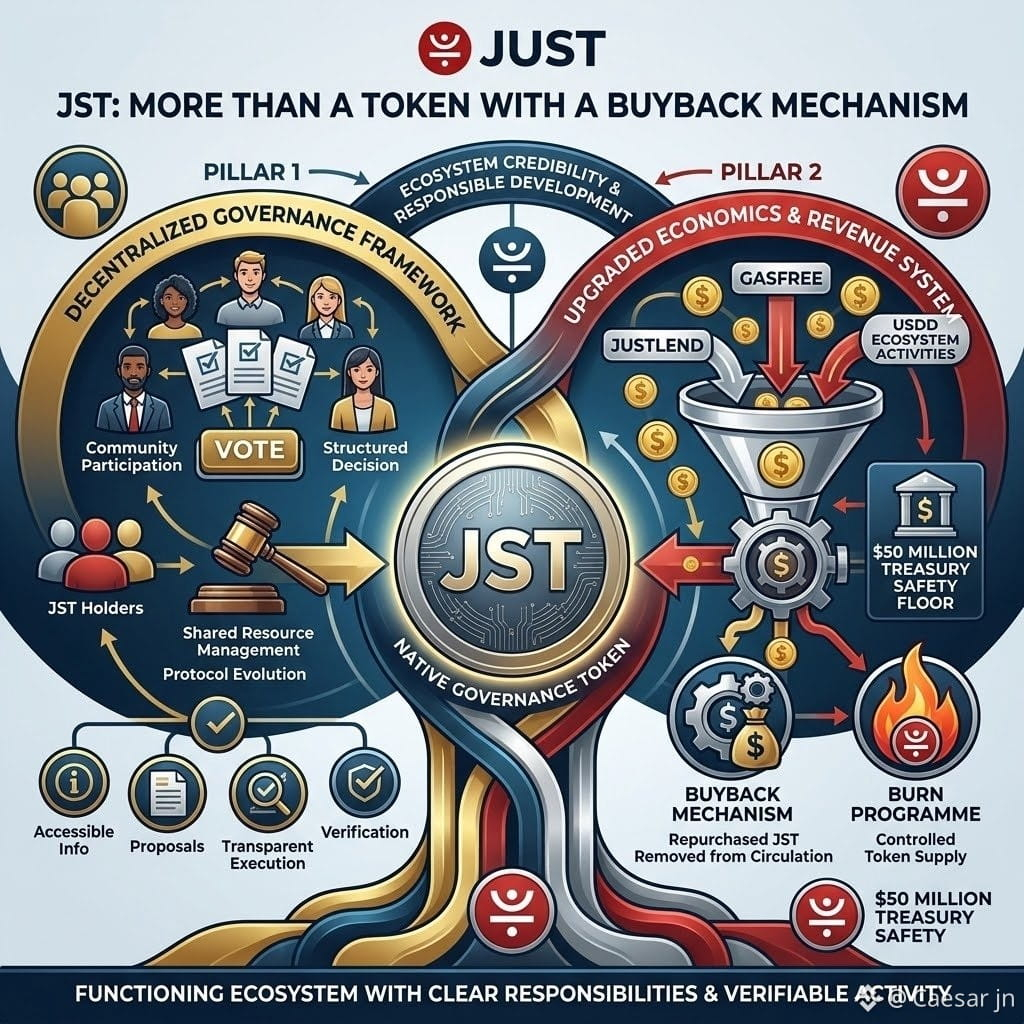
JST: MORE THAN A TOKEN WITH A BUYBACK MECHANISM
When discussing JST, attention often focuses on market activity, token supply, and the ecosystem's buyback and burn programme.
While these subjects are important, they represent only part of the token's role within JUST.
JST is the native governance token of the JUST ecosystem and provides a framework for community participation in protocol decisions.
Governance is a fundamental component of decentralized finance because protocols need mechanisms for discussing and determining how their systems should evolve.
As an ecosystem expands, decisions may involve market parameters, financial policies, product development, and the management of shared resources.
A governance token can provide a structured way for eligible holders to participate in these processes.
Within JUST, this gives JST relevance beyond its presence in the market.
The token is connected to the ecosystem's broader governance framework, while its updated buyback mechanism introduces another relationship between protocol operations and token economics.
Under the upgraded model, eligible revenue from JustLend, GasFree, and qualifying USDD ecosystem activities contributes to JST buybacks.
The repurchased tokens are subsequently removed from circulation through periodic burns.
These mechanisms serve different purposes.
Governance supports participation in ecosystem decisions, while buybacks and burns address the token's circulating supply.
It is important not to confuse the two functions or assume that a burn automatically creates additional governance rights.
For the ecosystem to remain credible, governance must be supported by accessible information, understandable proposals, transparent execution, and meaningful participation.
Token holders should be able to examine the decisions affecting the protocol and understand how approved arrangements are implemented.
The broader objective is to align the interests of the community with the responsible development of the ecosystem.
@JustinSun @DeFi_JUST #TRONEcoStar
JST: MORE THAN A TOKEN WITH A BUYBACK MECHANISM
When discussing JST, attention often focuses on market activity, token supply, and the ecosystem's buyback and burn programme.
While these subjects are important, they represent only part of the token's role within JUST.
JST is the native governance token of the JUST ecosystem and provides a framework for community participation in protocol decisions.
Governance is a fundamental component of decentralized finance because protocols need mechanisms for discussing and determining how their systems should evolve.
As an ecosystem expands, decisions may involve market parameters, financial policies, product development, and the management of shared resources.
A governance token can provide a structured way for eligible holders to participate in these processes.
Within JUST, this gives JST relevance beyond its presence in the market.
The token is connected to the ecosystem's broader governance framework, while its updated buyback mechanism introduces another relationship between protocol operations and token economics.
Under the upgraded model, eligible revenue from JustLend, GasFree, and qualifying USDD ecosystem activities contributes to JST buybacks.
The repurchased tokens are subsequently removed from circulation through periodic burns.
These mechanisms serve different purposes.
Governance supports participation in ecosystem decisions, while buybacks and burns address the token's circulating supply.
It is important not to confuse the two functions or assume that a burn automatically creates additional governance rights.
For the ecosystem to remain credible, governance must be supported by accessible information, understandable proposals, transparent execution, and meaningful participation.
Token holders should be able to examine the decisions affecting the protocol and understand how approved arrangements are implemented.
The broader objective is to align the interests of the community with the responsible development of the ecosystem.
@Justin Sun孙宇晨 @JUST DAO #TRONEcoStar
2
73
·
--
Переглянути переклад
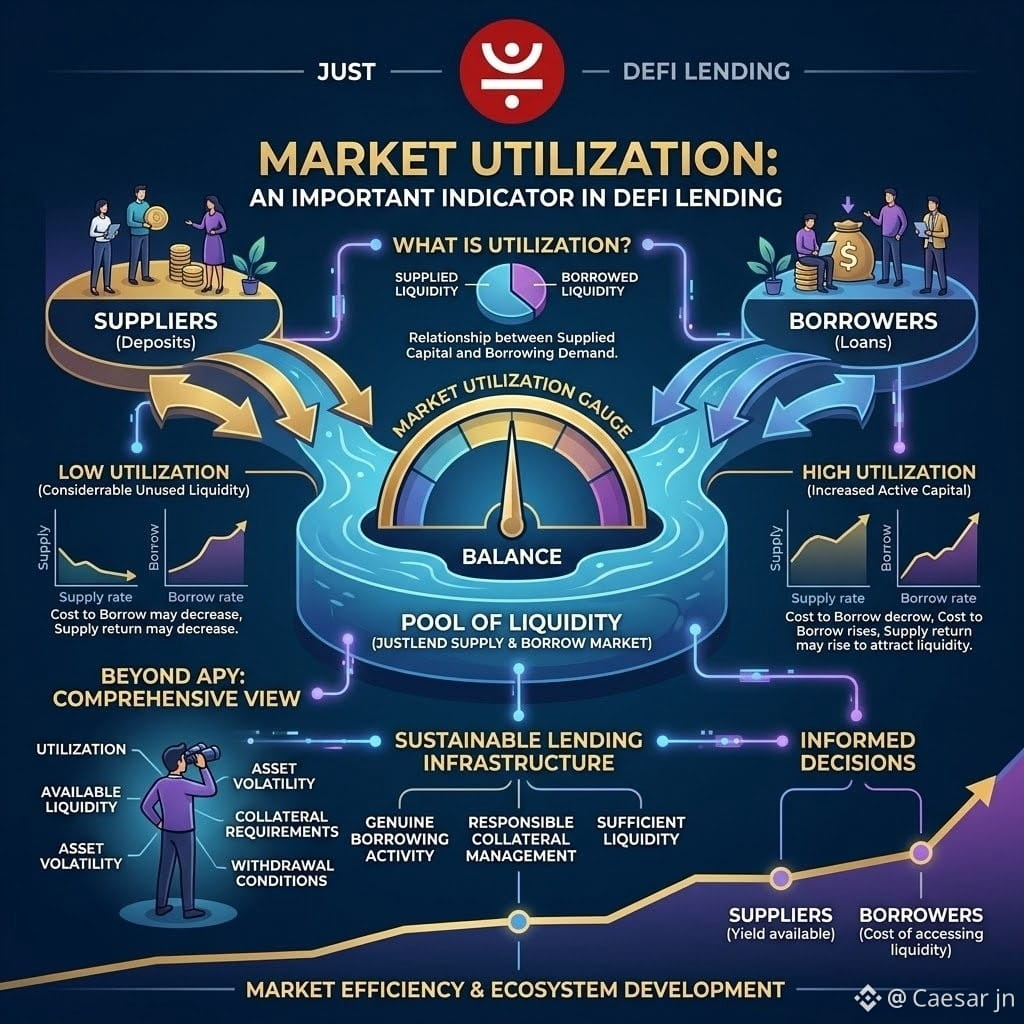
MARKET UTILIZATION: AN IMPORTANT INDICATOR IN DEFI LENDING
When evaluating a decentralized lending market, the amount of supplied liquidity is only one part of the picture.
Another important factor is utilization.
Utilization describes how much of the available supplied liquidity is currently being borrowed. It helps explain the relationship between capital provided by suppliers and demand from borrowers.
This is particularly relevant to JustLend's Supply and Borrow Market.
Consider a lending market with a substantial amount of supplied assets. If only a small portion is borrowed, the market has considerable unused liquidity.
However, when borrowing demand increases, more of the supplied capital becomes active.
This changes the market's utilization level and can influence interest rates.
In many lending protocols, borrowing rates respond to utilization through predefined interest-rate models. As utilization increases, borrowing costs may rise to balance demand and encourage additional supply. Supplier returns are also influenced by the amount of capital being borrowed and the interest generated.
This relationship is important because suppliers and borrowers depend on the same pool of liquidity.
For suppliers, utilization can affect the yield available from their deposits. For borrowers, it influences the cost of accessing liquidity.
Understanding this mechanism helps users make more informed decisions instead of evaluating a market based on APY figures alone.
A high supply APY may attract attention, but users should also examine utilization, available liquidity, asset volatility, collateral requirements, and withdrawal conditions.
Likewise, borrowers should consider whether the borrowing cost is appropriate for their intended financial activity.
Market utilization is therefore not simply a technical statistic. It provides insight into how actively a lending market is being used.
For JustLend, maintaining a balanced relationship between supply and borrowing demand is an important
@DeFi_JUST @JustinSun #TRONEcoStar
MARKET UTILIZATION: AN IMPORTANT INDICATOR IN DEFI LENDING
When evaluating a decentralized lending market, the amount of supplied liquidity is only one part of the picture.
Another important factor is utilization.
Utilization describes how much of the available supplied liquidity is currently being borrowed. It helps explain the relationship between capital provided by suppliers and demand from borrowers.
This is particularly relevant to JustLend's Supply and Borrow Market.
Consider a lending market with a substantial amount of supplied assets. If only a small portion is borrowed, the market has considerable unused liquidity.
However, when borrowing demand increases, more of the supplied capital becomes active.
This changes the market's utilization level and can influence interest rates.
In many lending protocols, borrowing rates respond to utilization through predefined interest-rate models. As utilization increases, borrowing costs may rise to balance demand and encourage additional supply. Supplier returns are also influenced by the amount of capital being borrowed and the interest generated.
This relationship is important because suppliers and borrowers depend on the same pool of liquidity.
For suppliers, utilization can affect the yield available from their deposits. For borrowers, it influences the cost of accessing liquidity.
Understanding this mechanism helps users make more informed decisions instead of evaluating a market based on APY figures alone.
A high supply APY may attract attention, but users should also examine utilization, available liquidity, asset volatility, collateral requirements, and withdrawal conditions.
Likewise, borrowers should consider whether the borrowing cost is appropriate for their intended financial activity.
Market utilization is therefore not simply a technical statistic. It provides insight into how actively a lending market is being used.
For JustLend, maintaining a balanced relationship between supply and borrowing demand is an important
@JUST DAO @Justin Sun孙宇晨 #TRONEcoStar
1
17
·
--
Переглянути переклад
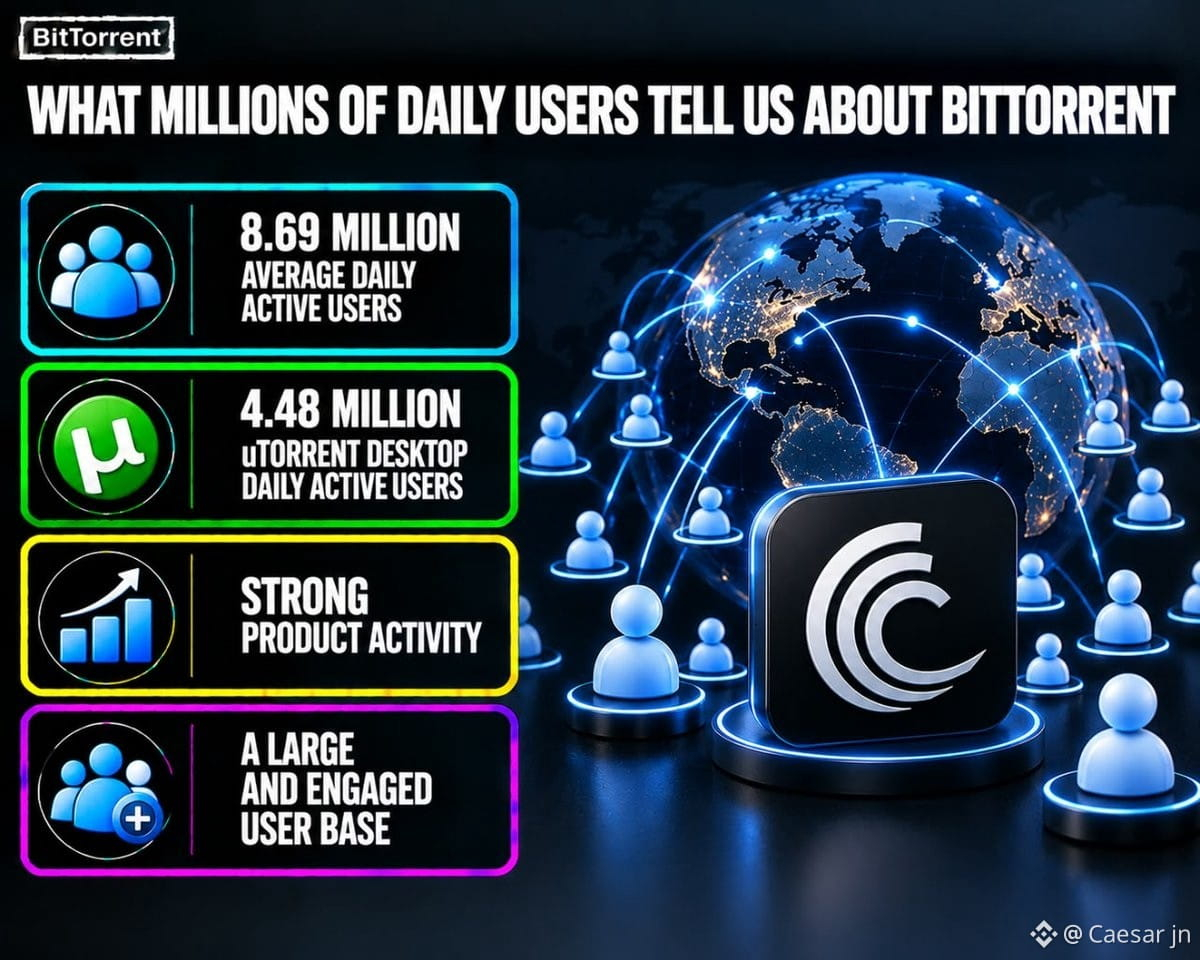
𝗪𝗛𝗔𝗧 𝗠𝗜𝗟𝗟𝗜𝗢𝗡𝗦 𝗢𝗙 𝗗𝗔𝗜𝗟𝗬 𝗨𝗦𝗘𝗥𝗦 𝗧𝗘𝗟𝗟 𝗨𝗦 𝗔𝗕𝗢𝗨𝗧 𝗕𝗜𝗧𝗧𝗢𝗥𝗥𝗘𝗡𝗧
A product's popularity is interesting.
But how frequently people return to use it can reveal something even more useful.
BitTorrent's reported October client matrix recorded 8.69 million average daily active users across its listed products.
uTorrent Desktop accounted for 4.48 million of those daily active users.
These figures offer a useful perspective on the established software activity behind the BitTorrent name.
They also highlight why product-level metrics deserve attention.
A large audience is valuable, but long-term product relevance depends on more than initial adoption.
Users need reasons to keep returning.
That means reliable performance, practical features, accessible interfaces, and products that continue meeting everyday needs.
For an ecosystem exploring new areas such as decentralized computing, its existing software presence remains an important part of the bigger picture.
The real opportunity is to keep turning product usefulness into sustained engagement.
Explore BitTorrent: bittorrent.com
@BitTorrent_Official @JustinSun #TRONEcoStar
𝗪𝗛𝗔𝗧 𝗠𝗜𝗟𝗟𝗜𝗢𝗡𝗦 𝗢𝗙 𝗗𝗔𝗜𝗟𝗬 𝗨𝗦𝗘𝗥𝗦 𝗧𝗘𝗟𝗟 𝗨𝗦 𝗔𝗕𝗢𝗨𝗧 𝗕𝗜𝗧𝗧𝗢𝗥𝗥𝗘𝗡𝗧
A product's popularity is interesting.
But how frequently people return to use it can reveal something even more useful.
BitTorrent's reported October client matrix recorded 8.69 million average daily active users across its listed products.
uTorrent Desktop accounted for 4.48 million of those daily active users.
These figures offer a useful perspective on the established software activity behind the BitTorrent name.
They also highlight why product-level metrics deserve attention.
A large audience is valuable, but long-term product relevance depends on more than initial adoption.
Users need reasons to keep returning.
That means reliable performance, practical features, accessible interfaces, and products that continue meeting everyday needs.
For an ecosystem exploring new areas such as decentralized computing, its existing software presence remains an important part of the bigger picture.
The real opportunity is to keep turning product usefulness into sustained engagement.
Explore BitTorrent: bittorrent.com
@BitTorrent_Official @Justin Sun孙宇晨 #TRONEcoStar
2
·
--
Переглянути переклад
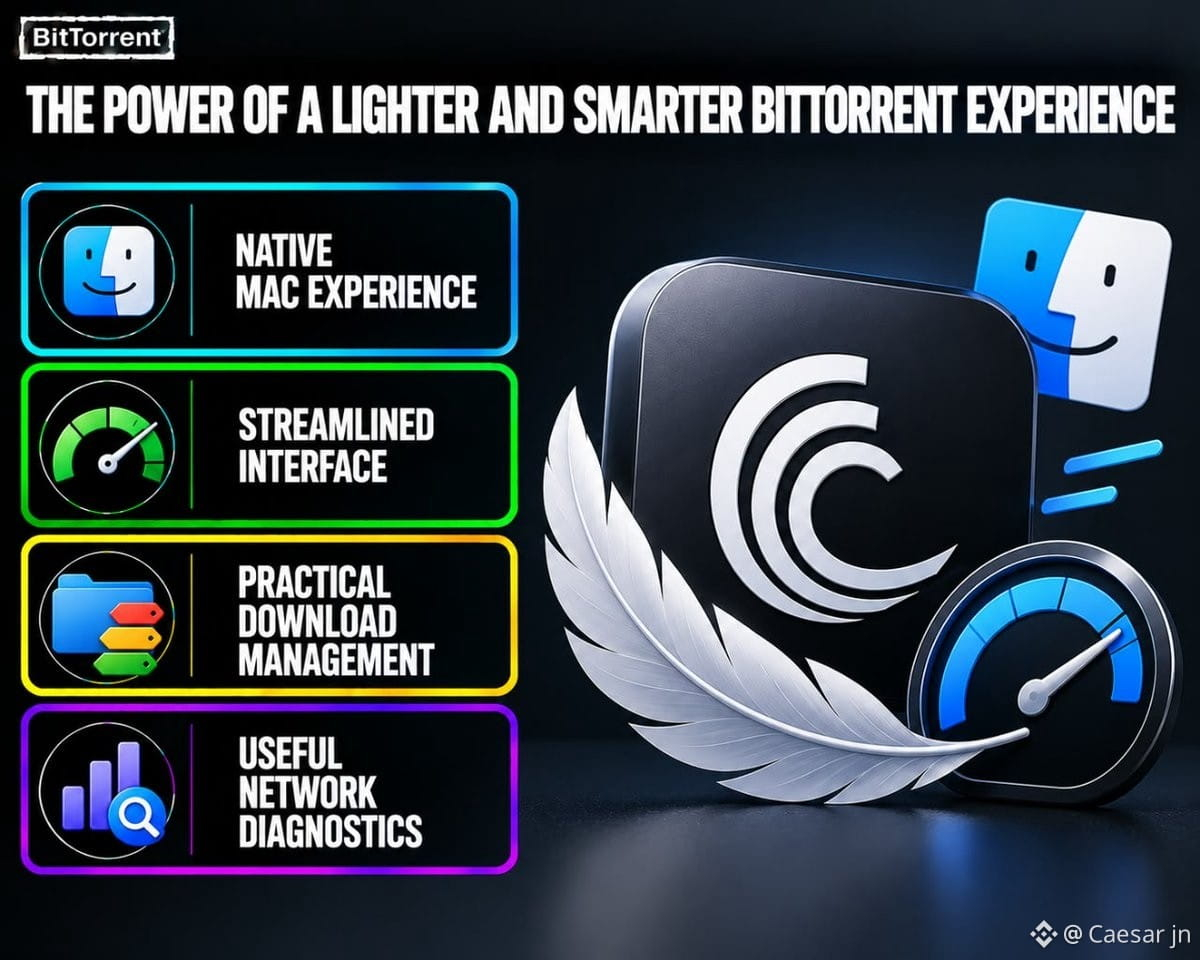
𝗧𝗛𝗘 𝗣𝗢𝗪𝗘𝗥 𝗢𝗙 𝗔 𝗟𝗜𝗚𝗛𝗧𝗘𝗥 𝗔𝗡𝗗 𝗦𝗠𝗔𝗥𝗧𝗘𝗥 𝗕𝗜𝗧𝗧𝗢𝗥𝗥𝗘𝗡𝗧 𝗘𝗫𝗣𝗘𝗥𝗜𝗘𝗡𝗖𝗘
More features don't automatically make an application better.
Sometimes, the best software is the one that gives users what they need without making the experience unnecessarily complicated.
This is an important part of BitTorrent Neo's approach.
Built natively for macOS, Neo focuses on a streamlined interface and an experience designed around the Mac environment.
That matters because desktop applications operate within a wider system of running processes, available memory, storage, and user workflows.
A well-designed client should complement that environment.
The combination of native design, practical download management, and useful network diagnostics gives Neo a distinct place within BitTorrent's product lineup.
The lesson extends beyond torrent software.
As applications become more capable, efficiency and simplicity should remain part of the design conversation.
Explore BitTorrent Neo: bittorrent.com/products/mac/
@BitTorrent_Official @JustinSun
#TRONEcoStar
𝗧𝗛𝗘 𝗣𝗢𝗪𝗘𝗥 𝗢𝗙 𝗔 𝗟𝗜𝗚𝗛𝗧𝗘𝗥 𝗔𝗡𝗗 𝗦𝗠𝗔𝗥𝗧𝗘𝗥 𝗕𝗜𝗧𝗧𝗢𝗥𝗥𝗘𝗡𝗧 𝗘𝗫𝗣𝗘𝗥𝗜𝗘𝗡𝗖𝗘
More features don't automatically make an application better.
Sometimes, the best software is the one that gives users what they need without making the experience unnecessarily complicated.
This is an important part of BitTorrent Neo's approach.
Built natively for macOS, Neo focuses on a streamlined interface and an experience designed around the Mac environment.
That matters because desktop applications operate within a wider system of running processes, available memory, storage, and user workflows.
A well-designed client should complement that environment.
The combination of native design, practical download management, and useful network diagnostics gives Neo a distinct place within BitTorrent's product lineup.
The lesson extends beyond torrent software.
As applications become more capable, efficiency and simplicity should remain part of the design conversation.
Explore BitTorrent Neo: bittorrent.com/products/mac/
@BitTorrent_Official @Justin Sun孙宇晨
#TRONEcoStar
6
·
--
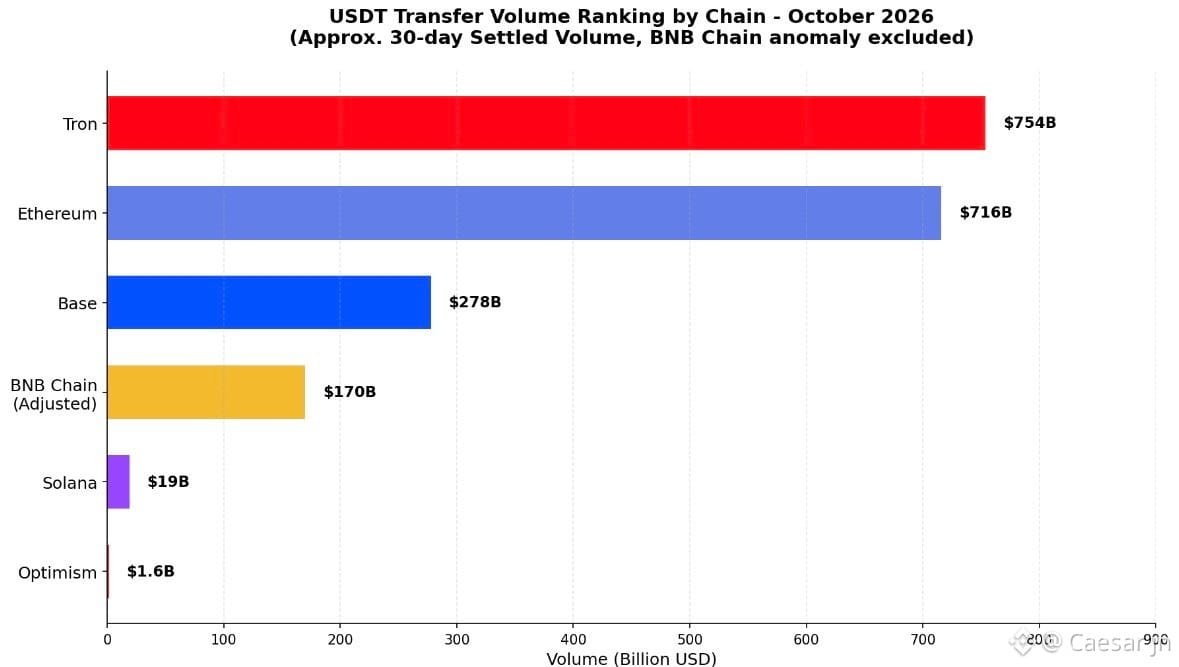
У жовтні TRON залишається найактивнішим публічним блокчейном для USDT!
За публічними даними провідних блокчейнів 📊
За останні 30 днів у мережі TRON було оброблено перекази на суму 754 млрд доларів США — це 42% від загального обсягу переказів USDT у публічних блокчейнах!
TRON перевершив провідні публічні блокчейни за обсягом переказів USDT і став цілком заслуженою головною ареною для переказів USDT!
@TRONDAO @JustinSun #TRONEcostar
У жовтні TRON залишається найактивнішим публічним блокчейном для USDT!
За публічними даними провідних блокчейнів 📊
За останні 30 днів у мережі TRON було оброблено перекази на суму 754 млрд доларів США — це 42% від загального обсягу переказів USDT у публічних блокчейнах!
TRON перевершив провідні публічні блокчейни за обсягом переказів USDT і став цілком заслуженою головною ареною для переказів USDT!
@TRON DAO @Justin Sun孙宇晨 #TRONEcostar
38
·
--
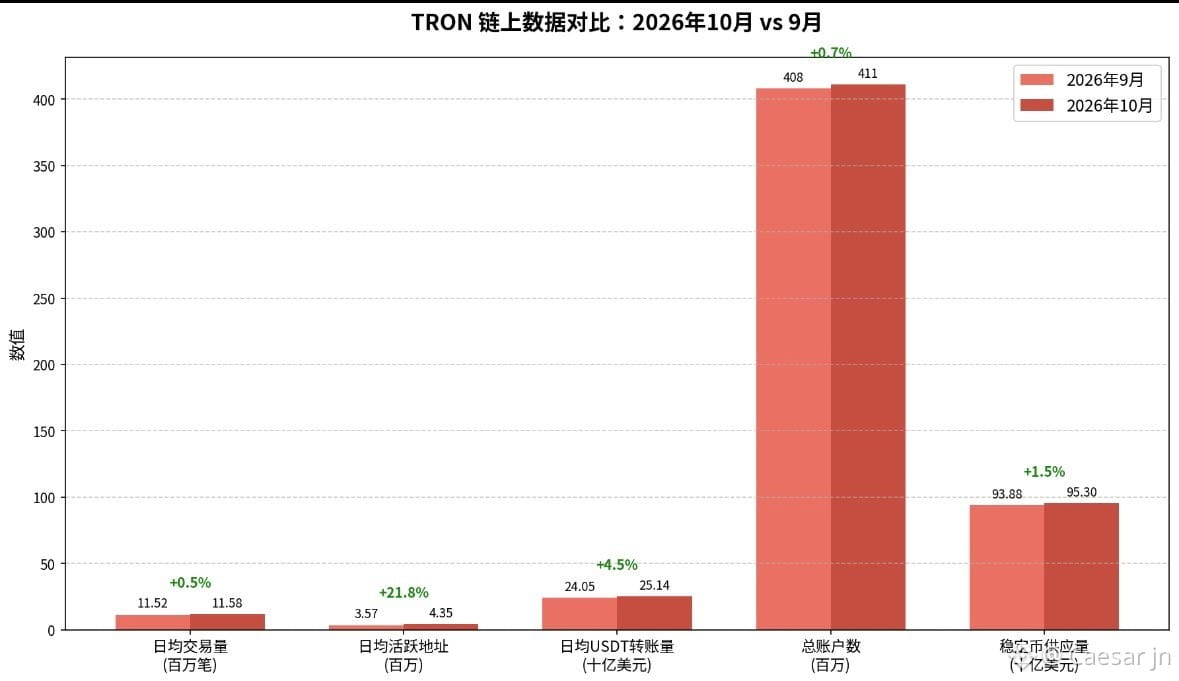
Жовтневі ончейн-дані TRON демонструють стрімке зростання! Кількість активних адрес зросла майже на 22%!
Щойно завершив порівняння ончейн-даних TRON за жовтень і вересень, і головні висновки очевидні:
• Кількість активних адрес за день: 3.57M → 4.35M (+21.8%)
• Щоденний обсяг переказів USDT: $240B → $251B (+4.5%)
• Кількість транзакцій за день: стабільно на рівні 11.5M, незмінно залишаючись високою
• Загальна кількість облікових записів: перевищила 411M
• Сукупна кількість транзакцій: офіційно перевищила 16B
TRON і надалі утримує першість як найбільша у світі мережа для розрахунків у стейблкоїнах. Низькі комісії та висока пропускна здатність стабільно приваблюють реальних користувачів і капітал. Виразне пожвавлення активності свідчить про прискорення використання екосистеми!
Джерела даних: Nansen / TRONSCAN / DefiLlama
@JustinSun @TRONDAO #TRONEcoStar
Жовтневі ончейн-дані TRON демонструють стрімке зростання! Кількість активних адрес зросла майже на 22%!
Щойно завершив порівняння ончейн-даних TRON за жовтень і вересень, і головні висновки очевидні:
• Кількість активних адрес за день: 3.57M → 4.35M (+21.8%)
• Щоденний обсяг переказів USDT: $240B → $251B (+4.5%)
• Кількість транзакцій за день: стабільно на рівні 11.5M, незмінно залишаючись високою
• Загальна кількість облікових записів: перевищила 411M
• Сукупна кількість транзакцій: офіційно перевищила 16B
TRON і надалі утримує першість як найбільша у світі мережа для розрахунків у стейблкоїнах. Низькі комісії та висока пропускна здатність стабільно приваблюють реальних користувачів і капітал. Виразне пожвавлення активності свідчить про прискорення використання екосистеми!
Джерела даних: Nansen / TRONSCAN / DefiLlama
@Justin Sun孙宇晨 @TRON DAO #TRONEcoStar
11
·
--
Переглянути переклад
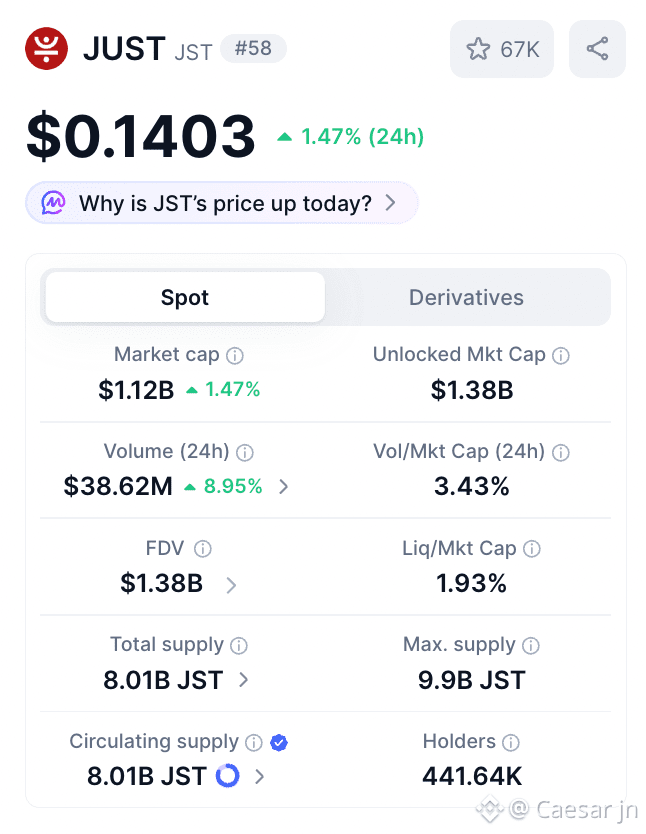
𝗝𝗦𝗧: 𝗥𝗲𝗮𝗱𝗶𝗻𝗴 𝘁𝗵𝗲 𝗔𝗰𝘁𝗶𝘃𝗶𝘁𝘆 𝗦𝗶𝗴𝗻𝗮𝗹𝘀 𝗼𝗻 𝗧𝗥𝗢𝗡
Prices move. Volume tells you who showed up.
The latest snapshot shared by @CoinMarketCap_official shows more market activity forming around $JST, the token at the heart of @DeFi_JUST
𝗧𝗵𝗲 𝗦𝗻𝗮𝗽𝘀𝗵𝗼𝘁
→ Market Cap: $943.04M
→ 24h Volume: $49.71M (+8.16%)
→ 24h Price Change: +1.68%
Volume climbing faster than price is a sign of more hands trading, not just a quiet drift.
𝗪𝗵𝘆 𝗩𝗼𝗹𝘂𝗺𝗲 𝗗𝗲𝘀𝗲𝗿𝘃𝗲𝘀 𝗔𝘁𝘁𝗲𝗻𝘁𝗶𝗼𝗻
Trading volume shows how actively an asset is changing hands.
It turns a single price number into a story about participation.
𝗥𝗲𝗮𝗱𝗶𝗻𝗴 𝗝𝗦𝗧 𝗶𝗻 𝗖𝗼𝗻𝘁𝗲𝘅𝘁
A clearer picture comes from watching:
→ Trading volume
→ Market capitalization
→ Price movement
→ Activity across the wider JUST ecosystem
𝗦𝘁𝗮𝘆 𝗖𝘂𝗿𝗿𝗲𝗻𝘁
These numbers change fast.
The latest data is always worth checking directly at the source.
𝗧𝗵𝗲 𝗕𝗶𝗴𝗴𝗲𝗿 𝗣𝗶𝗰𝘁𝘂𝗿𝗲
Price shows direction.
Volume shows participation.
Market cap shows scale.
Together they give a fuller read on where JST sits within the JUST ecosystem on TRON.
Check the data.
Read the context.
@JustinSun @DeFi_JUST #TRONEcoStar
𝗝𝗦𝗧: 𝗥𝗲𝗮𝗱𝗶𝗻𝗴 𝘁𝗵𝗲 𝗔𝗰𝘁𝗶𝘃𝗶𝘁𝘆 𝗦𝗶𝗴𝗻𝗮𝗹𝘀 𝗼𝗻 𝗧𝗥𝗢𝗡
Prices move. Volume tells you who showed up.
The latest snapshot shared by @CoinMarketCap shows more market activity forming around $JST, the token at the heart of @JUST DAO
𝗧𝗵𝗲 𝗦𝗻𝗮𝗽𝘀𝗵𝗼𝘁
→ Market Cap: $943.04M
→ 24h Volume: $49.71M (+8.16%)
→ 24h Price Change: +1.68%
Volume climbing faster than price is a sign of more hands trading, not just a quiet drift.
𝗪𝗵𝘆 𝗩𝗼𝗹𝘂𝗺𝗲 𝗗𝗲𝘀𝗲𝗿𝘃𝗲𝘀 𝗔𝘁𝘁𝗲𝗻𝘁𝗶𝗼𝗻
Trading volume shows how actively an asset is changing hands.
It turns a single price number into a story about participation.
𝗥𝗲𝗮𝗱𝗶𝗻𝗴 𝗝𝗦𝗧 𝗶𝗻 𝗖𝗼𝗻𝘁𝗲𝘅𝘁
A clearer picture comes from watching:
→ Trading volume
→ Market capitalization
→ Price movement
→ Activity across the wider JUST ecosystem
𝗦𝘁𝗮𝘆 𝗖𝘂𝗿𝗿𝗲𝗻𝘁
These numbers change fast.
The latest data is always worth checking directly at the source.
𝗧𝗵𝗲 𝗕𝗶𝗴𝗴𝗲𝗿 𝗣𝗶𝗰𝘁𝘂𝗿𝗲
Price shows direction.
Volume shows participation.
Market cap shows scale.
Together they give a fuller read on where JST sits within the JUST ecosystem on TRON.
Check the data.
Read the context.
@Justin Sun孙宇晨 @JUST DAO #TRONEcoStar
40
·
--
Програма викупу має більше значення, коли спільнота може перевірити, як вона працює, звідки надходить фінансування та що відбувається після кожного виконання.
Саме тому прозорість важлива для програми викупу $WIN від WINkLink.
Ось основні аспекти, за якими варто стежити:
→ Джерело доходу: доходи від роботи оракульних сервісів WINkLink.
→ Графік виконання: щоквартальний викуп за рахунок доходів екосистеми відповідно до заявленого механізму програми.
→ Перевірка в блокчейні: опубліковані записи про транзакції та спалювання токенів допомагають спільноті відстежувати діяльність програми й перевіряти заявлені дії.
Ці відомості дають спільноті чіткішу основу для оцінювання того, чи реалізується програма відповідно до опису.
Важливо розрізняти заявлене зобов’язання та результат, який можна перевірити. Фактичні транзакції викупу, витрачені суми та спалювання токенів слід оцінювати за доступними записами й офіційними оновленнями.
Прозорість не гарантує зростання ціни токена, але допомагає зміцнити підзвітність, роблячи процес доступнішим для перевірки.
Для довгострокового розвитку екосистеми важливі чіткі механізми та їхнє виконання, яке можна перевірити.
Чіткий процес. Записи, які можна перевірити. Послідовна підзвітність.
Саме за цим стандартом варто стежити в міру реалізації програми викупу $WIN.
@WINkLink_Official @JustinSun #TRONEcoStar
Програма викупу має більше значення, коли спільнота може перевірити, як вона працює, звідки надходить фінансування та що відбувається після кожного виконання.
Саме тому прозорість важлива для програми викупу $WIN від WINkLink.
Ось основні аспекти, за якими варто стежити:
→ Джерело доходу: доходи від роботи оракульних сервісів WINkLink.
→ Графік виконання: щоквартальний викуп за рахунок доходів екосистеми відповідно до заявленого механізму програми.
→ Перевірка в блокчейні: опубліковані записи про транзакції та спалювання токенів допомагають спільноті відстежувати діяльність програми й перевіряти заявлені дії.
Ці відомості дають спільноті чіткішу основу для оцінювання того, чи реалізується програма відповідно до опису.
Важливо розрізняти заявлене зобов’язання та результат, який можна перевірити. Фактичні транзакції викупу, витрачені суми та спалювання токенів слід оцінювати за доступними записами й офіційними оновленнями.
Прозорість не гарантує зростання ціни токена, але допомагає зміцнити підзвітність, роблячи процес доступнішим для перевірки.
Для довгострокового розвитку екосистеми важливі чіткі механізми та їхнє виконання, яке можна перевірити.
Чіткий процес. Записи, які можна перевірити. Послідовна підзвітність.
Саме за цим стандартом варто стежити в міру реалізації програми викупу $WIN.
@WINkLink_Official @Justin Sun孙宇晨 #TRONEcoStar

143
·
--
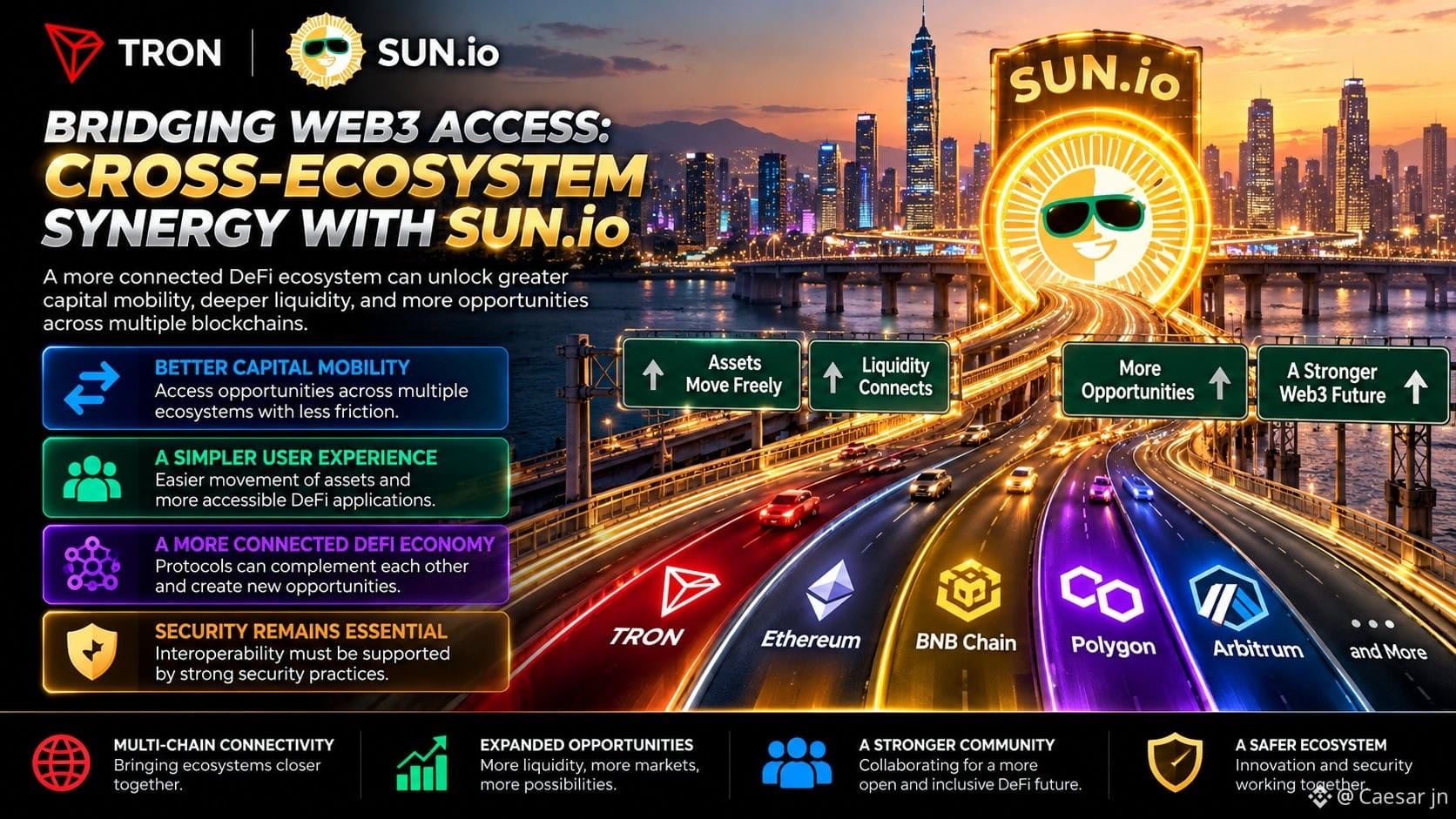
𝗪𝗲𝗯𝟯 не зможе розкрити свій повний потенціал, доки блокчейни залишаються ізольованими.
Одним із найбільших викликів для децентралізованих фінансів є не брак інновацій, а фрагментація.
Сьогодні в різних блокчейн-екосистемах зосереджені цінні активи, пули ліквідності, ринки кредитування, децентралізовані біржі та фінансові застосунки. Однак перехід між цими середовищами досі може бути невиправдано складним.
Капітал може бути розподілений між кількома мережами, але ефективний доступ до можливостей — це окремий виклик.
Саме тому зв’язок між різними екосистемами стає дедалі важливішим.
Чому важлива сумісність?
Розгляньмо три важливі аспекти:
1. КРАЩА МОБІЛЬНІСТЬ КАПІТАЛУ
Ліквідність стає кориснішою, коли користувачі можуть отримувати доступ до можливостей у різних блокчейн-середовищах.
Покращена сумісність може зменшити перешкоди й допомогти спрямовувати капітал до застосунків, де його можна використовувати ефективніше.
2. КРАЩИЙ КОРИСТУВАЦЬКИЙ ДОСВІД
Користувачам не довелося б щоразу розбиратися у складній інфраструктурі, взаємодіючи з іншою екосистемою.
Простіше переміщення активів, зрозуміліші інтерфейси та доступніші DeFi-застосунки можуть значно спростити навігацію у Web3.
3. БІЛЬШ ВЗАЄМОПОВ’ЯЗАНА ЕКОНОМІКА DEFI
Сумісність дає протоколам змогу доповнювати один одного, а не працювати в ізольованих середовищах.
Це може сприяти співпраці, розширювати доступ до ринків і створювати більше можливостей для розробників і користувачів.
Яке місце SUN.io у цій картині?
В екосистемі TRON SUN.io сприяє розвитку інфраструктури децентралізованої торгівлі та ліквідності.
Його роль стає особливо цікавою в контексті ширшої мети — покращити доступ користувачів до децентралізованих фінансових послуг.
Однак зв’язок між мережами має спиратися на надійні практики безпеки. Вразливості мостів,
@SunPump_meme @JustinSun
#TRONEcoStar
𝗪𝗲𝗯𝟯 не зможе розкрити свій повний потенціал, доки блокчейни залишаються ізольованими.
Одним із найбільших викликів для децентралізованих фінансів є не брак інновацій, а фрагментація.
Сьогодні в різних блокчейн-екосистемах зосереджені цінні активи, пули ліквідності, ринки кредитування, децентралізовані біржі та фінансові застосунки. Однак перехід між цими середовищами досі може бути невиправдано складним.
Капітал може бути розподілений між кількома мережами, але ефективний доступ до можливостей — це окремий виклик.
Саме тому зв’язок між різними екосистемами стає дедалі важливішим.
Чому важлива сумісність?
Розгляньмо три важливі аспекти:
1. КРАЩА МОБІЛЬНІСТЬ КАПІТАЛУ
Ліквідність стає кориснішою, коли користувачі можуть отримувати доступ до можливостей у різних блокчейн-середовищах.
Покращена сумісність може зменшити перешкоди й допомогти спрямовувати капітал до застосунків, де його можна використовувати ефективніше.
2. КРАЩИЙ КОРИСТУВАЦЬКИЙ ДОСВІД
Користувачам не довелося б щоразу розбиратися у складній інфраструктурі, взаємодіючи з іншою екосистемою.
Простіше переміщення активів, зрозуміліші інтерфейси та доступніші DeFi-застосунки можуть значно спростити навігацію у Web3.
3. БІЛЬШ ВЗАЄМОПОВ’ЯЗАНА ЕКОНОМІКА DEFI
Сумісність дає протоколам змогу доповнювати один одного, а не працювати в ізольованих середовищах.
Це може сприяти співпраці, розширювати доступ до ринків і створювати більше можливостей для розробників і користувачів.
Яке місце SUN.io у цій картині?
В екосистемі TRON SUN.io сприяє розвитку інфраструктури децентралізованої торгівлі та ліквідності.
Його роль стає особливо цікавою в контексті ширшої мети — покращити доступ користувачів до децентралізованих фінансових послуг.
Однак зв’язок між мережами має спиратися на надійні практики безпеки. Вразливості мостів,
@OfficialSUNio @Justin Sun孙宇晨
#TRONEcoStar
29
·
--
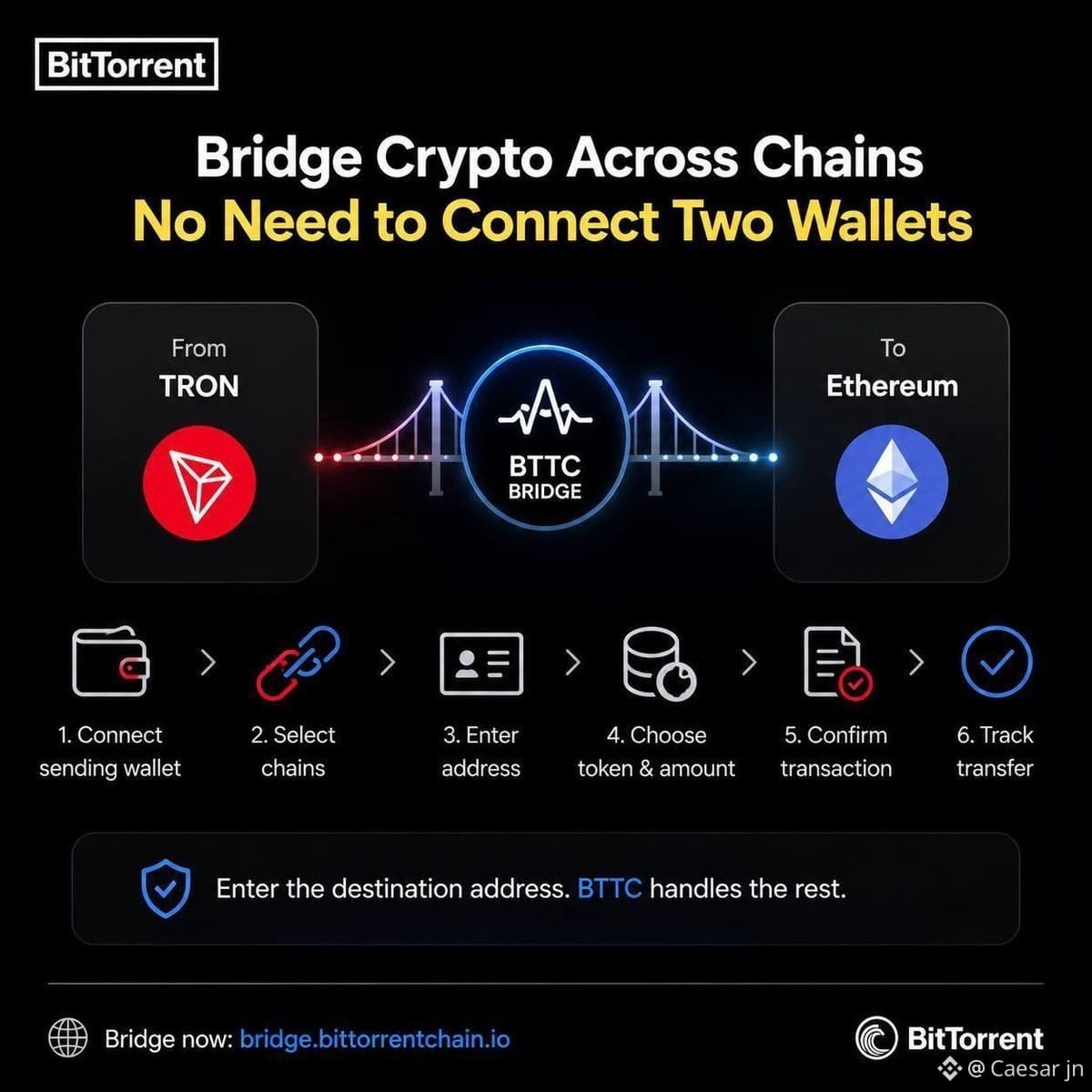
BTTC робить міжмережеві перекази гнучкішими
Для переказу активів між блокчейнами не завжди потрібно підключати кожен гаманець. Під час підтримуваних переказів через BTTC Bridge користувачі можуть безпосередньо вказати адресу гаманця одержувача. Так простіше надсилати активи між мережами або переказувати їх на гаманець іншої людини.
Як працює цей процес
➞ Підключіть гаманець відправника: відкрийте офіційний BTTC Bridge і підключіть гаманець, на якому зберігаються ваші активи.
➞ Виберіть мережі: оберіть підтримувані блокчейни відправлення й отримання.
➞ Введіть адресу одержувача: вкажіть адресу призначення, не обов’язково підключаючи цей гаманець.
➞ Виберіть і підтвердьте: оберіть підтримуваний актив, введіть суму, перевірте комісії та деталі, а потім авторизуйте транзакцію.
➞ Відстежуйте переказ: стежте за його перебігом, доки міст не підтвердить завершення.
Чому це важливо
Такий підхід забезпечує практичну гнучкість. Ви можете надсилати активи на гаманець на іншому пристрої, переказувати кошти між власними адресами або передавати підтримувані токени іншому одержувачу, не вимагаючи від нього підключати гаманець до вашого сеансу.
Менша кількість кроків для підключення спрощує процес, але користувачам усе одно потрібно розуміти, як працюють міжмережеві перекази.
Перевірте все перед переказом через міст
Завжди перевіряйте мережу призначення, адресу гаманця, підтримуваний токен, комісії та деталі транзакції. Неправильна адреса або несумісна мережа призначення можуть призвести до безповоротної втрати коштів.
@BitTorrent_Official @JustinSun #TRONEcoStar
BTTC робить міжмережеві перекази гнучкішими
Для переказу активів між блокчейнами не завжди потрібно підключати кожен гаманець. Під час підтримуваних переказів через BTTC Bridge користувачі можуть безпосередньо вказати адресу гаманця одержувача. Так простіше надсилати активи між мережами або переказувати їх на гаманець іншої людини.
Як працює цей процес
➞ Підключіть гаманець відправника: відкрийте офіційний BTTC Bridge і підключіть гаманець, на якому зберігаються ваші активи.
➞ Виберіть мережі: оберіть підтримувані блокчейни відправлення й отримання.
➞ Введіть адресу одержувача: вкажіть адресу призначення, не обов’язково підключаючи цей гаманець.
➞ Виберіть і підтвердьте: оберіть підтримуваний актив, введіть суму, перевірте комісії та деталі, а потім авторизуйте транзакцію.
➞ Відстежуйте переказ: стежте за його перебігом, доки міст не підтвердить завершення.
Чому це важливо
Такий підхід забезпечує практичну гнучкість. Ви можете надсилати активи на гаманець на іншому пристрої, переказувати кошти між власними адресами або передавати підтримувані токени іншому одержувачу, не вимагаючи від нього підключати гаманець до вашого сеансу.
Менша кількість кроків для підключення спрощує процес, але користувачам усе одно потрібно розуміти, як працюють міжмережеві перекази.
Перевірте все перед переказом через міст
Завжди перевіряйте мережу призначення, адресу гаманця, підтримуваний токен, комісії та деталі транзакції. Неправильна адреса або несумісна мережа призначення можуть призвести до безповоротної втрати коштів.
@BitTorrent_Official @Justin Sun孙宇晨 #TRONEcoStar
2
248
·
--
Переглянути переклад
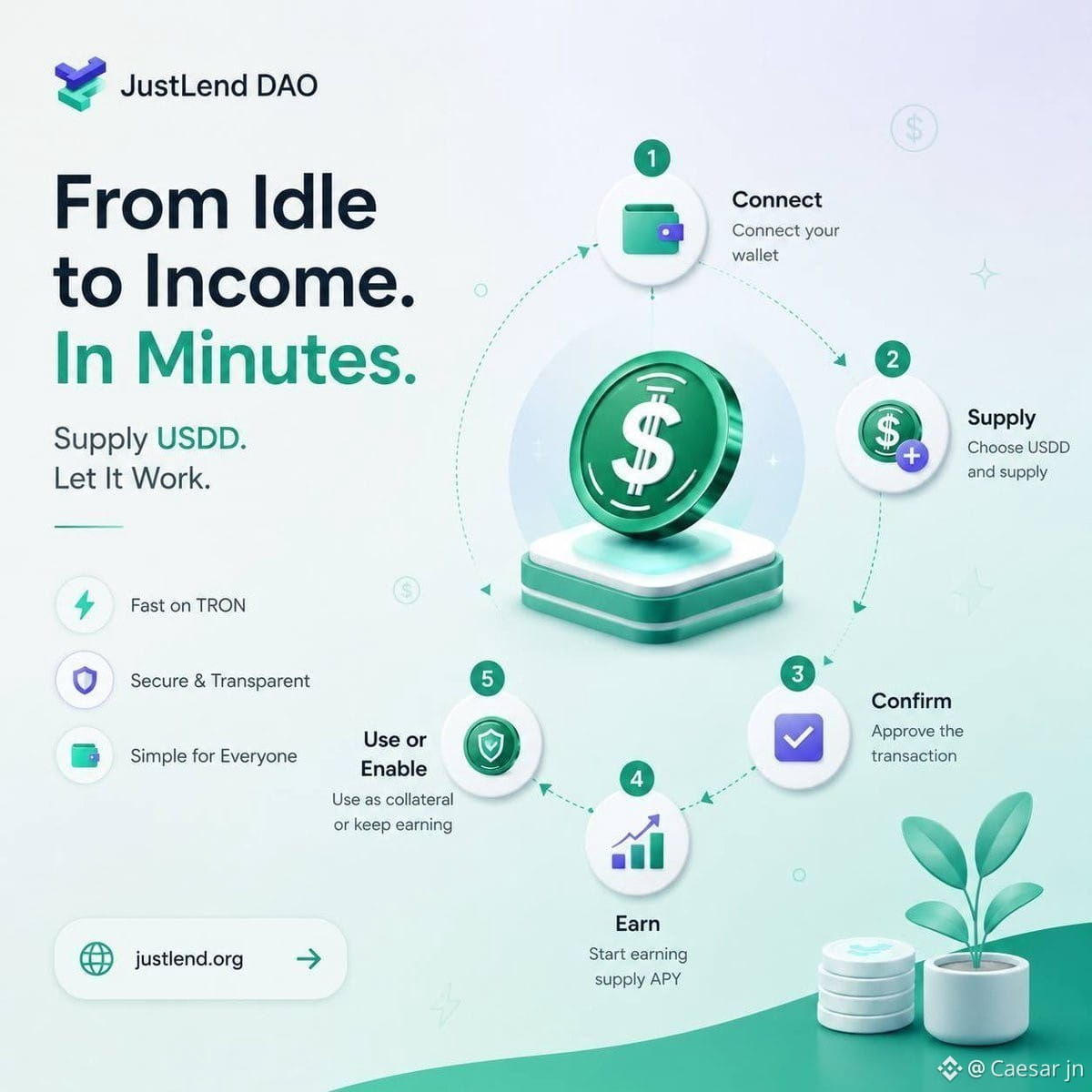
𝐇𝐨𝐰 𝐉𝐮𝐬𝐭𝐋𝐞𝐧𝐝 𝐃𝐀𝐎 𝐏𝐮𝐭𝐬 𝐔𝐒𝐃𝐃 𝐋𝐢𝐪𝐮𝐢𝐝𝐢𝐭𝐲 𝐓𝐨 𝐖𝐨𝐫𝐤 𝐎𝐧 𝐓𝐑𝐎𝐍
Stablecoins are useful for more than holding value or transferring funds. Through DeFi lending, they can also contribute to on-chain liquidity by supplying capital that borrowers can access.
JustLend DAO makes this possible for eligible USDD holders on TRON.
𝐅𝐫𝐨𝐦 𝐖𝐚𝐥𝐥𝐞𝐭 𝐓𝐨 𝐋𝐞𝐧𝐝𝐢𝐧𝐠 𝐏𝐨𝐨𝐥
➞ Visit justlend.org and connect a supported wallet, such as TronLink or another wallet currently compatible with the platform.
➞ Find the USDD market, select the supply option, and enter the amount you want to deposit. Review the displayed terms before confirming.
𝐖𝐡𝐚𝐭 𝐇𝐚𝐩𝐩𝐞𝐧𝐬 𝐀𝐟𝐭𝐞𝐫 𝐘𝐨𝐮 𝐒𝐮𝐩𝐩𝐥𝐲?
Your USDD contributes to the lending pool, where eligible borrowers can access available liquidity. Suppliers may receive interest based on borrowing demand and the protocol’s current rate model.
The important distinction is that returns are variable. Supplying does not guarantee a fixed APY, and smart-contract, liquidity, and stablecoin risks remain.
𝐂𝐨𝐥𝐥𝐚𝐭𝐞𝐫𝐚𝐥 𝐀𝐝𝐝𝐬 𝐀𝐧𝐨𝐭𝐡𝐞𝐫 𝐎𝐩𝐭𝐢𝐨𝐧
If the market and protocol settings permit, supplied assets may be enabled as collateral for borrowing. This offers additional flexibility, but borrowing introduces repayment obligations and liquidation risk if collateral conditions deteriorate.
𝐖𝐡𝐲 𝐈𝐭 𝐌𝐚𝐭𝐭𝐞𝐫𝐬
The bigger idea is capital efficiency. Suppliers can contribute liquidity, borrowers gain access to funds, and lending activity helps power the wider DeFi ecosystem.
A simple user journey can support a much larger financial system.
Explore at justlend.org.
@WINkLink_Official @JustinSun #TRONEcoStar
𝐇𝐨𝐰 𝐉𝐮𝐬𝐭𝐋𝐞𝐧𝐝 𝐃𝐀𝐎 𝐏𝐮𝐭𝐬 𝐔𝐒𝐃𝐃 𝐋𝐢𝐪𝐮𝐢𝐝𝐢𝐭𝐲 𝐓𝐨 𝐖𝐨𝐫𝐤 𝐎𝐧 𝐓𝐑𝐎𝐍
Stablecoins are useful for more than holding value or transferring funds. Through DeFi lending, they can also contribute to on-chain liquidity by supplying capital that borrowers can access.
JustLend DAO makes this possible for eligible USDD holders on TRON.
𝐅𝐫𝐨𝐦 𝐖𝐚𝐥𝐥𝐞𝐭 𝐓𝐨 𝐋𝐞𝐧𝐝𝐢𝐧𝐠 𝐏𝐨𝐨𝐥
➞ Visit justlend.org and connect a supported wallet, such as TronLink or another wallet currently compatible with the platform.
➞ Find the USDD market, select the supply option, and enter the amount you want to deposit. Review the displayed terms before confirming.
𝐖𝐡𝐚𝐭 𝐇𝐚𝐩𝐩𝐞𝐧𝐬 𝐀𝐟𝐭𝐞𝐫 𝐘𝐨𝐮 𝐒𝐮𝐩𝐩𝐥𝐲?
Your USDD contributes to the lending pool, where eligible borrowers can access available liquidity. Suppliers may receive interest based on borrowing demand and the protocol’s current rate model.
The important distinction is that returns are variable. Supplying does not guarantee a fixed APY, and smart-contract, liquidity, and stablecoin risks remain.
𝐂𝐨𝐥𝐥𝐚𝐭𝐞𝐫𝐚𝐥 𝐀𝐝𝐝𝐬 𝐀𝐧𝐨𝐭𝐡𝐞𝐫 𝐎𝐩𝐭𝐢𝐨𝐧
If the market and protocol settings permit, supplied assets may be enabled as collateral for borrowing. This offers additional flexibility, but borrowing introduces repayment obligations and liquidation risk if collateral conditions deteriorate.
𝐖𝐡𝐲 𝐈𝐭 𝐌𝐚𝐭𝐭𝐞𝐫𝐬
The bigger idea is capital efficiency. Suppliers can contribute liquidity, borrowers gain access to funds, and lending activity helps power the wider DeFi ecosystem.
A simple user journey can support a much larger financial system.
Explore at justlend.org.
@WINkLink_Official @Justin Sun孙宇晨 #TRONEcoStar
11
·
--
Переглянути переклад
A blockchain transaction may take only a moment to execute, but the decision behind it can depend on information from far beyond the chain.
A DeFi protocol may need the latest asset price. A blockchain game may require verifiable randomness. Another application might need information from an external API before its smart contract can perform a predefined action.
The challenge is that blockchains cannot natively access most off-chain information.
𝗧𝗵𝗮𝘁’𝘀 𝗪𝗵𝗲𝗿𝗲 𝗢𝗿𝗮𝗰𝗹𝗲 𝗜𝗻𝗳𝗿𝗮𝘀𝘁𝗿𝘂𝗰𝘁𝘂𝗿𝗲 𝗖𝗼𝗺𝗲𝘀 𝗜𝗻.
Oracle networks help bridge the gap between external information and on-chain execution, giving smart contracts access to inputs they cannot obtain independently.
WINkLink provides this kind of infrastructure within the TRON ecosystem through services that include price feeds, verifiable randomness, external API connectivity, and smart-contract automation.
The result is a broader range of possibilities for developers building decentralized applications that need to interact with changing conditions beyond the blockchain.
Of course, the quality of the outcome still depends on reliable data sources, appropriate configurations, and sound contract logic.
The blockchain handles execution. The oracle helps deliver the information. The application brings those pieces together to perform its intended function.
This is an important part of the infrastructure that often goes unnoticed by users but helps make more capable Web3 applications possible.
𝗪𝗲𝗯𝟯 𝗶𝘀𝗻’𝘁 𝗷𝘂𝘀𝘁 𝗮𝗯𝗼𝘂𝘁 𝘄𝗵𝗮𝘁 𝗵𝗮𝗽𝗽𝗲𝗻𝘀 𝗼𝗻-𝗰𝗵𝗮𝗶𝗻. 𝗜𝘁’𝘀 𝗮𝗹𝘀𝗼 𝗮𝗯𝗼𝘂𝘁 𝗴𝗶𝘃𝗶𝗻𝗴 𝘀𝗺𝗮𝗿𝘁 𝗰𝗼𝗻𝘁𝗿𝗮𝗰𝘁𝘀 𝘁𝗵𝗲 𝗶𝗻𝗳𝗼𝗿𝗺𝗮𝘁𝗶𝗼𝗻 𝘁𝗵𝗲𝘆 𝗻𝗲𝗲𝗱 𝘁𝗼 𝗮𝗰𝘁.
@WINkLink_Official @JustinSun
#TRON #TRONEcoStar
A blockchain transaction may take only a moment to execute, but the decision behind it can depend on information from far beyond the chain.
A DeFi protocol may need the latest asset price. A blockchain game may require verifiable randomness. Another application might need information from an external API before its smart contract can perform a predefined action.
The challenge is that blockchains cannot natively access most off-chain information.
𝗧𝗵𝗮𝘁’𝘀 𝗪𝗵𝗲𝗿𝗲 𝗢𝗿𝗮𝗰𝗹𝗲 𝗜𝗻𝗳𝗿𝗮𝘀𝘁𝗿𝘂𝗰𝘁𝘂𝗿𝗲 𝗖𝗼𝗺𝗲𝘀 𝗜𝗻.
Oracle networks help bridge the gap between external information and on-chain execution, giving smart contracts access to inputs they cannot obtain independently.
WINkLink provides this kind of infrastructure within the TRON ecosystem through services that include price feeds, verifiable randomness, external API connectivity, and smart-contract automation.
The result is a broader range of possibilities for developers building decentralized applications that need to interact with changing conditions beyond the blockchain.
Of course, the quality of the outcome still depends on reliable data sources, appropriate configurations, and sound contract logic.
The blockchain handles execution. The oracle helps deliver the information. The application brings those pieces together to perform its intended function.
This is an important part of the infrastructure that often goes unnoticed by users but helps make more capable Web3 applications possible.
𝗪𝗲𝗯𝟯 𝗶𝘀𝗻’𝘁 𝗷𝘂𝘀𝘁 𝗮𝗯𝗼𝘂𝘁 𝘄𝗵𝗮𝘁 𝗵𝗮𝗽𝗽𝗲𝗻𝘀 𝗼𝗻-𝗰𝗵𝗮𝗶𝗻. 𝗜𝘁’𝘀 𝗮𝗹𝘀𝗼 𝗮𝗯𝗼𝘂𝘁 𝗴𝗶𝘃𝗶𝗻𝗴 𝘀𝗺𝗮𝗿𝘁 𝗰𝗼𝗻𝘁𝗿𝗮𝗰𝘁𝘀 𝘁𝗵𝗲 𝗶𝗻𝗳𝗼𝗿𝗺𝗮𝘁𝗶𝗼𝗻 𝘁𝗵𝗲𝘆 𝗻𝗲𝗲𝗱 𝘁𝗼 𝗮𝗰𝘁.
@WINkLink_Official @Justin Sun孙宇晨
#TRON #TRONEcoStar

44
·
--
ШІ може генерувати переконливі відповіді, аналізувати складні проблеми й надавати рекомендації за лічені секунди. Але впевненість у відповіді не доводить, що інформація, на якій вона ґрунтується, правильна.
Застарілі ціни, неповні записи та ненадійні зовнішні джерела можуть призводити до хибних висновків систем ШІ.
Саме тому якість даних є критично важливою для створення корисного ШІ.
Тут і стає актуальною інфраструктура оракулів.
WINkLink допомагає поєднувати зовнішні дані з блокчейн-застосунками, відкриваючи можливості для роботи систем на основі ШІ та смартконтрактів з інформацією поза межами самого блокчейну.
Але підключення ШІ до зовнішніх даних — лише частина рішення. Джерела мають бути відповідними, інформація — актуальною, а система повинна мати засоби оцінювання її надійності, перш ніж діяти на основі отриманих результатів.
ШІ може інтерпретувати інформацію та генерувати висновки. Інфраструктура оракулів може допомагати отримувати й передавати зовнішні дані. Смартконтракти можуть виконувати заздалегідь визначені дії на основі отриманої інформації.
Кожен рівень виконує свою роль, і слабкі місця одного з них можуть вплинути на весь процес.
Мета полягає не просто в тому, щоб надати ШІ доступ до більшої кількості даних. Важливо переконатися, що інформація, яка надходить до інтелектуальних систем, придатна для рішень, які вони мають підтримувати.
Розумнішому ШІ потрібні не лише розумніші моделі. Йому також потрібні надійні вхідні дані.
@WINkLink_Official @JustinSun
#WINkLink #TRON #TRONEcoStar
ШІ може генерувати переконливі відповіді, аналізувати складні проблеми й надавати рекомендації за лічені секунди. Але впевненість у відповіді не доводить, що інформація, на якій вона ґрунтується, правильна.
Застарілі ціни, неповні записи та ненадійні зовнішні джерела можуть призводити до хибних висновків систем ШІ.
Саме тому якість даних є критично важливою для створення корисного ШІ.
Тут і стає актуальною інфраструктура оракулів.
WINkLink допомагає поєднувати зовнішні дані з блокчейн-застосунками, відкриваючи можливості для роботи систем на основі ШІ та смартконтрактів з інформацією поза межами самого блокчейну.
Але підключення ШІ до зовнішніх даних — лише частина рішення. Джерела мають бути відповідними, інформація — актуальною, а система повинна мати засоби оцінювання її надійності, перш ніж діяти на основі отриманих результатів.
ШІ може інтерпретувати інформацію та генерувати висновки. Інфраструктура оракулів може допомагати отримувати й передавати зовнішні дані. Смартконтракти можуть виконувати заздалегідь визначені дії на основі отриманої інформації.
Кожен рівень виконує свою роль, і слабкі місця одного з них можуть вплинути на весь процес.
Мета полягає не просто в тому, щоб надати ШІ доступ до більшої кількості даних. Важливо переконатися, що інформація, яка надходить до інтелектуальних систем, придатна для рішень, які вони мають підтримувати.
Розумнішому ШІ потрібні не лише розумніші моделі. Йому також потрібні надійні вхідні дані.
@WINkLink_Official @Justin Sun孙宇晨
#WINkLink #TRON #TRONEcoStar

30
·
--
Переглянути переклад
𝗦𝗨𝗡.𝗶𝗼: 𝗧𝗵𝗲 𝗗𝗲𝗙𝗶 𝗜𝗻𝗳𝗿𝗮𝘀𝘁𝗿𝘂𝗰𝘁𝘂𝗿𝗲 𝗖𝗼𝗻𝗻𝗲𝗰𝘁𝗶𝗻𝗴 𝗧𝗥𝗢𝗡’𝘀 𝗧𝗿𝗮𝗱𝗶𝗻𝗴 𝗘𝗰𝗼𝘀𝘆𝘀𝘁𝗲𝗺
A blockchain becomes more useful when its users have meaningful ways to exchange assets, provide liquidity, and participate in decentralized markets.
That is where @SunPump_meme fits into the broader TRON ecosystem.
SUN.io brings together multiple DeFi functions designed to support different forms of on-chain activity. Rather than serving a single purpose, its ecosystem provides several entry points for users who want to explore decentralized finance on TRON.
Here is how its components contribute to that infrastructure:
🔹 SunSwap — Decentralized Trading
SunSwap enables users to exchange supported tokens through decentralized liquidity mechanisms. It provides an alternative to relying exclusively on centralized trading platforms.
🔹 SunCurve — Stablecoin Swaps
Stablecoin-focused swapping helps facilitate exchanges between supported assets designed to maintain relatively stable values. Actual prices and execution depend on liquidity and market conditions.
🔹 Liquidity Pools — Supporting Markets
Liquidity providers contribute assets to eligible pools, helping facilitate decentralized swaps. In return, they may receive a share of trading fees under the applicable pool rules, while remaining exposed to risks such as impermanent loss.
🔹 Farming Opportunities — Incentivizing Participation
Eligible farming programs can provide additional incentives for supplying liquidity or participating in supported protocols. However, rewards can change, and incentives should never be confused with guaranteed returns.
🔹 SunPump — Meme-Token Launches
SunPump offers infrastructure for launching meme tokens on TRON, expanding the range of community-driven token projects entering the ecosystem. Token launches also carry substantial risks, including volatility, liquidity
@JustinSun @SunPump_meme
#TRONEcoStar
𝗦𝗨𝗡.𝗶𝗼: 𝗧𝗵𝗲 𝗗𝗲𝗙𝗶 𝗜𝗻𝗳𝗿𝗮𝘀𝘁𝗿𝘂𝗰𝘁𝘂𝗿𝗲 𝗖𝗼𝗻𝗻𝗲𝗰𝘁𝗶𝗻𝗴 𝗧𝗥𝗢𝗡’𝘀 𝗧𝗿𝗮𝗱𝗶𝗻𝗴 𝗘𝗰𝗼𝘀𝘆𝘀𝘁𝗲𝗺
A blockchain becomes more useful when its users have meaningful ways to exchange assets, provide liquidity, and participate in decentralized markets.
That is where @OfficialSUNio fits into the broader TRON ecosystem.
SUN.io brings together multiple DeFi functions designed to support different forms of on-chain activity. Rather than serving a single purpose, its ecosystem provides several entry points for users who want to explore decentralized finance on TRON.
Here is how its components contribute to that infrastructure:
🔹 SunSwap — Decentralized Trading
SunSwap enables users to exchange supported tokens through decentralized liquidity mechanisms. It provides an alternative to relying exclusively on centralized trading platforms.
🔹 SunCurve — Stablecoin Swaps
Stablecoin-focused swapping helps facilitate exchanges between supported assets designed to maintain relatively stable values. Actual prices and execution depend on liquidity and market conditions.
🔹 Liquidity Pools — Supporting Markets
Liquidity providers contribute assets to eligible pools, helping facilitate decentralized swaps. In return, they may receive a share of trading fees under the applicable pool rules, while remaining exposed to risks such as impermanent loss.
🔹 Farming Opportunities — Incentivizing Participation
Eligible farming programs can provide additional incentives for supplying liquidity or participating in supported protocols. However, rewards can change, and incentives should never be confused with guaranteed returns.
🔹 SunPump — Meme-Token Launches
SunPump offers infrastructure for launching meme tokens on TRON, expanding the range of community-driven token projects entering the ecosystem. Token launches also carry substantial risks, including volatility, liquidity
@Justin Sun孙宇晨 @OfficialSUNio
#TRONEcoStar
·
--
Переглянути переклад
𝗪𝗛𝗘𝗡 𝗧𝗥𝗨𝗦𝗧 𝗜𝗡 𝗖𝗘𝗡𝗧𝗥𝗔𝗟𝗜𝗭𝗘𝗗 𝗦𝗬𝗦𝗧𝗘𝗠𝗦 𝗙𝗔𝗗𝗘𝗦, 𝗗𝗘𝗖𝗘𝗡𝗧𝗥𝗔𝗟𝗜𝗭𝗔𝗧𝗜𝗢𝗡 𝗕𝗘𝗖𝗢𝗠𝗘𝗦 𝗠𝗢𝗥𝗘 𝗧𝗛𝗔𝗡 𝗔 𝗡𝗔𝗥𝗥𝗔𝗧𝗜𝗩𝗘
For years, the digital world has operated around centralized platforms.
A few organizations control infrastructure, manage access, coordinate resources and determine how information moves.
This model has delivered convenience and scale, but it also creates structural dependencies.
What happens when access is restricted?
What happens when a central service experiences disruption?
What happens when users have little control over the systems they depend on?
These questions are becoming increasingly important as the internet evolves.
DECENTRALIZATION IS A DIFFERENT WAY OF BUILDING THE INTERNET.
Rather than concentrating control in a single authority, decentralized infrastructure distributes participation, resources and responsibilities across networks of independent contributors.
This shift introduces several important advantages.
1. DISTRIBUTED PARTICIPATION
A decentralized network can allow multiple participants to contribute resources instead of depending entirely on one central provider.
This creates a more collaborative infrastructure model.
2. REDUCED SINGLE-POINT DEPENDENCY
Centralized systems can create vulnerabilities when too much activity depends on one organization or infrastructure provider.
Distributed architectures can reduce certain single-point dependencies, although they still require effective coordination and security.
3. GREATER USER PARTICIPATION
Decentralization creates opportunities for individuals to become contributors rather than remaining passive consumers.
This changes the relationship between users and the infrastructure they rely on.
4. RESILIENCE THROUGH DISTRIBUTION
A well-designed distributed network can continue operating even when individual participants become
@BitTorrent_Official @JustinSun #TRONEcoStar
𝗪𝗛𝗘𝗡 𝗧𝗥𝗨𝗦𝗧 𝗜𝗡 𝗖𝗘𝗡𝗧𝗥𝗔𝗟𝗜𝗭𝗘𝗗 𝗦𝗬𝗦𝗧𝗘𝗠𝗦 𝗙𝗔𝗗𝗘𝗦, 𝗗𝗘𝗖𝗘𝗡𝗧𝗥𝗔𝗟𝗜𝗭𝗔𝗧𝗜𝗢𝗡 𝗕𝗘𝗖𝗢𝗠𝗘𝗦 𝗠𝗢𝗥𝗘 𝗧𝗛𝗔𝗡 𝗔 𝗡𝗔𝗥𝗥𝗔𝗧𝗜𝗩𝗘
For years, the digital world has operated around centralized platforms.
A few organizations control infrastructure, manage access, coordinate resources and determine how information moves.
This model has delivered convenience and scale, but it also creates structural dependencies.
What happens when access is restricted?
What happens when a central service experiences disruption?
What happens when users have little control over the systems they depend on?
These questions are becoming increasingly important as the internet evolves.
DECENTRALIZATION IS A DIFFERENT WAY OF BUILDING THE INTERNET.
Rather than concentrating control in a single authority, decentralized infrastructure distributes participation, resources and responsibilities across networks of independent contributors.
This shift introduces several important advantages.
1. DISTRIBUTED PARTICIPATION
A decentralized network can allow multiple participants to contribute resources instead of depending entirely on one central provider.
This creates a more collaborative infrastructure model.
2. REDUCED SINGLE-POINT DEPENDENCY
Centralized systems can create vulnerabilities when too much activity depends on one organization or infrastructure provider.
Distributed architectures can reduce certain single-point dependencies, although they still require effective coordination and security.
3. GREATER USER PARTICIPATION
Decentralization creates opportunities for individuals to become contributors rather than remaining passive consumers.
This changes the relationship between users and the infrastructure they rely on.
4. RESILIENCE THROUGH DISTRIBUTION
A well-designed distributed network can continue operating even when individual participants become
@BitTorrent_Official @Justin Sun孙宇晨 #TRONEcoStar
·
--
ПРОЗОРІСТЬ ЗМІНЮЄ НАШ ПІДХІД ДО ОЦІНЮВАННЯ ЕКОНОМІКИ ТОКЕНІВ. 🔍🔥
У криптосфері легко робити гучні заяви.
Але уваги заслуговують саме дії, які можна перевірити.
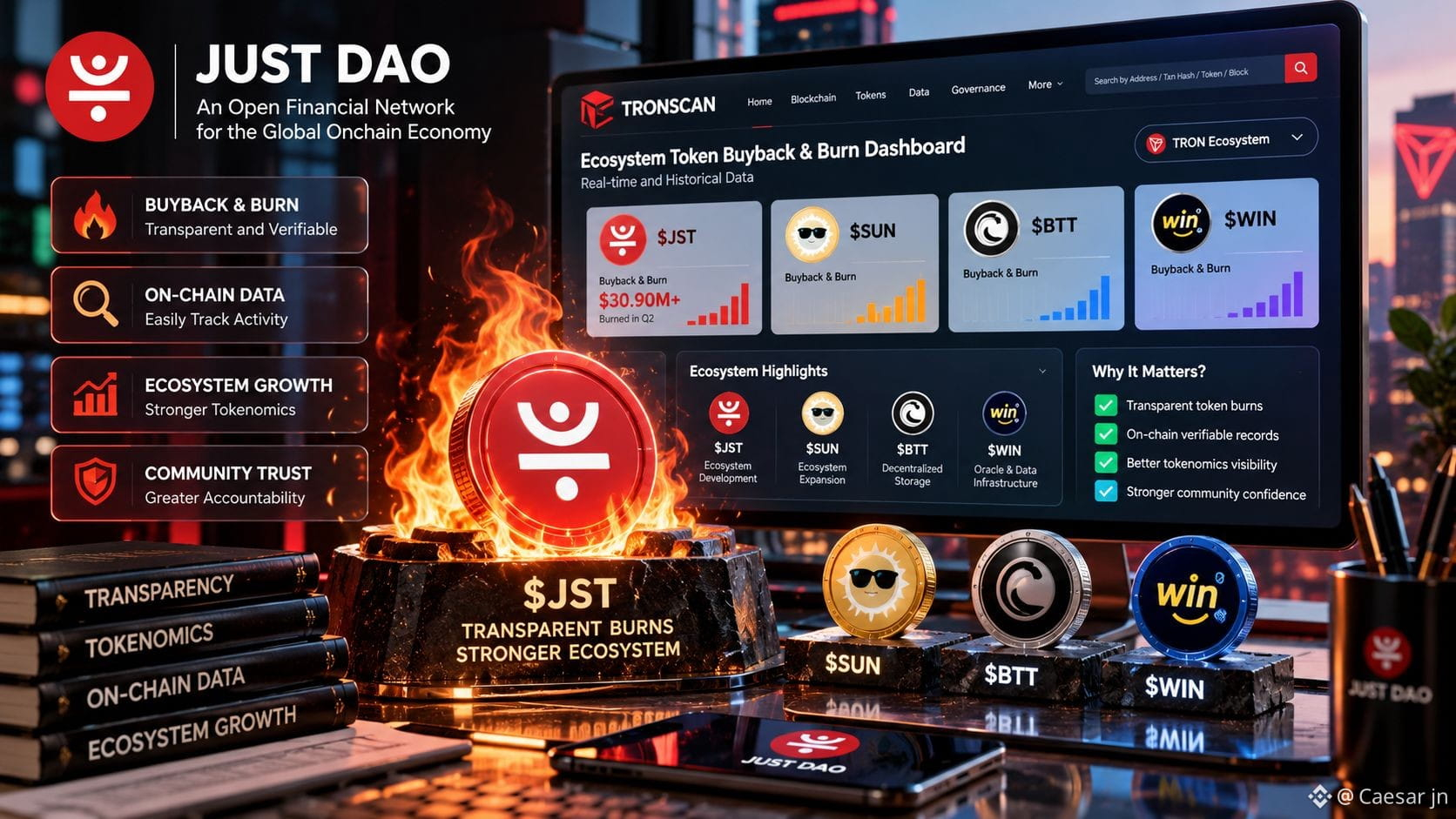
Однією з важливих подій в екосистемі TRON стало додавання $JST до панелі викупу та спалювання токенів екосистеми на TRONSCAN.
Чому це важливо?
Тому що прозорість дає спільноті кращу можливість зрозуміти, що відбувається з економікою токена того чи іншого проєкту.
У децентралізованих фінансах часто обговорюють викуп і спалювання токенів, але їхнє справжнє значення виходить за межі самих оголошень.
Не менш важливо мати змогу самостійно відстежувати цю діяльність.
Ось три причини, чому це важливо.
1. ПРОЗОРІСТЬ СПРИЯЄ ПІДЗВІТНОСТІ
Коли інформація про викуп і спалювання доступна в блокчейн-оглядачі, учасники спільноти можуть легше вивчати історію активності, а не покладатися виключно на рекламні заяви.
2. ТОКЕНОМІКА СТАЄ ЗРОЗУМІЛІШОЮ
Щоб зрозуміти пропозицію токенів, недостатньо подивитися на ринкові ціни. Зміни пропозиції, токени в обігу, спалювання та історичні дані разом дають повнішу картину.
3. МОЖЛИВІСТЬ ПЕРЕВІРКИ ЗМІЦНЮЄ ДОВІРУ СПІЛЬНОТИ
Прозорість автоматично не гарантує вартості токена чи майбутніх результатів. Однак доступність важливої інформації створює міцнішу основу для свідомої участі.
Варто також поглянути на ширший контекст екосистеми.
Ширша екосистема викупу та спалювання JUST DAO підкреслює важливість відстеження пов’язаної з токенами діяльності в різних проєктах, зокрема $JST, $SUN, $BTT і $WIN.
Цікаво не просто те, що така діяльність існує.
Важливо, що кращий доступ до інформації дає користувачам змогу самостійно перевіряти, що відбувається.
І ця різниця має значення.
Я вважаю, що наступний етап упровадження блокчейну потребуватиме
@DeFi_JUST @JustinSun #TRONEcoStar
ПРОЗОРІСТЬ ЗМІНЮЄ НАШ ПІДХІД ДО ОЦІНЮВАННЯ ЕКОНОМІКИ ТОКЕНІВ. 🔍🔥
У криптосфері легко робити гучні заяви.
Але уваги заслуговують саме дії, які можна перевірити.
Однією з важливих подій в екосистемі TRON стало додавання $JST до панелі викупу та спалювання токенів екосистеми на TRONSCAN.
Чому це важливо?
Тому що прозорість дає спільноті кращу можливість зрозуміти, що відбувається з економікою токена того чи іншого проєкту.
У децентралізованих фінансах часто обговорюють викуп і спалювання токенів, але їхнє справжнє значення виходить за межі самих оголошень.
Не менш важливо мати змогу самостійно відстежувати цю діяльність.
Ось три причини, чому це важливо.
1. ПРОЗОРІСТЬ СПРИЯЄ ПІДЗВІТНОСТІ
Коли інформація про викуп і спалювання доступна в блокчейн-оглядачі, учасники спільноти можуть легше вивчати історію активності, а не покладатися виключно на рекламні заяви.
2. ТОКЕНОМІКА СТАЄ ЗРОЗУМІЛІШОЮ
Щоб зрозуміти пропозицію токенів, недостатньо подивитися на ринкові ціни. Зміни пропозиції, токени в обігу, спалювання та історичні дані разом дають повнішу картину.
3. МОЖЛИВІСТЬ ПЕРЕВІРКИ ЗМІЦНЮЄ ДОВІРУ СПІЛЬНОТИ
Прозорість автоматично не гарантує вартості токена чи майбутніх результатів. Однак доступність важливої інформації створює міцнішу основу для свідомої участі.
Варто також поглянути на ширший контекст екосистеми.
Ширша екосистема викупу та спалювання JUST DAO підкреслює важливість відстеження пов’язаної з токенами діяльності в різних проєктах, зокрема $JST, $SUN, $BTT і $WIN.
Цікаво не просто те, що така діяльність існує.
Важливо, що кращий доступ до інформації дає користувачам змогу самостійно перевіряти, що відбувається.
І ця різниця має значення.
Я вважаю, що наступний етап упровадження блокчейну потребуватиме
@JUST DAO @Justin Sun孙宇晨 #TRONEcoStar
94
·
--
Переглянути переклад
𝗜𝗡 𝗗𝗘𝗖𝗘𝗡𝗧𝗥𝗔𝗟𝗜𝗭𝗘𝗗 𝗦𝗧𝗢𝗥𝗔𝗚𝗘, 𝗧𝗥𝗨𝗦𝗧 𝗦𝗛𝗢𝗨𝗟𝗗 𝗕𝗘 𝗦𝗨𝗣𝗣𝗢𝗥𝗧𝗘𝗗 𝗕𝗬 𝗩𝗘𝗥𝗜𝗙𝗜𝗔𝗕𝗟𝗘 𝗗𝗔𝗧𝗔.
Uploading a file is only the beginning of a storage service.
The more important question is what happens afterward. Can the network establish that participating nodes are online? Can relevant storage information be checked? Can users and developers gain confidence in the system beyond simply trusting a service provider's promise?
These questions are central to the development of decentralized storage.
BTFS documentation describes an Online Proof Contract that stores the Merkle root of daily online-proof data for network nodes and provides an interface through which proof information can be verified.
It also describes smart-contract-based file metadata management, giving relevant records a more transparent and auditable foundation.
Why does this matter?
Because decentralized infrastructure depends on accountability. A network may have many participating nodes, but the number of nodes alone does not establish the quality or reliability of the service.
Verification mechanisms help create a framework for checking information and evaluating participation. They can also make it easier to identify performance issues and improve the way infrastructure is managed.
This does not mean every storage risk disappears. Online proofs and metadata records are components of a broader reliability system, not a universal guarantee that every file will always be available.
Still, building verification into infrastructure is a meaningful step.
BTFS is working toward a storage environment where trust is supported by transparent mechanisms rather than assumptions alone.
@BitTorrent_Official @JustinSun
#TRONEcoStar
𝗜𝗡 𝗗𝗘𝗖𝗘𝗡𝗧𝗥𝗔𝗟𝗜𝗭𝗘𝗗 𝗦𝗧𝗢𝗥𝗔𝗚𝗘, 𝗧𝗥𝗨𝗦𝗧 𝗦𝗛𝗢𝗨𝗟𝗗 𝗕𝗘 𝗦𝗨𝗣𝗣𝗢𝗥𝗧𝗘𝗗 𝗕𝗬 𝗩𝗘𝗥𝗜𝗙𝗜𝗔𝗕𝗟𝗘 𝗗𝗔𝗧𝗔.
Uploading a file is only the beginning of a storage service.
The more important question is what happens afterward. Can the network establish that participating nodes are online? Can relevant storage information be checked? Can users and developers gain confidence in the system beyond simply trusting a service provider's promise?
These questions are central to the development of decentralized storage.
BTFS documentation describes an Online Proof Contract that stores the Merkle root of daily online-proof data for network nodes and provides an interface through which proof information can be verified.
It also describes smart-contract-based file metadata management, giving relevant records a more transparent and auditable foundation.
Why does this matter?
Because decentralized infrastructure depends on accountability. A network may have many participating nodes, but the number of nodes alone does not establish the quality or reliability of the service.
Verification mechanisms help create a framework for checking information and evaluating participation. They can also make it easier to identify performance issues and improve the way infrastructure is managed.
This does not mean every storage risk disappears. Online proofs and metadata records are components of a broader reliability system, not a universal guarantee that every file will always be available.
Still, building verification into infrastructure is a meaningful step.
BTFS is working toward a storage environment where trust is supported by transparent mechanisms rather than assumptions alone.
@BitTorrent_Official @Justin Sun孙宇晨
#TRONEcoStar
8
·
--
Переглянути переклад
𝗗𝗘𝗖𝗘𝗡𝗧𝗥𝗔𝗟𝗜𝗭𝗘𝗗 𝗦𝗧𝗢𝗥𝗔𝗚𝗘 𝗡𝗘𝗘𝗗𝗦 𝗠𝗢𝗥𝗘 𝗧𝗛𝗔𝗡 𝗦𝗢𝗙𝗧𝗪𝗔𝗥𝗘. 𝗜𝗧 𝗡𝗘𝗘𝗗𝗦 𝗥𝗘𝗟𝗜𝗔𝗕𝗟𝗘 𝗣𝗔𝗥𝗧𝗜𝗖𝗜𝗣𝗔𝗡𝗧𝗦.
One of the most important parts of a decentralized infrastructure network is the people and resources that keep it operating.
In the BTFS ecosystem, storage providers play a central role. They contribute storage capacity and help make decentralized file storage possible. Rather than treating storage as a service delivered by one central operator, BTFS builds around a network of participating providers.
The BTFS 4.0 architecture introduced a more defined operational model through dedicated Storage Providers. The upgrade also included smart-contract-based file metadata management and mechanisms intended to improve transparency and auditability.
This is an important infrastructure decision.
A decentralized storage network needs more than available disk space. It needs a way to identify service providers, manage storage arrangements, track relevant information, and create accountability around the services being delivered.
BTFS uses blockchain-connected mechanisms to support parts of this process. Its documentation describes smart contracts for metadata management, storage payments, and online-proof verification.
For storage providers, this creates a more structured environment for contributing resources. For developers and users, it provides a clearer framework for understanding how storage services are coordinated.
The long-term opportunity is to build a network where infrastructure participation is measurable, services are easier to verify, and storage resources can be coordinated across a wider ecosystem.
That is the kind of foundation decentralized applications need as their data requirements grow.
@BitTorrent_Official @JustinSun
#TRONEcoStar
𝗗𝗘𝗖𝗘𝗡𝗧𝗥𝗔𝗟𝗜𝗭𝗘𝗗 𝗦𝗧𝗢𝗥𝗔𝗚𝗘 𝗡𝗘𝗘𝗗𝗦 𝗠𝗢𝗥𝗘 𝗧𝗛𝗔𝗡 𝗦𝗢𝗙𝗧𝗪𝗔𝗥𝗘. 𝗜𝗧 𝗡𝗘𝗘𝗗𝗦 𝗥𝗘𝗟𝗜𝗔𝗕𝗟𝗘 𝗣𝗔𝗥𝗧𝗜𝗖𝗜𝗣𝗔𝗡𝗧𝗦.
One of the most important parts of a decentralized infrastructure network is the people and resources that keep it operating.
In the BTFS ecosystem, storage providers play a central role. They contribute storage capacity and help make decentralized file storage possible. Rather than treating storage as a service delivered by one central operator, BTFS builds around a network of participating providers.
The BTFS 4.0 architecture introduced a more defined operational model through dedicated Storage Providers. The upgrade also included smart-contract-based file metadata management and mechanisms intended to improve transparency and auditability.
This is an important infrastructure decision.
A decentralized storage network needs more than available disk space. It needs a way to identify service providers, manage storage arrangements, track relevant information, and create accountability around the services being delivered.
BTFS uses blockchain-connected mechanisms to support parts of this process. Its documentation describes smart contracts for metadata management, storage payments, and online-proof verification.
For storage providers, this creates a more structured environment for contributing resources. For developers and users, it provides a clearer framework for understanding how storage services are coordinated.
The long-term opportunity is to build a network where infrastructure participation is measurable, services are easier to verify, and storage resources can be coordinated across a wider ecosystem.
That is the kind of foundation decentralized applications need as their data requirements grow.
@BitTorrent_Official @Justin Sun孙宇晨
#TRONEcoStar
4
·
--
Переглянути переклад
𝗗𝗜𝗚𝗜𝗧𝗔𝗟 𝗦𝗧𝗢𝗥𝗔𝗚𝗘 𝗦𝗛𝗢𝗨𝗟𝗗 𝗡𝗢𝗧 𝗗𝗘𝗣𝗘𝗡𝗗 𝗢𝗡 𝗔 𝗦𝗜𝗡𝗚𝗟𝗘 𝗣𝗢𝗜𝗡𝗧 𝗢𝗙 𝗙𝗔𝗜𝗟𝗨𝗥𝗘.
As more applications move toward Web3, the way digital information is stored becomes just as important as the technology used to process it.
Traditional cloud storage has made accessing and managing files convenient, but it also introduces dependencies on centralized providers. Service interruptions, restricted access, vendor lock-in, and single points of failure can create challenges for applications that need dependable data availability.
This is where the BitTorrent File System (BTFS) offers an alternative approach.
BTFS is designed around decentralized storage, connecting storage providers across a distributed network instead of depending entirely on one central server. Its architecture allows participants to contribute storage resources while applications and users access the network's storage capabilities.
The significance goes beyond simply finding another place to upload files.
A distributed storage model can support greater infrastructure diversity, improve redundancy, and give developers another option when designing applications that require persistent digital content.
BTFS also connects with the broader BitTorrent ecosystem, creating opportunities for storage, file sharing, and blockchain-based services to work together.
Of course, decentralization does not automatically eliminate every storage risk. Provider reliability, redundancy, data protection, and network performance remain important considerations.
But the direction is meaningful: digital infrastructure should be built with resilience and broader participation in mind.
BitTorrent's experience in peer-to-peer technology gives this development an important foundation as decentralized storage continues to evolve.
@BitTorrent_Official @JustinSun
#TRONEcoStar
𝗗𝗜𝗚𝗜𝗧𝗔𝗟 𝗦𝗧𝗢𝗥𝗔𝗚𝗘 𝗦𝗛𝗢𝗨𝗟𝗗 𝗡𝗢𝗧 𝗗𝗘𝗣𝗘𝗡𝗗 𝗢𝗡 𝗔 𝗦𝗜𝗡𝗚𝗟𝗘 𝗣𝗢𝗜𝗡𝗧 𝗢𝗙 𝗙𝗔𝗜𝗟𝗨𝗥𝗘.
As more applications move toward Web3, the way digital information is stored becomes just as important as the technology used to process it.
Traditional cloud storage has made accessing and managing files convenient, but it also introduces dependencies on centralized providers. Service interruptions, restricted access, vendor lock-in, and single points of failure can create challenges for applications that need dependable data availability.
This is where the BitTorrent File System (BTFS) offers an alternative approach.
BTFS is designed around decentralized storage, connecting storage providers across a distributed network instead of depending entirely on one central server. Its architecture allows participants to contribute storage resources while applications and users access the network's storage capabilities.
The significance goes beyond simply finding another place to upload files.
A distributed storage model can support greater infrastructure diversity, improve redundancy, and give developers another option when designing applications that require persistent digital content.
BTFS also connects with the broader BitTorrent ecosystem, creating opportunities for storage, file sharing, and blockchain-based services to work together.
Of course, decentralization does not automatically eliminate every storage risk. Provider reliability, redundancy, data protection, and network performance remain important considerations.
But the direction is meaningful: digital infrastructure should be built with resilience and broader participation in mind.
BitTorrent's experience in peer-to-peer technology gives this development an important foundation as decentralized storage continues to evolve.
@BitTorrent_Official @Justin Sun孙宇晨
#TRONEcoStar

6
Увійдіть, щоб переглянути інший контент
Приєднуйтесь до користувачів криптовалют по всьому світу на Binance Square
⚡️ Отримуйте актуальну та корисну інформацію про криптовалюти.
💬 Приєднуйтесь до найбільшої у світі криптобіржі.
👍 Відкрийте справжні ідеї від перевірених авторів.
Електронна пошта / номер телефону
Трендові теми
fomcвідстеження
101,142 переглядів
487 обговорюють
ФРС сьогодні без сюрпризів, але з нюансами. Ставка незмінна — 3.75% - 4.00%.
Але голосування було не таким вже й єдиним: 10 проти 2 причому двоє членів комітету реально тиснули за підвищення через стійку інфляцію.По суті, регулятор у глухому куті і чекає нової статистики, щоб зрозуміти, що робити далі.
Для ринку це нейтрально але тиск відчувається.Хто що думає, куди підемо далі найближчими тижнями? 👇
#fomcвідстеження
#CanMicrosoftDeliverOnAI
#CanGoogleDefindItsCore
#KOSPISurges6.63%BackAbove6000
$BTC
$NVDA
$NIL
VoLoDyMyR7
·21 вподобань
·2.3k переглядів
BinanceProcesses$4.65BWithdrawals
49,997 переглядів
201 обговорюють
WithdrawalsBack: 15 networks live
10,976 переглядів
158 обговорюють