

BCheque1
445 Публікації

BCheque1
Поскаржитись
Заблокувати користувача
0 Підписки
15 Підписники
41 Вподобань
Публікації
·
--
ТЕРМІНОВО: ЦЕ ВИГЛЯДАЄ ПІДОЗРІЛО.
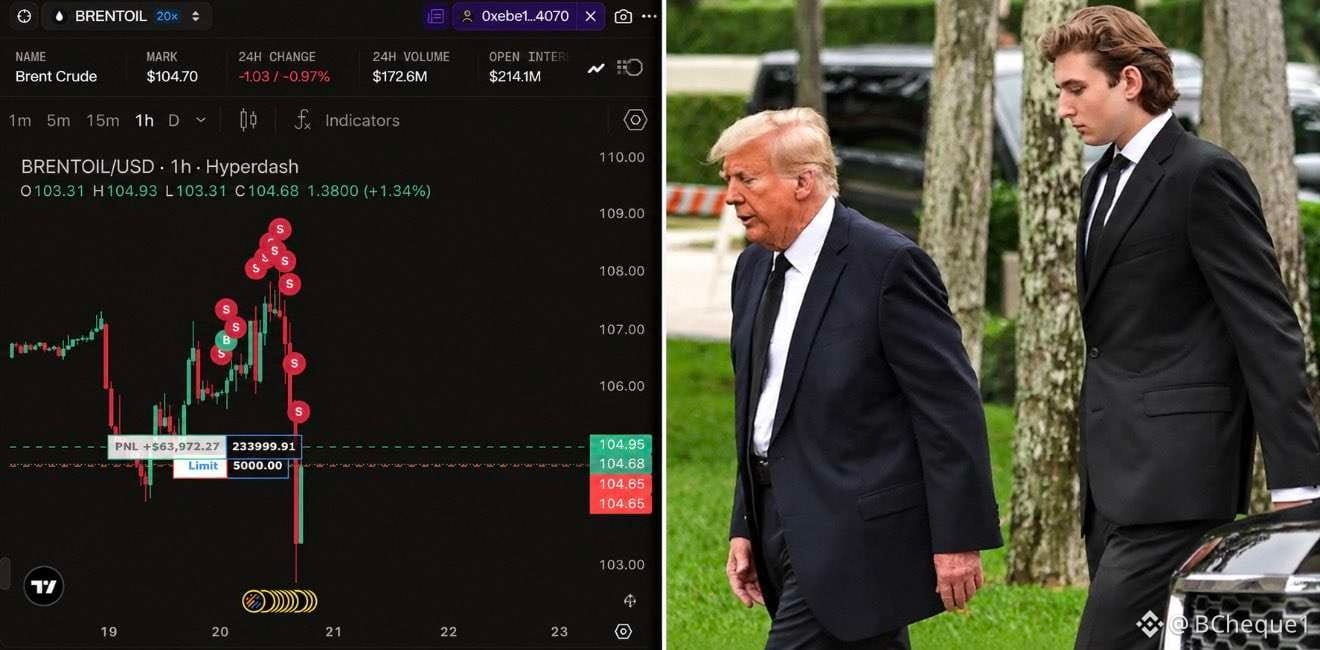
За кілька годин до оголошення про нібито «мирну угоду» між США та Іраном хтось, як повідомляється, відкрив короткі позиції на нафту на Hyperliquid на 24 МІЛЬЙОНИ ДОЛАРІВ.
Невдовзі після оголошення ціни на нафту різко впали.
Збіг?
#TRUMP
ТЕРМІНОВО: ЦЕ ВИГЛЯДАЄ ПІДОЗРІЛО.
За кілька годин до оголошення про нібито «мирну угоду» між США та Іраном хтось, як повідомляється, відкрив короткі позиції на нафту на Hyperliquid на 24 МІЛЬЙОНИ ДОЛАРІВ.
Невдовзі після оголошення ціни на нафту різко впали.
Збіг?
#TRUMP
За кілька годин до оголошення про нібито «мирну угоду» між США та Іраном хтось, як повідомляється, відкрив короткі позиції на нафту на Hyperliquid на 24 МІЛЬЙОНИ ДОЛАРІВ.
Невдовзі після оголошення ціни на нафту різко впали.
Збіг?
#TRUMP
48
·
--
Переглянути переклад
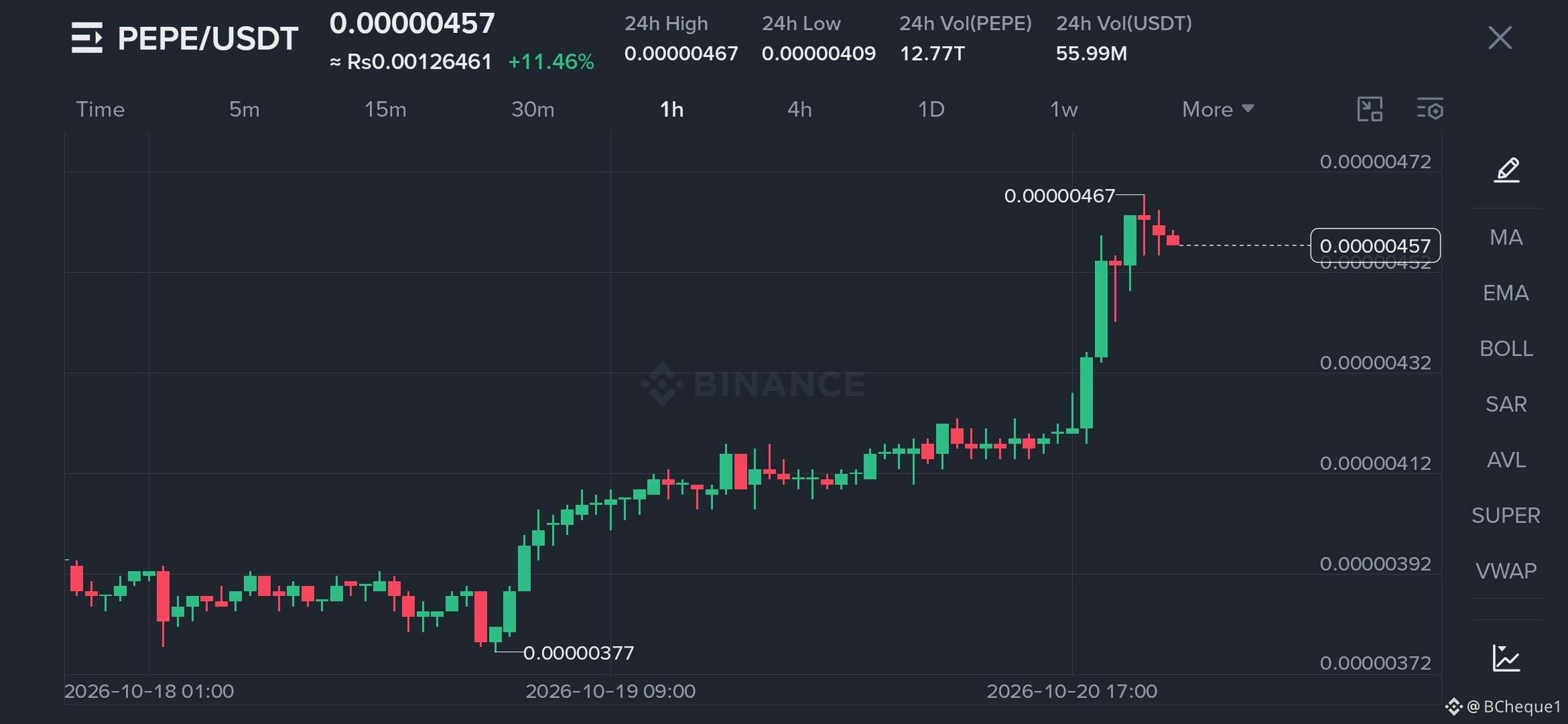
10) $PEPE is not a frog its a trend of market now
What started as a joke is now a force in the market.
The charts are screaming.
The community is roaring.
And the narrative is just beginning.
Fast gains, strong community, relentless momentum.
$PEPE is the new king of memes.
The next leg up could leave others in the dust.
Get ready fams this frog is about to leap.
Technical analysis :
It is going for his 4th touch and this is going to be much bigger than 1st ,2nd and 3rd touch with 750% gains
Hold on your $PEPE till the targets.
10) $PEPE is not a frog its a trend of market now
What started as a joke is now a force in the market.
The charts are screaming.
The community is roaring.
And the narrative is just beginning.
Fast gains, strong community, relentless momentum.
$PEPE is the new king of memes.
The next leg up could leave others in the dust.
Get ready fams this frog is about to leap.
Technical analysis :
It is going for his 4th touch and this is going to be much bigger than 1st ,2nd and 3rd touch with 750% gains
Hold on your $PEPE till the targets.
What started as a joke is now a force in the market.
The charts are screaming.
The community is roaring.
And the narrative is just beginning.
Fast gains, strong community, relentless momentum.
$PEPE is the new king of memes.
The next leg up could leave others in the dust.
Get ready fams this frog is about to leap.
Technical analysis :
It is going for his 4th touch and this is going to be much bigger than 1st ,2nd and 3rd touch with 750% gains
Hold on your $PEPE till the targets.
50
·
--
Переглянути переклад
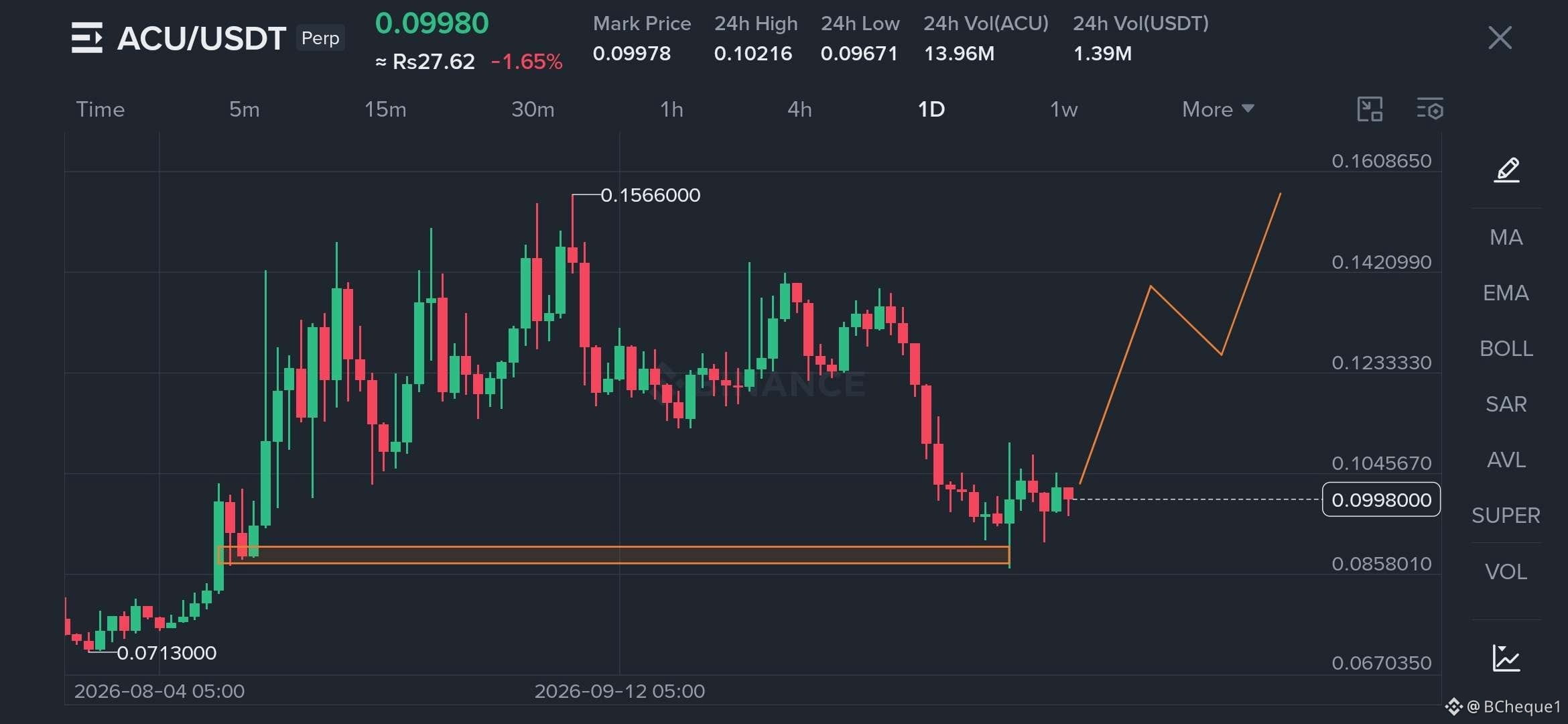
$ACU is holding strong near the support zone! Looking ready for a solid bullish move from here. 📈
Entry Zone: 0.0980 - 0.1000
Targets:
• TP1: 0.1230
• TP2: 0.1420
• TP3: 0.1600+
Stop Loss (SL): 0.0850 (Below Support Zone)
Manage your risk properly & use low leverage.
$ACU is holding strong near the support zone! Looking ready for a solid bullish move from here. 📈
Entry Zone: 0.0980 - 0.1000
Targets:
• TP1: 0.1230
• TP2: 0.1420
• TP3: 0.1600+
Stop Loss (SL): 0.0850 (Below Support Zone)
Manage your risk properly & use low leverage.
Entry Zone: 0.0980 - 0.1000
Targets:
• TP1: 0.1230
• TP2: 0.1420
• TP3: 0.1600+
Stop Loss (SL): 0.0850 (Below Support Zone)
Manage your risk properly & use low leverage.
68
·
--
Переглянути переклад
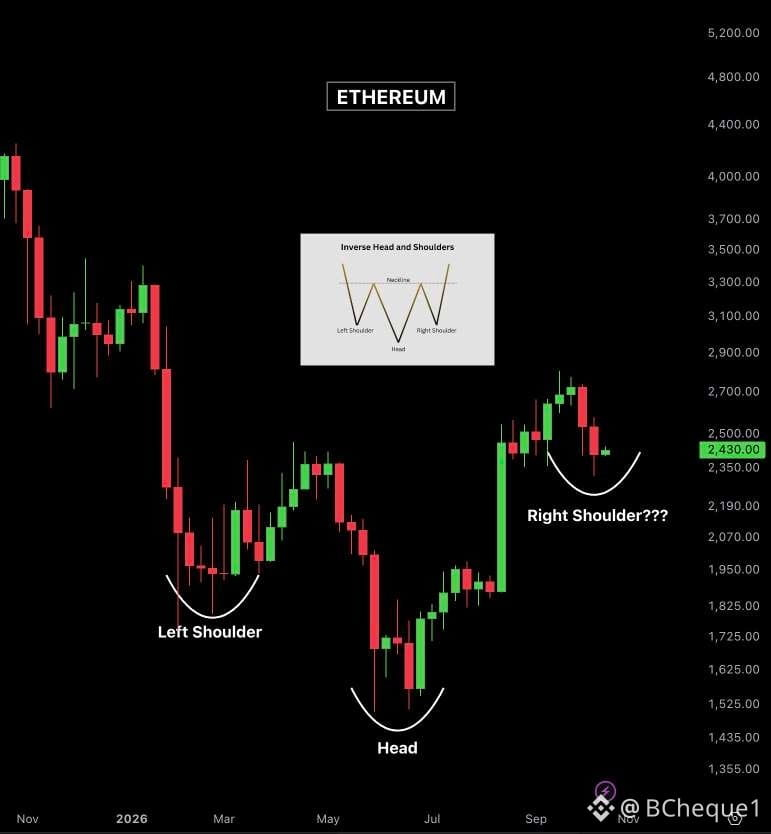
$ETH is forming a bullish Inverse Head & Shoulders pattern on the weekly chart.
If this setup plays out, the upside could be massive.
$ETH is forming a bullish Inverse Head & Shoulders pattern on the weekly chart.
If this setup plays out, the upside could be massive.
If this setup plays out, the upside could be massive.
54
·
--
Переглянути переклад
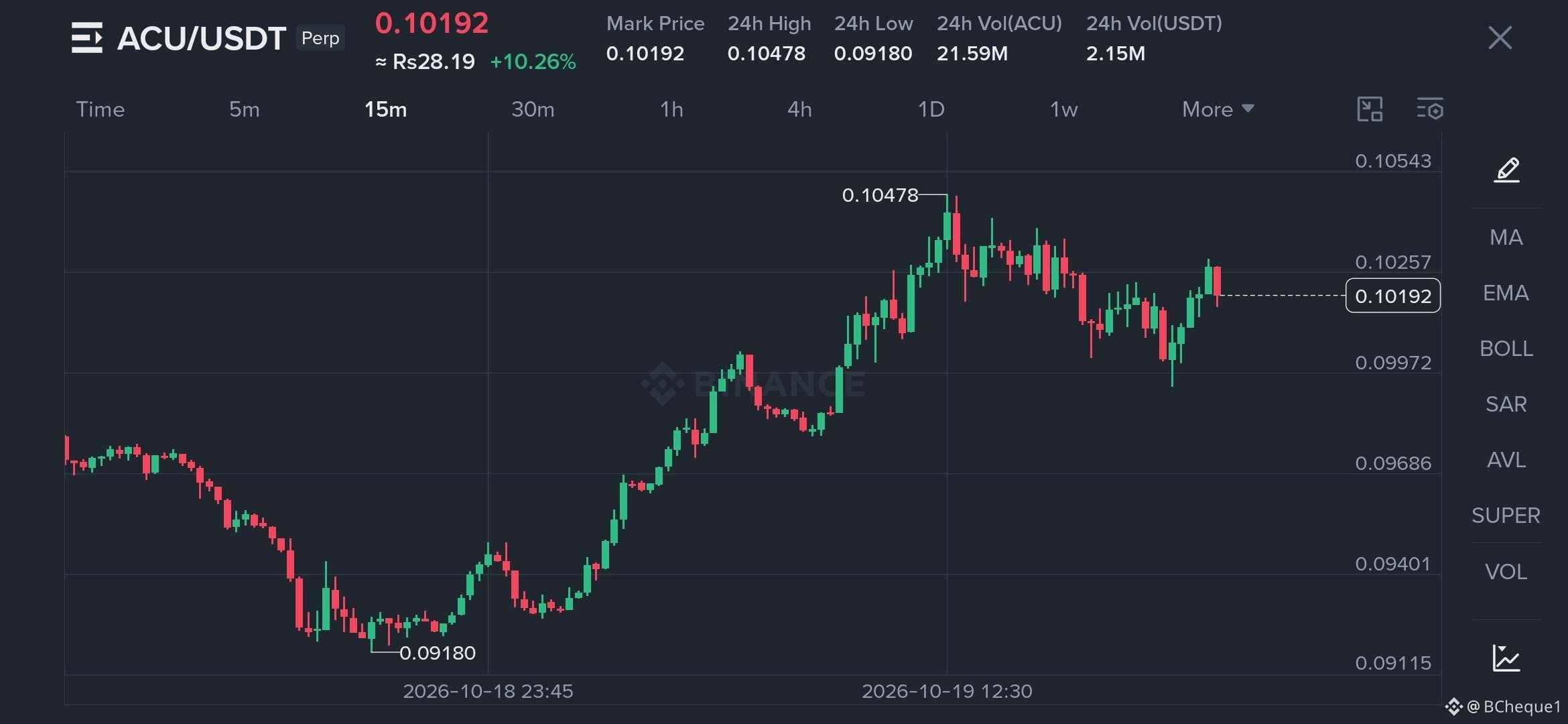
$ACU is about to go into price discovery mode soon.
These prices won’t stay here for long.
$1 is still cheap.
$ACU is about to go into price discovery mode soon.
These prices won’t stay here for long.
$1 is still cheap.
These prices won’t stay here for long.
$1 is still cheap.
72
·
--
Переглянути переклад
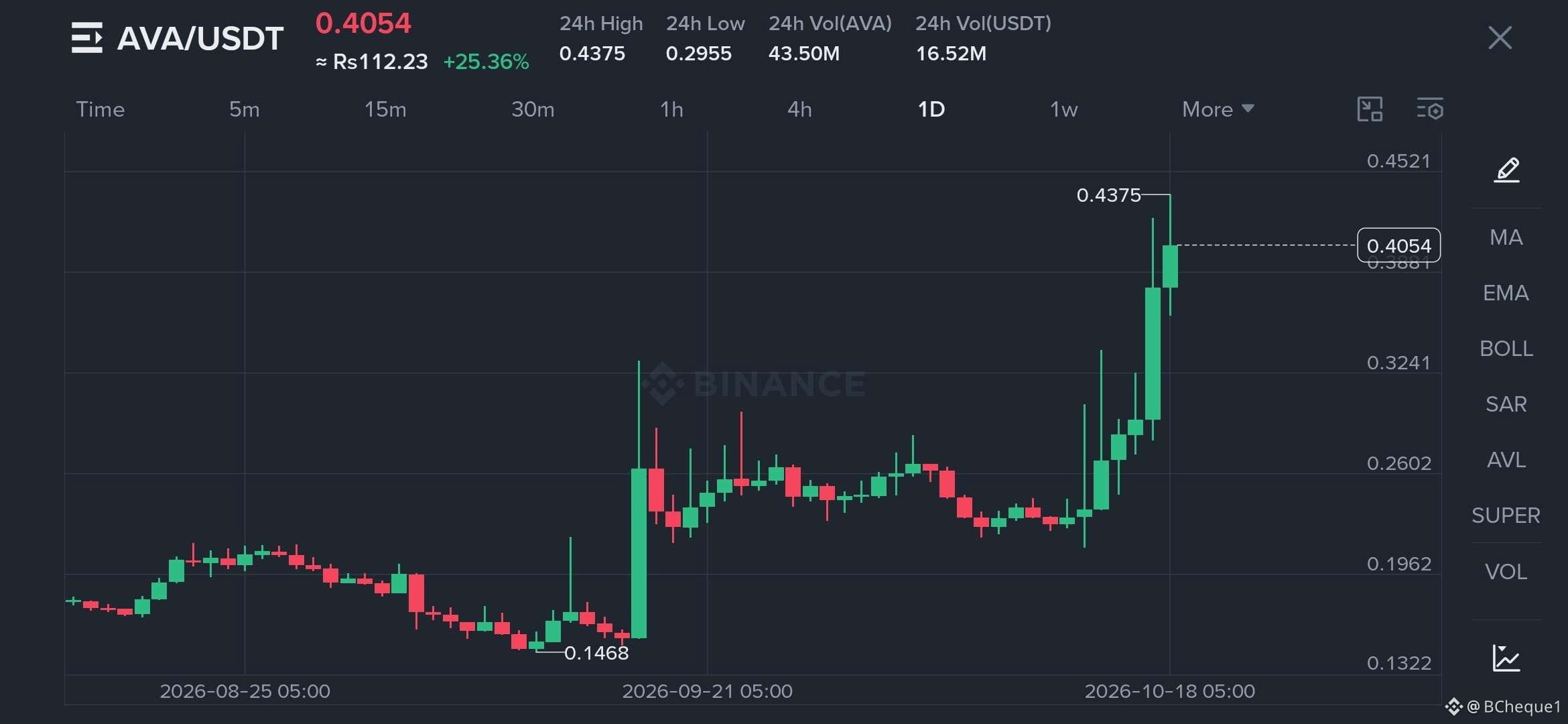
$AVA PRICE UPDATE: 184% UP | IS $5 NEXT?
Technical Outlook: A Confirmed HTF Close Above $0.30 Could Trigger Another Powerful Bullish Expansion, With $5 In Focus.
If Price Sees A Major Downside Retracement, The $0.22–$0.26 Zone Could Offer A Potential Re-Entry Opportunity.
Targets: $0.60 → $1.45 → $3.00 → $5.00 → $6.50
Invalidation: HTF Close Below $0.1468
NFA. DYOR.
$AVA PRICE UPDATE: 184% UP | IS $5 NEXT?
Technical Outlook: A Confirmed HTF Close Above $0.30 Could Trigger Another Powerful Bullish Expansion, With $5 In Focus.
If Price Sees A Major Downside Retracement, The $0.22–$0.26 Zone Could Offer A Potential Re-Entry Opportunity.
Targets: $0.60 → $1.45 → $3.00 → $5.00 → $6.50
Invalidation: HTF Close Below $0.1468
NFA. DYOR.
Technical Outlook: A Confirmed HTF Close Above $0.30 Could Trigger Another Powerful Bullish Expansion, With $5 In Focus.
If Price Sees A Major Downside Retracement, The $0.22–$0.26 Zone Could Offer A Potential Re-Entry Opportunity.
Targets: $0.60 → $1.45 → $3.00 → $5.00 → $6.50
Invalidation: HTF Close Below $0.1468
NFA. DYOR.
69
·
--
Переглянути переклад
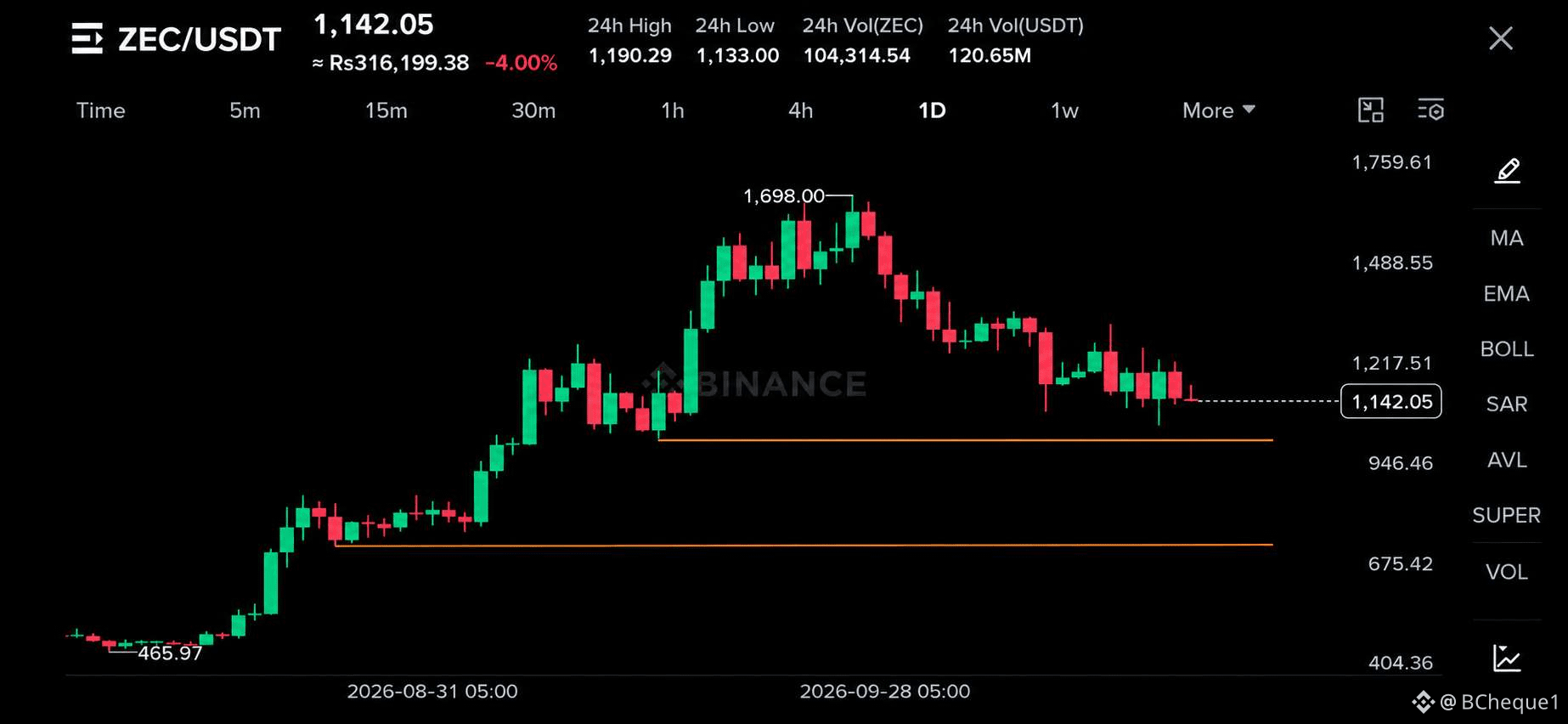
$ZEC simply two levels to trade right now.
$ZEC will dump below $1K before reaching $2K.
Don’t trust small pumps on ZEC. Bottom is still not in. We will see ZEC around $800 very soon.
IYKYK.
$ZEC simply two levels to trade right now.
$ZEC will dump below $1K before reaching $2K.
Don’t trust small pumps on ZEC. Bottom is still not in. We will see ZEC around $800 very soon.
IYKYK.
$ZEC will dump below $1K before reaching $2K.
Don’t trust small pumps on ZEC. Bottom is still not in. We will see ZEC around $800 very soon.
IYKYK.
61
·
--
Переглянути переклад
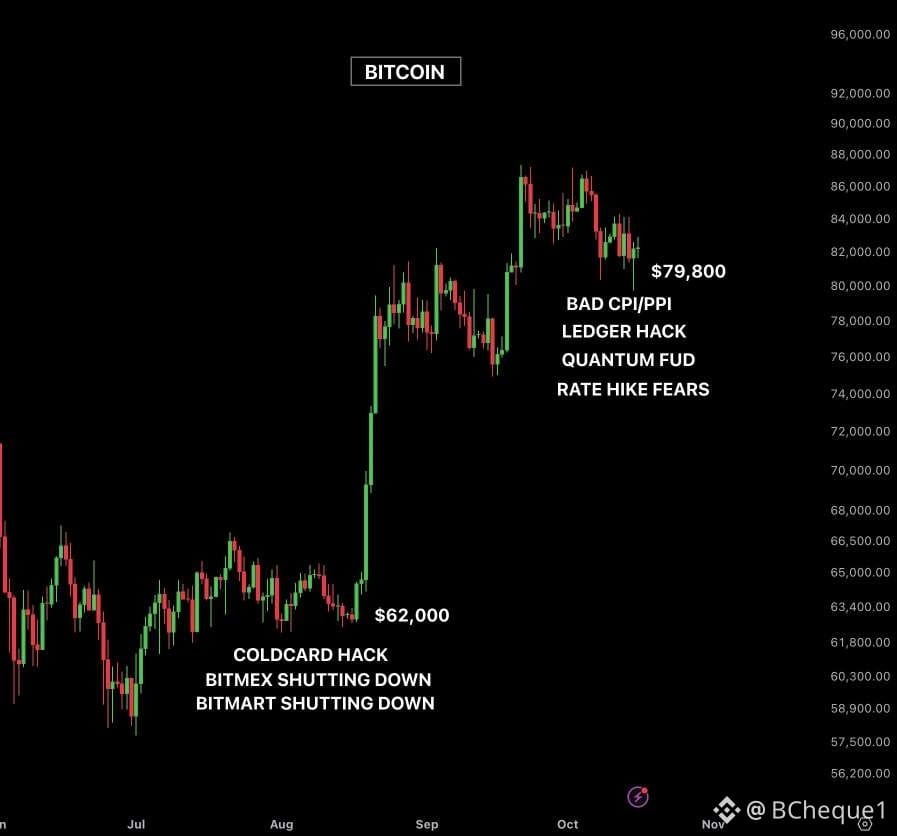
$BTC Crypto is still outperforming stocks.
Nasdaq crashed -6% in the last 10 days while Bitcoin is holding above $80,000 despite negative news and FUD:
1. High CPI
2. Hot PPI
3. Quantum FUD
4. US govt sale FUD
5. MSCI FUD
6. Memory stock sell off
We saw something similar at $62K when Saylor was selling BTC, Coldcard got hacked, and exchanges were shutting down, but Bitcoin still pumped +$25,000.
This is the kind of strength that often shows up before Bitcoin’s next big move.
If BTC breaks $80k, the next support is $75k–$76k, the crucial WMA 50.
$BTC Crypto is still outperforming stocks.
Nasdaq crashed -6% in the last 10 days while Bitcoin is holding above $80,000 despite negative news and FUD:
1. High CPI
2. Hot PPI
3. Quantum FUD
4. US govt sale FUD
5. MSCI FUD
6. Memory stock sell off
We saw something similar at $62K when Saylor was selling BTC, Coldcard got hacked, and exchanges were shutting down, but Bitcoin still pumped +$25,000.
This is the kind of strength that often shows up before Bitcoin’s next big move.
If BTC breaks $80k, the next support is $75k–$76k, the crucial WMA 50.
Nasdaq crashed -6% in the last 10 days while Bitcoin is holding above $80,000 despite negative news and FUD:
1. High CPI
2. Hot PPI
3. Quantum FUD
4. US govt sale FUD
5. MSCI FUD
6. Memory stock sell off
We saw something similar at $62K when Saylor was selling BTC, Coldcard got hacked, and exchanges were shutting down, but Bitcoin still pumped +$25,000.
This is the kind of strength that often shows up before Bitcoin’s next big move.
If BTC breaks $80k, the next support is $75k–$76k, the crucial WMA 50.
1
·
--
Переглянути переклад
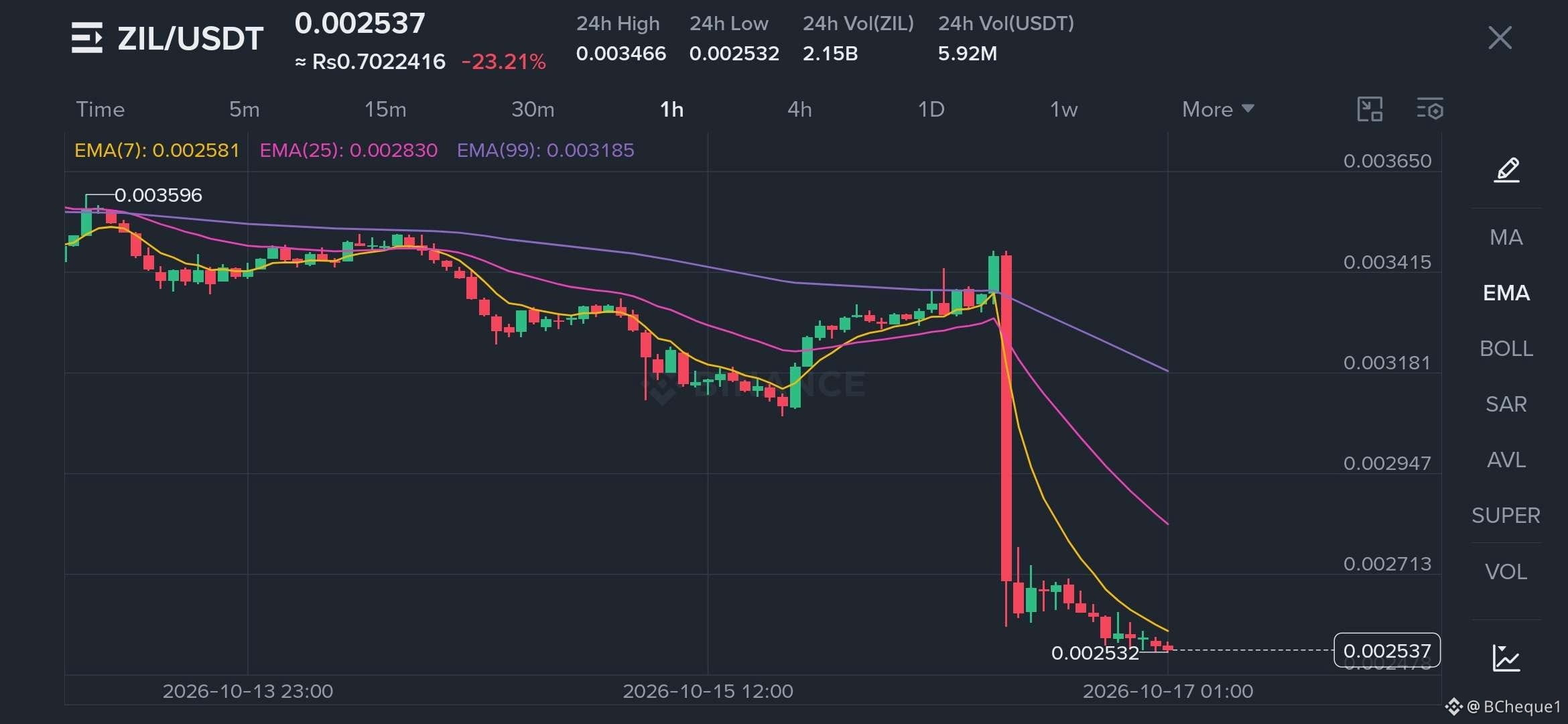
Upbit pulling $ZIL is the kind of news that doesn't need a chart to read. Price already under both EMAs and those are pointing down, so the delisting just gave the trend a reason to keep going.
If 0.012 gives out, that's the market deciding, not me.
Upbit pulling $ZIL is the kind of news that doesn't need a chart to read. Price already under both EMAs and those are pointing down, so the delisting just gave the trend a reason to keep going.
If 0.012 gives out, that's the market deciding, not me.
If 0.012 gives out, that's the market deciding, not me.
35
·
--
Переглянути переклад
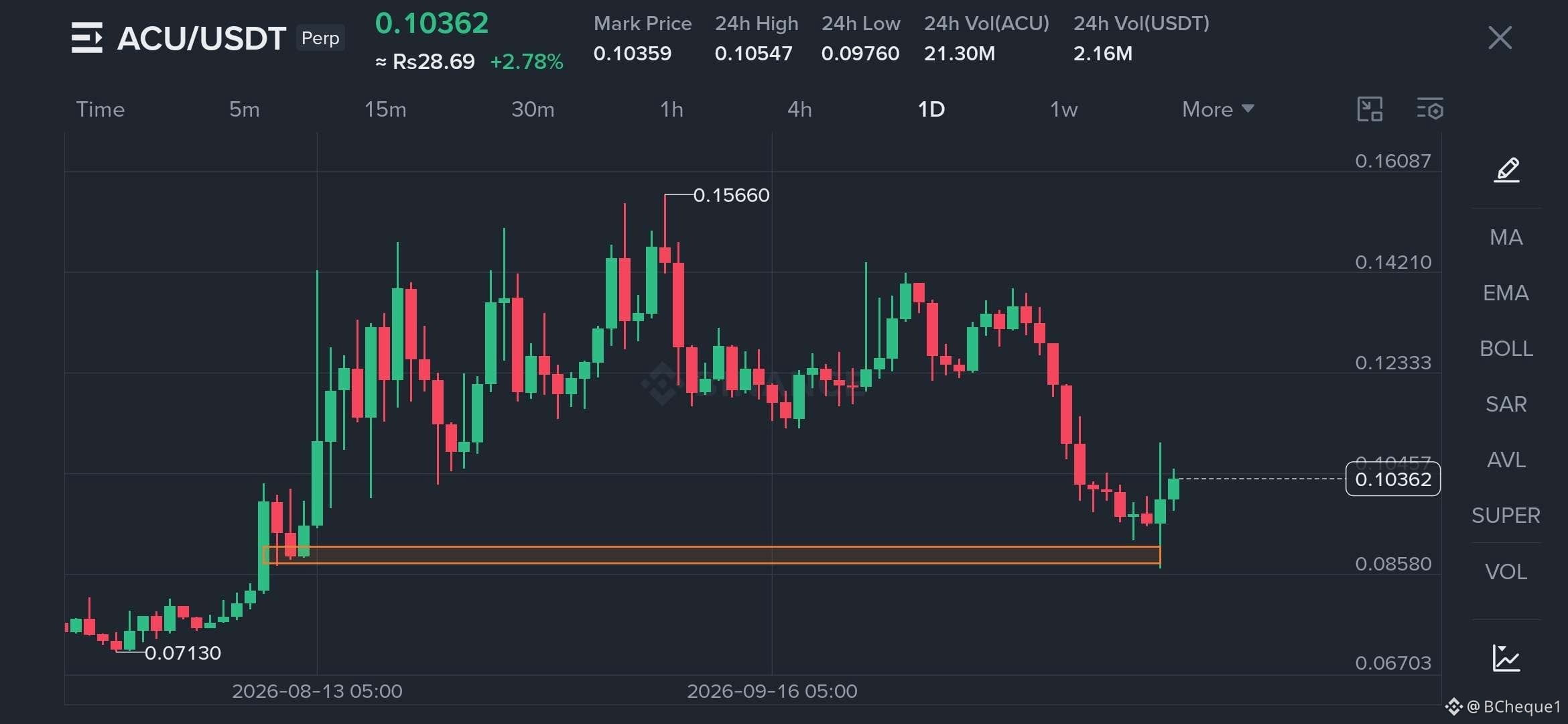
$ACU I've noticed that right now, the only ones discussing this project.
It seems like the ones who get to enjoy this journey of the coin price soaring all the way above $1 is just them.
$ACU I've noticed that right now, the only ones discussing this project.
It seems like the ones who get to enjoy this journey of the coin price soaring all the way above $1 is just them.
It seems like the ones who get to enjoy this journey of the coin price soaring all the way above $1 is just them.
27
·
--
Переглянути переклад
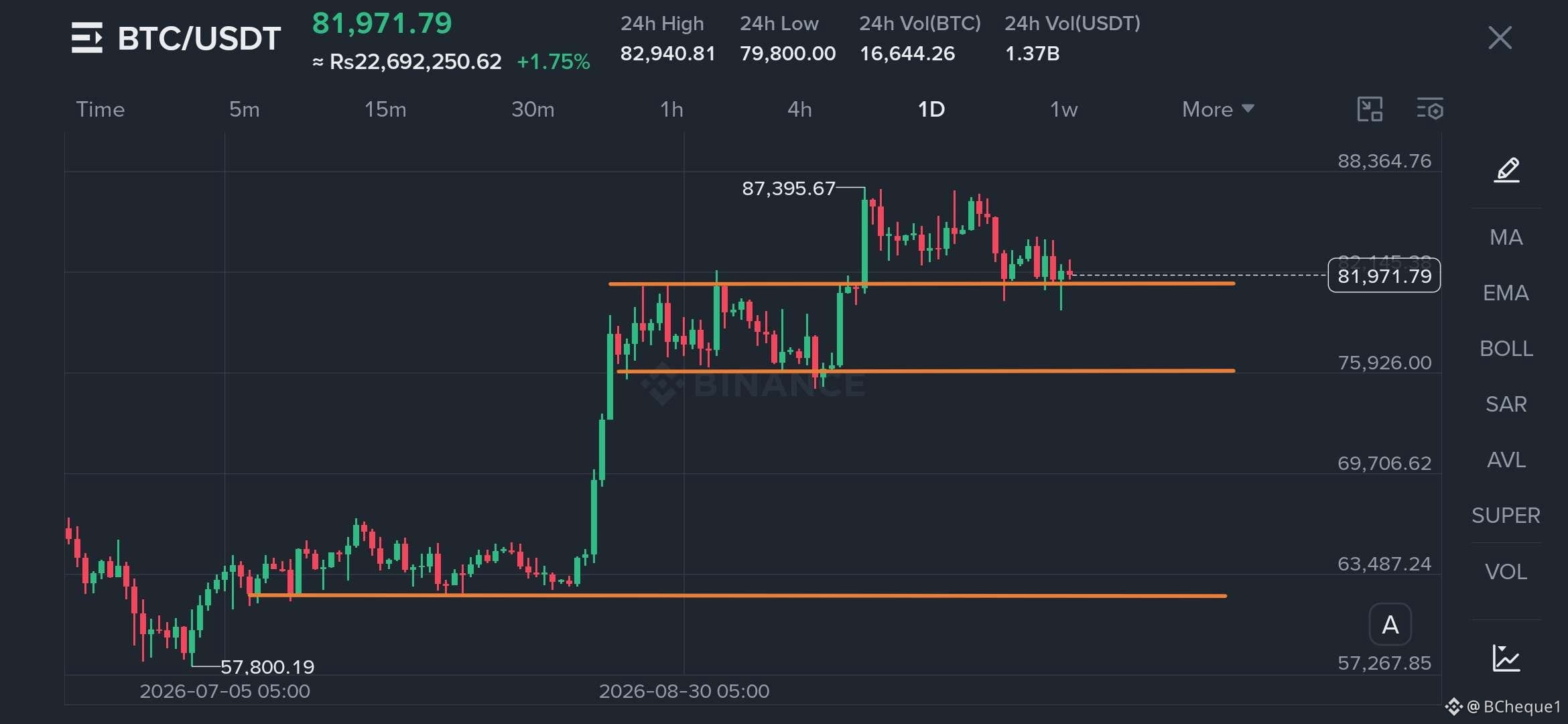
🚨 WARNING: DON’T LONG BITCOIN YET
$BTC is dumping exactly as I told you.
Yesterday, $BTC made a down wick and broke the important $80K support, and currently it is consolidating between $80k–$82k.
$BTC will follow this path: $85K → $82K → $78K → $72K → $62K → $90K
Bookmark this now and check the results next week.
Follow and turn on notifications. The next update matters.
I’ll post every key development as it happens.
🚨 WARNING: DON’T LONG BITCOIN YET
$BTC is dumping exactly as I told you.
Yesterday, $BTC made a down wick and broke the important $80K support, and currently it is consolidating between $80k–$82k.
$BTC will follow this path: $85K → $82K → $78K → $72K → $62K → $90K
Bookmark this now and check the results next week.
Follow and turn on notifications. The next update matters.
I’ll post every key development as it happens.
$BTC is dumping exactly as I told you.
Yesterday, $BTC made a down wick and broke the important $80K support, and currently it is consolidating between $80k–$82k.
$BTC will follow this path: $85K → $82K → $78K → $72K → $62K → $90K
Bookmark this now and check the results next week.
Follow and turn on notifications. The next update matters.
I’ll post every key development as it happens.
46
·
--
Переглянути переклад
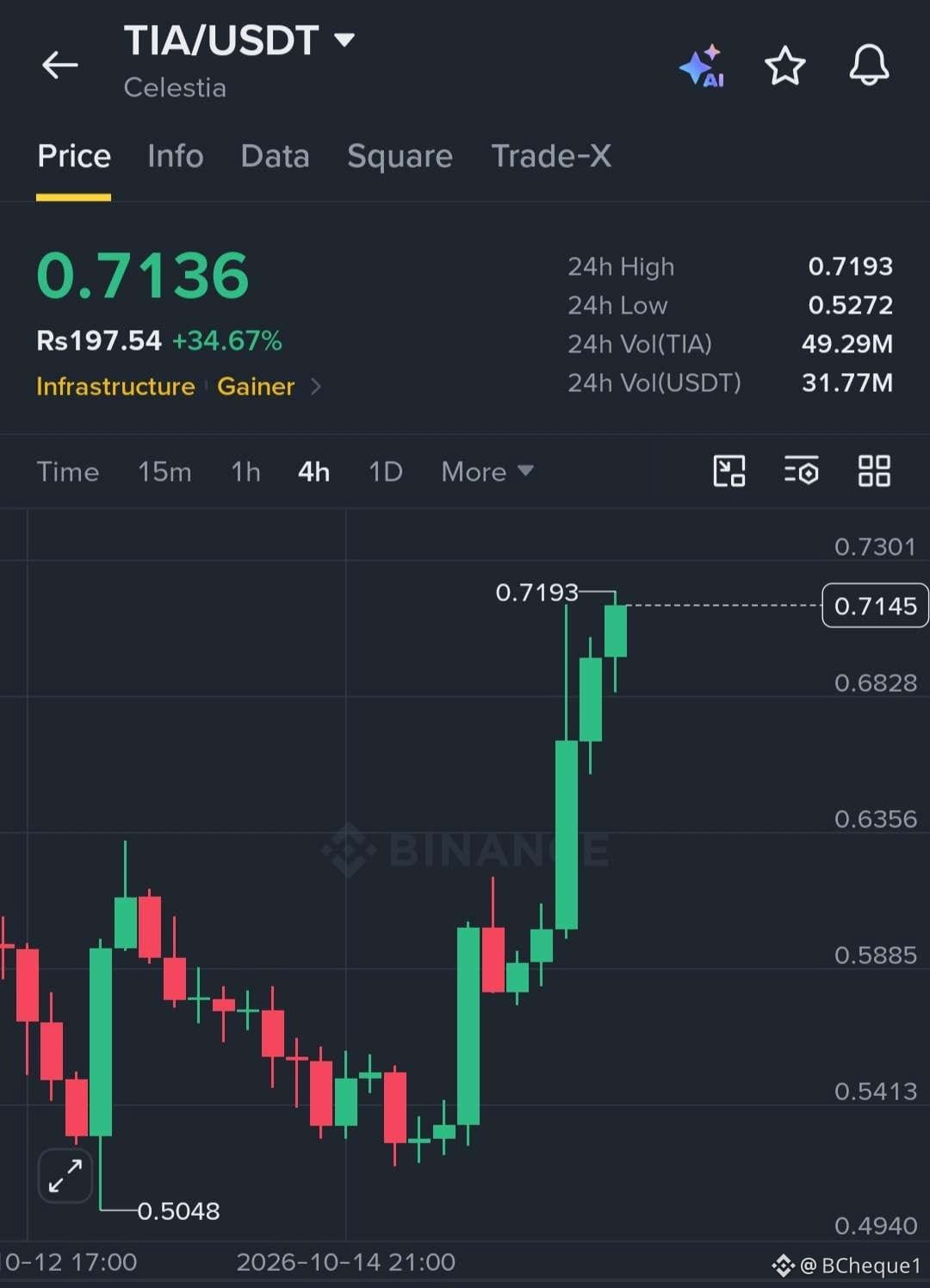
$TIA
LOOKS ULTRA BULLISH ON WEEKLY
TARGETS IS 1$ SHORT TERM
$TIA
LOOKS ULTRA BULLISH ON WEEKLY
TARGETS IS 1$ SHORT TERM
LOOKS ULTRA BULLISH ON WEEKLY
TARGETS IS 1$ SHORT TERM
59
·
--
Переглянути переклад
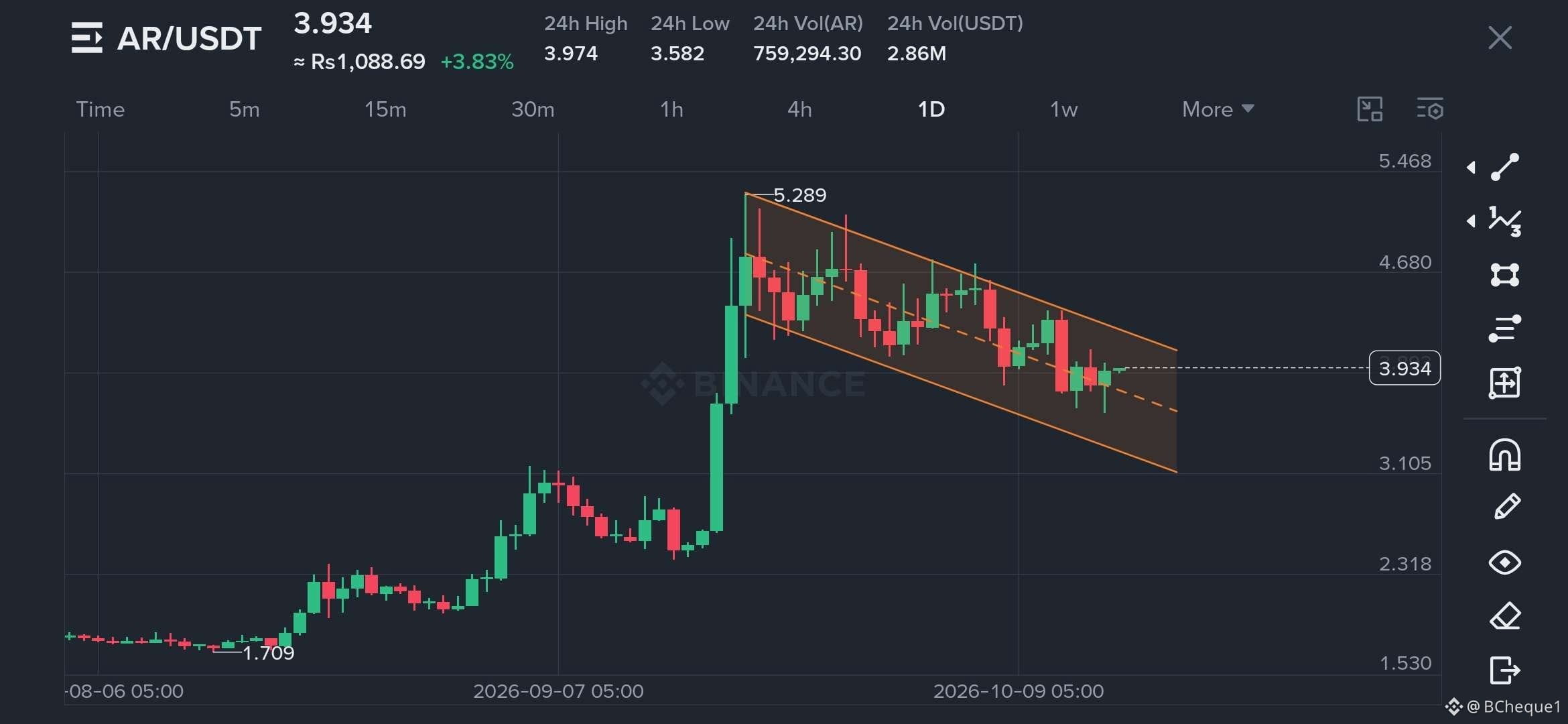
$AR: DMI is leaning bullish. The closing price of the candle will help verify the strength.
The DMI on the daily closed candle shows bullish strength slightly prevailing. ADX indicates the trend has strength, but by itself, it doesn't indicate whether the price is going up or down.
Current price of AR: 3.7 $USDT; down sharply 5.71% in 24 hours.
BOT signals on H4 and D1 are both BEAR. The short-term rhythm is aligning with the daily base.
A 4-hour candle closing below 3.571 $USDT will show that support has not been held.
$AR: DMI is leaning bullish. The closing price of the candle will help verify the strength.
The DMI on the daily closed candle shows bullish strength slightly prevailing. ADX indicates the trend has strength, but by itself, it doesn't indicate whether the price is going up or down.
Current price of AR: 3.7 $USDT; down sharply 5.71% in 24 hours.
BOT signals on H4 and D1 are both BEAR. The short-term rhythm is aligning with the daily base.
A 4-hour candle closing below 3.571 $USDT will show that support has not been held.
The DMI on the daily closed candle shows bullish strength slightly prevailing. ADX indicates the trend has strength, but by itself, it doesn't indicate whether the price is going up or down.
Current price of AR: 3.7 $USDT; down sharply 5.71% in 24 hours.
BOT signals on H4 and D1 are both BEAR. The short-term rhythm is aligning with the daily base.
A 4-hour candle closing below 3.571 $USDT will show that support has not been held.
79
·
--
Переглянути переклад
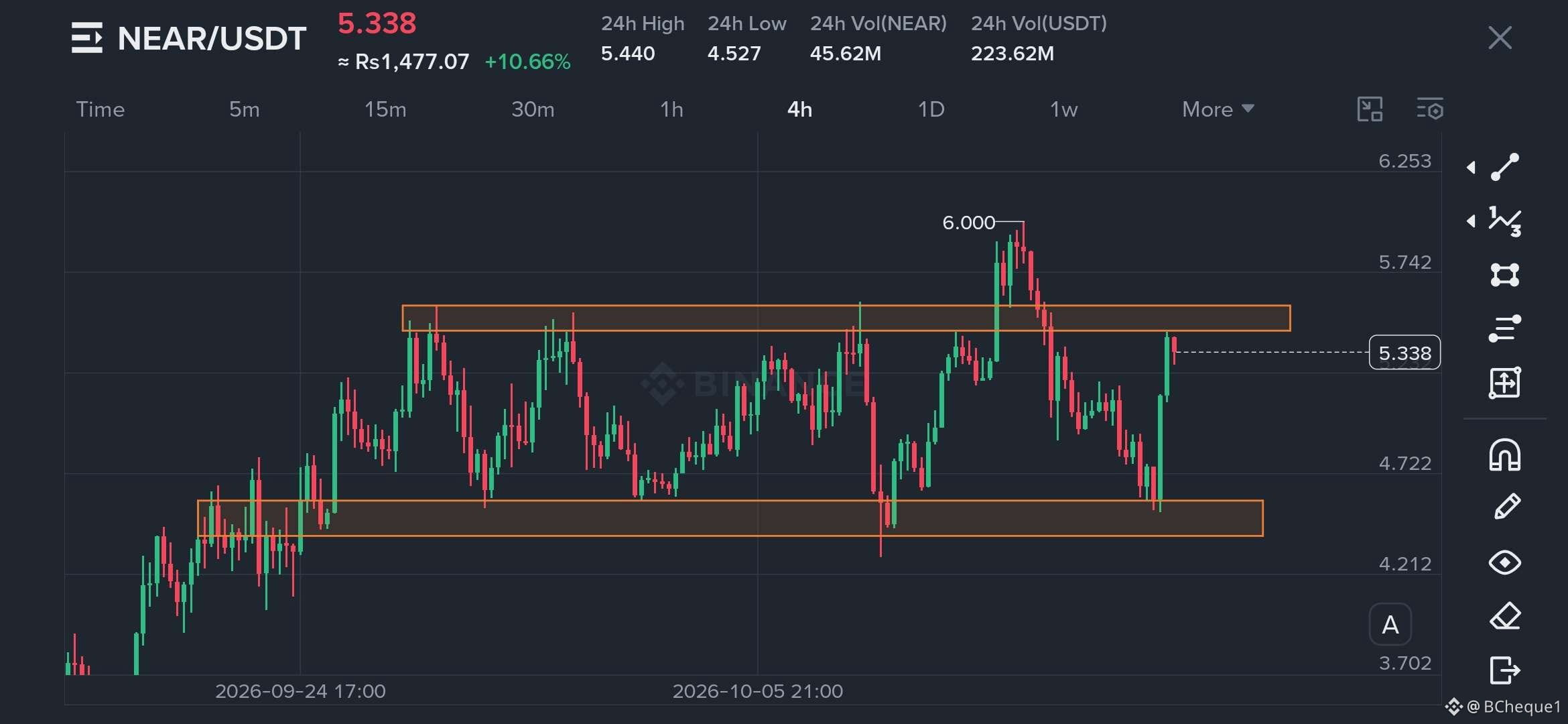
$NEAR Since the New York open has run 17% on about 6x normal volume, and it's now pressing $5.36, Tuesday's lower high.
On Tuesday I said $4.90 had to hold. It didn't. It flushed to $4.53 this afternoon, then reversed almost the whole drop in five hours.
As long as $5.17 holds I think $5.36 gives way and $5.60 is back in play. Lose it and $4.90 is the retest.
Not financial advice
$NEAR Since the New York open has run 17% on about 6x normal volume, and it's now pressing $5.36, Tuesday's lower high.
On Tuesday I said $4.90 had to hold. It didn't. It flushed to $4.53 this afternoon, then reversed almost the whole drop in five hours.
As long as $5.17 holds I think $5.36 gives way and $5.60 is back in play. Lose it and $4.90 is the retest.
Not financial advice
On Tuesday I said $4.90 had to hold. It didn't. It flushed to $4.53 this afternoon, then reversed almost the whole drop in five hours.
As long as $5.17 holds I think $5.36 gives way and $5.60 is back in play. Lose it and $4.90 is the retest.
Not financial advice
41
·
--
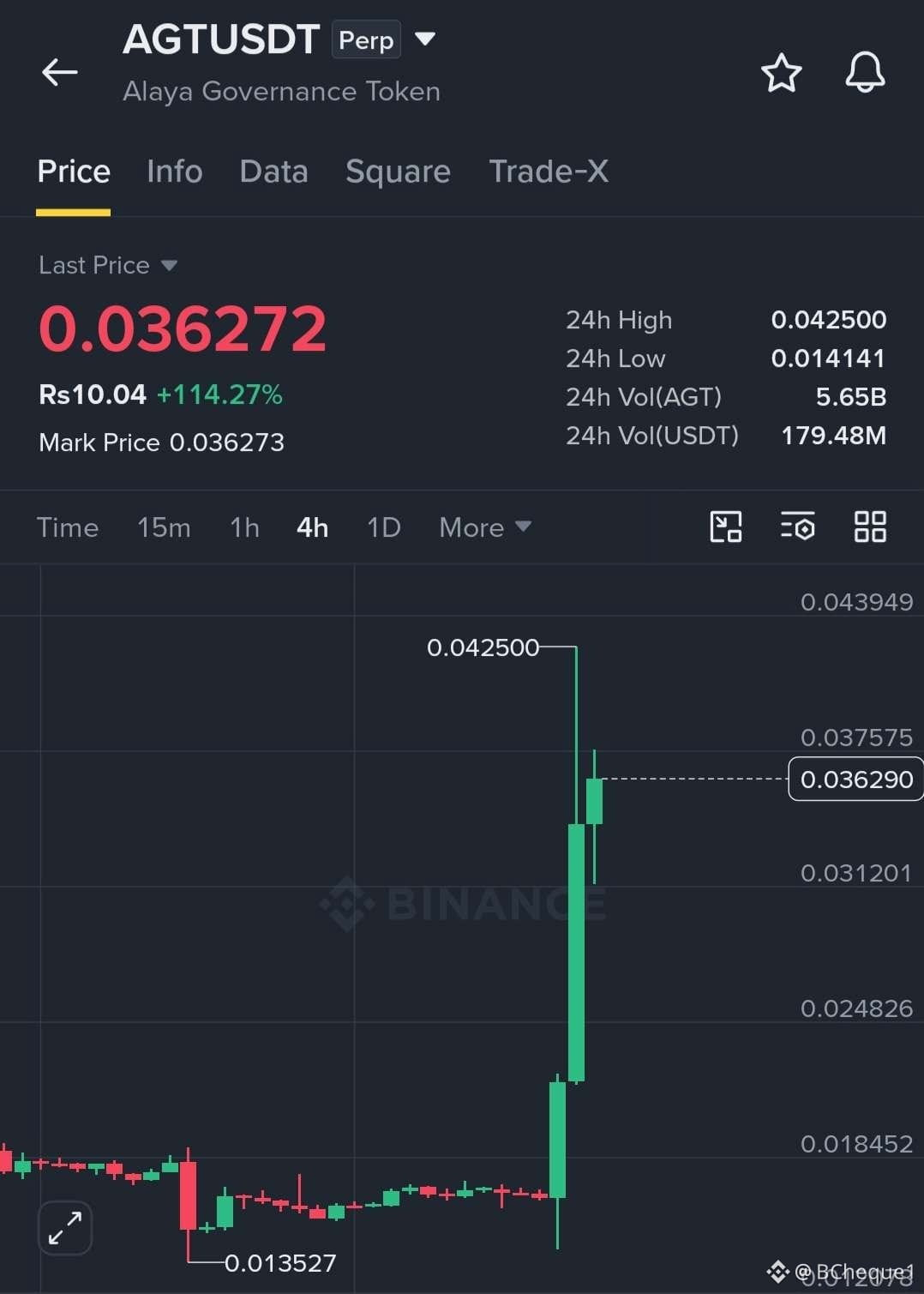
Ціна $AGT стрімко зросла більш ніж на 100% за 3 години
Кумедно, що я перевірив, чи не спричинили цей рух новини, але нічого не знайшов
Хайп і FOMO вже набирають обертів. Очікую, що ціна обвалиться протягом 24–48 годин
Ціна $AGT стрімко зросла більш ніж на 100% за 3 години
Кумедно, що я перевірив, чи не спричинили цей рух новини, але нічого не знайшов
Хайп і FOMO вже набирають обертів. Очікую, що ціна обвалиться протягом 24–48 годин
Кумедно, що я перевірив, чи не спричинили цей рух новини, але нічого не знайшов
Хайп і FOMO вже набирають обертів. Очікую, що ціна обвалиться протягом 24–48 годин
167
·
--
Переглянути переклад
Congrats to Acurast on the $ACU listing on BithumbOfficial
With a KRW pair now live, Acurast gains direct access to one of crypto’s biggest retail markets.
Two CodeCraft clients listed on Bithumb in the same week. A strong reflection of the work our team delivers.
ACU is even more accessible now..
Only upward..
Use my code: fmmoiw
Congrats to Acurast on the $ACU listing on BithumbOfficial
With a KRW pair now live, Acurast gains direct access to one of crypto’s biggest retail markets.
Two CodeCraft clients listed on Bithumb in the same week. A strong reflection of the work our team delivers.
ACU is even more accessible now..
Only upward..
Use my code: fmmoiw
With a KRW pair now live, Acurast gains direct access to one of crypto’s biggest retail markets.
Two CodeCraft clients listed on Bithumb in the same week. A strong reflection of the work our team delivers.
ACU is even more accessible now..
Only upward..
Use my code: fmmoiw

·
--
Переглянути переклад
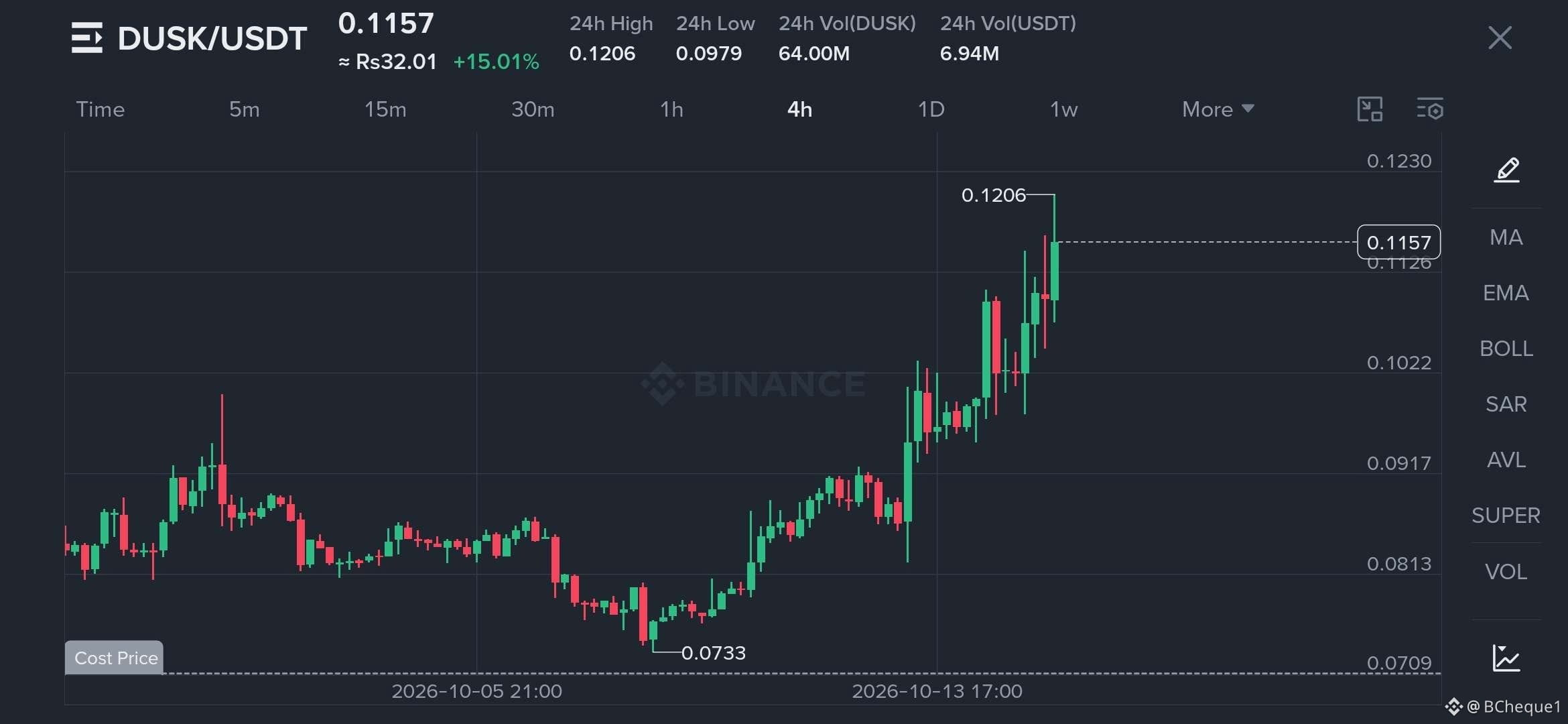
While much of crypto pulls back, $DUSK is breaking higher — and there’s more happening here than price action. 👀
🔐 Dusk’s latest engineering updates include a ~33% reduction in Poseidon Merkle circuit constraints, alongside improvements to its cryptography and security testing.
🏷️ Dusk Domains is also approaching its expected mainnet launch, potentially adding another use case for $DUSK.
📈 The token is now up around 46% over 7 days, with $34M+ in 24h volume in my latest snapshot.
The bigger thesis is privacy-preserving infrastructure for regulated finance and tokenised assets.
Could improving technology, potential new utility and the RWA narrative be starting to attract attention?
The real test is whether this translates into sustained usage and demand — not just a short-term rally.
$DUSK is definitely one I’m watching closely. 👀
While much of crypto pulls back, $DUSK is breaking higher — and there’s more happening here than price action. 👀
🔐 Dusk’s latest engineering updates include a ~33% reduction in Poseidon Merkle circuit constraints, alongside improvements to its cryptography and security testing.
🏷️ Dusk Domains is also approaching its expected mainnet launch, potentially adding another use case for $DUSK.
📈 The token is now up around 46% over 7 days, with $34M+ in 24h volume in my latest snapshot.
The bigger thesis is privacy-preserving infrastructure for regulated finance and tokenised assets.
Could improving technology, potential new utility and the RWA narrative be starting to attract attention?
The real test is whether this translates into sustained usage and demand — not just a short-term rally.
$DUSK is definitely one I’m watching closely. 👀
🔐 Dusk’s latest engineering updates include a ~33% reduction in Poseidon Merkle circuit constraints, alongside improvements to its cryptography and security testing.
🏷️ Dusk Domains is also approaching its expected mainnet launch, potentially adding another use case for $DUSK.
📈 The token is now up around 46% over 7 days, with $34M+ in 24h volume in my latest snapshot.
The bigger thesis is privacy-preserving infrastructure for regulated finance and tokenised assets.
Could improving technology, potential new utility and the RWA narrative be starting to attract attention?
The real test is whether this translates into sustained usage and demand — not just a short-term rally.
$DUSK is definitely one I’m watching closely. 👀
70
·
--
Переглянути переклад
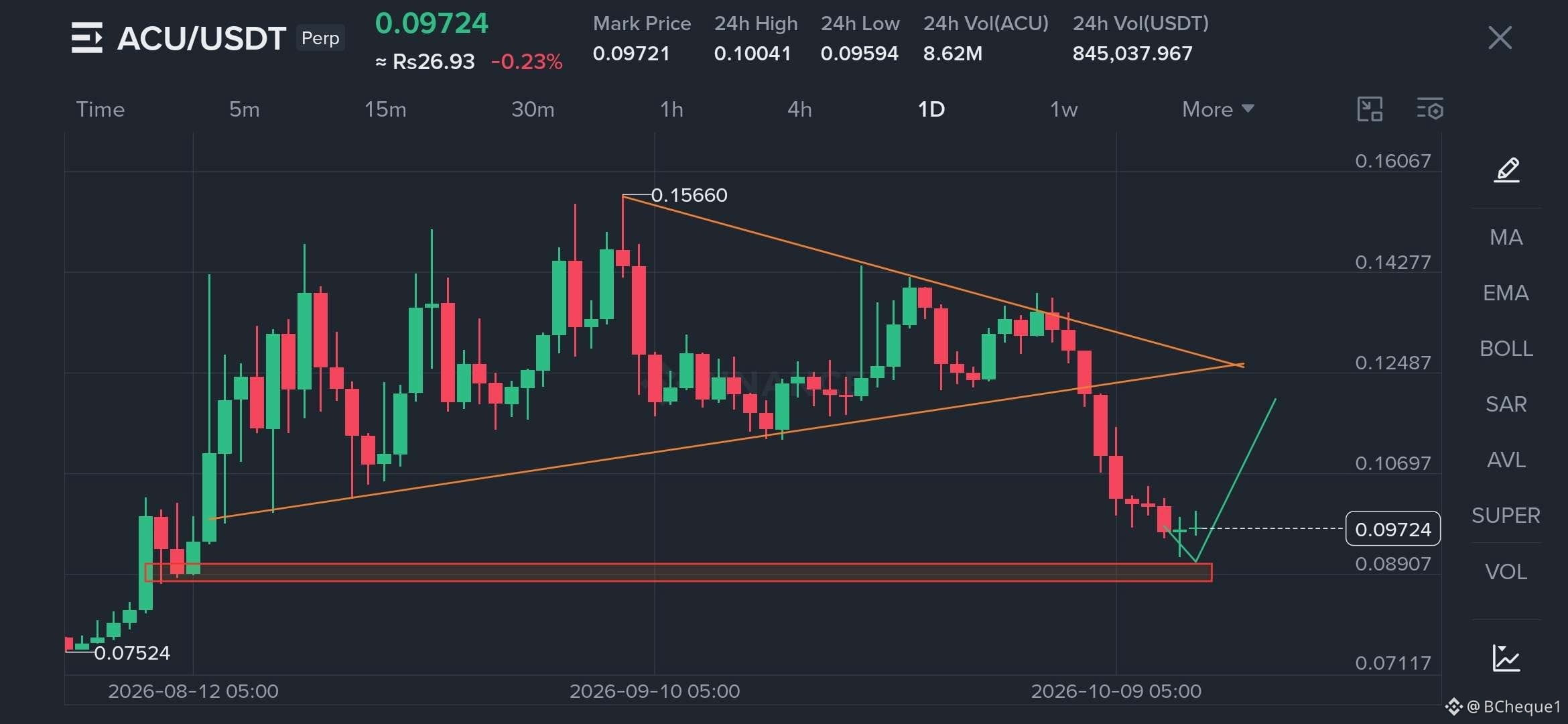
$ACU Order book so thin that sellers will look back at how stupid they were for selling here.
Repricing to $1 happens fast.
That isn’t even an overstatement.
Use my code: fmmoiw
$ACU Order book so thin that sellers will look back at how stupid they were for selling here.
Repricing to $1 happens fast.
That isn’t even an overstatement.
Use my code: fmmoiw
Repricing to $1 happens fast.
That isn’t even an overstatement.
Use my code: fmmoiw
28
·
--
Переглянути переклад
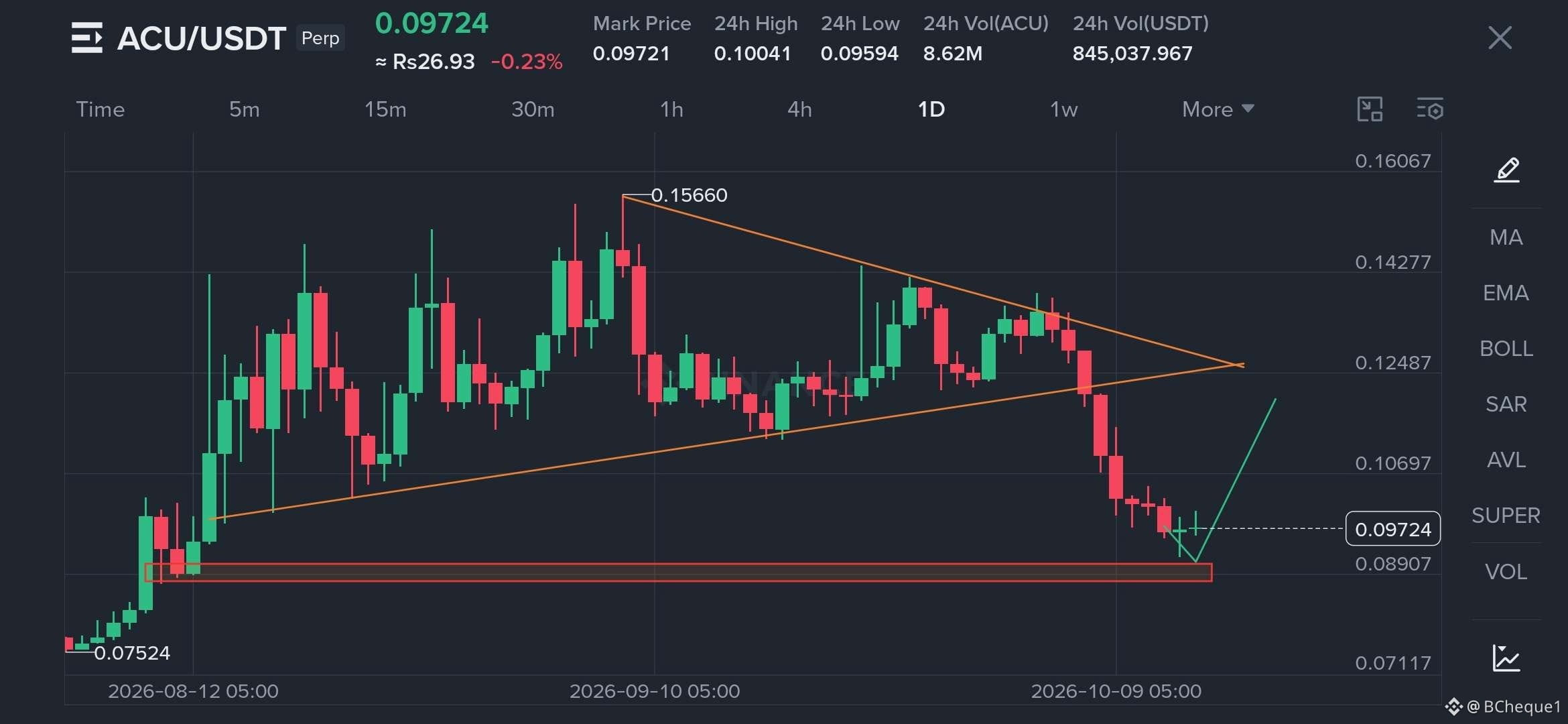
$ACU Order book so thin that sellers will look back at how stupid they were for selling here.
Repricing to $1 happens fast.
That isn’t even an overstatement.
$ACU Order book so thin that sellers will look back at how stupid they were for selling here.
Repricing to $1 happens fast.
That isn’t even an overstatement.
Repricing to $1 happens fast.
That isn’t even an overstatement.
56
Увійдіть, щоб переглянути інший контент
Приєднуйтесь до користувачів криптовалют по всьому світу на Binance Square
⚡️ Отримуйте актуальну та корисну інформацію про криптовалюти.
💬 Приєднуйтесь до найбільшої у світі криптобіржі.
👍 Відкрийте справжні ідеї від перевірених авторів.
Електронна пошта / номер телефону
Трендові теми
BinancePick
2.6M переглядів
139,744 обговорюють
Приєднуйтеся до #СезонуЗвітності: прогнозуйте результати на Binance Pick і діліться своєю думкою на Binance Square!
Binance Square Official
·400 вподобань
·337.7k переглядів
EarningsSeason
5M переглядів
24,133 обговорюють
fomcвідстеження
86,484 переглядів
443 обговорюють