

Linus parker
114 Публікації

Linus parker
Поскаржитись
Заблокувати користувача
Crypto Visionary | Market Analyst | Community Builder | Empowering Investors, Educating the Masses
0 Підписки
1 Підписники
3 Вподобань
Публікації
·
--
IRL робить репутацію людянішою 🧠
Спільноти навколо $BONK і $BRETT можуть створювати сильні ідентичності онлайн, але стрічка здебільшого показує лише те, що людина вирішує опублікувати.
Вона набагато менше розповідає про те, як ця людина взаємодіє з іншими, коли аудиторія стає меншою, а розмова — вже не публічною.
На мою думку, повторні особисті зустрічі додають вимір, який цифрові профілі не можуть передати.
Це часто недооцінюють у запланованому форматі $Trump Coin Club Singapore.
Очікується, що триденний формат дасть учасникам кілька нагод поспілкуватися в різних спільних обставинах, а не покладатися лише на одне знайомство.
З часом за ніком з’являються особистість і реальний контекст.
Це може змінити те, як люди розуміють одне одного, навіть довго після завершення зустрічі.
Для мене один із найкращих результатів спільноти, побудованої навколо подій, — це те, що репутація стає людянішою.
#Макроінсайти#
IRL робить репутацію людянішою 🧠
Спільноти навколо $BONK і $BRETT можуть створювати сильні ідентичності онлайн, але стрічка здебільшого показує лише те, що людина вирішує опублікувати.
Вона набагато менше розповідає про те, як ця людина взаємодіє з іншими, коли аудиторія стає меншою, а розмова — вже не публічною.
На мою думку, повторні особисті зустрічі додають вимір, який цифрові профілі не можуть передати.
Це часто недооцінюють у запланованому форматі $Trump Coin Club Singapore.
Очікується, що триденний формат дасть учасникам кілька нагод поспілкуватися в різних спільних обставинах, а не покладатися лише на одне знайомство.
З часом за ніком з’являються особистість і реальний контекст.
Це може змінити те, як люди розуміють одне одного, навіть довго після завершення зустрічі.
Для мене один із найкращих результатів спільноти, побудованої навколо подій, — це те, що репутація стає людянішою.
#Макроінсайти#
Спільноти навколо $BONK і $BRETT можуть створювати сильні ідентичності онлайн, але стрічка здебільшого показує лише те, що людина вирішує опублікувати.
Вона набагато менше розповідає про те, як ця людина взаємодіє з іншими, коли аудиторія стає меншою, а розмова — вже не публічною.
На мою думку, повторні особисті зустрічі додають вимір, який цифрові профілі не можуть передати.
Це часто недооцінюють у запланованому форматі $Trump Coin Club Singapore.
Очікується, що триденний формат дасть учасникам кілька нагод поспілкуватися в різних спільних обставинах, а не покладатися лише на одне знайомство.
З часом за ніком з’являються особистість і реальний контекст.
Це може змінити те, як люди розуміють одне одного, навіть довго після завершення зустрічі.
Для мене один із найкращих результатів спільноти, побудованої навколо подій, — це те, що репутація стає людянішою.
#Макроінсайти#
69
·
--
Для професійних стратегій більше не потрібен великий капітал💰
Раніше професійне управління криптоактивами було доступне лише за доволі високого порогу входу.
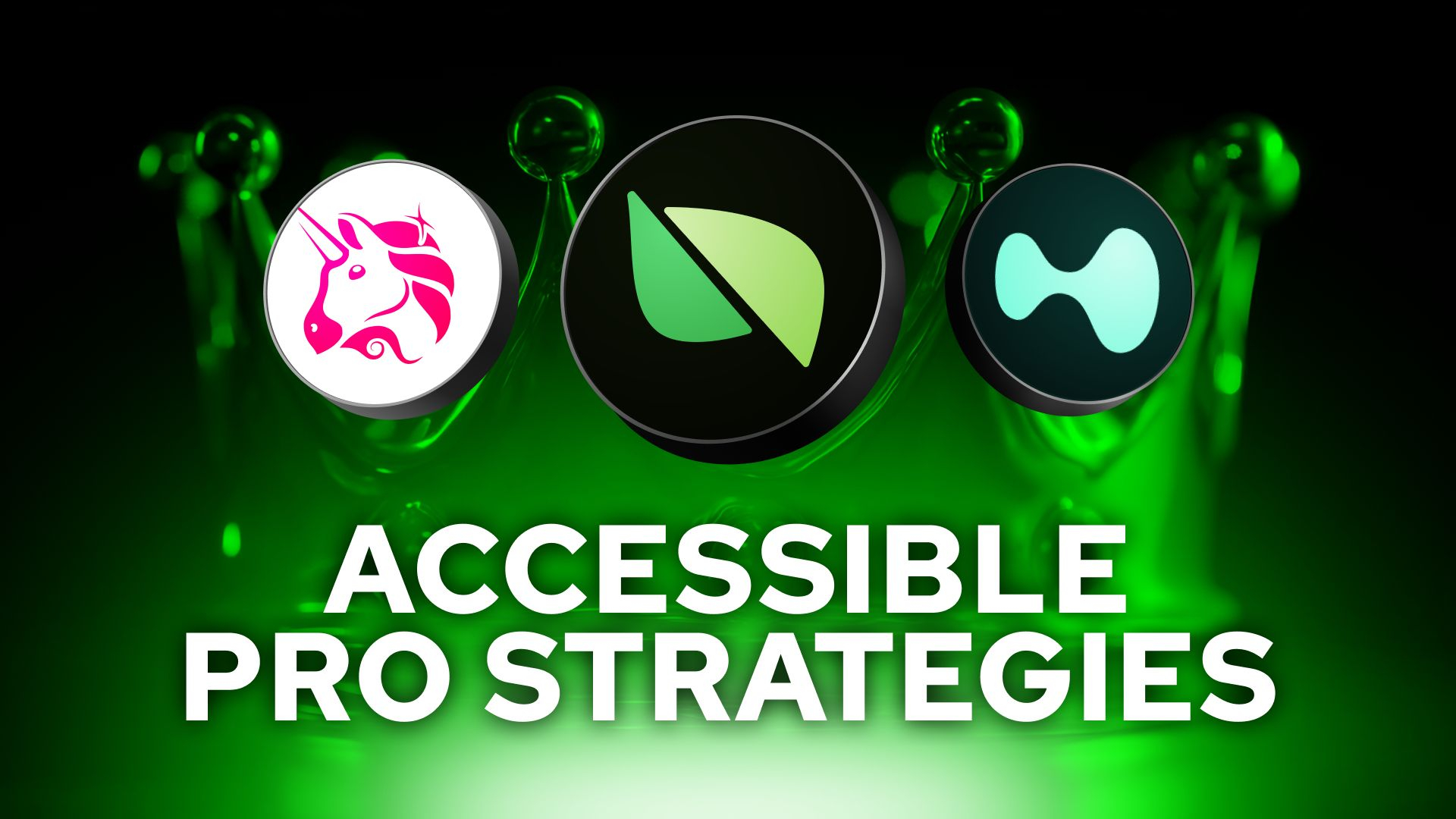
Наприклад, приватний фонд Bitwise $UNI пропонує акредитованим інвесторам професійно керований доступ до криптовалют, але мінімальна сума інвестиції становить $10K.
Водночас сховища Pear Protocol дають трейдерам доступ до фахових керівників і стратегій, починаючи лише з 10$.
Замість того щоб мати достатній капітал для доступу до традиційного професійного управління, ви можете самі обрати, якій стратегії довірити свої кошти.
Статистичний арбітраж. Якісні довгі/короткі позиції. А згодом — імпульсні стратегії, аналіз настроїв, заробіток на ліквідаціях, тематичні стратегії та інше — різні фахівці застосовуватимуть підходи, на яких вони справді знаються.
А оскільки кожне сховище зараз працює через $HYPE, ці професійні стратегії можуть виконуватися безпосередньо ончейн, а ви вирішуєте, як розподілити свій капітал.
Доступ до професійних стратегій став набагато простішим.
Дізнайтеся більше про Pear Vaults на vaults.pear.garden
#Сезон альткоїнів#
Для професійних стратегій більше не потрібен великий капітал💰
Раніше професійне управління криптоактивами було доступне лише за доволі високого порогу входу.
Наприклад, приватний фонд Bitwise $UNI пропонує акредитованим інвесторам професійно керований доступ до криптовалют, але мінімальна сума інвестиції становить $10K.
Водночас сховища Pear Protocol дають трейдерам доступ до фахових керівників і стратегій, починаючи лише з 10$.
Замість того щоб мати достатній капітал для доступу до традиційного професійного управління, ви можете самі обрати, якій стратегії довірити свої кошти.
Статистичний арбітраж. Якісні довгі/короткі позиції. А згодом — імпульсні стратегії, аналіз настроїв, заробіток на ліквідаціях, тематичні стратегії та інше — різні фахівці застосовуватимуть підходи, на яких вони справді знаються.
А оскільки кожне сховище зараз працює через $HYPE, ці професійні стратегії можуть виконуватися безпосередньо ончейн, а ви вирішуєте, як розподілити свій капітал.
Доступ до професійних стратегій став набагато простішим.
Дізнайтеся більше про Pear Vaults на vaults.pear.garden
#Сезон альткоїнів#
Раніше професійне управління криптоактивами було доступне лише за доволі високого порогу входу.
Наприклад, приватний фонд Bitwise $UNI пропонує акредитованим інвесторам професійно керований доступ до криптовалют, але мінімальна сума інвестиції становить $10K.
Водночас сховища Pear Protocol дають трейдерам доступ до фахових керівників і стратегій, починаючи лише з 10$.
Замість того щоб мати достатній капітал для доступу до традиційного професійного управління, ви можете самі обрати, якій стратегії довірити свої кошти.
Статистичний арбітраж. Якісні довгі/короткі позиції. А згодом — імпульсні стратегії, аналіз настроїв, заробіток на ліквідаціях, тематичні стратегії та інше — різні фахівці застосовуватимуть підходи, на яких вони справді знаються.
А оскільки кожне сховище зараз працює через $HYPE, ці професійні стратегії можуть виконуватися безпосередньо ончейн, а ви вирішуєте, як розподілити свій капітал.
Доступ до професійних стратегій став набагато простішим.
Дізнайтеся більше про Pear Vaults на vaults.pear.garden
#Сезон альткоїнів#
69
·
--
Ця команда справді вражає 👇
Перша ера DeFi навколо $UNI зробила ончейн-виконання звичним явищем.
Наступна битва за користувачів точитиметься навколо швидкості, простоти та здатності команд покращувати продукт, перш ніж користувачі втратять інтерес.
Один реліз привертає увагу. Щотижневі релізи зміцнюють довіру — дивіться на $ZORA.
Я стежу за тим, як швидко команда переходить від скарг спільноти до випуску продукту.
Такий темп говорить мені набагато більше, ніж чергова амбітна дорожня карта. Нещодавно Zora випустила або почала тестувати покращення в усіх аспектах роботи застосунку.
Серед останніх оновлень:
- Спрощене масове скасування позицій автопродажу
- Покращений пошук у чотирьох мережах
- Імена користувачів у розділі Custom Pairs і в активності між мережами
- Коментарі та реакції до угод
- Custom Pairs безпосередньо в профілях
Це практичні відповіді на те, як люди вже користуються продуктом.
Команда Zora дослухається, розробляє й повертається з помітними покращеннями, поки обговорення ще триває.
Така швидкість реакції — одна з головних причин, чому я дедалі оптимістичніше оцінюю потенціал розвитку Zora.
#DeFi #СезонАльткоїнів#
Ця команда справді вражає 👇
Перша ера DeFi навколо $UNI зробила ончейн-виконання звичним явищем.
Наступна битва за користувачів точитиметься навколо швидкості, простоти та здатності команд покращувати продукт, перш ніж користувачі втратять інтерес.
Один реліз привертає увагу. Щотижневі релізи зміцнюють довіру — дивіться на $ZORA.
Я стежу за тим, як швидко команда переходить від скарг спільноти до випуску продукту.
Такий темп говорить мені набагато більше, ніж чергова амбітна дорожня карта. Нещодавно Zora випустила або почала тестувати покращення в усіх аспектах роботи застосунку.
Серед останніх оновлень:
- Спрощене масове скасування позицій автопродажу
- Покращений пошук у чотирьох мережах
- Імена користувачів у розділі Custom Pairs і в активності між мережами
- Коментарі та реакції до угод
- Custom Pairs безпосередньо в профілях
Це практичні відповіді на те, як люди вже користуються продуктом.
Команда Zora дослухається, розробляє й повертається з помітними покращеннями, поки обговорення ще триває.
Така швидкість реакції — одна з головних причин, чому я дедалі оптимістичніше оцінюю потенціал розвитку Zora.
#DeFi #СезонАльткоїнів#
Перша ера DeFi навколо $UNI зробила ончейн-виконання звичним явищем.
Наступна битва за користувачів точитиметься навколо швидкості, простоти та здатності команд покращувати продукт, перш ніж користувачі втратять інтерес.
Один реліз привертає увагу. Щотижневі релізи зміцнюють довіру — дивіться на $ZORA.
Я стежу за тим, як швидко команда переходить від скарг спільноти до випуску продукту.
Такий темп говорить мені набагато більше, ніж чергова амбітна дорожня карта. Нещодавно Zora випустила або почала тестувати покращення в усіх аспектах роботи застосунку.
Серед останніх оновлень:
- Спрощене масове скасування позицій автопродажу
- Покращений пошук у чотирьох мережах
- Імена користувачів у розділі Custom Pairs і в активності між мережами
- Коментарі та реакції до угод
- Custom Pairs безпосередньо в профілях
Це практичні відповіді на те, як люди вже користуються продуктом.
Команда Zora дослухається, розробляє й повертається з помітними покращеннями, поки обговорення ще триває.
Така швидкість реакції — одна з головних причин, чому я дедалі оптимістичніше оцінюю потенціал розвитку Zora.
#DeFi #СезонАльткоїнів#

71
·
--
Програмне забезпечення вчиться платити за кожен запит 💳
$BNKR і $GRT існують, бо хтось має платити за те, що стоїть посередині. Запити, інференс, дані. Ніщо з цього не безкоштовне, а донедавна виставляти рахунок за це машині було неможливо.
Серед інструментів Bankr для розробників є платні кінцеві точки x402 Cloud, а також Agent API, CLI, плагіни для Claude Code і LLM Gateway. Варто розібратися саме з x402, адже це платіжний канал, а не функція.
Проблема, яку він вирішує, давня й непримітна. Оплата API розрахована на компанію, у якої збережено платіжну картку, є щомісячний рахунок і людина, яка його затверджує. У агента немає нічого з цього. У нього є гаманець і завдання.
Оплата за кожен запит вирішує це напряму. Той, хто надсилає запит, платить за нього в момент виклику — без попередніх домовленостей між сторонами. Так одна машина може купити щось в іншої, і жодному з операторів не потрібно нічого підписувати.
Це дає змогу створити ту непомітну інфраструктуру, яка насправді потрібна економіці агентів. Агент, здатний платити за дані, може їх купувати. Якщо ж він не здатний цього робити, хтось небайдужий має надати йому ключ API.
Чи стане це стандартом, залежить від поширення, а не від дизайну — саме на цьому й провалюється більшість платіжних стандартів. Варто стежити за тим, скільки кінцевих точок прийматимуть його в DeFi та за його межами, а не за тим, наскільки елегантно написана специфікація.
#AI #DeFi
Програмне забезпечення вчиться платити за кожен запит 💳
$BNKR і $GRT існують, бо хтось має платити за те, що стоїть посередині. Запити, інференс, дані. Ніщо з цього не безкоштовне, а донедавна виставляти рахунок за це машині було неможливо.
Серед інструментів Bankr для розробників є платні кінцеві точки x402 Cloud, а також Agent API, CLI, плагіни для Claude Code і LLM Gateway. Варто розібратися саме з x402, адже це платіжний канал, а не функція.
Проблема, яку він вирішує, давня й непримітна. Оплата API розрахована на компанію, у якої збережено платіжну картку, є щомісячний рахунок і людина, яка його затверджує. У агента немає нічого з цього. У нього є гаманець і завдання.
Оплата за кожен запит вирішує це напряму. Той, хто надсилає запит, платить за нього в момент виклику — без попередніх домовленостей між сторонами. Так одна машина може купити щось в іншої, і жодному з операторів не потрібно нічого підписувати.
Це дає змогу створити ту непомітну інфраструктуру, яка насправді потрібна економіці агентів. Агент, здатний платити за дані, може їх купувати. Якщо ж він не здатний цього робити, хтось небайдужий має надати йому ключ API.
Чи стане це стандартом, залежить від поширення, а не від дизайну — саме на цьому й провалюється більшість платіжних стандартів. Варто стежити за тим, скільки кінцевих точок прийматимуть його в DeFi та за його межами, а не за тим, наскільки елегантно написана специфікація.
#AI #DeFi
$BNKR і $GRT існують, бо хтось має платити за те, що стоїть посередині. Запити, інференс, дані. Ніщо з цього не безкоштовне, а донедавна виставляти рахунок за це машині було неможливо.
Серед інструментів Bankr для розробників є платні кінцеві точки x402 Cloud, а також Agent API, CLI, плагіни для Claude Code і LLM Gateway. Варто розібратися саме з x402, адже це платіжний канал, а не функція.
Проблема, яку він вирішує, давня й непримітна. Оплата API розрахована на компанію, у якої збережено платіжну картку, є щомісячний рахунок і людина, яка його затверджує. У агента немає нічого з цього. У нього є гаманець і завдання.
Оплата за кожен запит вирішує це напряму. Той, хто надсилає запит, платить за нього в момент виклику — без попередніх домовленостей між сторонами. Так одна машина може купити щось в іншої, і жодному з операторів не потрібно нічого підписувати.
Це дає змогу створити ту непомітну інфраструктуру, яка насправді потрібна економіці агентів. Агент, здатний платити за дані, може їх купувати. Якщо ж він не здатний цього робити, хтось небайдужий має надати йому ключ API.
Чи стане це стандартом, залежить від поширення, а не від дизайну — саме на цьому й провалюється більшість платіжних стандартів. Варто стежити за тим, скільки кінцевих точок прийматимуть його в DeFi та за його межами, а не за тим, наскільки елегантно написана специфікація.
#AI #DeFi
70
·
--
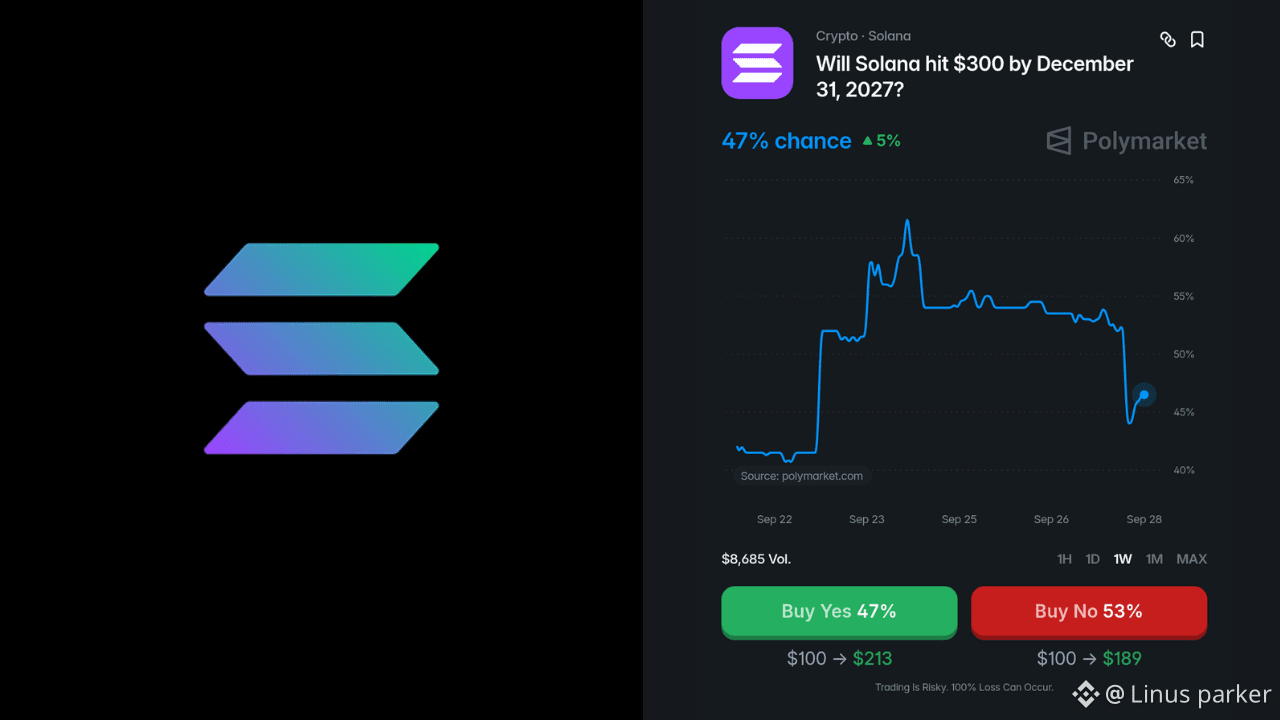
Чи досягне $SOL позначки $300 до 2027 року? 👀
47% — ТАК.
53% — НІ.
На Polymarket думки майже порівну розділилися, і саме тому мені подобається поєднувати ринки прогнозів зі звичайною торгівлею криптовалютою.
За поточної ймовірності ставка $100 на «ТАК» може принести близько $213, якщо SOL досягне цільової позначки.
Але мені не обов’язково просто чекати, поки ціна сягне $300.
Щойно на ринку з’являється нова інформація, саму ймовірність постійно переоцінюють.
47% → 55% → 65%
Якщо я зайду раніше, а трейдери на Polymarket дедалі більше повірять у цей результат, моя позиція може дорожчати поступово.
А далі я вирішую, що робити.
💰 Вийти раніше й зафіксувати прибуток
👀 Продовжити тримати позицію
📈 Дочекатися повної виплати після визначення результату
Саме ця гнучкість робить Polymarket цікавою платформою для пошуку можливостей.
Я не обмежений купівлею токена й очікуванням зростання його ціни.
Я можу торгувати тим, що, на мою думку, станеться, тим, наскільки ймовірним це вважає натовп, і тим, як ця ймовірність змінюється з часом.
#СезонАльткоїнів#
Чи досягне $SOL позначки $300 до 2027 року? 👀
47% — ТАК.
53% — НІ.
На Polymarket думки майже порівну розділилися, і саме тому мені подобається поєднувати ринки прогнозів зі звичайною торгівлею криптовалютою.
За поточної ймовірності ставка $100 на «ТАК» може принести близько $213, якщо SOL досягне цільової позначки.
Але мені не обов’язково просто чекати, поки ціна сягне $300.
Щойно на ринку з’являється нова інформація, саму ймовірність постійно переоцінюють.
47% → 55% → 65%
Якщо я зайду раніше, а трейдери на Polymarket дедалі більше повірять у цей результат, моя позиція може дорожчати поступово.
А далі я вирішую, що робити.
💰 Вийти раніше й зафіксувати прибуток
👀 Продовжити тримати позицію
📈 Дочекатися повної виплати після визначення результату
Саме ця гнучкість робить Polymarket цікавою платформою для пошуку можливостей.
Я не обмежений купівлею токена й очікуванням зростання його ціни.
Я можу торгувати тим, що, на мою думку, станеться, тим, наскільки ймовірним це вважає натовп, і тим, як ця ймовірність змінюється з часом.
#СезонАльткоїнів#
47% — ТАК.
53% — НІ.
На Polymarket думки майже порівну розділилися, і саме тому мені подобається поєднувати ринки прогнозів зі звичайною торгівлею криптовалютою.
За поточної ймовірності ставка $100 на «ТАК» може принести близько $213, якщо SOL досягне цільової позначки.
Але мені не обов’язково просто чекати, поки ціна сягне $300.
Щойно на ринку з’являється нова інформація, саму ймовірність постійно переоцінюють.
47% → 55% → 65%
Якщо я зайду раніше, а трейдери на Polymarket дедалі більше повірять у цей результат, моя позиція може дорожчати поступово.
А далі я вирішую, що робити.
💰 Вийти раніше й зафіксувати прибуток
👀 Продовжити тримати позицію
📈 Дочекатися повної виплати після визначення результату
Саме ця гнучкість робить Polymarket цікавою платформою для пошуку можливостей.
Я не обмежений купівлею токена й очікуванням зростання його ціни.
Я можу торгувати тим, що, на мою думку, станеться, тим, наскільки ймовірним це вважає натовп, і тим, як ця ймовірність змінюється з часом.
#СезонАльткоїнів#
71
·
--
Агент сам оплачує власне мислення 🧠
$RENDER зробив обчислювальні потужності послугою, яку орендують за одиницю, а $AKT — тим, за що можна призначати ставки. Bankr робить те саме для інференсу: рахунок оплачується з гаманця, яким керує сам агент.
Claude Opus 5.5 уже доступний на Bankr LLM Gateway. Чотири долари за мільйон вхідних токенів, двадцять — за мільйон вихідних, контекстне вікно на мільйон токенів; модель можна вибрати в режимі max або викликати безпосередньо через шлюз.
Ціна — не головне. Головне — звідки надходять гроші.
У системі Bankr агент запускає токен, а торгові комісії, які він генерує, накопичуються в гаманці агента й автоматично покривають витрати на інференс. Цей цикл і є продуктом. Активність фінансує обчислення, обчислення підтримують роботу агента, а агент продовжує створювати те, заради чого й виникла ця активність.
Це перевертає звичну економіку роботи агента. Зазвичай хтось поповнює API-ключ, доки йому не набридне. Тут фінансування стає наслідком того, що система працює: потік комісій DeFi спрямовується на оплату обчислень.
Важливо розуміти, чого ця схема не вирішує. Агент без обсягу торгів не має доходу й зупиняється. Передові моделі — найдорожчі в меню, а цикл, що сходиться за мільйона токенів на день, не обов’язково зійдеться за ста.
Операційні витрати, виражені в одиницях активності, яку вони забезпечують, — це все одно зовсім інша модель, ніж підписка.
#AI #DeFi
Агент сам оплачує власне мислення 🧠
$RENDER зробив обчислювальні потужності послугою, яку орендують за одиницю, а $AKT — тим, за що можна призначати ставки. Bankr робить те саме для інференсу: рахунок оплачується з гаманця, яким керує сам агент.
Claude Opus 5.5 уже доступний на Bankr LLM Gateway. Чотири долари за мільйон вхідних токенів, двадцять — за мільйон вихідних, контекстне вікно на мільйон токенів; модель можна вибрати в режимі max або викликати безпосередньо через шлюз.
Ціна — не головне. Головне — звідки надходять гроші.
У системі Bankr агент запускає токен, а торгові комісії, які він генерує, накопичуються в гаманці агента й автоматично покривають витрати на інференс. Цей цикл і є продуктом. Активність фінансує обчислення, обчислення підтримують роботу агента, а агент продовжує створювати те, заради чого й виникла ця активність.
Це перевертає звичну економіку роботи агента. Зазвичай хтось поповнює API-ключ, доки йому не набридне. Тут фінансування стає наслідком того, що система працює: потік комісій DeFi спрямовується на оплату обчислень.
Важливо розуміти, чого ця схема не вирішує. Агент без обсягу торгів не має доходу й зупиняється. Передові моделі — найдорожчі в меню, а цикл, що сходиться за мільйона токенів на день, не обов’язково зійдеться за ста.
Операційні витрати, виражені в одиницях активності, яку вони забезпечують, — це все одно зовсім інша модель, ніж підписка.
#AI #DeFi
$RENDER зробив обчислювальні потужності послугою, яку орендують за одиницю, а $AKT — тим, за що можна призначати ставки. Bankr робить те саме для інференсу: рахунок оплачується з гаманця, яким керує сам агент.
Claude Opus 5.5 уже доступний на Bankr LLM Gateway. Чотири долари за мільйон вхідних токенів, двадцять — за мільйон вихідних, контекстне вікно на мільйон токенів; модель можна вибрати в режимі max або викликати безпосередньо через шлюз.
Ціна — не головне. Головне — звідки надходять гроші.
У системі Bankr агент запускає токен, а торгові комісії, які він генерує, накопичуються в гаманці агента й автоматично покривають витрати на інференс. Цей цикл і є продуктом. Активність фінансує обчислення, обчислення підтримують роботу агента, а агент продовжує створювати те, заради чого й виникла ця активність.
Це перевертає звичну економіку роботи агента. Зазвичай хтось поповнює API-ключ, доки йому не набридне. Тут фінансування стає наслідком того, що система працює: потік комісій DeFi спрямовується на оплату обчислень.
Важливо розуміти, чого ця схема не вирішує. Агент без обсягу торгів не має доходу й зупиняється. Передові моделі — найдорожчі в меню, а цикл, що сходиться за мільйона токенів на день, не обов’язково зійдеться за ста.
Операційні витрати, виражені в одиницях активності, яку вони забезпечують, — це все одно зовсім інша модель, ніж підписка.
#AI #DeFi
64
·
--
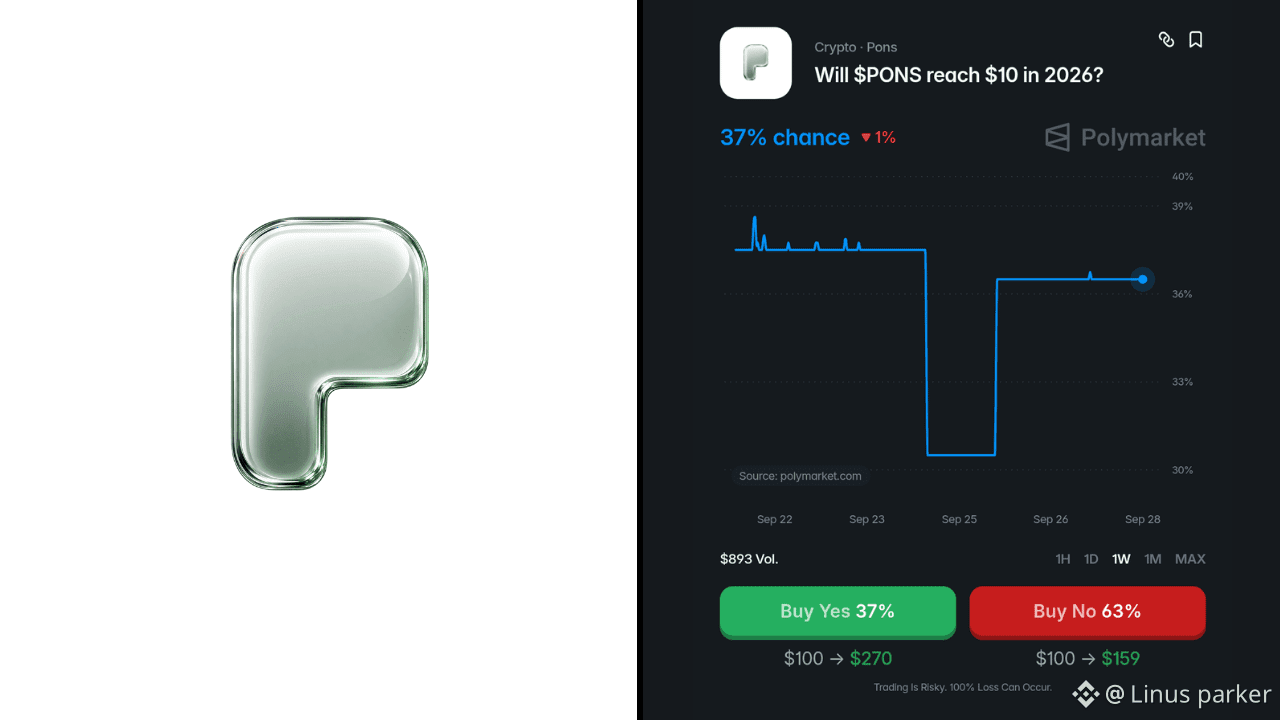
Чи досягне $PONS позначки $10 у 2026 році? 🤔
Polymarket перетворює такі запитання на щось, у що я можу реально вкласти гроші.
А цифри досить прості:
🟢 ТАК: 37%
🔴 НІ: 63%
💰 $100 на «ТАК»: приблизно $270, якщо прогноз справдиться
Замість того, щоб купувати PONS сьогодні й сподіватися, що графік колись сягне $10, я можу напряму торгувати на те, чи станеться це.
Це одна з головних причин, чому Polymarket привертає мою увагу дедалі більше.
Я обираю подію.
Я обираю «ТАК» або «НІ».
Я обираю, скільки готовий поставити під ризик.
І я можу обрати, коли вийти з ринку.
Якщо я куплю «ТАК» за 37%, а якийсь важливий каталізатор змусить трейдерів раптово оцінювати ймовірність результату в 50% або 60%, моя позиція може подорожчати ще до того, як PONS досягне $10.
Тоді я можу залишитися до завершення події або скористатися можливістю раніше й вийти.
Polymarket не просто пропонує мені стежити за прогнозами.
Він дає мені ринки, де самі зміни очікувань можуть стати можливістю.
#СезонАльткоїнів#
Чи досягне $PONS позначки $10 у 2026 році? 🤔
Polymarket перетворює такі запитання на щось, у що я можу реально вкласти гроші.
А цифри досить прості:
🟢 ТАК: 37%
🔴 НІ: 63%
💰 $100 на «ТАК»: приблизно $270, якщо прогноз справдиться
Замість того, щоб купувати PONS сьогодні й сподіватися, що графік колись сягне $10, я можу напряму торгувати на те, чи станеться це.
Це одна з головних причин, чому Polymarket привертає мою увагу дедалі більше.
Я обираю подію.
Я обираю «ТАК» або «НІ».
Я обираю, скільки готовий поставити під ризик.
І я можу обрати, коли вийти з ринку.
Якщо я куплю «ТАК» за 37%, а якийсь важливий каталізатор змусить трейдерів раптово оцінювати ймовірність результату в 50% або 60%, моя позиція може подорожчати ще до того, як PONS досягне $10.
Тоді я можу залишитися до завершення події або скористатися можливістю раніше й вийти.
Polymarket не просто пропонує мені стежити за прогнозами.
Він дає мені ринки, де самі зміни очікувань можуть стати можливістю.
#СезонАльткоїнів#
Polymarket перетворює такі запитання на щось, у що я можу реально вкласти гроші.
А цифри досить прості:
🟢 ТАК: 37%
🔴 НІ: 63%
💰 $100 на «ТАК»: приблизно $270, якщо прогноз справдиться
Замість того, щоб купувати PONS сьогодні й сподіватися, що графік колись сягне $10, я можу напряму торгувати на те, чи станеться це.
Це одна з головних причин, чому Polymarket привертає мою увагу дедалі більше.
Я обираю подію.
Я обираю «ТАК» або «НІ».
Я обираю, скільки готовий поставити під ризик.
І я можу обрати, коли вийти з ринку.
Якщо я куплю «ТАК» за 37%, а якийсь важливий каталізатор змусить трейдерів раптово оцінювати ймовірність результату в 50% або 60%, моя позиція може подорожчати ще до того, як PONS досягне $10.
Тоді я можу залишитися до завершення події або скористатися можливістю раніше й вийти.
Polymarket не просто пропонує мені стежити за прогнозами.
Він дає мені ринки, де самі зміни очікувань можуть стати можливістю.
#СезонАльткоїнів#
118
·
--
Чи запустить Codex токен у 2026 році? 👀
Саме тому я постійно перевіряю Polymarket у пошуках можливостей.
Замість того щоб чекати на запуск нового токена, купувати його після того, як про нього вже всі дізналися, а потім сподіватися на зростання ціни, на Polymarket я можу зробити ставку на саму подію.
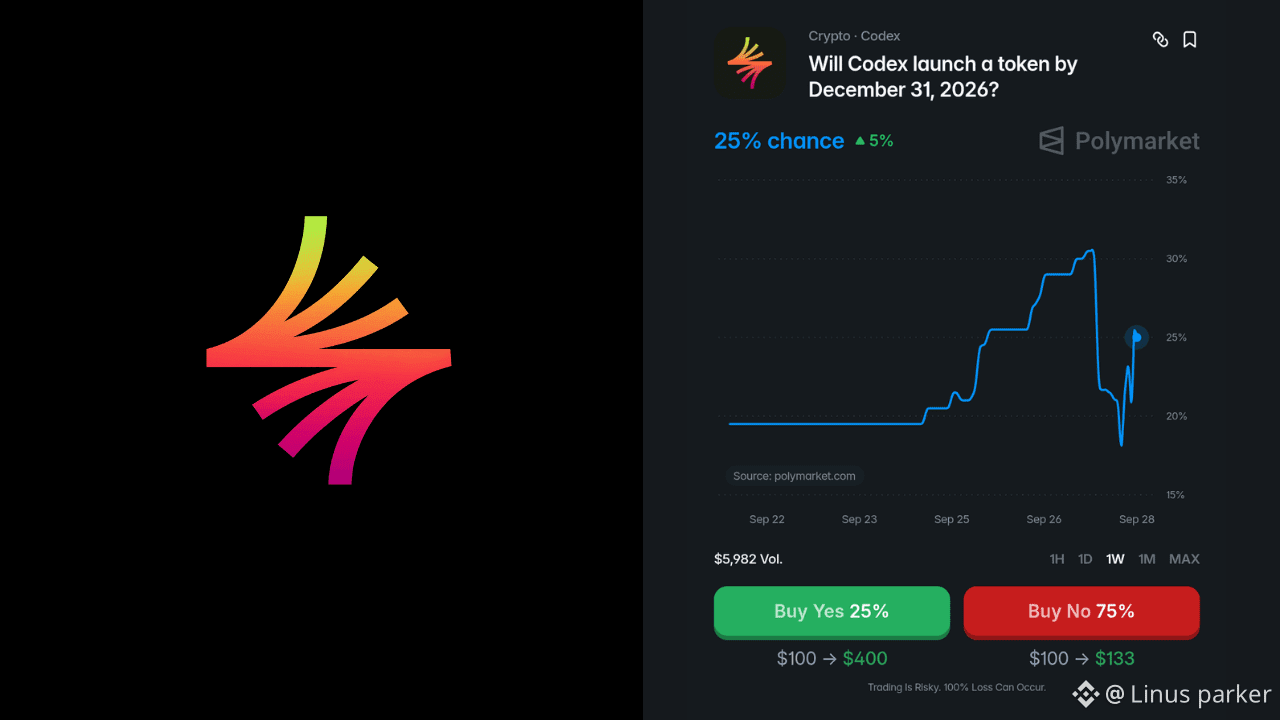
Зараз імовірність запуску токена Codex до 31 грудня оцінюється лише у 25%.
Це означає, що ставка в $100 на «ТАК» може принести близько $400, якщо прогноз справдиться.
Потенціал зростання у 4 рази — на основі чітко визначеного результату.
Але мені навіть не потрібно чекати до грудня.
Якщо інтерес до токена зростатиме, а ймовірність зміниться з 25% до 40%, 50% або вище, я зможу достроково продати свою позицію й скористатися можливістю, яку створили змінені коефіцієнти.
Ось чому Polymarket такий корисний для мене.
Я можу знайти подію, у яку вірю, зайти в неї, коли вважаю, що ринок недооцінює її шанси, і сам вирішити, коли вийти.
Це набагато активніший підхід, ніж просто вкласти все в $SOL і чекати, поки зміниться черговий графік.
#Сезон альткоїнів#
Чи запустить Codex токен у 2026 році? 👀
Саме тому я постійно перевіряю Polymarket у пошуках можливостей.
Замість того щоб чекати на запуск нового токена, купувати його після того, як про нього вже всі дізналися, а потім сподіватися на зростання ціни, на Polymarket я можу зробити ставку на саму подію.
Зараз імовірність запуску токена Codex до 31 грудня оцінюється лише у 25%.
Це означає, що ставка в $100 на «ТАК» може принести близько $400, якщо прогноз справдиться.
Потенціал зростання у 4 рази — на основі чітко визначеного результату.
Але мені навіть не потрібно чекати до грудня.
Якщо інтерес до токена зростатиме, а ймовірність зміниться з 25% до 40%, 50% або вище, я зможу достроково продати свою позицію й скористатися можливістю, яку створили змінені коефіцієнти.
Ось чому Polymarket такий корисний для мене.
Я можу знайти подію, у яку вірю, зайти в неї, коли вважаю, що ринок недооцінює її шанси, і сам вирішити, коли вийти.
Це набагато активніший підхід, ніж просто вкласти все в $SOL і чекати, поки зміниться черговий графік.
#Сезон альткоїнів#
Саме тому я постійно перевіряю Polymarket у пошуках можливостей.
Замість того щоб чекати на запуск нового токена, купувати його після того, як про нього вже всі дізналися, а потім сподіватися на зростання ціни, на Polymarket я можу зробити ставку на саму подію.
Зараз імовірність запуску токена Codex до 31 грудня оцінюється лише у 25%.
Це означає, що ставка в $100 на «ТАК» може принести близько $400, якщо прогноз справдиться.
Потенціал зростання у 4 рази — на основі чітко визначеного результату.
Але мені навіть не потрібно чекати до грудня.
Якщо інтерес до токена зростатиме, а ймовірність зміниться з 25% до 40%, 50% або вище, я зможу достроково продати свою позицію й скористатися можливістю, яку створили змінені коефіцієнти.
Ось чому Polymarket такий корисний для мене.
Я можу знайти подію, у яку вірю, зайти в неї, коли вважаю, що ринок недооцінює її шанси, і сам вирішити, коли вийти.
Це набагато активніший підхід, ніж просто вкласти все в $SOL і чекати, поки зміниться черговий графік.
#Сезон альткоїнів#
68
·
--
Опціони з експірацією того ж дня тепер доступні ончейн ⚡
$ONDO допоміг сформувати попит на ончейн-експозицію до традиційних фінансових активів. $SYN просуває цей ринок у напрямку торгівлі опціонами на основі подій.
Hypercall підтримує короткострокові опціони на вибраних ринках, зокрема контракти, термін дії яких спливає того ж дня.
Для трейдерів опціони 0DTE можуть забезпечити високу чутливість експозиції до звітів про прибутки, оголошень і раптової волатильності.
Премія визначає капітал, вкладений у повністю оплачений опціон кол, а короткий термін дії робить його надзвичайно чутливим до часу.
Це інструмент, відмінний від безстрокових контрактів. Перпи забезпечують безперервну експозицію, тоді як опціони 0DTE зосереджують увесь задум у чітко визначеному часовому проміжку.
Ризик очевидний: премія може дуже швидко втратити цінність і згоріти.
Можливість так само очевидна. Hypercall виводить на ончейн-ринок один із форматів торгівлі, що найшвидше набирає популярності.
#Опціони #Сезон альткоїнів#
Опціони з експірацією того ж дня тепер доступні ончейн ⚡
$ONDO допоміг сформувати попит на ончейн-експозицію до традиційних фінансових активів. $SYN просуває цей ринок у напрямку торгівлі опціонами на основі подій.
Hypercall підтримує короткострокові опціони на вибраних ринках, зокрема контракти, термін дії яких спливає того ж дня.
Для трейдерів опціони 0DTE можуть забезпечити високу чутливість експозиції до звітів про прибутки, оголошень і раптової волатильності.
Премія визначає капітал, вкладений у повністю оплачений опціон кол, а короткий термін дії робить його надзвичайно чутливим до часу.
Це інструмент, відмінний від безстрокових контрактів. Перпи забезпечують безперервну експозицію, тоді як опціони 0DTE зосереджують увесь задум у чітко визначеному часовому проміжку.
Ризик очевидний: премія може дуже швидко втратити цінність і згоріти.
Можливість так само очевидна. Hypercall виводить на ончейн-ринок один із форматів торгівлі, що найшвидше набирає популярності.
#Опціони #Сезон альткоїнів#
$ONDO допоміг сформувати попит на ончейн-експозицію до традиційних фінансових активів. $SYN просуває цей ринок у напрямку торгівлі опціонами на основі подій.
Hypercall підтримує короткострокові опціони на вибраних ринках, зокрема контракти, термін дії яких спливає того ж дня.
Для трейдерів опціони 0DTE можуть забезпечити високу чутливість експозиції до звітів про прибутки, оголошень і раптової волатильності.
Премія визначає капітал, вкладений у повністю оплачений опціон кол, а короткий термін дії робить його надзвичайно чутливим до часу.
Це інструмент, відмінний від безстрокових контрактів. Перпи забезпечують безперервну експозицію, тоді як опціони 0DTE зосереджують увесь задум у чітко визначеному часовому проміжку.
Ризик очевидний: премія може дуже швидко втратити цінність і згоріти.
Можливість так само очевидна. Hypercall виводить на ончейн-ринок один із форматів торгівлі, що найшвидше набирає популярності.
#Опціони #Сезон альткоїнів#

47
·
--
Найкращі угоди — це не завжди окремі токени 👀
Більшість криптопортфелів формують однаково: знаходять «наступний» $LINK, купують його й сподіваються, що вгадали напрямок.
Але сховища Pear Protocol дають вашому капіталу ще одну можливість: замість інвестування в окремий актив ви можете спрямувати його на цілу торгову стратегію.
Ця стратегія може автоматично визначати, які можливості варті уваги, яким активам місце в портфелі, як розподілити між ними капітал і коли потрібно змінити позиції.
Додавання зовнішніх керівників до Pear Protocol — це наступний рівень. Уже є кілька сховищ, що здійснюють торгівлю через $HYPE, і з часом очікується поява нових стратегій.
Фактично, завдяки цьому трейдери можуть обирати саму стратегію, а не створювати кожну позицію власноруч.
Токени дають вам доступ до активів. Сховища пропонують план дій для вашого капіталу.
Стратегії доступні на vaults.pear.garden
#СезонАльткоїнів#
Найкращі угоди — це не завжди окремі токени 👀
Більшість криптопортфелів формують однаково: знаходять «наступний» $LINK, купують його й сподіваються, що вгадали напрямок.
Але сховища Pear Protocol дають вашому капіталу ще одну можливість: замість інвестування в окремий актив ви можете спрямувати його на цілу торгову стратегію.
Ця стратегія може автоматично визначати, які можливості варті уваги, яким активам місце в портфелі, як розподілити між ними капітал і коли потрібно змінити позиції.
Додавання зовнішніх керівників до Pear Protocol — це наступний рівень. Уже є кілька сховищ, що здійснюють торгівлю через $HYPE, і з часом очікується поява нових стратегій.
Фактично, завдяки цьому трейдери можуть обирати саму стратегію, а не створювати кожну позицію власноруч.
Токени дають вам доступ до активів. Сховища пропонують план дій для вашого капіталу.
Стратегії доступні на vaults.pear.garden
#СезонАльткоїнів#
Більшість криптопортфелів формують однаково: знаходять «наступний» $LINK, купують його й сподіваються, що вгадали напрямок.
Але сховища Pear Protocol дають вашому капіталу ще одну можливість: замість інвестування в окремий актив ви можете спрямувати його на цілу торгову стратегію.
Ця стратегія може автоматично визначати, які можливості варті уваги, яким активам місце в портфелі, як розподілити між ними капітал і коли потрібно змінити позиції.
Додавання зовнішніх керівників до Pear Protocol — це наступний рівень. Уже є кілька сховищ, що здійснюють торгівлю через $HYPE, і з часом очікується поява нових стратегій.
Фактично, завдяки цьому трейдери можуть обирати саму стратегію, а не створювати кожну позицію власноруч.
Токени дають вам доступ до активів. Сховища пропонують план дій для вашого капіталу.
Стратегії доступні на vaults.pear.garden
#СезонАльткоїнів#
57
·
--
У токенізованої нерухомості є лідер 👀
У розмовах про $SOL та $POL часто обговорюють, які мережі приваблюють токенізовані активи та як швидко зростає їхня ринкова капіталізація RWA.
Але найсвіжіші дані про нерухомість показують значно більш концентровану картину.
На графіку, яким поділився RWA Foundation на основі даних Token Terminal, відстежується зростання ринкової капіталізації токенізованої нерухомості за весь час у різних мережах.
Згідно з графіком, ринкова капіталізація токенізованої нерухомості в Injective зросла на $1.1B.
Це приблизно у 12 разів більше, ніж у Base, яка посіла друге місце в цьому наборі даних.
На мою думку, важливіша частка зростання в цій категорії.
Наразі на Injective припадає більша частина зростання серед п’яти провідних мереж у цьому наборі даних.
Коли на одну екосистему припадає 83% сукупного показника п’ятірки лідерів, її позиція в секторі токенізованої нерухомості заслуговує на значно більше уваги.
Саме тому я дедалі оптимістичніше оцінюю позиції Injective у сфері RWA 🔥
#Сезон альткоїнів#
У токенізованої нерухомості є лідер 👀
У розмовах про $SOL та $POL часто обговорюють, які мережі приваблюють токенізовані активи та як швидко зростає їхня ринкова капіталізація RWA.
Але найсвіжіші дані про нерухомість показують значно більш концентровану картину.
На графіку, яким поділився RWA Foundation на основі даних Token Terminal, відстежується зростання ринкової капіталізації токенізованої нерухомості за весь час у різних мережах.
Згідно з графіком, ринкова капіталізація токенізованої нерухомості в Injective зросла на $1.1B.
Це приблизно у 12 разів більше, ніж у Base, яка посіла друге місце в цьому наборі даних.
На мою думку, важливіша частка зростання в цій категорії.
Наразі на Injective припадає більша частина зростання серед п’яти провідних мереж у цьому наборі даних.
Коли на одну екосистему припадає 83% сукупного показника п’ятірки лідерів, її позиція в секторі токенізованої нерухомості заслуговує на значно більше уваги.
Саме тому я дедалі оптимістичніше оцінюю позиції Injective у сфері RWA 🔥
#Сезон альткоїнів#
У розмовах про $SOL та $POL часто обговорюють, які мережі приваблюють токенізовані активи та як швидко зростає їхня ринкова капіталізація RWA.
Але найсвіжіші дані про нерухомість показують значно більш концентровану картину.
На графіку, яким поділився RWA Foundation на основі даних Token Terminal, відстежується зростання ринкової капіталізації токенізованої нерухомості за весь час у різних мережах.
Згідно з графіком, ринкова капіталізація токенізованої нерухомості в Injective зросла на $1.1B.
Це приблизно у 12 разів більше, ніж у Base, яка посіла друге місце в цьому наборі даних.
На мою думку, важливіша частка зростання в цій категорії.
Наразі на Injective припадає більша частина зростання серед п’яти провідних мереж у цьому наборі даних.
Коли на одну екосистему припадає 83% сукупного показника п’ятірки лідерів, її позиція в секторі токенізованої нерухомості заслуговує на значно більше уваги.
Саме тому я дедалі оптимістичніше оцінюю позиції Injective у сфері RWA 🔥
#Сезон альткоїнів#
67
·
--
Відсутній рівень уже тут❗️
$SYN надає доступ до Hypercall, а $HYPE забезпечує ліквідність безстрокових ф’ючерсів та інфраструктуру хеджування.
Hypercall може створювати опціонні ринки для активів, які вже мають ринки безстрокових ф’ючерсів на Hyperliquid.
Цей зв’язок важливий, адже маркетмейкерам опціонів потрібен ліквідний майданчик для хеджування ризиків. Hyperliquid уже надає для цього необхідну інфраструктуру.
Тож кожен новий опціонний ринок може сприяти додатковій активності в усій екосистемі.
Торгова теза залежить від того, чи зможе Hypercall додавати ринки, залучати ліквідність і перетворювати рекордні обсяги торгів на регулярне використання.
Під час сезону альткоїнів інфраструктура, що розширює вже активний торговий майданчик, може швидко привернути увагу.
#Сезон альткоїнів#
Відсутній рівень уже тут❗️
$SYN надає доступ до Hypercall, а $HYPE забезпечує ліквідність безстрокових ф’ючерсів та інфраструктуру хеджування.
Hypercall може створювати опціонні ринки для активів, які вже мають ринки безстрокових ф’ючерсів на Hyperliquid.
Цей зв’язок важливий, адже маркетмейкерам опціонів потрібен ліквідний майданчик для хеджування ризиків. Hyperliquid уже надає для цього необхідну інфраструктуру.
Тож кожен новий опціонний ринок може сприяти додатковій активності в усій екосистемі.
Торгова теза залежить від того, чи зможе Hypercall додавати ринки, залучати ліквідність і перетворювати рекордні обсяги торгів на регулярне використання.
Під час сезону альткоїнів інфраструктура, що розширює вже активний торговий майданчик, може швидко привернути увагу.
#Сезон альткоїнів#
$SYN надає доступ до Hypercall, а $HYPE забезпечує ліквідність безстрокових ф’ючерсів та інфраструктуру хеджування.
Hypercall може створювати опціонні ринки для активів, які вже мають ринки безстрокових ф’ючерсів на Hyperliquid.
Цей зв’язок важливий, адже маркетмейкерам опціонів потрібен ліквідний майданчик для хеджування ризиків. Hyperliquid уже надає для цього необхідну інфраструктуру.
Тож кожен новий опціонний ринок може сприяти додатковій активності в усій екосистемі.
Торгова теза залежить від того, чи зможе Hypercall додавати ринки, залучати ліквідність і перетворювати рекордні обсяги торгів на регулярне використання.
Під час сезону альткоїнів інфраструктура, що розширює вже активний торговий майданчик, може швидко привернути увагу.
#Сезон альткоїнів#
49
·
--
Люди можуть бути не найбільшими користувачами Sui 🤖
Власники $SUI досі думають про наступний мільйон користувачів.
А я думаю про наступний мільйон AI-агентів.
Агенти цілодобово торгуватимуть, купуватимуть послуги, платитимуть за обчислювальні ресурси й взаємодіятимуть з іншим програмним забезпеченням.
Вони обиратимуть інфраструктуру за її продуктивністю, а не з племінної відданості.
Sui вже пропонує перекази підтримуваних стейблкоїнів без комісії за газ, розрахунки приблизно за 390 мілісекунд і програмовані транзакції, здатні об’єднувати до 1 024 операцій в одну атомарну транзакцію.
Таке поєднання стає дедалі актуальнішим, коли програмне забезпечення починає керувати грошима.
На Sui Basecamp 7 і 8 жовтня агентні фінанси стануть центральною темою обговорення.
Найвагоміший аргумент на користь зростання SUI може полягати в тому, що автономні системи раз за разом обиратимуть цю мережу, бо вона працює.
Більше агентів — більше транзакцій, ліквідності й попиту на створені для них застосунки.
Цей маховик може набути величезного масштабу.
#Сезон альткоїнів# #ШІ
Люди можуть бути не найбільшими користувачами Sui 🤖
Власники $SUI досі думають про наступний мільйон користувачів.
А я думаю про наступний мільйон AI-агентів.
Агенти цілодобово торгуватимуть, купуватимуть послуги, платитимуть за обчислювальні ресурси й взаємодіятимуть з іншим програмним забезпеченням.
Вони обиратимуть інфраструктуру за її продуктивністю, а не з племінної відданості.
Sui вже пропонує перекази підтримуваних стейблкоїнів без комісії за газ, розрахунки приблизно за 390 мілісекунд і програмовані транзакції, здатні об’єднувати до 1 024 операцій в одну атомарну транзакцію.
Таке поєднання стає дедалі актуальнішим, коли програмне забезпечення починає керувати грошима.
На Sui Basecamp 7 і 8 жовтня агентні фінанси стануть центральною темою обговорення.
Найвагоміший аргумент на користь зростання SUI може полягати в тому, що автономні системи раз за разом обиратимуть цю мережу, бо вона працює.
Більше агентів — більше транзакцій, ліквідності й попиту на створені для них застосунки.
Цей маховик може набути величезного масштабу.
#Сезон альткоїнів# #ШІ
Власники $SUI досі думають про наступний мільйон користувачів.
А я думаю про наступний мільйон AI-агентів.
Агенти цілодобово торгуватимуть, купуватимуть послуги, платитимуть за обчислювальні ресурси й взаємодіятимуть з іншим програмним забезпеченням.
Вони обиратимуть інфраструктуру за її продуктивністю, а не з племінної відданості.
Sui вже пропонує перекази підтримуваних стейблкоїнів без комісії за газ, розрахунки приблизно за 390 мілісекунд і програмовані транзакції, здатні об’єднувати до 1 024 операцій в одну атомарну транзакцію.
Таке поєднання стає дедалі актуальнішим, коли програмне забезпечення починає керувати грошима.
На Sui Basecamp 7 і 8 жовтня агентні фінанси стануть центральною темою обговорення.
Найвагоміший аргумент на користь зростання SUI може полягати в тому, що автономні системи раз за разом обиратимуть цю мережу, бо вона працює.
Більше агентів — більше транзакцій, ліквідності й попиту на створені для них застосунки.
Цей маховик може набути величезного масштабу.
#Сезон альткоїнів# #ШІ
79
·
--
В акцій ШІ є ончейн-вимір 🚀
$RENDER дає криптотрейдерам змогу долучитися до тренду на обчислювальні потужності для ШІ.
$SYN пропонує інший погляд на ту саму тему — торгівлю опціонами на акції через ринки Hypercall.
Стежити за сектором означає стежити за різними бізнесами. NVIDIA працює у сфері обчислень, Micron — пам’яті, а SanDisk — накопичувачів.
Трейдер може мати чітке бачення перспектив одного з цих бізнесів на певний період. Опціони дають змогу обрати дату експірації та структуру виплат, що відповідають цьому баченню.
Hypercall пропонує опціони на NVDA, MU та SanDisk, доступні з криптогаманця, із можливістю торгувати дробовими обсягами.
Розмови про ШІ можуть безпосередньо привести до активного ринку, де трейдери можуть переглянути доступні контракти й оцінити вартість своєї позиції.
Купівля опціону з повною оплатою також обмежує ризик сплаченою премією, хоча до дати експірації можна втратити всю її суму.
Ці ринки роблять пропозицію Hypercall відчутною: знайомі компанії, конкретні торгові погляди та опціонний продукт на базі Hyperliquid.
#AI #Hyperliquid
В акцій ШІ є ончейн-вимір 🚀
$RENDER дає криптотрейдерам змогу долучитися до тренду на обчислювальні потужності для ШІ.
$SYN пропонує інший погляд на ту саму тему — торгівлю опціонами на акції через ринки Hypercall.
Стежити за сектором означає стежити за різними бізнесами. NVIDIA працює у сфері обчислень, Micron — пам’яті, а SanDisk — накопичувачів.
Трейдер може мати чітке бачення перспектив одного з цих бізнесів на певний період. Опціони дають змогу обрати дату експірації та структуру виплат, що відповідають цьому баченню.
Hypercall пропонує опціони на NVDA, MU та SanDisk, доступні з криптогаманця, із можливістю торгувати дробовими обсягами.
Розмови про ШІ можуть безпосередньо привести до активного ринку, де трейдери можуть переглянути доступні контракти й оцінити вартість своєї позиції.
Купівля опціону з повною оплатою також обмежує ризик сплаченою премією, хоча до дати експірації можна втратити всю її суму.
Ці ринки роблять пропозицію Hypercall відчутною: знайомі компанії, конкретні торгові погляди та опціонний продукт на базі Hyperliquid.
#AI #Hyperliquid
$RENDER дає криптотрейдерам змогу долучитися до тренду на обчислювальні потужності для ШІ.
$SYN пропонує інший погляд на ту саму тему — торгівлю опціонами на акції через ринки Hypercall.
Стежити за сектором означає стежити за різними бізнесами. NVIDIA працює у сфері обчислень, Micron — пам’яті, а SanDisk — накопичувачів.
Трейдер може мати чітке бачення перспектив одного з цих бізнесів на певний період. Опціони дають змогу обрати дату експірації та структуру виплат, що відповідають цьому баченню.
Hypercall пропонує опціони на NVDA, MU та SanDisk, доступні з криптогаманця, із можливістю торгувати дробовими обсягами.
Розмови про ШІ можуть безпосередньо привести до активного ринку, де трейдери можуть переглянути доступні контракти й оцінити вартість своєї позиції.
Купівля опціону з повною оплатою також обмежує ризик сплаченою премією, хоча до дати експірації можна втратити всю її суму.
Ці ринки роблять пропозицію Hypercall відчутною: знайомі компанії, конкретні торгові погляди та опціонний продукт на базі Hyperliquid.
#AI #Hyperliquid
51
·
--
Крипто знову привертає увагу 📈
$ARC і $USDC — два активи, за якими я стежив, коли частка криптовалют у онлайн-обговореннях різко зросла. $ARC
За даними Kaito AI, частка криптовалют у загальному обсязі обговорень зросла на 64% з 12 до 16 вересня, сягнувши майже третини всіх розмов. Це серйозний розворот, особливо з огляду на те, що лише трьома днями раніше частка ШІ була більш ніж удвічі вищою за частку криптовалют.
Відновлення уваги не було зумовлене позитивною динамікою цін. Закон CLARITY не просунувся в Сенаті, крипторинок втратив приблизно 88 мільярдів доларів вартості, а протягом двадцяти хвилин було ліквідовано довгі позиції майже на 300 мільйонів доларів.
Тим часом Arc запустила свою публічну основну мережу, і, за повідомленнями, у день запуску частка уваги до неї сягнула 7%. На обговорення також вплинув окремий токен із тикером ARC, що торгується в парі з USDC.
Ось чому я стежу за увагою поряд із цінами. Ринки можуть падати, поки інтерес до нової екосистеми чи наративу непомітно набирає обертів.
Mindshare Arena від Kaito AI допомагає побачити ці зміни, показуючи, які наративи привертають дедалі більше уваги та хто формує обговорення.
Ціна показує реакцію. Частка уваги може підказати, за чим ринок стежитиме далі.
#Сезон альткоїнів# #Макроекономічні огляди#
Крипто знову привертає увагу 📈
$ARC і $USDC — два активи, за якими я стежив, коли частка криптовалют у онлайн-обговореннях різко зросла. $ARC
За даними Kaito AI, частка криптовалют у загальному обсязі обговорень зросла на 64% з 12 до 16 вересня, сягнувши майже третини всіх розмов. Це серйозний розворот, особливо з огляду на те, що лише трьома днями раніше частка ШІ була більш ніж удвічі вищою за частку криптовалют.
Відновлення уваги не було зумовлене позитивною динамікою цін. Закон CLARITY не просунувся в Сенаті, крипторинок втратив приблизно 88 мільярдів доларів вартості, а протягом двадцяти хвилин було ліквідовано довгі позиції майже на 300 мільйонів доларів.
Тим часом Arc запустила свою публічну основну мережу, і, за повідомленнями, у день запуску частка уваги до неї сягнула 7%. На обговорення також вплинув окремий токен із тикером ARC, що торгується в парі з USDC.
Ось чому я стежу за увагою поряд із цінами. Ринки можуть падати, поки інтерес до нової екосистеми чи наративу непомітно набирає обертів.
Mindshare Arena від Kaito AI допомагає побачити ці зміни, показуючи, які наративи привертають дедалі більше уваги та хто формує обговорення.
Ціна показує реакцію. Частка уваги може підказати, за чим ринок стежитиме далі.
#Сезон альткоїнів# #Макроекономічні огляди#
$ARC і $USDC — два активи, за якими я стежив, коли частка криптовалют у онлайн-обговореннях різко зросла. $ARC
За даними Kaito AI, частка криптовалют у загальному обсязі обговорень зросла на 64% з 12 до 16 вересня, сягнувши майже третини всіх розмов. Це серйозний розворот, особливо з огляду на те, що лише трьома днями раніше частка ШІ була більш ніж удвічі вищою за частку криптовалют.
Відновлення уваги не було зумовлене позитивною динамікою цін. Закон CLARITY не просунувся в Сенаті, крипторинок втратив приблизно 88 мільярдів доларів вартості, а протягом двадцяти хвилин було ліквідовано довгі позиції майже на 300 мільйонів доларів.
Тим часом Arc запустила свою публічну основну мережу, і, за повідомленнями, у день запуску частка уваги до неї сягнула 7%. На обговорення також вплинув окремий токен із тикером ARC, що торгується в парі з USDC.
Ось чому я стежу за увагою поряд із цінами. Ринки можуть падати, поки інтерес до нової екосистеми чи наративу непомітно набирає обертів.
Mindshare Arena від Kaito AI допомагає побачити ці зміни, показуючи, які наративи привертають дедалі більше уваги та хто формує обговорення.
Ціна показує реакцію. Частка уваги може підказати, за чим ринок стежитиме далі.
#Сезон альткоїнів# #Макроекономічні огляди#
64
·
--
Стежимо за правильними рейтингами 👀
Рейтинги — один із найпростіших інструментів привернення уваги у світі криптовалют: вони перетворюють мінливу картину на історію, яку кожен може зрозуміти за лічені секунди.
Саме тому рейтинги $HYPE і $ASTER можуть утримувати увагу ще довго після того, як хтось уперше відкриє сторінку.
Але, на мою думку, сам рейтинг — це лише половина історії; цікавіше питання — що відбувається за межами підсумкових позицій.
Більшість криптовалютних рейтингів завершується в цифровому форматі, а результат стає ще однією формою онлайн-статусу.
У рейтингу $TRUMP Coin Club заплановано фіксацію результатів на 1 жовтня у зв’язку із запланованою подією в Сінгапурі.
Ця подія розрахована на 23 учасників, які відповідають умовам, і три дні в місті; очікується, що зрештою вона перенесе учасників з екрана до спільного простору.
Більшість рейтингів закінчуються підсумковим списком, а цей, за планом, продовжиться в Сінгапурі 🌐
#Макроінсайти#
Стежимо за правильними рейтингами 👀
Рейтинги — один із найпростіших інструментів привернення уваги у світі криптовалют: вони перетворюють мінливу картину на історію, яку кожен може зрозуміти за лічені секунди.
Саме тому рейтинги $HYPE і $ASTER можуть утримувати увагу ще довго після того, як хтось уперше відкриє сторінку.
Але, на мою думку, сам рейтинг — це лише половина історії; цікавіше питання — що відбувається за межами підсумкових позицій.
Більшість криптовалютних рейтингів завершується в цифровому форматі, а результат стає ще однією формою онлайн-статусу.
У рейтингу $TRUMP Coin Club заплановано фіксацію результатів на 1 жовтня у зв’язку із запланованою подією в Сінгапурі.
Ця подія розрахована на 23 учасників, які відповідають умовам, і три дні в місті; очікується, що зрештою вона перенесе учасників з екрана до спільного простору.
Більшість рейтингів закінчуються підсумковим списком, а цей, за планом, продовжиться в Сінгапурі 🌐
#Макроінсайти#
Рейтинги — один із найпростіших інструментів привернення уваги у світі криптовалют: вони перетворюють мінливу картину на історію, яку кожен може зрозуміти за лічені секунди.
Саме тому рейтинги $HYPE і $ASTER можуть утримувати увагу ще довго після того, як хтось уперше відкриє сторінку.
Але, на мою думку, сам рейтинг — це лише половина історії; цікавіше питання — що відбувається за межами підсумкових позицій.
Більшість криптовалютних рейтингів завершується в цифровому форматі, а результат стає ще однією формою онлайн-статусу.
У рейтингу $TRUMP Coin Club заплановано фіксацію результатів на 1 жовтня у зв’язку із запланованою подією в Сінгапурі.
Ця подія розрахована на 23 учасників, які відповідають умовам, і три дні в місті; очікується, що зрештою вона перенесе учасників з екрана до спільного простору.
Більшість рейтингів закінчуються підсумковим списком, а цей, за планом, продовжиться в Сінгапурі 🌐
#Макроінсайти#

73
·
--
$B3 може стати справжньою перлиною інфраструктури для обчислень цього циклу. 📈
B3 — саме той проєкт, який починає виглядати зовсім інакше, щойно перестаєш сприймати його як ще один токен ШІ.
Фундаментальні показники B3IQ незвично швидко зміцнюються.
За перші два тижні B3IQ продав GPU на восьмизначну суму, тоді як B3 повідомила про дев’ятизначний попит на розгортання своєї модульної інфраструктури дата-центрів.
Сам продукт доволі простий.
Покупці фінансують спеціалізовані системи NVIDIA, B3 відповідає за виробництво, хостинг та експлуатацію, а невикористані потужності можна спрямувати в режим Earn Mode, замість того щоб вони простоювали.
$VVV допоміг довести, що на крипторинку справді є попит на інференс ШІ: Venice обробляє приблизно 1,3 трлн токенів на місяць і 2 млн API-викликів на день.
B3 заглиблюється на ще один рівень — у фізичну інфраструктуру, яка забезпечує цей інференс.
Andromeda надає компанії виробничий підрозділ у США, B3IQ відповідає за економіку апаратного забезпечення, а B3OS розширює стек, охоплюючи виконання завдань ШІ.
Саме це поєднання робить цю інвестиційну тезу цікавою.
Створювати програмне забезпечення для ШІ стає дедалі простіше.
Але важливість GPU, на яких воно працює, не зменшується.
Я постійно звертаю увагу на розрив між поточною оцінкою B3 та масштабом ринку обчислювальних потужностей, на який вона націлена.
Цей розрив і досі здається незвично великим.
#AI #DePIN
$B3 може стати справжньою перлиною інфраструктури для обчислень цього циклу. 📈
B3 — саме той проєкт, який починає виглядати зовсім інакше, щойно перестаєш сприймати його як ще один токен ШІ.
Фундаментальні показники B3IQ незвично швидко зміцнюються.
За перші два тижні B3IQ продав GPU на восьмизначну суму, тоді як B3 повідомила про дев’ятизначний попит на розгортання своєї модульної інфраструктури дата-центрів.
Сам продукт доволі простий.
Покупці фінансують спеціалізовані системи NVIDIA, B3 відповідає за виробництво, хостинг та експлуатацію, а невикористані потужності можна спрямувати в режим Earn Mode, замість того щоб вони простоювали.
$VVV допоміг довести, що на крипторинку справді є попит на інференс ШІ: Venice обробляє приблизно 1,3 трлн токенів на місяць і 2 млн API-викликів на день.
B3 заглиблюється на ще один рівень — у фізичну інфраструктуру, яка забезпечує цей інференс.
Andromeda надає компанії виробничий підрозділ у США, B3IQ відповідає за економіку апаратного забезпечення, а B3OS розширює стек, охоплюючи виконання завдань ШІ.
Саме це поєднання робить цю інвестиційну тезу цікавою.
Створювати програмне забезпечення для ШІ стає дедалі простіше.
Але важливість GPU, на яких воно працює, не зменшується.
Я постійно звертаю увагу на розрив між поточною оцінкою B3 та масштабом ринку обчислювальних потужностей, на який вона націлена.
Цей розрив і досі здається незвично великим.
#AI #DePIN
B3 — саме той проєкт, який починає виглядати зовсім інакше, щойно перестаєш сприймати його як ще один токен ШІ.
Фундаментальні показники B3IQ незвично швидко зміцнюються.
За перші два тижні B3IQ продав GPU на восьмизначну суму, тоді як B3 повідомила про дев’ятизначний попит на розгортання своєї модульної інфраструктури дата-центрів.
Сам продукт доволі простий.
Покупці фінансують спеціалізовані системи NVIDIA, B3 відповідає за виробництво, хостинг та експлуатацію, а невикористані потужності можна спрямувати в режим Earn Mode, замість того щоб вони простоювали.
$VVV допоміг довести, що на крипторинку справді є попит на інференс ШІ: Venice обробляє приблизно 1,3 трлн токенів на місяць і 2 млн API-викликів на день.
B3 заглиблюється на ще один рівень — у фізичну інфраструктуру, яка забезпечує цей інференс.
Andromeda надає компанії виробничий підрозділ у США, B3IQ відповідає за економіку апаратного забезпечення, а B3OS розширює стек, охоплюючи виконання завдань ШІ.
Саме це поєднання робить цю інвестиційну тезу цікавою.
Створювати програмне забезпечення для ШІ стає дедалі простіше.
Але важливість GPU, на яких воно працює, не зменшується.
Я постійно звертаю увагу на розрив між поточною оцінкою B3 та масштабом ринку обчислювальних потужностей, на який вона націлена.
Цей розрив і досі здається незвично великим.
#AI #DePIN
45
·
--
Одинадцять днів — це аж ніяк не чесний тест 📉
$STRK спростив ринкам розуміння того, як працює створення доказів в економіці Zero Knowledge.
Найбільше уваги досі приділяють блокчейнам і застосункам, які генерують докази.
Але зрештою кожен доказ має хтось перевірити на достовірність.
Ця робота з перевірки менш помітна, але вона вкрай важлива для всього стеку.
$VFY запустився 29 вересня 2025 року.
Через одинадцять днів увесь ринок токенів накрив обвал 10 жовтня.
На мою думку, це більше схоже на ціноутворення в умовах кризи, ніж на справжню перевірку попиту.
zkVerify посідає просте інфраструктурне місце на цьому ринку.
Застосунки створюють докази. Його мережа спеціалізується на їхній незалежній перевірці.
Потім ці результати можуть використовуватися у фінансах, цифровій ідентифікації, ШІ та іграх.
Корисність VFY зростає завдяки активності з перевірки, що проходить через цю мережу.
Думаю, ринок приділив більше часу оцінюванню графіка після запуску, ніж аналізу того, яку роль може відіграти ця інфраструктура.
Можливо, здоровіший ринок нарешті дасть цій тезі змогу пройти чеснішу перевірку.
#Сезон альткоїнів#
Одинадцять днів — це аж ніяк не чесний тест 📉
$STRK спростив ринкам розуміння того, як працює створення доказів в економіці Zero Knowledge.
Найбільше уваги досі приділяють блокчейнам і застосункам, які генерують докази.
Але зрештою кожен доказ має хтось перевірити на достовірність.
Ця робота з перевірки менш помітна, але вона вкрай важлива для всього стеку.
$VFY запустився 29 вересня 2025 року.
Через одинадцять днів увесь ринок токенів накрив обвал 10 жовтня.
На мою думку, це більше схоже на ціноутворення в умовах кризи, ніж на справжню перевірку попиту.
zkVerify посідає просте інфраструктурне місце на цьому ринку.
Застосунки створюють докази. Його мережа спеціалізується на їхній незалежній перевірці.
Потім ці результати можуть використовуватися у фінансах, цифровій ідентифікації, ШІ та іграх.
Корисність VFY зростає завдяки активності з перевірки, що проходить через цю мережу.
Думаю, ринок приділив більше часу оцінюванню графіка після запуску, ніж аналізу того, яку роль може відіграти ця інфраструктура.
Можливо, здоровіший ринок нарешті дасть цій тезі змогу пройти чеснішу перевірку.
#Сезон альткоїнів#
$STRK спростив ринкам розуміння того, як працює створення доказів в економіці Zero Knowledge.
Найбільше уваги досі приділяють блокчейнам і застосункам, які генерують докази.
Але зрештою кожен доказ має хтось перевірити на достовірність.
Ця робота з перевірки менш помітна, але вона вкрай важлива для всього стеку.
$VFY запустився 29 вересня 2025 року.
Через одинадцять днів увесь ринок токенів накрив обвал 10 жовтня.
На мою думку, це більше схоже на ціноутворення в умовах кризи, ніж на справжню перевірку попиту.
zkVerify посідає просте інфраструктурне місце на цьому ринку.
Застосунки створюють докази. Його мережа спеціалізується на їхній незалежній перевірці.
Потім ці результати можуть використовуватися у фінансах, цифровій ідентифікації, ШІ та іграх.
Корисність VFY зростає завдяки активності з перевірки, що проходить через цю мережу.
Думаю, ринок приділив більше часу оцінюванню графіка після запуску, ніж аналізу того, яку роль може відіграти ця інфраструктура.
Можливо, здоровіший ринок нарешті дасть цій тезі змогу пройти чеснішу перевірку.
#Сезон альткоїнів#
1
424
·
--
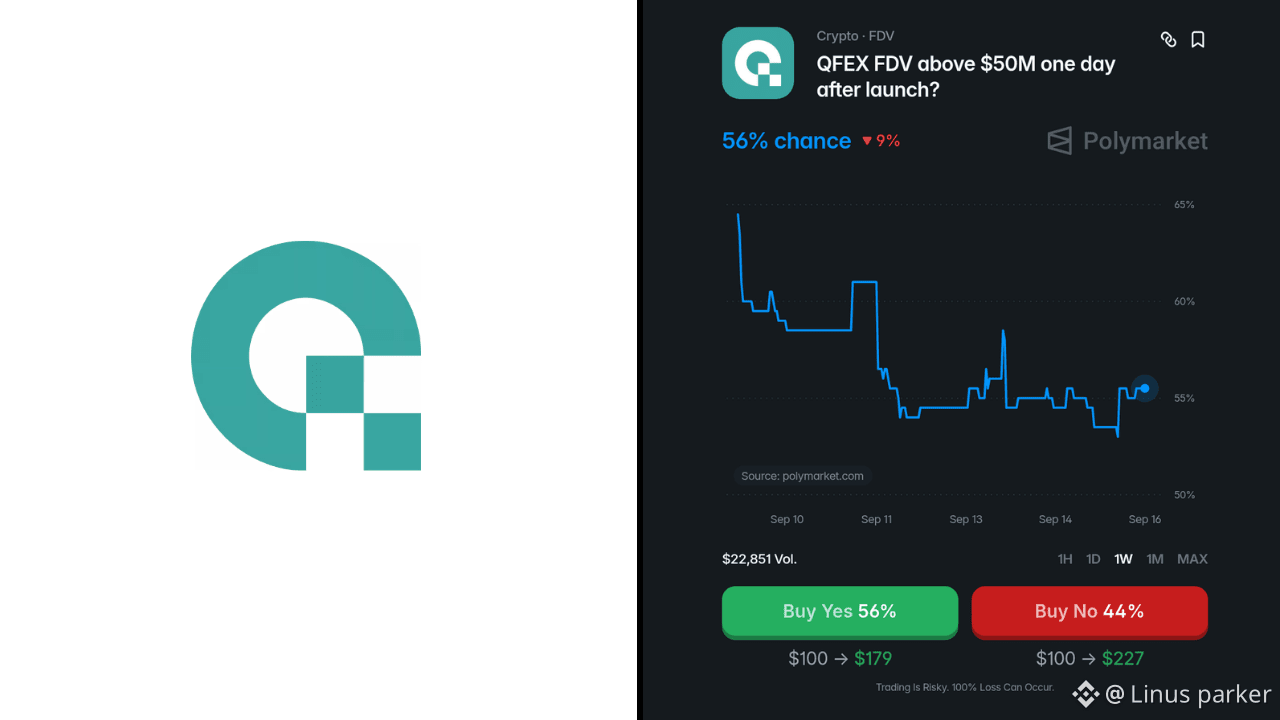
QFEX може обіграти $50M 💰
56% Так після падіння на 9%.
Я купую слабкість.
Питання не в тому, чи QFEX стане найбільшою біржею в крипто. Polymarket запитує, чи зможе вона одного дня після запуску подолати $50M FDV.
Це значно простіша теза, яку я можу підтримати.
Оцінки на старті можуть зростати завдяки увазі, продуктово-сторітельному наративу, початковій ліквідності та кількості трейдерів, які змагаються за першу доступну пропозицію. Проєкту не потрібні роки історії роботи, щоб ненадовго подолати поріг.
Тож я ставлю на «Так».
Цей приклад також показує, чому мені подобаються ринкові передбачення більше, ніж просто гонитва за ще одним свічковим рухом $DOGE.
За звичайної торгівлі токеном я можу бути правим щодо наративу, але все одно бути знищеним таймінгом.
Тут я можу чітко відокремити, на що саме ставлю:
QFEX вище $50M після запуску.
Більше нічого не потрібно.
І якщо імовірність рухатиметься з 56% у бік 70% у міру наближення запуску, я зможу вийти до завершення та забрати переоцінку.
Ця опціональність має значення.
Polymarket — це не лише місце, де я роблю прогнози.
Це все частіше місце, де я ними торгую.
#Сезон Альткоїнів#
QFEX може обіграти $50M 💰
56% Так після падіння на 9%.
Я купую слабкість.
Питання не в тому, чи QFEX стане найбільшою біржею в крипто. Polymarket запитує, чи зможе вона одного дня після запуску подолати $50M FDV.
Це значно простіша теза, яку я можу підтримати.
Оцінки на старті можуть зростати завдяки увазі, продуктово-сторітельному наративу, початковій ліквідності та кількості трейдерів, які змагаються за першу доступну пропозицію. Проєкту не потрібні роки історії роботи, щоб ненадовго подолати поріг.
Тож я ставлю на «Так».
Цей приклад також показує, чому мені подобаються ринкові передбачення більше, ніж просто гонитва за ще одним свічковим рухом $DOGE.
За звичайної торгівлі токеном я можу бути правим щодо наративу, але все одно бути знищеним таймінгом.
Тут я можу чітко відокремити, на що саме ставлю:
QFEX вище $50M після запуску.
Більше нічого не потрібно.
І якщо імовірність рухатиметься з 56% у бік 70% у міру наближення запуску, я зможу вийти до завершення та забрати переоцінку.
Ця опціональність має значення.
Polymarket — це не лише місце, де я роблю прогнози.
Це все частіше місце, де я ними торгую.
#Сезон Альткоїнів#
56% Так після падіння на 9%.
Я купую слабкість.
Питання не в тому, чи QFEX стане найбільшою біржею в крипто. Polymarket запитує, чи зможе вона одного дня після запуску подолати $50M FDV.
Це значно простіша теза, яку я можу підтримати.
Оцінки на старті можуть зростати завдяки увазі, продуктово-сторітельному наративу, початковій ліквідності та кількості трейдерів, які змагаються за першу доступну пропозицію. Проєкту не потрібні роки історії роботи, щоб ненадовго подолати поріг.
Тож я ставлю на «Так».
Цей приклад також показує, чому мені подобаються ринкові передбачення більше, ніж просто гонитва за ще одним свічковим рухом $DOGE.
За звичайної торгівлі токеном я можу бути правим щодо наративу, але все одно бути знищеним таймінгом.
Тут я можу чітко відокремити, на що саме ставлю:
QFEX вище $50M після запуску.
Більше нічого не потрібно.
І якщо імовірність рухатиметься з 56% у бік 70% у міру наближення запуску, я зможу вийти до завершення та забрати переоцінку.
Ця опціональність має значення.
Polymarket — це не лише місце, де я роблю прогнози.
Це все частіше місце, де я ними торгую.
#Сезон Альткоїнів#
54
·
--
Ваш позабіржовий трейд не має оголошувати покупця 👁️
Великі угоди стають гіршими саме в той момент, коли ринок дізнається, хто намагається їх виконати.
$JUP може знаходити глибокі маршрути через ліквідність Solana, але велика гаманцева адреса, яка використовує ці маршрути, все одно залишає достатньо видимої активності, щоб інші трейдери могли здогадатися про розмір і наміри.
Інституції вже відмовляються працювати так, тому $CC зберігає інформацію про транзакції всередині доменів, яким вона справді потрібна.
Так професійні гроші захищають свій потік ордерів, тоді як onchain-трейдери все ще транслюють свій.
Midnight дозволяє застосунку зберігати ордер і позицію незчитуваними, водночас доводячи, що угода відповідає правилам майданчика.
Webisoft уже будує торговельний майданчик на Midnight за цією точною моделлю.
Це важливо, бо попит на приватне виконання — не теорія: великі гаманці вже залишають публічні майданчики для OTC-столів щоразу, коли трансляція розміру починає рухати ціну проти них.
Я спостерігаю, чи приватне onchain-виконання поверне частину цього потоку в застосунки, адже клієнт уже існує, а секретність уже десь відбувається.
#Приватність #DeFi
Ваш позабіржовий трейд не має оголошувати покупця 👁️
Великі угоди стають гіршими саме в той момент, коли ринок дізнається, хто намагається їх виконати.
$JUP може знаходити глибокі маршрути через ліквідність Solana, але велика гаманцева адреса, яка використовує ці маршрути, все одно залишає достатньо видимої активності, щоб інші трейдери могли здогадатися про розмір і наміри.
Інституції вже відмовляються працювати так, тому $CC зберігає інформацію про транзакції всередині доменів, яким вона справді потрібна.
Так професійні гроші захищають свій потік ордерів, тоді як onchain-трейдери все ще транслюють свій.
Midnight дозволяє застосунку зберігати ордер і позицію незчитуваними, водночас доводячи, що угода відповідає правилам майданчика.
Webisoft уже будує торговельний майданчик на Midnight за цією точною моделлю.
Це важливо, бо попит на приватне виконання — не теорія: великі гаманці вже залишають публічні майданчики для OTC-столів щоразу, коли трансляція розміру починає рухати ціну проти них.
Я спостерігаю, чи приватне onchain-виконання поверне частину цього потоку в застосунки, адже клієнт уже існує, а секретність уже десь відбувається.
#Приватність #DeFi
Великі угоди стають гіршими саме в той момент, коли ринок дізнається, хто намагається їх виконати.
$JUP може знаходити глибокі маршрути через ліквідність Solana, але велика гаманцева адреса, яка використовує ці маршрути, все одно залишає достатньо видимої активності, щоб інші трейдери могли здогадатися про розмір і наміри.
Інституції вже відмовляються працювати так, тому $CC зберігає інформацію про транзакції всередині доменів, яким вона справді потрібна.
Так професійні гроші захищають свій потік ордерів, тоді як onchain-трейдери все ще транслюють свій.
Midnight дозволяє застосунку зберігати ордер і позицію незчитуваними, водночас доводячи, що угода відповідає правилам майданчика.
Webisoft уже будує торговельний майданчик на Midnight за цією точною моделлю.
Це важливо, бо попит на приватне виконання — не теорія: великі гаманці вже залишають публічні майданчики для OTC-столів щоразу, коли трансляція розміру починає рухати ціну проти них.
Я спостерігаю, чи приватне onchain-виконання поверне частину цього потоку в застосунки, адже клієнт уже існує, а секретність уже десь відбувається.
#Приватність #DeFi
57
Увійдіть, щоб переглянути інший контент
Приєднуйтесь до користувачів криптовалют по всьому світу на Binance Square
⚡️ Отримуйте актуальну та корисну інформацію про криптовалюти.
💬 Приєднуйтесь до найбільшої у світі криптобіржі.
👍 Відкрийте справжні ідеї від перевірених авторів.
Електронна пошта / номер телефону
Трендові теми
fomcвідстеження
58,259 переглядів
368 обговорюють
28 жовтня ФРС вирішує по ставці
29 жовтня виходять PCE за вересень і ВВП за третій квартал
тобто рішення приймуть, не побачивши ні того, ні іншого. в моєму #fomcвідстеження це зара головне
шо в них буде на столі:
- payrolls, які вже вийшли: +29,000
- CPI за вересень 14 жовтня, останнє велике число перед рішенням
прогнозів на цьому засіданні нема, наступні тільки 8-9 грудня
ринок уже переставився. на Kalshi підвищення в жовтні близько 18%, в грудні близько 71%
підвищення не скасували, його відклали
а шатдаун із затримкою даних, шо гуляє по стрічці, це 2025 рік. цього року уряд профінансований до 11 грудня
думка та сама, шо минулого разу: в жовтні пауза
$BTC
у мене досі нуль, BNB і стейбли лежать у Flexible і на календар не реагують)
14 жовтня розбираю CPI тут, в цьому тегу, останній розбір перед рішенням, фоловте
#FOMC #cpi #Fed
abobka
·8 вподобань
·1.8k переглядів
ADAGains10%Above$0.27
0 переглядів
30 обговорюють
ETHUp70%InQ3ButLiquidityFalls
2,411 переглядів
128 обговорюють