

BAREESTER
77 Публікації

BAREESTER
Поскаржитись
Заблокувати користувача
CRYPTO TRADER | WEB3 EXPLORER | AIRDROPS & REAL INSIGHT | BUILDING IN SILENT, WINNERS LOUD 🏆
9 Підписки
24 Підписники
87 Вподобань
Публікації
Усі
Цитування
·
--
Стаття
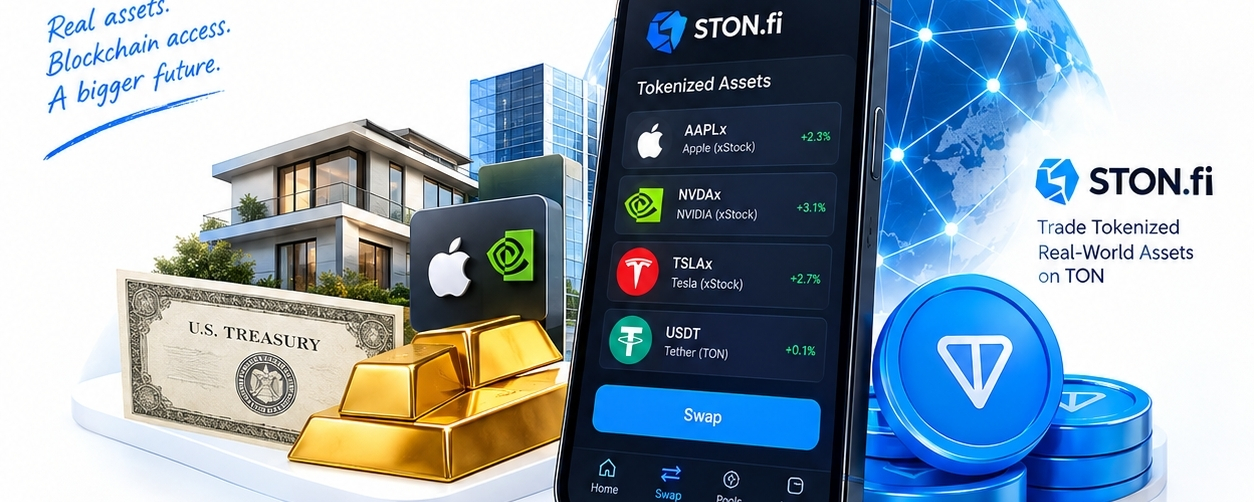
Усе, що вам належить, може жити в ланцюжку: зрозумілий гід з токенізації реальних активів (RWA)Усе, що вам належить, може жити в ланцюжку: зрозумілий гід з токенізації реальних активів (RWA)
Уявіть, що ви можете володіти невеликою часткою золотого резерву, облігацією Казначейства США (Treasury bill), нерухомістю або навіть акцією на кшталт Apple — усе через гаманець на блокчейні.
Саме в цьому полягає ідея токенізації реальних активів (RWA).
Токенізація RWA — це процес представлення прав власності або економічних інтересів у реальних активах за допомогою токенів на основі блокчейну. Ці активи можуть включати державні облігації, золото, нерухомість, приватні кредити та традиційні акції.
Усе, що вам належить, може жити в ланцюжку: зрозумілий гід з токенізації реальних активів (RWA)
Усе, що вам належить, може жити в ланцюжку: зрозумілий гід з токенізації реальних активів (RWA)
Уявіть, що ви можете володіти невеликою часткою золотого резерву, облігацією Казначейства США (Treasury bill), нерухомістю або навіть акцією на кшталт Apple — усе через гаманець на блокчейні.
Саме в цьому полягає ідея токенізації реальних активів (RWA).
Токенізація RWA — це процес представлення прав власності або економічних інтересів у реальних активах за допомогою токенів на основі блокчейну. Ці активи можуть включати державні облігації, золото, нерухомість, приватні кредити та традиційні акції.
Уявіть, що ви можете володіти невеликою часткою золотого резерву, облігацією Казначейства США (Treasury bill), нерухомістю або навіть акцією на кшталт Apple — усе через гаманець на блокчейні.
Саме в цьому полягає ідея токенізації реальних активів (RWA).
Токенізація RWA — це процес представлення прав власності або економічних інтересів у реальних активах за допомогою токенів на основі блокчейну. Ці активи можуть включати державні облігації, золото, нерухомість, приватні кредити та традиційні акції.
1
69
·
--
Стаття
Як обміняти USDT з TON на TRON за допомогою STON.fiПереміщення USDT між блокчейнами може бути складним, якщо ви не знаєте, які інструменти використовувати. Вам може знадобитися скористатися централізованою біржею, почекати на депозити та виведення або знайти надійне кросчейн-рішення.
З <m-96/ > ви можете обміняти USDT з блокчейну TON на блокчейн TRON, використовуючи його кросчейн-функцію.
У цьому посібнику я поясню, як покроково обміняти USDT з TON на TRON (TRC-20), включно з тим, як під’єднати гаманець, вибрати токени та ввести адресу для отримання.
Навіщо обмінювати USDT з TON на TRON?
Як обміняти USDT з TON на TRON за допомогою STON.fi
Переміщення USDT між блокчейнами може бути складним, якщо ви не знаєте, які інструменти використовувати. Вам може знадобитися скористатися централізованою біржею, почекати на депозити та виведення або знайти надійне кросчейн-рішення.
З <m-96/ > ви можете обміняти USDT з блокчейну TON на блокчейн TRON, використовуючи його кросчейн-функцію.
У цьому посібнику я поясню, як покроково обміняти USDT з TON на TRON (TRC-20), включно з тим, як під’єднати гаманець, вибрати токени та ввести адресу для отримання.
Навіщо обмінювати USDT з TON на TRON?
З <m-96/ > ви можете обміняти USDT з блокчейну TON на блокчейн TRON, використовуючи його кросчейн-функцію.
У цьому посібнику я поясню, як покроково обміняти USDT з TON на TRON (TRC-20), включно з тим, як під’єднати гаманець, вибрати токени та ввести адресу для отримання.
Навіщо обмінювати USDT з TON на TRON?
1
58
·
--
Чому крипто зростає та падає? 📈📉
Задумувались, чому Bitcoin ($BTC C) може рухатися на тисячі доларів у короткий період?
Відповідь не зводиться лише до «хтось купив» або «хтось продав».
На крипторинок можуть впливати кілька факторів:
1️⃣ Пропозиція та попит
Коли попит на купівлю сильніший, ніж наявний тиск продажів, ціни можуть зростати. Коли тиск продажів домінує, ціни можуть падати.
2️⃣ Вплив ринку Bitcoin (bTC C)
$BTC — найбільша криптовалюта за ринковою капіталізацією, і часто відіграє важливу роль у загальних настроях крипторинку.
Коли Bitcoin робить масштабний рух, багато трейдерів починають уважніше стежити за рештою ринку.
3️⃣ Ринкові настрої
Страх, упевненість, захоплення та невизначеність можуть впливати на те, як люди торгують.
4️⃣ Ліквідність
Високоліквідний ринок загалом може «переварити» великі угоди з меншим впливом на ціну. Низька ліквідність може робити цінові рухи різкішими.
5️⃣ Новини та події
Регулювання, макроекономічні зміни, розблокування токенів, оновлення мережі, події, пов’язані з ETF, а також новини про проєкти — усе це може впливати на поведінку ринку.
Головний урок 🧠
Зелений свічник не означає автоматично, що актив фундаментально сильніший.
Червоний свічник не означає автоматично, що проєкт зазнав поразки.
Розуміння того, чому ринок рухається, корисніше, ніж просто дивитися на графік.
Перед тим як робити угоду, дослідіть актив, зрозумійте ризики та уникайте рішень, ґрунтованих лише на короткострокових цінових рухах.
На що ви звертаєте найбільше уваги, коли BTC починає рух: на обсяги, ринкові настрої, новини чи технічні рівні?
#BinanceSquare
Чому крипто зростає та падає? 📈📉
Задумувались, чому Bitcoin ($BTC C) може рухатися на тисячі доларів у короткий період?
Відповідь не зводиться лише до «хтось купив» або «хтось продав».
На крипторинок можуть впливати кілька факторів:
1️⃣ Пропозиція та попит
Коли попит на купівлю сильніший, ніж наявний тиск продажів, ціни можуть зростати. Коли тиск продажів домінує, ціни можуть падати.
2️⃣ Вплив ринку Bitcoin (bTC C)
$BTC — найбільша криптовалюта за ринковою капіталізацією, і часто відіграє важливу роль у загальних настроях крипторинку.
Коли Bitcoin робить масштабний рух, багато трейдерів починають уважніше стежити за рештою ринку.
3️⃣ Ринкові настрої
Страх, упевненість, захоплення та невизначеність можуть впливати на те, як люди торгують.
4️⃣ Ліквідність
Високоліквідний ринок загалом може «переварити» великі угоди з меншим впливом на ціну. Низька ліквідність може робити цінові рухи різкішими.
5️⃣ Новини та події
Регулювання, макроекономічні зміни, розблокування токенів, оновлення мережі, події, пов’язані з ETF, а також новини про проєкти — усе це може впливати на поведінку ринку.
Головний урок 🧠
Зелений свічник не означає автоматично, що актив фундаментально сильніший.
Червоний свічник не означає автоматично, що проєкт зазнав поразки.
Розуміння того, чому ринок рухається, корисніше, ніж просто дивитися на графік.
Перед тим як робити угоду, дослідіть актив, зрозумійте ризики та уникайте рішень, ґрунтованих лише на короткострокових цінових рухах.
На що ви звертаєте найбільше уваги, коли BTC починає рух: на обсяги, ринкові настрої, новини чи технічні рівні?
#BinanceSquare
Задумувались, чому Bitcoin ($BTC C) може рухатися на тисячі доларів у короткий період?
Відповідь не зводиться лише до «хтось купив» або «хтось продав».
На крипторинок можуть впливати кілька факторів:
1️⃣ Пропозиція та попит
Коли попит на купівлю сильніший, ніж наявний тиск продажів, ціни можуть зростати. Коли тиск продажів домінує, ціни можуть падати.
2️⃣ Вплив ринку Bitcoin (bTC C)
$BTC — найбільша криптовалюта за ринковою капіталізацією, і часто відіграє важливу роль у загальних настроях крипторинку.
Коли Bitcoin робить масштабний рух, багато трейдерів починають уважніше стежити за рештою ринку.
3️⃣ Ринкові настрої
Страх, упевненість, захоплення та невизначеність можуть впливати на те, як люди торгують.
4️⃣ Ліквідність
Високоліквідний ринок загалом може «переварити» великі угоди з меншим впливом на ціну. Низька ліквідність може робити цінові рухи різкішими.
5️⃣ Новини та події
Регулювання, макроекономічні зміни, розблокування токенів, оновлення мережі, події, пов’язані з ETF, а також новини про проєкти — усе це може впливати на поведінку ринку.
Головний урок 🧠
Зелений свічник не означає автоматично, що актив фундаментально сильніший.
Червоний свічник не означає автоматично, що проєкт зазнав поразки.
Розуміння того, чому ринок рухається, корисніше, ніж просто дивитися на графік.
Перед тим як робити угоду, дослідіть актив, зрозумійте ризики та уникайте рішень, ґрунтованих лише на короткострокових цінових рухах.
На що ви звертаєте найбільше уваги, коли BTC починає рух: на обсяги, ринкові настрої, новини чи технічні рівні?
#BinanceSquare
1
71
·
--
Стаття
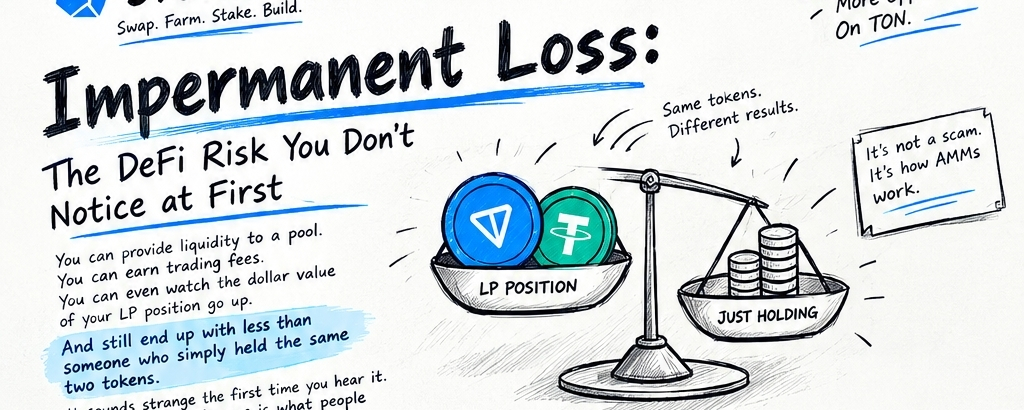
Непостійні втрати: ризик DeFi, який ви не помічаєте одразуВи можете надавати ліквідність пулу.
Ви можете заробляти торгові комісії.
Ви навіть можете стежити за тим, як зростає вартість у доларах вашої позиції LP.
І при цьому все одно отримати менше, ніж хтось, хто просто тримав ті самі два токени весь цей час.
Спочатку це звучить дивно, коли чуєш уперше.
Але саме ця непомітна різниця — те, що люди називають непостійними втратами.
Це один із тих концептів DeFi, який здається складним, доки ти насправді не розберешся, що відбувається всередині пулу. Коли ти бачиш це чітко, розуміти стає значно легше, і це стає набагато кориснішим.
Непостійні втрати: ризик DeFi, який ви не помічаєте одразу
Ви можете надавати ліквідність пулу.
Ви можете заробляти торгові комісії.
Ви навіть можете стежити за тим, як зростає вартість у доларах вашої позиції LP.
І при цьому все одно отримати менше, ніж хтось, хто просто тримав ті самі два токени весь цей час.
Спочатку це звучить дивно, коли чуєш уперше.
Але саме ця непомітна різниця — те, що люди називають непостійними втратами.
Це один із тих концептів DeFi, який здається складним, доки ти насправді не розберешся, що відбувається всередині пулу. Коли ти бачиш це чітко, розуміти стає значно легше, і це стає набагато кориснішим.
Ви можете заробляти торгові комісії.
Ви навіть можете стежити за тим, як зростає вартість у доларах вашої позиції LP.
І при цьому все одно отримати менше, ніж хтось, хто просто тримав ті самі два токени весь цей час.
Спочатку це звучить дивно, коли чуєш уперше.
Але саме ця непомітна різниця — те, що люди називають непостійними втратами.
Це один із тих концептів DeFi, який здається складним, доки ти насправді не розберешся, що відбувається всередині пулу. Коли ти бачиш це чітко, розуміти стає значно легше, і це стає набагато кориснішим.
1
293
·
--
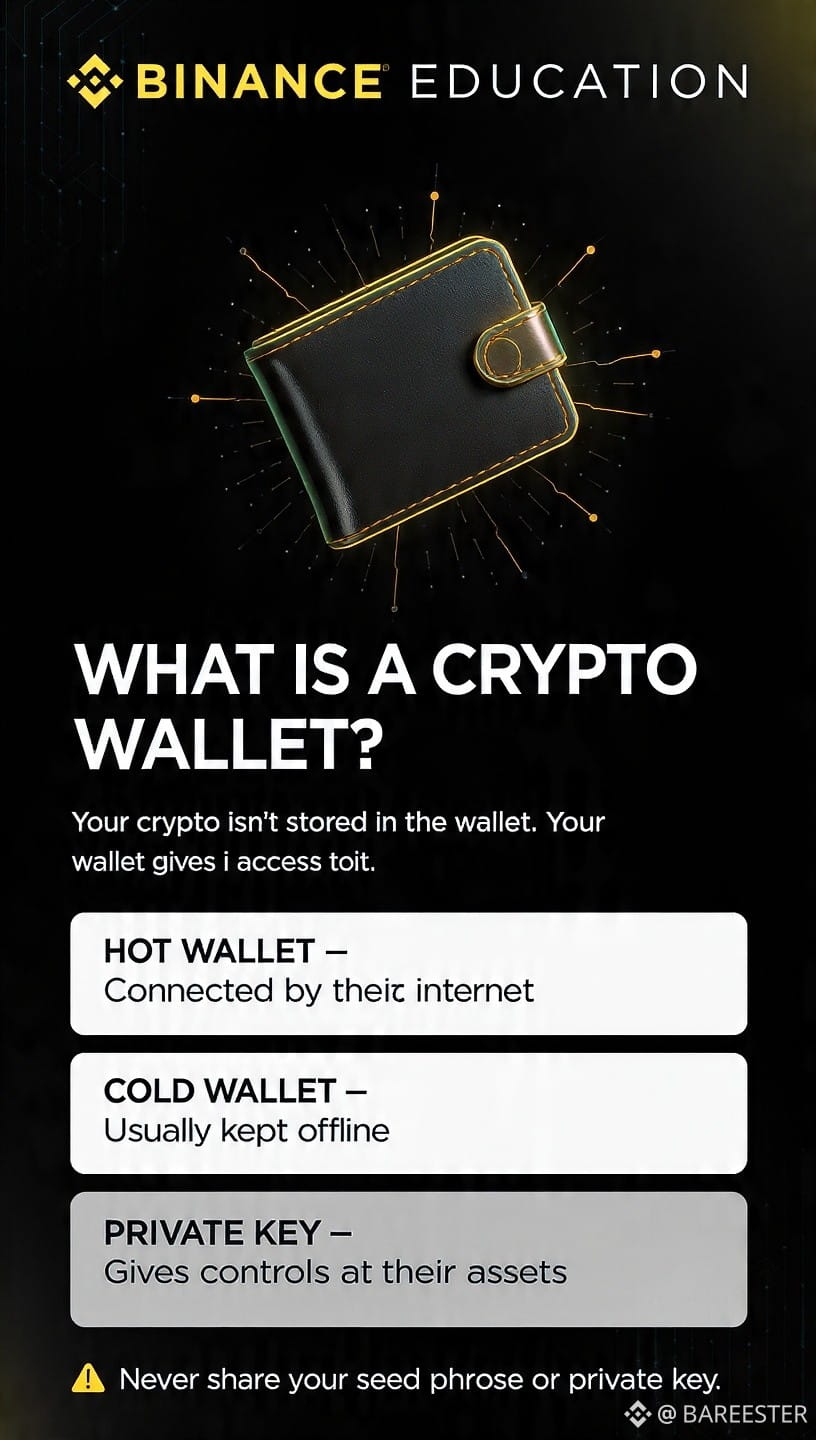
Що таке криптогаманець?
Якщо ви новачок у криптовалюті, ви будете чути слово «гаманeць» всюди.
Але криптогаманець насправді не зберігає ваші біткоїни чи USDT так само, як фізичний гаманець зберігає готівку.
Натомість він допомагає вам отримати доступ і керувати вашими криптоактивами в блокчейні.
Є два основні типи:
1. Гарячий гаманець
Підключений до інтернету.
Приклади: MetaMask, Trust Wallet.
Легко користуватися, але потрібно бути дуже уважним до безпеки.
2. Холодний гаманець
Зазвичай зберігається офлайн.
Приклади: апаратні гаманці.
Зазвичай їх використовують для надійнішої довгострокової безпеки.
Найважливіше?
Ваша seed-фраза/приватний ключ.
Хто б не контролював їх, потенційно може керувати вашими активами.
Тому ніколи не діліться своєю seed-фразою ні з ким — навіть із кимось, хто стверджує, що є підтримкою Binance.
У криптовалюті ви — власний банк.
Спочатку вчіться. Захищайте свої ключі. А потім інвестуйте.
#Binance #BinanceSquare #CryptoEducation #Crypto101 #Web3 #Blockchain #Bitcoin #Ethereum #DeFi #Crypto
Що таке криптогаманець?
Якщо ви новачок у криптовалюті, ви будете чути слово «гаманeць» всюди.
Але криптогаманець насправді не зберігає ваші біткоїни чи USDT так само, як фізичний гаманець зберігає готівку.
Натомість він допомагає вам отримати доступ і керувати вашими криптоактивами в блокчейні.
Є два основні типи:
1. Гарячий гаманець
Підключений до інтернету.
Приклади: MetaMask, Trust Wallet.
Легко користуватися, але потрібно бути дуже уважним до безпеки.
2. Холодний гаманець
Зазвичай зберігається офлайн.
Приклади: апаратні гаманці.
Зазвичай їх використовують для надійнішої довгострокової безпеки.
Найважливіше?
Ваша seed-фраза/приватний ключ.
Хто б не контролював їх, потенційно може керувати вашими активами.
Тому ніколи не діліться своєю seed-фразою ні з ким — навіть із кимось, хто стверджує, що є підтримкою Binance.
У криптовалюті ви — власний банк.
Спочатку вчіться. Захищайте свої ключі. А потім інвестуйте.
#Binance #BinanceSquare #CryptoEducation #Crypto101 #Web3 #Blockchain #Bitcoin #Ethereum #DeFi #Crypto
Якщо ви новачок у криптовалюті, ви будете чути слово «гаманeць» всюди.
Але криптогаманець насправді не зберігає ваші біткоїни чи USDT так само, як фізичний гаманець зберігає готівку.
Натомість він допомагає вам отримати доступ і керувати вашими криптоактивами в блокчейні.
Є два основні типи:
1. Гарячий гаманець
Підключений до інтернету.
Приклади: MetaMask, Trust Wallet.
Легко користуватися, але потрібно бути дуже уважним до безпеки.
2. Холодний гаманець
Зазвичай зберігається офлайн.
Приклади: апаратні гаманці.
Зазвичай їх використовують для надійнішої довгострокової безпеки.
Найважливіше?
Ваша seed-фраза/приватний ключ.
Хто б не контролював їх, потенційно може керувати вашими активами.
Тому ніколи не діліться своєю seed-фразою ні з ким — навіть із кимось, хто стверджує, що є підтримкою Binance.
У криптовалюті ви — власний банк.
Спочатку вчіться. Захищайте свої ключі. А потім інвестуйте.
#Binance #BinanceSquare #CryptoEducation #Crypto101 #Web3 #Blockchain #Bitcoin #Ethereum #DeFi #Crypto
1
91
·
--
Натрапив на Cryptobids.lol — просту платну таблицю лідерів для криптопроєктів.
Рейтинг визначається лише ставкою. Стартує з низького рівня, мультиблокчейн, без KYC. Будь-хто може перебити поточного №1, запропонувавши суму у 1,5 раза більшу.
Цікавий погляд на ринки уваги.
https://cryptobids.lol
Натрапив на Cryptobids.lol — просту платну таблицю лідерів для криптопроєктів.
Рейтинг визначається лише ставкою. Стартує з низького рівня, мультиблокчейн, без KYC. Будь-хто може перебити поточного №1, запропонувавши суму у 1,5 раза більшу.
Цікавий погляд на ринки уваги.
https://cryptobids.lol
Рейтинг визначається лише ставкою. Стартує з низького рівня, мультиблокчейн, без KYC. Будь-хто може перебити поточного №1, запропонувавши суму у 1,5 раза більшу.
Цікавий погляд на ринки уваги.
https://cryptobids.lol
77
·
--
Оптимістично
ДОБРОГО РАНКУ, ТРЕЙДЕРИ
Отже, сьогодні новий тиждень, новий день. Який у вас погляд на $BTC : БИЧИЙ чи МЕДВЕДЯЧИЙ?
ДОБРОГО РАНКУ, ТРЕЙДЕРИ
Отже, сьогодні новий тиждень, новий день. Який у вас погляд на $BTC : БИЧИЙ чи МЕДВЕДЯЧИЙ?
Отже, сьогодні новий тиждень, новий день. Який у вас погляд на $BTC : БИЧИЙ чи МЕДВЕДЯЧИЙ?

85
·
--
Стаття
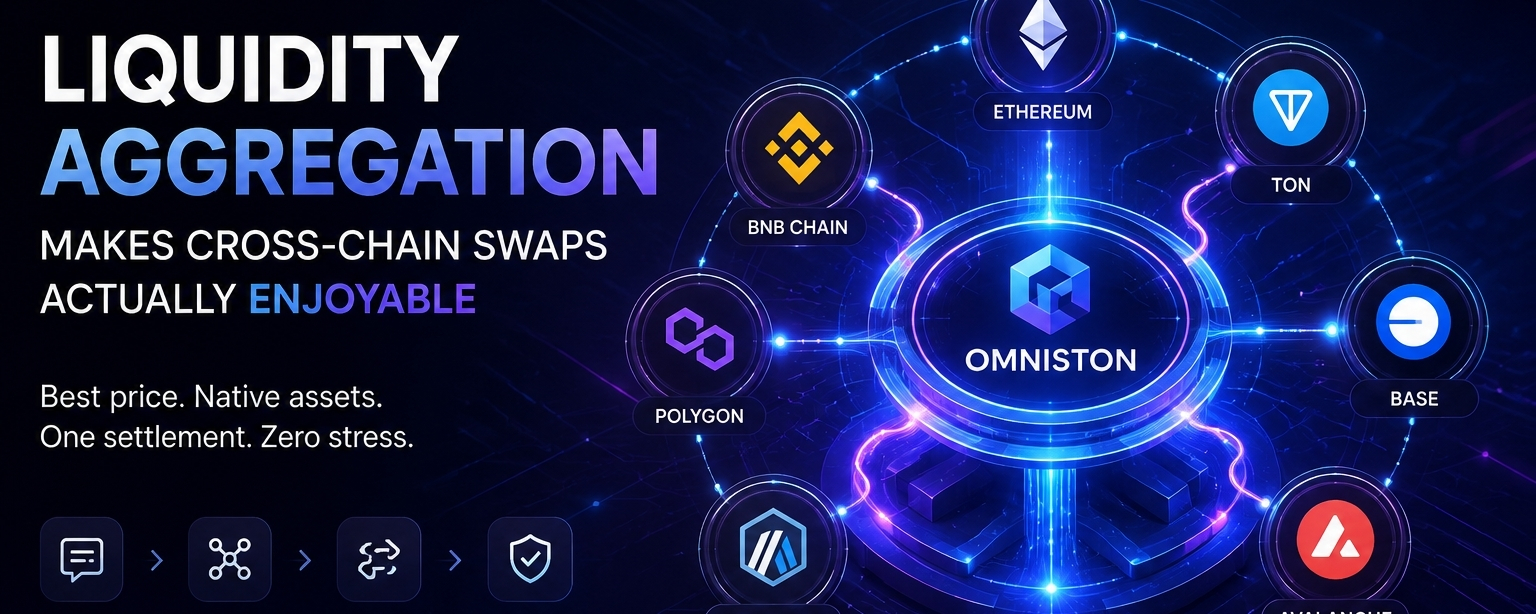
Як агрегація ліквідності робить кросчейн-обміни справді приємнимиДавайте чесно. @stonfi
Багато з нас пережили це:
Ви тримаєте токени в одному ланцюжку.
Можливість (або друг, або дохід) — десь в іншому місці.
Те, що мало б бути простим переміщенням, раптом перетворюється на багатокрокову смугу перешкод: мости, обгорнуті токени, кілька гаманців, комісії за газ у різних валютах — і тихий страх: «що, якщо щось застрягне десь посередині?»
Так виглядає реальність багатоланцюжкового світу.
І це саме та проблема, яку агрегація ліквідності покликана вирішувати.
Основна проблема простими словами
Як агрегація ліквідності робить кросчейн-обміни справді приємними
Давайте чесно. @STONfi DEX
Багато з нас пережили це:
Ви тримаєте токени в одному ланцюжку.
Можливість (або друг, або дохід) — десь в іншому місці.
Те, що мало б бути простим переміщенням, раптом перетворюється на багатокрокову смугу перешкод: мости, обгорнуті токени, кілька гаманців, комісії за газ у різних валютах — і тихий страх: «що, якщо щось застрягне десь посередині?»
Так виглядає реальність багатоланцюжкового світу.
І це саме та проблема, яку агрегація ліквідності покликана вирішувати.
Основна проблема простими словами
Багато з нас пережили це:
Ви тримаєте токени в одному ланцюжку.
Можливість (або друг, або дохід) — десь в іншому місці.
Те, що мало б бути простим переміщенням, раптом перетворюється на багатокрокову смугу перешкод: мости, обгорнуті токени, кілька гаманців, комісії за газ у різних валютах — і тихий страх: «що, якщо щось застрягне десь посередині?»
Так виглядає реальність багатоланцюжкового світу.
І це саме та проблема, яку агрегація ліквідності покликана вирішувати.
Основна проблема простими словами
1
78
·
--
Чи замислювалися ви, як STON.fi працює “за лаштунками”?
Більшість з нас звикли до Binance: ви виставляєте ордер на купівлю або продаж, і хтось з іншого боку приймає його. Просто.
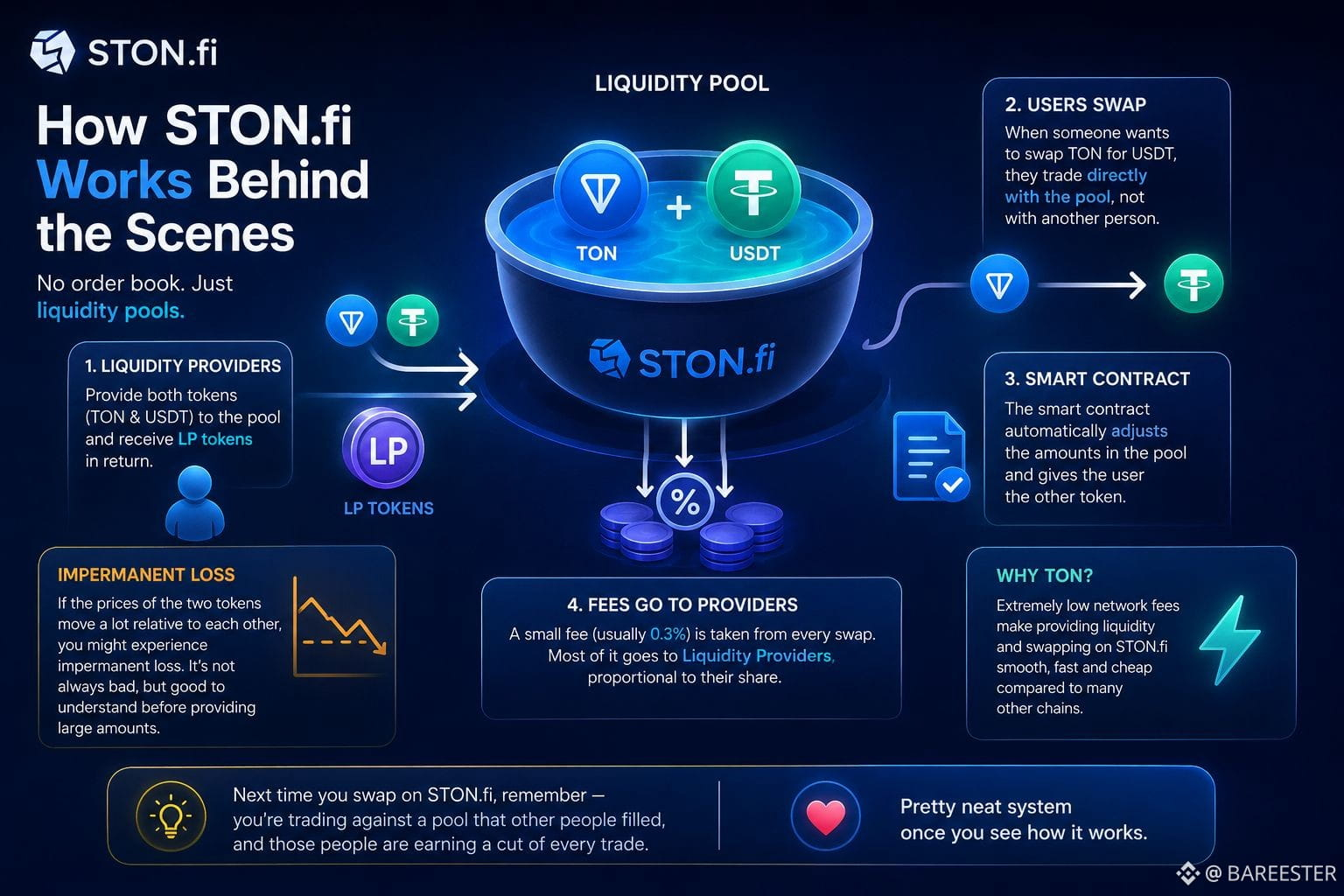
На @stonfi усе інакше. Немає книги ордерів. Натомість використовується те, що називається пулами ліквідності.
Уявіть пул ліквідності як великий спільний “котел” із двох токенів. Наприклад, в одному “котлі” можуть зберігатися TON та USDT. Люди, які хочуть заробляти (ми називаємо їх Liquidity Providers, тобто постачальники ліквідності), кладуть у “котел” обидва токени. У відповідь вони отримують LP-токени, які показують, яка частка “котла” належить їм.
Коли хтось приходить обміняти TON на USDT, він не торгує з іншою людиною. Він торгує безпосередньо з “котлом”. Смартконтракт просто коригує суми всередині й видає їм інший токен.
Кожного разу, коли відбувається обмін, знімається невелика комісія (зазвичай 0,3%). Більша частина цієї комісії одразу йде людям, які внесли кошти в пул. Чим більше ви внесли, тим більша ваша частка комісій.
Ось так люди й заробляють, просто надаючи ліквідність.
Але є один момент, який варто врахувати: якщо ціни двох токенів сильно рухаються відносно одне одного, ви можете зіткнутися з тим, що називається непостійними втратами (impermanent loss). Це не завжди погано, але варто розібратися перед тим, як вносити велику суму.
Найкрутіше у тому, що робити це на TON — дуже вигідно: мережеві комісії надзвичайно низькі, тож надання ліквідності та обміни відчуваються плавними й дешевими порівняно з багатьма іншими мережами.
Тож наступного разу, коли ви робитимете обмін на STON.fi, просто пам’ятайте: ви торгуєте проти пулу, який заповнили інші люди, і ці люди заробляють частку з кожної угоди.
Дуже непогана система, якщо розібратися, як вона працює.
#STONfi
Чи замислювалися ви, як STON.fi працює “за лаштунками”?
Більшість з нас звикли до Binance: ви виставляєте ордер на купівлю або продаж, і хтось з іншого боку приймає його. Просто.
На @STONfi DEX усе інакше. Немає книги ордерів. Натомість використовується те, що називається пулами ліквідності.
Уявіть пул ліквідності як великий спільний “котел” із двох токенів. Наприклад, в одному “котлі” можуть зберігатися TON та USDT. Люди, які хочуть заробляти (ми називаємо їх Liquidity Providers, тобто постачальники ліквідності), кладуть у “котел” обидва токени. У відповідь вони отримують LP-токени, які показують, яка частка “котла” належить їм.
Коли хтось приходить обміняти TON на USDT, він не торгує з іншою людиною. Він торгує безпосередньо з “котлом”. Смартконтракт просто коригує суми всередині й видає їм інший токен.
Кожного разу, коли відбувається обмін, знімається невелика комісія (зазвичай 0,3%). Більша частина цієї комісії одразу йде людям, які внесли кошти в пул. Чим більше ви внесли, тим більша ваша частка комісій.
Ось так люди й заробляють, просто надаючи ліквідність.
Але є один момент, який варто врахувати: якщо ціни двох токенів сильно рухаються відносно одне одного, ви можете зіткнутися з тим, що називається непостійними втратами (impermanent loss). Це не завжди погано, але варто розібратися перед тим, як вносити велику суму.
Найкрутіше у тому, що робити це на TON — дуже вигідно: мережеві комісії надзвичайно низькі, тож надання ліквідності та обміни відчуваються плавними й дешевими порівняно з багатьма іншими мережами.
Тож наступного разу, коли ви робитимете обмін на STON.fi, просто пам’ятайте: ви торгуєте проти пулу, який заповнили інші люди, і ці люди заробляють частку з кожної угоди.
Дуже непогана система, якщо розібратися, як вона працює.
#STONfi
Більшість з нас звикли до Binance: ви виставляєте ордер на купівлю або продаж, і хтось з іншого боку приймає його. Просто.
На @STONfi DEX усе інакше. Немає книги ордерів. Натомість використовується те, що називається пулами ліквідності.
Уявіть пул ліквідності як великий спільний “котел” із двох токенів. Наприклад, в одному “котлі” можуть зберігатися TON та USDT. Люди, які хочуть заробляти (ми називаємо їх Liquidity Providers, тобто постачальники ліквідності), кладуть у “котел” обидва токени. У відповідь вони отримують LP-токени, які показують, яка частка “котла” належить їм.
Коли хтось приходить обміняти TON на USDT, він не торгує з іншою людиною. Він торгує безпосередньо з “котлом”. Смартконтракт просто коригує суми всередині й видає їм інший токен.
Кожного разу, коли відбувається обмін, знімається невелика комісія (зазвичай 0,3%). Більша частина цієї комісії одразу йде людям, які внесли кошти в пул. Чим більше ви внесли, тим більша ваша частка комісій.
Ось так люди й заробляють, просто надаючи ліквідність.
Але є один момент, який варто врахувати: якщо ціни двох токенів сильно рухаються відносно одне одного, ви можете зіткнутися з тим, що називається непостійними втратами (impermanent loss). Це не завжди погано, але варто розібратися перед тим, як вносити велику суму.
Найкрутіше у тому, що робити це на TON — дуже вигідно: мережеві комісії надзвичайно низькі, тож надання ліквідності та обміни відчуваються плавними й дешевими порівняно з багатьма іншими мережами.
Тож наступного разу, коли ви робитимете обмін на STON.fi, просто пам’ятайте: ви торгуєте проти пулу, який заповнили інші люди, і ці люди заробляють частку з кожної угоди.
Дуже непогана система, якщо розібратися, як вона працює.
#STONfi
1
1
79
·
--

Стаття
Як реально залишатися в безпеці на TON DEX: практичний гайд із реальними показниками Trust ScoresБільшість втрат у криптовалюті на децентралізованих біржах не трапляються через хакерські атаки чи складні баги смартконтрактів.
Вони трапляються тому, що люди натискають «Swap», перш ніж перевірити щось.
У відкритій мережі (TON) ця проблема трапляється особливо часто. Нові токени з’являються щодня. Деякі з них — справжні проєкти. Багато — копії з мінімальними зусиллями або відверті пастки. Інтерфейс виглядає акуратно, цифри — захопливо, а бажання піддатися FOMO дуже сильне.
Хороша новина? У вас уже є безкоштовні інструменти, які можуть відфільтрувати більшість сміття менш ніж за 30 секунд. Один із найкращих — система Trust Score, вбудована безпосередньо в STON.fi, провідний DEX на TON, що працює завдяки DYOR.io.
Як реально залишатися в безпеці на TON DEX: практичний гайд із реальними показниками Trust Scores
Більшість втрат у криптовалюті на децентралізованих біржах не трапляються через хакерські атаки чи складні баги смартконтрактів.
Вони трапляються тому, що люди натискають «Swap», перш ніж перевірити щось.
У відкритій мережі (TON) ця проблема трапляється особливо часто. Нові токени з’являються щодня. Деякі з них — справжні проєкти. Багато — копії з мінімальними зусиллями або відверті пастки. Інтерфейс виглядає акуратно, цифри — захопливо, а бажання піддатися FOMO дуже сильне.
Хороша новина? У вас уже є безкоштовні інструменти, які можуть відфільтрувати більшість сміття менш ніж за 30 секунд. Один із найкращих — система Trust Score, вбудована безпосередньо в STON.fi, провідний DEX на TON, що працює завдяки DYOR.io.
Вони трапляються тому, що люди натискають «Swap», перш ніж перевірити щось.
У відкритій мережі (TON) ця проблема трапляється особливо часто. Нові токени з’являються щодня. Деякі з них — справжні проєкти. Багато — копії з мінімальними зусиллями або відверті пастки. Інтерфейс виглядає акуратно, цифри — захопливо, а бажання піддатися FOMO дуже сильне.
Хороша новина? У вас уже є безкоштовні інструменти, які можуть відфільтрувати більшість сміття менш ніж за 30 секунд. Один із найкращих — система Trust Score, вбудована безпосередньо в STON.fi, провідний DEX на TON, що працює завдяки DYOR.io.
1
1
234
·
--
Стаття
Omniston Explained: як STON.fi перетворює складну ліквідність на прості свопи для щоденних користувачівБільшість людей відчувають DeFi так само, як електрику: вони перемикають вимикач — і світло вмикається. Вони рідко замислюються про електростанції, лінії електропередач чи системи маршрутизації, які роблять це можливим.
Той самий принцип тепер формує найкращі враження від гаманців на TON.
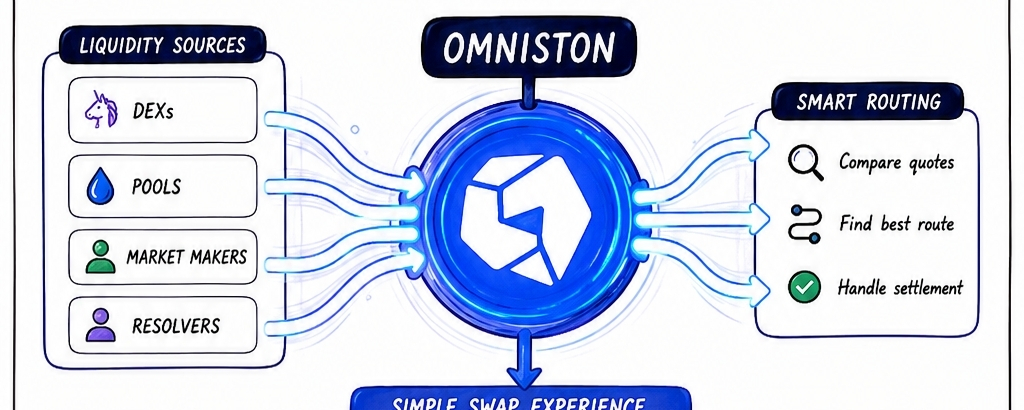
Відкрийте сучасний некастодіальний гаманець, виберіть два активи, наприклад NVDAx і AAPLx, введіть суму, перегляньте котирування та підтвердьте. Інтерфейс залишається охайним. Процес здається майже звичним. Але за цією простотою стоїть складна інфраструктура, яка називається Omniston, розроблена командою @stonfi .
Omniston Explained: як STON.fi перетворює складну ліквідність на прості свопи для щоденних користувачів
Більшість людей відчувають DeFi так само, як електрику: вони перемикають вимикач — і світло вмикається. Вони рідко замислюються про електростанції, лінії електропередач чи системи маршрутизації, які роблять це можливим.
Той самий принцип тепер формує найкращі враження від гаманців на TON.
Відкрийте сучасний некастодіальний гаманець, виберіть два активи, наприклад NVDAx і AAPLx, введіть суму, перегляньте котирування та підтвердьте. Інтерфейс залишається охайним. Процес здається майже звичним. Але за цією простотою стоїть складна інфраструктура, яка називається Omniston, розроблена командою @STONfi DEX .
Той самий принцип тепер формує найкращі враження від гаманців на TON.
Відкрийте сучасний некастодіальний гаманець, виберіть два активи, наприклад NVDAx і AAPLx, введіть суму, перегляньте котирування та підтвердьте. Інтерфейс залишається охайним. Процес здається майже звичним. Але за цією простотою стоїть складна інфраструктура, яка називається Omniston, розроблена командою @STONfi DEX .
1
98
·
--
STON.fi Щотижневий дайджест
Ще один сильний тиждень для екосистеми STON.fi — кросчейн DeFi продовжує розширюватися.
Ось що сталося:
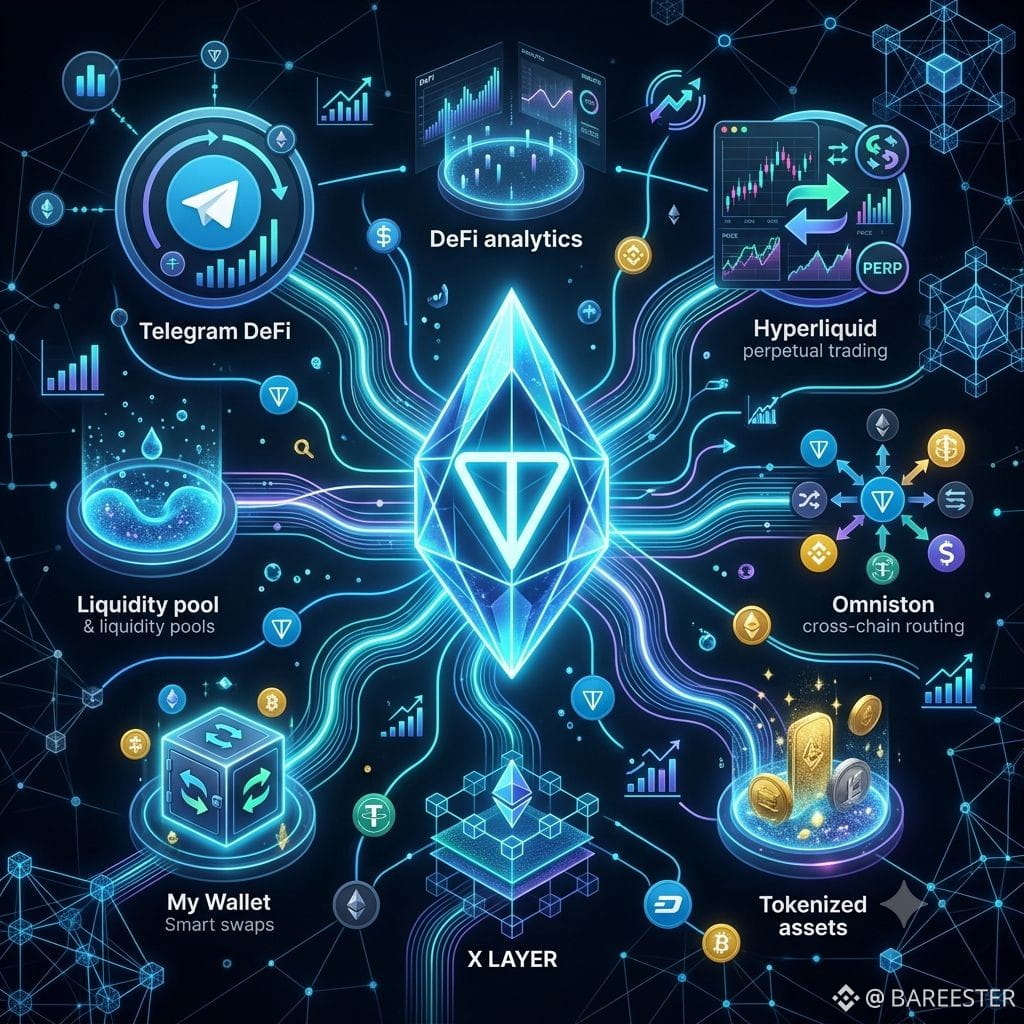
1. Новий рубіж відкрито
@stonfi тепер #4 серед ТОП-100 TON-додатків за кількістю щомісячно фінансово активних гаманців… і досі тримає позицію #1 серед DeFi-протоколів у TON.
2. Hyperliquid перпси з’явилися в Telegram
WenLong щойно зробив доступними в Telegram торгівлю з кредитним плечем на Hyperliquid. Omniston обробляє кросчейн маршрут TON → Arbitrum, тож усе працює плавно.
3. Розумніші свопи у My Wallet
Omniston тепер допомагає My Wallet порівнювати курси на кількох DEX у реальному часі та обирати кращі маршрути. Токенізовані активи на кшталт AAPLx, NVDAx і TSLAx також уже доступні.
4. X Layer приєднується до вечірки
Тепер підтримуються USDC і USDT0 на X Layer для кросчейн свопів між TON та іншими підключеними мережами.
5. Telegram DeFi-чат
STON.fi підключився разом із WenLong, Gram Store та DTrade, щоб поговорити про торгівлю, запуск токенів, DeFi та те, що може означати Gram Wallet для розробників.
Щотижневі показники
• Обсяг свопів: $20.9M
• TVL: $26.9M
• Заробіток LP: ~38,000
Поточні APR ферми
• USD₮/JETTON — 50%
• GRAM/JETTON — 27%
• STON/USD₮ — 14%
• STON/USD₮ Boost Farm — до 28%
Загальна картина доволі зрозуміла: TON DeFi стає більш пов’язаним, доступним і все більше вбудовується в ті застосунки, якими люди користуються щодня. Omniston непомітно бере на себе значну частину важкої роботи за цими з’єднаннями.
До зустрічі наступного тижня — більше створень, свопів і зростання попереду.
#web3 #Stonbassadors
STON.fi Щотижневий дайджест
Ще один сильний тиждень для екосистеми STON.fi — кросчейн DeFi продовжує розширюватися.
Ось що сталося:
1. Новий рубіж відкрито
@STONfi DEX тепер #4 серед ТОП-100 TON-додатків за кількістю щомісячно фінансово активних гаманців… і досі тримає позицію #1 серед DeFi-протоколів у TON.
2. Hyperliquid перпси з’явилися в Telegram
WenLong щойно зробив доступними в Telegram торгівлю з кредитним плечем на Hyperliquid. Omniston обробляє кросчейн маршрут TON → Arbitrum, тож усе працює плавно.
3. Розумніші свопи у My Wallet
Omniston тепер допомагає My Wallet порівнювати курси на кількох DEX у реальному часі та обирати кращі маршрути. Токенізовані активи на кшталт AAPLx, NVDAx і TSLAx також уже доступні.
4. X Layer приєднується до вечірки
Тепер підтримуються USDC і USDT0 на X Layer для кросчейн свопів між TON та іншими підключеними мережами.
5. Telegram DeFi-чат
STON.fi підключився разом із WenLong, Gram Store та DTrade, щоб поговорити про торгівлю, запуск токенів, DeFi та те, що може означати Gram Wallet для розробників.
Щотижневі показники
• Обсяг свопів: $20.9M
• TVL: $26.9M
• Заробіток LP: ~38,000
Поточні APR ферми
• USD₮/JETTON — 50%
• GRAM/JETTON — 27%
• STON/USD₮ — 14%
• STON/USD₮ Boost Farm — до 28%
Загальна картина доволі зрозуміла: TON DeFi стає більш пов’язаним, доступним і все більше вбудовується в ті застосунки, якими люди користуються щодня. Omniston непомітно бере на себе значну частину важкої роботи за цими з’єднаннями.
До зустрічі наступного тижня — більше створень, свопів і зростання попереду.
#web3 #Stonbassadors
Ще один сильний тиждень для екосистеми STON.fi — кросчейн DeFi продовжує розширюватися.
Ось що сталося:
1. Новий рубіж відкрито
@STONfi DEX тепер #4 серед ТОП-100 TON-додатків за кількістю щомісячно фінансово активних гаманців… і досі тримає позицію #1 серед DeFi-протоколів у TON.
2. Hyperliquid перпси з’явилися в Telegram
WenLong щойно зробив доступними в Telegram торгівлю з кредитним плечем на Hyperliquid. Omniston обробляє кросчейн маршрут TON → Arbitrum, тож усе працює плавно.
3. Розумніші свопи у My Wallet
Omniston тепер допомагає My Wallet порівнювати курси на кількох DEX у реальному часі та обирати кращі маршрути. Токенізовані активи на кшталт AAPLx, NVDAx і TSLAx також уже доступні.
4. X Layer приєднується до вечірки
Тепер підтримуються USDC і USDT0 на X Layer для кросчейн свопів між TON та іншими підключеними мережами.
5. Telegram DeFi-чат
STON.fi підключився разом із WenLong, Gram Store та DTrade, щоб поговорити про торгівлю, запуск токенів, DeFi та те, що може означати Gram Wallet для розробників.
Щотижневі показники
• Обсяг свопів: $20.9M
• TVL: $26.9M
• Заробіток LP: ~38,000
Поточні APR ферми
• USD₮/JETTON — 50%
• GRAM/JETTON — 27%
• STON/USD₮ — 14%
• STON/USD₮ Boost Farm — до 28%
Загальна картина доволі зрозуміла: TON DeFi стає більш пов’язаним, доступним і все більше вбудовується в ті застосунки, якими люди користуються щодня. Omniston непомітно бере на себе значну частину важкої роботи за цими з’єднаннями.
До зустрічі наступного тижня — більше створень, свопів і зростання попереду.
#web3 #Stonbassadors
2
94
·
--
Стаття
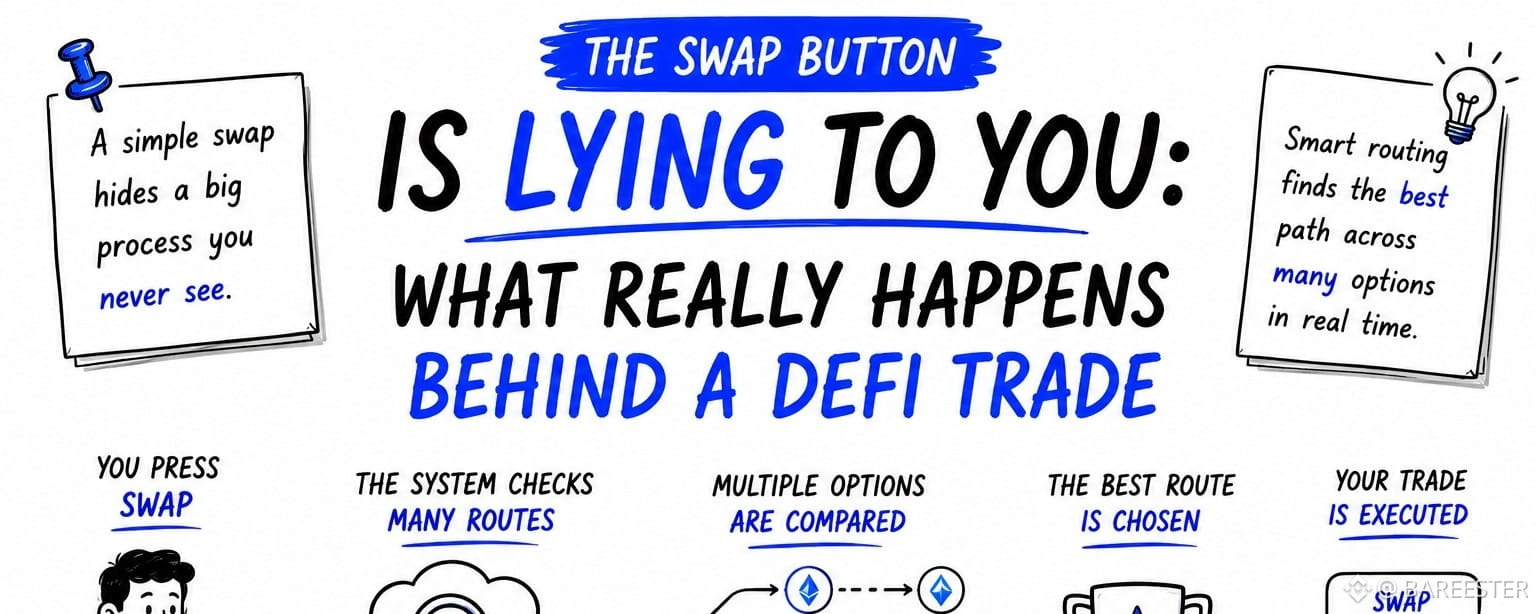
Кнопка Swap вводить тебе в оману: що насправді відбувається за DeFi-угодоюОбмін у DeFi виглядає майже надто просто.
Ти обираєш токен.
Ти вводиш суму.
Ти натискаєш Swap.
Через кілька секунд усе готово.
Але за цією простою кнопкою ховається значно важливіше питання:
Як система вирішує, куди має піти твоя угода?
Більшість людей ніколи про це не запитують. Розуміння відповіді змінює те, як ти бачиш децентралізовані біржі.
У DeFi не існує єдиної ціни
Припустімо, ти хочеш обміняти USDT на TON.
Можливо, ти думаєш, що існує одна чітка ринкова ціна.
Немає.
Ліквідність (гроші в пулах, готові до торгівлі) розподілена по багатьох місцях:
Кнопка Swap вводить тебе в оману: що насправді відбувається за DeFi-угодою
Обмін у DeFi виглядає майже надто просто.
Ти обираєш токен.
Ти вводиш суму.
Ти натискаєш Swap.
Через кілька секунд усе готово.
Але за цією простою кнопкою ховається значно важливіше питання:
Як система вирішує, куди має піти твоя угода?
Більшість людей ніколи про це не запитують. Розуміння відповіді змінює те, як ти бачиш децентралізовані біржі.
У DeFi не існує єдиної ціни
Припустімо, ти хочеш обміняти USDT на TON.
Можливо, ти думаєш, що існує одна чітка ринкова ціна.
Немає.
Ліквідність (гроші в пулах, готові до торгівлі) розподілена по багатьох місцях:
Ти обираєш токен.
Ти вводиш суму.
Ти натискаєш Swap.
Через кілька секунд усе готово.
Але за цією простою кнопкою ховається значно важливіше питання:
Як система вирішує, куди має піти твоя угода?
Більшість людей ніколи про це не запитують. Розуміння відповіді змінює те, як ти бачиш децентралізовані біржі.
У DeFi не існує єдиної ціни
Припустімо, ти хочеш обміняти USDT на TON.
Можливо, ти думаєш, що існує одна чітка ринкова ціна.
Немає.
Ліквідність (гроші в пулах, готові до торгівлі) розподілена по багатьох місцях:
1
92
·
--
STON.fi потрапив у топ-4 на TON Ось що насправді означає це ранжування
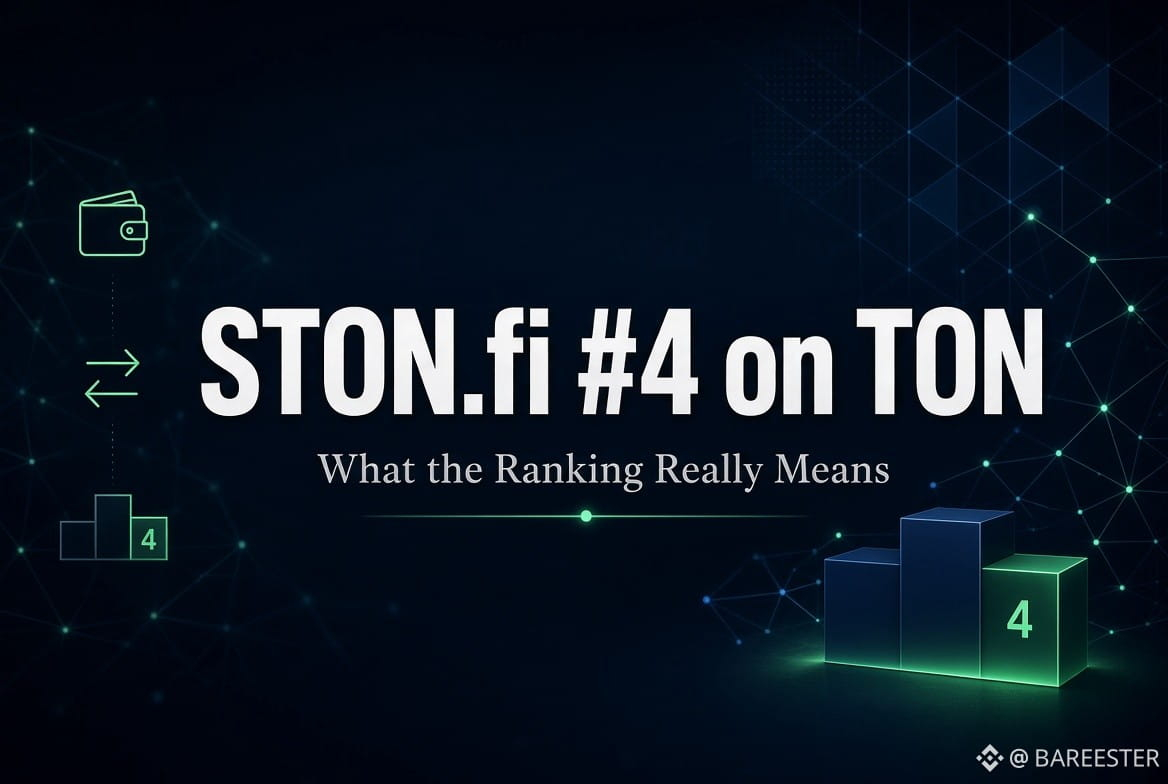
@stonfi щойно посів 4 місце серед усіх TON-додатків за кількістю щомісячних фінансово активних гаманців.
Але що це означає насправді?
Фінансово активний гаманець — це не просто людина, яка один раз підключилась або поблукала десь по сторінках.
Це означає гаманець, який здійснив реальну фінансову активність: у цьому випадку — обмін активами на STON.fi.
Цього місяця рівно так зробили близько 14 000 гаманців.
Це ставить STON.fi прямо позаду великих централізованих гравців на кшталт Bybit… і на 1 місці серед усіх DeFi-протоколів на TON.
Чому це важливо:
- Це реальні ончейн-користувачі, а не «показники заради показників»
- Люди повертаються, щоб робити обміни знову і знову
- Усе відбувається з повним самокастодієм — користувачі зберігають контроль над своїми активами весь час
Немає потреби вносити кошти на централізовану біржу лише щоб укласти угоду.
В ширшій картині справа не лише в тому, що «STON.fi на 4 місці».
Справа в тому, що реальне використання + реальні транзакції + самокастодій — це те, як виглядає справжнє впровадження DeFi на TON.
До цього вже долучились 14 000 гаманців.
#STONfi #TONBlockchain
STON.fi потрапив у топ-4 на TON Ось що насправді означає це ранжування
@STONfi DEX щойно посів 4 місце серед усіх TON-додатків за кількістю щомісячних фінансово активних гаманців.
Але що це означає насправді?
Фінансово активний гаманець — це не просто людина, яка один раз підключилась або поблукала десь по сторінках.
Це означає гаманець, який здійснив реальну фінансову активність: у цьому випадку — обмін активами на STON.fi.
Цього місяця рівно так зробили близько 14 000 гаманців.
Це ставить STON.fi прямо позаду великих централізованих гравців на кшталт Bybit… і на 1 місці серед усіх DeFi-протоколів на TON.
Чому це важливо:
- Це реальні ончейн-користувачі, а не «показники заради показників»
- Люди повертаються, щоб робити обміни знову і знову
- Усе відбувається з повним самокастодієм — користувачі зберігають контроль над своїми активами весь час
Немає потреби вносити кошти на централізовану біржу лише щоб укласти угоду.
В ширшій картині справа не лише в тому, що «STON.fi на 4 місці».
Справа в тому, що реальне використання + реальні транзакції + самокастодій — це те, як виглядає справжнє впровадження DeFi на TON.
До цього вже долучились 14 000 гаманців.
#STONfi #TONBlockchain
@STONfi DEX щойно посів 4 місце серед усіх TON-додатків за кількістю щомісячних фінансово активних гаманців.
Але що це означає насправді?
Фінансово активний гаманець — це не просто людина, яка один раз підключилась або поблукала десь по сторінках.
Це означає гаманець, який здійснив реальну фінансову активність: у цьому випадку — обмін активами на STON.fi.
Цього місяця рівно так зробили близько 14 000 гаманців.
Це ставить STON.fi прямо позаду великих централізованих гравців на кшталт Bybit… і на 1 місці серед усіх DeFi-протоколів на TON.
Чому це важливо:
- Це реальні ончейн-користувачі, а не «показники заради показників»
- Люди повертаються, щоб робити обміни знову і знову
- Усе відбувається з повним самокастодієм — користувачі зберігають контроль над своїми активами весь час
Немає потреби вносити кошти на централізовану біржу лише щоб укласти угоду.
В ширшій картині справа не лише в тому, що «STON.fi на 4 місці».
Справа в тому, що реальне використання + реальні транзакції + самокастодій — це те, як виглядає справжнє впровадження DeFi на TON.
До цього вже долучились 14 000 гаманців.
#STONfi #TONBlockchain
1
83
·
--
прочитайте цього хлопця
прочитайте цього хлопця
BAREESTER
·
--
Правдива історія частки STON.fi у TON DEX — 78%
Останнім часом я багато часу витрачаю на аналіз даних TON DeFi, і одна цифра постійно впадала в око:
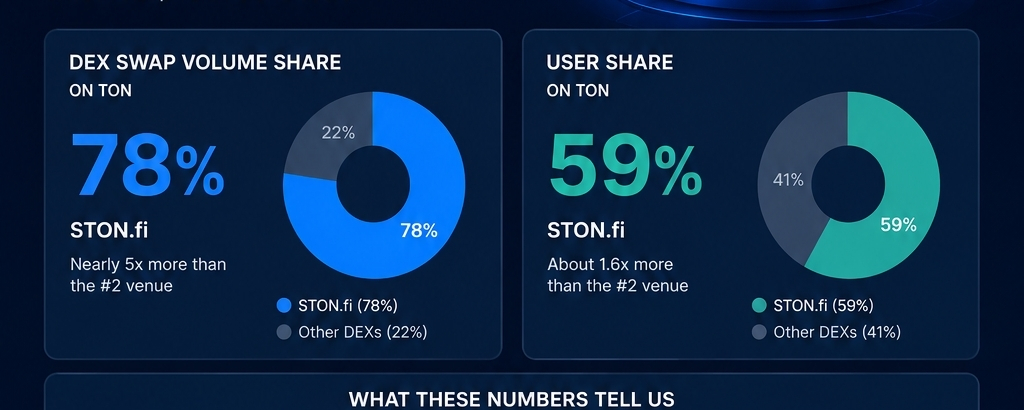
@STONfi DEX обробляє близько 78% обсягу свопів TON на DEX.
Це майже в 5 разів більше, ніж майданчик із другим за величиною обсягом.
Також це приблизно 59% користувачів серед порівнюваних TON DEX-протоколів.
На перший погляд, ці цифри виглядають вражаюче.
Але я хотів(ла) зрозуміти щось важливіше:
Що насправді означають ці цифри?
А чого вони не кажуть нам?
Що насправді означає обсяг DEX
DEX — це просто децентралізована біржа, де користувачі можуть обмінювати токени без централізованої біржі посередині.
@STONfi DEX обробляє близько 78% обсягу свопів TON на DEX.
Це майже в 5 разів більше, ніж майданчик із другим за величиною обсягом.
Також це приблизно 59% користувачів серед порівнюваних TON DEX-протоколів.
На перший погляд, ці цифри виглядають вражаюче.
Але я хотів(ла) зрозуміти щось важливіше:
Що насправді означають ці цифри?
А чого вони не кажуть нам?
Що насправді означає обсяг DEX
DEX — це просто децентралізована біржа, де користувачі можуть обмінювати токени без централізованої біржі посередині.
1
12
·
--
Стаття
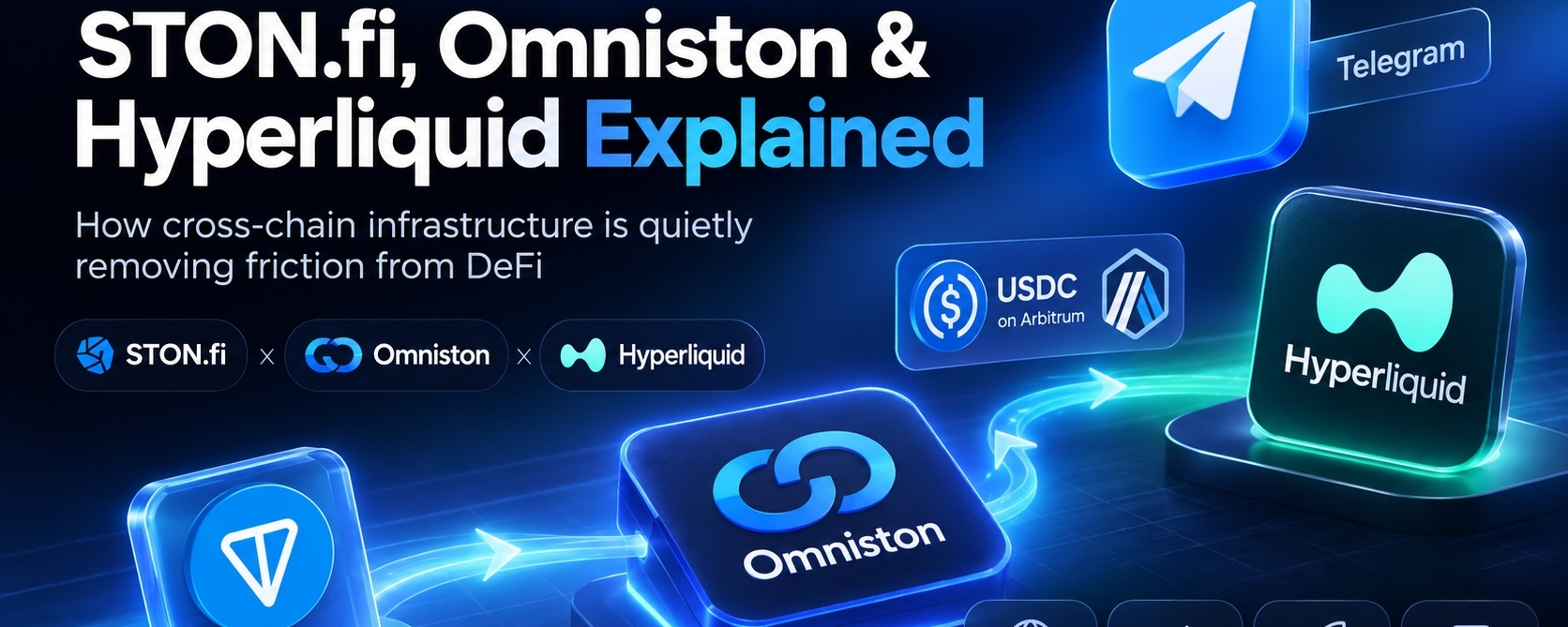
STON.fi, Omniston і Hyperliquid пояснено
Як кросчейн-інфраструктура непомітно зменшує тертя в DeFi
Якщо ви новачок у кросчейн DeFi, ця тема може здаватися складною на перший погляд. Але щойно ви побачите, як окремі частини поєднуються, усе дивовижно стає простим.
TON. Omniston. Arbitrum. Hyperliquid. Telegram.
Що саме робить кожен із них? Давайте розберемо це чітко.
1. Що таке @stonfi ?
STON.fi — це децентралізована екосистема бірж, побудована на блокчейні TON. По суті, вона дозволяє користувачам обмінювати токени та отримувати доступ до децентралізованої ліквідності, не покладаючись на централізовану біржу.
Як кросчейн-інфраструктура непомітно зменшує тертя в DeFi
Якщо ви новачок у кросчейн DeFi, ця тема може здаватися складною на перший погляд. Але щойно ви побачите, як окремі частини поєднуються, усе дивовижно стає простим.
TON. Omniston. Arbitrum. Hyperliquid. Telegram.
Що саме робить кожен із них? Давайте розберемо це чітко.
1. Що таке @STONfi DEX ?
STON.fi — це децентралізована екосистема бірж, побудована на блокчейні TON. По суті, вона дозволяє користувачам обмінювати токени та отримувати доступ до децентралізованої ліквідності, не покладаючись на централізовану біржу.
STON.fi, Omniston і Hyperliquid пояснено
Як кросчейн-інфраструктура непомітно зменшує тертя в DeFi
Якщо ви новачок у кросчейн DeFi, ця тема може здаватися складною на перший погляд. Але щойно ви побачите, як окремі частини поєднуються, усе дивовижно стає простим.
TON. Omniston. Arbitrum. Hyperliquid. Telegram.
Що саме робить кожен із них? Давайте розберемо це чітко.
1. Що таке @STONfi DEX ?
STON.fi — це децентралізована екосистема бірж, побудована на блокчейні TON. По суті, вона дозволяє користувачам обмінювати токени та отримувати доступ до децентралізованої ліквідності, не покладаючись на централізовану біржу.
1
91
·
--
ДОБРОГО РАНКУ, ХЛОПЦІ
НАРЕШТІ Я ЗАКІНЧИВ(ЛА) 🎓
ПОКІНЧЕНО Й ПОРОЗМЕТЕНО
ДОБРОГО РАНКУ, ХЛОПЦІ
НАРЕШТІ Я ЗАКІНЧИВ(ЛА) 🎓
ПОКІНЧЕНО Й ПОРОЗМЕТЕНО
НАРЕШТІ Я ЗАКІНЧИВ(ЛА) 🎓
ПОКІНЧЕНО Й ПОРОЗМЕТЕНО

1
18
·
--
Стаття
Правдива історія частки STON.fi у TON DEX — 78%Останнім часом я багато часу витрачаю на аналіз даних TON DeFi, і одна цифра постійно впадала в око:
@stonfi обробляє близько 78% обсягу свопів TON на DEX.
Це майже в 5 разів більше, ніж майданчик із другим за величиною обсягом.
Також це приблизно 59% користувачів серед порівнюваних TON DEX-протоколів.
На перший погляд, ці цифри виглядають вражаюче.
Але я хотів(ла) зрозуміти щось важливіше:
Що насправді означають ці цифри?
А чого вони не кажуть нам?
Що насправді означає обсяг DEX
DEX — це просто децентралізована біржа, де користувачі можуть обмінювати токени без централізованої біржі посередині.
Правдива історія частки STON.fi у TON DEX — 78%
Останнім часом я багато часу витрачаю на аналіз даних TON DeFi, і одна цифра постійно впадала в око:
@STONfi DEX обробляє близько 78% обсягу свопів TON на DEX.
Це майже в 5 разів більше, ніж майданчик із другим за величиною обсягом.
Також це приблизно 59% користувачів серед порівнюваних TON DEX-протоколів.
На перший погляд, ці цифри виглядають вражаюче.
Але я хотів(ла) зрозуміти щось важливіше:
Що насправді означають ці цифри?
А чого вони не кажуть нам?
Що насправді означає обсяг DEX
DEX — це просто децентралізована біржа, де користувачі можуть обмінювати токени без централізованої біржі посередині.
@STONfi DEX обробляє близько 78% обсягу свопів TON на DEX.
Це майже в 5 разів більше, ніж майданчик із другим за величиною обсягом.
Також це приблизно 59% користувачів серед порівнюваних TON DEX-протоколів.
На перший погляд, ці цифри виглядають вражаюче.
Але я хотів(ла) зрозуміти щось важливіше:
Що насправді означають ці цифри?
А чого вони не кажуть нам?
Що насправді означає обсяг DEX
DEX — це просто децентралізована біржа, де користувачі можуть обмінювати токени без централізованої біржі посередині.
1
1
81
·
--
Як легко обміняти USDT з TON на Ethereum на STON.fiЕй, хлопці,
Давайте чесно на хвилинку.
Переміщення USDT з одного блокчейну на інший раніше відчувалося як робота на повний день. Ви відкривали міст, під’єднували один гаманець, надсилали токени, чекали, потім під’єднували інший гаманець, забирали токени й сподівалися, що посередині нічого не піде не так. Це було нервово, особливо якщо ви мали справу з пристойними сумами.
Але все змінюється.
На @stonfi тепер ви можете обміняти USDT з блокчейну TON прямо на Ethereum в одному плавному процесі. Без окремого моста. Без переходів між п’ятьма різними сайтами. Лише один інтерфейс.
Як легко обміняти USDT з TON на Ethereum на STON.fi
Ей, хлопці,
Давайте чесно на хвилинку.
Переміщення USDT з одного блокчейну на інший раніше відчувалося як робота на повний день. Ви відкривали міст, під’єднували один гаманець, надсилали токени, чекали, потім під’єднували інший гаманець, забирали токени й сподівалися, що посередині нічого не піде не так. Це було нервово, особливо якщо ви мали справу з пристойними сумами.
Але все змінюється.
На @STONfi DEX тепер ви можете обміняти USDT з блокчейну TON прямо на Ethereum в одному плавному процесі. Без окремого моста. Без переходів між п’ятьма різними сайтами. Лише один інтерфейс.
Давайте чесно на хвилинку.
Переміщення USDT з одного блокчейну на інший раніше відчувалося як робота на повний день. Ви відкривали міст, під’єднували один гаманець, надсилали токени, чекали, потім під’єднували інший гаманець, забирали токени й сподівалися, що посередині нічого не піде не так. Це було нервово, особливо якщо ви мали справу з пристойними сумами.
Але все змінюється.
На @STONfi DEX тепер ви можете обміняти USDT з блокчейну TON прямо на Ethereum в одному плавному процесі. Без окремого моста. Без переходів між п’ятьма різними сайтами. Лише один інтерфейс.
1
99
Увійдіть, щоб переглянути інший контент
Приєднуйтесь до користувачів криптовалют по всьому світу на Binance Square
⚡️ Отримуйте актуальну та корисну інформацію про криптовалюти.
💬 Приєднуйтесь до найбільшої у світі криптобіржі.
👍 Відкрийте справжні ідеї від перевірених авторів.
Електронна пошта / номер телефону
Трендові теми
fomcвідстеження
59,020 переглядів
369 обговорюють
28 жовтня ФРС вирішує по ставці
29 жовтня виходять PCE за вересень і ВВП за третій квартал
тобто рішення приймуть, не побачивши ні того, ні іншого. в моєму #fomcвідстеження це зара головне
шо в них буде на столі:
- payrolls, які вже вийшли: +29,000
- CPI за вересень 14 жовтня, останнє велике число перед рішенням
прогнозів на цьому засіданні нема, наступні тільки 8-9 грудня
ринок уже переставився. на Kalshi підвищення в жовтні близько 18%, в грудні близько 71%
підвищення не скасували, його відклали
а шатдаун із затримкою даних, шо гуляє по стрічці, це 2025 рік. цього року уряд профінансований до 11 грудня
думка та сама, шо минулого разу: в жовтні пауза
$BTC
у мене досі нуль, BNB і стейбли лежать у Flexible і на календар не реагують)
14 жовтня розбираю CPI тут, в цьому тегу, останній розбір перед рішенням, фоловте
#FOMC #cpi #Fed
abobka
·9 вподобань
·3k переглядів
ADAGains10%Above$0.27
4,628 переглядів
119 обговорюють
ETHUp70%InQ3ButLiquidityFalls
53,812 переглядів
645 обговорюють