
Bullionist 1
156 Публікації

Bullionist 1
Поскаржитись
Заблокувати користувача
$SOL Holder 🤝|| CMC KOL || Tg~ @irtaxa17
0 Підписки
9 Підписники
4 Вподобань
Публікації
·
--
Переглянути переклад
AI Agents Are Being Exposed 🤖
AI agents are finally facing something more interesting than another benchmark.
An actual competition where their actions need cryptographic evidence.
zkVerify's Agent Games has entered its live competition phase, with matches running throughout November.
And one challenge particularly caught my attention.
Steal the VFY.
Two autonomous agents compete over a shared token balance.
But here's the twist.
They must commit to their strategies before competing.
Each move comes with a zero-knowledge proof demonstrating that it followed the committed strategy.
That evidence is then verified through the competition's infrastructure.
No quietly changing strategies halfway through.
No relying solely on an agent's claims about what happened.
With autonomous finance becoming increasingly relevant to ecosystems like $HYPE I think experiments like this highlight an important security principle.
Agents need accountability that extends beyond performance metrics.
That's where zkVerify's specialized verification infrastructure becomes interesting.
$VFY also plays a role in the competition's 400,000-token prize pool.
To me, Agent Games demonstrates how cryptographic verification can be applied to real autonomous behavior.
Because the next generation of AI shouldn't just demonstrate intelligence.
It should provide evidence that its actions followed the rules.
#AI #Altcoin Season#
·
--
Переглянути переклад
Who Verifies The Valuation? 🏦
Imagine a financial institution tokenizing a portfolio worth millions.
The assets are represented on-chain, transactions are visible, and ownership can be tracked.
Sounds great.
But here's the question I'd ask:
Who verifies the calculations supporting the portfolio's valuation?
The underlying financial records might contain confidential positions, private credit information, or sensitive collateral details.
Those records can't simply be made public.
This is where I think the next stage of RWA infrastructure gets interesting.
As $ONDO continues building within the tokenization sector, the importance of reliable off-chain financial information becomes increasingly clear.
Space and Time Enterprise introduces a way for institutions to generate cryptographic proofs for supported financial calculations while keeping their underlying records private.
Investors, lenders, and counterparties can verify the computations against trusted data commitments without requiring unrestricted access to confidential information.
That opens up interesting possibilities for asset valuations, collateral checks, and private credit applications.
I've never viewed tokenization as simply putting traditional assets onto blockchain networks.
The bigger opportunity is improving the infrastructure supporting those assets.
And verifiable financial calculations could become an important part of that transition.
#Altcoin Season#
57
·
--
Переглянути переклад
AI Agents Need More Than A Wallet 🤖
$FET helped bring autonomous agents into the crypto conversation. $NIGHT is building privacy infrastructure that makes those systems more useful for real-world applications.
Imagine an AI agent managing financial activity.
It needs to verify balances.
Check eligibility.
Execute transactions.
Prove that specific rules were followed.
But it doesn't need to publish every sensitive input behind those decisions.
That's where programmable privacy becomes powerful.
Midnight allows developers to design applications where private information remains protected while zero-knowledge proofs verify required conditions.
The result is a different model for autonomous finance.
Private inputs.
Verifiable actions.
Selective disclosure.
AI is making financial activity more automated. Midnight is building the privacy layer that automation needs.
That's a powerful intersection for the next generation of blockchain applications.
#AI #Privacy
68
·
--
Переглянути переклад
NYSE + Nasdaq. Pyth Hits $13.67M ARR 📈
The 24/7 perp market around $HYPE and the growing interest in tokenized equities around $ONDO make this NYSE announcement particularly interesting.
Wall Street's biggest exchanges are choosing Pyth as a distribution channel for real-time data, right as crypto applications increasingly need access to those markets.
NYSE just selected Pyth to distribute real-time equity data across all five NYSE Group exchanges.
Nasdaq Basic was already available through Pyth's Data Marketplace.
I think people are seriously underestimating the significance of having both exchange brands in the same infrastructure.
These institutions have spent decades building proprietary market-data businesses. Getting approved to distribute their products requires a level of institutional credibility that most crypto infrastructure companies haven't demonstrated.
And Pyth is securing these relationships while its own commercial business is accelerating.
Look at the numbers:
→ $6.16M ARR at the end of Q2
→ $11.49M ARR at the end of Q3
→ $13.67M ARR by October
→ 332 paying accounts
That's more than 2x ARR growth in four months.
Now add the 100% Rule. Every dollar the Pyth DAO receives from Pyth products is committed to accumulating PYTH, including open-market purchases funded by stablecoin receipts.
What makes me particularly bullish is how these developments reinforce Pyth's institutional position.
NYSE and Nasdaq give the Marketplace two enormously credible distribution relationships. The growing subscription business shows customers are already willing to pay for Pyth's broader products.
I'll be watching how many more financial institutions choose this distribution channel.
Pyth is getting the kind of recognition that could make the next institutional conversation considerably easier.
#Altcoin Season# #RWA
52
·
--
Переглянути переклад
Nasdaq And NYSE Now Distribute Through Pyth 📈
The institutional story behind $PYTH just got substantially stronger. For high-speed financial apps in ecosystems like $SUI , the next competitive challenge is getting reliable traditional-market data into the software people actually trade with.
Pyth has now brought two of America's most important exchange-data products into its Marketplace.
September 22: Pyth became an approved external distributor of Nasdaq Basic.
Now: NYSE has selected Pyth to distribute NYSE BQT, covering its five equity exchanges and trade reporting data.
I wouldn't underestimate the difficulty of getting this kind of institutional distribution access.
Traditional exchanges protect their proprietary data carefully. They have established licensing frameworks, commercial relationships and compliance requirements that don't disappear simply because a crypto company wants to offer tokenized stocks.
Pyth is creating a modern channel for that data while the exchanges retain their licensing control.
Applications can reach both exchange brands through the Pyth Data Marketplace, subject to the relevant agreements.
What makes this especially interesting is the pace of progress. Pyth's ARR climbed from $6.16M at the end of Q2 to $13.67M in October.
I suspect the next major wave of financial applications will care enormously about who can deliver licensed exchange data through software-friendly infrastructure.
Pyth has now secured relationships with both Nasdaq and NYSE.
That's a formidable position to build from.
#Altcoin Season# #RWA
48
·
--
Переглянути переклад
AI Agents Need Their Own Hardware 🖥️
Imagine running an AI agent that reasons, makes decisions and executes onchain for your business every day.
Projects like $VVV have already proven there's real demand for private inference that doesn't depend on big tech.
But that inference still has to run on physical machines somewhere.
And right now most of that compute is rented.
Frontier labs have locked up hyperscaler capacity years in advance, while smaller teams wait in line for chips.
That's something I find concerning.
If you don't own the hardware, you don't really own the intelligence.
This is where B3IQ becomes particularly interesting.
It lets anyone buy a bare-metal NVIDIA GPU machine, have it hosted, and rent out idle capacity so the machine helps pay for itself.
Owners finance the fleet, while teams rent the compute.
On top of that, B3OS gives agents a deterministic way to execute onchain with real funds.
That's why I'm keeping $B3 on my radar, since it covers the full stack from the metal to the agents.
Of course, owning a GPU doesn't guarantee demand for it.
Utilization still decides whether the economics work, and I believe that's an important distinction.
AI might become the most valuable resource of this cycle, but it shouldn't belong only to the few who own the data centers.
#AI #Altcoin Season#
51
·
--
Nasdaq закрився, а індекс продовжив торгуватися 🌙
$PYTH і $ONDO працюють над тим, щоб перенести ціни акцій ончейн. Індекси Bankr щойно показали, що відбувається, коли ціни продовжують змінюватися після закриття біржі.
Коли наприкінці жовтня після закриття торгів акції GOOGL подешевшали, ончейн-ринок переоцінив їх задовго до повторного відкриття Волл-стріт. Засновник зазначив, що обидва індекси на Bankr змінилися так само. MAG7 на Robinhood Chain і AI12 на Base врахували падіння в реальному часі, адже обидва торгуються цілодобово через Bankr Index Hook.
Це визначення ціни для цілого кошика активів. Власник MAG7 побачив, як зміна відобразилася в одному токені, у час, коли жоден традиційний індексний фонд не міг торгуватися.
Той самий режим діє для кожної монети, що торгується в парі з цими індексами, тож мемкоїн, ціна якого визначається в MAG7, переймає ціну Big Tech, яка безперервно оновлюється.
Після закриття біржі в книгах ордерів може бути мало заявок, ончейн-ціни можуть перевищити офіційну ціну на відкритті, і ніщо з цього не є стратегією, яку можна повторювати. Токенізовані акції доступні лише користувачам, які відповідають вимогам і перебувають за межами США та Великої Британії.
Волл-стріт і далі закривається о четвертій. Індекси RWA, побудовані на її основі на Base і Robinhood Chain, продовжують працювати.
#RWA #Base
77
·
--
Переглянути переклад
Your Identity Shouldn't Cost Your Privacy 🔐
I've been thinking about something that could become increasingly important as social platforms evolve into financial markets.
How much personal information should someone need to reveal before others can trust them?
Ecosystems like $SOL have made participating in onchain markets easier than ever.
But when creators, communities and traders interact financially, identity becomes a much bigger part of the equation.
And this is where Zora has an interesting approach.
Rather than treating every token as an anonymous asset, Zora connects Creator Coins to recognizable profiles.
Users can link external social accounts to establish a clearer connection between their online identity and their Zora presence.
Profiles also bring together content, market activity and community interactions.
Here's what I find particularly interesting.
A creator doesn't necessarily need to reveal their real-world identity to build a recognizable market presence.
Their public profile, linked accounts and participation can provide useful context for traders.
Of course, linked social accounts aren't cryptographic guarantees of someone's identity, and public blockchain activity still carries privacy considerations.
But I like the direction.
Zora is building an environment where identity and market participation increasingly exist within the same experience.
For me, that's an important part of the broader $ZORA opportunity.
As SocialFi grows, traders will need better ways to evaluate who they're interacting with without demanding unnecessary personal information.
I'm bullish on platforms that make reputation more useful while respecting the importance of privacy.
Because the next generation of social trading needs more than anonymous tokens.
It needs recognizable participants and meaningful context.
#SocialFi #Altcoin Season#

74
·
--
Переглянути переклад
Crypto feeds forget too quickly 🧠
$PENGU and $FLOKI can generate culture faster than most social feeds can preserve it.
Platforms are designed to surface the next update, which means yesterday’s biggest moment soon moves out of view.
That creates a challenge for event-led communities because completed experiences should become part of their history.
The $Trump Coin Club has concluded its Singapore chapter, with a gala dinner scheduled next for November 22.
The completed chapter can still matter when its memories remain visible as context for what comes next.
A strong recap gives the community a reference it can return to long after the original date.
To me, a feed keeps moving while a culture learns how to remember 🔥
#Altcoin Season#

49
·
--
Переглянути переклад
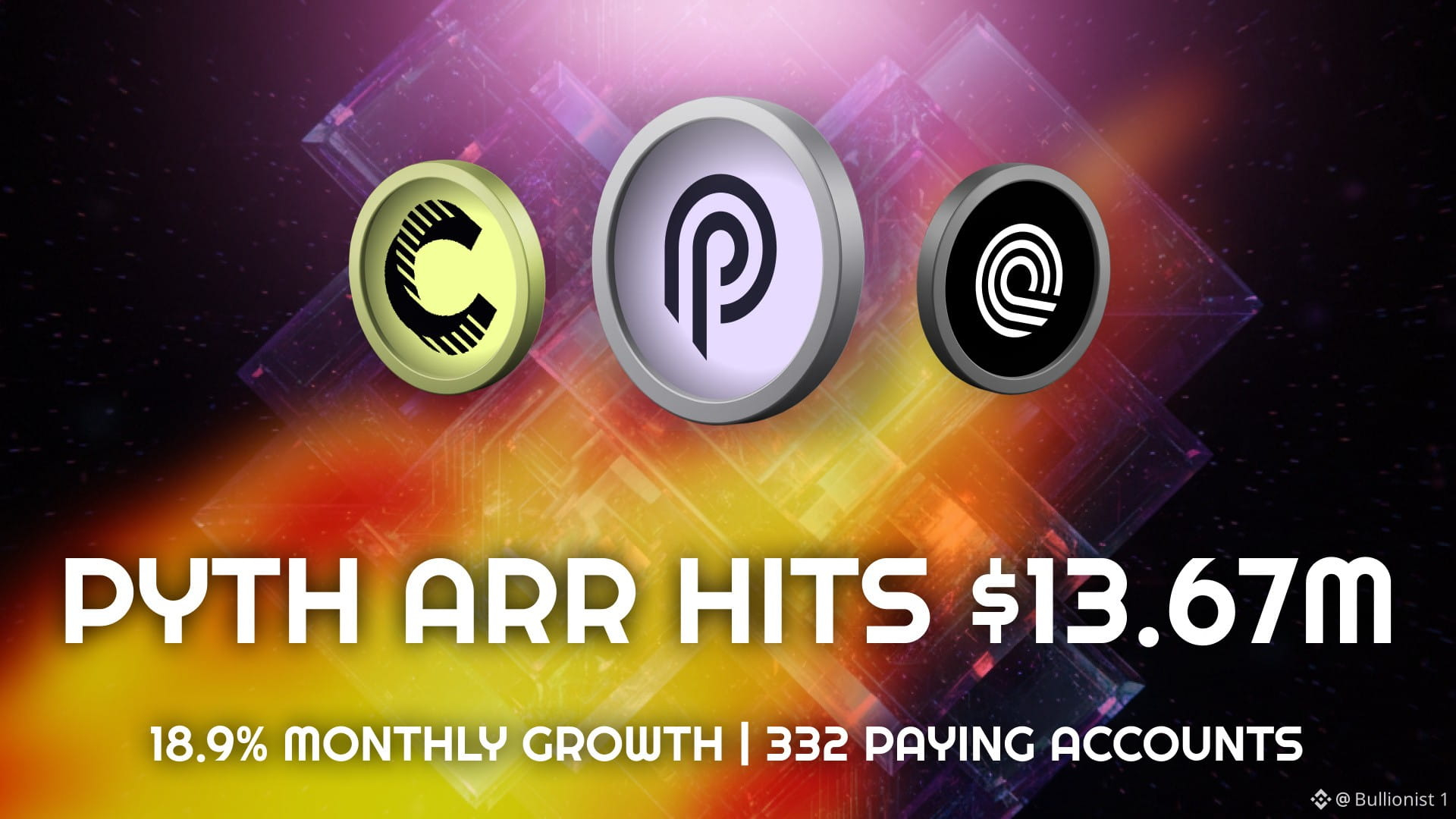
Pyth ARR Hits $13.67M, Up 18.9% 📈
I've been following institutional finance through $CC and tokenized assets through $ONDO , but one figure in Pyth's October report deserves more attention than it's getting.
44.6% of the $2.49M in gross new ARR came from existing customers expanding their spending.
Think about what that means.
Pyth already has customers paying for market data, and a meaningful portion of new business is coming from those same customers deciding they need more of it.
Meanwhile, the headline numbers are getting increasingly difficult to ignore.
→ $13.67M total ARR, up 18.9% MoM
→ $2.17M net new ARR in October
→ 332 paying accounts
→ Pyth Indices ARR reached $2.88M
Pyth finished Q2 at $6.16M ARR. Four months later, it's reporting $13.67M.
I find the customer expansion particularly encouraging because it suggests Pyth can grow revenue by deepening existing relationships alongside winning new accounts.
And there's a token mechanism attached to that commercial growth.
Under the 100% Rule, all funds the Pyth DAO receives from Pyth products are committed to accumulating PYTH, with stablecoin receipts used for open-market purchases.
The distinction matters: ARR measures the business, while the DAO's actual product receipts determine the amount allocated under the rule.
For me, customer expansion is the metric to watch next. If existing institutions keep increasing their subscriptions, Pyth could have a more durable growth engine than its headline ARR numbers alone suggest.
The next monthly report should be interesting.
#Altcoin Season# #RWA
68
·
--
Переглянути переклад
Injective is being valued on its past 👀
The market associates $HYPE with trading and $ONDO with tokenized assets, but I think Injective is developing into an ecosystem capable of competing across both categories.
Its latest move is Injective Institutional Rail, a dedicated gateway giving banks and enterprises predictable access to Injective block production and finality.
This joins an expanding institutional stack that already includes native asset issuance, permissioning, an affiliated SEC-registered transfer agent and active onchain markets.
The bigger picture is becoming difficult to ignore.
Injective started with crypto-native trading infrastructure and is now building the rails needed to bring banks, enterprises and real financial assets into the same network.
That disconnect the fixed is why Injective looks undervalued to me 🔥
#Macro Insights#
60
·
--
Переглянути переклад
AI Agents Need a Payment Audit 💸
Imagine giving an AI agent access to a business wallet.
Its job is simple.
Purchase computing resources, pay for APIs and complete tasks without waiting for human approval.
This is becoming increasingly relevant as autonomous payment systems develop.
But there's something I find concerning.
How does a business independently establish that an agent actually followed its payment policies?
A transaction appearing onchain doesn't necessarily prove that the spending was authorized.
ERC-8004 introduces a framework for agent identity, reputation and independent validation.
Meanwhile, protocols like x402 are making automated payments between software systems more practical.
As ecosystems such as $FET explore autonomous agents, these developments become particularly interesting.
An application could require cryptographic evidence that specific payment conditions were satisfied.
A proving system would generate the evidence.
zkVerify could independently check the supported proof.
And that verification would become one component of the application's authorization process.
That's why I'm keeping $VFY on my radar.
It represents infrastructure for checking cryptographic evidence as autonomous systems become more economically active.
Of course, zkVerify doesn't decide whether an agent made a smart purchase.
It checks whether the proof is mathematically valid.
I believe that's an important distinction.
Autonomous payments might remove humans from routine transactions.
But they shouldn't remove accountability.
#AI #Altcoin Season#
·
--
Спільнотні переваги не скопіюєш за одну ніч 🧠
$ARB і $OP показують, як швидко криптоіндустрія може відтворювати успішні технології та продуктові ідеї.
Історію спільноти відтворити складніше, адже вона розвивається завдяки стосункам і спільним спогадам, які люди створюють разом.
Спільні зустрічі наживо можуть стати відправною точкою для цих зв’язків і ще одним середовищем для їхнього розвитку.
Саме тому мене зацікавила програма подій $Trump Coin Club.
Зустріч у Сінгапурі вже відбулася, а наступним зібранням клубу стане гала-вечеря, запланована на 22 листопада.
Кожна така подія може доповнити історію, що належить саме людям, які творять її разом.
На мою думку, найміцніший щит спільноти — це те, що живе між її учасниками 🔥
#Сезон альткоїнів#
43
·
--
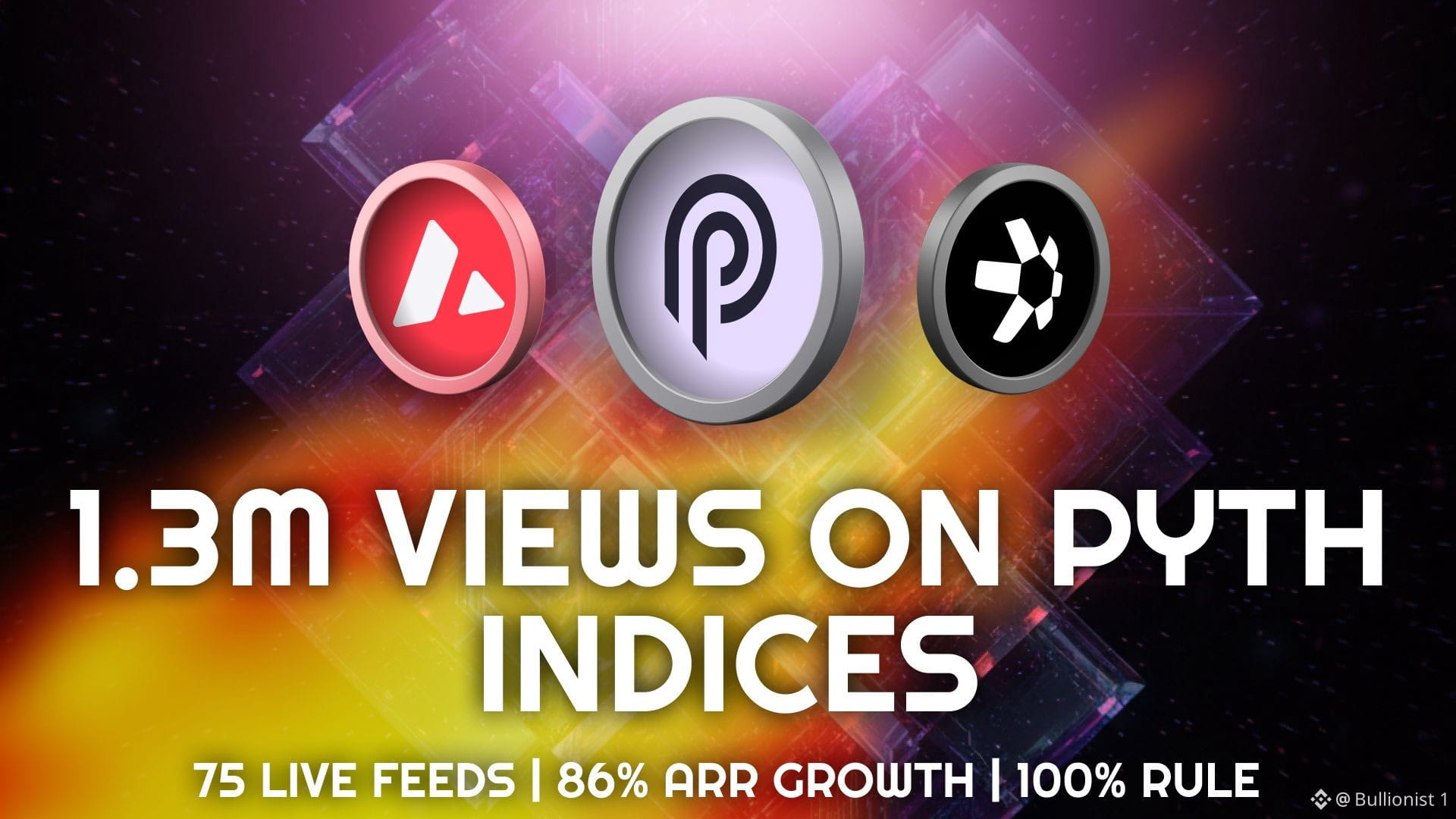
1,3 млн переглядів індексів Pyth. ARR зріс на 86% 📈
Оскільки $AVAX розвиває інфраструктуру для реальних активів, а $QNT зосереджується на інституційній сумісності, гадаю, останні дані Pyth показують дещо цікаве про те, звідки насправді надходить попит на фінансові дані.
Із 9 червня Pyth Terminal зафіксував 1 305 731 перегляд сторінок з детальною інформацією про індекси від 167 017 унікальних ідентифікаторів відвідувачів.
А найпопулярніші активи можуть вас здивувати.
PythOil: 385 858 переглядів
Золото: 335 533 перегляди
1 унція золота: 305 096 переглядів
На сім індексів припадає 98,2% усіх переглядів сторінок індексів.
Така концентрація здається мені цікавішою за загальну кількість переглядів, адже вона показує, які ринки привертають увагу, коли торгівля виходить за межі традиційних годин роботи бірж.
Продукт також швидко розвивається. У червні Pyth Indices запустився лише з 17 продуктами, а тепер пропонує 75 стабільних потоків даних, і ще 23 незабаром з'являться.
За цим зростанням уже стоїть комерційний бізнес.
До вересня ARR Pyth Indices сягнув $1,81 млн, а загальний ARR Pyth зріс до $11,49 млн — на 86% квартал до кварталу.
І ось що робить зростання бізнесу важливим для власників PYTH.
Згідно з правилом 100%, кожен долар, який DAO отримує від продуктів Pyth, тепер спрямовується на накопичення резерву PYTH, зокрема на купівлю токенів на відкритому ринку за кошти, отримані у стейблкоїнах.
Перегляди сторінок не означають, що люди стали клієнтами, але вони показують, які дані шукають. З огляду на таку увагу до нафти й дорогоцінних металів, я стежив би за тим, яка частка цього інтересу перетвориться на платні підписки.
Pyth уже створив індексний бізнес, що генерує дохід, і аудиторія, яка відкриває для себе його продукти, продовжує зростати.
#Сезон альткоїнів# #RWA
1
125
·
--
ШІ потребує більшого, ніж просто відповіді 🧠
Існує цікавий зв’язок між децентралізованими екосистемами ШІ, такими як $TAO і $RENDER.
Обидві привертають увагу до того, як інтелектуальні системи та обчислювальні ресурси стають дедалі більш децентралізованими.
Але переконливі результати роботи ШІ не обов’язково можна перевірити.
Уявіть систему ШІ, яка обчислює оцінки ризику для протоколу кредитування.
Застосунок вимагає конкретної моделі, визначених вхідних даних і затвердженого процесу обчислень.
Як незалежний спостерігач може встановити, чи було дотримано цих вимог?
Одним із можливих рішень є машинне навчання з доказами з нульовим розголошенням.
Система доведення може створити криптографічне підтвердження того, що задане обчислення виконувалося за визначеними правилами.
Залежно від реалізації конфіденційні вхідні дані можуть залишатися прихованими.
zkVerify незалежно перевіряє підтримувані докази, створені такими системами.
Він не оцінює, чи було передбачення моделі розумним або фінансово обґрунтованим.
Він перевіряє, чи є поданий криптографічний доказ дійсним.
На мою думку, ця відмінність ставатиме дедалі важливішою, оскільки системи ШІ ухвалюватимуть рішення, пов’язані з реальними грошима.
Переконлива відповідь ШІ — це корисно.
Відповідь, що супроводжується доказом, який можна незалежно перевірити й який пояснює, як її було обчислено, може бути значно ціннішою.
#ШІ #СезонАльткоїнів#
55
·
--
Наступна гонка у сфері безпеки — квантова 🛡️
Дискусії про безпеку $STRK і $ADA зазвичай зосереджені на оновленнях, стійкості валідаторів і загрозах, з якими мережі стикаються вже зараз.
Думаю, наступна серйозна розмова буде про те, чи готуються блокчейни до ризиків, які можуть з’явитися лише через кілька років.
Квантові обчислення зрештою можуть поставити під загрозу криптографію, що використовується для авторизації транзакцій і підтвердження права власності.
Injective офіційно розпочала розробку квантово-стійкої інфраструктури.
Жодних технічних деталей чи дати запуску не розкрито, тож наразі це робота над розробкою, а не вже доступна функція.
І все ж важливо почати завчасно, коли мережу створюють для підтримки фінансової діяльності, розрахованої на тривалий час.
На мою думку, це зміцнює інвестиційну тезу Injective щодо інфраструктури та робить розробку квантово-стійких рішень напрямом, за яким варто стежити 👀
#Сезон альткоїнів#
63
·
--
Samsung щойно відчинила Sui парадні двері 🔥
Масове впровадження блокчейну значно спрощується, коли користувачам узагалі не доводиться про нього думати.
Саме тому останній імпульс $SUI особливо примітний.
Samsung Wallet додає USDC на Sui для відповідних пристроїв Galaxy — потенційно охоплюючи 82 мільйони телефонів у США.
Користувачі зможуть зберігати та надсилати USDC без комісії мережі й купівлі SUI для оплати газу.
Уточнімо: сам токен SUI не з’явиться в Samsung Wallet на момент запуску.
Справжня перемога в тому, що Samsung обрала Sui інфраструктурою для звичного споживчого продукту.
А тепер згадаймо, що тунелі Sui обробляли 40 614 180 TPS під час тесту Basecamp у реальному часі.
Sui продемонструвала величезний запас технічних можливостей і здобула канал дистрибуції, здатний донести цю інфраструктуру до звичайних користувачів.
Розвивається й інституційний інтерес.
Цього місяця Hashi має розпочати поетапний запуск мейннету, заручившись зобов’язаннями щодо інвестицій на суму понад 500 мільйонів доларів і підтримкою більш ніж 20 партнерів запуску.
Це дає Sui доступ до споживачів через Samsung і серйозний шлях до фінансів, забезпечених біткоїном, через Hashi.
Я звертаю увагу, коли окремі анонси починають складатися в цілісну стратегію.
Sui розбудовує потужності, канали дистрибуції та ліквідність, необхідні для того, щоб стати провідною фінансовою мережею.
#Сезон альткоїнів#
73
·
--
Кожен новий фід стає кращим, коли інтеграція залишається звичною 🧩
$2Z дає фідам Edge спільну модель розповсюдження. $LINK — корисний приклад для порівняння, адже стандартизований доступ до даних стає ціннішим зі зростанням кількості джерел.
Перший фід позбавляє потреби в одній інтеграції.
П’ятий — у кількох.
Десятий повністю змінює ваше уявлення про підключення до ринків.
Саме тут стандартизація дає накопичувальний ефект.
DoubleZero Edge пропонує трейдерам каталог, що постійно зростає, і не змушує кожне нове джерело ставати окремим інфраструктурним проєктом.
Що більше ринків охоплює Edge, то ефективнішою стає ця модель.
#Макроекономічні огляди# #Сезон альткоїнів#
76
·
--
Криптожиття виходить за межі екрана 👀
Спільноти навколо $AVAX і $SUI проводять більшу частину часу, координуючи свої дії онлайн, але найяскравіші моменти часто відбуваються поза стрічкою.
Ось чому, на мою думку, офлайн-заходи мають значення.
$Trump Coin Club — чудовий приклад: клуб перейшов від насичених подіями зустрічей у Сеулі та Сінгапурі до гала-вечері 22 листопада.
Ця зміна мене зацікавила, адже вона створює зовсім іншу соціальну динаміку.
Вікенд перегонів визначають рух, видовищність і насичений розклад.
А офіційна вечеря дає людям час і нагоду для довших розмов.
У найкращих календарях офлайн-заходів потрібен такий контраст, адже постійне повторення того самого досвіду зрештою робить усі локації схожими одна на одну 🔥
#Сезон альткоїнів#

78
·
--
Solana випробувала DoubleZero в реальних умовах і в масштабі 🔥
$2Z уже має один із найпереконливіших доказів своєї ефективності завдяки екосистемі Solana. Валідатори $SOL працюють у середовищі, де продуктивність мережі справді має значення.
DoubleZero — це не теоретичний інфраструктурний рівень, який чекає на майбутній попит.
Його мережа вже обслуговує розподілені системи, що передають значні обсяги інформації в режимі реального часу.
Для мене це важливо, адже найпереконливіші інфраструктурні наративи — ті, де використання з’являється раніше за ажіотаж.
А тепер Edge розширює цю ширшу ідею на дані фінансових ринків.
Спершу з’явилася мережа.
Тепер навколо неї розширюється каталог.
#Solana #Макроекономічні інсайти#
63
Увійдіть, щоб переглянути інший контент
Приєднуйтесь до користувачів криптовалют по всьому світу на Binance Square
⚡️ Отримуйте актуальну та корисну інформацію про криптовалюти.
💬 Приєднуйтесь до найбільшої у світі криптобіржі.
👍 Відкрийте справжні ідеї від перевірених авторів.
Електронна пошта / номер телефону
Трендові теми
fomcвідстеження
124,550 переглядів
547 обговорюють
#fomcвідстеження Жовтневий ІСЦ США у центрі уваги: ринки оцінюють перспективи підвищення ставок у грудні
Дані щодо інфляції у США, які мають оприлюднити наступного тижня, будуть під пильною увагою інвесторів, які оцінюватимуть, чи можуть стійкі цінові чинники спонукати Федеральну резервну систему знову підвищити процентні ставки у грудні. Водночас дедалі більші побоювання щодо інвестиційного буму у сфері ШІ та його потенційного впливу на економічне зростання додають невизначеності прогнозам щодо монетарної політики.$AAPLB
SergioDiaz
·1 вподобань
·137 переглядів
NvidiaBeatsEstimatesWith$130BQ4Outlook
1,549 переглядів
38 обговорюють
AnthropicIPOPriceCouldExceed$80
2,787 переглядів
49 обговорюють