

#bitcoincore32.1raisespeerconnectionlimit
bitcoincore32.1raisespeerconnectionlimit
Популярні
Найсвіжіші

Верифіковано
#bitcoincore32.1raisespeerconnectionlimit
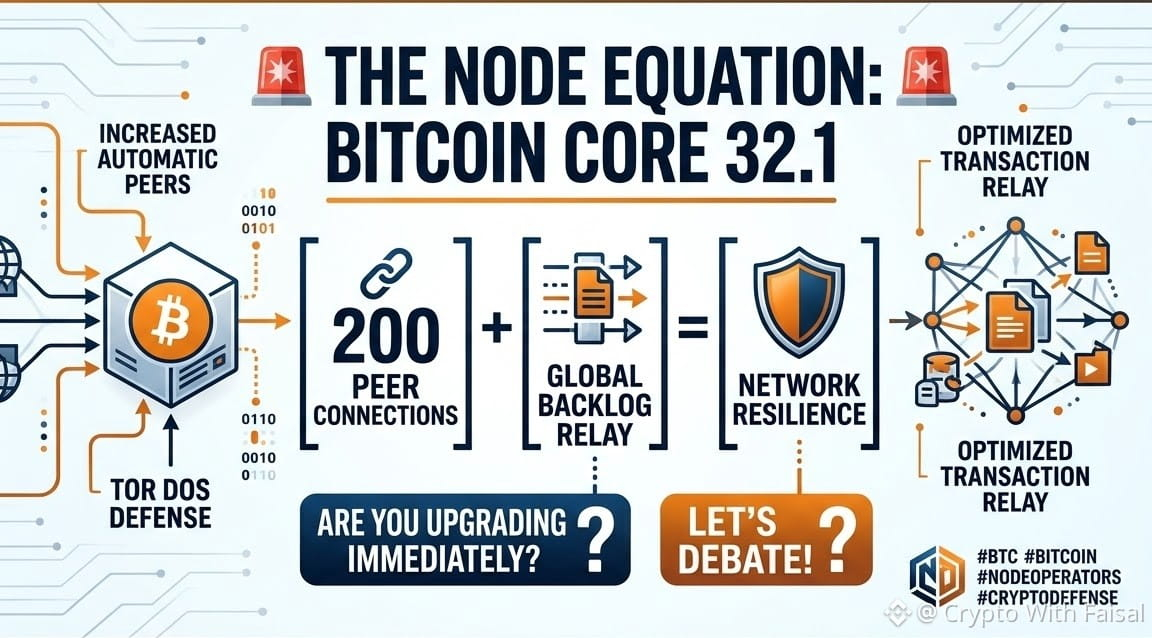
🚨 РІВНЯННЯ ВУЗЛА: BITCOIN CORE 32.1 🚨
Щойно вийшло критично важливе оновлення для повних вузлів Bitcoin — це величезний крок уперед для здоров’я мережі! Розберімо новий реліз за допомогою чистої математики 🧮👇
(200 підключень до вузлів) + (ретрансляція глобальної черги очікування) = стійкість мережі 🛡️
Ось точна формула, що лежить в основі сьогоднішнього оновлення мережі Bitcoin:
Що змінилося:
(Вхідні дані) = Bitcoin Core випустив версію 32.1.
Розширення: максимальну кількість автоматичних підключень до вузлів за замовчуванням збільшено зі 125 до 200.
Захист: додано механізми захисту на основі доказу виконання роботи для прихованих сервісів Tor, щоб протидіяти DoS-атакам.
Ефективність: для обмеження швидкості ретрансляції транзакцій використовується підхід «глобальної черги очікування», що оптимізує використання пам’яті та процесора.
Пояснення:
Менша кількість підключених вузлів означає повільніше поширення блоків і транзакцій. Збільшуючи кількість підключень і посилюючи захист вузлів Tor, Bitcoin Core 32.1 значно підвищує стійкість мережі до цензури та DoS-атак, водночас знижуючи вимоги до ресурсів для операторів вузлів.
Якщо ви оператор вузла, оновлюватиметеся одразу чи спершу зачекаєте, щоб протестувати? Обговорімо! 👇💬
$BTC
{future}(BTCUSDT)
$ETH
{future}(ETHUSDT)
$BNB
{future}(BNBUSDT)
#Bitcoin #CryptoSecurity #NodeOperators #BinanceSquare
#bitcoincore32.1raisespeerconnectionlimit
🚨 РІВНЯННЯ ВУЗЛА: BITCOIN CORE 32.1 🚨
Щойно вийшло критично важливе оновлення для повних вузлів Bitcoin — це величезний крок уперед для здоров’я мережі! Розберімо новий реліз за допомогою чистої математики 🧮👇
(200 підключень до вузлів) + (ретрансляція глобальної черги очікування) = стійкість мережі 🛡️
Ось точна формула, що лежить в основі сьогоднішнього оновлення мережі Bitcoin:
Що змінилося:
(Вхідні дані) = Bitcoin Core випустив версію 32.1.
Розширення: максимальну кількість автоматичних підключень до вузлів за замовчуванням збільшено зі 125 до 200.
Захист: додано механізми захисту на основі доказу виконання роботи для прихованих сервісів Tor, щоб протидіяти DoS-атакам.
Ефективність: для обмеження швидкості ретрансляції транзакцій використовується підхід «глобальної черги очікування», що оптимізує використання пам’яті та процесора.
Пояснення:
Менша кількість підключених вузлів означає повільніше поширення блоків і транзакцій. Збільшуючи кількість підключень і посилюючи захист вузлів Tor, Bitcoin Core 32.1 значно підвищує стійкість мережі до цензури та DoS-атак, водночас знижуючи вимоги до ресурсів для операторів вузлів.
Якщо ви оператор вузла, оновлюватиметеся одразу чи спершу зачекаєте, щоб протестувати? Обговорімо! 👇💬
$BTC
$ETH
$BNB
#Bitcoin #CryptoSecurity #NodeOperators #BinanceSquare
30

·
--
Оптимістично
#bitcoincore32.1raisespeerconnectionlimit
#writetoearn
🏦🛡️Bitcoin Core 32.1 розгортається: масштабне оновлення захисту, що розширює магістралі P2P-мережі
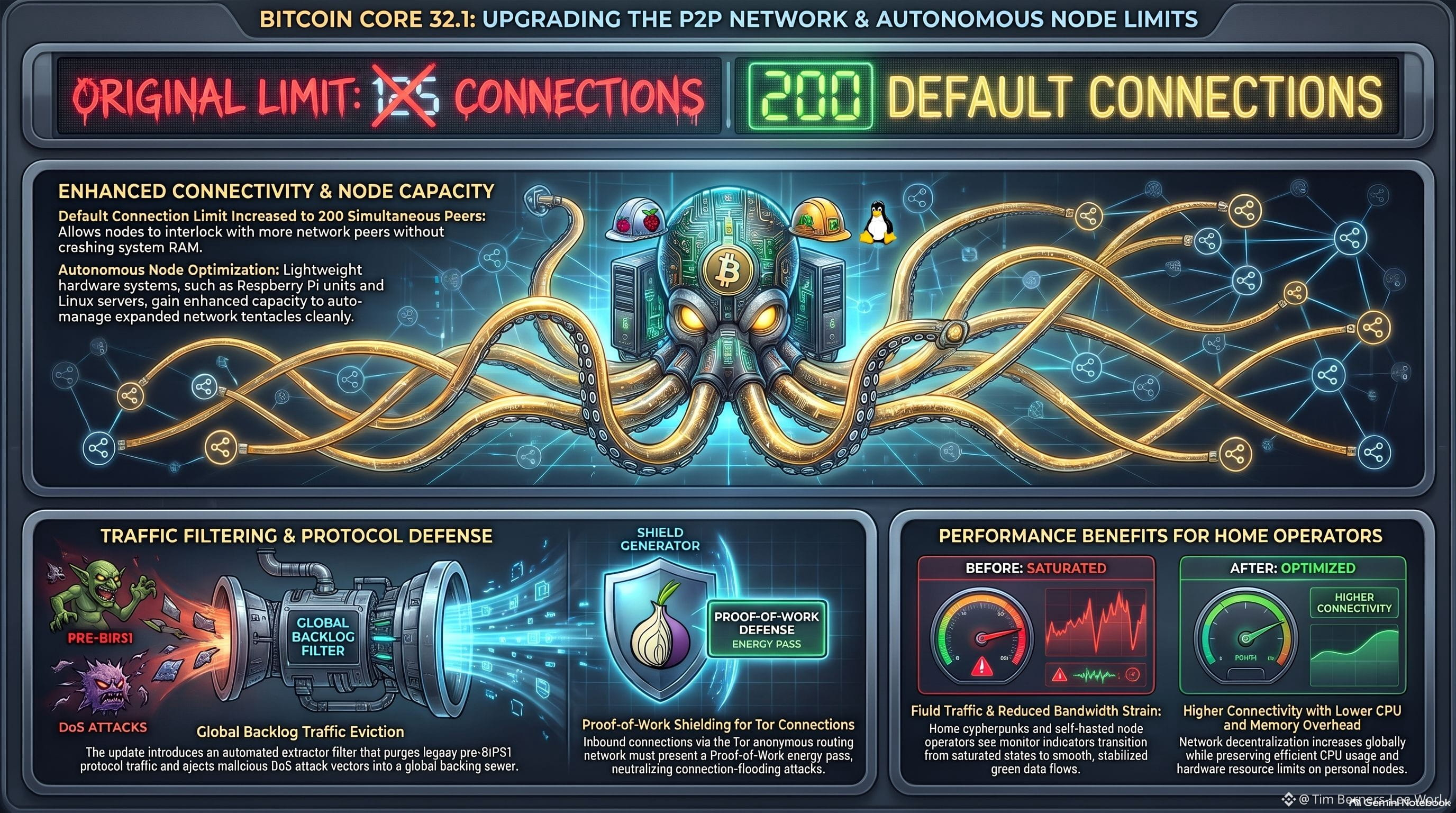
🏦🛡️У стрімкій та скоординованій технічній відповіді на оприлюднені цього тижня вразливості команда розробників Bitcoin Core офіційно випустила версію 32.1 свого еталонного програмного забезпечення. На перший погляд, цей патч виглядає як незначне оновлення для обслуговування, однак насправді він передбачає критичні зміни в архітектурі P2P-мережі (peer-to-peer), зокрема збільшення стандартного ліміту автоматичних однорангових з’єднань зі 125 до 200.
🏦🛡️Це збільшення — не просто примха щодо пропускної здатності. Підвищуючи ліміт автоматичних з’єднань, розробники прагнуть зміцнити топологію глобальної мережі Bitcoin, зробивши її значно щільнішою та стійкішою до можливих атак типу «затемнення» (eclipse) або спроб ізолювати вузли. Щоб таке розширення з’єднань не перевантажувало домашні комп’ютери, які підтримують мережу, у версії 32.1 запроваджено систему обмеження швидкості на основі «глобальної черги» (backlog), яка різко знижує використання CPU та оперативної пам’яті, коли обсяг транзакцій у мемпулі стрімко зростає.
🏦🛡️Захисний пакет оновлення доповнює впровадження захисту на основі доказу виконання роботи (PoW) для прихованих сервісів мережі Tor. Це закриває шлях до однієї з найпоширеніших тактик відмови в обслуговуванні (DoS) останніх місяців: зловмисники використовували анонімність Tor, щоб завалювати вузли фальшивими запитами на з’єднання. 🏦🛡️З виходом версії 32.1 заклик до майнінгової спільноти, криптобірж і операторів домашніх вузлів однозначний: негайно оновитися — це не лише спосіб усунути проблеми минулого вівторка, а й надати інфраструктурі Bitcoin необхідної потужності для екосистеми 2027 року.$BTC $BTC
{future}(BTCUSDT)
#bitcoincore32.1raisespeerconnectionlimit
#writetoearn
🏦🛡️Bitcoin Core 32.1 розгортається: масштабне оновлення захисту, що розширює магістралі P2P-мережі
🏦🛡️У стрімкій та скоординованій технічній відповіді на оприлюднені цього тижня вразливості команда розробників Bitcoin Core офіційно випустила версію 32.1 свого еталонного програмного забезпечення. На перший погляд, цей патч виглядає як незначне оновлення для обслуговування, однак насправді він передбачає критичні зміни в архітектурі P2P-мережі (peer-to-peer), зокрема збільшення стандартного ліміту автоматичних однорангових з’єднань зі 125 до 200.
🏦🛡️Це збільшення — не просто примха щодо пропускної здатності. Підвищуючи ліміт автоматичних з’єднань, розробники прагнуть зміцнити топологію глобальної мережі Bitcoin, зробивши її значно щільнішою та стійкішою до можливих атак типу «затемнення» (eclipse) або спроб ізолювати вузли. Щоб таке розширення з’єднань не перевантажувало домашні комп’ютери, які підтримують мережу, у версії 32.1 запроваджено систему обмеження швидкості на основі «глобальної черги» (backlog), яка різко знижує використання CPU та оперативної пам’яті, коли обсяг транзакцій у мемпулі стрімко зростає.
🏦🛡️Захисний пакет оновлення доповнює впровадження захисту на основі доказу виконання роботи (PoW) для прихованих сервісів мережі Tor. Це закриває шлях до однієї з найпоширеніших тактик відмови в обслуговуванні (DoS) останніх місяців: зловмисники використовували анонімність Tor, щоб завалювати вузли фальшивими запитами на з’єднання. 🏦🛡️З виходом версії 32.1 заклик до майнінгової спільноти, криптобірж і операторів домашніх вузлів однозначний: негайно оновитися — це не лише спосіб усунути проблеми минулого вівторка, а й надати інфраструктурі Bitcoin необхідної потужності для екосистеми 2027 року.$BTC $BTC
54


·
--

Стаття
Переглянути переклад
Bitcoin Core 32.1 Exposes the Hard Trade-Off Between Network Resilience and the Cost of DecentralizaCrypto conversations usually go straight to price. @bitcoin is up, Bitcoin is down, transaction fees are rising, or another upgrade is making headlines. But honestly, there's a whole side of Bitcoin that rarely gets the attention it deserves: the infrastructure quietly keeping the network connected. Sometimes, that's where the biggest engineering questions begin.
Bitcoin Core 32.1 raises the default maximum number of automatic peer connections from 125 to 200. Sounds simple enough. But there's a detail worth noticing: the number of automatic outbound connections stays the same. The extra capacity mainly creates more room for inbound connections, particularly block-relay-only peers. These peers help spread blocks across the network without participating in ordinary transaction relay. It's a targeted change, not a command telling every node to connect to 200 peers. Actual connections still depend on configuration, network conditions, and available resources.
More connections don't automatically mean a stronger Bitcoin network.
Look, the real question is who those connections lead to. A node might connect to 200 peers and still rely heavily on a handful of hosting providers or interconnected networks. On paper, that looks like plenty of redundancy. In reality, several connections can share the same underlying weaknesses. If many peers depend on similar infrastructure, a single disruption could affect more of them than their individual connection counts suggest. That's the problem with measuring resilience by numbers alone.
An eclipse attack makes this issue even more interesting. The goal is to isolate a node or manipulate the view of the network it receives. An attacker doesn't need to control Bitcoin as a whole to create problems for an individual node. More connection slots can give that node additional opportunities to maintain independent communication paths. But opportunities aren't guarantees. Peer selection, address discovery, connection churn, and the actual distribution of network infrastructure all matter.
A node needs independent paths, not just a longer contact list.
So, what does this extra connectivity cost? Every additional peer can consume memory, bandwidth, CPU time, socket resources, and file descriptors. The exact impact depends on how those peers behave and how much traffic they generate. Block-relay-only connections can reduce exposure to ordinary transaction-relay traffic, but they're not free. They still exchange protocol messages and require resources to maintain. For someone operating a node on modest hardware or a tightly constrained hosting plan, that overhead matters. There's a practical limit to how much additional connectivity can be supported comfortably.
Bitcoin Core also uses connection-allocation rules to balance different networking needs. The default inbound relay percentage setting limits transaction-relaying peers to 50% of inbound connection slots, preserving capacity for other inbound connections, including block-relay-only peers. With a default maximum of 200 connections and 11 automatic outbound connections, the nominal inbound capacity is 189, subject to other connection-management constraints. Under the default allocation, transaction-relaying peers can occupy roughly half of those inbound slots. But this isn't a guarantee of network diversity. It simply controls how connection capacity is allocated.
Bitcoin can make room for diversity. It can't guarantee it.
Honestly, the configuration details are easy to overlook. Operators who have explicitly configured their maximum connection count shouldn't assume their chosen value automatically increases with the new default. Bitcoin Core 32.1 also clamps values above 2,000 and issues a warning, reflecting the risks associated with extremely high connection counts. Pushing that limit higher doesn't necessarily improve anything. Without enough memory, bandwidth, or operating-system resources, additional connections can create more operational pressure than practical benefit. Sometimes, more really is just more.
It's also important to understand what this update doesn't change. There's no new zero-knowledge proof system, no new consensus rule, and no change to Bitcoin's smart-contract execution model. The focus is peer-to-peer networking and the practical conditions needed to keep independent nodes connected. Any compliance implications are indirect, involving areas such as hosting arrangements, availability, and infrastructure monitoring. This is a networking adjustment, not a new privacy or regulatory-compliance feature.
So, how should its impact be judged? Start with the actual data. Are nodes maintaining more diverse peer connections? Is connection churn changing? What happens to bandwidth, memory usage, and CPU load? Do blocks continue propagating reliably when several peers disappear or parts of the network become unavailable? Those measurements tell us far more than the maximum connection count ever could. A configured limit shows what's permitted, not what happens in practice.
The real win would be better network resilience without making independent nodes harder to operate.
That's the trade-off worth watching with Bitcoin Core 32.1. Raising the default limit from 125 to 200 creates more room for connections, particularly block-relay-only peers. Whether that translates into stronger resilience depends on how operators use that capacity and whether their connections genuinely improve network diversity. A node isn't more independent just because it has more peers. It becomes more resilient when those peers provide reliable, genuinely independent paths for receiving and verifying information.
And that's the bigger point. Bitcoin's decentralization doesn't come from a single setting or a bigger number on a configuration screen. It depends on whether ordinary participants can keep running their own nodes, maintain useful connections, and verify the network without relying entirely on someone else's infrastructure. More connectivity is useful. Independent connectivity is what really counts.
#BitcoinCore32.1RaisesPeerConnectionLimit $BTC
{future}(BTCUSDT)
Bitcoin Core 32.1 Exposes the Hard Trade-Off Between Network Resilience and the Cost of Decentraliza
Crypto conversations usually go straight to price. @Bitcoin is up, Bitcoin is down, transaction fees are rising, or another upgrade is making headlines. But honestly, there's a whole side of Bitcoin that rarely gets the attention it deserves: the infrastructure quietly keeping the network connected. Sometimes, that's where the biggest engineering questions begin.
Bitcoin Core 32.1 raises the default maximum number of automatic peer connections from 125 to 200. Sounds simple enough. But there's a detail worth noticing: the number of automatic outbound connections stays the same. The extra capacity mainly creates more room for inbound connections, particularly block-relay-only peers. These peers help spread blocks across the network without participating in ordinary transaction relay. It's a targeted change, not a command telling every node to connect to 200 peers. Actual connections still depend on configuration, network conditions, and available resources.
More connections don't automatically mean a stronger Bitcoin network.
Look, the real question is who those connections lead to. A node might connect to 200 peers and still rely heavily on a handful of hosting providers or interconnected networks. On paper, that looks like plenty of redundancy. In reality, several connections can share the same underlying weaknesses. If many peers depend on similar infrastructure, a single disruption could affect more of them than their individual connection counts suggest. That's the problem with measuring resilience by numbers alone.
An eclipse attack makes this issue even more interesting. The goal is to isolate a node or manipulate the view of the network it receives. An attacker doesn't need to control Bitcoin as a whole to create problems for an individual node. More connection slots can give that node additional opportunities to maintain independent communication paths. But opportunities aren't guarantees. Peer selection, address discovery, connection churn, and the actual distribution of network infrastructure all matter.
A node needs independent paths, not just a longer contact list.
So, what does this extra connectivity cost? Every additional peer can consume memory, bandwidth, CPU time, socket resources, and file descriptors. The exact impact depends on how those peers behave and how much traffic they generate. Block-relay-only connections can reduce exposure to ordinary transaction-relay traffic, but they're not free. They still exchange protocol messages and require resources to maintain. For someone operating a node on modest hardware or a tightly constrained hosting plan, that overhead matters. There's a practical limit to how much additional connectivity can be supported comfortably.
Bitcoin Core also uses connection-allocation rules to balance different networking needs. The default inbound relay percentage setting limits transaction-relaying peers to 50% of inbound connection slots, preserving capacity for other inbound connections, including block-relay-only peers. With a default maximum of 200 connections and 11 automatic outbound connections, the nominal inbound capacity is 189, subject to other connection-management constraints. Under the default allocation, transaction-relaying peers can occupy roughly half of those inbound slots. But this isn't a guarantee of network diversity. It simply controls how connection capacity is allocated.
Bitcoin can make room for diversity. It can't guarantee it.
Honestly, the configuration details are easy to overlook. Operators who have explicitly configured their maximum connection count shouldn't assume their chosen value automatically increases with the new default. Bitcoin Core 32.1 also clamps values above 2,000 and issues a warning, reflecting the risks associated with extremely high connection counts. Pushing that limit higher doesn't necessarily improve anything. Without enough memory, bandwidth, or operating-system resources, additional connections can create more operational pressure than practical benefit. Sometimes, more really is just more.
It's also important to understand what this update doesn't change. There's no new zero-knowledge proof system, no new consensus rule, and no change to Bitcoin's smart-contract execution model. The focus is peer-to-peer networking and the practical conditions needed to keep independent nodes connected. Any compliance implications are indirect, involving areas such as hosting arrangements, availability, and infrastructure monitoring. This is a networking adjustment, not a new privacy or regulatory-compliance feature.
So, how should its impact be judged? Start with the actual data. Are nodes maintaining more diverse peer connections? Is connection churn changing? What happens to bandwidth, memory usage, and CPU load? Do blocks continue propagating reliably when several peers disappear or parts of the network become unavailable? Those measurements tell us far more than the maximum connection count ever could. A configured limit shows what's permitted, not what happens in practice.
The real win would be better network resilience without making independent nodes harder to operate.
That's the trade-off worth watching with Bitcoin Core 32.1. Raising the default limit from 125 to 200 creates more room for connections, particularly block-relay-only peers. Whether that translates into stronger resilience depends on how operators use that capacity and whether their connections genuinely improve network diversity. A node isn't more independent just because it has more peers. It becomes more resilient when those peers provide reliable, genuinely independent paths for receiving and verifying information.
And that's the bigger point. Bitcoin's decentralization doesn't come from a single setting or a bigger number on a configuration screen. It depends on whether ordinary participants can keep running their own nodes, maintain useful connections, and verify the network without relying entirely on someone else's infrastructure. More connectivity is useful. Independent connectivity is what really counts.
#BitcoinCore32.1RaisesPeerConnectionLimit $BTC
9

·
--
#fedwatch
🚨 ФРС ЗАЛИШИЛА СТАВКИ БЕЗ ЗМІН — АЛЕ ДВОЄ ПОСАДОВЦІВ ХОТІЛИ ЇХ ПІДВИЩИТИ! БИКИ АЛЬТКОЇНІВ РАДІЮТЬ ЗАНАДТО РАНО? 👀🔥
Усі помітили, що ФРС взяла паузу.
Але ось що більшість трейдерів пропустила…
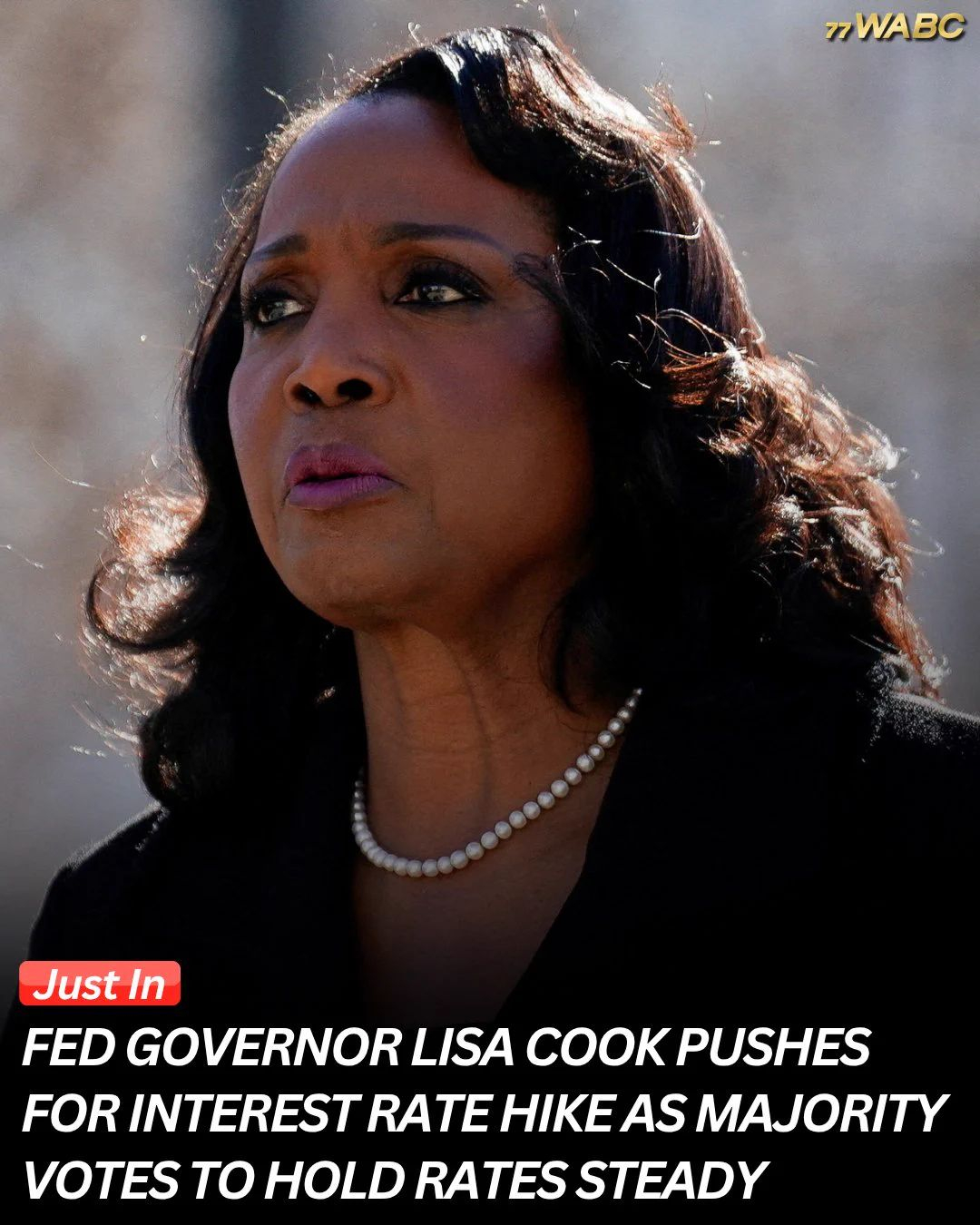
Двоє посадовців ФРС насправді проголосували за ПІДВИЩЕННЯ ставок на 25 базисних пунктів.
🏦 РЕЗУЛЬТАТИ ЖОВТНЕВОГО ЗАСІДАННЯ FOMC:
✅ Ставки залишили на рівні 3.75%–4.00%
🔴 Ліза Кук: хотіла підвищити ставку на 25 базисних пунктів
🔴 Бет Гаммак: хотіла підвищити ставку на 25 базисних пунктів
📊 Підсумкове голосування: 10–2
А ФРС і далі заявляє, що інфляція залишається високою.
ТО ЩО ЦЕ ОЗНАЧАЄ ДЛЯ ТРЕЙДЕРІВ?
🥇 $XAU: Сильніший долар і вища дохідність можуть тиснути на золото.
🥈 $XAG: Срібло може зазнати різкіших коливань через зміну очікувань щодо ставок.
🔥 $SOL: Важливий апетит до ризику. Більш жорсткі сигнали можуть тиснути на криптоактиви з високою бетою.
🐸 $DOGE: Спекулятивним ралі може бути складно, якщо умови ліквідності посиляться.
💥 ОСЬ У ЧОМУ СПРАВЖНЯ ПАСТКА…
Пауза ФРС — це не те саме, що м’яка позиція ФРС.
🐂 БИЧАЧИЙ СЦЕНАРІЙ: Інфляція сповільнюється → Очікування підвищення ставок слабшають → Золото й ризикові активи можуть відновитися.
🐻 ВЕДМЕЖИЙ СЦЕНАРІЙ: Інфляція залишається високою → Побоювання щодо підвищення ставки в грудні посилюються → Долар зміцнюється, а спекулятивні активи опиняються під тиском.
ФРС НЕ ПІДВИЩИЛА СТАВКУ. АЛЕ «ЯСТРУБИ» ВСЕ ЩЕ СЕРЕД НАС.
Не є фінансовою порадою. Проводьте власне дослідження.
{future}(XAGUSDT)
{future}(XAUUSDT)
{future}(DOGEUSDT)
#CanMicrosoftDeliverOnAI #CanGoogleDefindItsCore #BitcoinCore32.1RaisesPeerConnectionLimit #RippleExpects$900MAnnualizedProductRevenueRunRate
#fedwatch
🚨 ФРС ЗАЛИШИЛА СТАВКИ БЕЗ ЗМІН — АЛЕ ДВОЄ ПОСАДОВЦІВ ХОТІЛИ ЇХ ПІДВИЩИТИ! БИКИ АЛЬТКОЇНІВ РАДІЮТЬ ЗАНАДТО РАНО? 👀🔥
Усі помітили, що ФРС взяла паузу.
Але ось що більшість трейдерів пропустила…
Двоє посадовців ФРС насправді проголосували за ПІДВИЩЕННЯ ставок на 25 базисних пунктів.
🏦 РЕЗУЛЬТАТИ ЖОВТНЕВОГО ЗАСІДАННЯ FOMC:
✅ Ставки залишили на рівні 3.75%–4.00%
🔴 Ліза Кук: хотіла підвищити ставку на 25 базисних пунктів
🔴 Бет Гаммак: хотіла підвищити ставку на 25 базисних пунктів
📊 Підсумкове голосування: 10–2
А ФРС і далі заявляє, що інфляція залишається високою.
ТО ЩО ЦЕ ОЗНАЧАЄ ДЛЯ ТРЕЙДЕРІВ?
🥇 $XAU: Сильніший долар і вища дохідність можуть тиснути на золото.
🥈 $XAG: Срібло може зазнати різкіших коливань через зміну очікувань щодо ставок.
🔥 $SOL: Важливий апетит до ризику. Більш жорсткі сигнали можуть тиснути на криптоактиви з високою бетою.
🐸 $DOGE: Спекулятивним ралі може бути складно, якщо умови ліквідності посиляться.
💥 ОСЬ У ЧОМУ СПРАВЖНЯ ПАСТКА…
Пауза ФРС — це не те саме, що м’яка позиція ФРС.
🐂 БИЧАЧИЙ СЦЕНАРІЙ: Інфляція сповільнюється → Очікування підвищення ставок слабшають → Золото й ризикові активи можуть відновитися.
🐻 ВЕДМЕЖИЙ СЦЕНАРІЙ: Інфляція залишається високою → Побоювання щодо підвищення ставки в грудні посилюються → Долар зміцнюється, а спекулятивні активи опиняються під тиском.
ФРС НЕ ПІДВИЩИЛА СТАВКУ. АЛЕ «ЯСТРУБИ» ВСЕ ЩЕ СЕРЕД НАС.
Не є фінансовою порадою. Проводьте власне дослідження.
#CanMicrosoftDeliverOnAI #CanGoogleDefindItsCore #BitcoinCore32.1RaisesPeerConnectionLimit #RippleExpects$900MAnnualizedProductRevenueRunRate
1
1.2k

·
--
Переглянути переклад
تضاعفت إيرادات Google Cloud، ومع ذلك تعرّض السهم لضربة قوية. تقول Alphabet إن إيرادات Google Cloud قفزت إلى 30.7 مليار دولار، لكنها أنفقت أيضًا 51.4 مليار دولار خلال ربع واحد على الرقائق ومراكز البيانات، لذا بلغ التدفق النقدي الحر سالب -9.1 مليار دولار، وانخفضت الأسهم بنحو 10% بعد
$GOOGLB
{spot}(GOOGLBUSDT)
#CanMicrosoftDeliverOnAI
#CanGoogleDefindItsCore
#FedWatch
#BitcoinCore32.1RaisesPeerConnectionLimit
#EarningsSeason
تضاعفت إيرادات Google Cloud، ومع ذلك تعرّض السهم لضربة قوية. تقول Alphabet إن إيرادات Google Cloud قفزت إلى 30.7 مليار دولار، لكنها أنفقت أيضًا 51.4 مليار دولار خلال ربع واحد على الرقائق ومراكز البيانات، لذا بلغ التدفق النقدي الحر سالب -9.1 مليار دولار، وانخفضت الأسهم بنحو 10% بعد
$GOOGLB
#CanMicrosoftDeliverOnAI
#CanGoogleDefindItsCore
#FedWatch
#BitcoinCore32.1RaisesPeerConnectionLimit
#EarningsSeason
$GOOGLB
#CanMicrosoftDeliverOnAI
#CanGoogleDefindItsCore
#FedWatch
#BitcoinCore32.1RaisesPeerConnectionLimit
#EarningsSeason
1
25
·
--
#fedwatch
🚨 ФРС ПРИЗУПИНИЛА ПІДВИЩЕННЯ СТАВОК. ТО ЧОМУ ДОВГОСТРОКОВІ ВИТРАТИ НА ПОЗИКИ ВСЕ ЩЕ ЗРОСТАЮТЬ? 👀📈
Усі стежили за рішенням ФРС щодо ставок.
Але ринок облігацій щойно подав зовсім інший сигнал.
🏦 ПІСЛЯ ЗАСІДАННЯ ФРС:
📈 Дохідність 10-річних казначейських облігацій США: 5.036%
📉 Дохідність 2-річних казначейських облігацій США: 4.702%
ФРС залишила ставки на рівні 3.75%–4.00%, але довгострокові витрати на позики продовжують зростати.
І ОСЬ ТУТ ПОЧИНАЄТЬСЯ НАЙЦІКАВІШЕ…
Короткострокова дохідність знижується, але інвестори в довгострокові облігації й далі вимагають вищої дохідності.
У центрі уваги — побоювання щодо інфляції, державні запозичення та невизначеність щодо майбутньої політики ФРС.
💥 ЩО ЦЕ ОЗНАЧАЄ ДЛЯ ТРЕЙДЕРІВ?
🥇 $XAU: Зростання довгострокової дохідності може тиснути на золото, навіть попри те, що геополітична напруженість підтримує попит на захисні активи.
🥈 $XAG: На тлі переоцінки ставок і перспектив зростання срібло може зазнавати різкіших коливань.
🚀 $SOL: Дорогий капітал і слабший апетит до ризику можуть чинити тиск на спекулятивні активи.
🔥 $DOGE: Стежте за раптовими сплесками волатильності, якщо зміняться настрої щодо ліквідності.
ФРС МОЖЕ ПРИПИНИТИ ПІДВИЩУВАТИ СТАВКИ, НЕ ЗДЕШЕВЛЮЮЧИ ГРОШІ.
А якщо довгострокова дохідність і далі зростатиме, ринок може зіткнутися з черговим переглядом оцінок активів.
🐂 БИЧАЧИЙ СЦЕНАРІЙ: Дохідність облігацій стабілізується → Апетит до ризику зростає → Золото й альткоїни можуть відновитися.
🐻 ВЕДМЕЖИЙ СЦЕНАРІЙ: Дохідність 10-річних облігацій зростає → Фінансові умови посилюються → На ризикові активи тисне хвиля продажів.
Не є фінансовою порадою. Проводьте власне дослідження.
#CanMicrosoftDeliverOnAI #CanGoogleDefindItsCore #BitcoinCore32.1RaisesPeerConnectionLimit #BitcoinCoreIdentifiesThreeVulnerabilities
440

Стаття
Переглянути переклад
Hormuz, the Fed and the Bitcoin Comeback: Is Altseason Really Close?Market analysis · October 29, 2026 · Figures as of October 28–29
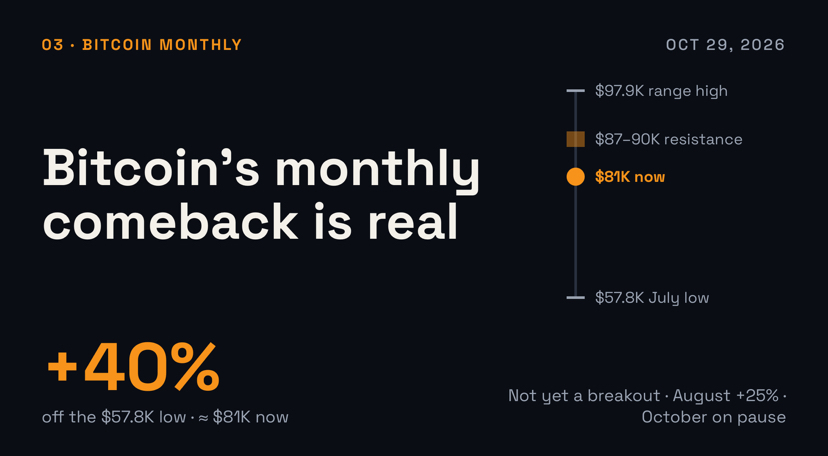
Bitcoin is trading around $81,000. That is roughly 40% above its summer low near $57,800, and still about 35% below its record high near $126,000 from October 2025. Three forces will decide what happens next: a US–Iran war that has pushed Brent crude to about $115, a Federal Reserve that is raising rates again with the 10-year Treasury yield above 5%, and an altcoin market that has yet to prove it can outrun Bitcoin.
This article takes each one in turn, shows how they connect, and sets out what would have to happen for an altseason to arrive.
The short version
Iran–US: the biggest swing factor. Talks are stuck, and Washington has reportedly told Gulf allies to prepare for a short, heavy campaign after the November 3 midterms.Interest rates: a headwind rather than a wall. The Fed hiked in September, held on October 28 with two votes for another hike, and markets lean toward a December increase.Bitcoin’s monthly recovery: real, but closer to a strong rebound inside a range than a breakout. August and September were green; October is tracking slightly red.Altseason: possible, not confirmed. The Altcoin Season Index is at 59 against a trigger of 75, and Bitcoin’s market share is near 60%.
Market snapshot
Bitcoin: about $81,000 on October 28.Fed funds rate: 3.75%–4.00%.10-year Treasury yield: about 5.0%, near its highest level since 2007.US inflation (September CPI): 3.7% year over year; core 2.6%.Brent crude: about $115, up roughly three-quarters from a year ago.Altcoin Season Index: 59. Bitcoin dominance: about 60%.
1. The Iran–US war: the macro wild card
How we got here. The US and Israel struck Iran on February 28. Iran answered by attacking US facilities in the region and restricting shipping through the Strait of Hormuz, the passage for roughly a fifth of the world’s oil. A two-week ceasefire arrived in April, Washington imposed a naval blockade on Iranian ports, and Pakistan and Qatar kept mediation alive. An interim deal reached in June collapsed on July 8 after attacks on commercial ships in the strait, followed by US strikes, Iranian retaliation against US bases in the Gulf, and the return of the blockade.
Where the two sides stand. Washington says any deal must permanently stop Iran from acquiring a nuclear weapon and wants the nuclear file addressed from the start. Vice President JD Vance has said Iran must scale back enrichment, and President Trump has said he will decide when the war ends. Tehran says it will make no concessions on the nuclear issue, wants the US blockade of its ports and the sanctions on its oil exports lifted first, rejects claims that its program has a military dimension, and says it is still giving diplomacy a chance. A Qatari proposal presented on October 25, built around seven days of confidence-building steps, was dismissed by a senior Iranian official as “unacceptable ideas”; accounts differ on whether it was a formal draft at all.
What markets are pricing. The Wall Street Journal reported that the US has told several Gulf states to prepare for a short, intense campaign after the November 3 midterms, while moving air defenses and munitions into position. Trump has said he would not strike before the election, and the White House says all options remain on the table. Iran has warned that any new attack would be answered with strikes on economic and energy targets across the region. Brent crude was trading near $115 on October 28.
How crypto has traded the war. So far the pattern is that Bitcoin sells off on escalation, largely through the oil-to-inflation-to-rates channel, and recovers when headlines cool. On February 28 it dipped to about $63,000 and was back in the low $70,000s within days, while spot ETFs took in roughly $619 million in the first week of March. It touched a two-week low near $76,700 on May 18, and traded near $62,800 on July 8 as fresh strikes lifted oil and rate-hike expectations. Each dip has been recovered so far, but three episodes are a pattern, not a guarantee.
2. High interest rates: the headwind that has not gone away
The Federal Reserve, now led by Chair Kevin Warsh, raised its policy rate by a quarter point on September 16, to 3.75%–4.00%. It was the first hike since July 2023. On October 28 the Fed held steady, but not unanimously: governor Lisa Cook and Cleveland Fed president Beth Hammack voted for another increase. The statement upgraded its description of growth from solid to strong and repeated that inflation remains elevated, and Warsh said the Fed will deliver price stability, “no ifs, ands or buts.” Investors widely expect a hike in December.
The driver is energy. September CPI rose 0.6% on the month and 3.7% on the year, with gasoline up 9.1% in a single month and energy up 20.4% from a year earlier. Core inflation, which strips out food and energy, rose 0.3% on the month and 2.6% annually. The Fed’s September projections showed a median policy rate of 4.1% at the end of 2026, which implies at least one more increase, and pushed the expected return of core PCE inflation to 2% out to 2029.
Bond markets have taken the message seriously. The 10-year Treasury yield is hovering around 5.0%, close to its highest level since 2007, the 30-year is near 5.3%, and the average 30-year mortgage rate has climbed to about 7.3%. Warsh also says he does not believe in forward guidance outside of a crisis, and the Fed will hold seven rate-setting meetings next year and six the year after, so each remaining decision carries more surprise risk.
What it means for crypto. Bitcoin pays no yield, so a 5% risk-free Treasury raises the bar for holding it, and tighter liquidity tends to hit the most speculative assets hardest. That is the textbook case for caution. Yet the tape has been more forgiving than the textbook: Bitcoin gained about 25% in August and about 6% in September, the month of the hike. Its October stall came with long-dated yields still near their highest levels in nearly two decades. On this evidence, rates are a brake on the recovery rather than a veto.
3. Bitcoin on the monthly chart: a real recovery, not yet a breakout
The base. Bitcoin ended February with five straight red monthly candles, a streak with only one precedent, in 2018–19. March then closed about 2% higher, the first green month in six. The second half of the year opened near $58,600, the low printed near $57,800, and the structure has been rebuilding since.
The recovery leg. August closed up roughly 25%, which analysts note is unusual for the year after a cycle peak. September added 6.4% to close at about $83,556. October is tracking roughly 3% lower, with Bitcoin around $81,000 after failing to hold a push toward $87,000 early in the month.
Is it “booming”? It is a strong rebound, about 40% off the low, and August’s candle is the kind of thrust bulls want to see. On the monthly scale, though, it is still a recovery inside a range: the price remains roughly 35% below the 2025 high, and October’s candle is a pause, not a continuation. The levels that matter, from analyst work published in the past week:
Support: $80,000–$82,000 first, then $73,000–$75,000 and about $67,000. The range floor is near $58,100.Resistance: $82,000–$83,000, then $87,000–$90,000. Coinbase Institutional notes that about 2.1 million BTC last changed hands between roughly $87,500 and $91,700, which is overhead supply. The six-month range high is near $97,900.Flows: spot Bitcoin ETFs took in about $2.65 billion in September, but late October has been choppy, with outflows of roughly $636 million on October 22 and $138 million on October 23 after an inflow of about $527 million on October 19.
What would upgrade or downgrade the picture. A monthly close above the $87,000–$90,000 zone, with ETF inflows returning, would turn a rebound into a trend. A loss of the roughly $78,000 midpoint of the second-half range would put $75,000 and $67,000 back in play. The October candle closes on Saturday, October 31.
4. Altseason: close, or still a few steps away?
The most-watched gauge is CoinMarketCap’s Altcoin Season Index, which measures how many of the top 100 altcoins (excluding stablecoins) have beaten Bitcoin over the past 90 days. Readings above 75 mark an altseason; readings below 25 mark a Bitcoin season.
Where things stand. The index was 59 on October 27, inside a range of roughly 53 to 64 over the past month and well short of 75. Bitcoin’s share of the total crypto market is about 60.1%, Ethereum’s is 10.6%, and every other altcoin together holds 29.4%. Altcoins in total are worth about $1.06 trillion against Bitcoin’s $1.60 trillion. Ether trades near $2,360, Solana near $102 and XRP near $1.32, which puts the ETH/BTC ratio at about 0.029.
The case that altseason is close.
The index has climbed from a low of 14 in December 2025 to the high 50s and low 60s, a big swing in ten months.Breadth improved on October 28, when Ether, XRP, Solana and BNB rose together ahead of the Fed decision.Some analysts say a broad altcoin gauge (TOTAL3) has reclaimed a long-term pattern and that altcoin monthly momentum has turned positive for the first time since 2020.
The case that it is not.
The index has slipped from 64 a month ago to 59, and Bitcoin’s share has risen, not fallen, because October’s sell-off hit altcoins harder: Ether, Solana and XRP each dropped roughly 10%–14%.Spot Ether ETFs shed about $542 million in a single week this month, a sign that capital is staying selective.Analyst Benjamin Cowen argues that restrictive policy and a firm dollar favor Bitcoin over altcoins, and expects altcoins to keep losing ground until conditions ease, which he sees as possibly a year or two away.Bitcoin set a record in October 2025 and the usual rotation into altcoins never arrived, which is why many analysts now ask whether a synchronized altseason still exists.
What to watch for confirmation. A sustained fall in Bitcoin dominance below roughly 59%, an index reading above 75, a rising ETH/BTC ratio, and net inflows into Ether and other altcoin funds. Easing yields and oil prices would likely help all four.
Verdict. On current evidence, altseason is a conditional call, not a confirmed one. The index is 16 points below its trigger and moving sideways, and the rotation has not yet shown up in dominance or in fund flows. “Somewhere close” is defensible only if oil and yields cooperate.
5. How the pieces connect
The four stories are really one chain. The war moves oil, oil moves inflation, inflation moves the Fed and Treasury yields, yields move liquidity, and liquidity moves Bitcoin first and altcoins most. The next few weeks offer three broad paths, none of which can be given reliable odds.
De-escalation or a deal. Oil eases, rate-hike bets fade, and Bitcoin has room to challenge $87,000–$90,000. Higher-beta altcoins would be the biggest beneficiaries, so this is the path where altseason talk becomes real.Renewed strikes after the midterms. If Iran follows through on its threats against Gulf energy targets, Brent could spike, pushing inflation and a December hike back to the front. Bitcoin could retest $75,000 or lower, dominance would likely climb, and altseason would slip out of view. Earlier shocks in 2026 were absorbed within days to weeks, but this time the Fed is hiking rather than holding.Stalemate. Brent stays near $100–$120, the Fed holds with a hawkish tilt or hikes, and Bitcoin chops between roughly $75,000 and $90,000. Altcoins rotate selectively by narrative rather than all at once.
6. Dates to watch
October 31: Bitcoin’s October monthly close.November 3: US midterm elections, after which the question of renewed strikes on Iran becomes live.Mid-November: the October CPI report, the next read on how much of the energy shock is feeding through.December: the next FOMC meeting, where a hike is the market’s base case.Ongoing: Qatar–Pakistan mediation, Brent crude, the 10-year yield around the 5% line, Bitcoin dominance, the Altcoin Season Index and ETF flows.
Bottom line
Bitcoin’s climb from the summer low is genuine, and August’s 25% monthly gain was a real thrust. But the macro setting is demanding: an unfinished war, oil near $115, inflation at 3.7%, a Fed that has turned to hikes and a 10-year yield near 5%. Bitcoin can keep grinding higher in that environment, as it did through September. A broad altseason is a bigger ask, because it has typically needed easier liquidity and a stronger appetite for risk. The cleanest read today is that Bitcoin’s recovery is on track while altseason remains a conditional possibility, one that the next few weeks of oil and rate news will either unlock or delay.
This article is for information only and is not financial advice. Crypto assets are highly volatile and you can lose money. Do your own research.
#CanMicrosoftDeliverOnAI
#CanGoogleDefindItsCore
#BitcoinCore32.1RaisesPeerConnectionLimit
#EarningsSeason
Sources and data notes
Figures are as of October 28–29, 2026 and change quickly; readings from data aggregators can differ by provider and time of day. Fed and rates coverage draws on CNBC, CNN, NPR and Yahoo Finance; inflation on the Bureau of Labor Statistics release as reported by Trading Economics and First Trust; oil on Trading Economics and Bloomberg; the Iran–US situation on Reuters reporting carried by several outlets and on the Wall Street Journal report as relayed by Anadolu Agency and Middle East Eye; Bitcoin price and flow data on Fortune, Investing.com, Farside Investors and SimpleMining; technical levels on Coin Edition and Coinbase Institutional commentary; altcoin data on TokenPost, Benzinga, Crypto Daily and AMBCrypto. Analyst views, including Benjamin Cowen’s, are the analysts’ own opinions.
Hormuz, the Fed and the Bitcoin Comeback: Is Altseason Really Close?
Market analysis · October 29, 2026 · Figures as of October 28–29
Bitcoin is trading around $81,000. That is roughly 40% above its summer low near $57,800, and still about 35% below its record high near $126,000 from October 2025. Three forces will decide what happens next: a US–Iran war that has pushed Brent crude to about $115, a Federal Reserve that is raising rates again with the 10-year Treasury yield above 5%, and an altcoin market that has yet to prove it can outrun Bitcoin.
This article takes each one in turn, shows how they connect, and sets out what would have to happen for an altseason to arrive.
The short version
Iran–US: the biggest swing factor. Talks are stuck, and Washington has reportedly told Gulf allies to prepare for a short, heavy campaign after the November 3 midterms.Interest rates: a headwind rather than a wall. The Fed hiked in September, held on October 28 with two votes for another hike, and markets lean toward a December increase.Bitcoin’s monthly recovery: real, but closer to a strong rebound inside a range than a breakout. August and September were green; October is tracking slightly red.Altseason: possible, not confirmed. The Altcoin Season Index is at 59 against a trigger of 75, and Bitcoin’s market share is near 60%.
Market snapshot
Bitcoin: about $81,000 on October 28.Fed funds rate: 3.75%–4.00%.10-year Treasury yield: about 5.0%, near its highest level since 2007.US inflation (September CPI): 3.7% year over year; core 2.6%.Brent crude: about $115, up roughly three-quarters from a year ago.Altcoin Season Index: 59. Bitcoin dominance: about 60%.
1. The Iran–US war: the macro wild card
How we got here. The US and Israel struck Iran on February 28. Iran answered by attacking US facilities in the region and restricting shipping through the Strait of Hormuz, the passage for roughly a fifth of the world’s oil. A two-week ceasefire arrived in April, Washington imposed a naval blockade on Iranian ports, and Pakistan and Qatar kept mediation alive. An interim deal reached in June collapsed on July 8 after attacks on commercial ships in the strait, followed by US strikes, Iranian retaliation against US bases in the Gulf, and the return of the blockade.
Where the two sides stand. Washington says any deal must permanently stop Iran from acquiring a nuclear weapon and wants the nuclear file addressed from the start. Vice President JD Vance has said Iran must scale back enrichment, and President Trump has said he will decide when the war ends. Tehran says it will make no concessions on the nuclear issue, wants the US blockade of its ports and the sanctions on its oil exports lifted first, rejects claims that its program has a military dimension, and says it is still giving diplomacy a chance. A Qatari proposal presented on October 25, built around seven days of confidence-building steps, was dismissed by a senior Iranian official as “unacceptable ideas”; accounts differ on whether it was a formal draft at all.
What markets are pricing. The Wall Street Journal reported that the US has told several Gulf states to prepare for a short, intense campaign after the November 3 midterms, while moving air defenses and munitions into position. Trump has said he would not strike before the election, and the White House says all options remain on the table. Iran has warned that any new attack would be answered with strikes on economic and energy targets across the region. Brent crude was trading near $115 on October 28.
How crypto has traded the war. So far the pattern is that Bitcoin sells off on escalation, largely through the oil-to-inflation-to-rates channel, and recovers when headlines cool. On February 28 it dipped to about $63,000 and was back in the low $70,000s within days, while spot ETFs took in roughly $619 million in the first week of March. It touched a two-week low near $76,700 on May 18, and traded near $62,800 on July 8 as fresh strikes lifted oil and rate-hike expectations. Each dip has been recovered so far, but three episodes are a pattern, not a guarantee.
2. High interest rates: the headwind that has not gone away
The Federal Reserve, now led by Chair Kevin Warsh, raised its policy rate by a quarter point on September 16, to 3.75%–4.00%. It was the first hike since July 2023. On October 28 the Fed held steady, but not unanimously: governor Lisa Cook and Cleveland Fed president Beth Hammack voted for another increase. The statement upgraded its description of growth from solid to strong and repeated that inflation remains elevated, and Warsh said the Fed will deliver price stability, “no ifs, ands or buts.” Investors widely expect a hike in December.
The driver is energy. September CPI rose 0.6% on the month and 3.7% on the year, with gasoline up 9.1% in a single month and energy up 20.4% from a year earlier. Core inflation, which strips out food and energy, rose 0.3% on the month and 2.6% annually. The Fed’s September projections showed a median policy rate of 4.1% at the end of 2026, which implies at least one more increase, and pushed the expected return of core PCE inflation to 2% out to 2029.
Bond markets have taken the message seriously. The 10-year Treasury yield is hovering around 5.0%, close to its highest level since 2007, the 30-year is near 5.3%, and the average 30-year mortgage rate has climbed to about 7.3%. Warsh also says he does not believe in forward guidance outside of a crisis, and the Fed will hold seven rate-setting meetings next year and six the year after, so each remaining decision carries more surprise risk.
What it means for crypto. Bitcoin pays no yield, so a 5% risk-free Treasury raises the bar for holding it, and tighter liquidity tends to hit the most speculative assets hardest. That is the textbook case for caution. Yet the tape has been more forgiving than the textbook: Bitcoin gained about 25% in August and about 6% in September, the month of the hike. Its October stall came with long-dated yields still near their highest levels in nearly two decades. On this evidence, rates are a brake on the recovery rather than a veto.
3. Bitcoin on the monthly chart: a real recovery, not yet a breakout
The base. Bitcoin ended February with five straight red monthly candles, a streak with only one precedent, in 2018–19. March then closed about 2% higher, the first green month in six. The second half of the year opened near $58,600, the low printed near $57,800, and the structure has been rebuilding since.
The recovery leg. August closed up roughly 25%, which analysts note is unusual for the year after a cycle peak. September added 6.4% to close at about $83,556. October is tracking roughly 3% lower, with Bitcoin around $81,000 after failing to hold a push toward $87,000 early in the month.
Is it “booming”? It is a strong rebound, about 40% off the low, and August’s candle is the kind of thrust bulls want to see. On the monthly scale, though, it is still a recovery inside a range: the price remains roughly 35% below the 2025 high, and October’s candle is a pause, not a continuation. The levels that matter, from analyst work published in the past week:
Support: $80,000–$82,000 first, then $73,000–$75,000 and about $67,000. The range floor is near $58,100.Resistance: $82,000–$83,000, then $87,000–$90,000. Coinbase Institutional notes that about 2.1 million BTC last changed hands between roughly $87,500 and $91,700, which is overhead supply. The six-month range high is near $97,900.Flows: spot Bitcoin ETFs took in about $2.65 billion in September, but late October has been choppy, with outflows of roughly $636 million on October 22 and $138 million on October 23 after an inflow of about $527 million on October 19.
What would upgrade or downgrade the picture. A monthly close above the $87,000–$90,000 zone, with ETF inflows returning, would turn a rebound into a trend. A loss of the roughly $78,000 midpoint of the second-half range would put $75,000 and $67,000 back in play. The October candle closes on Saturday, October 31.
4. Altseason: close, or still a few steps away?
The most-watched gauge is CoinMarketCap’s Altcoin Season Index, which measures how many of the top 100 altcoins (excluding stablecoins) have beaten Bitcoin over the past 90 days. Readings above 75 mark an altseason; readings below 25 mark a Bitcoin season.
Where things stand. The index was 59 on October 27, inside a range of roughly 53 to 64 over the past month and well short of 75. Bitcoin’s share of the total crypto market is about 60.1%, Ethereum’s is 10.6%, and every other altcoin together holds 29.4%. Altcoins in total are worth about $1.06 trillion against Bitcoin’s $1.60 trillion. Ether trades near $2,360, Solana near $102 and XRP near $1.32, which puts the ETH/BTC ratio at about 0.029.
The case that altseason is close.
The index has climbed from a low of 14 in December 2025 to the high 50s and low 60s, a big swing in ten months.Breadth improved on October 28, when Ether, XRP, Solana and BNB rose together ahead of the Fed decision.Some analysts say a broad altcoin gauge (TOTAL3) has reclaimed a long-term pattern and that altcoin monthly momentum has turned positive for the first time since 2020.
The case that it is not.
The index has slipped from 64 a month ago to 59, and Bitcoin’s share has risen, not fallen, because October’s sell-off hit altcoins harder: Ether, Solana and XRP each dropped roughly 10%–14%.Spot Ether ETFs shed about $542 million in a single week this month, a sign that capital is staying selective.Analyst Benjamin Cowen argues that restrictive policy and a firm dollar favor Bitcoin over altcoins, and expects altcoins to keep losing ground until conditions ease, which he sees as possibly a year or two away.Bitcoin set a record in October 2025 and the usual rotation into altcoins never arrived, which is why many analysts now ask whether a synchronized altseason still exists.
What to watch for confirmation. A sustained fall in Bitcoin dominance below roughly 59%, an index reading above 75, a rising ETH/BTC ratio, and net inflows into Ether and other altcoin funds. Easing yields and oil prices would likely help all four.
Verdict. On current evidence, altseason is a conditional call, not a confirmed one. The index is 16 points below its trigger and moving sideways, and the rotation has not yet shown up in dominance or in fund flows. “Somewhere close” is defensible only if oil and yields cooperate.
5. How the pieces connect
The four stories are really one chain. The war moves oil, oil moves inflation, inflation moves the Fed and Treasury yields, yields move liquidity, and liquidity moves Bitcoin first and altcoins most. The next few weeks offer three broad paths, none of which can be given reliable odds.
De-escalation or a deal. Oil eases, rate-hike bets fade, and Bitcoin has room to challenge $87,000–$90,000. Higher-beta altcoins would be the biggest beneficiaries, so this is the path where altseason talk becomes real.Renewed strikes after the midterms. If Iran follows through on its threats against Gulf energy targets, Brent could spike, pushing inflation and a December hike back to the front. Bitcoin could retest $75,000 or lower, dominance would likely climb, and altseason would slip out of view. Earlier shocks in 2026 were absorbed within days to weeks, but this time the Fed is hiking rather than holding.Stalemate. Brent stays near $100–$120, the Fed holds with a hawkish tilt or hikes, and Bitcoin chops between roughly $75,000 and $90,000. Altcoins rotate selectively by narrative rather than all at once.
6. Dates to watch
October 31: Bitcoin’s October monthly close.November 3: US midterm elections, after which the question of renewed strikes on Iran becomes live.Mid-November: the October CPI report, the next read on how much of the energy shock is feeding through.December: the next FOMC meeting, where a hike is the market’s base case.Ongoing: Qatar–Pakistan mediation, Brent crude, the 10-year yield around the 5% line, Bitcoin dominance, the Altcoin Season Index and ETF flows.
Bottom line
Bitcoin’s climb from the summer low is genuine, and August’s 25% monthly gain was a real thrust. But the macro setting is demanding: an unfinished war, oil near $115, inflation at 3.7%, a Fed that has turned to hikes and a 10-year yield near 5%. Bitcoin can keep grinding higher in that environment, as it did through September. A broad altseason is a bigger ask, because it has typically needed easier liquidity and a stronger appetite for risk. The cleanest read today is that Bitcoin’s recovery is on track while altseason remains a conditional possibility, one that the next few weeks of oil and rate news will either unlock or delay.
This article is for information only and is not financial advice. Crypto assets are highly volatile and you can lose money. Do your own research.
#CanMicrosoftDeliverOnAI
#CanGoogleDefindItsCore
#BitcoinCore32.1RaisesPeerConnectionLimit
#EarningsSeason
Sources and data notes
Figures are as of October 28–29, 2026 and change quickly; readings from data aggregators can differ by provider and time of day. Fed and rates coverage draws on CNBC, CNN, NPR and Yahoo Finance; inflation on the Bureau of Labor Statistics release as reported by Trading Economics and First Trust; oil on Trading Economics and Bloomberg; the Iran–US situation on Reuters reporting carried by several outlets and on the Wall Street Journal report as relayed by Anadolu Agency and Middle East Eye; Bitcoin price and flow data on Fortune, Investing.com, Farside Investors and SimpleMining; technical levels on Coin Edition and Coinbase Institutional commentary; altcoin data on TokenPost, Benzinga, Crypto Daily and AMBCrypto. Analyst views, including Benjamin Cowen’s, are the analysts’ own opinions.
9

·
--
Стаття
Переглянути переклад
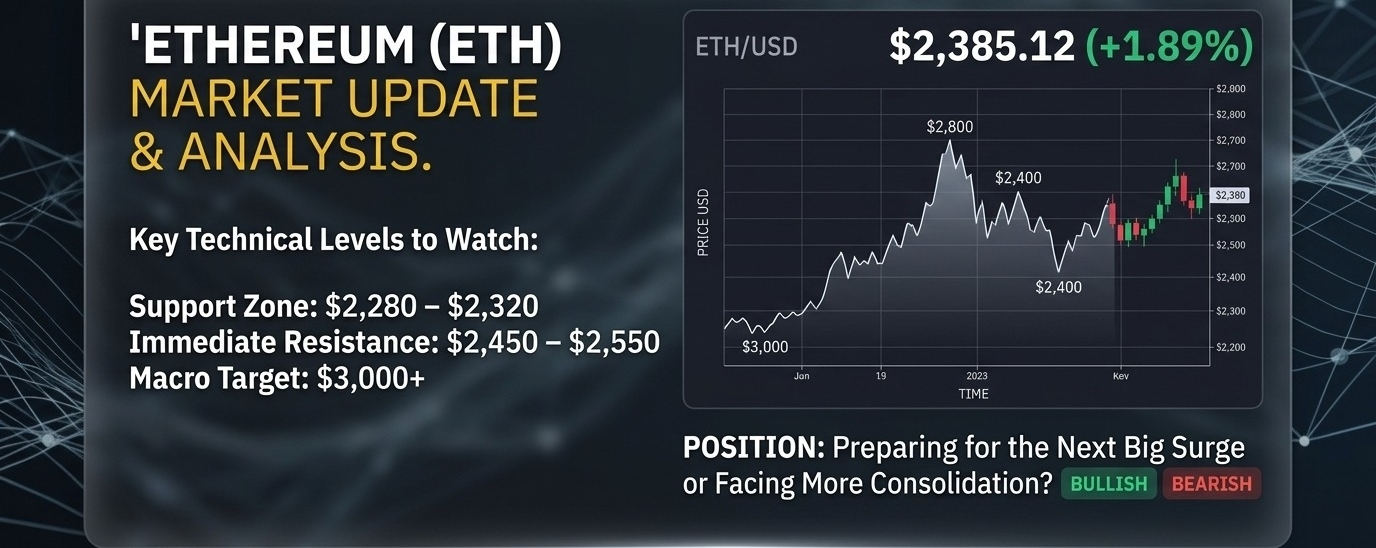
Ethereum ($ETH ) Market Update & Technical Analysis
Is $ETH Preparing for the Next Big Surge or FacEthereum (ETH) Market Update & Technical Analysis
Is $ETH Preparing for the Next Big Surge or Facing More Consolidation?
Ethereum ($ETH) is currently trading in a crucial zone near $2,340–$2,400 as the broader market responds to institutional movements, ETF flows, and key network developments.
Here is a deep dive into what is currently happening with $ETH and what you need to watch out for! 👇
🟢 1. Spot ETF Outflows & Institutional Shifts
In recent weeks, spot Ethereum ETFs have experienced cooling demand. Net assets decreased from $17.7 Billion down to $14.1 Billion. Institutional traders are taking a cautious "wait-and-see" approach amidst global market macroeconomic updates. However, long-term accumulation ranges remain active around major support levels.
🛠️ 2. Upgrade Roadmap & Network Security
The development team behind Ethereum continues to optimize mainnet efficiency and layer-2 scalability. While upcoming upgrade roadmaps (such as Glamsterdam) have undergone rigorous security testing and minor testnet delays via auditors, the long-term fundamentals around Ethereum’s proof-of-stake yield and burn mechanisms remain solid.
📊 3. Key Technical Levels to Watch
Support Zone: $2,280 – $2,320
If ETH holds this range, buyers could step in to form a strong double-bottom structure.
Immediate Resistance: $2,450 – $2,550
A breakout above this level with heavy volume could trigger a rally back toward $2,800+.
Macro Target: $3,000+
Sustained spot demand and renewed ETF inflows will be essential to push ETH back to major highs.
💡 Trader's Takeaway & Strategy
Short-Term: High volatility around current price action. Manage risk closely with proper stop-losses if trading futures.
Long-Term: Dollar-Cost Averaging (DCA) into fundamental spot assets like ETH continues to be a preferred strategy during market consolidation periods.
💬 What's your price prediction for $ETH by the end of the month?
Are you Bullish 🐂 or Bearish 🐻? Drop your thoughts below! 👇
#BitcoinCore32.1RaisesPeerConnectionLimit #EarningsSeason #SquareBinance #Ethereum #CryptoNews
Ethereum ($ETH ) Market Update & Technical Analysis Is $ETH Preparing for the Next Big Surge or Fac
Ethereum (ETH) Market Update & Technical Analysis
Is $ETH Preparing for the Next Big Surge or Facing More Consolidation?
Ethereum ($ETH) is currently trading in a crucial zone near $2,340–$2,400 as the broader market responds to institutional movements, ETF flows, and key network developments.
Here is a deep dive into what is currently happening with $ETH and what you need to watch out for! 👇
🟢 1. Spot ETF Outflows & Institutional Shifts
In recent weeks, spot Ethereum ETFs have experienced cooling demand. Net assets decreased from $17.7 Billion down to $14.1 Billion. Institutional traders are taking a cautious "wait-and-see" approach amidst global market macroeconomic updates. However, long-term accumulation ranges remain active around major support levels.
🛠️ 2. Upgrade Roadmap & Network Security
The development team behind Ethereum continues to optimize mainnet efficiency and layer-2 scalability. While upcoming upgrade roadmaps (such as Glamsterdam) have undergone rigorous security testing and minor testnet delays via auditors, the long-term fundamentals around Ethereum’s proof-of-stake yield and burn mechanisms remain solid.
📊 3. Key Technical Levels to Watch
Support Zone: $2,280 – $2,320
If ETH holds this range, buyers could step in to form a strong double-bottom structure.
Immediate Resistance: $2,450 – $2,550
A breakout above this level with heavy volume could trigger a rally back toward $2,800+.
Macro Target: $3,000+
Sustained spot demand and renewed ETF inflows will be essential to push ETH back to major highs.
💡 Trader's Takeaway & Strategy
Short-Term: High volatility around current price action. Manage risk closely with proper stop-losses if trading futures.
Long-Term: Dollar-Cost Averaging (DCA) into fundamental spot assets like ETH continues to be a preferred strategy during market consolidation periods.
💬 What's your price prediction for $ETH by the end of the month?
Are you Bullish 🐂 or Bearish 🐻? Drop your thoughts below! 👇
#BitcoinCore32.1RaisesPeerConnectionLimit #EarningsSeason #SquareBinance #Ethereum #CryptoNews
1

Переглянути переклад
Bitcoin is facing renewed selling pressure after its recent recovery above $80,500 faded following the Federal Reserve’s latest decision. $BTC
{spot}(BTCUSDT)
is trading near the $80,000 area, with volatility remaining high.
Support: $79,500, then $77,000–$77,500.
Resistance: $81,400–$82,500.
Short-term outlook: Neutral to bearish while Bitcoin struggles to break above resistance. Holding support could allow another recovery attempt; breaking below it may trigger further losses.
Trading takeaway: Wait for confirmation before entering a trade. A sustained move above $82,500 would improve the bullish outlook, while a break below $79,500 would increase downside risk.
This is market commentary, not financial advice. Bitcoin is highly volatile, and support/resistance levels can change quickly.#CanMicrosoftDeliverOnAI #BitcoinCore32.1RaisesPeerConnectionLimit #BitcoinCoreIdentifiesThreeVulnerabilities #CanGoogleDefindItsCore
Bitcoin is facing renewed selling pressure after its recent recovery above $80,500 faded following the Federal Reserve’s latest decision. $BTC
is trading near the $80,000 area, with volatility remaining high.
Support: $79,500, then $77,000–$77,500.
Resistance: $81,400–$82,500.
Short-term outlook: Neutral to bearish while Bitcoin struggles to break above resistance. Holding support could allow another recovery attempt; breaking below it may trigger further losses.
Trading takeaway: Wait for confirmation before entering a trade. A sustained move above $82,500 would improve the bullish outlook, while a break below $79,500 would increase downside risk.
This is market commentary, not financial advice. Bitcoin is highly volatile, and support/resistance levels can change quickly.#CanMicrosoftDeliverOnAI #BitcoinCore32.1RaisesPeerConnectionLimit #BitcoinCoreIdentifiesThreeVulnerabilities #CanGoogleDefindItsCore

3

·
--
Переглянути переклад
#fedtobeginshrinkingratesettingcalendarin2027
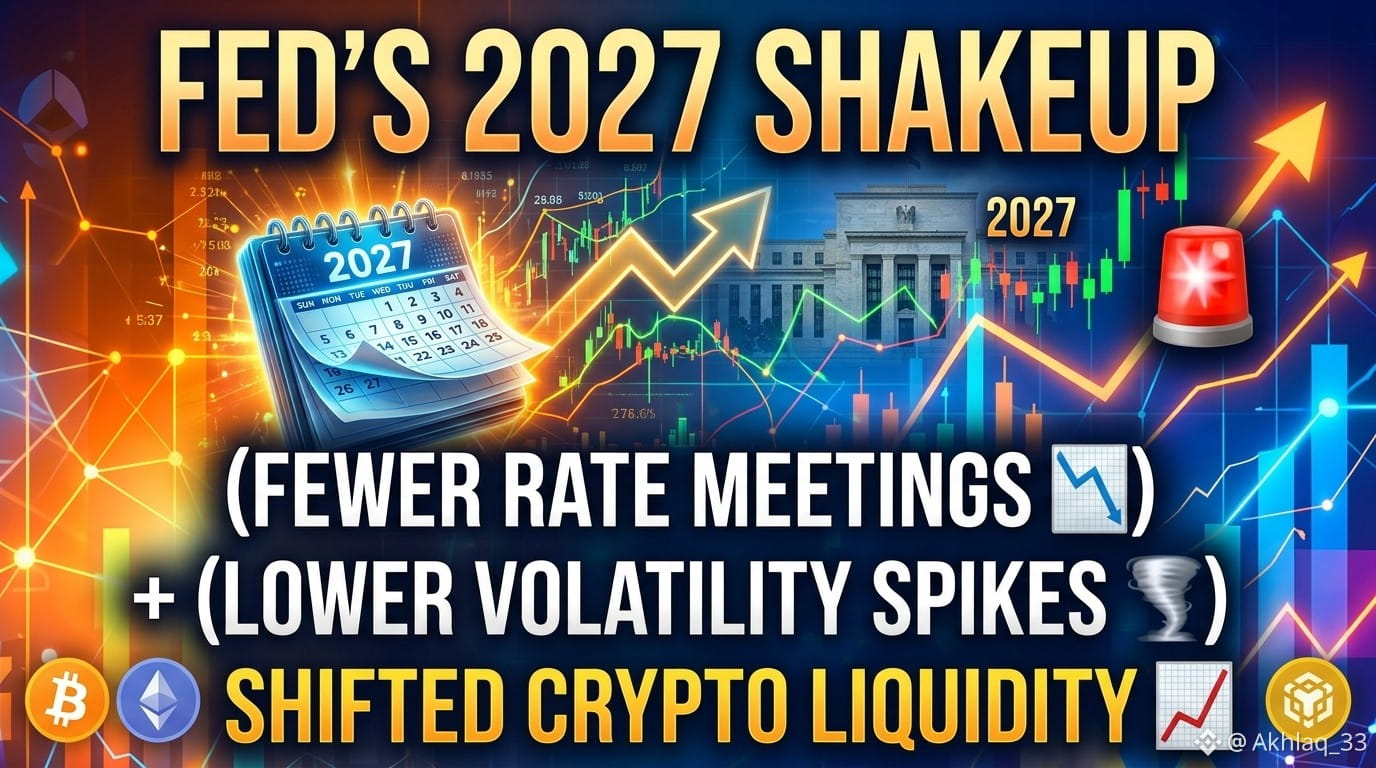
The Fed’s 2027 Schedule Shift: Less Noise, More Signal?
The discussion around the Federal Reserve’s reported plan to[ shrink its rate-setting calendar](https://www.binance.com/en/square/hashtag/fedtobeginshrinkingratesettingcalendarin2027) is bringing up an interesting debate for traders and macro watchers alike.
With discussions pointing toward fewer rate-decision meetings down the road—moving from the traditional 8 meetings toward fewer active policy sessions and more strategy-focused discussions—market rhythms could look quite different.
What this could mean for markets:
Fewer "Wick-Sweeps": Less frequent rate decisions could mean fewer sudden, macro-driven volatility spikes that frequently trigger rapid liquidations across derivatives markets.
Organic Price Action: Instead of hanging onto every single announcement for short-term direction, markets may need to lean more heavily on underlying fundamentals, spot demand, and broader economic data.
A Change in Rhythm: Traders accustomed to staying up late for every FOMC catalyst might find themselves navigating longer periods of sideways trend development.
Are fewer, higher-impact meetings going to help the market mature, or are we going to miss the high-volatility action? Let’s discuss below! 👇📉🚀
#CanMicrosoftDeliverOnAI #FedWatch #BitcoinCore32.1RaisesPeerConnectionLimit $BTC $ETH
#fedtobeginshrinkingratesettingcalendarin2027
The Fed’s 2027 Schedule Shift: Less Noise, More Signal?
The discussion around the Federal Reserve’s reported plan to shrink its rate-setting calendar is bringing up an interesting debate for traders and macro watchers alike.
With discussions pointing toward fewer rate-decision meetings down the road—moving from the traditional 8 meetings toward fewer active policy sessions and more strategy-focused discussions—market rhythms could look quite different.
What this could mean for markets:
Fewer "Wick-Sweeps": Less frequent rate decisions could mean fewer sudden, macro-driven volatility spikes that frequently trigger rapid liquidations across derivatives markets.
Organic Price Action: Instead of hanging onto every single announcement for short-term direction, markets may need to lean more heavily on underlying fundamentals, spot demand, and broader economic data.
A Change in Rhythm: Traders accustomed to staying up late for every FOMC catalyst might find themselves navigating longer periods of sideways trend development.
Are fewer, higher-impact meetings going to help the market mature, or are we going to miss the high-volatility action? Let’s discuss below! 👇📉🚀
#CanMicrosoftDeliverOnAI #FedWatch #BitcoinCore32.1RaisesPeerConnectionLimit $BTC $ETH
20

Переглянути переклад
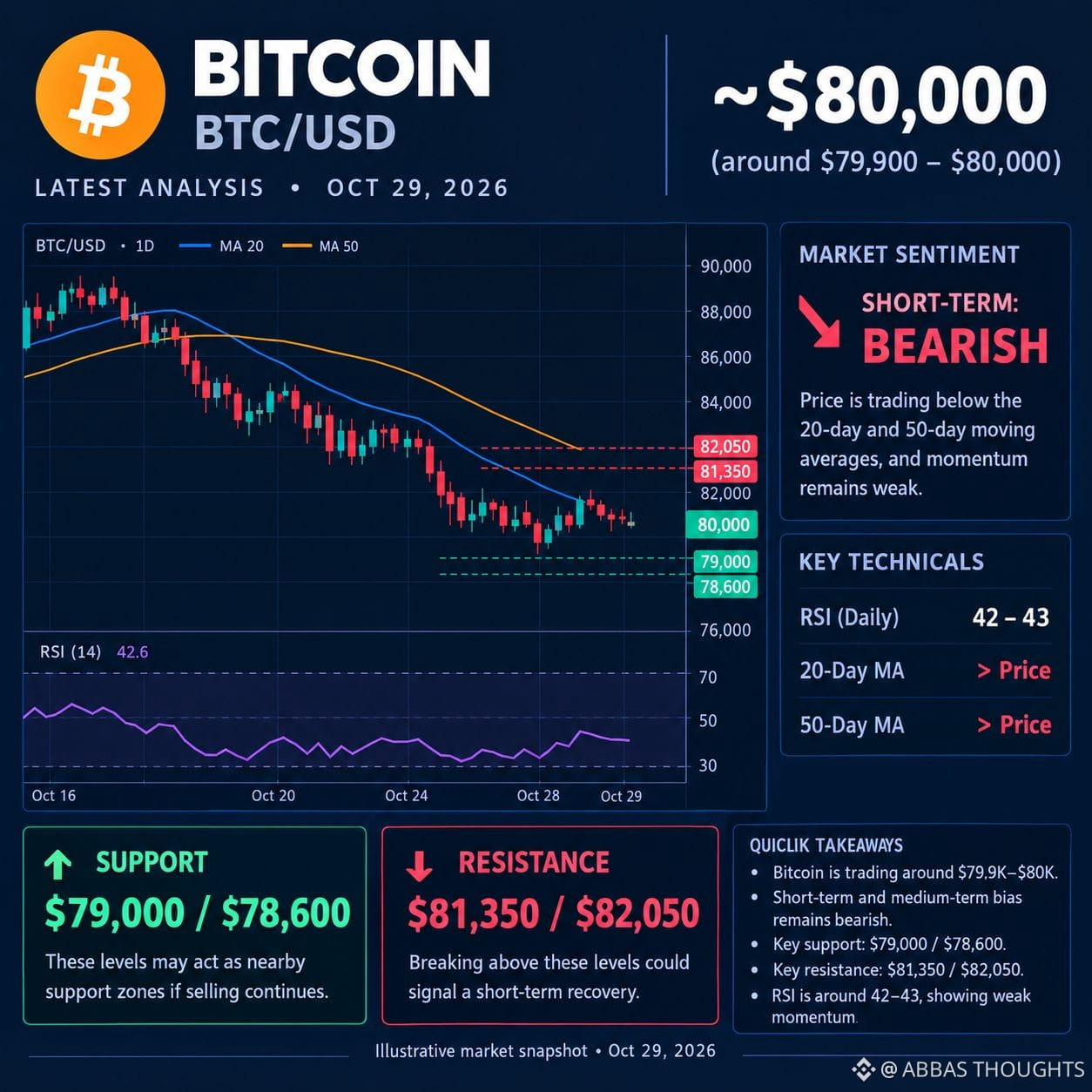
$BTC Resistance (selling pressure)
$81,350 – $82,050
Support (buying zone to watch)
$79,000 – $78,600
Technical levels reported for October 29, 2026.
Bitcoin chart picture
Illustrative technical chart — not a live exchange chart.
What could happen next?
Bullish scenario: $BTC breaks above $82,050 and holds, potentially sporting a recovery.
Bearish scenario: $BTC falls below $78,600, increasing the risk of further downside.
Current view: Cautious to bearish in the short term; wait for confirmation before entering a trade.
My suggestion: Avoid chasing sudden price movements, and use a stop-loss if trading. Crypto is highly volatile, and these levels are not guaranteed
#BitcoinForecast #BitcoinAnalysis #BitcoinThoughts #BitcoinCore32.1RaisesPeerConnectionLimit #BitcoinWarnings
WHAT ABOUT YOUR THOUGHTS TELL ME IN COMMENTS ..!
{spot}(BTCUSDT)
$BTC Resistance (selling pressure)
$81,350 – $82,050
Support (buying zone to watch)
$79,000 – $78,600
Technical levels reported for October 29, 2026.
Bitcoin chart picture
Illustrative technical chart — not a live exchange chart.
What could happen next?
Bullish scenario: $BTC breaks above $82,050 and holds, potentially sporting a recovery.
Bearish scenario: $BTC falls below $78,600, increasing the risk of further downside.
Current view: Cautious to bearish in the short term; wait for confirmation before entering a trade.
My suggestion: Avoid chasing sudden price movements, and use a stop-loss if trading. Crypto is highly volatile, and these levels are not guaranteed
#BitcoinForecast #BitcoinAnalysis #BitcoinThoughts #BitcoinCore32.1RaisesPeerConnectionLimit #BitcoinWarnings
WHAT ABOUT YOUR THOUGHTS TELL ME IN COMMENTS ..!
17

·
--
Переглянути переклад
$ARB LONG SETUP — BUYERS EYE A RELIEF BOUNCE!
ARB is holding near local lows, with a potential recovery toward the next resistance zones if bullish momentum returns.
Entry: 0.16695 – 0.16779
TP1: 0.17546
TP2: 0.18193
Stop Loss: 0.16194
$ARB
{spot}(ARBUSDT)
#CanMicrosoftDeliverOnAI #CanGoogleDefindItsCore #FedWatch #BitcoinCore32.1RaisesPeerConnectionLimit #EarningsSeason
$ARB LONG SETUP — BUYERS EYE A RELIEF BOUNCE!
ARB is holding near local lows, with a potential recovery toward the next resistance zones if bullish momentum returns.
Entry: 0.16695 – 0.16779
TP1: 0.17546
TP2: 0.18193
Stop Loss: 0.16194
$ARB
#CanMicrosoftDeliverOnAI #CanGoogleDefindItsCore #FedWatch #BitcoinCore32.1RaisesPeerConnectionLimit #EarningsSeason

27

·
--
Переглянути переклад
#BitcoinCore32.1RaisesPeerConnectionLimit
🚀🔥 BNB BULLS ARE BACK — $780 NEXT OR A SURPRISE PULLBACK? 💛
$BNB is showing renewed strength, with the latest market data placing it around $750–$760. Buyers are pushing higher, but the real test is whether bulls can sustain the momentum and break through resistance! 📊 <Cite refs={["turn160615search1","turn160615search3"]}/>
📈 BULLISH ROADMAP 🟢 Break above $760 → Potential move toward $780 🚀 Strong follow-through → $800 comes into focus 💰 From $755 to $780 = approximately +3.3% 🔥 From $755 to $800 = approximately +6.0%
📉 BEARISH WARNING If BNB gets rejected near $760–$780, sellers could push the price back toward $745 or the $740 support zone.
🎯 MY MARKET VIEW: Bulls have a chance to extend the rally, but confirmation matters. A convincing breakout with strong volume would strengthen the bullish case; losing support could trigger another pullback.
💬 BNB COMMUNITY, MAKE YOUR CALL! $760, $780, $800 — or are bears preparing a comeback? 👇
❤️ Like | 🔁 Share | 💭 Drop your prediction!
⚠️ These are speculative scenarios, not guaranteed targets. Crypto is volatile. DYOR and manage your risk.

2

#fedwatch
🚨🏦 ФРС ВЗЯЛА ПАУЗУ — АЛЕ «ЯСТРУБИ» ХОТІЛИ ПІДВИЩИТИ СТАВКУ! 👀🔥
Чи не надто рано крипторинок святкує? 📉📈
Усі зосереджені на тому, що ФРС залишила процентні ставки без змін. Але є ще одна деталь, яку трейдерам не варто ігнорувати: за повідомленнями, двоє посадовців виступали за підвищення ставки на 25 базисних пунктів. ⚠️
🏦 ЖОВТНЕВЕ ЗАСІДАННЯ FOMC: ГОЛОВНЕ
✅ Процентні ставки залишили на рівні 3.75%–4.00% 🔴 Ліза Кук — за повідомленнями, виступала за підвищення ставки на 25 базисних пунктів 🔴 Бет Гаммак — за повідомленнями, виступала за підвищення ставки на 25 базисних пунктів 📊 За повідомленнями, результати голосування: 10–2 ⚠️ Інфляція залишається високою, тож подальші рішення щодо монетарної політики — невизначені.
🔥 ЩО ЦЕ МОЖЕ ОЗНАЧАТИ ДЛЯ РИНКІВ?
🥇 $XAU (GOLD): Зміцнення долара та зростання дохідності облігацій можуть тиснути на ціни золота.
🥈 $XAG (SILVER): Зміна очікувань щодо ставок може спричинити різкіші коливання.
🚀 $SOL (SOLANA): Яструбині сигнали ФРС можуть послабити схильність до ризику й тиснути на криптоактиви з високою бетою.
🐕 $DOGE (DOGECOIN): Спекулятивні ралі можуть зіткнутися з перешкодами, якщо умови ліквідності посиляться.
💥 НАЙБІЛЬША ПАСТКА, ЯКОЇ ТРЕЙДЕРАМ СЛІД УНИКАТИ!
Пауза ФРС НЕ означає автоматично, що її позиція стала м’якою.
🟢 БИЧИЙ СЦЕНАРІЙ Інфляція сповільнюється → Побоювання щодо підвищення ставок слабшають → Долар дешевшає → Золото й ризикові активи можуть відновитися.
🔴 ВЕДМЕЖИЙ СЦЕНАРІЙ Інфляція залишається високою → Повертаються очікування підвищення ставок → Долар зміцнюється → Спекулятивні активи знову опиняються під тиском.
🎯 ЗА ЧИМ ТРЕЙДЕРАМ СТЕЖИТИ ДАЛІ?
Майбутні дані щодо інфляції
Дохідність казначейських облігацій США та сила долара
Наступні сигнали ФРС щодо монетарної політики
Реакція BTC та загальний імпульс альткоїнів
⚠️ ПІДСУМОК: ФРС не підвищила ставки, але яструбині голоси все ще мають значення. Не сприймайте паузу як гарантований бичий сигнал.
💬 Ваш прогноз, родино Binance:
🟢 Бичачий — альтсезон триває! 🔴 Ведмежий — попереду подальше падіння?
#CanMicrosoftDeliverOnAI #CanGoogleDefindItsCore #BitcoinCore32.1RaisesPeerConnectionLimit #RippleRevolution

13

Стаття
FedWatch#fedwatch
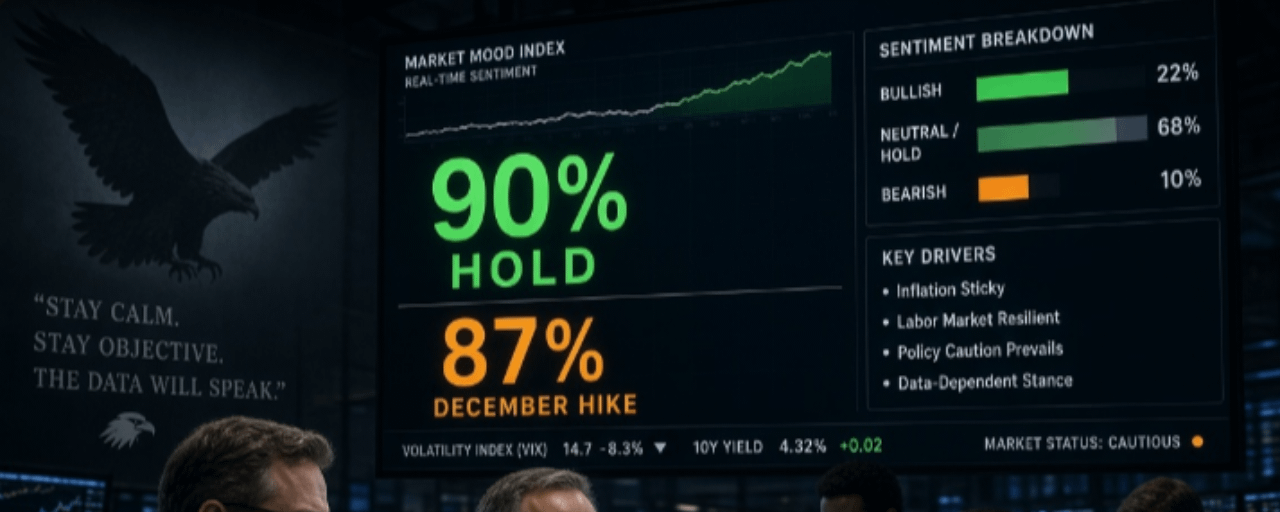
За даними інструмента CME FedWatch, очікування ринку щодо рішення Федеральної резервної системи про процентну ставку в жовтні 2026 року переважно схиляються до збереження ставок без змін, а ймовірність їх підвищення вкрай низька.
Очікування щодо рішення за ставкою в жовтні: майже немає сумнівів, що ставки залишаться без змін
Згідно з останніми даними інструмента CME FedWatch перед ухваленням рішення, імовірність того, що ФРС збереже цільовий діапазон ставки за федеральними фондами на рівні 3.75%-4.00%, становить приблизно 90% або навіть більше.
FedWatch
#fedwatch
За даними інструмента CME FedWatch, очікування ринку щодо рішення Федеральної резервної системи про процентну ставку в жовтні 2026 року переважно схиляються до збереження ставок без змін, а ймовірність їх підвищення вкрай низька.
Очікування щодо рішення за ставкою в жовтні: майже немає сумнівів, що ставки залишаться без змін
Згідно з останніми даними інструмента CME FedWatch перед ухваленням рішення, імовірність того, що ФРС збереже цільовий діапазон ставки за федеральними фондами на рівні 3.75%-4.00%, становить приблизно 90% або навіть більше.
1
37
·
--
Переглянути переклад
#BitcoinCore32.1RaisesPeerConnectionLimit
🚀 XRP TO $5? THE NEXT BULL RUN COULD CHANGE EVERYTHING! 🔥
$XRP is back in the spotlight as investors look ahead to the next major crypto rally. But can XRP really climb to $5, or is that target too ambitious for this cycle?
📈 Bullish Scenario: If buying pressure strengthens, market sentiment turns positive, and capital flows back into altcoins, XRP could gain significant momentum toward higher price levels.
📉 Bearish Scenario: If the market weakens or buyers lose momentum, XRP could face pullbacks and struggle to maintain its gains.
🎯 My Take: The $5 target is an interesting bull-run possibility, but it will require strong demand and sustained market momentum. Watch key support and resistance levels instead of relying on hype alone.
💬 XRP ARMY, LET’S TALK!
🔥 Bullish target: $5
📈 Moderate target: $3–$4
⚠️ Bearish scenario: Further downside if market conditions deteriorate
What’s your realistic XRP target for the next bull run?
#XRP #Ripple #CryptoMarket #AltcoinSeason #BullRun #CryptoTrading
⚠️ NFA. These are hypothetical scenarios, not guaranteed price predictions. Always manage risk and do your own research.

4

·
--
Переглянути переклад
Bitcoin ($BTC): Currently navigating around $88,000–$91,000 as market liquidity shifts. Investors are watching macroeconomic signals and interest rate expectations closely as BTC consolidated after recent highs.
Ripple ($XRP): Consolidating around $1.30. Ripple's enterprise expansion—highlighted by its RLUSD stablecoin integration with Coinbase—continues to reinforce utility, though $XRP faces strong short-term resistance levels.
$BTC #BitcoinCore32.1RaisesPeerConnectionLimit $XRP #Xrp🔥🔥
Bitcoin ($BTC ): Currently navigating around $88,000–$91,000 as market liquidity shifts. Investors are watching macroeconomic signals and interest rate expectations closely as BTC consolidated after recent highs.
Ripple ($XRP ): Consolidating around $1.30. Ripple's enterprise expansion—highlighted by its RLUSD stablecoin integration with Coinbase—continues to reinforce utility, though $XRP faces strong short-term resistance levels.
$BTC #BitcoinCore32.1RaisesPeerConnectionLimit $XRP #Xrp🔥🔥
Ripple ($XRP ): Consolidating around $1.30. Ripple's enterprise expansion—highlighted by its RLUSD stablecoin integration with Coinbase—continues to reinforce utility, though $XRP faces strong short-term resistance levels.
$BTC #BitcoinCore32.1RaisesPeerConnectionLimit $XRP #Xrp🔥🔥
24
·
--
Переглянути переклад
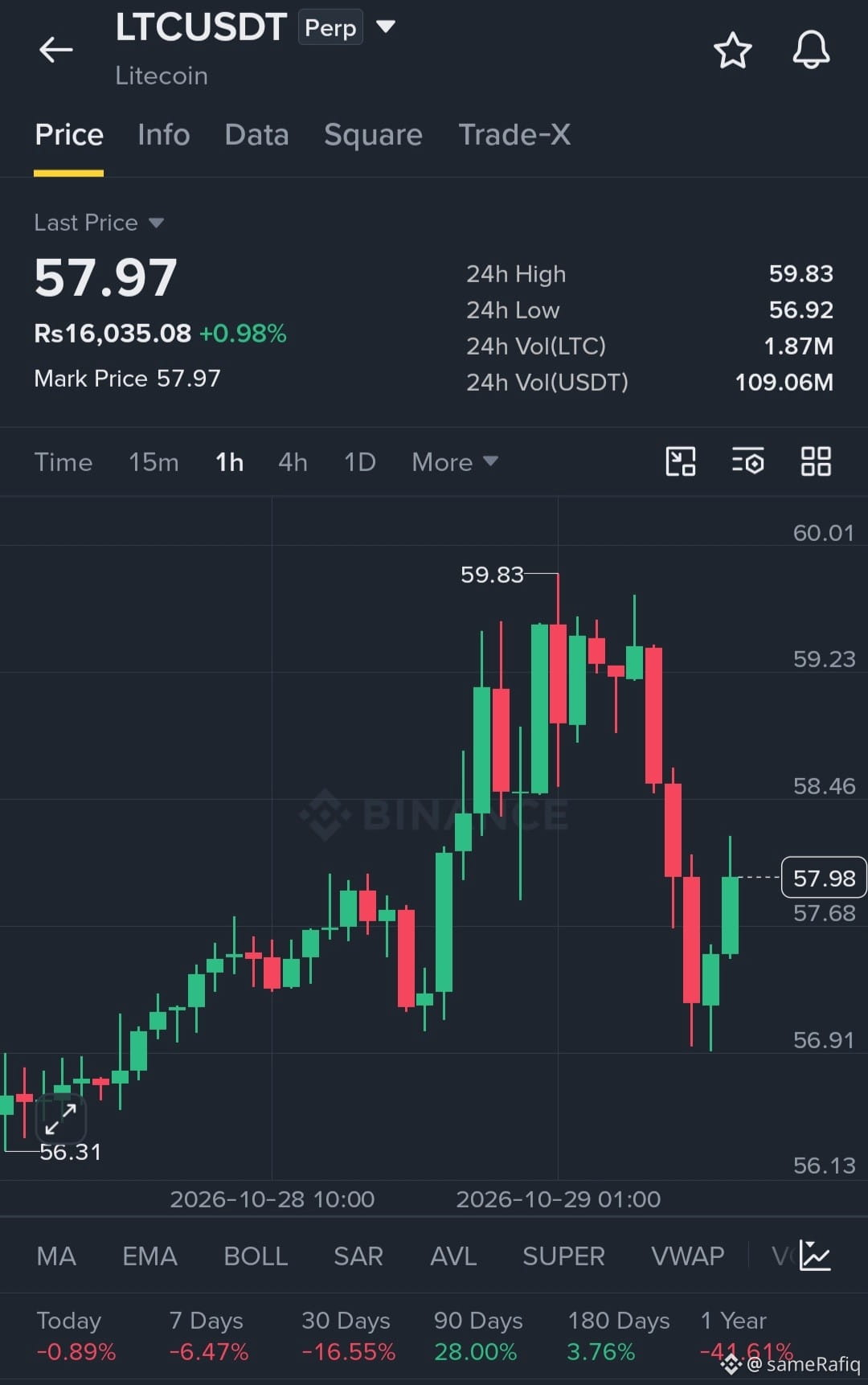
$LTC LONG SETUP — BULLS LOOK READY FOR A REBOUND!
LTC swept below $57 and is attempting to recover. Buyers need to reclaim resistance to confirm further upside.
Entry Zone: $57.77 – $58.06
TP1: $60.72
TP2: $62.96
Stop Loss: $56.04
$LTC
{spot}(LTCUSDT)
#CanMicrosoftDeliverOnAI #CanGoogleDefindItsCore #FedWatch #BitcoinCore32.1RaisesPeerConnectionLimit #EarningsSeason
$LTC LONG SETUP — BULLS LOOK READY FOR A REBOUND!
LTC swept below $57 and is attempting to recover. Buyers need to reclaim resistance to confirm further upside.
Entry Zone: $57.77 – $58.06
TP1: $60.72
TP2: $62.96
Stop Loss: $56.04
$LTC
#CanMicrosoftDeliverOnAI #CanGoogleDefindItsCore #FedWatch #BitcoinCore32.1RaisesPeerConnectionLimit #EarningsSeason
1
10

·
--
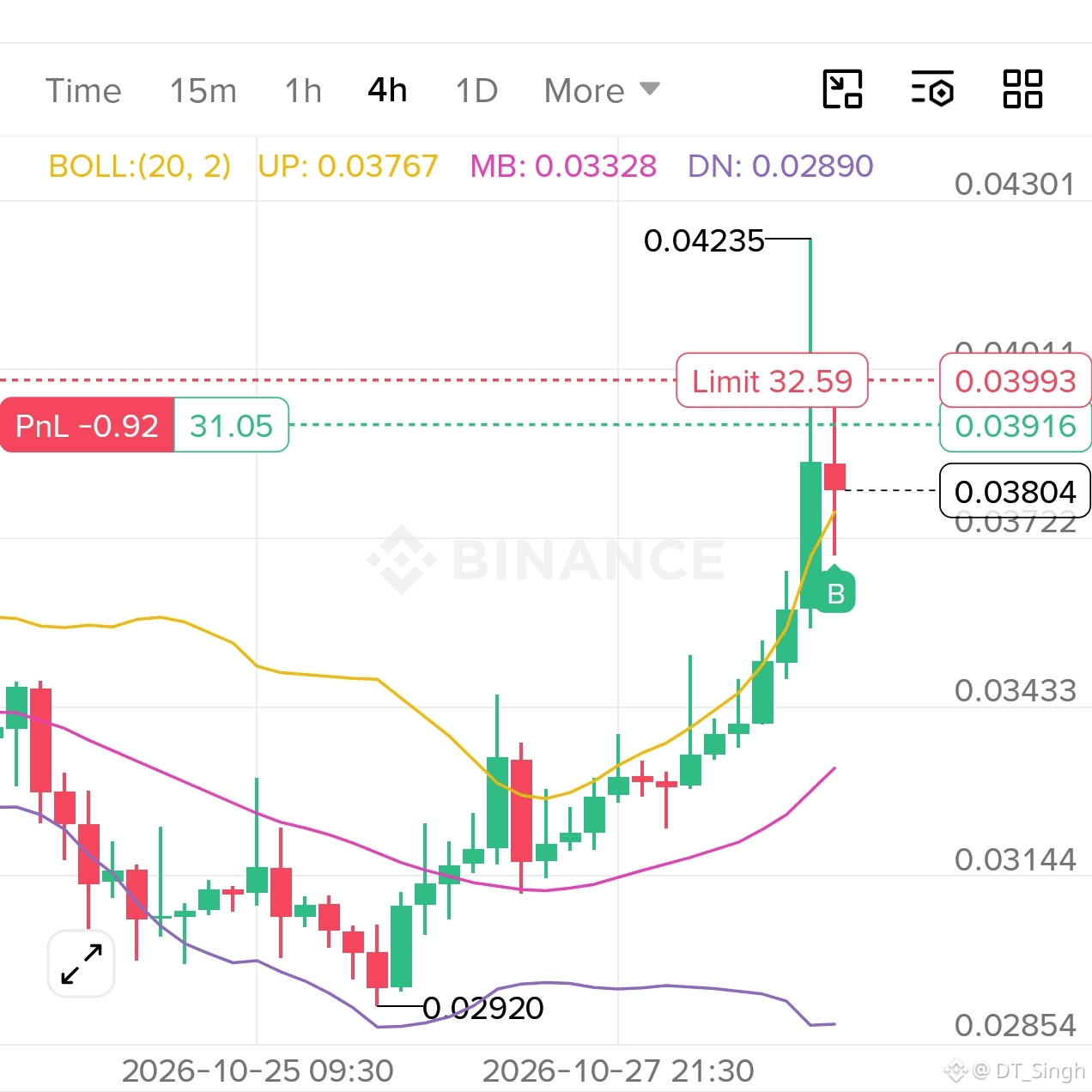
$STAR сьогодні зріс на 12.88% і зараз становить 0.03804 — трохи нижче за максимум за 24 год на рівні 0.04235
Рівні на графіку, за якими я стежу
🔴 Опір: 0.0423 – 0.0430 (максимум за 24 год, де сформувалася довга верхня тінь)
🟢 Підтримка: 0.0372 – 0.0343 (нещодавня зона пробою)
🟡 Ключовий рівень: 0.0329 (середня лінія BOLL)
На 4-годинному графіку видно стрімке зростання від 0.0292 із різкою вертикальною свічкою майже на вершині
Остання свічка червона, тож біля максимумів активізувалися продавці
Контекст: +10.23% за 7 днів і +3.71% за 30 днів, але -54.71% за 90 днів. Обсяги поки невеликі (9.95M USDT за 24 год), тож рухи можуть бути різкими
Закриття вище 0.0423 було б бичачим сигналом. Падіння нижче 0.0343 може спричинити глибшу корекцію
Ви купуєте на пробої чи чекаєте на відкат? 👇
#CanMicrosoftDeliverOnAI #FedWatch #EarningsSeason #BitcoinCore32.1RaisesPeerConnectionLimit
Лише спостереження на основі графіка, не фінансова порада. NFA, самостійно оцінюйте ризики
249

·
--
Переглянути переклад
$CELO
{future}(CELOUSDT)
is with 6.15M in reported activity in the provided snapshot. Celo focuses on blockchain infrastructure for stablecoin payments and global finance, giving its ecosystem a practical use case beyond speculative trading.
The important distinction is between network usage and token demand. Growing payment activity can strengthen the ecosystem, but price recovery still depends on buyers entering the market and defending important levels.
EP: 0.07850–0.07940
TP1: 0.08050
TP2: 0.08200
TP3: 0.08400
SL: 0.07720
I would monitor stablecoin transaction activity, spot volume, open interest, and whether CELO can reclaim nearby resistance without immediately losing momentum. A stronger price structure supported by sustained buying would be more meaningful than a brief bounce.
The next signal is whether CELO can establish a higher low while payment-network activity continues to support its longer-term utility.
#BitcoinCore32.1RaisesPeerConnectionLimit
$CELO
is with 6.15M in reported activity in the provided snapshot. Celo focuses on blockchain infrastructure for stablecoin payments and global finance, giving its ecosystem a practical use case beyond speculative trading.
The important distinction is between network usage and token demand. Growing payment activity can strengthen the ecosystem, but price recovery still depends on buyers entering the market and defending important levels.
EP: 0.07850–0.07940
TP1: 0.08050
TP2: 0.08200
TP3: 0.08400
SL: 0.07720
I would monitor stablecoin transaction activity, spot volume, open interest, and whether CELO can reclaim nearby resistance without immediately losing momentum. A stronger price structure supported by sustained buying would be more meaningful than a brief bounce.
The next signal is whether CELO can establish a higher low while payment-network activity continues to support its longer-term utility.
#BitcoinCore32.1RaisesPeerConnectionLimit
7
Увійдіть, щоб переглянути інший контент
Приєднуйтесь до користувачів криптовалют по всьому світу на Binance Square
⚡️ Отримуйте актуальну та корисну інформацію про криптовалюти.
💬 Приєднуйтесь до найбільшої у світі криптобіржі.
👍 Відкрийте справжні ідеї від перевірених авторів.
Електронна пошта / номер телефону
Трендові теми
1
#CanMicrosoftDeliverOnAI
607,646 переглядів
3,951 обговорюють
2
#CanGoogleDefindItsCore
372,899 переглядів
2,802 обговорюють
3
#FedWatch
16.1M переглядів
37,120 обговорюють
4
#fomcвідстеження
92,908 переглядів
460 обговорюють
5
#BitcoinCore32.1RaisesPeerConnectionLimit
625 переглядів
33 обговорюють
6
#EarningsSeason
6.1M переглядів
30,201 обговорюють
7
#BitcoinCoreIdentifiesThreeVulnerabilities
10,330 переглядів
202 обговорюють
8
#RippleExpects$900MAnnualizedProductRevenueRunRate
688 переглядів
10 обговорюють
9
#GoogleToPreviewCryptoCustodySecuritySystem
2,940 переглядів
81 обговорюють
10
#FedToBeginShrinkingRateSettingCalendarIn2027
4,111 переглядів
54 обговорюють