
moontrail
297 Posts

moontrail
Report
Block User
Hey there! Just a friendly crypto explorer here, learning and growing every day. Ready to dive into the world of coins and make some smart moves..
Open Trade

BTC Holder
Frequent Trader
1.7 Years
10 Following
2.0K+ Followers
425 Liked
Posts
Portfolio
All
Quotes
Live
PINNED
·
--
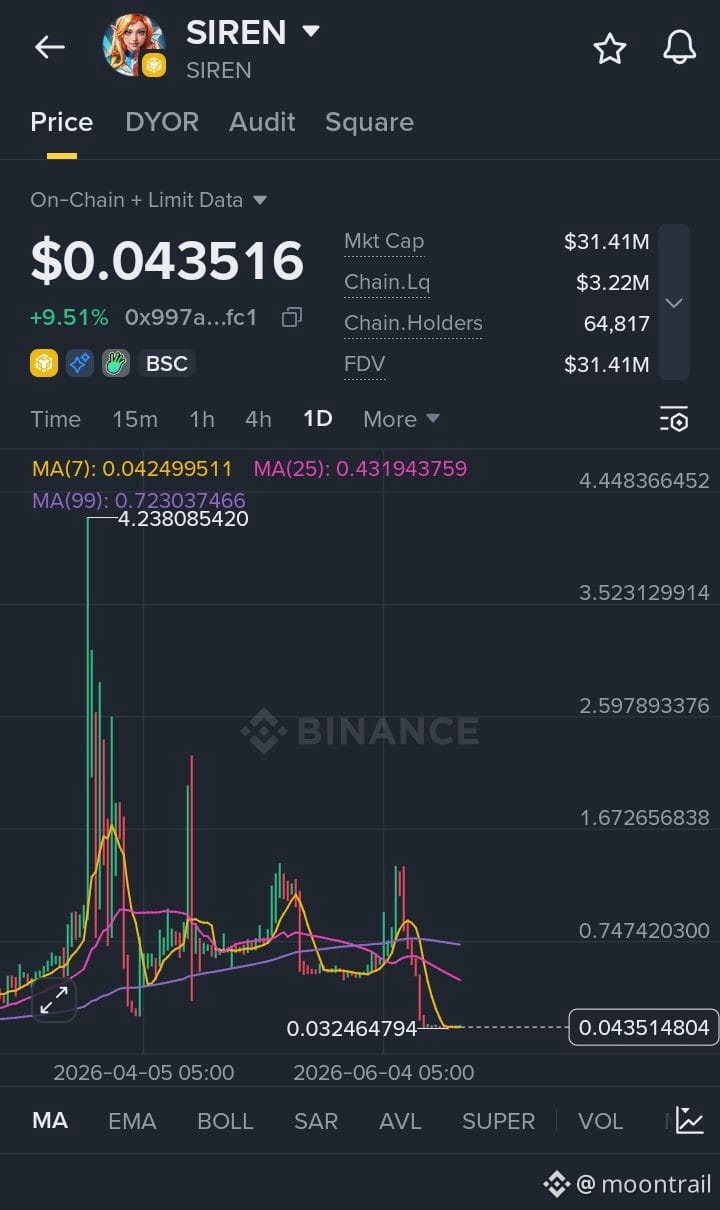
SIREN previously found support and consolidated around 0.10 before starting a fresh leg of sustained decline.
Whales love pulling tricks around key round numbers and zero-heavy levels to bait bulls in — MYX may be setting up to follow SIREN’s playbook.
#MYX
SIREN previously found support and consolidated around 0.10 before starting a fresh leg of sustained decline.
Whales love pulling tricks around key round numbers and zero-heavy levels to bait bulls in — MYX may be setting up to follow SIREN’s playbook.
#MYX
Whales love pulling tricks around key round numbers and zero-heavy levels to bait bulls in — MYX may be setting up to follow SIREN’s playbook.
#MYX
2
1
6
1k
·
--


大丽7613
·
--
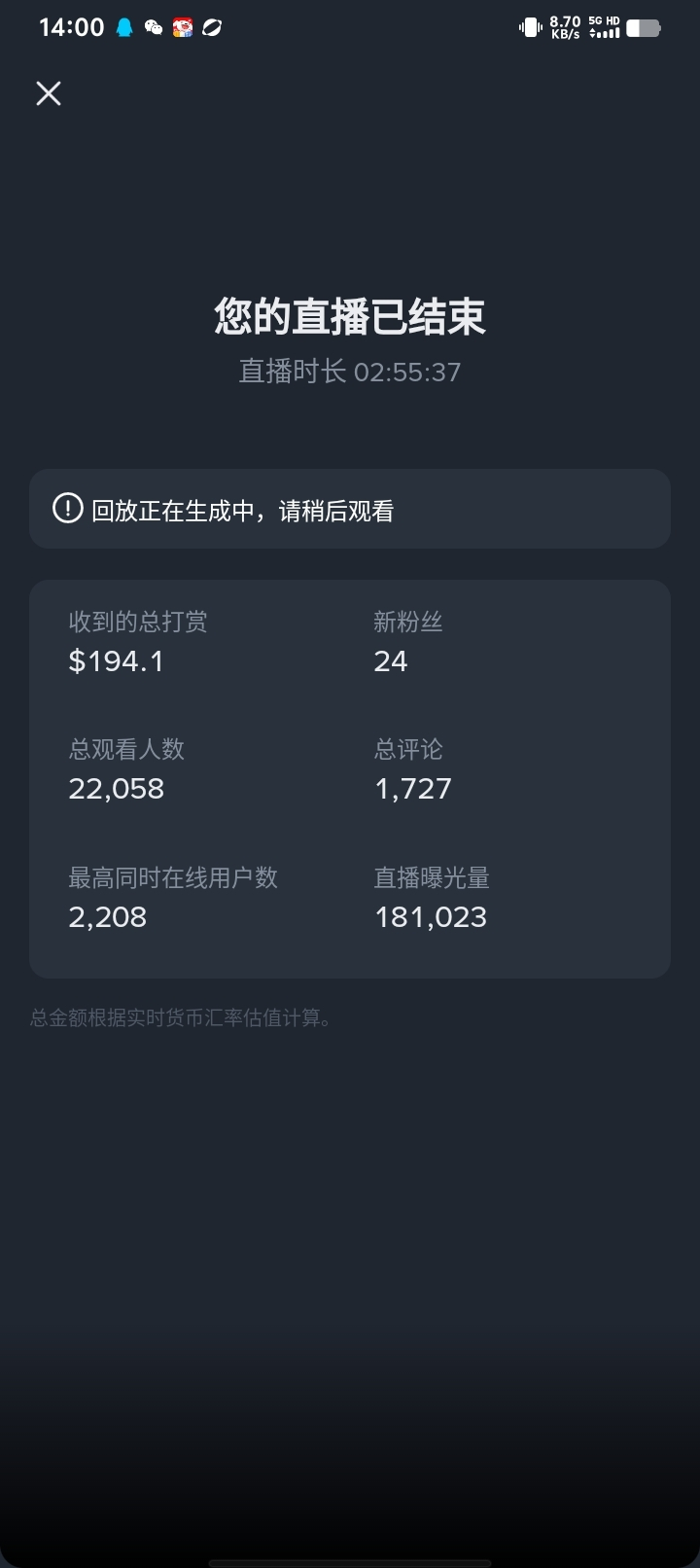
[Replay] 🎙️ 一起实盘操作,Let's conduct live trading together
02 h 26 m 53 s · 22.6k listens
1
50
·
--
Congratulations Dali
@Square-Creator-461318f96fe7
Congratulations Dali
@大丽7613
@大丽7613
大丽7613
·
--
$BNB
Record your sprint on the Binance Square to 70K—keep it up ✊✊✊ Thanks to everyone who has supported us all along! Next, we’ll continue our journey with Binance
Record your sprint on the Binance Square to 70K—keep it up ✊✊✊ Thanks to everyone who has supported us all along! Next, we’ll continue our journey with Binance

1
100
·
--
$HOME give me a big loss I buy it when it's $0.04 and now it's price is $0.01
{spot}(HOMEUSDT)
$HOME give me a big loss I buy it when it's $0.04 and now it's price is $0.01
1
1
301
·
--
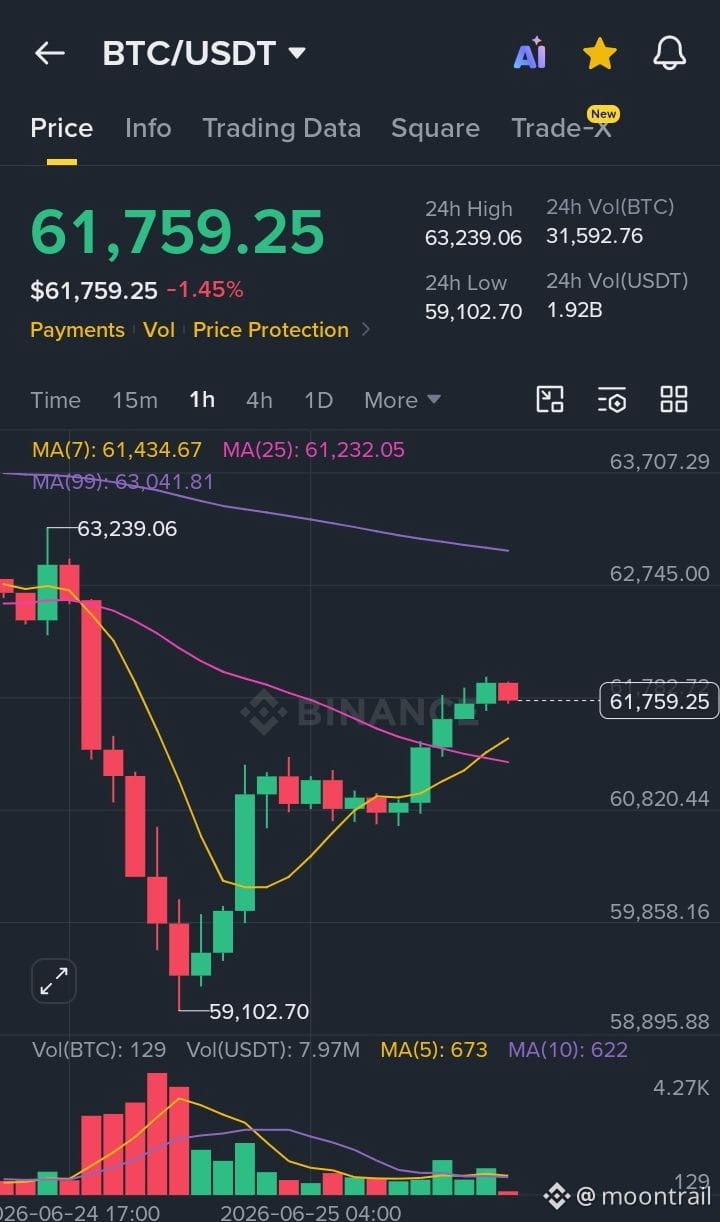
Everyone’s calling this a dead cat bounce — but $BTC/USDT just flashed my LONG trigger.
$BTC - LONG Setup
Entry: 61,577.27 – 61,677.25
Stop Loss: 60,420.38
Take Profit:
• TP1: 62,532.42
• TP2: 63,135.85
• TP3: 64,041.01
Why I’m taking this setup:
• The 4H signal triggered at 61,627 with 86% confidence, while the 15M RSI is at 68.6 — strong momentum, but not overheated yet.
• The daily trend is still bearish, which is exactly why this move could squeeze hard if shorts are overcrowded.
• Price is holding near the 1H ATR band (503), giving a tight and defined entry zone.
• TP1 is just 1.5% away, making this a solid risk-to-reward play for a short-term continuation move.
The real question:
Is this just a fake pump designed to trap longs before the next leg down — or are we catching the early signs of a trend reversal?
What’s your take?
Bull trap or trend flip?
Trade here 👇️
{spot}(BTCUSDT)
Everyone’s calling this a dead cat bounce — but $BTC /USDT just flashed my LONG trigger.
$BTC - LONG Setup
Entry: 61,577.27 – 61,677.25
Stop Loss: 60,420.38
Take Profit:
• TP1: 62,532.42
• TP2: 63,135.85
• TP3: 64,041.01
Why I’m taking this setup:
• The 4H signal triggered at 61,627 with 86% confidence, while the 15M RSI is at 68.6 — strong momentum, but not overheated yet.
• The daily trend is still bearish, which is exactly why this move could squeeze hard if shorts are overcrowded.
• Price is holding near the 1H ATR band (503), giving a tight and defined entry zone.
• TP1 is just 1.5% away, making this a solid risk-to-reward play for a short-term continuation move.
The real question:
Is this just a fake pump designed to trap longs before the next leg down — or are we catching the early signs of a trend reversal?
What’s your take?
Bull trap or trend flip?
Trade here 👇️
$BTC - LONG Setup
Entry: 61,577.27 – 61,677.25
Stop Loss: 60,420.38
Take Profit:
• TP1: 62,532.42
• TP2: 63,135.85
• TP3: 64,041.01
Why I’m taking this setup:
• The 4H signal triggered at 61,627 with 86% confidence, while the 15M RSI is at 68.6 — strong momentum, but not overheated yet.
• The daily trend is still bearish, which is exactly why this move could squeeze hard if shorts are overcrowded.
• Price is holding near the 1H ATR band (503), giving a tight and defined entry zone.
• TP1 is just 1.5% away, making this a solid risk-to-reward play for a short-term continuation move.
The real question:
Is this just a fake pump designed to trap longs before the next leg down — or are we catching the early signs of a trend reversal?
What’s your take?
Bull trap or trend flip?
Trade here 👇️
1
96
·
--
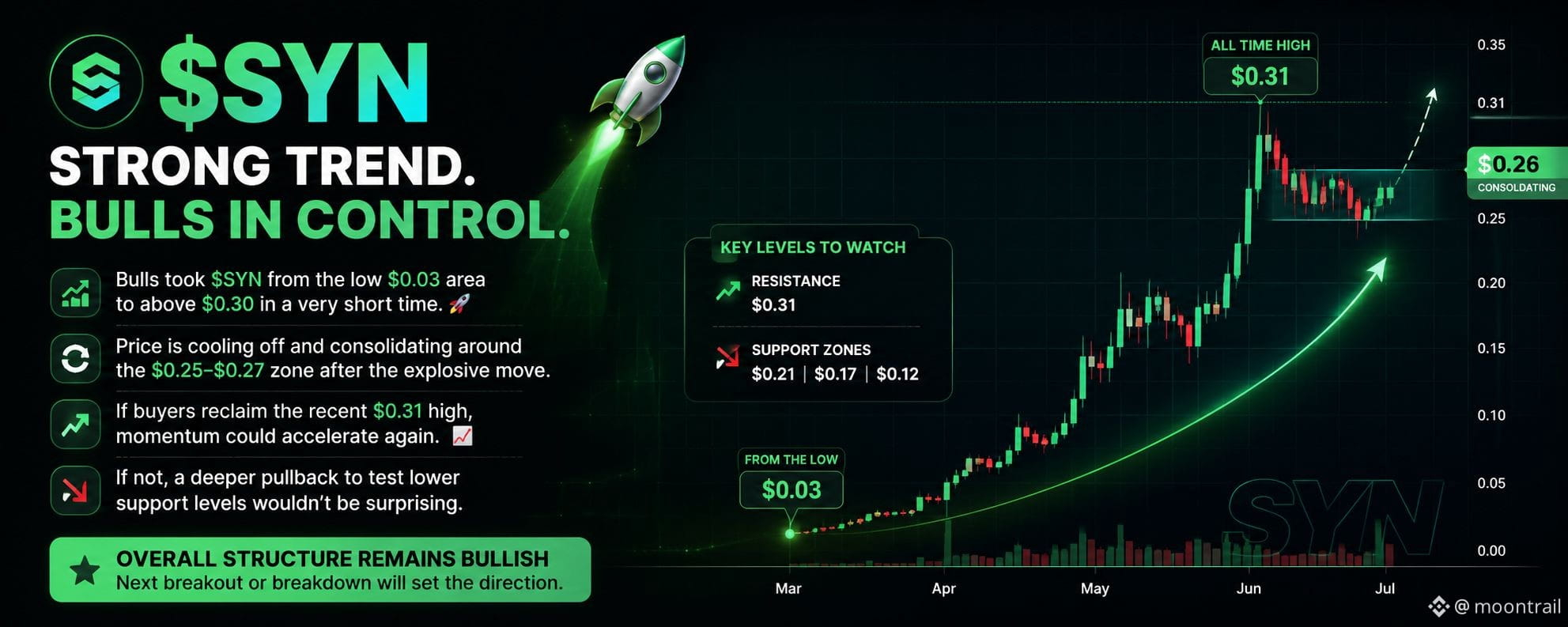
I’ve been keeping an eye on $SYN lately, and the price action has definitely caught attention. 👀
After a strong breakout, bulls took control and drove the token from the low $0.03 range to above $0.30 in a remarkably short period. 🚀
Now, the market appears to be entering a healthy consolidation phase, with price holding around the $0.25–$0.27 area as traders assess the next move.
A decisive breakout above the recent $0.31 high could reignite bullish momentum and open the door for further upside. 📈
On the other hand, failure to reclaim that level may lead to a deeper pullback toward key support zones before the next trend develops.
For now, the overall structure remains bullish, but the next breakout or breakdown will likely determine the short-term direction. 📊
{spot}(SYNUSDT)
{spot}(REUSDT)
I’ve been keeping an eye on $SYN lately, and the price action has definitely caught attention. 👀
After a strong breakout, bulls took control and drove the token from the low $0.03 range to above $0.30 in a remarkably short period. 🚀
Now, the market appears to be entering a healthy consolidation phase, with price holding around the $0.25–$0.27 area as traders assess the next move.
A decisive breakout above the recent $0.31 high could reignite bullish momentum and open the door for further upside. 📈
On the other hand, failure to reclaim that level may lead to a deeper pullback toward key support zones before the next trend develops.
For now, the overall structure remains bullish, but the next breakout or breakdown will likely determine the short-term direction. 📊
After a strong breakout, bulls took control and drove the token from the low $0.03 range to above $0.30 in a remarkably short period. 🚀
Now, the market appears to be entering a healthy consolidation phase, with price holding around the $0.25–$0.27 area as traders assess the next move.
A decisive breakout above the recent $0.31 high could reignite bullish momentum and open the door for further upside. 📈
On the other hand, failure to reclaim that level may lead to a deeper pullback toward key support zones before the next trend develops.
For now, the overall structure remains bullish, but the next breakout or breakdown will likely determine the short-term direction. 📊
1
112
·
--
Article
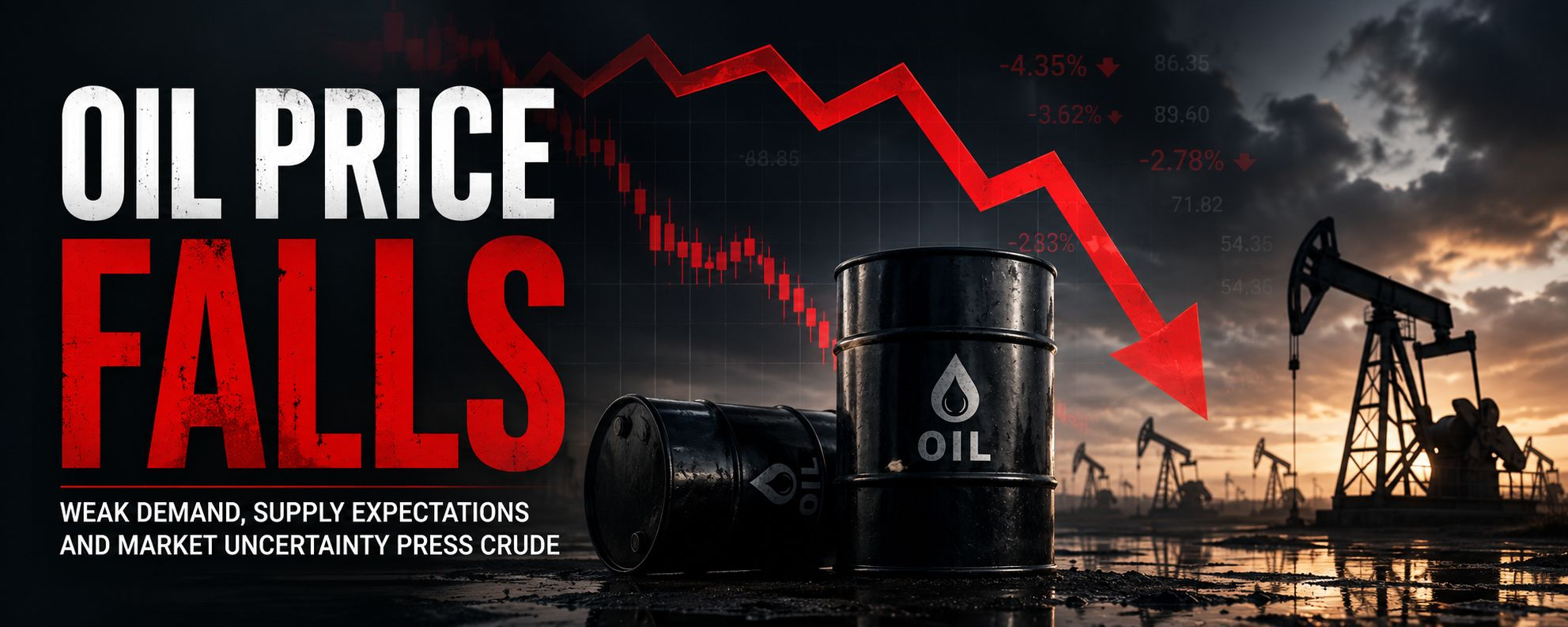
Oil Prices Fall as Markets Weigh Demand Concerns and Supply Outlook#OilPriceFalls
Oil prices moved lower as traders reacted to a mix of weak demand signals, shifting supply expectations, and broader uncertainty in global financial markets. The decline reflects concerns that slowing economic activity in major consuming countries could reduce fuel demand, even as producers continue to watch inventories, geopolitical developments, and output policy closely.
Analysts say one of the main drivers behind the pullback is concern over global demand. When investors see signs of softer manufacturing activity, weaker freight movement, or slower consumer spending, oil often comes under pressure. Crude prices are especially sensitive to expectations around growth in large economies such as the United States, China, and the eurozone.
At the same time, supply-side factors are also shaping sentiment. If markets believe major producers may keep output steady or increase production, prices can weaken further. Even the perception of stronger future supply can weigh on crude benchmarks, particularly when inventories appear comfortable and immediate shortages are not visible.
Currency movements and interest-rate expectations have added another layer of pressure. A stronger U.S. dollar can make oil more expensive for buyers using other currencies, which may reduce demand. Higher interest rates also tend to dampen economic momentum, contributing to a more cautious outlook for energy consumption.
Despite the latest fall, market volatility remains high. Oil prices can shift quickly in response to refinery disruptions, shipping risks, weather events, and unexpected geopolitical tensions. For that reason, traders are likely to remain focused on upcoming economic data, inventory reports, and policy signals from major oil-producing nations.
In the near term, the direction of oil prices will depend on whether demand concerns continue to outweigh supply risks. If economic data improves, prices could stabilize. But if growth worries deepen and supply remains sufficient, the market may face continued downward pressure.
#OilPriceFalls
Oil Prices Fall as Markets Weigh Demand Concerns and Supply Outlook
#OilPriceFalls
Oil prices moved lower as traders reacted to a mix of weak demand signals, shifting supply expectations, and broader uncertainty in global financial markets. The decline reflects concerns that slowing economic activity in major consuming countries could reduce fuel demand, even as producers continue to watch inventories, geopolitical developments, and output policy closely.
Analysts say one of the main drivers behind the pullback is concern over global demand. When investors see signs of softer manufacturing activity, weaker freight movement, or slower consumer spending, oil often comes under pressure. Crude prices are especially sensitive to expectations around growth in large economies such as the United States, China, and the eurozone.
At the same time, supply-side factors are also shaping sentiment. If markets believe major producers may keep output steady or increase production, prices can weaken further. Even the perception of stronger future supply can weigh on crude benchmarks, particularly when inventories appear comfortable and immediate shortages are not visible.
Currency movements and interest-rate expectations have added another layer of pressure. A stronger U.S. dollar can make oil more expensive for buyers using other currencies, which may reduce demand. Higher interest rates also tend to dampen economic momentum, contributing to a more cautious outlook for energy consumption.
Despite the latest fall, market volatility remains high. Oil prices can shift quickly in response to refinery disruptions, shipping risks, weather events, and unexpected geopolitical tensions. For that reason, traders are likely to remain focused on upcoming economic data, inventory reports, and policy signals from major oil-producing nations.
In the near term, the direction of oil prices will depend on whether demand concerns continue to outweigh supply risks. If economic data improves, prices could stabilize. But if growth worries deepen and supply remains sufficient, the market may face continued downward pressure.
#OilPriceFalls
Oil prices moved lower as traders reacted to a mix of weak demand signals, shifting supply expectations, and broader uncertainty in global financial markets. The decline reflects concerns that slowing economic activity in major consuming countries could reduce fuel demand, even as producers continue to watch inventories, geopolitical developments, and output policy closely.
Analysts say one of the main drivers behind the pullback is concern over global demand. When investors see signs of softer manufacturing activity, weaker freight movement, or slower consumer spending, oil often comes under pressure. Crude prices are especially sensitive to expectations around growth in large economies such as the United States, China, and the eurozone.
At the same time, supply-side factors are also shaping sentiment. If markets believe major producers may keep output steady or increase production, prices can weaken further. Even the perception of stronger future supply can weigh on crude benchmarks, particularly when inventories appear comfortable and immediate shortages are not visible.
Currency movements and interest-rate expectations have added another layer of pressure. A stronger U.S. dollar can make oil more expensive for buyers using other currencies, which may reduce demand. Higher interest rates also tend to dampen economic momentum, contributing to a more cautious outlook for energy consumption.
Despite the latest fall, market volatility remains high. Oil prices can shift quickly in response to refinery disruptions, shipping risks, weather events, and unexpected geopolitical tensions. For that reason, traders are likely to remain focused on upcoming economic data, inventory reports, and policy signals from major oil-producing nations.
In the near term, the direction of oil prices will depend on whether demand concerns continue to outweigh supply risks. If economic data improves, prices could stabilize. But if growth worries deepen and supply remains sufficient, the market may face continued downward pressure.
#OilPriceFalls
2
187
·
--
$SOL
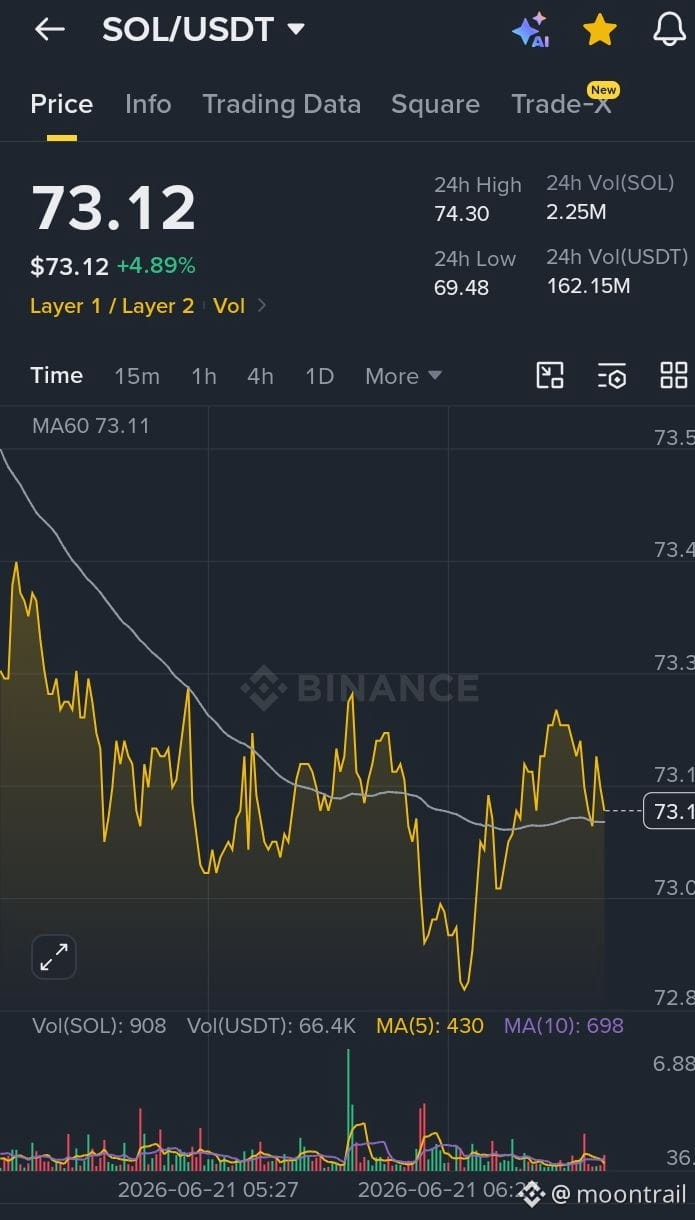
Solana is back in focus as the #SolanaProposalToDoubleSOLInflationDecay sparks debate across the crypto community.
If passed, the proposal could significantly change how SOL inflation declines over time, with potential effects on staking rewards, token supply dynamics, and long-term ecosystem incentives.
For investors, validators, and builders, this is more than just a technical update — it’s a reminder that tokenomics shape network behavior.
Will faster inflation decay strengthen SOL’s long-term value, or create new trade-offs for participation and rewards?
{spot}(SOLUSDT)
$SOL
Solana is back in focus as the #SolanaProposalToDoubleSOLInflationDecay sparks debate across the crypto community.
If passed, the proposal could significantly change how SOL inflation declines over time, with potential effects on staking rewards, token supply dynamics, and long-term ecosystem incentives.
For investors, validators, and builders, this is more than just a technical update — it’s a reminder that tokenomics shape network behavior.
Will faster inflation decay strengthen SOL’s long-term value, or create new trade-offs for participation and rewards?
Solana is back in focus as the #SolanaProposalToDoubleSOLInflationDecay sparks debate across the crypto community.
If passed, the proposal could significantly change how SOL inflation declines over time, with potential effects on staking rewards, token supply dynamics, and long-term ecosystem incentives.
For investors, validators, and builders, this is more than just a technical update — it’s a reminder that tokenomics shape network behavior.
Will faster inflation decay strengthen SOL’s long-term value, or create new trade-offs for participation and rewards?
2
1
193
·
--
Article
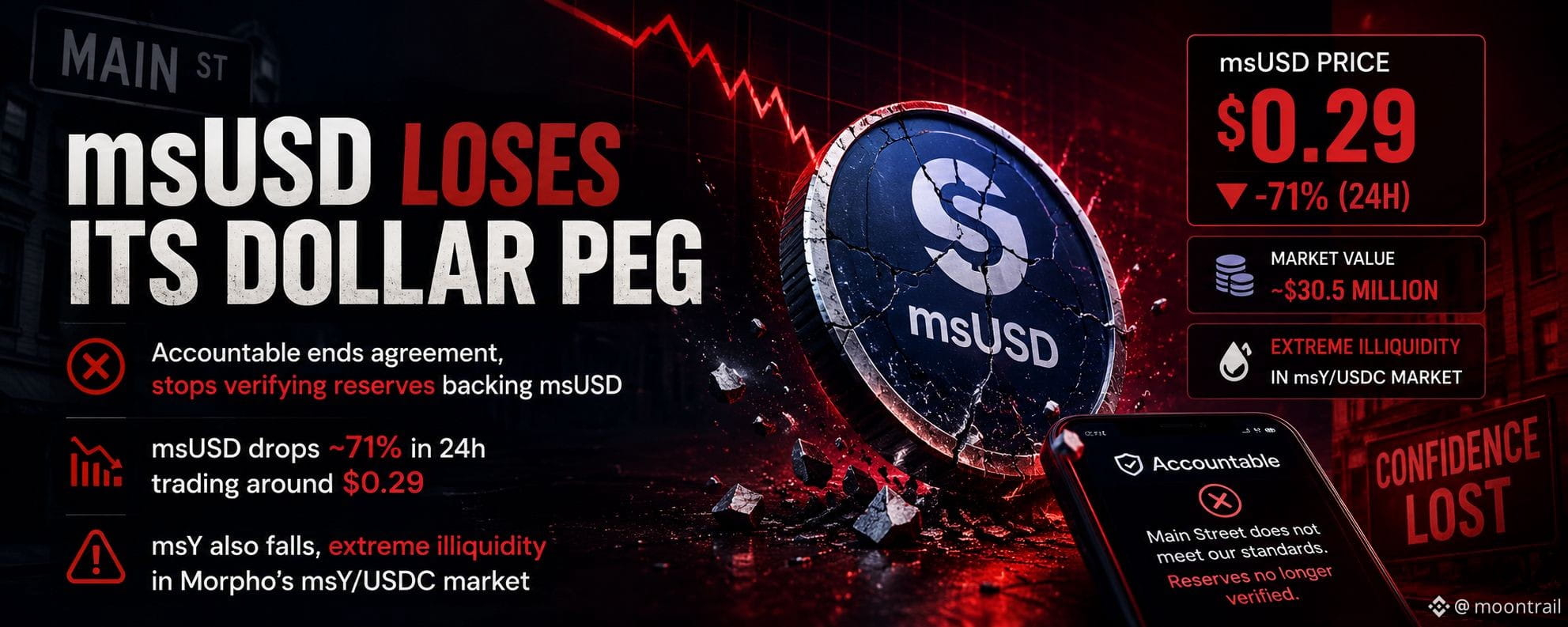
"Main Street USD (msUSD) lost its dollar peg after Accountable ended its agreement with the protocol"Main Street USD (msUSD) lost its dollar peg after Accountable ended its agreement with the protocol, sending the token to around $0.29. According to NS3.AI, msUSD is down roughly 71% over 24 hours, with a market value near $30.5 million. Accountable said Main Street could not meet its standards, and its dashboard no longer verifies the reserves backing msUSD" means that msUSD, which is supposed to stay close to $1 like a stablecoin, suddenly lost market confidence and fell to about $0.29.
In simple terms, the key issue is that Accountable stopped supporting or verifying Main Street’s reserve backing. For a dollar-pegged token, users need to trust that there are real assets or reserves behind it. Once Accountable said Main Street no longer met its standards and removed reserve verification from its dashboard, the market likely saw that as a serious warning sign. As a result, many holders may have rushed to sell, which pushed the price down sharply.
The line about msUSD being down around 71% in 24 hours shows how severe and fast the collapse was. The $30.5 million market value refers to the total value of all msUSD tokens in circulation at the new lower price.
The added context about msY also falling and extreme illiquidity in Morpho’s msY/USDC market suggests the problem may not be limited to one token. Illiquidity means there were not enough buyers and sellers in the market, so prices could drop very quickly when people tried to exit.
#msUSDDepegsFallsTo$0.29
"Main Street USD (msUSD) lost its dollar peg after Accountable ended its agreement with the protocol
"Main Street USD (msUSD) lost its dollar peg after Accountable ended its agreement with the protocol, sending the token to around $0.29. According to NS3.AI, msUSD is down roughly 71% over 24 hours, with a market value near $30.5 million. Accountable said Main Street could not meet its standards, and its dashboard no longer verifies the reserves backing msUSD" means that msUSD, which is supposed to stay close to $1 like a stablecoin, suddenly lost market confidence and fell to about $0.29.
In simple terms, the key issue is that Accountable stopped supporting or verifying Main Street’s reserve backing. For a dollar-pegged token, users need to trust that there are real assets or reserves behind it. Once Accountable said Main Street no longer met its standards and removed reserve verification from its dashboard, the market likely saw that as a serious warning sign. As a result, many holders may have rushed to sell, which pushed the price down sharply.
The line about msUSD being down around 71% in 24 hours shows how severe and fast the collapse was. The $30.5 million market value refers to the total value of all msUSD tokens in circulation at the new lower price.
The added context about msY also falling and extreme illiquidity in Morpho’s msY/USDC market suggests the problem may not be limited to one token. Illiquidity means there were not enough buyers and sellers in the market, so prices could drop very quickly when people tried to exit.
#msUSDDepegsFallsTo$0.29
In simple terms, the key issue is that Accountable stopped supporting or verifying Main Street’s reserve backing. For a dollar-pegged token, users need to trust that there are real assets or reserves behind it. Once Accountable said Main Street no longer met its standards and removed reserve verification from its dashboard, the market likely saw that as a serious warning sign. As a result, many holders may have rushed to sell, which pushed the price down sharply.
The line about msUSD being down around 71% in 24 hours shows how severe and fast the collapse was. The $30.5 million market value refers to the total value of all msUSD tokens in circulation at the new lower price.
The added context about msY also falling and extreme illiquidity in Morpho’s msY/USDC market suggests the problem may not be limited to one token. Illiquidity means there were not enough buyers and sellers in the market, so prices could drop very quickly when people tried to exit.
#msUSDDepegsFallsTo$0.29
3
110
·
--
Article
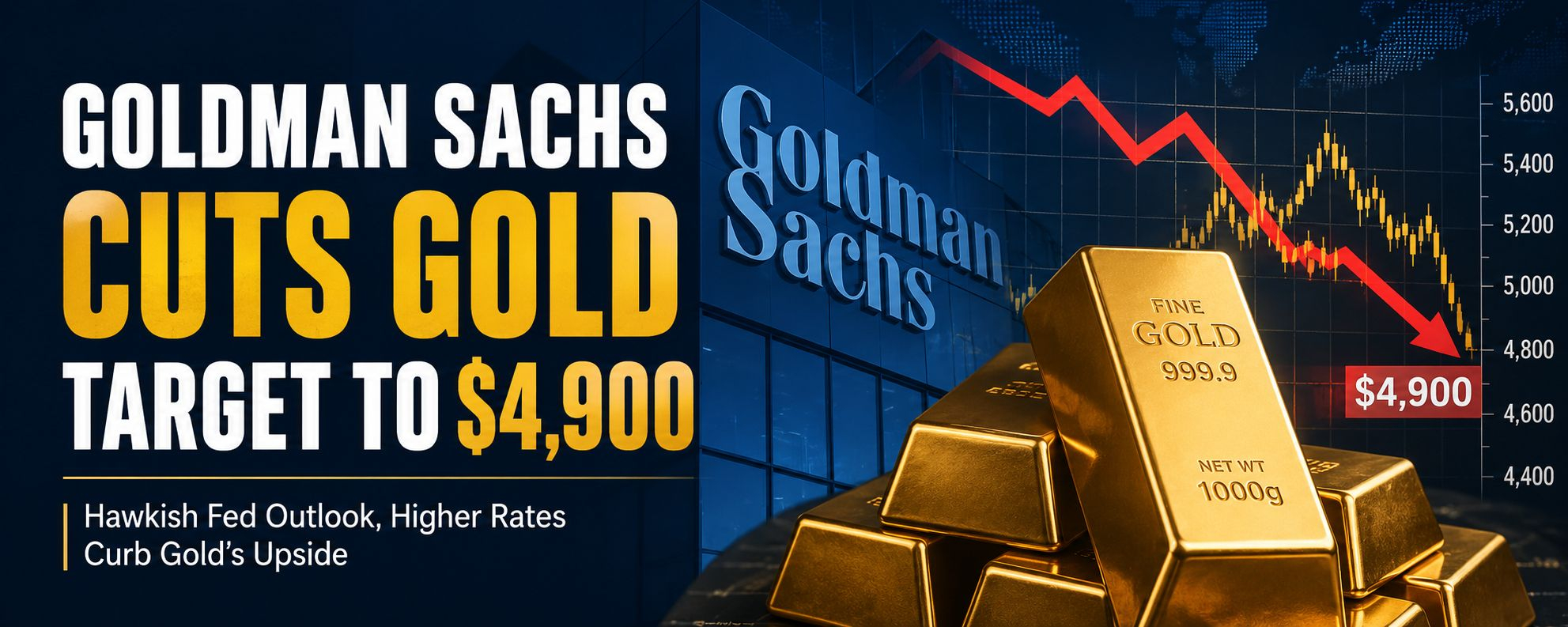
Goldman Sachs Cuts Gold Price Target to $4,900 Amid Changing Market OutlookGlobal investment banking giant Goldman Sachs has revised its gold price forecast, lowering its end-2026 target from $5,400 per ounce to $4,900 per ounce. The adjustment comes as expectations surrounding U.S. monetary policy have shifted significantly, prompting analysts to reassess the outlook for the precious metal.
According to Goldman Sachs strategists, the primary reason behind the downgrade is the growing likelihood that the U.S. Federal Reserve will maintain a tighter monetary stance for longer than previously expected. Higher interest rates generally reduce the attractiveness of non-yielding assets such as gold, leading investors to seek alternatives that provide income or returns.
Following the announcement, gold prices experienced downward pressure, reflecting concerns that delayed rate cuts could limit the metal's upside potential. Nevertheless, Goldman Sachs remains broadly optimistic about gold's long-term prospects and continues to view it as an important safe-haven asset during periods of economic and geopolitical uncertainty.
The bank highlighted that central banks around the world continue to purchase significant quantities of gold to diversify their reserves. These purchases remain substantially higher than pre-2022 levels, providing strong underlying support for prices despite short-term market fluctuations.
Analysts also noted that ongoing geopolitical tensions, concerns about global fiscal sustainability, and investor demand for portfolio diversification are likely to sustain interest in gold over the coming years. While the revised target represents a reduction from previous expectations, a forecast of $4,900 per ounce still suggests considerable strength in the gold market.
Market participants will now closely monitor future Federal Reserve decisions, inflation trends, and global economic developments, all of which are expected to play a crucial role in determining the direction of gold prices through 2026.
Conclusion
Goldman Sachs' decision to cut its gold target to $4,900 reflects changing macroeconomic conditions rather than a loss of confidence in the precious metal. Despite the revision, gold remains one of the bank's favored defensive assets, supported by strong central bank demand and persistent global uncertainties.
#GoldmanCutsGoldTargetTo$4900
Goldman Sachs Cuts Gold Price Target to $4,900 Amid Changing Market Outlook
Global investment banking giant Goldman Sachs has revised its gold price forecast, lowering its end-2026 target from $5,400 per ounce to $4,900 per ounce. The adjustment comes as expectations surrounding U.S. monetary policy have shifted significantly, prompting analysts to reassess the outlook for the precious metal.
According to Goldman Sachs strategists, the primary reason behind the downgrade is the growing likelihood that the U.S. Federal Reserve will maintain a tighter monetary stance for longer than previously expected. Higher interest rates generally reduce the attractiveness of non-yielding assets such as gold, leading investors to seek alternatives that provide income or returns.
Following the announcement, gold prices experienced downward pressure, reflecting concerns that delayed rate cuts could limit the metal's upside potential. Nevertheless, Goldman Sachs remains broadly optimistic about gold's long-term prospects and continues to view it as an important safe-haven asset during periods of economic and geopolitical uncertainty.
The bank highlighted that central banks around the world continue to purchase significant quantities of gold to diversify their reserves. These purchases remain substantially higher than pre-2022 levels, providing strong underlying support for prices despite short-term market fluctuations.
Analysts also noted that ongoing geopolitical tensions, concerns about global fiscal sustainability, and investor demand for portfolio diversification are likely to sustain interest in gold over the coming years. While the revised target represents a reduction from previous expectations, a forecast of $4,900 per ounce still suggests considerable strength in the gold market.
Market participants will now closely monitor future Federal Reserve decisions, inflation trends, and global economic developments, all of which are expected to play a crucial role in determining the direction of gold prices through 2026.
Conclusion
Goldman Sachs' decision to cut its gold target to $4,900 reflects changing macroeconomic conditions rather than a loss of confidence in the precious metal. Despite the revision, gold remains one of the bank's favored defensive assets, supported by strong central bank demand and persistent global uncertainties.
#GoldmanCutsGoldTargetTo$4900
According to Goldman Sachs strategists, the primary reason behind the downgrade is the growing likelihood that the U.S. Federal Reserve will maintain a tighter monetary stance for longer than previously expected. Higher interest rates generally reduce the attractiveness of non-yielding assets such as gold, leading investors to seek alternatives that provide income or returns.
Following the announcement, gold prices experienced downward pressure, reflecting concerns that delayed rate cuts could limit the metal's upside potential. Nevertheless, Goldman Sachs remains broadly optimistic about gold's long-term prospects and continues to view it as an important safe-haven asset during periods of economic and geopolitical uncertainty.
The bank highlighted that central banks around the world continue to purchase significant quantities of gold to diversify their reserves. These purchases remain substantially higher than pre-2022 levels, providing strong underlying support for prices despite short-term market fluctuations.
Analysts also noted that ongoing geopolitical tensions, concerns about global fiscal sustainability, and investor demand for portfolio diversification are likely to sustain interest in gold over the coming years. While the revised target represents a reduction from previous expectations, a forecast of $4,900 per ounce still suggests considerable strength in the gold market.
Market participants will now closely monitor future Federal Reserve decisions, inflation trends, and global economic developments, all of which are expected to play a crucial role in determining the direction of gold prices through 2026.
Conclusion
Goldman Sachs' decision to cut its gold target to $4,900 reflects changing macroeconomic conditions rather than a loss of confidence in the precious metal. Despite the revision, gold remains one of the bank's favored defensive assets, supported by strong central bank demand and persistent global uncertainties.
#GoldmanCutsGoldTargetTo$4900
2
127
·
--
Article
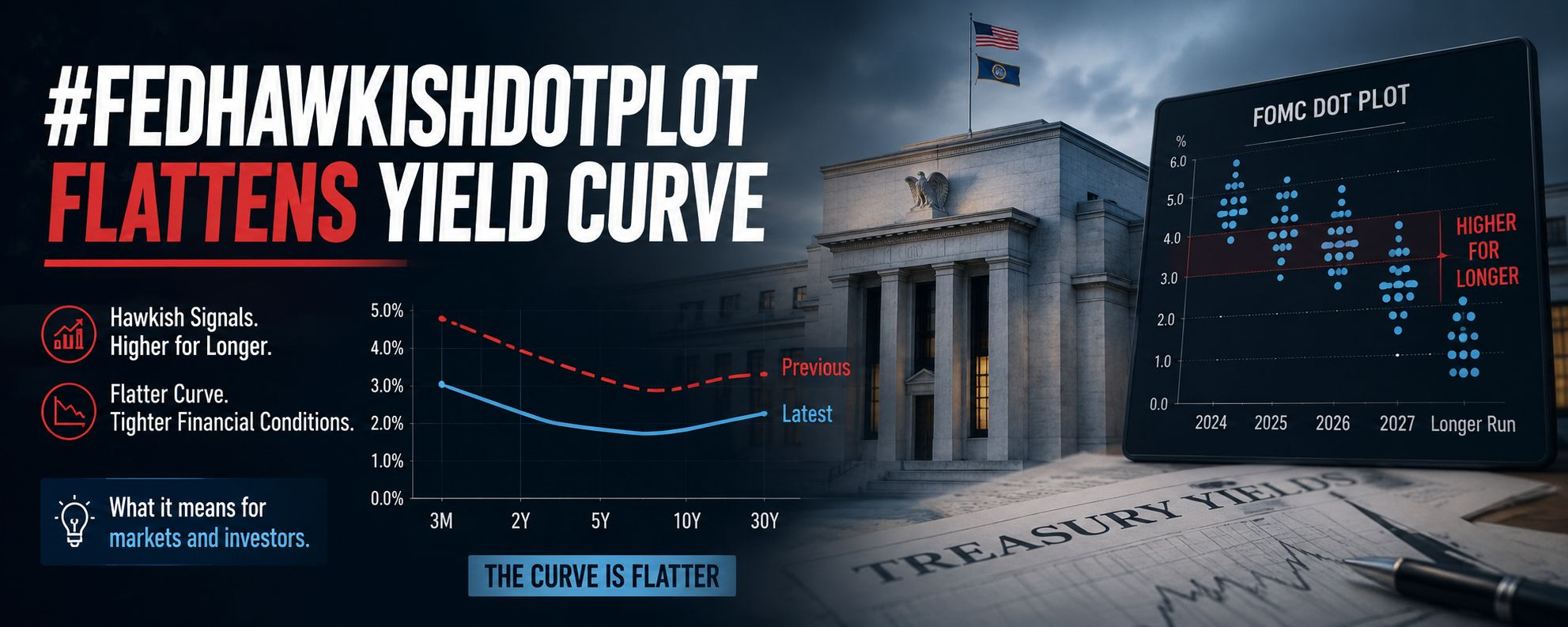
Fed's Hawkish Dot Plot Flattens Yield Curve: What It Means for MarketsThe latest Federal Reserve dot plot caught my attention because it reinforced a message the market has been trying to understand for months: interest rates could stay higher for longer. As soon as investors absorbed that signal, the Treasury yield curve flattened again, reflecting expectations that monetary policy will remain restrictive.
From my perspective, a hawkish dot plot doesn't just influence bond markets—it shapes sentiment across stocks, commodities, and even cryptocurrencies. When the Fed signals fewer rate cuts or a slower pace of easing, investors become more cautious. Money tends to move toward safer assets, while riskier markets often face pressure.
The flattening of the yield curve suggests that traders expect economic growth to slow while the Fed continues fighting inflation. Historically, this has been seen as a warning sign, although every economic cycle is different. That's why I believe it's important to focus on market data rather than react emotionally to headlines.
For equity investors, sectors that rely heavily on cheap borrowing may continue to face challenges. Growth stocks could remain volatile, while defensive sectors may attract more attention. In the crypto market, higher interest rates usually reduce liquidity, making it harder for digital assets to sustain strong rallies unless there is a separate positive catalyst.
Personally, I think the market is entering a phase where patience matters more than prediction. Instead of chasing every move, I prefer watching inflation data, employment reports, and future Fed communications. These factors will likely determine whether the current policy stance remains in place or begins to soften.
The Fed's latest outlook reminds us that central bank policy still drives global financial markets. While short-term volatility is likely to continue, disciplined investors who manage risk and stay focused on long-term trends are usually in a stronger position to navigate uncertainty.
Disclaimer: This article reflects my personal market views and is for informational purposes only. It should not be considered financial or investment advice.
#FedHawkishDotPlotFlattensYieldCurve
Fed's Hawkish Dot Plot Flattens Yield Curve: What It Means for Markets
The latest Federal Reserve dot plot caught my attention because it reinforced a message the market has been trying to understand for months: interest rates could stay higher for longer. As soon as investors absorbed that signal, the Treasury yield curve flattened again, reflecting expectations that monetary policy will remain restrictive.
From my perspective, a hawkish dot plot doesn't just influence bond markets—it shapes sentiment across stocks, commodities, and even cryptocurrencies. When the Fed signals fewer rate cuts or a slower pace of easing, investors become more cautious. Money tends to move toward safer assets, while riskier markets often face pressure.
The flattening of the yield curve suggests that traders expect economic growth to slow while the Fed continues fighting inflation. Historically, this has been seen as a warning sign, although every economic cycle is different. That's why I believe it's important to focus on market data rather than react emotionally to headlines.
For equity investors, sectors that rely heavily on cheap borrowing may continue to face challenges. Growth stocks could remain volatile, while defensive sectors may attract more attention. In the crypto market, higher interest rates usually reduce liquidity, making it harder for digital assets to sustain strong rallies unless there is a separate positive catalyst.
Personally, I think the market is entering a phase where patience matters more than prediction. Instead of chasing every move, I prefer watching inflation data, employment reports, and future Fed communications. These factors will likely determine whether the current policy stance remains in place or begins to soften.
The Fed's latest outlook reminds us that central bank policy still drives global financial markets. While short-term volatility is likely to continue, disciplined investors who manage risk and stay focused on long-term trends are usually in a stronger position to navigate uncertainty.
Disclaimer: This article reflects my personal market views and is for informational purposes only. It should not be considered financial or investment advice.
#FedHawkishDotPlotFlattensYieldCurve
From my perspective, a hawkish dot plot doesn't just influence bond markets—it shapes sentiment across stocks, commodities, and even cryptocurrencies. When the Fed signals fewer rate cuts or a slower pace of easing, investors become more cautious. Money tends to move toward safer assets, while riskier markets often face pressure.
The flattening of the yield curve suggests that traders expect economic growth to slow while the Fed continues fighting inflation. Historically, this has been seen as a warning sign, although every economic cycle is different. That's why I believe it's important to focus on market data rather than react emotionally to headlines.
For equity investors, sectors that rely heavily on cheap borrowing may continue to face challenges. Growth stocks could remain volatile, while defensive sectors may attract more attention. In the crypto market, higher interest rates usually reduce liquidity, making it harder for digital assets to sustain strong rallies unless there is a separate positive catalyst.
Personally, I think the market is entering a phase where patience matters more than prediction. Instead of chasing every move, I prefer watching inflation data, employment reports, and future Fed communications. These factors will likely determine whether the current policy stance remains in place or begins to soften.
The Fed's latest outlook reminds us that central bank policy still drives global financial markets. While short-term volatility is likely to continue, disciplined investors who manage risk and stay focused on long-term trends are usually in a stronger position to navigate uncertainty.
Disclaimer: This article reflects my personal market views and is for informational purposes only. It should not be considered financial or investment advice.
#FedHawkishDotPlotFlattensYieldCurve
1
2
618
·
--
Warsh’s First FOMC Ends With Rates on HoldIn his first Federal Open Market Committee meeting as Federal Reserve chair, Kevin Warsh led policymakers to keep interest rates unchanged, marking a cautious start to his tenure at a sensitive moment for the U.S. economy. Reports on June 17, 2026 said the Fed left its benchmark rate in the 3.5% to 3.75% range, signaling that inflation concerns still outweigh pressure for immediate easing. (cnbc.com)
The decision itself was widely expected, but the symbolism mattered. This was the market’s first real look at how Warsh would guide monetary policy after taking over the central bank in May 2026. Coverage ahead of the meeting framed the June 16–17 gathering as a major leadership transition, with investors watching not just the rate decision but also Warsh’s tone, communication style, and policy priorities. (rexshares.com)
Early reporting suggests Warsh used the meeting to signal a more hawkish posture than markets had hoped for. Several outlets noted that the post-meeting language was shorter and less accommodating, with some reports saying the Fed removed language that had implied a bias toward future cuts. That shift matters because it suggests the central bank is not yet ready to declare victory over inflation, even if growth risks are rising. (kpmg.com)
For households and businesses, a rate hold means borrowing costs are unlikely to ease quickly. Credit cards, auto loans, and other variable-rate debt may remain expensive, while mortgage and savings-rate effects will depend on how markets interpret Warsh’s longer-term path. Consumer-focused coverage emphasized that the Fed is still balancing sticky inflation against affordability pressures facing U.S. households. (msn.com)
For investors, the bigger takeaway may be that Warsh’s first meeting was less about action and more about message discipline. By holding rates steady while avoiding strong hints of near-term cuts, the new chair appears to be establishing credibility on inflation first. That approach could keep markets volatile in the short run, especially if traders had been hoping for a clearer pivot toward easing. This is partly an inference from the reporting on the statement changes and hawkish tone. (kpmg.com)
The hashtag #WarshFirstFOMCRatesHold captures both the policy outcome and the political-economic significance of the moment: no immediate move on rates, but a potentially meaningful shift in how the Fed communicates under new leadership. If this first meeting is any guide, Warsh is beginning his term by emphasizing restraint, inflation vigilance, and a willingness to break from the softer guidance markets had grown used to. (businessinsider.com)
#WarshFirstFOMCRatesHold
Warsh’s First FOMC Ends With Rates on Hold
In his first Federal Open Market Committee meeting as Federal Reserve chair, Kevin Warsh led policymakers to keep interest rates unchanged, marking a cautious start to his tenure at a sensitive moment for the U.S. economy. Reports on June 17, 2026 said the Fed left its benchmark rate in the 3.5% to 3.75% range, signaling that inflation concerns still outweigh pressure for immediate easing. (cnbc.com)
The decision itself was widely expected, but the symbolism mattered. This was the market’s first real look at how Warsh would guide monetary policy after taking over the central bank in May 2026. Coverage ahead of the meeting framed the June 16–17 gathering as a major leadership transition, with investors watching not just the rate decision but also Warsh’s tone, communication style, and policy priorities. (rexshares.com)
Early reporting suggests Warsh used the meeting to signal a more hawkish posture than markets had hoped for. Several outlets noted that the post-meeting language was shorter and less accommodating, with some reports saying the Fed removed language that had implied a bias toward future cuts. That shift matters because it suggests the central bank is not yet ready to declare victory over inflation, even if growth risks are rising. (kpmg.com)
For households and businesses, a rate hold means borrowing costs are unlikely to ease quickly. Credit cards, auto loans, and other variable-rate debt may remain expensive, while mortgage and savings-rate effects will depend on how markets interpret Warsh’s longer-term path. Consumer-focused coverage emphasized that the Fed is still balancing sticky inflation against affordability pressures facing U.S. households. (msn.com)
For investors, the bigger takeaway may be that Warsh’s first meeting was less about action and more about message discipline. By holding rates steady while avoiding strong hints of near-term cuts, the new chair appears to be establishing credibility on inflation first. That approach could keep markets volatile in the short run, especially if traders had been hoping for a clearer pivot toward easing. This is partly an inference from the reporting on the statement changes and hawkish tone. (kpmg.com)
The hashtag #WarshFirstFOMCRatesHold captures both the policy outcome and the political-economic significance of the moment: no immediate move on rates, but a potentially meaningful shift in how the Fed communicates under new leadership. If this first meeting is any guide, Warsh is beginning his term by emphasizing restraint, inflation vigilance, and a willingness to break from the softer guidance markets had grown used to. (businessinsider.com)
#WarshFirstFOMCRatesHold
The decision itself was widely expected, but the symbolism mattered. This was the market’s first real look at how Warsh would guide monetary policy after taking over the central bank in May 2026. Coverage ahead of the meeting framed the June 16–17 gathering as a major leadership transition, with investors watching not just the rate decision but also Warsh’s tone, communication style, and policy priorities. (rexshares.com)
Early reporting suggests Warsh used the meeting to signal a more hawkish posture than markets had hoped for. Several outlets noted that the post-meeting language was shorter and less accommodating, with some reports saying the Fed removed language that had implied a bias toward future cuts. That shift matters because it suggests the central bank is not yet ready to declare victory over inflation, even if growth risks are rising. (kpmg.com)
For households and businesses, a rate hold means borrowing costs are unlikely to ease quickly. Credit cards, auto loans, and other variable-rate debt may remain expensive, while mortgage and savings-rate effects will depend on how markets interpret Warsh’s longer-term path. Consumer-focused coverage emphasized that the Fed is still balancing sticky inflation against affordability pressures facing U.S. households. (msn.com)
For investors, the bigger takeaway may be that Warsh’s first meeting was less about action and more about message discipline. By holding rates steady while avoiding strong hints of near-term cuts, the new chair appears to be establishing credibility on inflation first. That approach could keep markets volatile in the short run, especially if traders had been hoping for a clearer pivot toward easing. This is partly an inference from the reporting on the statement changes and hawkish tone. (kpmg.com)
The hashtag #WarshFirstFOMCRatesHold captures both the policy outcome and the political-economic significance of the moment: no immediate move on rates, but a potentially meaningful shift in how the Fed communicates under new leadership. If this first meeting is any guide, Warsh is beginning his term by emphasizing restraint, inflation vigilance, and a willingness to break from the softer guidance markets had grown used to. (businessinsider.com)
#WarshFirstFOMCRatesHold
1
95
·
--
Warsh’s First FOMC Meeting Ends in a Rate Hold: What It Means for MarketsThe U.S. Federal Reserve is widely expected to leave interest rates unchanged at Kevin Warsh’s first meeting as Fed chair, making this decision less about the rate move itself and more about the message behind it. Reports ahead of and around the June 17, 2026 meeting indicate markets were pricing in a hold in the 3.50%–3.75% target range, with investors focusing instead on whether the Fed would signal a tougher stance on inflation going forward. (msn.com)
Warsh’s debut comes at a sensitive moment for U.S. monetary policy. Inflation remains above the Fed’s long-run target, while growth and labor-market conditions have stayed resilient enough to keep policymakers cautious about cutting too soon. Several previews of the meeting suggested the real story was not whether the Fed would pause, but whether the committee would remove any remaining “easing bias” and shift toward a more neutral or even hawkish tone. (outlookbusiness.com)
That distinction matters. A rate hold can sound dovish on the surface, but in this case it may represent a “higher for longer” posture rather than relief for borrowers. Coverage of the meeting has emphasized that Warsh’s first appearance as chair is being watched for clues on how he interprets sticky inflation, energy-price pressures, and the balance between economic strength and price stability. Some reports also note that markets have started to price in the possibility that the next major move may not be a cut at all. (cnbc.com)
For financial markets, the implications are broad. Equities generally prefer lower rates, but a steady-rate decision paired with hawkish guidance could pressure richly valued sectors, especially technology and other growth stocks. Bond markets are likely to react even more directly, with Treasury yields sensitive to any change in the Fed’s projected path for 2026. Analysts have highlighted the importance of the Fed’s updated economic projections and dot plot, which may reveal whether policymakers still expect cuts later this year or are moving toward a firmer anti-inflation stance. (rexshares.com)
For consumers, a hold means borrowing costs may remain elevated for longer. Credit cards, auto loans, and many business financing rates are unlikely to ease quickly if the Fed keeps policy restrictive. Savings products, however, may continue to offer relatively attractive yields compared with the low-rate era. CNBC noted that Warsh’s first Fed meeting could shape the path of everyday borrowing and savings rates even without an immediate policy change. (cnbc.com)
Warsh’s communication style is also under scrutiny. Commentary ahead of the meeting suggested he may offer less forward guidance than his predecessors, leaving markets to infer more from the statement and projections than from explicit promises. If that proves true, volatility could rise as investors parse every phrase for hints about whether the Fed is simply pausing or preparing to harden its stance. (usatoday.com)
In the end, Warsh’s first FOMC meeting may be remembered not for a surprise decision, but for setting the tone of his chairmanship. Holding rates steady is the easy headline. The harder and more important question is whether this pause marks patience, caution, or the beginning of a more hawkish chapter at the Federal Reserve. With inflation still a concern and markets searching for direction, that answer may matter more than the hold itself. (msn.com)
#WarshFirstFOMCRatesHold
Warsh’s First FOMC Meeting Ends in a Rate Hold: What It Means for Markets
The U.S. Federal Reserve is widely expected to leave interest rates unchanged at Kevin Warsh’s first meeting as Fed chair, making this decision less about the rate move itself and more about the message behind it. Reports ahead of and around the June 17, 2026 meeting indicate markets were pricing in a hold in the 3.50%–3.75% target range, with investors focusing instead on whether the Fed would signal a tougher stance on inflation going forward. (msn.com)
Warsh’s debut comes at a sensitive moment for U.S. monetary policy. Inflation remains above the Fed’s long-run target, while growth and labor-market conditions have stayed resilient enough to keep policymakers cautious about cutting too soon. Several previews of the meeting suggested the real story was not whether the Fed would pause, but whether the committee would remove any remaining “easing bias” and shift toward a more neutral or even hawkish tone. (outlookbusiness.com)
That distinction matters. A rate hold can sound dovish on the surface, but in this case it may represent a “higher for longer” posture rather than relief for borrowers. Coverage of the meeting has emphasized that Warsh’s first appearance as chair is being watched for clues on how he interprets sticky inflation, energy-price pressures, and the balance between economic strength and price stability. Some reports also note that markets have started to price in the possibility that the next major move may not be a cut at all. (cnbc.com)
For financial markets, the implications are broad. Equities generally prefer lower rates, but a steady-rate decision paired with hawkish guidance could pressure richly valued sectors, especially technology and other growth stocks. Bond markets are likely to react even more directly, with Treasury yields sensitive to any change in the Fed’s projected path for 2026. Analysts have highlighted the importance of the Fed’s updated economic projections and dot plot, which may reveal whether policymakers still expect cuts later this year or are moving toward a firmer anti-inflation stance. (rexshares.com)
For consumers, a hold means borrowing costs may remain elevated for longer. Credit cards, auto loans, and many business financing rates are unlikely to ease quickly if the Fed keeps policy restrictive. Savings products, however, may continue to offer relatively attractive yields compared with the low-rate era. CNBC noted that Warsh’s first Fed meeting could shape the path of everyday borrowing and savings rates even without an immediate policy change. (cnbc.com)
Warsh’s communication style is also under scrutiny. Commentary ahead of the meeting suggested he may offer less forward guidance than his predecessors, leaving markets to infer more from the statement and projections than from explicit promises. If that proves true, volatility could rise as investors parse every phrase for hints about whether the Fed is simply pausing or preparing to harden its stance. (usatoday.com)
In the end, Warsh’s first FOMC meeting may be remembered not for a surprise decision, but for setting the tone of his chairmanship. Holding rates steady is the easy headline. The harder and more important question is whether this pause marks patience, caution, or the beginning of a more hawkish chapter at the Federal Reserve. With inflation still a concern and markets searching for direction, that answer may matter more than the hold itself. (msn.com)
#WarshFirstFOMCRatesHold
Warsh’s debut comes at a sensitive moment for U.S. monetary policy. Inflation remains above the Fed’s long-run target, while growth and labor-market conditions have stayed resilient enough to keep policymakers cautious about cutting too soon. Several previews of the meeting suggested the real story was not whether the Fed would pause, but whether the committee would remove any remaining “easing bias” and shift toward a more neutral or even hawkish tone. (outlookbusiness.com)
That distinction matters. A rate hold can sound dovish on the surface, but in this case it may represent a “higher for longer” posture rather than relief for borrowers. Coverage of the meeting has emphasized that Warsh’s first appearance as chair is being watched for clues on how he interprets sticky inflation, energy-price pressures, and the balance between economic strength and price stability. Some reports also note that markets have started to price in the possibility that the next major move may not be a cut at all. (cnbc.com)
For financial markets, the implications are broad. Equities generally prefer lower rates, but a steady-rate decision paired with hawkish guidance could pressure richly valued sectors, especially technology and other growth stocks. Bond markets are likely to react even more directly, with Treasury yields sensitive to any change in the Fed’s projected path for 2026. Analysts have highlighted the importance of the Fed’s updated economic projections and dot plot, which may reveal whether policymakers still expect cuts later this year or are moving toward a firmer anti-inflation stance. (rexshares.com)
For consumers, a hold means borrowing costs may remain elevated for longer. Credit cards, auto loans, and many business financing rates are unlikely to ease quickly if the Fed keeps policy restrictive. Savings products, however, may continue to offer relatively attractive yields compared with the low-rate era. CNBC noted that Warsh’s first Fed meeting could shape the path of everyday borrowing and savings rates even without an immediate policy change. (cnbc.com)
Warsh’s communication style is also under scrutiny. Commentary ahead of the meeting suggested he may offer less forward guidance than his predecessors, leaving markets to infer more from the statement and projections than from explicit promises. If that proves true, volatility could rise as investors parse every phrase for hints about whether the Fed is simply pausing or preparing to harden its stance. (usatoday.com)
In the end, Warsh’s first FOMC meeting may be remembered not for a surprise decision, but for setting the tone of his chairmanship. Holding rates steady is the easy headline. The harder and more important question is whether this pause marks patience, caution, or the beginning of a more hawkish chapter at the Federal Reserve. With inflation still a concern and markets searching for direction, that answer may matter more than the hold itself. (msn.com)
#WarshFirstFOMCRatesHold
1
124
·
--
UNI surges 20% 🚀
Uniswap is back in the spotlight after a sharp 20% move higher, with fresh momentum driven by bullish market sentiment and renewed attention after Standard Chartered initiated coverage with a long-term $100 price target for 2030. Reports also point to growing interest around Uniswap’s expanding ecosystem and tokenized asset activity. (finance.yahoo.com)
Traders are now watching whether UNI can hold these gains or if this is just a short-term hype spike. Either way, the move has put DeFi back on the radar in a big way. (coindesk.com)
Caption version:
$UNI jumps 20% as DeFi momentum returns.
Bullish forecasts, rising attention, and renewed ecosystem activity are pushing Uniswap back into focus. Is this the start of a bigger breakout? 👀 #UNISurges20% #Uniswap #DeFi
UNI surges 20% 🚀
Uniswap is back in the spotlight after a sharp 20% move higher, with fresh momentum driven by bullish market sentiment and renewed attention after Standard Chartered initiated coverage with a long-term $100 price target for 2030. Reports also point to growing interest around Uniswap’s expanding ecosystem and tokenized asset activity. (finance.yahoo.com)
Traders are now watching whether UNI can hold these gains or if this is just a short-term hype spike. Either way, the move has put DeFi back on the radar in a big way. (coindesk.com)
Caption version:
$UNI jumps 20% as DeFi momentum returns.
Bullish forecasts, rising attention, and renewed ecosystem activity are pushing Uniswap back into focus. Is this the start of a bigger breakout? 👀 #UNISurges20% #Uniswap #DeFi
Uniswap is back in the spotlight after a sharp 20% move higher, with fresh momentum driven by bullish market sentiment and renewed attention after Standard Chartered initiated coverage with a long-term $100 price target for 2030. Reports also point to growing interest around Uniswap’s expanding ecosystem and tokenized asset activity. (finance.yahoo.com)
Traders are now watching whether UNI can hold these gains or if this is just a short-term hype spike. Either way, the move has put DeFi back on the radar in a big way. (coindesk.com)
Caption version:
$UNI jumps 20% as DeFi momentum returns.
Bullish forecasts, rising attention, and renewed ecosystem activity are pushing Uniswap back into focus. Is this the start of a bigger breakout? 👀 #UNISurges20% #Uniswap #DeFi
1
139
·
--

Article
TrumpWarnsFranceTradeWarOverDigitalServicesTax#TrumpWarnsFranceTradeWarOverDigitalServicesTax
Trade tensions between the United States and France have returned to the spotlight after President Donald Trump warned that France could face severe economic consequences if it continues imposing its Digital Services Tax (DST) on major American technology companies.
According to recent reports, Trump stated that the United States would have "no choice" but to impose 100% tariffs on French wines and champagne if France refuses to remove its 3% digital tax targeting large U.S. tech firms. The warning comes ahead of high-level international discussions and signals a renewed push by Washington to protect American businesses operating overseas.
Why the Digital Services Tax Matters
France introduced the Digital Services Tax to ensure that global technology companies pay taxes on revenues generated within the country. The tax primarily affects multinational firms such as Google, Apple, Amazon, and Meta, many of which are headquartered in the United States.
The U.S. has long argued that these taxes unfairly target American companies and create an uneven competitive environment. Trump believes such policies discriminate against U.S. businesses and has repeatedly threatened trade retaliation if they remain in place.
France Refuses to Back Down
French President Emmanuel Macron has responded by saying that France will not change its tax policy under pressure. He emphasized that tariffs hurt both sides and argued that economic disputes among G7 partners should be resolved through dialogue rather than escalating trade measures.
Potential Market Impact
If the proposed 100% tariffs are implemented, French wine and champagne exports to the U.S. could face significant challenges. The dispute could also create uncertainty for technology companies, exporters, and investors while increasing tensions between the United States and the European Union.
Although the immediate focus is on digital taxation, the disagreement highlights a broader debate over how multinational technology companies should be taxed in the digital economy.
My Perspective
From my point of view, this dispute goes beyond taxes. It reflects the growing competition between governments seeking fair taxation and countries determined to protect their leading technology industries. If neither side compromises, the conflict could expand into a wider trade battle affecting technology, agriculture, and global markets.
Investors should closely monitor negotiations in the coming days, as any escalation could influence market sentiment, international trade, and the performance of both technology and consumer goods sectors.
Trade wars rarely produce clear winners—but they often create significant uncertainty for businesses and financial markets worldwide.
#TradebStocks
#TrumpWarnsFranceTradeWarOverDigitalServicesTax
TrumpWarnsFranceTradeWarOverDigitalServicesTax
#TrumpWarnsFranceTradeWarOverDigitalServicesTax
Trade tensions between the United States and France have returned to the spotlight after President Donald Trump warned that France could face severe economic consequences if it continues imposing its Digital Services Tax (DST) on major American technology companies.
According to recent reports, Trump stated that the United States would have "no choice" but to impose 100% tariffs on French wines and champagne if France refuses to remove its 3% digital tax targeting large U.S. tech firms. The warning comes ahead of high-level international discussions and signals a renewed push by Washington to protect American businesses operating overseas.
Why the Digital Services Tax Matters
France introduced the Digital Services Tax to ensure that global technology companies pay taxes on revenues generated within the country. The tax primarily affects multinational firms such as Google, Apple, Amazon, and Meta, many of which are headquartered in the United States.
The U.S. has long argued that these taxes unfairly target American companies and create an uneven competitive environment. Trump believes such policies discriminate against U.S. businesses and has repeatedly threatened trade retaliation if they remain in place.
France Refuses to Back Down
French President Emmanuel Macron has responded by saying that France will not change its tax policy under pressure. He emphasized that tariffs hurt both sides and argued that economic disputes among G7 partners should be resolved through dialogue rather than escalating trade measures.
Potential Market Impact
If the proposed 100% tariffs are implemented, French wine and champagne exports to the U.S. could face significant challenges. The dispute could also create uncertainty for technology companies, exporters, and investors while increasing tensions between the United States and the European Union.
Although the immediate focus is on digital taxation, the disagreement highlights a broader debate over how multinational technology companies should be taxed in the digital economy.
My Perspective
From my point of view, this dispute goes beyond taxes. It reflects the growing competition between governments seeking fair taxation and countries determined to protect their leading technology industries. If neither side compromises, the conflict could expand into a wider trade battle affecting technology, agriculture, and global markets.
Investors should closely monitor negotiations in the coming days, as any escalation could influence market sentiment, international trade, and the performance of both technology and consumer goods sectors.
Trade wars rarely produce clear winners—but they often create significant uncertainty for businesses and financial markets worldwide.
#TradebStocks
#TrumpWarnsFranceTradeWarOverDigitalServicesTax
Trade tensions between the United States and France have returned to the spotlight after President Donald Trump warned that France could face severe economic consequences if it continues imposing its Digital Services Tax (DST) on major American technology companies.
According to recent reports, Trump stated that the United States would have "no choice" but to impose 100% tariffs on French wines and champagne if France refuses to remove its 3% digital tax targeting large U.S. tech firms. The warning comes ahead of high-level international discussions and signals a renewed push by Washington to protect American businesses operating overseas.
Why the Digital Services Tax Matters
France introduced the Digital Services Tax to ensure that global technology companies pay taxes on revenues generated within the country. The tax primarily affects multinational firms such as Google, Apple, Amazon, and Meta, many of which are headquartered in the United States.
The U.S. has long argued that these taxes unfairly target American companies and create an uneven competitive environment. Trump believes such policies discriminate against U.S. businesses and has repeatedly threatened trade retaliation if they remain in place.
France Refuses to Back Down
French President Emmanuel Macron has responded by saying that France will not change its tax policy under pressure. He emphasized that tariffs hurt both sides and argued that economic disputes among G7 partners should be resolved through dialogue rather than escalating trade measures.
Potential Market Impact
If the proposed 100% tariffs are implemented, French wine and champagne exports to the U.S. could face significant challenges. The dispute could also create uncertainty for technology companies, exporters, and investors while increasing tensions between the United States and the European Union.
Although the immediate focus is on digital taxation, the disagreement highlights a broader debate over how multinational technology companies should be taxed in the digital economy.
My Perspective
From my point of view, this dispute goes beyond taxes. It reflects the growing competition between governments seeking fair taxation and countries determined to protect their leading technology industries. If neither side compromises, the conflict could expand into a wider trade battle affecting technology, agriculture, and global markets.
Investors should closely monitor negotiations in the coming days, as any escalation could influence market sentiment, international trade, and the performance of both technology and consumer goods sectors.
Trade wars rarely produce clear winners—but they often create significant uncertainty for businesses and financial markets worldwide.
#TradebStocks
#TrumpWarnsFranceTradeWarOverDigitalServicesTax
1
105
Log in to explore more content
Join global crypto users on Binance Square
⚡️ Get latest and useful information about crypto.
💬 Trusted by the world’s largest crypto exchange.
👍 Discover real insights from verified creators.
Email / Phone number
Trending Topics
AppleDebutsFoldablePhone
25,756 views
566 Discussing
Apple just dropped the foldable iPhone — and the market is paying attention. This isn't just another product cycle; it's a new product category, a new CEO on stage, and a $1,999 price tag that pushes $AAPL further into ultra-premium territory. Foldables are the narrative, and Apple is now the headline.
#appledebutsfoldablephone #EUExtendsCentralContactPointToCASPs #US10YTreasuryYieldHitsHighestSinceNov2023 #BrentCrudeTops$100 #USTreasuryToBuyBackUpTo$6BLongDatedDebt
KimHotbae
·2 Likes
·2.7k views
TSMCAugustRevenueUp53.3%YoY
315 views
69 Discussing
IranSaysReadyToEscalateWarWithUS
3,148 views
124 Discussing