
ALISHBA SOZAR
9k Posts

ALISHBA SOZAR
Report
Block User
Crypto enthusiast since 2020 | Real trades, failures & comebacks Helping beginners avoid common mistakes | DM for collab | NFA 💼
5 Following
25.4K+ Followers
32.3K+ Liked
Posts
All
Quotes
Live
PINNED

Congratulations.
You have managed to waste the first 6 months of 2026 staring at charts 24/7 and chasing green candles.
#Alishba_Sozar
$LAB $SPCXB $TSLAB
Congratulations.
You have managed to waste the first 6 months of 2026 staring at charts 24/7 and chasing green candles.
#Alishba_Sozar
$LAB $SPCXB $TSLAB
You have managed to waste the first 6 months of 2026 staring at charts 24/7 and chasing green candles.
#Alishba_Sozar
$LAB $SPCXB $TSLAB

8
14
593
Dear trader ⚠️
Never Give Up. Your Breakthrough May Be Closer Than You Think.
At 21, his business collapsed.
At 22, he ran for Parliament and lost.
At 24, he started another business but it failed again.
At 26, he lost his wife.
At 34, he ran for Parliament again and lost.
At 45, he ran for the Senate and was defeated.
He later sought the nomination for Vice President but wasn’t selected.
At 49, he ran for the Senate once more and lost again.
Most people would have given up by then.
But at 52, he ran for President of the United States and won.
That man was Abraham Lincoln.
His journey reminds us that failure is not the opposite of success it is often part of the journey to success.
No matter how many times life knocks you down, keep moving forward. Stay patient. Stay consistent. Never stop believing.
Your next attempt could change your life.
#Alishba_Sozar
$TSLAB
Dear trader ⚠️
Never Give Up. Your Breakthrough May Be Closer Than You Think.
At 21, his business collapsed.
At 22, he ran for Parliament and lost.
At 24, he started another business but it failed again.
At 26, he lost his wife.
At 34, he ran for Parliament again and lost.
At 45, he ran for the Senate and was defeated.
He later sought the nomination for Vice President but wasn’t selected.
At 49, he ran for the Senate once more and lost again.
Most people would have given up by then.
But at 52, he ran for President of the United States and won.
That man was Abraham Lincoln.
His journey reminds us that failure is not the opposite of success it is often part of the journey to success.
No matter how many times life knocks you down, keep moving forward. Stay patient. Stay consistent. Never stop believing.
Your next attempt could change your life.
#Alishba_Sozar
$TSLAB
Never Give Up. Your Breakthrough May Be Closer Than You Think.
At 21, his business collapsed.
At 22, he ran for Parliament and lost.
At 24, he started another business but it failed again.
At 26, he lost his wife.
At 34, he ran for Parliament again and lost.
At 45, he ran for the Senate and was defeated.
He later sought the nomination for Vice President but wasn’t selected.
At 49, he ran for the Senate once more and lost again.
Most people would have given up by then.
But at 52, he ran for President of the United States and won.
That man was Abraham Lincoln.
His journey reminds us that failure is not the opposite of success it is often part of the journey to success.
No matter how many times life knocks you down, keep moving forward. Stay patient. Stay consistent. Never stop believing.
Your next attempt could change your life.
#Alishba_Sozar
$TSLAB
6
1.8k
Stop being a loser. Get up early. Make your bed. Go train. Eat clean. Do your laundry. Pay every bill on time. Save till it hurts, then save more. Pick a craft and get obsessed. Pick a person to become and start acting like them today. Care more than everyone around you. Push till you break, then get back up. Knowing when to quit isn't weakness, it's strategy. Stand up straight. Speak up. Go all in. Smile anyway. Life is short and then it's gone. Misery is a choice. You're not the first to suffer and you won't be the last. Someone with less than you made it. So will you. Nobody's special. Everybody is. Keep moving.
#Alishba_Sozar
$TSLAB $METAB $BTC
Stop being a loser. Get up early. Make your bed. Go train. Eat clean. Do your laundry. Pay every bill on time. Save till it hurts, then save more. Pick a craft and get obsessed. Pick a person to become and start acting like them today. Care more than everyone around you. Push till you break, then get back up. Knowing when to quit isn't weakness, it's strategy. Stand up straight. Speak up. Go all in. Smile anyway. Life is short and then it's gone. Misery is a choice. You're not the first to suffer and you won't be the last. Someone with less than you made it. So will you. Nobody's special. Everybody is. Keep moving.
#Alishba_Sozar
$TSLAB $METAB $BTC
#Alishba_Sozar
$TSLAB $METAB $BTC

17
69
5.4k
Give me one good reason to buy Bitcoin today and hold it for the next 10+ years.
I've yet to hear one convincing argument other than "price goes up."
I'll wait.
Give me one good reason to buy Bitcoin today and hold it for the next 10+ years.
I've yet to hear one convincing argument other than "price goes up."
I'll wait.
I've yet to hear one convincing argument other than "price goes up."
I'll wait.
7
13
525
The bottom is in.
$59k
$1500
$60
I stake my reputation on it.
The bottom is in.
$59k
$1500
$60
I stake my reputation on it.
$59k
$1500
$60
I stake my reputation on it.
2
13
192
“Welcome back. You’ve been in a coma for 7 years.”
“what is the price of Ethereum now? $15k ? , i bought at $1600 in 2020 "
“Welcome back. You’ve been in a coma for 7 years.”
“what is the price of Ethereum now? $15k ? , i bought at $1600 in 2020 "
“what is the price of Ethereum now? $15k ? , i bought at $1600 in 2020 "

1
9
559
People aren’t ready for the following:
Btc $39k
Eth $540
Sol $14
Hype $32
People aren’t ready for the following:
Btc $39k
Eth $540
Sol $14
Hype $32
Btc $39k
Eth $540
Sol $14
Hype $32

8
16
540
People still think (or feel) because Bitcoin is down crypto is down.
Derivatives/perps, stablecoins, prediction markets, etc are all up in crypto.
Crypto touches every area of finance, and is much broader than Bitcoin now. It will take some time for this to sink in.
(And yes - Bitcoin is going to do great and is as important as ever - one of many cycles we've all been through.
People still think (or feel) because Bitcoin is down crypto is down.
Derivatives/perps, stablecoins, prediction markets, etc are all up in crypto.
Crypto touches every area of finance, and is much broader than Bitcoin now. It will take some time for this to sink in.
(And yes - Bitcoin is going to do great and is as important as ever - one of many cycles we've all been through.
Derivatives/perps, stablecoins, prediction markets, etc are all up in crypto.
Crypto touches every area of finance, and is much broader than Bitcoin now. It will take some time for this to sink in.
(And yes - Bitcoin is going to do great and is as important as ever - one of many cycles we've all been through.
1
7
189
The craziest part about every bull market is how fast it goes from ‘crypto is dead’ to new all time highs.
There’s almost no in between. It just flips.
We’re close to the flip.
The craziest part about every bull market is how fast it goes from ‘crypto is dead’ to new all time highs.
There’s almost no in between. It just flips.
We’re close to the flip.
There’s almost no in between. It just flips.
We’re close to the flip.
1
8
526
Verified
Nobody understands the real endgame that Michael Saylor is playing.
1. 🪙 Accumulate 1 Million $BTC into $MSTR (already 84% completed)
2. 🇺🇸Get bought out/absorbed by the U.S. Government for $100B to acquire 5% of the Bitcoin supply with 0 slippage
3. 💰Triple the Bitcoin price and make the U.S. Government another $150B overnight
Michael Saylor isn't building a company, he’s serving the U.S. Strategic Bitcoin Reserve on a silver platter.
#Alishba_Sozar
Nobody understands the real endgame that Michael Saylor is playing.
1. 🪙 Accumulate 1 Million $BTC into $MSTR (already 84% completed)
2. 🇺🇸Get bought out/absorbed by the U.S. Government for $100B to acquire 5% of the Bitcoin supply with 0 slippage
3. 💰Triple the Bitcoin price and make the U.S. Government another $150B overnight
Michael Saylor isn't building a company, he’s serving the U.S. Strategic Bitcoin Reserve on a silver platter.
#Alishba_Sozar
1. 🪙 Accumulate 1 Million $BTC into $MSTR (already 84% completed)
2. 🇺🇸Get bought out/absorbed by the U.S. Government for $100B to acquire 5% of the Bitcoin supply with 0 slippage
3. 💰Triple the Bitcoin price and make the U.S. Government another $150B overnight
Michael Saylor isn't building a company, he’s serving the U.S. Strategic Bitcoin Reserve on a silver platter.
#Alishba_Sozar

3
26
4.1k
·
--
Bullish
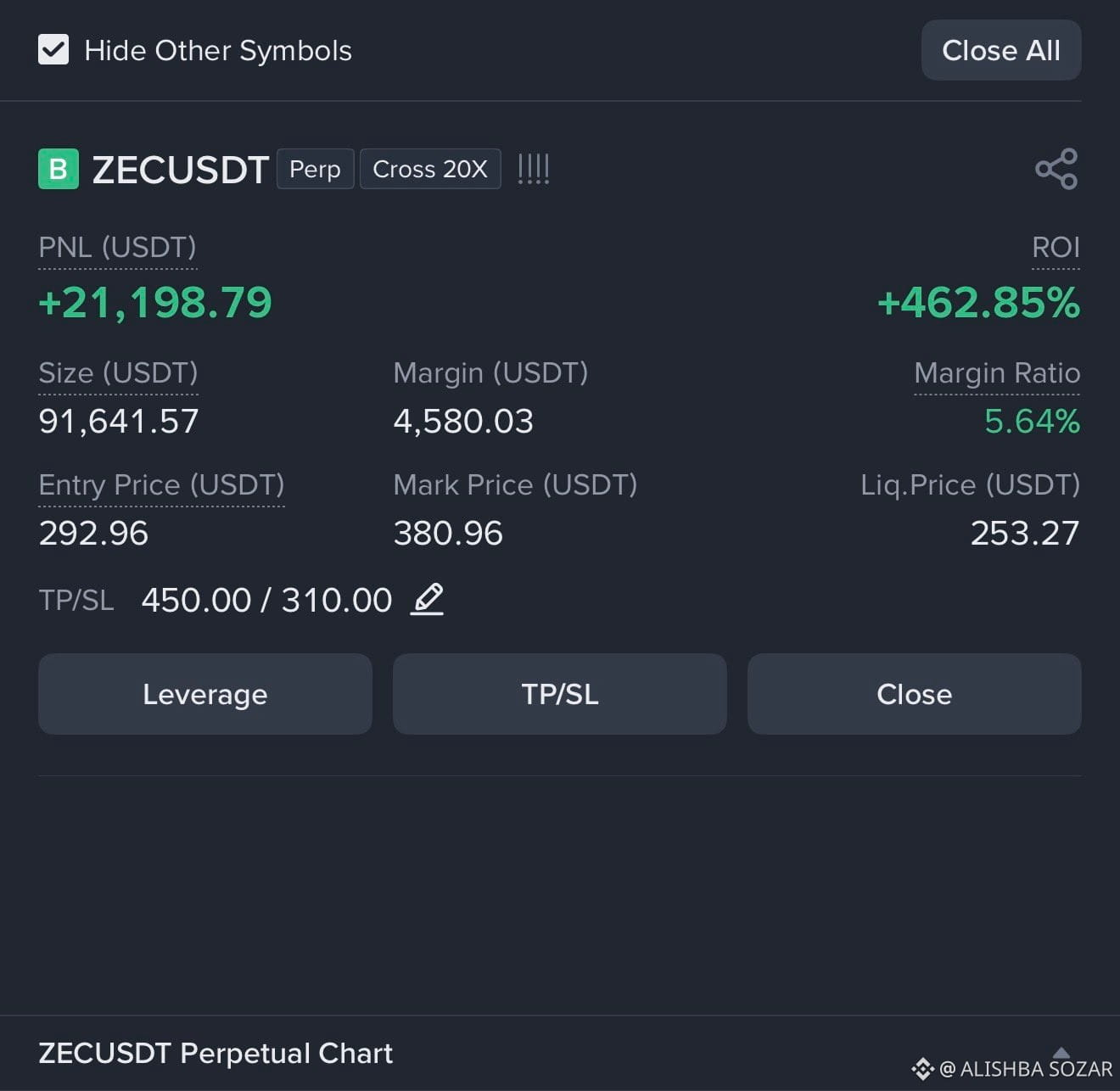
My $ZEC long trade is now over $20k in profit 🔥
This is your daily reminder that “Dips are Gifts.”
I'm still holding and waiting for $ZEC to reach $450. If it does, my profit will be around $40k.
Do you think I should close it now or wait for more profit?
#Alishba_Sozar
My $ZEC long trade is now over $20k in profit 🔥
This is your daily reminder that “Dips are Gifts.”
I'm still holding and waiting for $ZEC to reach $450. If it does, my profit will be around $40k.
Do you think I should close it now or wait for more profit?
#Alishba_Sozar
This is your daily reminder that “Dips are Gifts.”
I'm still holding and waiting for $ZEC to reach $450. If it does, my profit will be around $40k.
Do you think I should close it now or wait for more profit?
#Alishba_Sozar
2
10
1.1k
Real story of my close friend
He invested $130,000 in #altcoins in 2023.
His $130k turned into $840,000.
He didn't sell because he wanted $1 million.
It's now $2,300 after the recent crash.
He didn't cash out a single dollar and regrets it.
#Alishba_Sozar
Real story of my close friend
He invested $130,000 in #altcoins in 2023.
His $130k turned into $840,000.
He didn't sell because he wanted $1 million.
It's now $2,300 after the recent crash.
He didn't cash out a single dollar and regrets it.
#Alishba_Sozar
He invested $130,000 in #altcoins in 2023.
His $130k turned into $840,000.
He didn't sell because he wanted $1 million.
It's now $2,300 after the recent crash.
He didn't cash out a single dollar and regrets it.
#Alishba_Sozar

3
11
420
·
--
Bearish
I’ve been in crypto for over 7 years and I’ve never seen people this happy & optimistic even after #BITCOIN dumps more than 20% in less than two weeks & more than 50% down from all time highs
No single ounce of fear or wailing on the timeline
Everybody seems okay with these price levels
No single buy pressure or infusion
We are going way lower, this is not max pain
Not even close.
$BTC
#Alishba_Sozar
I’ve been in crypto for over 7 years and I’ve never seen people this happy & optimistic even after #BITCOIN dumps more than 20% in less than two weeks & more than 50% down from all time highs
No single ounce of fear or wailing on the timeline
Everybody seems okay with these price levels
No single buy pressure or infusion
We are going way lower, this is not max pain
Not even close.
$BTC
#Alishba_Sozar
No single ounce of fear or wailing on the timeline
Everybody seems okay with these price levels
No single buy pressure or infusion
We are going way lower, this is not max pain
Not even close.
$BTC
#Alishba_Sozar

2
12
713
·
--
Bearish
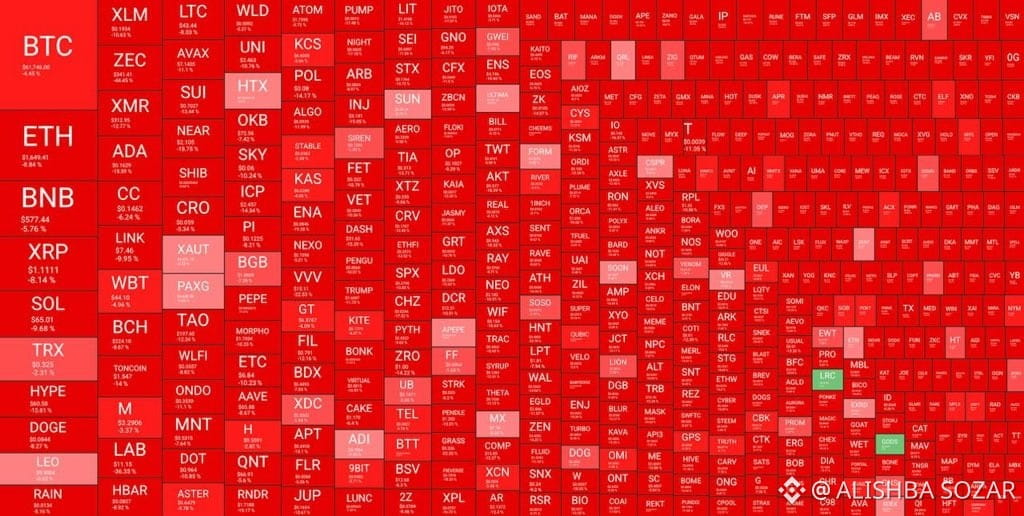
The Crypto President:
- Made crime and rug pulls legal
- Promised to take Bitcoin "to the moon"
- Pardoned scammers and money launderers
- Deregulated to allow banks and insurance companies to suck investors dry.
Now he's gone silent during one of the most uncertain times in history. What happened?
$BTC $ETH $BNB
#Alishba_Sozar
The Crypto President:
- Made crime and rug pulls legal
- Promised to take Bitcoin "to the moon"
- Pardoned scammers and money launderers
- Deregulated to allow banks and insurance companies to suck investors dry.
Now he's gone silent during one of the most uncertain times in history. What happened?
$BTC $ETH $BNB
#Alishba_Sozar
- Made crime and rug pulls legal
- Promised to take Bitcoin "to the moon"
- Pardoned scammers and money launderers
- Deregulated to allow banks and insurance companies to suck investors dry.
Now he's gone silent during one of the most uncertain times in history. What happened?
$BTC $ETH $BNB
#Alishba_Sozar

1
4
344
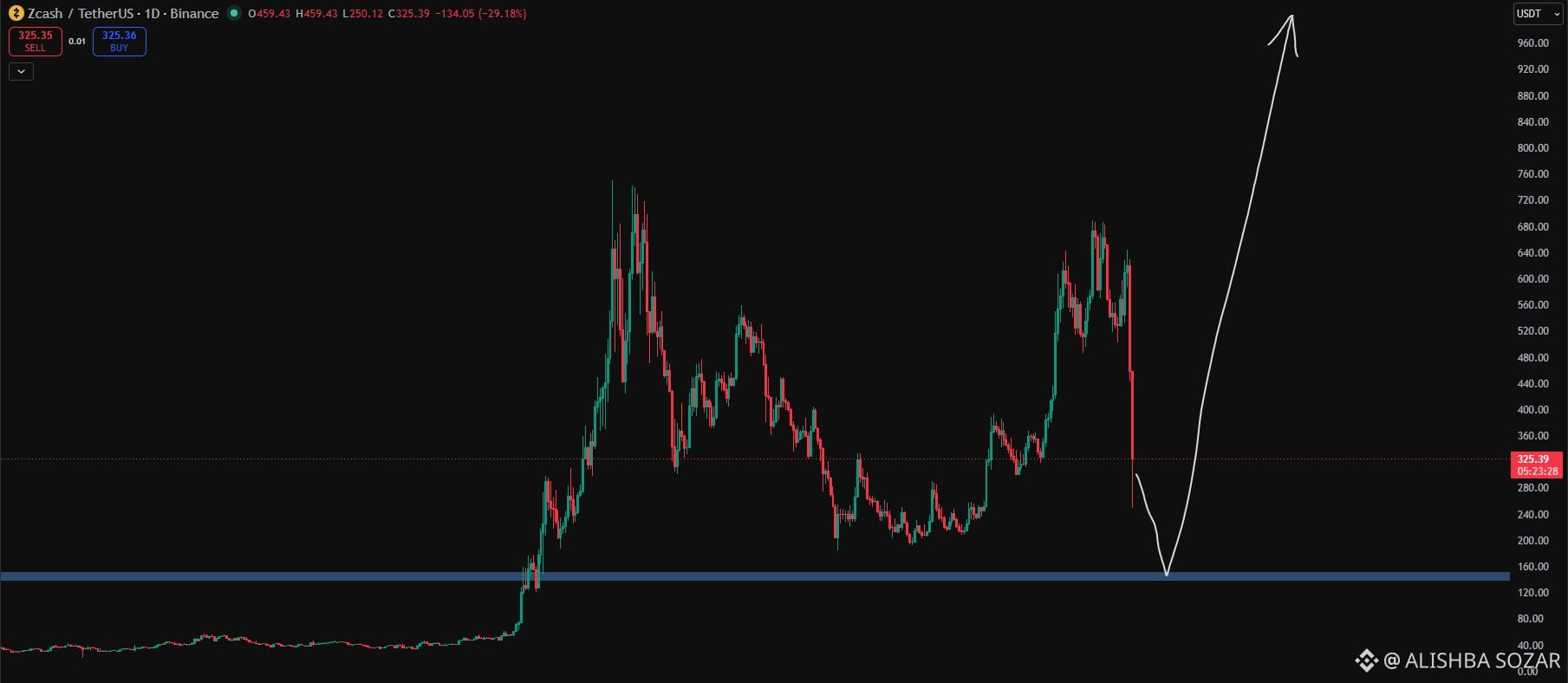
If the market gives me an opportunity
I will buy $ZEC around 140-150
This is the price range that I have really been waiting for a long time
#ZEC is still a very good long-term hold project as long as we have a really good entry
#Alishba_Sozar
If the market gives me an opportunity
I will buy $ZEC around 140-150
This is the price range that I have really been waiting for a long time
#ZEC is still a very good long-term hold project as long as we have a really good entry
#Alishba_Sozar
I will buy $ZEC around 140-150
This is the price range that I have really been waiting for a long time
#ZEC is still a very good long-term hold project as long as we have a really good entry
#Alishba_Sozar
3
206
·
--
Bullish
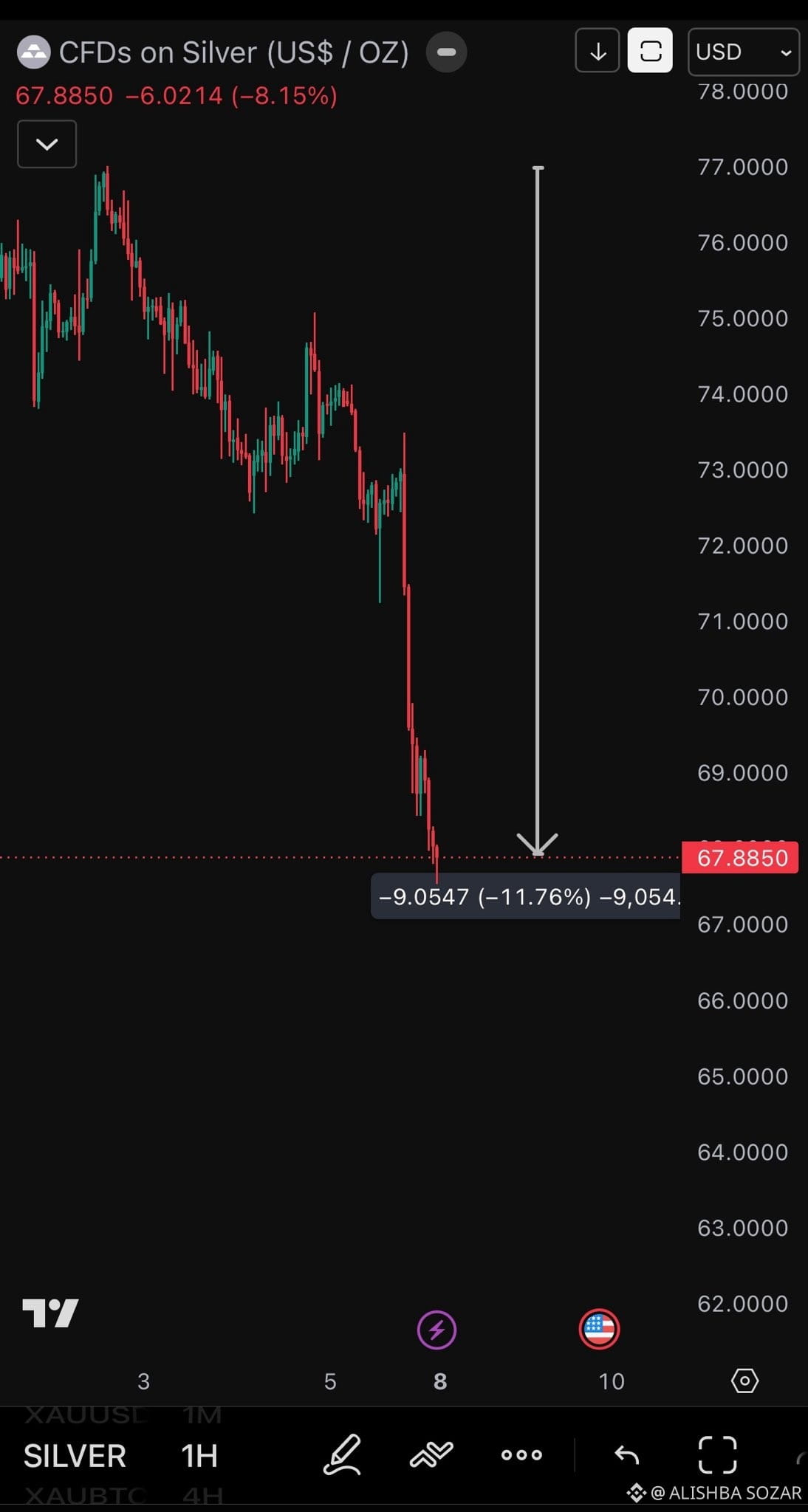
I was only shorting #GOLD and forgot to pay attention to #SILVER
GOLD and SILVER are like $ETH and $BTC
I only profited from shorting gold and feel a little regretful for missing out on silver.
#Alishba_Sozar
I was only shorting #GOLD and forgot to pay attention to #SILVER
GOLD and SILVER are like $ETH and $BTC
I only profited from shorting gold and feel a little regretful for missing out on silver.
#Alishba_Sozar
GOLD and SILVER are like $ETH and $BTC
I only profited from shorting gold and feel a little regretful for missing out on silver.
#Alishba_Sozar
1
2
591
·
--
Bullish
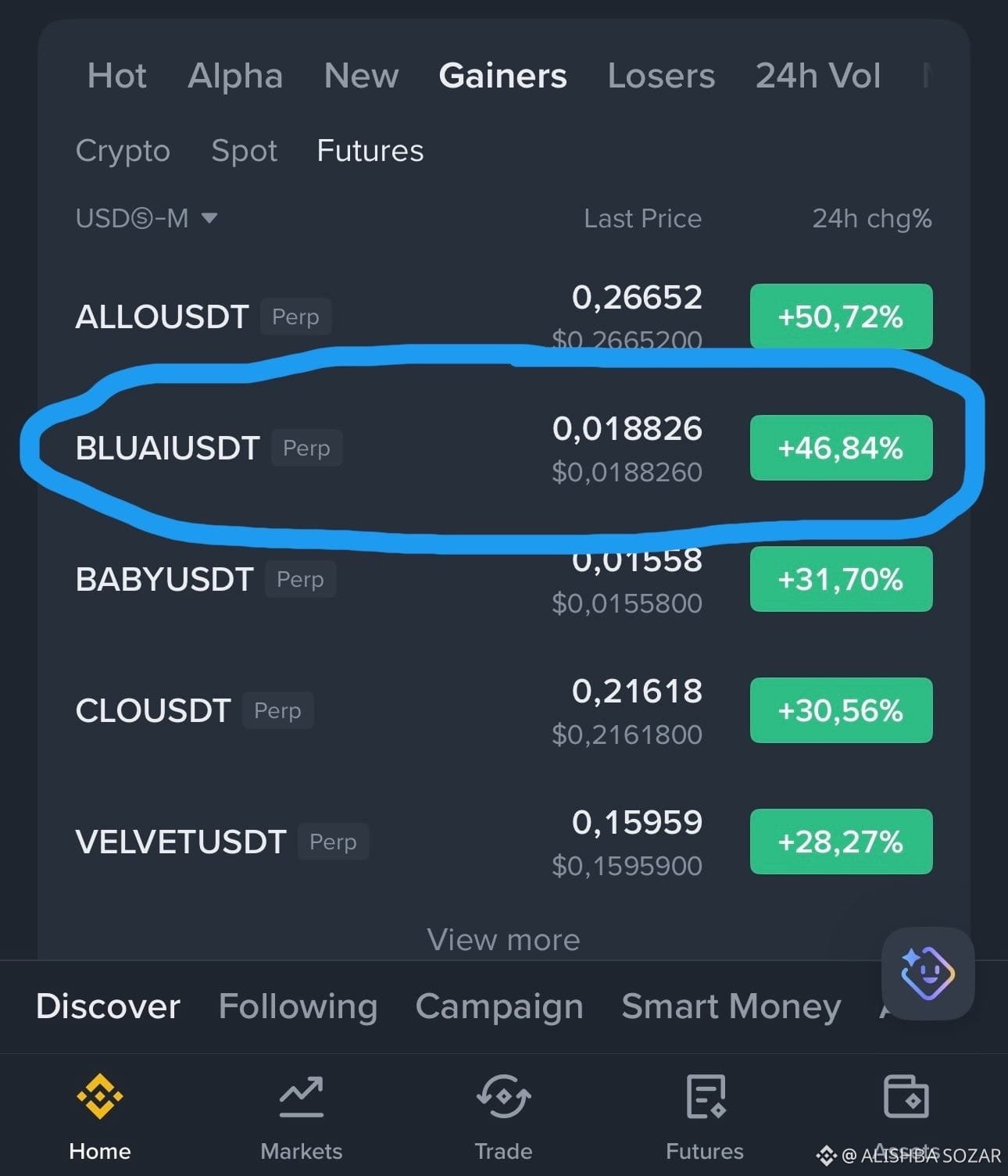
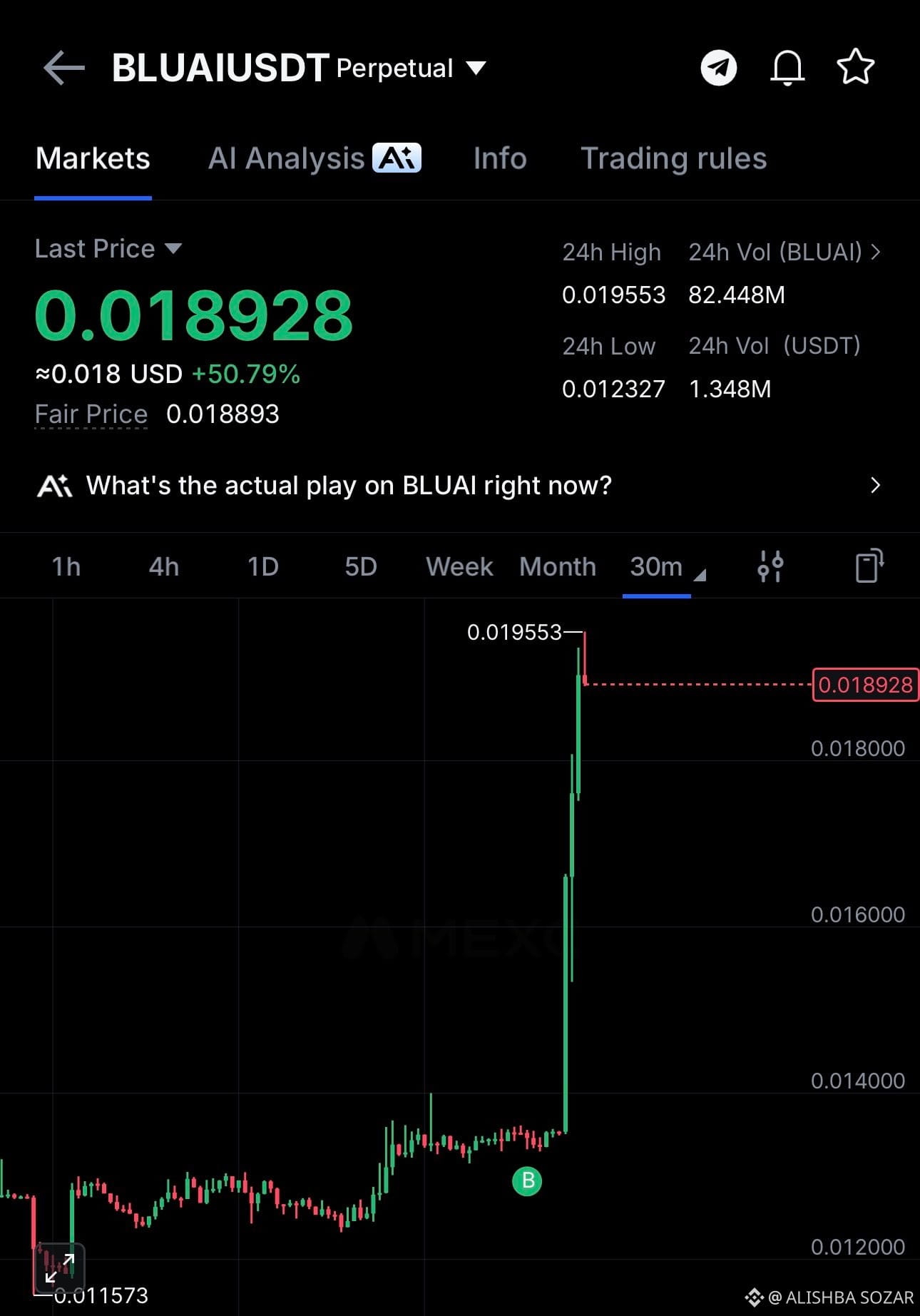
Alishba on top gainers 🔥
$BLUAI +50% in 4 hours
I just shared this signal 4 hours ago and now I'm up +50% profit.
I can't publicly share signals for small-cap #Altcoins because too many buyers would affect the price in the future.
And I have a responsibility to those who paid to subscribe . As for large-cap coins, I will still publicly share signals with you.
#Alishba_Sozar
Alishba on top gainers 🔥
$BLUAI +50% in 4 hours
I just shared this signal 4 hours ago and now I'm up +50% profit.
I can't publicly share signals for small-cap #Altcoins because too many buyers would affect the price in the future.
And I have a responsibility to those who paid to subscribe . As for large-cap coins, I will still publicly share signals with you.
#Alishba_Sozar
$BLUAI +50% in 4 hours
I just shared this signal 4 hours ago and now I'm up +50% profit.
I can't publicly share signals for small-cap #Altcoins because too many buyers would affect the price in the future.
And I have a responsibility to those who paid to subscribe . As for large-cap coins, I will still publicly share signals with you.
#Alishba_Sozar
5
3
305
Stop… Give me 2 minutes before you panic-sell your crypto.
If you’re only seeing red candles everywhere, thinking crypto is finished, and thinking if you should sell everything, then please read this:
First, bottoms are always scary. The news turns bearish, social media turns negative, and everyone suddenly becomes an expert telling you to sell. This happens every cycle.
Second, don't make the mistake of jumping from coin to coin just because you're tired of waiting. I've seen people hold for months, switch at the worst possible time, and then miss the actual rally.
Third, I still don't think the biggest move of this cycle is over. Most people give up near the bottom, not near the top.
At this stage, patience is more important than emotions.
The people who stay calm during the fear are usually the ones who will be benefited the most when the market turns around.
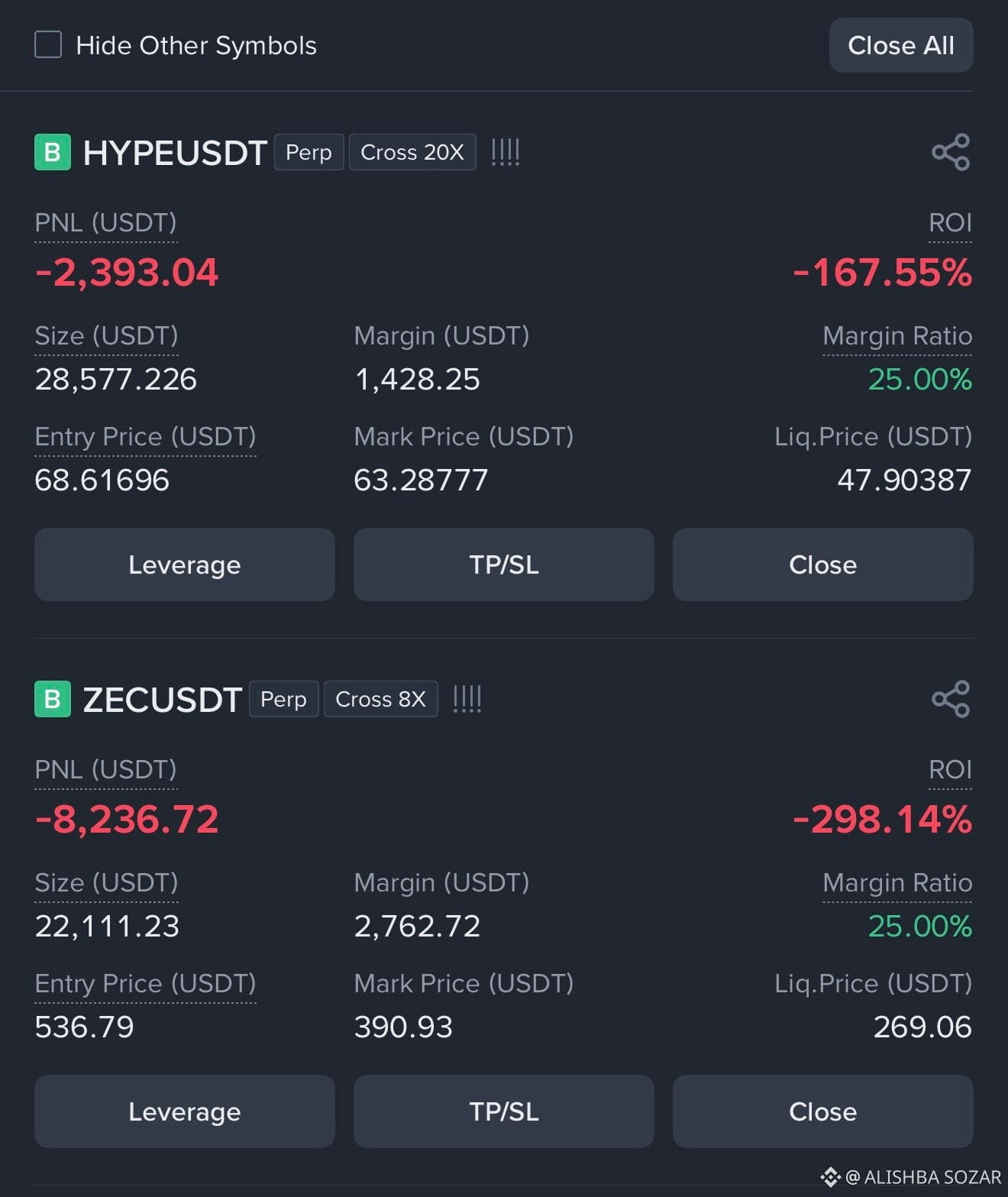
And yes, both my $HYPE and $ZEC positions are currently in loss. But I already told everyone from day one that this trade is risky and that I’m prepared for more downside. If they dump further together with $BTC I’ll be buying more and improving my average entry. My plan hasn’t changed.
#Alishba_Sozar
Stop… Give me 2 minutes before you panic-sell your crypto.
If you’re only seeing red candles everywhere, thinking crypto is finished, and thinking if you should sell everything, then please read this:
First, bottoms are always scary. The news turns bearish, social media turns negative, and everyone suddenly becomes an expert telling you to sell. This happens every cycle.
Second, don't make the mistake of jumping from coin to coin just because you're tired of waiting. I've seen people hold for months, switch at the worst possible time, and then miss the actual rally.
Third, I still don't think the biggest move of this cycle is over. Most people give up near the bottom, not near the top.
At this stage, patience is more important than emotions.
The people who stay calm during the fear are usually the ones who will be benefited the most when the market turns around.
And yes, both my $HYPE and $ZEC positions are currently in loss. But I already told everyone from day one that this trade is risky and that I’m prepared for more downside. If they dump further together with $BTC I’ll be buying more and improving my average entry. My plan hasn’t changed.
#Alishba_Sozar
If you’re only seeing red candles everywhere, thinking crypto is finished, and thinking if you should sell everything, then please read this:
First, bottoms are always scary. The news turns bearish, social media turns negative, and everyone suddenly becomes an expert telling you to sell. This happens every cycle.
Second, don't make the mistake of jumping from coin to coin just because you're tired of waiting. I've seen people hold for months, switch at the worst possible time, and then miss the actual rally.
Third, I still don't think the biggest move of this cycle is over. Most people give up near the bottom, not near the top.
At this stage, patience is more important than emotions.
The people who stay calm during the fear are usually the ones who will be benefited the most when the market turns around.
And yes, both my $HYPE and $ZEC positions are currently in loss. But I already told everyone from day one that this trade is risky and that I’m prepared for more downside. If they dump further together with $BTC I’ll be buying more and improving my average entry. My plan hasn’t changed.
#Alishba_Sozar
3
223
·
--
Bearish
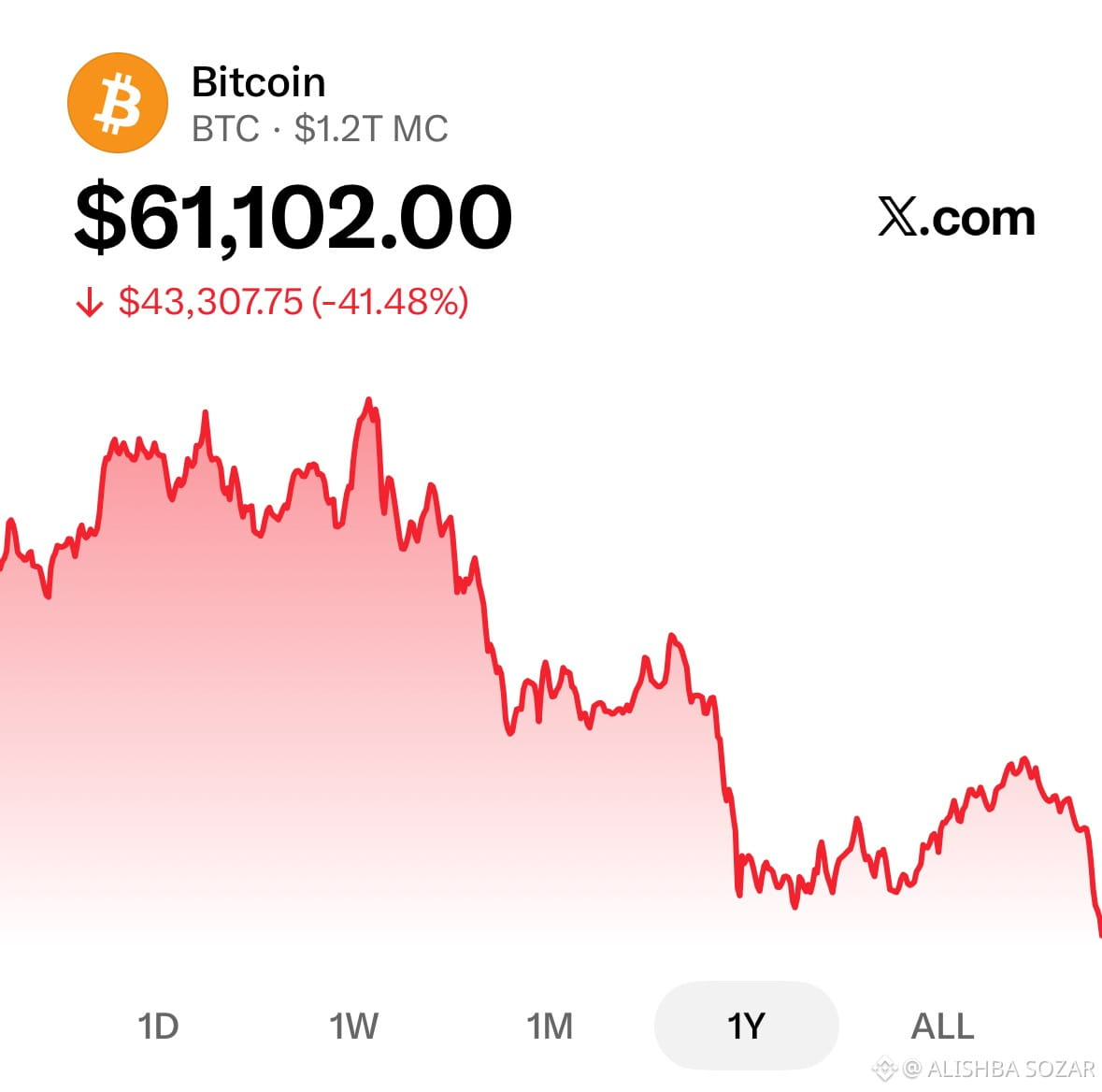
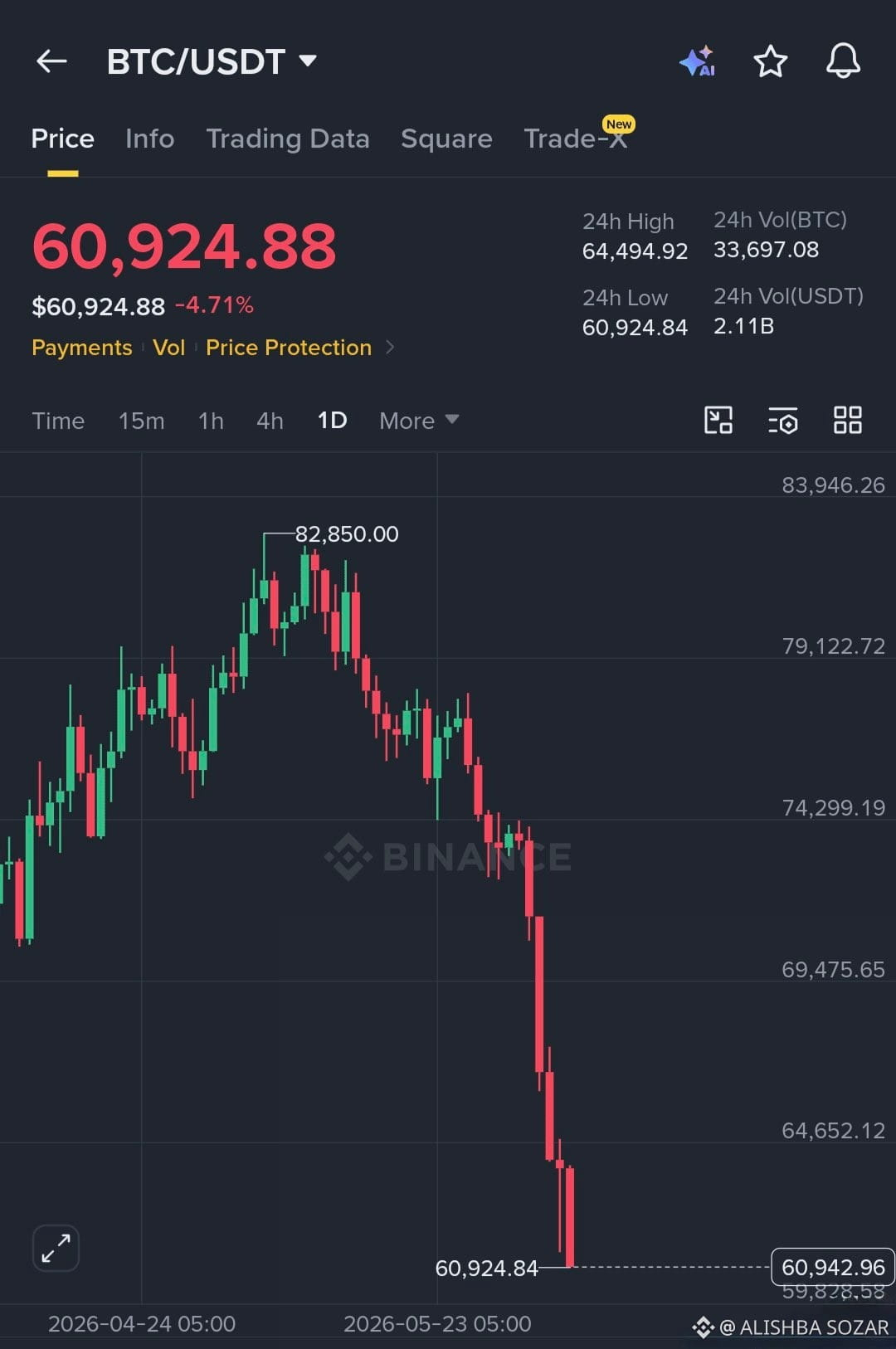
🚨 #Bitcoin dropped from $78,000 to $61,000 in just days.
This isn’t a normal pullback. The market structure has weakened, sellers are in control, and fear is spreading across the market.
$BTC is down:
• 18% in 7 days
• 26% in 30 days
The key level I’m watching is $60,300.
If it holds, we could see strong accumulation and a sharp recovery. If it breaks, the next major support sits around $57,000, with $52,000 below that.
Nobody knows the next move.
What matters is staying disciplined. The biggest mistakes in crypto are usually made during panic.
#Alishba_Sozar
🚨 #Bitcoin dropped from $78,000 to $61,000 in just days.
This isn’t a normal pullback. The market structure has weakened, sellers are in control, and fear is spreading across the market.
$BTC is down:
• 18% in 7 days
• 26% in 30 days
The key level I’m watching is $60,300.
If it holds, we could see strong accumulation and a sharp recovery. If it breaks, the next major support sits around $57,000, with $52,000 below that.
Nobody knows the next move.
What matters is staying disciplined. The biggest mistakes in crypto are usually made during panic.
#Alishba_Sozar
This isn’t a normal pullback. The market structure has weakened, sellers are in control, and fear is spreading across the market.
$BTC is down:
• 18% in 7 days
• 26% in 30 days
The key level I’m watching is $60,300.
If it holds, we could see strong accumulation and a sharp recovery. If it breaks, the next major support sits around $57,000, with $52,000 below that.
Nobody knows the next move.
What matters is staying disciplined. The biggest mistakes in crypto are usually made during panic.
#Alishba_Sozar
217
Log in to explore more content
Join global crypto users on Binance Square
⚡️ Get latest and useful information about crypto.
💬 Trusted by the world’s largest crypto exchange.
👍 Discover real insights from verified creators.
Email / Phone number
Trending Topics
AppleDebutsFoldablePhone
37,043 views
772 Discussing
Apple just dropped the foldable iPhone — and the market is paying attention. This isn't just another product cycle; it's a new product category, a new CEO on stage, and a $1,999 price tag that pushes $AAPL further into ultra-premium territory. Foldables are the narrative, and Apple is now the headline.
#appledebutsfoldablephone #EUExtendsCentralContactPointToCASPs #US10YTreasuryYieldHitsHighestSinceNov2023 #BrentCrudeTops$100 #USTreasuryToBuyBackUpTo$6BLongDatedDebt
KimHotbae
·2 Likes
·2.9k views
TSMCAugustRevenueUp53.3%YoY
6,235 views
209 Discussing
IranSaysReadyToEscalateWarWithUS
9,727 views
232 Discussing