
Mei Freiser
3.1k Posts

Mei Freiser
Crypto Enthusiast,Trade Map breaker.
286 Following
12.6K+ Followers
1.6K+ Liked
Posts
All
Quotes
Live
Most DeFi protocols still compete on yield.
The stronger ones compete on liquidity.
But the real edge may belong to those who can govern where that liquidity moves.
That’s where Bedrock DAO becomes interesting.
Open governance is often treated like a decentralization feature. In reality, it can become a coordination layer. It gives participants a reason to care about the direction of the protocol, not just the next reward cycle.
That changes the quality of liquidity.
Short-term capital follows incentives. Strategic capital follows influence.
With $BR at the center, Bedrock DAO is not just giving users a vote. It is creating a structure where liquidity, incentives, and protocol direction start moving together.
The market may be underestimating this.
In DeFi infrastructure, code can be copied. Yields can be matched. Liquidity can migrate.
But a community that repeatedly coordinates capital around shared economic goals is much harder to reproduce.
Bedrock’s open governance advantage may not be loud yet.
But if liquidity becomes the battlefield, coordination may become the moat.
#Bedrock
$BR
@Bedrock
The stronger ones compete on liquidity.
But the real edge may belong to those who can govern where that liquidity moves.
That’s where Bedrock DAO becomes interesting.
Open governance is often treated like a decentralization feature. In reality, it can become a coordination layer. It gives participants a reason to care about the direction of the protocol, not just the next reward cycle.
That changes the quality of liquidity.
Short-term capital follows incentives. Strategic capital follows influence.
With $BR at the center, Bedrock DAO is not just giving users a vote. It is creating a structure where liquidity, incentives, and protocol direction start moving together.
The market may be underestimating this.
In DeFi infrastructure, code can be copied. Yields can be matched. Liquidity can migrate.
But a community that repeatedly coordinates capital around shared economic goals is much harder to reproduce.
Bedrock’s open governance advantage may not be loud yet.
But if liquidity becomes the battlefield, coordination may become the moat.
#Bedrock
$BR
@Bedrock

Most people still see Bedrock DAO as a restaking story.
I think that misses the deeper point.
Restaked liquidity is not just capital looking for yield. Once it is coordinated, governed, and routed with purpose, it becomes protocol influence.
That is where Bedrock DAO becomes interesting.
The real thesis is not only about earning more from assets. It is about who directs that liquidity when it starts touching security, incentives, integrations, and ecosystem growth.
$BR sits close to that coordination layer.
If Bedrock can turn liquidity into governance power, then the market may stop viewing it as just another restaking protocol and start seeing it as a strategic capital-routing system.
That shift in perception could be the hidden catalyst.
The crowd usually notices yield first.
Researchers notice control.
#Bedrock
$BR
@Bedrock
I think that misses the deeper point.
Restaked liquidity is not just capital looking for yield. Once it is coordinated, governed, and routed with purpose, it becomes protocol influence.
That is where Bedrock DAO becomes interesting.
The real thesis is not only about earning more from assets. It is about who directs that liquidity when it starts touching security, incentives, integrations, and ecosystem growth.
$BR sits close to that coordination layer.
If Bedrock can turn liquidity into governance power, then the market may stop viewing it as just another restaking protocol and start seeing it as a strategic capital-routing system.
That shift in perception could be the hidden catalyst.
The crowd usually notices yield first.
Researchers notice control.
#Bedrock
$BR
@Bedrock
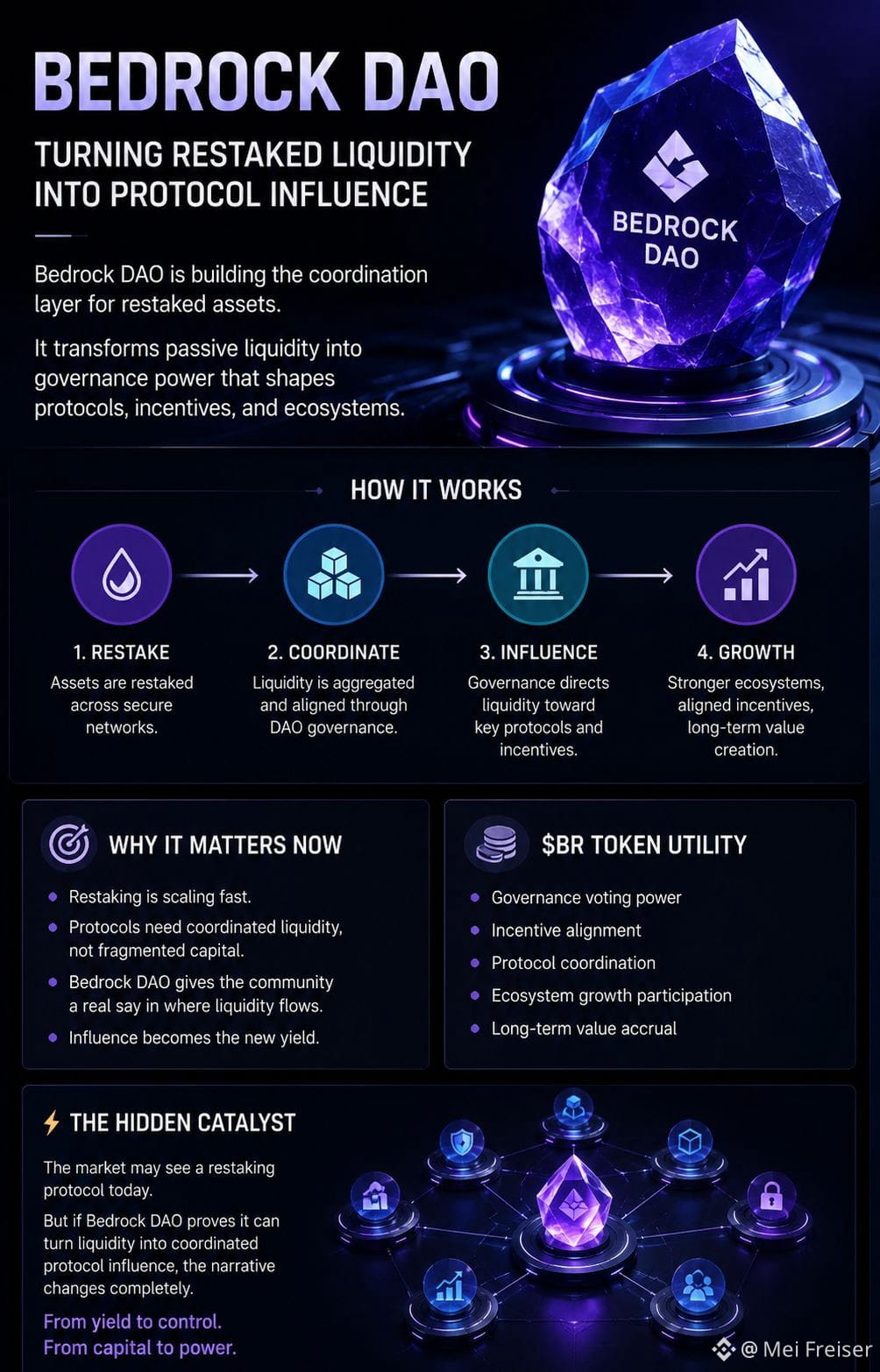
Some protocols don’t get attention because they’re loud.
They get attention because the market slowly realizes the quiet part was the real thesis.
Bedrock DAO is one of those cases.
Restaking already became one of crypto’s most crowded narratives. Everyone talks about yield. Everyone talks about points. Everyone watches TVL like it’s the whole story.
But the sharper question is different:
Who controls the liquidity once restaking becomes too important to ignore?
That is where Bedrock DAO starts to matter.
Bedrock is not just positioning around liquid restaking. It is trying to turn restaking liquidity into community-controlled direction. That changes the angle completely. Liquidity is no longer just parked capital chasing yield. It becomes voting power, strategy power, and incentive power.
The $BR token sits at the center of that structure.
Not as a decorative governance badge, but as the asset that decides how the protocol evolves, how incentives move, and how the community reacts when market conditions change.
And this matters because restaking is not a risk-free playground.
Yield always has a shadow. Smart contract risk, validator risk, liquidity crunches, governance capture, and crowded positioning can all turn a strong narrative into a painful lesson.
The projects that survive are usually not the ones with the loudest APR.
They are the ones with alignment.
Bedrock DAO’s hidden angle is that it is trying to align liquidity providers, token holders, and protocol direction under one governance layer.
That is where the market often misprices things early.
People see another restaking project.
Researchers see a liquidity coordination experiment.
And in crypto, coordination is often where the real power starts.
I’m not watching Bedrock DAO because it promises easy upside.
I’m watching because restaking liquidity is becoming political — and $BR may be one of the ways that community power gets priced before most people notice.
#bedrock
$BR
@Bedrock
They get attention because the market slowly realizes the quiet part was the real thesis.
Bedrock DAO is one of those cases.
Restaking already became one of crypto’s most crowded narratives. Everyone talks about yield. Everyone talks about points. Everyone watches TVL like it’s the whole story.
But the sharper question is different:
Who controls the liquidity once restaking becomes too important to ignore?
That is where Bedrock DAO starts to matter.
Bedrock is not just positioning around liquid restaking. It is trying to turn restaking liquidity into community-controlled direction. That changes the angle completely. Liquidity is no longer just parked capital chasing yield. It becomes voting power, strategy power, and incentive power.
The $BR token sits at the center of that structure.
Not as a decorative governance badge, but as the asset that decides how the protocol evolves, how incentives move, and how the community reacts when market conditions change.
And this matters because restaking is not a risk-free playground.
Yield always has a shadow. Smart contract risk, validator risk, liquidity crunches, governance capture, and crowded positioning can all turn a strong narrative into a painful lesson.
The projects that survive are usually not the ones with the loudest APR.
They are the ones with alignment.
Bedrock DAO’s hidden angle is that it is trying to align liquidity providers, token holders, and protocol direction under one governance layer.
That is where the market often misprices things early.
People see another restaking project.
Researchers see a liquidity coordination experiment.
And in crypto, coordination is often where the real power starts.
I’m not watching Bedrock DAO because it promises easy upside.
I’m watching because restaking liquidity is becoming political — and $BR may be one of the ways that community power gets priced before most people notice.
#bedrock
$BR
@Bedrock

Lately I’ve been noticing how restaking has quietly moved from a niche Ethereum experiment into something closer to a generalized yield layer across crypto markets. What caught my attention recently was Bedrock (BR), which is trying to extend that idea across Ethereum, Bitcoin, and even DePIN incentives while still keeping liquidity intact. On paper, it sounds like capital efficiency finally being solved, where assets keep earning without being locked away.
But the more I look at it, the more I wonder if we’re just layering complexity on top of already correlated yield sources. Liquid restaking feels elegant until you ask where the actual risk is being absorbed. It’s rarely visible in the headline APY. It shifts into validator exposure, cross-asset dependency, and sometimes into points systems that assume perpetual inflows.
Bedrock’s angle is interesting because it leans into multi-asset participation rather than Ethereum isolation. Still, I can’t shake the thought that liquidity here is more psychological than functional. When everyone believes they can exit at any moment, exit liquidity becomes a shared assumption, not a guarantee.
Maybe the real question isn’t how much yield these systems can stack, but how long they can keep compressing risk without a visible rupture. And I keep asking myself whether we’re optimizing capital or just redistributing fragility across more surfaces.
#Bedrock
$BR
@Bedrock
But the more I look at it, the more I wonder if we’re just layering complexity on top of already correlated yield sources. Liquid restaking feels elegant until you ask where the actual risk is being absorbed. It’s rarely visible in the headline APY. It shifts into validator exposure, cross-asset dependency, and sometimes into points systems that assume perpetual inflows.
Bedrock’s angle is interesting because it leans into multi-asset participation rather than Ethereum isolation. Still, I can’t shake the thought that liquidity here is more psychological than functional. When everyone believes they can exit at any moment, exit liquidity becomes a shared assumption, not a guarantee.
Maybe the real question isn’t how much yield these systems can stack, but how long they can keep compressing risk without a visible rupture. And I keep asking myself whether we’re optimizing capital or just redistributing fragility across more surfaces.
#Bedrock
$BR
@Bedrock

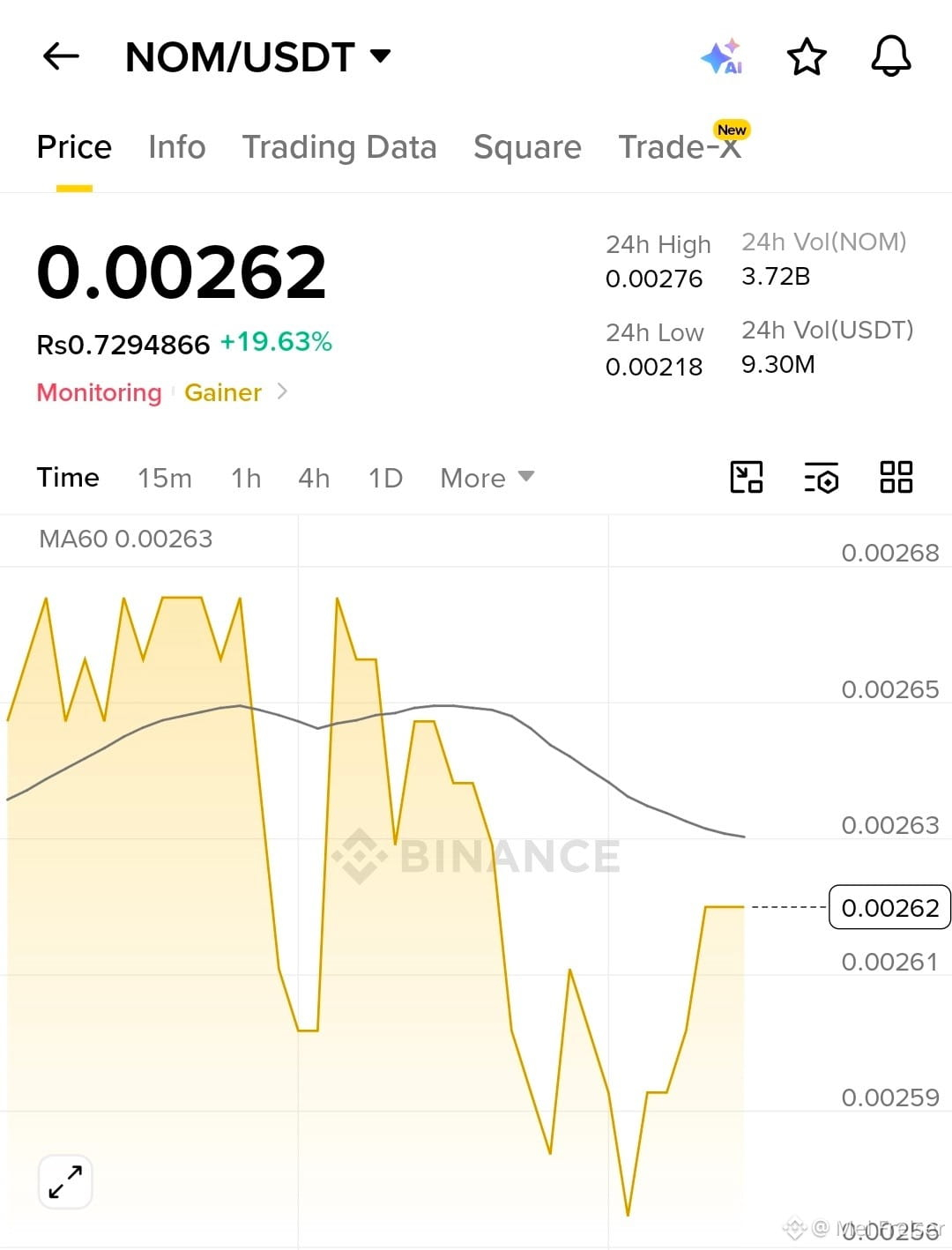
$NOM
Market Event: A downside rejection removed weak longs and reclaimed liquidity below support.
Momentum Implication: The recovery points to improving short-term demand and stabilization.
Levels: • Entry Price (EP): 0.710 – 0.745
• Trade Target 1 (TG1): 0.810
• Trade Target 2 (TG2): 0.900
• Trade Target 3 (TG3): 1.020
• Stop Loss (SL): 0.665
Trade Decision: Long bias remains valid while reclaimed support continues to hold.
#BlackRockDepositsBTCAndETHToCEX
Market Event: A downside rejection removed weak longs and reclaimed liquidity below support.
Momentum Implication: The recovery points to improving short-term demand and stabilization.
Levels: • Entry Price (EP): 0.710 – 0.745
• Trade Target 1 (TG1): 0.810
• Trade Target 2 (TG2): 0.900
• Trade Target 3 (TG3): 1.020
• Stop Loss (SL): 0.665
Trade Decision: Long bias remains valid while reclaimed support continues to hold.
#BlackRockDepositsBTCAndETHToCEX
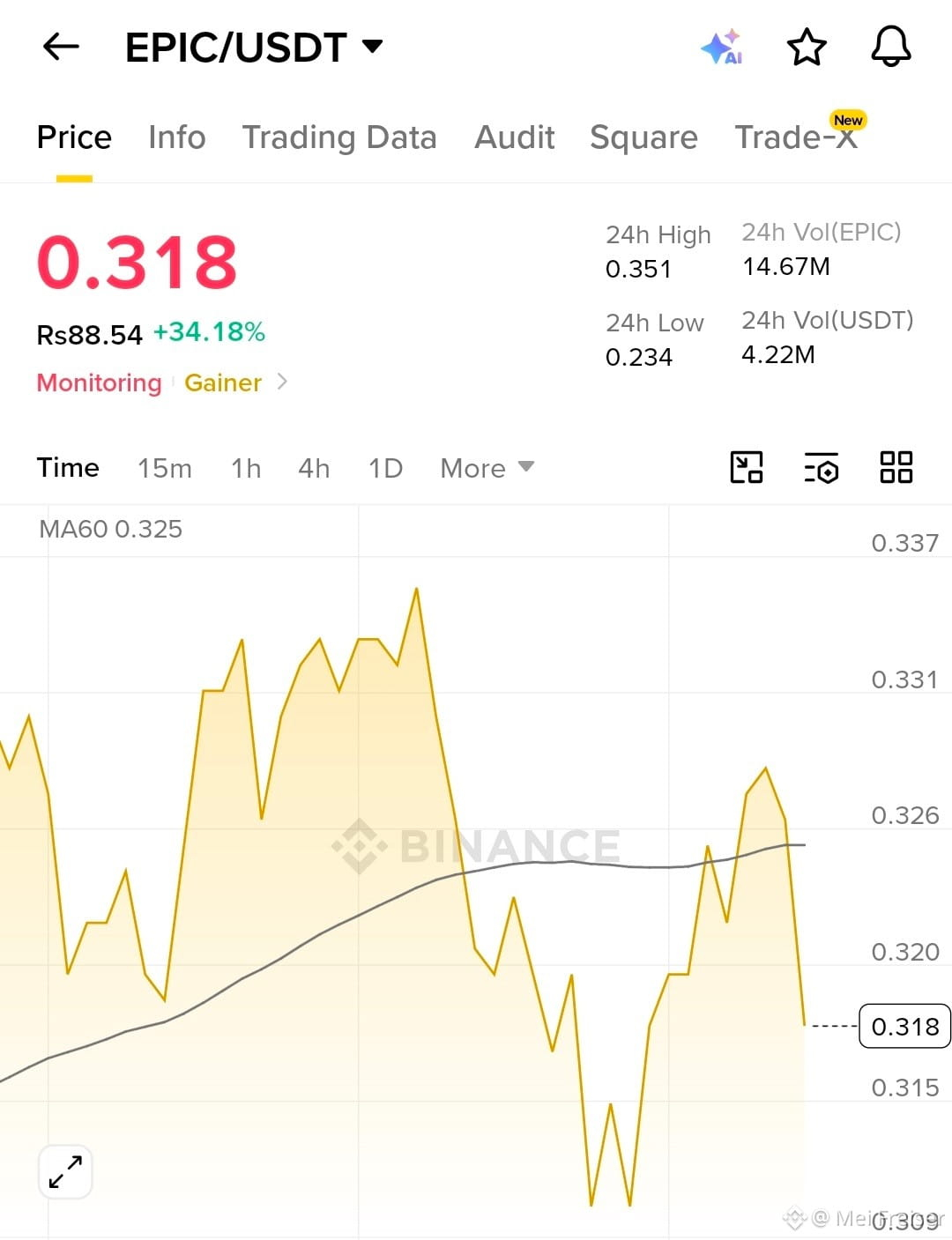
$EPIC
Market Event: Price broke from consolidation and triggered a short squeeze through nearby resistance.
Momentum Implication: The move signals strengthening participation and potential trend continuation.
Levels: • Entry Price (EP): 85.20 – 88.10
• Trade Target 1 (TG1): 93.00
• Trade Target 2 (TG2): 99.50
• Trade Target 3 (TG3): 108.00
• Stop Loss (SL): 81.40
Trade Decision: Maintain a bullish stance while price remains above the breakout base.
#EUFinanceMinistersStablecoinGap
Market Event: Price broke from consolidation and triggered a short squeeze through nearby resistance.
Momentum Implication: The move signals strengthening participation and potential trend continuation.
Levels: • Entry Price (EP): 85.20 – 88.10
• Trade Target 1 (TG1): 93.00
• Trade Target 2 (TG2): 99.50
• Trade Target 3 (TG3): 108.00
• Stop Loss (SL): 81.40
Trade Decision: Maintain a bullish stance while price remains above the breakout base.
#EUFinanceMinistersStablecoinGap
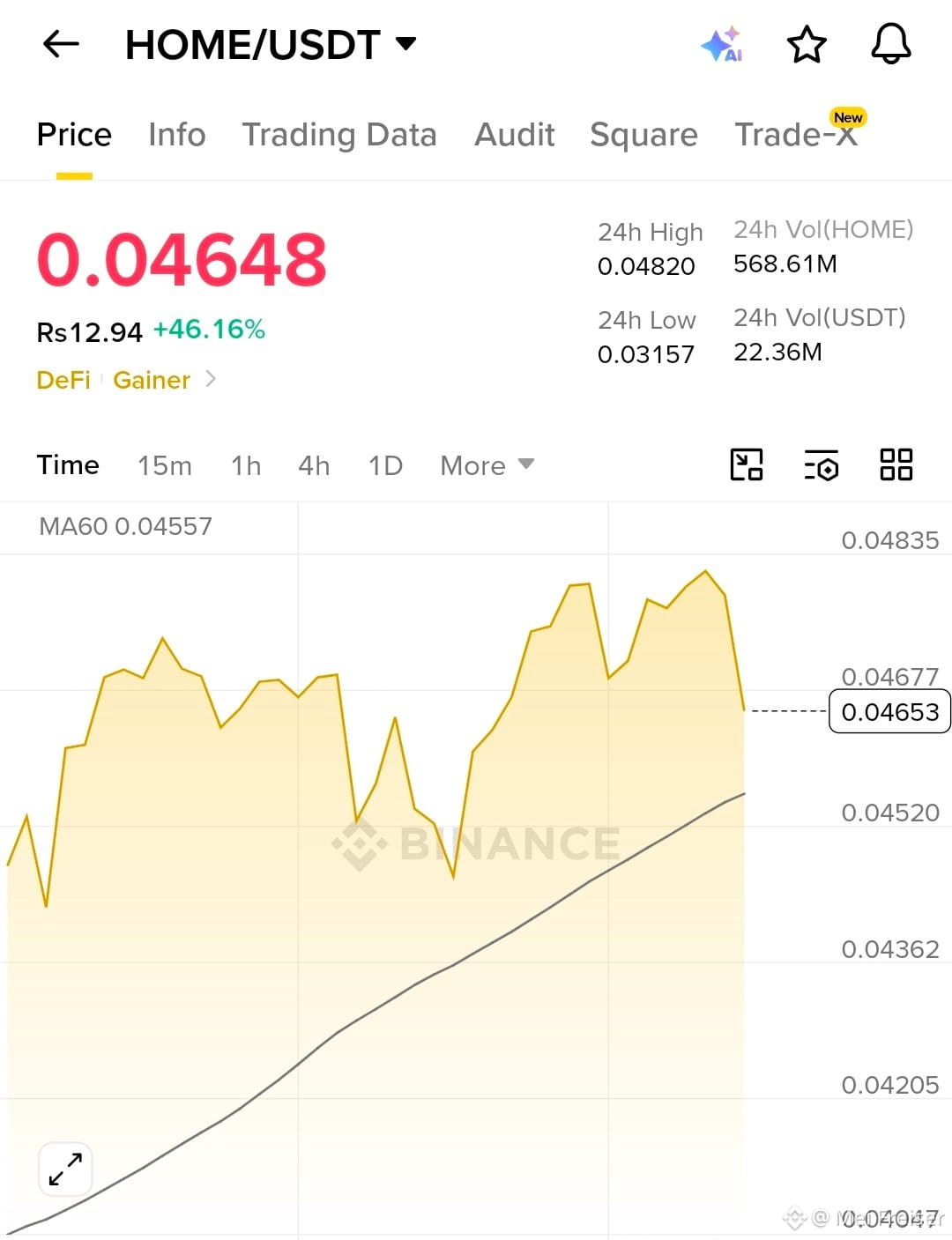
$HOME
Market Event: A key support defense attracted buyers after a brief liquidity grab below structure.
Momentum Implication: Price is showing acceptance above support, favoring further upside attempts.
Levels: • Entry Price (EP): 12.95 – 13.35
• Trade Target 1 (TG1): 14.10
• Trade Target 2 (TG2): 15.05
• Trade Target 3 (TG3): 16.30
• Stop Loss (SL): 12.25
Trade Decision: Bias remains positive while the defended support zone remains respected.
#BitcoinSoftwareEquitiesDiverge
Market Event: A key support defense attracted buyers after a brief liquidity grab below structure.
Momentum Implication: Price is showing acceptance above support, favoring further upside attempts.
Levels: • Entry Price (EP): 12.95 – 13.35
• Trade Target 1 (TG1): 14.10
• Trade Target 2 (TG2): 15.05
• Trade Target 3 (TG3): 16.30
• Stop Loss (SL): 12.25
Trade Decision: Bias remains positive while the defended support zone remains respected.
#BitcoinSoftwareEquitiesDiverge
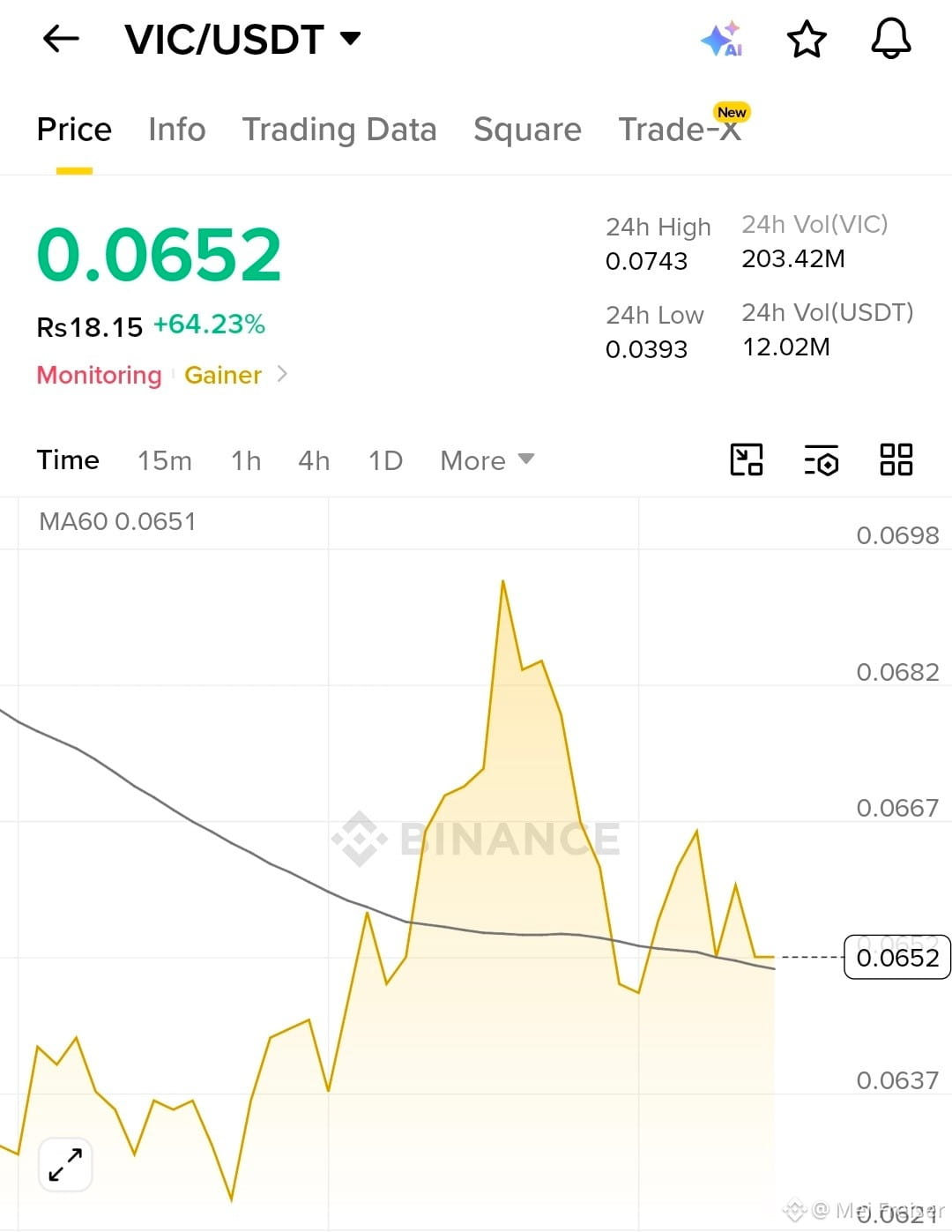
$VIC
Market Event: Price swept local lows, absorbed sell pressure, and quickly reclaimed key support.
Momentum Implication: The downside rejection suggests sellers are losing control in the short term.
Levels: • Entry Price (EP): 17.80 – 18.35
• Trade Target 1 (TG1): 19.40
• Trade Target 2 (TG2): 20.90
• Trade Target 3 (TG3): 22.60
• Stop Loss (SL): 16.95
Trade Decision: Constructive long setup as long as recovery levels remain defended.
#IranUSCeasefireExtendsToLebanon
Market Event: Price swept local lows, absorbed sell pressure, and quickly reclaimed key support.
Momentum Implication: The downside rejection suggests sellers are losing control in the short term.
Levels: • Entry Price (EP): 17.80 – 18.35
• Trade Target 1 (TG1): 19.40
• Trade Target 2 (TG2): 20.90
• Trade Target 3 (TG3): 22.60
• Stop Loss (SL): 16.95
Trade Decision: Constructive long setup as long as recovery levels remain defended.
#IranUSCeasefireExtendsToLebanon
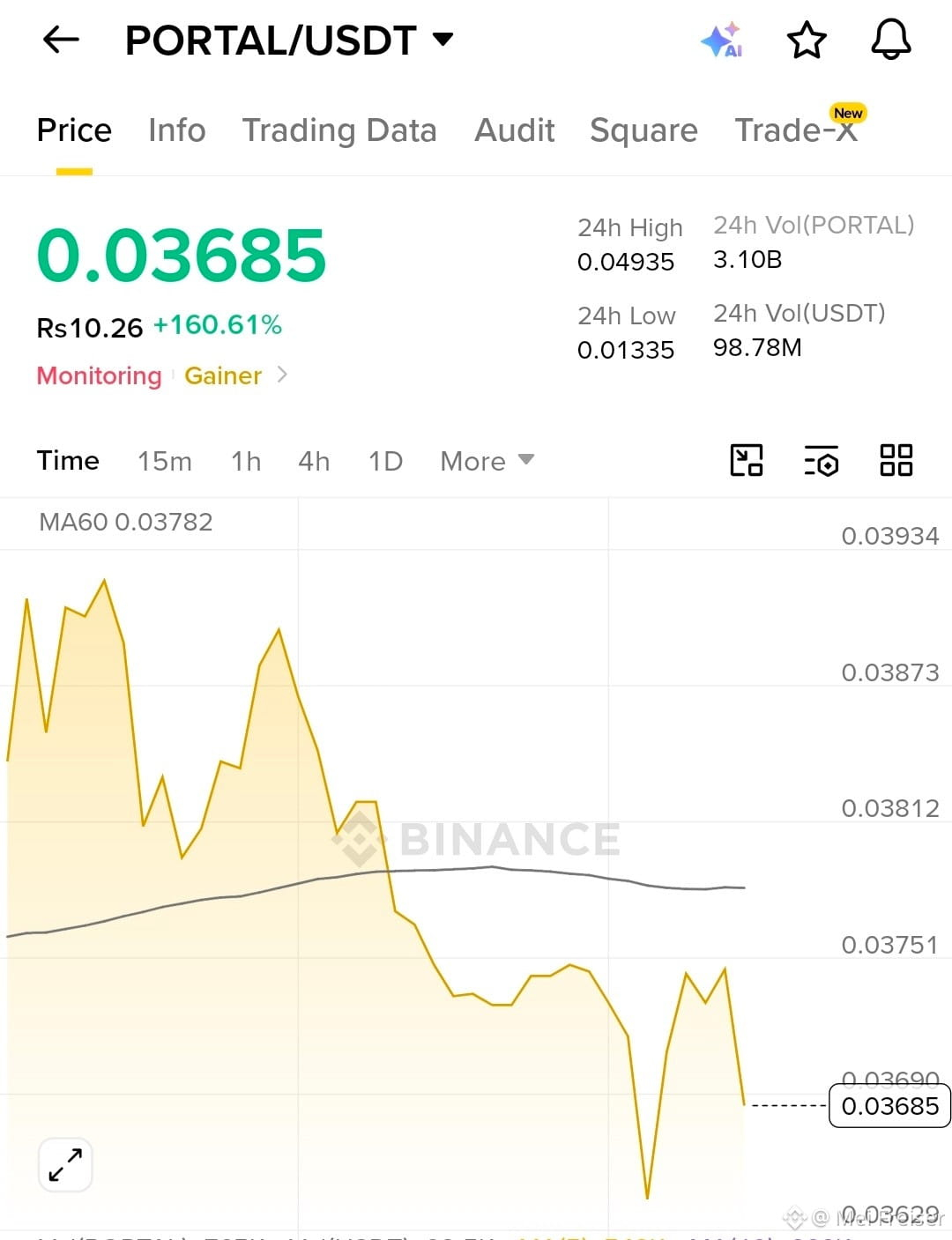
$PORTAL
Market Event: A short squeeze cleared overhead liquidity and forced late sellers out of the market.
Momentum Implication: Buyers remain in control while price holds above the reclaimed breakout area.
Levels: • Entry Price (EP): 10.15 – 10.55
• Trade Target 1 (TG1): 11.20
• Trade Target 2 (TG2): 12.10
• Trade Target 3 (TG3): 13.40
• Stop Loss (SL): 9.48
Trade Decision: Bullish bias while price continues to defend the post-squeeze structure.
#BlackRockDepositsBTCETHToCEX
Market Event: A short squeeze cleared overhead liquidity and forced late sellers out of the market.
Momentum Implication: Buyers remain in control while price holds above the reclaimed breakout area.
Levels: • Entry Price (EP): 10.15 – 10.55
• Trade Target 1 (TG1): 11.20
• Trade Target 2 (TG2): 12.10
• Trade Target 3 (TG3): 13.40
• Stop Loss (SL): 9.48
Trade Decision: Bullish bias while price continues to defend the post-squeeze structure.
#BlackRockDepositsBTCETHToCEX
I’ve been thinking about how Web3 keeps growing, and one thing feels clear to me: the real bottleneck isn’t just the blockchains themselves, it’s how scattered everything still is. Every time I try to interact across different tools, dashboards, or chains, it feels like I’m constantly switching context instead of actually getting things done.
That’s where something like Genius Terminal stands out to me. I see it less as just another tool and more like a potential control layer for Web3. If it really works as an intelligent terminal, it could turn complex on-chain actions into something closer to a natural conversation—where I express intent and it handles execution across different ecosystems.
What I find interesting is how much time this could save. Instead of jumping between analytics platforms, bridges, and wallets, I could imagine one interface that understands what I’m trying to do and helps me act on it directly. That shift from manual navigation to guided execution feels like a real infrastructure change.
For developers, I think it could also simplify a lot of friction. They’re often dealing with fragmented APIs and tools, and a unified terminal could reduce that overhead.
To me, the bigger picture is simple: Web3 doesn’t just need more chains, it needs smarter coordination layers. Genius Terminal feels like it’s aiming exactly at that gap.
@GeniusOfficial
#genius
$GENIUS
That’s where something like Genius Terminal stands out to me. I see it less as just another tool and more like a potential control layer for Web3. If it really works as an intelligent terminal, it could turn complex on-chain actions into something closer to a natural conversation—where I express intent and it handles execution across different ecosystems.
What I find interesting is how much time this could save. Instead of jumping between analytics platforms, bridges, and wallets, I could imagine one interface that understands what I’m trying to do and helps me act on it directly. That shift from manual navigation to guided execution feels like a real infrastructure change.
For developers, I think it could also simplify a lot of friction. They’re often dealing with fragmented APIs and tools, and a unified terminal could reduce that overhead.
To me, the bigger picture is simple: Web3 doesn’t just need more chains, it needs smarter coordination layers. Genius Terminal feels like it’s aiming exactly at that gap.
@GeniusOfficial
#genius
$GENIUS

I’ve noticed that institutional and retail traders often use the same technology for completely different reasons. From my perspective, institutions benefit the most from Genius Terminal when it comes to speed, scale, and managing massive amounts of market data. They are constantly making high-volume decisions, so having advanced analytics and automation gives them a real advantage.
At the same time, I think retail traders are gaining something even more important — access. Tools that once felt exclusive to large firms are now becoming easier for everyday investors to use. I’ve seen how platforms like Genius Terminal can help retail users feel more confident by turning complex data into something they can actually understand and act on.
What stands out to me is how the platform serves both worlds without making either side feel limited. Institutions get efficiency and precision, while retail traders get smarter tools and better visibility into the market. In my opinion, that balance is what makes Genius Terminal valuable. It isn’t just about technology anymore — it’s about giving different types of traders the ability to make better decisions in their own way.
@GeniusOfficial
#genius
$GENIUS
At the same time, I think retail traders are gaining something even more important — access. Tools that once felt exclusive to large firms are now becoming easier for everyday investors to use. I’ve seen how platforms like Genius Terminal can help retail users feel more confident by turning complex data into something they can actually understand and act on.
What stands out to me is how the platform serves both worlds without making either side feel limited. Institutions get efficiency and precision, while retail traders get smarter tools and better visibility into the market. In my opinion, that balance is what makes Genius Terminal valuable. It isn’t just about technology anymore — it’s about giving different types of traders the ability to make better decisions in their own way.
@GeniusOfficial
#genius
$GENIUS

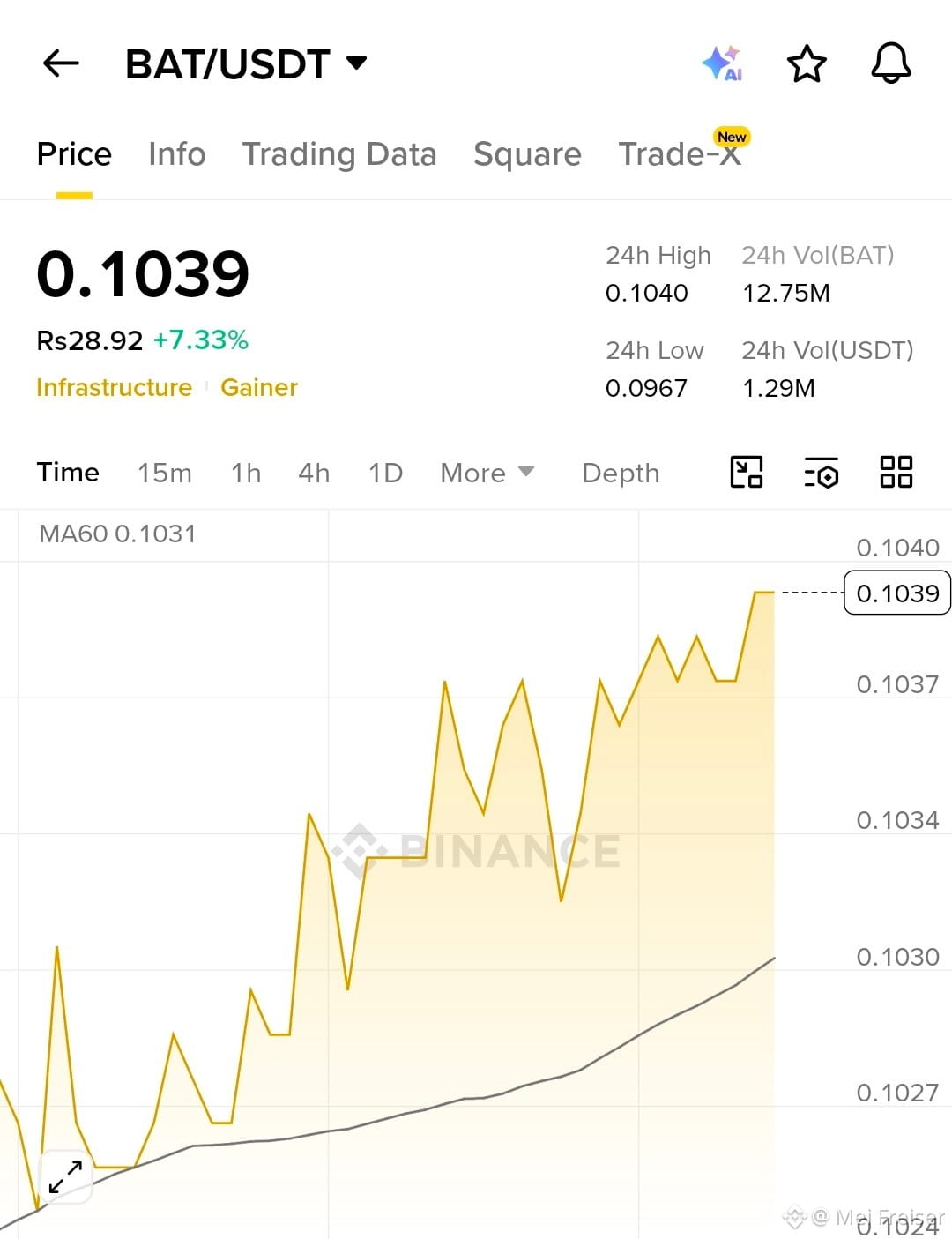
$BAT
Market Event: Price swept weak lows before reclaiming resistance with steady bid-side absorption.
Momentum Implication: Momentum remains positive with buyers attempting to establish a higher trading range.
Levels:
• Entry Price (EP): 0.1018 – 0.1042
• Trade Target 1 (TG1): 0.1088
• Trade Target 2 (TG2): 0.1135
• Trade Target 3 (TG3): 0.1180
• Stop Loss (SL): 0.0985
Trade Decision: Long exposure remains reasonable while price continues holding above reclaimed support.
#TrumpCriticizesGenslerAntiCrypto
Market Event: Price swept weak lows before reclaiming resistance with steady bid-side absorption.
Momentum Implication: Momentum remains positive with buyers attempting to establish a higher trading range.
Levels:
• Entry Price (EP): 0.1018 – 0.1042
• Trade Target 1 (TG1): 0.1088
• Trade Target 2 (TG2): 0.1135
• Trade Target 3 (TG3): 0.1180
• Stop Loss (SL): 0.0985
Trade Decision: Long exposure remains reasonable while price continues holding above reclaimed support.
#TrumpCriticizesGenslerAntiCrypto
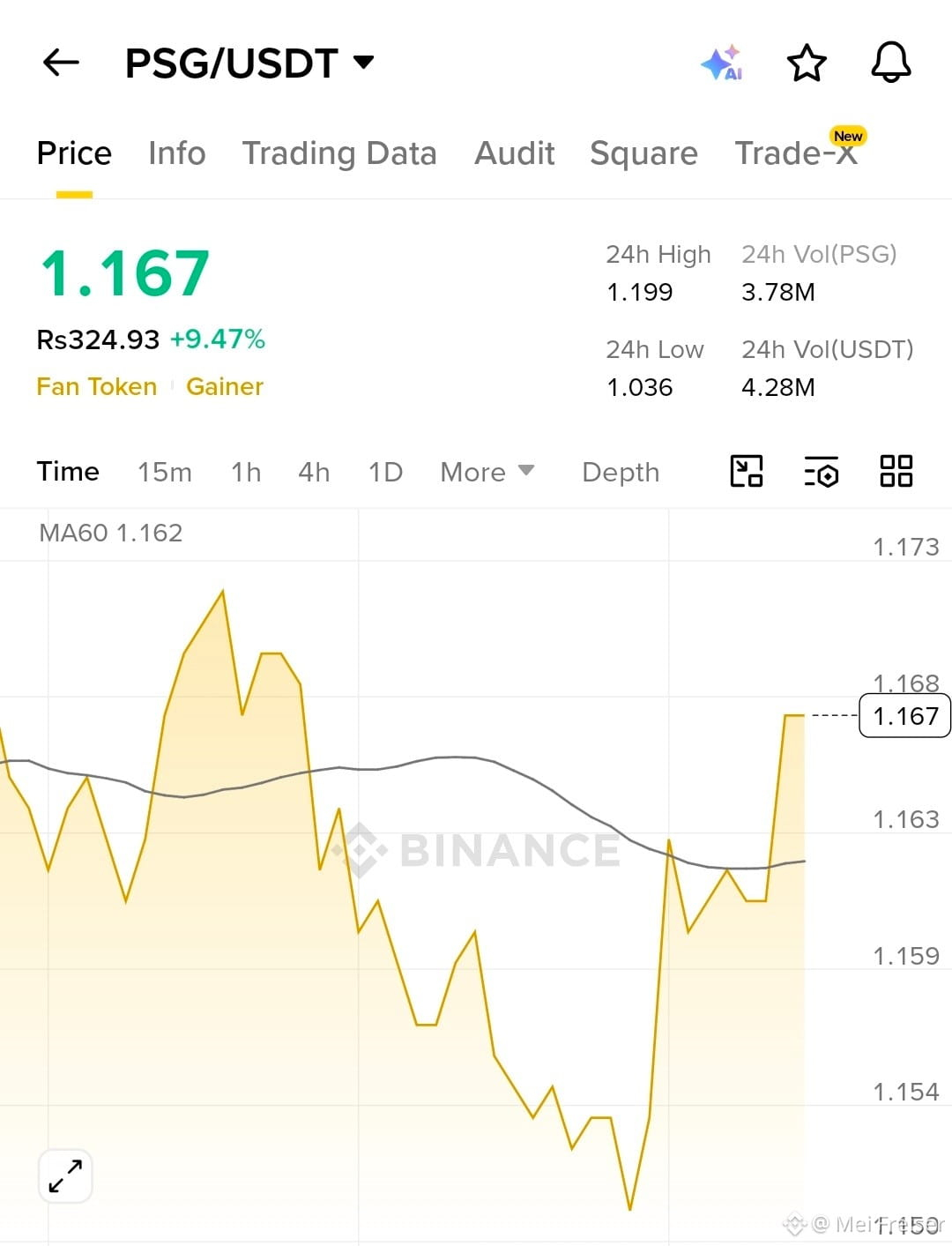
$PSG
Market Event: Price defended a major demand area and squeezed late short positioning on the breakout.
Momentum Implication: Buyers currently control momentum with trend continuation favored above support.
Levels:
• Entry Price (EP): 1.135 – 1.158
• Trade Target 1 (TG1): 1.205
• Trade Target 2 (TG2): 1.265
• Trade Target 3 (TG3): 1.338
• Stop Loss (SL): 1.098
Trade Decision: Bias remains long while price respects the reclaimed breakout structure.
If 1.135 remains defended, continuation into higher liquidity zones is likely.
#RwaSectorLeadsCryptoDecline
Market Event: Price defended a major demand area and squeezed late short positioning on the breakout.
Momentum Implication: Buyers currently control momentum with trend continuation favored above support.
Levels:
• Entry Price (EP): 1.135 – 1.158
• Trade Target 1 (TG1): 1.205
• Trade Target 2 (TG2): 1.265
• Trade Target 3 (TG3): 1.338
• Stop Loss (SL): 1.098
Trade Decision: Bias remains long while price respects the reclaimed breakout structure.
If 1.135 remains defended, continuation into higher liquidity zones is likely.
#RwaSectorLeadsCryptoDecline
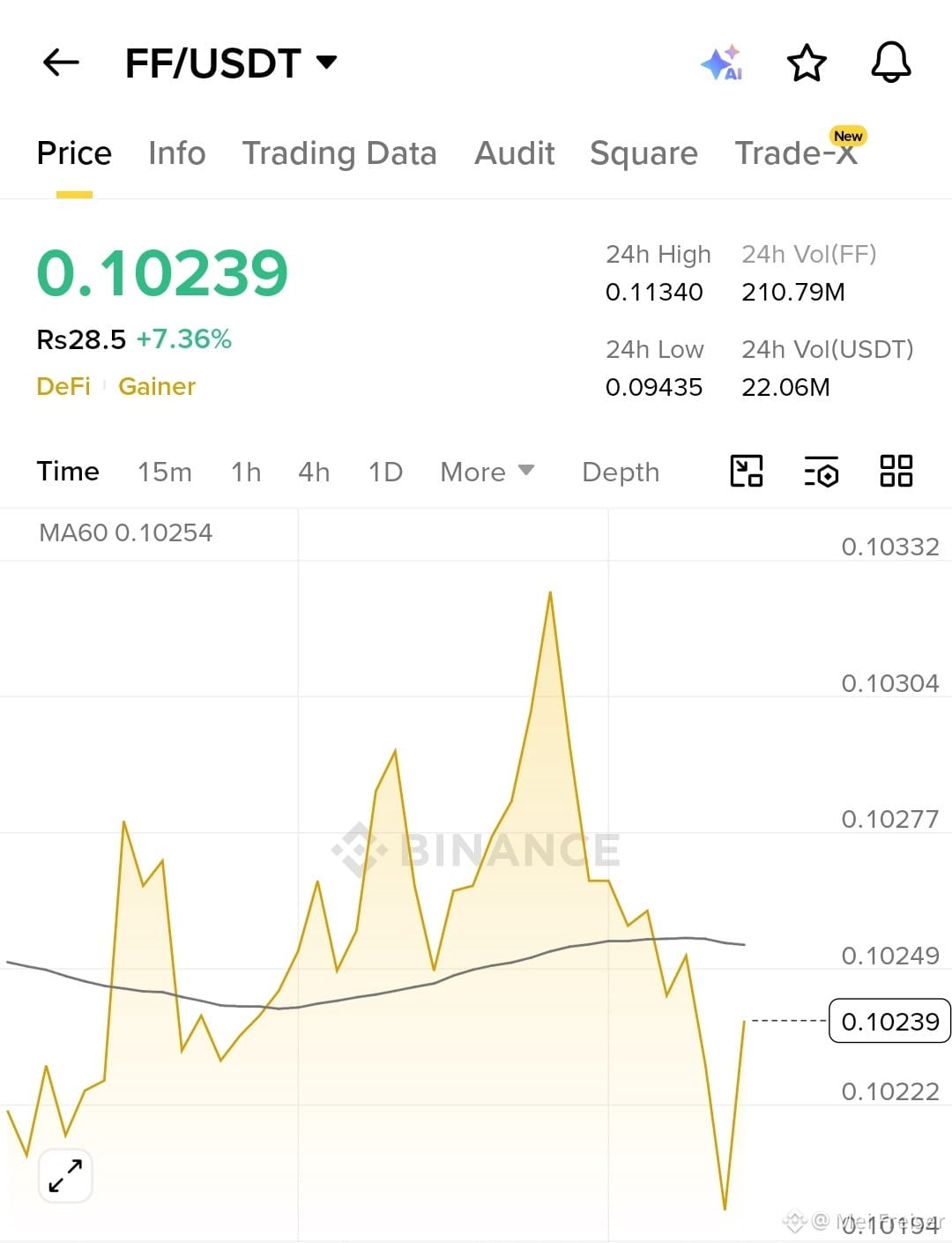
$FF
Market Event: Price rejected downside pressure after a liquidity grab below recent consolidation lows.
Momentum Implication: Market structure shifted positive short term with buyers absorbing sell pressure efficiently.
Levels:
• Entry Price (EP): 0.1010 – 0.1030
• Trade Target 1 (TG1): 0.1075
• Trade Target 2 (TG2): 0.1115
• Trade Target 3 (TG3): 0.1160
• Stop Loss (SL): 0.0982
Trade Decision: Long positioning remains favorable while price trades above the reclaimed base.
If support holds near 0.1010, momentum can extend further upward.
#AprilUSPCEExpectedThreeYearHigh
Market Event: Price rejected downside pressure after a liquidity grab below recent consolidation lows.
Momentum Implication: Market structure shifted positive short term with buyers absorbing sell pressure efficiently.
Levels:
• Entry Price (EP): 0.1010 – 0.1030
• Trade Target 1 (TG1): 0.1075
• Trade Target 2 (TG2): 0.1115
• Trade Target 3 (TG3): 0.1160
• Stop Loss (SL): 0.0982
Trade Decision: Long positioning remains favorable while price trades above the reclaimed base.
If support holds near 0.1010, momentum can extend further upward.
#AprilUSPCEExpectedThreeYearHigh
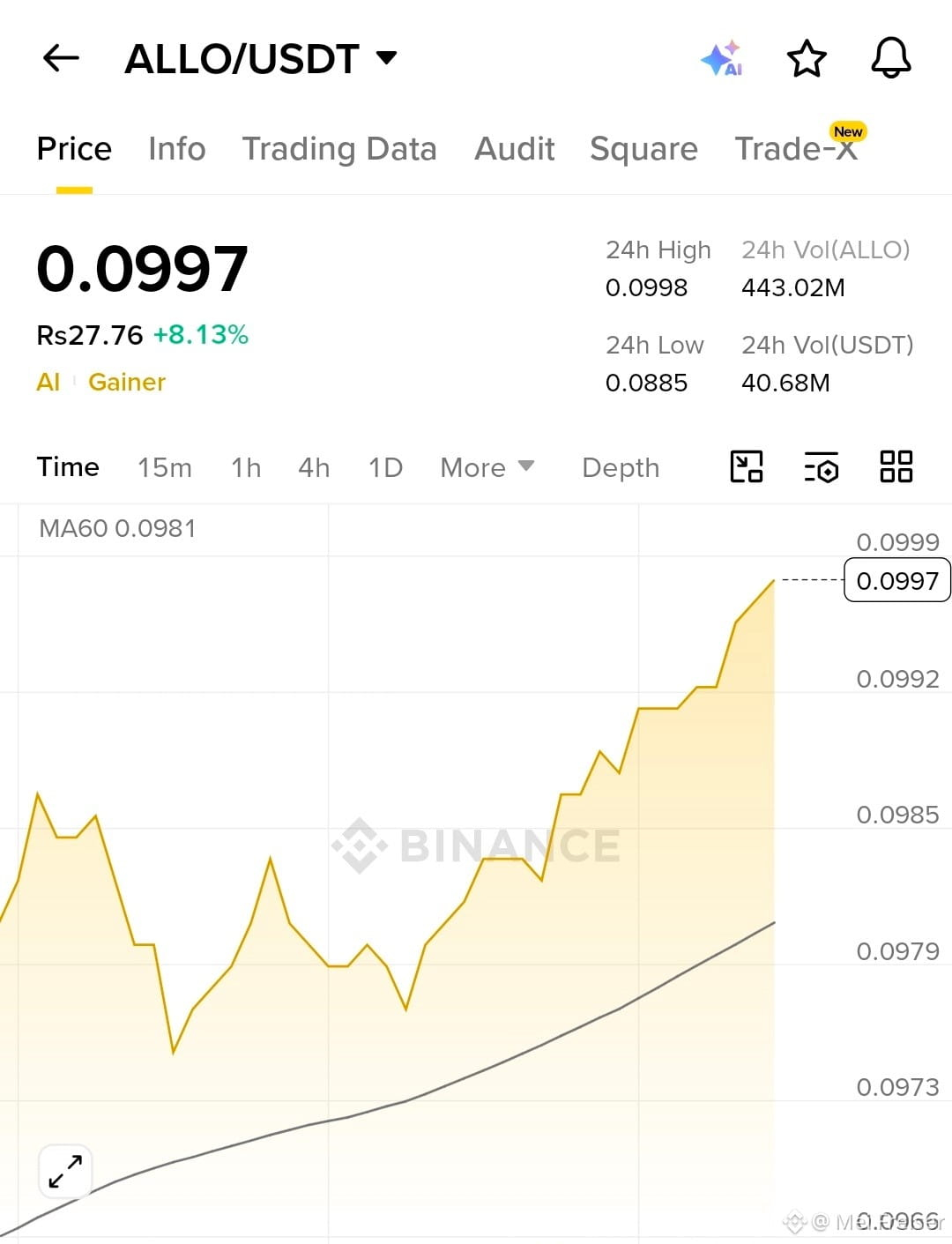
$ALLO
Market Event: Price triggered a short squeeze after reclaiming a compressed resistance zone with rising participation.
Momentum Implication: Momentum remains constructive as long as intraday higher lows continue forming.
Levels:
• Entry Price (EP): 0.0978 – 0.1002
• Trade Target 1 (TG1): 0.1045
• Trade Target 2 (TG2): 0.1080
• Trade Target 3 (TG3): 0.1125
• Stop Loss (SL): 0.0940
Trade Decision: Current structure supports continuation entries while price remains above reclaimed resistance.
If 0.0978 stays protected, upside expansion can continue.
#IranAttacksUSAirbase
Market Event: Price triggered a short squeeze after reclaiming a compressed resistance zone with rising participation.
Momentum Implication: Momentum remains constructive as long as intraday higher lows continue forming.
Levels:
• Entry Price (EP): 0.0978 – 0.1002
• Trade Target 1 (TG1): 0.1045
• Trade Target 2 (TG2): 0.1080
• Trade Target 3 (TG3): 0.1125
• Stop Loss (SL): 0.0940
Trade Decision: Current structure supports continuation entries while price remains above reclaimed resistance.
If 0.0978 stays protected, upside expansion can continue.
#IranAttacksUSAirbase
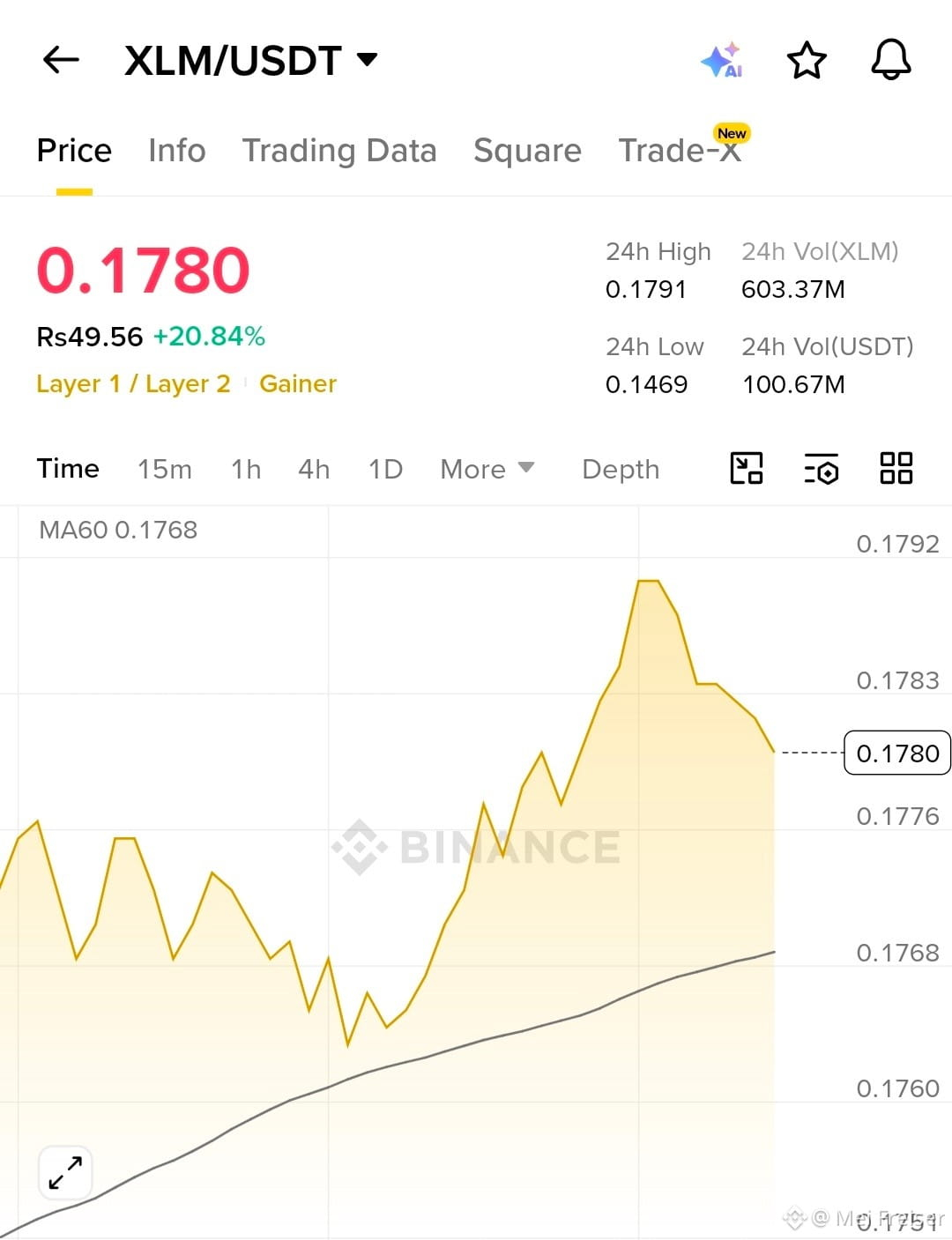
$XLM
Market Event: Price swept local liquidity below recent support and reversed sharply with aggressive spot buying.
Momentum Implication: Buyers regained short-term control and momentum favors continuation while the breakout zone holds.
Levels:
• Entry Price (EP): 0.1760 – 0.1790
• Trade Target 1 (TG1): 0.1845
• Trade Target 2 (TG2): 0.1910
• Trade Target 3 (TG3): 0.1980
• Stop Loss (SL): 0.1718
Trade Decision: Long bias remains valid above reclaimed structure with entries focused on shallow pullbacks.
If buyers defend 0.1760, continuation toward higher liquidity remains likely.
#FedGoolsbeeWarnsAsiaStagflation
Market Event: Price swept local liquidity below recent support and reversed sharply with aggressive spot buying.
Momentum Implication: Buyers regained short-term control and momentum favors continuation while the breakout zone holds.
Levels:
• Entry Price (EP): 0.1760 – 0.1790
• Trade Target 1 (TG1): 0.1845
• Trade Target 2 (TG2): 0.1910
• Trade Target 3 (TG3): 0.1980
• Stop Loss (SL): 0.1718
Trade Decision: Long bias remains valid above reclaimed structure with entries focused on shallow pullbacks.
If buyers defend 0.1760, continuation toward higher liquidity remains likely.
#FedGoolsbeeWarnsAsiaStagflation
I’ve been exploring how AI is blending with on-chain intelligence lately, and I think Genius Terminal is one of the few platforms actually pushing the “crypto co-pilot” idea forward. What stands out to me is how it tries to remove the chaos of switching between wallets, DEXs, bridges, analytics dashboards, and trading tools every few minutes.
I like that it combines spot trading, perps, cross-chain execution, yield access, and analytics into one system. Their Ghost Orders feature also feels smart because it spreads trades across wallets to reduce front-running and improve execution privacy. That’s something I don’t see many platforms focusing on seriously.
From what I’ve seen, they’re connected with 150+ DEXs and support major ecosystems like Solana, Ethereum, Base, Arbitrum, Polygon, Avalanche, and BNB Chain. The backing from experienced crypto players gives it extra credibility too.
I don’t think AI can fully replace trader instincts yet, but I do think tools like Genius Terminal are changing how people interact with crypto. It feels less like a trading app and more like an intelligent operating system for on-chain activity.
@GeniusOfficial
#genius
$GENIUS
I like that it combines spot trading, perps, cross-chain execution, yield access, and analytics into one system. Their Ghost Orders feature also feels smart because it spreads trades across wallets to reduce front-running and improve execution privacy. That’s something I don’t see many platforms focusing on seriously.
From what I’ve seen, they’re connected with 150+ DEXs and support major ecosystems like Solana, Ethereum, Base, Arbitrum, Polygon, Avalanche, and BNB Chain. The backing from experienced crypto players gives it extra credibility too.
I don’t think AI can fully replace trader instincts yet, but I do think tools like Genius Terminal are changing how people interact with crypto. It feels less like a trading app and more like an intelligent operating system for on-chain activity.
@GeniusOfficial
#genius
$GENIUS

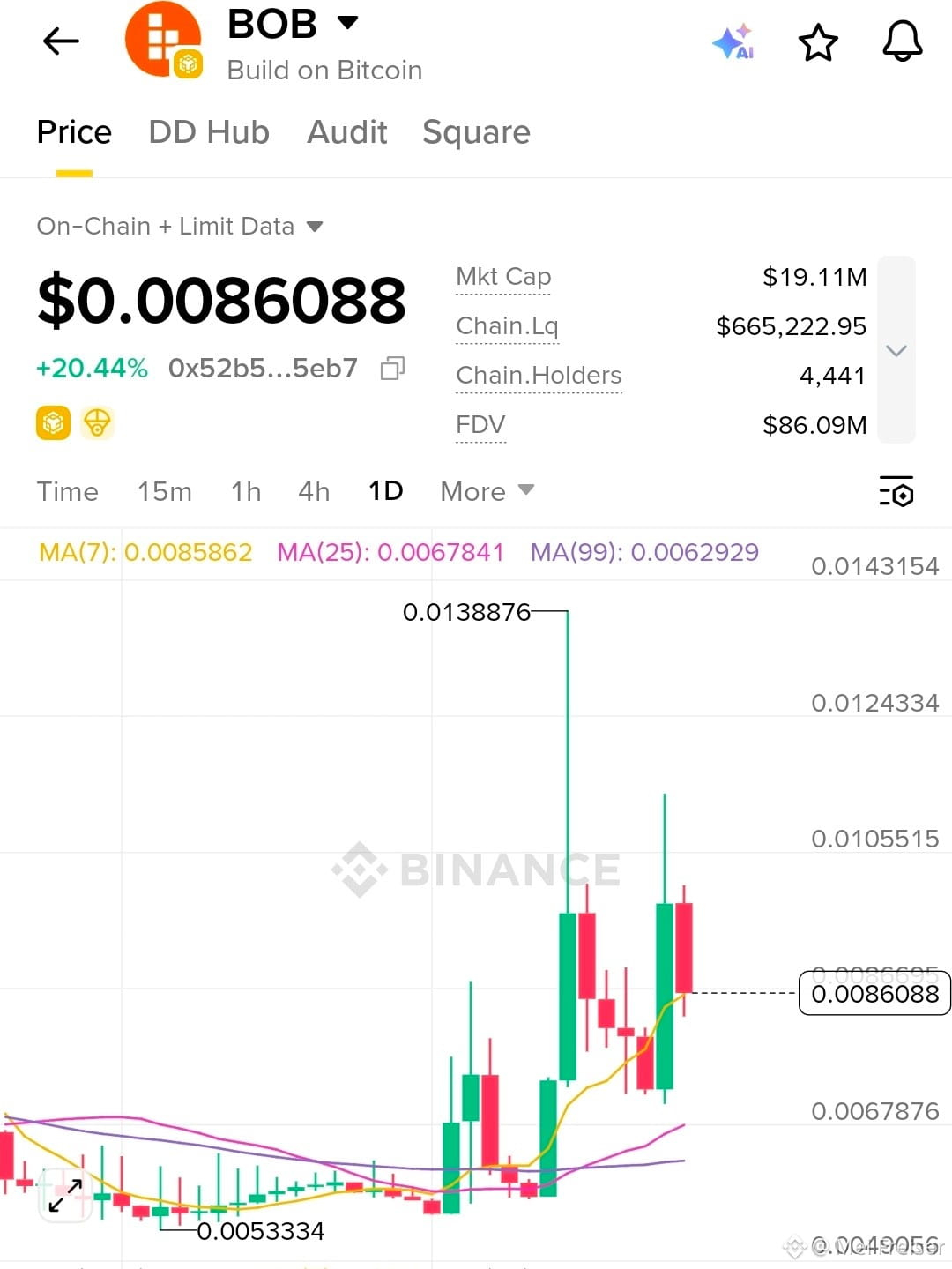
$BOB
PRO TIP: When a breakout level flips into support, that reaction often defines the next directional leg.
Market Event: BOB reclaimed a key resistance zone after absorbing sell-side liquidity during early session weakness.
Momentum Implication: Buyers remain in control while price trades above the reclaimed structural pivot.
Levels: • Entry Price (EP): 0.00845 – 0.00870
• Trade Target 1 (TG1): 0.00910
• Trade Target 2 (TG2): 0.00965
• Trade Target 3 (TG3): 0.01020
• Stop Loss (SL): 0.00805
Trade Decision: Long bias remains valid while price respects the breakout retest area.
#TrumpPledgesDigitalAssetFramework
PRO TIP: When a breakout level flips into support, that reaction often defines the next directional leg.
Market Event: BOB reclaimed a key resistance zone after absorbing sell-side liquidity during early session weakness.
Momentum Implication: Buyers remain in control while price trades above the reclaimed structural pivot.
Levels: • Entry Price (EP): 0.00845 – 0.00870
• Trade Target 1 (TG1): 0.00910
• Trade Target 2 (TG2): 0.00965
• Trade Target 3 (TG3): 0.01020
• Stop Loss (SL): 0.00805
Trade Decision: Long bias remains valid while price respects the breakout retest area.
#TrumpPledgesDigitalAssetFramework
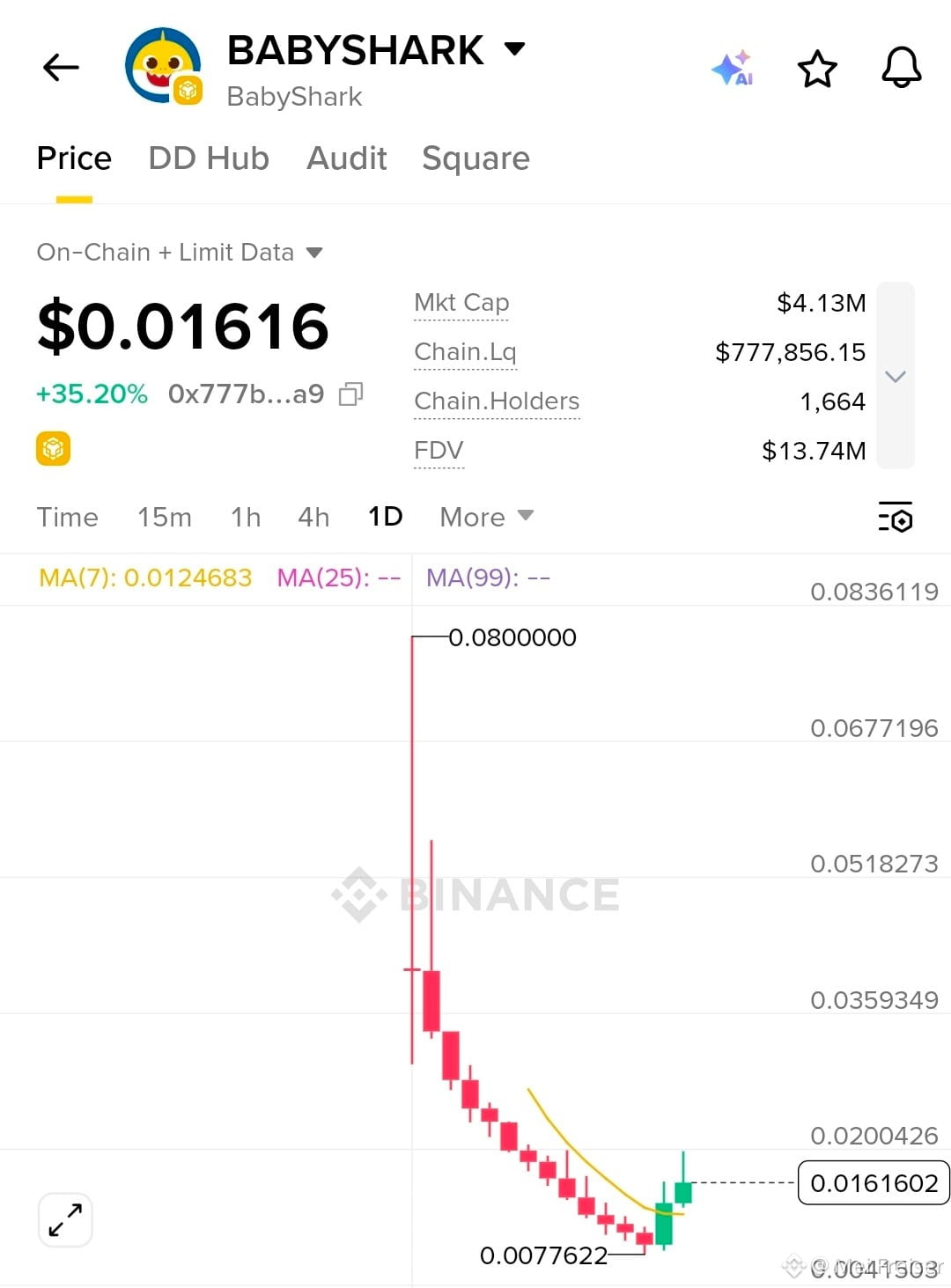
$BABYSHARK
Market Event: BABYSHARK triggered a short squeeze through nearby liquidity clusters after defending a key consolidation base.
Momentum Implication: The move shifts momentum firmly upward while volume continues supporting breakout structure.
Levels: • Entry Price (EP): 0.0159 – 0.0164
• Trade Target 1 (TG1): 0.0172
• Trade Target 2 (TG2): 0.0181
• Trade Target 3 (TG3): 0.0193
• Stop Loss (SL): 0.0152
Trade Decision: Preference remains with continuation setups on shallow pullbacks into reclaimed support.
#AprilUSPCEExpectedThreeYearHigh
Market Event: BABYSHARK triggered a short squeeze through nearby liquidity clusters after defending a key consolidation base.
Momentum Implication: The move shifts momentum firmly upward while volume continues supporting breakout structure.
Levels: • Entry Price (EP): 0.0159 – 0.0164
• Trade Target 1 (TG1): 0.0172
• Trade Target 2 (TG2): 0.0181
• Trade Target 3 (TG3): 0.0193
• Stop Loss (SL): 0.0152
Trade Decision: Preference remains with continuation setups on shallow pullbacks into reclaimed support.
#AprilUSPCEExpectedThreeYearHigh
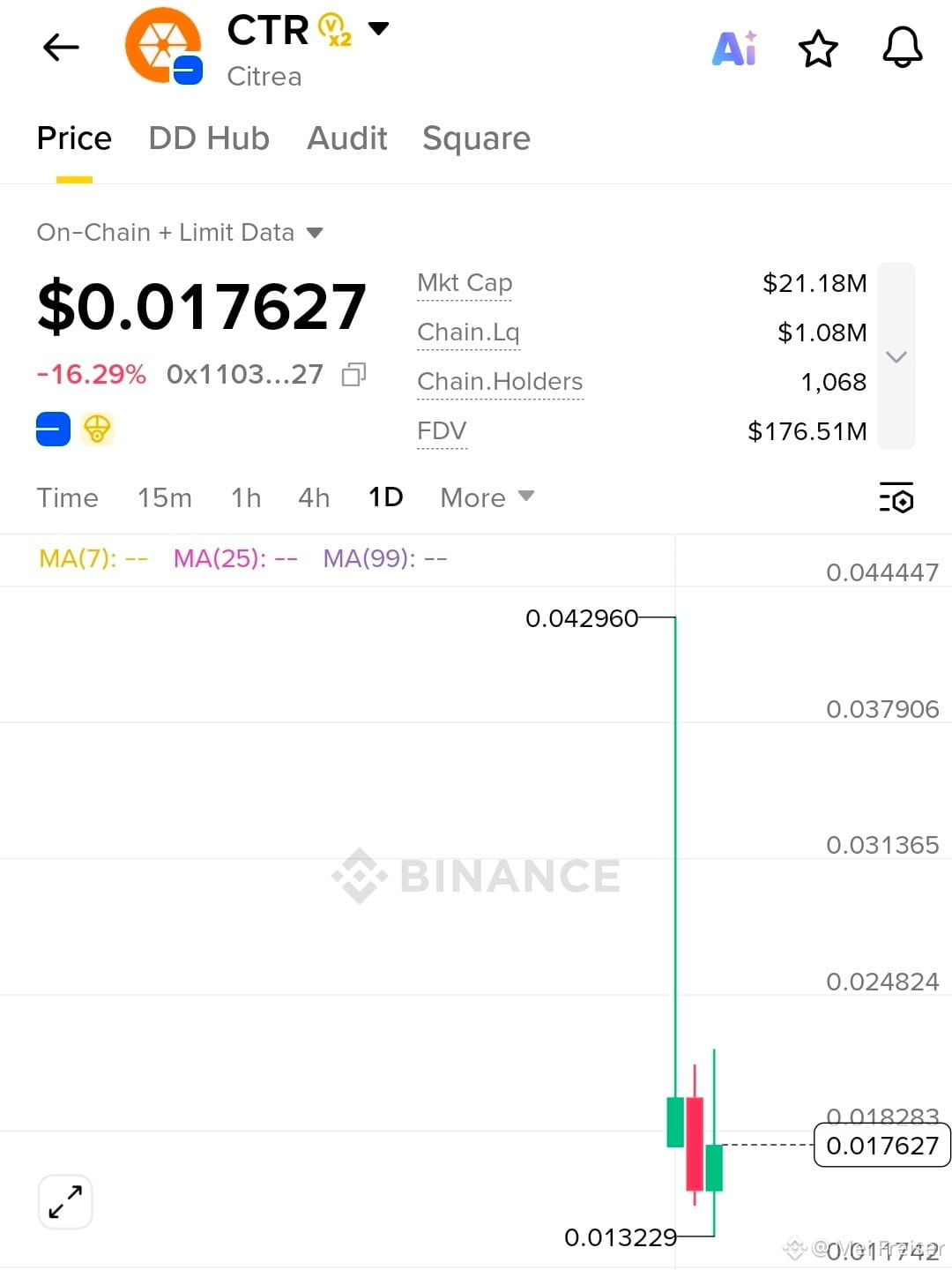
$CTR
Market Event: CTR printed a downside rejection after sweeping weak lows, with aggressive selling failing to sustain below support.
Momentum Implication: Short-term pressure is still present, but failed continuation below lows may trigger relief expansion.
Levels: • Entry Price (EP): 0.0174 – 0.0178
• Trade Target 1 (TG1): 0.0184
• Trade Target 2 (TG2): 0.0191
• Trade Target 3 (TG3): 0.0200
• Stop Loss (SL): 0.0169
Trade Decision: Current setup favors a cautious recovery trade as long as reclaimed support remains intact.#TrumpCriticizesGenslerAntiCrypto
Market Event: CTR printed a downside rejection after sweeping weak lows, with aggressive selling failing to sustain below support.
Momentum Implication: Short-term pressure is still present, but failed continuation below lows may trigger relief expansion.
Levels: • Entry Price (EP): 0.0174 – 0.0178
• Trade Target 1 (TG1): 0.0184
• Trade Target 2 (TG2): 0.0191
• Trade Target 3 (TG3): 0.0200
• Stop Loss (SL): 0.0169
Trade Decision: Current setup favors a cautious recovery trade as long as reclaimed support remains intact.#TrumpCriticizesGenslerAntiCrypto
Log in to explore more content