



Friends in front of the screen, I have a heart-wrenching question for everyone: With fixed deposit rates continuously dropping and stock funds being stuck for a long time, as financial channels become increasingly narrow, will the continuously rising gold become your lifeline?
Since the beginning of 2026, the price of gold has skyrocketed, and many people are eager to take advantage of this wave of market.
If someone tells you at this moment that you can buy and sell gold without a large principal, just by spending 1/40 of the money, and low investment can leverage high returns, would you be tempted? This is not an opportunity for sudden wealth, but a trap aimed at your wallet.
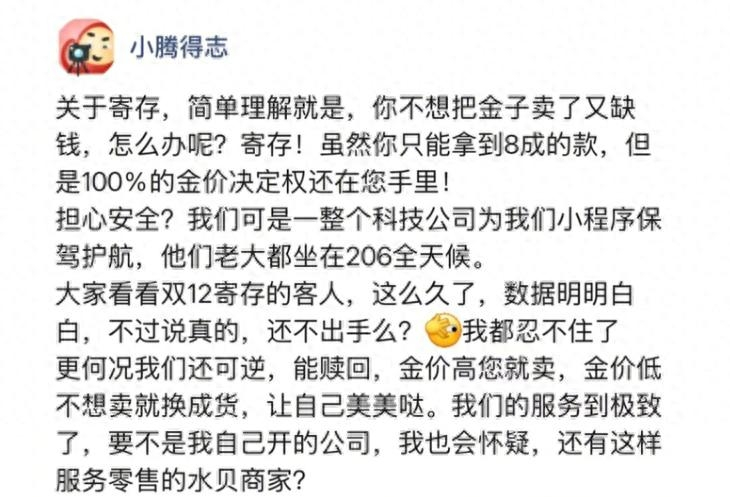
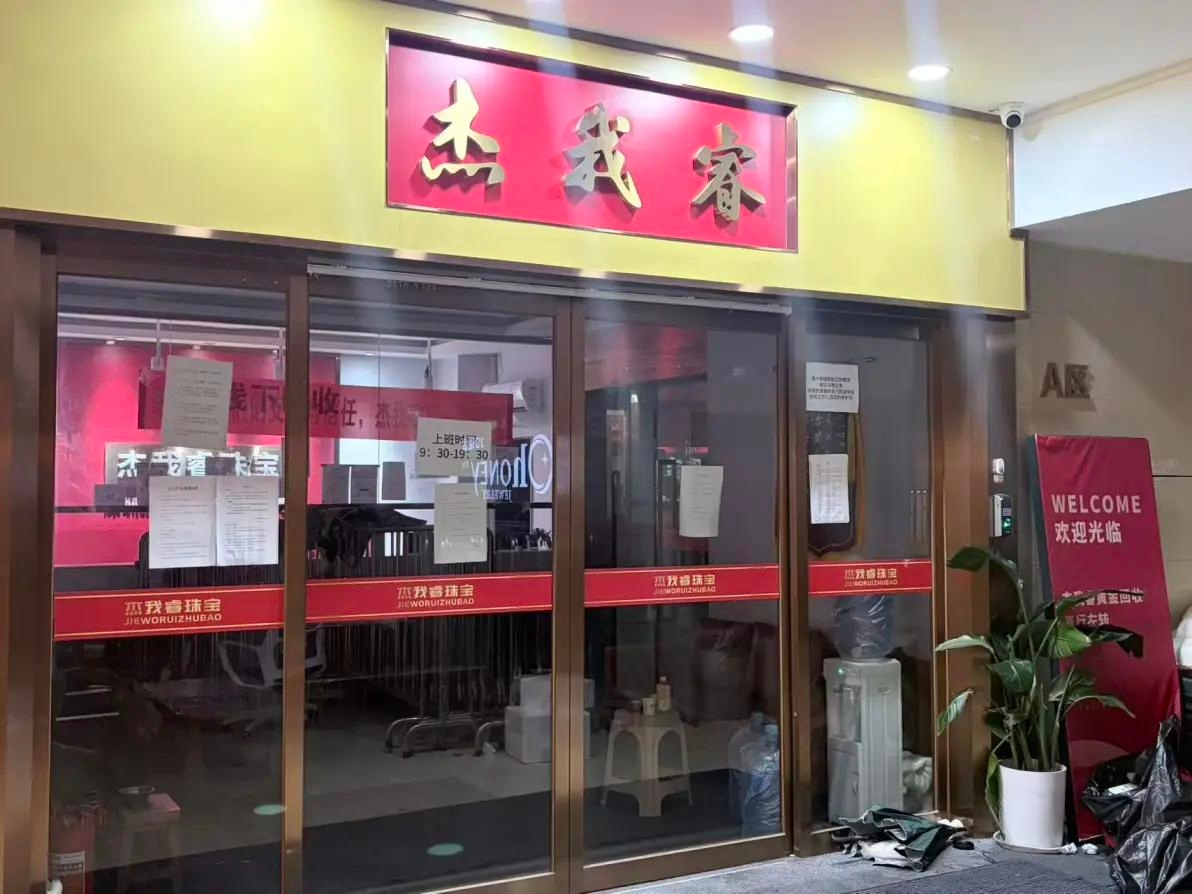
Recently, the 'Jie Wo Rui' scam in Shenzhen's Shuibei gold circle has used this set of rhetoric to swindle over 10 billion yuan from investors nationwide, with hundreds of thousands and millions of principal unable to be withdrawn, leaving countless families' savings washed away.
What kind of tricks are hidden in this nationwide gold scam? What is the truth behind the transactions?
1. The outbreak of a hundred billion yuan payment crisis
The outbreak of this incident came without warning but had long been foreshadowed. In mid-January 2026, many users who had invested in platforms related to 'Jie Wo Rui' suddenly found that the funds in their accounts could not be withdrawn, and the reserved physical gold could not be picked up.
Panic spread rapidly, with a large number of investors flocking to Jie Wo Rui's offline stores in Shenzhen Shui Bei. Users from other locations even called Meituan delivery to retrieve their investments, and a run on the bank crisis was imminent.
Faced with the out-of-control situation, Jie Wo Rui urgently issued an announcement, claiming that from January 26, eligible customers could withdraw 1 gram of gold or cash equivalent to 500 yuan every day.

But the reality is that even with such harsh limits, very few investors successfully obtain funds or gold. What is even more frustrating for investors is the two subsequent payment plans introduced: either the principal is paid back at 20% in a one-time payment, or at 40% distributed over 12 periods, and when calculating the principal, only the directly recharged amount is counted, with previously consigned gold and silver completely excluded.
According to reports from Yicai, Jie Wo Rui and related online platforms such as 'Long Ye Jin' and 'Jin Cheng Jin Shi Jie' have all encountered payment difficulties, affecting investors in 11 provinces including Guangdong, Fujian, and Shanxi.
Data compiled by investors themselves indicates that unpaid funds have exceeded 10 billion yuan, of which the amount involved in preliminary real-name registration has reached 246 million yuan, while individual investors' unwithdrawn cash has reached as high as 5.8 million yuan, with the number of people queuing to withdraw exceeding 20,000 at one point.
After the incident escalated, Shenzhen's Luohu District quickly formed a special task force to intervene and check the company's operating conditions. Currently, although the person in charge of Jie Wo Rui and core management staff are still on duty, the flow of funds and asset sorting are still ongoing.
2. The trap of 40 times leverage: Closed gambling market
To attract such a large amount of capital, Jie Wo Rui's core trick is its seemingly legitimate 'gold reservation price trading'. This company, established in 2014, was originally a gold raw material trader in the Shui Bei area, purchasing and recycling gold upstream and supplying to small merchants downstream, winning initial trust through offline stores and years of industry accumulation.
In recent years, it has shifted its business to precious metal retail, with the 'reservation price trading' opened to retail investors becoming the core of capital absorption.
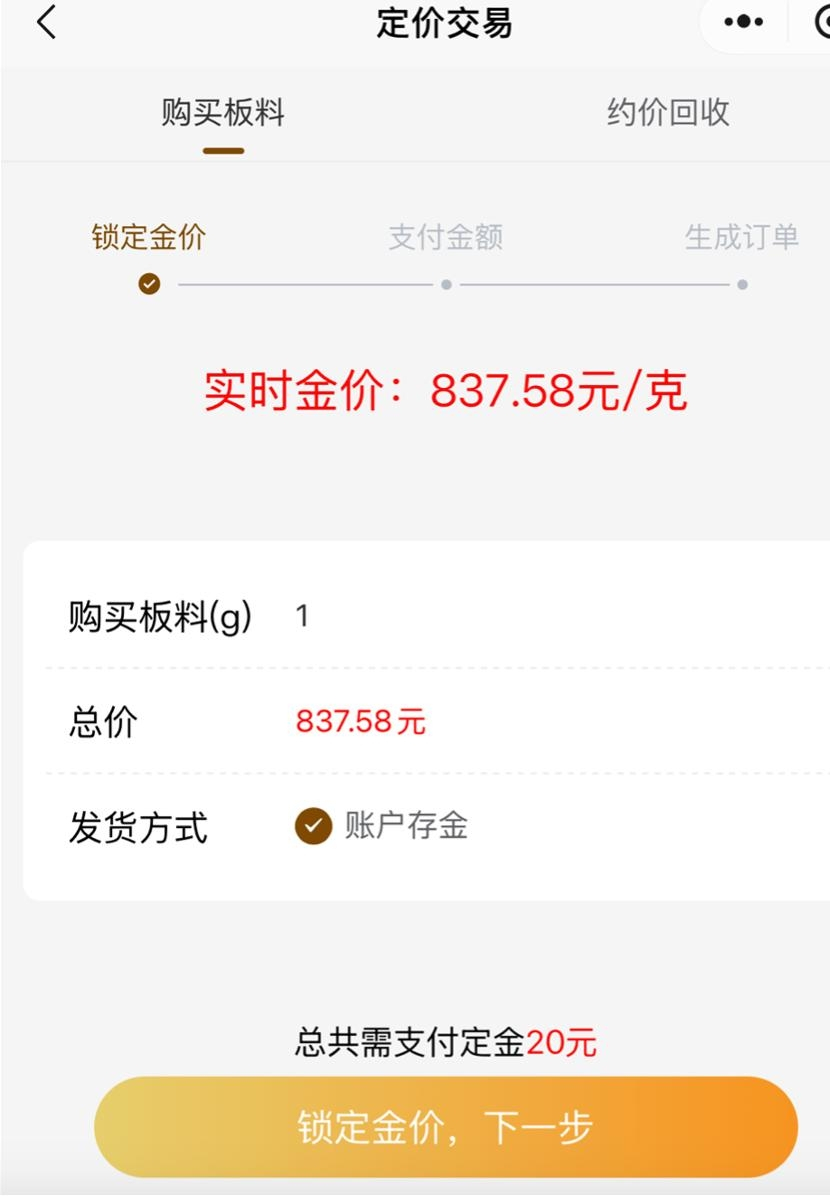
The so-called reservation price trading, simply put, is 'price locking arbitrage': if you expect gold prices to rise, you pay a deposit to lock in the price and pay the final payment to buy gold and earn the price difference; if you expect prices to fall, you agree to sell to the platform at a fixed price in the future and earn the price difference after the gold price drops. This model sounds very similar to legitimate futures trading, but Jie Wo Rui plays with a deadly high leverage — normally, buying 100 grams of gold requires about 120,000 yuan, but at Jie Wo Rui, you only need a deposit of 2,000 yuan to lock the price, with leverage reaching 40 times, which is more than three times that of the legitimate gold futures of the Shanghai Gold Exchange.
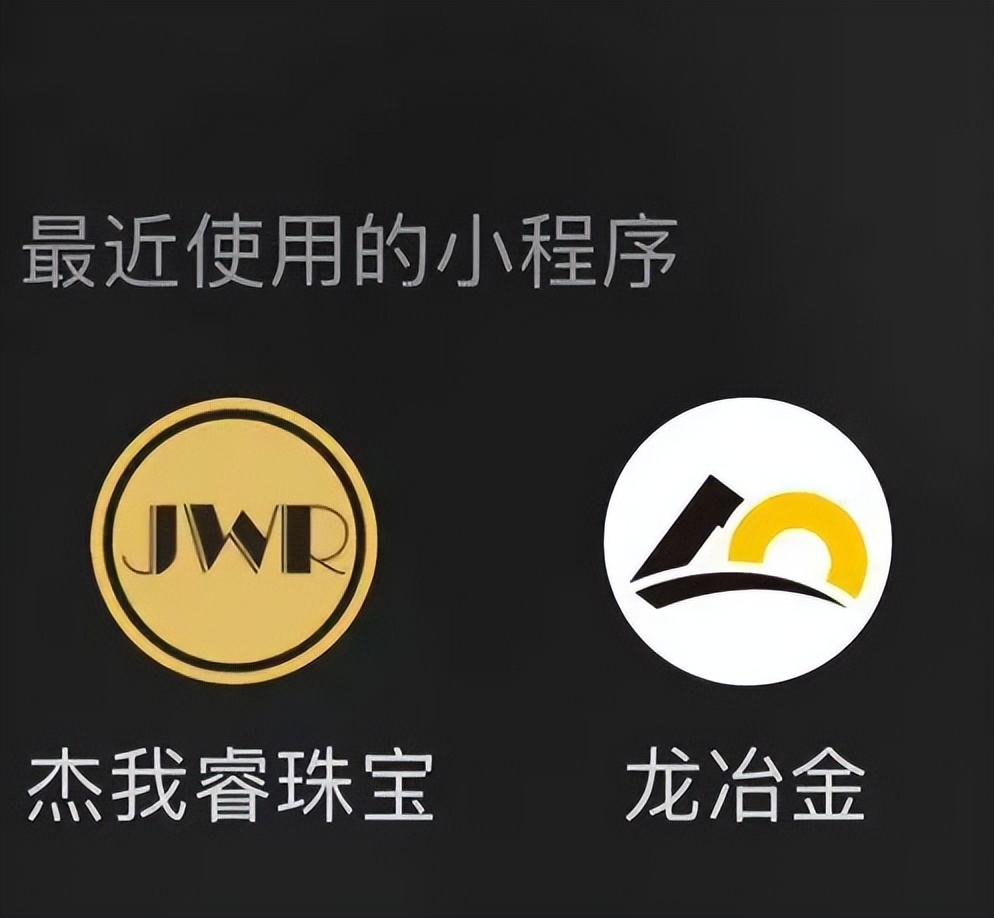
More covertly, Jie Wo Rui split the transactions into multiple small programs to form a closed loop: after users reserve gold in the 'Long Ye Jin' mini-program, they do not need to withdraw the physical gold and can directly 'send' it to the 'Jie Wo Rui Jewelry' mini-program for recycling, with no trace of gold throughout the process.
What seems to be gold trading is essentially a closed gamble between investors and the platform. Legitimate material suppliers, upon receiving customer deposits, will purchase the corresponding spot goods or hedge risks, but Jie Wo Rui's operations are completely inconsistent with commercial logic — if hedging through the formal channels of the Shanghai Stock Exchange, the small deposit paid by customers would not be enough to cover the margin.

In fact, Jie Wo Rui did not conduct legitimate risk hedging, but instead relied on its own entry to indirectly short and long the market, operating in a regulatory gray area. This model could barely be maintained during price fluctuations, but once it encountered a unidirectional bullish market like the beginning of 2026, the deposits collected by the platform were simply insufficient to cover the price differences for investors, leading to a collapse being inevitable.
What is concerning is that there are hundreds of gold material suppliers in Shenzhen Shui Bei doing similar business. In September 2025, companies like Xiao Xin, Jun Hao, Jin Ye and others collapsed due to the same model, with the bosses either going missing or turning themselves in.
3. Standardized customer acquisition routine: Step by step trapping investors
For ordinary investors, most are not familiar with gold trading platforms. Jie Wo Rui was able to expand rapidly relying on a mature standardized customer acquisition routine.
The first step is precise online marketing: on social media platforms, a large amount of content about 'professional analysis of gold price trends' and 'sharing high profit bills' is directed to potential investors looking to make money from gold with the gimmick of 'low threshold, high leverage, guaranteed profit'.
Once users show interest, they will be guided to join a specialized discussion group. The atmosphere in the group is highly provocative, with unfamiliar 'netizens' frequently sharing profit screenshots and thanking the so-called 'teachers', deliberately creating the illusion that 'following the teacher will allow you to earn easily'.
If investors want to obtain 'precise operational guidance', they must pay an additional fee to join the group, where more detailed market analysis and enthusiastic profit sharing make the already interested investors completely let down their guard, obediently registering accounts in the mini-program and following 'teachers' to enter long and short battles with high leverage.
In addition to online customer acquisition, recommendations from acquaintances are also an important dissemination channel. Personal 'recommendations' from friends and mutual introductions by relatives and colleagues leverage the trust built through acquaintances to draw more ordinary people into this false trading.
More critically, the business personnel driven by interests exacerbate the situation — as long as the accumulated trading amount of the clients they bring in reaches 1 kilogram of gold, they can earn a commission of 300 yuan.
To make money, they not only widely search for potential customers online but also register a large number of fake accounts, using false trading dialogues and fabricated profit screenshots to create the illusion of 'trading is booming and everyone is profiting' within the group, gradually inducing investors to increase their investments until they become deeply trapped.
Finally, I must remind everyone: when an investment project tells you 'guaranteed profit, low threshold, high leverage', you must ask yourself three questions: Where does the profit come from? Is there regulatory endorsement? Are the profit screenshots real?
The surge in gold prices in 2026 indeed made people see opportunities, but the essence of gold is a safe-haven asset, not a gambling tool for ordinary people. Legitimate gold investment channels include gold ETFs, bank paper gold, and formal futures on the Shanghai Stock Exchange; those high-leverage platforms that are outside regulatory oversight are ultimately illusory. Protecting your principal is more important than anything else!
