
#criptografia
criptografia
10,646 views
44 Discussing
Hot
Latest

·
--
🛡️ Europol's "Bunker Mode" and Cryptographic Shielding
Traditional cybersecurity in the global financial market is numbered among the days ahead, given the accelerated evolution of algorithms. The Livecoins portal revealed that Europol issued an official alert report against the threat of quantum computing posed to public keys exposed in digital wallets. At the same time, Ethereum Foundation researcher Justin Drake called on the industry to enter "bunker mode," moving funds after OpenAI exposed hundreds of mathematical breakthroughs that could break conventional cryptography sooner than expected.
The risk asymmetry here is brutal: the retail investor only thinks about security after suffering losses, while the strategic whale capital has already started a silent migration to shielded networks using zero-knowledge cryptography (ZK) and advanced post-quantum mathematical validity. Protocols built on strict mathematical proofs don’t bend under AI’s computational acceleration and earn an immediate liquidity premium for their cutting-edge security. Staying exposed in archaic structures is to serve as a target in the modern market.
The urgent push for cryptographic shielding and data security drives order flow toward three axes focused on privacy and validation:
A $STRK surges strongly in the market, driven by its STARK-based rollup technology, designed natively to provide top-tier resistance to computational attacks.
A $ZEC records significant gains as major fortunes seek protection for their shielded pools to execute fully anonymous transactions and capital movements.
A $DIA moves among the top daily gainers by providing audited and verifiable oracle feeds in real time to protect smart contracts from external manipulation.
🎯 Protect your capital on networks prepared to outlast technological progress.
#Livecoins #Web3Security #Starknet #Criptografia
211

·
--
Europol urges preparation of wallets for quantum risk
On October 7, Europol published two reports on quantum computing and digital security. Its statement that day calls for preparation for future capabilities whose timeline remains uncertain.
In cryptocurrencies, the focus is on the keys that authorize transactions. A sufficiently powerful quantum computer could derive a private key from an exposed public key and enable transfers without the holder’s permission.
That does not mean every blockchain is equally vulnerable: Europol considers hashes comparatively resistant. Nor does it announce a quantum theft happening today or present the collapse of cryptocurrencies as inevitable.
The recommendation is a gradual transition to post-quantum cryptography, with improvements to wallets and key management. Coordinating changes among developers, providers, and users takes time and requires compatibility.
The second report examines another risk: storing encrypted data now in an attempt to decrypt it in the future. This should not be confused with evidence of current theft of funds.
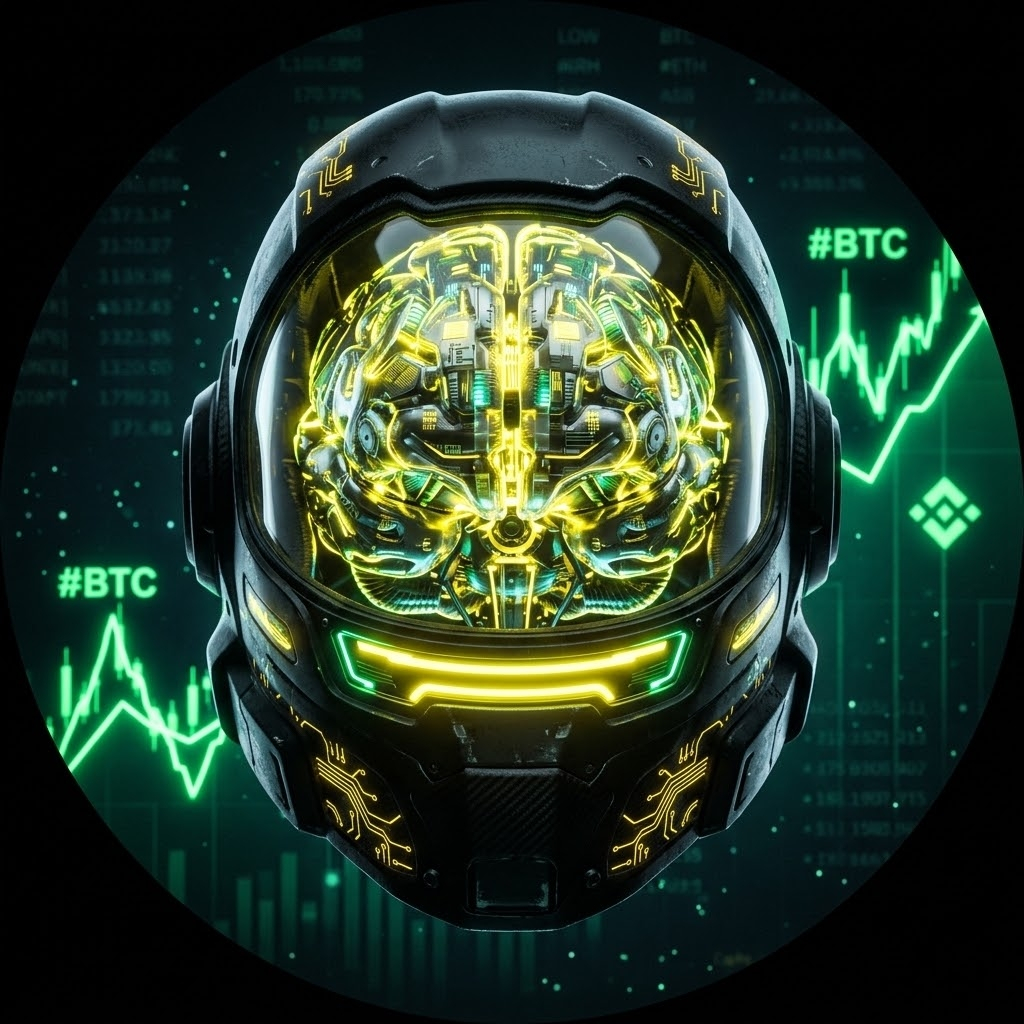
Market snapshot: Binance, October 7 at 22:37 UTC: BTC 83,290 USDT (−2.62% in 24h); ETH −4.66%; SOL −4.18%. My take: it is worth evaluating verifiable adaptation plans. These fluctuations do not prove a reaction to the report or predict its economic impact.
$BTC $ETH $SOL
Educational content. Not financial advice.
#Criptografia #SeguridadCripto #ComputacionCuantica #Bitcoin #BinanceSquare

52
·
--
The threat of quantum computing to Bitcoin has just taken an important step toward practical viability. An optimization challenge driven by StarkWare reduced by 79% the estimated cost to prepare an experimental transaction resistant to quantum attacks, bringing it down from $320 to less than $67 per operation. Although it can still be considered a last-resort measure and there’s still a long road ahead for standardization, this progress shows that cryptographic scalability is advancing faster than expected. Do you see this as a technical priority or a distant problem? 👇 #Bitcoin #Criptografia #StarkWare $BTC
The threat of quantum computing to Bitcoin has just taken an important step toward practical viability. An optimization challenge driven by StarkWare reduced by 79% the estimated cost to prepare an experimental transaction resistant to quantum attacks, bringing it down from $320 to less than $67 per operation. Although it can still be considered a last-resort measure and there’s still a long road ahead for standardization, this progress shows that cryptographic scalability is advancing faster than expected. Do you see this as a technical priority or a distant problem? 👇 #Bitcoin #Criptografia #StarkWare $BTC
8

Article
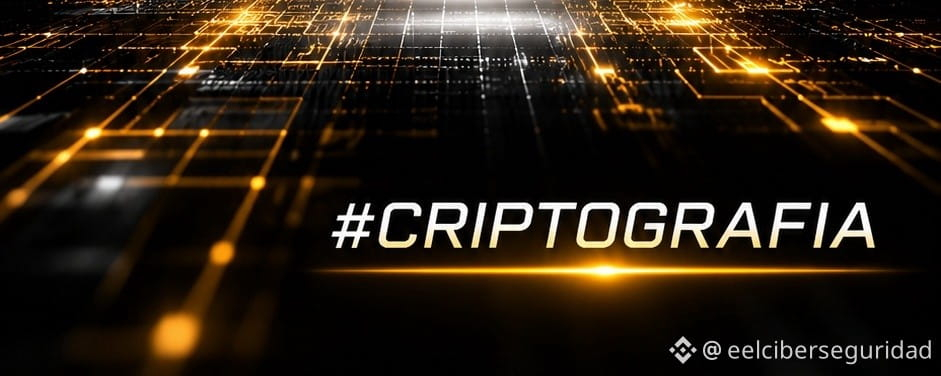
WHAT DOES IT REALLY MEAN TO CONTROL BITCOINS?Imagine someone finds a Bitcoin address with 5 BTC available.
They can check its transactions, see the amounts, and verify that those funds have not yet been spent.
All that information is public.
So a question arises...
IF ANYONE CAN SEE THOSE BITCOINS, WHY CAN'T THEY SPEND THEM?
The answer lies in one of Bitcoin's most important mechanisms: CRYPTOGRAPHIC CONTROL.
Let's understand how it works.
In the previous section, we learned that the funds available on Bitcoin are represented by UTXOs—that is, transaction outputs that have not yet been spent.
WHAT DOES IT REALLY MEAN TO CONTROL BITCOINS?
Imagine someone finds a Bitcoin address with 5 BTC available.
They can check its transactions, see the amounts, and verify that those funds have not yet been spent.
All that information is public.
So a question arises...
IF ANYONE CAN SEE THOSE BITCOINS, WHY CAN'T THEY SPEND THEM?
The answer lies in one of Bitcoin's most important mechanisms: CRYPTOGRAPHIC CONTROL.
Let's understand how it works.
In the previous section, we learned that the funds available on Bitcoin are represented by UTXOs—that is, transaction outputs that have not yet been spent.
1
127
·
--
NEAR: a post-quantum test without changing the address
On October 1, 2026, Fireblocks published a report on a test on the NEAR mainnet: an account holding funds switched from an Ed25519 key to ML-DSA-65, a post-quantum signature scheme. It kept its address and then received and sent payments. That is the report’s date, not a launch happening today.
The rotation used two transactions: first, the new key was added; then, that key signed the removal of the old one. This confirmed it could operate before the old access was revoked. The assets remained in the same account throughout the change.
The scope is specific. NEP-645 documentation covers transaction signatures and access keys; validator keys and block signatures are outside this upgrade. Consensus and custody security require a separate assessment.
There are operational risks too: the signing system must be compatible. For the account type used, deleting the account and recreating it through a valid transfer can restore the original key. A demonstration on one account also does not prove that a mass migration of users is possible.
Market snapshot: on October 11 at 02:46 UTC, Binance Spot showed NEAR at 5.303 USDT (+6.12% over 24 hours), compared with BTC at +0.61%. The relative strength observed does not prove that the test caused the move or guarantee that it will continue.
$NEAR $BTC $USDT
Educational Content. Not financial advice.
#NEAR #SeguridadBlockchain #Criptografia #Poscuantica #EducacionCripto

1
214
·
--
Zcash: What Zakura’s post-quantum plan covers
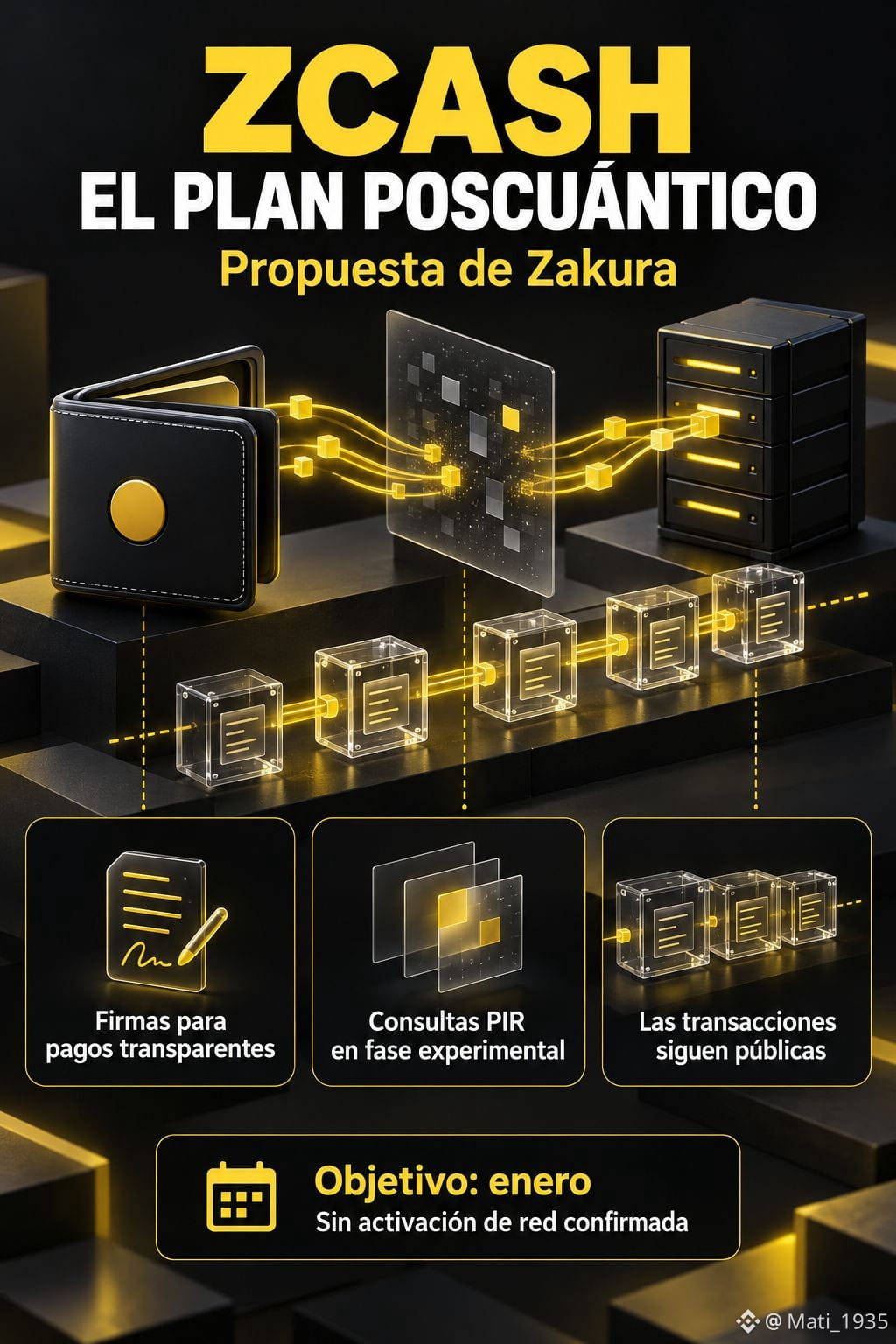
CoinDesk’s October 9 coverage highlights a plan by Zakura to incorporate instructions for hash-based signatures into Zcash transparent payments in January. The technical note specifies neither a year nor a network activation date: this is a development target.
With these addresses, spending reveals the public key. Using a new address reduces reuse, but does not replace a cryptographic upgrade.
Zakura also describes PIR: queries that let users check transaction history without telling the server which addresses the wallet is searching for. An experimental option is available in Vizor. It protects the queries; transparent transactions remain public on the blockchain.
Scope matters: this does not prove that all of Zcash is resistant to quantum threats. The fund-recovery design, ZIP 2005, is separate work and acknowledges that it does not, on its own, address overall security or quantum attacks on privacy.
Binance Spot, Oct 9, 18:44 UTC: ZEC at 1,211.69 USDT (+5.50% in 24h), with 203.71 million USDT in ZEC/USDT volume; BTC +1.15%. Takeaway: the price does not demonstrate technical security or that the announcement caused the move.
$ZEC $BTC $USDT
Educational content. Not financial advice.
#Zcash #ZEC #Criptografia #Privacidad #Blockchain
48
Log in to explore more content
Join global crypto users on Binance Square
⚡️ Get latest and useful information about crypto.
💬 Trusted by the world’s largest crypto exchange.
👍 Discover real insights from verified creators.
Email / Phone number
Trending Topics
1
#BinanceIncidentReport
32,869 views
557 Discussing
2
#BinanceReopensWithdrawalsForMoreAssets
144,280 views
1,758 Discussing
3
#BinanceHourlyDepositsExceedWithdrawals
69,293 views
810 Discussing
4
#USMidtermElections
885,257 views
4,644 Discussing
5
#AnthropicIPOPricedDownasInvestorsEye$1.5T
4,080 views
53 Discussing
6
#USOctoberNFP-AreRateCutsStillPossible
165,520 views
1,291 Discussing
7
#AppleReportsMixedResults
65,363 views
979 Discussing
8
#PalantirSlides3PercentOn$2BRevenue
5,809 views
47 Discussing
9
#FrenchAssemblyRejectsTwoCryptoExitTaxProposals
12,291 views
181 Discussing
10
#Nasdaq100EntersCorrection
15,507 views
195 Discussing