

#xrpledgerdraws
xrpledgerdraws
465 views
14 Discussing
Hot
Latest

·
--
If you're still treating crypto remittances like a 2021 tourism slogan, stop now.
The expensive mistake is buying the headline instead of watching the rails. Traders see “El Salvador” and instantly FOMO into $BTC narratives, then forget real adoption is measured in boring repeat usage, not conference-stage applause.
El Salvador’s H1 crypto remittance chatter is interesting because it feels very different from the original legal tender hype cycle. Back then, the market priced in a national orange-pill fantasy. Now, with sentiment sitting in Fear, the question is more practical: are people actually choosing crypto because it’s cheaper, faster, and usable?
This is where the comparison gets spicy. $BTC has the brand and the monetary story, but $USDT has the “my cousin needs dollars by tonight” utility. Meanwhile, networks built around payments, like $XRP, keep circling the same remittance battlefield with a very different pitch: less ideology, more settlement speed.
So is El Salvador proving $BTC remittances can beat the old rails, or will stablecoins and payment-focused chains quietly win the everyday transfer war? #ElSalvadorH1CryptoRemittances #XRPLedgerDraws #WiseToRefileTrustCharterUnderGENIUSAct
If you're still treating crypto remittances like a 2021 tourism slogan, stop now.
The expensive mistake is buying the headline instead of watching the rails. Traders see “El Salvador” and instantly FOMO into $BTC narratives, then forget real adoption is measured in boring repeat usage, not conference-stage applause.
El Salvador’s H1 crypto remittance chatter is interesting because it feels very different from the original legal tender hype cycle. Back then, the market priced in a national orange-pill fantasy. Now, with sentiment sitting in Fear, the question is more practical: are people actually choosing crypto because it’s cheaper, faster, and usable?
This is where the comparison gets spicy. $BTC has the brand and the monetary story, but $USDT has the “my cousin needs dollars by tonight” utility. Meanwhile, networks built around payments, like $XRP , keep circling the same remittance battlefield with a very different pitch: less ideology, more settlement speed.
So is El Salvador proving $BTC remittances can beat the old rails, or will stablecoins and payment-focused chains quietly win the everyday transfer war? #ElSalvadorH1CryptoRemittances #XRPLedgerDraws #WiseToRefileTrustCharterUnderGENIUSAct
38
·
--
If you're still treating exchange shutdown news like background noise, stop now.
Traders lose money not only from bad entries, but from ignoring counterparty risk until withdrawals, liquidity, or access become the problem. In a fear-driven market, even holding $USDT or $ETH in the wrong place can turn into stress fast.
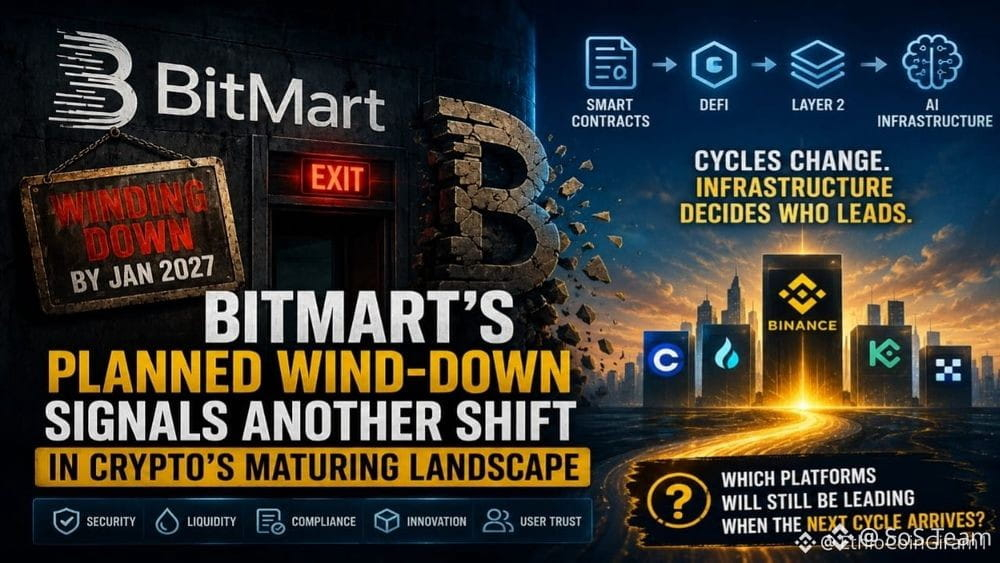
The BitMart wind-down talk hitting Binance Square is a reminder that “my funds are fine until they’re not” is a dangerous mindset. One side says a long runway to Jan 2027 gives users time, reduces panic, and shows an orderly exit rather than a sudden collapse.
I get that argument. But my take is simple: once an exchange’s future is publicly uncertain, the risk-reward of staying there changes immediately. Maybe nothing dramatic happens, but why accept extra platform risk when the market is already sitting in Fear and traders are trying to protect capital?
This doesn’t mean panic-sell $BTC or rotate blindly. It means review where your assets sit, what your exit plan is, and whether convenience has quietly become your biggest risk.
Is this a sign the industry is maturing through consolidation, or another warning that crypto users still trust centralized venues too much? #BitMartToWindDownByJan2027 #BitcoinMiningDifficultyMayFall1 #XRPLedgerDraws
34
·
--
If you're still treating pension fund flows like “boomer noise,” stop now.
Traders keep getting chopped up because they only watch candles and ignore who has the balance sheet to move markets slowly. FOMO buying $ETH after a green candle is easy; spotting quiet institutional rotation before the crowd prices it in is the hard part.
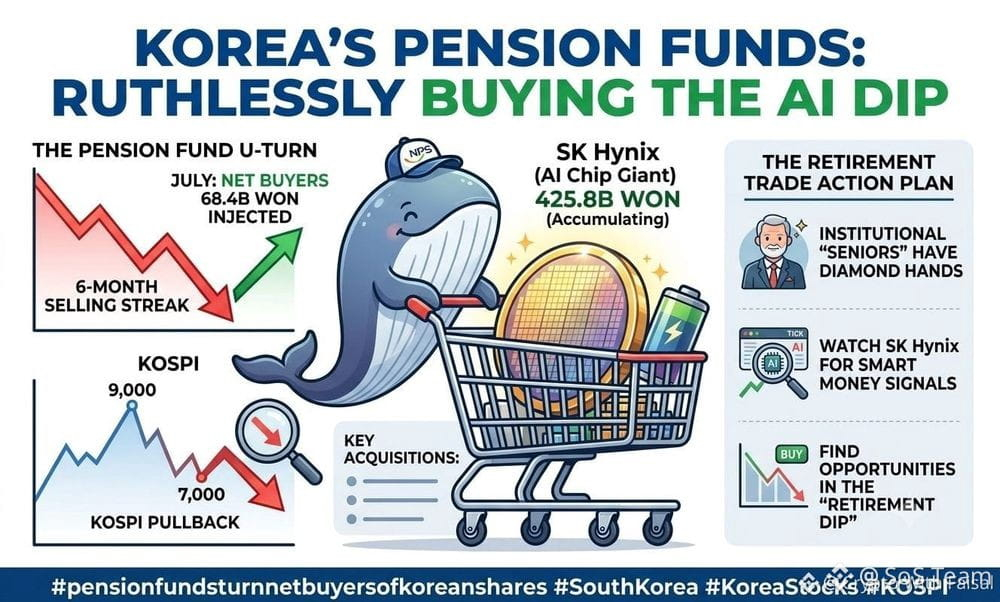
Korean pension funds turning net buyers of local shares hits differently in a Fear market. When the Fear & Greed Index is sitting around 36, retail usually freezes, but long-horizon money often starts shopping. We’ve seen this movie before with Japanese equities, US tech after rate panic, and even $BTC accumulation phases where the smart money looked boring right before the chart stopped being boring.
The comparison with crypto is the fun part. Pension funds don’t ape $USDT pairs at 2 a.m., but their shift in risk appetite can spill into the broader market mood. If Korean equities catch a bid from institutional buyers, it may support regional risk assets and change how traders price “risk-on” narratives across Asia.
So is this just a temporary local rotation, or an early sign that big money is getting comfortable with risk again? #PensionFundsTurnNetBuyersOfKoreanShares #BitcoinMiningDifficultyMayFall1 #XRPLedgerDraws
110
·
--
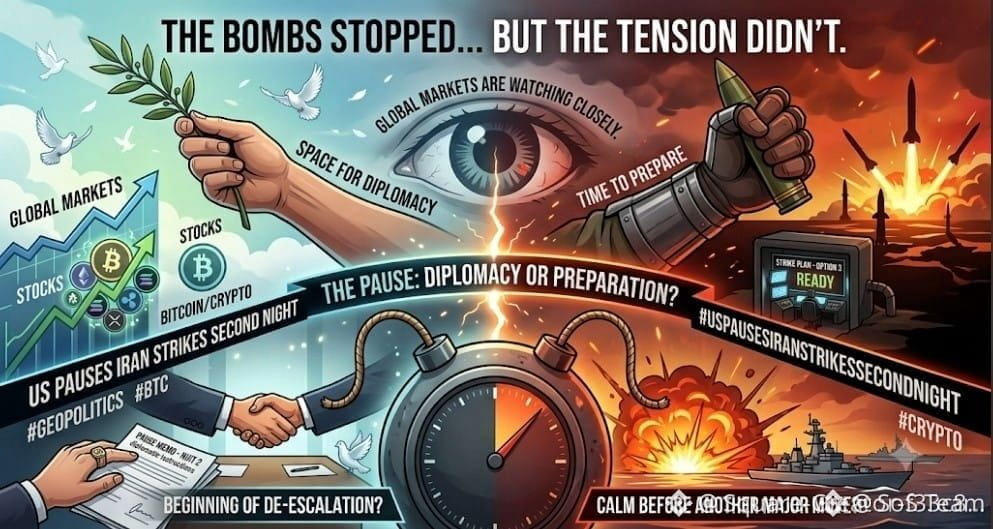
Everyone thinks a second night of paused U.S.-Iran strikes means “risk is over,” but actually markets often get most dangerous when traders relax too early.
The common mistake is buying $BTC or $ETH like the headline has already been fully solved, then getting shaken out when the next update hits. With Fear & Greed sitting in fear territory, even small geopolitical headlines can move liquidity like a crowded hallway during a fire drill.
Here are 3 risks to watch. 1) A pause is not a deal. It is more like traffic lights flashing yellow, not green. Traders who treat it as certainty can end up entering too late after the first relief candle. 2) Stablecoin behavior matters. If people rush into $USDT, it can signal caution hiding under the surface, even while some charts look calm.
3) Volatility can arrive when the market is least prepared. Weekend and overnight sessions are thinner, so one headline can push price faster than usual. The smarter approach is not panic selling or FOMO buying, but knowing your invalidation level before you enter.
If the pause continues, do you expect relief across crypto, or is the market still underpricing headline risk? #USPausesIranStrikesSecondNight #BitcoinMiningDifficultyMayFall1 #XRPLedgerDraws
34
·
--
A meme coin can pump 36% and still be one of the easiest places to lose money if you buy after the crowd notices.
The trap with $SHIB is that green candles feel “safe” because everyone is talking about it, but that’s usually when risk is highest. Late entries get punished fast when liquidity rotates or early buyers start taking profit.
Here’s the simple math: if $SHIB runs from 100 to 136, a move back to 118 is only a 50% retrace of the pump, but it’s already a 13% loss for anyone who bought the top. A full retrace back to where the move started is about a 26% drawdown from the high. That’s why chasing after the headline number can feel brutal.
Also, meme coins don’t move like $ETH or even $DOGE most of the time. They can spike on attention, burn narratives, whale wallets, or pure momentum, then fade when volume dries up. With Fear & Greed sitting in “Fear” territory, traders may be quicker to take profits instead of holding through volatility.
The lesson isn’t “avoid $SHIB forever.” It’s to separate momentum from entry quality. Watch volume, previous resistance, whale inflows/outflows, and whether the move is holding above breakout levels before assuming the trend is real.
Are you treating this $SHIB move as a real breakout or just another liquidity trap? #SHIBSurges36 #BitcoinMiningDifficultyMayFall1 #XRPLedgerDraws
115
Log in to explore more content
Join global crypto users on Binance Square
⚡️ Get latest and useful information about crypto.
💬 Trusted by the world’s largest crypto exchange.
👍 Discover real insights from verified creators.
Email / Phone number
Trending Topics
1
#CanMicrosoftDeliverOnAI
68,588 views
691 Discussing
2
#CanGoogleDefindItsCore
36,740 views
511 Discussing
3
#FOMCWatch
9.1M views
27,890 Discussing
4
#EthereumDropsBelow$2300
10,520 views
155 Discussing
5
#BitcoinSlipsBelow$80KAgain
29,547 views
119 Discussing
6
#ThailandLaunchesWORPTStablecoinToQRPaymentApp
59,765 views
769 Discussing
7
#StrategySkipsBitcoinPurchasesSpends$205MOnSTRCBuybacks
11,348 views
97 Discussing
8
#BitmineAdds10452ETH
103,664 views
1,159 Discussing
9
#SouthKoreaConsidersEducationTaxOnCryptoExchanges
60,456 views
831 Discussing
10
#OCCUrgesCommunityBanksToEnterStablecoinPayments
42,375 views
595 Discussing