
#securitycouncil
securitycouncil
1,104 views
11 Discussing
Hot
Latest

#irannamesrezaeetoheadsecuritycouncil
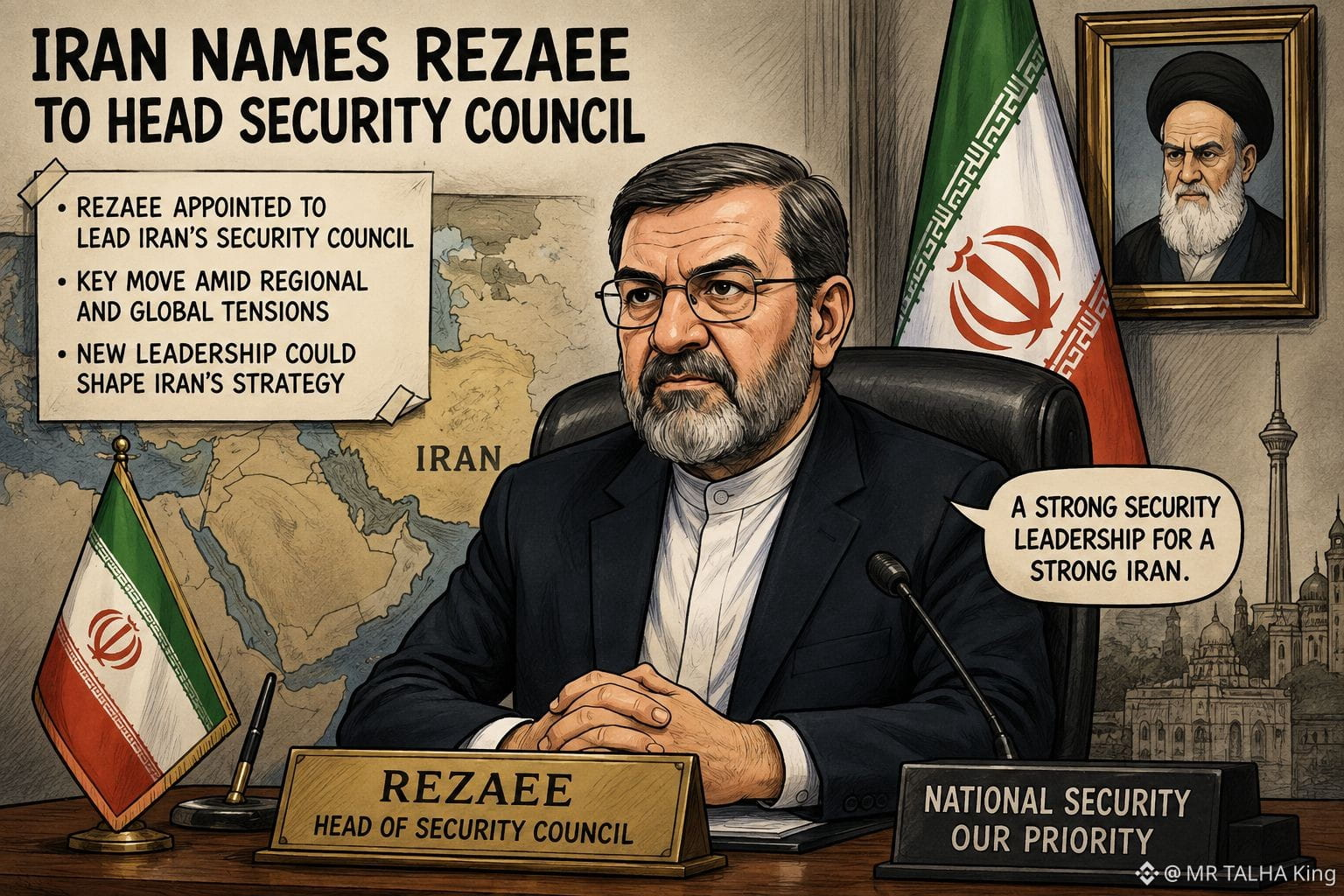
🇮🇷 IRAN NAMES REZAEE TO HEAD SECURITY COUNCIL 🇺🇳
Iran has named Rezaee to lead its Security Council, putting a new figure in a key position as regional and international tensions remain closely watched. 👀
The move could signal a shift in Iran’s approach to national security and diplomacy. 🌍
📌 What do you think this appointment means for Iran’s future strategy?
#Iran #Rezaee #SecurityCouncil
$BTC $ETH $BNB
{spot}(ETHUSDT)
{spot}(BNBUSDT)
{spot}(BTCUSDT)
#irannamesrezaeetoheadsecuritycouncil
🇮🇷 IRAN NAMES REZAEE TO HEAD SECURITY COUNCIL 🇺🇳
Iran has named Rezaee to lead its Security Council, putting a new figure in a key position as regional and international tensions remain closely watched. 👀
The move could signal a shift in Iran’s approach to national security and diplomacy. 🌍
📌 What do you think this appointment means for Iran’s future strategy?
#Iran #Rezaee #SecurityCouncil
$BTC $ETH $BNB
🇮🇷 IRAN NAMES REZAEE TO HEAD SECURITY COUNCIL 🇺🇳
Iran has named Rezaee to lead its Security Council, putting a new figure in a key position as regional and international tensions remain closely watched. 👀
The move could signal a shift in Iran’s approach to national security and diplomacy. 🌍
📌 What do you think this appointment means for Iran’s future strategy?
#Iran #Rezaee #SecurityCouncil
$BTC $ETH $BNB
1
1
167

·
--
#irannamesrezaeetoheadsecuritycouncil
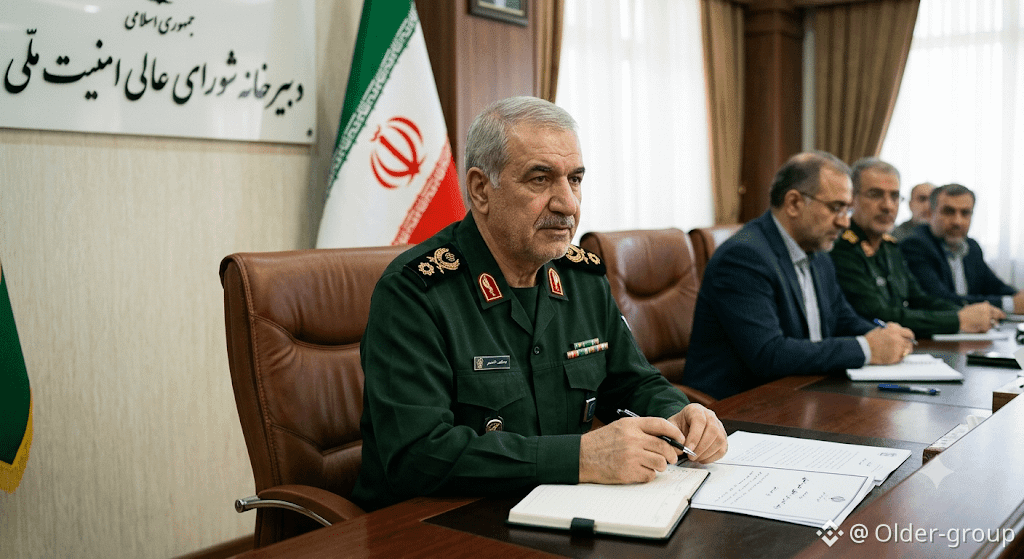
🇮🇷 IRAN NAMES REZAEE TO HEAD SECURITY COUNCIL
Iran has appointed former IRGC commander Mohsen Rezaee as secretary of the Supreme National Security Council (SNSC), replacing Mohammad Bagher Zolghadr.
🌍 The move puts a veteran military figure at the center of Iran’s security and foreign-policy coordination.
📊 Market watch: Any escalation in regional tensions could affect oil, risk sentiment and crypto markets.
#Iran #Rezaee #SecurityCouncil #Geopolitics $BTC $SOL $ETH
{spot}(ETHUSDT)
{spot}(SOLUSDT)
{spot}(BTCUSDT)
#irannamesrezaeetoheadsecuritycouncil
🇮🇷 IRAN NAMES REZAEE TO HEAD SECURITY COUNCIL
Iran has appointed former IRGC commander Mohsen Rezaee as secretary of the Supreme National Security Council (SNSC), replacing Mohammad Bagher Zolghadr.
🌍 The move puts a veteran military figure at the center of Iran’s security and foreign-policy coordination.
📊 Market watch: Any escalation in regional tensions could affect oil, risk sentiment and crypto markets.
#Iran #Rezaee #SecurityCouncil #Geopolitics $BTC $SOL $ETH
🇮🇷 IRAN NAMES REZAEE TO HEAD SECURITY COUNCIL
Iran has appointed former IRGC commander Mohsen Rezaee as secretary of the Supreme National Security Council (SNSC), replacing Mohammad Bagher Zolghadr.
🌍 The move puts a veteran military figure at the center of Iran’s security and foreign-policy coordination.
📊 Market watch: Any escalation in regional tensions could affect oil, risk sentiment and crypto markets.
#Iran #Rezaee #SecurityCouncil #Geopolitics $BTC $SOL $ETH
1
3
581

#IranNamesRezaeeToHeadSecurityCouncil
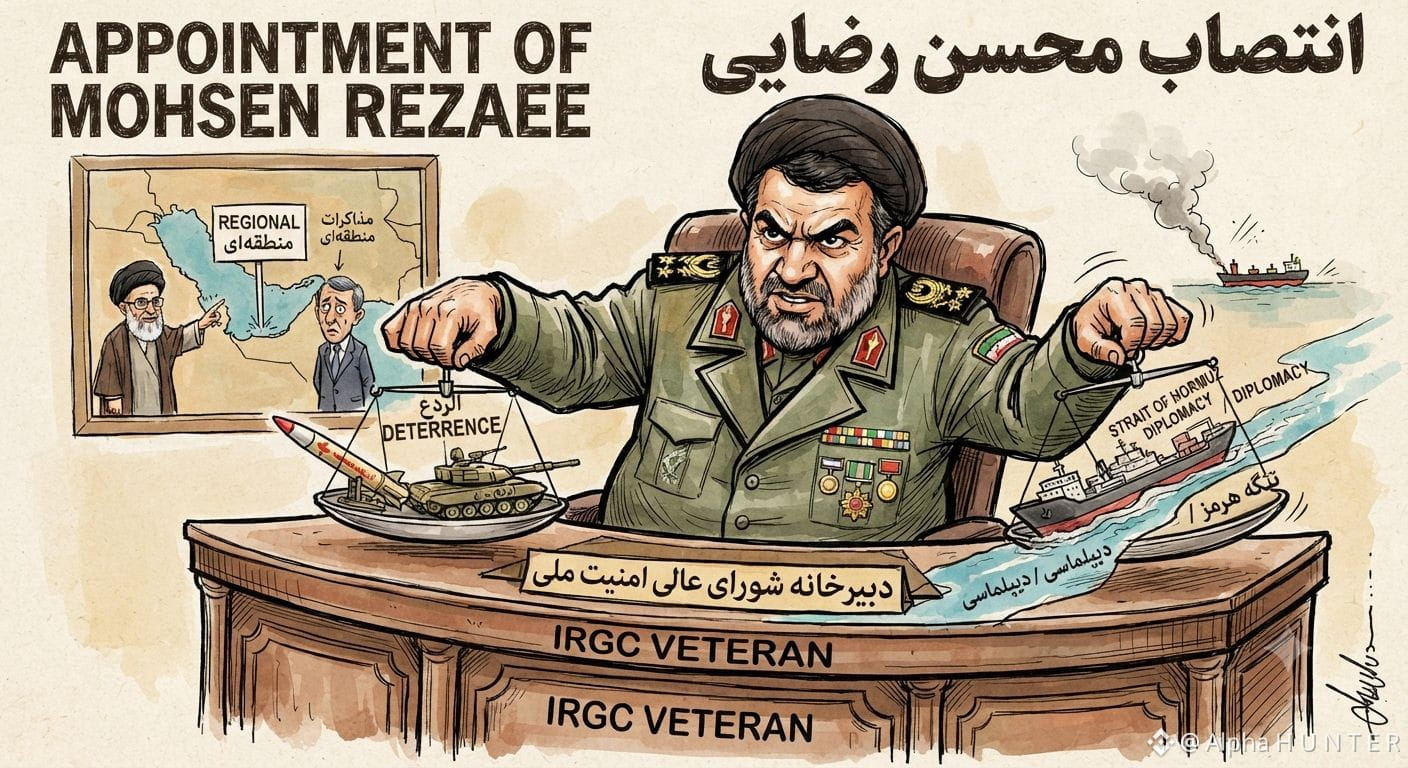
The appointment of Mohsen Rezaee as the head of Iran's Supreme National Security Council marks a critical turning point in Tehran's political and military landscape. As a veteran former commander of the Islamic Revolutionary Guard Corps (IRGC), Rezaee brings deep military authority to the country's highest security body. This leadership change comes at a sensitive time, coinciding with delicate regional talks and ongoing international friction over vital maritime trade routes like the Strait of Hormuz. While some analysts view this move as a signal of a firmer stance in defense and foreign policy, others believe it consolidates experienced leadership to manage complex wartime diplomacy. Ultimately, Rezaee's tenure will heavily influence how Iran balances strategic deterrence with upcoming international negotiations.
⚠️ Not financial advice.
#Iran #Rezaee #SecurityCouncil #Geopolitics
$BTC
{future}(BTCUSDT)
$CL
{future}(CLUSDT)
$BMT
{future}(BMTUSDT)
#IranNamesRezaeeToHeadSecurityCouncil
The appointment of Mohsen Rezaee as the head of Iran's Supreme National Security Council marks a critical turning point in Tehran's political and military landscape. As a veteran former commander of the Islamic Revolutionary Guard Corps (IRGC), Rezaee brings deep military authority to the country's highest security body. This leadership change comes at a sensitive time, coinciding with delicate regional talks and ongoing international friction over vital maritime trade routes like the Strait of Hormuz. While some analysts view this move as a signal of a firmer stance in defense and foreign policy, others believe it consolidates experienced leadership to manage complex wartime diplomacy. Ultimately, Rezaee's tenure will heavily influence how Iran balances strategic deterrence with upcoming international negotiations.
⚠️ Not financial advice.
#Iran #Rezaee #SecurityCouncil #Geopolitics
$BTC
$CL
$BMT
The appointment of Mohsen Rezaee as the head of Iran's Supreme National Security Council marks a critical turning point in Tehran's political and military landscape. As a veteran former commander of the Islamic Revolutionary Guard Corps (IRGC), Rezaee brings deep military authority to the country's highest security body. This leadership change comes at a sensitive time, coinciding with delicate regional talks and ongoing international friction over vital maritime trade routes like the Strait of Hormuz. While some analysts view this move as a signal of a firmer stance in defense and foreign policy, others believe it consolidates experienced leadership to manage complex wartime diplomacy. Ultimately, Rezaee's tenure will heavily influence how Iran balances strategic deterrence with upcoming international negotiations.
⚠️ Not financial advice.
#Iran #Rezaee #SecurityCouncil #Geopolitics
$BTC
$CL
$BMT
97
Article
🚨 North Korean hackers just got a reality check 😂They stole $293M… but made a costly mistake.
$71M was moved to Arbitrum — and the Security Council stepped in and FREEZED it.
Imagine hacking millions just to get blocked mid-escape 💀
Lesson learned: Decentralization isn’t always what it seems 👀
#NorthKoreaHackers #Arbitrium #SecurityCouncil
🚨 North Korean hackers just got a reality check 😂
They stole $293M… but made a costly mistake.
$71M was moved to Arbitrum — and the Security Council stepped in and FREEZED it.
Imagine hacking millions just to get blocked mid-escape 💀
Lesson learned: Decentralization isn’t always what it seems 👀
#NorthKoreaHackers #Arbitrium #SecurityCouncil
$71M was moved to Arbitrum — and the Security Council stepped in and FREEZED it.
Imagine hacking millions just to get blocked mid-escape 💀
Lesson learned: Decentralization isn’t always what it seems 👀
#NorthKoreaHackers #Arbitrium #SecurityCouncil
172

·
--
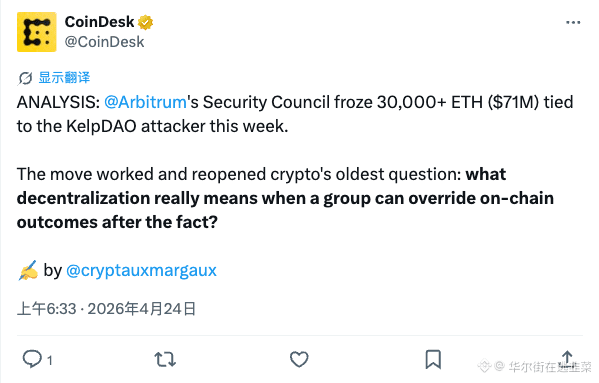
The Arbitrum Security Committee has aggressively frozen over 30,000 ETH related to the KelpDAO attackers this week, safeguarding around $71 million in assets. However, this move has once again put the age-old topic of 'decentralization' in the spotlight.
While it's a good thing to help victims recover their assets, the ‘one-click shutoff’ vibe is undeniably strong. In the face of the Security Committee's intervention power, the so-called on-chain immutability seems a bit fragile. This heavy-handed rescue mode has ripped the veil off L2 governance: it turns out that in extreme situations, code is not the final law; that small group of committee members is.
From a chip security perspective, this does provide a safety net, but in the long run, this kind of 'centralized privilege' is another dimensional blow to the native spirit of Web3. If on-chain results can be arbitrarily overridden, what's the difference between us playing with electronic ledgers in a bank?
Can you accept this kind of 'just intervention'? Or would you prefer a cold but absolutely decentralized system? #Arbitrum #KelpDAO #SecurityCouncil $ARB $ETH
{future}(ETHUSDT)
{future}(ARBUSDT)
The Arbitrum Security Committee has aggressively frozen over 30,000 ETH related to the KelpDAO attackers this week, safeguarding around $71 million in assets. However, this move has once again put the age-old topic of 'decentralization' in the spotlight.
While it's a good thing to help victims recover their assets, the ‘one-click shutoff’ vibe is undeniably strong. In the face of the Security Committee's intervention power, the so-called on-chain immutability seems a bit fragile. This heavy-handed rescue mode has ripped the veil off L2 governance: it turns out that in extreme situations, code is not the final law; that small group of committee members is.
From a chip security perspective, this does provide a safety net, but in the long run, this kind of 'centralized privilege' is another dimensional blow to the native spirit of Web3. If on-chain results can be arbitrarily overridden, what's the difference between us playing with electronic ledgers in a bank?
Can you accept this kind of 'just intervention'? Or would you prefer a cold but absolutely decentralized system? #Arbitrum #KelpDAO #SecurityCouncil $ARB $ETH
While it's a good thing to help victims recover their assets, the ‘one-click shutoff’ vibe is undeniably strong. In the face of the Security Committee's intervention power, the so-called on-chain immutability seems a bit fragile. This heavy-handed rescue mode has ripped the veil off L2 governance: it turns out that in extreme situations, code is not the final law; that small group of committee members is.
From a chip security perspective, this does provide a safety net, but in the long run, this kind of 'centralized privilege' is another dimensional blow to the native spirit of Web3. If on-chain results can be arbitrarily overridden, what's the difference between us playing with electronic ledgers in a bank?
Can you accept this kind of 'just intervention'? Or would you prefer a cold but absolutely decentralized system? #Arbitrum #KelpDAO #SecurityCouncil $ARB $ETH
172
Log in to explore more content
Join global crypto users on Binance Square
⚡️ Get latest and useful information about crypto.
💬 Trusted by the world’s largest crypto exchange.
👍 Discover real insights from verified creators.
Email / Phone number
Trending Topics
1
#FedRateWatch
423,096 views
2,327 Discussing
2
#BitcoinSlidesTo$76000
10,634 views
94 Discussing
3
#BitcoinReboundsTo$79K
57,291 views
387 Discussing
4
#StrategyMarketCapPassesFord
22,498 views
528 Discussing
5
#ClarityActOddsHalveOnPolymarket
25,693 views
426 Discussing
6
#US30YTreasuryYieldTops5.40%
19,722 views
309 Discussing
7
#BessentEndorsesFinalClarityActDraft
42,573 views
655 Discussing
8
#ZamaOpens16ConfidentialMorphoVaults
14,761 views
316 Discussing
9
#USDCOnChainVolumeTops$100Trillion
2,247 views
47 Discussing
10
#BitcoinSpotETFsNetInflow$160M
2,878 views
100 Discussing