

#pythroadmappyth
pythroadmappyth
78,335 views
813 Discussing
Hot
Latest

The vision of @PythNetwork is clear: to exceed the boundaries of #DeFi to become the global reference for market data, a sector that already weighs more than $50 billion.
🌍 With the second phase of its #PythRoadmap, the network offers a premium subscription product for institutional-level data.
🏦 Institutional adoption: $PYTH becomes a reliable, transparent, and comprehensive source of market data, paving the way for massive integration.
🔑 Utility of the token: incentives for contributors, revenue redistribution via the DAO, and participatory governance.
💡 Pyth Network is redefining the value of financial data in Web3. #PythRoadmapPYTH $PYTH
The vision of @PythNetwork is clear: to exceed the boundaries of #DeFi to become the global reference for market data, a sector that already weighs more than $50 billion.
🌍 With the second phase of its #PythRoadmap, the network offers a premium subscription product for institutional-level data.
🏦 Institutional adoption: $PYTH becomes a reliable, transparent, and comprehensive source of market data, paving the way for massive integration.
🔑 Utility of the token: incentives for contributors, revenue redistribution via the DAO, and participatory governance.
💡 Pyth Network is redefining the value of financial data in Web3. #PythRoadmapPYTH $PYTH
🌍 With the second phase of its #PythRoadmap, the network offers a premium subscription product for institutional-level data.
🏦 Institutional adoption: $PYTH becomes a reliable, transparent, and comprehensive source of market data, paving the way for massive integration.
🔑 Utility of the token: incentives for contributors, revenue redistribution via the DAO, and participatory governance.
💡 Pyth Network is redefining the value of financial data in Web3. #PythRoadmapPYTH $PYTH
12
95


#MarketPullback
⚡ Pyth connects Wall Street, governments, and global investors in one place – in real time!
Just a week after bringing
@CommerceGov
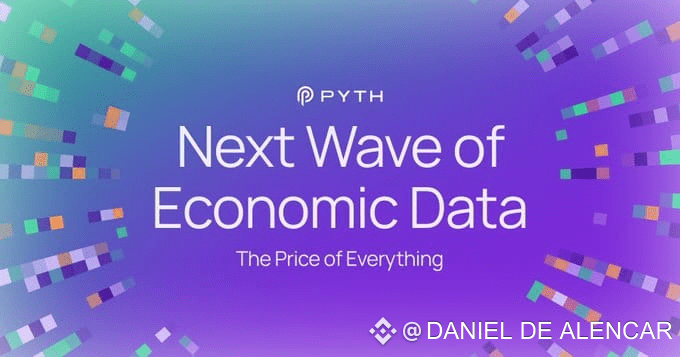
On-chain GDP data, Pyth is already expanding its economic data offerings. Access real-time indicators such as employment, inflation, and growth that drive global markets. Why does this matter⬇️
#PythRoadmapPYTH $PYTH #indiaceyptotax #DanieldeAlencar @PythNetwork
#MarketPullback
⚡ Pyth connects Wall Street, governments, and global investors in one place – in real time!
Just a week after bringing
@CommerceGov
On-chain GDP data, Pyth is already expanding its economic data offerings. Access real-time indicators such as employment, inflation, and growth that drive global markets. Why does this matter⬇️
#PythRoadmapPYTH $PYTH #indiaceyptotax #DanieldeAlencar @PythNetwork
⚡ Pyth connects Wall Street, governments, and global investors in one place – in real time!
Just a week after bringing
@CommerceGov
On-chain GDP data, Pyth is already expanding its economic data offerings. Access real-time indicators such as employment, inflation, and growth that drive global markets. Why does this matter⬇️
#PythRoadmapPYTH $PYTH #indiaceyptotax #DanieldeAlencar @PythNetwork
1
326


·
--
Bullish
Still Water Enters the Sea|Data on the Chain
@PythNetwork #PythRoadmapPYTH
#PythRoadmap
1|Why I Focus on Pyth
After years of trading, the most painful thing is not making the wrong judgment, but the data being a step behind. Recently, two things have made me start to pay attention: the U.S. Department of Commerce chose Pyth and Chainlink to bring official macro data onto the chain; at the same time, Pyth's official Twitter announced the addition of macro indicator sources, covering non-farm payrolls, unemployment rate, wage growth, CPI, PPI, GDP, and PMI.
2|What This Means to Me
Macro indicators are like tides, and asset prices are like ports. In the past, we relied on second-hand information to guess the water level; now first-hand data is directly on the chain, allowing DApps, strategies, and risk control engines to read the true water level. For someone like me, who does cross-market hedging, the delay is reduced, the error is smaller, and drawdown management is more stable. Coupled with Pyth's existing real-time quotes for ETFs and Hong Kong stocks, on-chain strategies finally have a full market perspective.
3|The Practical Value of Tokens and Mechanisms
The role of $PYTH is not just a slogan. Staking and delegation provide incentives for high-quality publishers. The more data is called, the stronger the benefits for the protocol and participants, enhancing security and availability. For me, this is a closed loop of users—governors—data providers.
4|Three Suggestions for Pyth
Combine macro + assets into a subscription model to reduce integration costs.
Publish real-time panels showing delays and errors to exchange transparency for trust.
Launch scenario-based educational content to demonstrate how to apply macro signals to AMMs and liquidation thresholds.
5|Inspiration for Readers
If you are doing quantitative analysis, try treating macro price feeding as a new factor.
If you are responsible for risk control, try using macro signals to trigger thresholds and reduce false positives.
If you are a researcher, track on-chain transaction depth before and after macro data releases to build an event-driven framework.
Conclusion
True infrastructure is always quiet and precise. When macro data meets asset prices on the same chain, I prefer to focus on methods rather than noise. Pyth makes the price layer thicker and the time difference thinner, which is why I continue to pay attention.
Still Water Enters the Sea|Data on the Chain
@PythNetwork #PythRoadmapPYTH
#PythRoadmap
1|Why I Focus on Pyth
After years of trading, the most painful thing is not making the wrong judgment, but the data being a step behind. Recently, two things have made me start to pay attention: the U.S. Department of Commerce chose Pyth and Chainlink to bring official macro data onto the chain; at the same time, Pyth's official Twitter announced the addition of macro indicator sources, covering non-farm payrolls, unemployment rate, wage growth, CPI, PPI, GDP, and PMI.
2|What This Means to Me
Macro indicators are like tides, and asset prices are like ports. In the past, we relied on second-hand information to guess the water level; now first-hand data is directly on the chain, allowing DApps, strategies, and risk control engines to read the true water level. For someone like me, who does cross-market hedging, the delay is reduced, the error is smaller, and drawdown management is more stable. Coupled with Pyth's existing real-time quotes for ETFs and Hong Kong stocks, on-chain strategies finally have a full market perspective.
3|The Practical Value of Tokens and Mechanisms
The role of $PYTH is not just a slogan. Staking and delegation provide incentives for high-quality publishers. The more data is called, the stronger the benefits for the protocol and participants, enhancing security and availability. For me, this is a closed loop of users—governors—data providers.
4|Three Suggestions for Pyth
Combine macro + assets into a subscription model to reduce integration costs.
Publish real-time panels showing delays and errors to exchange transparency for trust.
Launch scenario-based educational content to demonstrate how to apply macro signals to AMMs and liquidation thresholds.
5|Inspiration for Readers
If you are doing quantitative analysis, try treating macro price feeding as a new factor.
If you are responsible for risk control, try using macro signals to trigger thresholds and reduce false positives.
If you are a researcher, track on-chain transaction depth before and after macro data releases to build an event-driven framework.
Conclusion
True infrastructure is always quiet and precise. When macro data meets asset prices on the same chain, I prefer to focus on methods rather than noise. Pyth makes the price layer thicker and the time difference thinner, which is why I continue to pay attention.
@PythNetwork #PythRoadmapPYTH
#PythRoadmap
1|Why I Focus on Pyth
After years of trading, the most painful thing is not making the wrong judgment, but the data being a step behind. Recently, two things have made me start to pay attention: the U.S. Department of Commerce chose Pyth and Chainlink to bring official macro data onto the chain; at the same time, Pyth's official Twitter announced the addition of macro indicator sources, covering non-farm payrolls, unemployment rate, wage growth, CPI, PPI, GDP, and PMI.
2|What This Means to Me
Macro indicators are like tides, and asset prices are like ports. In the past, we relied on second-hand information to guess the water level; now first-hand data is directly on the chain, allowing DApps, strategies, and risk control engines to read the true water level. For someone like me, who does cross-market hedging, the delay is reduced, the error is smaller, and drawdown management is more stable. Coupled with Pyth's existing real-time quotes for ETFs and Hong Kong stocks, on-chain strategies finally have a full market perspective.
3|The Practical Value of Tokens and Mechanisms
The role of $PYTH is not just a slogan. Staking and delegation provide incentives for high-quality publishers. The more data is called, the stronger the benefits for the protocol and participants, enhancing security and availability. For me, this is a closed loop of users—governors—data providers.
4|Three Suggestions for Pyth
Combine macro + assets into a subscription model to reduce integration costs.
Publish real-time panels showing delays and errors to exchange transparency for trust.
Launch scenario-based educational content to demonstrate how to apply macro signals to AMMs and liquidation thresholds.
5|Inspiration for Readers
If you are doing quantitative analysis, try treating macro price feeding as a new factor.
If you are responsible for risk control, try using macro signals to trigger thresholds and reduce false positives.
If you are a researcher, track on-chain transaction depth before and after macro data releases to build an event-driven framework.
Conclusion
True infrastructure is always quiet and precise. When macro data meets asset prices on the same chain, I prefer to focus on methods rather than noise. Pyth makes the price layer thicker and the time difference thinner, which is why I continue to pay attention.
1.9k
861
180
1.9k
·
--
Bullish
Waves Rise Silent | Data Has Soul
@PythNetwork #PythRoadmapPYTH $PYTH #PythRoadmap
I | Beyond the Tide, Prophesying New Life
In the past, oracle machines were merely data transporters.
But Pyth is not content with this.
It casts its gaze towards a broader stage —
stocks, foreign exchange, commodities……
A market data blue ocean exceeding $50 billion.
Quiet, yet sharp.
II | Lowering Thresholds, Deepening Trust
The second phase of institutional subscriptions seems ordinary,
Yet it is a crucial step.
— Pay-as-you-go, allowing traditional institutions to dare to test the waters.
— Fully verifiable, eliminating the black box of data.
This marks a turning point from losing data on-chain to building the cornerstone of trust.
III | Tokens Have Pulse, Incentives Have Soul
$PYTH is not just for show.
Those who contribute data and those who stake support,
Share in the benefits of ecological growth.
The more data is used → The higher the income → The more generous the rewards.
This is the first closed loop of value and consensus.
IV | Quiet Change Surpasses Clamor
I often ask myself: among many oracles,
Why do I choose to gaze long at Pyth?
Because it does not just meet demand,
But creates demand.
It makes data a composable, programmable, and trustworthy new asset.
Unassuming, yet omnipresent.
Conclusion | The Wind Rises at the Edge of the Bluegrass
The future of blockchain does not lie in who shouts the loudest,
But in who can quietly change reality.
Pyth may be doing just that.
What do you think?
Will the next stop for oracles truly change the entire financial landscape?
Feel free to like and leave a comment.
Waves Rise Silent | Data Has Soul
@PythNetwork #PythRoadmapPYTH $PYTH #PythRoadmap
I | Beyond the Tide, Prophesying New Life
In the past, oracle machines were merely data transporters.
But Pyth is not content with this.
It casts its gaze towards a broader stage —
stocks, foreign exchange, commodities……
A market data blue ocean exceeding $50 billion.
Quiet, yet sharp.
II | Lowering Thresholds, Deepening Trust
The second phase of institutional subscriptions seems ordinary,
Yet it is a crucial step.
— Pay-as-you-go, allowing traditional institutions to dare to test the waters.
— Fully verifiable, eliminating the black box of data.
This marks a turning point from losing data on-chain to building the cornerstone of trust.
III | Tokens Have Pulse, Incentives Have Soul
$PYTH is not just for show.
Those who contribute data and those who stake support,
Share in the benefits of ecological growth.
The more data is used → The higher the income → The more generous the rewards.
This is the first closed loop of value and consensus.
IV | Quiet Change Surpasses Clamor
I often ask myself: among many oracles,
Why do I choose to gaze long at Pyth?
Because it does not just meet demand,
But creates demand.
It makes data a composable, programmable, and trustworthy new asset.
Unassuming, yet omnipresent.
Conclusion | The Wind Rises at the Edge of the Bluegrass
The future of blockchain does not lie in who shouts the loudest,
But in who can quietly change reality.
Pyth may be doing just that.
What do you think?
Will the next stop for oracles truly change the entire financial landscape?
Feel free to like and leave a comment.
@PythNetwork #PythRoadmapPYTH $PYTH #PythRoadmap
I | Beyond the Tide, Prophesying New Life
In the past, oracle machines were merely data transporters.
But Pyth is not content with this.
It casts its gaze towards a broader stage —
stocks, foreign exchange, commodities……
A market data blue ocean exceeding $50 billion.
Quiet, yet sharp.
II | Lowering Thresholds, Deepening Trust
The second phase of institutional subscriptions seems ordinary,
Yet it is a crucial step.
— Pay-as-you-go, allowing traditional institutions to dare to test the waters.
— Fully verifiable, eliminating the black box of data.
This marks a turning point from losing data on-chain to building the cornerstone of trust.
III | Tokens Have Pulse, Incentives Have Soul
$PYTH is not just for show.
Those who contribute data and those who stake support,
Share in the benefits of ecological growth.
The more data is used → The higher the income → The more generous the rewards.
This is the first closed loop of value and consensus.
IV | Quiet Change Surpasses Clamor
I often ask myself: among many oracles,
Why do I choose to gaze long at Pyth?
Because it does not just meet demand,
But creates demand.
It makes data a composable, programmable, and trustworthy new asset.
Unassuming, yet omnipresent.
Conclusion | The Wind Rises at the Edge of the Bluegrass
The future of blockchain does not lie in who shouts the loudest,
But in who can quietly change reality.
Pyth may be doing just that.
What do you think?
Will the next stop for oracles truly change the entire financial landscape?
Feel free to like and leave a comment.

2k
980
162
2k
Log in to explore more content
Join global crypto users on Binance Square
⚡️ Get latest and useful information about crypto.
💬 Trusted by the world’s largest crypto exchange.
👍 Discover real insights from verified creators.
Email / Phone number
Trending Topics
1
#BinancePick
2.6M views
140,306 Discussing
2
#EarningsSeason
5M views
24,208 Discussing
3
#FranklinTempletonFilesForTwoDividendToBitcoinETFs
24 views
25 Discussing
4
#StrategyMSTRSurpassesNasdaqInMarketCap
262 views
34 Discussing
5
#CanadaProposesStablecoinRedemptionWithin3BusinessDays
35 views
3 Discussing
6
#ElectrumWalletBugLetRogueServersStealFunds
6,236 views
198 Discussing
7
#ArgentineCourtDismissesLIBRACaseAgainstMilei
14,855 views
275 Discussing
8
#SKHynixReportedlyPlansSpecialDividendFromKioxiaStakeSale
2,844 views
43 Discussing
9
#KeystoneWebsiteBreachExposesBuyersShippingAddresses
1,556 views
35 Discussing
10
#USQ3GDPAndSeptemberPCEDueNextWeek
91,047 views
1,092 Discussing