
#pbocdefineshighratedepositscutscdthreshold
pbocdefineshighratedepositscutscdthreshold
Hot
Latest

Unlocking Crypto Rewards: The Magic of Binance pay
Who doesn't love a surprise gift box filled with crypto? As we navigate the crypto market, don't forget that Binance offers amazing ways to earn passive rewards. Whether it's through Binance Pay Red Packets, Crypto Boxes, or simply holding your assets in Binance Earn, opportunities are everywhere!
to maximize your rewards on Binance: Stay Active: Keep an eye on Binance Square for official giveaways. Share to Earn: Create your own Crypto Boxes and share them with friends. The more you share, the more you can earn! HOLD Smart: Use USDT in flexible savings to earn while you sleep. Let's build this wealth together! Drop a comment if youve ever won a Crypto Box!
#EvolveAtBinanceBlockchainWeek #MoneroFalls13%OnDelistings #EthereumGlamsterdamKeepsStorageFeeChange #ClaudeAccusedOfDroppingUserPreferences $BTC $ETH $BNB #PBOCDefinesHighRateDepositsCutsCDThreshold
BNB

3

·
--
Article
🇨🇳 China’s Blockchain Identity Rules: The Road to March 2027#FearGreedIndexFallsTo10ExtremeFear
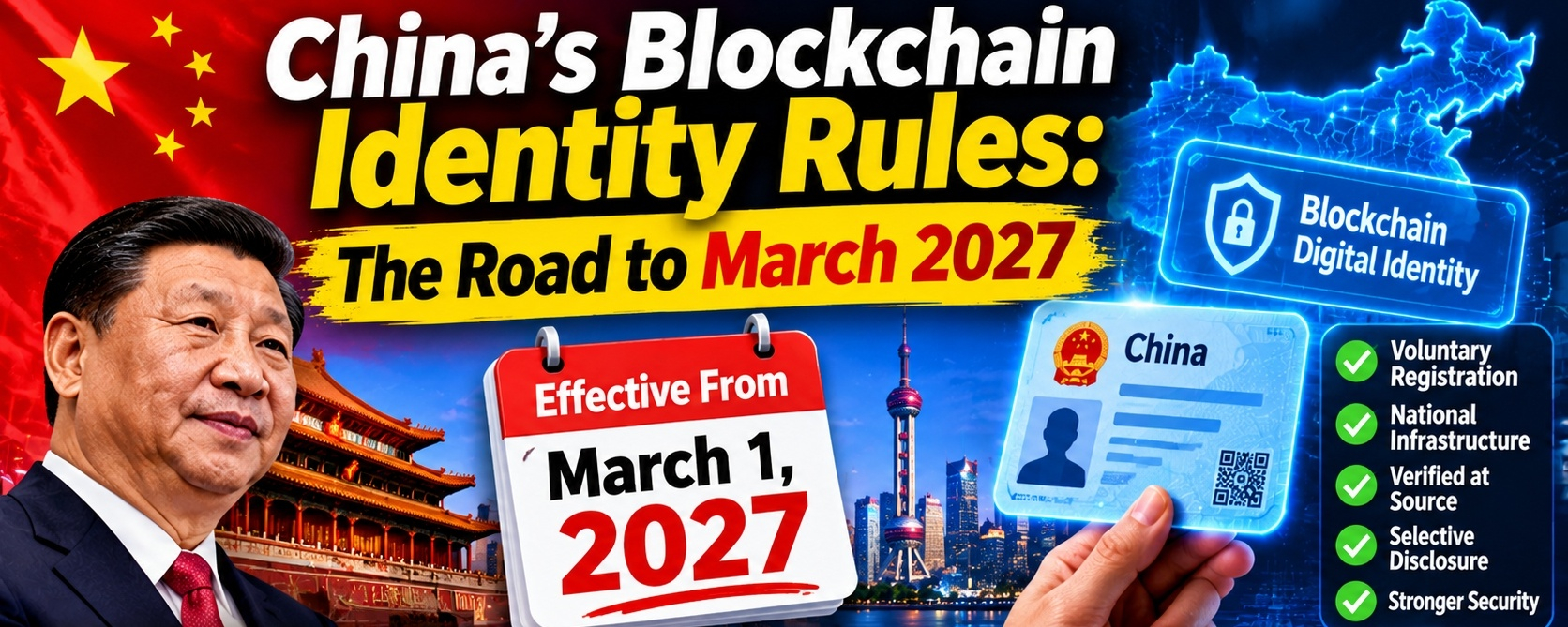
China has published new rules for blockchain-based digital identity, set to take effect on March 1, 2027. 🗓️ Released on November 27 by 11 government bodies, including the Cyberspace Administration of China and the People’s Bank of China, they aim to make identity checks work across regions, industries and online platforms. 🔗
🆔 How the System Works
• ✅ Voluntary registration: people, organizations and even industrial equipment and goods can receive identities.
• ⛓️ National infrastructure: an “identity chain” built on China’s National Blockchain Network will be run by an authorized operator.
• 🏛️ Verified at the source: recognized authorities check applications before identities are issued.
• 📜 Verifiable credentials: users could prove a qualification or other fact without exposing a full record.
• 🔑 Private keys: users are responsible for keeping them safe.
Imagine proving you hold a professional certificate without sending your complete education file. 🎓 That is the selective-disclosure idea at the center of the framework.
🛡️ Privacy Limits
The rules require data minimization: services should collect only what they need. 🔍 Verification activity cannot be used for cross-platform user profiling or targeted marketing. Providers must also maintain security protections and respond to incidents.
At the same time, identities remain anchored to government verification systems. 🏛️ How privacy protection works in practice will be an important test.
🌐 Where It Could Be Used
• 💴 Digital yuan: mutual recognition with digital RMB identities is encouraged.
• 🧾 Tax: verification and authorization.
• 🚚 Transport and customs: credential checks that could simplify processes.
• 🏢 Public bidding: confirming bidders’ identities.
• 🤖 AI agents: identifying software agents and what they are allowed to do.
• 🌏 Cross-border services: cooperation with overseas identity providers under safe, controlled conditions.
💡 What It Means for Blockchain
This is a major signal that China sees blockchain as public digital infrastructure. 🏗️ It does not open the door to crypto trading: restrictions on cryptocurrency activity in mainland China remain. 🚫 Readers should not treat this news as automatic support for any identity token.
👀 What to Watch Before March 2027
• 🧩 Which platforms and credential providers connect first
• ⚙️ How technical standards and authorization rules develop
• 💴 How the digital yuan link takes shape
• 🔐 How privacy limits are enforced
• 🌍 Whether cross-border recognition becomes practical
China is also targeting 2030 to largely complete its national blockchain infrastructure. 🚀
🏁 Final Thoughts
China’s framework could reduce repeated identity checks and give blockchain a practical role in daily services. ✨ Its success will depend on adoption, security, interoperability and public trust. The March 2027 start date is not the finish line: it is when the next stage of testing in the real world begins. 📈
💬 Could blockchain identity make online verification safer, or will privacy remain the biggest concern? 👇
⚠️ This article is for information only and is not financial advice.
#China #Blockchain #DigitalIdentity #Web3 #CryptoNews
Sources, checked November 28, 2026: Asia Daily · Cointelegraph via TradingView#Citi$35BRiskAssetErrorTriggersExits #PBOCDefinesHighRateDepositsCutsCDThreshold #VitalikWantsWalletChipDesignsOpened #WhaleHolds1.38MHYPELongUp$34M
🇨🇳 China’s Blockchain Identity Rules: The Road to March 2027
#FearGreedIndexFallsTo10ExtremeFear
China has published new rules for blockchain-based digital identity, set to take effect on March 1, 2027. 🗓️ Released on November 27 by 11 government bodies, including the Cyberspace Administration of China and the People’s Bank of China, they aim to make identity checks work across regions, industries and online platforms. 🔗
🆔 How the System Works
• ✅ Voluntary registration: people, organizations and even industrial equipment and goods can receive identities.
• ⛓️ National infrastructure: an “identity chain” built on China’s National Blockchain Network will be run by an authorized operator.
• 🏛️ Verified at the source: recognized authorities check applications before identities are issued.
• 📜 Verifiable credentials: users could prove a qualification or other fact without exposing a full record.
• 🔑 Private keys: users are responsible for keeping them safe.
Imagine proving you hold a professional certificate without sending your complete education file. 🎓 That is the selective-disclosure idea at the center of the framework.
🛡️ Privacy Limits
The rules require data minimization: services should collect only what they need. 🔍 Verification activity cannot be used for cross-platform user profiling or targeted marketing. Providers must also maintain security protections and respond to incidents.
At the same time, identities remain anchored to government verification systems. 🏛️ How privacy protection works in practice will be an important test.
🌐 Where It Could Be Used
• 💴 Digital yuan: mutual recognition with digital RMB identities is encouraged.
• 🧾 Tax: verification and authorization.
• 🚚 Transport and customs: credential checks that could simplify processes.
• 🏢 Public bidding: confirming bidders’ identities.
• 🤖 AI agents: identifying software agents and what they are allowed to do.
• 🌏 Cross-border services: cooperation with overseas identity providers under safe, controlled conditions.
💡 What It Means for Blockchain
This is a major signal that China sees blockchain as public digital infrastructure. 🏗️ It does not open the door to crypto trading: restrictions on cryptocurrency activity in mainland China remain. 🚫 Readers should not treat this news as automatic support for any identity token.
👀 What to Watch Before March 2027
• 🧩 Which platforms and credential providers connect first
• ⚙️ How technical standards and authorization rules develop
• 💴 How the digital yuan link takes shape
• 🔐 How privacy limits are enforced
• 🌍 Whether cross-border recognition becomes practical
China is also targeting 2030 to largely complete its national blockchain infrastructure. 🚀
🏁 Final Thoughts
China’s framework could reduce repeated identity checks and give blockchain a practical role in daily services. ✨ Its success will depend on adoption, security, interoperability and public trust. The March 2027 start date is not the finish line: it is when the next stage of testing in the real world begins. 📈
💬 Could blockchain identity make online verification safer, or will privacy remain the biggest concern? 👇
⚠️ This article is for information only and is not financial advice.
#China #Blockchain #DigitalIdentity #Web3 #CryptoNews
Sources, checked November 28, 2026: Asia Daily · Cointelegraph via TradingView#Citi$35BRiskAssetErrorTriggersExits #PBOCDefinesHighRateDepositsCutsCDThreshold #VitalikWantsWalletChipDesignsOpened #WhaleHolds1.38MHYPELongUp$34M
·
--
Article
🚨 Monero Sell-Off: KuCoin Delisting Puts XMR Under Pressure#MoneroFalls13%OnDelistings
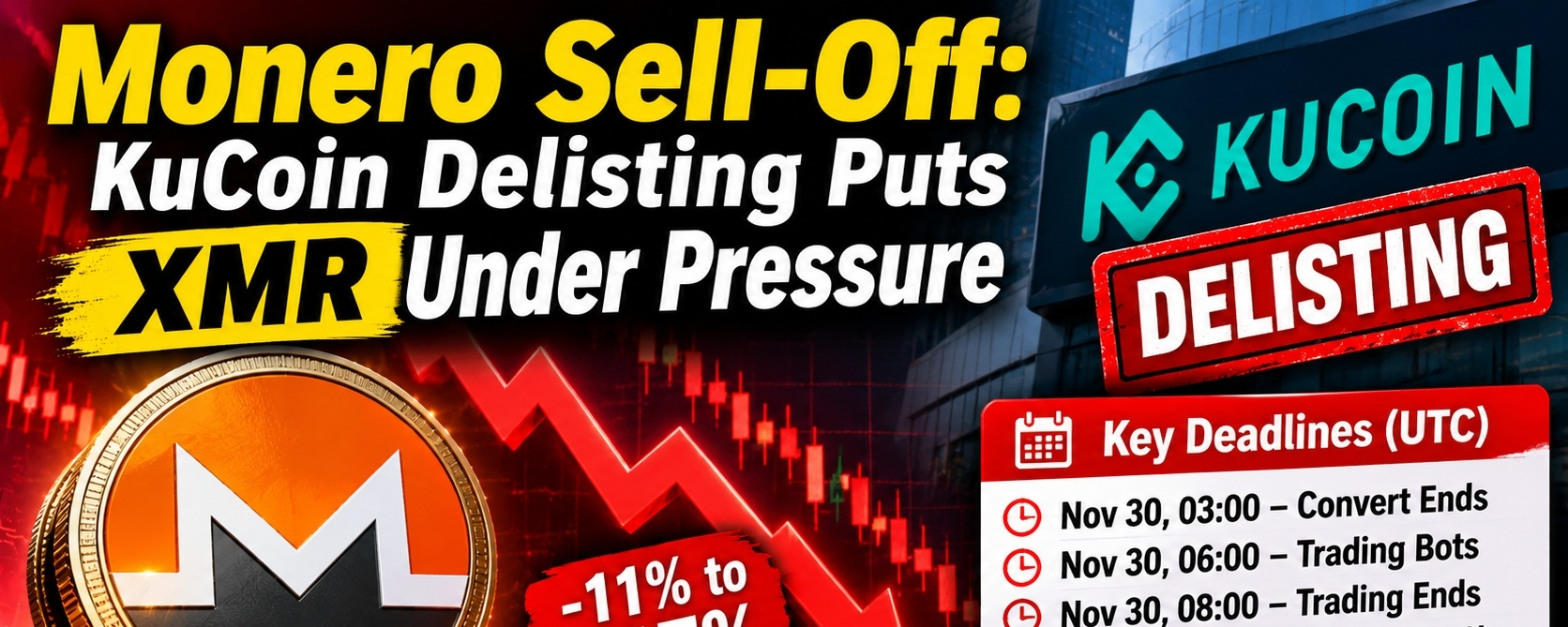
Monero (XMR) suffered a sharp double-digit sell-off 📉 after KuCoin announced on November 26 that it will delist the privacy-focused coin. Reported losses ranged from about 11% to 17%, depending on when the price was measured. 😮
📊 What Happened?
KuCoin will remove four spot pairs: XMR/USDT, XMR/USDC, XMR/ETH and XMR/BTC. The exchange cited its platform policies but gave no specific reason. 🤔
⏰ Key deadlines (UTC):
• 🔄 November 30, 03:00: XMR support on KuCoin Convert ends.
• 🤖 November 30, 06:00: XMR trading bots shut down.
• 🛑 November 30, 08:00: spot trading ends and open orders are cancelled.
• 🏦 November 30: XMR stops counting as VIP Loan collateral.
• 📤 December 31, 08:00: withdrawals are scheduled to close, though KuCoin may close them earlier.
Deposits are already closed. 🔒 The move follows MEXC, which suspended XMR spot trading and delisted its perpetual futures earlier in November.
⚠️ Why Does This Matter?
KuCoin was a major home for XMR trading. 💧 CoinGecko data cited by BlockchainReporter showed it handling about 60% of the reported volume it tracked across major pairs on November 26. Exchange-reported volumes are unaudited, so treat that figure as indicative.
Losing such a venue can mean:
• 🚪 Fewer places to buy and sell XMR
• 💦 Thinner liquidity
• ↔️ Wider spreads
• 🎢 Sharper price swings
• ⚡ Extra pressure on borrowers who must replace XMR collateral or risk liquidation
The delisting is not the whole story. 🔍 XMR was already falling before the announcement, down from its early-November levels.
🕵️ The Privacy Coin Challenge
Monero hides transaction amounts and wallet addresses by default. 🛡️ That protects user privacy, but it also draws regulatory scrutiny. Binance delisted XMR in 2024, and Kraken ended support in the European Economic Area later that year.
🇪🇺 From July 10, 2027, the EU’s anti-money-laundering rules will bar regulated crypto firms from supporting accounts involving anonymity-enhancing coins. The rules do not ban individuals from holding them in self-custody wallets. KuCoin has not linked its decision to these rules.
🔮 What’s Next for XMR?
Monero has not disappeared from the market. 🌐 Venues including Kraken (outside the European Economic Area), HTX, Bitfinex, Poloniex and WhiteBIT were still listed as options after the KuCoin notice. Availability depends on your location.
👀 What traders should watch:
• 📌 Whether the price stabilizes after trading closes on November 30
• 📊 Whether volume moves smoothly to other exchanges
• ↔️ Whether spreads widen
• 📰 Whether more platforms announce delistings
🧳 KuCoin users: cancel open orders, decide whether to sell or withdraw, and avoid waiting until the final day. Use only official KuCoin notices and double-check your wallet address.
🏁 Final Thoughts
This sell-off shows how much exchange access can influence a cryptocurrency’s price. 💡 Monero keeps its privacy-focused identity, but shrinking access to centralized exchanges is a real challenge. Whether this is a temporary shock or part of a longer trend will depend on liquidity, regulation and user demand. Manage risk carefully and do your own research. 🧠
💬 Is this a temporary setback for Monero, or will more exchanges follow? 👇#WhaleHolds1.38MHYPELongUp$34M #SpeculatorsCutNasdaqFuturesBy17%In6Weeks #VitalikWantsWalletChipDesignsOpened #PBOCDefinesHighRateDepositsCutsCDThreshold
⚠️
#Monero #XMR #KuCoin #PrivacyCoins #CryptoNews
Sources, checked November 28, 2026: BlockchainReporter · Cointelegraph via CryptoNews · Crypto Briefing
🚨 Monero Sell-Off: KuCoin Delisting Puts XMR Under Pressure
#MoneroFalls13%OnDelistings
Monero (XMR) suffered a sharp double-digit sell-off 📉 after KuCoin announced on November 26 that it will delist the privacy-focused coin. Reported losses ranged from about 11% to 17%, depending on when the price was measured. 😮
📊 What Happened?
KuCoin will remove four spot pairs: XMR/USDT, XMR/USDC, XMR/ETH and XMR/BTC. The exchange cited its platform policies but gave no specific reason. 🤔
⏰ Key deadlines (UTC):
• 🔄 November 30, 03:00: XMR support on KuCoin Convert ends.
• 🤖 November 30, 06:00: XMR trading bots shut down.
• 🛑 November 30, 08:00: spot trading ends and open orders are cancelled.
• 🏦 November 30: XMR stops counting as VIP Loan collateral.
• 📤 December 31, 08:00: withdrawals are scheduled to close, though KuCoin may close them earlier.
Deposits are already closed. 🔒 The move follows MEXC, which suspended XMR spot trading and delisted its perpetual futures earlier in November.
⚠️ Why Does This Matter?
KuCoin was a major home for XMR trading. 💧 CoinGecko data cited by BlockchainReporter showed it handling about 60% of the reported volume it tracked across major pairs on November 26. Exchange-reported volumes are unaudited, so treat that figure as indicative.
Losing such a venue can mean:
• 🚪 Fewer places to buy and sell XMR
• 💦 Thinner liquidity
• ↔️ Wider spreads
• 🎢 Sharper price swings
• ⚡ Extra pressure on borrowers who must replace XMR collateral or risk liquidation
The delisting is not the whole story. 🔍 XMR was already falling before the announcement, down from its early-November levels.
🕵️ The Privacy Coin Challenge
Monero hides transaction amounts and wallet addresses by default. 🛡️ That protects user privacy, but it also draws regulatory scrutiny. Binance delisted XMR in 2024, and Kraken ended support in the European Economic Area later that year.
🇪🇺 From July 10, 2027, the EU’s anti-money-laundering rules will bar regulated crypto firms from supporting accounts involving anonymity-enhancing coins. The rules do not ban individuals from holding them in self-custody wallets. KuCoin has not linked its decision to these rules.
🔮 What’s Next for XMR?
Monero has not disappeared from the market. 🌐 Venues including Kraken (outside the European Economic Area), HTX, Bitfinex, Poloniex and WhiteBIT were still listed as options after the KuCoin notice. Availability depends on your location.
👀 What traders should watch:
• 📌 Whether the price stabilizes after trading closes on November 30
• 📊 Whether volume moves smoothly to other exchanges
• ↔️ Whether spreads widen
• 📰 Whether more platforms announce delistings
🧳 KuCoin users: cancel open orders, decide whether to sell or withdraw, and avoid waiting until the final day. Use only official KuCoin notices and double-check your wallet address.
🏁 Final Thoughts
This sell-off shows how much exchange access can influence a cryptocurrency’s price. 💡 Monero keeps its privacy-focused identity, but shrinking access to centralized exchanges is a real challenge. Whether this is a temporary shock or part of a longer trend will depend on liquidity, regulation and user demand. Manage risk carefully and do your own research. 🧠
💬 Is this a temporary setback for Monero, or will more exchanges follow? 👇#WhaleHolds1.38MHYPELongUp$34M #SpeculatorsCutNasdaqFuturesBy17%In6Weeks #VitalikWantsWalletChipDesignsOpened #PBOCDefinesHighRateDepositsCutsCDThreshold
⚠️
#Monero #XMR #KuCoin #PrivacyCoins #CryptoNews
Sources, checked November 28, 2026: BlockchainReporter · Cointelegraph via CryptoNews · Crypto Briefing
5
Log in to explore more content
Join global crypto users on Binance Square
⚡️ Get latest and useful information about crypto.
💬 Trusted by the world’s largest crypto exchange.
👍 Discover real insights from verified creators.
Email / Phone number
Trending Topics
1
#EvolveAtBinanceBlockchainWeek
1.4M views
15,156 Discussing
2
#MoneroFalls13%OnDelistings
74,413 views
587 Discussing
3
#EthereumGlamsterdamKeepsStorageFeeChange
30,847 views
309 Discussing
4
#ClaudeAccusedOfDroppingUserPreferences
0 views
0 Discussing
5
#FearGreedIndexFallsTo10ExtremeFear
0 views
3 Discussing
6
#WhaleHolds1.38MHYPELongUp$34M
5 views
22 Discussing
7
#SpeculatorsCutNasdaqFuturesBy17%In6Weeks
25 views
3 Discussing
8
#VitalikWantsWalletChipDesignsOpened
9 views
5 Discussing
9
#PBOCDefinesHighRateDepositsCutsCDThreshold
0 views
1 Discussing
10
#Citi$35BRiskAssetErrorTriggersExits
186 views
23 Discussing