
#nasdaq100fivedayavgintradayvolatilityhits3
nasdaq100fivedayavgintradayvolatilityhits3
199 views
13 Discussing
Hot
Latest

·
--
$QQQ follows a Nasdaq 100 that closed Wednesday less than 1% lower. So how did the same week produce its widest swings since April 2025?
Short answer: the close hid the damage. The stress sat inside each day, and that is the part a leveraged trader actually lives through.
Inside the week (The Kobeissi Letter, as reported by BlockBlah on Nov 27):
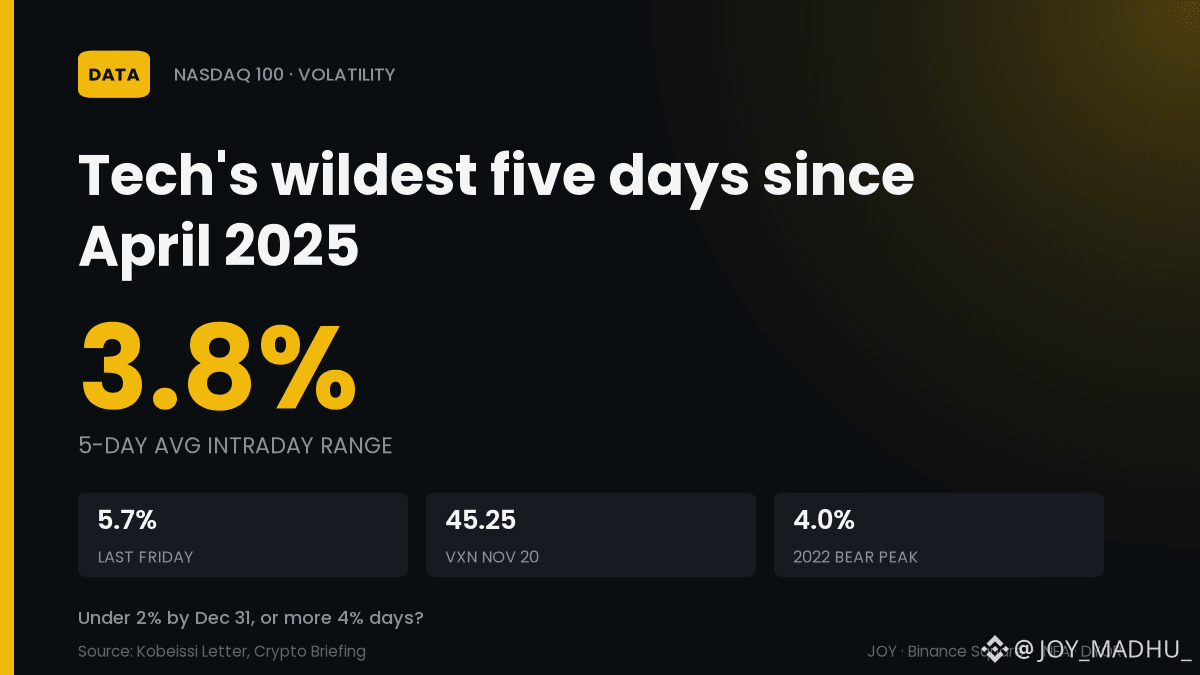
- The Nasdaq 100's average intraday range over five sessions hit 3.8%, the highest since April 2025 and the second-highest since the 2022 bear market after a 4.0% peak.
- Wednesday's range was 4.2%. The Friday before reached 5.7%, the widest single day since April 9, 2025.
- BeInCrypto adds that on Wednesday the index fell nearly 5% in early trading, then closed less than 1% lower.
Why a calm close can mislead:
- Intraday range is the gap between a day's high and low. A chart of closing prices does not show it.
- Leverage multiplies that gap. A 4.2% swing against a 5x position would cost about 21% of its margin, by my math, even on a day that ends near flat.
For scale, Kobeissi puts this gauge's past peaks at 7.7% in 2020, 8.9% in 2008 and 10.2% in January 2001. My read: this week is high, not extreme.
What I am watching:
- Whether the next five-day reading drops back under 3.8% or climbs toward the 4.0% peak Kobeissi cites.
- The QQQ TradFi perpetual on Binance Futures: at 11:32 UTC today it read 650.11 USDT, +2.0% over the rolling 24h, with a 24h low of 636.52. That low is my first reference point.
My rule from weeks like this: I size for the day's range, not for the close.
Follow if you want the numbers behind the headline, without the hype.
#Nasdaq100FiveDayAvgIntradayVolatilityHits3.8% #Write2Earn
When a market swings hard but closes near flat, how do you decide your position size, and why?
98

everyone thinks rotating into tradfi is the responsible play when crypto is sitting in extreme fear but actually that's how a lot of natives get wrecked a second time treating stocks like a slower $BTC.
you've been watching $ETH bleed for weeks and the fear index is at 11 so jumping into "real" markets feels like growing up. ngl the worst part is not knowing if you should just sit in $USDT or start pretending you understand equities overnight.
this already played out in 2022. people got tired of the casino, piled into bonds and indexes, then the fed hiked and those "safe" bags drew down because nobody learned duration risk. now nasdaq's five day average intraday vol is hitting 3 percent and the same crowd is back calling it beginner friendly tradfi. reading a crypto chart does not mean you can price rates or earnings ser.
tradfi rugs slower but it still rugs. lower daily range is not lower risk, it just means you notice the damage later. if you're coming from degen land the trap is assuming this is easy mode.
anyone else seeing crypto people turn into overnight stock analysts in this fear?
#TradFiForBeginners #Nasdaq100FiveDayAvgIntradayVolatilityHits3 #CanMarketsReboundAfterThanksgiving
everyone thinks rotating into tradfi is the responsible play when crypto is sitting in extreme fear but actually that's how a lot of natives get wrecked a second time treating stocks like a slower $BTC .
you've been watching $ETH bleed for weeks and the fear index is at 11 so jumping into "real" markets feels like growing up. ngl the worst part is not knowing if you should just sit in $USDT or start pretending you understand equities overnight.
this already played out in 2022. people got tired of the casino, piled into bonds and indexes, then the fed hiked and those "safe" bags drew down because nobody learned duration risk. now nasdaq's five day average intraday vol is hitting 3 percent and the same crowd is back calling it beginner friendly tradfi. reading a crypto chart does not mean you can price rates or earnings ser.
tradfi rugs slower but it still rugs. lower daily range is not lower risk, it just means you notice the damage later. if you're coming from degen land the trap is assuming this is easy mode.
anyone else seeing crypto people turn into overnight stock analysts in this fear?
#TradFiForBeginners #Nasdaq100FiveDayAvgIntradayVolatilityHits3 #CanMarketsReboundAfterThanksgiving

Here's what happened when the Nasdaq 100's five-day average intraday volatility hit 3, and almost nobody on the crypto side treated it like a warning.
You know that feeling when you finally buy the dip in $BTC only to watch it get sliced again two hours later. Entries start looking like traps and you never quite know when to get out.
This pattern has a history. In August 2024 the yen carry unwind sent Nasdaq vol through the roof and $ETH followed with a liquidation cascade that punished anyone still leveraged. March 2020 was the same story at a larger scale.
When the Nasdaq 100 averages 3 percent inside the day for a full week, crypto doesn't mirror it. It multiplies it. That is why Fear and Greed is sitting at 11 right now and so much capital is hiding in $USDT.
The lesson from those earlier episodes is that this kind of vol rarely resolves cleanly. It chops, it fakes a bounce, then it tests whoever got comfortable too soon. Thin Thanksgiving liquidity just makes the next move sharper.
Where do you think this goes from here?
#Nasdaq100FiveDayAvgIntradayVolatilityHits3 #CanMarketsReboundAfterThanksgiving #TradFiForBeginners

·
--
Have you noticed how Nasdaq volatility is starting to look more like a crypto dump than a stock market move?
Crypto traders keep getting caught off guard. They dump $BTC at the lows thinking it's just another on-chain event, missing how traditional market swings force panic exits at the worst times.
The Nasdaq 100 five-day average intraday volatility just hit 3. That is not a quiet tape. In Extreme Fear conditions it becomes a case study of how TradFi stress now transmits straight into crypto without much lag. $ETH has been tracking those Nasdaq sessions almost tick for tick this week.
Same pattern is showing up in $SOL. The narrative that crypto is uncorrelated is looking outdated when the data from this week is this clear. Thin volume around Thanksgiving only adds fuel.
Anyone else seeing this bleed into their positions, or do you still believe the markets are separate?
#Nasdaq100FiveDayAvgIntradayVolatilityHits3 #CanMarketsReboundAfterThanksgiving #TradFiForBeginners
Have you noticed how Nasdaq volatility is starting to look more like a crypto dump than a stock market move?
Crypto traders keep getting caught off guard. They dump $BTC at the lows thinking it's just another on-chain event, missing how traditional market swings force panic exits at the worst times.
The Nasdaq 100 five-day average intraday volatility just hit 3. That is not a quiet tape. In Extreme Fear conditions it becomes a case study of how TradFi stress now transmits straight into crypto without much lag. $ETH has been tracking those Nasdaq sessions almost tick for tick this week.
Same pattern is showing up in $SOL . The narrative that crypto is uncorrelated is looking outdated when the data from this week is this clear. Thin volume around Thanksgiving only adds fuel.
Anyone else seeing this bleed into their positions, or do you still believe the markets are separate?
#Nasdaq100FiveDayAvgIntradayVolatilityHits3 #CanMarketsReboundAfterThanksgiving #TradFiForBeginners


·
--
#Nasdaq100FiveDayAvgIntradayVolatilityHits3.8%
🎢 3.8% Daily Swings: Nasdaq's Wildest Week Since April 2025
Tech is swinging like a stress market, with AI megacaps leading the whipsaw.
📊 5-day avg range 3.8%, 2nd-highest since the 2022 bear market
📈 Last Friday's range hit 5.7%, the widest since April 9, 2025
📉 Nvidia: +31.5% Monday to $165.05, then $149.30 by Wednesday
⚠️ VXN fear gauge hit 45.25 on Nov 20, still 38.53 on Nov 25
My read: wide ranges mean thin conviction, which cuts both ways.
Range back under 2% by Dec 31, or more 4% days first? 👇
$NVDA
#Nasdaq100FiveDayAvgIntradayVolatilityHits3.8% #Nasdaq #StockMarket
165

·
--
Article
Nasdaq 100’s five-day average intraday volatility rises to 3.8%: BTC’s rebound still doesn’t mean the risk is overNasdaq 100’s five-day average intraday volatility rises to 3.8%: BTC’s rebound still doesn’t mean the risk is over
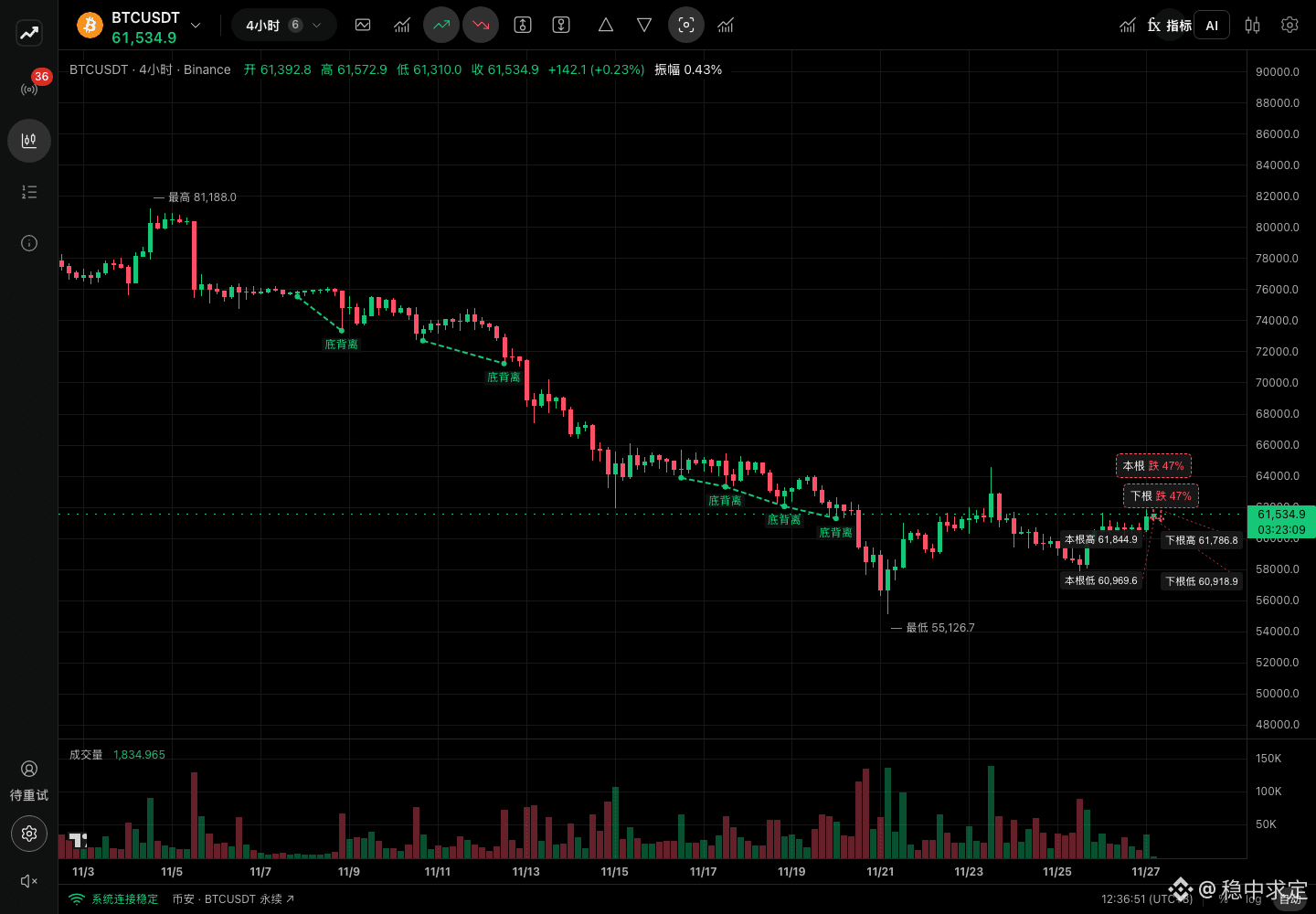
At noon Beijing time on November 27, `#Nasdaq100FiveDayAvgIntradayVolatilityHits3.8%` ranked third on Binance Square’s trends page, which showed around 42 people discussing it. The point isn’t “Nasdaq volatility is up, so BTC must fall.” It’s this: as intraday swings in tech stocks pick up again, can BTC’s intraday rebound withstand the next test of risk appetite?
First, let’s clarify what the figures show. A market update posted on November 27 by Binance News’s officially verified account said the Nasdaq 100’s average intraday range over the past five trading days reached 3.8%, its highest level since April 2025. The range was about 4.2% on Wednesday and around 5.7% last Friday. The report cited data from The Kobeissi Letter and used earlier crisis periods as historical comparisons. This indicates elevated volatility; it does not mean that “the Nasdaq has confirmed it is entering a bear market,” nor is it a standalone trading signal for BTC.
Nasdaq 100’s five-day average intraday volatility rises to 3.8%: BTC’s rebound still doesn’t mean the risk is over
Nasdaq 100’s five-day average intraday volatility rises to 3.8%: BTC’s rebound still doesn’t mean the risk is over
At noon Beijing time on November 27, `#Nasdaq100FiveDayAvgIntradayVolatilityHits3.8%` ranked third on Binance Square’s trends page, which showed around 42 people discussing it. The point isn’t “Nasdaq volatility is up, so BTC must fall.” It’s this: as intraday swings in tech stocks pick up again, can BTC’s intraday rebound withstand the next test of risk appetite?
First, let’s clarify what the figures show. A market update posted on November 27 by Binance News’s officially verified account said the Nasdaq 100’s average intraday range over the past five trading days reached 3.8%, its highest level since April 2025. The range was about 4.2% on Wednesday and around 5.7% last Friday. The report cited data from The Kobeissi Letter and used earlier crisis periods as historical comparisons. This indicates elevated volatility; it does not mean that “the Nasdaq has confirmed it is entering a bear market,” nor is it a standalone trading signal for BTC.
247
·
--
Last week a former bank trader told me he was running his $BTC book with the same risk rules he used on the Nasdaq.
That's how a lot of TradFi beginners get hurt. They assume the ETF wrapper made crypto behave like an equity, then they have no idea when to exit once fear takes over and the tape doesn't stop.
Here's the case. After spot ETFs went live, traditional capital showed up and plenty of people treated that as confirmation it was now a normal asset. Same position size. Same stops. Then Fear and Greed dropped to 11. Those stops got run in hours. $USDT became the only place that felt safe while $ETH flushed with New York still asleep. Their models never had a field for weekend liquidations or 24/7 sentiment.
What most people missed is the mismatch in time and structure. Circuit breakers exist on the Nasdaq. They do not exist here. Copying a hedge fund's IBIT position does not give you their capital or their ability to sit through a 40 percent drawdown. Extreme fear is when that difference becomes expensive.
The wrapper changed. The volatility did not.
Where do you think this goes from here?
#TradFiForBeginners #Nasdaq100FiveDayAvgIntradayVolatilityHits3 #CanMarketsReboundAfterThanksgiving

1
Log in to explore more content
Join global crypto users on Binance Square
⚡️ Get latest and useful information about crypto.
💬 Trusted by the world’s largest crypto exchange.
👍 Discover real insights from verified creators.
Email / Phone number
Trending Topics
1
#EvolveAtBinanceBlockchainWeek
2.7M views
21,690 Discussing
2
#IBSGovAccountMints1BTokensDrains5.71M
29,705 views
339 Discussing
3
#OPECReportedlyKeepsOilQuotasUnchangedForQ1
4,437 views
108 Discussing
4
#SunReportedlyOffered4BToRescueFTX
3,699 views
51 Discussing
5
#XRPLAmendmentsEnterActivationWindow
11,218 views
122 Discussing
6
#WorldLibertyActsToCutLiquidationRisk
79,992 views
657 Discussing
7
#TrumpMediaCouldFace883.5MRepaymentDemand
31,040 views
164 Discussing
8
#LiquidHackerMoves598BTC
57,721 views
410 Discussing
9
#BitcoinETFsExtendOutflowStreakToEightDays
125,664 views
953 Discussing
10
#BitcoinETFsSee$5.39BNetOutflowRecord
4,001 views
18 Discussing