
#moneymatrixx
moneymatrixx
196 views
15 Discussing
Hot
Latest

·
--
Article
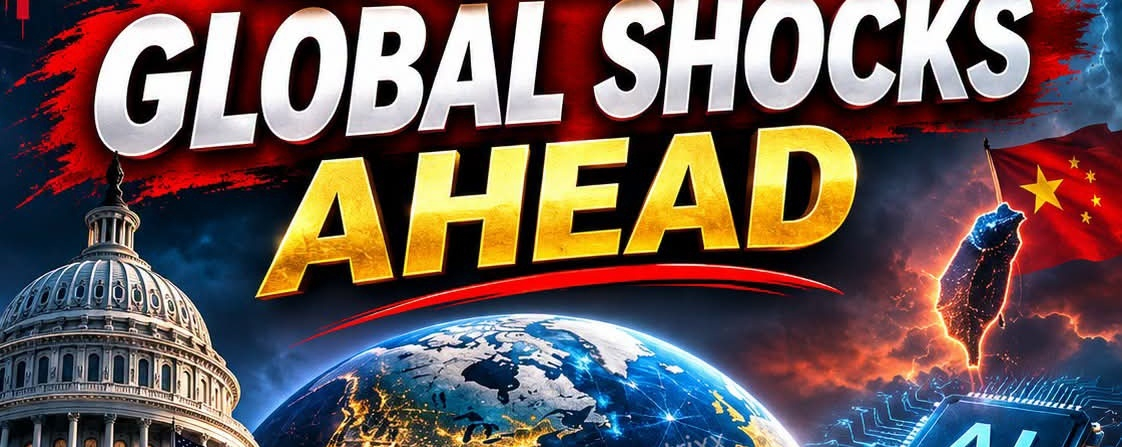
2027 COULD CHANGE EVERYTHING: 10 GLOBAL SHOCKS THAT MAY HIT YOUR MONEY, STOCKS & INVESTMENTS!🚨
Wall Street is watching. Global debt is rising. Artificial intelligence is reshaping entire industries. And the next major financial shock could come from somewhere investors least expect.
From the US stock market and Federal Reserve interest rates to Bitcoin, inflation, oil prices, and AI stocks, 2027 could become a defining year for the global economy.
Here are 10 major trends every American investor should watch. 👇
1. AMERICA ENTERS A NEW POLITICAL ERA
As the race to succeed President Donald Trump begins, Washington could face more political uncertainty, executive actions, and policy battles.
For investors, changing expectations around US tax policy, tariffs, government spending, and financial regulations could influence stock market volatility and business confidence.
⚡ 2. ENERGY PRICES COULD SHAKE THE ECONOMY
The consequences of the Iran conflict could continue disrupting global oil supplies, energy markets, and international trade.
Higher crude oil and gasoline prices could increase transportation costs, push consumer inflation higher, and squeeze American household budgets.
The big question: Could another energy shock complicate the Federal Reserve's fight against inflation?
🤖 3. THE AI INVESTMENT BOOM FACES A REALITY CHECK
Artificial intelligence remains one of Wall Street's biggest investment themes.
But massive AI infrastructure spending, rising corporate borrowing, and uncertain returns are creating financial risks.
Companies such as NVIDIA, Microsoft, Alphabet, and other AI-related businesses face growing pressure to turn enormous capital investments into sustainable profits.
AI technology may continue advancing even if AI stock valuations experience a correction.
💰 4. GOVERNMENT DEBT COULD BECOME A MARKET PROBLEM
Government borrowing is becoming an increasingly important financial market risk.
If investors demand higher yields to purchase government bonds, borrowing costs could rise across the economy.
That matters for:
🏠 Mortgage interest rates
💳 Credit card borrowing costs
🚗 Auto loans
📉 Stock market valuations
🏦 Corporate financing
Rising Treasury yields could make it harder for the Federal Reserve to ease financial conditions.
🌍 5. EUROPE COULD FACE A FINANCIAL SHOCK
France's 2027 presidential election could create significant political uncertainty across Europe.
Concerns about government debt, fiscal policy, and political instability could put pressure on European bond markets.
Financial stress in major economies can spread through global banking systems, currency markets, and international investment portfolios.
6. TAIWAN TENSIONS COULD DISRUPT GLOBAL TECHNOLOGY
2027 is widely discussed as a military readiness milestone for China concerning Taiwan.
That does NOT mean an invasion is scheduled or inevitable.
However, escalating tensions could threaten semiconductor manufacturing, global technology supply chains, and international trade.
American technology companies rely heavily on advanced semiconductor production.
A serious disruption could affect AI chips, consumer electronics, automotive manufacturing, and global equity markets.
🌡️ 7. EXTREME WEATHER COULD DRIVE HIGHER COSTS
Another year of severe heat, droughts, and wildfires could create economic challenges.
Agricultural disruptions, fertilizer shortages, and higher energy expenses could put pressure on food prices.
For American households, this could mean continued challenges involving grocery bills, insurance premiums, and the overall cost of living.
Renewable energy investments and energy security could become increasingly important economic themes.
💊 8. WEIGHT-LOSS DRUGS COULD TRANSFORM CONSUMER SPENDING
The growing popularity of GLP-1 weight-loss medications is creating opportunities beyond healthcare.
Potential beneficiaries include pharmaceutical companies, fitness businesses, clothing retailers, and wellness brands.
As consumer behavior changes, investors may need to rethink traditional assumptions about healthcare stocks and retail spending.
🚀 9. THE SPACE ECONOMY COULD ENTER A NEW PHASE
Cheaper satellite launches, private space stations, and commercial space infrastructure could unlock new investment opportunities.
Companies involved in aerospace technology, satellite communications, and advanced computing may benefit from long-term industry growth.
But promising technology does not automatically translate into profitable investments.
📉 10. THE NEXT MARKET CORRECTION MAY COME FROM CONNECTED RISKS
This is the trend investors should understand most.
Imagine the following scenario:
Oil prices rise.
Inflation becomes harder to control.
Bond yields increase.
Borrowing becomes more expensive.
AI companies face pressure to justify spending.
Investors reduce exposure to risky assets.
Suddenly, several seemingly unrelated problems begin reinforcing each other.
That could affect the S&P 500, Nasdaq, growth stocks, retirement portfolios, and potentially cryptocurrency markets.
Bitcoin, Ethereum, and other digital assets may also experience volatility as global liquidity conditions change.
But none of these outcomes is guaranteed.
💡 WHAT SHOULD AMERICAN INVESTORS DO BEFORE 2027?
The goal isn't to predict every market movement. It's to prepare for multiple possible outcomes.
✅ Review your investment portfolio diversification.
✅ Monitor Federal Reserve policy and Treasury bond yields.
✅ Understand the risks of highly valued AI stocks.
✅ Maintain an appropriate emergency fund.
✅ Avoid excessive investment leverage.
✅ Evaluate long-term opportunities without chasing market hype.
Remember: A booming technology sector does not guarantee a booming stock market.
And a frightening economic forecast does not guarantee a recession.
📊 THE BIG QUESTION FOR 2027:
Which risk could have the biggest impact on YOUR money?
A. 🤖 AI stock market crash
B. 💰 US debt and interest rates
C. 🌍 Geopolitical conflict
D. 📉 Inflation and recession
👇 COMMENT A, B, C, OR D!
Follow MoneyMatrixx for US stock market news, Bitcoin updates, personal finance insights, investing strategies, and global economic trends.
#MoneyMatrixx #StockMarket2027 #USEconomy #Investing #PersonalFinance #FinancialMarkets #2027 #breakingnews #wallstreet #japan #nikkei #korea #kospi #taiwan #india #stockmarket #prediction #oil #crude #gold #silver #crypto #ai #bitcoin #FederalReserve
Disclaimer: These are potential scenarios, not guaranteed predictions. This is not financial advice, DYOR.
2027 COULD CHANGE EVERYTHING: 10 GLOBAL SHOCKS THAT MAY HIT YOUR MONEY, STOCKS & INVESTMENTS!
🚨
Wall Street is watching. Global debt is rising. Artificial intelligence is reshaping entire industries. And the next major financial shock could come from somewhere investors least expect.
From the US stock market and Federal Reserve interest rates to Bitcoin, inflation, oil prices, and AI stocks, 2027 could become a defining year for the global economy.
Here are 10 major trends every American investor should watch. 👇
1. AMERICA ENTERS A NEW POLITICAL ERA
As the race to succeed President Donald Trump begins, Washington could face more political uncertainty, executive actions, and policy battles.
For investors, changing expectations around US tax policy, tariffs, government spending, and financial regulations could influence stock market volatility and business confidence.
⚡ 2. ENERGY PRICES COULD SHAKE THE ECONOMY
The consequences of the Iran conflict could continue disrupting global oil supplies, energy markets, and international trade.
Higher crude oil and gasoline prices could increase transportation costs, push consumer inflation higher, and squeeze American household budgets.
The big question: Could another energy shock complicate the Federal Reserve's fight against inflation?
🤖 3. THE AI INVESTMENT BOOM FACES A REALITY CHECK
Artificial intelligence remains one of Wall Street's biggest investment themes.
But massive AI infrastructure spending, rising corporate borrowing, and uncertain returns are creating financial risks.
Companies such as NVIDIA, Microsoft, Alphabet, and other AI-related businesses face growing pressure to turn enormous capital investments into sustainable profits.
AI technology may continue advancing even if AI stock valuations experience a correction.
💰 4. GOVERNMENT DEBT COULD BECOME A MARKET PROBLEM
Government borrowing is becoming an increasingly important financial market risk.
If investors demand higher yields to purchase government bonds, borrowing costs could rise across the economy.
That matters for:
🏠 Mortgage interest rates
💳 Credit card borrowing costs
🚗 Auto loans
📉 Stock market valuations
🏦 Corporate financing
Rising Treasury yields could make it harder for the Federal Reserve to ease financial conditions.
🌍 5. EUROPE COULD FACE A FINANCIAL SHOCK
France's 2027 presidential election could create significant political uncertainty across Europe.
Concerns about government debt, fiscal policy, and political instability could put pressure on European bond markets.
Financial stress in major economies can spread through global banking systems, currency markets, and international investment portfolios.
6. TAIWAN TENSIONS COULD DISRUPT GLOBAL TECHNOLOGY
2027 is widely discussed as a military readiness milestone for China concerning Taiwan.
That does NOT mean an invasion is scheduled or inevitable.
However, escalating tensions could threaten semiconductor manufacturing, global technology supply chains, and international trade.
American technology companies rely heavily on advanced semiconductor production.
A serious disruption could affect AI chips, consumer electronics, automotive manufacturing, and global equity markets.
🌡️ 7. EXTREME WEATHER COULD DRIVE HIGHER COSTS
Another year of severe heat, droughts, and wildfires could create economic challenges.
Agricultural disruptions, fertilizer shortages, and higher energy expenses could put pressure on food prices.
For American households, this could mean continued challenges involving grocery bills, insurance premiums, and the overall cost of living.
Renewable energy investments and energy security could become increasingly important economic themes.
💊 8. WEIGHT-LOSS DRUGS COULD TRANSFORM CONSUMER SPENDING
The growing popularity of GLP-1 weight-loss medications is creating opportunities beyond healthcare.
Potential beneficiaries include pharmaceutical companies, fitness businesses, clothing retailers, and wellness brands.
As consumer behavior changes, investors may need to rethink traditional assumptions about healthcare stocks and retail spending.
🚀 9. THE SPACE ECONOMY COULD ENTER A NEW PHASE
Cheaper satellite launches, private space stations, and commercial space infrastructure could unlock new investment opportunities.
Companies involved in aerospace technology, satellite communications, and advanced computing may benefit from long-term industry growth.
But promising technology does not automatically translate into profitable investments.
📉 10. THE NEXT MARKET CORRECTION MAY COME FROM CONNECTED RISKS
This is the trend investors should understand most.
Imagine the following scenario:
Oil prices rise.
Inflation becomes harder to control.
Bond yields increase.
Borrowing becomes more expensive.
AI companies face pressure to justify spending.
Investors reduce exposure to risky assets.
Suddenly, several seemingly unrelated problems begin reinforcing each other.
That could affect the S&P 500, Nasdaq, growth stocks, retirement portfolios, and potentially cryptocurrency markets.
Bitcoin, Ethereum, and other digital assets may also experience volatility as global liquidity conditions change.
But none of these outcomes is guaranteed.
💡 WHAT SHOULD AMERICAN INVESTORS DO BEFORE 2027?
The goal isn't to predict every market movement. It's to prepare for multiple possible outcomes.
✅ Review your investment portfolio diversification.
✅ Monitor Federal Reserve policy and Treasury bond yields.
✅ Understand the risks of highly valued AI stocks.
✅ Maintain an appropriate emergency fund.
✅ Avoid excessive investment leverage.
✅ Evaluate long-term opportunities without chasing market hype.
Remember: A booming technology sector does not guarantee a booming stock market.
And a frightening economic forecast does not guarantee a recession.
📊 THE BIG QUESTION FOR 2027:
Which risk could have the biggest impact on YOUR money?
A. 🤖 AI stock market crash
B. 💰 US debt and interest rates
C. 🌍 Geopolitical conflict
D. 📉 Inflation and recession
👇 COMMENT A, B, C, OR D!
Follow MoneyMatrixx for US stock market news, Bitcoin updates, personal finance insights, investing strategies, and global economic trends.
#MoneyMatrixx #StockMarket2027 #USEconomy #Investing #PersonalFinance #FinancialMarkets #2027 #breakingnews #wallstreet #japan #nikkei #korea #kospi #taiwan #india #stockmarket #prediction #oil #crude #gold #silver #crypto #ai #bitcoin #FederalReserve
Disclaimer: These are potential scenarios, not guaranteed predictions. This is not financial advice, DYOR.
34

·
--

Article
July 1 could become one of the most important dates of the year for Ripple, XRP, and RLUSD... yet al🚨
While most investors are focused on XRP price action, a regulatory deadline in California is quietly approaching that could impact Ripple's operations in the largest state economy in the United States.
On July 1, 2026, California's Digital Financial Assets Law (DFAL) officially takes effect.
Here's the part raising questions:
As of March 2026, no Ripple entity appeared among the California Department of Financial Protection and Innovation's disclosed DFAL applicants.
That doesn't necessarily mean Ripple hasn't filed. Applications submitted through the Nationwide Multistate Licensing System (NMLS) may not appear immediately in public records.
Still, Ripple's California status remains unverified as the deadline approaches.
What's at stake?
DFAL functions as a licensing framework for digital asset businesses. The safe harbor is narrow: only a completed application submitted before July 1 preserves the right to continue operating. A partial filing doesn't qualify.
The law covers exchanges, custody, transfers, and issuance, all activities tied to Ripple's business and its RLUSD stablecoin.
Ripple has publicly engaged with regulators, submitted comments to the DFPI in early 2026, and argued that a DFAL license should satisfy overlapping Money Transmitter License requirements. The company already holds more than 40 money transmitter licenses nationwide and operates as a limited-purpose trust company in New York.
So what happens next?
📈 Bull Case:
Ripple confirms a completed DFAL application by July 1. Operations continue normally, RLUSD adoption strengthens, and regulatory uncertainty fades.
➡️ Base Case:
The filing exists but remains absent from public disclosures, creating temporary uncertainty.
📉 Bear Case:
No completed application emerges and regulators signal enforcement. Ripple may need to pause or restructure California-facing RLUSD and custody services, creating pressure on XRP sentiment.
After years dominated by SEC headlines, the biggest XRP story may now be operational compliance rather than securities law.
If Ripple hasn't publicly confirmed its DFAL status by July 1, would that change your confidence in XRP's long-term outlook?
#XRP #Ripple #RLUSD #CryptoNews #Cryptocurrency #Blockchain #DigitalAssets #Fintech #Investing #CryptoRegulation $XRP #XRPCommunity #Finance e #moneymatrixx
July 1 could become one of the most important dates of the year for Ripple, XRP, and RLUSD... yet al
🚨
While most investors are focused on XRP price action, a regulatory deadline in California is quietly approaching that could impact Ripple's operations in the largest state economy in the United States.
On July 1, 2026, California's Digital Financial Assets Law (DFAL) officially takes effect.
Here's the part raising questions:
As of March 2026, no Ripple entity appeared among the California Department of Financial Protection and Innovation's disclosed DFAL applicants.
That doesn't necessarily mean Ripple hasn't filed. Applications submitted through the Nationwide Multistate Licensing System (NMLS) may not appear immediately in public records.
Still, Ripple's California status remains unverified as the deadline approaches.
What's at stake?
DFAL functions as a licensing framework for digital asset businesses. The safe harbor is narrow: only a completed application submitted before July 1 preserves the right to continue operating. A partial filing doesn't qualify.
The law covers exchanges, custody, transfers, and issuance, all activities tied to Ripple's business and its RLUSD stablecoin.
Ripple has publicly engaged with regulators, submitted comments to the DFPI in early 2026, and argued that a DFAL license should satisfy overlapping Money Transmitter License requirements. The company already holds more than 40 money transmitter licenses nationwide and operates as a limited-purpose trust company in New York.
So what happens next?
📈 Bull Case:
Ripple confirms a completed DFAL application by July 1. Operations continue normally, RLUSD adoption strengthens, and regulatory uncertainty fades.
➡️ Base Case:
The filing exists but remains absent from public disclosures, creating temporary uncertainty.
📉 Bear Case:
No completed application emerges and regulators signal enforcement. Ripple may need to pause or restructure California-facing RLUSD and custody services, creating pressure on XRP sentiment.
After years dominated by SEC headlines, the biggest XRP story may now be operational compliance rather than securities law.
If Ripple hasn't publicly confirmed its DFAL status by July 1, would that change your confidence in XRP's long-term outlook?
#XRP #Ripple #RLUSD #CryptoNews #Cryptocurrency #Blockchain #DigitalAssets #Fintech #Investing #CryptoRegulation $XRP #XRPCommunity #Finance e #moneymatrixx
57

·
--
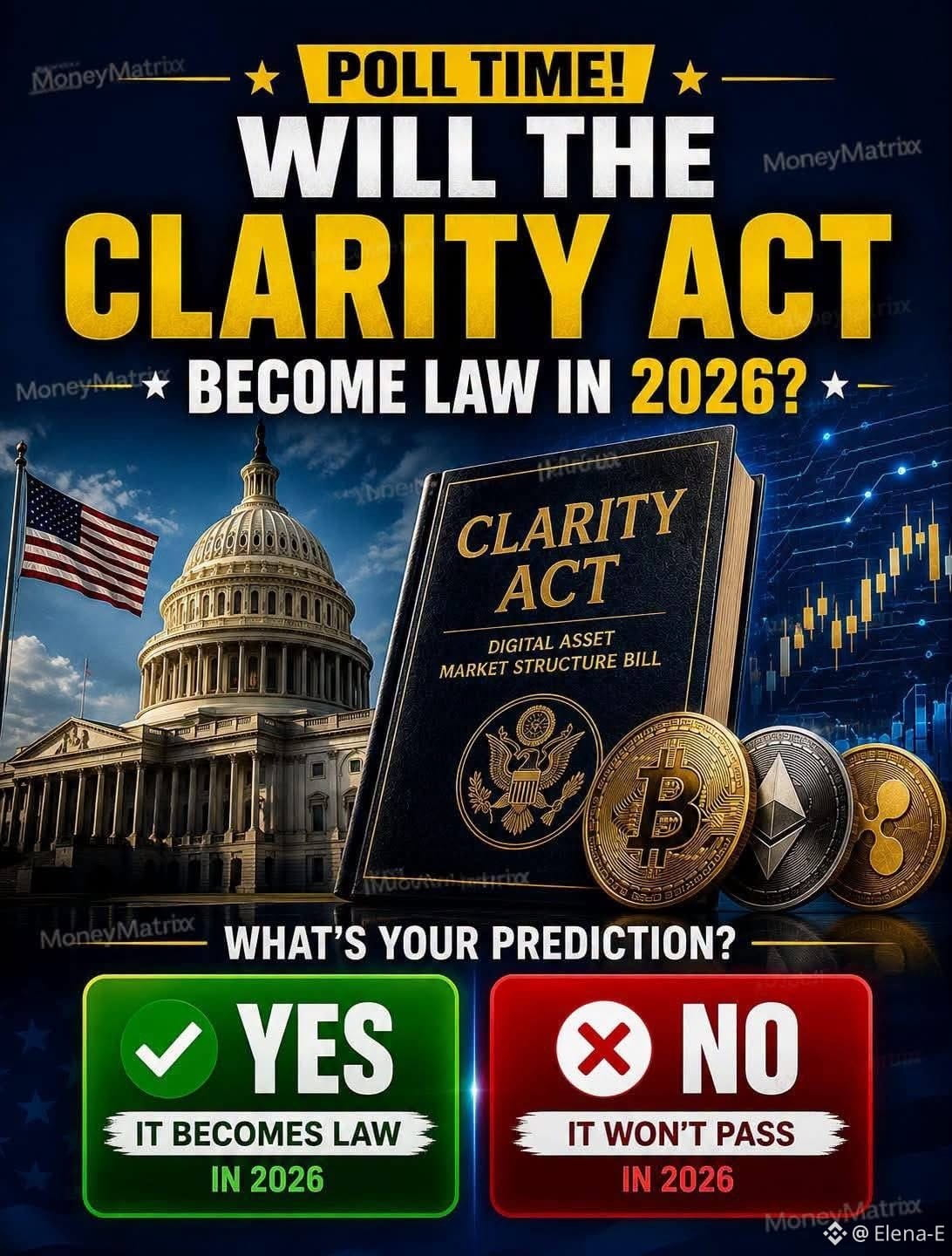
🚨 POLL: Will the CLARITY Act Become Law in 2026?
The Digital Asset CLARITY Act could become one of the most important crypto bills in U.S. history. If passed, it would establish clearer rules for digital assets, define SEC and CFTC oversight, strengthen investor protections, and could accelerate institutional adoption across the crypto industry.
However, ethics provisions and bipartisan disagreements continue to delay progress, leaving its future uncertain.
📊 What's your prediction?
✅ Yes — It becomes law in 2026.
❌ No — It won't pass in 2026.
Cast your vote and share your reasoning in the comments! 👇
⚠️ This is not financial advice. Always DYOR (Do Your Own Research) before making investment decisions.
#clarityact #crypto #breakingnews #moneymatrixx #usa $BTC $ETH $XRP
{spot}(XRPUSDT)
🚨 POLL: Will the CLARITY Act Become Law in 2026?
The Digital Asset CLARITY Act could become one of the most important crypto bills in U.S. history. If passed, it would establish clearer rules for digital assets, define SEC and CFTC oversight, strengthen investor protections, and could accelerate institutional adoption across the crypto industry.
However, ethics provisions and bipartisan disagreements continue to delay progress, leaving its future uncertain.
📊 What's your prediction?
✅ Yes — It becomes law in 2026.
❌ No — It won't pass in 2026.
Cast your vote and share your reasoning in the comments! 👇
⚠️ This is not financial advice. Always DYOR (Do Your Own Research) before making investment decisions.
#clarityact #crypto #breakingnews #moneymatrixx #usa $BTC $ETH $XRP
1
35

🚨🇺🇸 CLARITY ACT UPDATE 🇺🇸🚨
Senator Lummis says millions of Americans already own digital assets but still lack clear federal protections.
The CLARITY Act brings regulatory clarity.
Could this be the week crypto finally gets regulatory clarity?
#ClarityAct $XRP $BTC $ETH #crypto #breakingnews #USA. #moneymatrixx
Senator Lummis says millions of Americans already own digital assets but still lack clear federal protections.
The CLARITY Act brings regulatory clarity.
Could this be the week crypto finally gets regulatory clarity?
#ClarityAct $XRP $BTC $ETH #crypto #breakingnews #USA. #moneymatrixx

103
Log in to explore more content
Join global crypto users on Binance Square
⚡️ Get latest and useful information about crypto.
💬 Trusted by the world’s largest crypto exchange.
👍 Discover real insights from verified creators.
Email / Phone number
Trending Topics
1
#BTCRemainsUnderPressureAfterHawkishFOMCMinutes
44,935 views
612 Discussing
2
#AnthropicToDebutAfter$83IPOPricing
11,584 views
65 Discussing
3
#NvidiaBoardReportedlySplitOverHuang’sReturn
15,261 views
253 Discussing
4
#CanGTA6'sLaunchLiftTTWOShares?
7,925 views
176 Discussing
5
#FOMCMinutesHighlightAIDebtRisks
15,361 views
228 Discussing
6
#SouthKoreaPlansToLet3500ListedFirmsBuyBitcoin
16,225 views
270 Discussing
7
#AnthropicGrayMarketSharesPointTo22%To26%Gains
2,071 views
48 Discussing
8
#BitcoinSpotETFsSee$306MNetOutflows
93 views
2 Discussing
9
#TrumpAdministrationLaunchesProjectToCombatCybercrime
25 views
5 Discussing
10
#FedMinutesShowAlmostAllOfficialsExpectMoreHikes
4,772 views
62 Discussing