
#marketphilosophy
marketphilosophy
34 views
4 Discussing
Hot
Latest

·
--
Bullish
#TechnicalAnalysis #RiskManagement #MarketPhilosophy
🔥 THE GREAT ILLUSION OF TECHNICAL ANALYSIS📉🔮
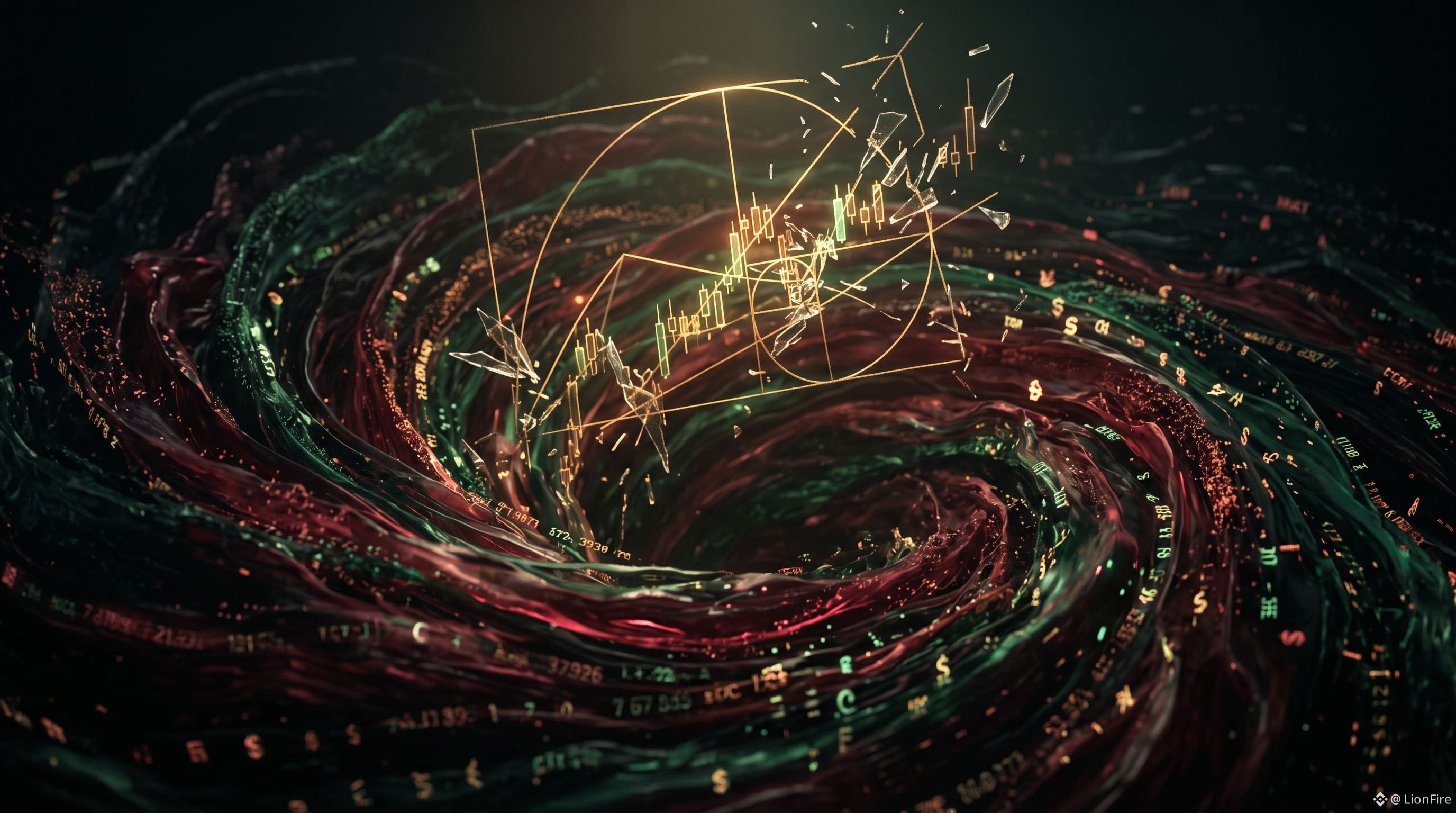
Many won’t like reading this, but the financial market is not a Swiss watch and not a physics problem solved by drawing trend lines. Pretending that a moving-average crossover or a candle pattern “predicts” the future ignores the very nature of markets: they are complex adaptive systems.
🌪️ 1. The fallacy of predicting complexity
🧩 Nonlinear interaction: A market is made up of millions of participants with disparate time horizons: HFT algorithms, market makers, hedge funds, central banks, and retail traders driven by FOMO. Each decision changes the environment in real time, producing chaotic dynamics and feedback loops that are impossible to model.
🚗 Looking in the rearview mirror: A technical indicator does not read the future; it processes past data. Support or an RSI doesn’t move capital. What moves price are market orders and institutional flow executing in the order book at this precise moment.
🩳 The trap of self-fulfilling prophecy: The only reason certain technical levels “work” temporarily is that thousands of eyes are looking at the same screen... until a player with enough capital uses that concentrated liquidity to hunt stops and sweep the crowd.
🎲 2. Probabilities vs. Certainties: The real boundary
⚖️ No guarantees in the short or medium term: No one—absolutely no one—knows for sure what candle will close in 15 minutes, in 4 hours, or next week. A surprise macroeconomic data point or a forced liquidation in derivatives can ruin any “perfect” setup in microseconds.
🛡️ The true role of technical analysis: The chart is not a crystal ball for guessing tops or bottoms; it’s simply a compass for managing probabilities and defining where your hypothesis is invalidated.
Treating technical analysis as a predictive science is like playing financial astrology with real money.
#TechnicalAnalysis #RiskManagement #MarketPhilosophy
🔥 THE GREAT ILLUSION OF TECHNICAL ANALYSIS📉🔮
Many won’t like reading this, but the financial market is not a Swiss watch and not a physics problem solved by drawing trend lines. Pretending that a moving-average crossover or a candle pattern “predicts” the future ignores the very nature of markets: they are complex adaptive systems.
🌪️ 1. The fallacy of predicting complexity
🧩 Nonlinear interaction: A market is made up of millions of participants with disparate time horizons: HFT algorithms, market makers, hedge funds, central banks, and retail traders driven by FOMO. Each decision changes the environment in real time, producing chaotic dynamics and feedback loops that are impossible to model.
🚗 Looking in the rearview mirror: A technical indicator does not read the future; it processes past data. Support or an RSI doesn’t move capital. What moves price are market orders and institutional flow executing in the order book at this precise moment.
🩳 The trap of self-fulfilling prophecy: The only reason certain technical levels “work” temporarily is that thousands of eyes are looking at the same screen... until a player with enough capital uses that concentrated liquidity to hunt stops and sweep the crowd.
🎲 2. Probabilities vs. Certainties: The real boundary
⚖️ No guarantees in the short or medium term: No one—absolutely no one—knows for sure what candle will close in 15 minutes, in 4 hours, or next week. A surprise macroeconomic data point or a forced liquidation in derivatives can ruin any “perfect” setup in microseconds.
🛡️ The true role of technical analysis: The chart is not a crystal ball for guessing tops or bottoms; it’s simply a compass for managing probabilities and defining where your hypothesis is invalidated.
Treating technical analysis as a predictive science is like playing financial astrology with real money.
🔥 THE GREAT ILLUSION OF TECHNICAL ANALYSIS📉🔮
Many won’t like reading this, but the financial market is not a Swiss watch and not a physics problem solved by drawing trend lines. Pretending that a moving-average crossover or a candle pattern “predicts” the future ignores the very nature of markets: they are complex adaptive systems.
🌪️ 1. The fallacy of predicting complexity
🧩 Nonlinear interaction: A market is made up of millions of participants with disparate time horizons: HFT algorithms, market makers, hedge funds, central banks, and retail traders driven by FOMO. Each decision changes the environment in real time, producing chaotic dynamics and feedback loops that are impossible to model.
🚗 Looking in the rearview mirror: A technical indicator does not read the future; it processes past data. Support or an RSI doesn’t move capital. What moves price are market orders and institutional flow executing in the order book at this precise moment.
🩳 The trap of self-fulfilling prophecy: The only reason certain technical levels “work” temporarily is that thousands of eyes are looking at the same screen... until a player with enough capital uses that concentrated liquidity to hunt stops and sweep the crowd.
🎲 2. Probabilities vs. Certainties: The real boundary
⚖️ No guarantees in the short or medium term: No one—absolutely no one—knows for sure what candle will close in 15 minutes, in 4 hours, or next week. A surprise macroeconomic data point or a forced liquidation in derivatives can ruin any “perfect” setup in microseconds.
🛡️ The true role of technical analysis: The chart is not a crystal ball for guessing tops or bottoms; it’s simply a compass for managing probabilities and defining where your hypothesis is invalidated.
Treating technical analysis as a predictive science is like playing financial astrology with real money.
19

The crypto market is more than just green and red numbers flashing on a screen; it’s a daily test of our patience, our faith, and our restless dreams. 📉📈
Behind every rising "candle" is a story of ambition, and behind every sudden dip is a lesson in resilience. We don’t just trade coins; we bet on ideas and build a future "piece by piece" in a world that only rewards persistence. The market belongs to those who dare to dream and stay when everyone else leaves. ✨💎
#CryptoReflections #Web3 #SuccessMindset BTCSurpasses$80KResilience #Binance #MarketPhilosophy
The crypto market is more than just green and red numbers flashing on a screen; it’s a daily test of our patience, our faith, and our restless dreams. 📉📈
Behind every rising "candle" is a story of ambition, and behind every sudden dip is a lesson in resilience. We don’t just trade coins; we bet on ideas and build a future "piece by piece" in a world that only rewards persistence. The market belongs to those who dare to dream and stay when everyone else leaves. ✨💎
#CryptoReflections #Web3 #SuccessMindset BTCSurpasses$80KResilience #Binance #MarketPhilosophy
Behind every rising "candle" is a story of ambition, and behind every sudden dip is a lesson in resilience. We don’t just trade coins; we bet on ideas and build a future "piece by piece" in a world that only rewards persistence. The market belongs to those who dare to dream and stay when everyone else leaves. ✨💎
#CryptoReflections #Web3 #SuccessMindset BTCSurpasses$80KResilience #Binance #MarketPhilosophy

1
99
Log in to explore more content
Join global crypto users on Binance Square
⚡️ Get latest and useful information about crypto.
💬 Trusted by the world’s largest crypto exchange.
👍 Discover real insights from verified creators.
Email / Phone number
Trending Topics
1
#AnthropicCEOCallsForAISlowdown
1,290 views
64 Discussing
2
#SECReceivesGrayscaleLitecoinTrustETFFiling
109,874 views
1,630 Discussing
3
#ClarityActFacesProceduralVoteSept15
234,669 views
2,528 Discussing
4
#US10YearTreasuryYieldNears5%
87,518 views
1,405 Discussing
5
#CryptoLiquidations$674MIn24H
22,399 views
207 Discussing
6
#TokenizedStockHoldersUp619.1%
71,864 views
1,154 Discussing
7
#RevolutConfirmsFakeGovEmailDataBreach
107,413 views
1,435 Discussing
8
#CanadaOSFISaysTokenizedDepositsEqualTraditionalDeposits
5,694 views
103 Discussing
9
#USBankCompletesCrossBorderPaymentPilotOnStellar
85,860 views
1,280 Discussing
10
#NvidiaInTalksToInvestUpTo$10BInAnthropicIPO
5,961 views
96 Discussing