

#magnificent7loses
magnificent7loses
121 views
12 Discussing
Hot
Latest

·
--
Everyone thinks Magnificent 7 losses are just stock market drama, but actually they can be an early warning light for crypto risk appetite.
The common mistake is treating crypto like it lives in a separate room. Then traders FOMO into $BTC or $ETH right when big-money portfolios are quietly reducing risk.
1) When mega-cap tech sells off, liquidity often gets tighter, like a store owner pulling cash from every register at once. That can pressure high-beta assets first, and crypto is usually on that list. With market sentiment sitting in Fear, chasing green candles without a plan is like speeding in fog.
2) Watch $USDT flows and volume, not just price. If people are moving into stables while headlines scream about equity weakness, that is not “boring” data. It may be the market putting on a seatbelt before the road gets bumpy.
3) The safer play is not panic selling. It is mapping entries, exits, and invalidation levels before volatility chooses for you. If your trade only works when everything goes up, it is not a strategy, it is hope wearing a chart costume.
Anyone else treating the Magnificent 7 weakness as a warning sign for crypto risk, not just a stock-market headline? #Magnificent7Loses #DowJonesFallsOver500Points #AlphabetToLiftCapexToAsMuchAs
Everyone thinks Magnificent 7 losses are just stock market drama, but actually they can be an early warning light for crypto risk appetite.
The common mistake is treating crypto like it lives in a separate room. Then traders FOMO into $BTC or $ETH right when big-money portfolios are quietly reducing risk.
1) When mega-cap tech sells off, liquidity often gets tighter, like a store owner pulling cash from every register at once. That can pressure high-beta assets first, and crypto is usually on that list. With market sentiment sitting in Fear, chasing green candles without a plan is like speeding in fog.
2) Watch $USDT flows and volume, not just price. If people are moving into stables while headlines scream about equity weakness, that is not “boring” data. It may be the market putting on a seatbelt before the road gets bumpy.
3) The safer play is not panic selling. It is mapping entries, exits, and invalidation levels before volatility chooses for you. If your trade only works when everything goes up, it is not a strategy, it is hope wearing a chart costume.
Anyone else treating the Magnificent 7 weakness as a warning sign for crypto risk, not just a stock-market headline? #Magnificent7Loses #DowJonesFallsOver500Points #AlphabetToLiftCapexToAsMuchAs
The common mistake is treating crypto like it lives in a separate room. Then traders FOMO into $BTC or $ETH right when big-money portfolios are quietly reducing risk.
1) When mega-cap tech sells off, liquidity often gets tighter, like a store owner pulling cash from every register at once. That can pressure high-beta assets first, and crypto is usually on that list. With market sentiment sitting in Fear, chasing green candles without a plan is like speeding in fog.
2) Watch $USDT flows and volume, not just price. If people are moving into stables while headlines scream about equity weakness, that is not “boring” data. It may be the market putting on a seatbelt before the road gets bumpy.
3) The safer play is not panic selling. It is mapping entries, exits, and invalidation levels before volatility chooses for you. If your trade only works when everything goes up, it is not a strategy, it is hope wearing a chart costume.
Anyone else treating the Magnificent 7 weakness as a warning sign for crypto risk, not just a stock-market headline? #Magnificent7Loses #DowJonesFallsOver500Points #AlphabetToLiftCapexToAsMuchAs

23
·
--
Here's what happened when Alphabet signaled capex could climb as high as $85B: the AI trade stopped looking like a clean growth story and started looking like a margin-risk case study.
Crypto traders feel this indirectly. You think you’re trading $ETH, $USDT flows, or even AI-adjacent names like $VANRY, but macro liquidity can still decide whether your setup gets follow-through or gets faded.
The part most people missed is that higher capex is not automatically bullish. It can mean management sees massive AI demand, yes, but it also means heavier spending, lower free cash flow, and more pressure if revenue growth doesn’t catch up fast enough. In a Fear market, that distinction matters.
When mega-cap tech starts absorbing more capital, risk appetite can tighten across the board. If equity traders start questioning the AI spending cycle, crypto often feels it through weaker bids, faster rotations into $USDT, and failed breakouts in high-beta narratives.
The lesson is simple: not every “AI investment” headline is a green light. Sometimes it’s a warning that the market is about to reprice expectations, and crypto usually gets the memo late.
Are you treating this as bullish AI expansion, or a signal that risk assets may need to cool off first? #AlphabetToLiftCapexToAsMuchAs #Magnificent7Loses #DowJonesFallsOver500Points
Here's what happened when Alphabet signaled capex could climb as high as $85B: the AI trade stopped looking like a clean growth story and started looking like a margin-risk case study.
Crypto traders feel this indirectly. You think you’re trading $ETH , $USDT flows, or even AI-adjacent names like $VANRY, but macro liquidity can still decide whether your setup gets follow-through or gets faded.
The part most people missed is that higher capex is not automatically bullish. It can mean management sees massive AI demand, yes, but it also means heavier spending, lower free cash flow, and more pressure if revenue growth doesn’t catch up fast enough. In a Fear market, that distinction matters.
When mega-cap tech starts absorbing more capital, risk appetite can tighten across the board. If equity traders start questioning the AI spending cycle, crypto often feels it through weaker bids, faster rotations into $USDT, and failed breakouts in high-beta narratives.
The lesson is simple: not every “AI investment” headline is a green light. Sometimes it’s a warning that the market is about to reprice expectations, and crypto usually gets the memo late.
Are you treating this as bullish AI expansion, or a signal that risk assets may need to cool off first? #AlphabetToLiftCapexToAsMuchAs #Magnificent7Loses #DowJonesFallsOver500Points
Crypto traders feel this indirectly. You think you’re trading $ETH , $USDT flows, or even AI-adjacent names like $VANRY, but macro liquidity can still decide whether your setup gets follow-through or gets faded.
The part most people missed is that higher capex is not automatically bullish. It can mean management sees massive AI demand, yes, but it also means heavier spending, lower free cash flow, and more pressure if revenue growth doesn’t catch up fast enough. In a Fear market, that distinction matters.
When mega-cap tech starts absorbing more capital, risk appetite can tighten across the board. If equity traders start questioning the AI spending cycle, crypto often feels it through weaker bids, faster rotations into $USDT, and failed breakouts in high-beta narratives.
The lesson is simple: not every “AI investment” headline is a green light. Sometimes it’s a warning that the market is about to reprice expectations, and crypto usually gets the memo late.
Are you treating this as bullish AI expansion, or a signal that risk assets may need to cool off first? #AlphabetToLiftCapexToAsMuchAs #Magnificent7Loses #DowJonesFallsOver500Points

45

·
--
Four checks tell whether an altcoin bounce is real$ETH, SOL and XRP are all falling about four times faster than $BTC today.
Before treating an alt bounce as a reversal, I run four checks:
1. Relative performance - the alt must stop underperforming BTC over the same 24-hour window. Today ETH is -1.942%, SOL -2.131%, XRP -2.061%, versus BTC -0.476%.
2. Breadth - more than one large-cap alt needs to improve.
3. Macro pressure - oil above $100 and a 500-point Dow drop still argue for caution.
4. Confirmation - a higher low matters more than the first green candle.
Rule: a bounce becomes rotation only when relative performance and breadth improve together.
#DowJonesFallsOver500Points #WTIUp6.17%BrentUp7.04% #Magnificent7Loses$797Billion
Four checks tell whether an altcoin bounce is real
$ETH , SOL and XRP are all falling about four times faster than $BTC today.
Before treating an alt bounce as a reversal, I run four checks:
1. Relative performance - the alt must stop underperforming BTC over the same 24-hour window. Today ETH is -1.942%, SOL -2.131%, XRP -2.061%, versus BTC -0.476%.
2. Breadth - more than one large-cap alt needs to improve.
3. Macro pressure - oil above $100 and a 500-point Dow drop still argue for caution.
4. Confirmation - a higher low matters more than the first green candle.
Rule: a bounce becomes rotation only when relative performance and breadth improve together.
#DowJonesFallsOver500Points #WTIUp6.17%BrentUp7.04% #Magnificent7Loses$797Billion
Before treating an alt bounce as a reversal, I run four checks:
1. Relative performance - the alt must stop underperforming BTC over the same 24-hour window. Today ETH is -1.942%, SOL -2.131%, XRP -2.061%, versus BTC -0.476%.
2. Breadth - more than one large-cap alt needs to improve.
3. Macro pressure - oil above $100 and a 500-point Dow drop still argue for caution.
4. Confirmation - a higher low matters more than the first green candle.
Rule: a bounce becomes rotation only when relative performance and breadth improve together.
#DowJonesFallsOver500Points #WTIUp6.17%BrentUp7.04% #Magnificent7Loses$797Billion
94
·
--
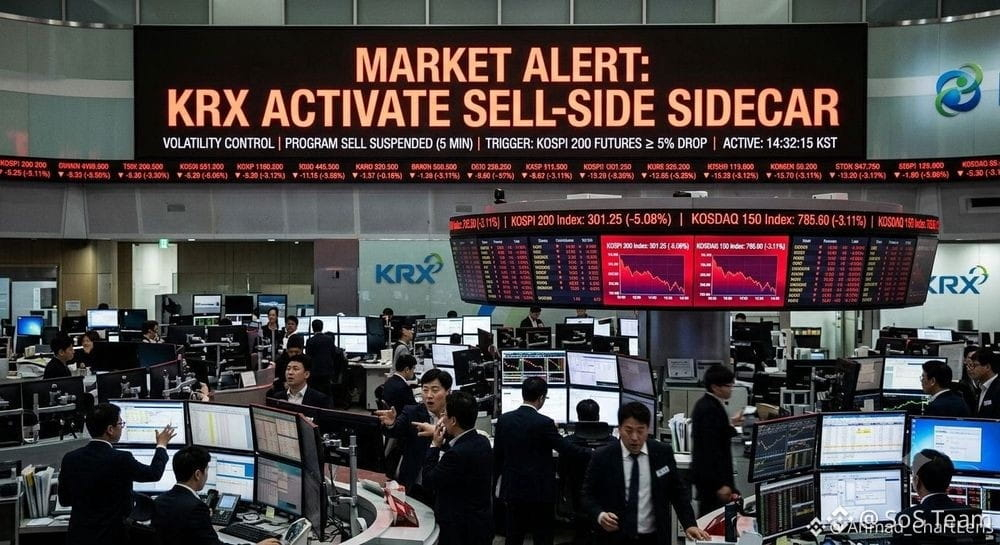
A sell-side sidecar in Korea doesn’t mean the market crashed; it means selling got fast enough that the exchange hit the brakes.
The danger for crypto traders is thinking a forced pause equals a bottom. In risk-off markets, those “relief bounces” can be where late longs in $BTC or $ETH get trapped.
Quick breakdown: a KRX sell-side sidecar is basically a volatility control. When futures fall sharply, the exchange can temporarily halt certain program sell orders to slow panic selling. It’s not a bullish signal by itself. It’s a sign liquidity got stressed.
Why crypto should care: Korea is a major risk-flow market, especially for active retail trading. If equities are flashing stress while Fear & Greed is already at 37, traders often rotate into cash-like assets such as $USDT, cut leverage, and dump higher-beta positions first.
The big risk is assuming “pause = recovery.” Sometimes it does cool things down. Other times, it just delays the next wave of selling once orders reopen. I’d watch spot volume, funding, and whether rebounds are being sold into before trusting any move.
Anyone else treating this as a warning signal, or just short-term market noise? #KRXActivatesSellSideSidecar #DowJonesFallsOver500Points #Magnificent7Loses
A sell-side sidecar in Korea doesn’t mean the market crashed; it means selling got fast enough that the exchange hit the brakes.
The danger for crypto traders is thinking a forced pause equals a bottom. In risk-off markets, those “relief bounces” can be where late longs in $BTC or $ETH get trapped.
Quick breakdown: a KRX sell-side sidecar is basically a volatility control. When futures fall sharply, the exchange can temporarily halt certain program sell orders to slow panic selling. It’s not a bullish signal by itself. It’s a sign liquidity got stressed.
Why crypto should care: Korea is a major risk-flow market, especially for active retail trading. If equities are flashing stress while Fear & Greed is already at 37, traders often rotate into cash-like assets such as $USDT, cut leverage, and dump higher-beta positions first.
The big risk is assuming “pause = recovery.” Sometimes it does cool things down. Other times, it just delays the next wave of selling once orders reopen. I’d watch spot volume, funding, and whether rebounds are being sold into before trusting any move.
Anyone else treating this as a warning signal, or just short-term market noise? #KRXActivatesSellSideSidecar #DowJonesFallsOver500Points #Magnificent7Loses
The danger for crypto traders is thinking a forced pause equals a bottom. In risk-off markets, those “relief bounces” can be where late longs in $BTC or $ETH get trapped.
Quick breakdown: a KRX sell-side sidecar is basically a volatility control. When futures fall sharply, the exchange can temporarily halt certain program sell orders to slow panic selling. It’s not a bullish signal by itself. It’s a sign liquidity got stressed.
Why crypto should care: Korea is a major risk-flow market, especially for active retail trading. If equities are flashing stress while Fear & Greed is already at 37, traders often rotate into cash-like assets such as $USDT, cut leverage, and dump higher-beta positions first.
The big risk is assuming “pause = recovery.” Sometimes it does cool things down. Other times, it just delays the next wave of selling once orders reopen. I’d watch spot volume, funding, and whether rebounds are being sold into before trusting any move.
Anyone else treating this as a warning signal, or just short-term market noise? #KRXActivatesSellSideSidecar #DowJonesFallsOver500Points #Magnificent7Loses
41

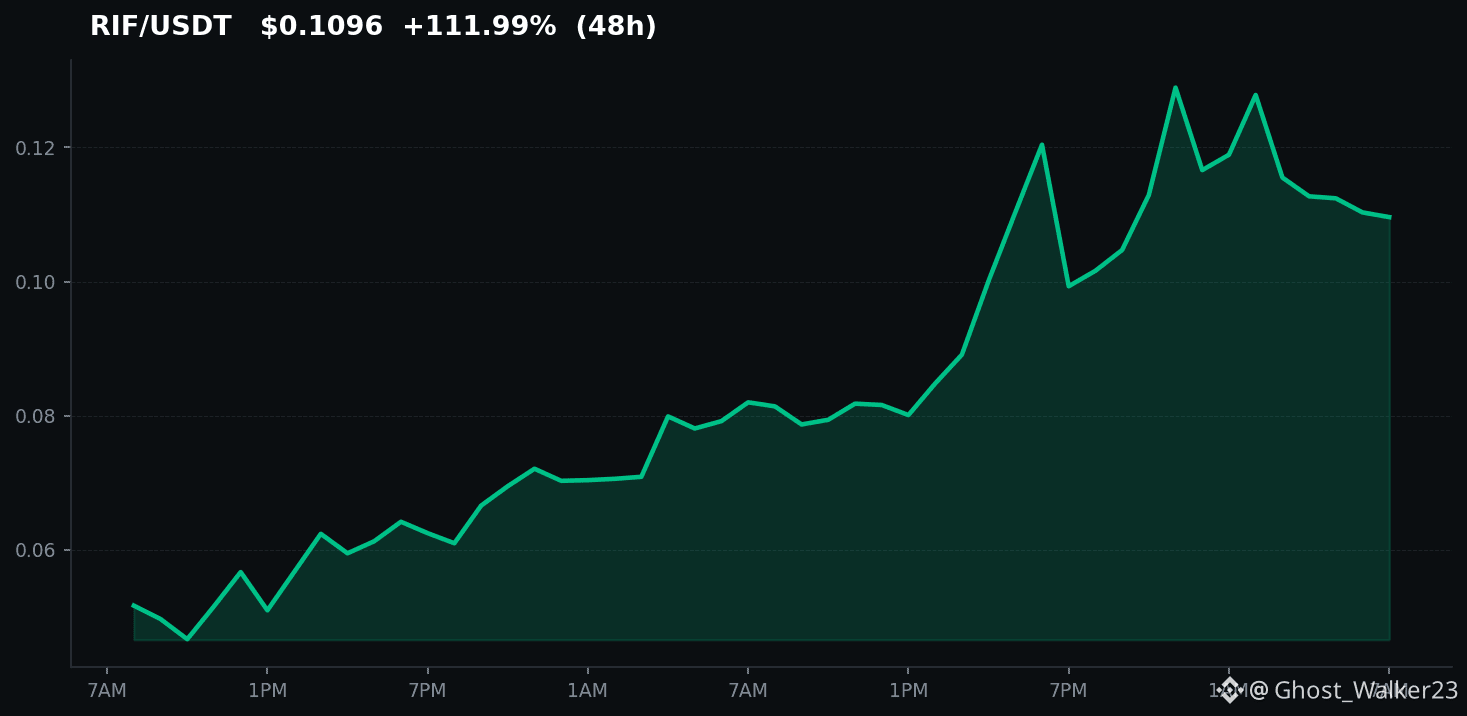
The #Magnificent7Loses$797Billion! 😱 This shocking decline reflects the volatility in the crypto market as major players stumble, while lesser-known coins like #RIF skyrocket! Are we witnessing a shift in dominance? What do you think? 💬
The #Magnificent7Loses$797Billion! 😱 This shocking decline reflects the volatility in the crypto market as major players stumble, while lesser-known coins like #RIF skyrocket! Are we witnessing a shift in dominance? What do you think? 💬
75
Log in to explore more content
Join global crypto users on Binance Square
⚡️ Get latest and useful information about crypto.
💬 Trusted by the world’s largest crypto exchange.
👍 Discover real insights from verified creators.
Email / Phone number
Trending Topics
1
#NEARFallsToAround$4.70Down14%
10,866 views
22 Discussing
2
#EthereumFoundationLaunchesZkAPIOnMainnet
3,510 views
118 Discussing
3
#EvernorthPlansNasdaqListingOct8
12,698 views
136 Discussing
4
#SECProposesCryptoCustodyFramework
12,158 views
125 Discussing
5
#IMFApproves$139MDisbursementToElSalvador
10,795 views
14 Discussing
6
#AnthropicTargetsIPOAsSoonAsMidNovember
13,374 views
147 Discussing
7
#EtherGains70.9%InQ3
214,026 views
1,408 Discussing
8
#TreasuryLetsStatesFileStablecoinCertificationsEarly
15,947 views
108 Discussing
9
#US10YearYieldNears5.3%
178,573 views
1,294 Discussing
10
#DollarIndexHitsHighestSinceMay2025
61,907 views
724 Discussing