
#itlg
itlg
52,382 views
1,833 Discussing
Hot
Latest

Bitflip: The Ultimate Trader Challenge
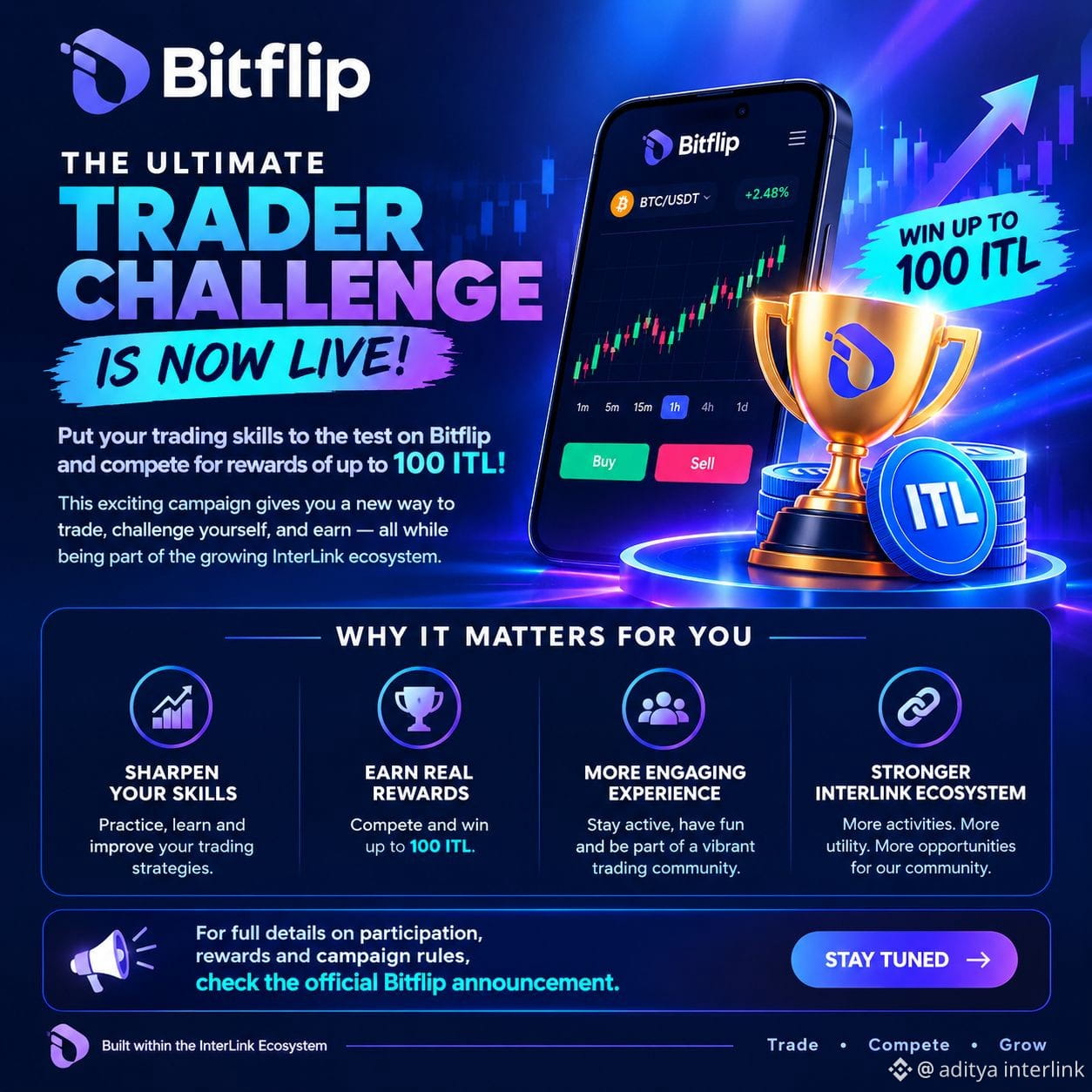
The Ultimate Trader Challenge is now live on Bitflip, giving users a new way to put their trading skills to the test while competing for rewards of up to 100 ITL. The campaign has already launched, so users can start exploring the challenge and participating now.
#InterLink #ITL #ITLG
The Ultimate Trader Challenge is now live on Bitflip, giving users a new way to put their trading skills to the test while competing for rewards of up to 100 ITL. The campaign has already launched, so users can start exploring the challenge and participating now.
#InterLink #ITL #ITLG
Post 8: Ambassador & Community Angle
🌐 Why the Latest InterLink Updates Matter for Every Linker
As an Ambassador, seeing the rapid development across all four major dApps is incredible:
• Bitflip rewards active market participants.
• INS lays the groundwork for seamless user identity.
• ATV removes technical friction from operational workflows.
• LinkersMap brings everyday commerce onto the blockchain.
InterLink isn't just building standalone products—it's creating a fully unified, multi-utility web3 environment. Which update are you most excited to try?
#InterLink #ITLG #ITL
🌐 Why the Latest InterLink Updates Matter for Every Linker
As an Ambassador, seeing the rapid development across all four major dApps is incredible:
• Bitflip rewards active market participants.
• INS lays the groundwork for seamless user identity.
• ATV removes technical friction from operational workflows.
• LinkersMap brings everyday commerce onto the blockchain.
InterLink isn't just building standalone products—it's creating a fully unified, multi-utility web3 environment. Which update are you most excited to try?
#InterLink #ITLG #ITL
💜 INTERLINK NAME SERVICE IS OFFICIALLY LIVE!
The era of .itl on-chain identities has arrived. ⚡
Your name is more than just a name — it can become your digital identity across the InterLink ecosystem.
🔹 One-of-a-kind — every claimed .itl domain is unique and cannot be duplicated.
🔹 Limited supply — short, simple, and memorable names are extremely scarce.
🔹 Built for Web3 — use your domain as your identity across the growing InterLink ecosystem.
Your .itl domain can become your:
💳 On-chain payment identifier
👤 Personal profile & identity
🔗 Unified identity across dApps
As the InterLink ecosystem continues to grow, rare and memorable domains could become increasingly valuable as digital identities.
The name you want today might be gone tomorrow.
🔥 Claim your unique .itl domain before someone else does.
Your name. Your identity. Your InterLink. 💜
#InterLink #ITLG #ITL #INS
The era of .itl on-chain identities has arrived. ⚡
Your name is more than just a name — it can become your digital identity across the InterLink ecosystem.
🔹 One-of-a-kind — every claimed .itl domain is unique and cannot be duplicated.
🔹 Limited supply — short, simple, and memorable names are extremely scarce.
🔹 Built for Web3 — use your domain as your identity across the growing InterLink ecosystem.
Your .itl domain can become your:
💳 On-chain payment identifier
👤 Personal profile & identity
🔗 Unified identity across dApps
As the InterLink ecosystem continues to grow, rare and memorable domains could become increasingly valuable as digital identities.
The name you want today might be gone tomorrow.
🔥 Claim your unique .itl domain before someone else does.
Your name. Your identity. Your InterLink. 💜
#InterLink #ITLG #ITL #INS
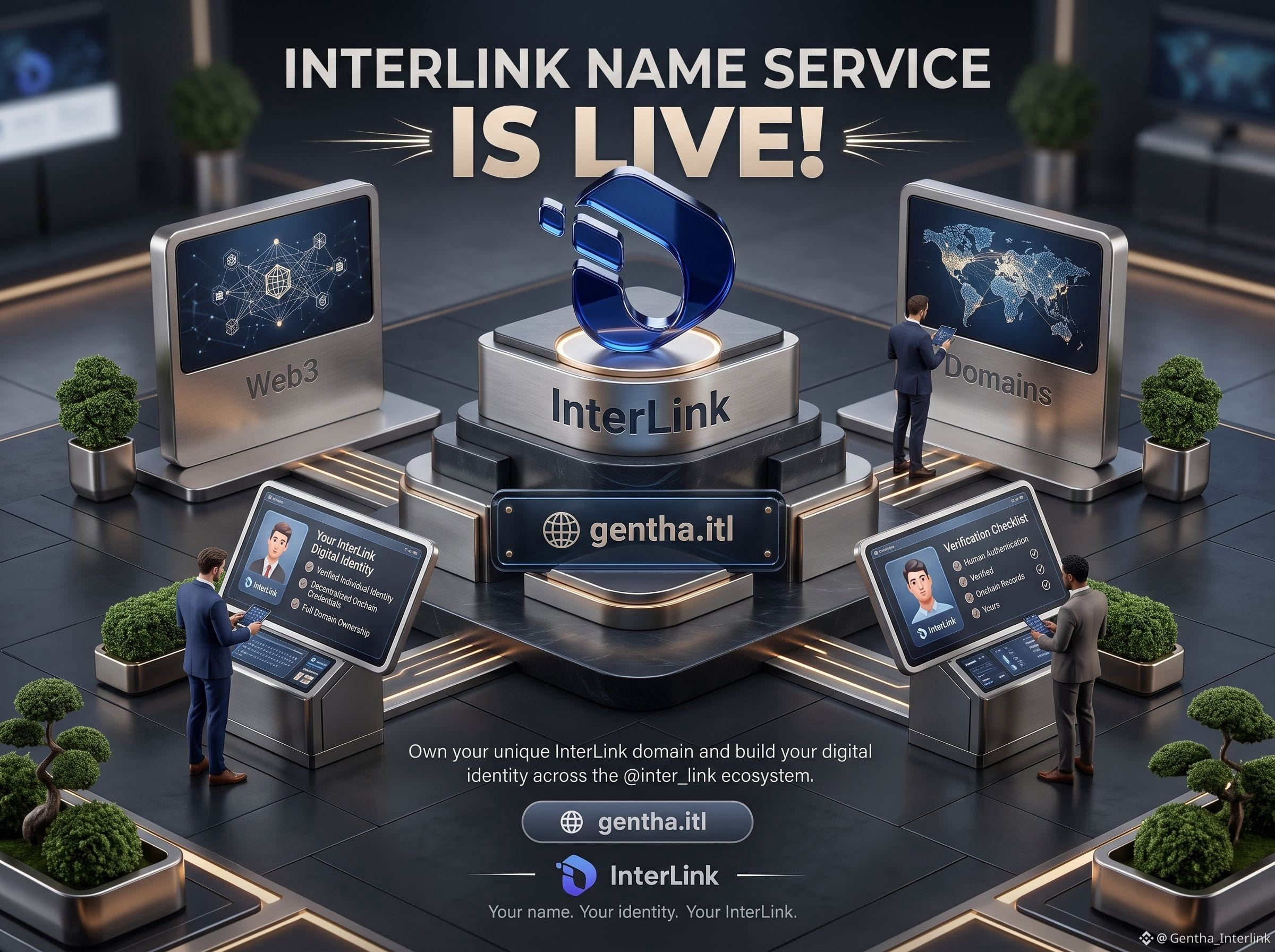

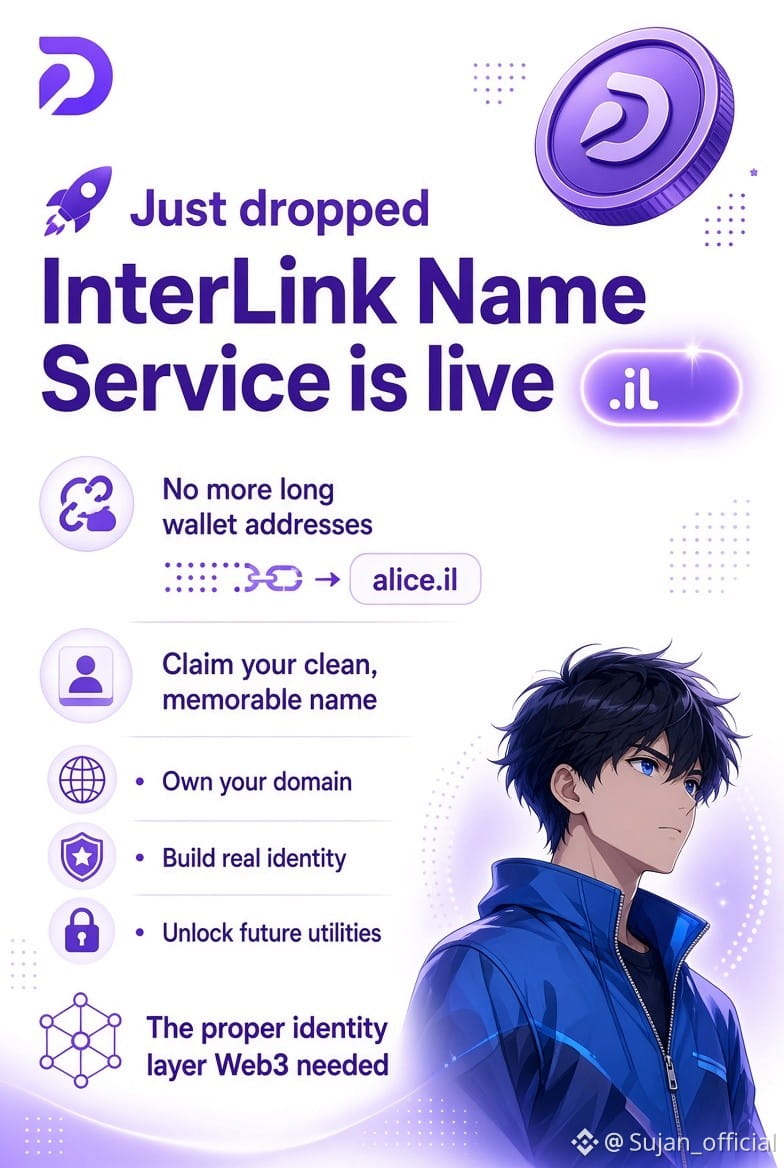
Just dropped: InterLink Name Service is live.
No more copying long wallet addresses. Now you can claim a clean, memorable name that actually represents you across the entire InterLink ecosystem.
Own your domain. Build real identity. Unlock future utilities.
This feels like the proper identity layer Web3 needed.
#InterLink #ITLG #ITL #ITLX
No more copying long wallet addresses. Now you can claim a clean, memorable name that actually represents you across the entire InterLink ecosystem.
Own your domain. Build real identity. Unlock future utilities.
This feels like the proper identity layer Web3 needed.
#InterLink #ITLG #ITL #ITLX
Post 1: Ecosystem Overview
🚀 The InterLink Ecosystem is Leveling Up!
From trading competitions to real-world commerce, InterLink is consistently expanding its dApp ecosystem to give Linkers more value and utility:
🔹 Bitflip: Put your skills to the test in The Ultimate Trader Challenge and compete for up to 100 ITL!
🔹 INS: Early bird discounts and profile reward campaigns are coming soon—keep an eye on official channels for codes.
🔹 ATV: Streamlining governance with direct payment-based transaction submissions to the ATV Council.
🔹 LinkersMap: Upgrading merchant flexibility with custom shipping zones and secure, smart contract-backed payments.
The future of decentralized utility is here. Get involved today!
#InterLink #ITLG #ITLAG
🚀 The InterLink Ecosystem is Leveling Up!
From trading competitions to real-world commerce, InterLink is consistently expanding its dApp ecosystem to give Linkers more value and utility:
🔹 Bitflip: Put your skills to the test in The Ultimate Trader Challenge and compete for up to 100 ITL!
🔹 INS: Early bird discounts and profile reward campaigns are coming soon—keep an eye on official channels for codes.
🔹 ATV: Streamlining governance with direct payment-based transaction submissions to the ATV Council.
🔹 LinkersMap: Upgrading merchant flexibility with custom shipping zones and secure, smart contract-backed payments.
The future of decentralized utility is here. Get involved today!
#InterLink #ITLG #ITLAG
Post 4 (InterLink Ecosystem Architecture)
Headline: 🌐 More Than Just a Token: The InterLink Infrastructure!
InterLink is not just another speculative crypto project—it is a full-stack Layer 1 decentralized infrastructure built for everyday utility.
From identity verification and mobile mining to decentralized trading and real-world shop payments, InterLink connects all the pieces needed for mass Web3 adoption.
Explore the growing ecosystem and discover how deep the InterLink utility goes!
#InterLink #ITLG #ITL
Headline: 🌐 More Than Just a Token: The InterLink Infrastructure!
InterLink is not just another speculative crypto project—it is a full-stack Layer 1 decentralized infrastructure built for everyday utility.
From identity verification and mobile mining to decentralized trading and real-world shop payments, InterLink connects all the pieces needed for mass Web3 adoption.
Explore the growing ecosystem and discover how deep the InterLink utility goes!
#InterLink #ITLG #ITL
Post 3 (Dual-Token Model Strategy)
Headline: 🔑 Understanding ITL vsITLG: The Dual-Token Powerhouse!
InterLink uses a specialized dual-token economic structure designed to balance everyday usability with long-term ecosystem stability:
$ITLG (Genesis Token): Earned through active community participation, mobile mining, and daily interactions. It fuels the core user economy inside the ITLX wallet.
$ITL Token: Serves as the reserve asset for institutional partners and core network functions.
This dual model prevents inflation bottlenecks while rewarding active Linkers!
#InterLink #ITLG #ITL
Headline: 🔑 Understanding ITL vsITLG: The Dual-Token Powerhouse!
InterLink uses a specialized dual-token economic structure designed to balance everyday usability with long-term ecosystem stability:
$ITLG (Genesis Token): Earned through active community participation, mobile mining, and daily interactions. It fuels the core user economy inside the ITLX wallet.
$ITL Token: Serves as the reserve asset for institutional partners and core network functions.
This dual model prevents inflation bottlenecks while rewarding active Linkers!
#InterLink #ITLG #ITL
Post 2 (Proof of Personhood & Anti-Bot Architecture)
Headline: 🛡️ Proof of Personhood: How InterLink Protects Real Users!
One of the biggest issues in Web3 today is bot farms stealing rewards meant for real community members. InterLink solves this with its Proof of Personhood mechanism, ensuring that network incentives go directly to genuine humans.
Why this matters:
Keeps campaign distributions fair and Sybil-resistant.
Protects ecosystem governance from bot manipulation.
Creates a trustworthy environment for real community growth.
Real humans building a real decentralized future with InterLink!
#InterLink #ITLG #ITL
Headline: 🛡️ Proof of Personhood: How InterLink Protects Real Users!
One of the biggest issues in Web3 today is bot farms stealing rewards meant for real community members. InterLink solves this with its Proof of Personhood mechanism, ensuring that network incentives go directly to genuine humans.
Why this matters:
Keeps campaign distributions fair and Sybil-resistant.
Protects ecosystem governance from bot manipulation.
Creates a trustworthy environment for real community growth.
Real humans building a real decentralized future with InterLink!
#InterLink #ITLG #ITL
Post 1 (ITLX Wallet & Mining Concept)
Headline: 📱 Mine $ITLG Directly from Your Phone with the ITLX Wallet!
Did you know that InterLink allows you to participate in the ecosystem directly from your mobile device? Through the ITLX Wallet, users can engage in mobile mining to earn $ITLG without heavy hardware or high electricity costs.
Key benefits of the ITLX Wallet:
User-friendly mobile mining interface.
Secure self-custody storage for ITL andITLG.
Seamless connectivity across the entire InterLink dApp network.
Start your Web3 journey today by setting up your ITLX Wallet!
#InterLink #ITLG #ITL
Headline: 📱 Mine $ITLG Directly from Your Phone with the ITLX Wallet!
Did you know that InterLink allows you to participate in the ecosystem directly from your mobile device? Through the ITLX Wallet, users can engage in mobile mining to earn $ITLG without heavy hardware or high electricity costs.
Key benefits of the ITLX Wallet:
User-friendly mobile mining interface.
Secure self-custody storage for ITL andITLG.
Seamless connectivity across the entire InterLink dApp network.
Start your Web3 journey today by setting up your ITLX Wallet!
#InterLink #ITLG #ITL
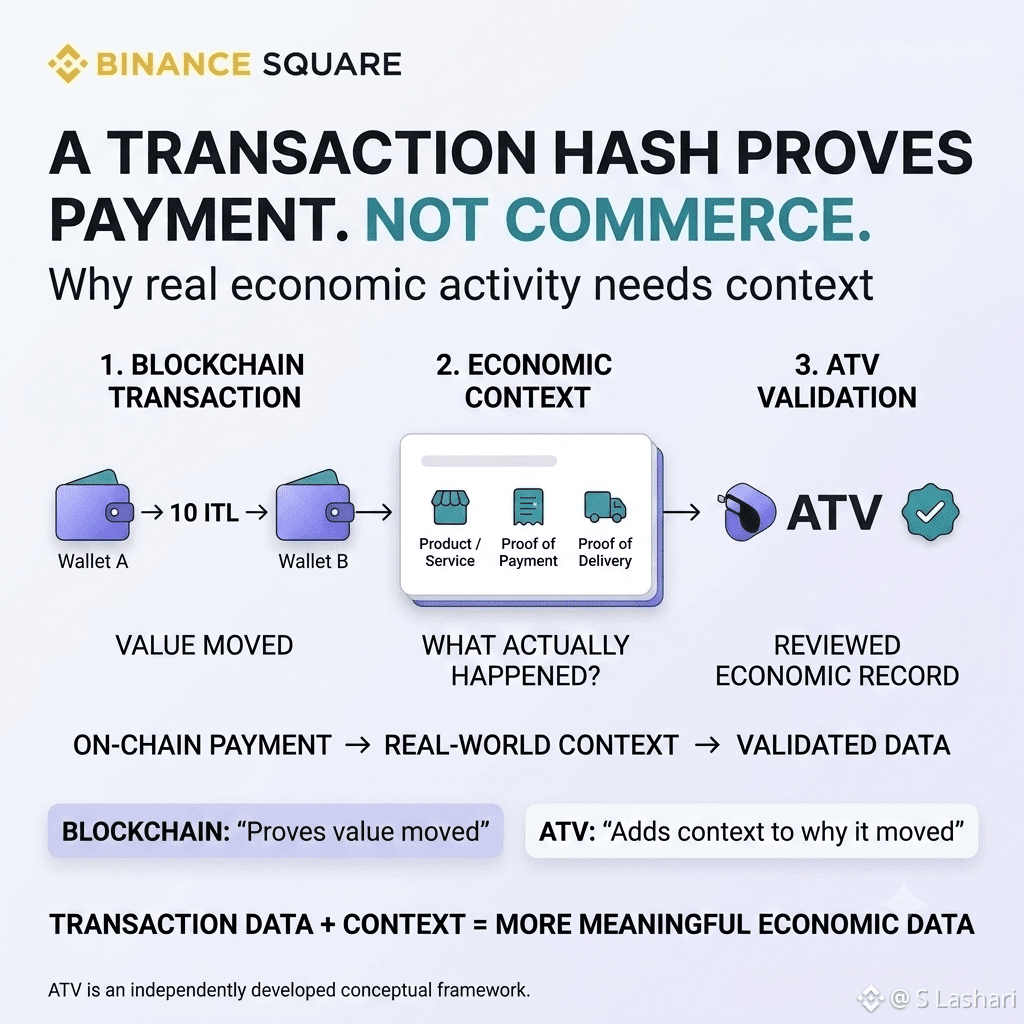
𝗔 𝘁𝗿𝗮𝗻𝘀𝗮𝗰𝘁𝗶𝗼𝗻 𝗵𝗮𝘀𝗵 𝗽𝗿𝗼𝘃𝗲𝘀 𝗽𝗮𝘆𝗺𝗲𝗻𝘁. 𝗜𝘁 𝗱𝗼𝗲𝘀𝗻’𝘁 𝗽𝗿𝗼𝘃𝗲 𝗰𝗼𝗺𝗺𝗲𝗿𝗰𝗲.
This distinction matters when blockchain data is used to understand real economic activity.
Suppose the chain records:
10 $ITL moved from Wallet A → Wallet B.
Cryptographically, that's useful evidence.
But the blockchain alone cannot tell us:
• What was purchased?
• Was a real product or service exchanged?
• Was the stated fiat value reasonable?
• Was the product delivered or service completed?
This is the problem ATV is trying to address.
Its current validation flow adds an economic-context layer:
$ITL transaction
→ Product/service details
→ Fiat equivalent
→ Proof of payment
→ Proof of delivery
→ Council validation
→ Accepted dataset
That's a fundamentally different type of information.
A blockchain record tells us that value moved.
A validated commerce record tries to explain why it moved and what economic activity occurred around it.
This also explains why validation matters.
If every token transfer were automatically treated as commerce, ordinary wallet transfers—or manipulated activity—could distort the dataset.
ATV therefore reviews submissions before approved transactions enter its data.
There is an important limitation: human validation doesn't make data automatically perfect, and ATV remains an independently developed conceptual framework.
But the underlying Web3 problem is worth studying:
On-chain transparency gives us transaction truth.
Economic analysis still needs transaction context.
Real adoption isn't simply tokens moving between addresses.
It's value moving because people are actually exchanging something useful.
#InterLink #ITLG #ITL #ATV
This distinction matters when blockchain data is used to understand real economic activity.
Suppose the chain records:
10 $ITL moved from Wallet A → Wallet B.
Cryptographically, that's useful evidence.
But the blockchain alone cannot tell us:
• What was purchased?
• Was a real product or service exchanged?
• Was the stated fiat value reasonable?
• Was the product delivered or service completed?
This is the problem ATV is trying to address.
Its current validation flow adds an economic-context layer:
$ITL transaction
→ Product/service details
→ Fiat equivalent
→ Proof of payment
→ Proof of delivery
→ Council validation
→ Accepted dataset
That's a fundamentally different type of information.
A blockchain record tells us that value moved.
A validated commerce record tries to explain why it moved and what economic activity occurred around it.
This also explains why validation matters.
If every token transfer were automatically treated as commerce, ordinary wallet transfers—or manipulated activity—could distort the dataset.
ATV therefore reviews submissions before approved transactions enter its data.
There is an important limitation: human validation doesn't make data automatically perfect, and ATV remains an independently developed conceptual framework.
But the underlying Web3 problem is worth studying:
On-chain transparency gives us transaction truth.
Economic analysis still needs transaction context.
Real adoption isn't simply tokens moving between addresses.
It's value moving because people are actually exchanging something useful.
#InterLink #ITLG #ITL #ATV
Post 5: Security First in Decentralized Commerce
🔒 Trust is the foundational currency of the digital economy. As Web3 expands into commerce and payments, InterLink places maximum emphasis on smart contract security.
With recent upgrades across LinkersMap and ATV:
Code-Enforced Trust: Merchant transactions are governed by smart contracts, eliminating the need for central intermediaries.
Automated Auditing: Streamlined transaction logic reduces potential human errors and manual delays.
Merchant & Buyer Protection: Defined delivery zones and clear payment logic protect both shop owners and consumers.
Trade with confidence, interact with security, and build with peace of mind inside the #InterLink network! 🛡️✨
#InterLink #ITLG #ITL
🔒 Trust is the foundational currency of the digital economy. As Web3 expands into commerce and payments, InterLink places maximum emphasis on smart contract security.
With recent upgrades across LinkersMap and ATV:
Code-Enforced Trust: Merchant transactions are governed by smart contracts, eliminating the need for central intermediaries.
Automated Auditing: Streamlined transaction logic reduces potential human errors and manual delays.
Merchant & Buyer Protection: Defined delivery zones and clear payment logic protect both shop owners and consumers.
Trade with confidence, interact with security, and build with peace of mind inside the #InterLink network! 🛡️✨
#InterLink #ITLG #ITL
Post 4: Sustainable Web3 Economics & Value Creation
📊 Beyond short-term hype, sustainable Web3 growth requires a solid economic foundation. InterLink focuses on real value creation over market speculation.
How InterLink maintains a healthy ecosystem economy:
Utility-Driven Demand: Every dApp creates actual demand for $ITL through domain purchases, merchant payments, and trading fees.
Incentivized Participation: Active Ambassadors and community members are continuously rewarded for driving adoption and content.
Real-World Revenue Integration: LinkersMap enables real merchants to operate on-chain, bringing traditional commerce volume into the network.
A utility-first approach is the key to long-term sustainability. InterLink is built to last! 💎💼
#InterLink #ITLG #ITL
📊 Beyond short-term hype, sustainable Web3 growth requires a solid economic foundation. InterLink focuses on real value creation over market speculation.
How InterLink maintains a healthy ecosystem economy:
Utility-Driven Demand: Every dApp creates actual demand for $ITL through domain purchases, merchant payments, and trading fees.
Incentivized Participation: Active Ambassadors and community members are continuously rewarded for driving adoption and content.
Real-World Revenue Integration: LinkersMap enables real merchants to operate on-chain, bringing traditional commerce volume into the network.
A utility-first approach is the key to long-term sustainability. InterLink is built to last! 💎💼
#InterLink #ITLG #ITL
Post 3: The Synergy of the InterLink dApp Suite
🧩 What makes InterLink unique isn't just a single standalone product—it's the powerful synergy between its four core dApps!
Here is how the puzzle fits together:
📈 Bitflip: Provides the liquidity, trading mechanics, and competitive campaigns ($ITL rewards).
🆔 INS: Secures your unified Web3 identity across the entire network.
⚙️ ATV: Automates background governance, payments, and administrative submissions.
🛒 LinkersMap: Brings on-chain payment logic directly to real-world merchants and commerce.
Together, these applications form a complete, self-sustaining Web3 environment. Experience the power of an integrated ecosystem today! 🚀
#InterLink #ITLG #ITL
🧩 What makes InterLink unique isn't just a single standalone product—it's the powerful synergy between its four core dApps!
Here is how the puzzle fits together:
📈 Bitflip: Provides the liquidity, trading mechanics, and competitive campaigns ($ITL rewards).
🆔 INS: Secures your unified Web3 identity across the entire network.
⚙️ ATV: Automates background governance, payments, and administrative submissions.
🛒 LinkersMap: Brings on-chain payment logic directly to real-world merchants and commerce.
Together, these applications form a complete, self-sustaining Web3 environment. Experience the power of an integrated ecosystem today! 🚀
#InterLink #ITLG #ITL
Post 2: Scalability & Low-Friction Web3 Onboarding
⚡ One of the biggest hurdles in Web3 is complex onboarding. InterLink is breaking down these barriers by focusing on low-friction user experience!
Whether you are a newcomer or a seasoned trader, the InterLink dApp suite simplifies every interaction:
Human-Readable Identities: INS eliminates complex cryptographic addresses, making transfers as easy as typing a domain name.
Streamlined Trading: Bitflip offers an intuitive interface designed for fast execution without sacrificing decentralization.
Automated Payments: Smart contracts handle verification in the background, removing unnecessary manual steps.
Web3 should be effortless for everyone. InterLink is setting the standard for seamless dApp interaction! 🌐 Simple. Fast. Secure.
#InterLink #ITLG #ITL
⚡ One of the biggest hurdles in Web3 is complex onboarding. InterLink is breaking down these barriers by focusing on low-friction user experience!
Whether you are a newcomer or a seasoned trader, the InterLink dApp suite simplifies every interaction:
Human-Readable Identities: INS eliminates complex cryptographic addresses, making transfers as easy as typing a domain name.
Streamlined Trading: Bitflip offers an intuitive interface designed for fast execution without sacrificing decentralization.
Automated Payments: Smart contracts handle verification in the background, removing unnecessary manual steps.
Web3 should be effortless for everyone. InterLink is setting the standard for seamless dApp interaction! 🌐 Simple. Fast. Secure.
#InterLink #ITLG #ITL
Post 1: Decentralized Governance & Community Power
🏛️ True decentralization isn't just a buzzword in the InterLink ecosystem—it's the core operational model!
Through structured dApps like ATV and governance mechanisms tied to $ITLG, community members aren't just users; they are active participants shaping the network:
Transparent Workflows: Automated submission protocols make council reviews faster and more transparent.
Direct Voice: Holding governance power allows Linkers to vote on critical ecosystem updates and campaign structures.
Decentralized Council: Ensuring that decision-making remains distributed and community-driven.
Empowering the community to lead is how we build a resilient Web3 future. Get involved and let your voice be heard! 🗳️⚡
#InterLink #ITLG #ITL
🏛️ True decentralization isn't just a buzzword in the InterLink ecosystem—it's the core operational model!
Through structured dApps like ATV and governance mechanisms tied to $ITLG, community members aren't just users; they are active participants shaping the network:
Transparent Workflows: Automated submission protocols make council reviews faster and more transparent.
Direct Voice: Holding governance power allows Linkers to vote on critical ecosystem updates and campaign structures.
Decentralized Council: Ensuring that decision-making remains distributed and community-driven.
Empowering the community to lead is how we build a resilient Web3 future. Get involved and let your voice be heard! 🗳️⚡
#InterLink #ITLG #ITL

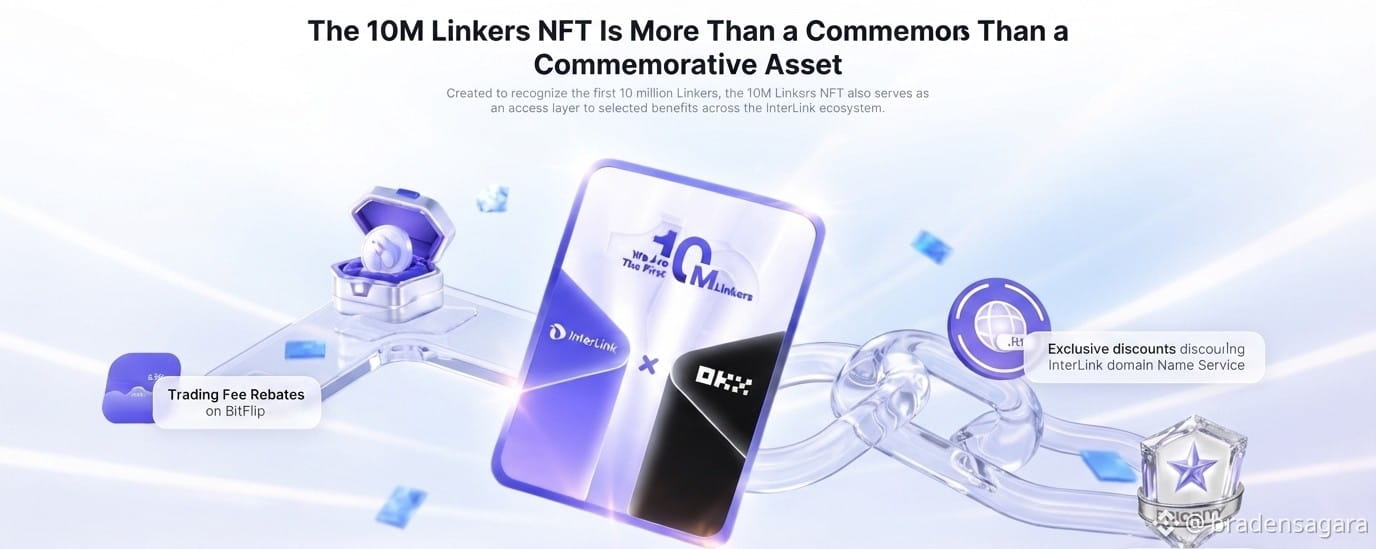
Post 4: Web3 Commerce & Practical Adoption
🛒 The real test for any blockchain ecosystem is moving beyond speculative trading into practical, everyday utility. InterLink is actively bridging this gap!
Through projects like LinkersMap and INS, InterLink is building tools that make Web3 accessible and functional for everyday life:
Digital Identity: Human-readable domain names replacing complex wallet addresses.
Real-World Integration: Giving local merchants smart contract tools to set up commerce, shipping, and payment logic.
Bringing real-world commerce on-chain is how we achieve mass adoption. InterLink is building those foundations today! 🚚🔒
#InterLink #ITLG #ITL
🛒 The real test for any blockchain ecosystem is moving beyond speculative trading into practical, everyday utility. InterLink is actively bridging this gap!
Through projects like LinkersMap and INS, InterLink is building tools that make Web3 accessible and functional for everyday life:
Digital Identity: Human-readable domain names replacing complex wallet addresses.
Real-World Integration: Giving local merchants smart contract tools to set up commerce, shipping, and payment logic.
Bringing real-world commerce on-chain is how we achieve mass adoption. InterLink is building those foundations today! 🚚🔒
#InterLink #ITLG #ITL
Post 3: The Power of the InterLink Ambassador Program
🤝 True decentralization relies on an active, passionate community. The InterLink Ambassador Program is designed to empower content creators, educators, and Web3 enthusiasts who drive real value for the ecosystem.
Spread the Word: Educate the wider Web3 space about upcoming dApp launches and feature upgrades.
Earn Rewards: Participate in daily tasks, climb leaderboards, and share in pool distributions.
Shape the Future: Act as a bridge between the core development team and everyday users.
If you are passionate about Web3 and community building, being an Ambassador for #InterLink is the ultimate place to contribute and grow! 🏆✨
#InterLink #ITLG #ITL
🤝 True decentralization relies on an active, passionate community. The InterLink Ambassador Program is designed to empower content creators, educators, and Web3 enthusiasts who drive real value for the ecosystem.
Spread the Word: Educate the wider Web3 space about upcoming dApp launches and feature upgrades.
Earn Rewards: Participate in daily tasks, climb leaderboards, and share in pool distributions.
Shape the Future: Act as a bridge between the core development team and everyday users.
If you are passionate about Web3 and community building, being an Ambassador for #InterLink is the ultimate place to contribute and grow! 🏆✨
#InterLink #ITLG #ITL
Post 1: Ecosystem Vision & Core Value
🌐 Building a unified Web3 experience isn't just about launching dApps—it's about creating interconnected utility. The InterLink ecosystem brings together trading, digital identity, automated governance, and real-world commerce under one seamless framework.
Interoperability: Connecting key Web3 primitives through ITL andITLG.
Community First: Rewarding active participation, feedback, and ecosystem contribution.
Real Utility: Driving practical use cases from decentralized trading on Bitflip to merchant solutions on LinkersMap.
As the ecosystem expands, every new feature brings us closer to a fully integrated decentralized future. What aspect of InterLink are you utilizing the most today? Let's discuss below! 🚀
#InterLink #ITLG #ITL
🌐 Building a unified Web3 experience isn't just about launching dApps—it's about creating interconnected utility. The InterLink ecosystem brings together trading, digital identity, automated governance, and real-world commerce under one seamless framework.
Interoperability: Connecting key Web3 primitives through ITL andITLG.
Community First: Rewarding active participation, feedback, and ecosystem contribution.
Real Utility: Driving practical use cases from decentralized trading on Bitflip to merchant solutions on LinkersMap.
As the ecosystem expands, every new feature brings us closer to a fully integrated decentralized future. What aspect of InterLink are you utilizing the most today? Let's discuss below! 🚀
#InterLink #ITLG #ITL
Log in to explore more content