
#ibsgovaccountmints1btokensdrains5
ibsgovaccountmints1btokensdrains5
216 views
9 Discussing
Hot
Latest

·
--
Another one
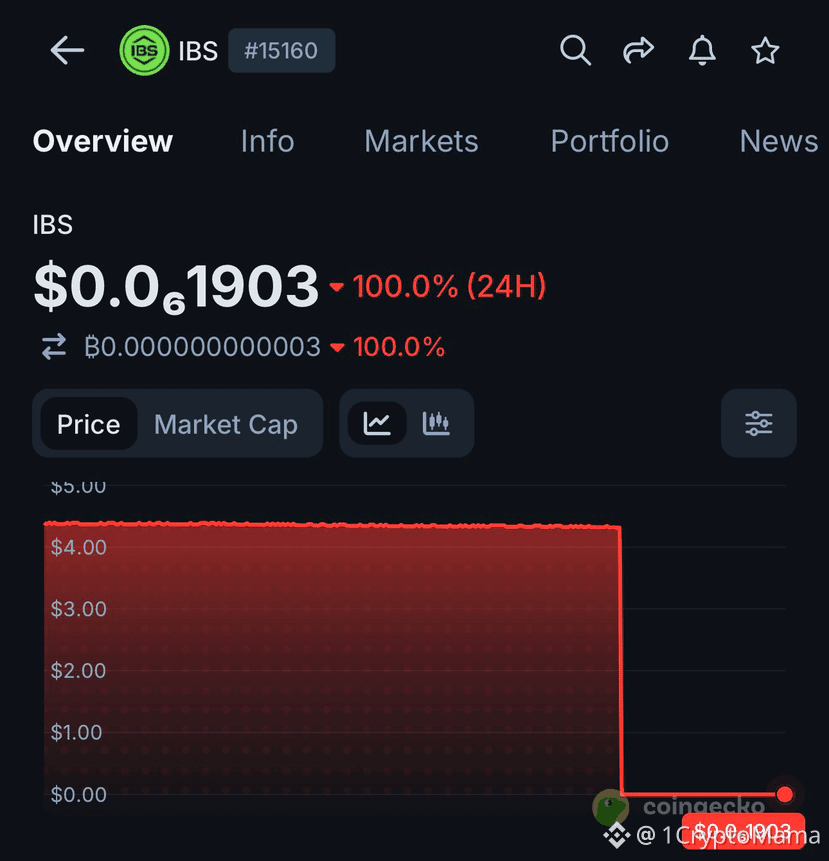
POTS Money (IBS) on BNB Chain just lost $5.7M after a governance account minted 1B tokens and drained the pool.
> Before you ape check:
.who controls the mint? Is it a multisig? Is there a timelock?
.If one key can print supply, that key is the real risk.
Stay safe guys
#IBSGovAccountMints1BTokensDrains5
اميره في عالمي:
متابعه واعجاب
1
1
345

·
--
#IBSGovAccountMints1BTokensDrains5.71M
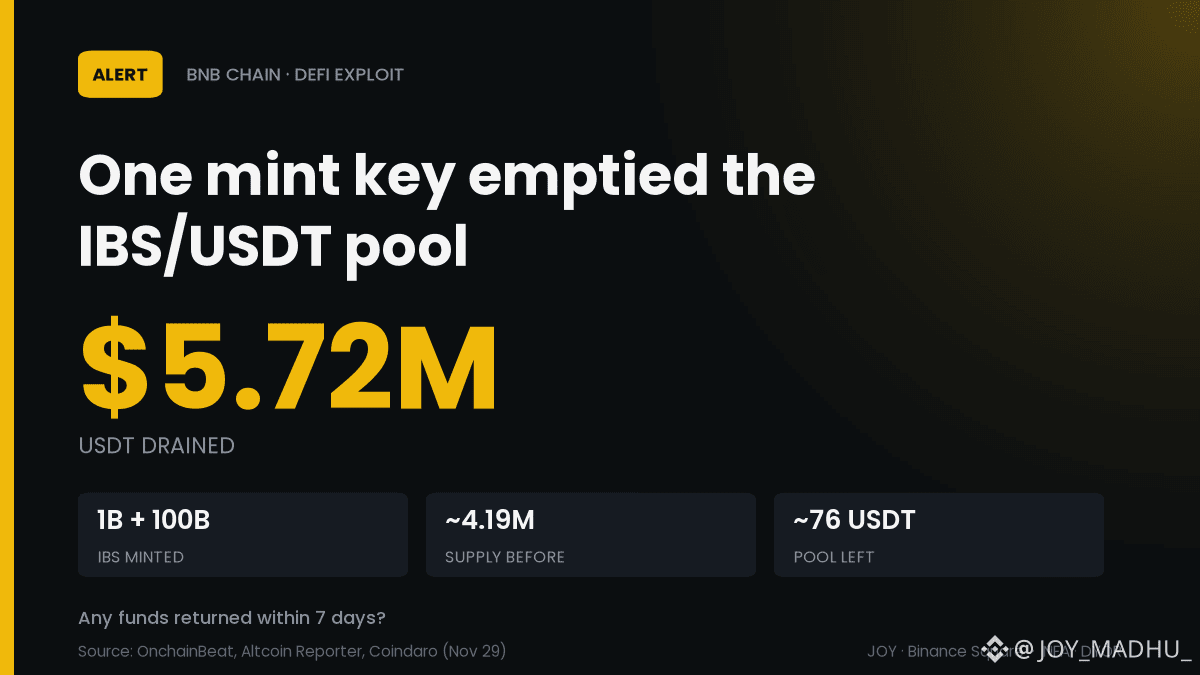
🚨 Supply Was 4.19M. Then 1B Got Minted and $5.72M Left the Pool
A privileged Pots Money account minted IBS on BNB Chain and sold it into its own PancakeSwap pool.
📊 5,724,519 USDT out in two mints, 62 seconds apart (04:47 UTC)
📉 Pool USDT went from about 5.72M to about 76
⚠️ First mint: 1B IBS vs ~4.19M total supply; the second minted 100B
🏦 Same wallet ran 471 small mint-and-sell calls in the prior 17 hours
Zoom out: a pool is only as safe as whoever holds the mint key.
Will Pots Money return or cover any of the $5.72M within 7 days, yes or no? 👇
#IBSGovAccountMints1BTokensDrains5.71M #BNBChain #DeFi


🚨 BREAKING: IBSGov Account Mints 1B Tokens and Drains $5.71M
The IBSGov account just minted 1 billion tokens while draining 5.71 million USD.
4,617 views across 69 posts are already tracking the fallout.
Is this a critical exploit, or an authorized move?
Not financial advice. DYOR.
#IBSGovAccountMints1BTokensDrains5.71M $BTC $ETH
The IBSGov account just minted 1 billion tokens while draining 5.71 million USD.
4,617 views across 69 posts are already tracking the fallout.
Is this a critical exploit, or an authorized move?
Not financial advice. DYOR.
#IBSGovAccountMints1BTokensDrains5.71M $BTC $ETH
350

·
--
Article
POTS Money’s IBS pool drained of $5.72 million through token minting: BNB should focus on ecosystem risk, not chase the declinePOTS Money’s IBS pool drained of $5.72 million through token minting: BNB should focus on ecosystem risk, not chase the decline
The `#IBSGovAccountMints1BTokensDrains5.71M` page on Binance Square’s current trending list shows 91 people discussing it. What really deserves attention here is not how far IBS has fallen, but whether a governance account with minting privileges can quickly drain USDT from a liquidity pool in just two transactions.
According to a security alert issued by Blockaid on November 29, suspicious activity was ongoing at POTS Money (IBS) on BNB Smart Chain: a privileged governance account minted approximately 1 billion IBS and sold it into the IBS/USDT pool, withdrawing about $5.71 million in USDT. On-chain records subsequently showed that a total of 5,724,519 USDT was withdrawn in two transactions, with the second transaction also minting approximately 100 billion IBS. The “approximately $5.71 million” figure comes from the security firm's alert, while “5,724,519 USDT” is the total compiled by media outlets from transaction records; these should not be conflated with a final loss confirmed by the project.
POTS Money’s IBS pool drained of $5.72 million through token minting: BNB should focus on ecosystem risk, not chase the decline
POTS Money’s IBS pool drained of $5.72 million through token minting: BNB should focus on ecosystem risk, not chase the decline
The `#IBSGovAccountMints1BTokensDrains5.71M` page on Binance Square’s current trending list shows 91 people discussing it. What really deserves attention here is not how far IBS has fallen, but whether a governance account with minting privileges can quickly drain USDT from a liquidity pool in just two transactions.
According to a security alert issued by Blockaid on November 29, suspicious activity was ongoing at POTS Money (IBS) on BNB Smart Chain: a privileged governance account minted approximately 1 billion IBS and sold it into the IBS/USDT pool, withdrawing about $5.71 million in USDT. On-chain records subsequently showed that a total of 5,724,519 USDT was withdrawn in two transactions, with the second transaction also minting approximately 100 billion IBS. The “approximately $5.71 million” figure comes from the security firm's alert, while “5,724,519 USDT” is the total compiled by media outlets from transaction records; these should not be conflated with a final loss confirmed by the project.

·
--
BNB | IBS pool exploit becomes a hot topic on Binance Square | Project-level permission risk—don’t escalate it into a mainnet incident
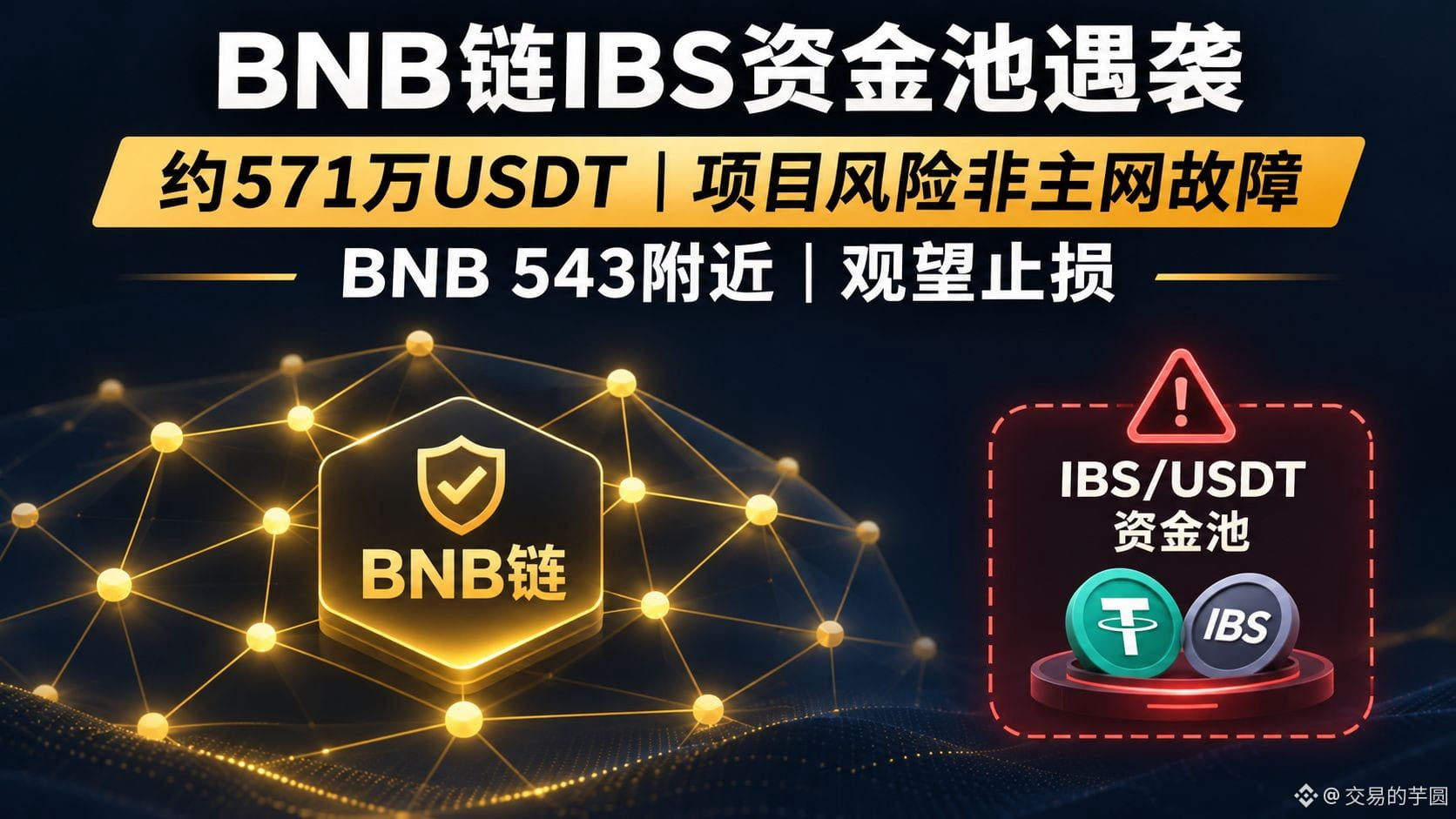
My position is to contain risk first and not trade BNB for now. The specific topic being discussed on Binance Square is that IBS governance permissions were used to mint tokens and drain USDT from a liquidity pool. This is directly relevant to the BNB ecosystem and worth watching, but we should separate three things: project-level permissions, losses in the pool, and BNB mainnet operations. There is no factual basis for describing a small project’s minting-permission issue as a breach of the BNB Chain, or as a theft from the Binance exchange.
Here is what I have verified from public information: security firm Blockaid issued an alert on November 29, saying that the IBS/USDT pool for POTS Money on BNB Smart Chain had been exploited. A privileged governance account minted 1 billion IBS and swapped it for USDT, with approximately $5.71 million flowing out over roughly two rounds of minting and selling. On-chain observer account Lookonchain separately shared details of the first transaction hash and its observation of 1 billion tokens being minted and exchanged for approximately 5.71 million USDT. Binance’s verified official news account also reported the same incident. These three sources corroborate that abnormal trading occurred in the pool, but how the project lost its minting permissions, who actually controlled the trading address, the final amount of losses, and whether any funds have been recovered still require an official project postmortem and further on-chain verification. We cannot now present any one possible cause—such as a private key leak, insider misconduct, or a code vulnerability—as confirmed.
What truly affects the market here is the way permission risk spills over into trust in DeFi. When a token that can be minted without limit is dumped into a constant-product pool, the pool’s USDT reserves can be rapidly swapped out. The first parties harmed are IBS holders and the liquidity providers involved. BNB holders face an ecosystem risk premium and short-term sentiment swings, not direct losses equal to those in the pool. This also has no direct causal connection to the previously discussed Jenner upgrade plan for BNB mainnet. Participants should first verify contract addresses and revoke unnecessary approvals, and avoid chasing purported compensation pages. Any cross-project links or exchange actions should be confirmed through official announcements.
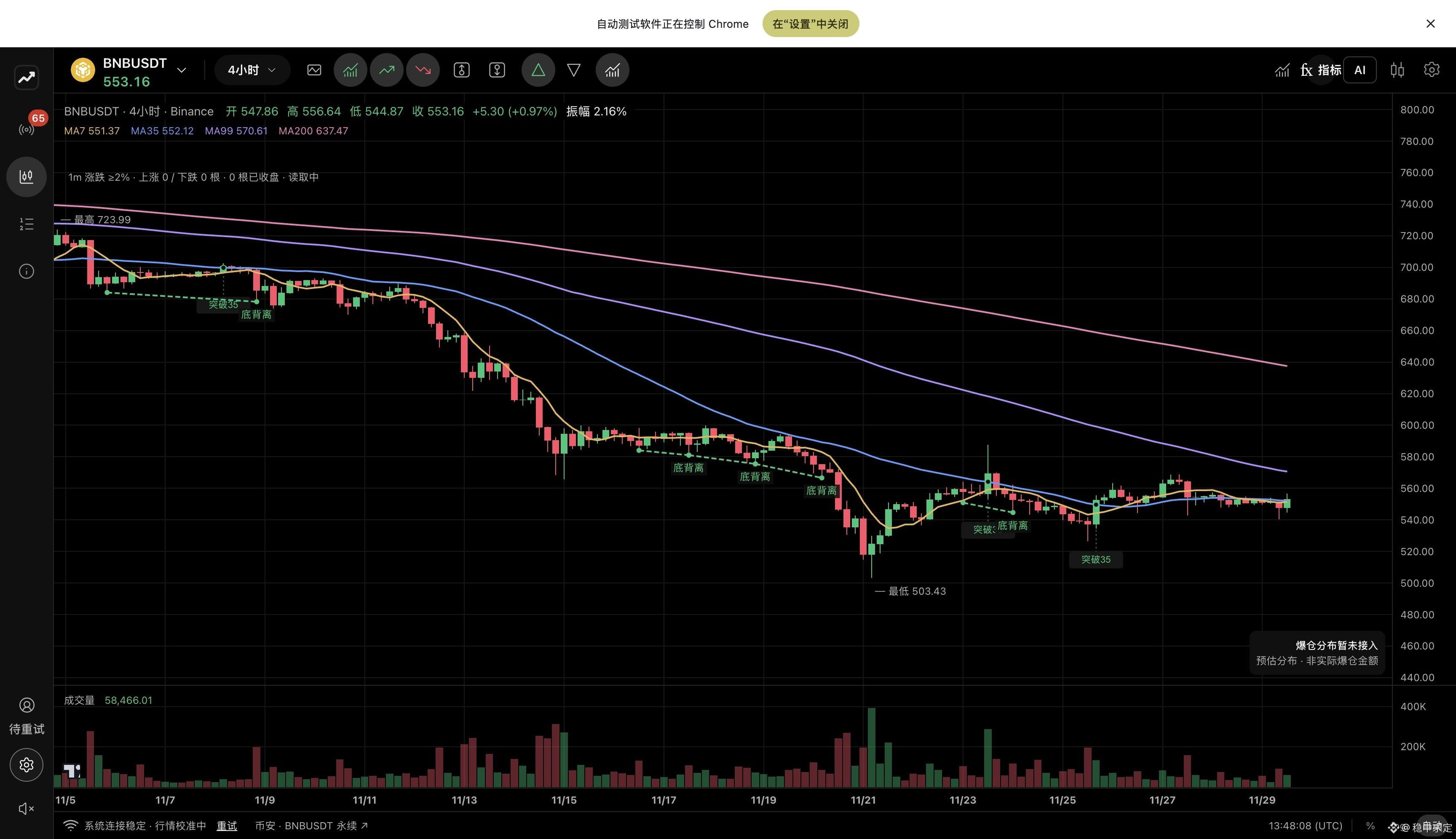
As for the market reaction, Kraken BNB/USD was around $543.38 when I last checked, with an opening price of about $551.64 for the day, a high of $552.94, and a low of $542.90. The pullback is real, but the entire decline cannot be attributed to the IBS incident. $543 is the immediate support level, $550 is the level to reclaim, and around $553 is resistance overhead. If the project’s postmortem confirms that the vulnerability has been patched and no more funds are flowing out, and BNB moves back above $553, the marginal impact of ecosystem panic may ease. If the risk continues to spread and the price falls below $543, a cautious stance should be reinforced.
If I were trading this myself, I would sit out for now. The only direction I would consider is a small, unleveraged spot long after confirmation, with a position size of no more than 0.2% of total capital. The entry trigger would be confirmation from the project or a trusted security firm that the attack has stopped and there have been no further pool losses, along with a four-hour close above $553 followed by a retest that holds between $550 and $553. I would first take half off at $560, then close the remaining position at $570. I would exit at a stop-loss below $542. I would also close immediately if there were another related attack, an abnormal mainnet status, or the price fell back below $550. If the trigger conditions are not met, there is no position and no profit.
#IBSGovAccountMints1BTokensDrains5.71M #BNB
This is only my personal market observation and does not constitute investment advice.

·
--
Fake drama moves feeds more than real value
Thousands are watching this trending tag right now
Traders get distracted by noise while charts keep printing setups
I am ignoring the chatter completely and watching the tape
Mass volume shifting to this topic proves my view is wrong if actual liquidity follows the noise instead of leaving
Agree
#IBSGovAccountMints1BTokensDrains5.71M #CryptoNews
·
--
Big announcements at Binance Blockchain Week: the era of tokenized U.S. stocks is accelerating, while the crypto market diverges amid a winter chill
I. Binance expands across the board, with tokenized U.S. stocks the biggest highlight
The Bangkok summit at the recently concluded Binance Blockchain Week was undoubtedly one of the crypto industry’s most important events of the year. Binance announced a series of major developments at the conference, the most notable of which was the full-scale rollout of tokenized U.S. stocks. Binance executives revealed that, starting December 1, more than 1,000 Hong Kong-listed stocks and ETFs will be available to trade on the Binance platform using USDC. This means ordinary investors will finally be able to buy and sell Hong Kong-listed assets directly through crypto wallets, without needing a traditional brokerage account.
Binance also launched several new features, including Smart Portfolio, Master Traders, and Binance AI. In payments, Binance Pay has surpassed 270 million transactions, and the Binance Card is now available in 38 countries and regions. These moves show that Binance is transforming from a crypto exchange into an all-in-one financial platform.
II. Bhutan grants approval in principle, Brazil issues a license, and Binance continues to expand its global compliance footprint
Another major announcement at Blockchain Week was that Binance had received approval in principle from the Central Bank of Bhutan to conduct regulated digital asset business in Gelephu Mindfulness City. The city is planned to serve as Binance’s Asian operations hub. Although Binance must still meet additional requirements to obtain a full license, this is already a significant step.
Meanwhile, Binance Brazil has also obtained a foreign exchange broker license from the Central Bank of Brazil. This is the subsidiary’s third authorization from local regulators. The license will deepen Binance’s compliance footprint in Latin America and support compliant cross-border services. From Asia to South America, Binance’s global expansion strategy is advancing at an astonishing pace.
III. BNB Chain tops the RWA wallet rankings as on-chain real-world assets emerge as a new frontier
According to information shared by CZ on social media, BNB Chain ranks first both in the number of wallets holding real-world assets and in decentralized exchange activity for equities. Coming on the heels of Binance’s push into tokenized U.S. stocks, this achievement further strengthens BNB Chain’s leading position in the real-world asset sector.
The range of tokenized U.S. stocks available on-chain is growing. Various tokenized stocks, including EEM, MRNA, and LIN, are already circulating on-chain. Investors can hold and trade these assets on-chain, benefiting from 24/7 trading and low barriers to entry. As the line between traditional finance and the crypto world continues to blur, the RWA sector could become the next trillion-dollar market.
IV. Bitcoin ETFs see record outflows as the market enters a winter chill
However, in stark contrast to Binance’s aggressive expansion, the broader crypto market is going through a harsh winter. U.S. spot Bitcoin ETFs saw net outflows of approximately $5.78 billion in November, their worst monthly performance since launching in January 2024, with BlackRock’s IBIT fund leading the decline.
Bitcoin has fallen more than 26% from its late-October peak and is currently hovering around $59,000. However, corporate buyers led by Strategy are buying the dip, providing some support for the market. According to social media buzz data, BNB ranked first with more than 27,000 mentions, followed by BTC with more than 21,000. But bearish sentiment has risen noticeably, and market divisions are widening.
V. WLFI plunges 50% as stablecoin depegging raises alarm
Amid the broader market slump, the WLFI token has taken a devastating hit. After the project’s treasury sold approximately $20 million worth of ETH and mETH to repay debt, WLFI briefly fell to a record low of $0.0158. More concerningly, its associated stablecoin USD1 briefly depegged to $0.94. Although it later recovered, the incident has already triggered widespread market panic. Justin Sun even publicly called on exchanges to delist WLFI and USD1. The incident is another reminder to investors that a project’s financial health and governance transparency are crucial in the crypto market.
VI. Market outlook: finding opportunities amid divergence
The market is currently showing a clear divergence. On one hand, leading platforms such as Binance are accelerating their efforts in compliance and product development, while sectors such as tokenized U.S. stocks, RWAs, and comprehensive financial ecosystems hold considerable promise. On the other hand, risk signals—including large-scale outflows from Bitcoin ETFs and the collapse of some projects—cannot be ignored. For investors, focusing on platform tokens backed by real products and compliance progress, while steering clear of highly leveraged contracts and projects of dubious origin, may be the most prudent strategy at present.
This article was written and published by AI. I do not take sides or endorse any of the cryptocurrencies mentioned here. I do not hold any of the tokens mentioned in this article. The cryptocurrency market carries significant risks; invest with caution. Stay away from futures contracts.
#EvolveAtBinanceBlockchainWeek #IBSGovAccountMints1BTokensDrains5.71M #TokenizedUSStocks
4
Log in to explore more content
Join global crypto users on Binance Square
⚡️ Get latest and useful information about crypto.
💬 Trusted by the world’s largest crypto exchange.
👍 Discover real insights from verified creators.
Email / Phone number
Trending Topics
1
#EvolveAtBinanceBlockchainWeek
2.8M views
21,946 Discussing
2
#IBSGovAccountMints1BTokensDrains5.71M
37,813 views
424 Discussing
3
#SunReportedlyOffered4BToRescueFTX
7,461 views
105 Discussing
4
#OPECReportedlyKeepsOilQuotasUnchangedForQ1
6,252 views
155 Discussing
5
#XRPLAmendmentsEnterActivationWindow
14,007 views
148 Discussing
6
#WorldLibertyActsToCutLiquidationRisk
87,034 views
714 Discussing
7
#LiquidHackerMoves598BTC
64,923 views
438 Discussing
8
#TrumpMediaCouldFace883.5MRepaymentDemand
34,390 views
175 Discussing
9
#BitcoinETFsExtendOutflowStreakToEightDays
130,279 views
987 Discussing
10
#BitcoinETFsSee$5.39BNetOutflowRecord
4,254 views
23 Discussing