
#grece
grece
7 views
2 Discussing
Hot
Latest

·
--
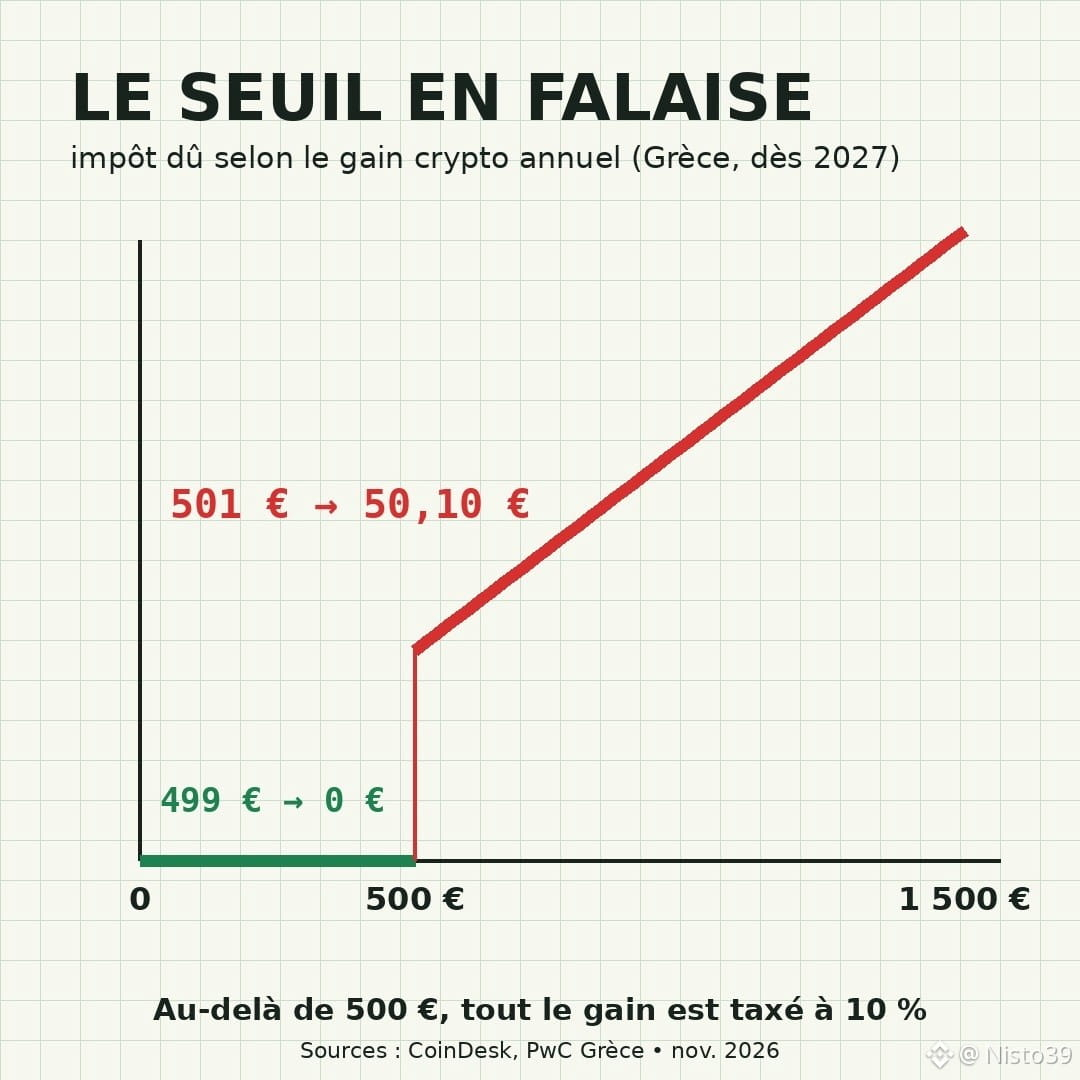
501 euros in gains: €50.10 in tax. 499 euros: zero.
That’s the rule Greece just passed (Parliament, Thursday, November 5). Starting January 1, 2027, individuals’ crypto capital gains will be taxed at 10%. With one detail that changes everything: the €500 exempt per year is not a deductible allowance. As soon as you go over it, the entire gain is taxed, not just the excess.
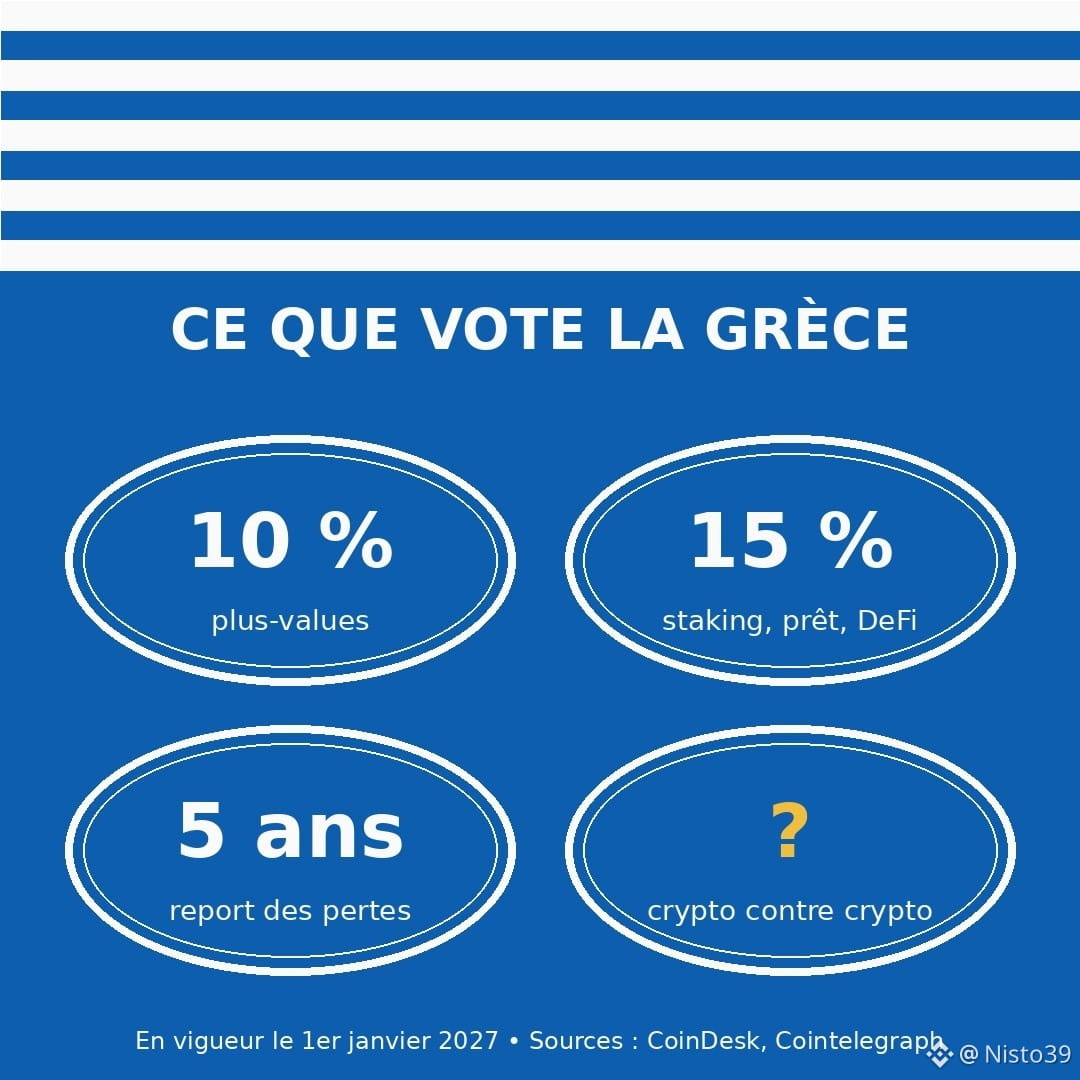
The rest of the bill, briefly:
– staking, crypto lending and DeFi liquidity: 15%, treated as interest (staking means locking up your tokens to secure a network in exchange for a reward);
– paying for a purchase with crypto counts as a sale;
– losses over €500 can be carried forward for 5 years;
– 12 months to declare past gains without a penalty, with tax due within 60 days.
The unclear point: swapping one crypto for another. The Finance Ministry says it isn’t taxed. Parliament’s scientific service warns that, as written, the bill could cover it. For anyone trading back and forth $ETH / $SOL all year, that’s no small detail.
My take: 10% is low by European standards, and the voluntary disclosure window is pretty smart. But a cliff-edge threshold encourages some odd calculations in December: sell a little less, wait until January, split up your sales. A simple allowance would have avoided that.
I bet this combination (low rate, threshold, amnesty for past gains) will inspire other countries that want to tax crypto without driving it away, including here at home.
Sources: CoinDesk, Cointelegraph, PwC Greece, November 5–6, 2026. Not tax or financial advice.
Cliff-edge threshold or deductible allowance: which seems fairer to you?
#Crypto #Fiscalite #Grece #CryptoNews #Staking
501 euros in gains: €50.10 in tax. 499 euros: zero.
That’s the rule Greece just passed (Parliament, Thursday, November 5). Starting January 1, 2027, individuals’ crypto capital gains will be taxed at 10%. With one detail that changes everything: the €500 exempt per year is not a deductible allowance. As soon as you go over it, the entire gain is taxed, not just the excess.
The rest of the bill, briefly:
– staking, crypto lending and DeFi liquidity: 15%, treated as interest (staking means locking up your tokens to secure a network in exchange for a reward);
– paying for a purchase with crypto counts as a sale;
– losses over €500 can be carried forward for 5 years;
– 12 months to declare past gains without a penalty, with tax due within 60 days.
The unclear point: swapping one crypto for another. The Finance Ministry says it isn’t taxed. Parliament’s scientific service warns that, as written, the bill could cover it. For anyone trading back and forth $ETH / $SOL all year, that’s no small detail.
My take: 10% is low by European standards, and the voluntary disclosure window is pretty smart. But a cliff-edge threshold encourages some odd calculations in December: sell a little less, wait until January, split up your sales. A simple allowance would have avoided that.
I bet this combination (low rate, threshold, amnesty for past gains) will inspire other countries that want to tax crypto without driving it away, including here at home.
Sources: CoinDesk, Cointelegraph, PwC Greece, November 5–6, 2026. Not tax or financial advice.
Cliff-edge threshold or deductible allowance: which seems fairer to you?
#Crypto #Fiscalite #Grece #CryptoNews #Staking
That’s the rule Greece just passed (Parliament, Thursday, November 5). Starting January 1, 2027, individuals’ crypto capital gains will be taxed at 10%. With one detail that changes everything: the €500 exempt per year is not a deductible allowance. As soon as you go over it, the entire gain is taxed, not just the excess.
The rest of the bill, briefly:
– staking, crypto lending and DeFi liquidity: 15%, treated as interest (staking means locking up your tokens to secure a network in exchange for a reward);
– paying for a purchase with crypto counts as a sale;
– losses over €500 can be carried forward for 5 years;
– 12 months to declare past gains without a penalty, with tax due within 60 days.
The unclear point: swapping one crypto for another. The Finance Ministry says it isn’t taxed. Parliament’s scientific service warns that, as written, the bill could cover it. For anyone trading back and forth $ETH / $SOL all year, that’s no small detail.
My take: 10% is low by European standards, and the voluntary disclosure window is pretty smart. But a cliff-edge threshold encourages some odd calculations in December: sell a little less, wait until January, split up your sales. A simple allowance would have avoided that.
I bet this combination (low rate, threshold, amnesty for past gains) will inspire other countries that want to tax crypto without driving it away, including here at home.
Sources: CoinDesk, Cointelegraph, PwC Greece, November 5–6, 2026. Not tax or financial advice.
Cliff-edge threshold or deductible allowance: which seems fairer to you?
#Crypto #Fiscalite #Grece #CryptoNews #Staking
35
Log in to explore more content
Join global crypto users on Binance Square
⚡️ Get latest and useful information about crypto.
💬 Trusted by the world’s largest crypto exchange.
👍 Discover real insights from verified creators.
Email / Phone number
Trending Topics
1
#NvidiaInvestigatesAfterHuang’sAffairApology
86,214 views
957 Discussing
2
#BitcoinFiveWeeklyLosses
106,879 views
1,418 Discussing
3
#AIChipSlumpNasdaq
54,095 views
878 Discussing
4
#CPITestsDecemberRateOutlook
538,467 views
2,300 Discussing
5
#AnthropicRejectsIPODelayValuationinQuestion
7,603 views
163 Discussing
6
#CryptoLiquidationsReach$1.16BIn24Hours
131 views
7 Discussing
7
#EUInstitutionsInviteIndustryToSetTokenizedSecuritiesStandards
93 views
3 Discussing
8
#ChinaCACListsFiveIssuesAffectingBlockchainFilings
1,156 views
40 Discussing
9
#UKBanksCanNowApplyToConductCryptoAssetBusiness
1,140 views
30 Discussing
10
#AmundiAdds$72.3MInStrategyShares
408 views
10 Discussing