

#framework
framework
11,878 views
25 Discussing
Hot
Latest

·
--

Article
Framework Ventures Just Closed a $400 Million Fund — And the Way They're Spending It Tells You ExactFramework Ventures — the San Francisco VC that made early bets on Aave, Chainlink, and Hyperliquid — just closed a $400 million fourth fund. It was oversubscribed. The LP base includes sovereign wealth funds, an Ivy League endowment, nonprofit organizations, and funds of funds. And roughly half the capital is already deployed.
But here is the part that actually matters: the fund is not going into crypto alone.
Framework is investing across blockchain, artificial intelligence, robotics, and energy — all under the label "frontier technology." Co-founder Vance Spencer's exact words: "The boundaries between frontier technologies are dissolving rapidly. The next generation of category-defining companies will not fit neatly into one vertical." The firm already led a $60 million Series A in Mecka AI, a robotics data startup with Mag 7 customers and a projected $100 million annual run rate. In February, it arranged $500 million in financing through the Sky stablecoin ecosystem alongside mortgage company Better — a deal where crypto rails fund a traditional real estate lending business.
This is the single most important signal in venture capital for crypto investors to understand right now. Framework is not abandoning crypto. They still hold major positions in Hyperliquid, Aave, Chainlink, Plasma, and Jito. But they have explicitly concluded that the next category-defining companies will sit at the intersection of blockchain, AI, and physical technology — not purely inside one vertical.
Paradigm is reportedly seeking up to $1.5 billion for a fund with the same cross-disciplinary thesis. Framework raised $100 million in 2021, $400 million in 2022, and $400 million again now — same size, completely different mandate. The market they're targeting has expanded.
For crypto investors reading this: the smart money is not leaving crypto. It is expanding the definition of what crypto-native investing means. Blockchain rails, AI decision-making, robotics for physical execution — the same founders who built DeFi are now building across all three. Framework's oversubscribed fund, backed by sovereign wealth and Ivy League endowments during a bear market, is the clearest possible signal that institutional confidence in the long-term thesis has not moved. Only the investment mandate has widened.
The question is whether the token market catches up to what the venture market already knows. Based on Framework's deployment pace — half of $400 million already committed before the fund even closed — the answer appears to be: the builders aren't waiting for prices to recover before they start.$BTC
$MUB $SPCXB
Please subscribe, like, and share this article. It genuinely helps.
#framework #venturecapital #AI #crypto #DeFi #BinanceSquare
Framework Ventures Just Closed a $400 Million Fund — And the Way They're Spending It Tells You Exact
Framework Ventures — the San Francisco VC that made early bets on Aave, Chainlink, and Hyperliquid — just closed a $400 million fourth fund. It was oversubscribed. The LP base includes sovereign wealth funds, an Ivy League endowment, nonprofit organizations, and funds of funds. And roughly half the capital is already deployed.
But here is the part that actually matters: the fund is not going into crypto alone.
Framework is investing across blockchain, artificial intelligence, robotics, and energy — all under the label "frontier technology." Co-founder Vance Spencer's exact words: "The boundaries between frontier technologies are dissolving rapidly. The next generation of category-defining companies will not fit neatly into one vertical." The firm already led a $60 million Series A in Mecka AI, a robotics data startup with Mag 7 customers and a projected $100 million annual run rate. In February, it arranged $500 million in financing through the Sky stablecoin ecosystem alongside mortgage company Better — a deal where crypto rails fund a traditional real estate lending business.
This is the single most important signal in venture capital for crypto investors to understand right now. Framework is not abandoning crypto. They still hold major positions in Hyperliquid, Aave, Chainlink, Plasma, and Jito. But they have explicitly concluded that the next category-defining companies will sit at the intersection of blockchain, AI, and physical technology — not purely inside one vertical.
Paradigm is reportedly seeking up to $1.5 billion for a fund with the same cross-disciplinary thesis. Framework raised $100 million in 2021, $400 million in 2022, and $400 million again now — same size, completely different mandate. The market they're targeting has expanded.
For crypto investors reading this: the smart money is not leaving crypto. It is expanding the definition of what crypto-native investing means. Blockchain rails, AI decision-making, robotics for physical execution — the same founders who built DeFi are now building across all three. Framework's oversubscribed fund, backed by sovereign wealth and Ivy League endowments during a bear market, is the clearest possible signal that institutional confidence in the long-term thesis has not moved. Only the investment mandate has widened.
The question is whether the token market catches up to what the venture market already knows. Based on Framework's deployment pace — half of $400 million already committed before the fund even closed — the answer appears to be: the builders aren't waiting for prices to recover before they start.$BTC
$MUB $SPCXB
Please subscribe, like, and share this article. It genuinely helps.
#framework #venturecapital #AI #crypto #DeFi #BinanceSquare
But here is the part that actually matters: the fund is not going into crypto alone.
Framework is investing across blockchain, artificial intelligence, robotics, and energy — all under the label "frontier technology." Co-founder Vance Spencer's exact words: "The boundaries between frontier technologies are dissolving rapidly. The next generation of category-defining companies will not fit neatly into one vertical." The firm already led a $60 million Series A in Mecka AI, a robotics data startup with Mag 7 customers and a projected $100 million annual run rate. In February, it arranged $500 million in financing through the Sky stablecoin ecosystem alongside mortgage company Better — a deal where crypto rails fund a traditional real estate lending business.
This is the single most important signal in venture capital for crypto investors to understand right now. Framework is not abandoning crypto. They still hold major positions in Hyperliquid, Aave, Chainlink, Plasma, and Jito. But they have explicitly concluded that the next category-defining companies will sit at the intersection of blockchain, AI, and physical technology — not purely inside one vertical.
Paradigm is reportedly seeking up to $1.5 billion for a fund with the same cross-disciplinary thesis. Framework raised $100 million in 2021, $400 million in 2022, and $400 million again now — same size, completely different mandate. The market they're targeting has expanded.
For crypto investors reading this: the smart money is not leaving crypto. It is expanding the definition of what crypto-native investing means. Blockchain rails, AI decision-making, robotics for physical execution — the same founders who built DeFi are now building across all three. Framework's oversubscribed fund, backed by sovereign wealth and Ivy League endowments during a bear market, is the clearest possible signal that institutional confidence in the long-term thesis has not moved. Only the investment mandate has widened.
The question is whether the token market catches up to what the venture market already knows. Based on Framework's deployment pace — half of $400 million already committed before the fund even closed — the answer appears to be: the builders aren't waiting for prices to recover before they start.$BTC
$MUB $SPCXB
Please subscribe, like, and share this article. It genuinely helps.
#framework #venturecapital #AI #crypto #DeFi #BinanceSquare
56

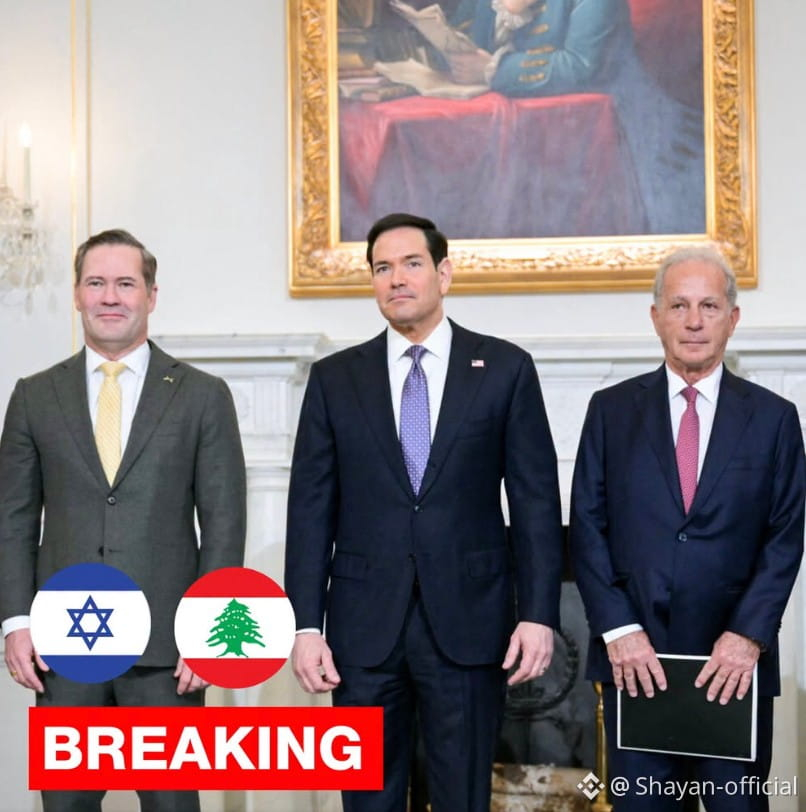
🚨UPDATE: Hezbollah has REJECTED the U.S.-brokered framework agreement, as per the NYT.
#Uptade #Hezbollah #Framework
🚨UPDATE: Hezbollah has REJECTED the U.S.-brokered framework agreement, as per the NYT.
#Uptade #Hezbollah #Framework
#Uptade #Hezbollah #Framework

78

·
--
Article
Systematic Trading BookI am not going to discuss the entry or exit rule.70 However the position sizing, money management and stop loss are a mess.Firstly why 3%? Will this generate the right amount of risk? What if I’m particularly conservative, should I still use 3%? If I don’t like a particular trade that much, what should I bet? I typically have 40 positions in my portfolio, so should I be putting 40 lots of 3% of my portfolio at risk at any one time (meaning 120% of my total portfolio is at risk)? Does 3% make sense if I am using a slower trading rule?The position sizes above might make sense for someone with an account size of perhaps £50,000 and a certain risk appetite, but what about everyone else? They might be correct when the book was written, but are they still right when we read it five years later? What about an instrument that isn’t listed, can we trade it? How?Finally, setting a stop loss based solely on your capital and personal pain threshold is incorrect.71 Someone with a tiny account who hated losing money would be triggering their very tight stops after a few minutes, whilst a large hedge fund might close a losing position after decades. Stops that would make sense in oil futures would be completely wrong in the relatively quiet USD/CAD FX market. A stop that was correct in the peaceful calm of 2006 would be absurdly tight in the insanity we saw in 2008.The solution is to separate out the components of your system: trading rules (including explicit or implicit stop losses), position sizing, and the calculation of your volatility 70. The rules aren’t too bad, as they are purely systematic and very simple. However they are binary (you’reeither fully in or out) which isn’t ideal, and having only one trading rulevariationis also less than perfect.71. This is recognised by most good traders. Here is Jack Schwager, inHedge Fund Wizards, interviewinghedge fund manager Colm O’Shea: Jack: “So you don’t use stops?” Colm: “No I do. I just set them wideenough. In those early days I wasn’t setting stops at levels that made sense on the underlying hypothesis of thetrade. I was setting stopsbased on my pain threshold. When I get out of a trade now it is because I was wrong.... Prices areinconsistent with my hypothesis. I’m wrong and I need to get out and rethink the situation.” (Myemphasis.)95Systematic Tradingtarget (the average amount of cash you are willing to risk). You can then design each component independently of the other moving parts.Trading rules and stop losses should be based only on expected market price volatility, and should never take your account size into consideration. Calculating a volatility target, how much of your capital to put at risk, is a function of account size and your pain threshold.72 Positions should then be sized based on how volatile markets are, how confident your price forecasts are, and the amount of capital you wish to gamble. Each of these components is part of the modular framework which together form a complete trading system. Why a modular framework?Remember that I drew an analogy between cars and trading systems in the introduction of this book. Trading rules are the engine of the system. These give you a forecast for instrument prices; whether they are expected to go up or down and by how much.In a car the chassis, drive train and gearbox translate the power the engine is producing into forward movement. Similarly, you will have a position risk management frameworkwrapped around your trading rules. This translates forecasts into the actual positions you need to hold.As I said in the introduction the components of a modern car are modular, so they can be individually substituted for alternatives. The trading rules and other components in my framework can also be swapped and changed.The words module and component could imply that these are complex processes which need thousands of lines of computer code to implement. This is not the case. Every part involves just a few steps of basic arithmetic which require just a calculator or simple spreadsheet. Let’s look in more detail at the advantages of the modular approach.Flexibility The most obvious benefit of a modular design is flexibility. Cars really can be any colour you like, including black. Similarly my framework can be adapted for almost any trading rule, including the discretionary forecasts used by semi-automatic traders and the very simple rule used by asset allocating investors. If you don’t like the position sizing component, or any other part of the framework, you can replace it with your own.Transparent modules 72. There are other considerations, such as the amount of leverage required versus what is available, and theexpected performance of the system. I’ll discuss these in more detail in chapter nine, ‘Volatility targeting’.96Chapter Five. Framework OverviewIt’s possible to have frameworks that are nicely modular but which contain entirely opaque black boxes. Most PCs are built like this. You can replace the hard disc or graphics card, but you can’t easily modify them or make your own, so you are stuck with substituting one mysterious part with another. In contrast each component in my framework is transparent – I’ll explain how and why it is constructed. This should give you the understanding and confidence to adapt each module, or create your own from scratch. Individual components with well defined interfaceIf you replace the gearbox in your car you need to be sure that the car will still go forward or backwards as required. But if the drive shaft output is reversed on your new gearbox you will end up driving into your front door when you wanted to reverse out of your driveway. To avoid this we need to specify that the shaft on the gearbox must rotate clockwise to make the car go forward, and vice versa.Similarly if you use a new trading rule then the rest of the modular trading system framework should still work correctly and give you appropriately sized positions. To do this the individual components need to have a well defined interface – a specification describing how they interact with other parts of the system. For example in the framework it will be important that a trading rule forecast of say +1.5 has a consistent meaning, no matter what style of trading or instrument you are using.
73 Getting the boring bit right The part of the trading system wrapped around the trading rules, the framework, is something that’s easily ignored. Creating it is a boring task compared with developing new and exciting trading rules, or making your own discretionary forecasts. But it’s incredibly important. By creating a standard framework I’ve done this dull but vital work for you.The framework will work correctly for any trading rule that produces forecasts in a consistent way with the right interface. So it won’t need to be radically redesigned for any new rules. Also by using the framework asset allocating investors and semi-automatic traders can get much of the benefits of systematic trading without using trading rules to forecast prices.73.
It will become clear in later chapters what this consistent meaning is.
97 Systematic Trading Examples give you a starting point Creating a new trading system from scratch is quite a daunting prospect. In the final part of this book there are three detailed examples showing how the framework can be used to suit asset allocating investors, semi-automatic traders and staunch systematic traders. Together these provide a set of systems you can use as a starting point for developing your own ideas.#TradingTales #SystemArchitecture #framework BTC
$BNB $ETH
Systematic Trading Book
I am not going to discuss the entry or exit rule.70 However the position sizing, money management and stop loss are a mess.Firstly why 3%? Will this generate the right amount of risk? What if I’m particularly conservative, should I still use 3%? If I don’t like a particular trade that much, what should I bet? I typically have 40 positions in my portfolio, so should I be putting 40 lots of 3% of my portfolio at risk at any one time (meaning 120% of my total portfolio is at risk)? Does 3% make sense if I am using a slower trading rule?The position sizes above might make sense for someone with an account size of perhaps £50,000 and a certain risk appetite, but what about everyone else? They might be correct when the book was written, but are they still right when we read it five years later? What about an instrument that isn’t listed, can we trade it? How?Finally, setting a stop loss based solely on your capital and personal pain threshold is incorrect.71 Someone with a tiny account who hated losing money would be triggering their very tight stops after a few minutes, whilst a large hedge fund might close a losing position after decades. Stops that would make sense in oil futures would be completely wrong in the relatively quiet USD/CAD FX market. A stop that was correct in the peaceful calm of 2006 would be absurdly tight in the insanity we saw in 2008.The solution is to separate out the components of your system: trading rules (including explicit or implicit stop losses), position sizing, and the calculation of your volatility 70. The rules aren’t too bad, as they are purely systematic and very simple. However they are binary (you’reeither fully in or out) which isn’t ideal, and having only one trading rulevariationis also less than perfect.71. This is recognised by most good traders. Here is Jack Schwager, inHedge Fund Wizards, interviewinghedge fund manager Colm O’Shea: Jack: “So you don’t use stops?” Colm: “No I do. I just set them wideenough. In those early days I wasn’t setting stops at levels that made sense on the underlying hypothesis of thetrade. I was setting stopsbased on my pain threshold. When I get out of a trade now it is because I was wrong.... Prices areinconsistent with my hypothesis. I’m wrong and I need to get out and rethink the situation.” (Myemphasis.)95Systematic Tradingtarget (the average amount of cash you are willing to risk). You can then design each component independently of the other moving parts.Trading rules and stop losses should be based only on expected market price volatility, and should never take your account size into consideration. Calculating a volatility target, how much of your capital to put at risk, is a function of account size and your pain threshold.72 Positions should then be sized based on how volatile markets are, how confident your price forecasts are, and the amount of capital you wish to gamble. Each of these components is part of the modular framework which together form a complete trading system. Why a modular framework?Remember that I drew an analogy between cars and trading systems in the introduction of this book. Trading rules are the engine of the system. These give you a forecast for instrument prices; whether they are expected to go up or down and by how much.In a car the chassis, drive train and gearbox translate the power the engine is producing into forward movement. Similarly, you will have a position risk management frameworkwrapped around your trading rules. This translates forecasts into the actual positions you need to hold.As I said in the introduction the components of a modern car are modular, so they can be individually substituted for alternatives. The trading rules and other components in my framework can also be swapped and changed.The words module and component could imply that these are complex processes which need thousands of lines of computer code to implement. This is not the case. Every part involves just a few steps of basic arithmetic which require just a calculator or simple spreadsheet. Let’s look in more detail at the advantages of the modular approach.Flexibility The most obvious benefit of a modular design is flexibility. Cars really can be any colour you like, including black. Similarly my framework can be adapted for almost any trading rule, including the discretionary forecasts used by semi-automatic traders and the very simple rule used by asset allocating investors. If you don’t like the position sizing component, or any other part of the framework, you can replace it with your own.Transparent modules 72. There are other considerations, such as the amount of leverage required versus what is available, and theexpected performance of the system. I’ll discuss these in more detail in chapter nine, ‘Volatility targeting’.96Chapter Five. Framework OverviewIt’s possible to have frameworks that are nicely modular but which contain entirely opaque black boxes. Most PCs are built like this. You can replace the hard disc or graphics card, but you can’t easily modify them or make your own, so you are stuck with substituting one mysterious part with another. In contrast each component in my framework is transparent – I’ll explain how and why it is constructed. This should give you the understanding and confidence to adapt each module, or create your own from scratch. Individual components with well defined interfaceIf you replace the gearbox in your car you need to be sure that the car will still go forward or backwards as required. But if the drive shaft output is reversed on your new gearbox you will end up driving into your front door when you wanted to reverse out of your driveway. To avoid this we need to specify that the shaft on the gearbox must rotate clockwise to make the car go forward, and vice versa.Similarly if you use a new trading rule then the rest of the modular trading system framework should still work correctly and give you appropriately sized positions. To do this the individual components need to have a well defined interface – a specification describing how they interact with other parts of the system. For example in the framework it will be important that a trading rule forecast of say +1.5 has a consistent meaning, no matter what style of trading or instrument you are using.
73 Getting the boring bit right The part of the trading system wrapped around the trading rules, the framework, is something that’s easily ignored. Creating it is a boring task compared with developing new and exciting trading rules, or making your own discretionary forecasts. But it’s incredibly important. By creating a standard framework I’ve done this dull but vital work for you.The framework will work correctly for any trading rule that produces forecasts in a consistent way with the right interface. So it won’t need to be radically redesigned for any new rules. Also by using the framework asset allocating investors and semi-automatic traders can get much of the benefits of systematic trading without using trading rules to forecast prices.73.
It will become clear in later chapters what this consistent meaning is.
97 Systematic Trading Examples give you a starting point Creating a new trading system from scratch is quite a daunting prospect. In the final part of this book there are three detailed examples showing how the framework can be used to suit asset allocating investors, semi-automatic traders and staunch systematic traders. Together these provide a set of systems you can use as a starting point for developing your own ideas.#TradingTales #SystemArchitecture #framework BTC
$BNB $ETH
73 Getting the boring bit right The part of the trading system wrapped around the trading rules, the framework, is something that’s easily ignored. Creating it is a boring task compared with developing new and exciting trading rules, or making your own discretionary forecasts. But it’s incredibly important. By creating a standard framework I’ve done this dull but vital work for you.The framework will work correctly for any trading rule that produces forecasts in a consistent way with the right interface. So it won’t need to be radically redesigned for any new rules. Also by using the framework asset allocating investors and semi-automatic traders can get much of the benefits of systematic trading without using trading rules to forecast prices.73.
It will become clear in later chapters what this consistent meaning is.
97 Systematic Trading Examples give you a starting point Creating a new trading system from scratch is quite a daunting prospect. In the final part of this book there are three detailed examples showing how the framework can be used to suit asset allocating investors, semi-automatic traders and staunch systematic traders. Together these provide a set of systems you can use as a starting point for developing your own ideas.#TradingTales #SystemArchitecture #framework BTC
$BNB $ETH
116
Log in to explore more content
Join global crypto users on Binance Square
⚡️ Get latest and useful information about crypto.
💬 Trusted by the world’s largest crypto exchange.
👍 Discover real insights from verified creators.
Email / Phone number
Trending Topics
1
#G7PlansToReleaseUpTo100MBarrelsOilDiesel
120 views
26 Discussing
2
#ICBASuesOCCOverCryptoBankCharters
116 views
21 Discussing
3
#USStocksCloseHigherOnWeakJobsData
56 views
11 Discussing
4
#NFPWatch
10.9M views
19,429 Discussing
5
#BlastToGraduallyShutDownItsL2Network
26 views
8 Discussing
6
#BitcoinFundingRateTriplesTo10%
192,861 views
1,309 Discussing
7
#BitcoinSurpasses$86KUp2.99%
63,597 views
121 Discussing
8
#ZcashFalls21%FromSeptemberPeak
101,927 views
913 Discussing
9
#USSeptemberPayrollsAdd29KUnemploymentRises4.2%
79,537 views
561 Discussing
10
#XRPPostsFirstThreeGreenMonthsInQ3
69,410 views
756 Discussing