
#follow4more
follow4more
2.8M views
8,713 Discussing
Hot
Latest

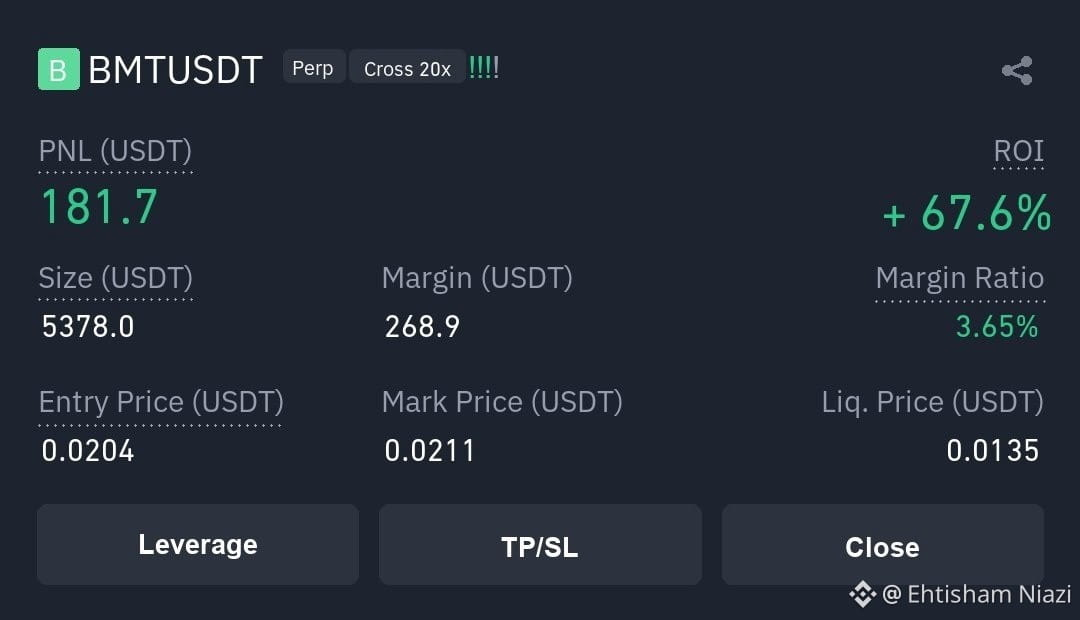
🪙 $BMT /USDT –FREE TRADE RESULT
🎯 Target Status : 1 ✅
💸 Profit : +67%
follow for free trades #freesignal #Follow4more #SİGNAL #TradingSignals
🪙 $BMT /USDT –FREE TRADE RESULT
🎯 Target Status : 1 ✅
💸 Profit : +67%
follow for free trades #freesignal #Follow4more #SİGNAL #TradingSignals
🎯 Target Status : 1 ✅
💸 Profit : +67%
follow for free trades #freesignal #Follow4more #SİGNAL #TradingSignals
Ehtisham Niazi
·
--
#BMT /USDT now at current market price Futures)
You can use 5-20x leverage.
ENTRY: - 0.02068- 0.02016
Targets 👇
1. $0.02110
2. $0.02174
3. $0.02248
Stop loss : $0.01950
#freesignals #freetrade #Follow $BMT
You can use 5-20x leverage.
ENTRY: - 0.02068- 0.02016
Targets 👇
1. $0.02110
2. $0.02174
3. $0.02248
Stop loss : $0.01950
#freesignals #freetrade #Follow $BMT
4


·
--
Bearish
105
·
--
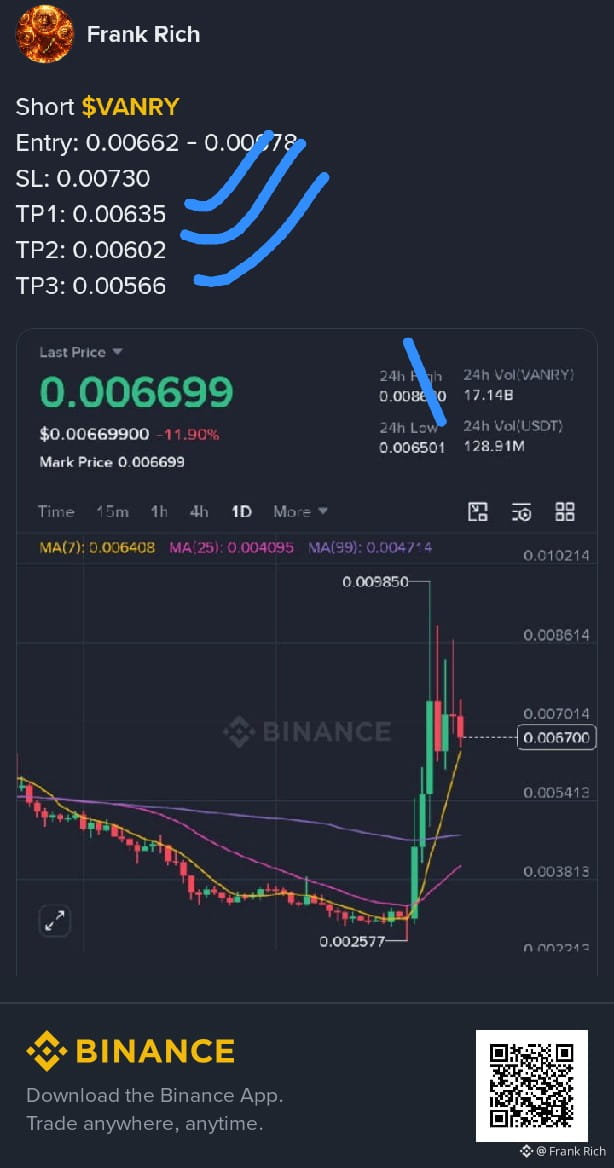
Congratulations to my follows all target 🎯 hitted 🔥💯 #VANRYUSDT $VANRY #Follow4more
Congratulations to my follows all target 🎯 hitted 🔥💯 #VANRYUSDT $VANRY #Follow4more
275

Spreadsheet trade journal to track variance vs. execution errors?A clean spreadsheet trade journal separates variance vs. execution errors by pairing objective pre-trade risk/plan fields with standardized post-trade tags and simple formula-driven summaries. If a trade breaks a rule, it gets flagged immediately—so you can filter out process mistakes and see whether your underlying setup and ATR/risk sizing actually have positive expectancy.
1. Core Columns for a Clean Trade Log
Keep one row per closed trade and group columns in logical left-to-right order so you can use standard Excel/Sheets formulas (SUMIFS, COUNTIFS, AVERAGEIFS) without clutter:
2. Standardized Tags for Variance vs. Execution Errors
Use dropdown data validation (Data > Data Validation > List) on your tag columns so spelling never drifts and summary formulas stay accurate:
Rule_Compliance (Binary Gate):Pass — Setup, stop placement, sizing cap, and cool-off rules were followed.Breach — Any rule was broken (even if the trade ended up green).Outcome_Type (Primary Bucket):Normal_Variance — Rules were followed cleanly, stop was hit or setup failed to follow through.Execution_Error — A rule, sizing cap, order/stop habit, or emotional guardrail was violated.Regime_Mismatch — Rules were followed, but setups are repeatedly failing in current volatility/trend conditions.Error_Tag (Specific Mistake Label — use "None" when Pass):FOMO_Early_Entry — Entered before confirmation or chased an extended candle.Oversized_Position — Exceeded allowed dollar risk or let leverage dictate size.Stop_Moved_Or_Skipped — Widened stop mid-trade, removed stop, or exited late on emotion.Revenge_Or_Tilt — Traded out of frustration, after a loss, or during a cool-off window.Correlated_Stacking — Stacked overlapping exposure across correlated markets/trades.Bad_Fill_Or_Slippage — Entered/exited poorly around news spikes or thin liquidity without accounting for spread/slippage.
3. Essential Summary Metrics & Sheet Layout Tips
Keep a Summary / Dashboard block (or second tab) driven by formulas so you never hand-count stats:
Variance vs. Breach Split: Count how many trades are Pass vs. Breach, and compare average Realized_R on Pass trades against Breach trades—breaches often drag down averages sharply.Loss Breakdown by Bucket: Track total $ and count of losses under Normal_Variance, Execution_Error, and Regime_Mismatch so you know whether to fix execution habits, adjust regime filters, or simply accept normal variance.Layout Hygiene: Put one table per sheet (avoid side-by-side summary tables next to your trade rows), freeze the header row, format dates and currency consistently, and set page setup to Landscape, Fit to 1 Page Wide if you export or print clean review sheets. (This is trade-journaling methodology, not financial advice.)
#Binance #cryptouniverseofficial #Follow4more
Spreadsheet trade journal to track variance vs. execution errors?
A clean spreadsheet trade journal separates variance vs. execution errors by pairing objective pre-trade risk/plan fields with standardized post-trade tags and simple formula-driven summaries. If a trade breaks a rule, it gets flagged immediately—so you can filter out process mistakes and see whether your underlying setup and ATR/risk sizing actually have positive expectancy.
1. Core Columns for a Clean Trade Log
Keep one row per closed trade and group columns in logical left-to-right order so you can use standard Excel/Sheets formulas (SUMIFS, COUNTIFS, AVERAGEIFS) without clutter:
2. Standardized Tags for Variance vs. Execution Errors
Use dropdown data validation (Data > Data Validation > List) on your tag columns so spelling never drifts and summary formulas stay accurate:
Rule_Compliance (Binary Gate):Pass — Setup, stop placement, sizing cap, and cool-off rules were followed.Breach — Any rule was broken (even if the trade ended up green).Outcome_Type (Primary Bucket):Normal_Variance — Rules were followed cleanly, stop was hit or setup failed to follow through.Execution_Error — A rule, sizing cap, order/stop habit, or emotional guardrail was violated.Regime_Mismatch — Rules were followed, but setups are repeatedly failing in current volatility/trend conditions.Error_Tag (Specific Mistake Label — use "None" when Pass):FOMO_Early_Entry — Entered before confirmation or chased an extended candle.Oversized_Position — Exceeded allowed dollar risk or let leverage dictate size.Stop_Moved_Or_Skipped — Widened stop mid-trade, removed stop, or exited late on emotion.Revenge_Or_Tilt — Traded out of frustration, after a loss, or during a cool-off window.Correlated_Stacking — Stacked overlapping exposure across correlated markets/trades.Bad_Fill_Or_Slippage — Entered/exited poorly around news spikes or thin liquidity without accounting for spread/slippage.
3. Essential Summary Metrics & Sheet Layout Tips
Keep a Summary / Dashboard block (or second tab) driven by formulas so you never hand-count stats:
Variance vs. Breach Split: Count how many trades are Pass vs. Breach, and compare average Realized_R on Pass trades against Breach trades—breaches often drag down averages sharply.Loss Breakdown by Bucket: Track total $ and count of losses under Normal_Variance, Execution_Error, and Regime_Mismatch so you know whether to fix execution habits, adjust regime filters, or simply accept normal variance.Layout Hygiene: Put one table per sheet (avoid side-by-side summary tables next to your trade rows), freeze the header row, format dates and currency consistently, and set page setup to Landscape, Fit to 1 Page Wide if you export or print clean review sheets. (This is trade-journaling methodology, not financial advice.)
#Binance #cryptouniverseofficial #Follow4more
1
Cryptographic techniques do K-IFRS auditors use to verify corporate crypto ownership#southkoreaplanstolet3500listedfirmsbuybitcoin
Under K-IFRS and South Korean financial audit expectations, a public blockchain address only proves that coins sit at an address—it does not prove the company controls the spending authority, nor that control is exclusive. Because private keys are the functional equivalent of bearer control and exposing them destroys asset security, auditors rely on asymmetric cryptography, read-only derivation proofs, and structured multi-party signing rituals rather than ever viewing or taking custody of raw private keys.
1. Challenge-Response Digital Signatures (Nonces)
This is the core cryptographic proof of control over a wallet address:
How it works: The auditor generates a fresh, unpredictable nonce (a random challenge string, often including an audit timestamp, engagement ID, and the specific public wallet address).Signing & verification: A designated signer uses the wallet's private key (via an air-gapped hardware signer or MPC signing device) to sign the challenge message without moving any funds. The auditor verifies the resulting digital signature mathematically against the known public key / wallet address using elliptic curve cryptography (such as ECDSA on Bitcoin/EVM chains or EdDSA on other networks).Why a nonce matters: Without a fresh challenge, a company could replay a previously signed message or rely on a third party who only has stale signing access.
2. Extended Public Keys (xpub / ypub / zpub) & Read-Only Derivation
For hierarchical deterministic (HD) wallets, auditors avoid checking addresses one by one manually:
How it works: The entity shares read-only extended public keys (such as xpub/zpub in Bitcoin or read-only account public keys/view keys where supported) rather than seed phrases or private keys.What it proves: Auditors can deterministically derive the tree of receiving and change addresses controlled by that wallet path and reconcile every on-chain UTXO or account balance against the corporate sub-ledger—reducing the risk of cherry-picking only favorable addresses or omitting change addresses.Key boundary: Extended public keys allow address derivation and balance/transaction inspection, not spending—though auditors still treat extended public keys as sensitive because they can link multiple addresses belonging to the same treasury.
3. Multi-Sig & MPC Threshold Attestation
Institutional treasuries rarely use a single private key. Instead, control is split across multiple signers or key shares using Multi-Signature (m-of-n) smart contracts/scripts or Multi-Party Computation (MPC) threshold signatures:
How it works: Rather than assembling a single private key in memory, key shares remain isolated across separate hardware modules, officers, or custodians. During an audit walkthrough, authorized signers produce a valid threshold signature on the auditor's challenge message while observing segregation-of-duties rules (for example, demonstrating that no single individual holds enough key shares or quorum weight to unilaterally move funds).Exclusive/unencumbered control check: Auditors also check smart contracts, co-signer policies, and custodial agreements to verify that no external party holds co-signing veto power, lien rights, or hidden sweeping privileges that would contradict exclusive corporate control.
4. Merkle Proofs & Cryptographic Reserve / Custody Attestations
When assets sit with a third-party custodian or omnibus/segregated setup, cryptographic proofs pair with independent third-party confirmations:
Merkle-tree inclusion proofs: Used when a custodian aggregates balances across clients and publishes cryptographic proofs showing a specific client's balance leaf is included inside a committed Merkle root tied to verifiable on-chain addresses.Why auditors still pair cryptography with legal/custodial evidence: A signature proves signing capability at a point in time, not legal title, absence of off-chain pledges/loans, or ongoing security after the test. Auditors therefore combine cryptographic signing tests with custodial confirmations, smart-contract/governance inspection, and blockchain transaction tracing.
#cryptouniverseofficial #Bianace #Follow4more
Cryptographic techniques do K-IFRS auditors use to verify corporate crypto ownership
#southkoreaplanstolet3500listedfirmsbuybitcoin
Under K-IFRS and South Korean financial audit expectations, a public blockchain address only proves that coins sit at an address—it does not prove the company controls the spending authority, nor that control is exclusive. Because private keys are the functional equivalent of bearer control and exposing them destroys asset security, auditors rely on asymmetric cryptography, read-only derivation proofs, and structured multi-party signing rituals rather than ever viewing or taking custody of raw private keys.
1. Challenge-Response Digital Signatures (Nonces)
This is the core cryptographic proof of control over a wallet address:
How it works: The auditor generates a fresh, unpredictable nonce (a random challenge string, often including an audit timestamp, engagement ID, and the specific public wallet address).Signing & verification: A designated signer uses the wallet's private key (via an air-gapped hardware signer or MPC signing device) to sign the challenge message without moving any funds. The auditor verifies the resulting digital signature mathematically against the known public key / wallet address using elliptic curve cryptography (such as ECDSA on Bitcoin/EVM chains or EdDSA on other networks).Why a nonce matters: Without a fresh challenge, a company could replay a previously signed message or rely on a third party who only has stale signing access.
2. Extended Public Keys (xpub / ypub / zpub) & Read-Only Derivation
For hierarchical deterministic (HD) wallets, auditors avoid checking addresses one by one manually:
How it works: The entity shares read-only extended public keys (such as xpub/zpub in Bitcoin or read-only account public keys/view keys where supported) rather than seed phrases or private keys.What it proves: Auditors can deterministically derive the tree of receiving and change addresses controlled by that wallet path and reconcile every on-chain UTXO or account balance against the corporate sub-ledger—reducing the risk of cherry-picking only favorable addresses or omitting change addresses.Key boundary: Extended public keys allow address derivation and balance/transaction inspection, not spending—though auditors still treat extended public keys as sensitive because they can link multiple addresses belonging to the same treasury.
3. Multi-Sig & MPC Threshold Attestation
Institutional treasuries rarely use a single private key. Instead, control is split across multiple signers or key shares using Multi-Signature (m-of-n) smart contracts/scripts or Multi-Party Computation (MPC) threshold signatures:
How it works: Rather than assembling a single private key in memory, key shares remain isolated across separate hardware modules, officers, or custodians. During an audit walkthrough, authorized signers produce a valid threshold signature on the auditor's challenge message while observing segregation-of-duties rules (for example, demonstrating that no single individual holds enough key shares or quorum weight to unilaterally move funds).Exclusive/unencumbered control check: Auditors also check smart contracts, co-signer policies, and custodial agreements to verify that no external party holds co-signing veto power, lien rights, or hidden sweeping privileges that would contradict exclusive corporate control.
4. Merkle Proofs & Cryptographic Reserve / Custody Attestations
When assets sit with a third-party custodian or omnibus/segregated setup, cryptographic proofs pair with independent third-party confirmations:
Merkle-tree inclusion proofs: Used when a custodian aggregates balances across clients and publishes cryptographic proofs showing a specific client's balance leaf is included inside a committed Merkle root tied to verifiable on-chain addresses.Why auditors still pair cryptography with legal/custodial evidence: A signature proves signing capability at a point in time, not legal title, absence of off-chain pledges/loans, or ongoing security after the test. Auditors therefore combine cryptographic signing tests with custodial confirmations, smart-contract/governance inspection, and blockchain transaction tracing.
#cryptouniverseofficial #Bianace #Follow4more
1
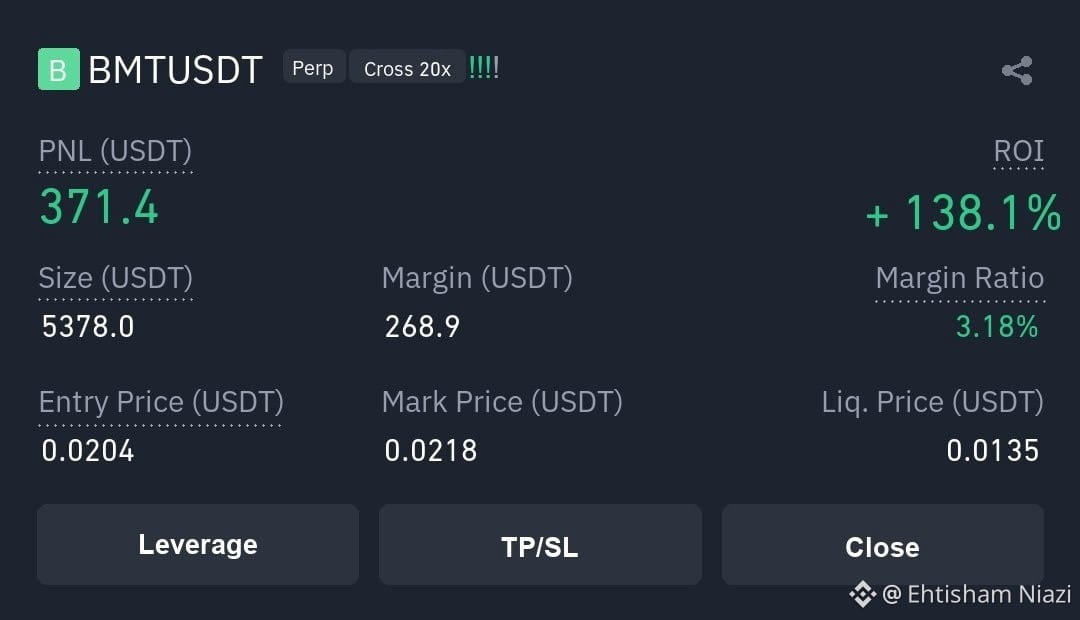
$BMT /USDT –FREE TRADE RESULT
🎯 Target Status : 2 ✅
💸 Profit : +138%
#freesignal #Follow4more #trading #Tipme
$BMT /USDT –FREE TRADE RESULT
🎯 Target Status : 2 ✅
💸 Profit : +138%
#freesignal #Follow4more #trading #Tipme
🎯 Target Status : 2 ✅
💸 Profit : +138%
#freesignal #Follow4more #trading #Tipme
Ehtisham Niazi
·
--
#BMT /USDT now at current market price Futures)
You can use 5-20x leverage.
ENTRY: - 0.02068- 0.02016
Targets 👇
1. $0.02110
2. $0.02174
3. $0.02248
Stop loss : $0.01950
#freesignals #freetrade #Follow $BMT
You can use 5-20x leverage.
ENTRY: - 0.02068- 0.02016
Targets 👇
1. $0.02110
2. $0.02174
3. $0.02248
Stop loss : $0.01950
#freesignals #freetrade #Follow $BMT
32
PAIR: MMT/USDT
🟢 DIRECTION: SHORT📈
LEVERAGE: 25X
ENTRY ZONE
0.2530 - 0.2600
TAKE PROFIT TARGETS
🥇TP1: 0.2470
🥈TP2: 0.2400
🥉TP3: 0.2340
🔝TP4: 0.2270
❌ STOP LOSS: 0.2710
$MMT
#freesignal #Follow4more #free #TradingSignals
PAIR: MMT/USDT
🟢 DIRECTION: SHORT📈
LEVERAGE: 25X
ENTRY ZONE
0.2530 - 0.2600
TAKE PROFIT TARGETS
🥇TP1: 0.2470
🥈TP2: 0.2400
🥉TP3: 0.2340
🔝TP4: 0.2270
❌ STOP LOSS: 0.2710
$MMT
#freesignal #Follow4more #free #TradingSignals
🟢 DIRECTION: SHORT📈
LEVERAGE: 25X
ENTRY ZONE
0.2530 - 0.2600
TAKE PROFIT TARGETS
🥇TP1: 0.2470
🥈TP2: 0.2400
🥉TP3: 0.2340
🔝TP4: 0.2270
❌ STOP LOSS: 0.2710
$MMT
#freesignal #Follow4more #free #TradingSignals
232

·
--
Bullish
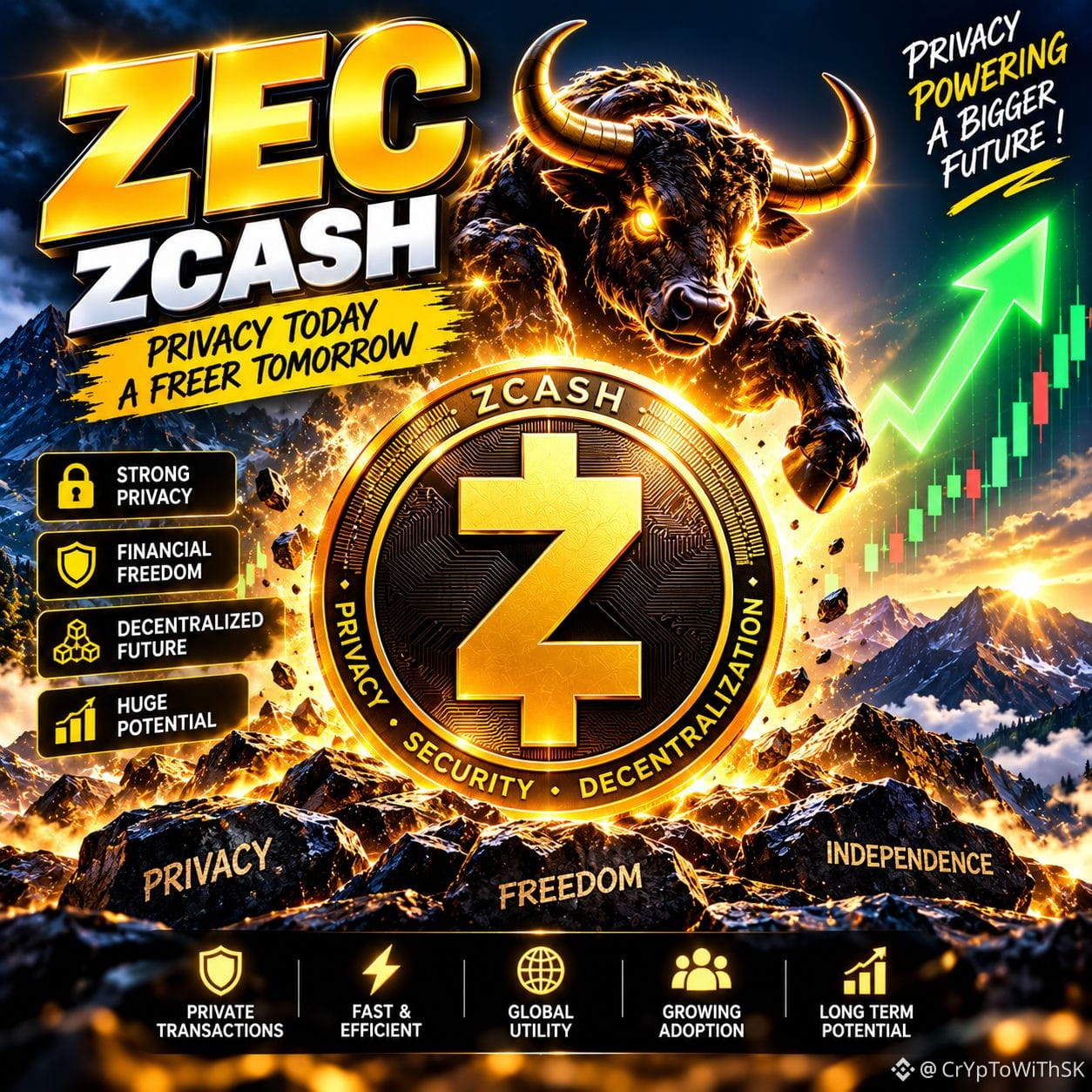
$ZEC Again Moving in Positive Side 🧿✋
Take Rapid Entry : 950
Take Profit : 975
Stop Loss : 940
#BTCRemainsUnderPressureAfterHawkishFOMCMinutes
#BuyTheDip
#zec
#CommentToEnter
#Follow4more
{future}(ZECUSDT)
$ZEC Again Moving in Positive Side 🧿✋
Take Rapid Entry : 950
Take Profit : 975
Stop Loss : 940
#BTCRemainsUnderPressureAfterHawkishFOMCMinutes
#BuyTheDip
#zec
#CommentToEnter
#Follow4more
Take Rapid Entry : 950
Take Profit : 975
Stop Loss : 940
#BTCRemainsUnderPressureAfterHawkishFOMCMinutes
#BuyTheDip
#zec
#CommentToEnter
#Follow4more
1
49

·
--
#AnthropicIPOPriceCouldExceed$80
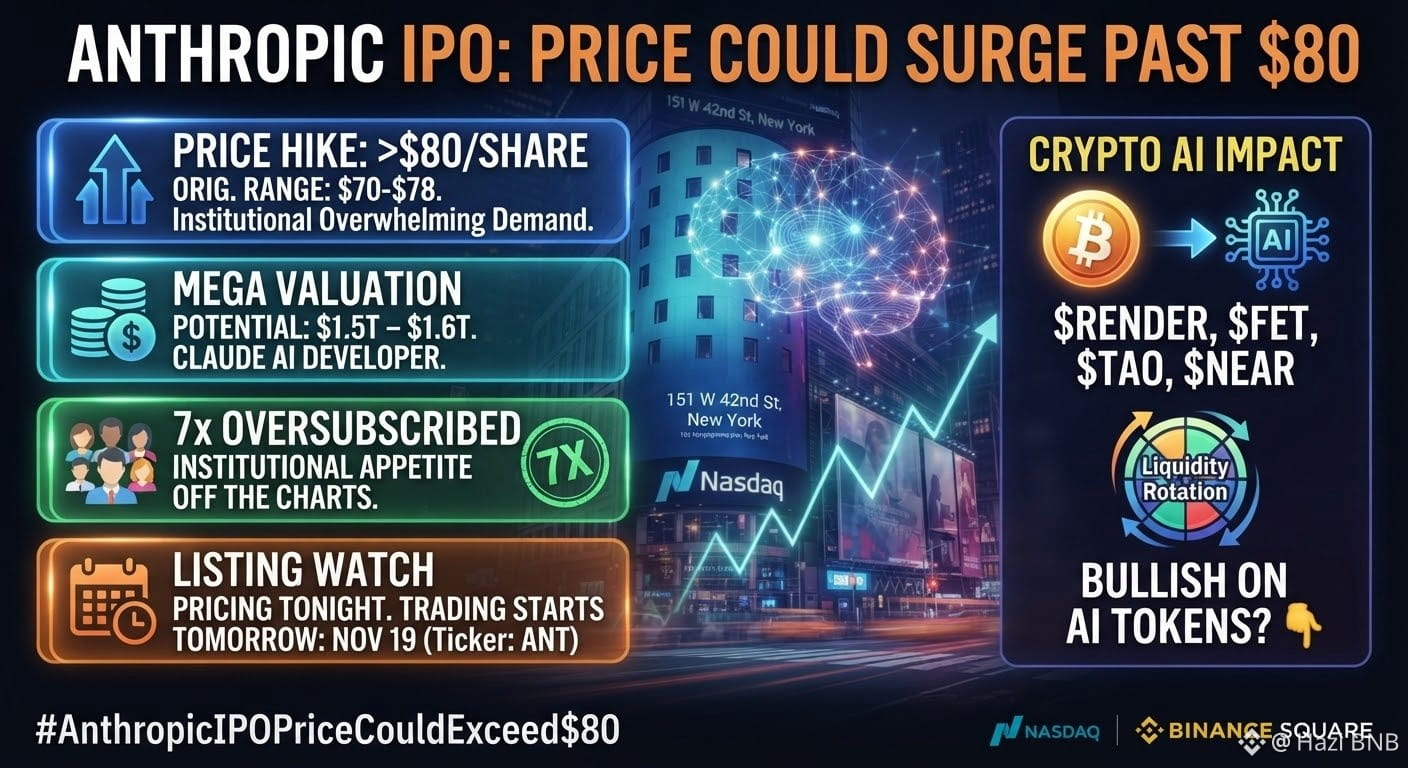
🚨 BREAKING: Anthropic IPO Price Could Surge Past $80! 🚀🤖
Massive institutional demand is shaking up Wall Street ahead of Anthropic's Nasdaq debut (Ticker: ANT)!
Here’s what you need to know:
📈 Price Hike Incoming: Originally set at $70–$78, overwhelming orders from hedge funds could push the final IPO price above $80 per share.
💰 Mega Valuation: This move could catapult the Claude AI developer’s valuation to a staggering $1.5T – $1.6T.
🔥 7x Oversubscribed: Institutional appetite is off the charts, with up to 20% reserved for retail buyers.
📅 Listing Watch: Pricing finalizes tonight, with official trading set to kick off tomorrow, Nov 19.
Why this matters for Crypto: 🪙
Mega AI milestones frequently trigger massive liquidity rotations and sentiment spikes across AI-sector tokens ($RENDER ,$FET, $TAO ,$NEAR ). Keep your watchlists sharp—AI
{future}(NEARUSDT)
narrative volatility is heating up! ⚡
Are you bullish on AI tokens this week, or staying on the sidelines? Drop your thoughts below! 👇💬
#AnthropicIPOPriceCouldExceed$80 #AI #CryptoNews #Follow4more #Anthropic
#AnthropicIPOPriceCouldExceed$80
🚨 BREAKING: Anthropic IPO Price Could Surge Past $80! 🚀🤖
Massive institutional demand is shaking up Wall Street ahead of Anthropic's Nasdaq debut (Ticker: ANT)!
Here’s what you need to know:
📈 Price Hike Incoming: Originally set at $70–$78, overwhelming orders from hedge funds could push the final IPO price above $80 per share.
💰 Mega Valuation: This move could catapult the Claude AI developer’s valuation to a staggering $1.5T – $1.6T.
🔥 7x Oversubscribed: Institutional appetite is off the charts, with up to 20% reserved for retail buyers.
📅 Listing Watch: Pricing finalizes tonight, with official trading set to kick off tomorrow, Nov 19.
Why this matters for Crypto: 🪙
Mega AI milestones frequently trigger massive liquidity rotations and sentiment spikes across AI-sector tokens ($RENDER ,$FET, $TAO ,$NEAR ). Keep your watchlists sharp—AI
narrative volatility is heating up! ⚡
Are you bullish on AI tokens this week, or staying on the sidelines? Drop your thoughts below! 👇💬
#AnthropicIPOPriceCouldExceed$80 #AI #CryptoNews #Follow4more #Anthropic
1.6k
·
--
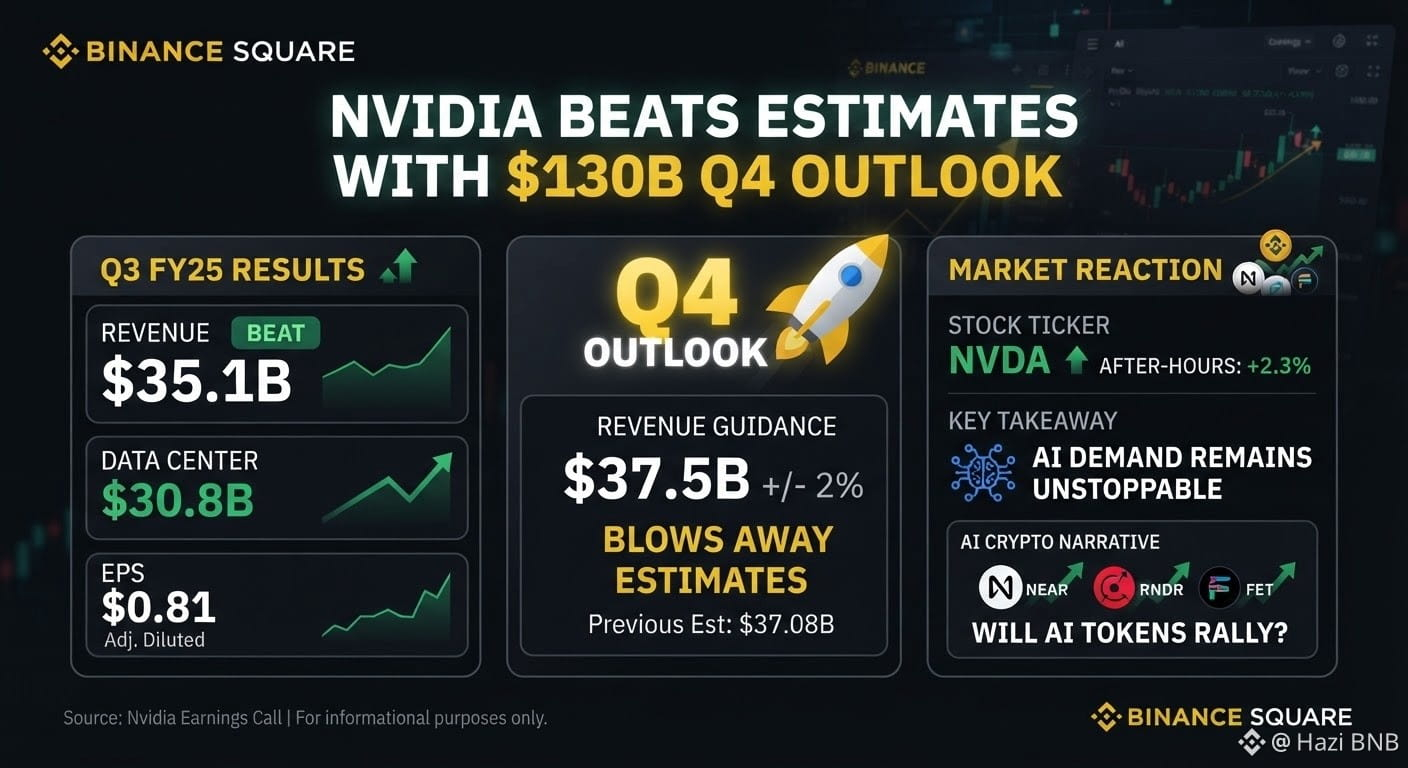
#NvidiaBeatsEstimatesWith$130BQ4Outlook
🔥 NVDA DOES IT AGAIN! 🔥
📊 Q3 Revenue: $115.8B (Beat!)
🔮 Q4 Outlook: $130B (Massive Beat!)
💎 Buybacks: +$150B
Even after leadership changes, the AI engine is unstoppable.🚀👇
🤖 AI Momentum Just Got a Massive Catalyst! 📈
Nvidia’s Q3 earnings blew past Wall Street estimates, signaling that global AI infrastructure spending is still in overdrive:
✅ $115.8B Q3 Revenue (Beat)
✅ $107.6B Data Center Sales (+110% YoY)
✅ $130B Q4 Guidance
While AI cloud stocks are rallying, crypto traders are watching closely to see if this bullish wave spills over into AI tokens and $BTC 👀
$NVII.ETF $BNB #AI #Web3 #BinanceSquareFamily #Follow4more #BNBLUNCPOOL
239





苏菲亚 Sophia
·
--
On-chain with a pure heart, crypto for good—#年年 carries a little tenderness to a mountain hideaway, nurturing innocent dreams✨💫
Market ups and downs are the norm; wild surges and plunges are nothing unusual. What’s truly rare is consensus—and people who keep building steadily even when prices fall. Year after year, we quietly build our strength: no chasing trends, no rushing ahead, just doing the work thoroughly and well. The opportunities meant for us won’t come amid the noise; they’ll appear in the hands of those who are ready. Hold on to consensus, build steadily, and wait patiently for the flowers to bloom💛
@GiggleAcademy @niannianflap777
$BTC $SOL $ETH #BTC☀
#高盛与Millennium各持超12亿美元比特币ETF #Strategy出售209万股MSTR获2.447亿美元 #Anthropic上市倒计时,AI投资热度迎来检验


5
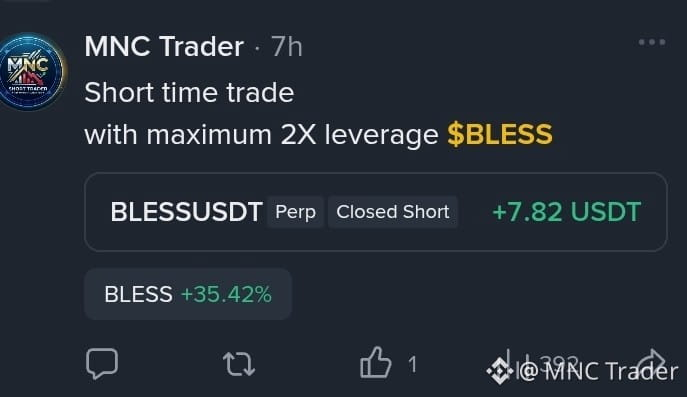
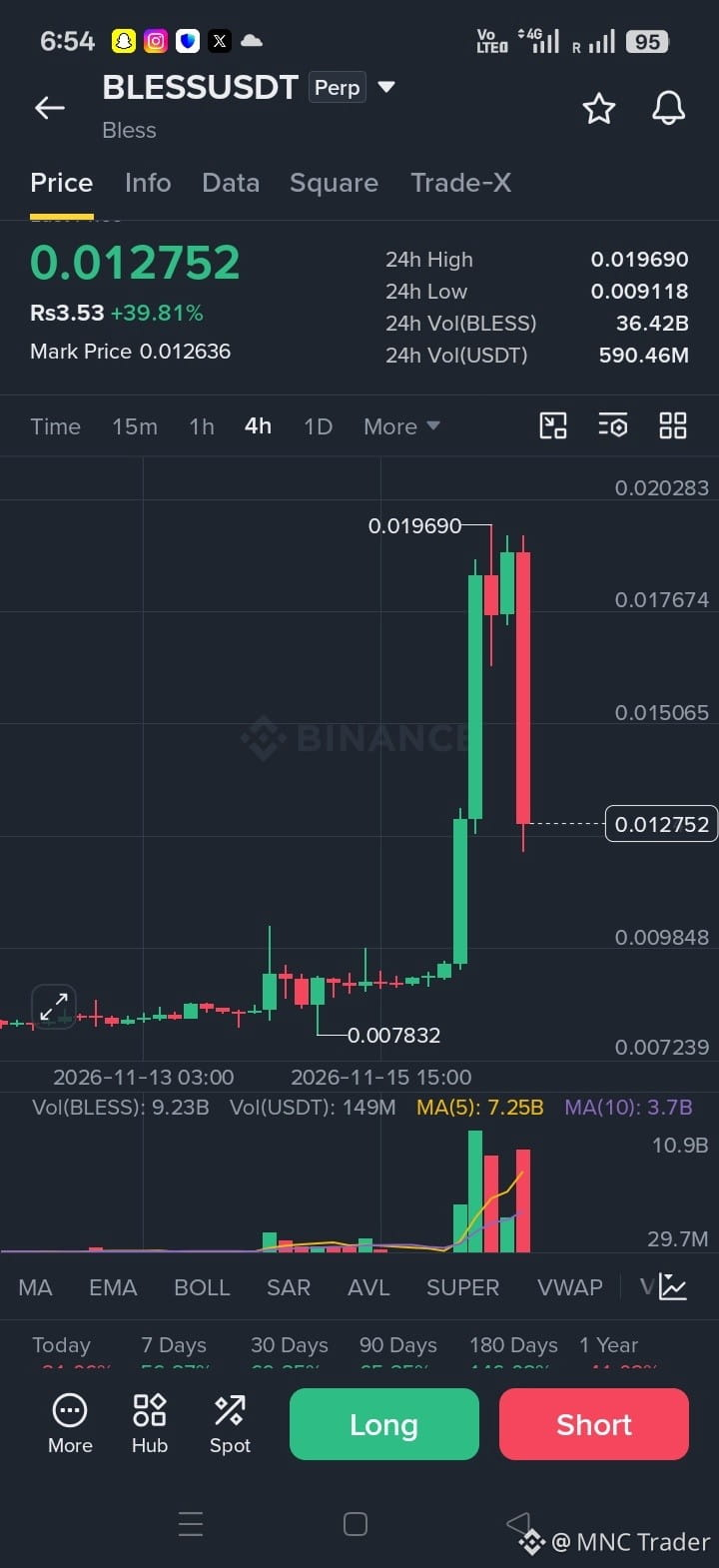
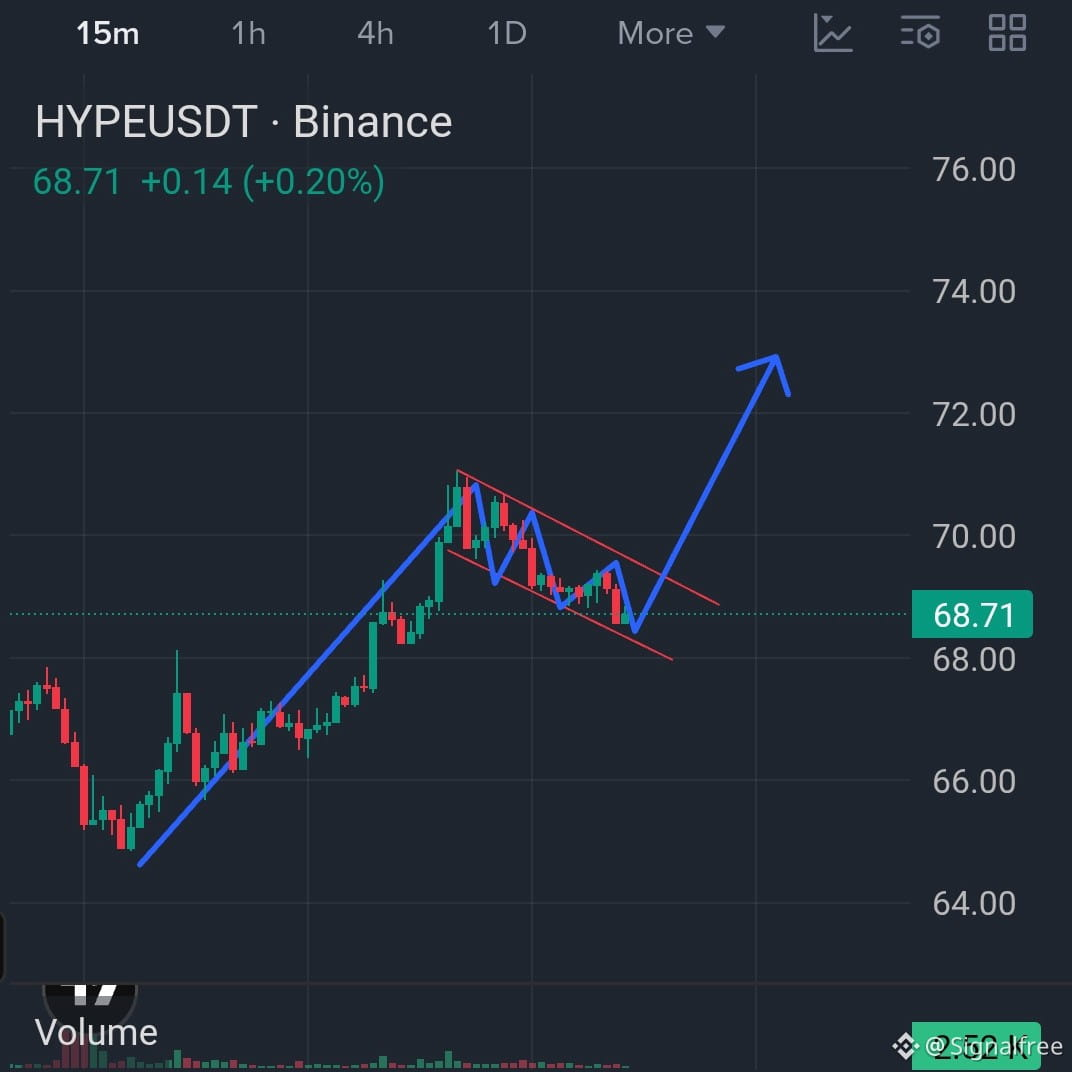

·
--
Bearish
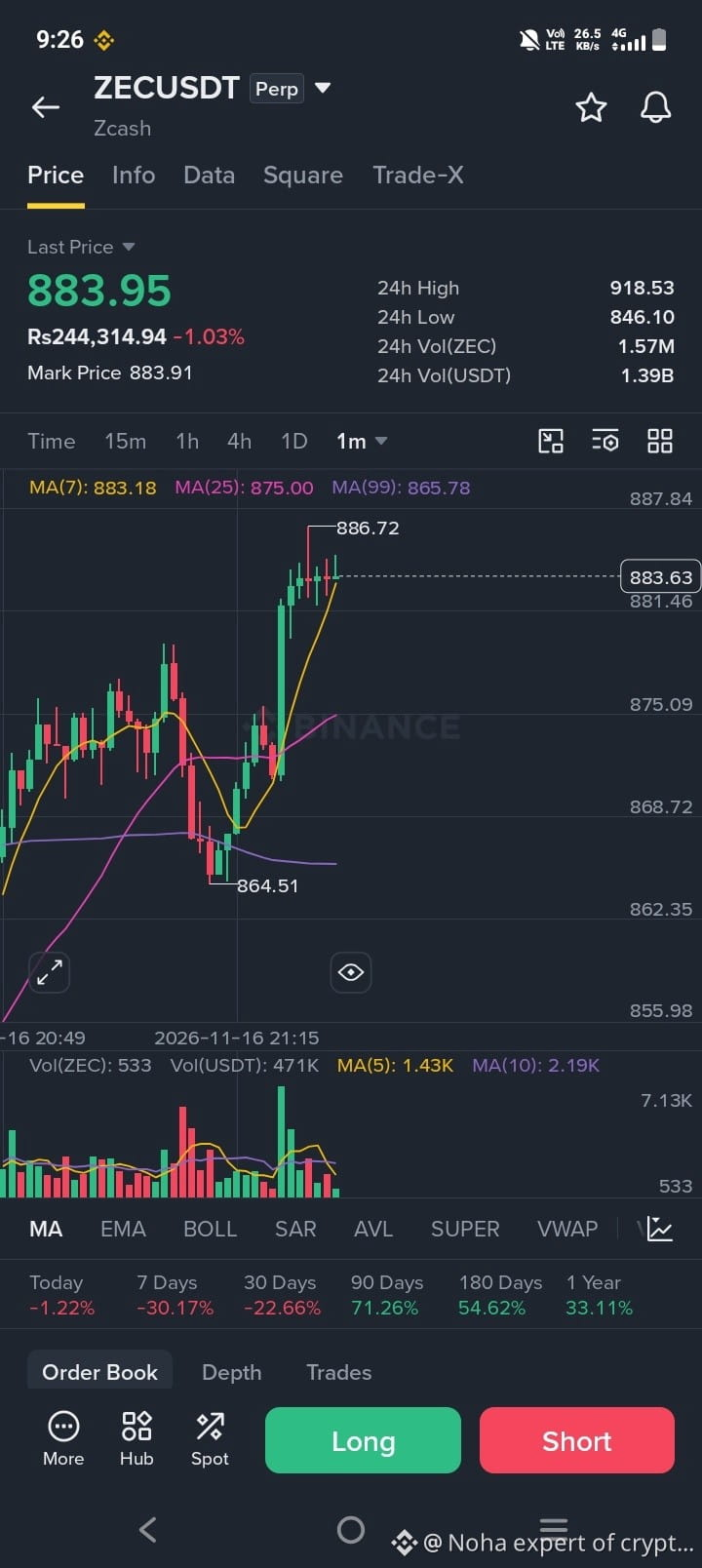
Trudie Hoefle z5BI:
狗托幸好没听你的
1
401
·
--
Bullish
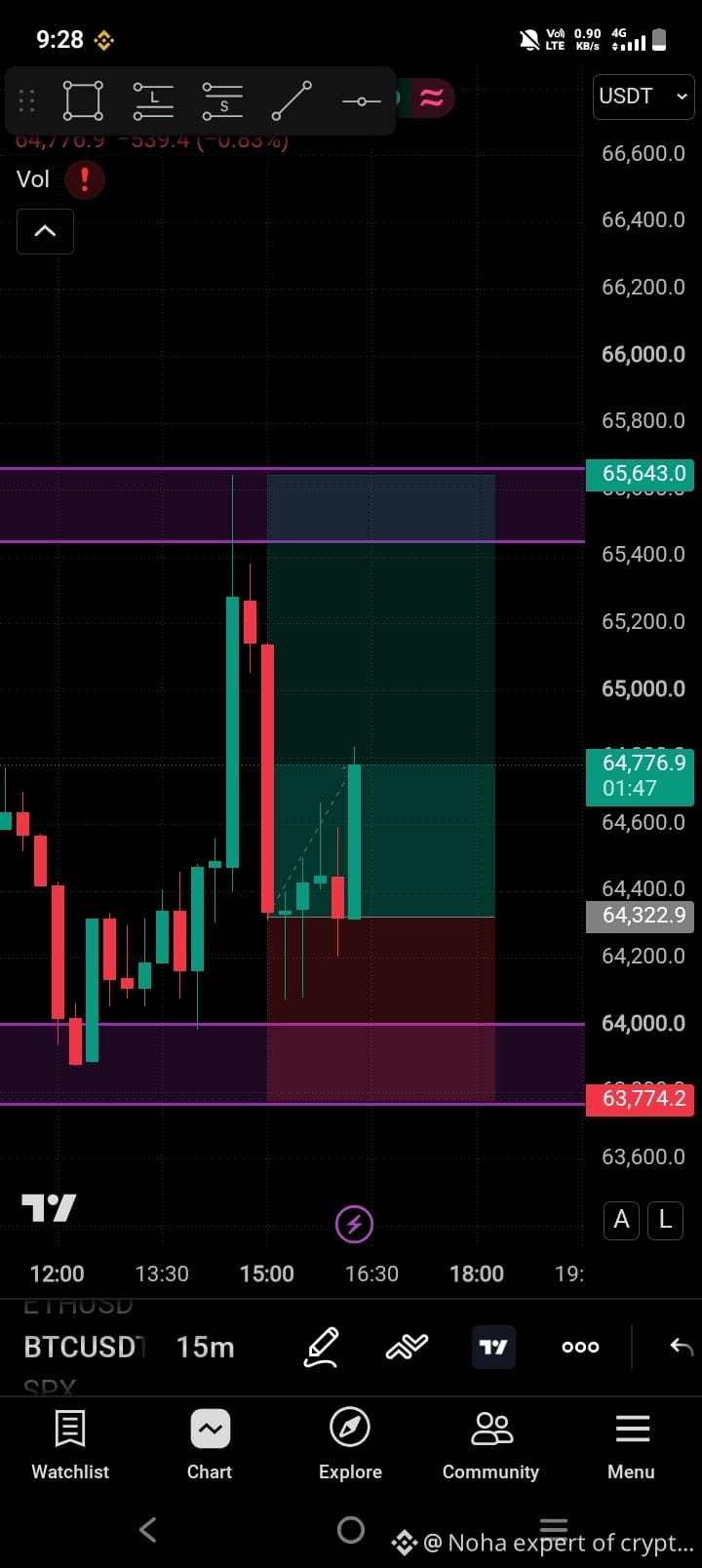
$BTC
{future}(BTCUSDT)
my trades are running too fast accurately 🩶✅😌 alhamdulillah
#TradingTales #signals #Write2Earn
#Follow4more #nohaexpertofcrypto
$BTC
my trades are running too fast accurately 🩶✅😌 alhamdulillah
#TradingTales #signals #Write2Earn
#Follow4more #nohaexpertofcrypto
my trades are running too fast accurately 🩶✅😌 alhamdulillah
#TradingTales #signals #Write2Earn
#Follow4more #nohaexpertofcrypto
66
Log in to explore more content
Join global crypto users on Binance Square
⚡️ Get latest and useful information about crypto.
💬 Trusted by the world’s largest crypto exchange.
👍 Discover real insights from verified creators.
Email / Phone number
Trending Topics
1
#CanBTCReboundAfterFallingBelow60K?
0 views
295 Discussing
2
#GlobalStocksFaceLongestLosingStreakSince2023
0 views
377 Discussing
3
#AnthropicPlungesTowardIPOPriceonDay2
0 views
100 Discussing
4
#GaoTengBitcoinETFListsOnHKEX
0 views
315 Discussing
5
#TradFiForBeginners
946,825 views
5,648 Discussing
6
#NvidiaBoardReportedlySplitOverHuang’sReturn
258,674 views
2,488 Discussing
7
#TetherBurns8BillionUSDTInPast20Days
0 views
125 Discussing
8
#BitcoinWalletSignatureFlawExploitableWithinSeconds
0 views
54 Discussing
9
#CanGTA6'sLaunchLiftTTWOShares?
207,868 views
1,756 Discussing
10
#HongKongProposesSFCLicensingForFourVirtualAssetServices
404 views
32 Discussing