

#fabricprotocoi
fabricprotocoi
3,456 views
71 Discussing
Hot
Latest

Article
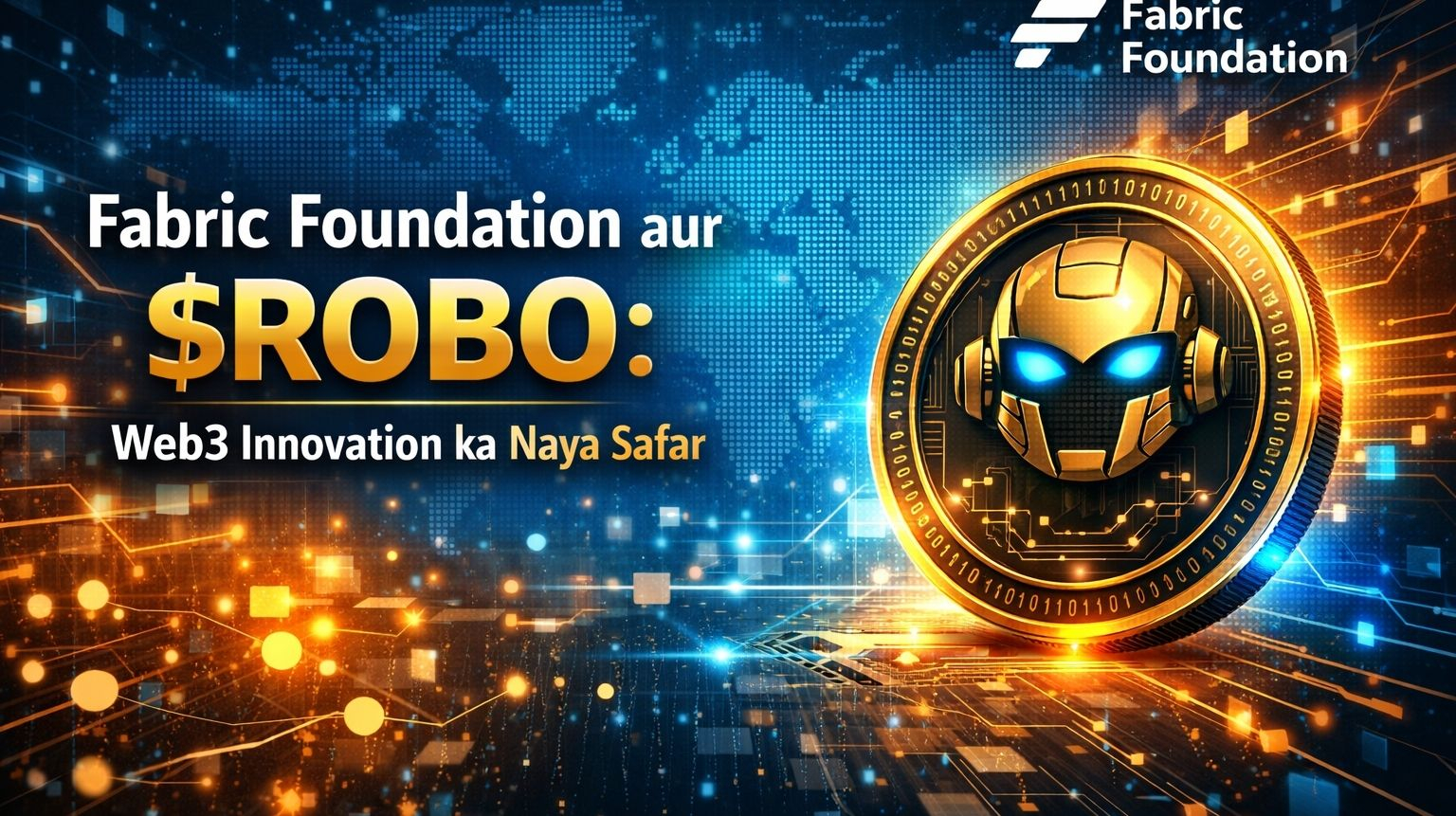
Fabric Foundation And $Robo A New Journey of Web3 Innovation🚀 The world of Crypto and Web3 is growing with new innovations every day, and a strong name in this growth is the mission of the Fabric Foundation to make blockchain technology more powerful, scalable, and accessible so that developers and communities can easily build next-generation decentralized applications.
An important part of this ecosystem is the token. It is not just a token but a symbol of community engagement, ecosystem growth, and future Web3 development. The Fabric Foundation focuses on innovation, transparency, and a strong blockchain infrastructure that supports long-term adoption.
Fabric Foundation And $Robo A New Journey of Web3 Innovation
🚀 The world of Crypto and Web3 is growing with new innovations every day, and a strong name in this growth is the mission of the Fabric Foundation to make blockchain technology more powerful, scalable, and accessible so that developers and communities can easily build next-generation decentralized applications.
An important part of this ecosystem is the token. It is not just a token but a symbol of community engagement, ecosystem growth, and future Web3 development. The Fabric Foundation focuses on innovation, transparency, and a strong blockchain infrastructure that supports long-term adoption.
An important part of this ecosystem is the token. It is not just a token but a symbol of community engagement, ecosystem growth, and future Web3 development. The Fabric Foundation focuses on innovation, transparency, and a strong blockchain infrastructure that supports long-term adoption.
1
15


·
--

Article
Fabric Protocol and ROBO: Why This Idea Keeps Pulling My Attention BackSpending enough time in the crypto market changes the way you read new projects.
At the beginning, everything feels exciting. Every whitepaper looks like the next revolution. Every token claims to solve a fundamental problem.
But after a few years, something shifts.
You start noticing patterns.
Narratives repeat.
Buzzwords change.
The core ideas often stay the same.
Sometimes a project is really just a story designed to attract attention. Sometimes it’s an honest attempt to build something useful. And occasionally, it’s difficult to tell which category something belongs to.
So when I first came across Fabric Protocol, my reaction wasn’t excitement.
It was skepticism.
Because the AI narrative in crypto is already crowded.
The Problem With Most AI Narratives
Right now, almost every new crypto project wants to attach itself to AI.
Some projects focus on AI compute networks, where distributed hardware contributes computing power for model training.
Others focus on AI agents, autonomous programs that can perform tasks, trade information, or interact with services.
On the surface, these ideas sound promising. But many of them operate entirely inside digital environments.
Models run on servers.
Agents interact through APIs.
Data moves through networks.
Everything happens in software.
And that’s where something started to bother me.
Because if artificial intelligence keeps advancing, it won’t remain limited to digital environments.
It will move into the physical world.
The Overlooked Side of Automation
Automation is already happening everywhere.
Warehouse robots move packages across massive logistics centers.
Industrial robots assemble products with precision that humans can’t match.
Autonomous machines are beginning to assist in agriculture, transportation, and even healthcare.
These systems are becoming more capable every year.
But they share one important limitation.
Most of them operate inside closed ecosystems.
A robotics company develops its own software stack.
A logistics platform runs its own machines.
A manufacturer builds robots designed only for its own factories.
In other words, robots rarely interact outside their own environments.
They are powerful, but isolated.
And that isolation might become a serious limitation as automation grows.
Where Fabric Protocol Enters the Picture
This is where Fabric Protocol caught my attention.
Not because it promises the most advanced AI model.
Not because it claims to be the fastest network.
But because it tries to explore a different question:
What kind of infrastructure would robots need if they were to interact within a shared economic system?
Instead of focusing only on software intelligence, Fabric seems interested in the coordination layer between machines.
Imagine a network where robots and AI agents can:
• verify the completion of tasks
• exchange operational knowledge
• coordinate activities across systems
• interact through shared economic incentives
This concept moves beyond the typical AI narrative.
It starts to look like something closer to a machine coordination network.
Why ROBO Exists in This System
Any open network needs incentives.
Participants must have a reason to contribute resources, data, or useful outcomes.
In Fabric Protocol, ROBO functions as the economic layer supporting that coordination.
If machines or operators contribute useful knowledge to the network, they may receive rewards.
If other systems want to access verified capabilities or task results, they may pay for it.
The token becomes a tool for aligning incentives between different participants.
Developers, machine operators, AI agents, and network validators all interact within the same system.
It’s not difficult to see why such a mechanism might be necessary.
Without incentives, shared infrastructure rarely grows.
The Reality Check
Of course, none of this guarantees success.
Crypto history is full of ambitious ideas that struggled once they met real-world complexity.
Hardware integration is difficult.
Robotics ecosystems are fragmented.
Standards rarely emerge overnight.
And the physical world is much messier than software environments.
Machines break.
Systems fail.
Networks encounter friction that whitepapers rarely predict.
This is why many promising ideas collapse when they leave theoretical models and face actual deployment.
So it would be unrealistic to assume that Fabric Protocol will solve these challenges quickly.
But the direction it explores still feels meaningful.
Why This Question Matters
If automation continues expanding, the number of robots operating in the global economy will increase dramatically.
Factories will deploy more machines.
Logistics networks will automate warehouses.
Cities may rely on autonomous infrastructure.
As this happens, coordination between machines becomes increasingly important.
Without shared frameworks, every company will repeatedly solve the same technical problems.
That slows down innovation.
But if machines could share verified knowledge or coordinate through open networks, progress might accelerate.
This is the possibility Fabric Protocol seems to be exploring.
Why I’m Still Watching
I’m not convinced that any single project will define the robotics economy.
The space is still extremely early.
But certain ideas keep returning to my mind.
What if robots eventually become economic actors?
What if machines can exchange knowledge, services, or operational data?
What if coordination between autonomous systems becomes an infrastructure problem rather than a company problem?
If those questions become real, networks like Fabric might suddenly look much more important.
Final Thought
Crypto markets often move faster than technology itself.
Narratives rise before the underlying systems exist.
And many ideas fade once the hype disappears.
But sometimes, beneath all the noise, there are projects trying to explore questions that may matter years from now.
Fabric Protocol and ROBO seem to be asking one of those questions.
Not whether AI will grow.
But how machines might coordinate once automation spreads across the real world.
And that question might turn out to be more important than it looks today.
@FabricFND
#robo
#FabricProtocoI
$ROBO
Fabric Protocol and ROBO: Why This Idea Keeps Pulling My Attention Back
Spending enough time in the crypto market changes the way you read new projects.
At the beginning, everything feels exciting. Every whitepaper looks like the next revolution. Every token claims to solve a fundamental problem.
But after a few years, something shifts.
You start noticing patterns.
Narratives repeat.
Buzzwords change.
The core ideas often stay the same.
Sometimes a project is really just a story designed to attract attention. Sometimes it’s an honest attempt to build something useful. And occasionally, it’s difficult to tell which category something belongs to.
So when I first came across Fabric Protocol, my reaction wasn’t excitement.
It was skepticism.
Because the AI narrative in crypto is already crowded.
The Problem With Most AI Narratives
Right now, almost every new crypto project wants to attach itself to AI.
Some projects focus on AI compute networks, where distributed hardware contributes computing power for model training.
Others focus on AI agents, autonomous programs that can perform tasks, trade information, or interact with services.
On the surface, these ideas sound promising. But many of them operate entirely inside digital environments.
Models run on servers.
Agents interact through APIs.
Data moves through networks.
Everything happens in software.
And that’s where something started to bother me.
Because if artificial intelligence keeps advancing, it won’t remain limited to digital environments.
It will move into the physical world.
The Overlooked Side of Automation
Automation is already happening everywhere.
Warehouse robots move packages across massive logistics centers.
Industrial robots assemble products with precision that humans can’t match.
Autonomous machines are beginning to assist in agriculture, transportation, and even healthcare.
These systems are becoming more capable every year.
But they share one important limitation.
Most of them operate inside closed ecosystems.
A robotics company develops its own software stack.
A logistics platform runs its own machines.
A manufacturer builds robots designed only for its own factories.
In other words, robots rarely interact outside their own environments.
They are powerful, but isolated.
And that isolation might become a serious limitation as automation grows.
Where Fabric Protocol Enters the Picture
This is where Fabric Protocol caught my attention.
Not because it promises the most advanced AI model.
Not because it claims to be the fastest network.
But because it tries to explore a different question:
What kind of infrastructure would robots need if they were to interact within a shared economic system?
Instead of focusing only on software intelligence, Fabric seems interested in the coordination layer between machines.
Imagine a network where robots and AI agents can:
• verify the completion of tasks
• exchange operational knowledge
• coordinate activities across systems
• interact through shared economic incentives
This concept moves beyond the typical AI narrative.
It starts to look like something closer to a machine coordination network.
Why ROBO Exists in This System
Any open network needs incentives.
Participants must have a reason to contribute resources, data, or useful outcomes.
In Fabric Protocol, ROBO functions as the economic layer supporting that coordination.
If machines or operators contribute useful knowledge to the network, they may receive rewards.
If other systems want to access verified capabilities or task results, they may pay for it.
The token becomes a tool for aligning incentives between different participants.
Developers, machine operators, AI agents, and network validators all interact within the same system.
It’s not difficult to see why such a mechanism might be necessary.
Without incentives, shared infrastructure rarely grows.
The Reality Check
Of course, none of this guarantees success.
Crypto history is full of ambitious ideas that struggled once they met real-world complexity.
Hardware integration is difficult.
Robotics ecosystems are fragmented.
Standards rarely emerge overnight.
And the physical world is much messier than software environments.
Machines break.
Systems fail.
Networks encounter friction that whitepapers rarely predict.
This is why many promising ideas collapse when they leave theoretical models and face actual deployment.
So it would be unrealistic to assume that Fabric Protocol will solve these challenges quickly.
But the direction it explores still feels meaningful.
Why This Question Matters
If automation continues expanding, the number of robots operating in the global economy will increase dramatically.
Factories will deploy more machines.
Logistics networks will automate warehouses.
Cities may rely on autonomous infrastructure.
As this happens, coordination between machines becomes increasingly important.
Without shared frameworks, every company will repeatedly solve the same technical problems.
That slows down innovation.
But if machines could share verified knowledge or coordinate through open networks, progress might accelerate.
This is the possibility Fabric Protocol seems to be exploring.
Why I’m Still Watching
I’m not convinced that any single project will define the robotics economy.
The space is still extremely early.
But certain ideas keep returning to my mind.
What if robots eventually become economic actors?
What if machines can exchange knowledge, services, or operational data?
What if coordination between autonomous systems becomes an infrastructure problem rather than a company problem?
If those questions become real, networks like Fabric might suddenly look much more important.
Final Thought
Crypto markets often move faster than technology itself.
Narratives rise before the underlying systems exist.
And many ideas fade once the hype disappears.
But sometimes, beneath all the noise, there are projects trying to explore questions that may matter years from now.
Fabric Protocol and ROBO seem to be asking one of those questions.
Not whether AI will grow.
But how machines might coordinate once automation spreads across the real world.
And that question might turn out to be more important than it looks today.
@Fabric Foundation
#robo
#FabricProtocoI
$ROBO
At the beginning, everything feels exciting. Every whitepaper looks like the next revolution. Every token claims to solve a fundamental problem.
But after a few years, something shifts.
You start noticing patterns.
Narratives repeat.
Buzzwords change.
The core ideas often stay the same.
Sometimes a project is really just a story designed to attract attention. Sometimes it’s an honest attempt to build something useful. And occasionally, it’s difficult to tell which category something belongs to.
So when I first came across Fabric Protocol, my reaction wasn’t excitement.
It was skepticism.
Because the AI narrative in crypto is already crowded.
The Problem With Most AI Narratives
Right now, almost every new crypto project wants to attach itself to AI.
Some projects focus on AI compute networks, where distributed hardware contributes computing power for model training.
Others focus on AI agents, autonomous programs that can perform tasks, trade information, or interact with services.
On the surface, these ideas sound promising. But many of them operate entirely inside digital environments.
Models run on servers.
Agents interact through APIs.
Data moves through networks.
Everything happens in software.
And that’s where something started to bother me.
Because if artificial intelligence keeps advancing, it won’t remain limited to digital environments.
It will move into the physical world.
The Overlooked Side of Automation
Automation is already happening everywhere.
Warehouse robots move packages across massive logistics centers.
Industrial robots assemble products with precision that humans can’t match.
Autonomous machines are beginning to assist in agriculture, transportation, and even healthcare.
These systems are becoming more capable every year.
But they share one important limitation.
Most of them operate inside closed ecosystems.
A robotics company develops its own software stack.
A logistics platform runs its own machines.
A manufacturer builds robots designed only for its own factories.
In other words, robots rarely interact outside their own environments.
They are powerful, but isolated.
And that isolation might become a serious limitation as automation grows.
Where Fabric Protocol Enters the Picture
This is where Fabric Protocol caught my attention.
Not because it promises the most advanced AI model.
Not because it claims to be the fastest network.
But because it tries to explore a different question:
What kind of infrastructure would robots need if they were to interact within a shared economic system?
Instead of focusing only on software intelligence, Fabric seems interested in the coordination layer between machines.
Imagine a network where robots and AI agents can:
• verify the completion of tasks
• exchange operational knowledge
• coordinate activities across systems
• interact through shared economic incentives
This concept moves beyond the typical AI narrative.
It starts to look like something closer to a machine coordination network.
Why ROBO Exists in This System
Any open network needs incentives.
Participants must have a reason to contribute resources, data, or useful outcomes.
In Fabric Protocol, ROBO functions as the economic layer supporting that coordination.
If machines or operators contribute useful knowledge to the network, they may receive rewards.
If other systems want to access verified capabilities or task results, they may pay for it.
The token becomes a tool for aligning incentives between different participants.
Developers, machine operators, AI agents, and network validators all interact within the same system.
It’s not difficult to see why such a mechanism might be necessary.
Without incentives, shared infrastructure rarely grows.
The Reality Check
Of course, none of this guarantees success.
Crypto history is full of ambitious ideas that struggled once they met real-world complexity.
Hardware integration is difficult.
Robotics ecosystems are fragmented.
Standards rarely emerge overnight.
And the physical world is much messier than software environments.
Machines break.
Systems fail.
Networks encounter friction that whitepapers rarely predict.
This is why many promising ideas collapse when they leave theoretical models and face actual deployment.
So it would be unrealistic to assume that Fabric Protocol will solve these challenges quickly.
But the direction it explores still feels meaningful.
Why This Question Matters
If automation continues expanding, the number of robots operating in the global economy will increase dramatically.
Factories will deploy more machines.
Logistics networks will automate warehouses.
Cities may rely on autonomous infrastructure.
As this happens, coordination between machines becomes increasingly important.
Without shared frameworks, every company will repeatedly solve the same technical problems.
That slows down innovation.
But if machines could share verified knowledge or coordinate through open networks, progress might accelerate.
This is the possibility Fabric Protocol seems to be exploring.
Why I’m Still Watching
I’m not convinced that any single project will define the robotics economy.
The space is still extremely early.
But certain ideas keep returning to my mind.
What if robots eventually become economic actors?
What if machines can exchange knowledge, services, or operational data?
What if coordination between autonomous systems becomes an infrastructure problem rather than a company problem?
If those questions become real, networks like Fabric might suddenly look much more important.
Final Thought
Crypto markets often move faster than technology itself.
Narratives rise before the underlying systems exist.
And many ideas fade once the hype disappears.
But sometimes, beneath all the noise, there are projects trying to explore questions that may matter years from now.
Fabric Protocol and ROBO seem to be asking one of those questions.
Not whether AI will grow.
But how machines might coordinate once automation spreads across the real world.
And that question might turn out to be more important than it looks today.
@Fabric Foundation
#robo
#FabricProtocoI
$ROBO
11
1
22
934

·
--

Article
#ROBO#FabricProtocoI </c-18/> is a blockchain-based infrastructure designed to support coordination, governance, and economic integration for artificial intelligence and robotics systems in the real world. It was developed within the Fabric Foundation system, focusing on building decentralized frameworks that allow smart machines to operate within transparent and accountable systems. Its scope goes beyond digital models of artificial intelligence to target embodied technologies such as industrial robots, autonomous agents, and physical automation platforms that interact directly with human environments.
#ROBO
#FabricProtocoI </c-18/> is a blockchain-based infrastructure designed to support coordination, governance, and economic integration for artificial intelligence and robotics systems in the real world. It was developed within the Fabric Foundation system, focusing on building decentralized frameworks that allow smart machines to operate within transparent and accountable systems. Its scope goes beyond digital models of artificial intelligence to target embodied technologies such as industrial robots, autonomous agents, and physical automation platforms that interact directly with human environments.
5
1
35
511

·
--
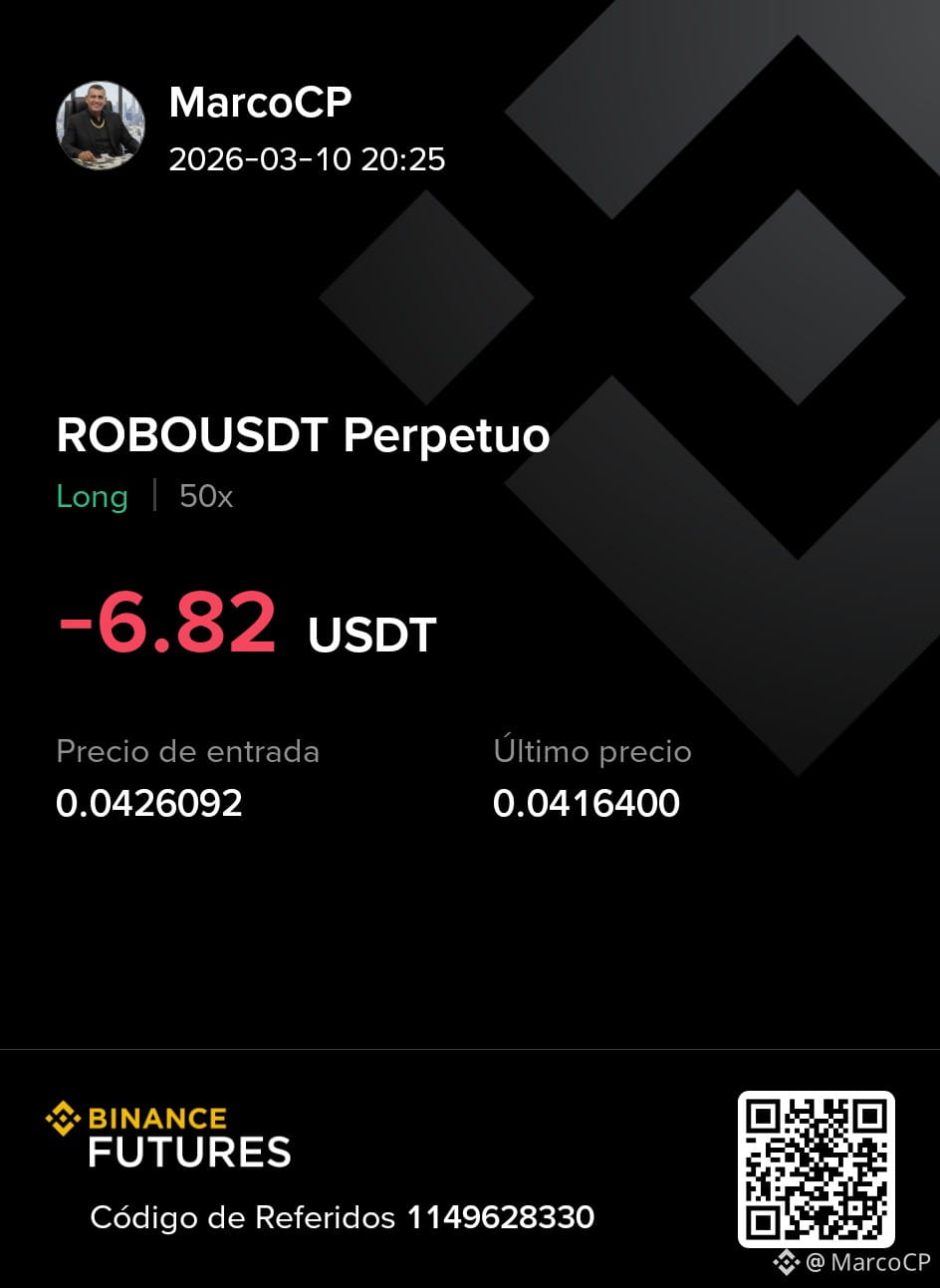
Greetings CRYPTO FAMILY
I am happy I decided to trade in futures just when this wonderful project focused on Robotics and artificial intelligence appeared for me called $ROBO sponsored by #FabricProtocoI I am new but I just need to have common sense and the aspiration to achieve my financial freedom.
I firmly believe in this solid project that will bring many surprises in a very short time
You will remember me today, March 10, 2026, I declare a SUCCESSFUL future for everyone
SUCCESS ALWAYS TO ALL.
Greetings CRYPTO FAMILY
I am happy I decided to trade in futures just when this wonderful project focused on Robotics and artificial intelligence appeared for me called $ROBO sponsored by #FabricProtocoI I am new but I just need to have common sense and the aspiration to achieve my financial freedom.
I firmly believe in this solid project that will bring many surprises in a very short time
You will remember me today, March 10, 2026, I declare a SUCCESSFUL future for everyone
SUCCESS ALWAYS TO ALL.
I am happy I decided to trade in futures just when this wonderful project focused on Robotics and artificial intelligence appeared for me called $ROBO sponsored by #FabricProtocoI I am new but I just need to have common sense and the aspiration to achieve my financial freedom.
I firmly believe in this solid project that will bring many surprises in a very short time
You will remember me today, March 10, 2026, I declare a SUCCESSFUL future for everyone
SUCCESS ALWAYS TO ALL.
1
409
·
--
With artificial intelligence surpassing the stage of chatbots and software models towards physical robots and autonomous systems, the urgency of questions related to governance, coordination, and accountability is increasing. Who controls the smart machines operating in the real world? How are they aligned with human intentions? And what economic system supports machine-to-machine interaction? As AI systems expand into industries such as manufacturing, logistics, and healthcare, the need for organized oversight and economic infrastructure becomes clear.
The Fabric Protocol and its native currency ROBO have been introduced to address these challenges. Developed in parallel with the Fabric Foundation, the protocol provides a decentralized infrastructure for identity, payments, and governance for AI systems in the real world. In this article, we will explore what the Fabric Protocol is, how the Fabric Protocol works, who is behind it, the economics of the ROBO currency, supporting investors, and what market forecasts indicate for the coming years.#ROBO #FabricProtocoI #Binance #Write2Earn! $ROBO
{future}(ROBOUSDT)
#robo $ROBO
With artificial intelligence surpassing the stage of chatbots and software models towards physical robots and autonomous systems, the urgency of questions related to governance, coordination, and accountability is increasing. Who controls the smart machines operating in the real world? How are they aligned with human intentions? And what economic system supports machine-to-machine interaction? As AI systems expand into industries such as manufacturing, logistics, and healthcare, the need for organized oversight and economic infrastructure becomes clear.
The Fabric Protocol and its native currency ROBO have been introduced to address these challenges. Developed in parallel with the Fabric Foundation, the protocol provides a decentralized infrastructure for identity, payments, and governance for AI systems in the real world. In this article, we will explore what the Fabric Protocol is, how the Fabric Protocol works, who is behind it, the economics of the ROBO currency, supporting investors, and what market forecasts indicate for the coming years.#ROBO #FabricProtocoI #Binance #Write2Earn! $ROBO
#robo $ROBO
The Fabric Protocol and its native currency ROBO have been introduced to address these challenges. Developed in parallel with the Fabric Foundation, the protocol provides a decentralized infrastructure for identity, payments, and governance for AI systems in the real world. In this article, we will explore what the Fabric Protocol is, how the Fabric Protocol works, who is behind it, the economics of the ROBO currency, supporting investors, and what market forecasts indicate for the coming years.#ROBO #FabricProtocoI #Binance #Write2Earn! $ROBO
#robo $ROBO

34
459
Log in to explore more content
Join global crypto users on Binance Square
⚡️ Get latest and useful information about crypto.
💬 Trusted by the world’s largest crypto exchange.
👍 Discover real insights from verified creators.
Email / Phone number
Trending Topics
1
#NFPWatch
10.6M views
18,006 Discussing
2
#BitcoinFundingRateTriplesTo10%
14,811 views
326 Discussing
3
#BitcoinSurpasses$86KUp2.99%
4,667 views
44 Discussing
4
#ZcashFalls21%FromSeptemberPeak
17,348 views
338 Discussing
5
#USSeptemberPayrollsAdd29KUnemploymentRises4.2%
10,551 views
168 Discussing
6
#XRPPostsFirstThreeGreenMonthsInQ3
16,808 views
373 Discussing
7
#BNBChainTokenizedStocksTop$1BAt30%Share
232 views
24 Discussing
8
#BitcoinRisesToward$85K
59,113 views
121 Discussing
9
#AmazonPlansToSell$8BNvidiaChips
6,134 views
80 Discussing
10
#NEARFallsToAround$4.70Down14%
41,152 views
106 Discussing