
#ethiopie
ethiopie
139 views
3 Discussing
Hot
Latest

·
--
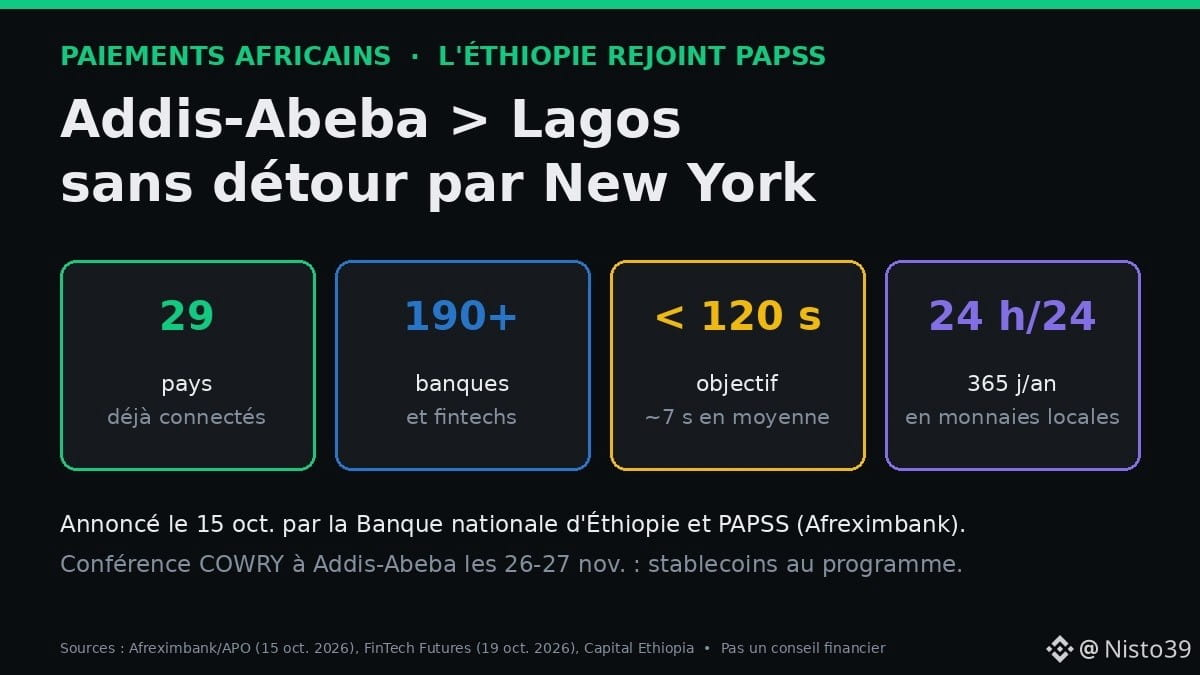
🌍 A payment from Addis Ababa to Lagos in 120 seconds, in African currencies, without going through New York. Ethiopia has just joined the network that promises to make it possible.
📌 The facts
• Oct. 15: The National Bank of Ethiopia announces that it has joined PAPSS, the pan-African payment system launched in 2022 by Afreximbank, the African Union and the AfCFTA
• PAPSS already connects 29 countries and more than 190 banks and fintechs (FinTech Futures, Oct. 19)
• Stated goal: settlement in under 120 seconds, averaging around 7 seconds, 24/7
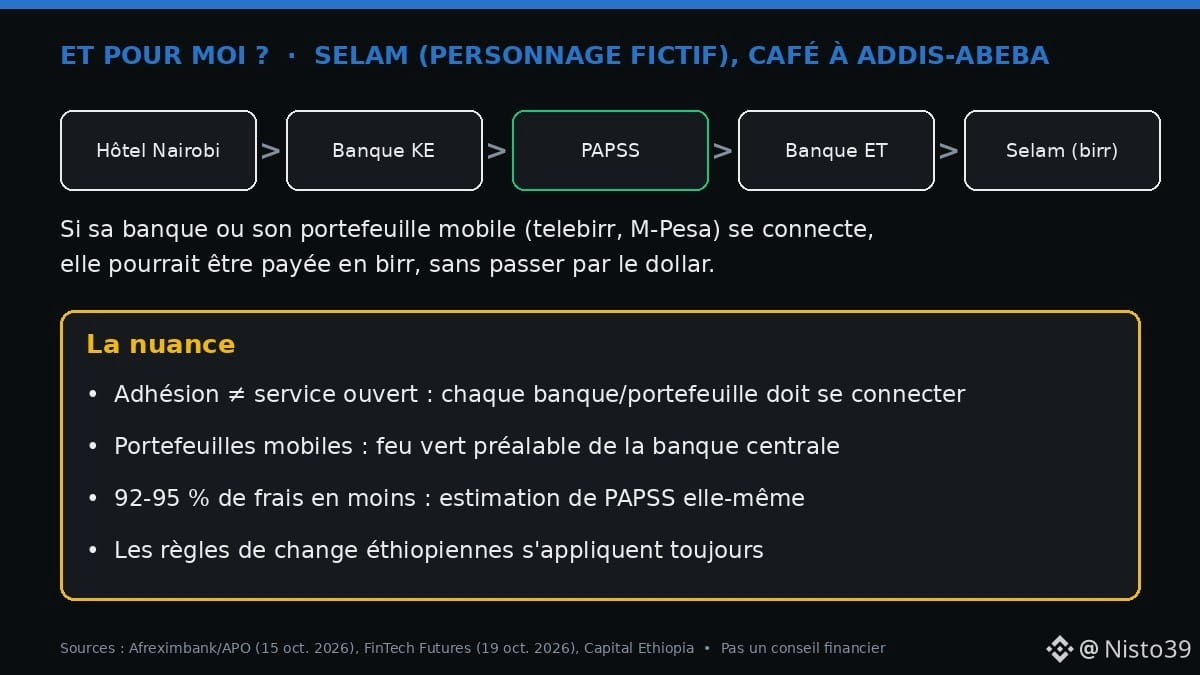
• Mobile wallets (telebirr, M-Pesa) are preparing to connect through EthSwitch, subject to prior approval from the central bank
• Addis Ababa will host the COWRY conference on Nov. 26–27, with stablecoins and digital assets on the agenda
🧠 How it works
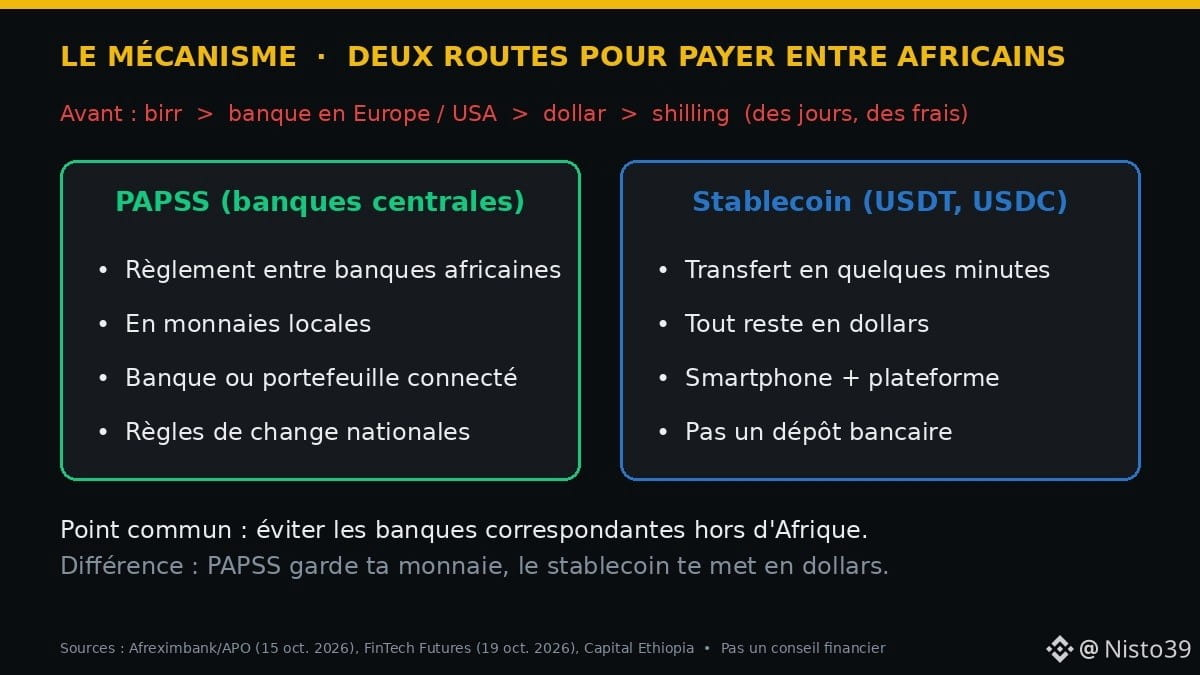
Today, a payment between two African countries often goes through a bank in Europe or the United States, with two currency conversions into dollars. PAPSS settles payments directly between African banks, in local currencies. A stablecoin like $USDT is just as fast, but everything remains in dollars.
👤 Selam (a fictional character) roasts coffee in Addis Ababa and sells it to a hotel in Nairobi. If her bank or mobile wallet connects, she could be paid in birr without going through the dollar.
⚖️ The caveat
• Joining ≠ service available: each bank and wallet still has to connect
• The 92–95% fee savings are an estimate made by PAPSS itself
• Ethiopian foreign exchange rules still apply
✅ Two options are emerging for payments between Africans: central bank rails and stablecoins.
Which would you choose to get paid? 👇
Not financial advice. DYOR.
Sources: Afreximbank/APO (Oct. 15), FinTech Futures (Oct. 19), Capital Ethiopia.
#Afrique #Paiements #Stablecoins #Ethiopia
66
·
--
Article
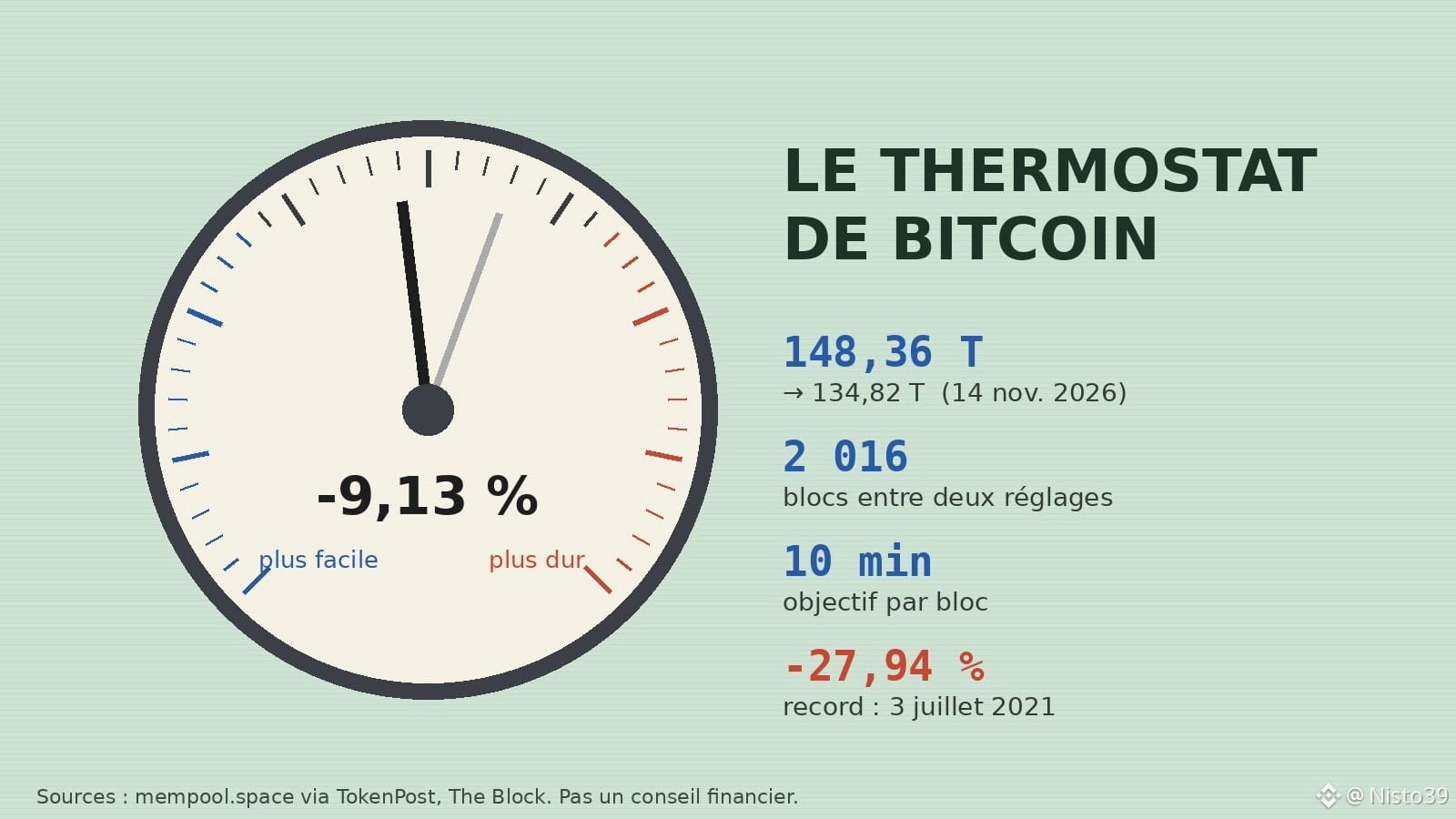
Bitcoin just lowered its own difficulty by 9%: the thermostat nobody talks aboutOn Saturday, November 14, without a press conference or a vote, Bitcoin made its job 9.13% easier.
Mining difficulty fell from 148.36 T to 134.82 T at block 975,744 (data from mempool.space, reported by TokenPost). It's the biggest drop since June, and the 12th decrease in 23 adjustments this year. Nobody pressed a button. It's been written into the code since 2009.
Simple question: why does a network that wants to be “hard” choose to soften when miners are suffering?
Bitcoin just lowered its own difficulty by 9%: the thermostat nobody talks about
On Saturday, November 14, without a press conference or a vote, Bitcoin made its job 9.13% easier.
Mining difficulty fell from 148.36 T to 134.82 T at block 975,744 (data from mempool.space, reported by TokenPost). It's the biggest drop since June, and the 12th decrease in 23 adjustments this year. Nobody pressed a button. It's been written into the code since 2009.
Simple question: why does a network that wants to be “hard” choose to soften when miners are suffering?
326
Log in to explore more content
Join global crypto users on Binance Square
⚡️ Get latest and useful information about crypto.
💬 Trusted by the world’s largest crypto exchange.
👍 Discover real insights from verified creators.
Email / Phone number
Trending Topics
1
#BTCRemainsUnderPressureAfterHawkishFOMCMinutes
26,164 views
376 Discussing
2
#AnthropicToDebutAfter$83IPOPricing
8,393 views
46 Discussing
3
#NvidiaBoardReportedlySplitOverHuang’sReturn
5,788 views
108 Discussing
4
#CanGTA6'sLaunchLiftTTWOShares?
3,615 views
82 Discussing
5
#FOMCMinutesHighlightAIDebtRisks
8,229 views
129 Discussing
6
#SouthKoreaPlansToLet3500ListedFirmsBuyBitcoin
10,878 views
180 Discussing
7
#TrumpAdministrationLaunchesProjectToCombatCybercrime
5 views
2 Discussing
8
#FedMinutesShowAlmostAllOfficialsExpectMoreHikes
1,965 views
29 Discussing
9
#GoldmanSachsQ3BitcoinETFHoldingsReach$1.283B
672 views
7 Discussing
10
#TetherBackedUSATStablecoinLaunchesOnAvalanche
1,349 views
37 Discussing