

#dife
dife
2,622 views
70 Discussing
Hot
Latest

·
--
gm STONfi
One thing I like about @ston_fi is how simple swapping feels.
Swap tokens, access liquidity, and move across ecosystems without making every transaction complicated.
With Omniston, STON.fi is also pushing deeper into cross-chain swaps, helping connect liquidity across different networks.
Less friction. More liquidity. Better DeFi experience.
Keep building. Keep learning.
#STON.fi #TON #Dife
gm STONfi
One thing I like about @ston_fi is how simple swapping feels.
Swap tokens, access liquidity, and move across ecosystems without making every transaction complicated.
With Omniston, STON.fi is also pushing deeper into cross-chain swaps, helping connect liquidity across different networks.
Less friction. More liquidity. Better DeFi experience.
Keep building. Keep learning.
#STON.fi #TON #Dife
One thing I like about @ston_fi is how simple swapping feels.
Swap tokens, access liquidity, and move across ecosystems without making every transaction complicated.
With Omniston, STON.fi is also pushing deeper into cross-chain swaps, helping connect liquidity across different networks.
Less friction. More liquidity. Better DeFi experience.
Keep building. Keep learning.
#STON.fi #TON #Dife
27
·
--
gn Fam
The more I look into STON.fi, the more I realize it’s bigger than just swapping tokens on TON.
The interesting part is how many pieces come together.
Cross-chain swaps through Omniston make it easier to move between TON, EVM networks and other supported ecosystems without making the user deal with every layer of complexity.
Then there’s liquidity aggregation, where different liquidity sources can be connected to improve the routes available for a trade.
There’s also the developer side.
Wallets, apps and other DeFi products can build on this infrastructure instead of creating their own cross-chain execution system from scratch.
And I like that STON.fi keeps pushing toward a simpler user experience.
You shouldn’t have to understand bridges, routes, liquidity sources or settlement mechanisms just to swap an asset.
For me, that’s the bigger STON.fi story:
TON liquidity + cross-chain access + better routing + developer infrastructure + simpler DeFi UX.
The more connected DeFi becomes, the more important this infrastructure gets.
#STON.fi #Ton #Dife
gn Fam
The more I look into STON.fi, the more I realize it’s bigger than just swapping tokens on TON.
The interesting part is how many pieces come together.
Cross-chain swaps through Omniston make it easier to move between TON, EVM networks and other supported ecosystems without making the user deal with every layer of complexity.
Then there’s liquidity aggregation, where different liquidity sources can be connected to improve the routes available for a trade.
There’s also the developer side.
Wallets, apps and other DeFi products can build on this infrastructure instead of creating their own cross-chain execution system from scratch.
And I like that STON.fi keeps pushing toward a simpler user experience.
You shouldn’t have to understand bridges, routes, liquidity sources or settlement mechanisms just to swap an asset.
For me, that’s the bigger STON.fi story:
TON liquidity + cross-chain access + better routing + developer infrastructure + simpler DeFi UX.
The more connected DeFi becomes, the more important this infrastructure gets.
#STON.fi #Ton #Dife
The more I look into STON.fi, the more I realize it’s bigger than just swapping tokens on TON.
The interesting part is how many pieces come together.
Cross-chain swaps through Omniston make it easier to move between TON, EVM networks and other supported ecosystems without making the user deal with every layer of complexity.
Then there’s liquidity aggregation, where different liquidity sources can be connected to improve the routes available for a trade.
There’s also the developer side.
Wallets, apps and other DeFi products can build on this infrastructure instead of creating their own cross-chain execution system from scratch.
And I like that STON.fi keeps pushing toward a simpler user experience.
You shouldn’t have to understand bridges, routes, liquidity sources or settlement mechanisms just to swap an asset.
For me, that’s the bigger STON.fi story:
TON liquidity + cross-chain access + better routing + developer infrastructure + simpler DeFi UX.
The more connected DeFi becomes, the more important this infrastructure gets.
#STON.fi #Ton #Dife

76
·
--
Article
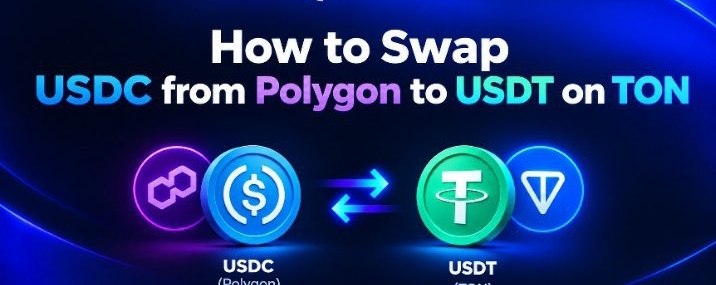
How to Swap USDC from Polygon to USDT on TONHow to Swap USDC from Polygon to USDT on TON
Ever had USDC on Polygon but needed it on TON?
Moving assets between different blockchains can sometimes feel like more work than it should be. You have to think about networks, wallets, bridges, and transaction fees.
But what if you could make that process much simpler?
That’s where STON.fi and Omniston come in.
Here’s how the journey from USDC on Polygon to USDT on TON works.
1. Start with @STON.fi
Head over to STON.fi (ston.fi) and open the swap interface.
The idea is straightforward: you want to swap your USDT on Polygon for USDT on TON. Instead of manually figuring out how to move your assets between the two networks, you can explore the available cross-chain swap options.
2. Choose Your Tokens
Select USDC on Polygon as the asset you want to send.
Then choose USDT on TON as the asset you want to receive.
In simple terms:
You have: USDC on Polygon
You want: USDT on TON
That’s the entire goal of the swap.
3. Enter the Amount
Now, enter the amount of USDC you want to move.
The interface should show you the available quote, the amount you may receive, and the relevant transaction details. Take a moment to review everything before moving forward.
Keep in mind that quotes, fees, and available routes can change.
4. Add Your TON Wallet Address
This is an important step.
If your USDC is currently on Polygon but you want to receive it in a TON wallet, make sure you provide the correct TON destination address.
Double-check the address carefully before confirming anything. Sending assets to the wrong address or using an unsupported destination can result in a loss of funds.
5. Confirm the Swap
Once you've reviewed the details, connect and authorize your Polygon wallet as required by the interface.
Confirm the transaction and allow the swap process to begin.
You don't need to manually manage every part of the cross-chain route. The supported infrastructure is designed to handle the execution behind the scenes.
6. Omniston Connects the Cross-Chain Experience
This is where Omniston becomes important.
Omniston is STON.fi’s cross-chain execution layer. It is designed to let users move between supported networks without relying on a traditional bridge or receiving a wrapped version of the asset. Polygon is among the networks currently listed as supported.
It coordinates supported liquidity sources and execution routes so users can focus on the swap itself.
The experience is built around a simple idea:
Choose what you have. Choose what you want. Let the infrastructure handle the complexity.
7. Receive USDT on TON
Once the swap has been successfully completed, the USDT should arrive at the TON wallet address you provided.
Your journey looks like this:
USDT on Polygon
↓
STON.fi / Omniston
↓
Cross-chain execution
↓
USDT on TON
Always verify the transaction status and confirm that the funds have arrived in the correct wallet.
Why This Matters
Polygon and TON are different ecosystems, each with its own users, applications, and liquidity.
As more people use multiple blockchains, moving assets between these networks should feel less complicated.
That’s the kind of experience cross-chain infrastructure like Omniston aims to support.
Instead of getting lost in the technical details, users can focus on one simple task:
I have USDC on Polygon. I want USDT on TON.
And with a supported route, STON.fi and Omniston can help make that journey easier to navigate.
Final Thoughts
Cross-chain swaps don't have to feel intimidating.
Whether you're moving funds for DeFi, exploring the TON ecosystem, or simply managing your assets across different networks, understanding how the process works is a useful first step.
Polygon → TON
Different chains.
Same USDT.
A simpler way to think about cross-chain swaps.
#SwapFromAnywhere @ston_fi
#Stonfi #TON #dife
How to Swap USDC from Polygon to USDT on TON
How to Swap USDC from Polygon to USDT on TON
Ever had USDC on Polygon but needed it on TON?
Moving assets between different blockchains can sometimes feel like more work than it should be. You have to think about networks, wallets, bridges, and transaction fees.
But what if you could make that process much simpler?
That’s where STON.fi and Omniston come in.
Here’s how the journey from USDC on Polygon to USDT on TON works.
1. Start with @STON.fi
Head over to STON.fi (ston.fi) and open the swap interface.
The idea is straightforward: you want to swap your USDT on Polygon for USDT on TON. Instead of manually figuring out how to move your assets between the two networks, you can explore the available cross-chain swap options.
2. Choose Your Tokens
Select USDC on Polygon as the asset you want to send.
Then choose USDT on TON as the asset you want to receive.
In simple terms:
You have: USDC on Polygon
You want: USDT on TON
That’s the entire goal of the swap.
3. Enter the Amount
Now, enter the amount of USDC you want to move.
The interface should show you the available quote, the amount you may receive, and the relevant transaction details. Take a moment to review everything before moving forward.
Keep in mind that quotes, fees, and available routes can change.
4. Add Your TON Wallet Address
This is an important step.
If your USDC is currently on Polygon but you want to receive it in a TON wallet, make sure you provide the correct TON destination address.
Double-check the address carefully before confirming anything. Sending assets to the wrong address or using an unsupported destination can result in a loss of funds.
5. Confirm the Swap
Once you've reviewed the details, connect and authorize your Polygon wallet as required by the interface.
Confirm the transaction and allow the swap process to begin.
You don't need to manually manage every part of the cross-chain route. The supported infrastructure is designed to handle the execution behind the scenes.
6. Omniston Connects the Cross-Chain Experience
This is where Omniston becomes important.
Omniston is STON.fi’s cross-chain execution layer. It is designed to let users move between supported networks without relying on a traditional bridge or receiving a wrapped version of the asset. Polygon is among the networks currently listed as supported.
It coordinates supported liquidity sources and execution routes so users can focus on the swap itself.
The experience is built around a simple idea:
Choose what you have. Choose what you want. Let the infrastructure handle the complexity.
7. Receive USDT on TON
Once the swap has been successfully completed, the USDT should arrive at the TON wallet address you provided.
Your journey looks like this:
USDT on Polygon
↓
STON.fi / Omniston
↓
Cross-chain execution
↓
USDT on TON
Always verify the transaction status and confirm that the funds have arrived in the correct wallet.
Why This Matters
Polygon and TON are different ecosystems, each with its own users, applications, and liquidity.
As more people use multiple blockchains, moving assets between these networks should feel less complicated.
That’s the kind of experience cross-chain infrastructure like Omniston aims to support.
Instead of getting lost in the technical details, users can focus on one simple task:
I have USDC on Polygon. I want USDT on TON.
And with a supported route, STON.fi and Omniston can help make that journey easier to navigate.
Final Thoughts
Cross-chain swaps don't have to feel intimidating.
Whether you're moving funds for DeFi, exploring the TON ecosystem, or simply managing your assets across different networks, understanding how the process works is a useful first step.
Polygon → TON
Different chains.
Same USDT.
A simpler way to think about cross-chain swaps.
#SwapFromAnywhere @ston_fi
#Stonfi #TON #dife
Ever had USDC on Polygon but needed it on TON?
Moving assets between different blockchains can sometimes feel like more work than it should be. You have to think about networks, wallets, bridges, and transaction fees.
But what if you could make that process much simpler?
That’s where STON.fi and Omniston come in.
Here’s how the journey from USDC on Polygon to USDT on TON works.
1. Start with @STON.fi
Head over to STON.fi (ston.fi) and open the swap interface.
The idea is straightforward: you want to swap your USDT on Polygon for USDT on TON. Instead of manually figuring out how to move your assets between the two networks, you can explore the available cross-chain swap options.
2. Choose Your Tokens
Select USDC on Polygon as the asset you want to send.
Then choose USDT on TON as the asset you want to receive.
In simple terms:
You have: USDC on Polygon
You want: USDT on TON
That’s the entire goal of the swap.
3. Enter the Amount
Now, enter the amount of USDC you want to move.
The interface should show you the available quote, the amount you may receive, and the relevant transaction details. Take a moment to review everything before moving forward.
Keep in mind that quotes, fees, and available routes can change.
4. Add Your TON Wallet Address
This is an important step.
If your USDC is currently on Polygon but you want to receive it in a TON wallet, make sure you provide the correct TON destination address.
Double-check the address carefully before confirming anything. Sending assets to the wrong address or using an unsupported destination can result in a loss of funds.
5. Confirm the Swap
Once you've reviewed the details, connect and authorize your Polygon wallet as required by the interface.
Confirm the transaction and allow the swap process to begin.
You don't need to manually manage every part of the cross-chain route. The supported infrastructure is designed to handle the execution behind the scenes.
6. Omniston Connects the Cross-Chain Experience
This is where Omniston becomes important.
Omniston is STON.fi’s cross-chain execution layer. It is designed to let users move between supported networks without relying on a traditional bridge or receiving a wrapped version of the asset. Polygon is among the networks currently listed as supported.
It coordinates supported liquidity sources and execution routes so users can focus on the swap itself.
The experience is built around a simple idea:
Choose what you have. Choose what you want. Let the infrastructure handle the complexity.
7. Receive USDT on TON
Once the swap has been successfully completed, the USDT should arrive at the TON wallet address you provided.
Your journey looks like this:
USDT on Polygon
↓
STON.fi / Omniston
↓
Cross-chain execution
↓
USDT on TON
Always verify the transaction status and confirm that the funds have arrived in the correct wallet.
Why This Matters
Polygon and TON are different ecosystems, each with its own users, applications, and liquidity.
As more people use multiple blockchains, moving assets between these networks should feel less complicated.
That’s the kind of experience cross-chain infrastructure like Omniston aims to support.
Instead of getting lost in the technical details, users can focus on one simple task:
I have USDC on Polygon. I want USDT on TON.
And with a supported route, STON.fi and Omniston can help make that journey easier to navigate.
Final Thoughts
Cross-chain swaps don't have to feel intimidating.
Whether you're moving funds for DeFi, exploring the TON ecosystem, or simply managing your assets across different networks, understanding how the process works is a useful first step.
Polygon → TON
Different chains.
Same USDT.
A simpler way to think about cross-chain swaps.
#SwapFromAnywhere @ston_fi
#Stonfi #TON #dife
77
·
--
STON.fi: Building the Future of DeFi on TONSTON.fi: Building the Future of DeFi on TON
STON.fi has rapidly grown into one of the most important decentralized finance platforms inside the TON Foundation ecosystem. What began as a decentralized exchange is now evolving into a major liquidity and trading infrastructure powering millions in on-chain activity across TON.
As blockchain adoption continues to expand globally, users are demanding platforms that combine speed, simplicity, low fees, and security. STON.fi has positioned itself perfectly within that narrative by creating a DeFi experience designed for both experienced crypto traders and newcomers entering Web3 for the first time.
The platform’s automated market maker system allows users to swap TON-based assets directly from their wallets without relying on centralized intermediaries. Transactions remain fast, transparent, and efficient while maintaining full user custody of funds. This model aligns with the core philosophy of decentralized finance — giving users complete control over their assets.
One of the strongest advantages behind STON.fi is its integration with the TON blockchain itself. TON’s high scalability and low transaction costs create an ideal environment for decentralized applications to thrive. STON.fi leverages this infrastructure to deliver seamless trading experiences that can scale to millions of users without compromising efficiency.
Liquidity has also become a major pillar of the ecosystem. Through liquidity pools and yield opportunities, users actively contribute to the growth of decentralized markets while earning incentives in return. This creates a sustainable ecosystem where traders, liquidity providers, and developers all benefit from network activity.
Beyond trading, STON.fi represents a broader movement happening across Web3. DeFi is no longer limited to niche crypto communities. Platforms like STON.fi are helping push decentralized finance toward mainstream accessibility by simplifying user experience and reducing technical barriers.
Community support continues to play a huge role in the project’s expansion. The TON ecosystem has developed one of the most active and rapidly growing communities in crypto, and STON.fi stands at the center of much of that momentum. Builders, creators, traders, and developers continue contributing to an ecosystem that is becoming increasingly influential across the blockchain industry.
As adoption increases and more users enter decentralized finance, infrastructure projects capable of handling large-scale activity will become even more valuable. STON.fi is already proving itself as one of the leading DeFi protocols within TON, and its growth trajectory suggests that its influence may continue expanding across the broader crypto market.
The future of decentralized finance will be built on scalable, user-friendly, and transparent infrastructure and STON.fi is positioning itself as one of the platforms helping lead that future.
#Stonfi #ton #Dife
STON.fi: Building the Future of DeFi on TON
STON.fi: Building the Future of DeFi on TON
STON.fi has rapidly grown into one of the most important decentralized finance platforms inside the TON Foundation ecosystem. What began as a decentralized exchange is now evolving into a major liquidity and trading infrastructure powering millions in on-chain activity across TON.
As blockchain adoption continues to expand globally, users are demanding platforms that combine speed, simplicity, low fees, and security. STON.fi has positioned itself perfectly within that narrative by creating a DeFi experience designed for both experienced crypto traders and newcomers entering Web3 for the first time.
The platform’s automated market maker system allows users to swap TON-based assets directly from their wallets without relying on centralized intermediaries. Transactions remain fast, transparent, and efficient while maintaining full user custody of funds. This model aligns with the core philosophy of decentralized finance — giving users complete control over their assets.
One of the strongest advantages behind STON.fi is its integration with the TON blockchain itself. TON’s high scalability and low transaction costs create an ideal environment for decentralized applications to thrive. STON.fi leverages this infrastructure to deliver seamless trading experiences that can scale to millions of users without compromising efficiency.
Liquidity has also become a major pillar of the ecosystem. Through liquidity pools and yield opportunities, users actively contribute to the growth of decentralized markets while earning incentives in return. This creates a sustainable ecosystem where traders, liquidity providers, and developers all benefit from network activity.
Beyond trading, STON.fi represents a broader movement happening across Web3. DeFi is no longer limited to niche crypto communities. Platforms like STON.fi are helping push decentralized finance toward mainstream accessibility by simplifying user experience and reducing technical barriers.
Community support continues to play a huge role in the project’s expansion. The TON ecosystem has developed one of the most active and rapidly growing communities in crypto, and STON.fi stands at the center of much of that momentum. Builders, creators, traders, and developers continue contributing to an ecosystem that is becoming increasingly influential across the blockchain industry.
As adoption increases and more users enter decentralized finance, infrastructure projects capable of handling large-scale activity will become even more valuable. STON.fi is already proving itself as one of the leading DeFi protocols within TON, and its growth trajectory suggests that its influence may continue expanding across the broader crypto market.
The future of decentralized finance will be built on scalable, user-friendly, and transparent infrastructure and STON.fi is positioning itself as one of the platforms helping lead that future.
#Stonfi #ton #Dife
STON.fi has rapidly grown into one of the most important decentralized finance platforms inside the TON Foundation ecosystem. What began as a decentralized exchange is now evolving into a major liquidity and trading infrastructure powering millions in on-chain activity across TON.
As blockchain adoption continues to expand globally, users are demanding platforms that combine speed, simplicity, low fees, and security. STON.fi has positioned itself perfectly within that narrative by creating a DeFi experience designed for both experienced crypto traders and newcomers entering Web3 for the first time.
The platform’s automated market maker system allows users to swap TON-based assets directly from their wallets without relying on centralized intermediaries. Transactions remain fast, transparent, and efficient while maintaining full user custody of funds. This model aligns with the core philosophy of decentralized finance — giving users complete control over their assets.
One of the strongest advantages behind STON.fi is its integration with the TON blockchain itself. TON’s high scalability and low transaction costs create an ideal environment for decentralized applications to thrive. STON.fi leverages this infrastructure to deliver seamless trading experiences that can scale to millions of users without compromising efficiency.
Liquidity has also become a major pillar of the ecosystem. Through liquidity pools and yield opportunities, users actively contribute to the growth of decentralized markets while earning incentives in return. This creates a sustainable ecosystem where traders, liquidity providers, and developers all benefit from network activity.
Beyond trading, STON.fi represents a broader movement happening across Web3. DeFi is no longer limited to niche crypto communities. Platforms like STON.fi are helping push decentralized finance toward mainstream accessibility by simplifying user experience and reducing technical barriers.
Community support continues to play a huge role in the project’s expansion. The TON ecosystem has developed one of the most active and rapidly growing communities in crypto, and STON.fi stands at the center of much of that momentum. Builders, creators, traders, and developers continue contributing to an ecosystem that is becoming increasingly influential across the blockchain industry.
As adoption increases and more users enter decentralized finance, infrastructure projects capable of handling large-scale activity will become even more valuable. STON.fi is already proving itself as one of the leading DeFi protocols within TON, and its growth trajectory suggests that its influence may continue expanding across the broader crypto market.
The future of decentralized finance will be built on scalable, user-friendly, and transparent infrastructure and STON.fi is positioning itself as one of the platforms helping lead that future.
#Stonfi #ton #Dife
124
·
--

Article
CEO Presents at Dutch Blockchain Days in AmsterdamSTON.fi CEO Presents at Dutch Blockchain Days in Amsterdam
The global blockchain ecosystem continues to evolve at a rapid pace and industry events remain a key driver of innovation collaboration and visibility One of the latest gatherings bringing together builders founders and investors was the Dutch Blockchain Days held in Amsterdam
Among the notable participants was Slavik Baranov CEO of STON.fi who took the stage to present the project and share insights on the future of decentralized trading within the TON ecosystem
---
A Major European Hub for Blockchain Innovation
The Dutch Blockchain Days event in Amsterdam has become an important meeting point for Web3 developers DeFi founders and institutional observers This year’s edition focused heavily on
Decentralized finance DeFi infrastructure
Scalability of blockchain networks
User experience in Web3 applications
Cross chain liquidity and ecosystem growth
Within this environment discussions were not just theoretical they centered on real world adoption and how blockchain products can move beyond niche audiences
---
STON.fi’s Vision Simplifying Decentralized Trading
During his presentation Slavik Baranov highlighted STON.fi as a next generation decentralized exchange DEX built on TON Blockchain
The core message of the presentation focused on a simple but powerful idea
DeFi must become as seamless and intuitive as traditional financial apps if it is to reach mass adoption
STON.fi positions itself around this principle by emphasizing
Fast and low cost token swaps
Deep integration within the TON ecosystem
Simplified user experience for everyday users
Continuous protocol development and feature expansion
Rather than targeting only advanced crypto users the platform aims to make decentralized trading accessible to a much broader audience
---
Discussing New Features and Development Direction
A key highlight of the talk was the ongoing development of new features within the STON.fi ecosystem While specifics vary across roadmap stages the overall direction focuses on strengthening usability liquidity efficiency and ecosystem integration
Baranov emphasized that the future of decentralized exchanges is not only about trading assets but about building infrastructure that supports
Smoother onboarding for new users
More efficient liquidity routing
Expanded DeFi utility within TON based applications
Stronger developer tools for ecosystem growth
This reflects a broader trend in Web3 shifting from isolated protocols toward interconnected financial ecosystems
---
The Bigger Picture TON Ecosystem Expansion
The presence of TON Blockchain in discussions around scalability and adoption continues to grow Originally designed for high throughput and mass usability TON has increasingly positioned itself as a foundation for consumer ready Web3 applications
Projects like STON.fi contribute to this vision by providing essential DeFi infrastructure enabling users to exchange assets efficiently while remaining fully on chain
The synergy between infrastructure blockchain layer and applications DEX wallets and dApps is what ultimately drives ecosystem maturity
---
Conclusion
The Dutch Blockchain Days event reinforced a clear message across the industry DeFi is entering a new phase focused on usability integration and real world relevance
With presentations from leaders like Slavik Baranov STON.fi continues to position itself as a key player in the evolution of decentralized trading within the TON Blockchain
As the industry moves forward the emphasis is shifting away from hype cycles and toward practical systems that can support everyday financial activity quietly but powerfully reshaping how value moves across the digital economy
#STONfi #TON #dife
CEO Presents at Dutch Blockchain Days in Amsterdam
STON.fi CEO Presents at Dutch Blockchain Days in Amsterdam
The global blockchain ecosystem continues to evolve at a rapid pace and industry events remain a key driver of innovation collaboration and visibility One of the latest gatherings bringing together builders founders and investors was the Dutch Blockchain Days held in Amsterdam
Among the notable participants was Slavik Baranov CEO of STON.fi who took the stage to present the project and share insights on the future of decentralized trading within the TON ecosystem
---
A Major European Hub for Blockchain Innovation
The Dutch Blockchain Days event in Amsterdam has become an important meeting point for Web3 developers DeFi founders and institutional observers This year’s edition focused heavily on
Decentralized finance DeFi infrastructure
Scalability of blockchain networks
User experience in Web3 applications
Cross chain liquidity and ecosystem growth
Within this environment discussions were not just theoretical they centered on real world adoption and how blockchain products can move beyond niche audiences
---
STON.fi’s Vision Simplifying Decentralized Trading
During his presentation Slavik Baranov highlighted STON.fi as a next generation decentralized exchange DEX built on TON Blockchain
The core message of the presentation focused on a simple but powerful idea
DeFi must become as seamless and intuitive as traditional financial apps if it is to reach mass adoption
STON.fi positions itself around this principle by emphasizing
Fast and low cost token swaps
Deep integration within the TON ecosystem
Simplified user experience for everyday users
Continuous protocol development and feature expansion
Rather than targeting only advanced crypto users the platform aims to make decentralized trading accessible to a much broader audience
---
Discussing New Features and Development Direction
A key highlight of the talk was the ongoing development of new features within the STON.fi ecosystem While specifics vary across roadmap stages the overall direction focuses on strengthening usability liquidity efficiency and ecosystem integration
Baranov emphasized that the future of decentralized exchanges is not only about trading assets but about building infrastructure that supports
Smoother onboarding for new users
More efficient liquidity routing
Expanded DeFi utility within TON based applications
Stronger developer tools for ecosystem growth
This reflects a broader trend in Web3 shifting from isolated protocols toward interconnected financial ecosystems
---
The Bigger Picture TON Ecosystem Expansion
The presence of TON Blockchain in discussions around scalability and adoption continues to grow Originally designed for high throughput and mass usability TON has increasingly positioned itself as a foundation for consumer ready Web3 applications
Projects like STON.fi contribute to this vision by providing essential DeFi infrastructure enabling users to exchange assets efficiently while remaining fully on chain
The synergy between infrastructure blockchain layer and applications DEX wallets and dApps is what ultimately drives ecosystem maturity
---
Conclusion
The Dutch Blockchain Days event reinforced a clear message across the industry DeFi is entering a new phase focused on usability integration and real world relevance
With presentations from leaders like Slavik Baranov STON.fi continues to position itself as a key player in the evolution of decentralized trading within the TON Blockchain
As the industry moves forward the emphasis is shifting away from hype cycles and toward practical systems that can support everyday financial activity quietly but powerfully reshaping how value moves across the digital economy
#STONfi #TON #dife
The global blockchain ecosystem continues to evolve at a rapid pace and industry events remain a key driver of innovation collaboration and visibility One of the latest gatherings bringing together builders founders and investors was the Dutch Blockchain Days held in Amsterdam
Among the notable participants was Slavik Baranov CEO of STON.fi who took the stage to present the project and share insights on the future of decentralized trading within the TON ecosystem
---
A Major European Hub for Blockchain Innovation
The Dutch Blockchain Days event in Amsterdam has become an important meeting point for Web3 developers DeFi founders and institutional observers This year’s edition focused heavily on
Decentralized finance DeFi infrastructure
Scalability of blockchain networks
User experience in Web3 applications
Cross chain liquidity and ecosystem growth
Within this environment discussions were not just theoretical they centered on real world adoption and how blockchain products can move beyond niche audiences
---
STON.fi’s Vision Simplifying Decentralized Trading
During his presentation Slavik Baranov highlighted STON.fi as a next generation decentralized exchange DEX built on TON Blockchain
The core message of the presentation focused on a simple but powerful idea
DeFi must become as seamless and intuitive as traditional financial apps if it is to reach mass adoption
STON.fi positions itself around this principle by emphasizing
Fast and low cost token swaps
Deep integration within the TON ecosystem
Simplified user experience for everyday users
Continuous protocol development and feature expansion
Rather than targeting only advanced crypto users the platform aims to make decentralized trading accessible to a much broader audience
---
Discussing New Features and Development Direction
A key highlight of the talk was the ongoing development of new features within the STON.fi ecosystem While specifics vary across roadmap stages the overall direction focuses on strengthening usability liquidity efficiency and ecosystem integration
Baranov emphasized that the future of decentralized exchanges is not only about trading assets but about building infrastructure that supports
Smoother onboarding for new users
More efficient liquidity routing
Expanded DeFi utility within TON based applications
Stronger developer tools for ecosystem growth
This reflects a broader trend in Web3 shifting from isolated protocols toward interconnected financial ecosystems
---
The Bigger Picture TON Ecosystem Expansion
The presence of TON Blockchain in discussions around scalability and adoption continues to grow Originally designed for high throughput and mass usability TON has increasingly positioned itself as a foundation for consumer ready Web3 applications
Projects like STON.fi contribute to this vision by providing essential DeFi infrastructure enabling users to exchange assets efficiently while remaining fully on chain
The synergy between infrastructure blockchain layer and applications DEX wallets and dApps is what ultimately drives ecosystem maturity
---
Conclusion
The Dutch Blockchain Days event reinforced a clear message across the industry DeFi is entering a new phase focused on usability integration and real world relevance
With presentations from leaders like Slavik Baranov STON.fi continues to position itself as a key player in the evolution of decentralized trading within the TON Blockchain
As the industry moves forward the emphasis is shifting away from hype cycles and toward practical systems that can support everyday financial activity quietly but powerfully reshaping how value moves across the digital economy
#STONfi #TON #dife
99
·
--
Article
Changing Life: The Power of Small Decisions That Shape Your FutureChanging Life: The Power of Small Decisions That Shape Your Future
Life rarely changes in one dramatic moment. Most transformation happens quietly—through small choices, repeated habits, and the courage to keep going after setbacks. Changing your life is not about luck or sudden opportunity; it is about direction. Once your direction changes, your future begins to follow.
1. Change Starts With Awareness
Nothing improves until you recognize what needs to change. Many people remain stuck not because they lack ability, but because they’ve become comfortable with routines that no longer serve them.
Awareness is the turning point. It’s the honest moment you say, “I need to do better than this.”
2. Decisions Shape Direction
Your life is built on daily decisions. How you start your morning, what you focus on, and who you spend time with all shape your future silently.
A single good decision may not change everything instantly, but repeated good decisions will completely redefine your path over time.
Success is not a leap—it is a direction you commit to every day.
3. Discipline Beats Motivation
Motivation is unreliable. It rises and falls with emotion, environment, and energy. Discipline is what continues when motivation disappears.
Those who change their lives are not always the most inspired—they are the most consistent. They act even when they don’t feel like it, and that consistency becomes their strength.
4. Your Environment Matters
Growth becomes difficult when your environment is pulling you backward. The people you listen to, the habits you maintain, and the information you consume all influence your mindset.
If you want real change, you must intentionally build an environment that supports your growth, not your limitations.
5. Failure Is Part of Progress
Failure is not the opposite of success—it is part of it. Many people stop too early because they misunderstand failure as defeat.
In reality, failure is feedback. It shows you what needs to improve, adjust, or change. Every successful person has failed multiple times, but they kept learning instead of quitting.
6. Growth Requires Patience
Real transformation takes time. You won’t become a new version of yourself overnight. But with consistent effort over months and years, your life can change completely.
Patience is not waiting passively—it is continuing to grow while nothing seems to be happening yet.
Conclusion
Changing your life is not about becoming someone else. It is about becoming the strongest, most focused version of who you already are. Start small, stay consistent, and keep moving forward. Every decision you make is shaping the life you will live tomorrow.
#stonfi #TON #dife
Changing Life: The Power of Small Decisions That Shape Your Future
Changing Life: The Power of Small Decisions That Shape Your Future
Life rarely changes in one dramatic moment. Most transformation happens quietly—through small choices, repeated habits, and the courage to keep going after setbacks. Changing your life is not about luck or sudden opportunity; it is about direction. Once your direction changes, your future begins to follow.
1. Change Starts With Awareness
Nothing improves until you recognize what needs to change. Many people remain stuck not because they lack ability, but because they’ve become comfortable with routines that no longer serve them.
Awareness is the turning point. It’s the honest moment you say, “I need to do better than this.”
2. Decisions Shape Direction
Your life is built on daily decisions. How you start your morning, what you focus on, and who you spend time with all shape your future silently.
A single good decision may not change everything instantly, but repeated good decisions will completely redefine your path over time.
Success is not a leap—it is a direction you commit to every day.
3. Discipline Beats Motivation
Motivation is unreliable. It rises and falls with emotion, environment, and energy. Discipline is what continues when motivation disappears.
Those who change their lives are not always the most inspired—they are the most consistent. They act even when they don’t feel like it, and that consistency becomes their strength.
4. Your Environment Matters
Growth becomes difficult when your environment is pulling you backward. The people you listen to, the habits you maintain, and the information you consume all influence your mindset.
If you want real change, you must intentionally build an environment that supports your growth, not your limitations.
5. Failure Is Part of Progress
Failure is not the opposite of success—it is part of it. Many people stop too early because they misunderstand failure as defeat.
In reality, failure is feedback. It shows you what needs to improve, adjust, or change. Every successful person has failed multiple times, but they kept learning instead of quitting.
6. Growth Requires Patience
Real transformation takes time. You won’t become a new version of yourself overnight. But with consistent effort over months and years, your life can change completely.
Patience is not waiting passively—it is continuing to grow while nothing seems to be happening yet.
Conclusion
Changing your life is not about becoming someone else. It is about becoming the strongest, most focused version of who you already are. Start small, stay consistent, and keep moving forward. Every decision you make is shaping the life you will live tomorrow.
#stonfi #TON #dife
Life rarely changes in one dramatic moment. Most transformation happens quietly—through small choices, repeated habits, and the courage to keep going after setbacks. Changing your life is not about luck or sudden opportunity; it is about direction. Once your direction changes, your future begins to follow.
1. Change Starts With Awareness
Nothing improves until you recognize what needs to change. Many people remain stuck not because they lack ability, but because they’ve become comfortable with routines that no longer serve them.
Awareness is the turning point. It’s the honest moment you say, “I need to do better than this.”
2. Decisions Shape Direction
Your life is built on daily decisions. How you start your morning, what you focus on, and who you spend time with all shape your future silently.
A single good decision may not change everything instantly, but repeated good decisions will completely redefine your path over time.
Success is not a leap—it is a direction you commit to every day.
3. Discipline Beats Motivation
Motivation is unreliable. It rises and falls with emotion, environment, and energy. Discipline is what continues when motivation disappears.
Those who change their lives are not always the most inspired—they are the most consistent. They act even when they don’t feel like it, and that consistency becomes their strength.
4. Your Environment Matters
Growth becomes difficult when your environment is pulling you backward. The people you listen to, the habits you maintain, and the information you consume all influence your mindset.
If you want real change, you must intentionally build an environment that supports your growth, not your limitations.
5. Failure Is Part of Progress
Failure is not the opposite of success—it is part of it. Many people stop too early because they misunderstand failure as defeat.
In reality, failure is feedback. It shows you what needs to improve, adjust, or change. Every successful person has failed multiple times, but they kept learning instead of quitting.
6. Growth Requires Patience
Real transformation takes time. You won’t become a new version of yourself overnight. But with consistent effort over months and years, your life can change completely.
Patience is not waiting passively—it is continuing to grow while nothing seems to be happening yet.
Conclusion
Changing your life is not about becoming someone else. It is about becoming the strongest, most focused version of who you already are. Start small, stay consistent, and keep moving forward. Every decision you make is shaping the life you will live tomorrow.
#stonfi #TON #dife
66
·
--
STON.fi: Driving the Next Generation of DeFi Solutions on TONSTON.fi: Driving the Next Generation of DeFi Solutions on TON
The decentralized finance landscape continues to evolve, and STON.fi is positioning itself as one of the key infrastructure layers powering that transformation within the TON ecosystem.
As blockchain adoption grows, users are looking for platforms that combine speed, efficiency, security, and simplicity. STON.fi addresses these demands by providing a decentralized exchange experience that removes unnecessary complexity while maintaining full user control over assets.
What makes STON.fi stand out is its commitment to continuous innovation. Rather than focusing solely on trading, the platform is building solutions that improve liquidity access, streamline swaps, and create a smoother experience for both newcomers and experienced DeFi participants.
Recent growth in trading volume reflects increasing confidence from the community. More users are recognizing the value of decentralized infrastructure that prioritizes transparency and non-custodial ownership. This trend highlights a broader shift toward financial systems where users remain in control without sacrificing convenience.
The future of STON.fi extends beyond current achievements. With the TON ecosystem expanding rapidly, the platform has the opportunity to become a central hub for liquidity, trading, and decentralized financial activity. Every new feature, partnership, and improvement strengthens the foundation for long-term ecosystem growth.
Innovation in DeFi is not measured only by numbers but by the ability to solve real user challenges. STON.fi continues to move in that direction, building practical solutions that support adoption and contribute to the future of decentralized finance.
As the industry matures, platforms that prioritize usability, security, and ecosystem development will lead the next wave of growth. STON.fi appears determined to be one of them.
#Stonfi ton #dife
STON.fi: Driving the Next Generation of DeFi Solutions on TON
STON.fi: Driving the Next Generation of DeFi Solutions on TON
The decentralized finance landscape continues to evolve, and STON.fi is positioning itself as one of the key infrastructure layers powering that transformation within the TON ecosystem.
As blockchain adoption grows, users are looking for platforms that combine speed, efficiency, security, and simplicity. STON.fi addresses these demands by providing a decentralized exchange experience that removes unnecessary complexity while maintaining full user control over assets.
What makes STON.fi stand out is its commitment to continuous innovation. Rather than focusing solely on trading, the platform is building solutions that improve liquidity access, streamline swaps, and create a smoother experience for both newcomers and experienced DeFi participants.
Recent growth in trading volume reflects increasing confidence from the community. More users are recognizing the value of decentralized infrastructure that prioritizes transparency and non-custodial ownership. This trend highlights a broader shift toward financial systems where users remain in control without sacrificing convenience.
The future of STON.fi extends beyond current achievements. With the TON ecosystem expanding rapidly, the platform has the opportunity to become a central hub for liquidity, trading, and decentralized financial activity. Every new feature, partnership, and improvement strengthens the foundation for long-term ecosystem growth.
Innovation in DeFi is not measured only by numbers but by the ability to solve real user challenges. STON.fi continues to move in that direction, building practical solutions that support adoption and contribute to the future of decentralized finance.
As the industry matures, platforms that prioritize usability, security, and ecosystem development will lead the next wave of growth. STON.fi appears determined to be one of them.
#Stonfi ton #dife
The decentralized finance landscape continues to evolve, and STON.fi is positioning itself as one of the key infrastructure layers powering that transformation within the TON ecosystem.
As blockchain adoption grows, users are looking for platforms that combine speed, efficiency, security, and simplicity. STON.fi addresses these demands by providing a decentralized exchange experience that removes unnecessary complexity while maintaining full user control over assets.
What makes STON.fi stand out is its commitment to continuous innovation. Rather than focusing solely on trading, the platform is building solutions that improve liquidity access, streamline swaps, and create a smoother experience for both newcomers and experienced DeFi participants.
Recent growth in trading volume reflects increasing confidence from the community. More users are recognizing the value of decentralized infrastructure that prioritizes transparency and non-custodial ownership. This trend highlights a broader shift toward financial systems where users remain in control without sacrificing convenience.
The future of STON.fi extends beyond current achievements. With the TON ecosystem expanding rapidly, the platform has the opportunity to become a central hub for liquidity, trading, and decentralized financial activity. Every new feature, partnership, and improvement strengthens the foundation for long-term ecosystem growth.
Innovation in DeFi is not measured only by numbers but by the ability to solve real user challenges. STON.fi continues to move in that direction, building practical solutions that support adoption and contribute to the future of decentralized finance.
As the industry matures, platforms that prioritize usability, security, and ecosystem development will lead the next wave of growth. STON.fi appears determined to be one of them.
#Stonfi ton #dife
80
·
--
Article
Omniston Powers Cross-Chain Swaps in Gram Store LaunchpadOmniston Powers Cross-Chain Swaps in Gram Store Launchpad
A new wave of Telegram Mini Apps is emerging — and STON.fi infrastructure is right at the center of it.
Introducing Gram Store, a launchpad built specifically for Telegram Mini Apps.
What is Gram Store
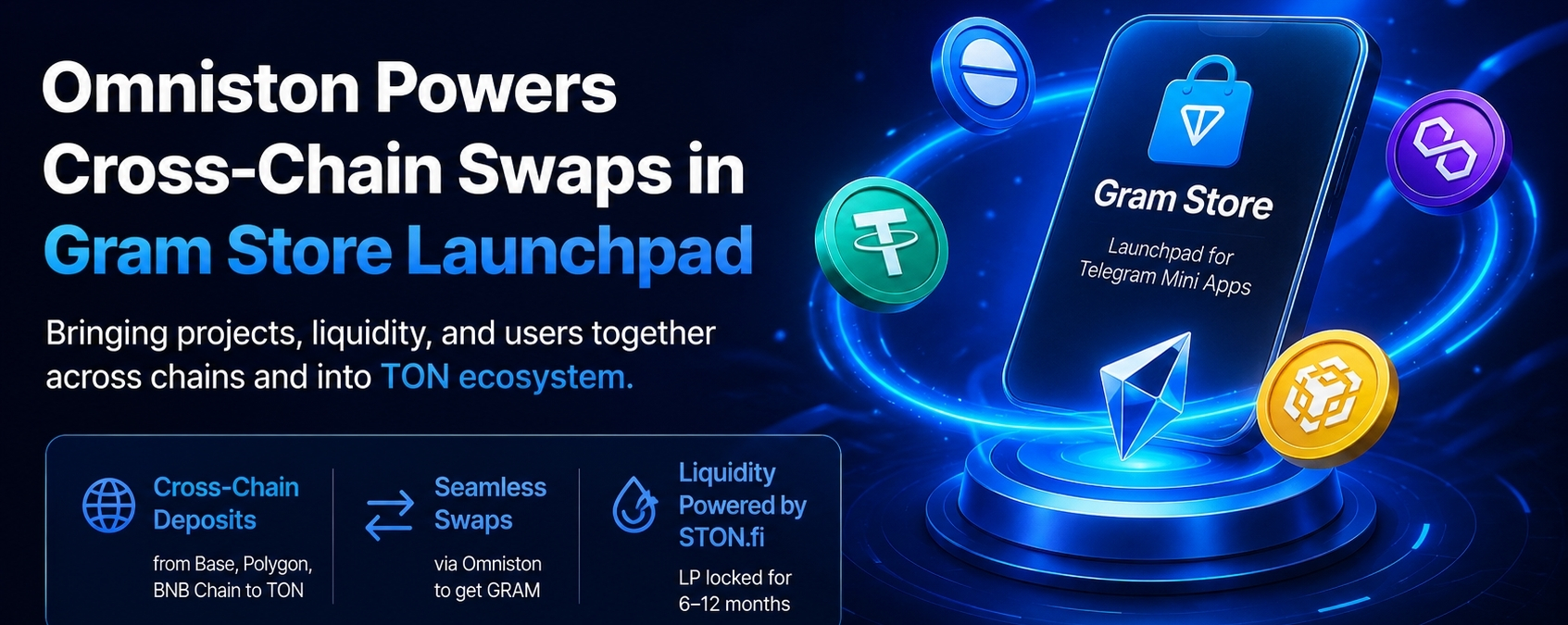
Gram Store is a dedicated launchpad for discovering and funding new Telegram Mini Apps. It uses Simplified Periodic Uniform-Price Auctions to support fair token distribution and early-stage fundraising.
It also enables cross-chain deposits from Base, Polygon, and BNB Chain into TON, helping users seamlessly move assets into the TON ecosystem.
Role of Omniston and STON.fi
Gram Store integrates Omniston as its cross-chain swap layer.
This allows users from EVM networks to:
Bridge into TON easily e.g. USDT to TON ecosystem assets
Swap into GRAM and participate in auctions
Join early-stage project funding directly from supported chains
Once a project successfully completes its auction and reaches its funding target in GRAM, the raised liquidity is automatically deployed into STON.fi, where LP tokens are locked for 6 to 12 months to strengthen long-term liquidity stability.
Why this matters
Every successful launch on Gram Store feeds directly into STON.fi liquidity pools, expanding:
Available tokens on TON
Cross-chain accessibility
On-chain liquidity depth across the ecosystem
Explore Gram Store
Builders creating launchpads, wallets, or Telegram Mini Apps on TON can leverage the STON.fi SDK and Omniston documentation to integrate cross-chain swaps and liquidity infrastructure quickly.
Disclaimer
Third-party projects mentioned here are independent integrations. STON.fi does not endorse, sponsor, or guarantee any external project. Always DYOR before interacting.
DEX | Telegram DEX | Onboarding | Guide | Blog | All Links
X | Discord | Reddit | LinkedIn | YouTube | Join the Club
#STONfi #TON #Dife
Omniston Powers Cross-Chain Swaps in Gram Store Launchpad
Omniston Powers Cross-Chain Swaps in Gram Store Launchpad
A new wave of Telegram Mini Apps is emerging — and STON.fi infrastructure is right at the center of it.
Introducing Gram Store, a launchpad built specifically for Telegram Mini Apps.
What is Gram Store
Gram Store is a dedicated launchpad for discovering and funding new Telegram Mini Apps. It uses Simplified Periodic Uniform-Price Auctions to support fair token distribution and early-stage fundraising.
It also enables cross-chain deposits from Base, Polygon, and BNB Chain into TON, helping users seamlessly move assets into the TON ecosystem.
Role of Omniston and STON.fi
Gram Store integrates Omniston as its cross-chain swap layer.
This allows users from EVM networks to:
Bridge into TON easily e.g. USDT to TON ecosystem assets
Swap into GRAM and participate in auctions
Join early-stage project funding directly from supported chains
Once a project successfully completes its auction and reaches its funding target in GRAM, the raised liquidity is automatically deployed into STON.fi, where LP tokens are locked for 6 to 12 months to strengthen long-term liquidity stability.
Why this matters
Every successful launch on Gram Store feeds directly into STON.fi liquidity pools, expanding:
Available tokens on TON
Cross-chain accessibility
On-chain liquidity depth across the ecosystem
Explore Gram Store
Builders creating launchpads, wallets, or Telegram Mini Apps on TON can leverage the STON.fi SDK and Omniston documentation to integrate cross-chain swaps and liquidity infrastructure quickly.
Disclaimer
Third-party projects mentioned here are independent integrations. STON.fi does not endorse, sponsor, or guarantee any external project. Always DYOR before interacting.
DEX | Telegram DEX | Onboarding | Guide | Blog | All Links
X | Discord | Reddit | LinkedIn | YouTube | Join the Club
#STONfi #TON #Dife
A new wave of Telegram Mini Apps is emerging — and STON.fi infrastructure is right at the center of it.
Introducing Gram Store, a launchpad built specifically for Telegram Mini Apps.
What is Gram Store
Gram Store is a dedicated launchpad for discovering and funding new Telegram Mini Apps. It uses Simplified Periodic Uniform-Price Auctions to support fair token distribution and early-stage fundraising.
It also enables cross-chain deposits from Base, Polygon, and BNB Chain into TON, helping users seamlessly move assets into the TON ecosystem.
Role of Omniston and STON.fi
Gram Store integrates Omniston as its cross-chain swap layer.
This allows users from EVM networks to:
Bridge into TON easily e.g. USDT to TON ecosystem assets
Swap into GRAM and participate in auctions
Join early-stage project funding directly from supported chains
Once a project successfully completes its auction and reaches its funding target in GRAM, the raised liquidity is automatically deployed into STON.fi, where LP tokens are locked for 6 to 12 months to strengthen long-term liquidity stability.
Why this matters
Every successful launch on Gram Store feeds directly into STON.fi liquidity pools, expanding:
Available tokens on TON
Cross-chain accessibility
On-chain liquidity depth across the ecosystem
Explore Gram Store
Builders creating launchpads, wallets, or Telegram Mini Apps on TON can leverage the STON.fi SDK and Omniston documentation to integrate cross-chain swaps and liquidity infrastructure quickly.
Disclaimer
Third-party projects mentioned here are independent integrations. STON.fi does not endorse, sponsor, or guarantee any external project. Always DYOR before interacting.
DEX | Telegram DEX | Onboarding | Guide | Blog | All Links
X | Discord | Reddit | LinkedIn | YouTube | Join the Club
#STONfi #TON #Dife
92
·
--
STONFI .... TON ......DIFE
Why Transaction Fees Matter in DeFi
When you make a swap on a DEX, the amount you receive isn't the only number that matters.
You should also understand the fees involved in the transaction.
Blockchain transactions can involve network fees, while protocols may have their own fee structures. These costs can affect the final value of a trade, especially when making smaller transactions.
This is why understanding fees is an important part of becoming a smarter DeFi user.
On networks like TON, efficient infrastructure can help make on-chain activity more accessible, but users should still check the transaction details before confirming a swap.
Today's lesson:
Don't ask only:
“How much am I getting?”
Also ask:
“How much am I paying to get it?”
Understanding the complete cost of a transaction helps you compare opportunities more realistically and avoid unpleasant surprises.
In DeFi, small details can make a big difference.
#Stonfi #ton #Dife
STONFI .... TON ......DIFE
Why Transaction Fees Matter in DeFi
When you make a swap on a DEX, the amount you receive isn't the only number that matters.
You should also understand the fees involved in the transaction.
Blockchain transactions can involve network fees, while protocols may have their own fee structures. These costs can affect the final value of a trade, especially when making smaller transactions.
This is why understanding fees is an important part of becoming a smarter DeFi user.
On networks like TON, efficient infrastructure can help make on-chain activity more accessible, but users should still check the transaction details before confirming a swap.
Today's lesson:
Don't ask only:
“How much am I getting?”
Also ask:
“How much am I paying to get it?”
Understanding the complete cost of a transaction helps you compare opportunities more realistically and avoid unpleasant surprises.
In DeFi, small details can make a big difference.
#Stonfi #ton #Dife
Why Transaction Fees Matter in DeFi
When you make a swap on a DEX, the amount you receive isn't the only number that matters.
You should also understand the fees involved in the transaction.
Blockchain transactions can involve network fees, while protocols may have their own fee structures. These costs can affect the final value of a trade, especially when making smaller transactions.
This is why understanding fees is an important part of becoming a smarter DeFi user.
On networks like TON, efficient infrastructure can help make on-chain activity more accessible, but users should still check the transaction details before confirming a swap.
Today's lesson:
Don't ask only:
“How much am I getting?”
Also ask:
“How much am I paying to get it?”
Understanding the complete cost of a transaction helps you compare opportunities more realistically and avoid unpleasant surprises.
In DeFi, small details can make a big difference.
#Stonfi #ton #Dife
1
26
·
--
Article
A New Month, A New Opportunity with STON.fiA New Month, A New Opportunity with STON.fi
As a new month begins it is the perfect time to reflect on how far we have come and set our sights on new goals. In the fast moving world of decentralized finance every month brings fresh opportunities new innovations and exciting possibilities. For users of STON.fi and the TON DeFi ecosystem this month is another chance to explore grow and be part of a thriving blockchain community.
STON.fi has become more than just a decentralized exchange. It is a hub where users can swap assets provide liquidity and participate in a growing digital economy built on TON. The platform continues to evolve making decentralized finance more accessible efficient and user friendly for everyone.
A new month represents a fresh start. It is an opportunity to review achievements learn from experience and embrace new possibilities. Whether you are a long time member of the community or someone discovering STON.fi for the first time there has never been a better moment to get involved and explore what the ecosystem has to offer.
One of the greatest strengths of STON.fi is its community. Every transaction liquidity contribution and interaction helps strengthen the network and drive adoption across the TON ecosystem. Together users are helping build a more open transparent and decentralized financial future.
As we move forward into this new month let us continue supporting innovation exploring new opportunities and contributing to the growth of decentralized finance. The journey is still unfolding and the potential ahead remains significant.
May this month bring progress successful trades valuable experiences and continued growth for everyone participating in STON.fi and the wider TON DeFi ecosystem. Let this be another important step toward a stronger decentralized future.
Happy New Month to the entire STON.fi and TON DeFi community.
#STONfi #TON #Dife
A New Month, A New Opportunity with STON.fi
A New Month, A New Opportunity with STON.fi
As a new month begins it is the perfect time to reflect on how far we have come and set our sights on new goals. In the fast moving world of decentralized finance every month brings fresh opportunities new innovations and exciting possibilities. For users of STON.fi and the TON DeFi ecosystem this month is another chance to explore grow and be part of a thriving blockchain community.
STON.fi has become more than just a decentralized exchange. It is a hub where users can swap assets provide liquidity and participate in a growing digital economy built on TON. The platform continues to evolve making decentralized finance more accessible efficient and user friendly for everyone.
A new month represents a fresh start. It is an opportunity to review achievements learn from experience and embrace new possibilities. Whether you are a long time member of the community or someone discovering STON.fi for the first time there has never been a better moment to get involved and explore what the ecosystem has to offer.
One of the greatest strengths of STON.fi is its community. Every transaction liquidity contribution and interaction helps strengthen the network and drive adoption across the TON ecosystem. Together users are helping build a more open transparent and decentralized financial future.
As we move forward into this new month let us continue supporting innovation exploring new opportunities and contributing to the growth of decentralized finance. The journey is still unfolding and the potential ahead remains significant.
May this month bring progress successful trades valuable experiences and continued growth for everyone participating in STON.fi and the wider TON DeFi ecosystem. Let this be another important step toward a stronger decentralized future.
Happy New Month to the entire STON.fi and TON DeFi community.
#STONfi #TON #Dife
As a new month begins it is the perfect time to reflect on how far we have come and set our sights on new goals. In the fast moving world of decentralized finance every month brings fresh opportunities new innovations and exciting possibilities. For users of STON.fi and the TON DeFi ecosystem this month is another chance to explore grow and be part of a thriving blockchain community.
STON.fi has become more than just a decentralized exchange. It is a hub where users can swap assets provide liquidity and participate in a growing digital economy built on TON. The platform continues to evolve making decentralized finance more accessible efficient and user friendly for everyone.
A new month represents a fresh start. It is an opportunity to review achievements learn from experience and embrace new possibilities. Whether you are a long time member of the community or someone discovering STON.fi for the first time there has never been a better moment to get involved and explore what the ecosystem has to offer.
One of the greatest strengths of STON.fi is its community. Every transaction liquidity contribution and interaction helps strengthen the network and drive adoption across the TON ecosystem. Together users are helping build a more open transparent and decentralized financial future.
As we move forward into this new month let us continue supporting innovation exploring new opportunities and contributing to the growth of decentralized finance. The journey is still unfolding and the potential ahead remains significant.
May this month bring progress successful trades valuable experiences and continued growth for everyone participating in STON.fi and the wider TON DeFi ecosystem. Let this be another important step toward a stronger decentralized future.
Happy New Month to the entire STON.fi and TON DeFi community.
#STONfi #TON #Dife
102
·
--
Why Cross-Chain Access Matters for TON
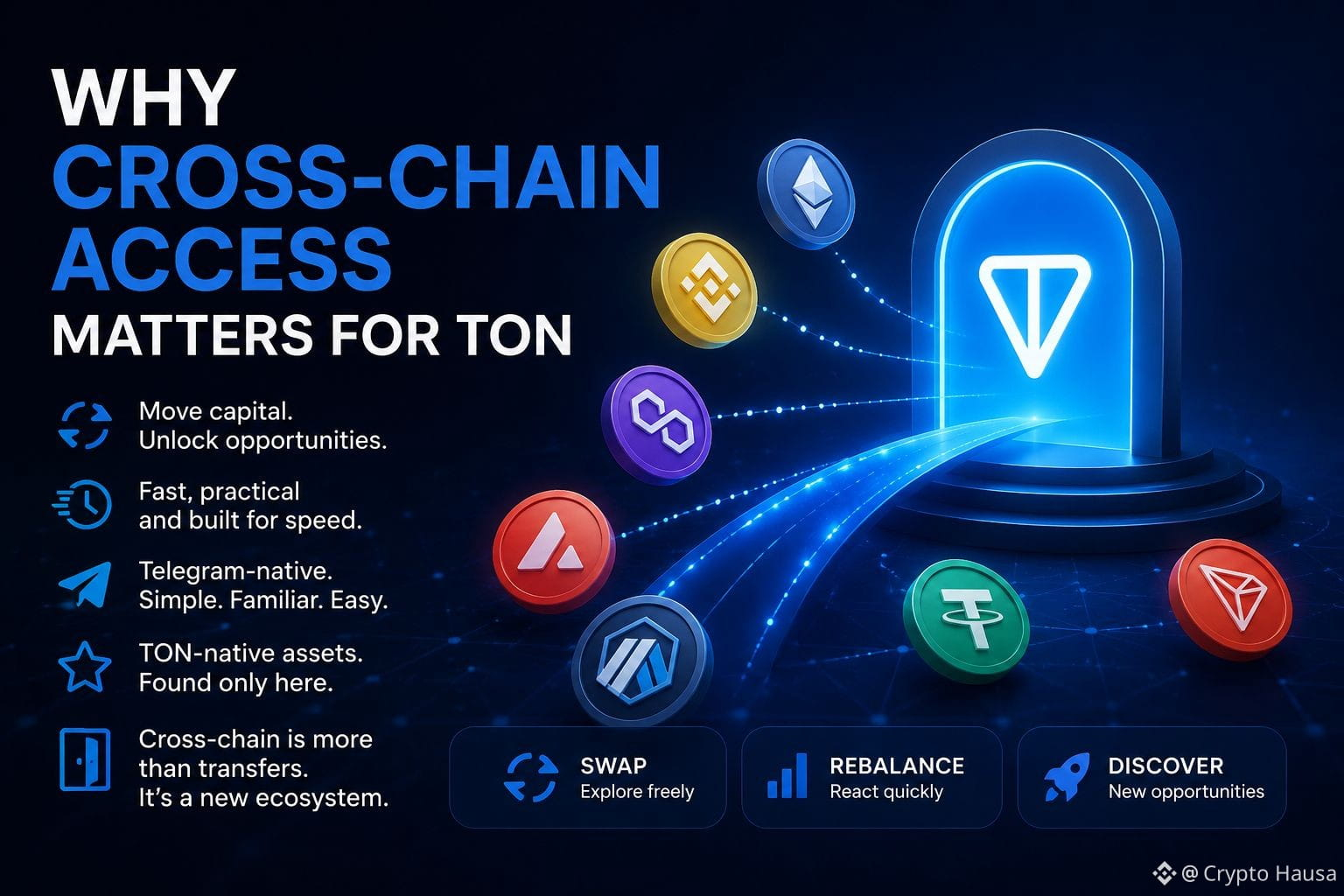
Cross-chain transfers are not only about moving funds from one network to another. The real value comes when users can move capital into TON and then put it to work across the ecosystem.
If you plan to swap, rebalance, or explore different opportunities more than once, the initial bridge cost can become less important compared with the benefits of having your funds on TON. Once assets arrive, users can interact with TON-native markets without repeatedly moving capital between chains.
Speed is another advantage. Fast TON transactions can make repositioning capital feel practical rather than something that requires careful timing around long confirmation periods.
The Telegram connection also helps reduce friction. For many users, accessing a TON wallet and exploring its ecosystem can feel more familiar than starting from scratch with separate wallet extensions and unfamiliar interfaces.
Most importantly, some TON-native assets and opportunities are unique to the ecosystem. If you want exposure to those markets, moving assets into TON is often the first step.
Cross-chain is not just about transferring funds. It is about opening the door to a different ecosystem and the opportunities being built inside it.
#GRAM #STONfi #Dife
Why Cross-Chain Access Matters for TON
Cross-chain transfers are not only about moving funds from one network to another. The real value comes when users can move capital into TON and then put it to work across the ecosystem.
If you plan to swap, rebalance, or explore different opportunities more than once, the initial bridge cost can become less important compared with the benefits of having your funds on TON. Once assets arrive, users can interact with TON-native markets without repeatedly moving capital between chains.
Speed is another advantage. Fast TON transactions can make repositioning capital feel practical rather than something that requires careful timing around long confirmation periods.
The Telegram connection also helps reduce friction. For many users, accessing a TON wallet and exploring its ecosystem can feel more familiar than starting from scratch with separate wallet extensions and unfamiliar interfaces.
Most importantly, some TON-native assets and opportunities are unique to the ecosystem. If you want exposure to those markets, moving assets into TON is often the first step.
Cross-chain is not just about transferring funds. It is about opening the door to a different ecosystem and the opportunities being built inside it.
#GRAM #STONfi #Dife
Cross-chain transfers are not only about moving funds from one network to another. The real value comes when users can move capital into TON and then put it to work across the ecosystem.
If you plan to swap, rebalance, or explore different opportunities more than once, the initial bridge cost can become less important compared with the benefits of having your funds on TON. Once assets arrive, users can interact with TON-native markets without repeatedly moving capital between chains.
Speed is another advantage. Fast TON transactions can make repositioning capital feel practical rather than something that requires careful timing around long confirmation periods.
The Telegram connection also helps reduce friction. For many users, accessing a TON wallet and exploring its ecosystem can feel more familiar than starting from scratch with separate wallet extensions and unfamiliar interfaces.
Most importantly, some TON-native assets and opportunities are unique to the ecosystem. If you want exposure to those markets, moving assets into TON is often the first step.
Cross-chain is not just about transferring funds. It is about opening the door to a different ecosystem and the opportunities being built inside it.
#GRAM #STONfi #Dife
148

·
--
Article
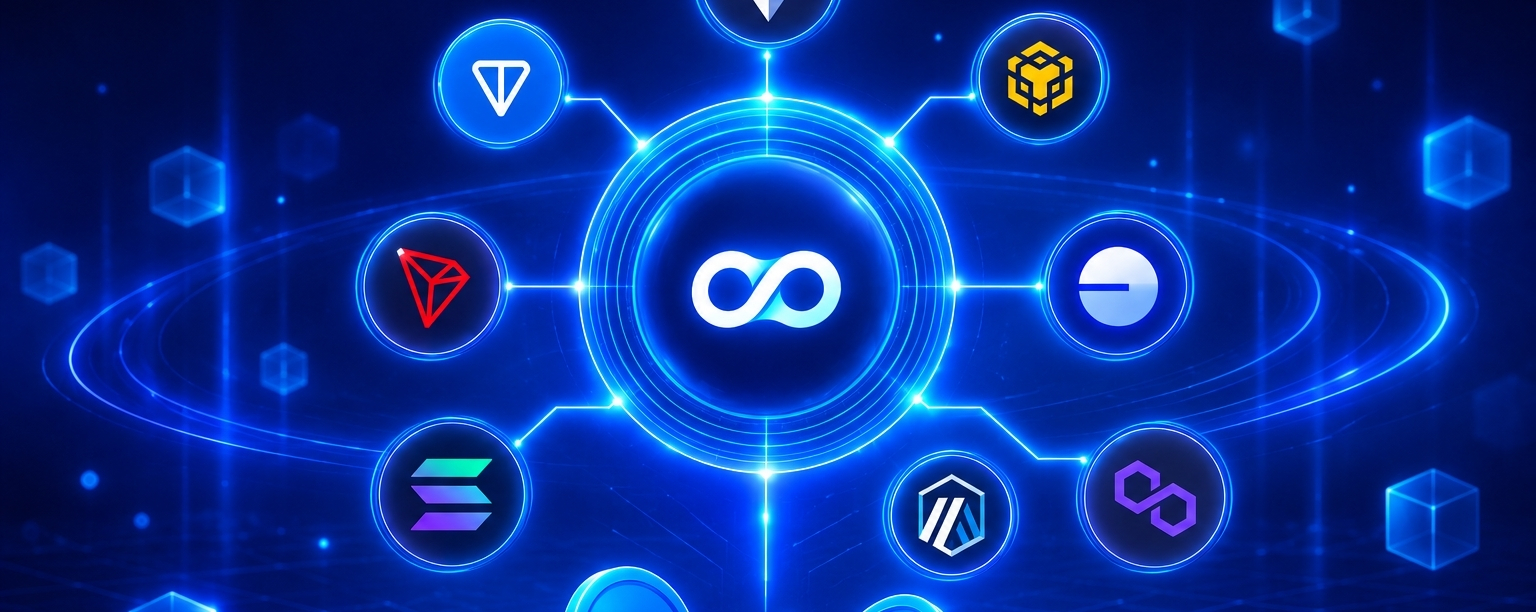
How Omniston Is Rewriting Cross Chain LiquidityHow Omniston Is Rewriting Cross-Chain Liquidity
For years, cross-chain interoperability has been explained through one simple word: bridges.
Lock assets on one network, receive an equivalent representation on another, and trust the infrastructure holding the liquidity. While this model helped connect different ecosystems, it also introduced complexity, fragmented liquidity, and additional security assumptions.
Omniston takes a different approach.
Rather than acting as another traditional bridge, Omniston focuses on cross-chain execution and liquidity routing. Instead of requiring users to move through a shared liquidity vault, it connects users with independent liquidity providers called resolvers.
Here is why that model is interesting.
1. Competitive Liquidity Through RFQ
When a user wants to execute a cross-chain swap, Omniston can request executable quotes from its resolver network.
Resolvers compete to fulfill the transaction using their own liquidity. This creates a competitive marketplace where liquidity providers have an incentive to offer attractive execution rather than relying on a single centralized pool.
The result is a model that treats cross-chain liquidity more like an open execution market.
2. Atomic Settlement With HTLCs
The settlement mechanism is another important part of the architecture.
Using Hashed Timelock Contracts (HTLCs), the transaction can be secured through cryptographic conditions and time locks.
The user locks the source asset while the resolver commits the destination asset. A shared secret enables the settlement process, while the time-lock mechanism provides a recovery path if the required conditions are not completed.
This reduces the need to rely on a central intermediary to coordinate both sides of the transaction.
3. Predictable Execution
Cross-chain swaps can often come with uncertainty around slippage, liquidity depth, and execution.
Omniston's resolver-based model approaches this differently by working with executable quotes.
Instead of simply estimating what a pool might provide, the user can receive a defined amount from a resolver. If that exact execution cannot be fulfilled, the transaction does not simply degrade into an unexpected partial fill.
That creates a much cleaner user experience.
4. Liquidity Without a Single Liquidity Pool
Perhaps the biggest idea is the separation between liquidity aggregation and liquidity centralization.
Omniston can connect different liquidity providers across ecosystems while allowing those providers to maintain control over their own capital.
This creates a marketplace where liquidity can compete for users without requiring everyone to deposit funds into one shared pool.
That model could become increasingly important as cross-chain activity expands across networks such as TON, TRON, and EVM ecosystems.
The Bigger Picture
Cross-chain infrastructure is moving beyond the simple idea of transferring assets from Chain A to Chain B.
The bigger challenge is execution: how can users access liquidity across multiple networks while minimizing trust assumptions, unnecessary steps, and capital inefficiency?
Omniston's approach is interesting because it treats this problem as an execution and liquidity-routing challenge rather than simply a bridging problem.
If resolver networks continue to scale, we could see a future where users don't need to think about which chain their liquidity is coming from. They simply choose what they want to trade, while competing liquidity providers handle the execution behind the scenes.
That could make cross-chain DeFi feel less fragmented and much more like one interconnected liquidity market.
The next evolution of interoperability may not be about building bigger bridges. It may be about building smarter execution layers.
And Omniston is taking an interesting step in that direction.
#STONFI #DIFE #TON
How Omniston Is Rewriting Cross Chain Liquidity
How Omniston Is Rewriting Cross-Chain Liquidity
For years, cross-chain interoperability has been explained through one simple word: bridges.
Lock assets on one network, receive an equivalent representation on another, and trust the infrastructure holding the liquidity. While this model helped connect different ecosystems, it also introduced complexity, fragmented liquidity, and additional security assumptions.
Omniston takes a different approach.
Rather than acting as another traditional bridge, Omniston focuses on cross-chain execution and liquidity routing. Instead of requiring users to move through a shared liquidity vault, it connects users with independent liquidity providers called resolvers.
Here is why that model is interesting.
1. Competitive Liquidity Through RFQ
When a user wants to execute a cross-chain swap, Omniston can request executable quotes from its resolver network.
Resolvers compete to fulfill the transaction using their own liquidity. This creates a competitive marketplace where liquidity providers have an incentive to offer attractive execution rather than relying on a single centralized pool.
The result is a model that treats cross-chain liquidity more like an open execution market.
2. Atomic Settlement With HTLCs
The settlement mechanism is another important part of the architecture.
Using Hashed Timelock Contracts (HTLCs), the transaction can be secured through cryptographic conditions and time locks.
The user locks the source asset while the resolver commits the destination asset. A shared secret enables the settlement process, while the time-lock mechanism provides a recovery path if the required conditions are not completed.
This reduces the need to rely on a central intermediary to coordinate both sides of the transaction.
3. Predictable Execution
Cross-chain swaps can often come with uncertainty around slippage, liquidity depth, and execution.
Omniston's resolver-based model approaches this differently by working with executable quotes.
Instead of simply estimating what a pool might provide, the user can receive a defined amount from a resolver. If that exact execution cannot be fulfilled, the transaction does not simply degrade into an unexpected partial fill.
That creates a much cleaner user experience.
4. Liquidity Without a Single Liquidity Pool
Perhaps the biggest idea is the separation between liquidity aggregation and liquidity centralization.
Omniston can connect different liquidity providers across ecosystems while allowing those providers to maintain control over their own capital.
This creates a marketplace where liquidity can compete for users without requiring everyone to deposit funds into one shared pool.
That model could become increasingly important as cross-chain activity expands across networks such as TON, TRON, and EVM ecosystems.
The Bigger Picture
Cross-chain infrastructure is moving beyond the simple idea of transferring assets from Chain A to Chain B.
The bigger challenge is execution: how can users access liquidity across multiple networks while minimizing trust assumptions, unnecessary steps, and capital inefficiency?
Omniston's approach is interesting because it treats this problem as an execution and liquidity-routing challenge rather than simply a bridging problem.
If resolver networks continue to scale, we could see a future where users don't need to think about which chain their liquidity is coming from. They simply choose what they want to trade, while competing liquidity providers handle the execution behind the scenes.
That could make cross-chain DeFi feel less fragmented and much more like one interconnected liquidity market.
The next evolution of interoperability may not be about building bigger bridges. It may be about building smarter execution layers.
And Omniston is taking an interesting step in that direction.
#STONFI #DIFE #TON
For years, cross-chain interoperability has been explained through one simple word: bridges.
Lock assets on one network, receive an equivalent representation on another, and trust the infrastructure holding the liquidity. While this model helped connect different ecosystems, it also introduced complexity, fragmented liquidity, and additional security assumptions.
Omniston takes a different approach.
Rather than acting as another traditional bridge, Omniston focuses on cross-chain execution and liquidity routing. Instead of requiring users to move through a shared liquidity vault, it connects users with independent liquidity providers called resolvers.
Here is why that model is interesting.
1. Competitive Liquidity Through RFQ
When a user wants to execute a cross-chain swap, Omniston can request executable quotes from its resolver network.
Resolvers compete to fulfill the transaction using their own liquidity. This creates a competitive marketplace where liquidity providers have an incentive to offer attractive execution rather than relying on a single centralized pool.
The result is a model that treats cross-chain liquidity more like an open execution market.
2. Atomic Settlement With HTLCs
The settlement mechanism is another important part of the architecture.
Using Hashed Timelock Contracts (HTLCs), the transaction can be secured through cryptographic conditions and time locks.
The user locks the source asset while the resolver commits the destination asset. A shared secret enables the settlement process, while the time-lock mechanism provides a recovery path if the required conditions are not completed.
This reduces the need to rely on a central intermediary to coordinate both sides of the transaction.
3. Predictable Execution
Cross-chain swaps can often come with uncertainty around slippage, liquidity depth, and execution.
Omniston's resolver-based model approaches this differently by working with executable quotes.
Instead of simply estimating what a pool might provide, the user can receive a defined amount from a resolver. If that exact execution cannot be fulfilled, the transaction does not simply degrade into an unexpected partial fill.
That creates a much cleaner user experience.
4. Liquidity Without a Single Liquidity Pool
Perhaps the biggest idea is the separation between liquidity aggregation and liquidity centralization.
Omniston can connect different liquidity providers across ecosystems while allowing those providers to maintain control over their own capital.
This creates a marketplace where liquidity can compete for users without requiring everyone to deposit funds into one shared pool.
That model could become increasingly important as cross-chain activity expands across networks such as TON, TRON, and EVM ecosystems.
The Bigger Picture
Cross-chain infrastructure is moving beyond the simple idea of transferring assets from Chain A to Chain B.
The bigger challenge is execution: how can users access liquidity across multiple networks while minimizing trust assumptions, unnecessary steps, and capital inefficiency?
Omniston's approach is interesting because it treats this problem as an execution and liquidity-routing challenge rather than simply a bridging problem.
If resolver networks continue to scale, we could see a future where users don't need to think about which chain their liquidity is coming from. They simply choose what they want to trade, while competing liquidity providers handle the execution behind the scenes.
That could make cross-chain DeFi feel less fragmented and much more like one interconnected liquidity market.
The next evolution of interoperability may not be about building bigger bridges. It may be about building smarter execution layers.
And Omniston is taking an interesting step in that direction.
#STONFI #DIFE #TON
21
·
--
Why Every Web3 Creator Should Understand STON.fi
If you're creating Web3 content, understanding @ston_fi is more valuable than simply knowing that it's a DEX.
STON.fi sits at an important part of the TON ecosystem: liquidity, swaps, and on-chain user experience.
Here’s why creators should pay attention 👇
🔹 Understand the liquidity layer
Creators who understand how liquidity moves can explain DeFi beyond surface-level narratives.
🔹 Learn how AMMs work in practice
STON.fi gives you a real ecosystem to study concepts like liquidity pools, swaps, LPs, fees, and price impact.
🔹 See how TON DeFi is evolving
TON isn't only about payments and Telegram users. Its DeFi ecosystem is becoming increasingly important, and STON.fi is one of the projects worth understanding.
🔹 Cross-chain liquidity matters
With fragmented liquidity across different networks, infrastructure that helps users access better liquidity and routes becomes increasingly relevant.
🔹 Better education = better content
Instead of posting “STON.fi is a DEX,” creators can explain why liquidity matters, how swaps work, what creates slippage, and how aggregators improve capital efficiency.
That’s the difference between promoting a project and actually understanding the technology you're talking about.
For Web3 creators, STON.fi is not just another project to post about.
It’s a practical case study for understanding DeFi, liquidity, TON, and the future of on-chain trading.
If you want to become a better Web3 educator, start by learning the infrastructure behind the narratives.
#STONFI #Ton #Dife
Why Every Web3 Creator Should Understand STON.fi
If you're creating Web3 content, understanding @ston_fi is more valuable than simply knowing that it's a DEX.
STON.fi sits at an important part of the TON ecosystem: liquidity, swaps, and on-chain user experience.
Here’s why creators should pay attention 👇
🔹 Understand the liquidity layer
Creators who understand how liquidity moves can explain DeFi beyond surface-level narratives.
🔹 Learn how AMMs work in practice
STON.fi gives you a real ecosystem to study concepts like liquidity pools, swaps, LPs, fees, and price impact.
🔹 See how TON DeFi is evolving
TON isn't only about payments and Telegram users. Its DeFi ecosystem is becoming increasingly important, and STON.fi is one of the projects worth understanding.
🔹 Cross-chain liquidity matters
With fragmented liquidity across different networks, infrastructure that helps users access better liquidity and routes becomes increasingly relevant.
🔹 Better education = better content
Instead of posting “STON.fi is a DEX,” creators can explain why liquidity matters, how swaps work, what creates slippage, and how aggregators improve capital efficiency.
That’s the difference between promoting a project and actually understanding the technology you're talking about.
For Web3 creators, STON.fi is not just another project to post about.
It’s a practical case study for understanding DeFi, liquidity, TON, and the future of on-chain trading.
If you want to become a better Web3 educator, start by learning the infrastructure behind the narratives.
#STONFI #Ton #Dife
If you're creating Web3 content, understanding @ston_fi is more valuable than simply knowing that it's a DEX.
STON.fi sits at an important part of the TON ecosystem: liquidity, swaps, and on-chain user experience.
Here’s why creators should pay attention 👇
🔹 Understand the liquidity layer
Creators who understand how liquidity moves can explain DeFi beyond surface-level narratives.
🔹 Learn how AMMs work in practice
STON.fi gives you a real ecosystem to study concepts like liquidity pools, swaps, LPs, fees, and price impact.
🔹 See how TON DeFi is evolving
TON isn't only about payments and Telegram users. Its DeFi ecosystem is becoming increasingly important, and STON.fi is one of the projects worth understanding.
🔹 Cross-chain liquidity matters
With fragmented liquidity across different networks, infrastructure that helps users access better liquidity and routes becomes increasingly relevant.
🔹 Better education = better content
Instead of posting “STON.fi is a DEX,” creators can explain why liquidity matters, how swaps work, what creates slippage, and how aggregators improve capital efficiency.
That’s the difference between promoting a project and actually understanding the technology you're talking about.
For Web3 creators, STON.fi is not just another project to post about.
It’s a practical case study for understanding DeFi, liquidity, TON, and the future of on-chain trading.
If you want to become a better Web3 educator, start by learning the infrastructure behind the narratives.
#STONFI #Ton #Dife
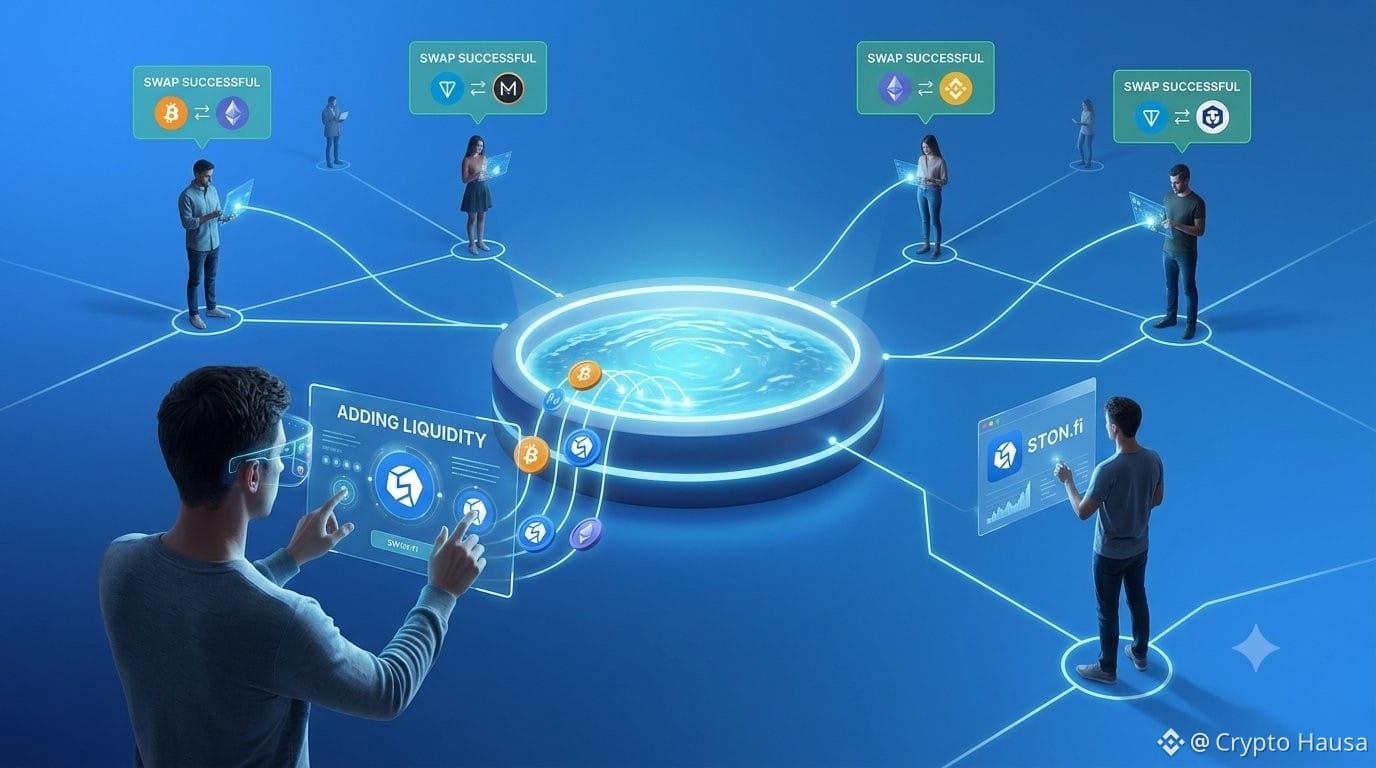
97
·
--
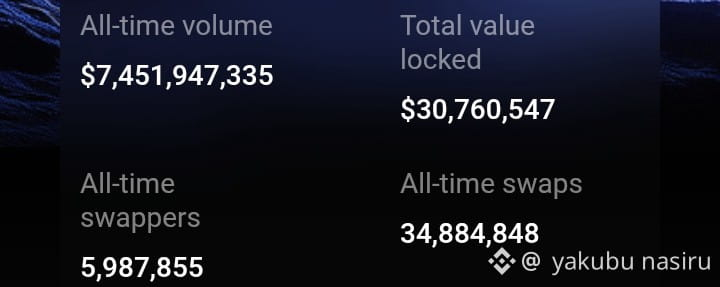
Article
STON.fi Cross-Chain Testing Contest Concludes SuccessfullySTON.fi Cross-Chain Testing Contest Concludes Successfully
The STON.fi Cross-Chain Testing Contest has officially come to an end, marking another important step in the platform's commitment to improving decentralized finance on the TON ecosystem.
Throughout the contest, participants actively tested cross-chain features, performed swaps, explored functionalities, and provided valuable feedback. This real-world engagement helps the STON.fi team identify areas for improvement, optimize performance, and ensure a smoother experience for users.
Community participation plays a vital role in the growth of any decentralized platform. Every transaction, suggestion, and reported observation contributes to building a more reliable and efficient ecosystem. The enthusiasm shown during the testing period highlights the strength and dedication of the STON.fi community.
The team is now reviewing all activities and calculating rewards for eligible participants. Results are expected to be announced within the next three business days.
As STON.fi continues to expand its cross-chain capabilities and DeFi offerings, users can look forward to more innovations designed to make decentralized trading faster, simpler, and more accessible.
For now, the testing phase may be over, but the journey toward a stronger and more connected DeFi ecosystem continues.
Stay tuned for the reward announcement and future updates from STON.fi
#STONfi #TON #Dife
STON.fi Cross-Chain Testing Contest Concludes Successfully
STON.fi Cross-Chain Testing Contest Concludes Successfully
The STON.fi Cross-Chain Testing Contest has officially come to an end, marking another important step in the platform's commitment to improving decentralized finance on the TON ecosystem.
Throughout the contest, participants actively tested cross-chain features, performed swaps, explored functionalities, and provided valuable feedback. This real-world engagement helps the STON.fi team identify areas for improvement, optimize performance, and ensure a smoother experience for users.
Community participation plays a vital role in the growth of any decentralized platform. Every transaction, suggestion, and reported observation contributes to building a more reliable and efficient ecosystem. The enthusiasm shown during the testing period highlights the strength and dedication of the STON.fi community.
The team is now reviewing all activities and calculating rewards for eligible participants. Results are expected to be announced within the next three business days.
As STON.fi continues to expand its cross-chain capabilities and DeFi offerings, users can look forward to more innovations designed to make decentralized trading faster, simpler, and more accessible.
For now, the testing phase may be over, but the journey toward a stronger and more connected DeFi ecosystem continues.
Stay tuned for the reward announcement and future updates from STON.fi
#STONfi #TON #Dife
The STON.fi Cross-Chain Testing Contest has officially come to an end, marking another important step in the platform's commitment to improving decentralized finance on the TON ecosystem.
Throughout the contest, participants actively tested cross-chain features, performed swaps, explored functionalities, and provided valuable feedback. This real-world engagement helps the STON.fi team identify areas for improvement, optimize performance, and ensure a smoother experience for users.
Community participation plays a vital role in the growth of any decentralized platform. Every transaction, suggestion, and reported observation contributes to building a more reliable and efficient ecosystem. The enthusiasm shown during the testing period highlights the strength and dedication of the STON.fi community.
The team is now reviewing all activities and calculating rewards for eligible participants. Results are expected to be announced within the next three business days.
As STON.fi continues to expand its cross-chain capabilities and DeFi offerings, users can look forward to more innovations designed to make decentralized trading faster, simpler, and more accessible.
For now, the testing phase may be over, but the journey toward a stronger and more connected DeFi ecosystem continues.
Stay tuned for the reward announcement and future updates from STON.fi
#STONfi #TON #Dife
142
·
--
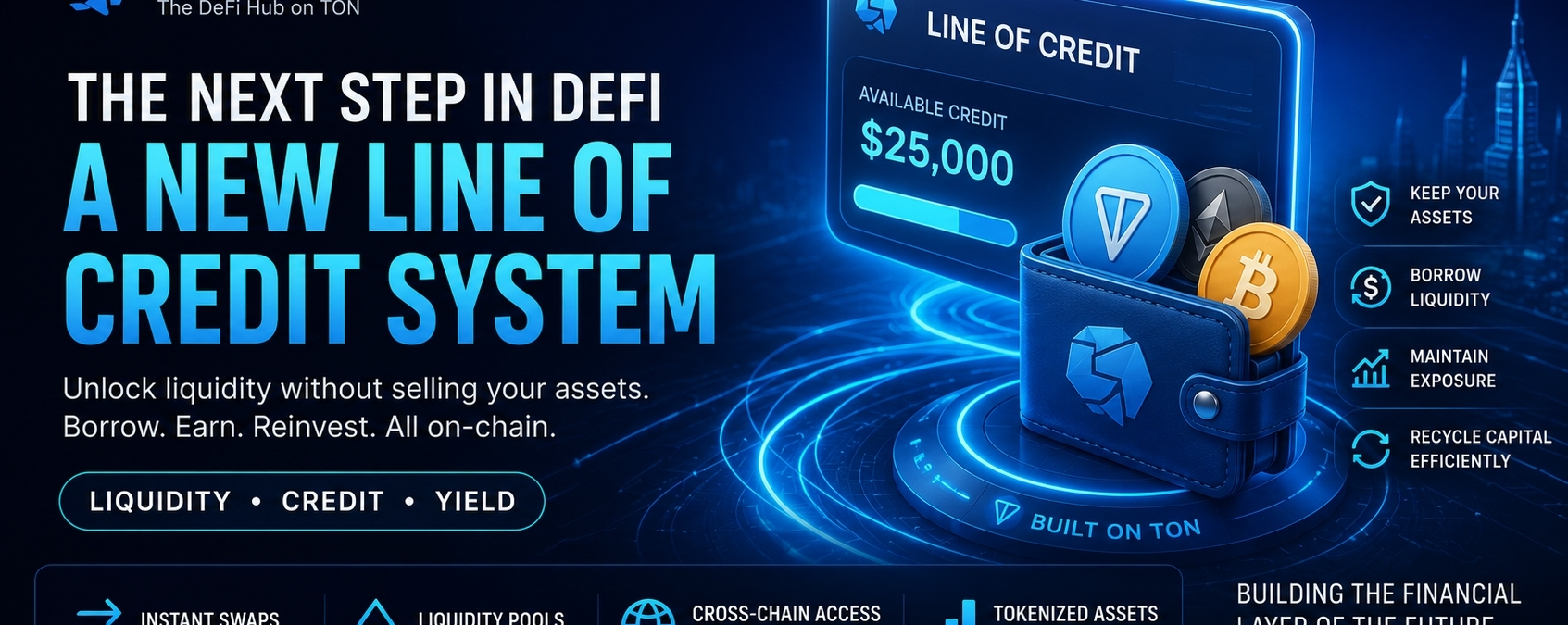
Article
STON.fi and the Emerging Shift Toward On-Chain Credit in the TON EcosystemSTON.fi and the Emerging Shift Toward On-Chain Credit in the TON Ecosystem
Decentralized finance continues to evolve beyond simple trading and yield generation into more sophisticated financial infrastructure. Within the TON ecosystem, STON.fi is increasingly positioned as more than just a decentralized exchange — it is becoming a foundational liquidity layer with expanding financial utility.
One of the most compelling conceptual directions being discussed is the introduction of a decentralized line of credit system, which could significantly extend how users interact with their crypto assets.
From Swaps to Financial Infrastructure
STON.fi initially established itself as a core automated market maker (AMM) on TON, offering:
Efficient token swaps with low fees
Deep liquidity pools for trading and yield provision
Integration with broader liquidity aggregation mechanisms
Expanding support for tokenized assets and ecosystem primitives
This design already places STON.fi at the center of liquidity flow within TON-based DeFi.
However, the next phase of DeFi growth is not only about swapping assets — it is about unlocking capital efficiency. This is where credit mechanisms become important.
Conceptualizing a DeFi-Native Line of Credit
A decentralized line of credit model built around STON.fi liquidity infrastructure would represent a shift from passive capital deployment to dynamic liquidity access.
In practical terms, such a system could allow users to:
Collateralize crypto assets without selling them
Borrow stable liquidity against on-chain positions
Maintain exposure to market upside while accessing spending power
Recycle capital across multiple DeFi strategies
This introduces a financial abstraction similar to traditional credit markets, but fully governed by smart contracts and on-chain risk parameters.
How Credit Enhances the Existing STON.fi Stack
STON.fi already operates as a liquidity hub within TON DeFi. A credit layer would logically extend its current architecture:
Swaps → Instant liquidity conversion
Liquidity pools → Yield generation and capital depth
Aggregation systems → Efficient routing of liquidity across protocols
Credit layer (proposed) → Liquidity extraction without asset liquidation
Together, these components create a continuous financial loop:
Deposit assets → Provide liquidity or collateral → Earn yield or borrow → Reinvest or spend → Re-enter liquidity cycle
This loop significantly improves capital efficiency, which is one of the most important metrics in DeFi system design.
Implications for the TON Ecosystem
If implemented effectively, a decentralized credit system within STON.fi’s ecosystem could have several structural impacts:
First, it may reduce dependence on centralized lending platforms by offering native borrowing mechanisms within TON-based DeFi.
Second, it could deepen liquidity across protocols by incentivizing more assets to remain deployed rather than liquidated for spending needs.
Third, it opens the door to real-world financial use cases, including crypto-backed spending systems and payment integrations, particularly in environments where Telegram-based applications are dominant.
Finally, it strengthens TON’s positioning as a consumer-facing blockchain ecosystem, where financial tools are embedded directly into user interfaces rather than abstract DeFi dashboards.
The Bigger Picture: Toward a Full Financial Layer
The evolution of STON.fi reflects a broader trend in decentralized finance: the transition from isolated trading platforms to integrated financial infrastructure.
In this context, STON.fi is gradually expanding into:
A decentralized liquidity engine
A cross-asset swap and routing layer
A tokenized asset access point
And potentially a credit and borrowing infrastructure
If the concept of a line of credit becomes fully realized, it could mark a significant milestone in the maturation of TON DeFi — transforming STON.fi into one of the key financial building blocks of the ecosystem.
Rather than being just a place to swap tokens, it would function as a composable financial layer where liquidity, credit, and yield converge
#Stonfi #ton #dife
STON.fi and the Emerging Shift Toward On-Chain Credit in the TON Ecosystem
STON.fi and the Emerging Shift Toward On-Chain Credit in the TON Ecosystem
Decentralized finance continues to evolve beyond simple trading and yield generation into more sophisticated financial infrastructure. Within the TON ecosystem, STON.fi is increasingly positioned as more than just a decentralized exchange — it is becoming a foundational liquidity layer with expanding financial utility.
One of the most compelling conceptual directions being discussed is the introduction of a decentralized line of credit system, which could significantly extend how users interact with their crypto assets.
From Swaps to Financial Infrastructure
STON.fi initially established itself as a core automated market maker (AMM) on TON, offering:
Efficient token swaps with low fees
Deep liquidity pools for trading and yield provision
Integration with broader liquidity aggregation mechanisms
Expanding support for tokenized assets and ecosystem primitives
This design already places STON.fi at the center of liquidity flow within TON-based DeFi.
However, the next phase of DeFi growth is not only about swapping assets — it is about unlocking capital efficiency. This is where credit mechanisms become important.
Conceptualizing a DeFi-Native Line of Credit
A decentralized line of credit model built around STON.fi liquidity infrastructure would represent a shift from passive capital deployment to dynamic liquidity access.
In practical terms, such a system could allow users to:
Collateralize crypto assets without selling them
Borrow stable liquidity against on-chain positions
Maintain exposure to market upside while accessing spending power
Recycle capital across multiple DeFi strategies
This introduces a financial abstraction similar to traditional credit markets, but fully governed by smart contracts and on-chain risk parameters.
How Credit Enhances the Existing STON.fi Stack
STON.fi already operates as a liquidity hub within TON DeFi. A credit layer would logically extend its current architecture:
Swaps → Instant liquidity conversion
Liquidity pools → Yield generation and capital depth
Aggregation systems → Efficient routing of liquidity across protocols
Credit layer (proposed) → Liquidity extraction without asset liquidation
Together, these components create a continuous financial loop:
Deposit assets → Provide liquidity or collateral → Earn yield or borrow → Reinvest or spend → Re-enter liquidity cycle
This loop significantly improves capital efficiency, which is one of the most important metrics in DeFi system design.
Implications for the TON Ecosystem
If implemented effectively, a decentralized credit system within STON.fi’s ecosystem could have several structural impacts:
First, it may reduce dependence on centralized lending platforms by offering native borrowing mechanisms within TON-based DeFi.
Second, it could deepen liquidity across protocols by incentivizing more assets to remain deployed rather than liquidated for spending needs.
Third, it opens the door to real-world financial use cases, including crypto-backed spending systems and payment integrations, particularly in environments where Telegram-based applications are dominant.
Finally, it strengthens TON’s positioning as a consumer-facing blockchain ecosystem, where financial tools are embedded directly into user interfaces rather than abstract DeFi dashboards.
The Bigger Picture: Toward a Full Financial Layer
The evolution of STON.fi reflects a broader trend in decentralized finance: the transition from isolated trading platforms to integrated financial infrastructure.
In this context, STON.fi is gradually expanding into:
A decentralized liquidity engine
A cross-asset swap and routing layer
A tokenized asset access point
And potentially a credit and borrowing infrastructure
If the concept of a line of credit becomes fully realized, it could mark a significant milestone in the maturation of TON DeFi — transforming STON.fi into one of the key financial building blocks of the ecosystem.
Rather than being just a place to swap tokens, it would function as a composable financial layer where liquidity, credit, and yield converge
#Stonfi #ton #dife
Decentralized finance continues to evolve beyond simple trading and yield generation into more sophisticated financial infrastructure. Within the TON ecosystem, STON.fi is increasingly positioned as more than just a decentralized exchange — it is becoming a foundational liquidity layer with expanding financial utility.
One of the most compelling conceptual directions being discussed is the introduction of a decentralized line of credit system, which could significantly extend how users interact with their crypto assets.
From Swaps to Financial Infrastructure
STON.fi initially established itself as a core automated market maker (AMM) on TON, offering:
Efficient token swaps with low fees
Deep liquidity pools for trading and yield provision
Integration with broader liquidity aggregation mechanisms
Expanding support for tokenized assets and ecosystem primitives
This design already places STON.fi at the center of liquidity flow within TON-based DeFi.
However, the next phase of DeFi growth is not only about swapping assets — it is about unlocking capital efficiency. This is where credit mechanisms become important.
Conceptualizing a DeFi-Native Line of Credit
A decentralized line of credit model built around STON.fi liquidity infrastructure would represent a shift from passive capital deployment to dynamic liquidity access.
In practical terms, such a system could allow users to:
Collateralize crypto assets without selling them
Borrow stable liquidity against on-chain positions
Maintain exposure to market upside while accessing spending power
Recycle capital across multiple DeFi strategies
This introduces a financial abstraction similar to traditional credit markets, but fully governed by smart contracts and on-chain risk parameters.
How Credit Enhances the Existing STON.fi Stack
STON.fi already operates as a liquidity hub within TON DeFi. A credit layer would logically extend its current architecture:
Swaps → Instant liquidity conversion
Liquidity pools → Yield generation and capital depth
Aggregation systems → Efficient routing of liquidity across protocols
Credit layer (proposed) → Liquidity extraction without asset liquidation
Together, these components create a continuous financial loop:
Deposit assets → Provide liquidity or collateral → Earn yield or borrow → Reinvest or spend → Re-enter liquidity cycle
This loop significantly improves capital efficiency, which is one of the most important metrics in DeFi system design.
Implications for the TON Ecosystem
If implemented effectively, a decentralized credit system within STON.fi’s ecosystem could have several structural impacts:
First, it may reduce dependence on centralized lending platforms by offering native borrowing mechanisms within TON-based DeFi.
Second, it could deepen liquidity across protocols by incentivizing more assets to remain deployed rather than liquidated for spending needs.
Third, it opens the door to real-world financial use cases, including crypto-backed spending systems and payment integrations, particularly in environments where Telegram-based applications are dominant.
Finally, it strengthens TON’s positioning as a consumer-facing blockchain ecosystem, where financial tools are embedded directly into user interfaces rather than abstract DeFi dashboards.
The Bigger Picture: Toward a Full Financial Layer
The evolution of STON.fi reflects a broader trend in decentralized finance: the transition from isolated trading platforms to integrated financial infrastructure.
In this context, STON.fi is gradually expanding into:
A decentralized liquidity engine
A cross-asset swap and routing layer
A tokenized asset access point
And potentially a credit and borrowing infrastructure
If the concept of a line of credit becomes fully realized, it could mark a significant milestone in the maturation of TON DeFi — transforming STON.fi into one of the key financial building blocks of the ecosystem.
Rather than being just a place to swap tokens, it would function as a composable financial layer where liquidity, credit, and yield converge
#Stonfi #ton #dife
118
·
--
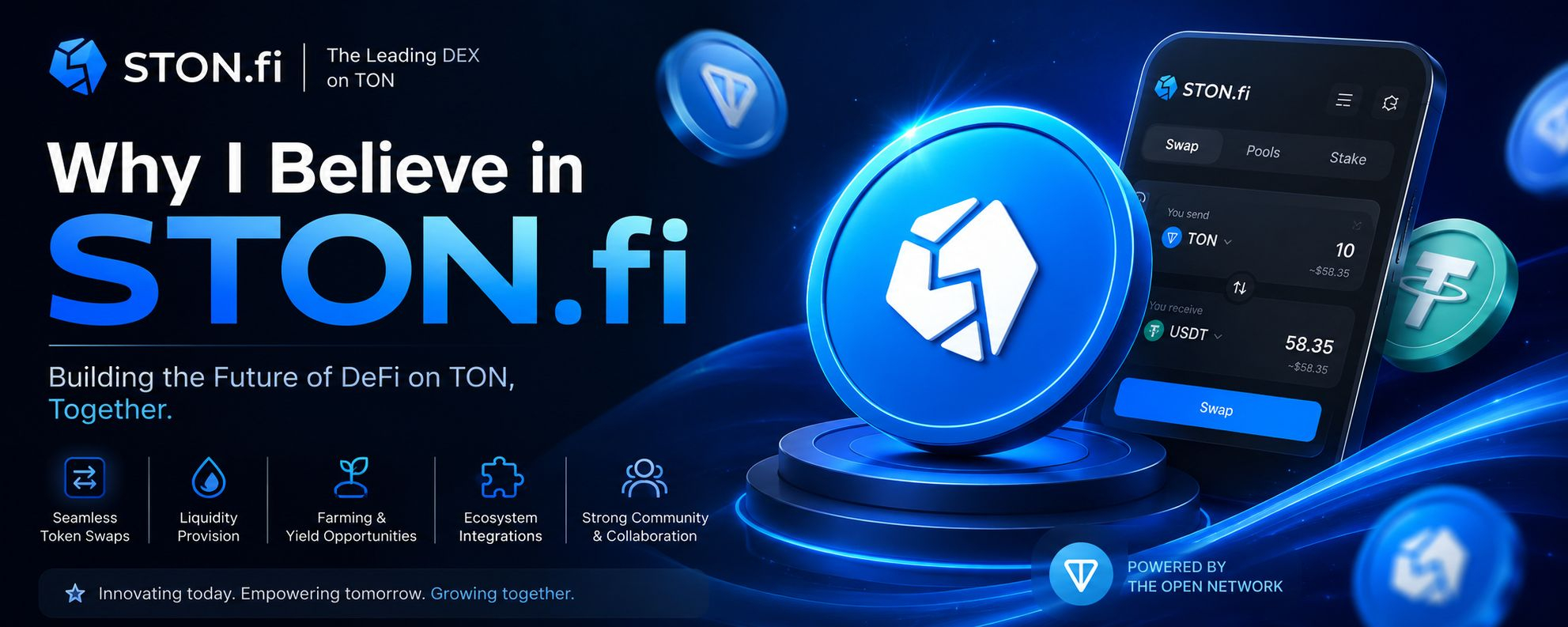
Article
Why I Believe in STON.fiWhy I Believe in STON.fi
The decentralized finance ecosystem on TON is growing rapidly, and I believe STON.fi is positioned to play a major role in its future. As the leading decentralized exchange on TON, STON.fi continues to expand its ecosystem with new features, partnerships, and opportunities for users.
What stands out to me is its focus on accessibility and innovation. Whether it's token swaps, liquidity provision, farming, or ecosystem integrations, STON.fi is creating tools that make DeFi more practical for both newcomers and experienced users.
I also believe that consistent community activity is one of STON.fi's greatest strengths. Every new campaign, product update, and collaboration helps strengthen the platform while encouraging greater participation across the TON ecosystem.
As the ecosystem continues to evolve, I see STON.fi as more than just a decentralized exchange—it's becoming a key piece of the infrastructure that supports decentralized finance on TON. That's why I remain optimistic about its long-term growth and the opportunities it can create for its community.
The future of DeFi will be built by projects that continue to innovate, and I believe STON.fi is one of those projects worth watching.
#STONfi #ton #dife
Why I Believe in STON.fi
Why I Believe in STON.fi
The decentralized finance ecosystem on TON is growing rapidly, and I believe STON.fi is positioned to play a major role in its future. As the leading decentralized exchange on TON, STON.fi continues to expand its ecosystem with new features, partnerships, and opportunities for users.
What stands out to me is its focus on accessibility and innovation. Whether it's token swaps, liquidity provision, farming, or ecosystem integrations, STON.fi is creating tools that make DeFi more practical for both newcomers and experienced users.
I also believe that consistent community activity is one of STON.fi's greatest strengths. Every new campaign, product update, and collaboration helps strengthen the platform while encouraging greater participation across the TON ecosystem.
As the ecosystem continues to evolve, I see STON.fi as more than just a decentralized exchange—it's becoming a key piece of the infrastructure that supports decentralized finance on TON. That's why I remain optimistic about its long-term growth and the opportunities it can create for its community.
The future of DeFi will be built by projects that continue to innovate, and I believe STON.fi is one of those projects worth watching.
#STONfi #ton #dife
The decentralized finance ecosystem on TON is growing rapidly, and I believe STON.fi is positioned to play a major role in its future. As the leading decentralized exchange on TON, STON.fi continues to expand its ecosystem with new features, partnerships, and opportunities for users.
What stands out to me is its focus on accessibility and innovation. Whether it's token swaps, liquidity provision, farming, or ecosystem integrations, STON.fi is creating tools that make DeFi more practical for both newcomers and experienced users.
I also believe that consistent community activity is one of STON.fi's greatest strengths. Every new campaign, product update, and collaboration helps strengthen the platform while encouraging greater participation across the TON ecosystem.
As the ecosystem continues to evolve, I see STON.fi as more than just a decentralized exchange—it's becoming a key piece of the infrastructure that supports decentralized finance on TON. That's why I remain optimistic about its long-term growth and the opportunities it can create for its community.
The future of DeFi will be built by projects that continue to innovate, and I believe STON.fi is one of those projects worth watching.
#STONfi #ton #dife
81
·
--
STON.fi Continues Building a More Connected DeFi EcosystemSTON.fi Continues Building a More Connected DeFi Ecosystem
Decentralized finance is evolving rapidly, and interoperability has become one of the industry's biggest priorities. STON.fi is contributing to this evolution by expanding its ecosystem with features designed to make decentralized trading more efficient, accessible, and user-friendly.
By focusing on seamless asset swaps, improved liquidity, and a smoother user experience, STON.fi aims to reduce the complexity of interacting with multiple blockchain networks. These improvements can help users move assets more efficiently while maintaining the transparency and security that DeFi is known for.
As the DeFi landscape continues to grow, platforms that prioritize usability, scalability, and innovation are likely to play an important role in driving broader adoption. STON.fi's ongoing development reflects this direction, offering tools that support both experienced users and newcomers exploring decentralized finance.
While the ecosystem continues to evolve, users should always conduct their own research before participating in any DeFi protocol. Understanding the opportunities as well as the risks remains essential for making informed decisions in this fast-moving space.
#STONfi #TON #dife
STON.fi Continues Building a More Connected DeFi Ecosystem
STON.fi Continues Building a More Connected DeFi Ecosystem
Decentralized finance is evolving rapidly, and interoperability has become one of the industry's biggest priorities. STON.fi is contributing to this evolution by expanding its ecosystem with features designed to make decentralized trading more efficient, accessible, and user-friendly.
By focusing on seamless asset swaps, improved liquidity, and a smoother user experience, STON.fi aims to reduce the complexity of interacting with multiple blockchain networks. These improvements can help users move assets more efficiently while maintaining the transparency and security that DeFi is known for.
As the DeFi landscape continues to grow, platforms that prioritize usability, scalability, and innovation are likely to play an important role in driving broader adoption. STON.fi's ongoing development reflects this direction, offering tools that support both experienced users and newcomers exploring decentralized finance.
While the ecosystem continues to evolve, users should always conduct their own research before participating in any DeFi protocol. Understanding the opportunities as well as the risks remains essential for making informed decisions in this fast-moving space.
#STONfi #TON #dife
Decentralized finance is evolving rapidly, and interoperability has become one of the industry's biggest priorities. STON.fi is contributing to this evolution by expanding its ecosystem with features designed to make decentralized trading more efficient, accessible, and user-friendly.
By focusing on seamless asset swaps, improved liquidity, and a smoother user experience, STON.fi aims to reduce the complexity of interacting with multiple blockchain networks. These improvements can help users move assets more efficiently while maintaining the transparency and security that DeFi is known for.
As the DeFi landscape continues to grow, platforms that prioritize usability, scalability, and innovation are likely to play an important role in driving broader adoption. STON.fi's ongoing development reflects this direction, offering tools that support both experienced users and newcomers exploring decentralized finance.
While the ecosystem continues to evolve, users should always conduct their own research before participating in any DeFi protocol. Understanding the opportunities as well as the risks remains essential for making informed decisions in this fast-moving space.
#STONfi #TON #dife
1
78
·
--
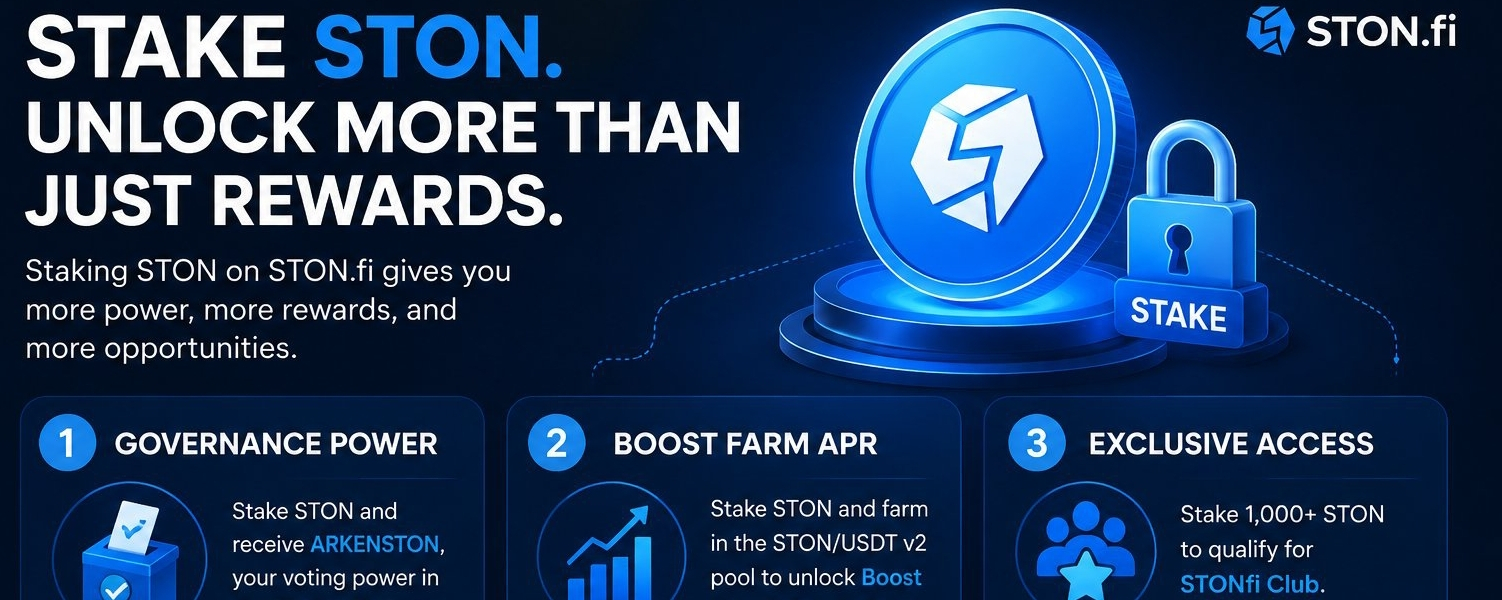
Article
I Thought Staking Was Just About Earning Rewards, Until I Looked DeeperI Thought Staking Was Just About Earning Rewards, Until I Looked Deeper
For a long time, I assumed staking was one of the simplest things you could do in DeFi.
Lock your tokens, earn a few rewards, and wait.
Nothing more.
But the longer I explored decentralized finance, the more I realized that the strongest staking models are about much more than passive income.
They're designed to give users a bigger role within an ecosystem.
That shift in perspective really stood out when I spent time learning how staking works on @ston_fi.
At first glance, the rewards catch your attention.
After looking closer, though, I found that staking opens the door to several opportunities that many people don't immediately notice.
The first thing that stood out to me was governance.
When you stake STON, you're issued ARKENSTON, which represents your voting power within the STONfi DAO.
That changes your role completely.
Instead of simply owning a token, you're able to participate in decisions that help shape the protocol's future.
I appreciate that because decentralized finance works best when the community has a meaningful voice.
Staking turns users from observers into contributors.
The next benefit becomes especially relevant if you're already active in liquidity farming.
Users who stake STON while participating in the STON/USDt v2 farm can become eligible for Boost Farm APR, allowing their farming rewards to increase.
The current structure is straightforward:
✅ Stake 500 STON or more to unlock up to 1.5× Farm APR.
✅ Stake 1,000 STON or more to unlock up to 2× Farm APR.
What I found interesting isn't simply the higher APR.
It's how staking and liquidity provision complement one another instead of functioning as separate strategies.
Rather than choosing between staking or farming, both can work together to improve overall capital efficiency.
Of course, it's important to remember that these are maximum reward multipliers.
Actual returns can vary depending on liquidity, campaign allocations, market conditions, and the size of your position.
Another feature that deserves more attention is STONfi Club.
Users who stake at least 1,000 STON can qualify for membership, opening access to a more engaged part of the ecosystem.
This goes beyond additional rewards.
Members gain opportunities to connect more closely with the team, receive updates on upcoming developments, access valuable ecosystem insights, and participate in conversations that may not be available to the wider community.
Personally, I believe access to information and active discussions has become one of the most valuable assets in Web3.
Projects evolve quickly, and being closer to the people building them often provides a much better understanding of where the ecosystem is heading.
What impressed me most is that staking STON isn't built around a single benefit.
Instead, it creates value from several different directions.
• Governance participation through ARKENSTON.
• Increased earning potential through Boost Farm APR.
• Greater community involvement through STONfi Club.
Each benefit serves a different type of user.
Whether you're interested in helping shape the protocol, maximizing your farming strategy, or becoming more involved with the community, staking offers more than simply generating passive rewards.
As always, none of this should be taken as financial advice.
Everyone should DYOR
Still, if you've been holding STON without exploring its utility, it may be worth taking a closer look at everything staking makes possible.
Sometimes the biggest value isn't just in earning more tokens.
It's in becoming a more active participant in the ecosystem you're already supporting.
Have you explored staking on STON.fi yet, or are you still evaluating whether it's the right move for your strategy?
Stake STON : app.ston.fi/staking
Boost Farm APR- app.ston.fi/pools/EQBbsMjy…
Join STONfi Club — t.me/STONfi_bot
#STONfi #TON #Dife
I Thought Staking Was Just About Earning Rewards, Until I Looked Deeper
I Thought Staking Was Just About Earning Rewards, Until I Looked Deeper
For a long time, I assumed staking was one of the simplest things you could do in DeFi.
Lock your tokens, earn a few rewards, and wait.
Nothing more.
But the longer I explored decentralized finance, the more I realized that the strongest staking models are about much more than passive income.
They're designed to give users a bigger role within an ecosystem.
That shift in perspective really stood out when I spent time learning how staking works on @ston_fi.
At first glance, the rewards catch your attention.
After looking closer, though, I found that staking opens the door to several opportunities that many people don't immediately notice.
The first thing that stood out to me was governance.
When you stake STON, you're issued ARKENSTON, which represents your voting power within the STONfi DAO.
That changes your role completely.
Instead of simply owning a token, you're able to participate in decisions that help shape the protocol's future.
I appreciate that because decentralized finance works best when the community has a meaningful voice.
Staking turns users from observers into contributors.
The next benefit becomes especially relevant if you're already active in liquidity farming.
Users who stake STON while participating in the STON/USDt v2 farm can become eligible for Boost Farm APR, allowing their farming rewards to increase.
The current structure is straightforward:
✅ Stake 500 STON or more to unlock up to 1.5× Farm APR.
✅ Stake 1,000 STON or more to unlock up to 2× Farm APR.
What I found interesting isn't simply the higher APR.
It's how staking and liquidity provision complement one another instead of functioning as separate strategies.
Rather than choosing between staking or farming, both can work together to improve overall capital efficiency.
Of course, it's important to remember that these are maximum reward multipliers.
Actual returns can vary depending on liquidity, campaign allocations, market conditions, and the size of your position.
Another feature that deserves more attention is STONfi Club.
Users who stake at least 1,000 STON can qualify for membership, opening access to a more engaged part of the ecosystem.
This goes beyond additional rewards.
Members gain opportunities to connect more closely with the team, receive updates on upcoming developments, access valuable ecosystem insights, and participate in conversations that may not be available to the wider community.
Personally, I believe access to information and active discussions has become one of the most valuable assets in Web3.
Projects evolve quickly, and being closer to the people building them often provides a much better understanding of where the ecosystem is heading.
What impressed me most is that staking STON isn't built around a single benefit.
Instead, it creates value from several different directions.
• Governance participation through ARKENSTON.
• Increased earning potential through Boost Farm APR.
• Greater community involvement through STONfi Club.
Each benefit serves a different type of user.
Whether you're interested in helping shape the protocol, maximizing your farming strategy, or becoming more involved with the community, staking offers more than simply generating passive rewards.
As always, none of this should be taken as financial advice.
Everyone should DYOR
Still, if you've been holding STON without exploring its utility, it may be worth taking a closer look at everything staking makes possible.
Sometimes the biggest value isn't just in earning more tokens.
It's in becoming a more active participant in the ecosystem you're already supporting.
Have you explored staking on STON.fi yet, or are you still evaluating whether it's the right move for your strategy?
Stake STON : app.ston.fi/staking
Boost Farm APR- app.ston.fi/pools/EQBbsMjy…
Join STONfi Club — t.me/STONfi_bot
#STONfi #TON #Dife
For a long time, I assumed staking was one of the simplest things you could do in DeFi.
Lock your tokens, earn a few rewards, and wait.
Nothing more.
But the longer I explored decentralized finance, the more I realized that the strongest staking models are about much more than passive income.
They're designed to give users a bigger role within an ecosystem.
That shift in perspective really stood out when I spent time learning how staking works on @ston_fi.
At first glance, the rewards catch your attention.
After looking closer, though, I found that staking opens the door to several opportunities that many people don't immediately notice.
The first thing that stood out to me was governance.
When you stake STON, you're issued ARKENSTON, which represents your voting power within the STONfi DAO.
That changes your role completely.
Instead of simply owning a token, you're able to participate in decisions that help shape the protocol's future.
I appreciate that because decentralized finance works best when the community has a meaningful voice.
Staking turns users from observers into contributors.
The next benefit becomes especially relevant if you're already active in liquidity farming.
Users who stake STON while participating in the STON/USDt v2 farm can become eligible for Boost Farm APR, allowing their farming rewards to increase.
The current structure is straightforward:
✅ Stake 500 STON or more to unlock up to 1.5× Farm APR.
✅ Stake 1,000 STON or more to unlock up to 2× Farm APR.
What I found interesting isn't simply the higher APR.
It's how staking and liquidity provision complement one another instead of functioning as separate strategies.
Rather than choosing between staking or farming, both can work together to improve overall capital efficiency.
Of course, it's important to remember that these are maximum reward multipliers.
Actual returns can vary depending on liquidity, campaign allocations, market conditions, and the size of your position.
Another feature that deserves more attention is STONfi Club.
Users who stake at least 1,000 STON can qualify for membership, opening access to a more engaged part of the ecosystem.
This goes beyond additional rewards.
Members gain opportunities to connect more closely with the team, receive updates on upcoming developments, access valuable ecosystem insights, and participate in conversations that may not be available to the wider community.
Personally, I believe access to information and active discussions has become one of the most valuable assets in Web3.
Projects evolve quickly, and being closer to the people building them often provides a much better understanding of where the ecosystem is heading.
What impressed me most is that staking STON isn't built around a single benefit.
Instead, it creates value from several different directions.
• Governance participation through ARKENSTON.
• Increased earning potential through Boost Farm APR.
• Greater community involvement through STONfi Club.
Each benefit serves a different type of user.
Whether you're interested in helping shape the protocol, maximizing your farming strategy, or becoming more involved with the community, staking offers more than simply generating passive rewards.
As always, none of this should be taken as financial advice.
Everyone should DYOR
Still, if you've been holding STON without exploring its utility, it may be worth taking a closer look at everything staking makes possible.
Sometimes the biggest value isn't just in earning more tokens.
It's in becoming a more active participant in the ecosystem you're already supporting.
Have you explored staking on STON.fi yet, or are you still evaluating whether it's the right move for your strategy?
Stake STON : app.ston.fi/staking
Boost Farm APR- app.ston.fi/pools/EQBbsMjy…
Join STONfi Club — t.me/STONfi_bot
#STONfi #TON #Dife
2
2
88
·
--
Article
STON.fi: From Recent Challenges to a Stronger DeFi FutureSTON.fi: From Recent Challenges to a Stronger DeFi Future
STON.fi has been making major moves in the TON ecosystem, and one of its most important recent developments is the launch of cross-chain swaps. In July 2026, STON.fi introduced a self-custodial way to move stablecoins between TON, TRON, Ethereum, Base, BNB Chain, Polygon, Avalanche, Arbitrum, and Robinhood Chain.
But growth also brings new challenges. As STON.fi expands beyond TON, cross-chain liquidity introduces additional risks involving smart contracts, validators, fees, and transaction failures. STON.fi has recently published educational material focused on these risks and how users can better understand them.
The bigger picture is still interesting. STON.fi is moving from being mainly a TON-focused DEX toward becoming a broader self-custodial DeFi platform. Cross-chain swaps could make it easier for users to access liquidity across multiple ecosystems without relying on centralized exchanges.
For users, the key is to watch how STON.fi handles security, liquidity, transaction reliability, and user experience as the platform grows.
STON.fi is building beyond the hype. The next stage is about proving that its infrastructure can scale safely with the growing demand for cross-chain DeFi.
DYOR and stay sharp.
#STONfi #TON #Dife
STON.fi: From Recent Challenges to a Stronger DeFi Future
STON.fi: From Recent Challenges to a Stronger DeFi Future
STON.fi has been making major moves in the TON ecosystem, and one of its most important recent developments is the launch of cross-chain swaps. In July 2026, STON.fi introduced a self-custodial way to move stablecoins between TON, TRON, Ethereum, Base, BNB Chain, Polygon, Avalanche, Arbitrum, and Robinhood Chain.
But growth also brings new challenges. As STON.fi expands beyond TON, cross-chain liquidity introduces additional risks involving smart contracts, validators, fees, and transaction failures. STON.fi has recently published educational material focused on these risks and how users can better understand them.
The bigger picture is still interesting. STON.fi is moving from being mainly a TON-focused DEX toward becoming a broader self-custodial DeFi platform. Cross-chain swaps could make it easier for users to access liquidity across multiple ecosystems without relying on centralized exchanges.
For users, the key is to watch how STON.fi handles security, liquidity, transaction reliability, and user experience as the platform grows.
STON.fi is building beyond the hype. The next stage is about proving that its infrastructure can scale safely with the growing demand for cross-chain DeFi.
DYOR and stay sharp.
#STONfi #TON #Dife
STON.fi has been making major moves in the TON ecosystem, and one of its most important recent developments is the launch of cross-chain swaps. In July 2026, STON.fi introduced a self-custodial way to move stablecoins between TON, TRON, Ethereum, Base, BNB Chain, Polygon, Avalanche, Arbitrum, and Robinhood Chain.
But growth also brings new challenges. As STON.fi expands beyond TON, cross-chain liquidity introduces additional risks involving smart contracts, validators, fees, and transaction failures. STON.fi has recently published educational material focused on these risks and how users can better understand them.
The bigger picture is still interesting. STON.fi is moving from being mainly a TON-focused DEX toward becoming a broader self-custodial DeFi platform. Cross-chain swaps could make it easier for users to access liquidity across multiple ecosystems without relying on centralized exchanges.
For users, the key is to watch how STON.fi handles security, liquidity, transaction reliability, and user experience as the platform grows.
STON.fi is building beyond the hype. The next stage is about proving that its infrastructure can scale safely with the growing demand for cross-chain DeFi.
DYOR and stay sharp.
#STONfi #TON #Dife
95
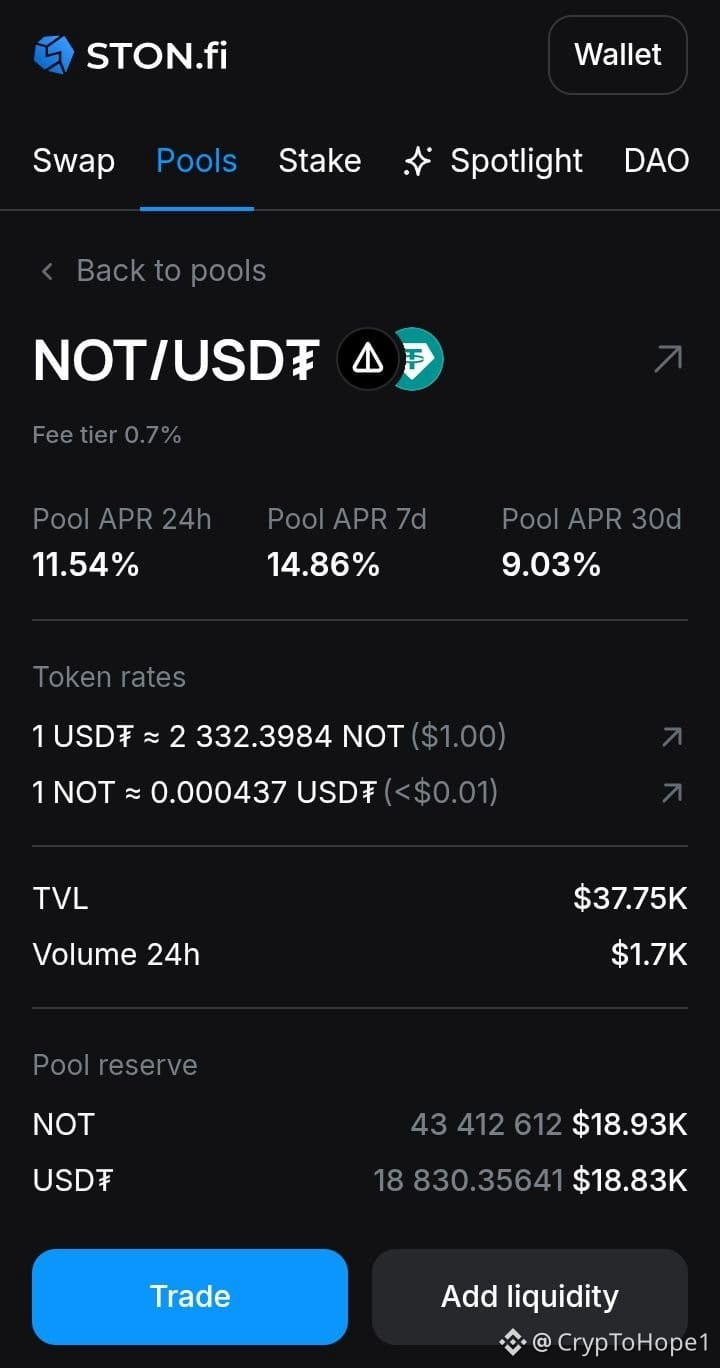
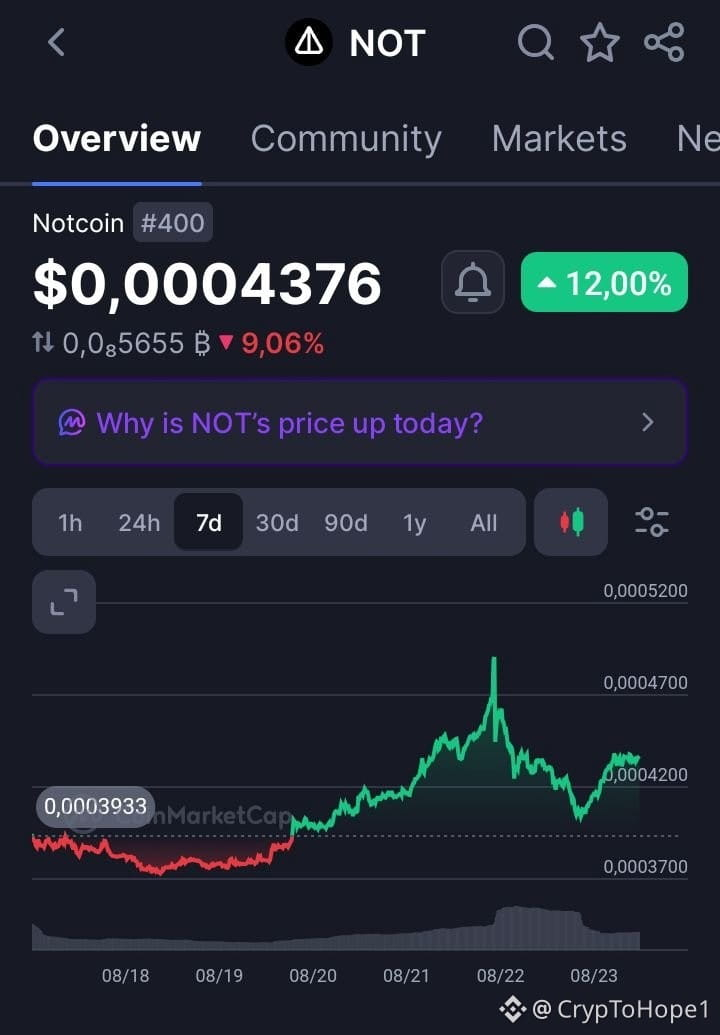
Log in to explore more content
Join global crypto users on Binance Square
⚡️ Get latest and useful information about crypto.
💬 Trusted by the world’s largest crypto exchange.
👍 Discover real insights from verified creators.
Email / Phone number
Trending Topics
1
#QNTRises287%
9,609 views
259 Discussing
2
#HSBCNamesStablecoinRedCoinForPhasedLaunch
1,397 views
62 Discussing
3
#TrumpRejectsAIRulesForVoluntaryAudits
12,218 views
353 Discussing
4
#BitgetHotWalletBreachTiedToThirdPartySecurityFlaw
6,010 views
250 Discussing
5
#OpenAIUnveilsAlwaysOnAgentDots
6,379 views
285 Discussing
6
#ChainlinkLaunchesBankSWIFTLedgerFramework
7,181 views
236 Discussing
7
#EarningsSeason
497,828 views
3,654 Discussing
8
#ZcashApproves$1.5MBugBounty
19 views
2 Discussing
9
#SECChairWantsStockMarketsOnChain
11,565 views
233 Discussing
10
#MulticoinInvestsInGrass
7,131 views
155 Discussing