
#defi.
defi.
51,812 views
89 Discussing
Hot
Latest

#termmax @termmax
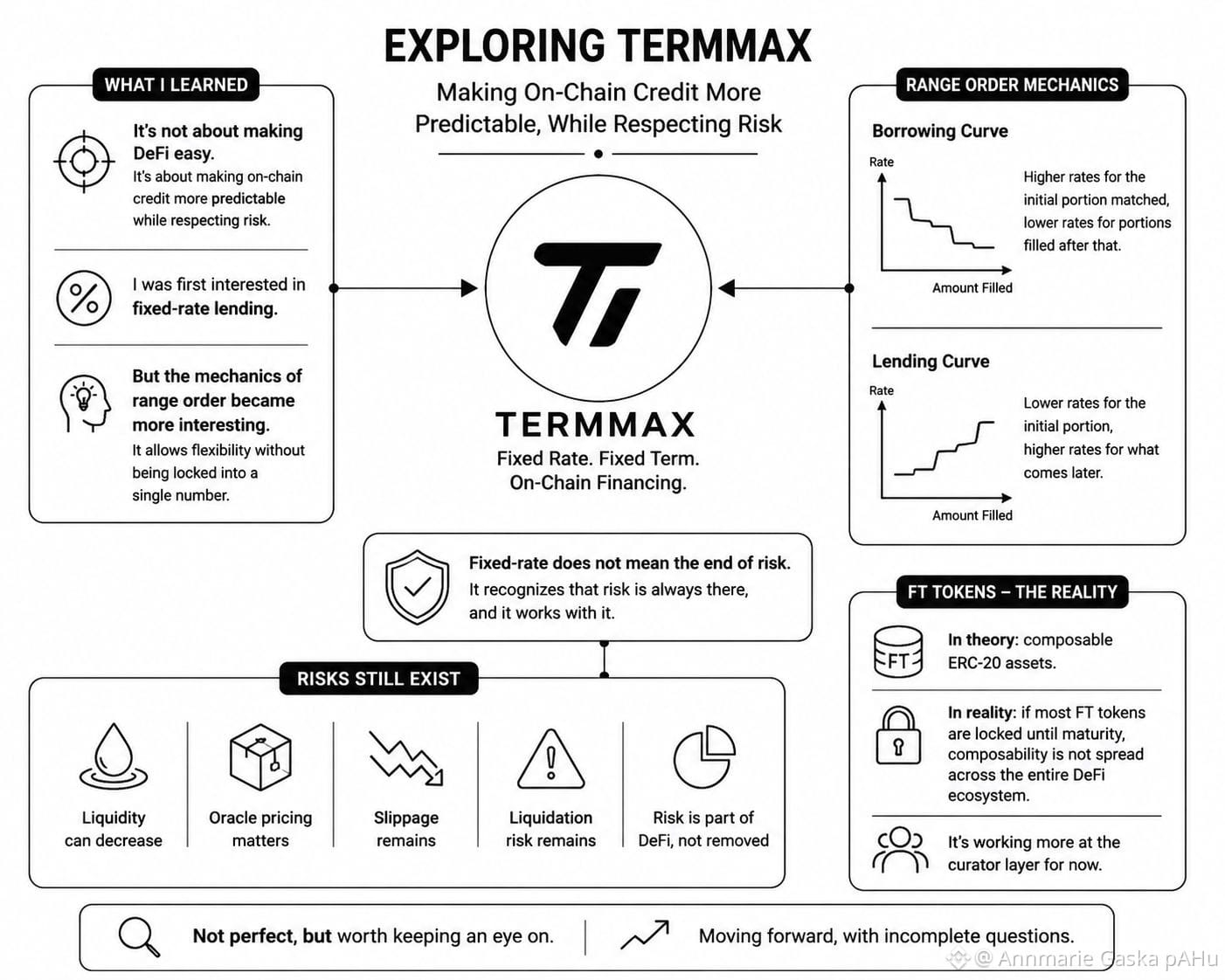
As I explore TermMax, I realize that it’s not pretending to make DeFi easy; rather, it’s trying to make on-chain credit more predictable while respecting risk. At first, I was only interested in the fixed-rate lending model, but later the mechanics of the range order became more interesting, because it allows flexibility without being locked into a single number. At the same time, it recognizes that fixed-rate does not mean the end of risk. Liquidity can decrease, oracle pricing matters, slippage and liquidation risk remain. In my opinion, this is a much more honest view of #DeFi. Another thing that caught my eye — FT tokens. In theory, they are composable ERC-20 assets, but in reality, the question remains how much they are being used. If most FT tokens are locked until maturity, then composability is now working more at the curator layer, not spread across the entire DeFi ecosystem. So I expect this to change as more integrations are made in the future. For now, it's not perfect, but it's worth keeping an eye on as it's moving forward with incomplete questions.
#TermMax #defi
#termmax @TermMax
As I explore TermMax, I realize that it’s not pretending to make DeFi easy; rather, it’s trying to make on-chain credit more predictable while respecting risk. At first, I was only interested in the fixed-rate lending model, but later the mechanics of the range order became more interesting, because it allows flexibility without being locked into a single number. At the same time, it recognizes that fixed-rate does not mean the end of risk. Liquidity can decrease, oracle pricing matters, slippage and liquidation risk remain. In my opinion, this is a much more honest view of #DeFi. Another thing that caught my eye — FT tokens. In theory, they are composable ERC-20 assets, but in reality, the question remains how much they are being used. If most FT tokens are locked until maturity, then composability is now working more at the curator layer, not spread across the entire DeFi ecosystem. So I expect this to change as more integrations are made in the future. For now, it's not perfect, but it's worth keeping an eye on as it's moving forward with incomplete questions.
#TermMax #defi
As I explore TermMax, I realize that it’s not pretending to make DeFi easy; rather, it’s trying to make on-chain credit more predictable while respecting risk. At first, I was only interested in the fixed-rate lending model, but later the mechanics of the range order became more interesting, because it allows flexibility without being locked into a single number. At the same time, it recognizes that fixed-rate does not mean the end of risk. Liquidity can decrease, oracle pricing matters, slippage and liquidation risk remain. In my opinion, this is a much more honest view of #DeFi. Another thing that caught my eye — FT tokens. In theory, they are composable ERC-20 assets, but in reality, the question remains how much they are being used. If most FT tokens are locked until maturity, then composability is now working more at the curator layer, not spread across the entire DeFi ecosystem. So I expect this to change as more integrations are made in the future. For now, it's not perfect, but it's worth keeping an eye on as it's moving forward with incomplete questions.
#TermMax #defi
11
6
92

·
--
#Bedrock $BR @Bedrock #bedrock
I'm not sure I agree with the idea that simply locking capital up always creates better networks.
A few weeks ago, I was watching a friend try to optimize their yield across three different chains.
Within minutes, gas fees were eating the profits, rewards were fragmenting, and trying to manage it manually felt impossible.
At first, that felt like the beauty of #DeFi.
Everything was active.
Everything was high-yield.
But the more I thought about it, the more something felt off.
If every yield opportunity requires constant manual moving before it compresses, is that really creating a sustainable environment?
Or are we unintentionally rewarding network congestion over actual capital efficiency?
That's what made me start paying attention to projects like Bedrock.
Not because of the liquid restaking narrative alone.
But because it raises a bigger question about where blockchain infrastructure is heading.
Crypto spent years proving that staking doesn't require losing ownership of your core assets.
Now the challenge may be different.
How do we automate multi-chain reward routing while also protecting underlying liquidity freedom?
As institutional capital, complex vaults, and automated DePIN layers become more active on-chain, that balance could become increasingly important.
Maybe the future isn't manually chasing yields.
Maybe it's unified liquid architectures with automated execution.
And if that happens, today's definition of capital utility could look very different a few years from now.
What do you think is more important for the next phase of crypto growth: manually managing separate staking pools or utilizing automated, multi-asset infrastructure?
#Bedrock $BR @Bedrock #bedrock
I'm not sure I agree with the idea that simply locking capital up always creates better networks.
A few weeks ago, I was watching a friend try to optimize their yield across three different chains.
Within minutes, gas fees were eating the profits, rewards were fragmenting, and trying to manage it manually felt impossible.
At first, that felt like the beauty of #DeFi.
Everything was active.
Everything was high-yield.
But the more I thought about it, the more something felt off.
If every yield opportunity requires constant manual moving before it compresses, is that really creating a sustainable environment?
Or are we unintentionally rewarding network congestion over actual capital efficiency?
That's what made me start paying attention to projects like Bedrock.
Not because of the liquid restaking narrative alone.
But because it raises a bigger question about where blockchain infrastructure is heading.
Crypto spent years proving that staking doesn't require losing ownership of your core assets.
Now the challenge may be different.
How do we automate multi-chain reward routing while also protecting underlying liquidity freedom?
As institutional capital, complex vaults, and automated DePIN layers become more active on-chain, that balance could become increasingly important.
Maybe the future isn't manually chasing yields.
Maybe it's unified liquid architectures with automated execution.
And if that happens, today's definition of capital utility could look very different a few years from now.
What do you think is more important for the next phase of crypto growth: manually managing separate staking pools or utilizing automated, multi-asset infrastructure?
I'm not sure I agree with the idea that simply locking capital up always creates better networks.
A few weeks ago, I was watching a friend try to optimize their yield across three different chains.
Within minutes, gas fees were eating the profits, rewards were fragmenting, and trying to manage it manually felt impossible.
At first, that felt like the beauty of #DeFi.
Everything was active.
Everything was high-yield.
But the more I thought about it, the more something felt off.
If every yield opportunity requires constant manual moving before it compresses, is that really creating a sustainable environment?
Or are we unintentionally rewarding network congestion over actual capital efficiency?
That's what made me start paying attention to projects like Bedrock.
Not because of the liquid restaking narrative alone.
But because it raises a bigger question about where blockchain infrastructure is heading.
Crypto spent years proving that staking doesn't require losing ownership of your core assets.
Now the challenge may be different.
How do we automate multi-chain reward routing while also protecting underlying liquidity freedom?
As institutional capital, complex vaults, and automated DePIN layers become more active on-chain, that balance could become increasingly important.
Maybe the future isn't manually chasing yields.
Maybe it's unified liquid architectures with automated execution.
And if that happens, today's definition of capital utility could look very different a few years from now.
What do you think is more important for the next phase of crypto growth: manually managing separate staking pools or utilizing automated, multi-asset infrastructure?
1
36

·
--
Bullish
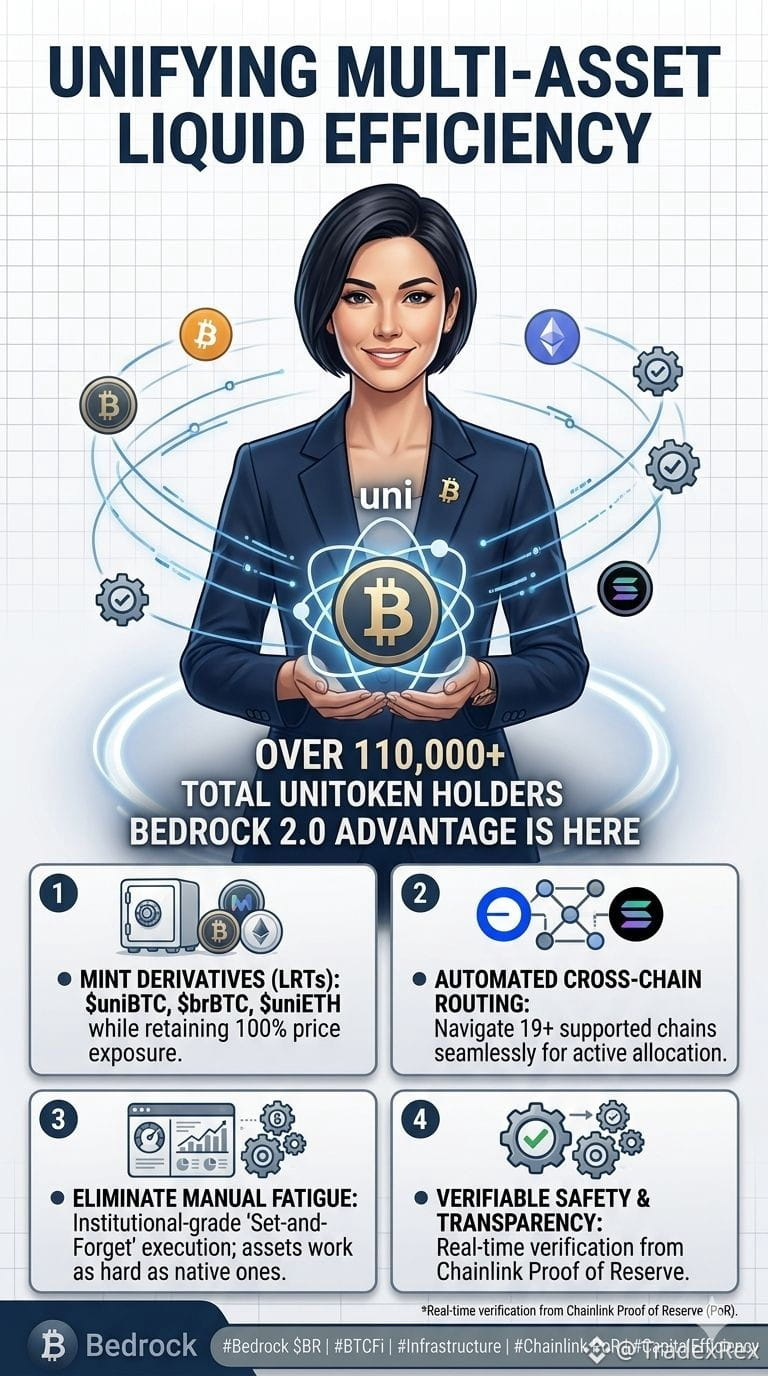
#bedrock $BR Hey, one of the biggest perks of getting into Bedrock restaking is that you never lose control of your liquidity thanks to #uniBTC . Unlike traditional staking that locks up your funds, #uniBTC acts like a liquid derivative that you can use in lending markets, swap pools, and leverage strategies across the entire space #DeFi. . For the @Bedrock community, this represents the perfect blend of long-term security and operational flexibility tied to $BR
#Bedrock $BR
#bedrock $BR Hey, one of the biggest perks of getting into Bedrock restaking is that you never lose control of your liquidity thanks to #uniBTC . Unlike traditional staking that locks up your funds, #uniBTC acts like a liquid derivative that you can use in lending markets, swap pools, and leverage strategies across the entire space #DeFi. . For the @Bedrock community, this represents the perfect blend of long-term security and operational flexibility tied to $BR
#Bedrock $BR
#Bedrock $BR
52

#EthereumStakingATH39.2METH
Ethereum staking just hit a historic milestone — 39.2 MILLION ETH locked! 🔥
This massive achievement shows growing confidence in Ethereum’s long-term future as investors continue choosing passive rewards over selling. With more ETH being staked, the circulating supply tightens, creating stronger scarcity dynamics across the market. 📈
Institutional interest is rising, network security is becoming stronger, and the Ethereum ecosystem keeps expanding through DeFi, Layer-2s, and real-world adoption. Many traders now believe this could become a major catalyst for ETH’s next big move. 🌍⚡
Is this the beginning of Ethereum’s next bullish chapter? 👀 #Ethereum #ETH #Crypto #Staking #DeFi.
#EthereumStakingATH39.2METH
Ethereum staking just hit a historic milestone — 39.2 MILLION ETH locked! 🔥
This massive achievement shows growing confidence in Ethereum’s long-term future as investors continue choosing passive rewards over selling. With more ETH being staked, the circulating supply tightens, creating stronger scarcity dynamics across the market. 📈
Institutional interest is rising, network security is becoming stronger, and the Ethereum ecosystem keeps expanding through DeFi, Layer-2s, and real-world adoption. Many traders now believe this could become a major catalyst for ETH’s next big move. 🌍⚡
Is this the beginning of Ethereum’s next bullish chapter? 👀 #Ethereum #ETH #Crypto #Staking #DeFi.
Ethereum staking just hit a historic milestone — 39.2 MILLION ETH locked! 🔥
This massive achievement shows growing confidence in Ethereum’s long-term future as investors continue choosing passive rewards over selling. With more ETH being staked, the circulating supply tightens, creating stronger scarcity dynamics across the market. 📈
Institutional interest is rising, network security is becoming stronger, and the Ethereum ecosystem keeps expanding through DeFi, Layer-2s, and real-world adoption. Many traders now believe this could become a major catalyst for ETH’s next big move. 🌍⚡
Is this the beginning of Ethereum’s next bullish chapter? 👀 #Ethereum #ETH #Crypto #Staking #DeFi.
2
179

BNB and Web3
The development of Web3 is creating new possibilities for decentralized applications, DeFi, and other digital services. The BNB ecosystem is one of the ones worth following to understand this evolution. In your opinion, what will be the next big Web3 trend?
$BNB #BNBChain #Web3 #DeFi.
BNB and Web3
The development of Web3 is creating new possibilities for decentralized applications, DeFi, and other digital services. The BNB ecosystem is one of the ones worth following to understand this evolution. In your opinion, what will be the next big Web3 trend?
$BNB #BNBChain #Web3 #DeFi.
The development of Web3 is creating new possibilities for decentralized applications, DeFi, and other digital services. The BNB ecosystem is one of the ones worth following to understand this evolution. In your opinion, what will be the next big Web3 trend?
$BNB #BNBChain #Web3 #DeFi.
328


·
--
Bullish
#genius $GENIUS Most crypto projects chase short-term hype, fast narratives, and speculative momentum. What makes geniusyield.co stand out is the focus on infrastructure rather than noise. The $GENIUS ecosystem appears to be building intelligent systems designed for long-term decentralized finance coordination.
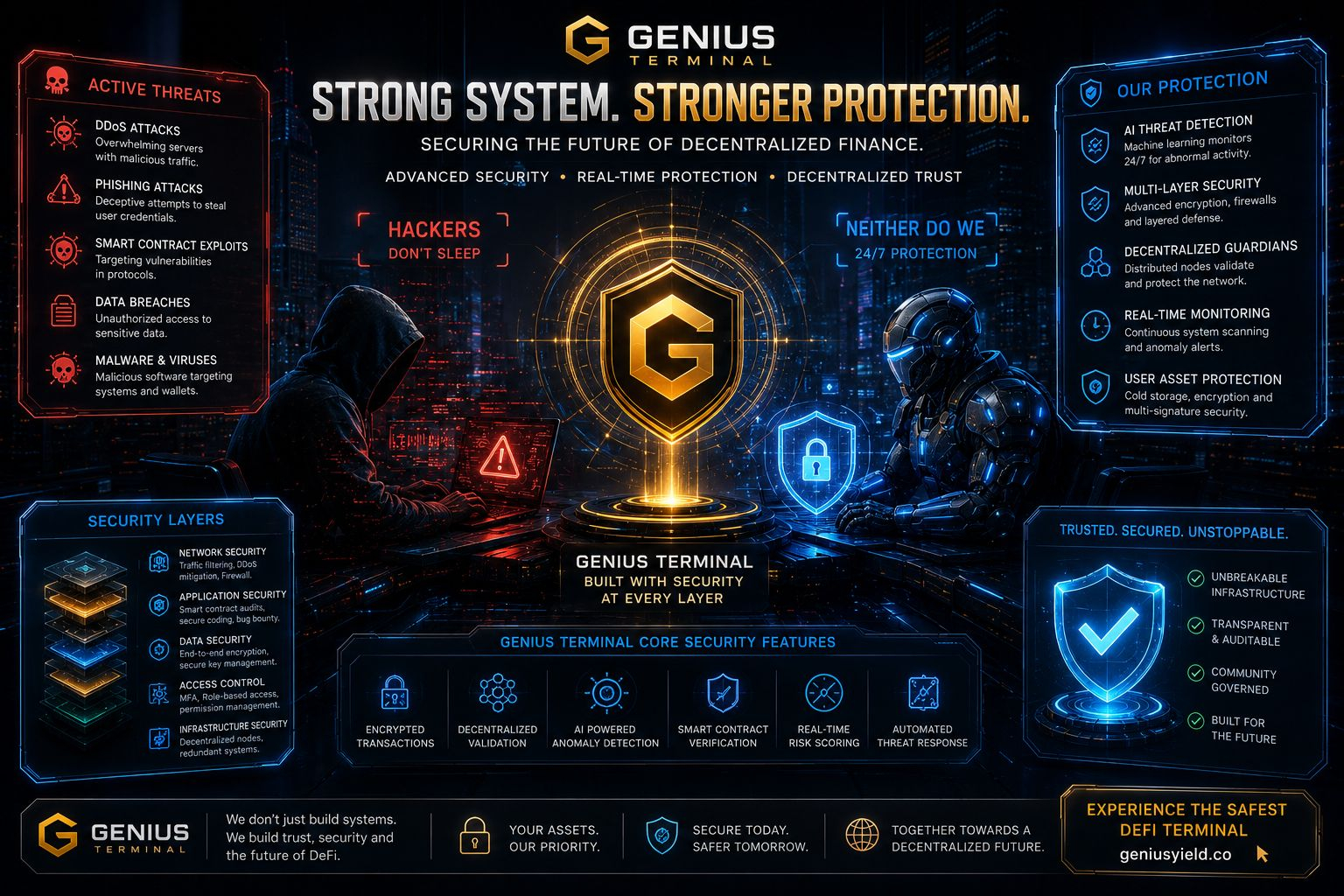
The #Genius_Terminal represents more than a normal trading platform. It combines AI-driven routing, liquidity optimization, automation, and decentralized execution into a smarter operational framework. As blockchain ecosystems become more connected, efficient routing and intelligent execution may become essential for scalable #DeFi.
Instead of treating AI as simple marketing, the ecosystem seems focused on practical utility — improving transparency, reducing friction, optimizing liquidity access, and supporting smarter financial coordination across decentralized environments.
This direction also reflects a larger shift happening across the AI economy. The future may belong not only to projects building intelligence, but to the systems building infrastructure around intelligence itself — execution layers, coordination networks, liquidity rails, and autonomous financial systems.
@GeniusOfficial As AI-powered markets continue evolving, platforms capable of supporting intelligent execution and decentralized scalability could become foundational infrastructure for the next generation of digital finance. ⚡
@GeniusOfficial #Genius $GENIUS #blockchain
#genius $GENIUS Most crypto projects chase short-term hype, fast narratives, and speculative momentum. What makes geniusyield.co stand out is the focus on infrastructure rather than noise. The $GENIUS ecosystem appears to be building intelligent systems designed for long-term decentralized finance coordination.
The #Genius_Terminal represents more than a normal trading platform. It combines AI-driven routing, liquidity optimization, automation, and decentralized execution into a smarter operational framework. As blockchain ecosystems become more connected, efficient routing and intelligent execution may become essential for scalable #DeFi.
Instead of treating AI as simple marketing, the ecosystem seems focused on practical utility — improving transparency, reducing friction, optimizing liquidity access, and supporting smarter financial coordination across decentralized environments.
This direction also reflects a larger shift happening across the AI economy. The future may belong not only to projects building intelligence, but to the systems building infrastructure around intelligence itself — execution layers, coordination networks, liquidity rails, and autonomous financial systems.
@GeniusOfficial As AI-powered markets continue evolving, platforms capable of supporting intelligent execution and decentralized scalability could become foundational infrastructure for the next generation of digital finance. ⚡
@GeniusOfficial #Genius $GENIUS #blockchain
The #Genius_Terminal represents more than a normal trading platform. It combines AI-driven routing, liquidity optimization, automation, and decentralized execution into a smarter operational framework. As blockchain ecosystems become more connected, efficient routing and intelligent execution may become essential for scalable #DeFi.
Instead of treating AI as simple marketing, the ecosystem seems focused on practical utility — improving transparency, reducing friction, optimizing liquidity access, and supporting smarter financial coordination across decentralized environments.
This direction also reflects a larger shift happening across the AI economy. The future may belong not only to projects building intelligence, but to the systems building infrastructure around intelligence itself — execution layers, coordination networks, liquidity rails, and autonomous financial systems.
@GeniusOfficial As AI-powered markets continue evolving, platforms capable of supporting intelligent execution and decentralized scalability could become foundational infrastructure for the next generation of digital finance. ⚡
@GeniusOfficial #Genius $GENIUS #blockchain

5
6
203

·
--
Verified
🚨 HYPE breaks all forecasts and enters the Top 10 crypto! Are we witnessing the next market giant?
#HYPE enters the Top 10 of the crypto market
The Hyperliquid token (HYPE) has successfully made its way into the Top 10 cryptocurrencies by market cap, establishing itself as one of the best-performing projects in the current bull cycle.
The growth of #HYPE was fueled by a strong increase in users, trading volume, and revenue generation within the #Hyperliquid ecosystem, one of the fastest-growing decentralized exchanges in the industry.
Its rise reflects the market's increasing interest in projects with real adoption and sustainable business models, attracting both retail and institutional investors.
With this milestone, HYPE positions itself among the world's most valuable cryptocurrencies and reinforces its prominence within the sector #DeFi. .
Regards, Darkripto...
$HYPE
{future}(HYPEUSDT)
🚨 HYPE breaks all forecasts and enters the Top 10 crypto! Are we witnessing the next market giant?
#HYPE enters the Top 10 of the crypto market
The Hyperliquid token (HYPE) has successfully made its way into the Top 10 cryptocurrencies by market cap, establishing itself as one of the best-performing projects in the current bull cycle.
The growth of #HYPE was fueled by a strong increase in users, trading volume, and revenue generation within the #Hyperliquid ecosystem, one of the fastest-growing decentralized exchanges in the industry.
Its rise reflects the market's increasing interest in projects with real adoption and sustainable business models, attracting both retail and institutional investors.
With this milestone, HYPE positions itself among the world's most valuable cryptocurrencies and reinforces its prominence within the sector #DeFi. .
Regards, Darkripto...
$HYPE
#HYPE enters the Top 10 of the crypto market
The Hyperliquid token (HYPE) has successfully made its way into the Top 10 cryptocurrencies by market cap, establishing itself as one of the best-performing projects in the current bull cycle.
The growth of #HYPE was fueled by a strong increase in users, trading volume, and revenue generation within the #Hyperliquid ecosystem, one of the fastest-growing decentralized exchanges in the industry.
Its rise reflects the market's increasing interest in projects with real adoption and sustainable business models, attracting both retail and institutional investors.
With this milestone, HYPE positions itself among the world's most valuable cryptocurrencies and reinforces its prominence within the sector #DeFi. .
Regards, Darkripto...
$HYPE

786

@Dolomite_io is building a smarter way to experience #DeFi. It’s not just about swaps—here you get lending, borrowing, spot & margin trading in one place. With features like cross-margining, capital efficiency & smart risk controls, @Dolomite_io gives users the tools to unlock new strategies.
For traders, it means more flexibility. For investors, it means stronger growth opportunities. And for the #crypto community, it’s another step toward true financial freedom.
Stay ahead with @Dolomite_io 🌐🔥 — where innovation meets opportunity in the evolving world of #DeFi.
@Dolomite is building a smarter way to experience #DeFi. It’s not just about swaps—here you get lending, borrowing, spot & margin trading in one place. With features like cross-margining, capital efficiency & smart risk controls, @Dolomite gives users the tools to unlock new strategies.
For traders, it means more flexibility. For investors, it means stronger growth opportunities. And for the #crypto community, it’s another step toward true financial freedom.
Stay ahead with @Dolomite 🌐🔥 — where innovation meets opportunity in the evolving world of #DeFi.
For traders, it means more flexibility. For investors, it means stronger growth opportunities. And for the #crypto community, it’s another step toward true financial freedom.
Stay ahead with @Dolomite 🌐🔥 — where innovation meets opportunity in the evolving world of #DeFi.
1
13

·
--
Plume: Redefining Real-World Asset Finance 🚀
@plumenetwork umenet is building a modular Layer 2 blockchain designed for Real-World Asset Finance (#RWAFi). It streamlines asset tokenization, trading & compliance into one powerful ecosystem. 🌐✨
With EVM-compatible infrastructure and RWA-specific features, $PLUME is shaping the future of #DeFi.
#PLUME
Plume: Redefining Real-World Asset Finance 🚀
@Plume - RWA Chain umenet is building a modular Layer 2 blockchain designed for Real-World Asset Finance (#RWAFi). It streamlines asset tokenization, trading & compliance into one powerful ecosystem. 🌐✨
With EVM-compatible infrastructure and RWA-specific features, $PLUME is shaping the future of #DeFi.
#PLUME
@Plume - RWA Chain umenet is building a modular Layer 2 blockchain designed for Real-World Asset Finance (#RWAFi). It streamlines asset tokenization, trading & compliance into one powerful ecosystem. 🌐✨
With EVM-compatible infrastructure and RWA-specific features, $PLUME is shaping the future of #DeFi.
#PLUME
1
12
12
Log in to explore more content
Join global crypto users on Binance Square
⚡️ Get latest and useful information about crypto.
💬 Trusted by the world’s largest crypto exchange.
👍 Discover real insights from verified creators.
Email / Phone number
Trending Topics
1
#SECReceivesGrayscaleLitecoinTrustETFFiling
9,714 views
209 Discussing
2
#ClarityActFacesProceduralVoteSept15
101,182 views
1,192 Discussing
3
#US10YearTreasuryYieldNears5%
35,376 views
620 Discussing
4
#CryptoLiquidations$674MIn24H
8,982 views
104 Discussing
5
#TokenizedStockHoldersUp619.1%
36,554 views
571 Discussing
6
#RevolutConfirmsFakeGovEmailDataBreach
62,442 views
850 Discussing
7
#CanadaOSFISaysTokenizedDepositsEqualTraditionalDeposits
3,567 views
78 Discussing
8
#USBankCompletesCrossBorderPaymentPilotOnStellar
56,692 views
965 Discussing
9
#NvidiaInTalksToInvestUpTo$10BInAnthropicIPO
4,296 views
76 Discussing
10
#EtherRalliesAsBearishBetsLiquidate
82,426 views
1,197 Discussing