
#dailyetf
dailyetf
98 views
2 Discussing
Hot
Latest

Article
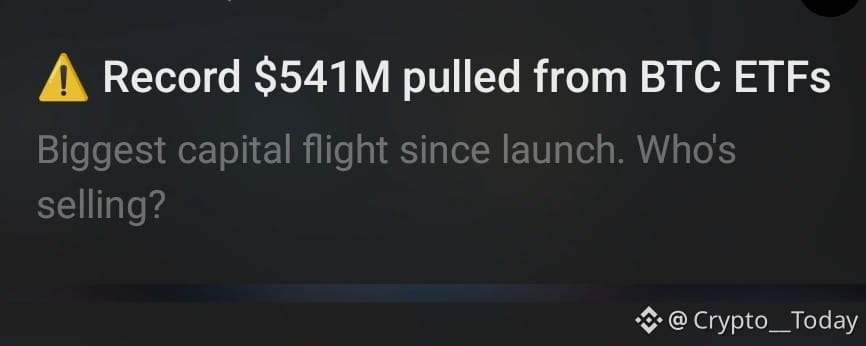
Record $541M Outflow Hits Spot Bitcoin ETFs: Who Is Behind the Selloff?BlackRock’s iShares Bitcoin Trust (IBIT) just experienced its largest single-day net outflow since launching over two years ago, with $541.1 million exiting the fund in a single session. Combined with broader redemptions across U.S. spot Bitcoin ETFs, the sudden wave of institutional selling has pushed Bitcoin down toward the $61,000 range and dragged overall market sentiment into "Extreme Fear."
While retail traders often panic during sharp red candles, ETF flows reflect the decisions of institutional desks, wealth managers, and hedge funds. Looking at current market dynamics, three main groups are driving this capital flight:
1. Macro-Driven Hedge Funds De-Risking
When traditional equity markets wobble, institutional portfolios treat Bitcoin as a high-beta risk asset. A sharp pullback across U.S. and Asian technology stocks has triggered automated risk-management protocols across macro funds. To reduce overall portfolio exposure and raise cash buffers, funds are trimming their most liquid crypto vehicles first—which makes spot ETFs the primary exit door.
2. Liquidity Rotators Chasing Major Equity IPOs
Capital in institutional markets is constantly competing for momentum. High-profile traditional market debuts—such as Anthropic’s recent listing on the Nasdaq—draw massive short-term liquidity. When mega-cap tech IPOs hit the market, momentum traders and multi-asset funds frequently rotate capital out of crypto ETFs to chase immediate equity upside.
3. Arbitrage Desks Unwinding Basis Trades
A significant portion of spot Bitcoin ETF volume is held by market-neutral hedge funds executing the "cash-and-carry" basis trade—buying spot ETF shares while simultaneously shorting Bitcoin futures on the CME to capture the yield spread. As Bitcoin's price drops and futures premiums compress, that yield shrinks. When the spread narrows, arbitrage desks unwind the trade by selling their spot ETF shares and closing their short futures, creating heavy spot outflows that do not necessarily reflect a long-term bearish view on Bitcoin.
What to Watch Next
Historically, massive single-day ETF outflows often mark localized capitulation or short-term liquidity reshuffling rather than permanent structural exits. Traders should keep a close eye on two key indicators over the coming sessions:
Daily ETF Flow Stabilization: Whether net outflows slow down or flip back to positive inflows once equity volatility cools.Key Psychological Support: How Bitcoin reacts around the $60,000–$61,000 support zone as derivatives leverage gets flushed out.
Are you viewing this institutional pullback as a buying opportunity, or are you waiting on the sidelines for ETF flows to turn green again? Share your strategy in the comments!
#Bitcoin #BTC
#BTCBelow$62KAmidHikeFearsAndShiftToAnthropic #BlackRockBitcoinETFRecordsLargestDailyOutflow #DailyETF $BTC
Record $541M Outflow Hits Spot Bitcoin ETFs: Who Is Behind the Selloff?
BlackRock’s iShares Bitcoin Trust (IBIT) just experienced its largest single-day net outflow since launching over two years ago, with $541.1 million exiting the fund in a single session. Combined with broader redemptions across U.S. spot Bitcoin ETFs, the sudden wave of institutional selling has pushed Bitcoin down toward the $61,000 range and dragged overall market sentiment into "Extreme Fear."
While retail traders often panic during sharp red candles, ETF flows reflect the decisions of institutional desks, wealth managers, and hedge funds. Looking at current market dynamics, three main groups are driving this capital flight:
1. Macro-Driven Hedge Funds De-Risking
When traditional equity markets wobble, institutional portfolios treat Bitcoin as a high-beta risk asset. A sharp pullback across U.S. and Asian technology stocks has triggered automated risk-management protocols across macro funds. To reduce overall portfolio exposure and raise cash buffers, funds are trimming their most liquid crypto vehicles first—which makes spot ETFs the primary exit door.
2. Liquidity Rotators Chasing Major Equity IPOs
Capital in institutional markets is constantly competing for momentum. High-profile traditional market debuts—such as Anthropic’s recent listing on the Nasdaq—draw massive short-term liquidity. When mega-cap tech IPOs hit the market, momentum traders and multi-asset funds frequently rotate capital out of crypto ETFs to chase immediate equity upside.
3. Arbitrage Desks Unwinding Basis Trades
A significant portion of spot Bitcoin ETF volume is held by market-neutral hedge funds executing the "cash-and-carry" basis trade—buying spot ETF shares while simultaneously shorting Bitcoin futures on the CME to capture the yield spread. As Bitcoin's price drops and futures premiums compress, that yield shrinks. When the spread narrows, arbitrage desks unwind the trade by selling their spot ETF shares and closing their short futures, creating heavy spot outflows that do not necessarily reflect a long-term bearish view on Bitcoin.
What to Watch Next
Historically, massive single-day ETF outflows often mark localized capitulation or short-term liquidity reshuffling rather than permanent structural exits. Traders should keep a close eye on two key indicators over the coming sessions:
Daily ETF Flow Stabilization: Whether net outflows slow down or flip back to positive inflows once equity volatility cools.Key Psychological Support: How Bitcoin reacts around the $60,000–$61,000 support zone as derivatives leverage gets flushed out.
Are you viewing this institutional pullback as a buying opportunity, or are you waiting on the sidelines for ETF flows to turn green again? Share your strategy in the comments!
#Bitcoin #BTC
#BTCBelow$62KAmidHikeFearsAndShiftToAnthropic #BlackRockBitcoinETFRecordsLargestDailyOutflow #DailyETF $BTC
1
560
Log in to explore more content
Join global crypto users on Binance Square
⚡️ Get latest and useful information about crypto.
💬 Trusted by the world’s largest crypto exchange.
👍 Discover real insights from verified creators.
Email / Phone number
Trending Topics
1
#CanBTCReboundAfterFallingBelow60K?
88,137 views
469 Discussing
2
#GlobalStocksFaceLongestLosingStreakSince2023
43,509 views
480 Discussing
3
#AnthropicPlungesTowardIPOPriceonDay2
12,329 views
184 Discussing
4
#GaoTengBitcoinETFListsOnHKEX
33,714 views
383 Discussing
5
#TradFiForBeginners
995,952 views
5,796 Discussing
6
#NvidiaBoardReportedlySplitOverHuang’sReturn
385,950 views
2,570 Discussing
7
#TetherBurns8BillionUSDTInPast20Days
36,882 views
153 Discussing
8
#BitcoinWalletSignatureFlawExploitableWithinSeconds
10,573 views
74 Discussing
9
#CanGTA6'sLaunchLiftTTWOShares?
323,881 views
1,801 Discussing
10
#HongKongProposesSFCLicensingForFourVirtualAssetServices
1,981 views
36 Discussing