
#canton
canton
34,700 views
203 Discussing
Hot
Latest

·
--
A token gets a regulatory green light and still slides — what does that say about this market?
$CC is down about 3% near $0.0944 on roughly $26M in volume, while $BTC barely moves near $75,949. The why is a classic sell-the-news: SEC staff called Canton a digital commodity in a no-action letter on Nov 3, and the DTCC tokenization service went live Oct 28 — yet the pop faded within a day.
I'm watching $0.0911, the triangle floor. Hold it and a reclaim of $0.10, then $0.1077, stays in play; lose it and the slide probably finds the late-October lows instead.
Would you buy a regulatory win the market is fading, or wait for $0.0911 to prove it can hold first?
#Canton #RWA #CryptoContent
1

🦈 $CANTON SEC NON‑ACTION SPARKS INSTITUTIONAL TOKENIZATION RUSH! 🚀
📊 The SEC’s non‑action letter officially classifies Canton Coin as a digital commodity, removing immediate regulatory friction. ⚡ This follows DTCC’s rollout of a token‑bridge on the Canton network, a clear signal that top‑tier institutions are testing on‑chain asset representation. 💡 With the first major financial‑service provider staking a claim, the liquidity pool around $CANTON could deepen, inviting other token projects to chase the same institutional runway. 🤔 How will this regulatory nod reshape the broader digital‑asset landscape?
⚠️ Not financial advice. Always manage your risk. 🛡️
🏷️ #CANTON #InstitutionalLiquidity #Tokenization #Crypto #SmartMoney
🚀 💎

2

I've been waiting for a test case of the SEC's new token taxonomy, and Canton just became it. SEC staff issued a no-action letter on November 3 treating Canton Coin as a digital commodity, saying staff won't recommend enforcement over its programmatic issuance without securities registration, if minting follows Canton's described conditions.
The reasoning matters more than the label. Staff accepted that CC's value comes from how the network runs and from supply and demand, not from a central team's profit efforts, and that no single party controls it. The relief covers only tokens minted by Super Validators, Validators and application providers. It is a staff position, not a binding ruling, and different facts could change it.
Still, for a network built for banks and tokenized assets, this is the clearest institutional green light yet under the March framework. $BTC ~$80,304 (+3.3%/24h) on Binance spot is context only. Template for other network tokens, or a one-off? NFA, DYOR. #SEC #Canton #DigitalAssets #CryptoRegulation
1

·
--
🎯 The broader market took a beating, but this coin quietly climbed onto the trending charts
📰 Canton’s CC is at $0.097, down just 1%, ranked 27th by market cap, with 40 billion coins in circulation. The institutional-chain narrative is holding strong: even with BTC at a seven-week low, CC is still in the top five trending.
💬 Honestly, the money hasn’t all fled. Forty percent of the tokens are locked in custody, so they’re not easy to dump. This market feels pretty stagnant, but it’s surprisingly resilient.
🏷️ #CC #Canton #RWA #InstitutionalChain
52

·
--
The SEC just stamped Canton Coin as a “digital commodity” 🏛️ But don’t celebrate just yet ⚠️
📌 Facts: On 11/3, the SEC Division of Corporation Finance issued a no-action letter, taking the view that Canton Coin (CC) is a “digital commodity” and that validators and application providers can mint CC under the program without registering (Cointelegraph/The Block). CC rose about 4% that day to around $0.098, but was still down about 4.2% for the week.
🔍 Key points:
1️⃣ The rationale is that the network has no “central party,” and its value comes from the network’s operation and supply and demand
2️⃣ This is only a staff-level enforcement position, not a binding legal conclusion
3️⃣ Canton focuses on tokenizing bank assets, and DTCC’s tokenization services are already running on it—an institutional narrative plus regulatory backing
🧠 My take: This is good news for CC, but the letter only covers “minting”; it doesn’t mean all CC transactions have been cleared. A more important signal for the sector as a whole is that the SEC is “classifying” tokens one by one under its March framework. Which one will be next?
💬 Which coin do you think will be the next to receive a “digital commodity” designation? Let me know in the comments 👇
$BTC $ETH The broader market is still fluctuating around 80,000; regulatory tailwinds look more like a structural narrative than a short-term catalyst.
#Canton #SEC #CryptoRegulation
For personal opinions only; not investment advice
1

·
--
⚖️ SEC CLARIFIES CANTON COIN’S STATUS: AN IMPORTANT CAVEAT
On November 3, staff from the SEC’s Division of Corporation Finance called Canton Coin (CC) a “digital commodity” and said they would not recommend enforcement action over the issuance of tokens by validators and application providers under the described arrangement, without securities registration.
This is not a final decision by the full SEC, nor a blanket approval for all transactions involving CC: the position is based on the facts presented by Canton and could change under different circumstances. Source: the SEC’s official letter dated November 3.
#Canton #SEC
15

·
--
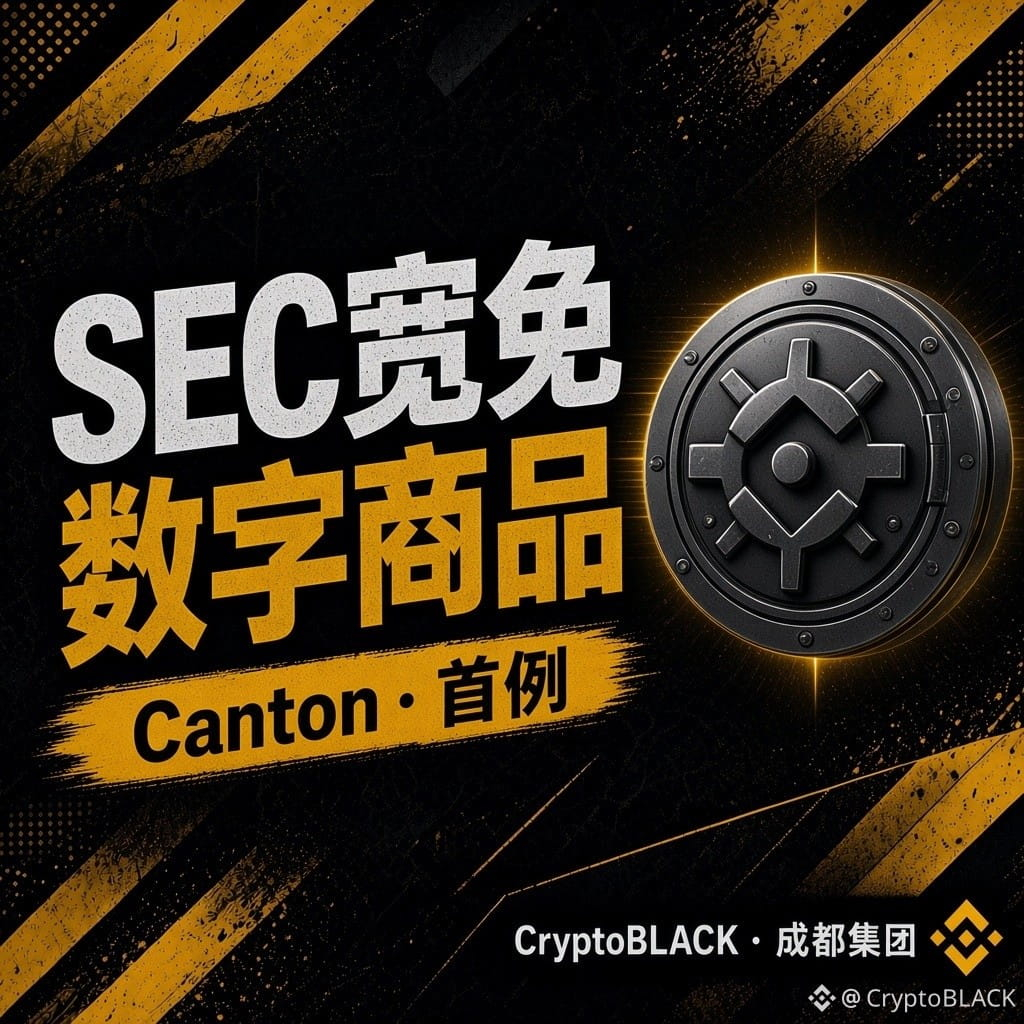
The SEC’s letter was carefully worded
but the market got the message
Canton submitted its request letter on October 30
Four days later
the SEC’s Division of Corporation Finance replied
saying it viewed Canton Coin as a “digital commodity”
and would not recommend enforcement action over its programmatic minting
This is not a court ruling
nor does it settle the rules across the board
It is only the staff’s position
and it is tied to the facts as Canton itself presented them
But on the regulatory calendar
it has been marked as the “first” in two respects
the first relief-sounding response since the March interpretive notice
and also the first since the August proposal on crypto asset regulations
Once the commodity narrative is explicitly named
the minting mechanism and financing language will both be reshaped
Retail investors shouldn’t rush to read this as a green light for the entire market
But at the institutional negotiating table
there’s now a document that can be cited
$BTC $BNB
#Canton #SEC #数字商品 #regulation
1
457

·
--
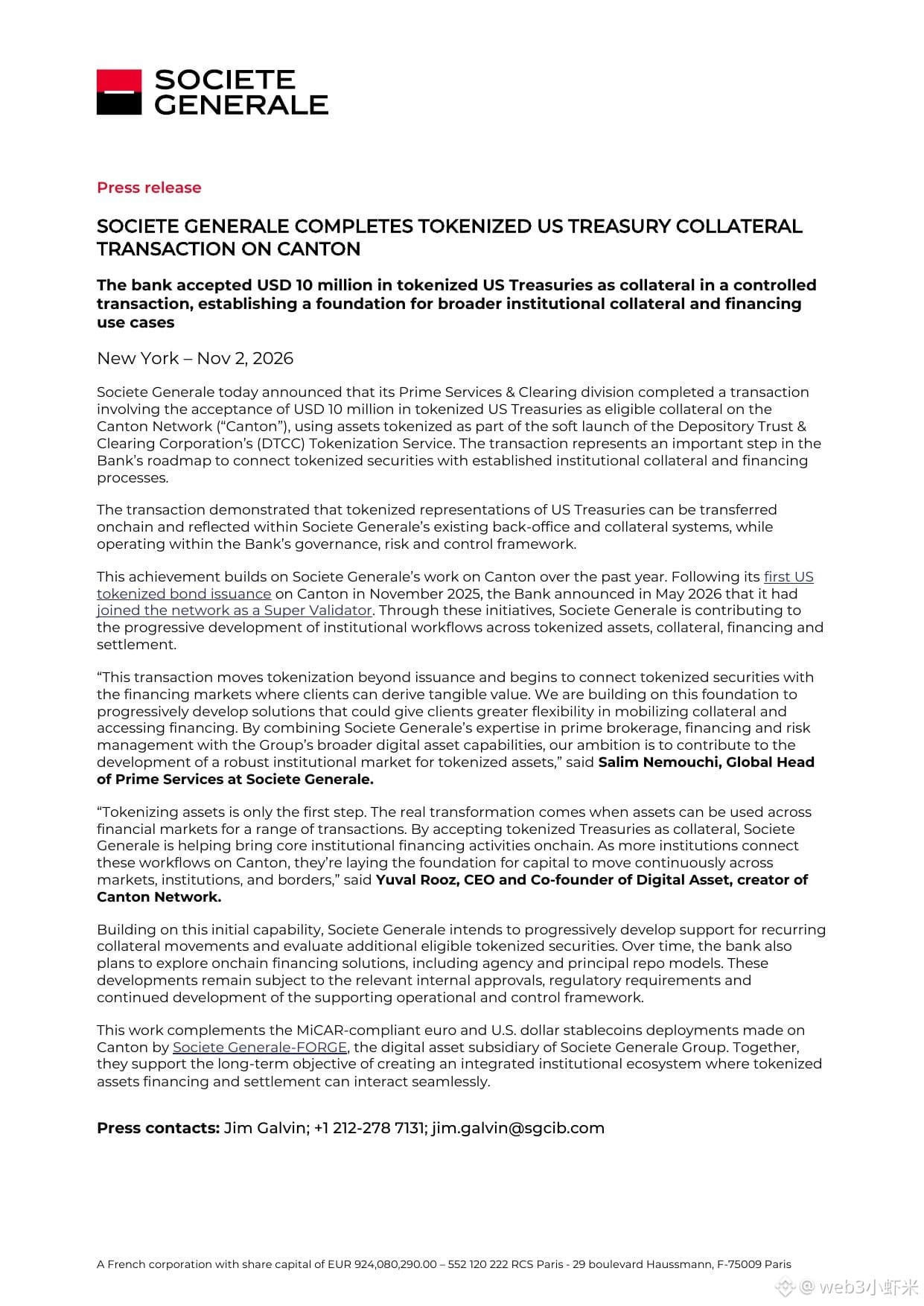
Société Générale is actually using tokenized U.S. Treasuries as collateral.
Its prime brokerage and clearing division accepted approximately $10 million in tokenized U.S. Treasuries on Canton as eligible collateral. The assets came from the DTCC Tokenization Service’s soft-launch pilot, can now be transferred on-chain, and have been integrated into the bank’s existing back-office and risk-management systems.
Société Générale issued its first tokenized U.S. bond on Canton in November 2025 and became a Super Validator this May. Next, it plans to make collateral transfers routine, with on-chain repo transactions as a longer-term goal—though both remain subject to internal approval and regulatory requirements. Tokenization has taken another small step forward on the institutional side, moving from “being issued” to “being usable as collateral.” #代币化 #Canton
·
--
On November 3, the SEC’s Division of Corporation Finance issued Canton Coin a no-action letter: based on the representations made, it views CC as a “digital commodity,” and validators minting coins according to the protocol need not register under Section 5 of the securities laws.
Two key points: its value comes from the network’s programmed operation and supply and demand, rather than from profits generated by others’ managerial efforts; and the network has no “central party.” This is the staff’s enforcement position, not a formal legal conclusion, and the conclusion could change if the facts change.
With the token classification in March, the FAQ from the day before yesterday, and now this letter, the path for institutional network tokens seems to be coming together bit by bit. #SEC #Canton
124

·
--
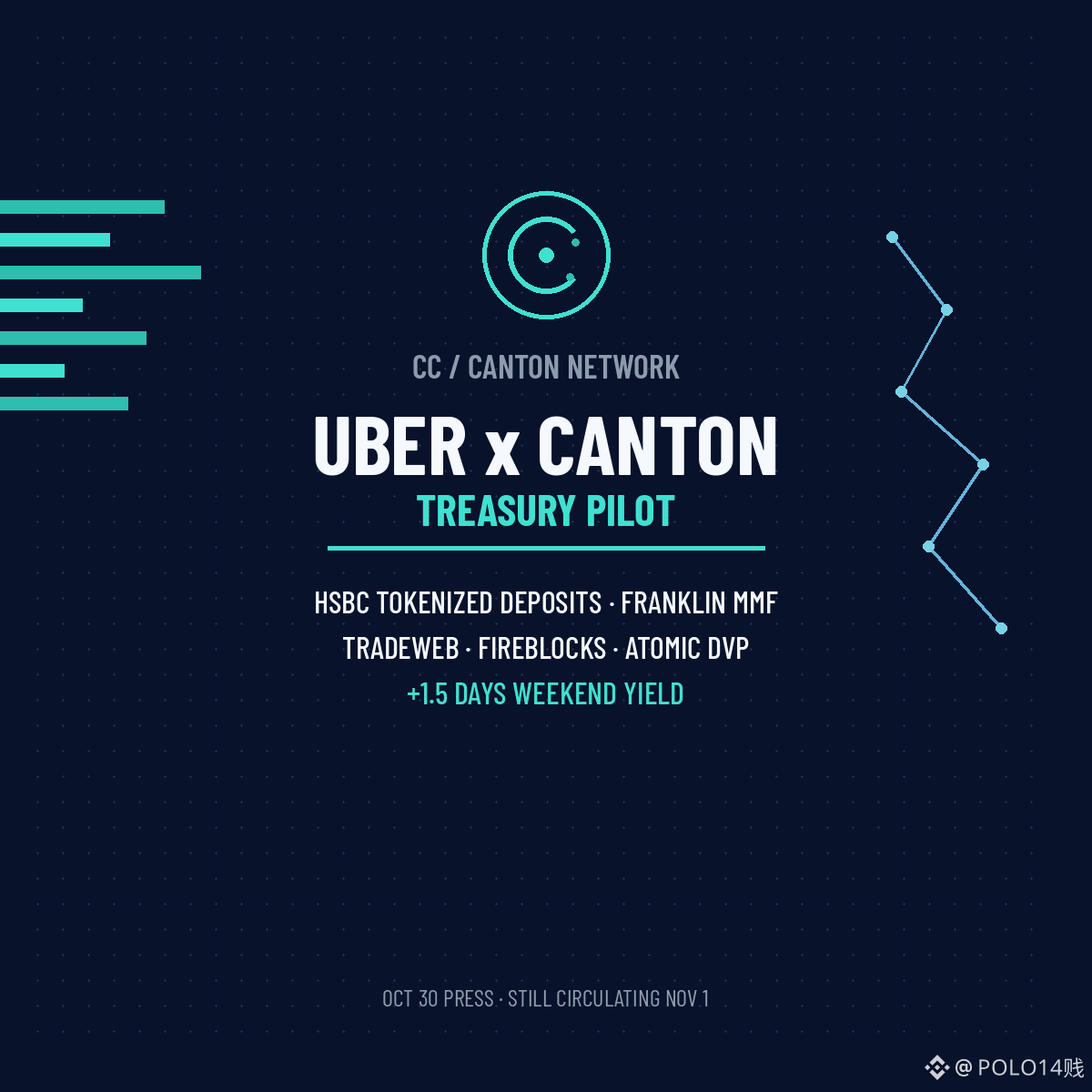
Uber moved idle cash on-chain: On Thursday, it used HSBC tokenized deposits to buy a Franklin tokenized money market fund, then sold part of it on Sunday, earning roughly 1.5 days more yield than if it had cashed out on Friday. The counterparties also included Tradeweb and Fireblocks, with delivery-versus-payment settlement on the Canton public blockchain. HSBC and Canton published official announcements on October 30, and CoinDesk covered it too. CoinGecko spot CC was around $0.098 (snapshot at approximately 14:02 Beijing time).
The key point isn’t the extra bit of interest earned over the weekend, but that a corporate treasury, for the first time, matched bank deposits against money market fund shares on the same public blockchain. The pilot’s scale and list of future customers have yet to be disclosed, so don’t mistake a one-off demonstration for a widespread shift of corporate treasuries on-chain.
Watch through mid-November. If a second named corporate customer and verifiable repeat settlement volumes don’t materialize, this news belongs only on the pilot list.
$CC
#Canton #Tokenization
CC-4.33%
HSBCUS-0.96%
117

·
--
Uber puts idle cash on-chain: Can it turn money market funds back into cash on weekends, too?
Big companies always need to keep a chunk of idle cash on hand as a reserve. The reason is pretty mundane: banks don’t settle transactions on weekends, and redeeming money market funds takes until T+1.
On October 30, HSBC Bank USA, Franklin Templeton, Tradeweb, and Fireblocks completed a pilot on Canton Network, with Uber as the pilot client. Here’s what the official press release confirms:
1. Uber used “HSBC tokenized deposits” to buy Franklin Templeton’s tokenized money market fund on Tradeweb, then used Fireblocks to make a delivery-versus-payment (DvP) transaction on Canton.
2. Uber can redeem some of its fund shares, including on weekends. The shares earn interest the entire time they’re held, right up until payment is needed.
3. The cash and asset legs “settle nearly instantly and together in a single synchronized execution,” reducing settlement risk.
4. Fiat currency from redemptions can only be settled into KYC-verified business bank accounts.
A quick guide to three things that sound similar:
Tokenized deposits are a bank’s liabilities moved on-chain. In this case, the press release refers to deposit liabilities of HSBC Bank USA, which are covered by FDIC insurance up to the applicable limit;
Stablecoins are liabilities of their issuers (such as Circle or Tether);
Tokenized money market funds are fund shares moved on-chain. They generate returns, but also carry the risks of the fund itself.
Uber used the first to buy the third; no stablecoins were used at any point.
A bit of a buzzkill: this is a “pilot.” The press release itself calls it a “first step,” not a product that’s already live and available to everyone. The claim circulating online that it means “earning a few extra days of returns” is a media estimate; the press release gives no specific figures.
What’s really worth watching is that banks are starting to use their own “on-chain deposits” to compete for the kind of business stablecoins want to capture: companies’ weekend payments.
What do you think corporate treasuries will ultimately use: bank tokenized deposits or stablecoins?
#RWA #代币化 #Canton

30

·
--
Bullish
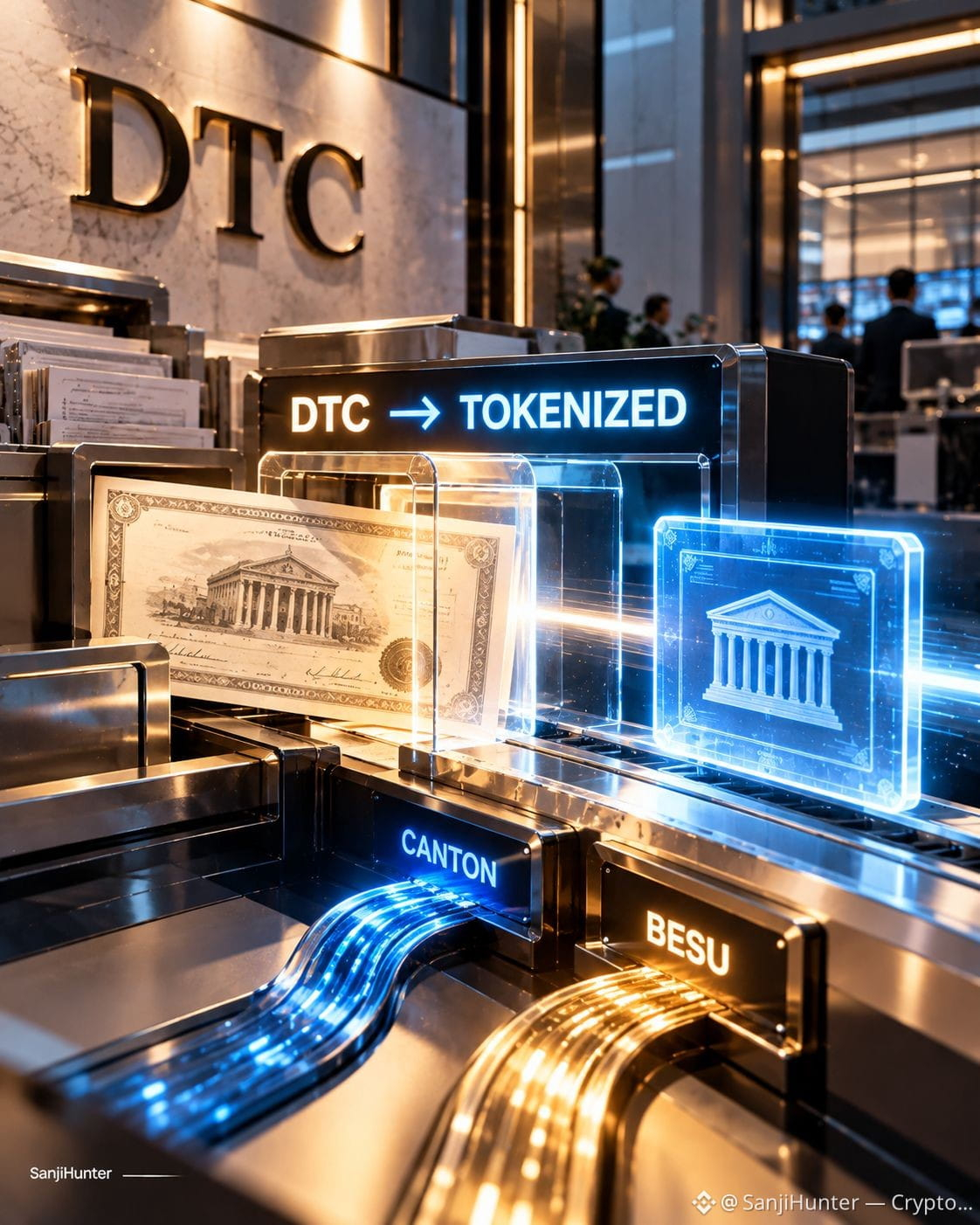
🏛️ Wall Street just moved tokenization into real financial infrastructure
On October 28, DTCC launched its Tokenization Service, allowing eligible institutions to convert securities held at DTC into blockchain-based representations
20 major financial firms have signed access agreements, including JPMorgan, Citi, Fidelity, Morgan Stanley and UBS
The service is live on Canton Network and DTCC's private Besu network
Here's what makes this different 👇
$ONDO
{future}(ONDOUSDT)
These aren't synthetic tokens merely tracking stock prices
They're backed by securities held at DTC, preserving the underlying ownership rights and economic entitlements
⚠️ But don't confuse scale with adoption
DTC holds over $114 trillion in assets — that does NOT mean $114 trillion has been tokenized
$LINK
{future}(LINKUSDT)
And 20 signed agreements don't mean 20 firms are already trading
📌 The real milestones are actual tokenized volume, institutional settlement activity and collateral usage
This is infrastructure going live, not proof that trillions have moved onchain overnight
#RWA #Tokenization #Canton
🏛️ Wall Street just moved tokenization into real financial infrastructure
On October 28, DTCC launched its Tokenization Service, allowing eligible institutions to convert securities held at DTC into blockchain-based representations
20 major financial firms have signed access agreements, including JPMorgan, Citi, Fidelity, Morgan Stanley and UBS
The service is live on Canton Network and DTCC's private Besu network
Here's what makes this different 👇
$ONDO
These aren't synthetic tokens merely tracking stock prices
They're backed by securities held at DTC, preserving the underlying ownership rights and economic entitlements
⚠️ But don't confuse scale with adoption
DTC holds over $114 trillion in assets — that does NOT mean $114 trillion has been tokenized
$LINK
And 20 signed agreements don't mean 20 firms are already trading
📌 The real milestones are actual tokenized volume, institutional settlement activity and collateral usage
This is infrastructure going live, not proof that trillions have moved onchain overnight
#RWA #Tokenization #Canton
1
749
·
--
Came across Bloomberg / Canton: Uber ran a corporate treasury pilot—using HSBC tokenized deposits to buy Franklin Templeton’s tokenized money market fund on Thursday, then sell it on Sunday, earning about 1.5 extra days of yield compared with the traditional “sell everything on Friday” approach.
Key details: Tradeweb and Fireblocks were also involved; liquidity and settlement ran on the Canton public blockchain. HSBC’s global head of payments, Manish Kohli, said the feasibility has been demonstrated, and the capability is now available to other U.S. clients. They also plan to expand the range of investment options beyond Franklin Templeton. Fireblocks’ CEO expects hundreds of companies to follow suit within 18 months, earning a little more interest on their idle cash.
Big-company treasuries are filling the “markets are closed” weekend gap with tokenized deposits and money market funds—that’s pretty practical.
#代币化 #企业金库 #Canton $UBER

UBER+0.99%
HSBCUS-0.96%
7

Uber earned an extra 1.5 days of money-market fund interest over the weekend, and the CC Army turned it into “Fortune 500 treasury goes on-chain.” Calm down.
According to Bloomberg, the deal itself is simple: on Thursday, buy Franklin Templeton’s tokenized money-market fund using HSBC’s tokenized deposits, then sell on Sunday. It runs on Canton, with Fireblocks and Tradeweb providing the rails. The benefit is that you don’t have to redeem before Friday’s market close, so you earn an extra 1.5 days of interest.
But what does 1.5 days of money-market fund interest mean for a company with Uber’s cash holdings? A fraction of a fraction. This is a pilot, not a migration—much less “Uber holds CC.” There’s nothing in the entire chain that retail investors can access: HSBC’s tokenized deposits and Franklin Templeton’s fund shares are both permissioned.
Now look at who’s hyping it. The Fireblocks CEO says hundreds of companies will follow suit within 18 months. He’s selling this custody and settlement pipeline, so that’s a gold-rush prediction from someone selling shovels. Accounts like the Canton Army turned the news into an all-caps “UBER JUST TESTED” headline within an hour, plastered on all the tags. You know what they’re after.
I’m not denying that weekend settlement meets a real need. The fact that traditional finance grinds to a halt on Friday afternoons is genuinely stupid. But this is banks and asset managers building their own back gardens on-chain, with the profits staying with HSBC, Franklin Templeton, and infrastructure providers. Figure out for yourself how much of that your coin will get.
#RWA #Canton
UBER+0.99%
HSBCUS-0.96%
7
RedStone received a grant of 15.75 million CC from Canton, and the timeline was full of “Wall Street is watching” and “BIG step.” I took a look around, and the loudest applause was mostly coming from their own side.
First, the money. The official figure is about $1.83 million, while DiarioBitcoin and Basis Desk reported about $1.55 million at the time of the announcement. Nearly a $300,000 difference, for a simple reason: the grant is paid in CC, not dollars, distributed over 12 months according to milestones, and tied to the average token price. So what this grant is actually worth depends on how CC performs over the next year—not on whatever number people are shouting today.
Then there’s the “unanimous approval.” The Development Fund vote was unanimous, which sounds impressive, but approving funding for ecosystem projects is exactly what a development fund normally does. Unanimous approval doesn’t mean the market endorses it.
The funniest part was the reposts: fan accounts with ♦️ in their names, RedStone’s official Portuguese account, and an employee who says, “I’ve been responsible for communications around RedStone x Canton since I joined,” all boosting the official post together. The post itself had about 2,500 views and 15 quote posts; most of the quote posts I saw had only a few dozen views.
I’m not knocking the product itself. Two banks buy back an asset, an oracle reports 100, and the two parties privately settle at 98—only those two should know about that 98. That’s real demand, and the code is also said to be open source under Apache 2.0. The problem is dressing up a development grant paid in the ecosystem’s own token and disbursed over time as a major institutional influx. That’s a classic case of leveraging a narrative.
Getting a grant is the start of the work, not the payoff. Let’s wait until a bank is actually running CAPS on Canton at scale before celebrating. No rush.
#RedStone #Canton
5

·
--
【Market Flash】Kaiko steps in to set standards, and CantonNetwork gets its institutional entry ticket.
Kaiko is participating in several tokenized collateral working groups and collaborating with Stellar to establish on-chain collateral standards. OnRamp reference prices are also going on-chain. Standards only become serious when someone writes them down, but don’t celebrate too soon before they’re implemented: the next test is whether they can attract real users and liquidity. Are you bullish on this sector?
$CANTON $XLM $BTC
#代币化 #抵押品 #Canton
(Source: Coinfomania)
⚠️Risk warning: The above is shared for informational purposes only and does not constitute investment advice. Investing involves risks; please exercise caution when entering the market.
20

·
--
Everyone, today let’s talk about a chain that ranks near the top but whose name hardly ever comes up.
I looked at a few sources, and here’s my take.
Canton’s CC ranks 27th by market cap, at around $3.99 billion, yet its 24-hour trading volume is just $10.99 million, with a turnover rate of 0.28%.
It’s like building a huge reservoir and leaving just a straw for water to flow out. The market looks quiet, but really, there’s just nobody around to draw water.
Its price is 0.09954, down 8.112% over seven days and 21.748% over 30 days. It has already fallen 48.574% from its all-time high of 0.194152 on February 3, 2026.
I scratched my head for a while, then checked twice before believing this really was a top-30 coin.
According to public information, #Canton is a privacy-focused chain built for institutional use cases. Token rewards are tied to actual network usage, not to how much you hold.
CC rewards are distributed based on actual network usage, not holdings. The circulating supply of 39.946 billion already equals the total supply, so there won’t be any future unlocks that could trigger a sell-off.
The tokens are all riding on a long-term narrative, with no clear way to cash in in the short term. The trade-off is liquidity as thin as paper: if a big sell-off hits, there may be no buyers to absorb it.
In this market, ranking near the top doesn’t mean anyone is at the helm. That sector has no shortage of stories; what it lacks is fresh capital.
Honestly, I’ve always thought that this kind of structure—high market cap, low trading volume—is especially prone to overvaluation. No one selling and no one buying can look like the same thing on paper.
I’m keeping an eye on it for now. What do you think of low-turnover chains like this? Let’s talk in the comments.
$CC $BTC $ETH
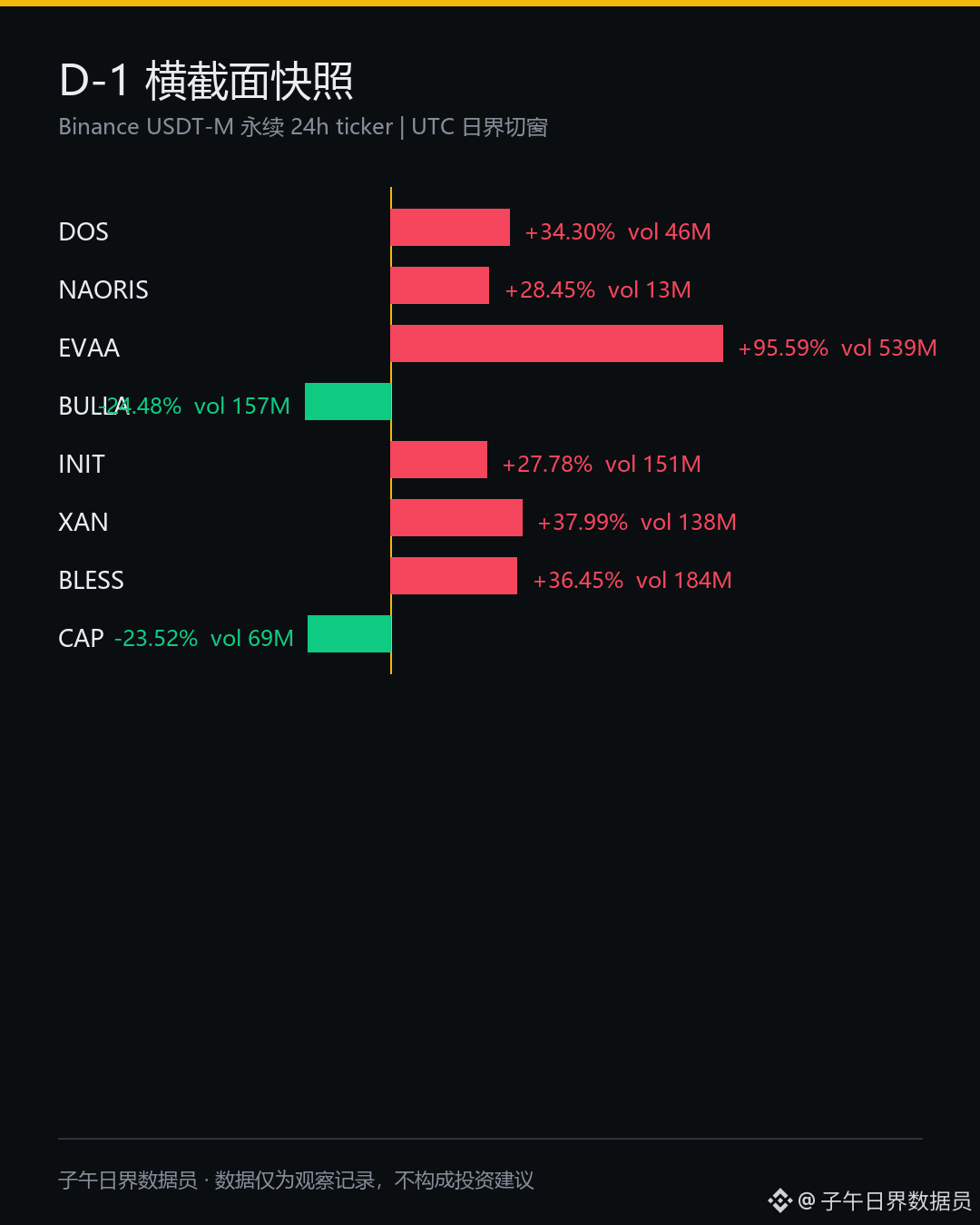
#DOS #NAORIS #Cryptocurrency
The above reflects my personal trading-system records and observations of the data, and does not constitute investment advice.
1
305
·
--
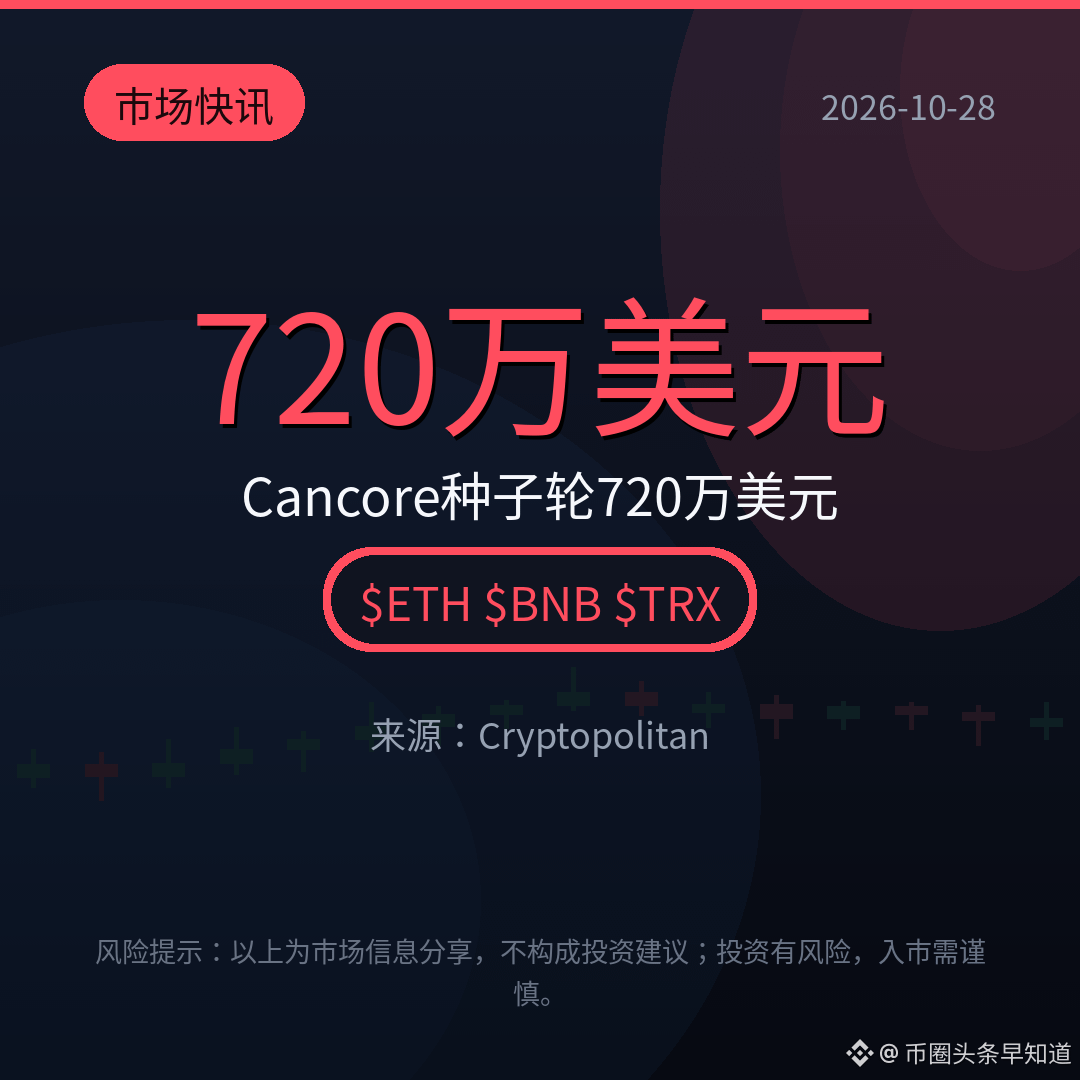
【Market Update】Another bridge is coming to Canton: Cancore has completed a $7.2 million seed round at a $60 million valuation, tied to its planned CNRX token.
The platform launched on the Canton mainnet in April and has connected 6 chains, with over $86 million in cumulative trading volume across more than 160,000 transactions. Next up: Base and Solana. What’s missing is a pipeline to bring in public-chain liquidity. What do you think?
$ETH $BNB $TRX
#Canton #RWA #DeFi
(Source: Cryptopolitan)
⚠️Risk Warning: The above is for market information purposes only and does not constitute investment advice. Investing involves risks; please proceed with caution.
6

·
--
Another RWA cross-chain infrastructure project has emerged from the seed stage.
Cancore has raised $7.2 million in a seed round, with participation from Paper Ventures, dao5, ArkStream Capital, and MH Ventures. The funding was announced on October 28.
It’s tackling a very specific problem: tokenized real-world assets on Canton Network have long had “assets but little liquidity,” and are largely disconnected from the public-chain ecosystem. Cancore has built a non-custodial cross-chain trading and liquidity protocol to bridge the gap, describing itself as “the liquidity operating system for tokenized finance”:
• Connects Canton-native assets on one end to liquidity on public chains including Ethereum, Arbitrum, BNB Chain, TRON, and Robinhood Chain on the other
• Atomic settlement: both parties to a trade either complete it simultaneously or the entire transaction rolls back, avoiding a situation where “one side receives the assets while the other is left in limbo” during a cross-chain transaction
• Smart routing paired with self-custody wallets, so assets never pass through a protocol custodian
• Supports automated strategies and agent-based trading
Two things stand out to me: first, a dedicated bridging and settlement layer is beginning to emerge between institutional-grade RWA networks and retail public-chain liquidity; second, Robinhood Chain is on the list of supported networks, which opens up significant potential as a compliant gateway for capital flows.
In the next phase of RWA, the competition won’t be about who can issue tokens fastest, but who can make tokenized assets genuinely cheap and easy to move. Cancore is focused on the critical settlement and liquidity layer, making it worth keeping on the watchlist.
#RWA #跨链 #Canton

·
--
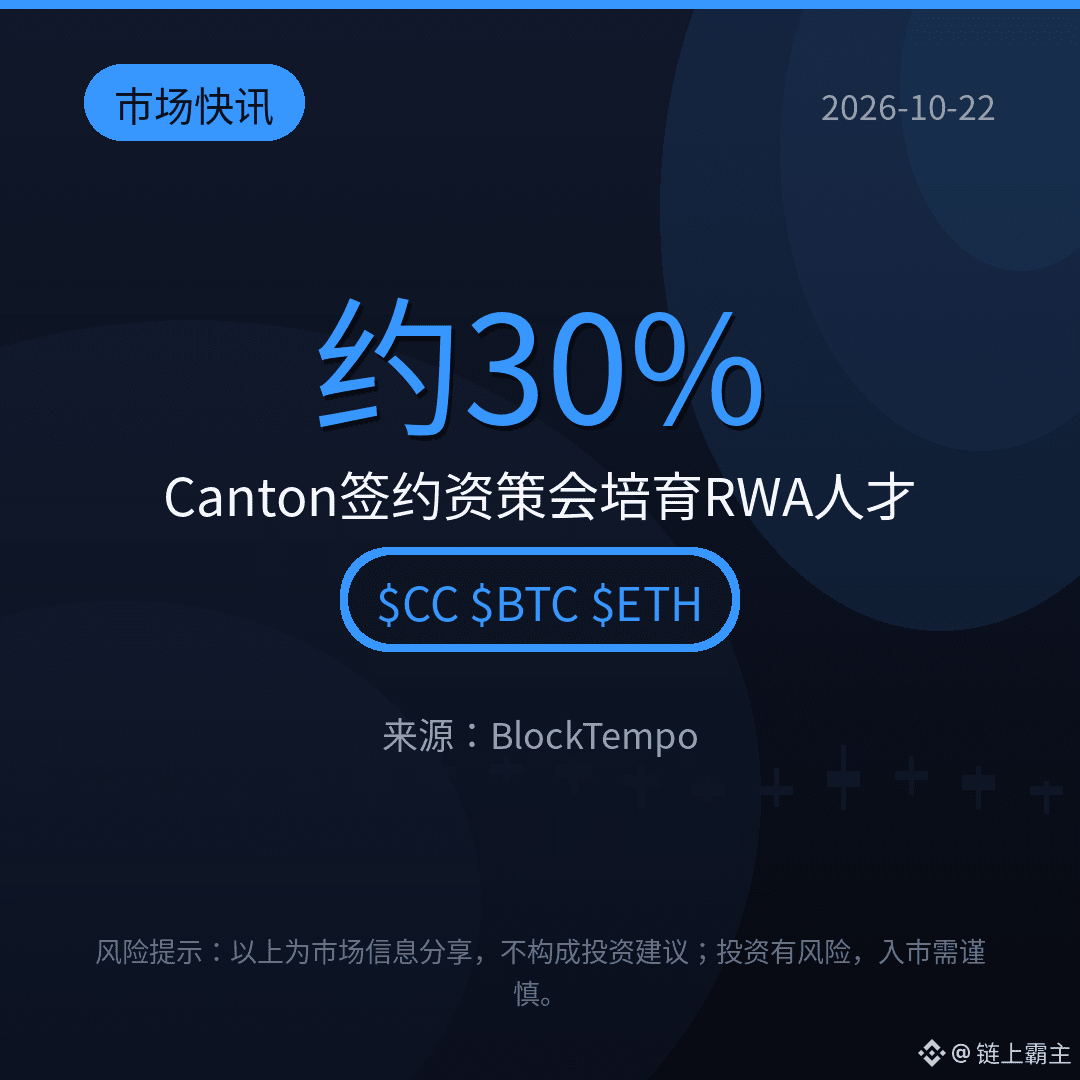
【Market Update】The Taipei team accounts for around 30% of the global team: The Canton Foundation signed a memorandum of cooperation with the Institute for Information Industry (III) on October 21, starting with RWA talent development as it enters the Taiwan market. Canton is co-chaired by DTCC and Euroclear, and its network already has more than 1,000 validator nodes. DTCC’s tokenization project on Canton is expected to launch by the end of October. As institutional-grade RWA infrastructure expands rapidly into the Asia-Pacific region, will compliant settlement or asset supply benefit first? Join the discussion in the comments.
$CC $BTC $ETH
#RWA #代币化 #Canton
(Source: BlockTempo)
⚠️Risk warning: The above is shared for market information purposes only and does not constitute investment advice. Investing involves risks; please exercise caution.
$CC $BTC $ETH
#RWA #代币化 #Canton
(Source: BlockTempo)
⚠️Risk warning: The above is shared for market information purposes only and does not constitute investment advice. Investing involves risks; please exercise caution.
180
Log in to explore more content
Join global crypto users on Binance Square
⚡️ Get latest and useful information about crypto.
💬 Trusted by the world’s largest crypto exchange.
👍 Discover real insights from verified creators.
Email / Phone number
Trending Topics
1
#BitcoinRebounds$75KAsChipsLead
11,988 views
169 Discussing
2
#JobsReportRaisesHikeOdds
158,521 views
1,362 Discussing
3
#US Data Center Rules May Constrain AI Expansion
24,176 views
130 Discussing
4
#BitcoinETFsSee$412MNetOutflows
8 views
25 Discussing
5
#HKSFCPlansToRestrictCryptoAndExchangeTerms
732 views
56 Discussing
6
#AnthropicStillPlansPreThanksgivingIPO
8,093 views
157 Discussing
7
#FinCENAndFedWithdraw$250CryptoTransferProposal
1,802 views
12 Discussing
8
#TradFiForBeginners
24,258 views
405 Discussing
9
#$2TWipedOutHedgeFundsFaceLiquidation
23,923 views
108 Discussing
10
#WillAnthropicListOnTime
34,867 views
455 Discussing