

#boeopensconsultationontokenizedcollateralforclearing
boeopensconsultationontokenizedcollateralforclearing
Hot
Latest

·
--
#BoEOpensConsultationOnTokenizedCollateralForClearing
The Bank of England has launched a new consultation on using tokenized collateral for central clearing. The bank wants to see how digital assets and tokenized government securities can make managing collateral faster and more efficient. Current rules are not seen as a barrier, provided clearing houses can properly value and convert the assets during market stress. Industry feedback on these guidelines will remain open until February 12, 2027.
$BTC $XRP $ETH
{future}(ETHUSDT)
{future}(XRPUSDT)
{future}(BTCUSDT)
#BoEOpensConsultationOnTokenizedCollateralForClearing
The Bank of England has launched a new consultation on using tokenized collateral for central clearing. The bank wants to see how digital assets and tokenized government securities can make managing collateral faster and more efficient. Current rules are not seen as a barrier, provided clearing houses can properly value and convert the assets during market stress. Industry feedback on these guidelines will remain open until February 12, 2027.
$BTC $XRP $ETH

7
·
--
#BoEOpensConsultationOnTokenizedCollateralForClearing
The Bank of England has launched a public consultation on rules for central clearing houses accepting tokenised collateral. The bank aims to make managing collateral and responding to margin calls faster and more efficient. Officials note that current regulations do not block tokenised assets, provided they meet strict safety standards. The consultation remains open to industry feedback until February 2027 as part of a push to safely expand digital finance.
$BTC $BNB $ETH
{future}(ETHUSDT)
{future}(BNBUSDT)
{future}(BTCUSDT)
#BoEOpensConsultationOnTokenizedCollateralForClearing
The Bank of England has launched a public consultation on rules for central clearing houses accepting tokenised collateral. The bank aims to make managing collateral and responding to margin calls faster and more efficient. Officials note that current regulations do not block tokenised assets, provided they meet strict safety standards. The consultation remains open to industry feedback until February 2027 as part of a push to safely expand digital finance.
$BTC $BNB $ETH

89
·
--
#BoEOpensConsultationOnTokenizedCollateralForClearing
The Bank of England has launched a new consultation on allowing clearing houses to accept tokenized assets as collateral. This move explores how digital tokens can be safely used to manage financial margins, speed up transactions, and improve market liquidity. Officials aim to support financial innovation while ensuring strong risk controls remain in place to protect market stability.
$BTC $XRP $ETH
{future}(ETHUSDT)
{future}(XRPUSDT)
{future}(BTCUSDT)
#BoEOpensConsultationOnTokenizedCollateralForClearing
The Bank of England has launched a new consultation on allowing clearing houses to accept tokenized assets as collateral. This move explores how digital tokens can be safely used to manage financial margins, speed up transactions, and improve market liquidity. Officials aim to support financial innovation while ensuring strong risk controls remain in place to protect market stability.
$BTC $XRP $ETH

117


The Bank of England has launched a consultation regarding the use of tokenized collateral in clearing processes. This move signals a significant step towards exploring the integration of digital assets within traditional financial market infrastructures.
This consultation is a crucial development, indicating a growing institutional interest in blockchain technology and its potential to streamline post-trade settlement and collateral management. By seeking input on tokenized collateral, the BoE is actively engaging with the market to understand the opportunities and risks associated with this innovation. The outcome could pave the way for more efficient, transparent, and potentially lower-cost clearing operations, impacting how financial institutions manage risk and liquidity. It's a clear sign that central banks are taking digital asset innovation seriously, moving beyond theoretical discussions to practical exploration.
As the industry awaits the feedback and potential regulatory frameworks, market participants should stay informed about the evolving landscape of digital collateral and its implications for market stability and efficiency.
#BoEOpensConsultationOnTokenizedCollateralForClearing $BTC $ETH
40

·
--
#BoEOpensConsultationOnTokenizedCollateralForClearing
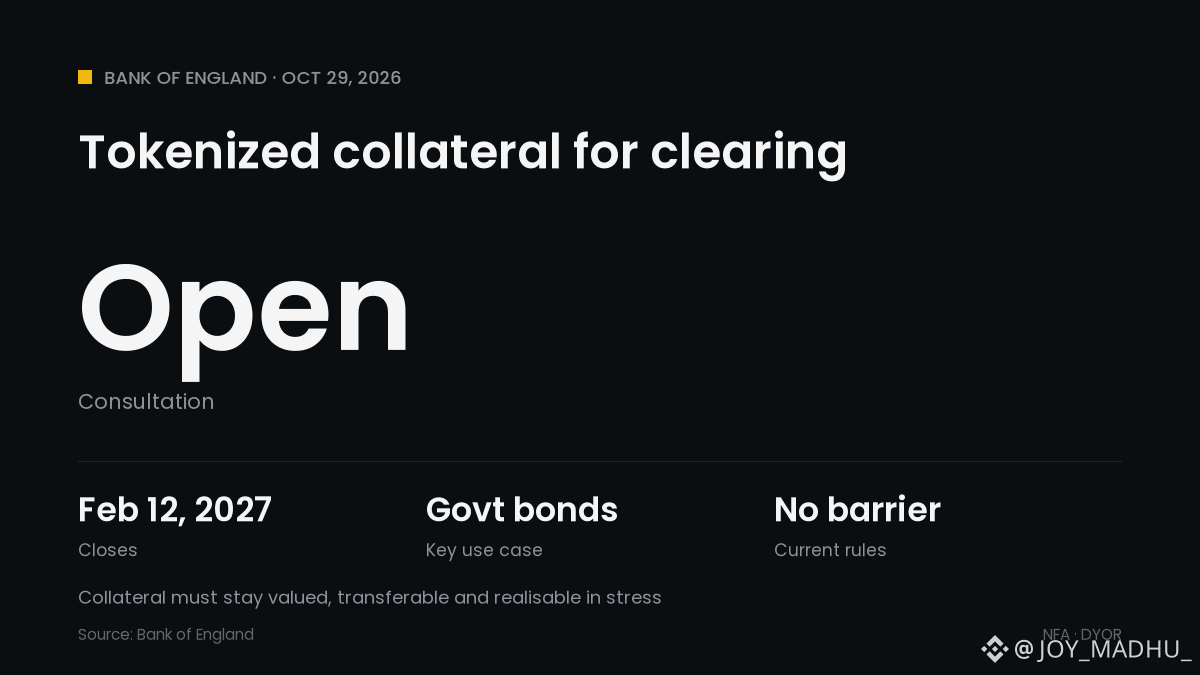
🇬🇧 Bank of England Opens the Door to Tokenized Collateral
📅 Consultation launched October 29, 2026
🏦 Covers clearing houses (CCPs) taking tokenized versions of collateral already eligible
✅ BoE view: current rules are not a barrier if standards are met
⚠️ Collateral must stay valued, transferable and sellable, even in stress
📊 Focus: liquidity, settlement finality, operational resilience, custody
📈 Tokenized government bonds named a key use case
🗓️ Responses close February 12, 2027
What it means for crypto: a major central bank treating tokenized assets as usable margin is a step for onchain finance and RWAs. It's a consultation, not a final rule, and it doesn't cover crypto tokens.
Would tokenized bonds as margin speed up adoption? 👇
$BTC
#CryptoNews #Tokenization #BoEOpensConsultationOnTokenizedCollateralForClearing
22

·
--
Verified
🚨BANK OF ENGLAND OPENS THE DOOR TO TOKENIZED COLLATERAL!
The traditional financial system is moving closer to blockchain technology.
The Bank of England has launched a consultation on allowing central clearing houses to accept tokenized forms of eligible collateral.
The potential benefits are significant
⚡ Faster collateral transfers
💧 Improved liquidity management
🌍 More efficient cross-border transactions
🔗 Greater integration of blockchain with traditional finance
But there is a catch. Tokenized assets must still meet strict standards for valuation, liquidity, security, and risk management.
This is not full approval yet. The consultation is open until February 12, 2027.
Could tokenized collateral become one of the biggest real-world blockchain use cases?
#BoEOpensConsultationOnTokenizedCollateralForClearing $BNB
{future}(BNBUSDT)
🚨BANK OF ENGLAND OPENS THE DOOR TO TOKENIZED COLLATERAL!
The traditional financial system is moving closer to blockchain technology.
The Bank of England has launched a consultation on allowing central clearing houses to accept tokenized forms of eligible collateral.
The potential benefits are significant
⚡ Faster collateral transfers
💧 Improved liquidity management
🌍 More efficient cross-border transactions
🔗 Greater integration of blockchain with traditional finance
But there is a catch. Tokenized assets must still meet strict standards for valuation, liquidity, security, and risk management.
This is not full approval yet. The consultation is open until February 12, 2027.
Could tokenized collateral become one of the biggest real-world blockchain use cases?
#BoEOpensConsultationOnTokenizedCollateralForClearing $BNB

28

·
--
Article
*TODAY'S BEST COIN - PEPE (Pepe Coin)**TODAY'S BEST COIN - PEPE (Pepe Coin)*
Here is the complete article for your Facebook / Blog:
---
PEPE is Today's Coin of the Day - Oct 28, 2026
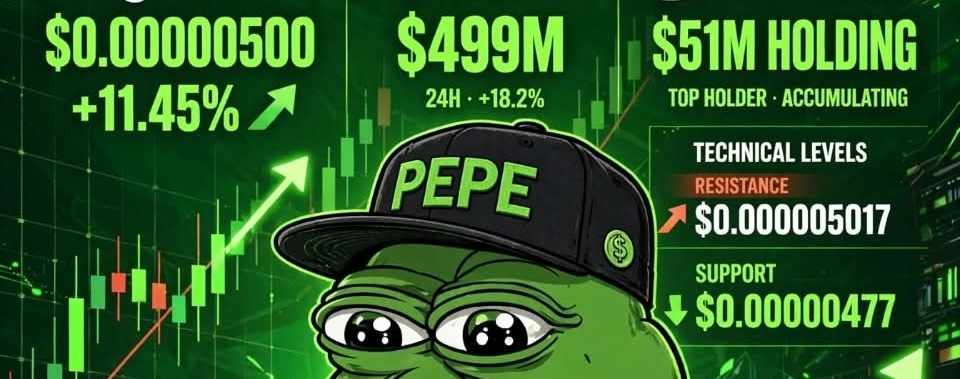
While Bitcoin holds $81,000 (+1.55%), the real star today is *PEPE*. 92% of crypto market is green today, but PEPE led with *+11.45% to +15%* intraday.
*Live Price:*
- Current: $0.00000500 - $0.00000487
- 24h High: $0.00000505 / Low: $0.00000445
- Volume: $499M - $649M (highest among risers today)
- Market Cap: ∼$2.05 Billion, Rank #48-51
- RSI: 62.6 - 64 Bullish, but not yet overbought
- Sentiment: Bullish 70% confidence, Uptrend regime e8f4d2583eac
Why PEPE is Pumping Today? 3 Reasons
*1. Justin Sun Whale News - $51M Buy*
Arkham identified wallets linked to Tron founder Justin Sun holding $51.25M worth of PEPE, which is 2.82% of total supply. Market took it as huge whale confidence. b385
*2. Exchange Outflows - Supply Squeeze*
Santiment data shows 4.77 Trillion PEPE left exchanges. $1.53M spot outflows net positive - fewer tokens on exchanges = less selling pressure.
*3. Short Squeeze + Derivatives*
Funding rate flipped positive to 0.013% (longs paying shorts = bullish), Long-to-short ratio 1.06, and $330k shorts liquidated in 1 hour. Open interest reached $400M.
Technical Outlook
Price is trading above 20, 50, and 200 EMAs on all timeframes = bullish alignment. Golden cross active with +18.8% spread.
- *Resistance:* $0.000005017 - need hourly close above this to confirm breakout. Next targets $0.00000521, $0.00000550, $0.0000060
- *Support:* $0.00000477 and $0.00000464 (strong), then $0.00000412 (50-day EMA) d258
If PEPE holds $0.00000476, it can retest $0.00000550. If it loses $0.00000464 on high volume, risk down to $0.00000401.
Prediction
Short-term model shows some pullback expected after this run (CoinCodex predicts -25% to $0.000003378 in coming days), but bull case target if breakout holds is $0.00000531 - $0.00000581 with 43% probability. e8f43eac
Long-term 2030 target: $0.000008257 (+73%).
*Bottom Line:* PEPE is not just a meme today. It has whale backing, technical breakout, and highest volume. Best performer for day traders.
Not financial advice - do your own research.
---
Want me to make a PEPE-only poster with Justin Sun news in Urdu Roman for your audience?
*TODAY'S BEST COIN - PEPE (Pepe Coin)*
*TODAY'S BEST COIN - PEPE (Pepe Coin)*
Here is the complete article for your Facebook / Blog:
---
PEPE is Today's Coin of the Day - Oct 28, 2026
While Bitcoin holds $81,000 (+1.55%), the real star today is *PEPE*. 92% of crypto market is green today, but PEPE led with *+11.45% to +15%* intraday.
*Live Price:*
- Current: $0.00000500 - $0.00000487
- 24h High: $0.00000505 / Low: $0.00000445
- Volume: $499M - $649M (highest among risers today)
- Market Cap: ∼$2.05 Billion, Rank #48-51
- RSI: 62.6 - 64 Bullish, but not yet overbought
- Sentiment: Bullish 70% confidence, Uptrend regime e8f4d2583eac
Why PEPE is Pumping Today? 3 Reasons
*1. Justin Sun Whale News - $51M Buy*
Arkham identified wallets linked to Tron founder Justin Sun holding $51.25M worth of PEPE, which is 2.82% of total supply. Market took it as huge whale confidence. b385
*2. Exchange Outflows - Supply Squeeze*
Santiment data shows 4.77 Trillion PEPE left exchanges. $1.53M spot outflows net positive - fewer tokens on exchanges = less selling pressure.
*3. Short Squeeze + Derivatives*
Funding rate flipped positive to 0.013% (longs paying shorts = bullish), Long-to-short ratio 1.06, and $330k shorts liquidated in 1 hour. Open interest reached $400M.
Technical Outlook
Price is trading above 20, 50, and 200 EMAs on all timeframes = bullish alignment. Golden cross active with +18.8% spread.
- *Resistance:* $0.000005017 - need hourly close above this to confirm breakout. Next targets $0.00000521, $0.00000550, $0.0000060
- *Support:* $0.00000477 and $0.00000464 (strong), then $0.00000412 (50-day EMA) d258
If PEPE holds $0.00000476, it can retest $0.00000550. If it loses $0.00000464 on high volume, risk down to $0.00000401.
Prediction
Short-term model shows some pullback expected after this run (CoinCodex predicts -25% to $0.000003378 in coming days), but bull case target if breakout holds is $0.00000531 - $0.00000581 with 43% probability. e8f43eac
Long-term 2030 target: $0.000008257 (+73%).
*Bottom Line:* PEPE is not just a meme today. It has whale backing, technical breakout, and highest volume. Best performer for day traders.
Not financial advice - do your own research.
---
Want me to make a PEPE-only poster with Justin Sun news in Urdu Roman for your audience?
6
838

Article
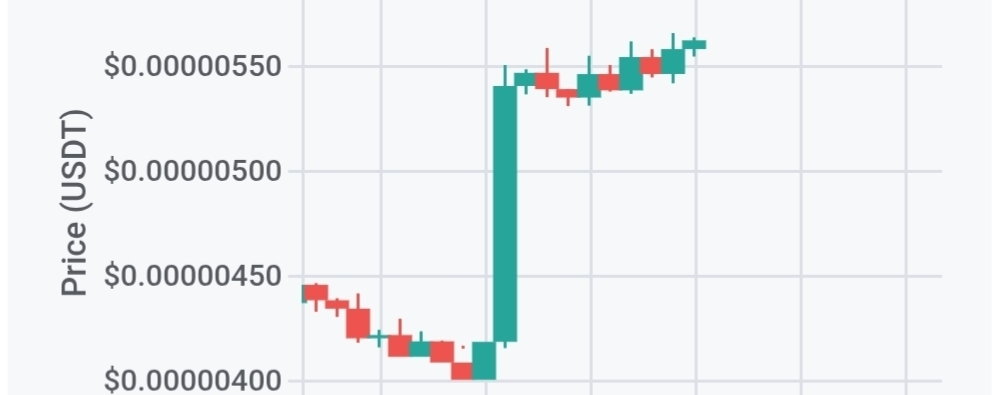
PEPE COINPEPE is exhibiting strong bullish market structure, fueled by heavy speculative demand, rising derivatives volume, and high-profile whale activity. The asset recently triggered a trendline breakout above its short-term descending structure, outperforming major crypto assets like Bitcoin during this local momentum swing. [1, 2, 3, 4]
Short-Term Candlestick Analysis
The daily chart outlines a classic bottoming-and-breakout profile:
The Liquidity Sweep (Accumulation): The chart shows clear structural consolidation around the $0.00000415 zone. Multiple daily candles in this range printed long lower wicks, indicating strong absorption by buyers whenever prices dipped. [1, 2]
The Breakout Candle: A decisive, long-bodied bullish engulfing green candle surged past the short-term descending trendline. This confirms aggressive buyer dominance and a shift in trend structure. [1, 2]
Current Momentum: The price is actively trading above its 20-day and 50-day Exponential Moving Averages (EMAs), signaling that the immediate trend favors long positions. [1]
Core Technical Levels
Immediate Resistance ($0.00000500 - $0.00000523): A significant psychological barrier. A clean daily close above $0.00000523 invalidates overhead selling pressure and opens the path toward targets at $0.00000552 and $0.00000585. [1, 2]
Key Support ($0.00000466 - $0.00000470): Confluent with the 20-day EMA. Bulls must defend this level on pullbacks to keep the immediate breakout structure valid. [1, 2]
Invalidation Point ($0.00000417): Falling back below this primary support floor invalidates the bullish thesis, turning the market structure neutral-to-bearish. [1]
Would you like to layer this analysis with volume profile metrics or evaluate RSI levels to look for potential overbought signals?
AI responses may include mistakes. For financial advice, consult a professional. Learn more

Investing.com
PEPE USD OKX Candlestick Chart - Investing.com
PEPE/USD OKX Candlestick Patterns. Access dozens of bullish and bearish live PEPE USD OKX candlestick charts and patterns and use them to help predict future ma...
Binance
$PEPE Pepe — Short Candle Chart Analysis Market Structure - Binance
May 23, 2026 — PEPE is currently behaving like a typical meme coin—sharp impulsive moves followed by choppy consolidation. Recent. If the chart shows higher lows forming, bull...
Bitkub.com
PEPE Price Analysis: Can It Clear $0.00000500 Resistance?
If trading volume rises and PEPE breaks above resistance at $0.00000500, price could target. Overhead selling pressure at $0.00000500 could trigger a sudden rej...
TradingView
Pepe Coin / USDT — PEPE USDT Price Chart - TradingView
Trendline Breakout After Liquidity Sweep, Fundamentals: open interest is $93.04M, up 26.4% over 7 days. Perp funding is +0.0100% per 8h and 71% of accounts are ...
Traders Union
Pepe price outlook: Buyer support signals potential for continued upside
Oct 29, 2026 — Pepe saw a surge in futures trading activity and large whale movements on October 28, 2026, driving a notable uptick in speculative demand … approximately $51 m...
CoinMarketCap
Latest Pepe (PEPE) Price Analysis - CoinMarketCap
PEPE (~$51.25 million), making him the largest individual holder outside exchanges. This news fueled intense social media buzz and speculative buying, with 24-h...
Binance
PEPE | Crypto Signals and Analysis on Binance Square
Oct 28, 2026 — PEPE is the top gainer among high-volume coins on Binance spot tonight: +12.4% in 24 hours on about 102M USDT volume. Bitcoin is up only 0.6% Bottom line: trend...
Binance
Analysis of coin $PEPE — October 26, 2026
Approximate price: $0.00000436. Prices and zones should be verified against the live chart before trading.
PEPE COIN
PEPE is exhibiting strong bullish market structure, fueled by heavy speculative demand, rising derivatives volume, and high-profile whale activity. The asset recently triggered a trendline breakout above its short-term descending structure, outperforming major crypto assets like Bitcoin during this local momentum swing. [1, 2, 3, 4]
Short-Term Candlestick Analysis
The daily chart outlines a classic bottoming-and-breakout profile:
The Liquidity Sweep (Accumulation): The chart shows clear structural consolidation around the $0.00000415 zone. Multiple daily candles in this range printed long lower wicks, indicating strong absorption by buyers whenever prices dipped. [1, 2]
The Breakout Candle: A decisive, long-bodied bullish engulfing green candle surged past the short-term descending trendline. This confirms aggressive buyer dominance and a shift in trend structure. [1, 2]
Current Momentum: The price is actively trading above its 20-day and 50-day Exponential Moving Averages (EMAs), signaling that the immediate trend favors long positions. [1]
Core Technical Levels
Immediate Resistance ($0.00000500 - $0.00000523): A significant psychological barrier. A clean daily close above $0.00000523 invalidates overhead selling pressure and opens the path toward targets at $0.00000552 and $0.00000585. [1, 2]
Key Support ($0.00000466 - $0.00000470): Confluent with the 20-day EMA. Bulls must defend this level on pullbacks to keep the immediate breakout structure valid. [1, 2]
Invalidation Point ($0.00000417): Falling back below this primary support floor invalidates the bullish thesis, turning the market structure neutral-to-bearish. [1]
Would you like to layer this analysis with volume profile metrics or evaluate RSI levels to look for potential overbought signals?
AI responses may include mistakes. For financial advice, consult a professional. Learn more

Investing.com
PEPE USD OKX Candlestick Chart - Investing.com
PEPE/USD OKX Candlestick Patterns. Access dozens of bullish and bearish live PEPE USD OKX candlestick charts and patterns and use them to help predict future ma...
Binance
$PEPE Pepe — Short Candle Chart Analysis Market Structure - Binance
May 23, 2026 — PEPE is currently behaving like a typical meme coin—sharp impulsive moves followed by choppy consolidation. Recent. If the chart shows higher lows forming, bull...
Bitkub.com
PEPE Price Analysis: Can It Clear $0.00000500 Resistance?
If trading volume rises and PEPE breaks above resistance at $0.00000500, price could target. Overhead selling pressure at $0.00000500 could trigger a sudden rej...
TradingView
Pepe Coin / USDT — PEPE USDT Price Chart - TradingView
Trendline Breakout After Liquidity Sweep, Fundamentals: open interest is $93.04M, up 26.4% over 7 days. Perp funding is +0.0100% per 8h and 71% of accounts are ...
Traders Union
Pepe price outlook: Buyer support signals potential for continued upside
Oct 29, 2026 — Pepe saw a surge in futures trading activity and large whale movements on October 28, 2026, driving a notable uptick in speculative demand … approximately $51 m...
CoinMarketCap
Latest Pepe (PEPE) Price Analysis - CoinMarketCap
PEPE (~$51.25 million), making him the largest individual holder outside exchanges. This news fueled intense social media buzz and speculative buying, with 24-h...
Binance
PEPE | Crypto Signals and Analysis on Binance Square
Oct 28, 2026 — PEPE is the top gainer among high-volume coins on Binance spot tonight: +12.4% in 24 hours on about 102M USDT volume. Bitcoin is up only 0.6% Bottom line: trend...
Binance
Analysis of coin $PEPE — October 26, 2026
Approximate price: $0.00000436. Prices and zones should be verified against the live chart before trading.
1
215

Article
$BTC📊 Latest Crypto Market Analysis — 30 October 2026
Market outlook: Short-term bearish, with a possible recovery if key resistance levels are reclaimed.
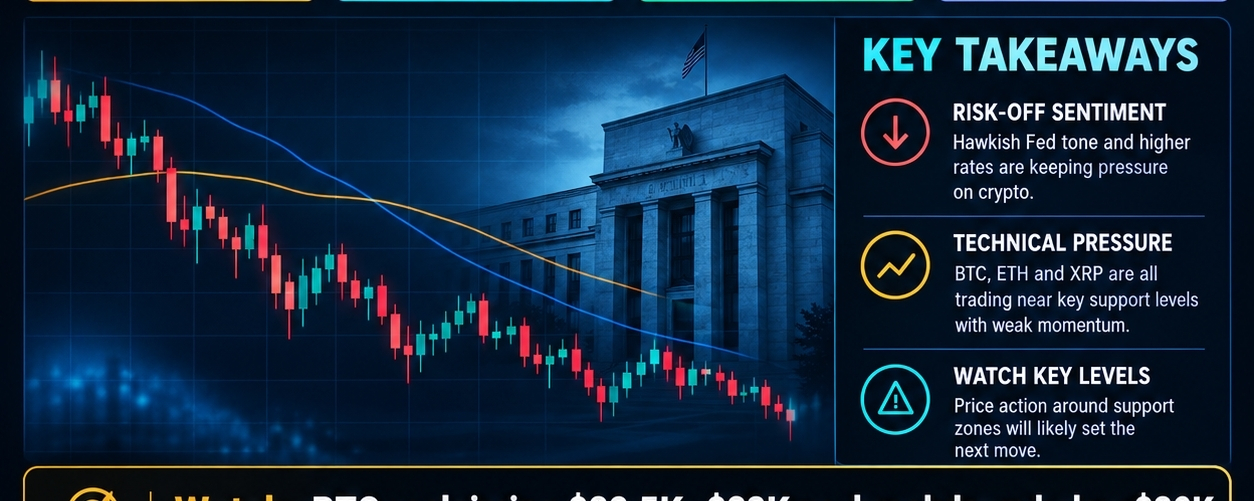
The latest available market reports indicate that cryptocurrencies are under pressure following the US Federal Reserve's decision to keep interest rates at 3.75%–4.00% while maintaining a hawkish stance. Bitcoin has slipped toward $80,000, Ethereum is testing an important technical level, and XRP is trading below $1.30. �
tmgm-asia.com
🖼️ Crypto Market Analysis Picture
The infographic above summarizes the market situation, major cryptocurrency levels, and key risks to watch.
1. Major Cryptocurrency Analysis
Cryptocurrency
Approx. price
Key level to watch
Short-term outlook
Bitcoin (BTC)
$80,000
$80,000 support
Bearish below resistance
Ethereum (ETH)
$2,320
$2,316 technical level
Weak momentum
XRP
$1.29
$1.30 resistance
Bearish below $1.30
Solana (SOL)
Around $100
Watch recent support
Cautious
These are approximate figures from reports published on October 29, 2026, not verified live prices. �
tmgm-asia.com +1
2. Bitcoin (BTC): Bullish or Bearish?
Current bias: Bearish in the short term.
Support: $80,000 is a key psychological level.
Resistance: $82,500–$83,000 is an important recovery zone.
Bullish scenario: BTC recovers above $83,000 and sustains the breakout.
Bearish scenario: BTC breaks below $80,000 and fails to recover.
Bitcoin's inability to hold higher levels suggests caution. A break below support could trigger further selling, while a sustained recovery above resistance would improve the outlook. �
MarketsAll +1
3. Ethereum (ETH): Important Technical Level
Ethereum is trading around $2,320, with the $2,316 area identified as a key technical level.
Bullish signal: ETH holds support and starts forming higher highs.
Bearish signal: ETH breaks below support and selling pressure increases.
Trading approach: Wait for confirmation rather than buying simply because the price has fallen.
These levels are reference points from recent market analysis, not guaranteed turning points. �
tmgm-asia.com
4. Why Is the Crypto Market Under Pressure?
Three factors deserve attention:
Federal Reserve policy: A hawkish outlook can reduce appetite for risky assets.
Technical weakness: BTC, ETH and XRP are testing or trading below important levels.
Market volatility: Crypto can move sharply in either direction, especially when traders use leverage.
Bitcoin's volatility remains an important risk even when its price movements appear relatively calm. �
CoinDesk +1
5. My Trading Outlook
Scenario
What to watch
Possible response
Bullish recovery
BTC reclaims $82,500–$83,000
Wait for confirmation
Continued consolidation
BTC holds near $80,000
Avoid chasing short-term moves
Bearish breakdown
BTC loses $80,000
Reassess downside risk
These are conditional scenarios, not price predictions or guaranteed trading signals.
⚠️ Risk Management
Avoid excessive leverage.
Decide your stop-loss level before entering a trade.
Do not invest money you cannot afford to lose.
Verify current prices before placing an order.
🎯 Want a More Detailed Crypto Trading Picture?
I can prepare a more focused analysis with a chart and entry/exit levels.
Choose one:
1. BTC — Bitcoin buy/sell analysis
2. ETH — Ethereum trading analysis
3. XRP — XRP trading analysis
4. SOL — Solana trading analysis
5. TOP 10 — Analysis of the top 10 cryptocurrencies
I'll focus on support, resistance, entry zone, stop-loss, take-profit targets, and bullish versus bearish scenarios.$BTC
$BTC
📊 Latest Crypto Market Analysis — 30 October 2026
Market outlook: Short-term bearish, with a possible recovery if key resistance levels are reclaimed.
The latest available market reports indicate that cryptocurrencies are under pressure following the US Federal Reserve's decision to keep interest rates at 3.75%–4.00% while maintaining a hawkish stance. Bitcoin has slipped toward $80,000, Ethereum is testing an important technical level, and XRP is trading below $1.30. �
tmgm-asia.com
🖼️ Crypto Market Analysis Picture
The infographic above summarizes the market situation, major cryptocurrency levels, and key risks to watch.
1. Major Cryptocurrency Analysis
Cryptocurrency
Approx. price
Key level to watch
Short-term outlook
Bitcoin (BTC)
$80,000
$80,000 support
Bearish below resistance
Ethereum (ETH)
$2,320
$2,316 technical level
Weak momentum
XRP
$1.29
$1.30 resistance
Bearish below $1.30
Solana (SOL)
Around $100
Watch recent support
Cautious
These are approximate figures from reports published on October 29, 2026, not verified live prices. �
tmgm-asia.com +1
2. Bitcoin (BTC): Bullish or Bearish?
Current bias: Bearish in the short term.
Support: $80,000 is a key psychological level.
Resistance: $82,500–$83,000 is an important recovery zone.
Bullish scenario: BTC recovers above $83,000 and sustains the breakout.
Bearish scenario: BTC breaks below $80,000 and fails to recover.
Bitcoin's inability to hold higher levels suggests caution. A break below support could trigger further selling, while a sustained recovery above resistance would improve the outlook. �
MarketsAll +1
3. Ethereum (ETH): Important Technical Level
Ethereum is trading around $2,320, with the $2,316 area identified as a key technical level.
Bullish signal: ETH holds support and starts forming higher highs.
Bearish signal: ETH breaks below support and selling pressure increases.
Trading approach: Wait for confirmation rather than buying simply because the price has fallen.
These levels are reference points from recent market analysis, not guaranteed turning points. �
tmgm-asia.com
4. Why Is the Crypto Market Under Pressure?
Three factors deserve attention:
Federal Reserve policy: A hawkish outlook can reduce appetite for risky assets.
Technical weakness: BTC, ETH and XRP are testing or trading below important levels.
Market volatility: Crypto can move sharply in either direction, especially when traders use leverage.
Bitcoin's volatility remains an important risk even when its price movements appear relatively calm. �
CoinDesk +1
5. My Trading Outlook
Scenario
What to watch
Possible response
Bullish recovery
BTC reclaims $82,500–$83,000
Wait for confirmation
Continued consolidation
BTC holds near $80,000
Avoid chasing short-term moves
Bearish breakdown
BTC loses $80,000
Reassess downside risk
These are conditional scenarios, not price predictions or guaranteed trading signals.
⚠️ Risk Management
Avoid excessive leverage.
Decide your stop-loss level before entering a trade.
Do not invest money you cannot afford to lose.
Verify current prices before placing an order.
🎯 Want a More Detailed Crypto Trading Picture?
I can prepare a more focused analysis with a chart and entry/exit levels.
Choose one:
1. BTC — Bitcoin buy/sell analysis
2. ETH — Ethereum trading analysis
3. XRP — XRP trading analysis
4. SOL — Solana trading analysis
5. TOP 10 — Analysis of the top 10 cryptocurrencies
I'll focus on support, resistance, entry zone, stop-loss, take-profit targets, and bullish versus bearish scenarios.$BTC
80

This is Not Ordinary Stock.
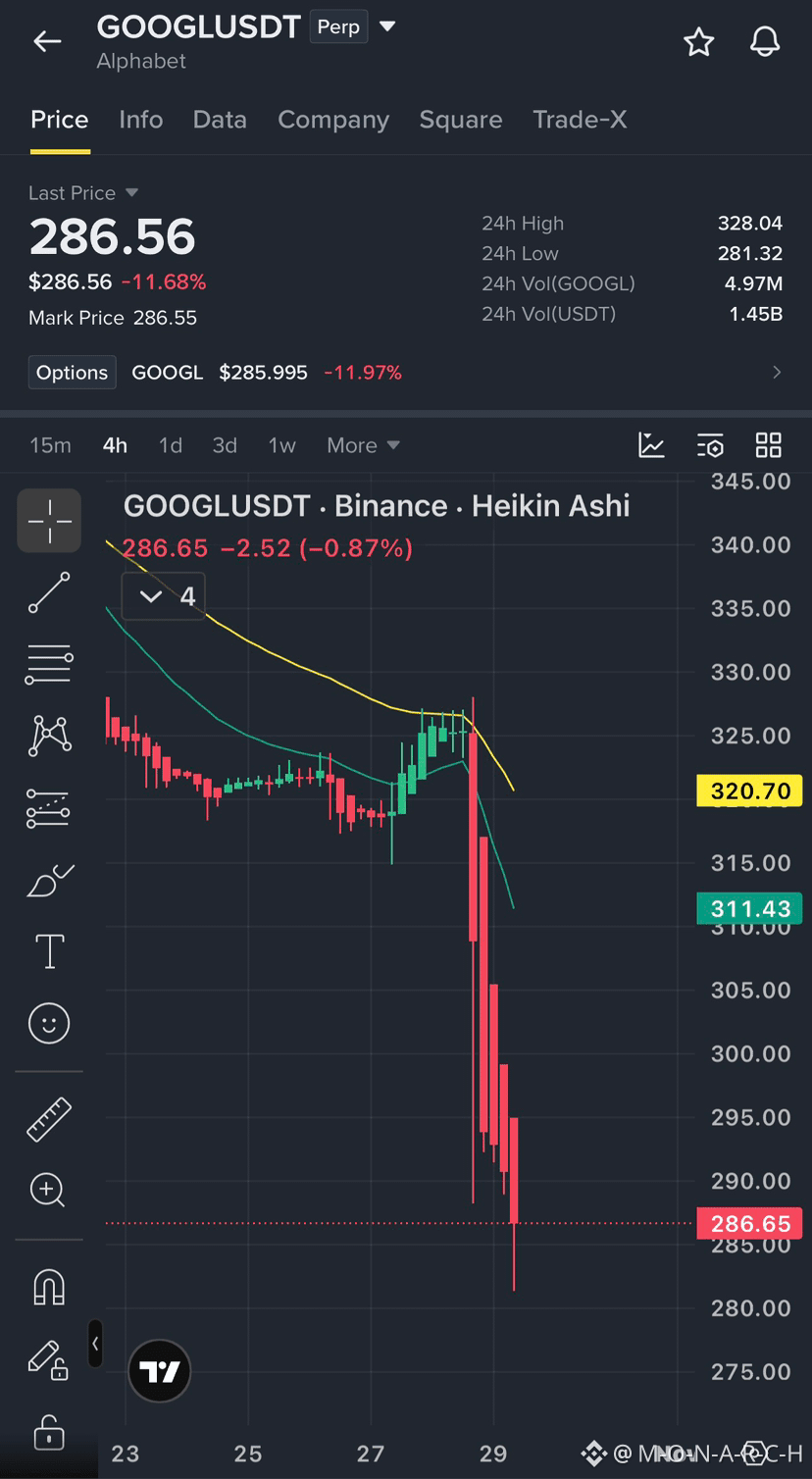
1st China Stock Market Bloodbath
Then Global. Final AI Bubble Cracks Appearing.
Sometimes Green is Not Bullish it’s Dodging for Something Much Bigger than Flash Crash of Oct,10,2025 is Brewing.
Note :- Correction is 5%, Above 5%, which is 12-13% in Blue Chip Stock. Is a Point to Ponder,
#FedWatch #EarningsSeason #USMidtermElections #BitcoinDropsBelow$80K #BoEOpensConsultationOnTokenizedCollateralForClearing
M-O-N-A-R-C-H
·
--
This is Cringe
🇯🇵 THE BANK OF JAPAN WILL OFFICIALLY ANNOUNCE ITS INTEREST RATE DECISION TODAY AT 11:00 PM ET!
IF RATE > 1.50% → MARKET CRASHES HARD
IF RATE = 1.25% → MARKET STAYS FLAT
IF RATE < 1.00% → MARKET GOES PARABOLIC
#FedWatch #AlphabetSharesSlide10%InLateTrading #RussiaProposedNonCustodialWalletLimitsExcludeIntlSettlements #Nasdaq100FuturesFall0.9% #BitcoinCore32.1RaisesPeerConnectionLimit
103

·
--
7

·
--
$PEPE is a meme-based cryptocurrency inspired by the Pepe the Frog character. Its main benefit is strong community engagement, high social-media visibility, and the potential for rapid market activity during meme-coin rallies. However, $PEPE has limited fundamental utility and is highly volatile, meaning its price can rise or fall sharply. Its performance depends heavily on market sentiment, trading activity, and overall crypto-market conditions. PEPE is a speculative asset, so popularity does not guarantee future growth or profit.
Recent market information also shows that PEPE’s price is driven mainly by community sentiment and speculative trading rather than practical utility. In my opinion, $PEPE is one of the best meme coins because of its strong community, popularity, and potential for high trading activity
{spot}(PEPEUSDT)
#EarningsSeason #FedWatch #BoEOpensConsultationOnTokenizedCollateralForClearing #BrazilCryptoExchangesMustApplyForLicensesByFriday
$PEPE is a meme-based cryptocurrency inspired by the Pepe the Frog character. Its main benefit is strong community engagement, high social-media visibility, and the potential for rapid market activity during meme-coin rallies. However, $PEPE has limited fundamental utility and is highly volatile, meaning its price can rise or fall sharply. Its performance depends heavily on market sentiment, trading activity, and overall crypto-market conditions. PEPE is a speculative asset, so popularity does not guarantee future growth or profit.
Recent market information also shows that PEPE’s price is driven mainly by community sentiment and speculative trading rather than practical utility. In my opinion, $PEPE is one of the best meme coins because of its strong community, popularity, and potential for high trading activity
#EarningsSeason #FedWatch #BoEOpensConsultationOnTokenizedCollateralForClearing #BrazilCryptoExchangesMustApplyForLicensesByFriday
9

$BTC Bitcoin (BTC) — Latest Analysis
30 October 2026
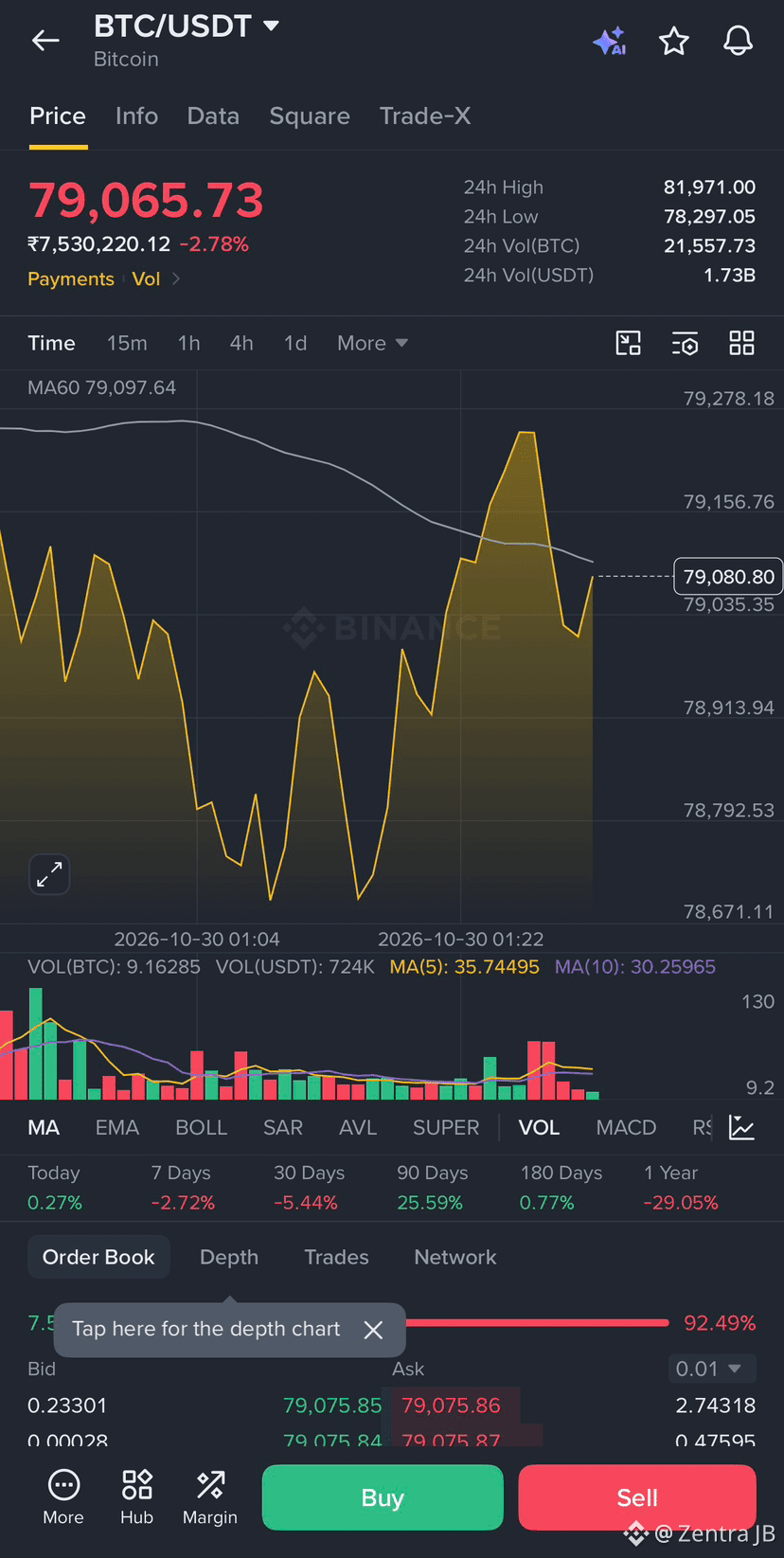
Bitcoin is trading near $80,700, with recent price action showing weak short-term momentum. The market remains cautious following pressure from technology stocks and uncertainty around US monetary policy. 
Support: $80,000, then $79,200
Resistance: $81,000–$83,100
Outlook: Neutral to bearish in the short term. A sustained move above resistance could improve momentum, while a break below support may bring further weakness#BitcoinDropsBelow$80K #USMidtermElections #EarningsSeason #FedWatch #BoEOpensConsultationOnTokenizedCollateralForClearing
{spot}(BTCUSDT)
$BTC Bitcoin (BTC) — Latest Analysis
30 October 2026
Bitcoin is trading near $80,700, with recent price action showing weak short-term momentum. The market remains cautious following pressure from technology stocks and uncertainty around US monetary policy. 
Support: $80,000, then $79,200
Resistance: $81,000–$83,100
Outlook: Neutral to bearish in the short term. A sustained move above resistance could improve momentum, while a break below support may bring further weakness#BitcoinDropsBelow$80K #USMidtermElections #EarningsSeason #FedWatch #BoEOpensConsultationOnTokenizedCollateralForClearing

42

·
--
Bearish
No. And the timeline is the opposite of the headline👀
All three are denial-of-service bugs in BTC$BTC node software. Crash a node and it restarts. No funds move, no consensus breaks, no coins get stolen. The worst case is an operator having a bad afternoon, not the network having a bad day.
They were patched on Oct 27. The advisories went out on Oct 28. You are reading about this after the fix shipped, which is the process working rather than failing.
Now the part the coverage mostly skipped.
On Oct 22, Bitcoin Core changed how it discloses bugs, moving to publishing easily discoverable ones quickly instead of holding them for up to a year. That policy change is why you are hearing about this at all. Transparency went up. Danger did not. People are reading a disclosure reform as a security event.
The AI framing is also doing heavy lifting. One of these, the peer that claims an outdated protocol version and then stalls while memory piles up, was flagged by the scan on Sep 15 and then found independently by a human developer six days later. The scan found something a person was already finding. Faster, not superhuman.
And scale the third one. The undo-file overflow needs a miner to craft blocks, and on 64-bit machines CoinDesk puts the cost at roughly a month of the entire network's block production. A month of global hashrate. To crash some nodes.
What I would actually watch: three more bugs, medium and high severity, were already fixed in version 30.0 and are due to be disclosed in about two weeks. Medium and high is a step up from this batch. Read those when they land.
One honest gap. Every outlet ran "Windows and Mac nodes at risk" and not one of them said what share of the network that is. You cannot size the blast radius from the reporting.
#FedWatch #BoEOpensConsultationOnTokenizedCollateralForClearing #btc
141

🚨 BREAKING: Polymarket is reportedly under attack!
The platform is facing a major trading API outage and has switched to cancel-only mode while pausing relay actions as it investigates the incident.
⚠️ Trading operations are disrupted.
#FedWatch #EarningsSeason #USMidtermElections #BoEOpensConsultationOnTokenizedCollateralForClearing
The platform is facing a major trading API outage and has switched to cancel-only mode while pausing relay actions as it investigates the incident.
⚠️ Trading operations are disrupted.
#FedWatch #EarningsSeason #USMidtermElections #BoEOpensConsultationOnTokenizedCollateralForClearing

59

·
--

Article
🚨 $SPCXB — A New Event Is Coming! 💥💪📊🚀🚨 $SPCXB — A New Event Is Coming! 💥💪📊🚀$SPCXB — A New Event Is Coming! 💥💪📊🚀
🔥 Who’s ready for the upcoming $SPCXB event?
Does anyone know how to participate in this event and what it takes to win? 🏆
💬 If you know the details, please share your tips and experience in the comments below! 👇👇
🚀 Let’s learn, participate, and make the most of this opportunity together! 💎📈
#FedWatch #EarningsSeason #USMidtermElections #BitcoinDropsBelow$80K #BoEOpensConsultationOnTokenizedCollateralForClearing
🚨 $SPCXB — A New Event Is Coming! 💥💪📊🚀
🚨 $SPCXB — A New Event Is Coming! 💥💪📊🚀$SPCXB — A New Event Is Coming! 💥💪📊🚀
🔥 Who’s ready for the upcoming $SPCXB event?
Does anyone know how to participate in this event and what it takes to win? 🏆
💬 If you know the details, please share your tips and experience in the comments below! 👇👇
🚀 Let’s learn, participate, and make the most of this opportunity together! 💎📈
#FedWatch #EarningsSeason #USMidtermElections #BitcoinDropsBelow$80K #BoEOpensConsultationOnTokenizedCollateralForClearing
58
·
--
Bullish
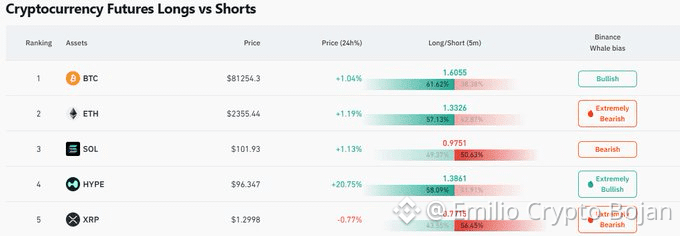
#SOLUSDT UPDATE 🐂
$SOL sentiment is shifting! Binance smart money has moved from extremely bearish to bearish, while short positions continue to decline.
The bears are losing some of their grip. 👀 A positive sign for $SOL if this trend continues.
#FedWatch #EarningsSeason #USMidtermElections #BoEOpensConsultationOnTokenizedCollateralForClearing
39

·
--
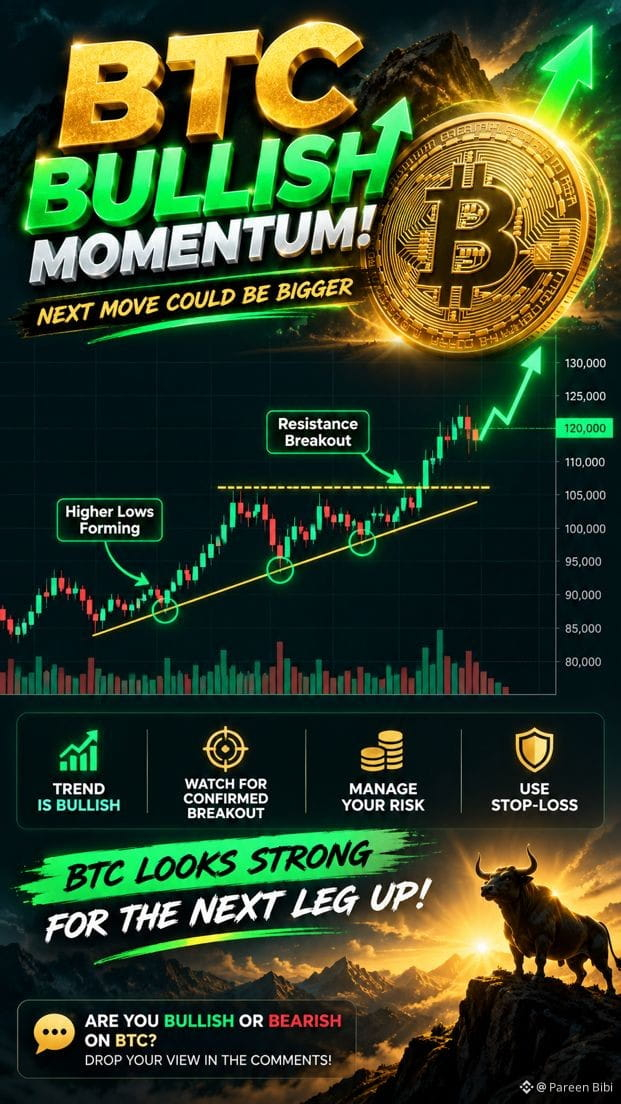
$BTC #BitcoinDropsBelow$80K #BoEOpensConsultationOnTokenizedCollateralForClearing #EarningsSeason bullish momentum! Bitcoin is showing exciting potential for its next big move. Watch for a confirmed breakout, manage your risk, and never ignore your stop-loss. Are you bullish or bearish? Drop your view below! Hashtags: BTC, Bitcoin, Binance, Crypto, Bitcoin Trading, Bullish, Crypto Trading.”
$BTC #BitcoinDropsBelow$80K #BoEOpensConsultationOnTokenizedCollateralForClearing #EarningsSeason bullish momentum! Bitcoin is showing exciting potential for its next big move. Watch for a confirmed breakout, manage your risk, and never ignore your stop-loss. Are you bullish or bearish? Drop your view below! Hashtags: BTC, Bitcoin, Binance, Crypto, Bitcoin Trading, Bullish, Crypto Trading.”
80

·
--
Bullish
$TRUMP Air Canada cuts annual profit outlook as fuel costs rise and launches share buyback program
Air Canada lowered its full-year 2026 earnings forecast on Thursday, citing a sharp rise in jet fuel prices linked to the conflict in the Middle East, despite the airline posting record third-quarter revenue thanks to strong demand for...
The company now expects adjusted operating earnings (EBITDA) for 2026 to be between C$2.4 billion and C$2.7 billion, compared with its previous forecast issued in August of between C$2.9 billion and C$3.2 billion. It also now expects free cash flow to break even, with a margin of plus or minus C$150 million, compared with its previous range of C$200 million to C$500 million.
{future}(TRUMPUSDT)
$ZAMA
{future}(ZAMAUSDT)
$XAU
{future}(XAUUSDT)
#FedWatch #比特币跌破8万美元 #BoEOpensConsultationOnTokenizedCollateralForClearing #BoEOpensConsultationOnTokenizedCollateralForClearing #SolidusLabsReportsSuspected$170MSpoofingOnHyperliquidOilContracts
$TRUMP Air Canada cuts annual profit outlook as fuel costs rise and launches share buyback program
Air Canada lowered its full-year 2026 earnings forecast on Thursday, citing a sharp rise in jet fuel prices linked to the conflict in the Middle East, despite the airline posting record third-quarter revenue thanks to strong demand for...
The company now expects adjusted operating earnings (EBITDA) for 2026 to be between C$2.4 billion and C$2.7 billion, compared with its previous forecast issued in August of between C$2.9 billion and C$3.2 billion. It also now expects free cash flow to break even, with a margin of plus or minus C$150 million, compared with its previous range of C$200 million to C$500 million.
$ZAMA
$XAU
#FedWatch #比特币跌破8万美元 #BoEOpensConsultationOnTokenizedCollateralForClearing #BoEOpensConsultationOnTokenizedCollateralForClearing #SolidusLabsReportsSuspected$170MSpoofingOnHyperliquidOilContracts

22

·
--
We’ll see strong volatility across all currencies. The question is: will BTC hold firm amid all this hype? $BTC $USDC #USMidtermElections #BoEOpensConsultationOnTokenizedCollateralForClearing #BTC #ZiYaD
We’ll see strong volatility across all currencies. The question is: will BTC hold firm amid all this hype? $BTC $USDC #USMidtermElections #BoEOpensConsultationOnTokenizedCollateralForClearing #BTC #ZiYaD
115
Log in to explore more content
Join global crypto users on Binance Square
⚡️ Get latest and useful information about crypto.
💬 Trusted by the world’s largest crypto exchange.
👍 Discover real insights from verified creators.
Email / Phone number
Trending Topics
1
#FedWatch
16.3M views
39,401 Discussing
2
#EarningsSeason
6.4M views
32,095 Discussing
3
#USMidtermElections
42,628 views
623 Discussing
4
#BitcoinDropsBelow$80K
28,741 views
119 Discussing
5
#BoEOpensConsultationOnTokenizedCollateralForClearing
618 views
29 Discussing
6
#BrazilCryptoExchangesMustApplyForLicensesByFriday
32,751 views
504 Discussing
7
#ICEPartnersWithTradeXYZToBringPerpetualContractsToUS
706 views
19 Discussing
8
#SolidusLabsReportsSuspected$170MSpoofingOnHyperliquidOilContracts
1,618 views
28 Discussing
9
#StanDruckenmillerBecomesInvestorInTradeXYZ
24,614 views
438 Discussing
10
#RussiaProposedNonCustodialWalletLimitsExcludeIntlSettlements
2,110 views
41 Discussing