

#babyloan
babyloan
99 views
14 Discussing
Hot
Latest

#baby $BABY Most traders don’t realize when they cross the line from “trading” into “chasing liquidity.”
It usually starts small — a missed entry, a late position, a quick need for extra margin. Then the habit builds. Access to fast capital becomes part of the strategy instead of a backup plan. That shift is subtle, but it changes everything.
Watching BabyLoan ($BABY I see it sitting right in that space. It’s not trying to reinvent DeFi lending. It’s leaning into something simpler: quick, small-scale access to funds for everyday users who don’t want complicated systems.
That simplicity is both its strength and its risk.
On one hand, reducing friction makes tools more usable. On the other, it can remove the pause that traders actually need before taking a position. In my experience, that pause — that moment of hesitation — is often what prevents bad trades.
So the question for #BabyLoan isn’t just about adoption. It’s about behavior.
Will users treat it as a safety net, or will it slowly become part of impulsive decision-making? Because tools don’t change@babylonlabs_io outcomes by themselves — they just shape how people act under pressure.
I’m not dismissing the idea. There is clearly a demand for this kind of access. But demand alone doesn’t make something sustainable.
So here’s what I keep thinking about: does BabyLoan reduce friction in a helpful way, or does it quietly remove the discipline that traders rely on to survive?
#baby $BABY Most traders don’t realize when they cross the line from “trading” into “chasing liquidity.”
It usually starts small — a missed entry, a late position, a quick need for extra margin. Then the habit builds. Access to fast capital becomes part of the strategy instead of a backup plan. That shift is subtle, but it changes everything.
Watching BabyLoan ($BABY I see it sitting right in that space. It’s not trying to reinvent DeFi lending. It’s leaning into something simpler: quick, small-scale access to funds for everyday users who don’t want complicated systems.
That simplicity is both its strength and its risk.
On one hand, reducing friction makes tools more usable. On the other, it can remove the pause that traders actually need before taking a position. In my experience, that pause — that moment of hesitation — is often what prevents bad trades.
So the question for #BabyLoan isn’t just about adoption. It’s about behavior.
Will users treat it as a safety net, or will it slowly become part of impulsive decision-making? Because tools don’t change@BabylonLabs_io outcomes by themselves — they just shape how people act under pressure.
I’m not dismissing the idea. There is clearly a demand for this kind of access. But demand alone doesn’t make something sustainable.
So here’s what I keep thinking about: does BabyLoan reduce friction in a helpful way, or does it quietly remove the discipline that traders rely on to survive?
It usually starts small — a missed entry, a late position, a quick need for extra margin. Then the habit builds. Access to fast capital becomes part of the strategy instead of a backup plan. That shift is subtle, but it changes everything.
Watching BabyLoan ($BABY I see it sitting right in that space. It’s not trying to reinvent DeFi lending. It’s leaning into something simpler: quick, small-scale access to funds for everyday users who don’t want complicated systems.
That simplicity is both its strength and its risk.
On one hand, reducing friction makes tools more usable. On the other, it can remove the pause that traders actually need before taking a position. In my experience, that pause — that moment of hesitation — is often what prevents bad trades.
So the question for #BabyLoan isn’t just about adoption. It’s about behavior.
Will users treat it as a safety net, or will it slowly become part of impulsive decision-making? Because tools don’t change@BabylonLabs_io outcomes by themselves — they just shape how people act under pressure.
I’m not dismissing the idea. There is clearly a demand for this kind of access. But demand alone doesn’t make something sustainable.
So here’s what I keep thinking about: does BabyLoan reduce friction in a helpful way, or does it quietly remove the discipline that traders rely on to survive?

4
1
3
88

·
--
#baby $BABY Everyone talks about profit in crypto. Very few talk about survival.
If you stay long enough in the market, you realize one thing: it’s not always bad trades that hurt you. Sometimes it’s timing. You’re forced to exit not because your idea is wrong—but because in @babylonlabs_io you need liquidity at the wrong moment.
That pressure changes behavior more than people admit.
Looking at $BABY y from this angle, it feels less like a “feature” and more like a response to a common weakness in retail trading. The ability to borrow against assets instead of selling sounds simple, but it directly targets a real problem—breaking your own plan under pressure.
Still, there’s a trade-off here.
Access to easy liquidity can help you stay in the market, but it can also make you more comfortable holding risk. And in crypto, comfort can be dangerous. Markets move fast, and loans don’t wait. What feels like flexibility today can turn into forced decisions tomorrow.
So I don’t see #BabyLoan as something to rely on blindly. It’s more like a tool—useful in the right hands, risky in the wrong mindset.
Maybe the bigger takeaway isn’t the protocol itself, but the behavior it encourages.
So ask yourself: if you had easier access to liquidity, would you actually follow your plan—or just delay a difficult decision?
#baby $BABY Everyone talks about profit in crypto. Very few talk about survival.
If you stay long enough in the market, you realize one thing: it’s not always bad trades that hurt you. Sometimes it’s timing. You’re forced to exit not because your idea is wrong—but because in @BabylonLabs_io you need liquidity at the wrong moment.
That pressure changes behavior more than people admit.
Looking at $BABY y from this angle, it feels less like a “feature” and more like a response to a common weakness in retail trading. The ability to borrow against assets instead of selling sounds simple, but it directly targets a real problem—breaking your own plan under pressure.
Still, there’s a trade-off here.
Access to easy liquidity can help you stay in the market, but it can also make you more comfortable holding risk. And in crypto, comfort can be dangerous. Markets move fast, and loans don’t wait. What feels like flexibility today can turn into forced decisions tomorrow.
So I don’t see #BabyLoan as something to rely on blindly. It’s more like a tool—useful in the right hands, risky in the wrong mindset.
Maybe the bigger takeaway isn’t the protocol itself, but the behavior it encourages.
So ask yourself: if you had easier access to liquidity, would you actually follow your plan—or just delay a difficult decision?
If you stay long enough in the market, you realize one thing: it’s not always bad trades that hurt you. Sometimes it’s timing. You’re forced to exit not because your idea is wrong—but because in @BabylonLabs_io you need liquidity at the wrong moment.
That pressure changes behavior more than people admit.
Looking at $BABY y from this angle, it feels less like a “feature” and more like a response to a common weakness in retail trading. The ability to borrow against assets instead of selling sounds simple, but it directly targets a real problem—breaking your own plan under pressure.
Still, there’s a trade-off here.
Access to easy liquidity can help you stay in the market, but it can also make you more comfortable holding risk. And in crypto, comfort can be dangerous. Markets move fast, and loans don’t wait. What feels like flexibility today can turn into forced decisions tomorrow.
So I don’t see #BabyLoan as something to rely on blindly. It’s more like a tool—useful in the right hands, risky in the wrong mindset.
Maybe the bigger takeaway isn’t the protocol itself, but the behavior it encourages.
So ask yourself: if you had easier access to liquidity, would you actually follow your plan—or just delay a difficult decision?

4
4
103
#baby $BABY Here’s your today’s Binance Square post 👇
Most traders don’t fail because of bad analysis. They fail because of pressure.
You might have a good position, a clear plan, and even patience—but life doesn’t wait.$BABY Bills, emergencies, or sudden needs push you to close trades early. That’s the hidden problem in crypto: not strategy, but liquidity at the wrong time.
This is where #BabyLoan caught my attention.
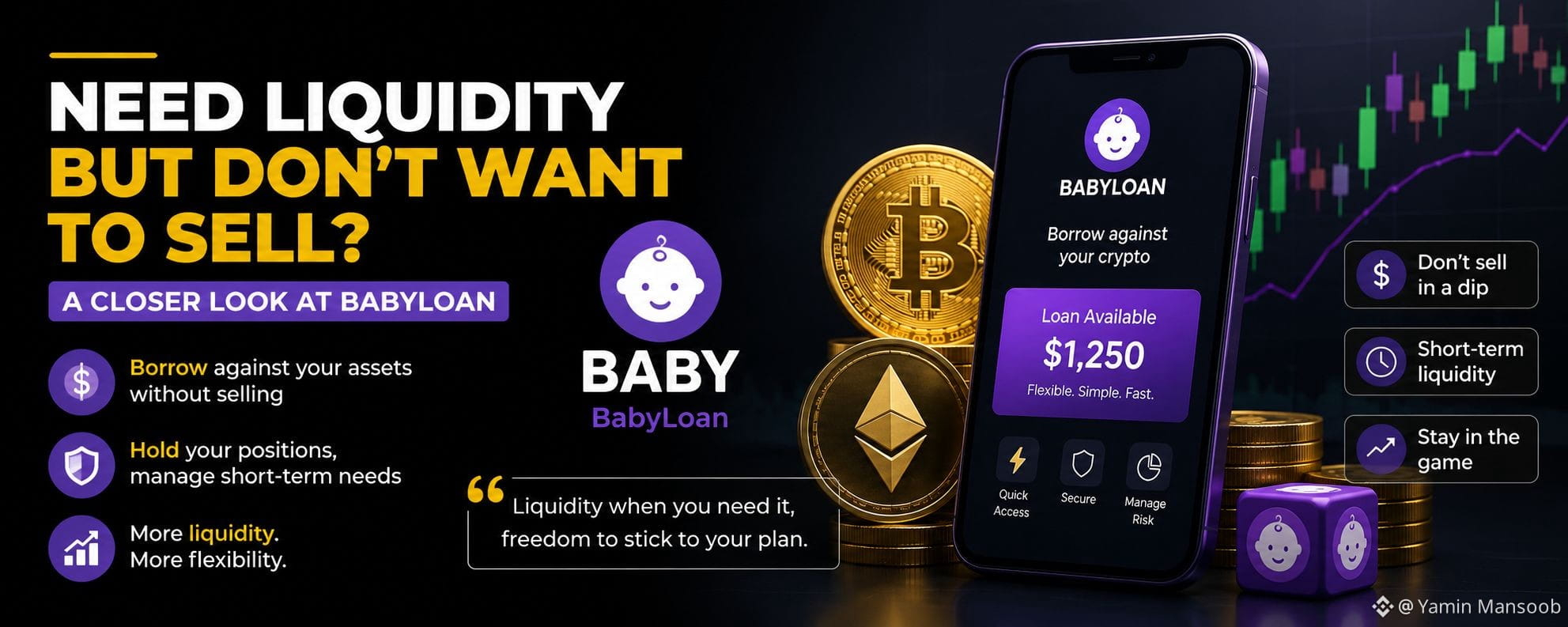
Instead of focusing on big players or complex DeFi structures, it seems to look at a simpler question: what about small users who just need temporary liquidity without exiting their positions? That’s a very real situation most people face but rarely talk about.
In theory, borrowing against your assets sounds useful. It gives you breathing room. You don’t have to sell in a dip or break your plan. But in reality, things are never that simple. Volatility doesn’t care about your intentions. A small loan of $BABY can quickly turn into a risky position if the market moves against you.
So I don’t see @babylonlabs_io BabyLoan as a solution—I see it as an experiment around user behavior. Will easier access to loans actually help traders stay disciplined? Or will it quietly increase risk for people who already struggle with it?
#baby $BABY Here’s your today’s Binance Square post 👇
Most traders don’t fail because of bad analysis. They fail because of pressure.
You might have a good position, a clear plan, and even patience—but life doesn’t wait.$BABY Bills, emergencies, or sudden needs push you to close trades early. That’s the hidden problem in crypto: not strategy, but liquidity at the wrong time.
This is where #BabyLoan caught my attention.
Instead of focusing on big players or complex DeFi structures, it seems to look at a simpler question: what about small users who just need temporary liquidity without exiting their positions? That’s a very real situation most people face but rarely talk about.
In theory, borrowing against your assets sounds useful. It gives you breathing room. You don’t have to sell in a dip or break your plan. But in reality, things are never that simple. Volatility doesn’t care about your intentions. A small loan of $BABY can quickly turn into a risky position if the market moves against you.
So I don’t see @BabylonLabs_io BabyLoan as a solution—I see it as an experiment around user behavior. Will easier access to loans actually help traders stay disciplined? Or will it quietly increase risk for people who already struggle with it?
Most traders don’t fail because of bad analysis. They fail because of pressure.
You might have a good position, a clear plan, and even patience—but life doesn’t wait.$BABY Bills, emergencies, or sudden needs push you to close trades early. That’s the hidden problem in crypto: not strategy, but liquidity at the wrong time.
This is where #BabyLoan caught my attention.
Instead of focusing on big players or complex DeFi structures, it seems to look at a simpler question: what about small users who just need temporary liquidity without exiting their positions? That’s a very real situation most people face but rarely talk about.
In theory, borrowing against your assets sounds useful. It gives you breathing room. You don’t have to sell in a dip or break your plan. But in reality, things are never that simple. Volatility doesn’t care about your intentions. A small loan of $BABY can quickly turn into a risky position if the market moves against you.
So I don’t see @BabylonLabs_io BabyLoan as a solution—I see it as an experiment around user behavior. Will easier access to loans actually help traders stay disciplined? Or will it quietly increase risk for people who already struggle with it?
15
2
3
113
#baby $BABY Most crypto losses don’t come from bad trades.
They come from bad timing under pressure.
You hold a position…
market dips…
suddenly you need liquidity…
and you exit at the worst moment.
I’ve seen this happen more times than I can count.
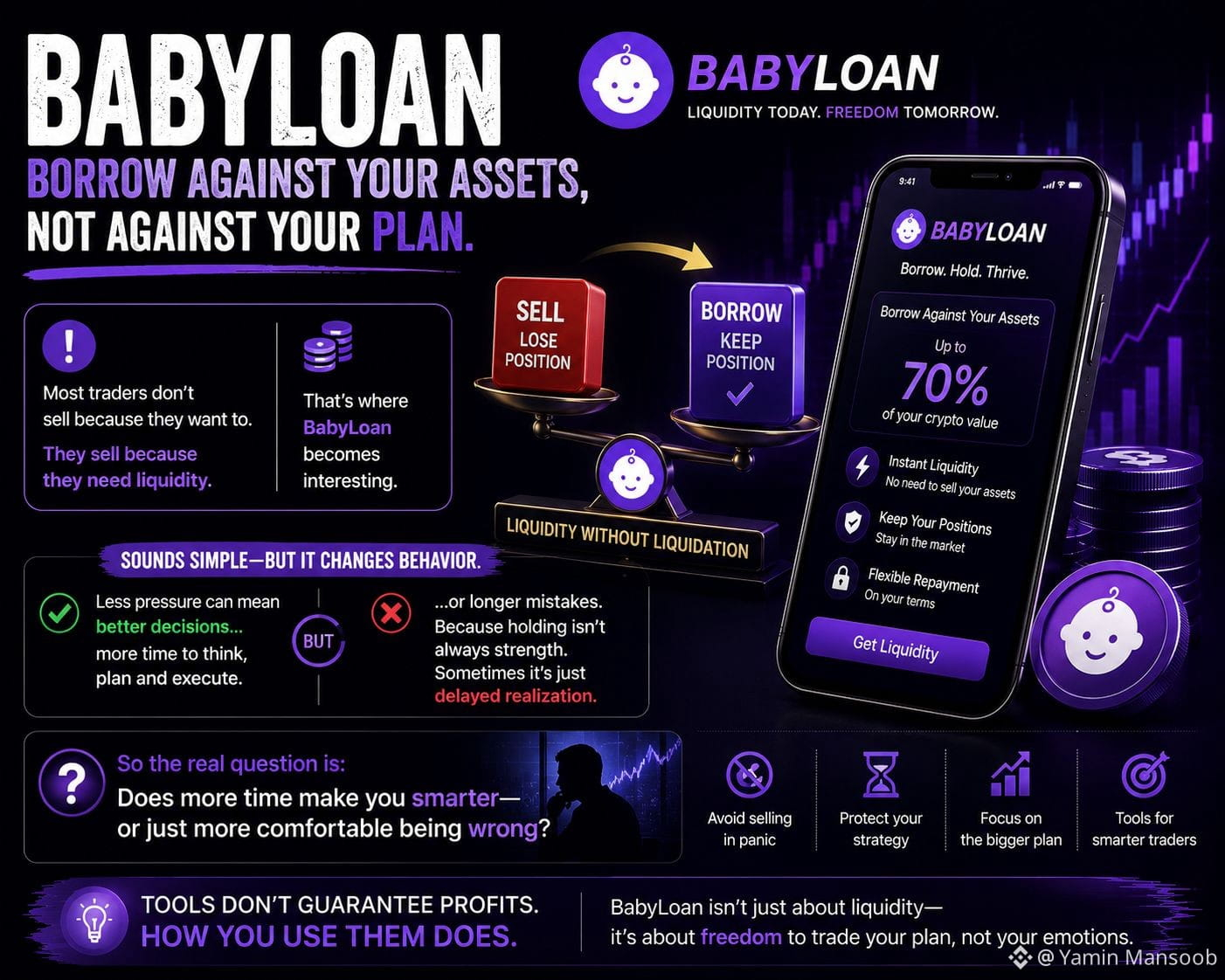
That’s where #BabyLoan becomes interesting to me.
Not because it promises profit—
but because it removes forced selling.
You borrow instead of closing.
But here’s the part people ignore:
More time doesn’t always mean better outcomes.
Sometimes $BABY it just means holding onto a mistake longer.
So it’s not about the tool—
it’s about how you use it.
Liquidity of #baby can protect your strategy…
or quietly extend@babylonlabs_io your losses.
So ask yourself:
Are you using time to improve decisions—
or just to avoid accepting them?
#baby $BABY Most crypto losses don’t come from bad trades.
They come from bad timing under pressure.
You hold a position…
market dips…
suddenly you need liquidity…
and you exit at the worst moment.
I’ve seen this happen more times than I can count.
That’s where #BabyLoan becomes interesting to me.
Not because it promises profit—
but because it removes forced selling.
You borrow instead of closing.
But here’s the part people ignore:
More time doesn’t always mean better outcomes.
Sometimes $BABY it just means holding onto a mistake longer.
So it’s not about the tool—
it’s about how you use it.
Liquidity of #baby can protect your strategy…
or quietly extend@BabylonLabs_io your losses.
So ask yourself:
Are you using time to improve decisions—
or just to avoid accepting them?
They come from bad timing under pressure.
You hold a position…
market dips…
suddenly you need liquidity…
and you exit at the worst moment.
I’ve seen this happen more times than I can count.
That’s where #BabyLoan becomes interesting to me.
Not because it promises profit—
but because it removes forced selling.
You borrow instead of closing.
But here’s the part people ignore:
More time doesn’t always mean better outcomes.
Sometimes $BABY it just means holding onto a mistake longer.
So it’s not about the tool—
it’s about how you use it.
Liquidity of #baby can protect your strategy…
or quietly extend@BabylonLabs_io your losses.
So ask yourself:
Are you using time to improve decisions—
or just to avoid accepting them?
2
85
#baby $BABY Most crypto tools are built for people who already understand risk.
But the majority of the market doesn’t operate like that.
Small traders don’t think in terms of “capital efficiency” or “collateral optimization.” They think in simpler terms: should I sell now or $BABY hold? And that decision is often forced—not planned.
That’s where BabyLoan becomes worth observing.
It sits in a space that’s less about innovation and more about behavior. Giving users the option to borrow instead of sell changes the decision-making process. It removes @babylonlabs_io urgency. It delays exits. And sometimes, that alone can improve outcomes.
But there’s a second layer most people ignore.
When you reduce pressure, you also reduce discipline.
If liquidity becomes too easy, traders may stop respecting risk entirely. Holding a position is no longer a conviction—it becomes avoidance. And in volatile #babyloan markets, avoidance can be more dangerous than a bad trade.
So the real question isn’t whether BabyLoan “works.”
It’s whether it changes trader behavior in a healthy way.
Because tools don’t fail—people misuse them.
From where I stand, BabyLoan highlights a real gap in the market. But it also exposes a deeper issue: most traders aren’t struggling with access—they’re struggling with decision-making under pressure.
So think about this:
If selling becomes optional, do traders become more strategic—or just more comfortable being wrong?
#baby $BABY Most crypto tools are built for people who already understand risk.
But the majority of the market doesn’t operate like that.
Small traders don’t think in terms of “capital efficiency” or “collateral optimization.” They think in simpler terms: should I sell now or $BABY hold? And that decision is often forced—not planned.
That’s where BabyLoan becomes worth observing.
It sits in a space that’s less about innovation and more about behavior. Giving users the option to borrow instead of sell changes the decision-making process. It removes @BabylonLabs_io urgency. It delays exits. And sometimes, that alone can improve outcomes.
But there’s a second layer most people ignore.
When you reduce pressure, you also reduce discipline.
If liquidity becomes too easy, traders may stop respecting risk entirely. Holding a position is no longer a conviction—it becomes avoidance. And in volatile #babyloan markets, avoidance can be more dangerous than a bad trade.
So the real question isn’t whether BabyLoan “works.”
It’s whether it changes trader behavior in a healthy way.
Because tools don’t fail—people misuse them.
From where I stand, BabyLoan highlights a real gap in the market. But it also exposes a deeper issue: most traders aren’t struggling with access—they’re struggling with decision-making under pressure.
So think about this:
If selling becomes optional, do traders become more strategic—or just more comfortable being wrong?
But the majority of the market doesn’t operate like that.
Small traders don’t think in terms of “capital efficiency” or “collateral optimization.” They think in simpler terms: should I sell now or $BABY hold? And that decision is often forced—not planned.
That’s where BabyLoan becomes worth observing.
It sits in a space that’s less about innovation and more about behavior. Giving users the option to borrow instead of sell changes the decision-making process. It removes @BabylonLabs_io urgency. It delays exits. And sometimes, that alone can improve outcomes.
But there’s a second layer most people ignore.
When you reduce pressure, you also reduce discipline.
If liquidity becomes too easy, traders may stop respecting risk entirely. Holding a position is no longer a conviction—it becomes avoidance. And in volatile #babyloan markets, avoidance can be more dangerous than a bad trade.
So the real question isn’t whether BabyLoan “works.”
It’s whether it changes trader behavior in a healthy way.
Because tools don’t fail—people misuse them.
From where I stand, BabyLoan highlights a real gap in the market. But it also exposes a deeper issue: most traders aren’t struggling with access—they’re struggling with decision-making under pressure.
So think about this:
If selling becomes optional, do traders become more strategic—or just more comfortable being wrong?

5
2
67
#baby $BABY
Leverage is easy to access in crypto. Discipline is not.
That gap is where most traders quietly lose. Not because they don’t understand charts, but because they don’t understand how borrowed capital changes behavior. The moment money isn’t fully yours, decision-making shifts — often in subtle, risky ways.
This is why #BabyLoan $BABY caught my attention, not as a solution, but as a signal. It reflects a growing demand for smaller, more flexible borrowing options in DeFi. Instead of targeting large players, it seems to focus on users who want lightweight access to liquidity without going deep into complex lending systems.
On paper, that sounds practical. In reality, it raises questions.
Micro-loans can feel harmless, but they can also normalize frequent borrowing. And frequent borrowing, $BABY even in small amounts, can slowly turn into dependency — especially in volatile markets where outcomes are uncertain. I’ve seen traders justify bad entries simply because “it’s just a small loan.”
What matters here is not just access, but awareness. If @babylonlabs_io BabyLoan can make users more conscious of risk while borrowing, it might add real value. If not, it risks becoming another tool that quietly amplifies poor habits.
#baby $BABY
Leverage is easy to access in crypto. Discipline is not.
That gap is where most traders quietly lose. Not because they don’t understand charts, but because they don’t understand how borrowed capital changes behavior. The moment money isn’t fully yours, decision-making shifts — often in subtle, risky ways.
This is why #BabyLoan $BABY caught my attention, not as a solution, but as a signal. It reflects a growing demand for smaller, more flexible borrowing options in DeFi. Instead of targeting large players, it seems to focus on users who want lightweight access to liquidity without going deep into complex lending systems.
On paper, that sounds practical. In reality, it raises questions.
Micro-loans can feel harmless, but they can also normalize frequent borrowing. And frequent borrowing, $BABY even in small amounts, can slowly turn into dependency — especially in volatile markets where outcomes are uncertain. I’ve seen traders justify bad entries simply because “it’s just a small loan.”
What matters here is not just access, but awareness. If @BabylonLabs_io BabyLoan can make users more conscious of risk while borrowing, it might add real value. If not, it risks becoming another tool that quietly amplifies poor habits.
Leverage is easy to access in crypto. Discipline is not.
That gap is where most traders quietly lose. Not because they don’t understand charts, but because they don’t understand how borrowed capital changes behavior. The moment money isn’t fully yours, decision-making shifts — often in subtle, risky ways.
This is why #BabyLoan $BABY caught my attention, not as a solution, but as a signal. It reflects a growing demand for smaller, more flexible borrowing options in DeFi. Instead of targeting large players, it seems to focus on users who want lightweight access to liquidity without going deep into complex lending systems.
On paper, that sounds practical. In reality, it raises questions.
Micro-loans can feel harmless, but they can also normalize frequent borrowing. And frequent borrowing, $BABY even in small amounts, can slowly turn into dependency — especially in volatile markets where outcomes are uncertain. I’ve seen traders justify bad entries simply because “it’s just a small loan.”
What matters here is not just access, but awareness. If @BabylonLabs_io BabyLoan can make users more conscious of risk while borrowing, it might add real value. If not, it risks becoming another tool that quietly amplifies poor habits.
1
3
72
·
--
#baby $BABY
Most small traders don’t fail because of bad ideas — they fail because they run out of capital too early.
That’s the uncomfortable reality. You can be right about the market direction and still lose simply because your position size is too small or your timing is off. This is where the idea behind BabyLoan $BABY becomes interesting to observe.
From what I see, @babylonlabs_io is trying to position itself around micro-access to liquidity — not for whales, but for smaller participants who usually get ignored in DeFi. That’s a crowded narrative, but the angle here feels slightly different: it leans into accessibility rather than complexity.
Still, I remain cautious.
In crypto, “easy access to capital” often walks a thin line. If risk management isn’t deeply embedded, it can quietly push users into overexposure instead of helping them survive longer in the market. And survival, not quick gains, $BABY is what most traders actually need.
What I do find worth watching is whether BabyLoan can maintain simplicity without hiding risk behind it. If users clearly understand what they’re borrowing, why they’re borrowing, #babyloan and what happens if they’re wrong — then it has a chance to be useful, not just another short-lived experiment.
#baby $BABY
Most small traders don’t fail because of bad ideas — they fail because they run out of capital too early.
That’s the uncomfortable reality. You can be right about the market direction and still lose simply because your position size is too small or your timing is off. This is where the idea behind BabyLoan $BABY becomes interesting to observe.
From what I see, @BabylonLabs_io is trying to position itself around micro-access to liquidity — not for whales, but for smaller participants who usually get ignored in DeFi. That’s a crowded narrative, but the angle here feels slightly different: it leans into accessibility rather than complexity.
Still, I remain cautious.
In crypto, “easy access to capital” often walks a thin line. If risk management isn’t deeply embedded, it can quietly push users into overexposure instead of helping them survive longer in the market. And survival, not quick gains, $BABY is what most traders actually need.
What I do find worth watching is whether BabyLoan can maintain simplicity without hiding risk behind it. If users clearly understand what they’re borrowing, why they’re borrowing, #babyloan and what happens if they’re wrong — then it has a chance to be useful, not just another short-lived experiment.
Most small traders don’t fail because of bad ideas — they fail because they run out of capital too early.
That’s the uncomfortable reality. You can be right about the market direction and still lose simply because your position size is too small or your timing is off. This is where the idea behind BabyLoan $BABY becomes interesting to observe.
From what I see, @BabylonLabs_io is trying to position itself around micro-access to liquidity — not for whales, but for smaller participants who usually get ignored in DeFi. That’s a crowded narrative, but the angle here feels slightly different: it leans into accessibility rather than complexity.
Still, I remain cautious.
In crypto, “easy access to capital” often walks a thin line. If risk management isn’t deeply embedded, it can quietly push users into overexposure instead of helping them survive longer in the market. And survival, not quick gains, $BABY is what most traders actually need.
What I do find worth watching is whether BabyLoan can maintain simplicity without hiding risk behind it. If users clearly understand what they’re borrowing, why they’re borrowing, #babyloan and what happens if they’re wrong — then it has a chance to be useful, not just another short-lived experiment.
1
79
#baby $BABY Most traders don’t run out of ideas—they run out of usable capital at the wrong time. Funds get stuck in positions, and by the time you free them, the opportunity is gone.
That’s the small but real problem I keep coming back to when looking for this.
The “baby” angle here seems to focus on smaller, short-term borrowing rather than large, complex loans. It’s less about building a full lending ecosystem and more about giving quick access to liquidity in bite-sized amounts.$BABY For traders who operate with limited capital, that idea makes sense on paper.
But there’s a trade-off that shouldn’t be ignored. Easy access to #babyloan small loans can quietly change behavior. Instead of waiting for high-quality setups, traders might start forcing entries just because liquidity is available.@babylonlabs_io I’ve seen this pattern before—when friction is reduced, discipline often slips.
#baby $BABY Most traders don’t run out of ideas—they run out of usable capital at the wrong time. Funds get stuck in positions, and by the time you free them, the opportunity is gone.
That’s the small but real problem I keep coming back to when looking for this.
The “baby” angle here seems to focus on smaller, short-term borrowing rather than large, complex loans. It’s less about building a full lending ecosystem and more about giving quick access to liquidity in bite-sized amounts.$BABY For traders who operate with limited capital, that idea makes sense on paper.
But there’s a trade-off that shouldn’t be ignored. Easy access to #babyloan small loans can quietly change behavior. Instead of waiting for high-quality setups, traders might start forcing entries just because liquidity is available.@BabylonLabs_io I’ve seen this pattern before—when friction is reduced, discipline often slips.
That’s the small but real problem I keep coming back to when looking for this.
The “baby” angle here seems to focus on smaller, short-term borrowing rather than large, complex loans. It’s less about building a full lending ecosystem and more about giving quick access to liquidity in bite-sized amounts.$BABY For traders who operate with limited capital, that idea makes sense on paper.
But there’s a trade-off that shouldn’t be ignored. Easy access to #babyloan small loans can quietly change behavior. Instead of waiting for high-quality setups, traders might start forcing entries just because liquidity is available.@BabylonLabs_io I’ve seen this pattern before—when friction is reduced, discipline often slips.
2
3
92
·
--
#baby $BABY Liquidity in crypto often looks abundant—until you actually need it.
Most small traders don’t struggle with ideas; they struggle with timing. You might hold assets that could grow,$BABY but short-term needs force you to sell early. This silent pressure—needing liquidity without wanting to exit—rarely gets discussed.
That’s where something like #BabyLoan becomes interesting to observe.
The idea isn’t new: borrowing against assets. But in practice, many lending protocols assume users already have scale, collateral diversity, or a deeper understanding of risk. @babylonlabs_io Smaller participants often get left navigating complex systems or avoiding them entirely.
BabyLoan seems to be exploring a narrower space—$BABY simplifying access to liquidity for users who aren’t operating with large portfolios. That shift, if executed well, could change behavior. Instead of panic-selling during dips, users might hold positions longer, using loans as a buffer rather than an exit.
Still, there are questions. Accessibility can sometimes come at the cost of risk clarity. If borrowing becomes too easy, are users fully aware of liquidation dynamics? And in volatile markets, “small loans” can still carry big consequences.
#baby $BABY Liquidity in crypto often looks abundant—until you actually need it.
Most small traders don’t struggle with ideas; they struggle with timing. You might hold assets that could grow,$BABY but short-term needs force you to sell early. This silent pressure—needing liquidity without wanting to exit—rarely gets discussed.
That’s where something like #BabyLoan becomes interesting to observe.
The idea isn’t new: borrowing against assets. But in practice, many lending protocols assume users already have scale, collateral diversity, or a deeper understanding of risk. @BabylonLabs_io Smaller participants often get left navigating complex systems or avoiding them entirely.
BabyLoan seems to be exploring a narrower space—$BABY simplifying access to liquidity for users who aren’t operating with large portfolios. That shift, if executed well, could change behavior. Instead of panic-selling during dips, users might hold positions longer, using loans as a buffer rather than an exit.
Still, there are questions. Accessibility can sometimes come at the cost of risk clarity. If borrowing becomes too easy, are users fully aware of liquidation dynamics? And in volatile markets, “small loans” can still carry big consequences.
Most small traders don’t struggle with ideas; they struggle with timing. You might hold assets that could grow,$BABY but short-term needs force you to sell early. This silent pressure—needing liquidity without wanting to exit—rarely gets discussed.
That’s where something like #BabyLoan becomes interesting to observe.
The idea isn’t new: borrowing against assets. But in practice, many lending protocols assume users already have scale, collateral diversity, or a deeper understanding of risk. @BabylonLabs_io Smaller participants often get left navigating complex systems or avoiding them entirely.
BabyLoan seems to be exploring a narrower space—$BABY simplifying access to liquidity for users who aren’t operating with large portfolios. That shift, if executed well, could change behavior. Instead of panic-selling during dips, users might hold positions longer, using loans as a buffer rather than an exit.
Still, there are questions. Accessibility can sometimes come at the cost of risk clarity. If borrowing becomes too easy, are users fully aware of liquidation dynamics? And in volatile markets, “small loans” can still carry big consequences.
1
85
·
--
#baby $BABY Liquidity in crypto often looks abundant—until you actually need it. Many traders discover this the hard way when assets are locked in positions, staking, or simply sitting idle during volatile phases. The market moves, but their capital doesn’t.
That’s the gap I’ve been thinking about while looking at @babylonlabs_io @babylonlabs_io BabyLoan.
The idea isn’t new—borrowing against assets has existed for years—but what stands out here is the attempt to make small, flexible liquidity access feel more natural for everyday users, not just large holders. Instead of treating loans as heavy financial decisions, $BABY Loan seems to frame them as short-term liquidity tools. That shift in mindset is interesting.
From a practical angle, this could help traders manage timing better. You don’t always want to sell an asset just to free up funds, especially in #babyloan uncertain conditions. At the same time, borrowing introduces its own risks—repayment pressure, collateral exposure, and the possibility of overusing leverage without realizing it.
That balance is where projects like this either prove useful or quietly fade away.
#baby $BABY Liquidity in crypto often looks abundant—until you actually need it. Many traders discover this the hard way when assets are locked in positions, staking, or simply sitting idle during volatile phases. The market moves, but their capital doesn’t.
That’s the gap I’ve been thinking about while looking at @BabylonLabs_io @BabylonLabs_io BabyLoan.
The idea isn’t new—borrowing against assets has existed for years—but what stands out here is the attempt to make small, flexible liquidity access feel more natural for everyday users, not just large holders. Instead of treating loans as heavy financial decisions, $BABY Loan seems to frame them as short-term liquidity tools. That shift in mindset is interesting.
From a practical angle, this could help traders manage timing better. You don’t always want to sell an asset just to free up funds, especially in #babyloan uncertain conditions. At the same time, borrowing introduces its own risks—repayment pressure, collateral exposure, and the possibility of overusing leverage without realizing it.
That balance is where projects like this either prove useful or quietly fade away.
That’s the gap I’ve been thinking about while looking at @BabylonLabs_io @BabylonLabs_io BabyLoan.
The idea isn’t new—borrowing against assets has existed for years—but what stands out here is the attempt to make small, flexible liquidity access feel more natural for everyday users, not just large holders. Instead of treating loans as heavy financial decisions, $BABY Loan seems to frame them as short-term liquidity tools. That shift in mindset is interesting.
From a practical angle, this could help traders manage timing better. You don’t always want to sell an asset just to free up funds, especially in #babyloan uncertain conditions. At the same time, borrowing introduces its own risks—repayment pressure, collateral exposure, and the possibility of overusing leverage without realizing it.
That balance is where projects like this either prove useful or quietly fade away.
1
76
#baby $BABY In crypto, “small” is often ignored. Small capital, small positions, small needs—most tools are built for size. But for many traders, the real struggle isn’t scaling up, it’s managing limited liquidity without breaking their strategy.
That’s where the “$BABY ” idea behind #BabyLoan caught my attention.
Instead of focusing on large borrowing power, it leans into smaller, more controlled access to funds. Think of it less as leverage and more as a short-term bridge. For someone trading with tight capital, even a small amount of extra liquidity at the right moment can change a decision—hold instead of sell, wait instead of panic.
But I’m not fully convinced this always leads to better outcomes.
When access becomes easier, the line between smart liquidity use and impulsive borrowing @babylonlabs_io gets thin. Small loans feel harmless, which can make them easier to repeat. Over time, that habit can quietly shift a trader’s behavior from selective to reactive.
Still, there’s a practical side. Not every trader wants to take big risks—some just want flexibility without exiting positions too early. In that sense, BabyLoan fits a real gap, even if it’s not a perfect solution.
I see it less as a breakthrough and more as a tool that @babylonlabs_io reflects how retail trading is evolving—smaller, faster, more flexible.
But here’s the real question: when trading tools become more accessible in small sizes, do they actually improve discipline—or just make mistakes easier to repeat?
#baby $BABY In crypto, “small” is often ignored. Small capital, small positions, small needs—most tools are built for size. But for many traders, the real struggle isn’t scaling up, it’s managing limited liquidity without breaking their strategy.
That’s where the “$BABY ” idea behind #BabyLoan caught my attention.
Instead of focusing on large borrowing power, it leans into smaller, more controlled access to funds. Think of it less as leverage and more as a short-term bridge. For someone trading with tight capital, even a small amount of extra liquidity at the right moment can change a decision—hold instead of sell, wait instead of panic.
But I’m not fully convinced this always leads to better outcomes.
When access becomes easier, the line between smart liquidity use and impulsive borrowing @BabylonLabs_io gets thin. Small loans feel harmless, which can make them easier to repeat. Over time, that habit can quietly shift a trader’s behavior from selective to reactive.
Still, there’s a practical side. Not every trader wants to take big risks—some just want flexibility without exiting positions too early. In that sense, BabyLoan fits a real gap, even if it’s not a perfect solution.
I see it less as a breakthrough and more as a tool that @BabylonLabs_io reflects how retail trading is evolving—smaller, faster, more flexible.
But here’s the real question: when trading tools become more accessible in small sizes, do they actually improve discipline—or just make mistakes easier to repeat?
That’s where the “$BABY ” idea behind #BabyLoan caught my attention.
Instead of focusing on large borrowing power, it leans into smaller, more controlled access to funds. Think of it less as leverage and more as a short-term bridge. For someone trading with tight capital, even a small amount of extra liquidity at the right moment can change a decision—hold instead of sell, wait instead of panic.
But I’m not fully convinced this always leads to better outcomes.
When access becomes easier, the line between smart liquidity use and impulsive borrowing @BabylonLabs_io gets thin. Small loans feel harmless, which can make them easier to repeat. Over time, that habit can quietly shift a trader’s behavior from selective to reactive.
Still, there’s a practical side. Not every trader wants to take big risks—some just want flexibility without exiting positions too early. In that sense, BabyLoan fits a real gap, even if it’s not a perfect solution.
I see it less as a breakthrough and more as a tool that @BabylonLabs_io reflects how retail trading is evolving—smaller, faster, more flexible.
But here’s the real question: when trading tools become more accessible in small sizes, do they actually improve discipline—or just make mistakes easier to repeat?

7
5
84
#baby $BABY @babylonlabs_io Most traders don’t lose money because they’re wrong.
They lose because they’re forced to act at the wrong time.
You plan to hold… but end up selling.
Not because your idea failed—
but because you needed liquidity.
That’s the part nobody likes to admit.
Watching #babyloan I don’t see it as just another DeFi feature.
I see it as a shift in decision timing.
If you can borrow instead of sell, you remove pressure.
And when pressure is gone, behavior changes.
But here’s the uncomfortable truth:
Less pressure doesn’t always mean better decisions.
Sometimes it just makes it easier to hold bad positions longer.
In crypto, time can either save you…
or slowly $BABY increase your risk.
So tools like this don’t fix trading mistakes—
they reshape them.
That’s why I’m not looking at BabyLoan as a solution.
I’m looking at how it might change trader habits over time.
Because in the end,
it’s not about access to liquidity—
it’s about how you use @babylonlabs_io it when things go wrong.
So think about this:
If selling was now longer necessary…
would you become more disciplined—
or just more patient with losing trades?
#baby $BABY @BabylonLabs_io Most traders don’t lose money because they’re wrong.
They lose because they’re forced to act at the wrong time.
You plan to hold… but end up selling.
Not because your idea failed—
but because you needed liquidity.
That’s the part nobody likes to admit.
Watching #babyloan I don’t see it as just another DeFi feature.
I see it as a shift in decision timing.
If you can borrow instead of sell, you remove pressure.
And when pressure is gone, behavior changes.
But here’s the uncomfortable truth:
Less pressure doesn’t always mean better decisions.
Sometimes it just makes it easier to hold bad positions longer.
In crypto, time can either save you…
or slowly $BABY increase your risk.
So tools like this don’t fix trading mistakes—
they reshape them.
That’s why I’m not looking at BabyLoan as a solution.
I’m looking at how it might change trader habits over time.
Because in the end,
it’s not about access to liquidity—
it’s about how you use @BabylonLabs_io it when things go wrong.
So think about this:
If selling was now longer necessary…
would you become more disciplined—
or just more patient with losing trades?
They lose because they’re forced to act at the wrong time.
You plan to hold… but end up selling.
Not because your idea failed—
but because you needed liquidity.
That’s the part nobody likes to admit.
Watching #babyloan I don’t see it as just another DeFi feature.
I see it as a shift in decision timing.
If you can borrow instead of sell, you remove pressure.
And when pressure is gone, behavior changes.
But here’s the uncomfortable truth:
Less pressure doesn’t always mean better decisions.
Sometimes it just makes it easier to hold bad positions longer.
In crypto, time can either save you…
or slowly $BABY increase your risk.
So tools like this don’t fix trading mistakes—
they reshape them.
That’s why I’m not looking at BabyLoan as a solution.
I’m looking at how it might change trader habits over time.
Because in the end,
it’s not about access to liquidity—
it’s about how you use @BabylonLabs_io it when things go wrong.
So think about this:
If selling was now longer necessary…
would you become more disciplined—
or just more patient with losing trades?

1
1
73
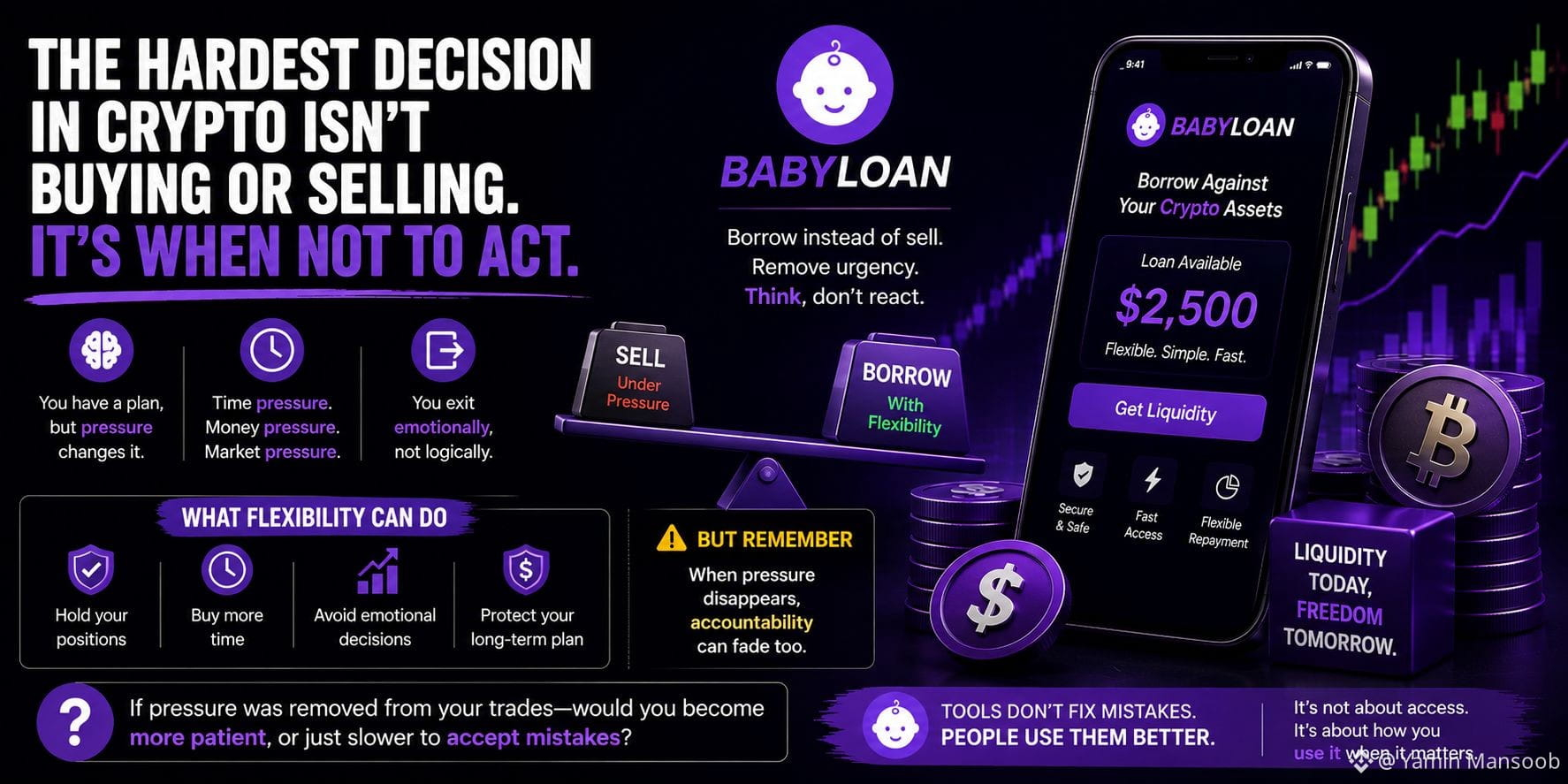
#baby $BABY The hardest decision in crypto isn’t buying or selling.
It’s deciding when not to act.
Most traders don’t panic because they lack knowledge.
They panic because they feel pressure—time pressure, money pressure, market pressure.
You plan your trade calmly…
but exit emotionally.
That gap between plan and action is where losses usually happen.
Watching #BabyLoan I see an attempt to reduce that pressure.
If you can borrow instead of sell, the $BABY remove urgency.
You give yourself time to think, not react.
Sounds helpful—but there’s a flip side.
When pressure disappears, so does accountability.
Sometimes pressure forces discipline.
Without it, traders might hold positions they should’ve exited.
So the real impact isn’t about liquidity—
it’s about behavior.
Does having more time actually improve decisions?
Or does it just make @babylonlabs_io it easier to avoid them?
Because in markets like this,
doing nothing can be smart…
or very expensive.
So here’s something to think about:
If pressure was removed from your trades—
would you become more patient,
or just slower to accept mistakes?
#baby $BABY The hardest decision in crypto isn’t buying or selling.
It’s deciding when not to act.
Most traders don’t panic because they lack knowledge.
They panic because they feel pressure—time pressure, money pressure, market pressure.
You plan your trade calmly…
but exit emotionally.
That gap between plan and action is where losses usually happen.
Watching #BabyLoan I see an attempt to reduce that pressure.
If you can borrow instead of sell, the $BABY remove urgency.
You give yourself time to think, not react.
Sounds helpful—but there’s a flip side.
When pressure disappears, so does accountability.
Sometimes pressure forces discipline.
Without it, traders might hold positions they should’ve exited.
So the real impact isn’t about liquidity—
it’s about behavior.
Does having more time actually improve decisions?
Or does it just make @BabylonLabs_io it easier to avoid them?
Because in markets like this,
doing nothing can be smart…
or very expensive.
So here’s something to think about:
If pressure was removed from your trades—
would you become more patient,
or just slower to accept mistakes?
It’s deciding when not to act.
Most traders don’t panic because they lack knowledge.
They panic because they feel pressure—time pressure, money pressure, market pressure.
You plan your trade calmly…
but exit emotionally.
That gap between plan and action is where losses usually happen.
Watching #BabyLoan I see an attempt to reduce that pressure.
If you can borrow instead of sell, the $BABY remove urgency.
You give yourself time to think, not react.
Sounds helpful—but there’s a flip side.
When pressure disappears, so does accountability.
Sometimes pressure forces discipline.
Without it, traders might hold positions they should’ve exited.
So the real impact isn’t about liquidity—
it’s about behavior.
Does having more time actually improve decisions?
Or does it just make @BabylonLabs_io it easier to avoid them?
Because in markets like this,
doing nothing can be smart…
or very expensive.
So here’s something to think about:
If pressure was removed from your trades—
would you become more patient,
or just slower to accept mistakes?
2
2
73
Log in to explore more content
Join global crypto users on Binance Square
⚡️ Get latest and useful information about crypto.
💬 Trusted by the world’s largest crypto exchange.
👍 Discover real insights from verified creators.
Email / Phone number
Trending Topics
1
#NFPWatch
10.8M views
19,202 Discussing
2
#BitcoinFundingRateTriplesTo10%
158,205 views
1,136 Discussing
3
#BitcoinSurpasses$86KUp2.99%
51,203 views
111 Discussing
4
#ZcashFalls21%FromSeptemberPeak
85,117 views
821 Discussing
5
#USSeptemberPayrollsAdd29KUnemploymentRises4.2%
69,567 views
504 Discussing
6
#XRPPostsFirstThreeGreenMonthsInQ3
56,704 views
680 Discussing
7
#BNBChainTokenizedStocksTop$1BAt30%Share
26,228 views
38 Discussing
8
#BitcoinRisesToward$85K
121,580 views
157 Discussing
9
#AmazonPlansToSell$8BNvidiaChips
7,955 views
91 Discussing
10
#NEARFallsToAround$4.70Down14%
49,656 views
118 Discussing