
#applekeynote
applekeynote
9 views
2 Discussing
Hot
Latest

·
--
Article
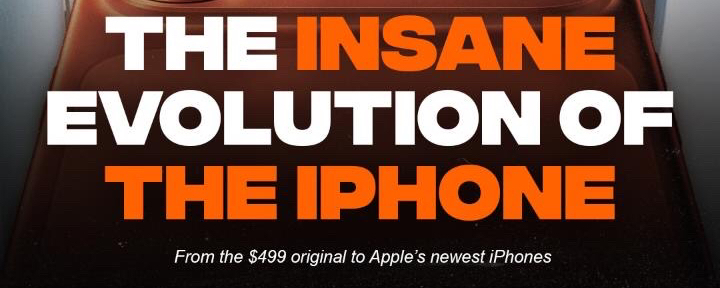
📱 The $499 to $1,999 Jump: What the iPhone Evolution Teaches Us About Tech InvestingThe smartphone market is shifting gears, and the leaked roadmap for the next wave of flagship devices is turning heads. We’ve come a long way from Steve Jobs introducing the original iPhone in 2007 for $499. Fast forward to the highly anticipated 2026 "iPhone Duo" foldable concept, and we are looking at a premium $1,999 entry price.
As Web3 investors and tech enthusiasts, this massive price evolution isn't just about cool hardware—it is a masterclass in macroeconomic shifts, premium branding, and consumer psychology.
📊 The Pricing Paradigm: A Historical Snapshot
Looking at the trajectory of flagship device launches reveals an aggressive upward trend in what consumers are willing to pay for premium computing power:
2007 (The Blueprint): Original iPhone starts at $499. It changes the world but lacks an App Store.2013 (Biometric Era): iPhone 5S launches at $649, introducing mainstream fingerprint security.2017 (The Premium Pivot): iPhone X breaks the mold, introducing Face ID and crossing the $999 luxury threshold.2023 (Modern Baseline): iPhone 15 stabilizes the mass-market tier at $799 with universal USB-C integration.2025/2026 (The Future Matrix): The traditional slab form factor pushes higher with the iPhone 17 Pro ($1,099) and iPhone 18 Pro ($1,199), while the foldable iPhone Duo claims the ultra-premium $1,999 spot.💡 The Tech Investor's TakeawayWhy does this matter to the crypto and broader financial markets?Massive Consumer Leverage: A $2,000 phone signals that mobile devices are no longer accessories—they are the primary gateway for digital identity, asset management, and daily productivity.Hardware for Heavy Web3 Workloads: The processing power required for features inside upcoming 2026 models directly supports the demands of local AI processing, secure hardware enclaves for crypto keys, and complex mobile-first dApps.The Premium Utility Shift: Consumers aren't just paying for a phone; they are buying micro-computers built to last 4–5 years. This longevity justifies the higher upfront cost and shifts how tech companies model subscription revenue.🚀 Join the DiscussionWith Samsung deep into multiple generations of foldables, Apple’s rumored entry with a premium $1,999 price tag will test true brand loyalty.👇 Drop your thoughts in the comments:Are you buying into the foldable future at a $2,000 price point, or are you sticking with the traditional Pro models?Does this rising cost of entry push you to hold onto your current tech longer?$AAPLB $ZEC $BTC #TechTrends #iPhoneDuo #AppleKeynote #INNOVATION #Investing
📱 The $499 to $1,999 Jump: What the iPhone Evolution Teaches Us About Tech Investing
The smartphone market is shifting gears, and the leaked roadmap for the next wave of flagship devices is turning heads. We’ve come a long way from Steve Jobs introducing the original iPhone in 2007 for $499. Fast forward to the highly anticipated 2026 "iPhone Duo" foldable concept, and we are looking at a premium $1,999 entry price.
As Web3 investors and tech enthusiasts, this massive price evolution isn't just about cool hardware—it is a masterclass in macroeconomic shifts, premium branding, and consumer psychology.
📊 The Pricing Paradigm: A Historical Snapshot
Looking at the trajectory of flagship device launches reveals an aggressive upward trend in what consumers are willing to pay for premium computing power:
2007 (The Blueprint): Original iPhone starts at $499. It changes the world but lacks an App Store.2013 (Biometric Era): iPhone 5S launches at $649, introducing mainstream fingerprint security.2017 (The Premium Pivot): iPhone X breaks the mold, introducing Face ID and crossing the $999 luxury threshold.2023 (Modern Baseline): iPhone 15 stabilizes the mass-market tier at $799 with universal USB-C integration.2025/2026 (The Future Matrix): The traditional slab form factor pushes higher with the iPhone 17 Pro ($1,099) and iPhone 18 Pro ($1,199), while the foldable iPhone Duo claims the ultra-premium $1,999 spot.💡 The Tech Investor's TakeawayWhy does this matter to the crypto and broader financial markets?Massive Consumer Leverage: A $2,000 phone signals that mobile devices are no longer accessories—they are the primary gateway for digital identity, asset management, and daily productivity.Hardware for Heavy Web3 Workloads: The processing power required for features inside upcoming 2026 models directly supports the demands of local AI processing, secure hardware enclaves for crypto keys, and complex mobile-first dApps.The Premium Utility Shift: Consumers aren't just paying for a phone; they are buying micro-computers built to last 4–5 years. This longevity justifies the higher upfront cost and shifts how tech companies model subscription revenue.🚀 Join the DiscussionWith Samsung deep into multiple generations of foldables, Apple’s rumored entry with a premium $1,999 price tag will test true brand loyalty.👇 Drop your thoughts in the comments:Are you buying into the foldable future at a $2,000 price point, or are you sticking with the traditional Pro models?Does this rising cost of entry push you to hold onto your current tech longer?$AAPLB $ZEC $BTC #TechTrends #iPhoneDuo #AppleKeynote #INNOVATION #Investing
As Web3 investors and tech enthusiasts, this massive price evolution isn't just about cool hardware—it is a masterclass in macroeconomic shifts, premium branding, and consumer psychology.
📊 The Pricing Paradigm: A Historical Snapshot
Looking at the trajectory of flagship device launches reveals an aggressive upward trend in what consumers are willing to pay for premium computing power:
2007 (The Blueprint): Original iPhone starts at $499. It changes the world but lacks an App Store.2013 (Biometric Era): iPhone 5S launches at $649, introducing mainstream fingerprint security.2017 (The Premium Pivot): iPhone X breaks the mold, introducing Face ID and crossing the $999 luxury threshold.2023 (Modern Baseline): iPhone 15 stabilizes the mass-market tier at $799 with universal USB-C integration.2025/2026 (The Future Matrix): The traditional slab form factor pushes higher with the iPhone 17 Pro ($1,099) and iPhone 18 Pro ($1,199), while the foldable iPhone Duo claims the ultra-premium $1,999 spot.💡 The Tech Investor's TakeawayWhy does this matter to the crypto and broader financial markets?Massive Consumer Leverage: A $2,000 phone signals that mobile devices are no longer accessories—they are the primary gateway for digital identity, asset management, and daily productivity.Hardware for Heavy Web3 Workloads: The processing power required for features inside upcoming 2026 models directly supports the demands of local AI processing, secure hardware enclaves for crypto keys, and complex mobile-first dApps.The Premium Utility Shift: Consumers aren't just paying for a phone; they are buying micro-computers built to last 4–5 years. This longevity justifies the higher upfront cost and shifts how tech companies model subscription revenue.🚀 Join the DiscussionWith Samsung deep into multiple generations of foldables, Apple’s rumored entry with a premium $1,999 price tag will test true brand loyalty.👇 Drop your thoughts in the comments:Are you buying into the foldable future at a $2,000 price point, or are you sticking with the traditional Pro models?Does this rising cost of entry push you to hold onto your current tech longer?$AAPLB $ZEC $BTC #TechTrends #iPhoneDuo #AppleKeynote #INNOVATION #Investing
1
66
Log in to explore more content
Join global crypto users on Binance Square
⚡️ Get latest and useful information about crypto.
💬 Trusted by the world’s largest crypto exchange.
👍 Discover real insights from verified creators.
Email / Phone number
Trending Topics
1
#AppleDebutsFoldablePhone
18,090 views
371 Discussing
2
#IranSaysReadyToEscalateWarWithUS
147 views
13 Discussing
3
#EUExtendsCentralContactPointToCASPs
3,360 views
113 Discussing
4
#US10YTreasuryYieldHitsHighestSinceNov2023
19,551 views
334 Discussing
5
#USTreasuryToBuyBackUpTo$6BLongDatedDebt
14,317 views
158 Discussing
6
#BitcoinSurpasses$79K
63,561 views
275 Discussing
7
#BrentCrudeTops$100
119,802 views
398 Discussing
8
#USADPWeeklyEmploymentRises12000
102,392 views
1,247 Discussing
9
#BankOfAmericaGroupPilotsUSBDCStablecoin
75,064 views
1,005 Discussing
10
#RippleLobbiesToAdvanceCLARITYActVote
110,578 views
1,281 Discussing