
Crypto Lûuna
1.2k Posts
Crypto Lûuna
Report
Block User
🚀 Stay ahead in the crypto game with real-time insights, market trends, and pro trading signals. "DeFi Deep Dives Real Trading Display Follow for Daily Alpha"
Open Trade
Occasional Trader
1.5 Years
622 Following
286 Followers
798 Liked
Posts
Portfolio
All
Quotes
Videos
Live
·
--
🚨 BTC Holds Strong Above $63K – Is Momentum Building? 🚀
📊 BTC/USDT Market Snapshot (24H)
🟢 Price: $63,282.52
📈 24H Change: +0.73%
💰 24H Volume: 8,297 BTC (~$523.6M)
🔍 What I'm Watching
• Bitcoin continues trading above the $63K level, showing resilience.
• Recent spot activity is slightly buy-biased, although no major whale-sized trades have appeared in the latest aggregated trade data.
• A sustained move above $63.6K could strengthen bullish momentum, while a break below $62.3K may invite increased selling pressure.
📌 Key Levels
🟢 Resistance: $63,634
🔴 Support: $62,275
💡 Takeaway: The market is showing cautious optimism, but traders should wait for confirmation before assuming a breakout. Risk management remains essential.
👇 What's your next move?
🐂 Bullish
🐻 Bearish
😴 Waiting for confirmation
#Bitcoin #BTC #Crypto #BinanceSquare #Trading #CryptoNews #BTCUSDT #MarketAnalysis #DYOR
🚨 BTC Holds Strong Above $63K – Is Momentum Building? 🚀
📊 BTC/USDT Market Snapshot (24H)
🟢 Price: $63,282.52
📈 24H Change: +0.73%
💰 24H Volume: 8,297 BTC (~$523.6M)
🔍 What I'm Watching
• Bitcoin continues trading above the $63K level, showing resilience.
• Recent spot activity is slightly buy-biased, although no major whale-sized trades have appeared in the latest aggregated trade data.
• A sustained move above $63.6K could strengthen bullish momentum, while a break below $62.3K may invite increased selling pressure.
📌 Key Levels
🟢 Resistance: $63,634
🔴 Support: $62,275
💡 Takeaway: The market is showing cautious optimism, but traders should wait for confirmation before assuming a breakout. Risk management remains essential.
👇 What's your next move?
🐂 Bullish
🐻 Bearish
😴 Waiting for confirmation
#Bitcoin #BTC #Crypto #BinanceSquare #Trading #CryptoNews #BTCUSDT #MarketAnalysis #DYOR
📊 BTC/USDT Market Snapshot (24H)
🟢 Price: $63,282.52
📈 24H Change: +0.73%
💰 24H Volume: 8,297 BTC (~$523.6M)
🔍 What I'm Watching
• Bitcoin continues trading above the $63K level, showing resilience.
• Recent spot activity is slightly buy-biased, although no major whale-sized trades have appeared in the latest aggregated trade data.
• A sustained move above $63.6K could strengthen bullish momentum, while a break below $62.3K may invite increased selling pressure.
📌 Key Levels
🟢 Resistance: $63,634
🔴 Support: $62,275
💡 Takeaway: The market is showing cautious optimism, but traders should wait for confirmation before assuming a breakout. Risk management remains essential.
👇 What's your next move?
🐂 Bullish
🐻 Bearish
😴 Waiting for confirmation
#Bitcoin #BTC #Crypto #BinanceSquare #Trading #CryptoNews #BTCUSDT #MarketAnalysis #DYOR
73
·
--
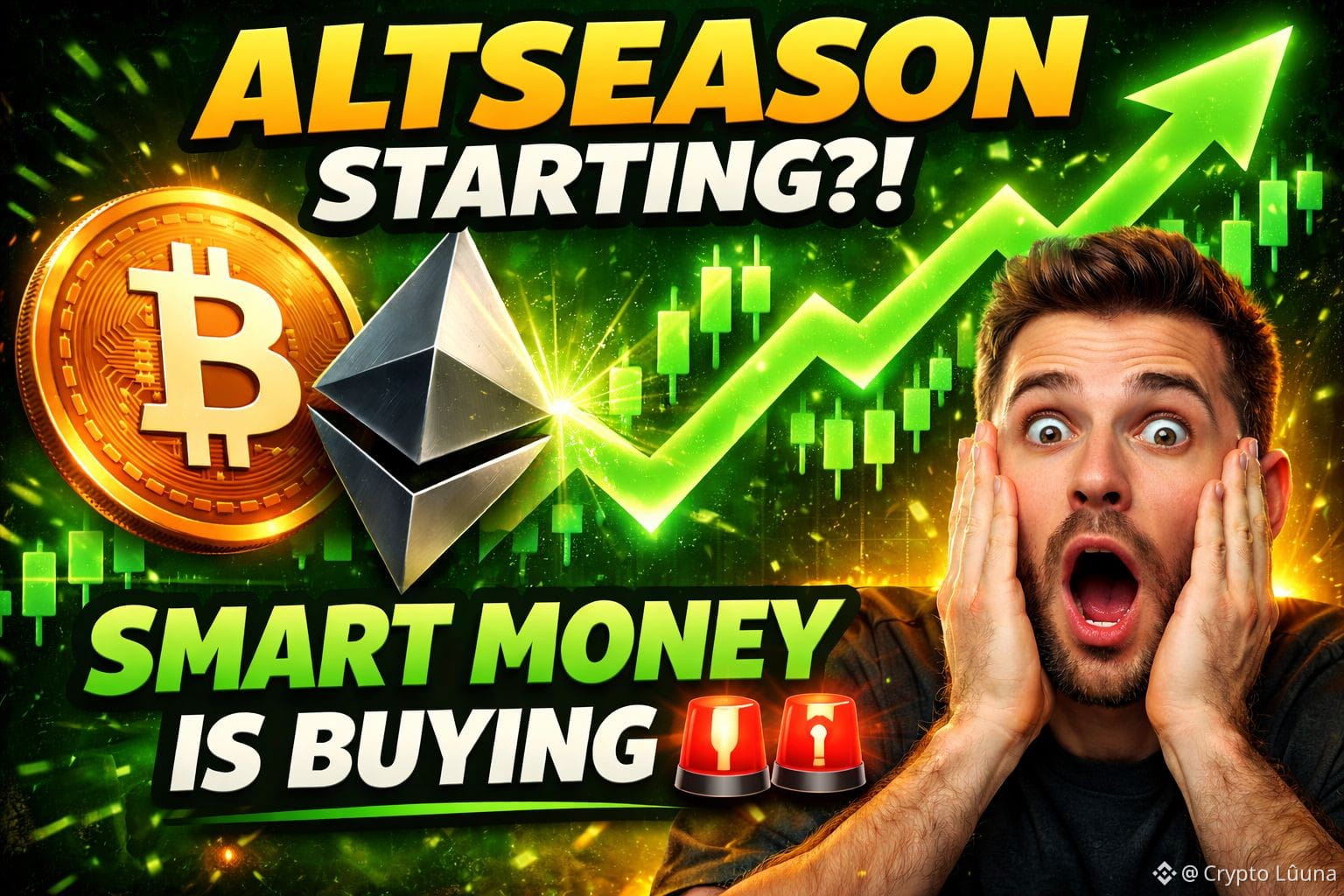
The market is entering a critical phase.
Here’s the breakdown:
🔹 Bitcoin holding structure shows strength
🔹 Ethereum lag suggests capital rotation soon
🔹 Altcoins are starting selective breakouts
Narrative focus right now:
AI + RWA + undervalued low caps
Traders should watch momentum closely — this phase often comes before explosive moves.
$BTC
{spot}(BTCUSDT)
$ETH
{spot}(ETHUSDT)
#crypto #altcoins #BitcoinPriceTrends #ARKInvestReducedPositionsinCircleandBullish #USInitialJoblessClaimsBelowForecast
$REZ
{future}(REZUSDT)
The market is entering a critical phase.
Here’s the breakdown:
🔹 Bitcoin holding structure shows strength
🔹 Ethereum lag suggests capital rotation soon
🔹 Altcoins are starting selective breakouts
Narrative focus right now:
AI + RWA + undervalued low caps
Traders should watch momentum closely — this phase often comes before explosive moves.
$BTC
$ETH
#crypto #altcoins #BitcoinPriceTrends #ARKInvestReducedPositionsinCircleandBullish #USInitialJoblessClaimsBelowForecast
$REZ
Here’s the breakdown:
🔹 Bitcoin holding structure shows strength
🔹 Ethereum lag suggests capital rotation soon
🔹 Altcoins are starting selective breakouts
Narrative focus right now:
AI + RWA + undervalued low caps
Traders should watch momentum closely — this phase often comes before explosive moves.
$BTC
$ETH
#crypto #altcoins #BitcoinPriceTrends #ARKInvestReducedPositionsinCircleandBullish #USInitialJoblessClaimsBelowForecast
$REZ
120
·
--
Bullish
🕊️ US-IRAN CEASEFIRE RUMOURS JUST TRIGGERED A RISK-ON CANDLE.
Nasdaq hit record highs. BTC neared $76K. Oil easing. When geopolitical fear LIFTS — crypto is first to run. Here's the playbook:
₿ $BTC — $76K resistance test loading. Break = $80K target.
{spot}(BTCUSDT)
🏅 $PAXG
{spot}(PAXGUSDT)
— Gold + crypto in one. Perfect geopolitical hedge.
⚙️ $BNB
{spot}(BNBUSDT)
— Binance ecosystem alpha, always leads altcoin rallies
Peace = risk-on. War = Bitcoin. Either way, you win if positioned.
Follow me — geopolitical plays are my specialty. 🌍
#Bitcoin❗ #BTC #GeopoliticsOnChain #IranCeasefire #Binance
🕊️ US-IRAN CEASEFIRE RUMOURS JUST TRIGGERED A RISK-ON CANDLE.
Nasdaq hit record highs. BTC neared $76K. Oil easing. When geopolitical fear LIFTS — crypto is first to run. Here's the playbook:
₿ $BTC — $76K resistance test loading. Break = $80K target.
🏅 $PAXG
— Gold + crypto in one. Perfect geopolitical hedge.
⚙️ $BNB
— Binance ecosystem alpha, always leads altcoin rallies
Peace = risk-on. War = Bitcoin. Either way, you win if positioned.
Follow me — geopolitical plays are my specialty. 🌍
#Bitcoin❗ #BTC #GeopoliticsOnChain #IranCeasefire #Binance
Nasdaq hit record highs. BTC neared $76K. Oil easing. When geopolitical fear LIFTS — crypto is first to run. Here's the playbook:
₿ $BTC — $76K resistance test loading. Break = $80K target.
🏅 $PAXG
— Gold + crypto in one. Perfect geopolitical hedge.
⚙️ $BNB
— Binance ecosystem alpha, always leads altcoin rallies
Peace = risk-on. War = Bitcoin. Either way, you win if positioned.
Follow me — geopolitical plays are my specialty. 🌍
#Bitcoin❗ #BTC #GeopoliticsOnChain #IranCeasefire #Binance
1
1
111
·
--
Bullish
⚠️ QUANTUM COMPUTING COULD STEAL SATOSHI'S BITCOIN. AND THE FIX IS COMING.
The BIP-361 debate is LIVE. Hoskinson says Satoshi's 1.7M BTC can't be saved. Quantum-resistant crypto is now an URGENT narrative:
🛡️ $QRL— quantum-resistant ledger. Purpose-built for this moment.
🌐 $IOTA
{spot}(IOTAUSDT)
— post-quantum security roadmap already in motion
💎 $ETH
{spot}(ETHUSDT)
— Hegotá upgrade (H2 2026) brings quantum-resistant security
This isn't fear — it's the next major crypto narrative. Get in early.
Follow for next-gen crypto security plays. 🔐
#QuantumComputing2026 #BitcoinETFs #QRL #ETH #Binance
⚠️ QUANTUM COMPUTING COULD STEAL SATOSHI'S BITCOIN. AND THE FIX IS COMING.
The BIP-361 debate is LIVE. Hoskinson says Satoshi's 1.7M BTC can't be saved. Quantum-resistant crypto is now an URGENT narrative:
🛡️ $QRL— quantum-resistant ledger. Purpose-built for this moment.
🌐 $IOTA
— post-quantum security roadmap already in motion
💎 $ETH
— Hegotá upgrade (H2 2026) brings quantum-resistant security
This isn't fear — it's the next major crypto narrative. Get in early.
Follow for next-gen crypto security plays. 🔐
#QuantumComputing2026 #BitcoinETFs #QRL #ETH #Binance
The BIP-361 debate is LIVE. Hoskinson says Satoshi's 1.7M BTC can't be saved. Quantum-resistant crypto is now an URGENT narrative:
🛡️ $QRL— quantum-resistant ledger. Purpose-built for this moment.
🌐 $IOTA
— post-quantum security roadmap already in motion
💎 $ETH
— Hegotá upgrade (H2 2026) brings quantum-resistant security
This isn't fear — it's the next major crypto narrative. Get in early.
Follow for next-gen crypto security plays. 🔐
#QuantumComputing2026 #BitcoinETFs #QRL #ETH #Binance
179
·
--
Bullish
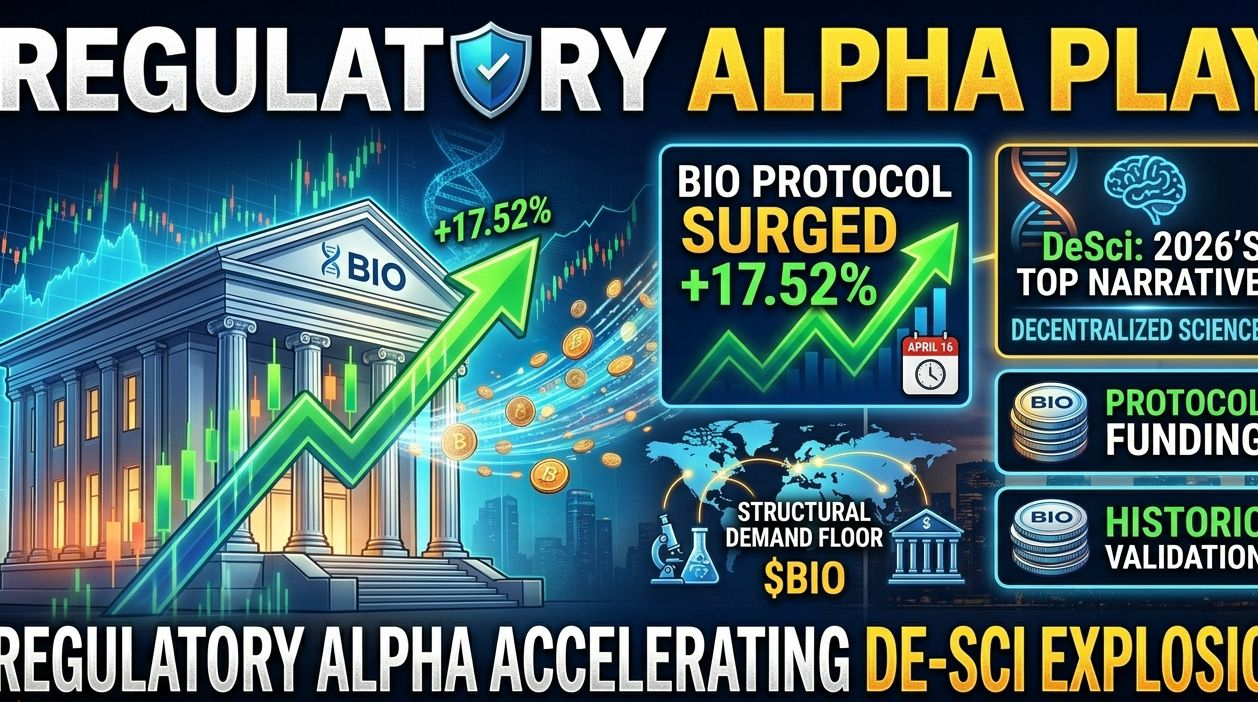
🧬 +17% IN A DAY. THE DESCI NARRATIVE JUST WENT SUPERNOVA.
AI devs are hunting for open biomedical data — and DeSci is the only sector that can deliver. Fear & Greed at 23. Perfect entry.
🔬 $BIO
{spot}(BIOUSDT)
— DeSci flagship. AI + biotech crossover. Still early.
🖥️ $RNDR — AI compute demand: unstoppable narrative in 2026
🧠 $TAO
{spot}(TAOUSDT)
— Bittensor: the AI subnet powering decentralized intelligence
Buy what AI developers NEED — not just what's trending.
Follow for AI + DeSci sector alpha daily. 🤖
#DeSci #BIO #AIcrypto #RNDR #Binance
🧬 +17% IN A DAY. THE DESCI NARRATIVE JUST WENT SUPERNOVA.
AI devs are hunting for open biomedical data — and DeSci is the only sector that can deliver. Fear & Greed at 23. Perfect entry.
🔬 $BIO
— DeSci flagship. AI + biotech crossover. Still early.
🖥️ $RNDR — AI compute demand: unstoppable narrative in 2026
🧠 $TAO
— Bittensor: the AI subnet powering decentralized intelligence
Buy what AI developers NEED — not just what's trending.
Follow for AI + DeSci sector alpha daily. 🤖
#DeSci #BIO #AIcrypto #RNDR #Binance
AI devs are hunting for open biomedical data — and DeSci is the only sector that can deliver. Fear & Greed at 23. Perfect entry.
🔬 $BIO
— DeSci flagship. AI + biotech crossover. Still early.
🖥️ $RNDR — AI compute demand: unstoppable narrative in 2026
🧠 $TAO
— Bittensor: the AI subnet powering decentralized intelligence
Buy what AI developers NEED — not just what's trending.
Follow for AI + DeSci sector alpha daily. 🤖
#DeSci #BIO #AIcrypto #RNDR #Binance
255
·
--
Bullish
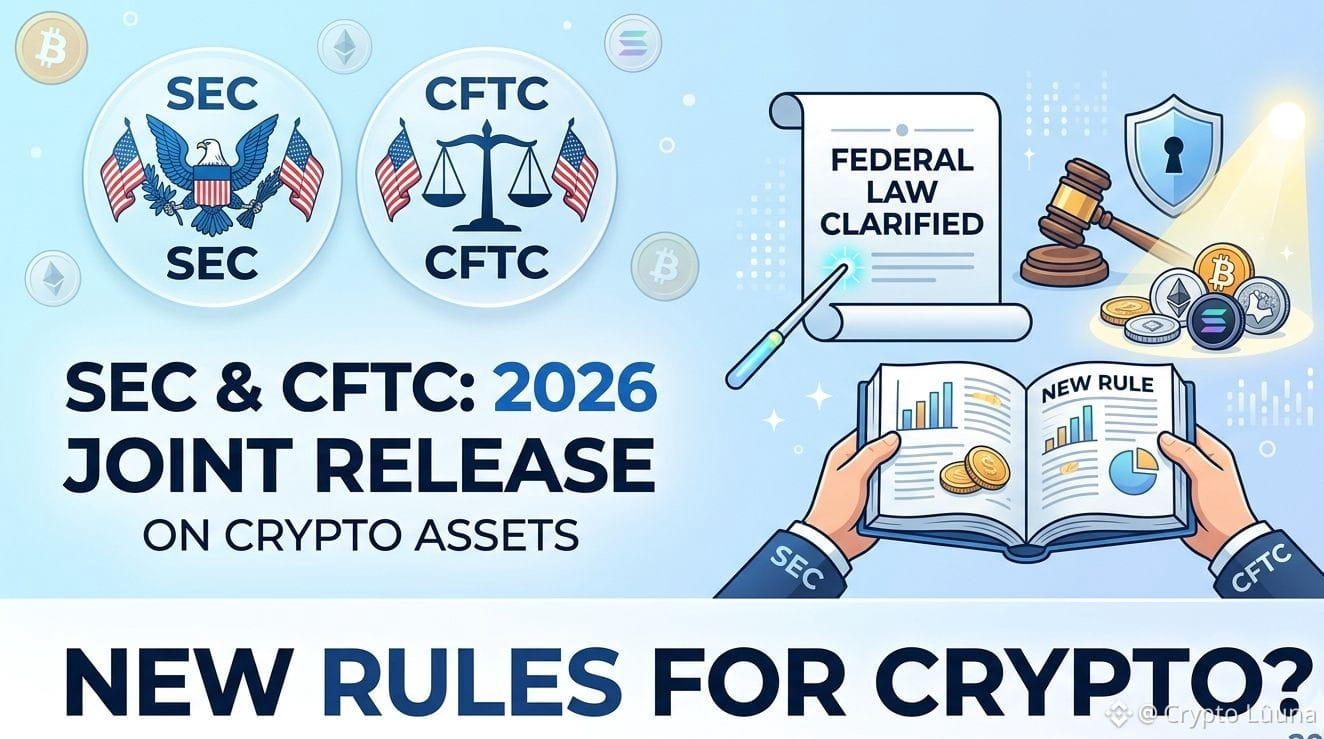
⚖️ THE MOST IMPORTANT CRYPTO REGULATION OF 2026 JUST DROPPED.
SEC + CFTC issued a joint framework — commodities vs securities FINALLY clarified. The CLARITY Act is next. 3 coins win big:
🔷 $XRP
{spot}(XRPUSDT)
— dual commodity status confirmed. ETF next. 🚀
⚡ $SOL
{spot}(SOLUSDT)
— clean commodity classification. Altcoin ETF imminent.
🔵 $ADA
{spot}(ADAUSDT)
— ETF application in SEC pipeline right now.
Regulatory clarity doesn't come twice. Position before the ETF approvals.
Follow me for regulatory alpha. First to know = first to profit. 📊
#CLARITYAct #XRP #solana #Cardano #Binance
⚖️ THE MOST IMPORTANT CRYPTO REGULATION OF 2026 JUST DROPPED.
SEC + CFTC issued a joint framework — commodities vs securities FINALLY clarified. The CLARITY Act is next. 3 coins win big:
🔷 $XRP
— dual commodity status confirmed. ETF next. 🚀
⚡ $SOL
— clean commodity classification. Altcoin ETF imminent.
🔵 $ADA
— ETF application in SEC pipeline right now.
Regulatory clarity doesn't come twice. Position before the ETF approvals.
Follow me for regulatory alpha. First to know = first to profit. 📊
#CLARITYAct #XRP #solana #Cardano #Binance
SEC + CFTC issued a joint framework — commodities vs securities FINALLY clarified. The CLARITY Act is next. 3 coins win big:
🔷 $XRP
— dual commodity status confirmed. ETF next. 🚀
⚡ $SOL
— clean commodity classification. Altcoin ETF imminent.
🔵 $ADA
— ETF application in SEC pipeline right now.
Regulatory clarity doesn't come twice. Position before the ETF approvals.
Follow me for regulatory alpha. First to know = first to profit. 📊
#CLARITYAct #XRP #solana #Cardano #Binance
207
·
--
Bullish
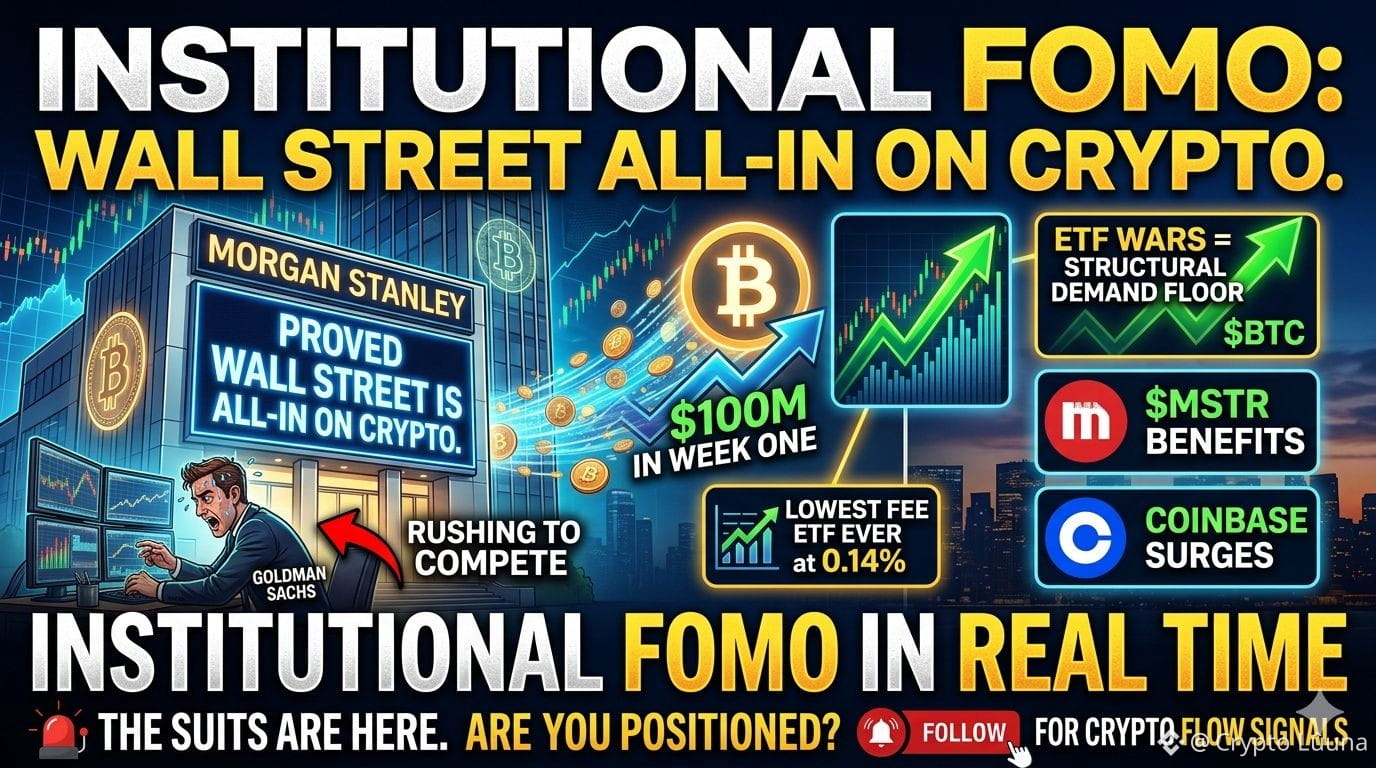
🏦 MORGAN STANLEY JUST PROVED WALL STREET IS ALL-IN ON CRYPTO.
$100M in week one. Lowest fee ETF ever at 0.14%. Goldman Sachs is now rushing to compete. This is institutional FOMO in real time.
₿ $BTC
{spot}(BTCUSDT)
— ETF wars = structural demand floor every dip
🏢 $MSTR
{future}(MSTRUSDT)
— MicroStrategy benefits every time TradFi validates BTC
💹 $COIN
{future}(COINUSDT)
— Coinbase custody & revenue surges with every ETF launch
The suits are here. Are you positioned?
Follow for institutional crypto flow signals. 🔔
#BitcoinETF #MorganStanley #BTC #Institutional #Binance
🏦 MORGAN STANLEY JUST PROVED WALL STREET IS ALL-IN ON CRYPTO.
$100M in week one. Lowest fee ETF ever at 0.14%. Goldman Sachs is now rushing to compete. This is institutional FOMO in real time.
₿ $BTC
— ETF wars = structural demand floor every dip
🏢 $MSTR
— MicroStrategy benefits every time TradFi validates BTC
💹 $COIN
— Coinbase custody & revenue surges with every ETF launch
The suits are here. Are you positioned?
Follow for institutional crypto flow signals. 🔔
#BitcoinETF #MorganStanley #BTC #Institutional #Binance
$100M in week one. Lowest fee ETF ever at 0.14%. Goldman Sachs is now rushing to compete. This is institutional FOMO in real time.
₿ $BTC
— ETF wars = structural demand floor every dip
🏢 $MSTR
— MicroStrategy benefits every time TradFi validates BTC
💹 $COIN
— Coinbase custody & revenue surges with every ETF launch
The suits are here. Are you positioned?
Follow for institutional crypto flow signals. 🔔
#BitcoinETF #MorganStanley #BTC #Institutional #Binance
1
163
·
--
Bullish
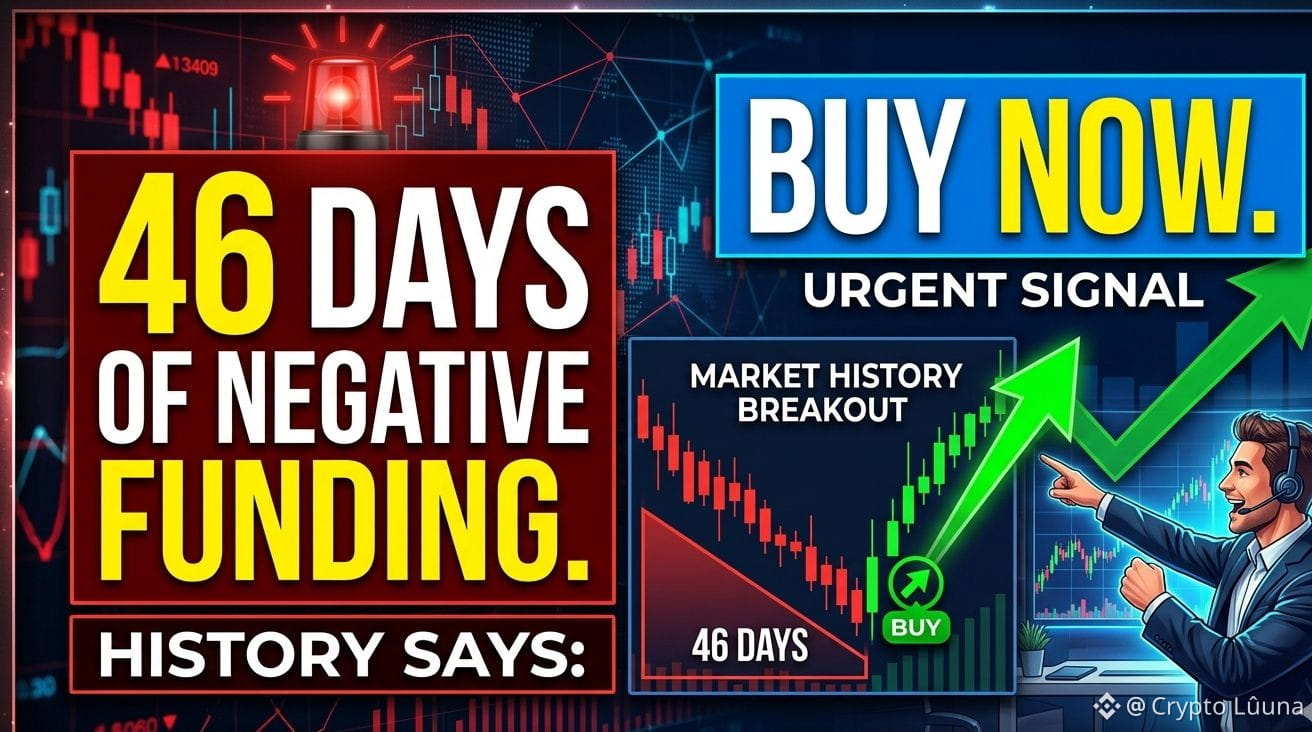
🚨 46 DAYS OF NEGATIVE FUNDING. HISTORY SAYS: BUY NOW.
Bitcoin funding rates just hit their most negative since the FTX crash — the SAME signal that preceded every major BTC rally since 2021.
💥 $BTC
{spot}(BTCUSDT)
— crowded shorts = forced short squeeze loading
💎 $ETH
{spot}(ETHUSDT)
— whale profitability signal just fired. Rare.
⚡ $SOL
{spot}(SOLUSDT)
— Alpenglow upgrade catalyst + institutional bids.
The market is screaming FEAR. Smart money is screaming ENTRY.
Follow me — I call bottoms before they bounce. 📈
#Bitcoin #BTC #ShortSqueeze #CryptoAlpha #Binance
🚨 46 DAYS OF NEGATIVE FUNDING. HISTORY SAYS: BUY NOW.
Bitcoin funding rates just hit their most negative since the FTX crash — the SAME signal that preceded every major BTC rally since 2021.
💥 $BTC
— crowded shorts = forced short squeeze loading
💎 $ETH
— whale profitability signal just fired. Rare.
⚡ $SOL
— Alpenglow upgrade catalyst + institutional bids.
The market is screaming FEAR. Smart money is screaming ENTRY.
Follow me — I call bottoms before they bounce. 📈
#Bitcoin #BTC #ShortSqueeze #CryptoAlpha #Binance
Bitcoin funding rates just hit their most negative since the FTX crash — the SAME signal that preceded every major BTC rally since 2021.
💥 $BTC
— crowded shorts = forced short squeeze loading
💎 $ETH
— whale profitability signal just fired. Rare.
⚡ $SOL
— Alpenglow upgrade catalyst + institutional bids.
The market is screaming FEAR. Smart money is screaming ENTRY.
Follow me — I call bottoms before they bounce. 📈
#Bitcoin #BTC #ShortSqueeze #CryptoAlpha #Binance
78
·
--
🧪 AI + BIOTECH NARRATIVE JUST DROPPED A +30% SIGNAL.
LAB is up 30% while you're reading about other coins. Here's the full AI-bio play:
🔬 $LAB
{future}(LABUSDT)
— MC $303M, biotech meets blockchain. UP 30%.
🤖 $FET
{spot}(FETUSDT)
— autonomous AI agents powering the future
🧬 $AGIX — SingularityNET: AGI infrastructure on-chain
AI + healthcare = the hottest narrative crossover of 2025.
Follow me for sector-specific alpha. Be first, not last. 🧠
#LAB #AIcrypto #Biotech #Binance
🧪 AI + BIOTECH NARRATIVE JUST DROPPED A +30% SIGNAL.
LAB is up 30% while you're reading about other coins. Here's the full AI-bio play:
🔬 $LAB
— MC $303M, biotech meets blockchain. UP 30%.
🤖 $FET
— autonomous AI agents powering the future
🧬 $AGIX — SingularityNET: AGI infrastructure on-chain
AI + healthcare = the hottest narrative crossover of 2025.
Follow me for sector-specific alpha. Be first, not last. 🧠
#LAB #AIcrypto #Biotech #Binance
LAB is up 30% while you're reading about other coins. Here's the full AI-bio play:
🔬 $LAB
— MC $303M, biotech meets blockchain. UP 30%.
🤖 $FET
— autonomous AI agents powering the future
🧬 $AGIX — SingularityNET: AGI infrastructure on-chain
AI + healthcare = the hottest narrative crossover of 2025.
Follow me for sector-specific alpha. Be first, not last. 🧠
#LAB #AIcrypto #Biotech #Binance
469
·
--
💹 TRADOOR UP 30% AND MOST PEOPLE STILL DON'T KNOW IT EXISTS.
Perp DEX season is here and these three are leading the charge:
🚪 $TRADOOR
{alpha}(560x9123400446a56176eb1b6be9ee5cf703e409f492)
— MC $74M, +30% and just getting started
🌊 $HYPE
{future}(HYPEUSDT)
— the $1B-rejected unicorn of on-chain perps
💰 $GMX
{spot}(GMXUSDT)
— established perp king. Volume stays strong.
Low cap + perp narrative + momentum = explosive combo.
Follow me and catch the next 30% before everyone else. ⚡
#TRADOOR #PerpDex #LowCap #Altseason #BİNANCE
💹 TRADOOR UP 30% AND MOST PEOPLE STILL DON'T KNOW IT EXISTS.
Perp DEX season is here and these three are leading the charge:
🚪 $TRADOOR
— MC $74M, +30% and just getting started
🌊 $HYPE
— the $1B-rejected unicorn of on-chain perps
💰 $GMX
— established perp king. Volume stays strong.
Low cap + perp narrative + momentum = explosive combo.
Follow me and catch the next 30% before everyone else. ⚡
#TRADOOR #PerpDex #LowCap #Altseason #BİNANCE
Perp DEX season is here and these three are leading the charge:
🚪 $TRADOOR
— MC $74M, +30% and just getting started
🌊 $HYPE
— the $1B-rejected unicorn of on-chain perps
💰 $GMX
— established perp king. Volume stays strong.
Low cap + perp narrative + momentum = explosive combo.
Follow me and catch the next 30% before everyone else. ⚡
#TRADOOR #PerpDex #LowCap #Altseason #BİNANCE
1
1
369
·
--
Bullish
📡 +202% IN ONE CANDLE. THIS IS WHAT ALPHA SEARCH IS FOR.
While others were sleeping, RAVE was printing. These alpha coins are moving NOW:
🎵 $RAVE
{future}(RAVEUSDT)
— MC $2.08B, still running. Don't fade momentum.
🔵 $TAO
{spot}(TAOUSDT)
— AI + Bittensor dip = accumulation zone
🌊 $HYPE
{future}(HYPEUSDT)
— rejected $1B valuation. Price discovery ahead.
The alpha screen doesn't lie. The chart doesn't lie. Your hesitation costs you.
Follow for alpha search signals before they go viral. 🚀
#rave #CryptoAlph #Altcoins #Binance #MarketCorrectionBuyOrHODL?
📡 +202% IN ONE CANDLE. THIS IS WHAT ALPHA SEARCH IS FOR.
While others were sleeping, RAVE was printing. These alpha coins are moving NOW:
🎵 $RAVE
— MC $2.08B, still running. Don't fade momentum.
🔵 $TAO
— AI + Bittensor dip = accumulation zone
🌊 $HYPE
— rejected $1B valuation. Price discovery ahead.
The alpha screen doesn't lie. The chart doesn't lie. Your hesitation costs you.
Follow for alpha search signals before they go viral. 🚀
#rave #CryptoAlph #Altcoins #Binance #MarketCorrectionBuyOrHODL?
While others were sleeping, RAVE was printing. These alpha coins are moving NOW:
🎵 $RAVE
— MC $2.08B, still running. Don't fade momentum.
🔵 $TAO
— AI + Bittensor dip = accumulation zone
🌊 $HYPE
— rejected $1B valuation. Price discovery ahead.
The alpha screen doesn't lie. The chart doesn't lie. Your hesitation costs you.
Follow for alpha search signals before they go viral. 🚀
#rave #CryptoAlph #Altcoins #Binance #MarketCorrectionBuyOrHODL?
376
·
--
🔐 $11.4B SCAMMED. BUT THE LESSON ISN'T TO LEAVE — IT'S WHERE TO STAY.
FBI's record crypto scam report is terrifying. But the solution is simple: stick to blue chips:
₿ $BTC
{spot}(BTCUSDT)
— no one scams you with Bitcoin fundamentals
💎 $ETH
{spot}(ETHUSDT)
— Ethereum's transparency is your protection
⚙️ $BNB
{spot}(BNBUSDT)
— Binance compliance = safest CEX ecosystem
Safety + gains. That's the play.
Follow me — I'll keep you away from scams & toward profits. 🛡️
#Cryptoscam #FBI #SafeCrypto #bitcoin #Binance
🔐 $11.4B SCAMMED. BUT THE LESSON ISN'T TO LEAVE — IT'S WHERE TO STAY.
FBI's record crypto scam report is terrifying. But the solution is simple: stick to blue chips:
₿ $BTC
— no one scams you with Bitcoin fundamentals
💎 $ETH
— Ethereum's transparency is your protection
⚙️ $BNB
— Binance compliance = safest CEX ecosystem
Safety + gains. That's the play.
Follow me — I'll keep you away from scams & toward profits. 🛡️
#Cryptoscam #FBI #SafeCrypto #bitcoin #Binance
FBI's record crypto scam report is terrifying. But the solution is simple: stick to blue chips:
₿ $BTC
— no one scams you with Bitcoin fundamentals
💎 $ETH
— Ethereum's transparency is your protection
⚙️ $BNB
— Binance compliance = safest CEX ecosystem
Safety + gains. That's the play.
Follow me — I'll keep you away from scams & toward profits. 🛡️
#Cryptoscam #FBI #SafeCrypto #bitcoin #Binance
1
74
·
--
Bearish
🚨 POLKADOT BRIDGE EXPLOITED — BUT IS THIS THE BOTTOM?
1B DOT exploit is painful. BUT experienced traders know: post-exploit = patch + rebound:
🔴 $DOT
{spot}(DOTUSDT)
— every major protocol survives and rebounds. Watch this.
🟠 $KSM
{spot}(KSMUSDT)
— Kusama canary network. Undervalued now.
🌟 $ASTR
{future}(ASTRUSDT)
— Astar ecosystem absorbs and recovers fast
The herd panics. The pros load up at the bottom.
Follow me for post-exploit recovery plays. 📉➡️📈
#polkadot2.0 #dot #BridgeHack #CryptoRecovery #Binance
🚨 POLKADOT BRIDGE EXPLOITED — BUT IS THIS THE BOTTOM?
1B DOT exploit is painful. BUT experienced traders know: post-exploit = patch + rebound:
🔴 $DOT
— every major protocol survives and rebounds. Watch this.
🟠 $KSM
— Kusama canary network. Undervalued now.
🌟 $ASTR
— Astar ecosystem absorbs and recovers fast
The herd panics. The pros load up at the bottom.
Follow me for post-exploit recovery plays. 📉➡️📈
#polkadot2.0 #dot #BridgeHack #CryptoRecovery #Binance
1B DOT exploit is painful. BUT experienced traders know: post-exploit = patch + rebound:
🔴 $DOT
— every major protocol survives and rebounds. Watch this.
🟠 $KSM
— Kusama canary network. Undervalued now.
🌟 $ASTR
— Astar ecosystem absorbs and recovers fast
The herd panics. The pros load up at the bottom.
Follow me for post-exploit recovery plays. 📉➡️📈
#polkadot2.0 #dot #BridgeHack #CryptoRecovery #Binance
318
·
--
🤯 FOUNDER SAID NO TO $1 BILLION. THE CONVICTION IS UNREAL.
When a founder rejects $1B because they believe the project is worth more — you LISTEN:
1-🌊 $HYPE
{future}(HYPEUSDT)
— Hyperliquid rejected $1B. Imagine the real target.
2-💹 $GMX
{spot}(GMXUSDT)
— perp DEX wars heating up. Beneficiary.
3-⚡ $DYDX
{future}(DYDXUSDT)
— volume migrates when protocols compete
Builders with this conviction don't build rugs. They build empires.
Follow for perp DEX alpha. Don't miss the next leg. 🔝
#Hyperliquid #HYPE #PerpDex #DeFi #Binance
🤯 FOUNDER SAID NO TO $1 BILLION. THE CONVICTION IS UNREAL.
When a founder rejects $1B because they believe the project is worth more — you LISTEN:
1-🌊 $HYPE
— Hyperliquid rejected $1B. Imagine the real target.
2-💹 $GMX
— perp DEX wars heating up. Beneficiary.
3-⚡ $DYDX
— volume migrates when protocols compete
Builders with this conviction don't build rugs. They build empires.
Follow for perp DEX alpha. Don't miss the next leg. 🔝
#Hyperliquid #HYPE #PerpDex #DeFi #Binance
When a founder rejects $1B because they believe the project is worth more — you LISTEN:
1-🌊 $HYPE
— Hyperliquid rejected $1B. Imagine the real target.
2-💹 $GMX
— perp DEX wars heating up. Beneficiary.
3-⚡ $DYDX
— volume migrates when protocols compete
Builders with this conviction don't build rugs. They build empires.
Follow for perp DEX alpha. Don't miss the next leg. 🔝
#Hyperliquid #HYPE #PerpDex #DeFi #Binance
442
·
--
🏦 WESTERN BANKS ARE DOING WHAT CRYPTO HAS DONE FOR YEARS.
When JPMorgan and co pivot to stablecoins — the coins that power that infrastructure WIN:
💰 $USDC
{spot}(USDCUSDT)
— the institutional stablecoin of choice
📊 $ONDO
{spot}(ONDOUSDT)
— tokenized T-bills, exactly what banks want
🏛️ $MKR — DAI's backbone, regulatory-friendly DeFi
The TradFi crossover is happening RIGHT NOW. First movers get the gains.
Follow me & stay ahead of the institutional money. 🏦
#stablecoin #USDC #ONDO #DeFi #Binance
🏦 WESTERN BANKS ARE DOING WHAT CRYPTO HAS DONE FOR YEARS.
When JPMorgan and co pivot to stablecoins — the coins that power that infrastructure WIN:
💰 $USDC
— the institutional stablecoin of choice
📊 $ONDO
— tokenized T-bills, exactly what banks want
🏛️ $MKR — DAI's backbone, regulatory-friendly DeFi
The TradFi crossover is happening RIGHT NOW. First movers get the gains.
Follow me & stay ahead of the institutional money. 🏦
#stablecoin #USDC #ONDO #DeFi #Binance
When JPMorgan and co pivot to stablecoins — the coins that power that infrastructure WIN:
💰 $USDC
— the institutional stablecoin of choice
📊 $ONDO
— tokenized T-bills, exactly what banks want
🏛️ $MKR — DAI's backbone, regulatory-friendly DeFi
The TradFi crossover is happening RIGHT NOW. First movers get the gains.
Follow me & stay ahead of the institutional money. 🏦
#stablecoin #USDC #ONDO #DeFi #Binance
157
·
--
💥 GEOPOLITICAL CHAOS = CRYPTO SAFE HAVEN ACTIVATED.
US-Iran talks just collapsed. Traditional markets shaking. But we know what smart money does in uncertainty:
₿ BTC — the original digital gold. Runs every crisis.
🏅PAGx — PAX Gold on-chain. Hedge + yield.
⚙️ BNB— Binance ecosystem stays strong regardless
War fears pump Bitcoin. History doesn't lie.
Follow for geopolitical crypto trading signals. 🌍
#Bitcoin #SafeHaven #BTC #GlobalCrisis #Binance
$BNB
{spot}(BNBUSDT)
$PAXG
{spot}(PAXGUSDT)
$BTC
{spot}(BTCUSDT)
💥 GEOPOLITICAL CHAOS = CRYPTO SAFE HAVEN ACTIVATED.
US-Iran talks just collapsed. Traditional markets shaking. But we know what smart money does in uncertainty:
₿ BTC — the original digital gold. Runs every crisis.
🏅PAGx — PAX Gold on-chain. Hedge + yield.
⚙️ BNB— Binance ecosystem stays strong regardless
War fears pump Bitcoin. History doesn't lie.
Follow for geopolitical crypto trading signals. 🌍
#Bitcoin #SafeHaven #BTC #GlobalCrisis #Binance
$BNB
$PAXG
$BTC
US-Iran talks just collapsed. Traditional markets shaking. But we know what smart money does in uncertainty:
₿ BTC — the original digital gold. Runs every crisis.
🏅PAGx — PAX Gold on-chain. Hedge + yield.
⚙️ BNB— Binance ecosystem stays strong regardless
War fears pump Bitcoin. History doesn't lie.
Follow for geopolitical crypto trading signals. 🌍
#Bitcoin #SafeHaven #BTC #GlobalCrisis #Binance
$BNB
$PAXG
$BTC
71
·
--
Bullish
🧠 AI CRYPTO JUST GOT A SHAKEUP — HERE'S YOUR BUYING WINDOW.
Covenant AI exiting Bittensor caused panic. But panic = your entry point in AI narrative coins:
🔵 TAO— Bittensor dip is a GIFT. AI infra doesn't die.
🤖 FET— Fetch.ai unaffected. AI agent leader.
🧬 AGIX— SingularityNET fundamentals = untouched
The AI narrative is the hottest in crypto. Don't let one exit scare you off.
Follow for AI sector breakdowns daily. 🤖
#Bittensor #TAO #AIcrypto #FET #BinanceSquareFamily
$TAO
{spot}(TAOUSDT)
$FET
{spot}(FETUSDT)
$AGIX
🧠 AI CRYPTO JUST GOT A SHAKEUP — HERE'S YOUR BUYING WINDOW.
Covenant AI exiting Bittensor caused panic. But panic = your entry point in AI narrative coins:
🔵 TAO— Bittensor dip is a GIFT. AI infra doesn't die.
🤖 FET— Fetch.ai unaffected. AI agent leader.
🧬 AGIX— SingularityNET fundamentals = untouched
The AI narrative is the hottest in crypto. Don't let one exit scare you off.
Follow for AI sector breakdowns daily. 🤖
#Bittensor #TAO #AIcrypto #FET #BinanceSquareFamily
$TAO
$FET
$AGIX
Covenant AI exiting Bittensor caused panic. But panic = your entry point in AI narrative coins:
🔵 TAO— Bittensor dip is a GIFT. AI infra doesn't die.
🤖 FET— Fetch.ai unaffected. AI agent leader.
🧬 AGIX— SingularityNET fundamentals = untouched
The AI narrative is the hottest in crypto. Don't let one exit scare you off.
Follow for AI sector breakdowns daily. 🤖
#Bittensor #TAO #AIcrypto #FET #BinanceSquareFamily
$TAO
$FET
$AGIX
224
·
--
⚖️ WHEN BILLIONAIRES FIGHT, SMART TRADERS PROFIT.
Justin Sun vs WLFI is heating up legally — and the market is mispricing the outcome. Here's the play:
🔥 TRX— fear = discount, Sun ALWAYS wins his battles
📜 WLFI— political chaos creates volatility = opportunity
📦 BTT — TRON ecosystem undervalued during FUD cycles
Stop watching the drama. Start trading it.
Volatility is the alpha. Follow me for the edge. 📈
#JustinSun #WLFI #TRX #Binance #FedNomineeHearingDelay
$TRX
{spot}(TRXUSDT)
$WLFI
{future}(WLFIUSDT)
$BTW
{alpha}(560x444045b0ee1ee319a660a5e3d604ca0ffa35acaa)
⚖️ WHEN BILLIONAIRES FIGHT, SMART TRADERS PROFIT.
Justin Sun vs WLFI is heating up legally — and the market is mispricing the outcome. Here's the play:
🔥 TRX— fear = discount, Sun ALWAYS wins his battles
📜 WLFI— political chaos creates volatility = opportunity
📦 BTT — TRON ecosystem undervalued during FUD cycles
Stop watching the drama. Start trading it.
Volatility is the alpha. Follow me for the edge. 📈
#JustinSun #WLFI #TRX #Binance #FedNomineeHearingDelay
$TRX
$WLFI
$BTW
Justin Sun vs WLFI is heating up legally — and the market is mispricing the outcome. Here's the play:
🔥 TRX— fear = discount, Sun ALWAYS wins his battles
📜 WLFI— political chaos creates volatility = opportunity
📦 BTT — TRON ecosystem undervalued during FUD cycles
Stop watching the drama. Start trading it.
Volatility is the alpha. Follow me for the edge. 📈
#JustinSun #WLFI #TRX #Binance #FedNomineeHearingDelay
$TRX
$WLFI
$BTW
103
·
--
🇭🇰 HONG KONG JUST FIRED THE STARTING GUN ON ASIA'S CRYPTO ERA.
First stablecoin license dropped — and institutional capital is already moving. Here's what you should be watching:
💵 USDC— the compliant stablecoin Asia will trust
🥇 XAUT— gold-backed, safe-haven play as HK opens
🕌 OM — MANTRA's RWA play thrives in licensed markets
Asia Pacific is going INSTITUTIONAL. Get ahead of the crowd — not behind it.
Follow for Asia crypto market signals. 🔔
#HongKong #stablecoin #RWA #CryptoAsia #Binance
$USDC
{spot}(USDCUSDT)
$OM
$XAUT
{spot}(XAUTUSDT)
🇭🇰 HONG KONG JUST FIRED THE STARTING GUN ON ASIA'S CRYPTO ERA.
First stablecoin license dropped — and institutional capital is already moving. Here's what you should be watching:
💵 USDC— the compliant stablecoin Asia will trust
🥇 XAUT— gold-backed, safe-haven play as HK opens
🕌 OM — MANTRA's RWA play thrives in licensed markets
Asia Pacific is going INSTITUTIONAL. Get ahead of the crowd — not behind it.
Follow for Asia crypto market signals. 🔔
#HongKong #stablecoin #RWA #CryptoAsia #Binance
$USDC
$OM
$XAUT
First stablecoin license dropped — and institutional capital is already moving. Here's what you should be watching:
💵 USDC— the compliant stablecoin Asia will trust
🥇 XAUT— gold-backed, safe-haven play as HK opens
🕌 OM — MANTRA's RWA play thrives in licensed markets
Asia Pacific is going INSTITUTIONAL. Get ahead of the crowd — not behind it.
Follow for Asia crypto market signals. 🔔
#HongKong #stablecoin #RWA #CryptoAsia #Binance
$USDC
$OM
$XAUT
86
·
--
🚨 THE CLARITY ACT IS COMING & CRYPTO WILL NEVER BE THE SAME.
The US Senate is about to draw the line between securities and commodities — and when they do, these 3 coins EXPLODE:
💎 XRP— regulatory clarity is its CATALYST
⚡ SOL— clean commodity status incoming
🔗 Link — the oracle layer every compliant DeFi needs
This is the moment you've been waiting for since 2021. Don't let it pass without a position.
Follow me for real-time alpha on regulatory plays. 📲
#CLARITYAct #Xrp🔥🔥 #solana #CryptoRegulation #Binance
$XRP
{spot}(XRPUSDT)
$SOL
{spot}(SOLUSDT)
$LINK
{spot}(LINKUSDT)
🚨 THE CLARITY ACT IS COMING & CRYPTO WILL NEVER BE THE SAME.
The US Senate is about to draw the line between securities and commodities — and when they do, these 3 coins EXPLODE:
💎 XRP— regulatory clarity is its CATALYST
⚡ SOL— clean commodity status incoming
🔗 Link — the oracle layer every compliant DeFi needs
This is the moment you've been waiting for since 2021. Don't let it pass without a position.
Follow me for real-time alpha on regulatory plays. 📲
#CLARITYAct #Xrp🔥🔥 #solana #CryptoRegulation #Binance
$XRP
$SOL
$LINK
The US Senate is about to draw the line between securities and commodities — and when they do, these 3 coins EXPLODE:
💎 XRP— regulatory clarity is its CATALYST
⚡ SOL— clean commodity status incoming
🔗 Link — the oracle layer every compliant DeFi needs
This is the moment you've been waiting for since 2021. Don't let it pass without a position.
Follow me for real-time alpha on regulatory plays. 📲
#CLARITYAct #Xrp🔥🔥 #solana #CryptoRegulation #Binance
$XRP
$SOL
$LINK
194
Log in to explore more content
Join global crypto users on Binance Square
⚡️ Get latest and useful information about crypto.
💬 Trusted by the world’s largest crypto exchange.
👍 Discover real insights from verified creators.
Email / Phone number