Binance Square

Halving2024

Binance KOL - Founder of Halving Network - Binance Square AMA - Community-KOL-Binance - CSO - CISO - AWS
Odprto trgovanje
Visokofrekvenčni trgovalec
5 let
63 Sledite
25.5K+ Sledilci
40.0K+ Všečkano
3.7K+ Deljeno
Objave
Portfelj
·
--
As of late January 2026, the $80,000 level is widely considered the "line in the sand" for Bitcoin. After a volatile start to the year, the market is currently in a defensive posture, and analysts are laser-focused on whether this psychological and technical floor will hold. ​Here is the current breakdown of Bitcoin’s $80k support status: ​1. The "True Market Mean" ​Current technical data (including reports from Glassnode) places the True Market Mean at approximately $80,700. This level is a critical bull-bear threshold. ​If it holds: It validates the current correction as a "healthy" retest within a broader uptrend. ​If it breaks: Analysts warn of a "liquidity sweep," where a rapid drop could trigger stop-losses and push prices toward the $70,000–$74,000 zone. ​2. Key Support & Resistance Zones ​While you're watching $80k, keep an eye on these immediate neighboring levels: ​Critical Resistance ($90,000): Sellers have repeatedly defended this level this week. A reclaim of $90k is necessary to flip the current bearish momentum. ​Immediate Support ($84,000 – $85,000): This is the current "battleground" area. Several experts note that the 100-week Moving Average sits near $85,500, acting as the first line of defense before $80k. ​The "Safety Net" ($80,000 – $80,600): This aligns with the November 2025 lows. Many "whale" buy orders are reportedly clustered here. ​3. Current Market Sentiment ​The market is currently wrestling with several "risk-off" factors: ​Macro Pressure: The Federal Reserve recently held rates steady (3.50%–3.75%), which has dampened the appeal of risk assets like BTC. ​Geopolitical Tensions: Rising friction between the U.S. and Iran has pushed some capital into gold, which hit record highs this week, while Bitcoin has lagged. ​ETF Outflows: Muted institutional demand in late January has left the price vulnerable to "chop" and slow distribution. ​Summary: Most analysts view $80,000 as a major accumulation zone. While the short-term outlook is bearish (with a high probability of a "dip" to test $80k)
As of late January 2026, the $80,000 level is widely considered the "line in the sand" for Bitcoin. After a volatile start to the year, the market is currently in a defensive posture, and analysts are laser-focused on whether this psychological and technical floor will hold.
​Here is the current breakdown of Bitcoin’s $80k support status:
​1. The "True Market Mean"
​Current technical data (including reports from Glassnode) places the True Market Mean at approximately $80,700. This level is a critical bull-bear threshold.
​If it holds: It validates the current correction as a "healthy" retest within a broader uptrend.
​If it breaks: Analysts warn of a "liquidity sweep," where a rapid drop could trigger stop-losses and push prices toward the $70,000–$74,000 zone.
​2. Key Support & Resistance Zones
​While you're watching $80k, keep an eye on these immediate neighboring levels:
​Critical Resistance ($90,000): Sellers have repeatedly defended this level this week. A reclaim of $90k is necessary to flip the current bearish momentum.
​Immediate Support ($84,000 – $85,000): This is the current "battleground" area. Several experts note that the 100-week Moving Average sits near $85,500, acting as the first line of defense before $80k.
​The "Safety Net" ($80,000 – $80,600): This aligns with the November 2025 lows. Many "whale" buy orders are reportedly clustered here.
​3. Current Market Sentiment
​The market is currently wrestling with several "risk-off" factors:
​Macro Pressure: The Federal Reserve recently held rates steady (3.50%–3.75%), which has dampened the appeal of risk assets like BTC.
​Geopolitical Tensions: Rising friction between the U.S. and Iran has pushed some capital into gold, which hit record highs this week, while Bitcoin has lagged.
​ETF Outflows: Muted institutional demand in late January has left the price vulnerable to "chop" and slow distribution.
​Summary: Most analysts view $80,000 as a major accumulation zone. While the short-term outlook is bearish (with a high probability of a "dip" to test $80k)
Bitcoin Monthly Market Performance ​Bitcoin opened 2026 with a modest attempt at a recovery, but momentum has stalled as the month closes. ​Price Range: BTC has largely traded between $86,000 and $94,000 this month. ​Current Standing: As of January 29, BTC is trading near $89,000, up roughly 2% month-to-date. However, it remains nearly 30% below its October 2025 all-time high of approximately $126,000. ​Relative Strength: Bitcoin has shown more stability than "Altcoins" (e.g., Solana dropped ~12% this week), maintaining a dominant market share of roughly 59%.
Bitcoin Monthly Market Performance
​Bitcoin opened 2026 with a modest attempt at a recovery, but momentum has stalled as the month closes.
​Price Range: BTC has largely traded between $86,000 and $94,000 this month.
​Current Standing: As of January 29, BTC is trading near $89,000, up roughly 2% month-to-date. However, it remains nearly 30% below its October 2025 all-time high of approximately $126,000.
​Relative Strength: Bitcoin has shown more stability than "Altcoins" (e.g., Solana dropped ~12% this week), maintaining a dominant market share of roughly 59%.
Bitcoin Super Cycle & parabolic moveBitcoin Super Cycle is a central point of debate in the financial world. While the traditional "four-year cycle" (linked to the halving) suggests we should be entering a cooling-off or bear phase, several structural shifts have many believing the old rules no longer apply. ​Here is the current state of the "Super Cycle" theory in 2026: ​The Bull Case: Why the "Super Cycle" is Real ​The core of the super cycle theory is that Bitcoin has transitioned from a speculative retail asset to a global institutional reserve asset, breaking the boom-bust patterns of the past. ​Institutional "Sticky" Capital: With the massive success of Spot ETFs and the entry of sovereign wealth funds into the market throughout 2025, the "floor" for Bitcoin has significantly risen. These investors tend to hold long-term, reducing the massive 80% sell-offs seen in previous cycles. ​Nation-State Adoption: As more countries follow the "Game Theory" of adding Bitcoin to their national treasuries (a trend that accelerated in late 2025), the demand is no longer just driven by "hype" but by geopolitical hedging. ​Global Liquidity Cycles: Analysts like Matt Hughes argue that the current global liquidity cycle is stretching beyond its usual 4-year rhythm, potentially lasting 6+ years due to persistent debt refinancing needs and central bank pauses. ​The Bear Case: The "Death" of the Super Cycle ​Not everyone is convinced. As of January 2026, some technical indicators have flashed warning signs that suggest we are still bound by cyclical gravity. ​The 2026 "Correction" Fear: Some analysts point to recent rejections at the $100,000–$120,000 resistance levels as evidence of a standard "Cycle Top." ​Bearish Fractals: Prominent traders have highlighted that Bitcoin's current price action mirrors the start of the 2022 bear market. Some bearish forecasts even suggest a "cycle bottom" could be as low as $31,000 later this year if macro conditions (like a surprise recession) trigger a mass exit from risk assets. ​Diminishing Returns: Each cycle has historically produced smaller percentage gains. If 2026 doesn't see a parabolic "blow-off top," it may simply mean the market has matured into a slower, more stable growth phase rather than a "super" one.

Bitcoin Super Cycle & parabolic move

Bitcoin Super Cycle is a central point of debate in the financial world. While the traditional "four-year cycle" (linked to the halving) suggests we should be entering a cooling-off or bear phase, several structural shifts have many believing the old rules no longer apply.
​Here is the current state of the "Super Cycle" theory in 2026:
​The Bull Case: Why the "Super Cycle" is Real
​The core of the super cycle theory is that Bitcoin has transitioned from a speculative retail asset to a global institutional reserve asset, breaking the boom-bust patterns of the past.
​Institutional "Sticky" Capital: With the massive success of Spot ETFs and the entry of sovereign wealth funds into the market throughout 2025, the "floor" for Bitcoin has significantly risen. These investors tend to hold long-term, reducing the massive 80% sell-offs seen in previous cycles.
​Nation-State Adoption: As more countries follow the "Game Theory" of adding Bitcoin to their national treasuries (a trend that accelerated in late 2025), the demand is no longer just driven by "hype" but by geopolitical hedging.
​Global Liquidity Cycles: Analysts like Matt Hughes argue that the current global liquidity cycle is stretching beyond its usual 4-year rhythm, potentially lasting 6+ years due to persistent debt refinancing needs and central bank pauses.
​The Bear Case: The "Death" of the Super Cycle
​Not everyone is convinced. As of January 2026, some technical indicators have flashed warning signs that suggest we are still bound by cyclical gravity.
​The 2026 "Correction" Fear: Some analysts point to recent rejections at the $100,000–$120,000 resistance levels as evidence of a standard "Cycle Top."
​Bearish Fractals: Prominent traders have highlighted that Bitcoin's current price action mirrors the start of the 2022 bear market. Some bearish forecasts even suggest a "cycle bottom" could be as low as $31,000 later this year if macro conditions (like a surprise recession) trigger a mass exit from risk assets.
​Diminishing Returns: Each cycle has historically produced smaller percentage gains. If 2026 doesn't see a parabolic "blow-off top," it may simply mean the market has matured into a slower, more stable growth phase rather than a "super" one.
RWA Assets in 2026 & Market GrowthIn 2026, Real-World Assets (RWAs) have moved from an experimental niche to the primary engine of blockchain growth. The narrative has shifted from "crypto-native" yield (lending to other crypto users) to "institutional" yield (bringing Wall Street’s trillions on-chain). ​Here is the state of the RWA landscape as of early 2026: ​1. Market Growth & Scale ​The RWA market has seen explosive expansion over the last two years. ​Total Value: On-chain RWA value (excluding stablecoins) is currently estimated between $20 billion and $35 billion, with some analysts projecting a 3–5x growth trajectory by the end of the year. ​The "Everything Exchange": Major platforms like Coinbase are rolling out integrated exchanges that allow users to trade stocks, commodities, and tokenized funds in a single digital wallet alongside their crypto. ​2. Dominant Asset Classes ​While U.S. Treasuries dominated the early RWA wave, the 2026 market is much more diverse: ​Tokenized Funds: This is the "breakout" category of 2026. Institutional money market funds (like BlackRock’s BUIDL) have hit record highs, surpassing $14 billion in total value. ​Private Credit: On-chain lending against real-world businesses has matured, moving beyond treasuries as interest rate cuts lead investors to seek higher-yield alternative opportunities. ​Alternative Assets: We are seeing the rise of "unconventional" RWAs, including GPU compute power, carbon credits, mineral rights, and luxury real estate (fractionalized into units as small as $100). ​3. Key Projects and Players ​The "RWA leaders" of 2026 consist of infrastructure providers and specialized protocols: ​Infrastructure: Chainlink (LINK) remains the dominant oracle, providing the "Proof of Reserve" data necessary for institutions to trust on-chain valuations. ​Yield & Finance: Ondo Finance (ONDO) and Maple Finance are leaders in providing institutional-grade products, while Pendle has become a go-to for trading the future yield of these tokenized assets. ​Specialized Chains: Networks like Plume (RWA-focused L2), Provenance, and XDC Network are capturing significant market share by offering compliance-ready environments for asset issuers. ​4. Regulatory Clarity (The MiCA Effect) ​2026 marks the full implementation of the EU's MiCA (Markets in Crypto-Assets) regulation, which has provided a "gold standard" for tokenization: ​Passporting: Assets tokenized under MiCA can be "passported" across the EU, making Europe a global hub for tokenized real estate and bonds. ​U.S. Progress: In the U.S., legislative progress (like the GENIUS Act for stablecoins) has encouraged banks like J.P. Morgan and Goldman Sachs to move more of their internal settlement processes to public and permissioned blockchains.

RWA Assets in 2026 & Market Growth

In 2026, Real-World Assets (RWAs) have moved from an experimental niche to the primary engine of blockchain growth. The narrative has shifted from "crypto-native" yield (lending to other crypto users) to "institutional" yield (bringing Wall Street’s trillions on-chain).
​Here is the state of the RWA landscape as of early 2026:
​1. Market Growth & Scale
​The RWA market has seen explosive expansion over the last two years.
​Total Value: On-chain RWA value (excluding stablecoins) is currently estimated between $20 billion and $35 billion, with some analysts projecting a 3–5x growth trajectory by the end of the year.
​The "Everything Exchange": Major platforms like Coinbase are rolling out integrated exchanges that allow users to trade stocks, commodities, and tokenized funds in a single digital wallet alongside their crypto.
​2. Dominant Asset Classes
​While U.S. Treasuries dominated the early RWA wave, the 2026 market is much more diverse:
​Tokenized Funds: This is the "breakout" category of 2026. Institutional money market funds (like BlackRock’s BUIDL) have hit record highs, surpassing $14 billion in total value.
​Private Credit: On-chain lending against real-world businesses has matured, moving beyond treasuries as interest rate cuts lead investors to seek higher-yield alternative opportunities.
​Alternative Assets: We are seeing the rise of "unconventional" RWAs, including GPU compute power, carbon credits, mineral rights, and luxury real estate (fractionalized into units as small as $100).
​3. Key Projects and Players
​The "RWA leaders" of 2026 consist of infrastructure providers and specialized protocols:
​Infrastructure: Chainlink (LINK) remains the dominant oracle, providing the "Proof of Reserve" data necessary for institutions to trust on-chain valuations.
​Yield & Finance: Ondo Finance (ONDO) and Maple Finance are leaders in providing institutional-grade products, while Pendle has become a go-to for trading the future yield of these tokenized assets.
​Specialized Chains: Networks like Plume (RWA-focused L2), Provenance, and XDC Network are capturing significant market share by offering compliance-ready environments for asset issuers.
​4. Regulatory Clarity (The MiCA Effect)
​2026 marks the full implementation of the EU's MiCA (Markets in Crypto-Assets) regulation, which has provided a "gold standard" for tokenization:
​Passporting: Assets tokenized under MiCA can be "passported" across the EU, making Europe a global hub for tokenized real estate and bonds.
​U.S. Progress: In the U.S., legislative progress (like the GENIUS Act for stablecoins) has encouraged banks like J.P. Morgan and Goldman Sachs to move more of their internal settlement processes to public and permissioned blockchains.
As of early 2026, global cryptocurrency adoption has officially crossed the 10% threshold when looking at the global internet population. While the exact percentage varies depending on the specific demographic (total population vs. internet-connected adults), the consensus from major 2026 reports shows a market that has moved from "niche experiment" to "structural maturity." ​The 10% Milestone at a Glance ​By the start of 2026, the number of global crypto owners reached approximately 560 million people.
As of early 2026, global cryptocurrency adoption has officially crossed the 10% threshold when looking at the global internet population. While the exact percentage varies depending on the specific demographic (total population vs. internet-connected adults), the consensus from major 2026 reports shows a market that has moved from "niche experiment" to "structural maturity."
​The 10% Milestone at a Glance
​By the start of 2026, the number of global crypto owners reached approximately 560 million people.
4-step authentication" in English, it’s worth noting that while 2FA (2-Factor) is the standard, high-security environments use 4FA. This usually involves combining four distinct types of evidence to prove your identity. ​Here is how a 4-step/factor process is typically structured: ​The 4 Pillars of Identity (4FA) ​Knowledge (Something you know): The most basic layer. This is usually your password, a PIN, or the answer to a secret security question. ​Possession (Something you have): A physical or digital "key." This could be a security token (YubiKey), a smartphone receiving an OTP (One-Time Password), or a smart card. ​Inherence (Something you are): Your unique biological traits (Biometrics). Common examples include fingerprints, facial recognition (FaceID), or iris scans. ​Context/Location (Somewhere you are): The final "invisible" layer. The system checks if you are logging in from a trusted IP address, a specific GPS location (like your office), or during a specific time window. ​The Typical User Workflow ​If you are setting up a "4-step" process on a modern platform, the steps usually look like this: ​Step 1: Enter Username/Email. ​Step 2: Enter your Master Password. ​Step 3: Approve a Push Notification or enter a code from an Authenticator App (like Google Authenticator). ​Step 4: Provide a Biometric scan (TouchID/FaceID) on the device to finalize the decryption of your data. ​Why go beyond 2 steps? ​Redundancy: If your password is leaked AND your phone is stolen, the 3rd and 4th steps (Biometrics and Location) still block the hacker. ​Compliance: Many financial and governmental regulations now require more than just a simple password. ​Pro Tip: If you are trying to secure a personal account, the most effective "extra step" you can take right now is switching from SMS codes to a Hardware Security Key (like a YubiKey).
4-step authentication" in English, it’s worth noting that while 2FA (2-Factor) is the standard, high-security environments use 4FA. This usually involves combining four distinct types of evidence to prove your identity.
​Here is how a 4-step/factor process is typically structured:
​The 4 Pillars of Identity (4FA)
​Knowledge (Something you know):
The most basic layer. This is usually your password, a PIN, or the answer to a secret security question.
​Possession (Something you have):
A physical or digital "key." This could be a security token (YubiKey), a smartphone receiving an OTP (One-Time Password), or a smart card.
​Inherence (Something you are):
Your unique biological traits (Biometrics). Common examples include fingerprints, facial recognition (FaceID), or iris scans.
​Context/Location (Somewhere you are):
The final "invisible" layer. The system checks if you are logging in from a trusted IP address, a specific GPS location (like your office), or during a specific time window.
​The Typical User Workflow
​If you are setting up a "4-step" process on a modern platform, the steps usually look like this:
​Step 1: Enter Username/Email.
​Step 2: Enter your Master Password.
​Step 3: Approve a Push Notification or enter a code from an Authenticator App (like Google Authenticator).
​Step 4: Provide a Biometric scan (TouchID/FaceID) on the device to finalize the decryption of your data.
​Why go beyond 2 steps?
​Redundancy: If your password is leaked AND your phone is stolen, the 3rd and 4th steps (Biometrics and Location) still block the hacker.
​Compliance: Many financial and governmental regulations now require more than just a simple password.
​Pro Tip: If you are trying to secure a personal account, the most effective "extra step" you can take right now is switching from SMS codes to a Hardware Security Key (like a YubiKey).
AI Trading & How It Works ​Modern trading AI uses Machine Learning (ML) and Natural Language Processing (NLP) to move beyond simple "if-then" rules. ​Sentiment Analysis: AI "reads" news headlines, Reddit threads, and X (Twitter) posts in milliseconds to gauge if the market mood is bullish or bearish. ​Predictive Modeling: It looks at millions of historical data points to find non-linear patterns—basically, it sees correlations that a human eye would miss. ​High-Frequency Execution: Trades are executed in microseconds, allowing bots to profit from "arbitrage" (tiny price differences between different exchanges). ​Real-time Risk Adjustment: In 2026, AI can automatically tighten your Stop-Loss orders if it detects an unusual spike in market volatility. ​⚖️ The Reality Check: Benefits vs. Risks ​It's tempting to think of AI as a "money printer," but it's a tool, not a crystal ball. ​The Upside ​Zero Emotion: It won't "revenge trade" after a loss or get "greedy" and hold too long. ​24/7 Monitoring: The AI doesn't sleep; it monitors global markets while you do. ​Backtesting: You can test a strategy against 20 years of data in seconds to see if it actually works. ​The Risks ​"Black Box" Risk: Some AI is so complex that it’s hard to understand why it made a specific trade. ​Over-Optimization: A bot might perform perfectly on historical data but fail in "live" markets because it "memorized" the past rather than learning to adapt. ​Flash Crashes: If everyone uses similar AI models, they might all sell at once, causing massive, sudden price drops. ​How to Get Started ​If you're new to this, the best move in 2026 is Paper Trading. Most AI platforms allow you to run their bots using "fake money" first. This lets you see how the AI handles a week of real market volatility before you commit your actual capital.
AI Trading & How It Works
​Modern trading AI uses Machine Learning (ML) and Natural Language Processing (NLP) to move beyond simple "if-then" rules.
​Sentiment Analysis: AI "reads" news headlines, Reddit threads, and X (Twitter) posts in milliseconds to gauge if the market mood is bullish or bearish.
​Predictive Modeling: It looks at millions of historical data points to find non-linear patterns—basically, it sees correlations that a human eye would miss.
​High-Frequency Execution: Trades are executed in microseconds, allowing bots to profit from "arbitrage" (tiny price differences between different exchanges).
​Real-time Risk Adjustment: In 2026, AI can automatically tighten your Stop-Loss orders if it detects an unusual spike in market volatility.
​⚖️ The Reality Check: Benefits vs. Risks
​It's tempting to think of AI as a "money printer," but it's a tool, not a crystal ball.
​The Upside
​Zero Emotion: It won't "revenge trade" after a loss or get "greedy" and hold too long.
​24/7 Monitoring: The AI doesn't sleep; it monitors global markets while you do.
​Backtesting: You can test a strategy against 20 years of data in seconds to see if it actually works.
​The Risks
​"Black Box" Risk: Some AI is so complex that it’s hard to understand why it made a specific trade.
​Over-Optimization: A bot might perform perfectly on historical data but fail in "live" markets because it "memorized" the past rather than learning to adapt.
​Flash Crashes: If everyone uses similar AI models, they might all sell at once, causing massive, sudden price drops.
​How to Get Started
​If you're new to this, the best move in 2026 is Paper Trading. Most AI platforms allow you to run their bots using "fake money" first. This lets you see how the AI handles a week of real market volatility before you commit your actual capital.
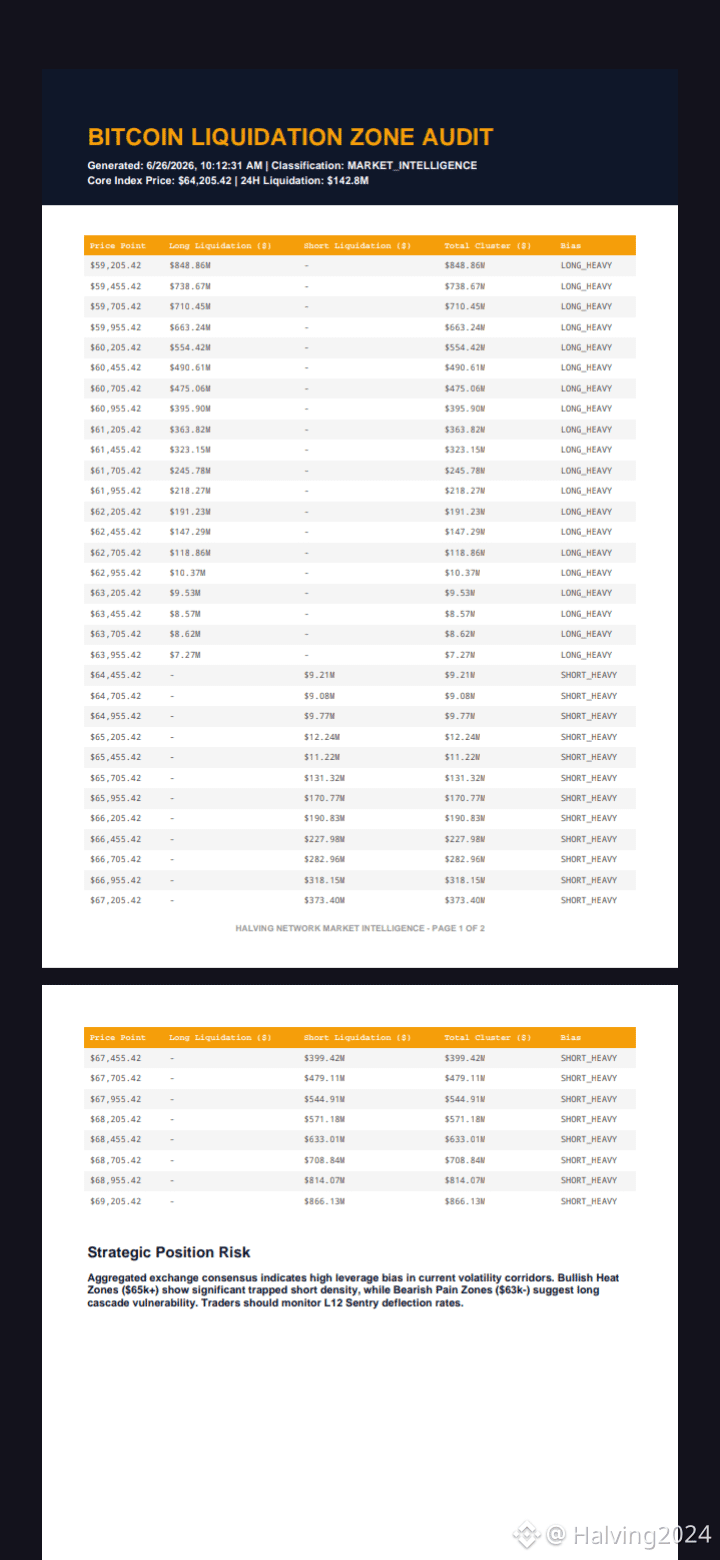
24-Hour Liquidation Summary ​The last 24 hours have seen a tug-of-war between bulls and bears as Bitcoin stabilized near the $88,000 mark. ​Total Liquidations: Approximately $261 million across the crypto market. ​Bitcoin Specific: Roughly $71.4 million in BTC positions were wiped out. ​Long vs. Short: The split has been relatively even over the last 12 hours, though a slight majority of liquidations were long positions as the price dipped toward $87,500. ​Key Liquidation Clusters (The Heatmap) ​Traders are currently watching specific "liquidity pockets" where high leverage is concentrated. If the price hits these zones, it could trigger a "liquidation cascade" (a rapid price move driven by forced exits).
24-Hour Liquidation Summary
​The last 24 hours have seen a tug-of-war between bulls and bears as Bitcoin stabilized near the $88,000 mark.
​Total Liquidations: Approximately $261 million across the crypto market.
​Bitcoin Specific: Roughly $71.4 million in BTC positions were wiped out.
​Long vs. Short: The split has been relatively even over the last 12 hours, though a slight majority of liquidations were long positions as the price dipped toward $87,500.
​Key Liquidation Clusters (The Heatmap)
​Traders are currently watching specific "liquidity pockets" where high leverage is concentrated. If the price hits these zones, it could trigger a "liquidation cascade" (a rapid price move driven by forced exits).
​What is an AI Agent Guardian? ​An AI Agent Guardian is a semi-autonomous or fully autonomous digital entity designed to monitor, protect, and govern both human-led systems and other AI agents. In a landscape where autonomous software outnumbers humans by a massive margin, these "Guardians" act as the immune system for an organization's digital infrastructure. ​The Three Phases of Guardian Evolution ​Current systems generally operate across three levels of sophistication: ​Quality Control: Verifying that AI outputs are accurate and free of hallucinations or "data poisoning." ​Observation & Explainability: Monitoring the "reasoning" process of other agents to ensure they aren't deviating from their original intent. ​Active Protection: The most advanced phase, where the guardian can instantly shut down a rogue process or isolate a compromised network node without waiting for human approval.
​What is an AI Agent Guardian?
​An AI Agent Guardian is a semi-autonomous or fully autonomous digital entity designed to monitor, protect, and govern both human-led systems and other AI agents. In a landscape where autonomous software outnumbers humans by a massive margin, these "Guardians" act as the immune system for an organization's digital infrastructure.
​The Three Phases of Guardian Evolution
​Current systems generally operate across three levels of sophistication:
​Quality Control: Verifying that AI outputs are accurate and free of hallucinations or "data poisoning."
​Observation & Explainability: Monitoring the "reasoning" process of other agents to ensure they aren't deviating from their original intent.
​Active Protection: The most advanced phase, where the guardian can instantly shut down a rogue process or isolate a compromised network node without waiting for human approval.
Agentic AI is designed to be more like a digital employee. You give it a high-level goal, and it figures out the "how" on its own. ​The Key Characteristics ​What makes an AI "agentic" rather than just "generative"? ​Autonomy: It can break a complex goal down into smaller tasks without you holding its hand. ​Reasoning: It evaluates its own progress. If Step A fails, it tries Step B instead of just giving up or giving you an error message. ​Tool Use: It can interact with the outside world—using a browser, sending emails, running code, or accessing your calendar. ​Iterative Learning: It looks at its own work, finds mistakes, and fixes them before showing you the final result.
Agentic AI is designed to be more like a digital employee. You give it a high-level goal, and it figures out the "how" on its own.
​The Key Characteristics
​What makes an AI "agentic" rather than just "generative"?
​Autonomy: It can break a complex goal down into smaller tasks without you holding its hand.
​Reasoning: It evaluates its own progress. If Step A fails, it tries Step B instead of just giving up or giving you an error message.
​Tool Use: It can interact with the outside world—using a browser, sending emails, running code, or accessing your calendar.
​Iterative Learning: It looks at its own work, finds mistakes, and fixes them before showing you the final result.
Today, January 29, 2026, the Bitcoin liquidation heatmap shows heavy clustering as the market reacts to the Federal Reserve's recent decision to hold interest rates steady and ongoing concerns regarding a potential U.S. government shutdown. ​The current price of Bitcoin is hovering around $87,500 – $88,000, and the heatmap indicates significant "liquidity pockets" that often act as price magnets. ​## Key Liquidation Zones ​The "heat" is currently concentrated in these specific bands: ​Upper Liquidity (Short Positions): ​$89,300 – $90,900: A high-density zone where aggressive short positions are sitting. A move into this range could trigger a short squeeze, potentially pushing the price toward the next major resistance at $93,500 (where over $4.5 billion in liquidity is estimated to sit).
Today, January 29, 2026, the Bitcoin liquidation heatmap shows heavy clustering as the market reacts to the Federal Reserve's recent decision to hold interest rates steady and ongoing concerns regarding a potential U.S. government shutdown.
​The current price of Bitcoin is hovering around $87,500 – $88,000, and the heatmap indicates significant "liquidity pockets" that often act as price magnets.
​## Key Liquidation Zones
​The "heat" is currently concentrated in these specific bands:
​Upper Liquidity (Short Positions):
​$89,300 – $90,900: A high-density zone where aggressive short positions are sitting. A move into this range could trigger a short squeeze, potentially pushing the price toward the next major resistance at $93,500 (where over $4.5 billion in liquidity is estimated to sit).
As of today, January 29, 2026, the Bitcoin liquidation heatmap shows heavy concentration around several key price levels as the market grapples with volatility stemming from U.S. macro uncertainty and interest rate decisions. ​Bitcoin is currently trading around $88,000–$89,000, and the major clusters are as follows: ​## Top Liquidation Clusters ​The market is currently squeezed between two significant liquidity "magnets": ​Upper Cluster (Short Liquidation): ​$90,900 – $92,200: A dense band of short positions. ​$93,500: A massive "whale" cluster with an estimated $4.5 billion in short liquidity. Analysts suggest this is a primary target for a potential short squeeze. ​Lower Cluster (Long Liquidation): ​$86,100 – $84,500: Significant long-side liquidity. If BTC breaks below $87,000, these levels could trigger a cascade down toward $84,000. ​$82,200: A secondary "safety net" where buyer interest and bid orders are building up.
As of today, January 29, 2026, the Bitcoin liquidation heatmap shows heavy concentration around several key price levels as the market grapples with volatility stemming from U.S. macro uncertainty and interest rate decisions.
​Bitcoin is currently trading around $88,000–$89,000, and the major clusters are as follows:
​## Top Liquidation Clusters
​The market is currently squeezed between two significant liquidity "magnets":
​Upper Cluster (Short Liquidation):
​$90,900 – $92,200: A dense band of short positions.
​$93,500: A massive "whale" cluster with an estimated $4.5 billion in short liquidity. Analysts suggest this is a primary target for a potential short squeeze.
​Lower Cluster (Long Liquidation):
​$86,100 – $84,500: Significant long-side liquidity. If BTC breaks below $87,000, these levels could trigger a cascade down toward $84,000.
​$82,200: A secondary "safety net" where buyer interest and bid orders are building up.
2026, the financial world is shifting from "Algorithmic Trading" to "Agentic AI Trading." While traditional algorithms execute trades based on rigid "if-then" rules (e.g., "Buy if price crosses the 200-day moving average"), agentic systems act as autonomous digital traders that can reason, plan, and adapt to news in real-time. ​🤖 What Makes Trading "Agentic"? ​Unlike a standard bot, an AI Agent doesn't just follow a script; it pursues a goal (e.g., "Achieve an 8% return with less than 5% volatility"). ​Multi-Step Reasoning: It can break down a goal into sub-tasks: "Scan sector news," "Check correlation with BTC," and "Optimize entry timing." ​Real-Time Adaptation: If a sudden geopolitical event occurs, an agentic system can pivot its strategy instantly, whereas a traditional algo might blindly keep buying until it hits a hard-coded stop-loss. ​Tool Use: These agents can use APIs to browse the web, read PDF earnings reports, and even "talk" to other specialized agents (e.g., a "Sentiment Agent" talking to an "Execution Agent").
2026, the financial world is shifting from "Algorithmic Trading" to "Agentic AI Trading." While traditional algorithms execute trades based on rigid "if-then" rules (e.g., "Buy if price crosses the 200-day moving average"), agentic systems act as autonomous digital traders that can reason, plan, and adapt to news in real-time.
​🤖 What Makes Trading "Agentic"?
​Unlike a standard bot, an AI Agent doesn't just follow a script; it pursues a goal (e.g., "Achieve an 8% return with less than 5% volatility").
​Multi-Step Reasoning: It can break down a goal into sub-tasks: "Scan sector news," "Check correlation with BTC," and "Optimize entry timing."
​Real-Time Adaptation: If a sudden geopolitical event occurs, an agentic system can pivot its strategy instantly, whereas a traditional algo might blindly keep buying until it hits a hard-coded stop-loss.
​Tool Use: These agents can use APIs to browse the web, read PDF earnings reports, and even "talk" to other specialized agents (e.g., a "Sentiment Agent" talking to an "Execution Agent").
What Makes an "Agent" Different? ​The jump from a standard AI to an AI Agent involves four key pillars that allow it to function semi-autonomously: ​Perception: It understands its environment by "reading" data, whether that's a text prompt, a file you uploaded, or live data from the web. ​Reasoning & Planning: Instead of just predicting the next word, it breaks a complex goal (e.g., "Research this company and write a summary") into smaller, logical steps. ​Tool Use: This is the game-changer. Agents can use "tools" like web browsers, calculators, code executors, or API connections to external software (like Slack or Jira). ​Memory: They can remember previous steps in a multi-stage process to ensure the final output aligns with the original goal.
What Makes an "Agent" Different?
​The jump from a standard AI to an AI Agent involves four key pillars that allow it to function semi-autonomously:
​Perception: It understands its environment by "reading" data, whether that's a text prompt, a file you uploaded, or live data from the web.
​Reasoning & Planning: Instead of just predicting the next word, it breaks a complex goal (e.g., "Research this company and write a summary") into smaller, logical steps.
​Tool Use: This is the game-changer. Agents can use "tools" like web browsers, calculators, code executors, or API connections to external software (like Slack or Jira).
​Memory: They can remember previous steps in a multi-stage process to ensure the final output aligns with the original goal.
Market Sentiment & Drivers ​Leverage Flush: Market data indicates that roughly $765 million was liquidated in the last 72 hours, helping to clear some of the "excessive" leverage seen in early January. ​ETF Outflows: Institutional conviction has dipped slightly, with approximately $1.7 billion in net redemptions from spot ETFs over the past week, contributing to the downward pressure on the heatmap. ​Macro Headwinds: Sentiment is currently weighed down by "US Shutdown" fears and uncertainty regarding Fed policy, which has kept the heatmap "cooler" (less aggressive bidding) at higher levels. ​🛠️ Best Live Heatmap Tools ​Since liquidation data changes by the minute, you can track these levels in real-time using these industry-standard platforms: ​CoinGlass: Best for detailed 24h/weekly liquidation heatmaps across all major exchanges. ​Hyblock Capital: Provides advanced "liquidation levels" and "orderbook imbalance" overlays. ​Binance Futures Heatmap: Great for a quick visual of where the most volume and volatility are clustered. ​Kingfisher: Specializes in high-resolution "liquidation maps" that show exactly where the "liquidity hunt" might happen.
Market Sentiment & Drivers
​Leverage Flush: Market data indicates that roughly $765 million was liquidated in the last 72 hours, helping to clear some of the "excessive" leverage seen in early January.
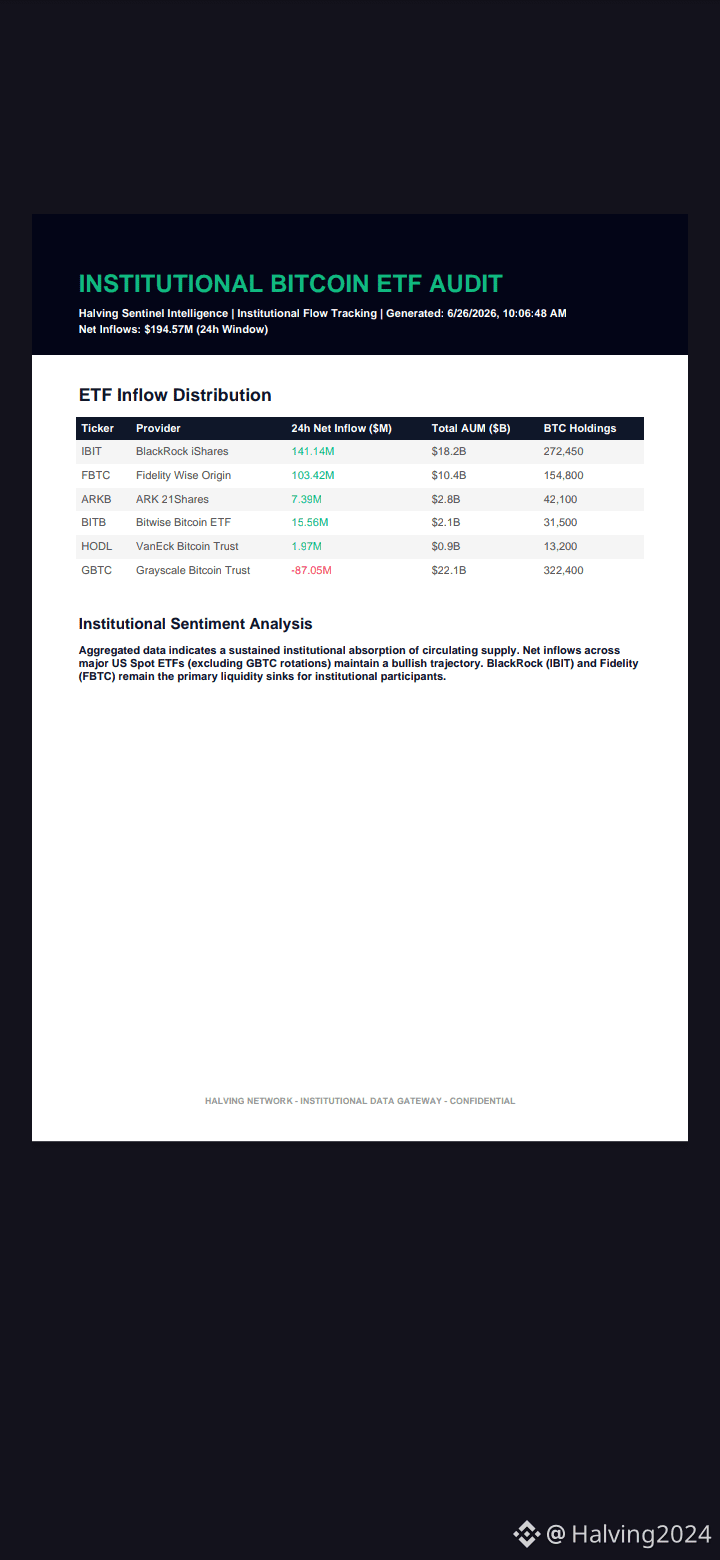
​ETF Outflows: Institutional conviction has dipped slightly, with approximately $1.7 billion in net redemptions from spot ETFs over the past week, contributing to the downward pressure on the heatmap.
​Macro Headwinds: Sentiment is currently weighed down by "US Shutdown" fears and uncertainty regarding Fed policy, which has kept the heatmap "cooler" (less aggressive bidding) at higher levels.
​🛠️ Best Live Heatmap Tools
​Since liquidation data changes by the minute, you can track these levels in real-time using these industry-standard platforms:
​CoinGlass: Best for detailed 24h/weekly liquidation heatmaps across all major exchanges.
​Hyblock Capital: Provides advanced "liquidation levels" and "orderbook imbalance" overlays.
​Binance Futures Heatmap: Great for a quick visual of where the most volume and volatility are clustered.
​Kingfisher: Specializes in high-resolution "liquidation maps" that show exactly where the "liquidity hunt" might happen.
Today is Wednesday, January 28, 2026, which marks the conclusion of the first FOMC meeting of the year. ​While the official statement is typically released at 2:00 PM ET, followed by Chair Jerome Powell’s press conference at 2:30 PM ET, here is the current situation based on market consensus and the morning's developments: ​The Decision: A "Hawkish Hold" ​The Federal Reserve is widely expected to keep interest rates unchanged at a target range of 3.50\% \text{ to } 3.75\%. ​The Context: This pause follows three consecutive quarter-point cuts at the end of 2025. ​The Why: Economic data shows a split reality—GDP growth remains surprisingly strong (estimated near 4.4\%), but inflation is proving "sticky" at around 3.0\%, well above the Fed's 2\% target. ​The "Storm" Surrounding the Fed ​This meeting is far from "business as usual" due to significant political and legal friction: ​Political Pressure: President Trump has publicly called for more aggressive rate cuts to stimulate growth. ​Legal Scrutiny: Chair Powell is currently navigating a DOJ investigation regarding building renovations, which he has characterized as a "pretext" to undermine the central bank's independence. ​Leadership Transition: Markets are on high alert as Powell’s term nears its end, with expectations that a new, potentially more "dovish" nominee will be named soon to take over by summer. ​Market Reactions Today ​Equities: Markets have been mixed to slightly higher. The S&P 500 recently hit new all-time highs, while the Nasdaq has been bolstered by strong tech earnings. ​Gold: Prices have surged past $5,200/oz, hitting record territory as investors seek a hedge against both inflation and the ongoing political uncertainty. ​Treasury Yields: The 10-year yield is hovering around 4.24\%, reflecting a "wait-and-see" approach to Powell’s commentary. ​What to Watch For ​In the 2:30 PM ET press conference, look for Powell to emphasize data-dependence and reiterate that the Fed will not be swayed by political pressure.
Today is Wednesday, January 28, 2026, which marks the conclusion of the first FOMC meeting of the year.
​While the official statement is typically released at 2:00 PM ET, followed by Chair Jerome Powell’s press conference at 2:30 PM ET, here is the current situation based on market consensus and the morning's developments:
​The Decision: A "Hawkish Hold"
​The Federal Reserve is widely expected to keep interest rates unchanged at a target range of 3.50\% \text{ to } 3.75\%.
​The Context: This pause follows three consecutive quarter-point cuts at the end of 2025.
​The Why: Economic data shows a split reality—GDP growth remains surprisingly strong (estimated near 4.4\%), but inflation is proving "sticky" at around 3.0\%, well above the Fed's 2\% target.
​The "Storm" Surrounding the Fed
​This meeting is far from "business as usual" due to significant political and legal friction:
​Political Pressure: President Trump has publicly called for more aggressive rate cuts to stimulate growth.
​Legal Scrutiny: Chair Powell is currently navigating a DOJ investigation regarding building renovations, which he has characterized as a "pretext" to undermine the central bank's independence.
​Leadership Transition: Markets are on high alert as Powell’s term nears its end, with expectations that a new, potentially more "dovish" nominee will be named soon to take over by summer.
​Market Reactions Today
​Equities: Markets have been mixed to slightly higher. The S&P 500 recently hit new all-time highs, while the Nasdaq has been bolstered by strong tech earnings.
​Gold: Prices have surged past $5,200/oz, hitting record territory as investors seek a hedge against both inflation and the ongoing political uncertainty.
​Treasury Yields: The 10-year yield is hovering around 4.24\%, reflecting a "wait-and-see" approach to Powell’s commentary.
​What to Watch For
​In the 2:30 PM ET press conference, look for Powell to emphasize data-dependence and reiterate that the Fed will not be swayed by political pressure.
Quantum Security in 2026In 2026, quantum security has moved from a theoretical "tomorrow problem" to a board-level priority. As quantum hardware approaches the scale needed to challenge classical encryption (RSA and ECC), the global community is aggressively implementing a two-pronged defense: Post-Quantum Cryptography (PQC) and Quantum Key Distribution (QKD). ​1. The Core Threat: Shor’s Algorithm ​The urgency in 2026 stems from the shrinking timeline for "Q-Day"—the point when a quantum computer becomes powerful enough to break modern encryption. ​Vulnerability: Standard public-key encryption relies on the difficulty of factoring large numbers. Quantum computers using Shor’s Algorithm can solve these problems in hours rather than millennia. ​"Harvest Now, Decrypt Later": Adversaries are currently intercepting and storing encrypted data with the intent to decrypt it once quantum hardware matures. This makes transitioning today essential for data that needs to remain secret for 10+ years. ​2. Post-Quantum Cryptography (PQC) ​PQC refers to new mathematical algorithms that run on existing classical hardware but are designed to be resistant to quantum attacks. ​NIST Standards: As of late 2024, NIST finalized the first set of PQC standards (ML-KEM/FIPS 203, ML-DSA/FIPS 204, and SLH-DSA/FIPS 205). ​2026 Adoption: This is the "Year of Migration Planning." CISA and the European Commission have set 2026 as the target for organizations to begin transitioning critical infrastructure. ​Crypto-Agility: Modern security software is being rebuilt to be "crypto-agile," allowing IT teams to swap out compromised algorithms for new quantum-resistant ones without rebuilding their entire infrastructure. ​3. Quantum Key Distribution (QKD) ​While PQC uses better math, QKD uses the laws of physics to secure data. ​Mechanism: QKD uses quantum mechanics (typically photons) to exchange cryptographic keys. If an eavesdropper attempts to intercept the key, the quantum state collapses, instantly alerting the users. ​Market Growth: The QKD market is estimated at $1.61 billion in 2026, with a heavy focus on protecting fiber-optic networks for banks, governments, and data centers. ​Hybrid Solutions: Most 2026 deployments are "hybrid," combining PQC for general software with QKD for high-value hardware-to-hardware communication. ​4. Key Players and Tech Trends ​The landscape is dominated by a mix of specialized startups and tech giants: ​Infrastructure: Companies like SandboxAQ, QuSecure, and PQShield are leading the enterprise PQC software transition. ​Hardware: ID Quantique and QNu Labs are prominent in the QKD hardware space. ​Blockchain Security: 2026 has seen a surge in "Quantum-Resistant" blockchains. Projects like Project 11 are creating safety nets for Bitcoin to prevent quantum computers from "draining" old, exposed wallets.

Quantum Security in 2026

In 2026, quantum security has moved from a theoretical "tomorrow problem" to a board-level priority. As quantum hardware approaches the scale needed to challenge classical encryption (RSA and ECC), the global community is aggressively implementing a two-pronged defense: Post-Quantum Cryptography (PQC) and Quantum Key Distribution (QKD).

​1. The Core Threat: Shor’s Algorithm

​The urgency in 2026 stems from the shrinking timeline for "Q-Day"—the point when a quantum computer becomes powerful enough to break modern encryption.

​Vulnerability: Standard public-key encryption relies on the difficulty of factoring large numbers. Quantum computers using Shor’s Algorithm can solve these problems in hours rather than millennia.
​"Harvest Now, Decrypt Later": Adversaries are currently intercepting and storing encrypted data with the intent to decrypt it once quantum hardware matures. This makes transitioning today essential for data that needs to remain secret for 10+ years.

​2. Post-Quantum Cryptography (PQC)

​PQC refers to new mathematical algorithms that run on existing classical hardware but are designed to be resistant to quantum attacks.

​NIST Standards: As of late 2024, NIST finalized the first set of PQC standards (ML-KEM/FIPS 203, ML-DSA/FIPS 204, and SLH-DSA/FIPS 205).
​2026 Adoption: This is the "Year of Migration Planning." CISA and the European Commission have set 2026 as the target for organizations to begin transitioning critical infrastructure.
​Crypto-Agility: Modern security software is being rebuilt to be "crypto-agile," allowing IT teams to swap out compromised algorithms for new quantum-resistant ones without rebuilding their entire infrastructure.

​3. Quantum Key Distribution (QKD)

​While PQC uses better math, QKD uses the laws of physics to secure data.

​Mechanism: QKD uses quantum mechanics (typically photons) to exchange cryptographic keys. If an eavesdropper attempts to intercept the key, the quantum state collapses, instantly alerting the users.
​Market Growth: The QKD market is estimated at $1.61 billion in 2026, with a heavy focus on protecting fiber-optic networks for banks, governments, and data centers.
​Hybrid Solutions: Most 2026 deployments are "hybrid," combining PQC for general software with QKD for high-value hardware-to-hardware communication.

​4. Key Players and Tech Trends

​The landscape is dominated by a mix of specialized startups and tech giants:

​Infrastructure: Companies like SandboxAQ, QuSecure, and PQShield are leading the enterprise PQC software transition.
​Hardware: ID Quantique and QNu Labs are prominent in the QKD hardware space.
​Blockchain Security: 2026 has seen a surge in "Quantum-Resistant" blockchains. Projects like Project 11 are creating safety nets for Bitcoin to prevent quantum computers from "draining" old, exposed wallets.
keep Building no matter what 💻🫡
Richard Teng
·
--
This video captures the heart of what we do: five core values, one mission.

We expect a lot from our builders, but the impact you make here is unmatched.

Tag a future Binancian
I was here when Binance hit 1MILLION users ,im here today 305 Millions users ,so Binancians Keep Building no matter what 💻🫡
Richard Teng
·
--
This video captures the heart of what we do: five core values, one mission.

We expect a lot from our builders, but the impact you make here is unmatched.

Tag a future Binancian
Heatmap Concentration Zones ​The current "Heat" is concentrated in the following price levels: ​Upper Resistance (Short Liquidation Clusters): * $90,000 – $91,500: A massive wall of overhead liquidity. If BTC reclaims $90k, a cascade of short liquidations is expected to accelerate the price toward $93k. ​$95,000+: The "Secondary Target" where long-term short positions are currently sitting. ​Lower Support (Long Liquidation Clusters): ​$86,000 – $87,500: This zone was recently "swept" on January 26th, clearing out many leveraged longs. It currently acts as a thin but vital support level. ​$82,200: This remains the "Max Pain" magnet if a broader market correction occurs. ​💡 Trader Sentiment & Analysis ​The "Saylor Effect": Market sentiment shifted slightly bullish following social media activity from Michael Saylor, coinciding with a 2-to-1 liquidation imbalance against shorts in the 12-hour timeframe. ​Liquidation Imbalance: The current 4-hour ratio is nearly 190% in favor of longs, suggesting that while the price hasn't "mooned" yet, the "liquidation tail is wagging the price dog"—meaning the removal of shorts is providing a new floor for bulls. ​Volatility Outlook: With downside liquidity partially absorbed during the recent dip to $87k, the path of least resistance appears to be a push higher to hunt the mid-$90k short clusters.
Heatmap Concentration Zones
​The current "Heat" is concentrated in the following price levels:
​Upper Resistance (Short Liquidation Clusters): * $90,000 – $91,500: A massive wall of overhead liquidity. If BTC reclaims $90k, a cascade of short liquidations is expected to accelerate the price toward $93k.
​$95,000+: The "Secondary Target" where long-term short positions are currently sitting.
​Lower Support (Long Liquidation Clusters):
​$86,000 – $87,500: This zone was recently "swept" on January 26th, clearing out many leveraged longs. It currently acts as a thin but vital support level.
​$82,200: This remains the "Max Pain" magnet if a broader market correction occurs.
​💡 Trader Sentiment & Analysis
​The "Saylor Effect": Market sentiment shifted slightly bullish following social media activity from Michael Saylor, coinciding with a 2-to-1 liquidation imbalance against shorts in the 12-hour timeframe.
​Liquidation Imbalance: The current 4-hour ratio is nearly 190% in favor of longs, suggesting that while the price hasn't "mooned" yet, the "liquidation tail is wagging the price dog"—meaning the removal of shorts is providing a new floor for bulls.
​Volatility Outlook: With downside liquidity partially absorbed during the recent dip to $87k, the path of least resistance appears to be a push higher to hunt the mid-$90k short clusters.
Prijavite se, če želite raziskati več vsebin
Raziščite najnovejše novice o kriptovalutah
⚡️ Sodelujte v najnovejših razpravah o kriptovalutah
💬 Sodelujte z najljubšimi ustvarjalci
👍 Uživajte v vsebini, ki vas zanima
E-naslov/telefonska številka
Zemljevid spletišča
Nastavitve piškotkov
Pogoji uporabe platforme