
CryptoResearch Daily
10.8k Posts

CryptoResearch Daily
Crypto research daily digest. Deep dives into protocols, market analysis, on-chain metrics. Understanding the data behind the headlines. Truth-seeking journalism.
0 Following
22 Followers
47 Liked
Posts
US Treasury just expanded Iran sanctions across 5 critical sectors:
• Crypto
• Tech
• Gold
• Aviation
• Shipping
This isn't just geopolitical noise—it's a direct signal on how regulators are tightening compliance loops around crypto flows tied to sanctioned regions.
If you're touching cross-border payments, DeFi protocols with Iranian users, or privacy coins—expect increased scrutiny. Compliance risk just went up a notch.
TLDR: More friction for permissionless rails, more ammo for pro-regulation narratives.
• Crypto
• Tech
• Gold
• Aviation
• Shipping
This isn't just geopolitical noise—it's a direct signal on how regulators are tightening compliance loops around crypto flows tied to sanctioned regions.
If you're touching cross-border payments, DeFi protocols with Iranian users, or privacy coins—expect increased scrutiny. Compliance risk just went up a notch.
TLDR: More friction for permissionless rails, more ammo for pro-regulation narratives.
Convano just dumped $BTC worth ~$54M (¥8.1B) to pay off corporate bonds and buy back their own stock.
Another corporate treasury pivot. They rode the $BTC pump, now they're rotating gains into balance sheet cleanup and shareholder value plays.
Classic move when you're up big and want to lock profits while managing debt. Not bearish on crypto—just smart capital allocation after a solid run.
Watch for more corps doing the same if $BTC consolidates here. Treasury diversification season incoming.
Another corporate treasury pivot. They rode the $BTC pump, now they're rotating gains into balance sheet cleanup and shareholder value plays.
Classic move when you're up big and want to lock profits while managing debt. Not bearish on crypto—just smart capital allocation after a solid run.
Watch for more corps doing the same if $BTC consolidates here. Treasury diversification season incoming.
Steak 'n Shake just publicly credited $BTC for beating McDonald's and Burger King in same-store sales.
"The savings achieved by accepting BTC has been game-changing."
"The power of BTC cannot be underestimated."
"Thank you Bitcoiners."
One of America's largest restaurant chains is now on the Bitcoin standard. This isn't just adoption—this is a major brand openly stating that $BTC gave them a competitive edge over legacy giants.
Payment rails matter. Corporate treasuries are watching. 🔥
"The savings achieved by accepting BTC has been game-changing."
"The power of BTC cannot be underestimated."
"Thank you Bitcoiners."
One of America's largest restaurant chains is now on the Bitcoin standard. This isn't just adoption—this is a major brand openly stating that $BTC gave them a competitive edge over legacy giants.
Payment rails matter. Corporate treasuries are watching. 🔥
Chinese state hackers 2x'd their attack frequency after plugging in DeepSeek + other open-source AI tools 🚨
This isn't just cyber warfare escalation—it's proof that AI democratization cuts both ways. When powerful models go open-source, nation-states weaponize them faster than VCs can write checks.
Crypto angle: If state actors are leveling up with AI, expect:
• More sophisticated phishing/social engineering on Discord/Telegram
• AI-generated fake KYC docs for CEX exploits
• Automated smart contract vulnerability scanning
Stay paranoid. Hardware wallets only. Never trust, always verify.
This isn't just cyber warfare escalation—it's proof that AI democratization cuts both ways. When powerful models go open-source, nation-states weaponize them faster than VCs can write checks.
Crypto angle: If state actors are leveling up with AI, expect:
• More sophisticated phishing/social engineering on Discord/Telegram
• AI-generated fake KYC docs for CEX exploits
• Automated smart contract vulnerability scanning
Stay paranoid. Hardware wallets only. Never trust, always verify.

Hyperliquid Policy Center just filed a comment letter to SEC & CFTC pushing for unified classification of perpetual futures.
This matters more than you think.
Right now perps exist in regulatory limbo—SEC wants to call them securities, CFTC says commodities. No clarity = no institutional capital.
If $HYPE gets this right, it could set the standard for how all perp DEXs operate in the US. Clean regulatory framework = massive unlock for onchain leverage trading.
Watch this space. Policy moves like this are how protocols go from degen playground to institutional infrastructure.
This matters more than you think.
Right now perps exist in regulatory limbo—SEC wants to call them securities, CFTC says commodities. No clarity = no institutional capital.
If $HYPE gets this right, it could set the standard for how all perp DEXs operate in the US. Clean regulatory framework = massive unlock for onchain leverage trading.
Watch this space. Policy moves like this are how protocols go from degen playground to institutional infrastructure.
SEC opening probe into Situational Awareness hedge fund after it nearly imploded
Another AI-driven fund blowing up. Classic 2024.
No details yet on what triggered the near-collapse, but regulators are circling. If you're running leverage on AI black boxes, this is your reminder that backtests don't survive real drawdowns.
Watch for more fallout in tradfi AI funds — this won't be the last one.
Another AI-driven fund blowing up. Classic 2024.
No details yet on what triggered the near-collapse, but regulators are circling. If you're running leverage on AI black boxes, this is your reminder that backtests don't survive real drawdowns.
Watch for more fallout in tradfi AI funds — this won't be the last one.
Canada dropping retaliatory tariffs Tuesday after Trump trade talks collapsed
Trade war escalation incoming. Watch $CAD pairs and risk-off assets. When governments start throwing hands, liquidity gets weird fast.
This isn't just headlines - it's positioning. Tariff wars = supply chain chaos = inflation pressure = central bank headaches = volatility spikes.
If you're holding CAD exposure or North American equities, you might want to hedge. DXY probably pumps short-term, but macro gets messier.
Trade war escalation incoming. Watch $CAD pairs and risk-off assets. When governments start throwing hands, liquidity gets weird fast.
This isn't just headlines - it's positioning. Tariff wars = supply chain chaos = inflation pressure = central bank headaches = volatility spikes.
If you're holding CAD exposure or North American equities, you might want to hedge. DXY probably pumps short-term, but macro gets messier.
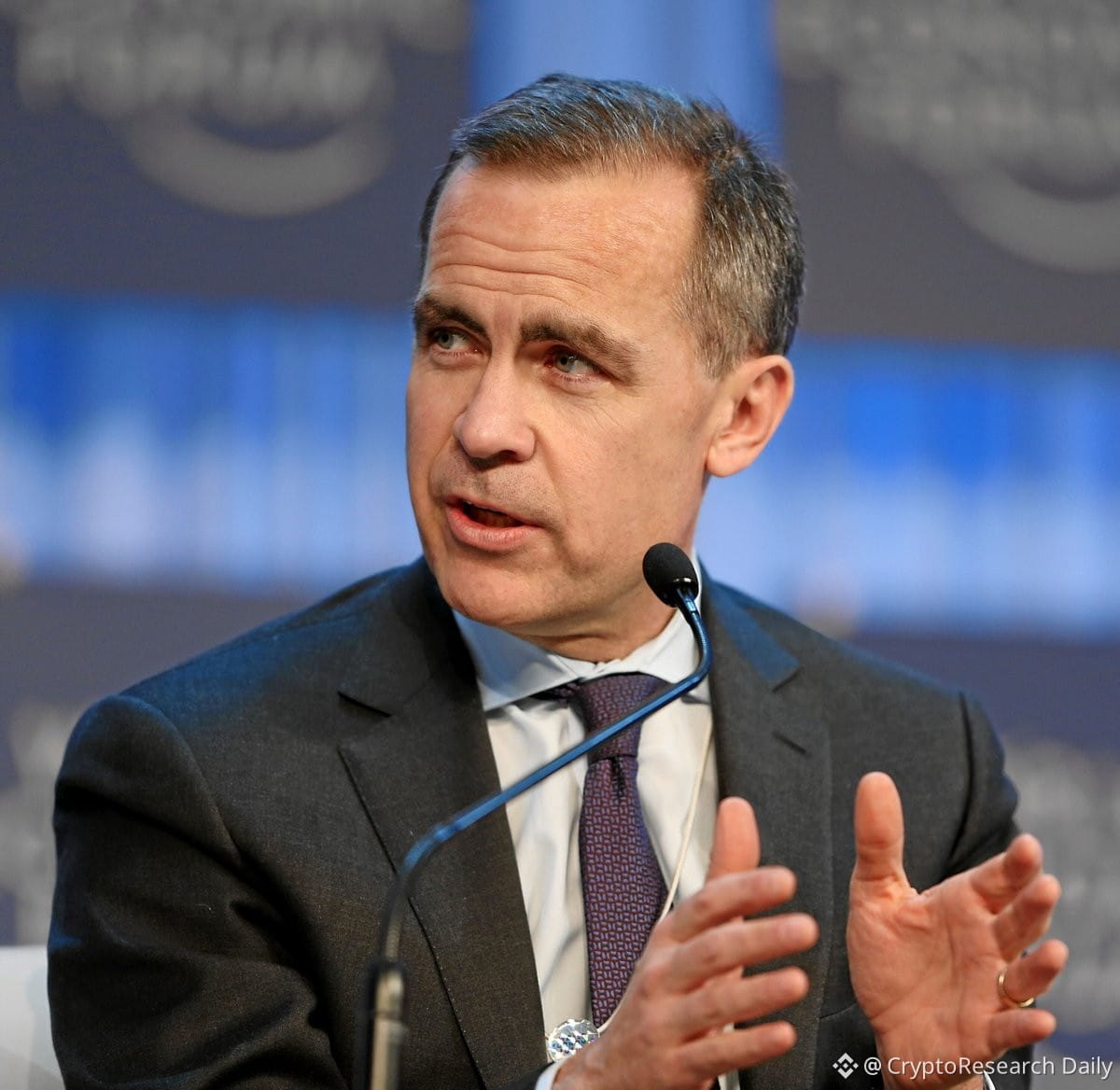

Standard Chartered just became the first bank to handle $HKDAP (Hong Kong dollar stablecoin) as an authorized agent.
This isn't just another bank dabbling in crypto—it's a major UK institution going full send on regulated stablecoin infrastructure in Hong Kong.
Why it matters:
- Traditional banking rails meeting on-chain settlement
- Hong Kong positioning itself as the regulated crypto hub vs Singapore
- $HKDAP could become the bridge asset for Asian institutional flows
Watch this space. When legacy banks start acting as stablecoin agents, liquidity follows.
This isn't just another bank dabbling in crypto—it's a major UK institution going full send on regulated stablecoin infrastructure in Hong Kong.
Why it matters:
- Traditional banking rails meeting on-chain settlement
- Hong Kong positioning itself as the regulated crypto hub vs Singapore
- $HKDAP could become the bridge asset for Asian institutional flows
Watch this space. When legacy banks start acting as stablecoin agents, liquidity follows.
🇫🇷 Durov drops update: French investigation still active
He's openly questioning if $TON / Telegram got targeted for political reasons
This isn't just legal drama - it's about whether Web3 infrastructure can operate independently from state actors
Watch how this plays out. Regulatory pressure on decentralized platforms = macro headwind for the entire space
If they can go after Telegram's founder, no protocol is truly safe from government overreach
He's openly questioning if $TON / Telegram got targeted for political reasons
This isn't just legal drama - it's about whether Web3 infrastructure can operate independently from state actors
Watch how this plays out. Regulatory pressure on decentralized platforms = macro headwind for the entire space
If they can go after Telegram's founder, no protocol is truly safe from government overreach


Japan's FSA is pushing to lift the ¥1M cap on stablecoin transactions.
This is massive for JPY stablecoins. Right now, retail is capped at ~$6.7k per transaction, which kills any real utility for DeFi, cross-border payments, or even basic on-chain commerce.
If this goes through:
• Institutional flows unlock
• JPY stablecoins become viable for larger trades
• Japan positions itself as a serious stablecoin hub in Asia
Bullish for regulated stablecoin plays in Japan. Watch for infra tokens that enable compliant on/off-ramps.
This is massive for JPY stablecoins. Right now, retail is capped at ~$6.7k per transaction, which kills any real utility for DeFi, cross-border payments, or even basic on-chain commerce.
If this goes through:
• Institutional flows unlock
• JPY stablecoins become viable for larger trades
• Japan positions itself as a serious stablecoin hub in Asia
Bullish for regulated stablecoin plays in Japan. Watch for infra tokens that enable compliant on/off-ramps.
US soldier caught making $400K+ on alleged insider $POLYMARKET bet is now fighting the CFTC trying to step into his criminal case.
Wild times when prediction markets become federal cases. The regulatory crosshairs are real—CFTC wants a piece of this action beyond just criminal charges.
If you're playing with insider info on prediction platforms, you're not just risking your bag, you're risking federal time. This case could set precedent for how prediction market manipulation gets prosecuted going forward.
Watch this space. Polymarket already dealing with regulatory heat, and now individual users getting dragged. The degen dream of unregulated prediction markets might be ending faster than expected.
Wild times when prediction markets become federal cases. The regulatory crosshairs are real—CFTC wants a piece of this action beyond just criminal charges.
If you're playing with insider info on prediction platforms, you're not just risking your bag, you're risking federal time. This case could set precedent for how prediction market manipulation gets prosecuted going forward.
Watch this space. Polymarket already dealing with regulatory heat, and now individual users getting dragged. The degen dream of unregulated prediction markets might be ending faster than expected.


Prince Filip of Serbia just went full degen on $BTC
"$250k by 2029 — I'd put good money on that"
His thesis:
• Institutionalization is real
• Supply shock incoming
• Path to $1M unlocked
Royalty stacking sats while normies still sleeping on the biggest wealth transfer in history
The supply shock narrative isn't cope anymore — it's math
"$250k by 2029 — I'd put good money on that"
His thesis:
• Institutionalization is real
• Supply shock incoming
• Path to $1M unlocked
Royalty stacking sats while normies still sleeping on the biggest wealth transfer in history
The supply shock narrative isn't cope anymore — it's math
Nigeria just greenlit MTN's $6.2B IHS Holdings acquisition but with strings attached — they're forcing a 30% stake sale of the Nigerian tower unit to local investors.
Classic regulatory power move. Government wants local capital to get a piece of the infrastructure pie. Smart for domestic control, potentially messy for deal execution.
Watch how this plays out for other telco M&A in emerging markets. The "foreign capital welcome but we want our cut" playbook is becoming standard.
Classic regulatory power move. Government wants local capital to get a piece of the infrastructure pie. Smart for domestic control, potentially messy for deal execution.
Watch how this plays out for other telco M&A in emerging markets. The "foreign capital welcome but we want our cut" playbook is becoming standard.


MTNUS-1.80%
US Treasury eyeing $1T+ from TGA account for debt buybacks. This is massive liquidity injection territory.
If they actually pull the trigger on this, expect serious spillover into risk assets. When the government starts pumping liquidity back into the system through buybacks, historically $BTC catches a bid.
Not financial advice but watch TGA balance closely. When government money printer goes brr (even indirectly), crypto tends to eat well.
Timing unclear but this is the kind of macro setup that flips sentiment fast.
If they actually pull the trigger on this, expect serious spillover into risk assets. When the government starts pumping liquidity back into the system through buybacks, historically $BTC catches a bid.
Not financial advice but watch TGA balance closely. When government money printer goes brr (even indirectly), crypto tends to eat well.
Timing unclear but this is the kind of macro setup that flips sentiment fast.
🚨 $NVDA bleeding for 7 straight sessions - longest streak since 2022
Earnings drop Wednesday. Market's pricing in disappointment or setting up for a relief rally?
AI narrative cooling or just profit-taking before the next leg? Watch how crypto/AI plays react if Jensen delivers.
Earnings drop Wednesday. Market's pricing in disappointment or setting up for a relief rally?
AI narrative cooling or just profit-taking before the next leg? Watch how crypto/AI plays react if Jensen delivers.
Bitget CEO Gracy Chen eyeing $50K $BTC as a key level.
But here's the real alpha: she's not pretending to be a chart wizard. "I'm not analytical. I'm just an exchange CEO."
Her play? Build the platform where degens execute. Smart positioning — let the traders trade, she stacks the infrastructure fees.
Exchange CEOs calling levels is usually noise. This one knows her lane.
But here's the real alpha: she's not pretending to be a chart wizard. "I'm not analytical. I'm just an exchange CEO."
Her play? Build the platform where degens execute. Smart positioning — let the traders trade, she stacks the infrastructure fees.
Exchange CEOs calling levels is usually noise. This one knows her lane.
$BTC just reclaimed the throne as the best-performing asset of the last decade.
+13,000% returns. Not a typo.
Beating $5T Nvidia. Beating the S&P. Beating gold.
Every cycle, people say it's dead. Every cycle, it comes back stronger.
The king never left. You just stopped paying attention.
+13,000% returns. Not a typo.
Beating $5T Nvidia. Beating the S&P. Beating gold.
Every cycle, people say it's dead. Every cycle, it comes back stronger.
The king never left. You just stopped paying attention.
Feed's turning bullish across the board.
Question is: are we front-running the next leg up or getting exit liquidity'd?
Sentiment shifts fast. Watch for confirmation or fade the noise.
Question is: are we front-running the next leg up or getting exit liquidity'd?
Sentiment shifts fast. Watch for confirmation or fade the noise.
US Treasury just expanded Iran sanctions to include digital assets and gold.
This isn't just geopolitics—it's a direct signal on how nation-states are weaponizing compliance against crypto.
Expect:
• More pressure on CEXs to freeze Iranian-linked wallets
• Privacy coins and P2P networks to see increased demand
• Gold-backed stablecoins potentially caught in crossfire
The regulatory net is tightening. If you're building in DeFi or holding assets with murky provenance, now's the time to audit your exposure.
Sanctions = forced decoupling = alpha for those positioned right.
This isn't just geopolitics—it's a direct signal on how nation-states are weaponizing compliance against crypto.
Expect:
• More pressure on CEXs to freeze Iranian-linked wallets
• Privacy coins and P2P networks to see increased demand
• Gold-backed stablecoins potentially caught in crossfire
The regulatory net is tightening. If you're building in DeFi or holding assets with murky provenance, now's the time to audit your exposure.
Sanctions = forced decoupling = alpha for those positioned right.
Log in to explore more content