
ParvezMayar
10.5k Posts

ParvezMayar
 Square Verified+
Crypto enthusiast | Exploring, sharing, and earning | Let’s grow together!🤝 | X @Next_GemHunter

Traders League Badge Expert
Open Trade
Frequent Trader
2.9 Years
333 Following
45.1K+ Followers
85.1K+ Liked
1 Badges
Posts
Portfolio
All
Quotes
Videos
Live
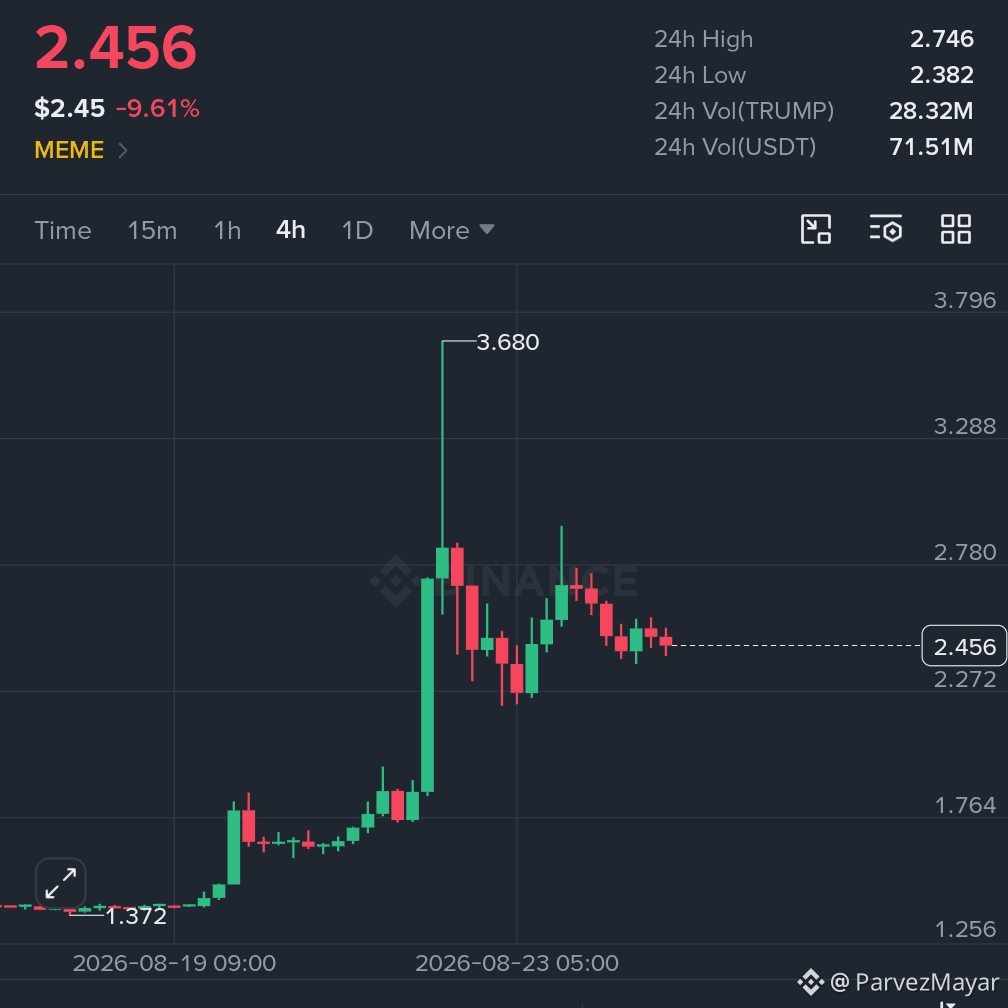
$TRUMP is holding nicely...
But there is some onchain information that the TRUMP team is selling tokens... almost 3M+ has been sold in a way that's drawing major attention ..
So after all we all know, what has been driving the $TRUMP pump to $3+? 😁
But there is some onchain information that the TRUMP team is selling tokens... almost 3M+ has been sold in a way that's drawing major attention ..
So after all we all know, what has been driving the $TRUMP pump to $3+? 😁
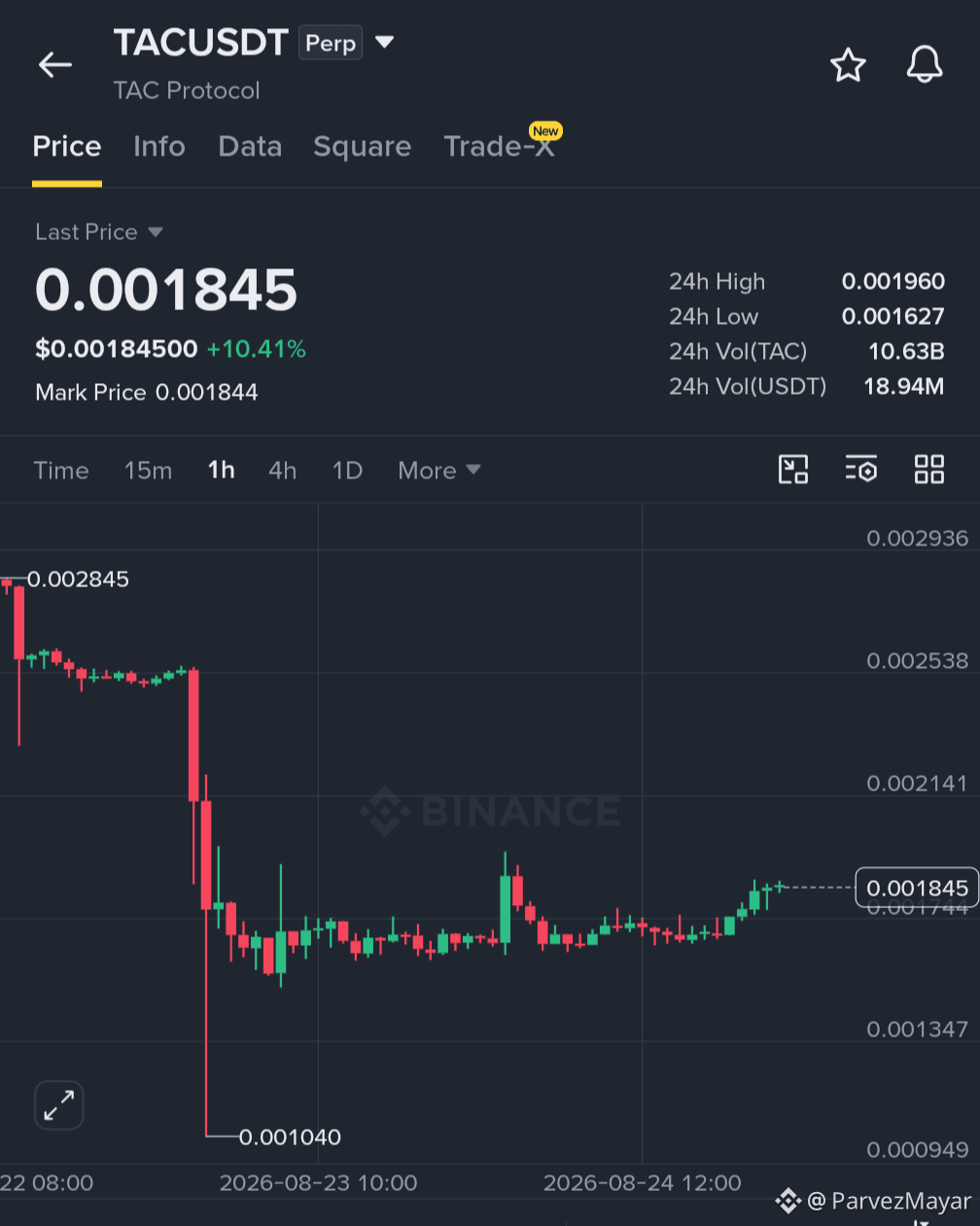
After that MASSIVE dump... $TAC is finally showing some signs of life again 👀
Price is back around $0.00184, up 10%+, and the 1H chart is slowly trying to rebuild after sitting dead around the lows.
But yeah... this one gets messy VERY fast.
The first area that matters is $0.00190-$0.00196.
Break that cleanly and hold above it, then a proper bounce toward $0.0021-$0.0022 starts looking much more realistic.
Until then?
No blind chasing.
Let $TAC prove the bounce first... because after a dump like this, one green candle can disappear just as fast as it arrived. 💀
📍 Personal analysis only. Not financial advice. DYOR and manage your own risk.
Price is back around $0.00184, up 10%+, and the 1H chart is slowly trying to rebuild after sitting dead around the lows.
But yeah... this one gets messy VERY fast.
The first area that matters is $0.00190-$0.00196.
Break that cleanly and hold above it, then a proper bounce toward $0.0021-$0.0022 starts looking much more realistic.
Until then?
No blind chasing.
Let $TAC prove the bounce first... because after a dump like this, one green candle can disappear just as fast as it arrived. 💀
📍 Personal analysis only. Not financial advice. DYOR and manage your own risk.
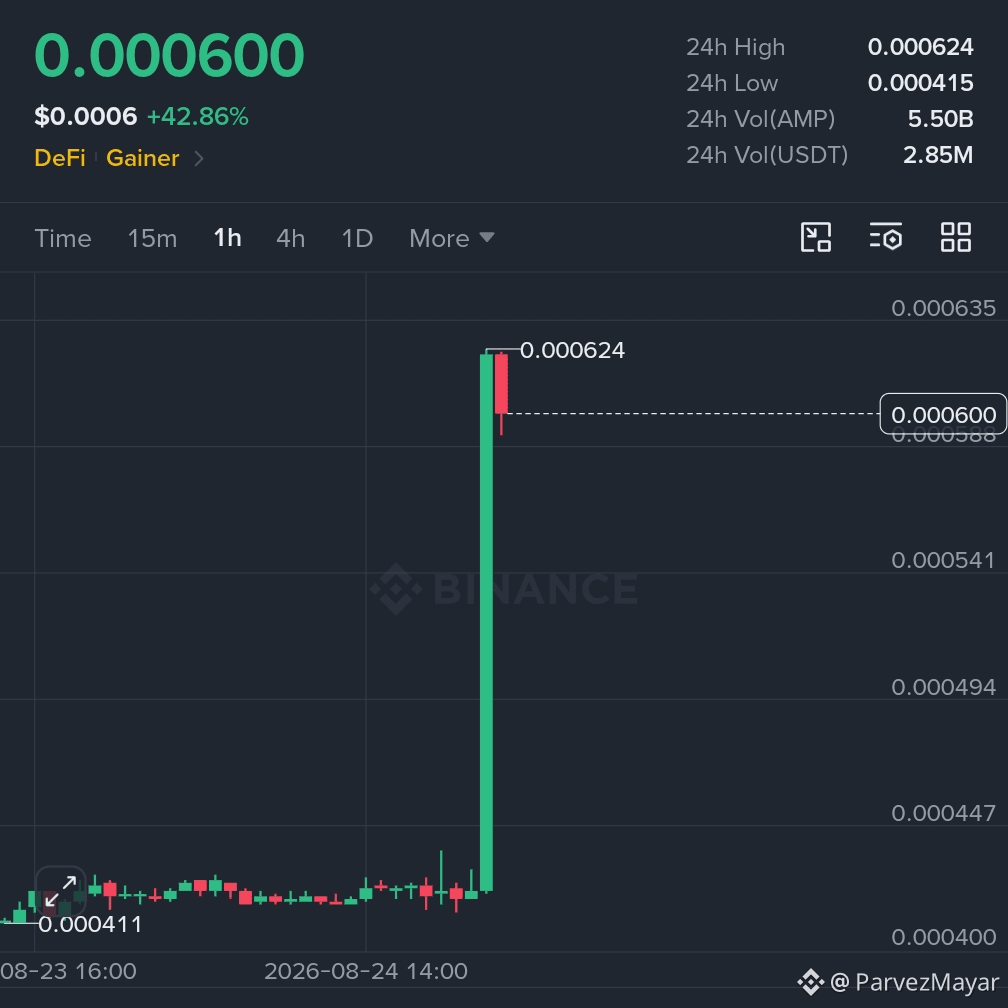
Woww... $AMP to the moon.
AMP went from $0.004 to $0.0062 in just 1H candle... a vertical pump of 40% 💪🏻
Currently cooling off but, Don't miss the next push 😁
AMP went from $0.004 to $0.0062 in just 1H candle... a vertical pump of 40% 💪🏻
Currently cooling off but, Don't miss the next push 😁
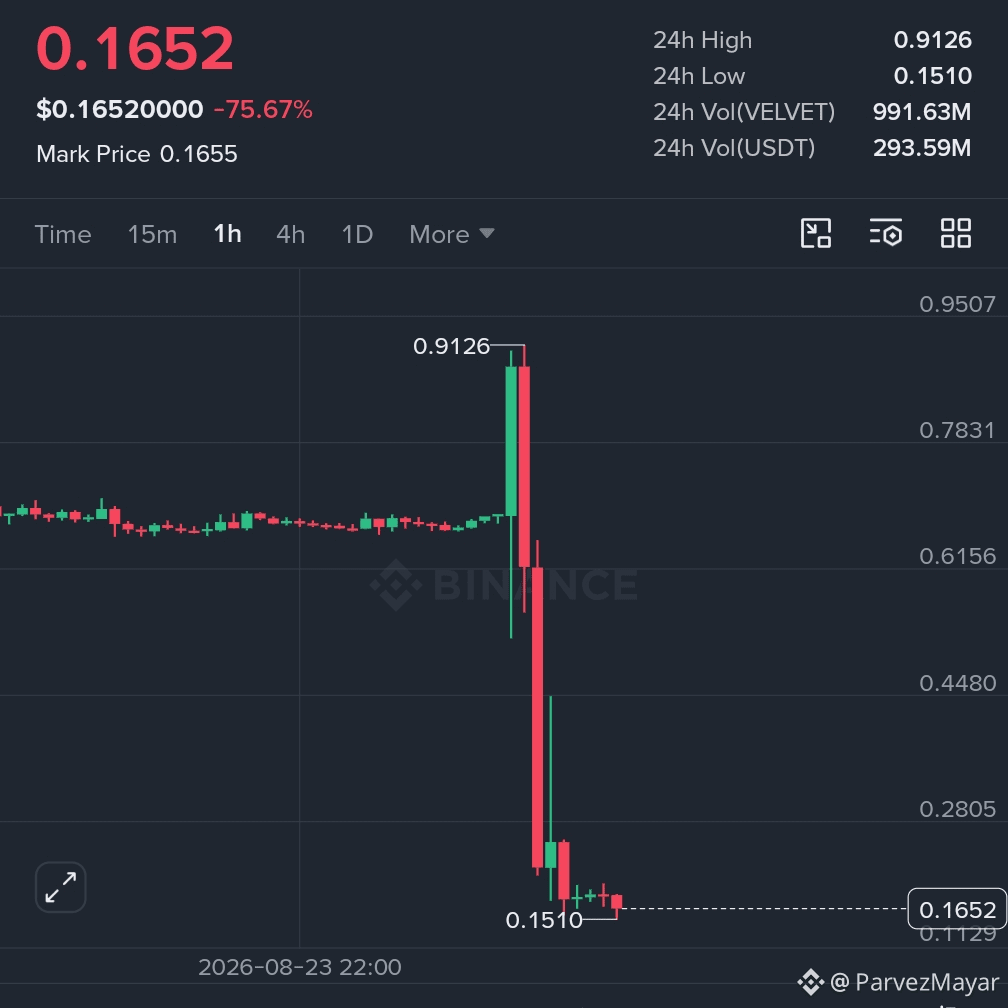
$VELVET is getting absolutely DESTROYED now... -75% and sitting near $0.165 after tagging $0.151 💀
At this point this is not a normal dip anymore... this is pure survival mode.
If $0.15-$0.16 can finally hold, a relief bounce toward $0.20-$0.24 is possible.
Lose $0.15 again and... yeah, better not pretend this chart is healthy. 👀
$VELVET
At this point this is not a normal dip anymore... this is pure survival mode.
If $0.15-$0.16 can finally hold, a relief bounce toward $0.20-$0.24 is possible.
Lose $0.15 again and... yeah, better not pretend this chart is healthy. 👀
$VELVET
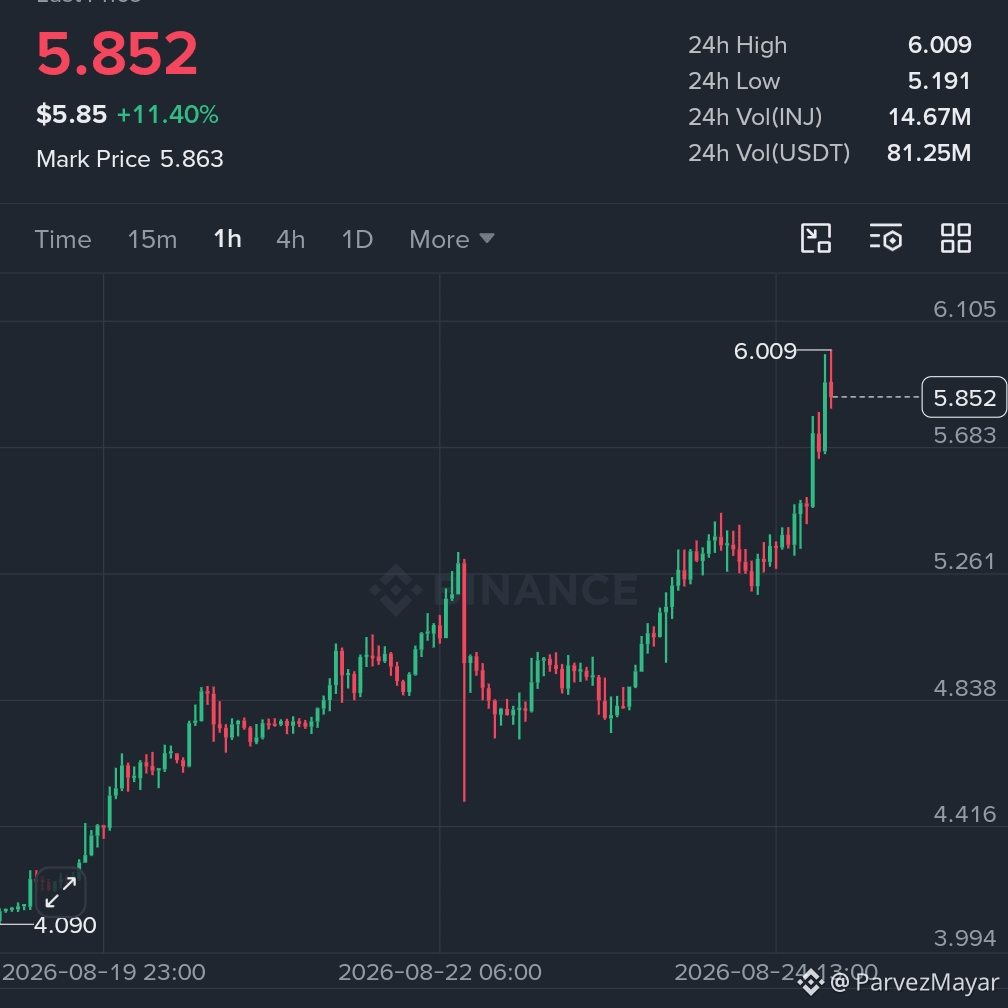
Wow... $INJ is pushing hard again 👀🔥
Already +11%, just tagged $6.00, and the 1H structure is still making higher highs and higher lows.
If $5.75-$5.80 keeps holding, another push above $6.00 can open $6.20-$6.40 next.
Momentum is still very much BULLISH... don't ignore this one. 📈
Already +11%, just tagged $6.00, and the 1H structure is still making higher highs and higher lows.
If $5.75-$5.80 keeps holding, another push above $6.00 can open $6.20-$6.40 next.
Momentum is still very much BULLISH... don't ignore this one. 📈
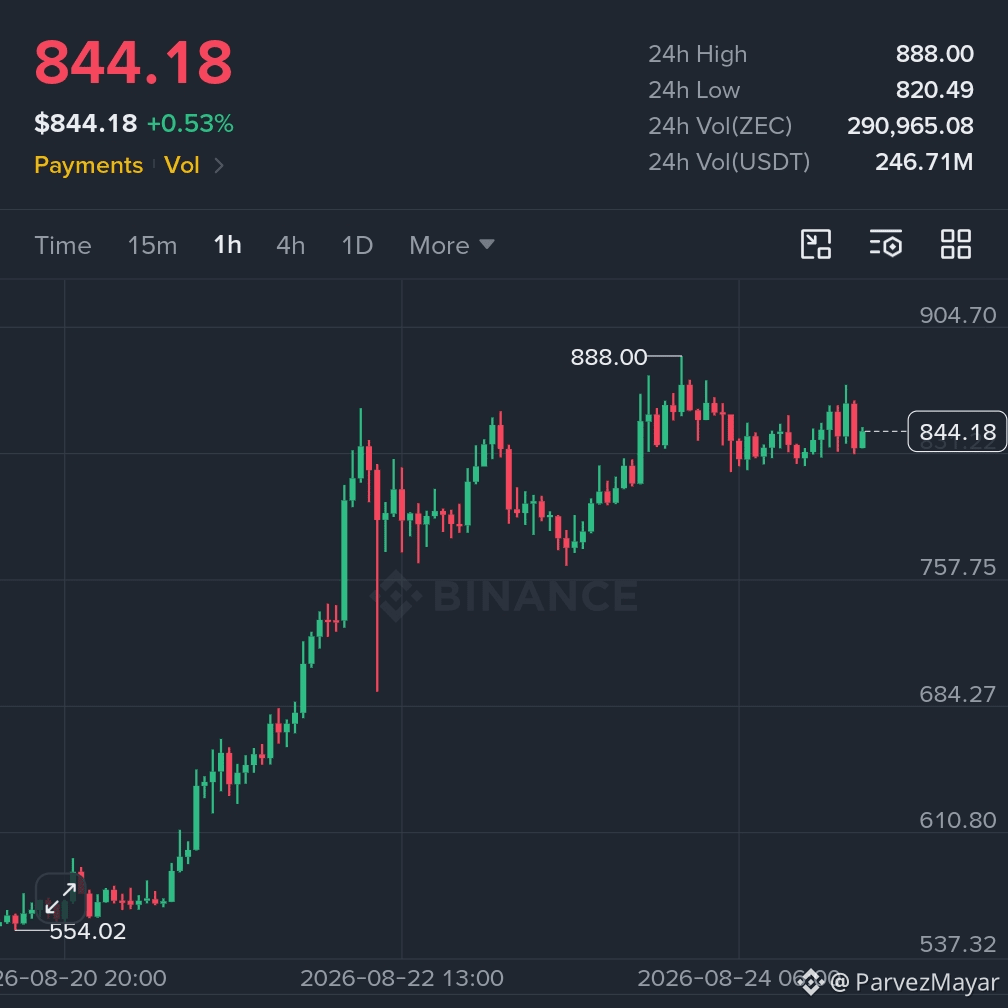
📈💪🏻 After a massive run... $ZEC is doing the boring thing now.
And honestly, thats probably healthy. 👀
Price is sitting around $844, moving sideways after touching $888, instead of immediately giving the whole move back.
That matters.
The 1H structure is basically building a fresh range around $820-$870 after a huge expansion from the $550 area.
For bulls, $820-$830 is the zone to defend.
Keep holding above that and another test of $888 stays very much alive... break that cleanly and $900+ comes straight back into focus.
Lose $820, then I'd expect a deeper cooldown before the next serious attempt.
Right now?
$ZEC isn’t pumping.
It's absorbing the pump.
And after a move this big, sideways consolidation is exactly what bulls want to see before asking for another leg higher. 📈
$VELVET #ZEC #BitcoinOpenInterestFallsToTwoMonthLow
And honestly, thats probably healthy. 👀
Price is sitting around $844, moving sideways after touching $888, instead of immediately giving the whole move back.
That matters.
The 1H structure is basically building a fresh range around $820-$870 after a huge expansion from the $550 area.
For bulls, $820-$830 is the zone to defend.
Keep holding above that and another test of $888 stays very much alive... break that cleanly and $900+ comes straight back into focus.
Lose $820, then I'd expect a deeper cooldown before the next serious attempt.
Right now?
$ZEC isn’t pumping.
It's absorbing the pump.
And after a move this big, sideways consolidation is exactly what bulls want to see before asking for another leg higher. 📈
$VELVET #ZEC #BitcoinOpenInterestFallsToTwoMonthLow
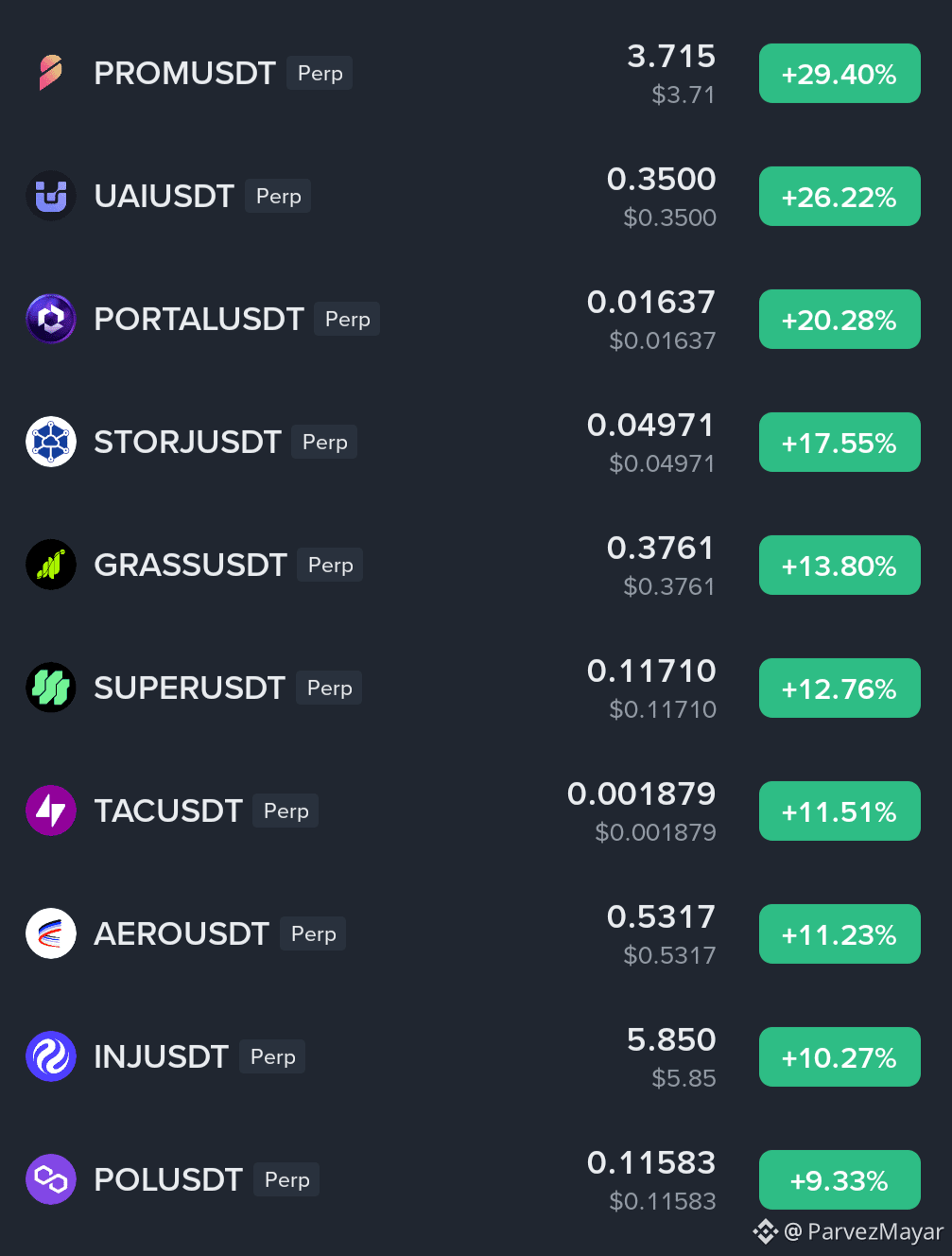
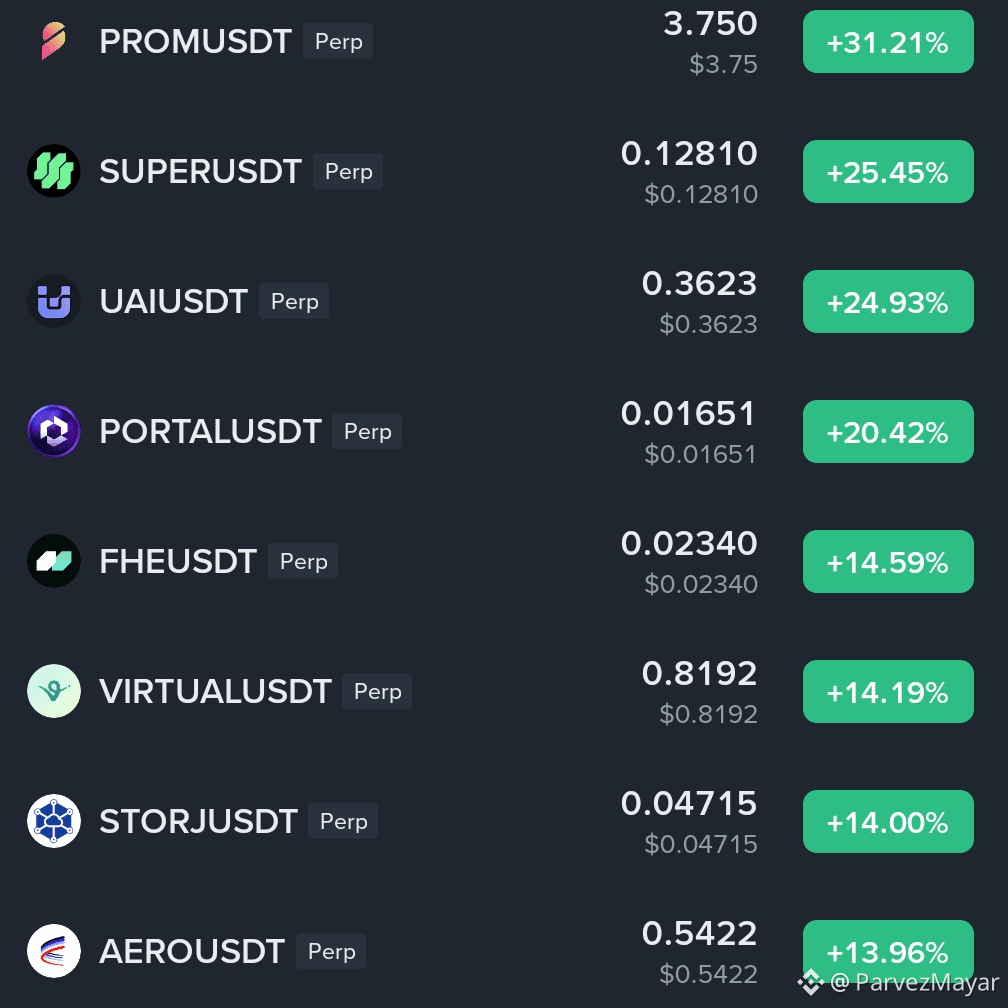
Dears... those greens are getting a little too comfortable again 👀
$PROM +31% still leading like it owns the board.
$SUPER +25% just had that vertical breakout.
$UAI +24% still carrying serious momentum.
And $PORTAL +20% is quietly staying in the conversation too.
Not every green is worth chasing now...
But these four still have enough structure behind the move to keep watching closely. 📈
$PROM +31% still leading like it owns the board.
$SUPER +25% just had that vertical breakout.
$UAI +24% still carrying serious momentum.
And $PORTAL +20% is quietly staying in the conversation too.
Not every green is worth chasing now...
But these four still have enough structure behind the move to keep watching closely. 📈
Holding $BNB295.7 USDT
💛 For almost a year, this market trained people to expect disappointment.
Every bounce sold.
Every “breakout” faded.
Every little green week somehow ended with someone saying “dead cat.” 💀
Now look at the majors.
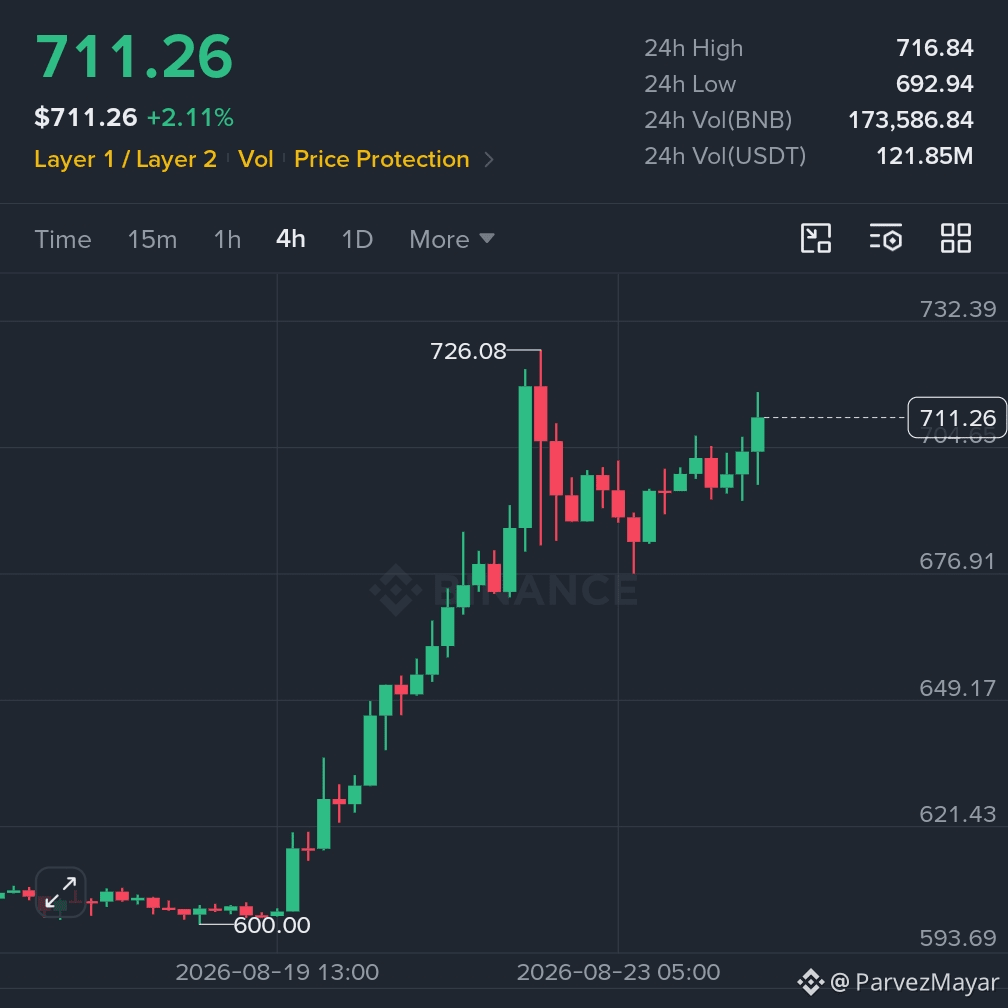
$BNB around $711
Up 17.5% in 7D, 26.5% in 30D
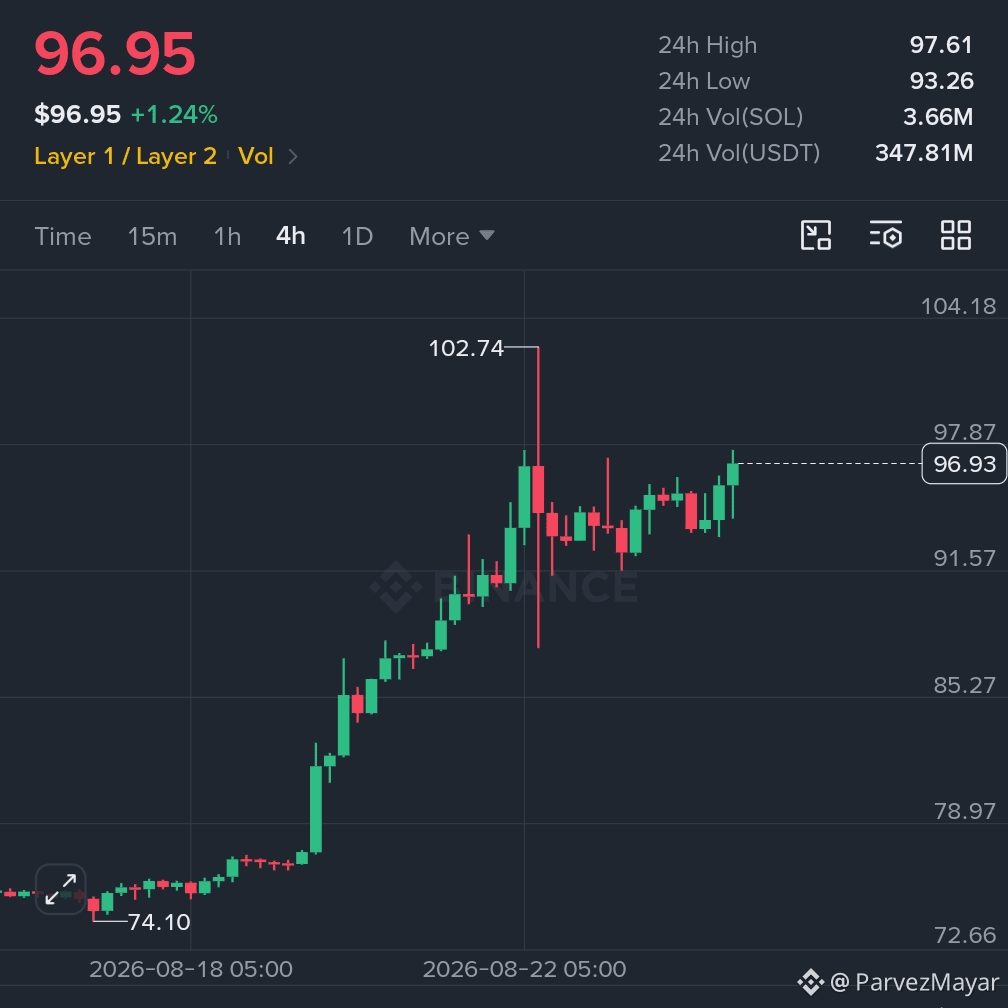
$SOL around $96.9
Up 29% in 7D, 31% in 30D
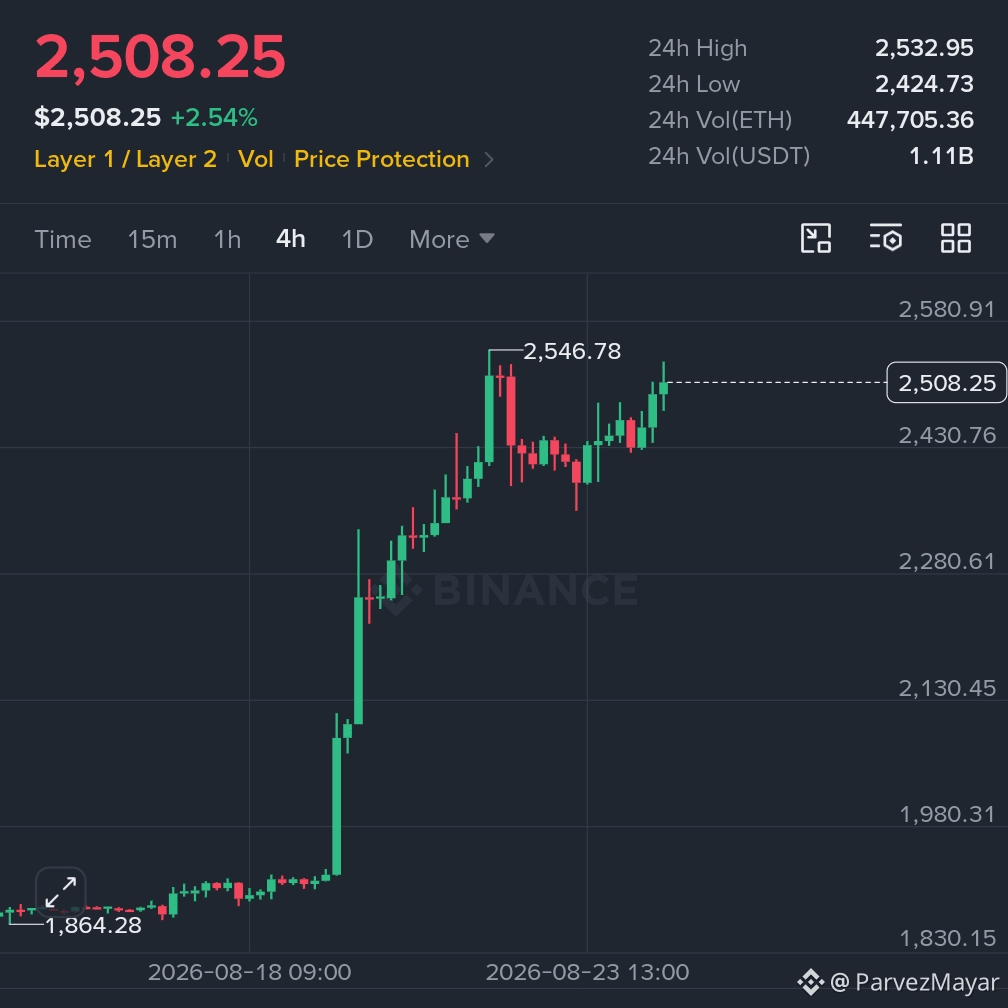
$ETH around $2,508
Up 33% in 7D, 34.6% in 30D
And the interesting part is not even the percentages.
It's the structure.
All three spent months getting beaten down, then started doing the exact opposite of what they were doing before...
higher bases.
stronger recoveries.
pullbacks getting bought.
breakouts actually holding.
Thats the shift I care about.
#ETH pushed from roughly $1,864 to $2,546 and is still sitting near the highs.
#SOL came from around $74 to $102 and instead of fully collapsing, it’s consolidating around $97.
#BNB ran from roughly $600 to $726, cooled off, and buyers are already pushing it back above $710.
That doesn’t mean “bull market confirmed, mortgage the house.” Relax. 😭
But after a year where strength kept dying immediately...
this is the first time in a while the market is starting to behave like dips are opportunities instead of warnings.
Now I’m watching one thing:
Do these higher zones keep holding?
If yes...
then people who spent the entire downtrend waiting for “one more dip” may soon discover the market has stopped asking for permission. 👀🔥
Every bounce sold.
Every “breakout” faded.
Every little green week somehow ended with someone saying “dead cat.” 💀
Now look at the majors.
$BNB around $711
Up 17.5% in 7D, 26.5% in 30D
$SOL around $96.9
Up 29% in 7D, 31% in 30D
$ETH around $2,508
Up 33% in 7D, 34.6% in 30D
And the interesting part is not even the percentages.
It's the structure.
All three spent months getting beaten down, then started doing the exact opposite of what they were doing before...
higher bases.
stronger recoveries.
pullbacks getting bought.
breakouts actually holding.
Thats the shift I care about.
#ETH pushed from roughly $1,864 to $2,546 and is still sitting near the highs.
#SOL came from around $74 to $102 and instead of fully collapsing, it’s consolidating around $97.
#BNB ran from roughly $600 to $726, cooled off, and buyers are already pushing it back above $710.
That doesn’t mean “bull market confirmed, mortgage the house.” Relax. 😭
But after a year where strength kept dying immediately...
this is the first time in a while the market is starting to behave like dips are opportunities instead of warnings.
Now I’m watching one thing:
Do these higher zones keep holding?
If yes...
then people who spent the entire downtrend waiting for “one more dip” may soon discover the market has stopped asking for permission. 👀🔥
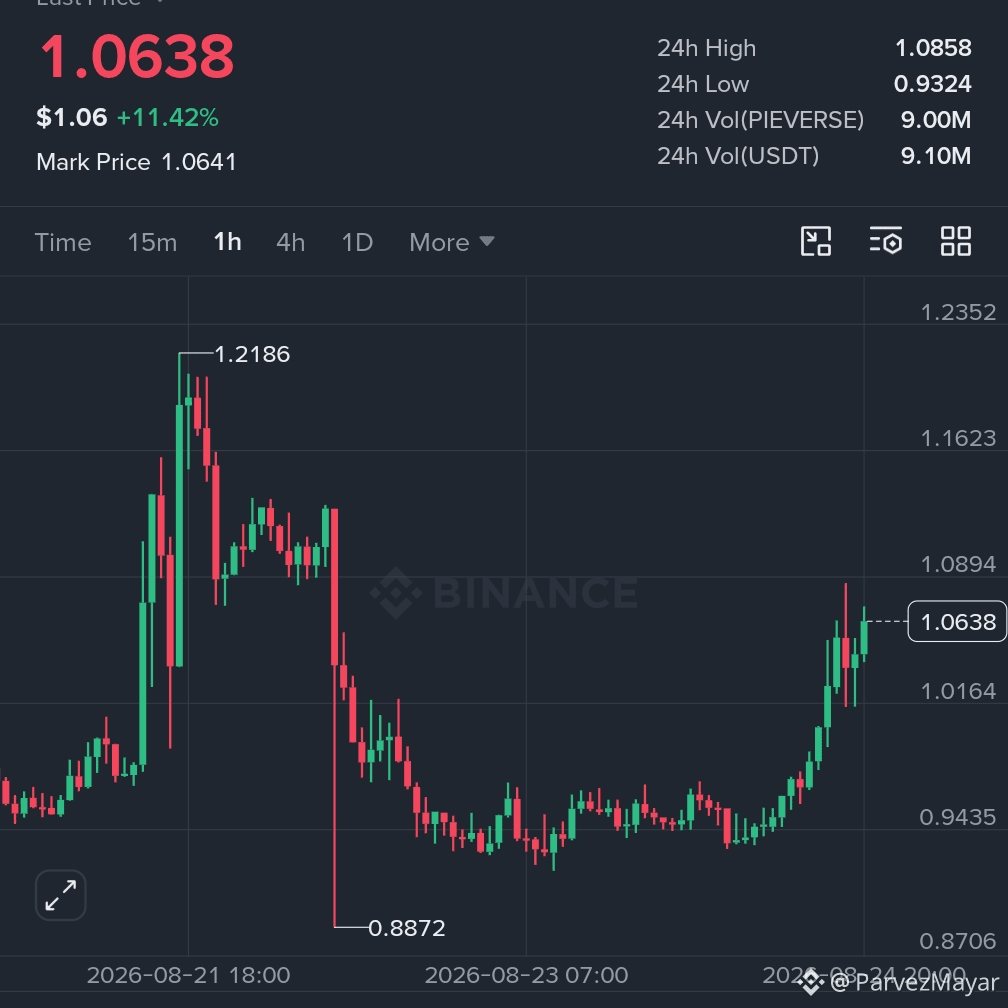
$PIEVERSE is waking up nicely here 👀
Back above $1.06, up 11%+, and the 1H chart is finally pushing out of that long base.
If $1.09 breaks cleanly, $1.15-$1.20 comes back into play fast. 📈
Back above $1.06, up 11%+, and the 1H chart is finally pushing out of that long base.
If $1.09 breaks cleanly, $1.15-$1.20 comes back into play fast. 📈
Okay guys.. Keep an eye on $BTW 👀
After a complete flush and pullback... Another wave is coming 💪🏻
After a complete flush and pullback... Another wave is coming 💪🏻
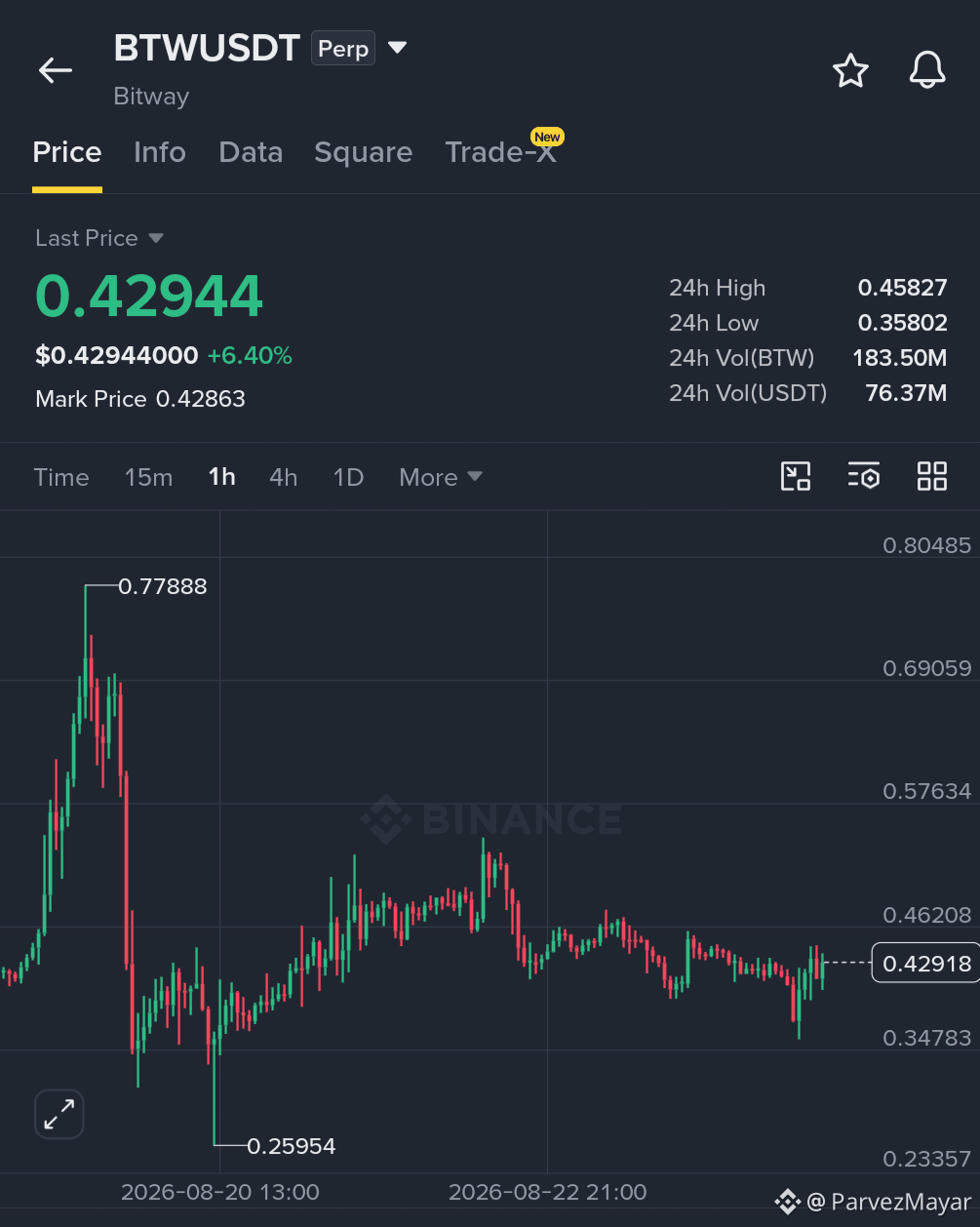
Wowwwww...💪🏻
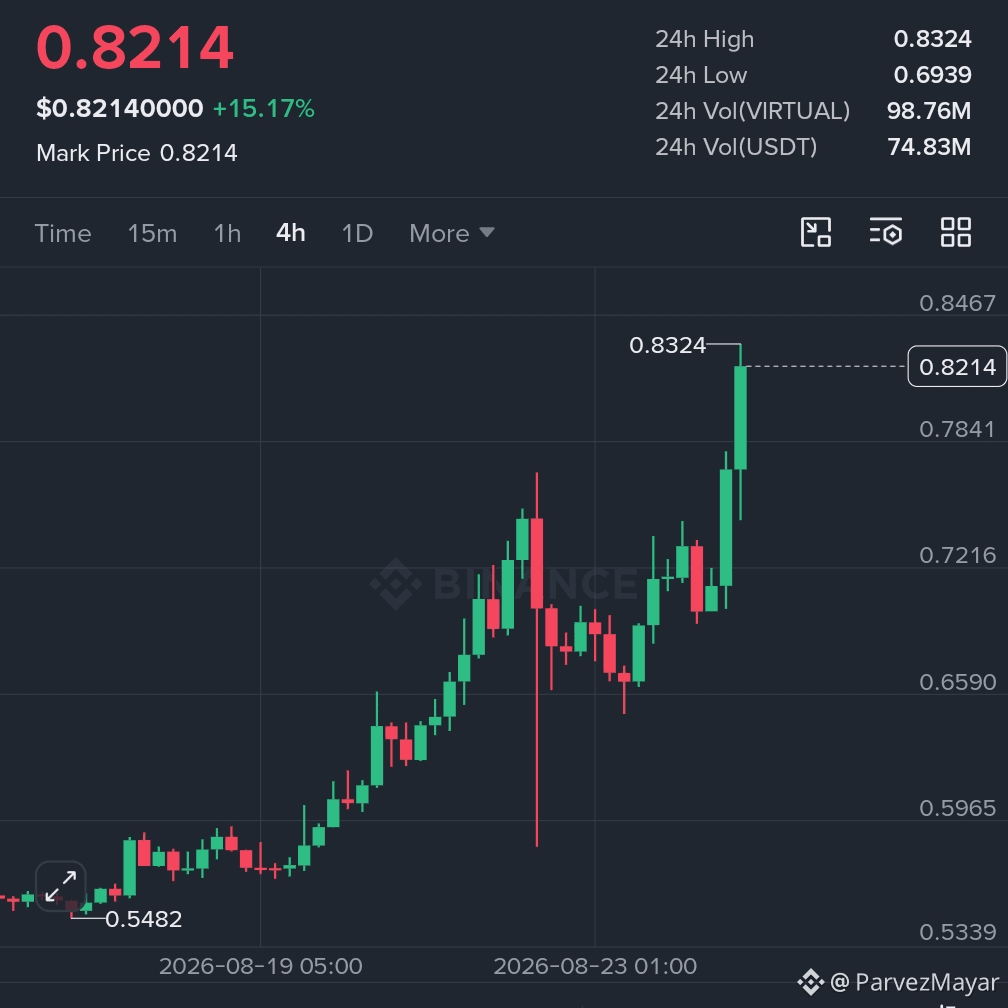
Guys... $VIRTUAL just woke up hard in style... With a massive 15% vertical spike from $.68 to $82.
Don't be late.. GRAB IT NOW... Momentum is bullish and you don't want to be chasing a green finished top 🔥
$VELVET is the disaster but $VIRTUAL is the new hope.
Guys... $VIRTUAL just woke up hard in style... With a massive 15% vertical spike from $.68 to $82.
Don't be late.. GRAB IT NOW... Momentum is bullish and you don't want to be chasing a green finished top 🔥
$VELVET is the disaster but $VIRTUAL is the new hope.
$BTC is just going vertical, 25% pump in the last 4 days is just unbelievable...
Bitcoin is just not going to stop now 💪🏻
😁 Only smart people entered on right time... and those who are waiting for a dump will chase $BTC at $100K..
Bitcoin is just not going to stop now 💪🏻
😁 Only smart people entered on right time... and those who are waiting for a dump will chase $BTC at $100K..
Long $BTC318.1 USDT
Guys... Mark my words.
$ZEC is going to hit $900 today.
$BTC is going to hit $80K today.
And And... 🤣😝 $VELVET is going to COOK everyone today.
$ZEC is going to hit $900 today.
$BTC is going to hit $80K today.
And And... 🤣😝 $VELVET is going to COOK everyone today.
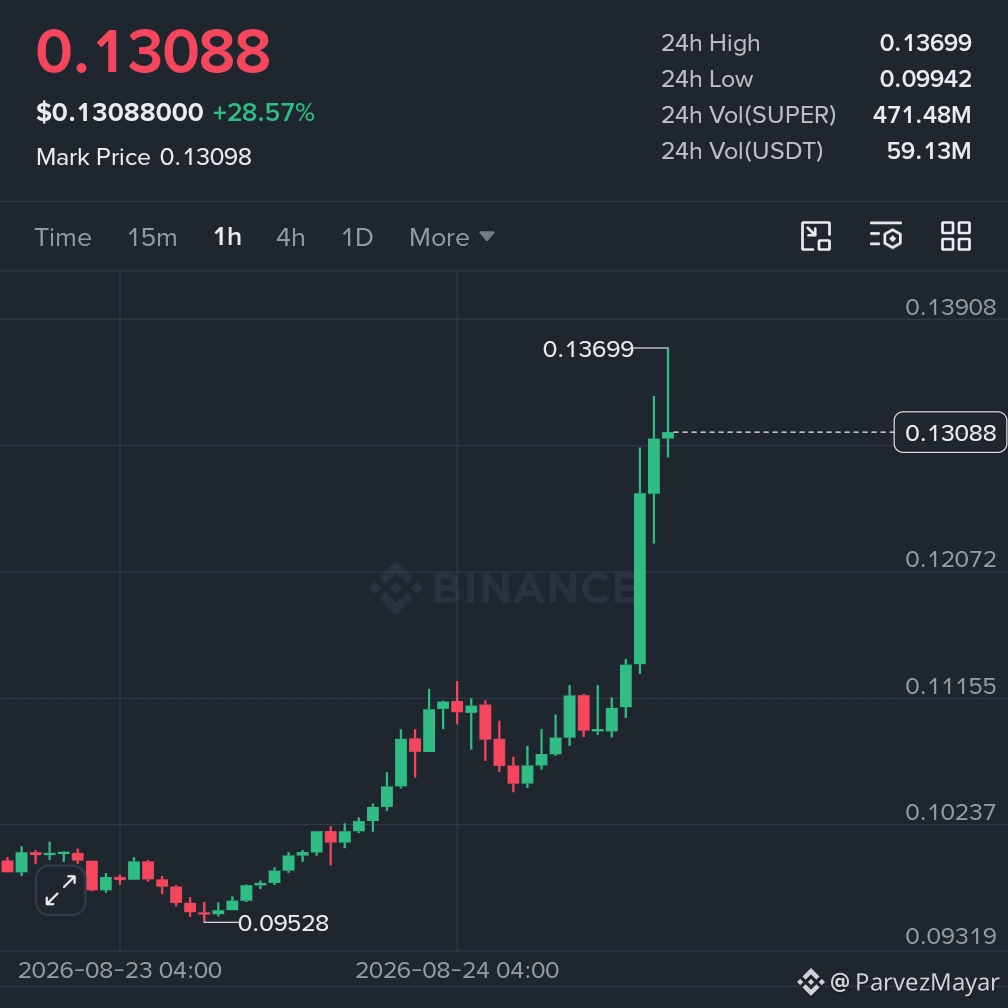
$SUPER just went VERTICAL... $0.11 to $0.137 in a blink and buyers are still not backing off 👀📈
$VELVET is just a piece of 💩.... Sometimes we just don't know how we get trapped with such useless coins... 🥲
Did anyone else book losses on $VELVET ? 💀
Did anyone else book losses on $VELVET ? 💀
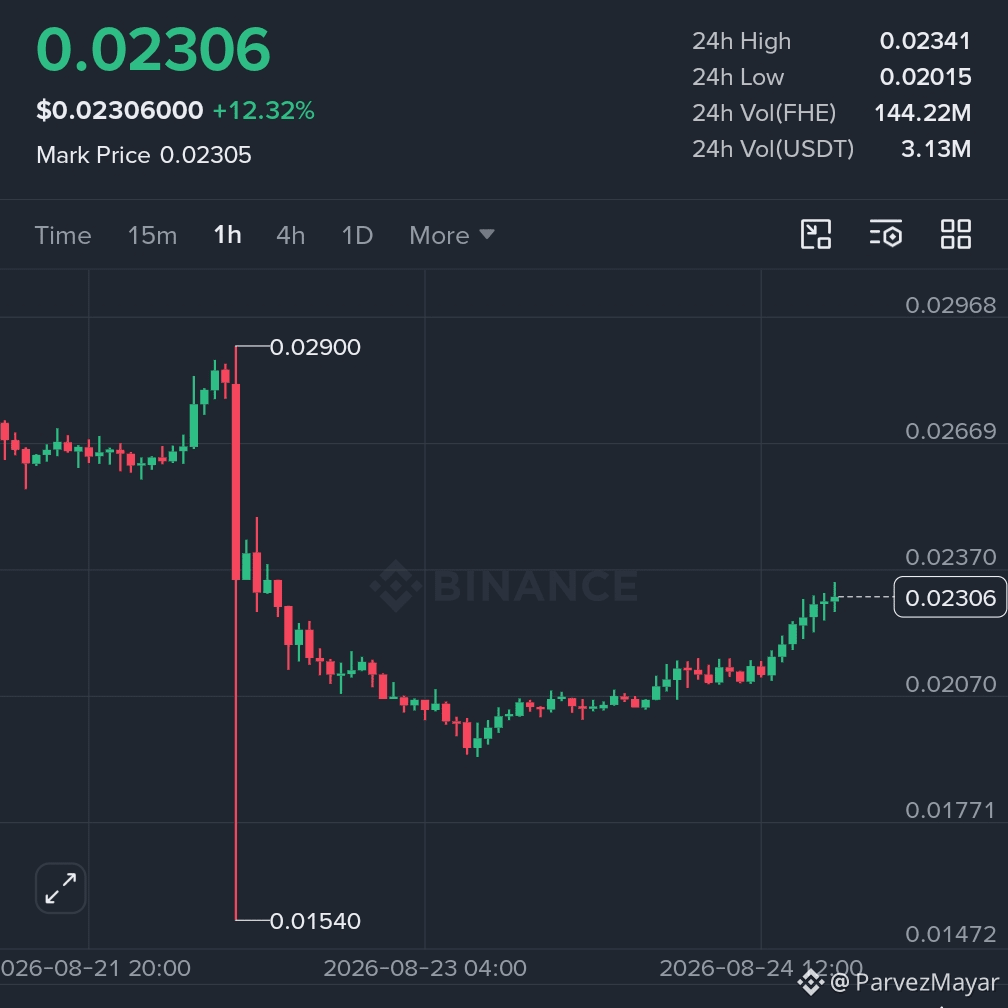
📈 $FHE is building a nice base around $0.023... but the momentum is starting to slow a bit here.
Not rushing this one.
A clean break above $0.0234-$0.0237 with stronger candles would be the confirmation worth waiting for. 👀
Not rushing this one.
A clean break above $0.0234-$0.0237 with stronger candles would be the confirmation worth waiting for. 👀
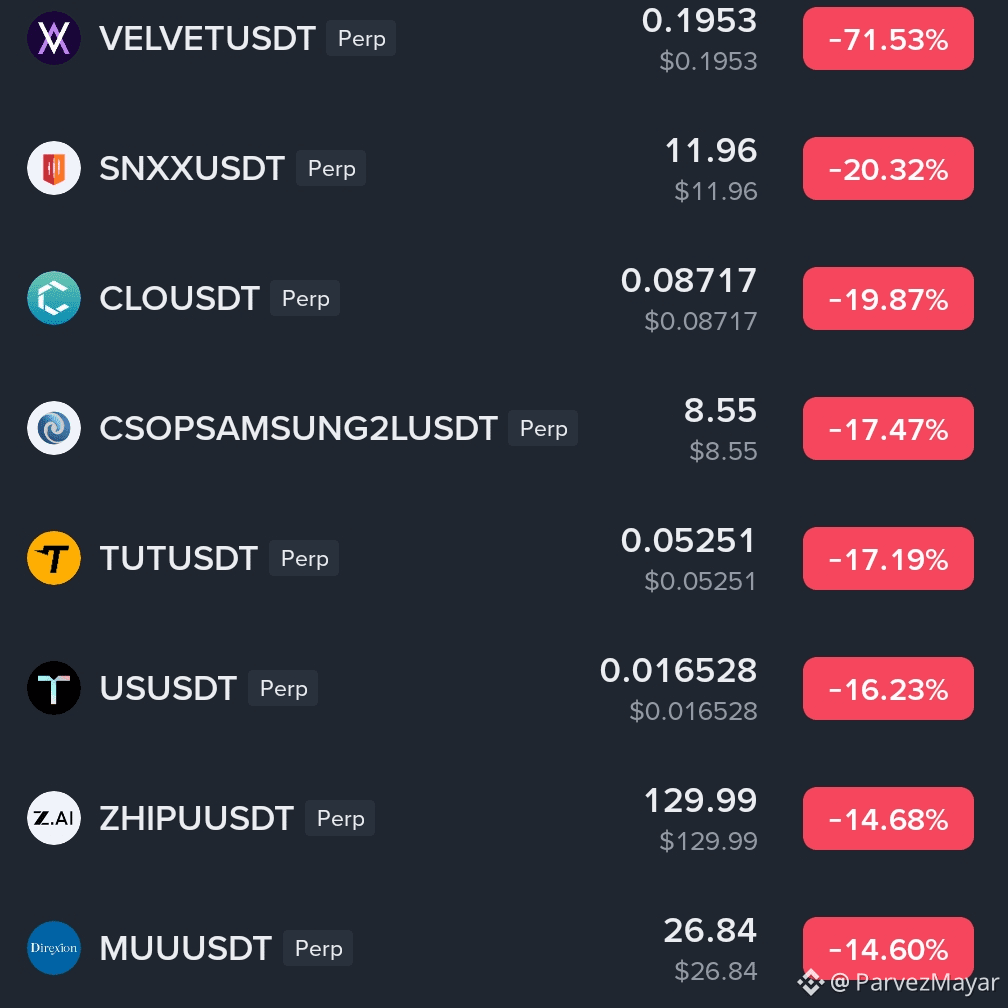
Dears... these reds are getting ugly now 👀
Keep your eyes on these three:
$VELVET -71.5%... absolute collapse. After all that volatility, this one is now pure high-risk territory.
$TUT -17.2%... giving back a big part of the recent run, and around $0.0525 the next bounce needs to prove itself.
$CLO -19.9%... steady selling pressure, sitting near $0.087 with buyers still not showing enough strength.
Red candles always start looking “cheap” after a big dump...
But cheap and finished dumping are two VERY different things. 💀
Keep your eyes on these three:
$VELVET -71.5%... absolute collapse. After all that volatility, this one is now pure high-risk territory.
$TUT -17.2%... giving back a big part of the recent run, and around $0.0525 the next bounce needs to prove itself.
$CLO -19.9%... steady selling pressure, sitting near $0.087 with buyers still not showing enough strength.
Red candles always start looking “cheap” after a big dump...
But cheap and finished dumping are two VERY different things. 💀
I will never Trust this thing again 🥲
$VELVET just snapped every short + longs at the same time... a massive pump to $0.9 and back to $0.18 a disastrous dump of -72%...
Did anyone get trapped on $VELVET ?
$VELVET just snapped every short + longs at the same time... a massive pump to $0.9 and back to $0.18 a disastrous dump of -72%...
Did anyone get trapped on $VELVET ?
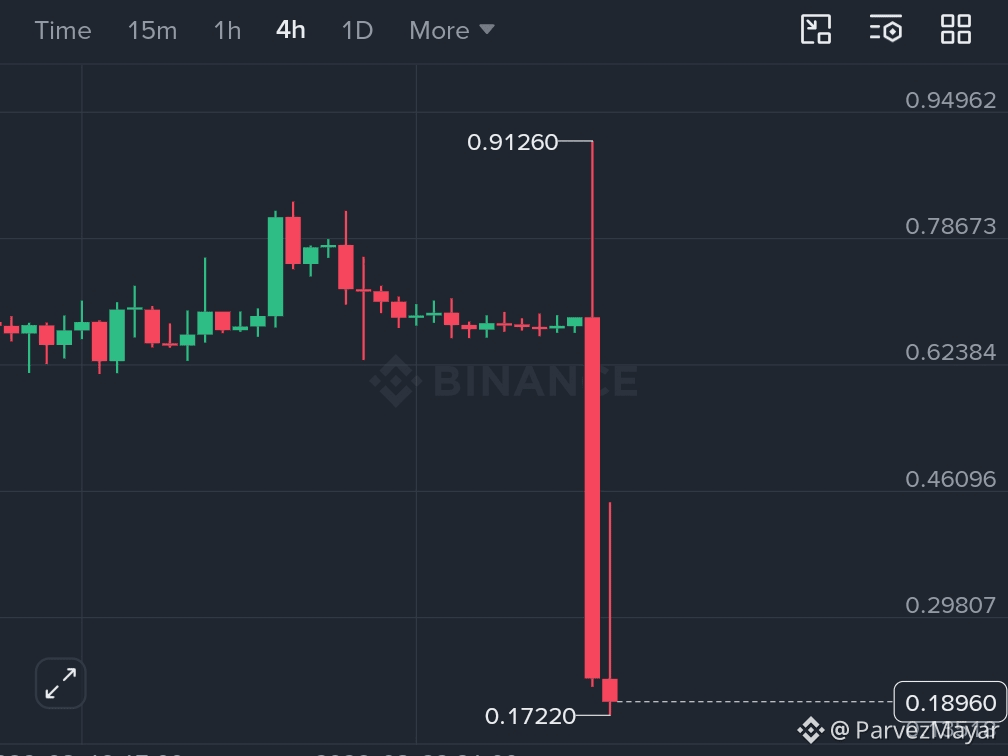
$VELVET just got absolutely deleted. 💀
$0.2003 | -70.09% in 24H
24H high: $0.9126
24H low: $0.1756
USDT volume: $225.6M
And yeah... this isn’t a normal pullback.
The 4H structure basically snapped in one move. Price was holding around the $0.60-$0.65 area, then liquidity vanished and it fell straight into the $0.17-$0.20 zone.
That changes the whole trade.
For $VELVET bulls, first job is simply surviving above $0.175-$0.18. If that base holds, a relief push toward $0.24-$0.28 is possible.
But if $0.175 breaks again?
Then this chart gets ugly very fast.
One more thing... order book is still ask-heavy around 58%.
So no, I’m not calling this “cheap” just because it’s down 70%.
After a move like this, cheap can stay cheap... then somehow get cheaper. 👀📉
Will $VELVET bounce back? or this is already done and dusted?
$0.2003 | -70.09% in 24H
24H high: $0.9126
24H low: $0.1756
USDT volume: $225.6M
And yeah... this isn’t a normal pullback.
The 4H structure basically snapped in one move. Price was holding around the $0.60-$0.65 area, then liquidity vanished and it fell straight into the $0.17-$0.20 zone.
That changes the whole trade.
For $VELVET bulls, first job is simply surviving above $0.175-$0.18. If that base holds, a relief push toward $0.24-$0.28 is possible.
But if $0.175 breaks again?
Then this chart gets ugly very fast.
One more thing... order book is still ask-heavy around 58%.
So no, I’m not calling this “cheap” just because it’s down 70%.
After a move like this, cheap can stay cheap... then somehow get cheaper. 👀📉
Will $VELVET bounce back? or this is already done and dusted?
Got robbed 🥲
VELVET back to $0.9? 📈
Scam 😵
I don't trust Velvet again...
18 hr(s) left
Log in to explore more content