
CryptoQuant Quicktake
8.6k Posts

CryptoQuant Quicktake
 Square Verified+
Report
Block User
CryptoQuant.com - Leading On-chain Data/Analytics Provider
0 Following
22.8K+ Followers
27.0K+ Liked
Posts
Article
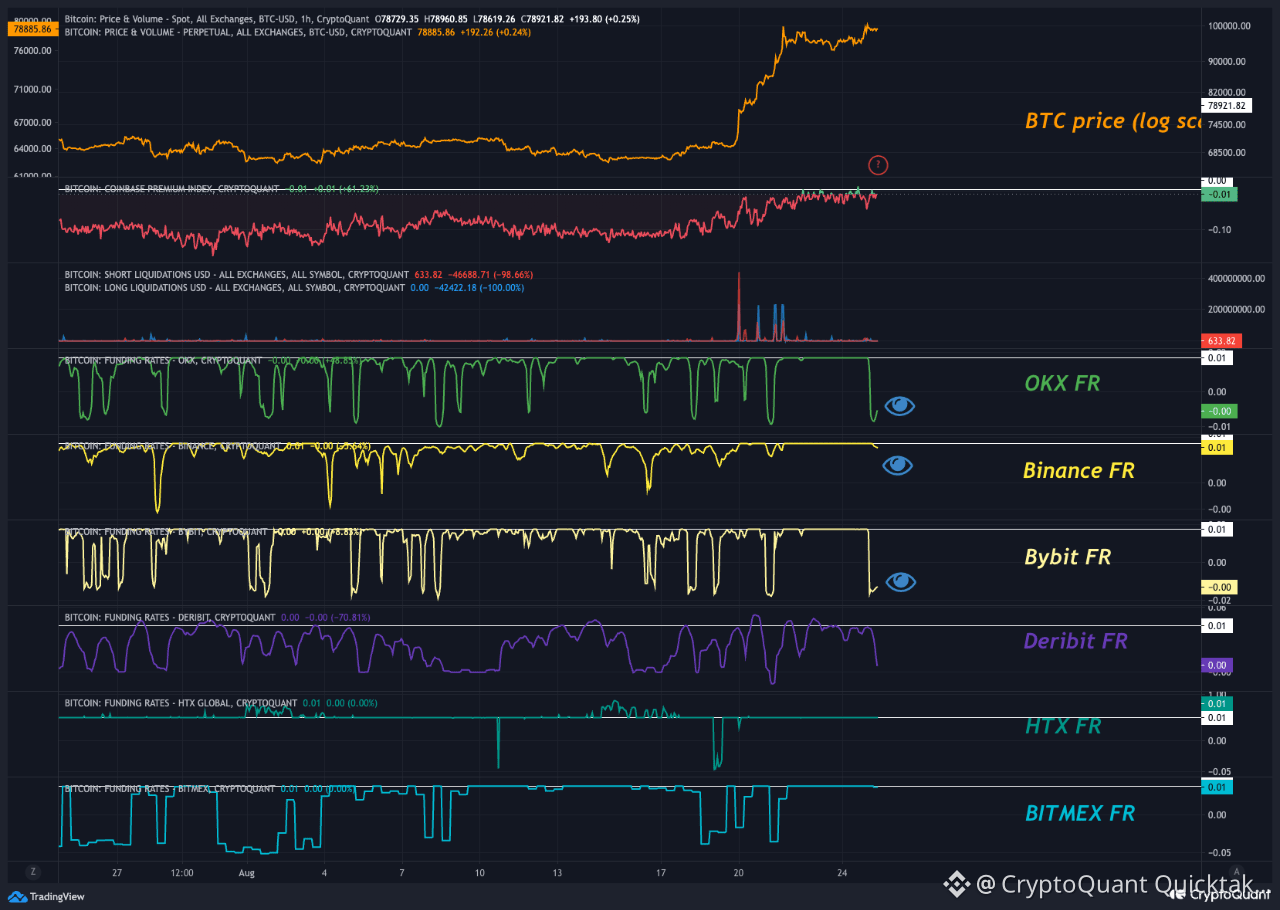
Funding Rate Divergence: Evaluating the Potential for $80KAlthough it is a very short-term observation, as illustrated in the image chart, the funding rates (FR) on OKX and Bybit have temporarily dipped into negative territory, whereas Binance's funding rate does not appear to have exhibited a similar degree of downward movement. This subtle divergence in derivative market sentiment across major exchanges suggests that there might still be potential room for an upward price movement toward the $80,000 level.
Written by nino
Funding Rate Divergence: Evaluating the Potential for $80K
Although it is a very short-term observation, as illustrated in the image chart, the funding rates (FR) on OKX and Bybit have temporarily dipped into negative territory, whereas Binance's funding rate does not appear to have exhibited a similar degree of downward movement. This subtle divergence in derivative market sentiment across major exchanges suggests that there might still be potential room for an upward price movement toward the $80,000 level.
Written by nino
Written by nino
46
Article
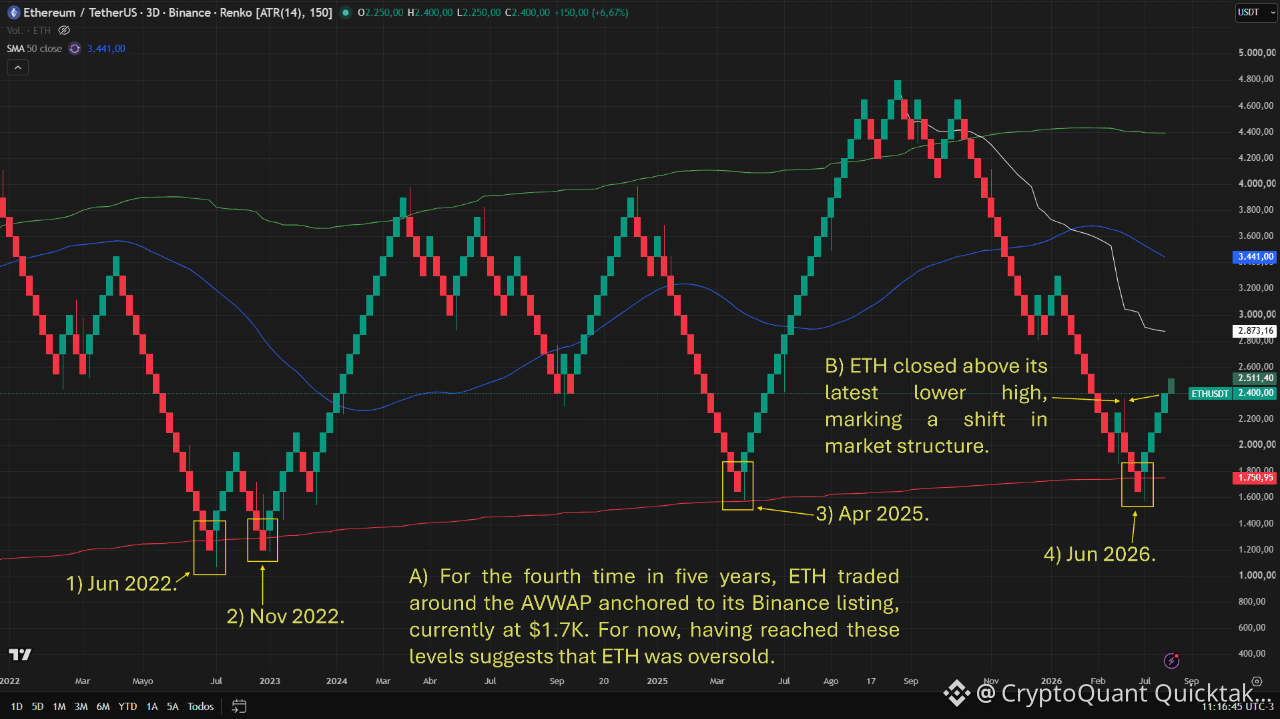
The State of the Ethereum Market ↓• Overall, despite similar price weakness, several of Ethereum's underlying fundamentals are stronger during the June 2026 decline than they were in April 2025 during the tariff war, which is why this recovery is taking place in a more solid context for ETH.
Written by Facundo Fama
The State of the Ethereum Market ↓
• Overall, despite similar price weakness, several of Ethereum's underlying fundamentals are stronger during the June 2026 decline than they were in April 2025 during the tariff war, which is why this recovery is taking place in a more solid context for ETH.
Written by Facundo Fama
Written by Facundo Fama
19
Article
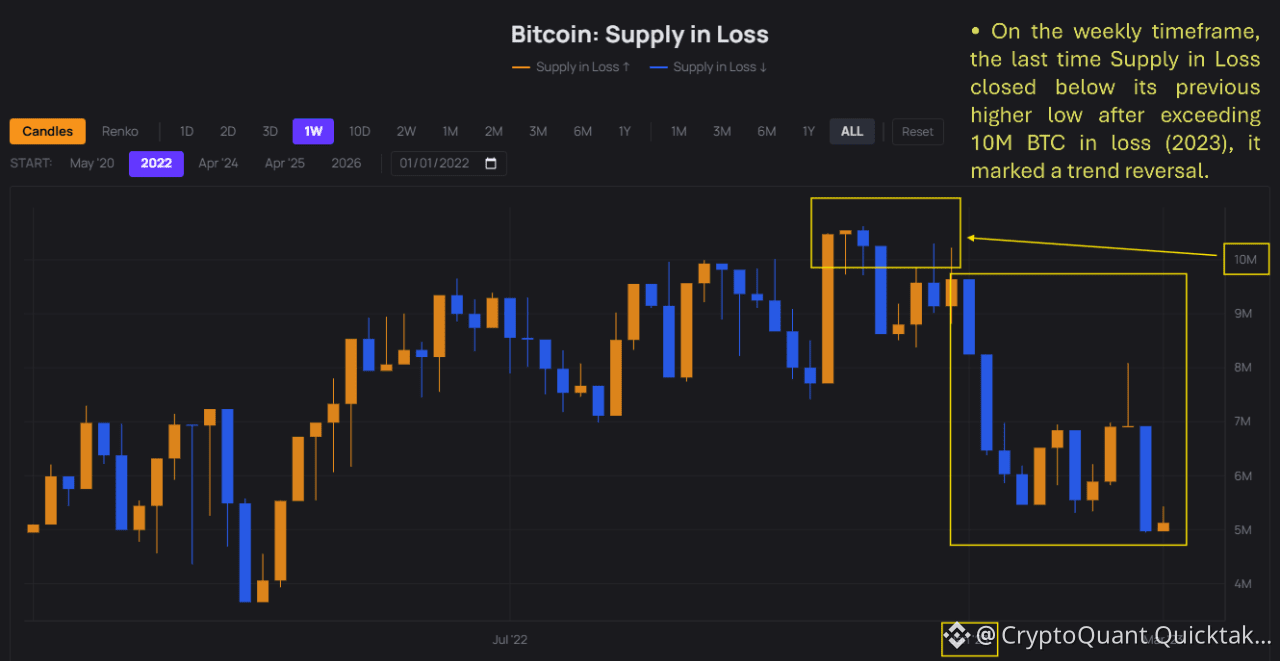
Bitcoin: Supply in Loss ↓• On the weekly timeframe, the last time Supply in Loss closed below its previous higher low after exceeding 10M BTC in loss (2023), it marked a trend reversal.
Written by Facundo Fama
Bitcoin: Supply in Loss ↓
• On the weekly timeframe, the last time Supply in Loss closed below its previous higher low after exceeding 10M BTC in loss (2023), it marked a trend reversal.
Written by Facundo Fama
Written by Facundo Fama
40
Article
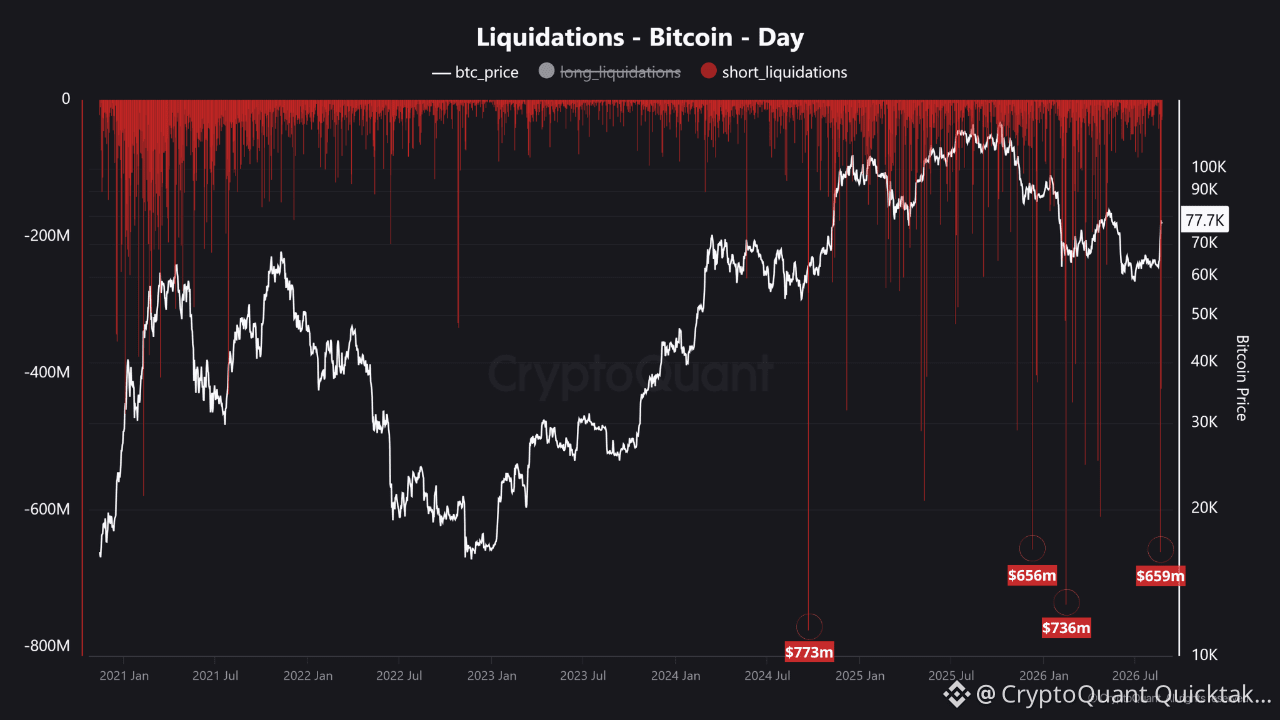
3rd Largest Short Squeeze in Bitcoin History 🔥$659 million in Short positions were liquidated on August 19, 2026 as the BTC price rose above $70k
This is the third-largest short-selling event in history, having a major impact on the sentiment of short sellers.
Written by G a a h
3rd Largest Short Squeeze in Bitcoin History 🔥
$659 million in Short positions were liquidated on August 19, 2026 as the BTC price rose above $70k
This is the third-largest short-selling event in history, having a major impact on the sentiment of short sellers.
Written by G a a h
This is the third-largest short-selling event in history, having a major impact on the sentiment of short sellers.
Written by G a a h
44
Article
XRP: a Repricing Built on Leverage While Binance Reserves Stay Largely UntouchedObservation
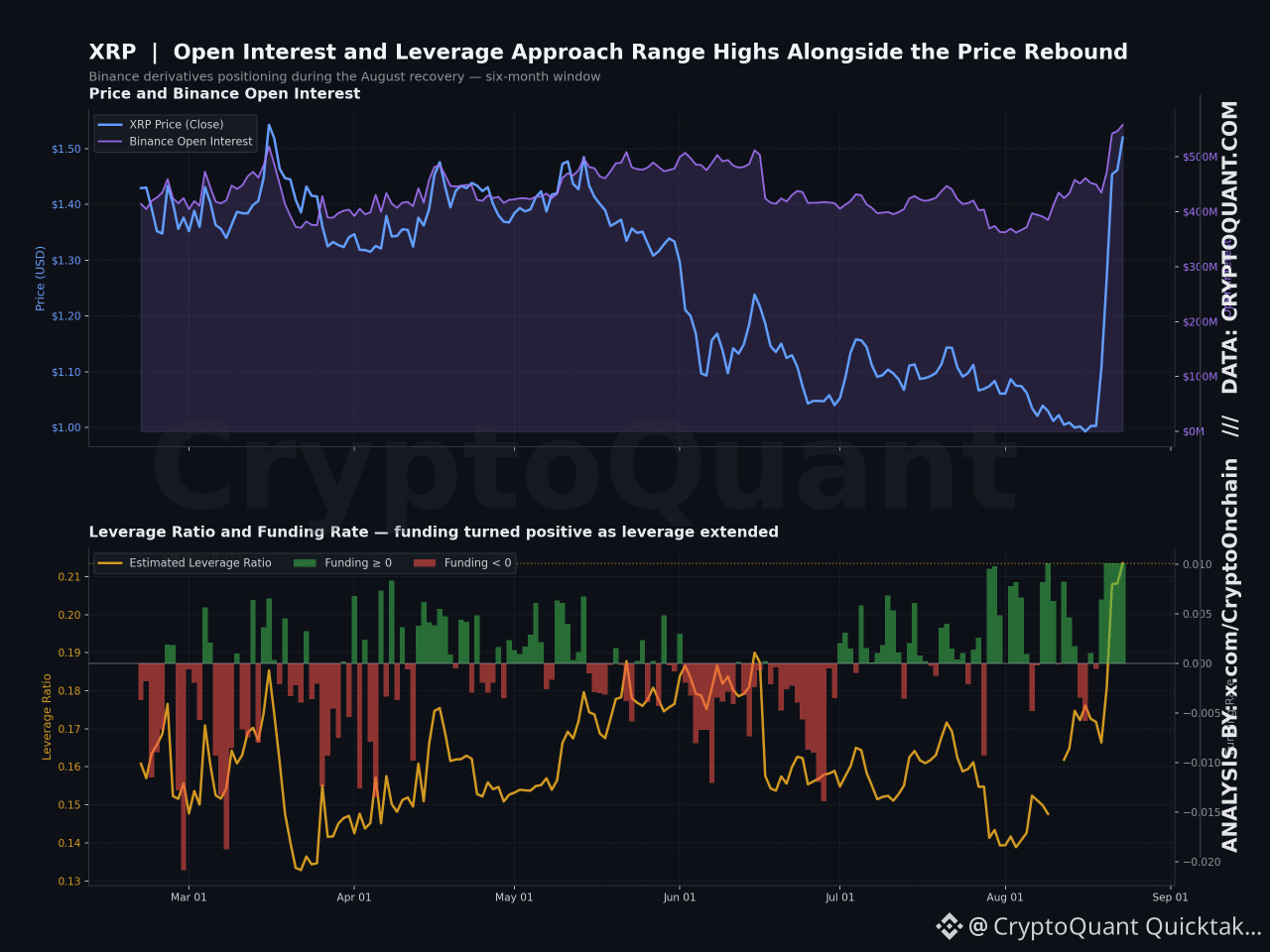
XRP closed at $1.520 on August 23, roughly 53% above the $0.993 low set on August 16, and near the upper bound of its six-month range.
Context
The move looks positioning-led rather than supply-led. Binance short liquidations averaged $7.31M over the past week, up about 2,511% vs. the 90-day baseline, while the estimated leverage ratio hit 0.213 — both six-month highs. Trading volume rose roughly 1,278% against the quarterly baseline.
Comparison
The spot side has not kept pace. Binance reserves sit essentially flat at 2.62B XRP (−1.4% vs. the 90-day baseline), suggesting limited inventory redistribution. On-chain activity is supportive but not decisive: transactions rose to 2.27M (+57% vs. 90d), active accounts increased 26%, and NVT fell 45%.
A key risk emerged on August 23: long liquidations reached $24.6M — a six-month record — exceeding short liquidations ($13.0M) on a day price closed higher, suggesting a mid-rally flush of over-extended longs rather than one-directional pressure.
What this may set up
A rally carried by short covering and record leverage, while exchange reserves stay broadly undisturbed, describes a market where fuel has shifted from latent to committed. Historically, leverage at range highs alongside subdued spot participation has preceded either a consolidation that lets funding cool, or a sharper two-way flush if spot demand does not step in behind the move.
Written by CryptoOnchain
XRP: a Repricing Built on Leverage While Binance Reserves Stay Largely Untouched
Observation
XRP closed at $1.520 on August 23, roughly 53% above the $0.993 low set on August 16, and near the upper bound of its six-month range.
Context
The move looks positioning-led rather than supply-led. Binance short liquidations averaged $7.31M over the past week, up about 2,511% vs. the 90-day baseline, while the estimated leverage ratio hit 0.213 — both six-month highs. Trading volume rose roughly 1,278% against the quarterly baseline.
Comparison
The spot side has not kept pace. Binance reserves sit essentially flat at 2.62B XRP (−1.4% vs. the 90-day baseline), suggesting limited inventory redistribution. On-chain activity is supportive but not decisive: transactions rose to 2.27M (+57% vs. 90d), active accounts increased 26%, and NVT fell 45%.
A key risk emerged on August 23: long liquidations reached $24.6M — a six-month record — exceeding short liquidations ($13.0M) on a day price closed higher, suggesting a mid-rally flush of over-extended longs rather than one-directional pressure.
What this may set up
A rally carried by short covering and record leverage, while exchange reserves stay broadly undisturbed, describes a market where fuel has shifted from latent to committed. Historically, leverage at range highs alongside subdued spot participation has preceded either a consolidation that lets funding cool, or a sharper two-way flush if spot demand does not step in behind the move.
Written by CryptoOnchain
XRP closed at $1.520 on August 23, roughly 53% above the $0.993 low set on August 16, and near the upper bound of its six-month range.
Context
The move looks positioning-led rather than supply-led. Binance short liquidations averaged $7.31M over the past week, up about 2,511% vs. the 90-day baseline, while the estimated leverage ratio hit 0.213 — both six-month highs. Trading volume rose roughly 1,278% against the quarterly baseline.
Comparison
The spot side has not kept pace. Binance reserves sit essentially flat at 2.62B XRP (−1.4% vs. the 90-day baseline), suggesting limited inventory redistribution. On-chain activity is supportive but not decisive: transactions rose to 2.27M (+57% vs. 90d), active accounts increased 26%, and NVT fell 45%.
A key risk emerged on August 23: long liquidations reached $24.6M — a six-month record — exceeding short liquidations ($13.0M) on a day price closed higher, suggesting a mid-rally flush of over-extended longs rather than one-directional pressure.
What this may set up
A rally carried by short covering and record leverage, while exchange reserves stay broadly undisturbed, describes a market where fuel has shifted from latent to committed. Historically, leverage at range highs alongside subdued spot participation has preceded either a consolidation that lets funding cool, or a sharper two-way flush if spot demand does not step in behind the move.
Written by CryptoOnchain
403
Article
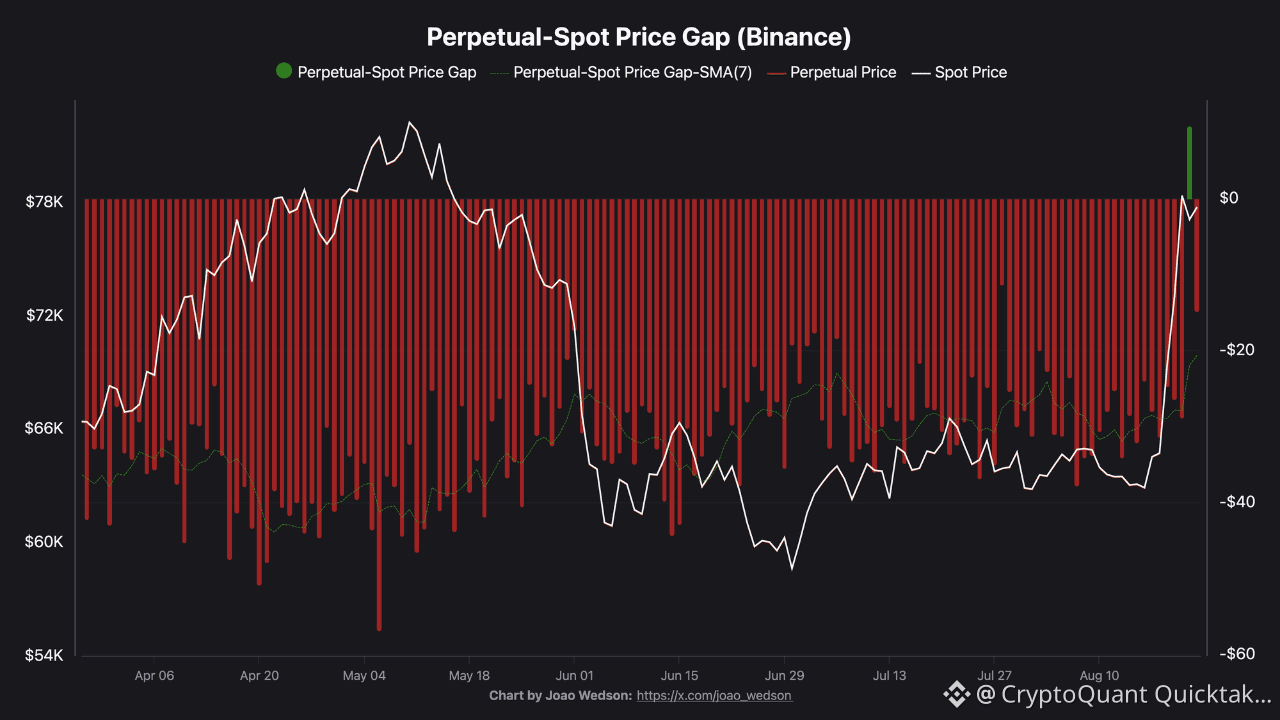
Binance Perpetual - Spot Spread: Overheating Signal in the Futures Market Amid the 80K SurgeFollowing Bitcoin’s sharp upward move toward the 80K mark, a critical shift is emerging in market dynamics. The sudden jump in the Binance Perpetual - Spot Price Gap, pushing the metric into positive territory, highlights heavy buying pressure in the futures market.
What Does This Metric Represent?
Measuring the divergence between perpetual and spot prices on Binance, this indicator helps track positional differences between derivative and spot traders:
- Red Candles (Spot Dominant): Indicate that the spot price is trading higher than the perpetual contract. This reflects a healthy structure where futures prices are suppressed while spot demand remains strong or stable.
- Green Candles (Futures Dominant): Indicate that the perpetual price has surged above the spot price. This signals that the price increase is being driven primarily by leveraged long positions rather than organic spot buying.
Current Outlook: Futures Overheating and Risk Factors
Following a prolonged upward trend, the metric crossed a critical threshold on August 23. With the perpetual price surpassing spot, green bars have taken control of the chart.
This structure confirms that current upside momentum is backed by excessive leveraged long pressure. Price expansions driven purely by aggressive futures longing without adequate spot market absorption leave the market vulnerable, often presenting market makers with opportunities for downward liquidity clears (sell-offs or pullbacks).
Whether this overheating in the futures market gets absorbed by incoming spot demand will be pivotal for price sustainability in the coming days.
Written by BorisD
Binance Perpetual - Spot Spread: Overheating Signal in the Futures Market Amid the 80K Surge
Following Bitcoin’s sharp upward move toward the 80K mark, a critical shift is emerging in market dynamics. The sudden jump in the Binance Perpetual - Spot Price Gap, pushing the metric into positive territory, highlights heavy buying pressure in the futures market.
What Does This Metric Represent?
Measuring the divergence between perpetual and spot prices on Binance, this indicator helps track positional differences between derivative and spot traders:
- Red Candles (Spot Dominant): Indicate that the spot price is trading higher than the perpetual contract. This reflects a healthy structure where futures prices are suppressed while spot demand remains strong or stable.
- Green Candles (Futures Dominant): Indicate that the perpetual price has surged above the spot price. This signals that the price increase is being driven primarily by leveraged long positions rather than organic spot buying.
Current Outlook: Futures Overheating and Risk Factors
Following a prolonged upward trend, the metric crossed a critical threshold on August 23. With the perpetual price surpassing spot, green bars have taken control of the chart.
This structure confirms that current upside momentum is backed by excessive leveraged long pressure. Price expansions driven purely by aggressive futures longing without adequate spot market absorption leave the market vulnerable, often presenting market makers with opportunities for downward liquidity clears (sell-offs or pullbacks).
Whether this overheating in the futures market gets absorbed by incoming spot demand will be pivotal for price sustainability in the coming days.
Written by BorisD
What Does This Metric Represent?
Measuring the divergence between perpetual and spot prices on Binance, this indicator helps track positional differences between derivative and spot traders:
- Red Candles (Spot Dominant): Indicate that the spot price is trading higher than the perpetual contract. This reflects a healthy structure where futures prices are suppressed while spot demand remains strong or stable.
- Green Candles (Futures Dominant): Indicate that the perpetual price has surged above the spot price. This signals that the price increase is being driven primarily by leveraged long positions rather than organic spot buying.
Current Outlook: Futures Overheating and Risk Factors
Following a prolonged upward trend, the metric crossed a critical threshold on August 23. With the perpetual price surpassing spot, green bars have taken control of the chart.
This structure confirms that current upside momentum is backed by excessive leveraged long pressure. Price expansions driven purely by aggressive futures longing without adequate spot market absorption leave the market vulnerable, often presenting market makers with opportunities for downward liquidity clears (sell-offs or pullbacks).
Whether this overheating in the futures market gets absorbed by incoming spot demand will be pivotal for price sustainability in the coming days.
Written by BorisD
205
Article
ETH Rally: Liquidation-Driven, but Structure ImprovingETH is trading around $2,480–$2,520 after a sharp ~30% weekly surge from the $1,870–$1,920 consolidation zone.
The rally appears to have been driven primarily by a short liquidation cascade rather than pure spot demand. Aggregate short liquidations surged over 1,500% WoW, forcing a rapid repricing higher, while long liquidations remained relatively subdued.
Key signals:
Network activity reactivated: Base fees, total fees, and ETH burned increased sharply as price rallied, reversing months of fee compression.
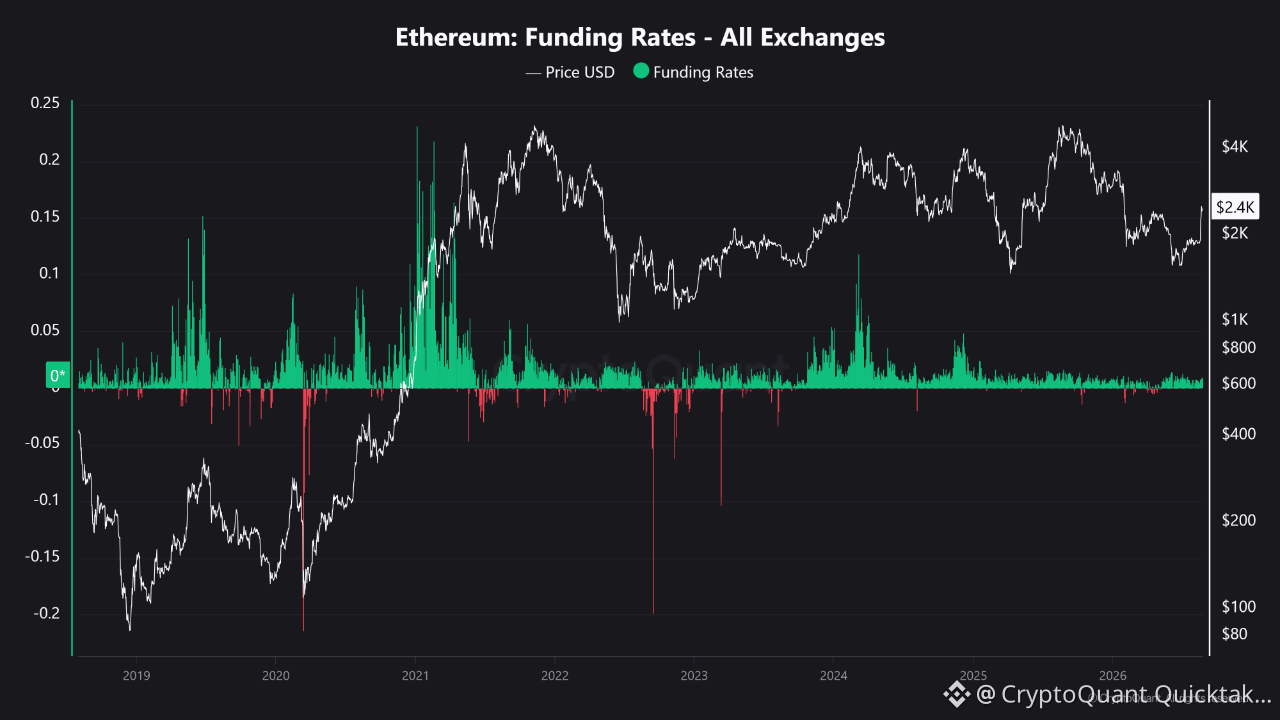
Funding turned positive: Funding rates shifted into a modestly positive territory, while taker buy volume edged ahead.
Exchange deposits remain smaller: Average deposit size is ~40% below the 90-day baseline despite higher total inflows, suggesting supply is arriving in smaller tranches rather than large whale-sized deposits.
ETF flows remain supportive: Spot ETF inflows have remained strong, with weekly inflows approaching $700M, although some larger holders are beginning to take profits after the rapid move.
Structure: ETH has reclaimed the $2,500 psychological level, but daily RSI is deep in overbought territory at ~79–80. This increases the probability of a short-term cooldown or consolidation before another sustained move toward $2,750–$3,000.
Netflows remain choppy, pointing more toward venue rebalancing than clear directional distribution.
Bottom line: The liquidation cascade and renewed network activity strengthen the rally, but shrinking deposit sizes and overbought conditions suggest the easy upside may be fading.
Holding $2,400–$2,450 keeps the higher-timeframe structure constructive. A decisive daily close below this zone could trigger a deeper reset.
Written by theophiluspep
ETH Rally: Liquidation-Driven, but Structure Improving
ETH is trading around $2,480–$2,520 after a sharp ~30% weekly surge from the $1,870–$1,920 consolidation zone.
The rally appears to have been driven primarily by a short liquidation cascade rather than pure spot demand. Aggregate short liquidations surged over 1,500% WoW, forcing a rapid repricing higher, while long liquidations remained relatively subdued.
Key signals:
Network activity reactivated: Base fees, total fees, and ETH burned increased sharply as price rallied, reversing months of fee compression.
Funding turned positive: Funding rates shifted into a modestly positive territory, while taker buy volume edged ahead.
Exchange deposits remain smaller: Average deposit size is ~40% below the 90-day baseline despite higher total inflows, suggesting supply is arriving in smaller tranches rather than large whale-sized deposits.
ETF flows remain supportive: Spot ETF inflows have remained strong, with weekly inflows approaching $700M, although some larger holders are beginning to take profits after the rapid move.
Structure: ETH has reclaimed the $2,500 psychological level, but daily RSI is deep in overbought territory at ~79–80. This increases the probability of a short-term cooldown or consolidation before another sustained move toward $2,750–$3,000.
Netflows remain choppy, pointing more toward venue rebalancing than clear directional distribution.
Bottom line: The liquidation cascade and renewed network activity strengthen the rally, but shrinking deposit sizes and overbought conditions suggest the easy upside may be fading.
Holding $2,400–$2,450 keeps the higher-timeframe structure constructive. A decisive daily close below this zone could trigger a deeper reset.
Written by theophiluspep
The rally appears to have been driven primarily by a short liquidation cascade rather than pure spot demand. Aggregate short liquidations surged over 1,500% WoW, forcing a rapid repricing higher, while long liquidations remained relatively subdued.
Key signals:
Network activity reactivated: Base fees, total fees, and ETH burned increased sharply as price rallied, reversing months of fee compression.
Funding turned positive: Funding rates shifted into a modestly positive territory, while taker buy volume edged ahead.
Exchange deposits remain smaller: Average deposit size is ~40% below the 90-day baseline despite higher total inflows, suggesting supply is arriving in smaller tranches rather than large whale-sized deposits.
ETF flows remain supportive: Spot ETF inflows have remained strong, with weekly inflows approaching $700M, although some larger holders are beginning to take profits after the rapid move.
Structure: ETH has reclaimed the $2,500 psychological level, but daily RSI is deep in overbought territory at ~79–80. This increases the probability of a short-term cooldown or consolidation before another sustained move toward $2,750–$3,000.
Netflows remain choppy, pointing more toward venue rebalancing than clear directional distribution.
Bottom line: The liquidation cascade and renewed network activity strengthen the rally, but shrinking deposit sizes and overbought conditions suggest the easy upside may be fading.
Holding $2,400–$2,450 keeps the higher-timeframe structure constructive. A decisive daily close below this zone could trigger a deeper reset.
Written by theophiluspep
1
269
Article
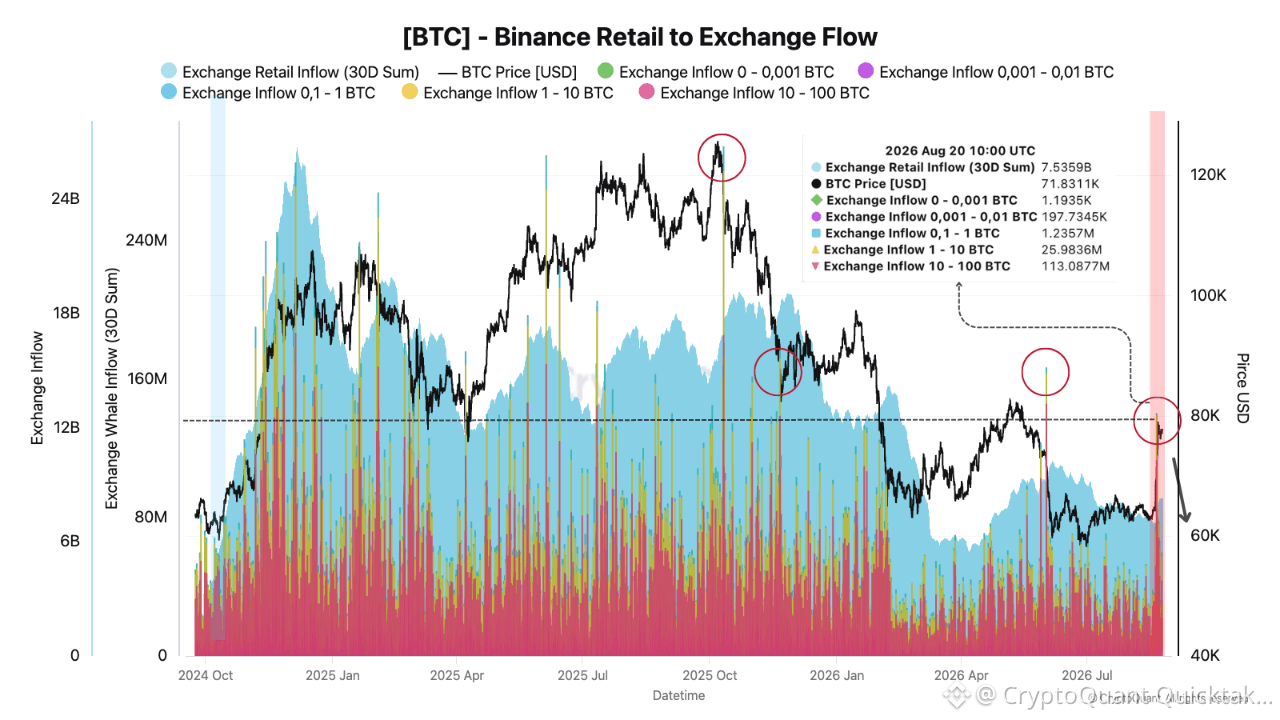
BTC’s Rebound Is Bringing Retail-Linked Supply Back to BinanceRetail-linked coins are moving back to Binance, but the most relevant signal is not simply the size of the latest print, but the persistence of the move.
As of August 20, Binance Retail Inflow reached $7.54B on a 30-day rolling basis.
At the latest observation, component flows totalled roughly $140.5M. Of that amount, $113.1M (80.5%) came from the 10–100 BTC band and another $26.0M (18.5%) from the 1–10 BTC band. Together, these two cohorts represented 99.0% of the observed flow, while transfers below 1 BTC contributed only about $1.4M.
This is not primarily a “small-wallet panic” signal. It points instead to the upper end of the retail-labelled cohort moving meaningful inventory toward Binance.
The timing adds another layer. Inflows accelerated after BTC’s recent rally toward $80K, suggesting that renewed price strength may have encouraged holders to move coins that are potentially in profit. Rather than capitulating into weakness, some investors may be using the rebound to secure gains, or positioning inventory on Binance in preparation to do so.
Exchange inflows alone cannot confirm this because the metric does not reveal each coin’s acquisition price. Exchange Inflow SOPR, realised price by cohort and coin-age data would be needed to establish whether profits are actually being realised. Still, rising prices combined with persistent exchange-bound flows make profit-taking a credible explanation.
Unlike the June 1 sell-off, when inflows appeared as a sharp, isolated spike, the latest move has extended across several consecutive sessions. That persistence is more consistent with an ongoing shift in holder behaviour than with a single reactive event.
What to watch:
If these flows persist while BTC struggles around $80K, profit-taking could cap rebounds and reinforce short-term downside pressure. If inflows fade and price absorbs the available supply, the bearish interpretation would weaken.
Written by MorenoDV_
BTC’s Rebound Is Bringing Retail-Linked Supply Back to Binance
Retail-linked coins are moving back to Binance, but the most relevant signal is not simply the size of the latest print, but the persistence of the move.
As of August 20, Binance Retail Inflow reached $7.54B on a 30-day rolling basis.
At the latest observation, component flows totalled roughly $140.5M. Of that amount, $113.1M (80.5%) came from the 10–100 BTC band and another $26.0M (18.5%) from the 1–10 BTC band. Together, these two cohorts represented 99.0% of the observed flow, while transfers below 1 BTC contributed only about $1.4M.
This is not primarily a “small-wallet panic” signal. It points instead to the upper end of the retail-labelled cohort moving meaningful inventory toward Binance.
The timing adds another layer. Inflows accelerated after BTC’s recent rally toward $80K, suggesting that renewed price strength may have encouraged holders to move coins that are potentially in profit. Rather than capitulating into weakness, some investors may be using the rebound to secure gains, or positioning inventory on Binance in preparation to do so.
Exchange inflows alone cannot confirm this because the metric does not reveal each coin’s acquisition price. Exchange Inflow SOPR, realised price by cohort and coin-age data would be needed to establish whether profits are actually being realised. Still, rising prices combined with persistent exchange-bound flows make profit-taking a credible explanation.
Unlike the June 1 sell-off, when inflows appeared as a sharp, isolated spike, the latest move has extended across several consecutive sessions. That persistence is more consistent with an ongoing shift in holder behaviour than with a single reactive event.
What to watch:
If these flows persist while BTC struggles around $80K, profit-taking could cap rebounds and reinforce short-term downside pressure. If inflows fade and price absorbs the available supply, the bearish interpretation would weaken.
Written by MorenoDV_
As of August 20, Binance Retail Inflow reached $7.54B on a 30-day rolling basis.
At the latest observation, component flows totalled roughly $140.5M. Of that amount, $113.1M (80.5%) came from the 10–100 BTC band and another $26.0M (18.5%) from the 1–10 BTC band. Together, these two cohorts represented 99.0% of the observed flow, while transfers below 1 BTC contributed only about $1.4M.
This is not primarily a “small-wallet panic” signal. It points instead to the upper end of the retail-labelled cohort moving meaningful inventory toward Binance.
The timing adds another layer. Inflows accelerated after BTC’s recent rally toward $80K, suggesting that renewed price strength may have encouraged holders to move coins that are potentially in profit. Rather than capitulating into weakness, some investors may be using the rebound to secure gains, or positioning inventory on Binance in preparation to do so.
Exchange inflows alone cannot confirm this because the metric does not reveal each coin’s acquisition price. Exchange Inflow SOPR, realised price by cohort and coin-age data would be needed to establish whether profits are actually being realised. Still, rising prices combined with persistent exchange-bound flows make profit-taking a credible explanation.
Unlike the June 1 sell-off, when inflows appeared as a sharp, isolated spike, the latest move has extended across several consecutive sessions. That persistence is more consistent with an ongoing shift in holder behaviour than with a single reactive event.
What to watch:
If these flows persist while BTC struggles around $80K, profit-taking could cap rebounds and reinforce short-term downside pressure. If inflows fade and price absorbs the available supply, the bearish interpretation would weaken.
Written by MorenoDV_
1
1
687
Article
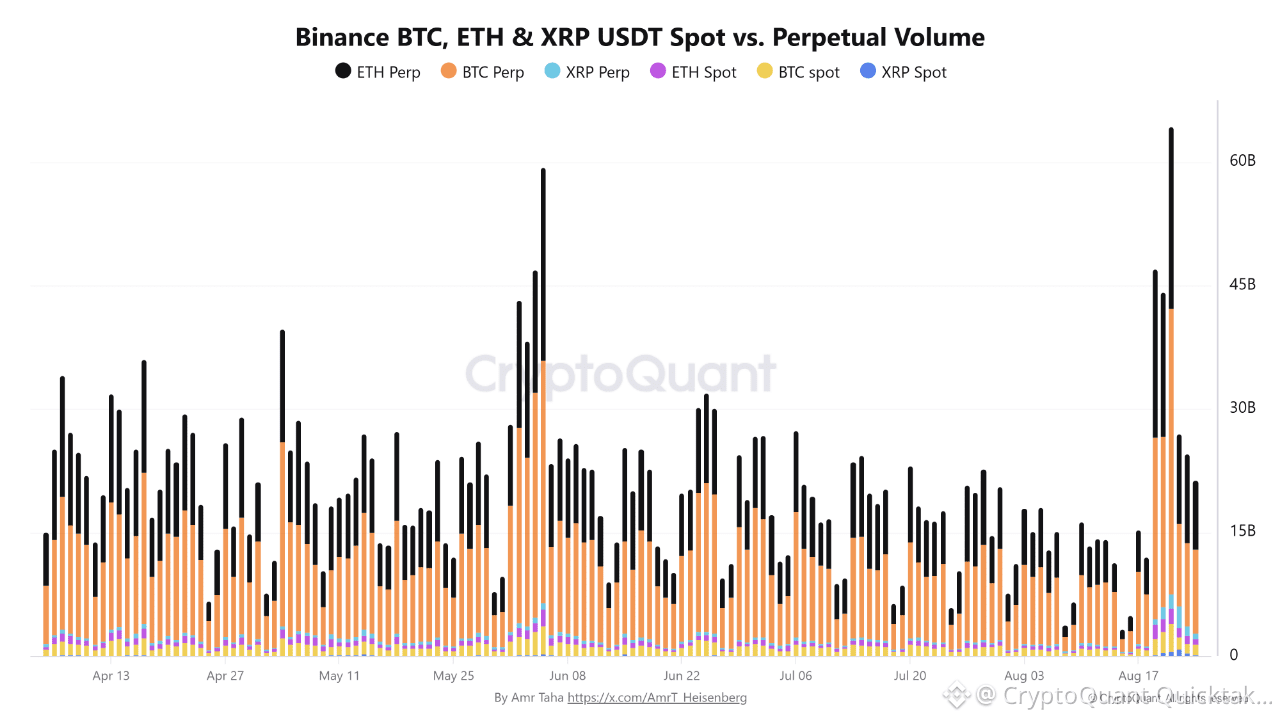
Binance BTC, ETH and XRP Volume Tops $64B, Highest Since June As Perpetuals Capture 91%Combined trading volume across Binance’s BTC, ETH and XRP USDT spot and perpetual markets reached approximately $64.21 billion on August 21, the highest daily reading since June 5.
Perpetual contracts accounted for $58.4 billion, or roughly 91% of the total, exceeding the combined spot volume of $5.81 billion by about 10 times.
Compared with June 5, perpetual volume increased 9%, while spot activity rose just 1.2%, indicating that the return to higher turnover was concentrated primarily in derivatives.
XRP recorded the strongest acceleration among the three assets.
Its combined spot and perpetual volume climbed to $2.41 billion from $1.11 billion on June 5—an increase of approximately 118%.
XRP perpetual volume rose 127% to $1.8 billion, while spot volume increased nearly 95% to $611 million.
Bitcoin’s combined volume also advanced 15.9% to $38 billion. Ethereum moved in the opposite direction, declining 6.5% to $23.8 billion despite the 8.2% increase in aggregate activity across the three assets.
The data shows a clear return of high trading turnover on Binance, led by perpetual markets .
Written by Amr Taha
Binance BTC, ETH and XRP Volume Tops $64B, Highest Since June As Perpetuals Capture 91%
Combined trading volume across Binance’s BTC, ETH and XRP USDT spot and perpetual markets reached approximately $64.21 billion on August 21, the highest daily reading since June 5.
Perpetual contracts accounted for $58.4 billion, or roughly 91% of the total, exceeding the combined spot volume of $5.81 billion by about 10 times.
Compared with June 5, perpetual volume increased 9%, while spot activity rose just 1.2%, indicating that the return to higher turnover was concentrated primarily in derivatives.
XRP recorded the strongest acceleration among the three assets.
Its combined spot and perpetual volume climbed to $2.41 billion from $1.11 billion on June 5—an increase of approximately 118%.
XRP perpetual volume rose 127% to $1.8 billion, while spot volume increased nearly 95% to $611 million.
Bitcoin’s combined volume also advanced 15.9% to $38 billion. Ethereum moved in the opposite direction, declining 6.5% to $23.8 billion despite the 8.2% increase in aggregate activity across the three assets.
The data shows a clear return of high trading turnover on Binance, led by perpetual markets .
Written by Amr Taha
Perpetual contracts accounted for $58.4 billion, or roughly 91% of the total, exceeding the combined spot volume of $5.81 billion by about 10 times.
Compared with June 5, perpetual volume increased 9%, while spot activity rose just 1.2%, indicating that the return to higher turnover was concentrated primarily in derivatives.
XRP recorded the strongest acceleration among the three assets.
Its combined spot and perpetual volume climbed to $2.41 billion from $1.11 billion on June 5—an increase of approximately 118%.
XRP perpetual volume rose 127% to $1.8 billion, while spot volume increased nearly 95% to $611 million.
Bitcoin’s combined volume also advanced 15.9% to $38 billion. Ethereum moved in the opposite direction, declining 6.5% to $23.8 billion despite the 8.2% increase in aggregate activity across the three assets.
The data shows a clear return of high trading turnover on Binance, led by perpetual markets .
Written by Amr Taha
390
Article
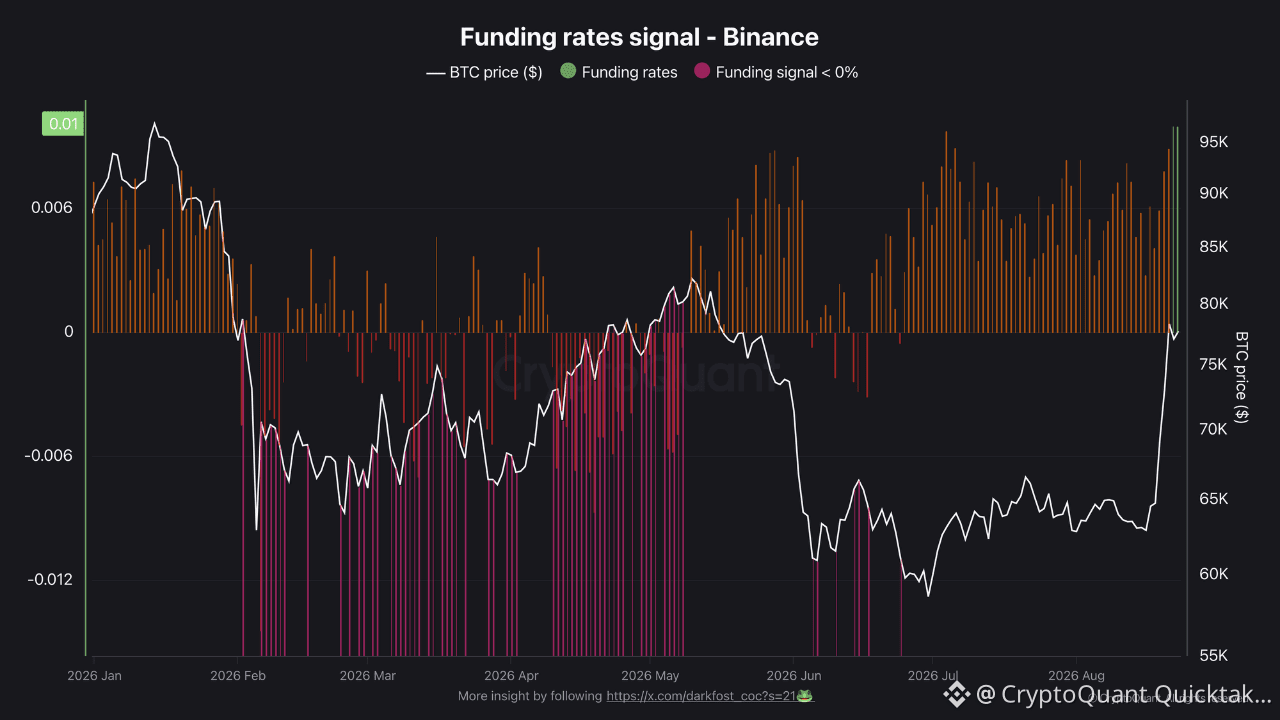
Futures Sentiment on Binance Flips Bullish After Months of Short DominanceFor the first time this year, funding rates on Binance have shifted toward a predominance of long positions.
This hasn't happened since the October 2025 top, when funding rates remained consistently below the 0.01% threshold, signaling a dominance of short positions and reflecting the pessimism among traders.
With $BTC delivering a 27% performance over the past 7 days, funding rates have finally turned positive again (>0.01%).
Contrary to popular belief, a funding rate at 0% doesn't indicate a neutral market, it actually reflects short dominance.
On Binance and on other platforms, the calculation formula factors in a base interest rate of 0.01%, which represents the true neutrality threshold. Below that level, shorts dominate, above it, longs take over.
This shift is particularly notable as it follows several episodes of extreme short dominance, marked by negative funding rates. It confirms that sentiment on the futures market is turning bullish again.
This dynamic comes at a pivotal moment: positive demand on futures is now adding to the recent improvement in spot market demand. And it's precisely when these two signals sync up that a durable bullish trend has the best chance of taking hold,which is exactly what we're seeing today.
But be cautious, when an extreme positive level is reached, it can signal the early stages of a trend reversal.
Written by Darkfost
Futures Sentiment on Binance Flips Bullish After Months of Short Dominance
For the first time this year, funding rates on Binance have shifted toward a predominance of long positions.
This hasn't happened since the October 2025 top, when funding rates remained consistently below the 0.01% threshold, signaling a dominance of short positions and reflecting the pessimism among traders.
With $BTC delivering a 27% performance over the past 7 days, funding rates have finally turned positive again (>0.01%).
Contrary to popular belief, a funding rate at 0% doesn't indicate a neutral market, it actually reflects short dominance.
On Binance and on other platforms, the calculation formula factors in a base interest rate of 0.01%, which represents the true neutrality threshold. Below that level, shorts dominate, above it, longs take over.
This shift is particularly notable as it follows several episodes of extreme short dominance, marked by negative funding rates. It confirms that sentiment on the futures market is turning bullish again.
This dynamic comes at a pivotal moment: positive demand on futures is now adding to the recent improvement in spot market demand. And it's precisely when these two signals sync up that a durable bullish trend has the best chance of taking hold,which is exactly what we're seeing today.
But be cautious, when an extreme positive level is reached, it can signal the early stages of a trend reversal.
Written by Darkfost
This hasn't happened since the October 2025 top, when funding rates remained consistently below the 0.01% threshold, signaling a dominance of short positions and reflecting the pessimism among traders.
With $BTC delivering a 27% performance over the past 7 days, funding rates have finally turned positive again (>0.01%).
Contrary to popular belief, a funding rate at 0% doesn't indicate a neutral market, it actually reflects short dominance.
On Binance and on other platforms, the calculation formula factors in a base interest rate of 0.01%, which represents the true neutrality threshold. Below that level, shorts dominate, above it, longs take over.
This shift is particularly notable as it follows several episodes of extreme short dominance, marked by negative funding rates. It confirms that sentiment on the futures market is turning bullish again.
This dynamic comes at a pivotal moment: positive demand on futures is now adding to the recent improvement in spot market demand. And it's precisely when these two signals sync up that a durable bullish trend has the best chance of taking hold,which is exactly what we're seeing today.
But be cautious, when an extreme positive level is reached, it can signal the early stages of a trend reversal.
Written by Darkfost
269
Article
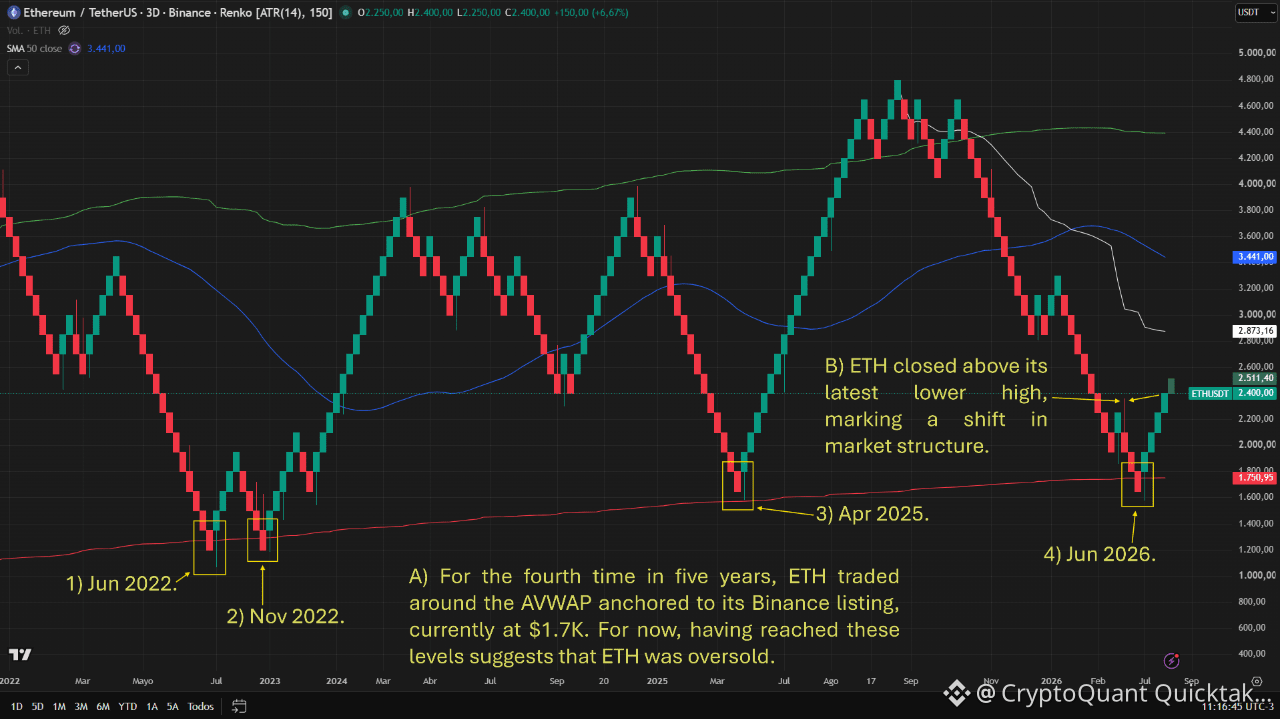
The State of the Ethereum Market ↓• Overall, despite similar price weakness, several of Ethereum's underlying fundamentals are stronger during the June 2026 decline than they were in April 2025 during the tariff war, which is why this recovery is taking place in a more solid context for ETH.
Written by Facundo Fama
The State of the Ethereum Market ↓
• Overall, despite similar price weakness, several of Ethereum's underlying fundamentals are stronger during the June 2026 decline than they were in April 2025 during the tariff war, which is why this recovery is taking place in a more solid context for ETH.
Written by Facundo Fama
Written by Facundo Fama
298
Article
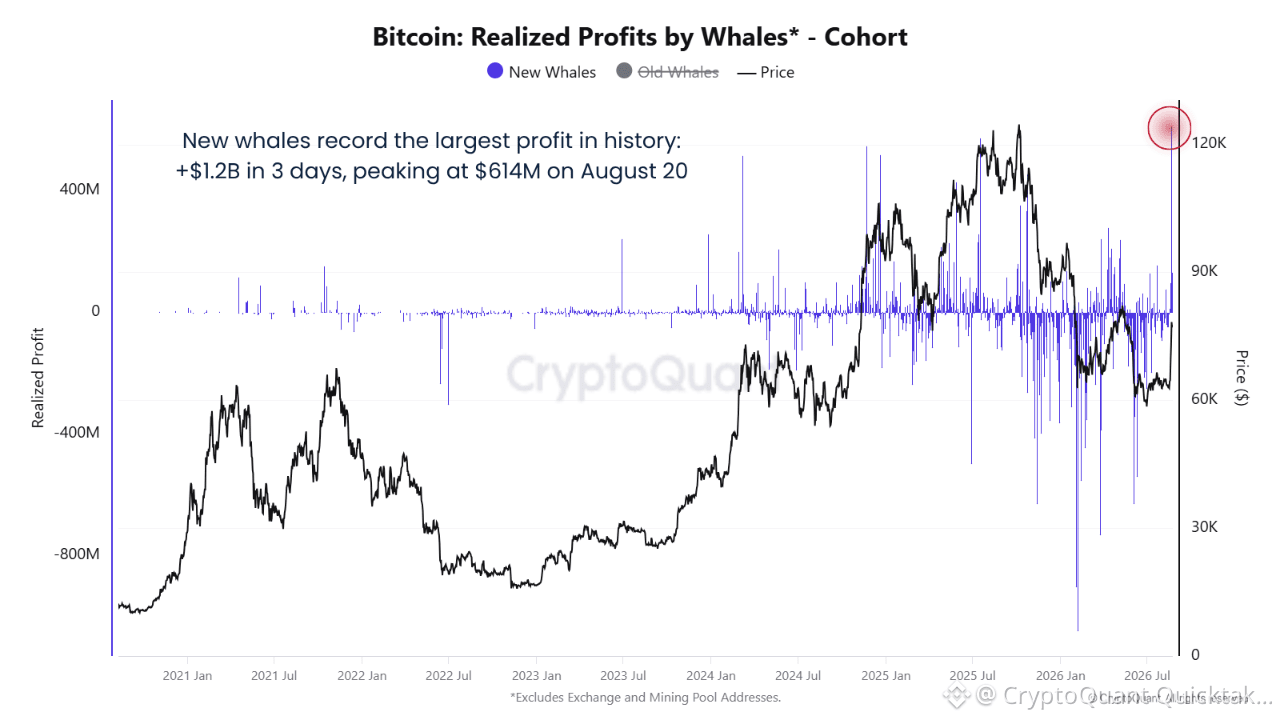
New Whales Just Realized a Record $1.2B As Bitcoin Reclaimed Their Cost BasisNew Whales have now realized more than $1.2B in profits in just three days, the largest profit-realization event recorded for this cohort. The sequence peaked on August 20 at roughly $614M, also marking the highest single-day reading in the metric’s history.
The timing matters.
Bitcoin has simultaneously moved back above the Short-Term Whale Realized Price, currently around $68.9K. By August 23, BTC was trading near $77.7K, placing price roughly 12.8% above this aggregate cost basis.
For months, recently accumulated large holders were operating around or below their acquisition price as BTC traded beneath this level. The latest rebound has radically changed their incentive structure: capital that had been trapped in unrealized losses suddenly received an opportunity to exit at breakeven, or secure a meaningful profit.
This makes the current move an important demand test.
What to Watch
If BTC can remain above the ~$70K whale cost basis while realized profits normalize, it would suggest that new demand is successfully absorbing distribution.
If profit realization remains elevated and price falls back below that level, however, the rebound could increasingly resemble a breakeven exit rally, with recently trapped holders becoming overhead supply once again.
The rally has restored profitability.
Now the market needs to prove it can absorb what that profitability unlocks.
Written by MorenoDV_
New Whales Just Realized a Record $1.2B As Bitcoin Reclaimed Their Cost Basis
New Whales have now realized more than $1.2B in profits in just three days, the largest profit-realization event recorded for this cohort. The sequence peaked on August 20 at roughly $614M, also marking the highest single-day reading in the metric’s history.
The timing matters.
Bitcoin has simultaneously moved back above the Short-Term Whale Realized Price, currently around $68.9K. By August 23, BTC was trading near $77.7K, placing price roughly 12.8% above this aggregate cost basis.
For months, recently accumulated large holders were operating around or below their acquisition price as BTC traded beneath this level. The latest rebound has radically changed their incentive structure: capital that had been trapped in unrealized losses suddenly received an opportunity to exit at breakeven, or secure a meaningful profit.
This makes the current move an important demand test.
What to Watch
If BTC can remain above the ~$70K whale cost basis while realized profits normalize, it would suggest that new demand is successfully absorbing distribution.
If profit realization remains elevated and price falls back below that level, however, the rebound could increasingly resemble a breakeven exit rally, with recently trapped holders becoming overhead supply once again.
The rally has restored profitability.
Now the market needs to prove it can absorb what that profitability unlocks.
Written by MorenoDV_
The timing matters.
Bitcoin has simultaneously moved back above the Short-Term Whale Realized Price, currently around $68.9K. By August 23, BTC was trading near $77.7K, placing price roughly 12.8% above this aggregate cost basis.
For months, recently accumulated large holders were operating around or below their acquisition price as BTC traded beneath this level. The latest rebound has radically changed their incentive structure: capital that had been trapped in unrealized losses suddenly received an opportunity to exit at breakeven, or secure a meaningful profit.
This makes the current move an important demand test.
What to Watch
If BTC can remain above the ~$70K whale cost basis while realized profits normalize, it would suggest that new demand is successfully absorbing distribution.
If profit realization remains elevated and price falls back below that level, however, the rebound could increasingly resemble a breakeven exit rally, with recently trapped holders becoming overhead supply once again.
The rally has restored profitability.
Now the market needs to prove it can absorb what that profitability unlocks.
Written by MorenoDV_
175
Article
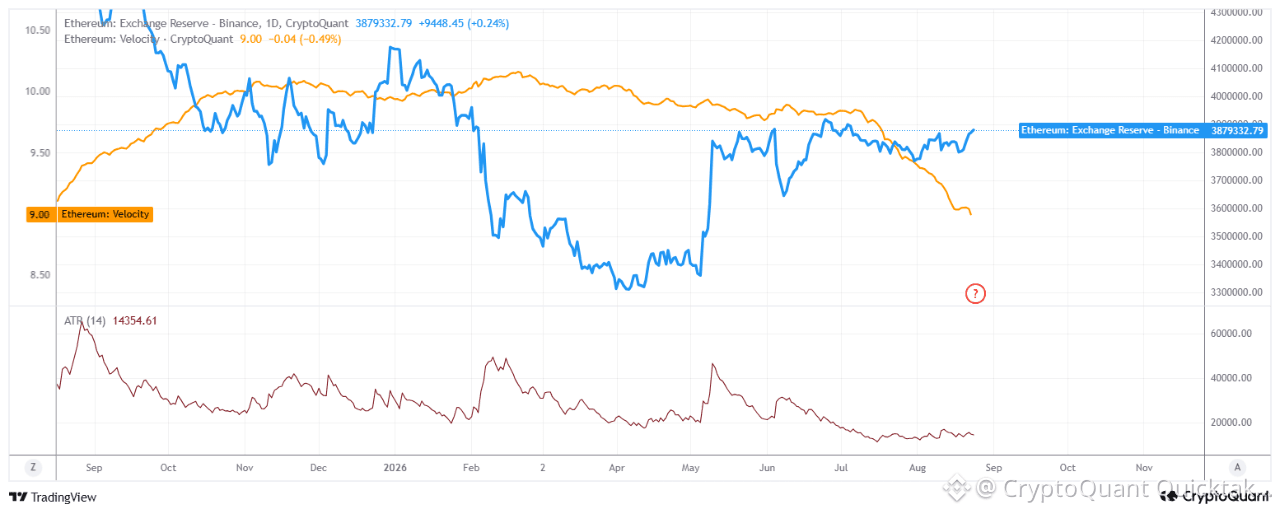
Has Ethereum’s Uptrend Started?As we can see from the chart, the fact that the Binance ETH reserve is rising alongside the ETH price increase indicates that risk is accumulating on the supply side of the rally. The Binance ETH reserve has increased from approximately 3.5 million ETH to 3.87 million ETH. In other words, while ETH has been recovering, the amount of ETH held on Binance has also increased.
This is a development that should be closely monitored from a price perspective. ETH held on exchanges represents an increasing amount of ETH that is readily available for trading and potentially selling. Therefore, even if the price continues to rise, the associated risk is also increasing at the same time. During bullish periods, investors generally withdraw their ETH from exchanges and move it to personal wallets for long term holding. However, in this case, investors may not fully trust the rally, as they are sending their ETH to Binance even while the price is rising.
Of course, we cannot say that these ETH deposits are definitely intended for selling. ETH can be sent to exchanges for trading, use as collateral, or other operational purposes. Therefore, it would not be correct to interpret the increase in exchange reserves alone as a direct sell signal. However, such increases are often followed by increased selling pressure.
The decline in Velocity while the reserve is rising is also noteworthy. ETH Velocity has fallen from approximately 10.1 to 9.0, indicating a significant slowdown in the movement of ETH. This suggests that transaction activity is not strengthening at the same pace as the price.
ATR also indicates that the strength of the upward move is weakening. A falling ATR indicates that ETH’s price movements and volatility are contracting. In other words, although the price has risen, the volatility supporting the move has gradually decreased.
Therefore, rather than a strong and established uptrend, the current structure makes me consider the possibility of a short squeeze.
Written by PelinayPA
Has Ethereum’s Uptrend Started?
As we can see from the chart, the fact that the Binance ETH reserve is rising alongside the ETH price increase indicates that risk is accumulating on the supply side of the rally. The Binance ETH reserve has increased from approximately 3.5 million ETH to 3.87 million ETH. In other words, while ETH has been recovering, the amount of ETH held on Binance has also increased.
This is a development that should be closely monitored from a price perspective. ETH held on exchanges represents an increasing amount of ETH that is readily available for trading and potentially selling. Therefore, even if the price continues to rise, the associated risk is also increasing at the same time. During bullish periods, investors generally withdraw their ETH from exchanges and move it to personal wallets for long term holding. However, in this case, investors may not fully trust the rally, as they are sending their ETH to Binance even while the price is rising.
Of course, we cannot say that these ETH deposits are definitely intended for selling. ETH can be sent to exchanges for trading, use as collateral, or other operational purposes. Therefore, it would not be correct to interpret the increase in exchange reserves alone as a direct sell signal. However, such increases are often followed by increased selling pressure.
The decline in Velocity while the reserve is rising is also noteworthy. ETH Velocity has fallen from approximately 10.1 to 9.0, indicating a significant slowdown in the movement of ETH. This suggests that transaction activity is not strengthening at the same pace as the price.
ATR also indicates that the strength of the upward move is weakening. A falling ATR indicates that ETH’s price movements and volatility are contracting. In other words, although the price has risen, the volatility supporting the move has gradually decreased.
Therefore, rather than a strong and established uptrend, the current structure makes me consider the possibility of a short squeeze.
Written by PelinayPA
This is a development that should be closely monitored from a price perspective. ETH held on exchanges represents an increasing amount of ETH that is readily available for trading and potentially selling. Therefore, even if the price continues to rise, the associated risk is also increasing at the same time. During bullish periods, investors generally withdraw their ETH from exchanges and move it to personal wallets for long term holding. However, in this case, investors may not fully trust the rally, as they are sending their ETH to Binance even while the price is rising.
Of course, we cannot say that these ETH deposits are definitely intended for selling. ETH can be sent to exchanges for trading, use as collateral, or other operational purposes. Therefore, it would not be correct to interpret the increase in exchange reserves alone as a direct sell signal. However, such increases are often followed by increased selling pressure.
The decline in Velocity while the reserve is rising is also noteworthy. ETH Velocity has fallen from approximately 10.1 to 9.0, indicating a significant slowdown in the movement of ETH. This suggests that transaction activity is not strengthening at the same pace as the price.
ATR also indicates that the strength of the upward move is weakening. A falling ATR indicates that ETH’s price movements and volatility are contracting. In other words, although the price has risen, the volatility supporting the move has gradually decreased.
Therefore, rather than a strong and established uptrend, the current structure makes me consider the possibility of a short squeeze.
Written by PelinayPA
225
Article
Bitcoin’s $77K Rally Is Repairing the Most Fragile Part of the MarketBitcoin’s move toward $77K has triggered a broad profitability reset across the network, but the most important change is happening among Short-Term Holders.
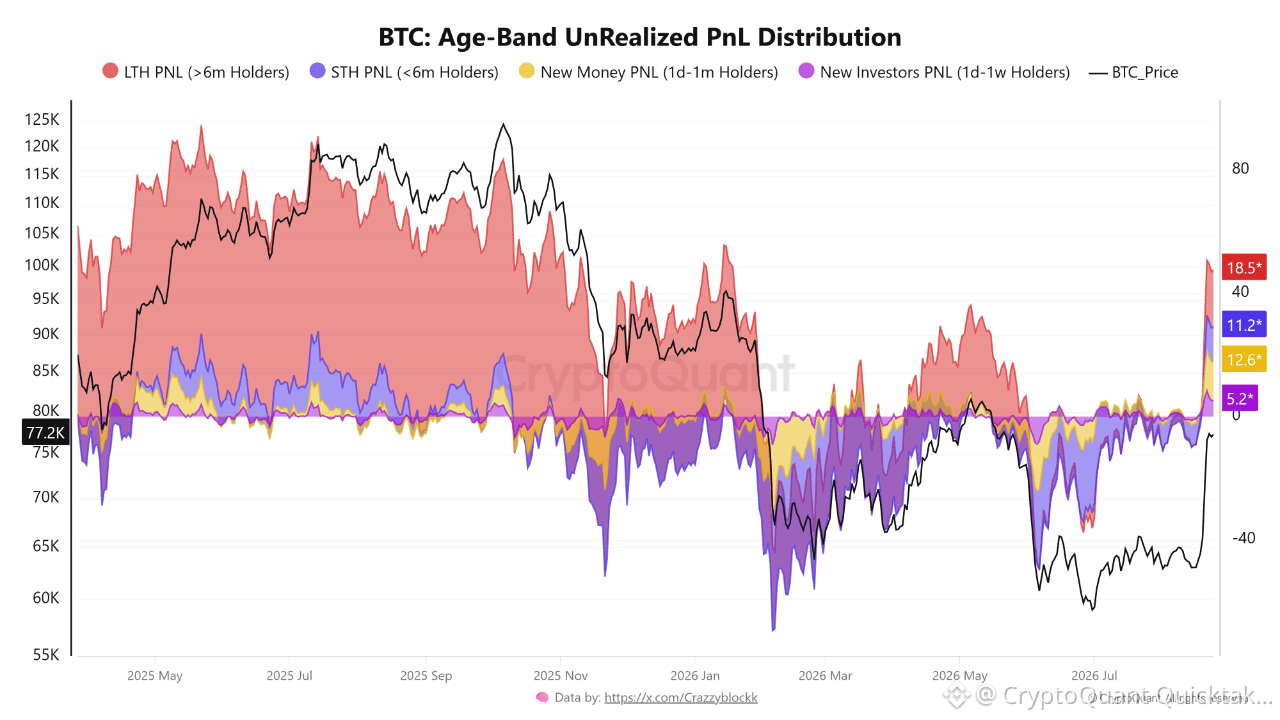
On August 16, BTC was trading near $63K while the Short-Term Holder Realized Price stood around $67.3K. STH profitability was roughly -6.8%, meaning the average recent buyer was still underwater.
By August 24, BTC had climbed to about $77.3K, while the STH Realized Price increased to roughly $68.6K. STH profitability improved to +11.3%.
At the same time, Long-Term Holder profitability moved from approximately breakeven to +18.5%, while New Money profitability rose from -1.4% to +12.7%.
This recovery is also visible across the broader UTXO structure. The share of UTXOs in loss fell from 51.8% to 23.8% between August 16 and August 24. Aggregate unrealized losses declined by about 45%, while unrealized profits increased nearly 40%.
This is a classic cost-basis reclamation process.
During late-stage bear markets, a large amount of supply changes hands at depressed prices. When price later breaks through these dense cost-basis zones, recent buyers move rapidly from loss to profit and the amount of underwater supply contracts sharply.
The current structure is now much healthier: BTC trades above both the LTH cost basis near $63K and the STH cost basis near $68.6K.
However, the newest investors have a much higher cost basis near $73K, leaving them with only a small profit cushion.
That makes the $68K–$73K region the key area to watch. Holding above it would suggest that the profitability reset is becoming structurally durable. Losing it would quickly push a large portion of recent buyers back into loss.
Written by Crazzyblockk
Bitcoin’s $77K Rally Is Repairing the Most Fragile Part of the Market
Bitcoin’s move toward $77K has triggered a broad profitability reset across the network, but the most important change is happening among Short-Term Holders.
On August 16, BTC was trading near $63K while the Short-Term Holder Realized Price stood around $67.3K. STH profitability was roughly -6.8%, meaning the average recent buyer was still underwater.
By August 24, BTC had climbed to about $77.3K, while the STH Realized Price increased to roughly $68.6K. STH profitability improved to +11.3%.
At the same time, Long-Term Holder profitability moved from approximately breakeven to +18.5%, while New Money profitability rose from -1.4% to +12.7%.
This recovery is also visible across the broader UTXO structure. The share of UTXOs in loss fell from 51.8% to 23.8% between August 16 and August 24. Aggregate unrealized losses declined by about 45%, while unrealized profits increased nearly 40%.
This is a classic cost-basis reclamation process.
During late-stage bear markets, a large amount of supply changes hands at depressed prices. When price later breaks through these dense cost-basis zones, recent buyers move rapidly from loss to profit and the amount of underwater supply contracts sharply.
The current structure is now much healthier: BTC trades above both the LTH cost basis near $63K and the STH cost basis near $68.6K.
However, the newest investors have a much higher cost basis near $73K, leaving them with only a small profit cushion.
That makes the $68K–$73K region the key area to watch. Holding above it would suggest that the profitability reset is becoming structurally durable. Losing it would quickly push a large portion of recent buyers back into loss.
Written by Crazzyblockk
On August 16, BTC was trading near $63K while the Short-Term Holder Realized Price stood around $67.3K. STH profitability was roughly -6.8%, meaning the average recent buyer was still underwater.
By August 24, BTC had climbed to about $77.3K, while the STH Realized Price increased to roughly $68.6K. STH profitability improved to +11.3%.
At the same time, Long-Term Holder profitability moved from approximately breakeven to +18.5%, while New Money profitability rose from -1.4% to +12.7%.
This recovery is also visible across the broader UTXO structure. The share of UTXOs in loss fell from 51.8% to 23.8% between August 16 and August 24. Aggregate unrealized losses declined by about 45%, while unrealized profits increased nearly 40%.
This is a classic cost-basis reclamation process.
During late-stage bear markets, a large amount of supply changes hands at depressed prices. When price later breaks through these dense cost-basis zones, recent buyers move rapidly from loss to profit and the amount of underwater supply contracts sharply.
The current structure is now much healthier: BTC trades above both the LTH cost basis near $63K and the STH cost basis near $68.6K.
However, the newest investors have a much higher cost basis near $73K, leaving them with only a small profit cushion.
That makes the $68K–$73K region the key area to watch. Holding above it would suggest that the profitability reset is becoming structurally durable. Losing it would quickly push a large portion of recent buyers back into loss.
Written by Crazzyblockk
92
Article
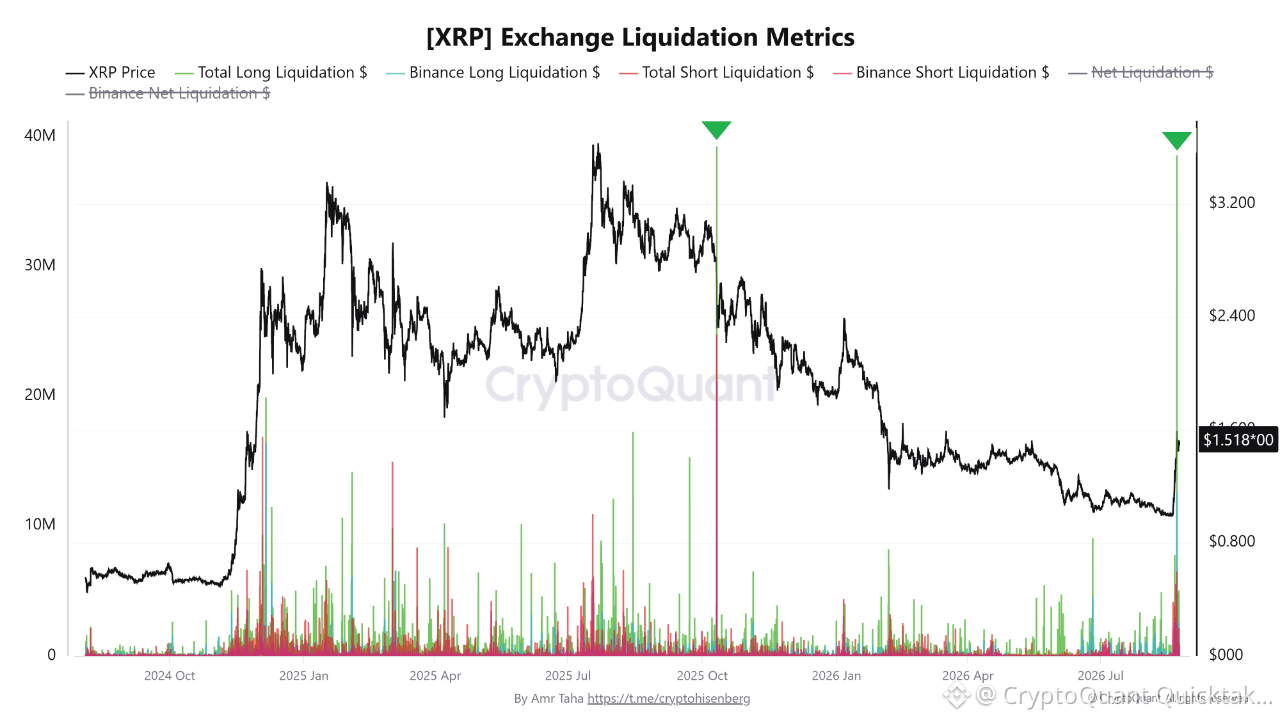
XRP Long Liquidations Hit $38.6M, Largest Since October As Binance Flips to 9-to-1 ImbalanceXRP long liquidations surged to $38.58 million on August 22, the highest reading since October 10, 2025.
The figure came within just $720,000—or 1.8%—of the $39.3 million recorded during the October liquidation event.
Short liquidations reached only $6.5 million, meaning long liquidations were nearly six times larger and accounted for 85.6% of the $45.08 million total.
This contrasts with October 10, when $39.3 million in longs and $24.8 million in shorts were liquidated.
Despite nearly matching October’s long-liquidation total, the latest event was almost 30% smaller overall because short liquidations were 74% lower.
The structural reversal was even clearer on Binance.
XRP long liquidations reached $12.63 million, compared with just $1.4 million in shorts—a nine-to-one imbalance, with longs representing 90% of the exchange’s total.
On October 10, Binance showed the opposite structure: short liquidations reached $21.1 million, more than twice the $9.82 million recorded for longs.
Compared with that event, Binance long liquidations increased 28.6%, while short liquidations fell 93.4%.
The pattern was not limited to Binance.
Ex-Binance long liquidations totaled approximately $25.95 million on August 22, versus $5.1 million in shorts, producing another five-to-one imbalance.
Written by Amr Taha
XRP Long Liquidations Hit $38.6M, Largest Since October As Binance Flips to 9-to-1 Imbalance
XRP long liquidations surged to $38.58 million on August 22, the highest reading since October 10, 2025.
The figure came within just $720,000—or 1.8%—of the $39.3 million recorded during the October liquidation event.
Short liquidations reached only $6.5 million, meaning long liquidations were nearly six times larger and accounted for 85.6% of the $45.08 million total.
This contrasts with October 10, when $39.3 million in longs and $24.8 million in shorts were liquidated.
Despite nearly matching October’s long-liquidation total, the latest event was almost 30% smaller overall because short liquidations were 74% lower.
The structural reversal was even clearer on Binance.
XRP long liquidations reached $12.63 million, compared with just $1.4 million in shorts—a nine-to-one imbalance, with longs representing 90% of the exchange’s total.
On October 10, Binance showed the opposite structure: short liquidations reached $21.1 million, more than twice the $9.82 million recorded for longs.
Compared with that event, Binance long liquidations increased 28.6%, while short liquidations fell 93.4%.
The pattern was not limited to Binance.
Ex-Binance long liquidations totaled approximately $25.95 million on August 22, versus $5.1 million in shorts, producing another five-to-one imbalance.
Written by Amr Taha
The figure came within just $720,000—or 1.8%—of the $39.3 million recorded during the October liquidation event.
Short liquidations reached only $6.5 million, meaning long liquidations were nearly six times larger and accounted for 85.6% of the $45.08 million total.
This contrasts with October 10, when $39.3 million in longs and $24.8 million in shorts were liquidated.
Despite nearly matching October’s long-liquidation total, the latest event was almost 30% smaller overall because short liquidations were 74% lower.
The structural reversal was even clearer on Binance.
XRP long liquidations reached $12.63 million, compared with just $1.4 million in shorts—a nine-to-one imbalance, with longs representing 90% of the exchange’s total.
On October 10, Binance showed the opposite structure: short liquidations reached $21.1 million, more than twice the $9.82 million recorded for longs.
Compared with that event, Binance long liquidations increased 28.6%, while short liquidations fell 93.4%.
The pattern was not limited to Binance.
Ex-Binance long liquidations totaled approximately $25.95 million on August 22, versus $5.1 million in shorts, producing another five-to-one imbalance.
Written by Amr Taha
2
411
Article
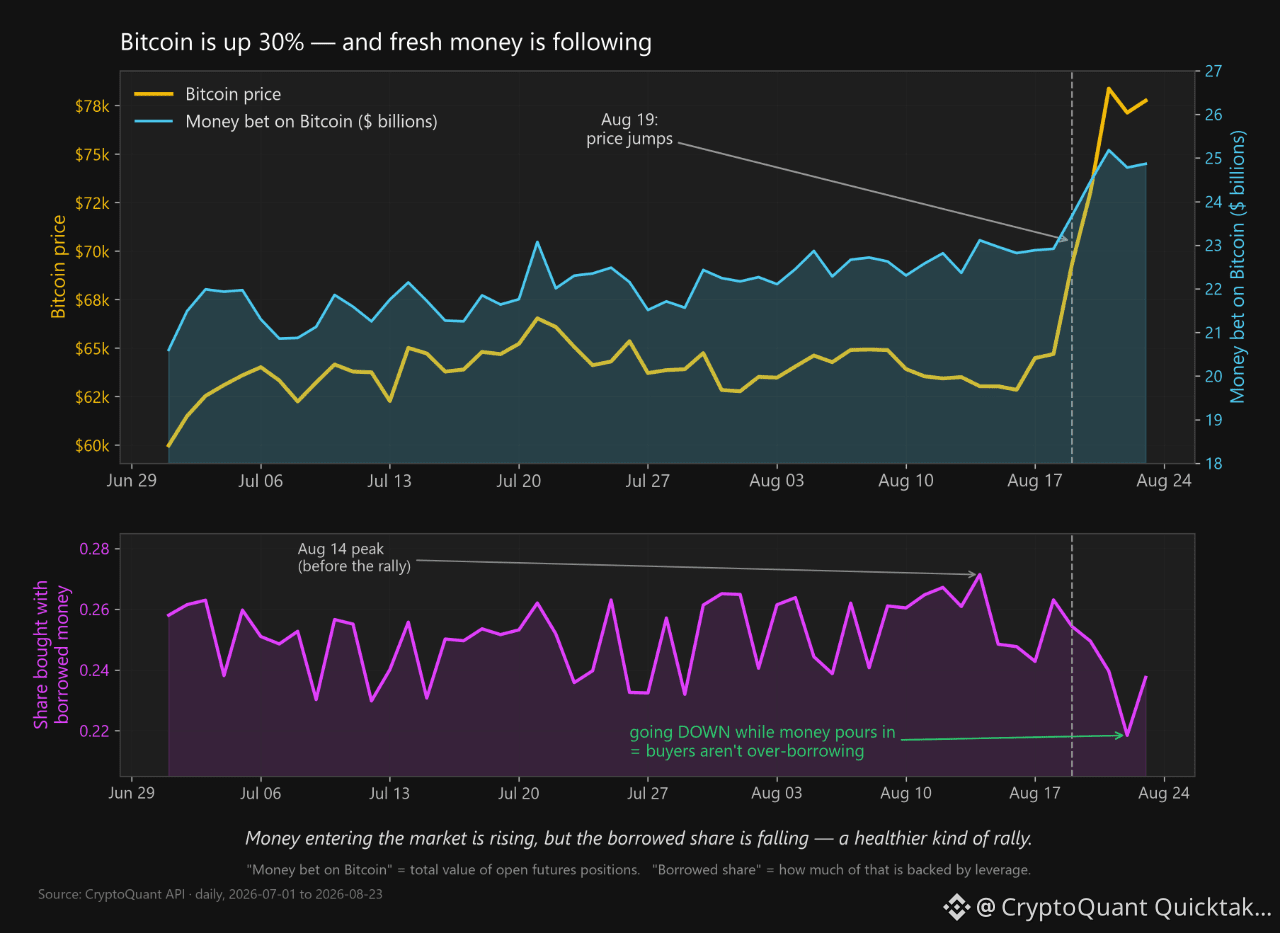
Bitcoin Is Up 30% — and Fresh Money Is FollowingSince early July, Bitcoin has climbed from $60k to $78k. Along the way, the total amount of money positioned in the market has grown from $20.6B to $24.9B — near the highest level of this window.
But here's the interesting part: the share of that money backed by borrowing has been falling, not rising. It peaked on August 14 — before the rally even started — and has been drifting down ever since, even as prices jumped after August 19.
That's unusual. Rallies driven by borrowed money tend to end violently, because lenders can force-sell positions when prices dip. A rally where fresh money arrives without growing leverage is built on firmer ground.
This doesn't guarantee the price keeps rising. But compared to mid-August — when borrowing was at its peak and price was going nowhere — today's structure looks a lot healthier.
If the borrowed-money share starts climbing back while prices stall, that's the warning sign to watch for. We're not there yet.
Written by 우민규 Woominkyu
Bitcoin Is Up 30% — and Fresh Money Is Following
Since early July, Bitcoin has climbed from $60k to $78k. Along the way, the total amount of money positioned in the market has grown from $20.6B to $24.9B — near the highest level of this window.
But here's the interesting part: the share of that money backed by borrowing has been falling, not rising. It peaked on August 14 — before the rally even started — and has been drifting down ever since, even as prices jumped after August 19.
That's unusual. Rallies driven by borrowed money tend to end violently, because lenders can force-sell positions when prices dip. A rally where fresh money arrives without growing leverage is built on firmer ground.
This doesn't guarantee the price keeps rising. But compared to mid-August — when borrowing was at its peak and price was going nowhere — today's structure looks a lot healthier.
If the borrowed-money share starts climbing back while prices stall, that's the warning sign to watch for. We're not there yet.
Written by 우민규 Woominkyu
But here's the interesting part: the share of that money backed by borrowing has been falling, not rising. It peaked on August 14 — before the rally even started — and has been drifting down ever since, even as prices jumped after August 19.
That's unusual. Rallies driven by borrowed money tend to end violently, because lenders can force-sell positions when prices dip. A rally where fresh money arrives without growing leverage is built on firmer ground.
This doesn't guarantee the price keeps rising. But compared to mid-August — when borrowing was at its peak and price was going nowhere — today's structure looks a lot healthier.
If the borrowed-money share starts climbing back while prices stall, that's the warning sign to watch for. We're not there yet.
Written by 우민규 Woominkyu
206
Article
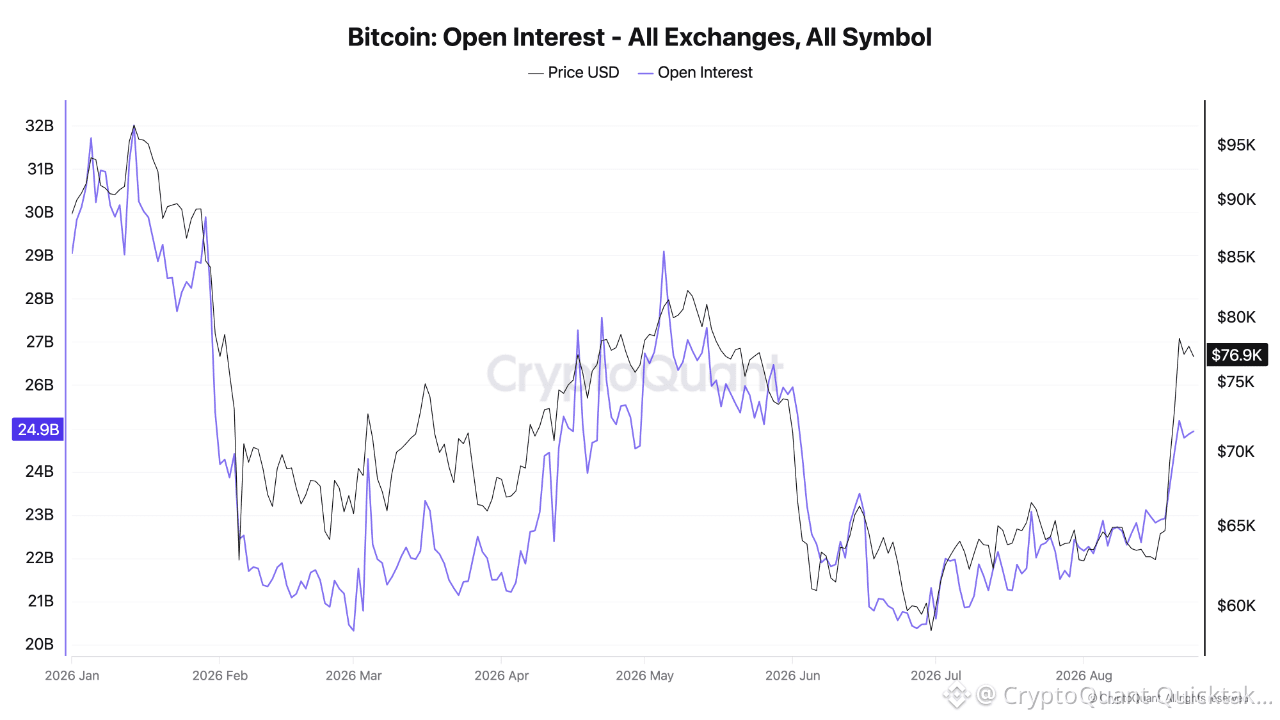
BTC Is Moving Faster Than Leverage.Earlier this week, BTC went from ~$64K to ~$77K, while open interest increased from roughly $22B to $24.9B.
Leverage is coming back as BTC breaks higher, but OI is still lagging behind the move in price.
BTC is up roughly 21% from the recent low, while OI is up around 13%.
The estimated leverage ratio is also around 0.23, still below some of the higher levels seen earlier this year.
So far, the rally doesn't look heavily driven by leverage. Traders are adding positions, but not at the same pace as the move in BTC.
If BTC keeps pushing higher, OI and ELR will be important to watch. If OI starts catching up quickly and ELR moves back toward its previous highs, that would change the picture.
For now, price is still moving faster than leverage.
Written by nocoffeenobrain
BTC Is Moving Faster Than Leverage.
Earlier this week, BTC went from ~$64K to ~$77K, while open interest increased from roughly $22B to $24.9B.
Leverage is coming back as BTC breaks higher, but OI is still lagging behind the move in price.
BTC is up roughly 21% from the recent low, while OI is up around 13%.
The estimated leverage ratio is also around 0.23, still below some of the higher levels seen earlier this year.
So far, the rally doesn't look heavily driven by leverage. Traders are adding positions, but not at the same pace as the move in BTC.
If BTC keeps pushing higher, OI and ELR will be important to watch. If OI starts catching up quickly and ELR moves back toward its previous highs, that would change the picture.
For now, price is still moving faster than leverage.
Written by nocoffeenobrain
Leverage is coming back as BTC breaks higher, but OI is still lagging behind the move in price.
BTC is up roughly 21% from the recent low, while OI is up around 13%.
The estimated leverage ratio is also around 0.23, still below some of the higher levels seen earlier this year.
So far, the rally doesn't look heavily driven by leverage. Traders are adding positions, but not at the same pace as the move in BTC.
If BTC keeps pushing higher, OI and ELR will be important to watch. If OI starts catching up quickly and ELR moves back toward its previous highs, that would change the picture.
For now, price is still moving faster than leverage.
Written by nocoffeenobrain
358
Article
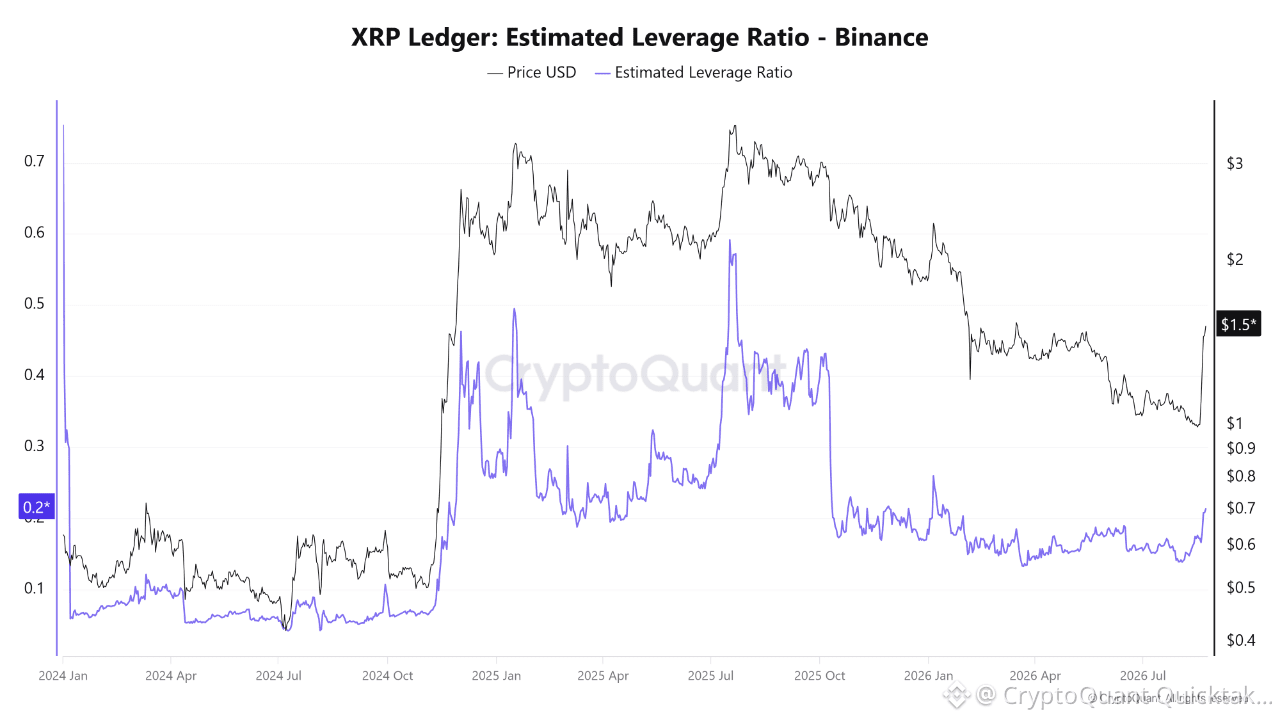
XRP Leverage Ratio Hits Highest Level in More Than 7 Months on BinanceData indicates that the estimated leverage ratio for XRP on Binance has risen to approximately 0.213, its highest level since last January. This increase reflects traders’ growing reliance on leverage, with positions in the XRP derivatives market This suggests that traders are becoming more willing to take risks and open larger positions, indicating increased activity and speculation in the derivatives market. In other words, a larger portion of market activity is now linked to leveraged positions, which could amplify XRP’s price movements in both directions.
This increase is particularly significant because it comes after a prolonged period during which the ratio remained at relatively low levels throughout 2026. Reaching its highest level since January suggests a gradual return of risk appetite to the XRP derivatives market, rather than merely a temporary surge in the indicator.
However, the rise in leverage has two sides. If it coincides with a price increase and rising open interest, it could reflect increased confidence and the opening of new positions, potentially supporting the continuation of the upward trend. If the ratio rises while the price begins to decline, this could indicate an accumulation of highly leveraged positions, increasing the likelihood of forced liquidations and potentially leading to more severe price movements.
Written by Arab Chain
XRP Leverage Ratio Hits Highest Level in More Than 7 Months on Binance
Data indicates that the estimated leverage ratio for XRP on Binance has risen to approximately 0.213, its highest level since last January. This increase reflects traders’ growing reliance on leverage, with positions in the XRP derivatives market This suggests that traders are becoming more willing to take risks and open larger positions, indicating increased activity and speculation in the derivatives market. In other words, a larger portion of market activity is now linked to leveraged positions, which could amplify XRP’s price movements in both directions.
This increase is particularly significant because it comes after a prolonged period during which the ratio remained at relatively low levels throughout 2026. Reaching its highest level since January suggests a gradual return of risk appetite to the XRP derivatives market, rather than merely a temporary surge in the indicator.
However, the rise in leverage has two sides. If it coincides with a price increase and rising open interest, it could reflect increased confidence and the opening of new positions, potentially supporting the continuation of the upward trend. If the ratio rises while the price begins to decline, this could indicate an accumulation of highly leveraged positions, increasing the likelihood of forced liquidations and potentially leading to more severe price movements.
Written by Arab Chain
This increase is particularly significant because it comes after a prolonged period during which the ratio remained at relatively low levels throughout 2026. Reaching its highest level since January suggests a gradual return of risk appetite to the XRP derivatives market, rather than merely a temporary surge in the indicator.
However, the rise in leverage has two sides. If it coincides with a price increase and rising open interest, it could reflect increased confidence and the opening of new positions, potentially supporting the continuation of the upward trend. If the ratio rises while the price begins to decline, this could indicate an accumulation of highly leveraged positions, increasing the likelihood of forced liquidations and potentially leading to more severe price movements.
Written by Arab Chain
1
565
Article
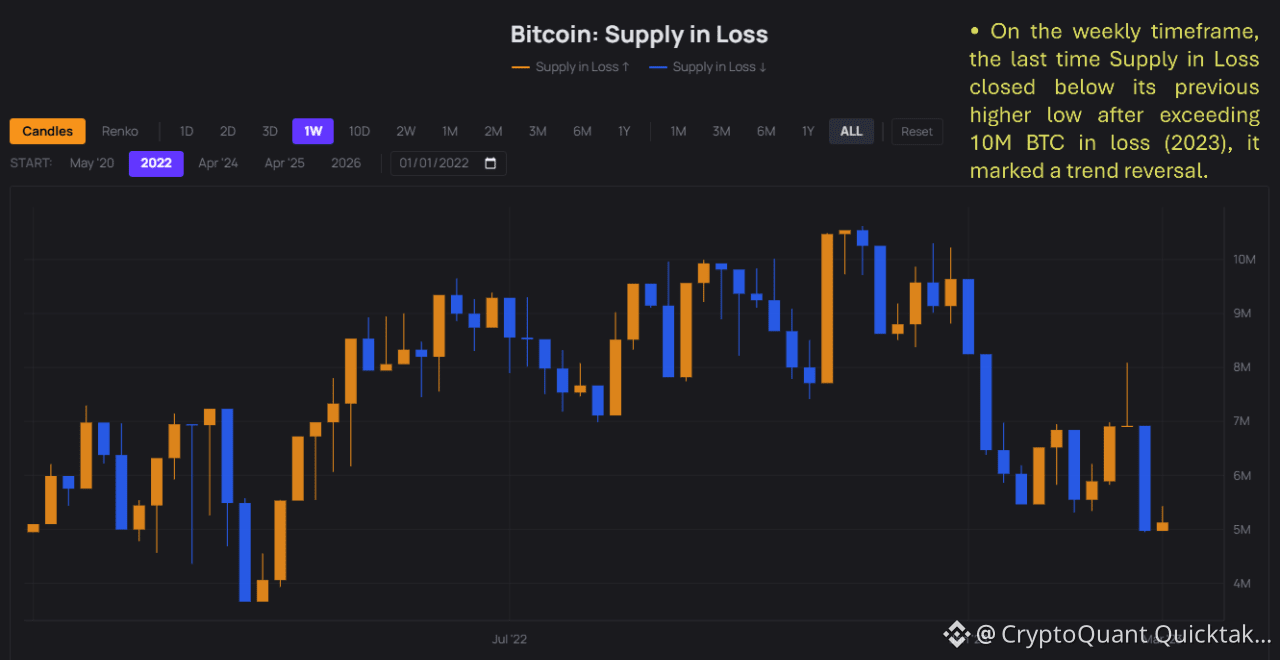
Bitcoin: Supply in Loss ↓• On the weekly timeframe, the last time Supply in Loss closed below its previous higher low after exceeding 10M BTC in loss (2023), it marked a trend reversal.
Written by Facundo Fama
Bitcoin: Supply in Loss ↓
• On the weekly timeframe, the last time Supply in Loss closed below its previous higher low after exceeding 10M BTC in loss (2023), it marked a trend reversal.
Written by Facundo Fama
Written by Facundo Fama
1
405
Article
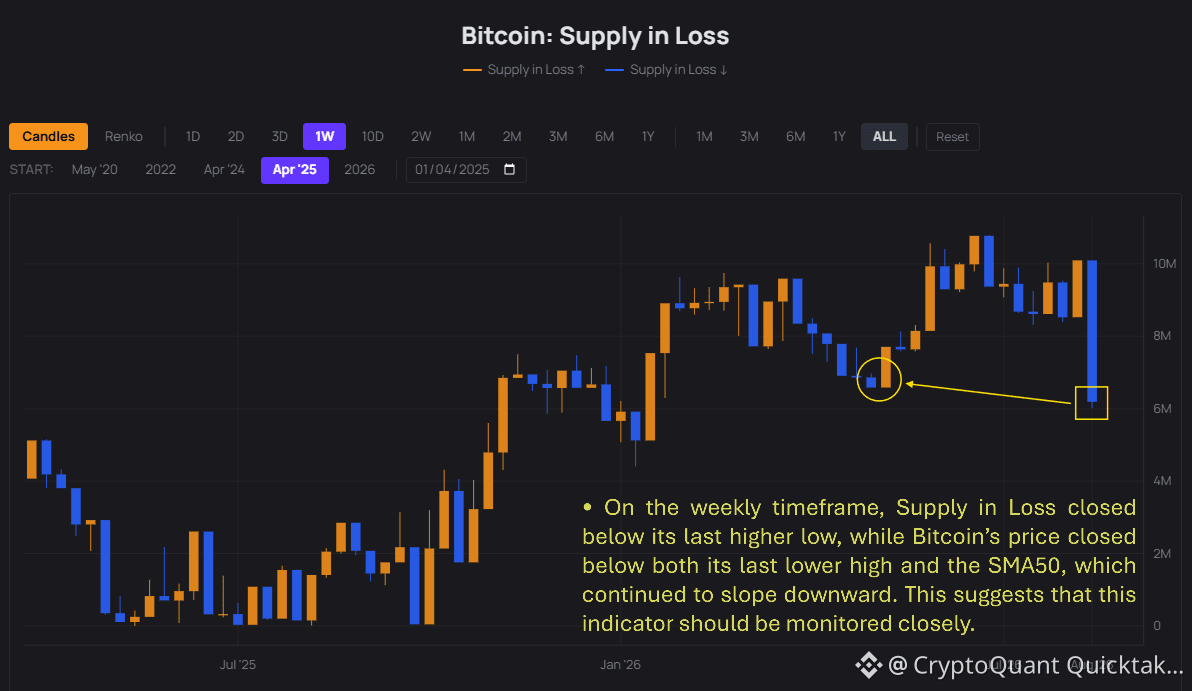
Bitcoin: Supply in Loss ↓• On the weekly timeframe, Supply in Loss closed below its last higher low, while Bitcoin’s price closed below both its last lower high and the SMA50, which continued to slope downward. This suggests that this indicator should be monitored closely.
Written by Facundo Fama
Bitcoin: Supply in Loss ↓
• On the weekly timeframe, Supply in Loss closed below its last higher low, while Bitcoin’s price closed below both its last lower high and the SMA50, which continued to slope downward. This suggests that this indicator should be monitored closely.
Written by Facundo Fama
Written by Facundo Fama
146
Log in to explore more content
Join global crypto users on Binance Square
⚡️ Get latest and useful information about crypto.
💬 Trusted by the world’s largest crypto exchange.
👍 Discover real insights from verified creators.
Email / Phone number
Trending Topics
BTCReaches$80000
6,455 views
186 Discussing
Bitcoin Stalking the $80,000 Milestone: Genuine Expansion vs. Liquidity Exhaustion
Bitcoin is aggressively knocking on the door of the $80,000 mark after surging from $64,000 to tap local highs near $79,800. While retail timelines are already pricing in a parabolic continuation, examining the structural conditions near psychological thresholds provides a clearer picture of market health.
Key Structural Drivers Behind the Push:
Cascading Squeeze vs. Spot ETF Backing:
The explosive run toward $80k was heavily propelled by forced short liquidations as $BTC cleared key resistance between $72k–$75k. Crucially, this was accompanied by nearly $2B in weekly spot ETF inflows, signaling institutional capital absorption rather than an isolated leverage spike.
The $80k Psychological Wall:
The $79,500–$80,000 band represents a massive cluster of resting limit sell orders and un-triggered call option open interest. As price probes this ceiling, buyers must absorb heavy distribution from earlier dip-buyers taking profit.
Macro Tailwinds:
The broader hard-asset expansion—catalyzed by softer Treasury yields and dollar weakness, continues to provide macro liquidity support for digital assets.
The Structural Reality:
Reaching a major psychological round number like $80,000 often triggers a high-volatility liquidity sweep before genuine price discovery begins. If aggressive breakout buyers get absorbed at the threshold, a healthy consolidation toward the $75,500–$76,500 support shelf would allow the market to build structure.
A clean reclaim of $80k with sustained spot volume opens the door to further expansion, but chasing momentum directly into multi-month supply walls carries high asymmetric risk.
#BTCReaches$80000
Shontz
·3 Likes
·604 views
BitcoinOpenInterestFallsToTwoMonthLow
40,211 views
1,219 Discussing
BitcoinRises23.6%Weekly
61,041 views
1,152 Discussing