
Crypto Fortress 1
1.5k Posts

Crypto Fortress 1
Crypto explorer | Building the decentralized future one block at a time | Insights on BTC, ETH, DeFi & beyond | Not financial advice.
0 Following
6 Followers
18 Liked
Posts
$XRP is still holding above the key $1.43 support zone after a liquidation-driven pullback, keeping the bullish setup alive for now.
The next major level is $1.55. A clean breakout above it could open the door toward $1.82, while a confirmed drop below $1.43 would suggest the recent high may have been a local top.
Key XRP Takeaways:
Stronger Fundamentals: Ripple's RLUSD stablecoin has grown to $2.1B in circulation, up from $1.57B on August 12, while XRP-linked ETFs have attracted more than $40M in net inflows.
Constructive Order Flow: Longs have been closing and shorts opening, yet XRP has stayed relatively stable a sign that selling pressure is being absorbed better than expected.
The main risk is Bitcoin. If BTC drops toward the $70K-$74K zone, XRP could get dragged lower too. But as long as $1.43 holds, traders will keep watching $1.55 as the trigger for the next leg up.
#XRP #Altcoin Season#
The next major level is $1.55. A clean breakout above it could open the door toward $1.82, while a confirmed drop below $1.43 would suggest the recent high may have been a local top.
Key XRP Takeaways:
Stronger Fundamentals: Ripple's RLUSD stablecoin has grown to $2.1B in circulation, up from $1.57B on August 12, while XRP-linked ETFs have attracted more than $40M in net inflows.
Constructive Order Flow: Longs have been closing and shorts opening, yet XRP has stayed relatively stable a sign that selling pressure is being absorbed better than expected.
The main risk is Bitcoin. If BTC drops toward the $70K-$74K zone, XRP could get dragged lower too. But as long as $1.43 holds, traders will keep watching $1.55 as the trigger for the next leg up.
#XRP #Altcoin Season#
Ripple's Brad Garlinghouse says the Clarity Act could fix crypto's biggest U.S. problem
Ripple spent $150 million fighting the SEC for four years and Garlinghouse says most crypto companies simply could not afford to do the same.
His argument is simple: without clear rules, companies either spend millions on lawyers, settle early, shut down, or move talent offshore. Ripple itself hired around 80% of its staff outside the U.S. during the legal battle, with London becoming its second-largest office.
Garlinghouse says the regulatory tone has improved under the current administration, especially at the SEC and CFTC. But he argues that better leadership is not enough the industry still needs clear laws that protect consumers while giving compliant companies confidence to build in America.
That matters far beyond Ripple. Just as $BTC grew from a niche asset into global financial infrastructure, crypto companies now need rules that can scale with the technology instead of forcing innovation to leave the country.
#XRP #XRPEFT
#BTC Price Analysis#
Ripple spent $150 million fighting the SEC for four years and Garlinghouse says most crypto companies simply could not afford to do the same.
His argument is simple: without clear rules, companies either spend millions on lawyers, settle early, shut down, or move talent offshore. Ripple itself hired around 80% of its staff outside the U.S. during the legal battle, with London becoming its second-largest office.
Garlinghouse says the regulatory tone has improved under the current administration, especially at the SEC and CFTC. But he argues that better leadership is not enough the industry still needs clear laws that protect consumers while giving compliant companies confidence to build in America.
That matters far beyond Ripple. Just as $BTC grew from a niche asset into global financial infrastructure, crypto companies now need rules that can scale with the technology instead of forcing innovation to leave the country.
#XRP #XRPEFT
#BTC Price Analysis#
$BNB
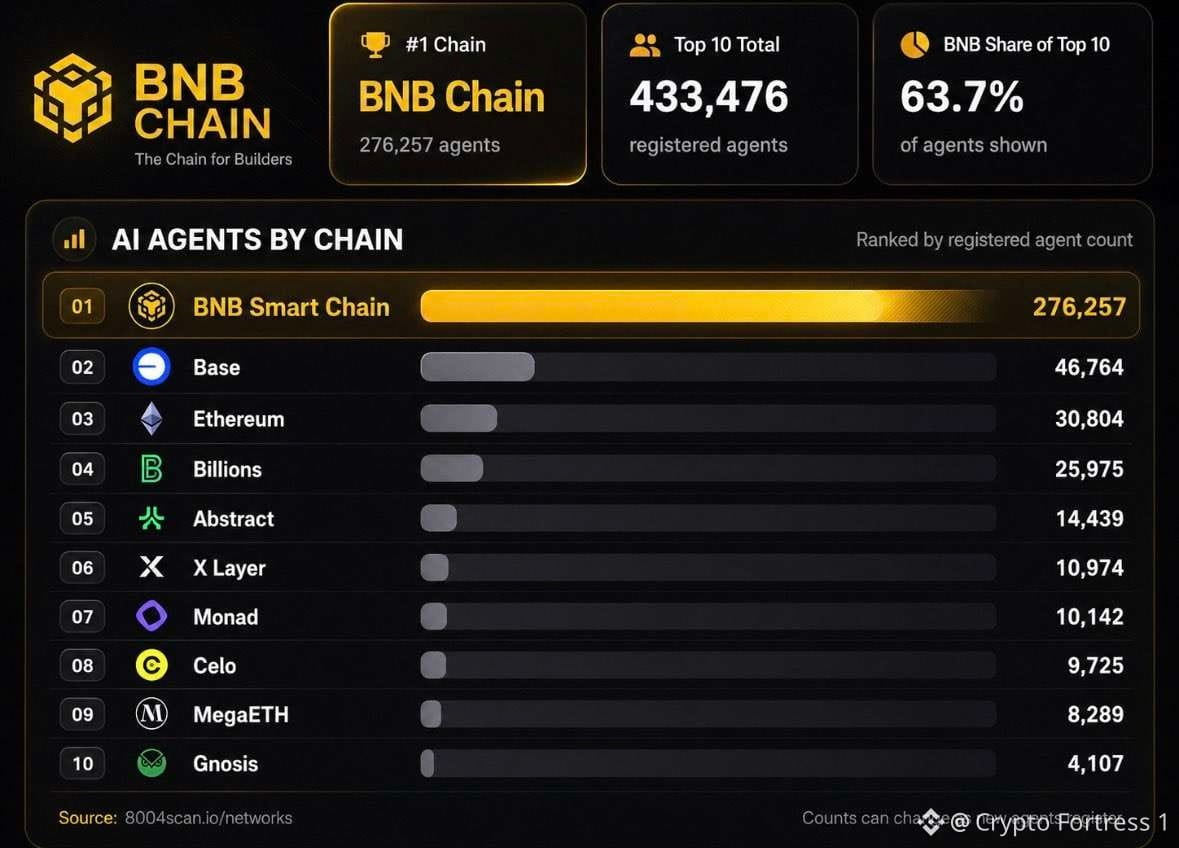
BNB Chain leads Al agent adoption with 276K+ agents, capturing 63.7% of the top 10 networks' total registered agents.
#BNBChain#
BNB Chain leads Al agent adoption with 276K+ agents, capturing 63.7% of the top 10 networks' total registered agents.
#BNBChain#
Bitwise CIO Matt Hougan says $BTC could reach 1.3 million per $BTC over the next 10 years if it captures one third of the store of value market.
#Bitcoin #BTC #Crypto
#Bitcoin #BTC #Crypto
LATEST: Strive just added 1,110 $BTC worth $81.5M to its holdings.
Its total Bitcoin stash now stands at 21,356 $BTC.
#Altcoin Season# #BTC Price Analysis#
Its total Bitcoin stash now stands at 21,356 $BTC.
#Altcoin Season# #BTC Price Analysis#

BitMine Buys $81 Million of Ethereum - Largest Purchase in 2 Months
Tom Lee's BitMine has recorded its biggest Ethereum accumulation in the past two months.
The firm purchased approximately $81 million worth of $ETH last week. This marks the largest single-week buy by BitMine since June and comes as Ethereum continues to attract institutional attention.
Breakdown of the recent activity:
> $81 million in ETH acquired last week
> Largest weekly purchase by BitMine in two months
Continues a pattern of steady accumulation by the firm
This level of buying stands out after a quieter period of smaller purchases. It arrives alongside Tom Lee's long-term price target of $62,000 for $ETH and improving market sentiment.
A clear signal of continued institutional demand for ETH through BitMine.
#Ethereum $BTC #BTC Price Analysis#
#Altcoin Season#
Tom Lee's BitMine has recorded its biggest Ethereum accumulation in the past two months.
The firm purchased approximately $81 million worth of $ETH last week. This marks the largest single-week buy by BitMine since June and comes as Ethereum continues to attract institutional attention.
Breakdown of the recent activity:
> $81 million in ETH acquired last week
> Largest weekly purchase by BitMine in two months
Continues a pattern of steady accumulation by the firm
This level of buying stands out after a quieter period of smaller purchases. It arrives alongside Tom Lee's long-term price target of $62,000 for $ETH and improving market sentiment.
A clear signal of continued institutional demand for ETH through BitMine.
#Ethereum $BTC #BTC Price Analysis#
#Altcoin Season#

Velvet Crashes 73% as Trading Volume Explodes
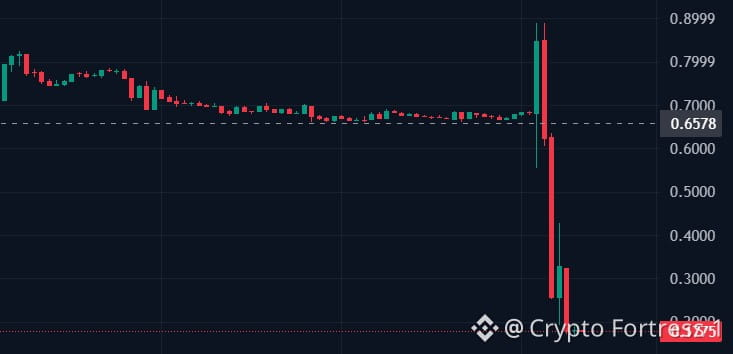
$VELVET has suffered a violent breakdown, falling roughly 73% in 24 hours to ~$0.18, while trading volume exploded more than 1,100% to ~$85M, approximately equal to its entire current market cap.
The chart is even more extreme: price briefly spiked from the ~$0.65-$0.70 region toward $0.85, then collapsed almost vertically through months of support. Current CMC data confirms the drawdown and circulating supply near 464M
#VELVET.
What makes this important is the context. $VELVET has already shown unusually unstable price discovery this summer. In June, project-linked wallets and market maker DWF Labs reportedly transferred nearly 29M $VELVET to exchanges during a major rally, while subsequent trading has repeatedly produced large double-digit swings.
There is also a structural liquidity issue.
Before today's collapse, $VELVET had recently been trading around $0.60-$0.80 on some venues with relatively modest volume. Current data now shows turnover above 100% of market cap, exactly the kind of dislocation that can occur when liquidity fragments across venues and aggressive selling overwhelms available bids.
Importantly, I haven't found a confirmed exploit, hack or protocol failure explaining today's move yet. That distinction matters. Until the team or exchanges publish evidence, calling this a hack would be speculation. So right now the story isn't simply " $VELVET dumped." It's that price collapsed ~73% while volume increased ~12x, with major discrepancies appearing across venue prices.
That points to a market-structure event worth watching closely and the next question is whether this is forced liquidation, concentrated token distribution, or an exchange-specific liquidity failure. Until that answer arrives, this is not a dip. It's an unresolved event!
$VELVET has suffered a violent breakdown, falling roughly 73% in 24 hours to ~$0.18, while trading volume exploded more than 1,100% to ~$85M, approximately equal to its entire current market cap.
The chart is even more extreme: price briefly spiked from the ~$0.65-$0.70 region toward $0.85, then collapsed almost vertically through months of support. Current CMC data confirms the drawdown and circulating supply near 464M
#VELVET.
What makes this important is the context. $VELVET has already shown unusually unstable price discovery this summer. In June, project-linked wallets and market maker DWF Labs reportedly transferred nearly 29M $VELVET to exchanges during a major rally, while subsequent trading has repeatedly produced large double-digit swings.
There is also a structural liquidity issue.
Before today's collapse, $VELVET had recently been trading around $0.60-$0.80 on some venues with relatively modest volume. Current data now shows turnover above 100% of market cap, exactly the kind of dislocation that can occur when liquidity fragments across venues and aggressive selling overwhelms available bids.
Importantly, I haven't found a confirmed exploit, hack or protocol failure explaining today's move yet. That distinction matters. Until the team or exchanges publish evidence, calling this a hack would be speculation. So right now the story isn't simply " $VELVET dumped." It's that price collapsed ~73% while volume increased ~12x, with major discrepancies appearing across venue prices.
That points to a market-structure event worth watching closely and the next question is whether this is forced liquidation, concentrated token distribution, or an exchange-specific liquidity failure. Until that answer arrives, this is not a dip. It's an unresolved event!

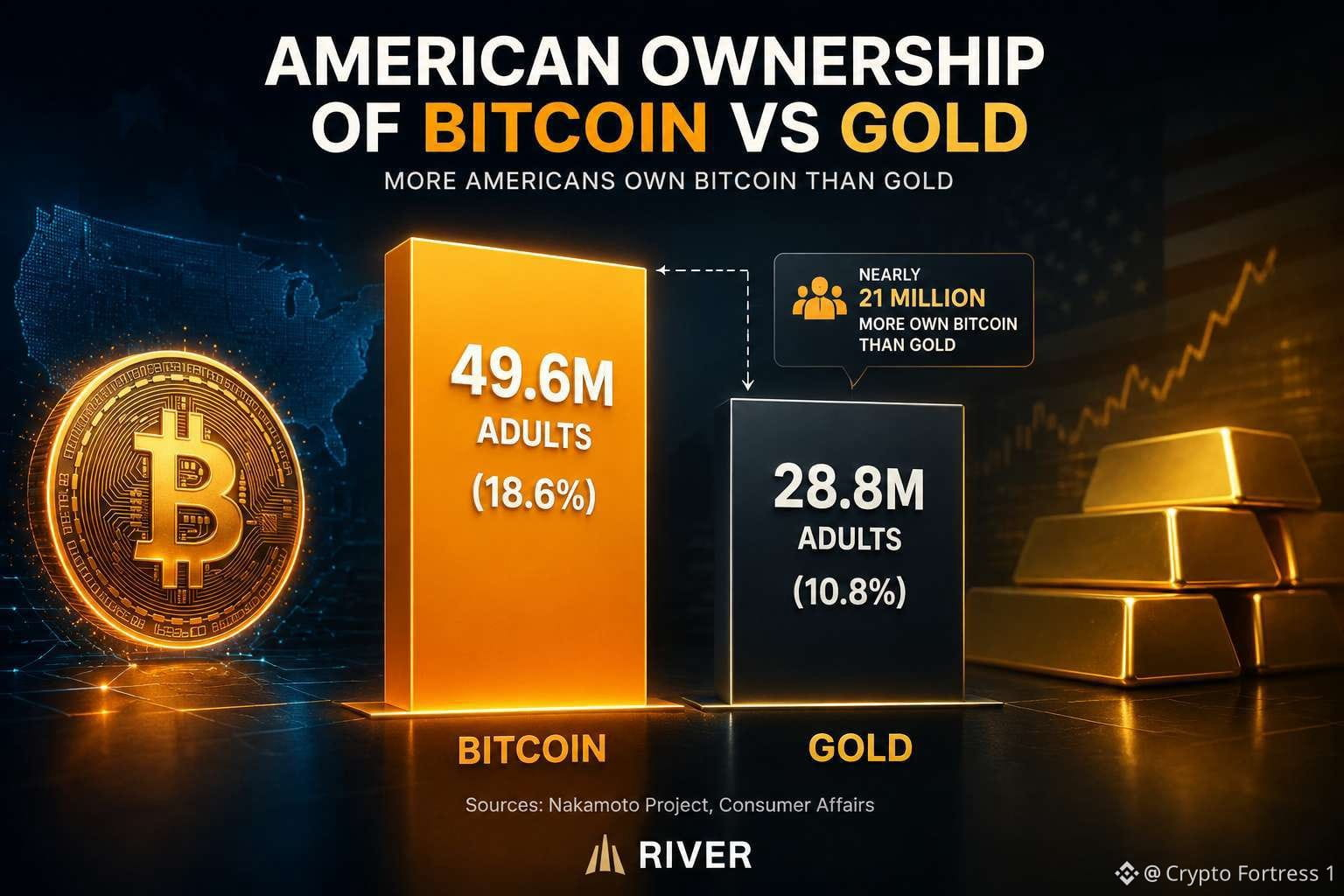
Bitcoin Is Reaching More Americans Than Gold!
49.6 million U.S. adults now reportedly own Bitcoin, compared with 28.8 million who own gold. Interesting nearly 21 million more people holding $BTC than gold, a striking shift in how Americans are choosing to store and invest their wealth.
Bitcoin is no longer just a niche asset for early adopters. Its ownership base is expanding rapidly, especially among a generation that values accessibility, portability and digital ownership.
As Bitcoin continues moving from speculation toward mainstream ownership, these numbers could become even more significant over the next few years.
Bitcoin isn't just competing with gold on price, it's competing for owners!
#Bitcoin #Gold
49.6 million U.S. adults now reportedly own Bitcoin, compared with 28.8 million who own gold. Interesting nearly 21 million more people holding $BTC than gold, a striking shift in how Americans are choosing to store and invest their wealth.
Bitcoin is no longer just a niche asset for early adopters. Its ownership base is expanding rapidly, especially among a generation that values accessibility, portability and digital ownership.
As Bitcoin continues moving from speculation toward mainstream ownership, these numbers could become even more significant over the next few years.
Bitcoin isn't just competing with gold on price, it's competing for owners!
#Bitcoin #Gold
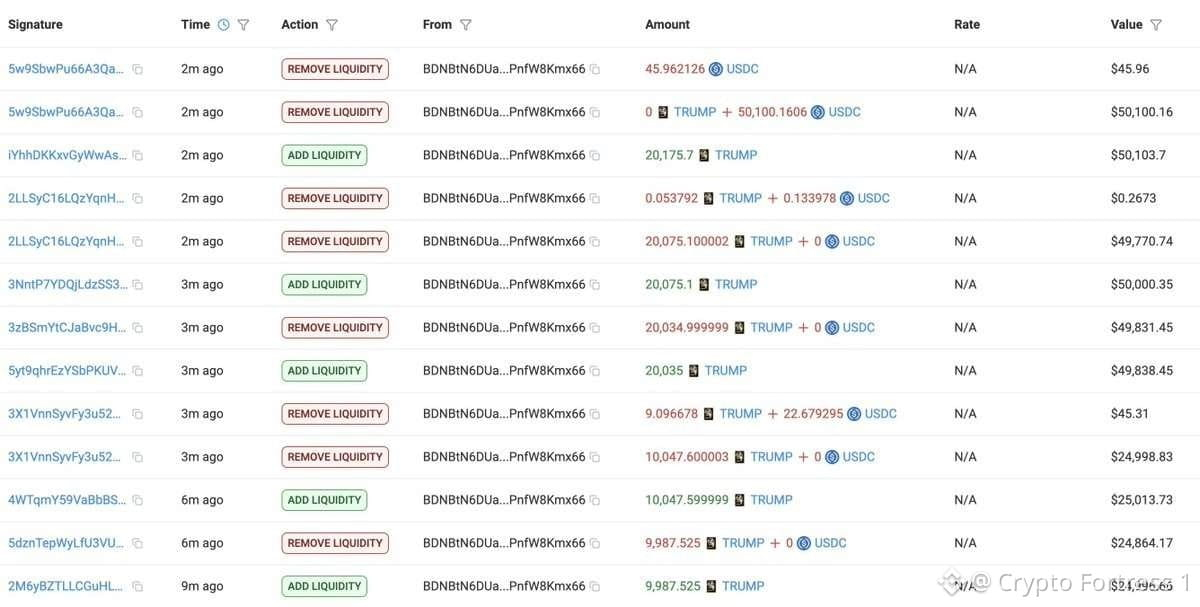
Wallets linked to the $TRUMP team reportedly pulled about $3.39 million in USDC from Solana liquidity pools over a 10-hour period, according to on-chain tracker LookOnChain.
The process happened through liquidity pools on Meteora, where traders swap TRUMP for USDC. As the team-linked position was removed, the wallets received the USDC.
Similar activity has been tracked from Trump-linked wallets before, making this another on-chain transaction traders are watching.
#TRUMPSOL #Altcoin Season# #Altcoin Season#
The process happened through liquidity pools on Meteora, where traders swap TRUMP for USDC. As the team-linked position was removed, the wallets received the USDC.
Similar activity has been tracked from Trump-linked wallets before, making this another on-chain transaction traders are watching.
#TRUMPSOL #Altcoin Season# #Altcoin Season#
Tether Walks Away From a $120M Bitcoin Mining Bet in Uruguay
A power contract dispute was enough to shut down what was supposed to be a major mining expansion.
Tether has abandoned an estimated $120M Bitcoin mining project in Uruguay after a disagreement with state utility UTE over how much electricity its two sites could use. The dispute eventually led UTE to cut power to the facilities, leaving the $BTC (image) mining operation effectively stranded.
The timeline was pretty messy:
- Microfin saw the agreed power level as a minimum that could increase
- UTE treated the same figure as a fixed limit
- Electricity bills stopped being paid in 2025
- UTE disconnected both mining sites on July 25
- Tether later told authorities it would close operations and lay off most staff
The interesting part is that Uruguay was reportedly meant to be just the first step in a wider South American mining expansion. Tether has already said it invested more than $2B in energy and mining infrastructure across Uruguay, Paraguay and El Salvador.
So this looks less like Tether walking away from Bitcoin mining altogether and more like a reminder that cheap power alone is not enough. Contracts, regulation and reliable energy access can make or break the entire mining business.
#BTC Price Analysis#
#Macro Insights#
A power contract dispute was enough to shut down what was supposed to be a major mining expansion.
Tether has abandoned an estimated $120M Bitcoin mining project in Uruguay after a disagreement with state utility UTE over how much electricity its two sites could use. The dispute eventually led UTE to cut power to the facilities, leaving the $BTC (image) mining operation effectively stranded.
The timeline was pretty messy:
- Microfin saw the agreed power level as a minimum that could increase
- UTE treated the same figure as a fixed limit
- Electricity bills stopped being paid in 2025
- UTE disconnected both mining sites on July 25
- Tether later told authorities it would close operations and lay off most staff
The interesting part is that Uruguay was reportedly meant to be just the first step in a wider South American mining expansion. Tether has already said it invested more than $2B in energy and mining infrastructure across Uruguay, Paraguay and El Salvador.
So this looks less like Tether walking away from Bitcoin mining altogether and more like a reminder that cheap power alone is not enough. Contracts, regulation and reliable energy access can make or break the entire mining business.
#BTC Price Analysis#
#Macro Insights#

$SOL
Solana leads all L1 and L2 chains in weekly DEX volume, extending its dominance to 17 consecutive weeks.
#Solana
Solana leads all L1 and L2 chains in weekly DEX volume, extending its dominance to 17 consecutive weeks.
#Solana
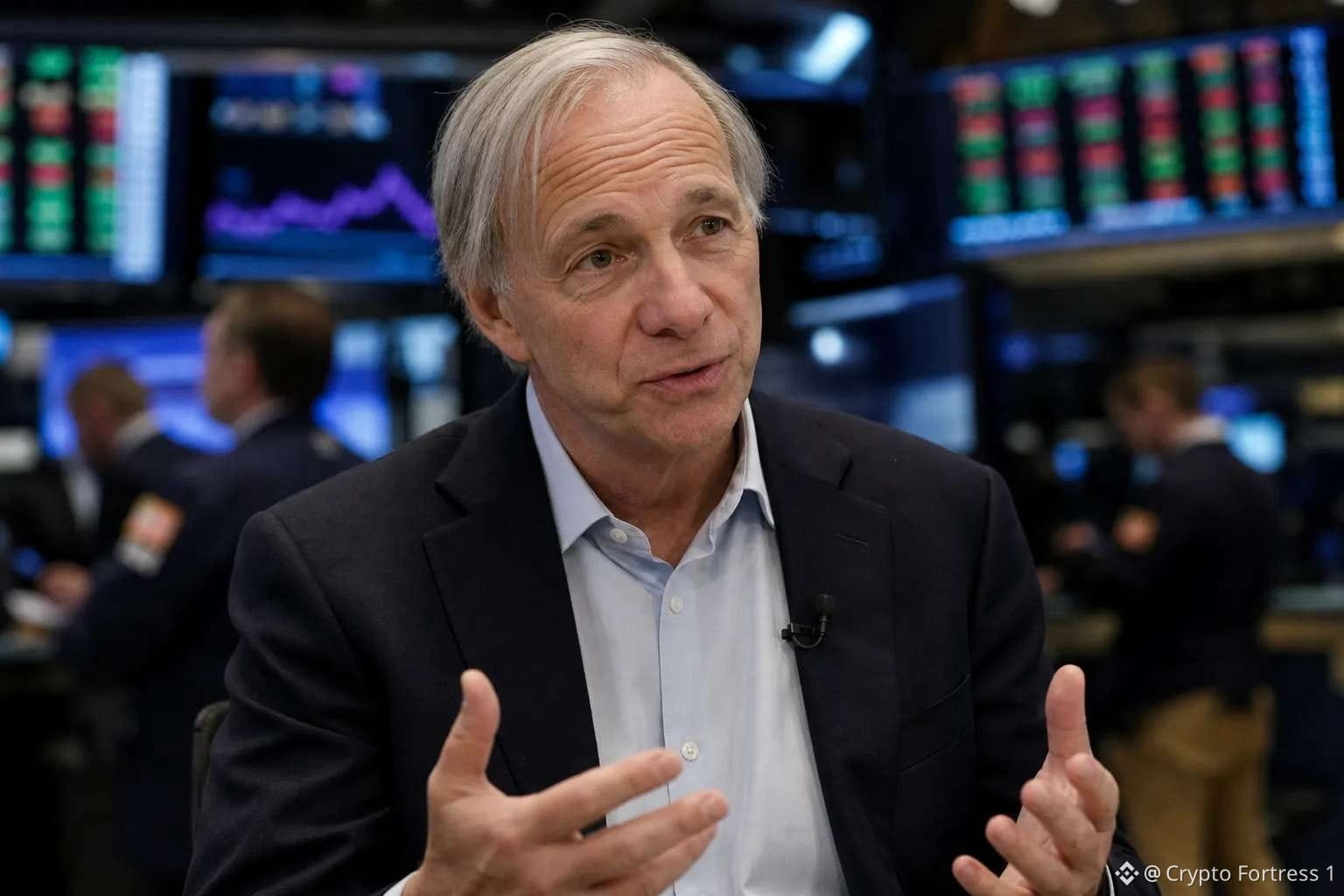
Ray Dalio is betting on gold and $BTC as US debt risks grow
Billionaire investor Ray Dalio is warning that the US could face a debt crisis within the next few years if fiscal policy doesn't change. His numbers are hard to ignore:
• ~$5.5T in US government revenue
• ~$7.5T in spending
• ~$2T annual deficit
• ~$1T in interest payments
• ~$10T of debt that needs to be refinanced
Dalio's response? Reduce exposure to government bonds, diversify globally and hold 10-15% of a portfolio in gold.
And Bitcoin? He says investors should add "a little" BTC as an asset that isn't created by governments.
#BTC Price Analysis# #Bitcoin Price Prediction: What is Bitcoins next move?#
Billionaire investor Ray Dalio is warning that the US could face a debt crisis within the next few years if fiscal policy doesn't change. His numbers are hard to ignore:
• ~$5.5T in US government revenue
• ~$7.5T in spending
• ~$2T annual deficit
• ~$1T in interest payments
• ~$10T of debt that needs to be refinanced
Dalio's response? Reduce exposure to government bonds, diversify globally and hold 10-15% of a portfolio in gold.
And Bitcoin? He says investors should add "a little" BTC as an asset that isn't created by governments.
#BTC Price Analysis# #Bitcoin Price Prediction: What is Bitcoins next move?#

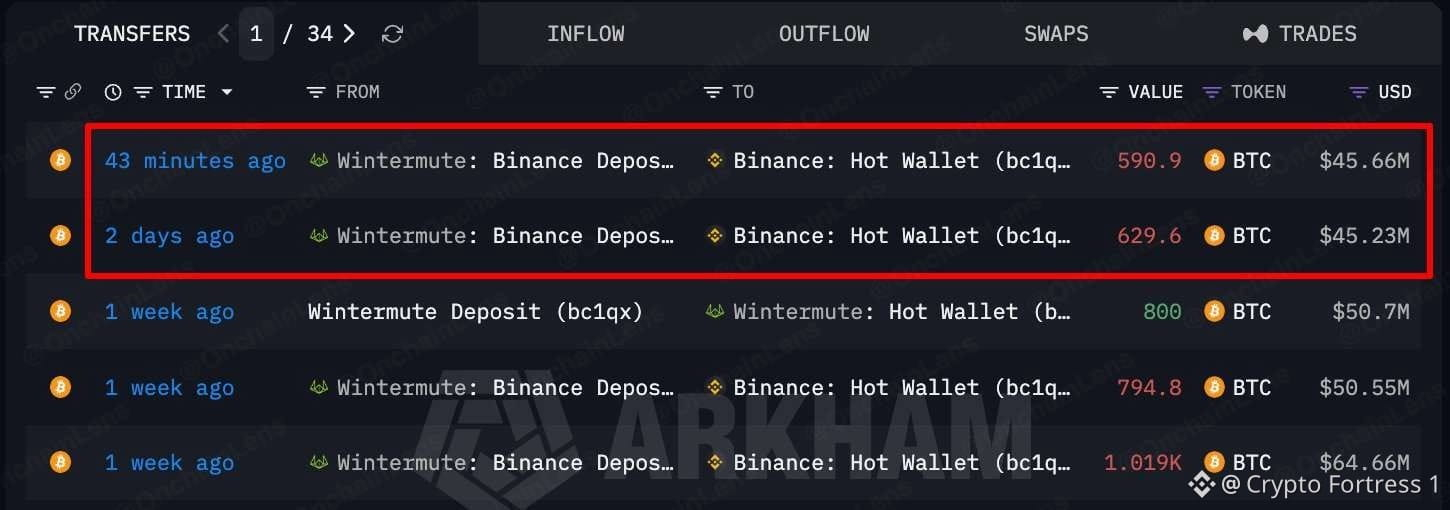
Bitcoin Whale Dumps $576M - Can $BTC Still Break $80K?
7,770 Bitcoin sold in just 3 days. That's what one mysterious whale has moved to Binance while Bitcoin is trying to push through the $80,000 level after gaining nearly 23% in a week.
The wallet has been selling into the rally, including 2,700 Bitcoin worth around $211.8M today alone, according to Lookonchain.
But this isn't a sudden move either: since July 19, the same whale has deposited more than 12,513 Bitcoin worth roughly $850M into Binance.
And it's not the only large holder moving coins to exchanges:
- 7,770 Bitcoin worth $576.6M sold over the past 3 days
- Wintermute deposited another 590.9 Bitcoin worth ~$45.7M yesterday
- Wintermute moved around 3,834 Bitcoin worth $256.8M this week
So yes, whales are clearly taking some profits after the rally. But Bitcoin is still holding most of its weekly gains. Now the real test is whether buyers can absorb that selling pressure and finally push through the $80K wall.
#BTC Price Analysis#
#Bitcoin Price Prediction: What is Bitcoins next move?#
7,770 Bitcoin sold in just 3 days. That's what one mysterious whale has moved to Binance while Bitcoin is trying to push through the $80,000 level after gaining nearly 23% in a week.
The wallet has been selling into the rally, including 2,700 Bitcoin worth around $211.8M today alone, according to Lookonchain.
But this isn't a sudden move either: since July 19, the same whale has deposited more than 12,513 Bitcoin worth roughly $850M into Binance.
And it's not the only large holder moving coins to exchanges:
- 7,770 Bitcoin worth $576.6M sold over the past 3 days
- Wintermute deposited another 590.9 Bitcoin worth ~$45.7M yesterday
- Wintermute moved around 3,834 Bitcoin worth $256.8M this week
So yes, whales are clearly taking some profits after the rally. But Bitcoin is still holding most of its weekly gains. Now the real test is whether buyers can absorb that selling pressure and finally push through the $80K wall.
#BTC Price Analysis#
#Bitcoin Price Prediction: What is Bitcoins next move?#
JD Vance Sidesteps Bitcoin, $XRP as U.S. Debt Tops $40T
While $BTC and XRP remain part of Trump's broader crypto agenda, JD Vance is not presenting them as a direct fix for America's debt problem. With U.S. debt now above $40T, Vance says the priority is faster economic growth, foreign investment and Treasury policy. 🇺🇸
Vance pointed to Scott Bessent's plan to grow the U.S. economy faster than its debt, while nearly $19T in foreign investment is expected to enter the country over the next decade.
Crypto could still play a supporting role through a future sovereign wealth fund, but for now the administration appears more focused on the CLARITY Act and building clearer rules for the digital asset industry.
#XRP #BTC Price Analysis#
#Bitcoin Price Prediction: What is Bitcoins next move?#
While $BTC and XRP remain part of Trump's broader crypto agenda, JD Vance is not presenting them as a direct fix for America's debt problem. With U.S. debt now above $40T, Vance says the priority is faster economic growth, foreign investment and Treasury policy. 🇺🇸
Vance pointed to Scott Bessent's plan to grow the U.S. economy faster than its debt, while nearly $19T in foreign investment is expected to enter the country over the next decade.
Crypto could still play a supporting role through a future sovereign wealth fund, but for now the administration appears more focused on the CLARITY Act and building clearer rules for the digital asset industry.
#XRP #BTC Price Analysis#
#Bitcoin Price Prediction: What is Bitcoins next move?#

$XRP is getting another look from the payments side, but the details matter.
Volante provides infrastructure that connects financial institutions to multiple payment rails, including FedNow, while its platform also supports Ripple and digital-asset settlement options.
That creates an interesting path for $XRP.
Instead of replacing FedNow, XRP could potentially sit alongside existing payment systems as a settlement or liquidity option.
That could be useful for institutions moving between domestic instant payments and cross-border transactions.
But I would not call this "the Federal Reserve adopting $XRP."
There is still no official confirmation that FedNow itself runs on XRP. The current story is about infrastructure and connectivity through providers like Volante.
That distinction is important.
If banks actually begin using $XRP for settlement at scale, the impact could be much bigger than another short-term price rally.
For now, I'm watching adoption, not headlines.
The technology has the pathway.
Now it needs real financial usage.
$XRP $BTC
#Altcoin Season#
Volante provides infrastructure that connects financial institutions to multiple payment rails, including FedNow, while its platform also supports Ripple and digital-asset settlement options.
That creates an interesting path for $XRP.
Instead of replacing FedNow, XRP could potentially sit alongside existing payment systems as a settlement or liquidity option.
That could be useful for institutions moving between domestic instant payments and cross-border transactions.
But I would not call this "the Federal Reserve adopting $XRP."
There is still no official confirmation that FedNow itself runs on XRP. The current story is about infrastructure and connectivity through providers like Volante.
That distinction is important.
If banks actually begin using $XRP for settlement at scale, the impact could be much bigger than another short-term price rally.
For now, I'm watching adoption, not headlines.
The technology has the pathway.
Now it needs real financial usage.
$XRP $BTC
#Altcoin Season#

The amount of $ETH on spot exchanges have started to rise.
This indicates that crypto investors are depositing their ethereum on exchange to sell.
I expect the price to retrace soon.
#Ethereum
This indicates that crypto investors are depositing their ethereum on exchange to sell.
I expect the price to retrace soon.
#Ethereum
This week, Bitcoin and Ethereum spot ETFs recorded a total of $2.6 billion in inflows.
During the week, Bitcoin spot ETFs and Ethereum spot ETFs recorded inflows, with the largest ones coming from BTC.
$BTC spot ETFs recorded a total inflow of $1.92 billion, while $ETH spot ETFs recorded a total inflow of $697.18 million.
#Bitcoin #Ethereum
During the week, Bitcoin spot ETFs and Ethereum spot ETFs recorded inflows, with the largest ones coming from BTC.
$BTC spot ETFs recorded a total inflow of $1.92 billion, while $ETH spot ETFs recorded a total inflow of $697.18 million.
#Bitcoin #Ethereum

$BTC
Eric Trump says claims that Donald Trump is launching a new cryptocurrency are false, warning that anyone promoting it is committing fraud.
#BTC Price Analysis# #Bitcoin Price Prediction: What is Bitcoins next move?#
Eric Trump says claims that Donald Trump is launching a new cryptocurrency are false, warning that anyone promoting it is committing fraud.
#BTC Price Analysis# #Bitcoin Price Prediction: What is Bitcoins next move?#

Bhutan just moved $835K in #Bitcoin
The government transferred 10.779 #BTC to two newly created wallets, with the purpose of the move still undisclosed.
What caught my attention is the bigger picture. Bhutan is estimated to hold 13,000+ $BTC, largely accumulated through state-backed mining powered by its hydropower resources.
The transfer itself is unlikely to move the market, but if more governments start actively managing their $BTC BTC reserves, could on-chain government activity become an increasingly important market signal?
#Macro Insights#
The government transferred 10.779 #BTC to two newly created wallets, with the purpose of the move still undisclosed.
What caught my attention is the bigger picture. Bhutan is estimated to hold 13,000+ $BTC, largely accumulated through state-backed mining powered by its hydropower resources.
The transfer itself is unlikely to move the market, but if more governments start actively managing their $BTC BTC reserves, could on-chain government activity become an increasingly important market signal?
#Macro Insights#

Log in to explore more content