
Nathan Lee
An SEO expert focused on web3
1 හඹා යමින්
68 හඹා යන්නන්
45 කැමති විය
පෝස්ටු
සියල්ල
උපුටා දැක්වීම්
Nathan Lee
·
--
Lumia secures “regulatory green light” in Washington for RWA tokenization
Lumia, a leading player in the RWA tokenization industry, unveiled a strategic partnership with U.S. regulators and policymakers to advance the country’s RWA market. The initiative marks a new phase in the development of tokenized assets in the United States.
Thanks to the efforts of David Martin McIntosh, Public Policy Advisor at Lumia, former U.S. Representative from Indiana and president of the Club for Growth, a series of productive meetings with Washington policymakers took place in September. The company won backing from key Senate committees and presented a strategic market-growth vision designed to attract both retail and institutional investors.
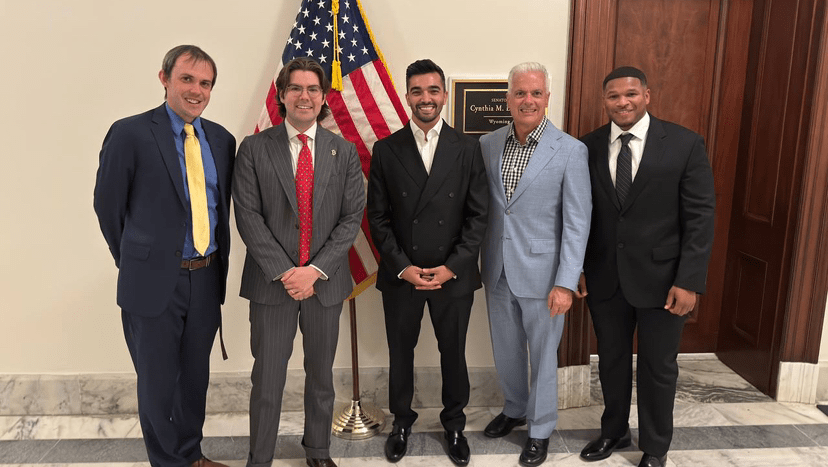
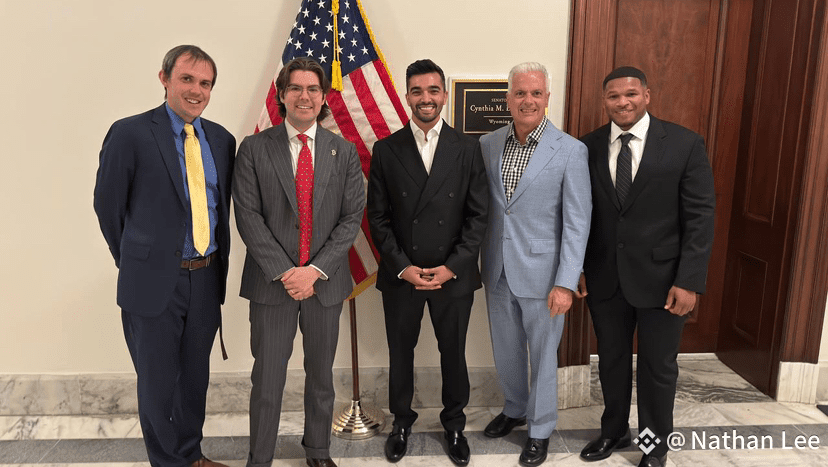
During the September talks, Lumia CTO Deniz Dalkilic sat down with several influential policymakers, including:
David Martin McIntosh, former U.S. Representative from Indiana and president of the Club for Growth, an organization of influential politicians and members of Congress that backed Donald Trump during his presidential campaign, as well as after the 2020 election.Warren Davidson, U.S. Representative from Ohio and a leading voice in shaping cryptocurrency and digital-asset policy.Allison Behuniak, Policy Director, US House of representatives (chairman French Hill)Chris Land, Staff Director of the U.S. Senate Banking Subcommittee on Digital Assets and General Counsel to Senator Cynthia M. Lummis, a recognized expert in token and digital-market regulation.Kevin Fox, Senior Policy Advisor in the U.S. House of Representatives and deputy chief of staff to Congressman Ro Khanna.Kevin Gannon, Senior Policy Advisor to Representative Tom Emmer, an advocate for balanced and transparent regulation.Tim Ryan, Former Congressman and co-chair of the Blockchain Innovation Project.
These meetings gave Lumia an opportunity to showcase the one-of-a-kind technical and infrastructural advantages of its full-stack RWA tokenization platform. The company offers a scalable, compliance-ready solution that integrates token issuance, asset management, liquidity, and trading across both decentralized and centralized venues.
Tim Ryan, after reviewing Lumia’s plans, expressed strong support for the company’s initiatives and pledged to champion them among lawmakers.
Built on zkEVM architecture, Lumia combines Ethereum-level security with minimal fees and near-instant transaction finality. Its flagship products, Lumia Hub and Lumia Stream, streamline the process of tokenizing real assets, simplify asset management, and ensure deep liquidity in the RWA market.
“The support we’ve received from key legislative bodies underscores the soundness of our strategic vision: to build a robust, scalable, and well-regulated market for tokenized assets in the U.S.,” said Deniz Dalkilic, Lumia’s CTO. “We focus on the entire tokenization cycle, opening new opportunities for both institutional and retail investors and, through our partnerships with lawmakers, we’re pushing the industry forward.”
Real-world asset tokenization has emerged as one of 2025’s defining trends. Analysts value the current market at roughly $15.2 billion, with forecasts projecting growth to $16 trillion by 2030. Lumia holds a leading position in this segment, delivering innovative solutions to bridge real-world assets with the blockchain ecosystem.
The company plans to continue working closely with government officials to foster a regulated and technologically advanced digital-economy infrastructure in the United States.
Nathan Lee
·
--
MANTRA $OM Exposed: The Biggest Fraud in Crypto
The truth has finally come out, and it's time to expose MANTRA ($OM) and its CEO @jp_mullin888 for what they truly are—a massive scam that has manipulated and betrayed thousands of loyal community members.
How MANTRA ($OM) Scammed Its Community
1. Forced Users to Bridge $OM for Galxe Rewards
MANTRA required users to bridge $OM tokens to qualify for Galxe rewards, costing approximately $40 per user in transaction fees. However, when the airdrop arrived, 70% of participants were declared ineligible—rendering their efforts and costs completely worthless. This was nothing more than a manipulative cash grab at the expense of loyal users.
2. Broken Promises on 10% Unlocks
Initially, the team promised a 10% unlock of tokens, but @jp_mullin888 and his team introduced a new eligibility checker, disqualifying many loyal holders. The remaining 90% of locked tokens were already deemed insignificant, proving that this was a deliberate bait-and-switch deception.
3. Airdrop Eligibility Scam
The airdrop eligibility rules were changed multiple times, with zero transparency. Many real contributors were suddenly disqualified without explanation, proving this wasn’t just mismanagement—it was outright fraud.
4. Centralized Control of $OM
MANTRA claims to be decentralized, but the team controls 70% of the token supply, making true decentralization impossible. The project’s manipulation of token unlocks and eligibility criteria has shattered any trust in its fairness.
5. Delays, Lies, and Broken Trust
Every roadmap milestone was delayed, every excuse turned out to be a lie, and @jp_mullin888 expects the community to accept it. Hiding behind the phrase, “My decision, my responsibility,” won’t undo the damage that has been done.
6. Deleting Criticism & Ignoring the Community
@jp_mullin888 and his team actively delete criticism, ignore valid concerns, and silence anyone calling them out. Instead of engaging with the community, they have chosen censorship and cowardice over accountability.
The Community Speaks: $OM IS A SCAM
MANTRA ($OM) used its community for hype, manipulated trust, and left thousands of investors holding the bag. Millions of former supporters are now calling for $OM to be delisted from exchanges.
Request for Delisting $OM from Binance
@cz_binance and @binance, the community demands action. $OM is a scam, and we request that Binance immediately delist $OM and investigate the fraudulent activities of the MANTRA team. Until transparency is provided, this project must be monitored and held accountable.
The Future of $OM: The Downfall is Coming
Karma is catching up to @jp_mullin888 and the MANTRA team.
The downfall of $OM is inevitable, and those responsible for betraying the community will regret their actions.


Henry Insights
·
--
🚨 Massive $OM Accumulation By Whales – Something Big is Coming 🚨
I just spotted something crazy onchain… and if you’re paying attention, this might be one of the biggest signals yet for $OM.
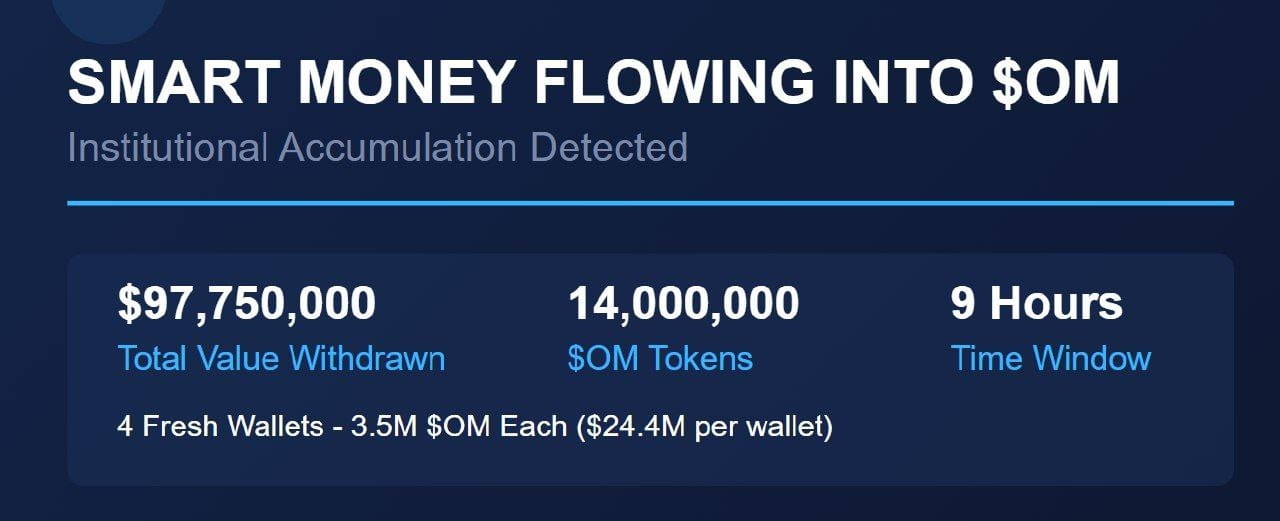
Over the past few hours, 4 fresh wallets withdrew a staggering 14M $OM (~$97.75M) from Binance. That’s not retail money—these are whales making serious moves. And here’s where it gets even more interesting…
These wallets hold ONLY $OM. That tells me this isn’t some random trader moving funds. This is calculated. They know something.
What’s Going On?
I’m hearing major speculation that this is tied to $OM’s upcoming Binance Mainnet Integration. If that’s true, we could be looking at one of the biggest catalysts yet for MANTRA.
And if that’s not enough, let’s not forget:
MANTRA is leading the charge in Real-World Asset (RWA) tokenization. Institutions are waking up to this trillion-dollar market.
They already secured a VARA license & major deals like DAMAC. That’s real-world adoption in motion.
Smart money always moves first. We’ve seen this pattern before. Whales load up before the public realizes what’s happening.
OM Price is Reacting—And It’s Just the Start
As soon as this news hit, OM pumped from the lows. But let’s be real… with this kind of accumulation happening behind the scenes, this is just the beginning.
OM to $20+ (It’s Not a Question of IF, But WHEN)
I’ve been saying this for a while, and this just confirms it.
The big players are positioning early and the next move might be bigger than anyone expects.
#MANTRA #OM #RWAs #Binance #price #alts #DYOR
Mbeyaconscious
·
--
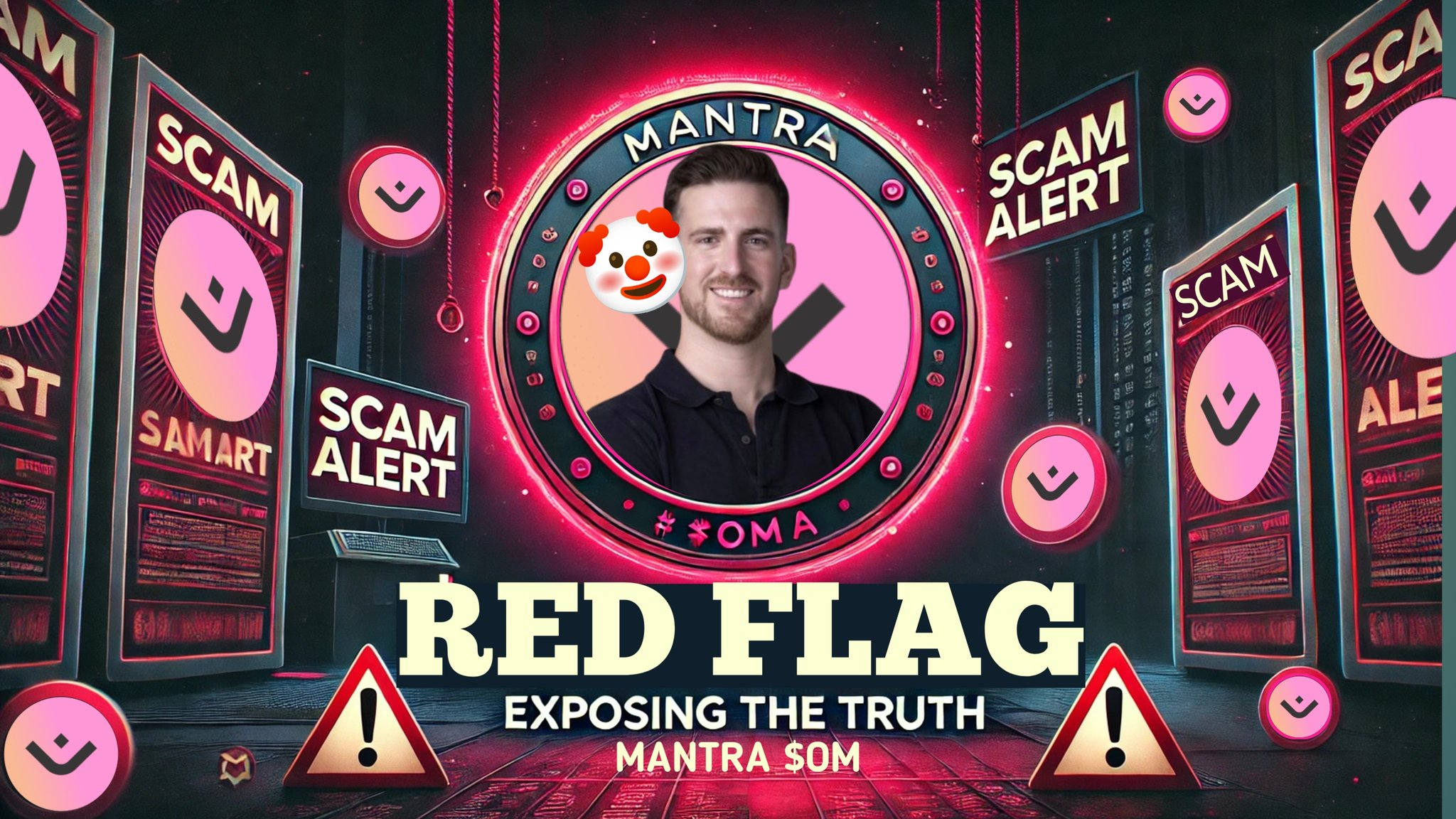
Unraveling the Mantra ($OM) Controversy – Red Flags, Community Backlash, and the Path Forward
Introduction: A Crypto Storm Brews Around Mantra
On March 19, 2025, a viral thread on X ignited a firestorm in the cryptocurrency community, targeting Mantra (OM), a Layer 1 blockchain project built on the Cosmos SDK and focused on tokenizing real-world assets (RWAs). The thread, posted early that morning, labeled OM a “Red Flag Project,” accusing it of lies, delays, shady tokenomics, and a controversial decision to double its token supply. With the crypto market buzzing and OM’s price recently surging from 2 to 7, the allegations have sparked outrage among investors and early contributors. This article dives into the controversy, analyzes the community’s reaction, and offers actionable advice for Mantra’s team and investors.
The Allegations: What’s Fueling the Fire?
The thread paints a damning picture of Mantra’s operations, claiming:
Mantra promised 50 million OM tokens (worth 5 million at the time) to Testnet and Galxe campaign participants, but with OM’s price now at 7, that airdrop’s value has ballooned to 350 million. However, the project has delayed or reduced payouts, citing “bot filtering” and other excuses.
The project doubled its token supply (from 888 million to 1.78 billion OM) without sufficient community input, potentially diluting investor value. It also alleges the team and market makers hold 70% of the supply, raising fears of a future “dump” that could crash the price.
There’s a lack of transparency, with reports of 120,000 wallet removals under vague “Sybil detection” claims, no clear criteria or proof provided. The thread accuses the team of deleting critical comments, ignoring questions, and approving governance proposals themselves due to their dominant supply holdings.
The project has repeatedly delayed airdrop claims, forced users to bridge tokens to its chain (potentially for liquidity), and pushed back vesting schedules, further eroding trust.
These accusations have led to calls for Binance to place OM in its “Monitoring Zone,” a precursor to potential delisting, and for the community to abandon the project altogether.
Community Reaction: A Powder Keg of Frustration
The X thread and its replies reveal a community in turmoil. Early contributors feel betrayed, describing Mantra’s actions as a “rug pull” or “betrayal” after investing time and effort in Testnet participation and Galxe campaigns. Others demand transparency, data on Sybil filtering, and fair compensation for removed wallets. The sentiment is a mix of anger, sarcasm, and resolve to push for accountability.
Market data as of March 19, 2025, shows OM’s price at 7.07 (CoinMarketCap), with a 24-hour trading volume of 231.5 million—down 2.6% from the previous day. Its market cap stands at approximately 7 billion, ranking 27 on CoinGecko, but the recent price surge (from 2 to 7) has coincided with growing distrust, suggesting speculative buying may be waning as the controversy unfolds.
Researching Mantra: The Promise vs. The Reality
Mantra positions itself as a “security-first L1 blockchain” for RWAs, built on the Cosmos SDK, IBC-compatible, and compliant with regulatory standards for institutions and developers. Its website highlights features like on-chain governance, staking rewards via MANTRA DEX, and seamless cross-chain transactions. A Medium post from October 2024 outlined plans to increase the OM supply to 1.78 billion tokens to support staking, chain operations, and ecosystem growth—yet this move, without robust community approval, has backfired.
CoinGecko and CoinMarketCap data indicate OM’s circulating supply is 980 million tokens, with a total supply of 1.78 billion after the recent increase. The token’s 70% concentration with the team, as alleged, contrasts sharply with peers like Cosmos (ATOM) or Solana (SOL), where supply distribution is more decentralized, and governance is community-driven. Mantra’s focus on institutions may have led to centralized decision-making, alienating its retail user base.
Why Transparency Matters: Lessons from Crypto History
The lack of openness in Mantra’s Sybil filtering and supply changes echoes past crypto controversies, like the DAO hack or BitConnect’s collapse. Projects like Ethereum and Polkadot maintain trust through verifiable on-chain data, public governance votes, and responsive communication. Mantra’s failure to provide clear criteria for wallet removals or supply adjustments risks permanent damage to its reputation, especially as it targets institutional adoption—a sector that demands regulatory compliance and transparency.
Advice for the Mantra Team: Rebuilding Trust Is Critical
Mantra’s leadership must act decisively to salvage its project:
Publish detailed, on-chain-verifiable data on Sybil filtering, wallet removals, and supply changes. Explain the criteria, share affected wallet lists, and restore or compensate legitimate contributors.
Host an open AMA (Ask Me Anything) on X or Discord, address every concern, and reinstate the promised airdrops fairly. Avoid deleting criticism—embrace it as feedback.
Revisit the 2X supply increase through a binding, decentralized community vote, ensuring broad participation, not team-dominated proposals.
Ensure actions align with compliance claims if targeting institutions, as any perception of manipulation could invite legal scrutiny or exchange delisting.
Without swift action, Mantra risks losing its community, facing delisting from Binance, and seeing OM’s value plummet as trust erodes.
Advice for Investors: Proceed with Caution
For OM holders and potential buyers:
Verify Mantra’s claims via on-chain data (e.g., supply distribution, wallet activity) and community feedback. Investigate whether the team’s alleged 70% supply holding could lead to sell-offs.
Avoid overexposure to OM amid this uncertainty. Compare it to stable Layer 1 projects like Cosmos, Polkadot, or Avalanche, which have stronger governance and decentralization.
Monitor Mantra’s response closely. Positive steps (transparency, fair airdrops) could signal recovery, but delays or evasions are red flags. As of March 19, 2025, OM’s volatility and community backlash make it a high-risk investment.
Conclusion: A Pivotal Moment for Mantra and Crypto
The Mantra (OM) controversy is a microcosm of crypto’s broader challenge: balancing innovation with trust. While its technology—built on Cosmos SDK for RWA tokenization—holds promise, its governance missteps could doom it. The next few weeks will be decisive. If Mantra embraces transparency, engages its community, and reforms its tokenomics, it might recover. But if it doubles down on secrecy or delays, OM could join the list of failed crypto projects.
For the crypto industry, this saga reinforces a timeless lesson: trust is the currency of success. Mantra’s fate hangs in the balance—will it rise or fall? Only time will tell.
$OM
#om

Coinfomania
·
--
Mantra Price Prediction: OM Surges 12%—Is $10 the Next Target?
The Mantra price surge has grabbed investors’ attention as the token climbed 12% in just one week, making it the second-largest real-world asset (RWA) token with the aid of market capitalisation. With its price now standing at $6.8 billion, Mantra (OM) is emerging as a major competitor to Chainlink (LINK) in the increasing RWA sector. This recent price boom highlights OM’s increasing market relevance, making it one of the best-performing Layer 1 tokens of 2025.
Since early 2024, OM has skyrocketed from near zero to almost $10, demonstrating a remarkable uptrend. The current rally follows a period of price consolidation, during which OM managed to preserve support levels before breaking out once again. This technical movement has sparked hypotheses about whether OM’s price will rise toward the highly predicted $10 level in the coming weeks.
Technical Indicators Show Strong Momentum
Analyzing the OM price trends, various technical indicators suggest bullish potential despite market fluctuations. OM token is presently trading at approximately $6.90, with signals hinting at continued upward momentum:
Bollinger Bands: Tightening, indicating that excessive volatility is on the horizon.
MACD: Still within the buy zone, reinforcing a tremendous market sentiment.
RSI: Currently at 58.28, reflecting neutral-to-bullish momentum in trading.
ADX: Reading 36.31, confirming that the upward trend is strengthening.
From a resistance perspective, OM needs to break past $8.17 to open the door for a larger rally. Meanwhile, OM remains at $6.76 and $5.54, corresponding to the lower Bollinger Band and the 20-day moving average. If OM surpasses the $8.17 resistance level, the token could rapidly go toward the psychological milestone of $10, solidifying its position in RWA Market Trends.
Rising Market Confidence & Open Interest Growth
RWA Market Trends point out growing confidence in OM’s long-term potential. One clear signal of increased investor interest is the ascend in futures open interest, which jumped from $319 million to $378 million within a short period. This surge in buying and selling volume suggests that traders are increasing their exposure, indicating confidence in OM’s price direction.
Moreover, the Mantra price surge is now not just driven by speculation. It is backed by strong fundamentals. The venture has tokenised over $500 million in assets, including real property and other valuable investments. Additionally, securing a virtual asset service provider license in Dubai in February 2025 has similarly cemented OM’s regulatory standing, boosting investor confidence in its long-term viability.
Fundamental Strength & Community Developments
Beyond its market and technical strength, OM’s ecosystem has been expanding rapidly, fueled by strategic partnerships exceeding $1 billion. A particularly notable partnership with DAMAC Group in early 2025 has given Mantra additional exposure and credibility in the RWA sector.
However, current governance challenges surrounding Mantra’s airdrop campaign have raised concerns. The discovery of 123,000 fraudulent wallets during the GenDrop distribution brought the team to launch a 48-hour governance vote on March 18. Following the vote, the Mantra price surge was unaffected as the team confirmed that the GenDrop allocation would be launched without prior notice. This would be done with 1.98 million OM tokens (10% unlock) distributed originally to avoid market manipulation.
OM Price Prediction—Will It Reach $10?
While the Mantra price surge continues, whether OM will efficiently reach $10 depends on more than one factor, including market sentiment, investor behaviour, and upcoming project developments. With growing adoption, rising exposure in RWA market trends, and strong partnerships using demand, OM remains a key player in the expanding blockchain space.Investors and traders will closely watch OM’s price movement as it approaches the essential $8.17 resistance level. According to OM price predictions, If the bullish trend continues and market sentiment remains positive, OM may surpass $10. However, market volatility will finally determine how soon OM can reach this goal, keeping traders on alert in the coming weeks.
The post Mantra Price Prediction: OM Surges 12%—Is $10 the Next Target? appeared first on Coinfomania.

CryptoNewsLand
·
--
Top 4 Altcoins Set to Skyrocket As Bitcoin Struggles—100x Potential Incoming?
ENA together with OM MKR and SUI create exclusive investment prospects during Bitcoin's unstable movement.
These projects achieve long-term profitability due to their DeFi and staking developments and the evolution of the cryptocurrency market.
The level of market fluctuation creates both hazards and chances which need thorough research by investors looking for profitable digital assets.
Bitcoin's declining market control allows exceptional alternative cryptocurrencies to emerge with strong potential for growth.Investors are increasingly looking toward groundbreaking digital assets that offer innovative use cases, strong fundamentals, and long-term viability. Investors seeking maximum gains from investments should examine Ethena (ENA) together with Mantra (OM), Maker (MKR), and SUI (SUI) because these tokens demonstrate exceptional market performance.
Ethena (ENA): The Revolutionary Synthetic Asset Solution
Current Price:$0.3593
Market Cap:$1,900,044,362
ENA advances synthetic asset trading by transforming the protocol into a dynamic and yield-maximizing system. Through its decentralized financial derivatives structure ENA delivers traders a unique market alternative that surpasses traditional financial instruments. The exceptional liquidity together with rapid execution speed makes ENA emerge as an outstanding leader among DeFi protocols.
Mantra (OM): The Premier Staking and Governance Leader
At its core OM stands as a leading stake solution provider that gives users maximum earnings potential so they can protect blockchain networks. OM maintains a remarkable governance system while combining superior protection measures which defines the future of protected decentralized financial operations. The increasing staking adoption creates perfect conditions for major growth of this impressive cryptocurrency.
Maker (MKR): The Unparalleled DeFi Powerhouse
Maker (MKR) continues to be a dominant force within decentralized finance as it preserves its essential position within stablecoin systems. The support MKR provides to Dai stability enables it to perform ground-breaking functions for digital asset lending and borrowing operations. The profitable governance design enables future expansion and market transformation.
Sui (SUI): The Superior Smart Contract Innovator
Sui (SUI) is pushing the boundaries of blockchain technology with exceptional scalability and unmatched transaction efficiency. Through its radical infrastructure Sui enables users to access decentralized applications in an uninterrupted manner as developers find it profitable to develop next-generation financial services on this platform. SUI stands ready to achieve substantial growth because of rising adoption rates.


Trade Zilla TZ
·
--
10 Cryptocurrencies Shaking Up the Digital World – Who’s Leading the
Charge?
The cryptocurrency market spans a wide and ever-changing field that provides distinct features and practical uses through each coin. The following summary presents ten prominent cryptocurrencies in a brief format:
1. Aureal One (DLUME)
Aureal One represents a blockchain platform designed for modern gaming and metaverse applications, which provides instant transactions and near zero gas fees.
Official Website:
https://aurealone.com/?u_id=XmjTWQ
(Beware of fake websites impersonating as AurealOne, only interact with official website)
● Next Price Increase: +15.4%
● Current Sale: 3,291,303.5 / 4,500,000 DLUME sold
● Current Price: $0.0013
● Listing Price: $0.005 (323.08%)
2. DexBoss (DEBO)
Through its platform, DexBoss allows users to trade more than 2,000 cryptocurrencies, which include major coins and trending meme coins and exclusive decentralized exchange listings.
● USD Raised: $604,647.75 / $750,000 (81%)
● Current Price: $0.011
● Listing Price: $0.0505
3. Pi Network (PI)
The mobile device mining capabilities of Pi Network create a cryptocurrency mining system that remains accessible to all users.
● Market Cap: $12.4 billion
● Trading Volume (24h): 715.10 million
● Current Price: $1.74
4. Stellar (XLM)
Stellar enables transactions between any currencies through its platform to achieve financial system interoperability.
● Market Cap: $8.69 billion
● Trading Volume (24h): $299.97 million
● Current Price: $0.28
5. Hedera (HBAR)
The Hedera network operates as a public network through its implementation of the hashgraph consensus algorithm, which delivers fast processing and minimal delay
times.
● Market Cap: $8.317 billion
● Trading Volume (24h): 501.36 million
● Current Price: $0.1982
6. Avalanche (AVAX)
Avalanche operates as a platform for decentralized applications and custom blockchain networks while maintaining high performance standards.
● Market Cap: $7.87 billion
● Trading Volume (24h): $427.08 million
● Current Price: $19.06
7. Sui (SUI)
Sui operates as a decentralized proof-of-stake blockchain system that delivers high scalability and minimal latency.
● Market Cap: $7.25 billion
● Trading Volume (24h): $859.26 million
● Current Price: $2.31
8. Toncoin (TON)
Toncoin serves as the base cryptocurrency of the TON blockchain, which Telegram initially created to deliver fast and scalable blockchain operations.
● Market Cap: $6.91 billion
● Trading Volume (24h): $144.08 million
● Current Price: $2.79
9. Litecoin (LTC)
Litecoin functions as a peer-to-peer cryptocurrency that operates as Bitcoin's silver variant while delivering speedier transaction processing.
● Market Cap: $6.78 billion
● Trading Volume (24h): $568.20million
● Current Price: $89.75
10. MANTRA (OM)
The MANTRA platform operates as a decentralized finance platform under community governance to provide staking services and lending options and governance features.
● Market Cap: $6.37 billion
● Trading Volume (24h): $69.24 million
● Current Price: $6.48
Among the numerous cryptocurrencies, which ones demonstrate exceptional value?
The blockchain gaming sector gets a new definition through Aureal One, which enables smooth transactions, and DexBoss provides traders with direct access to thousands of digital assets. These projects create major waves in their respective fields of next-gen gaming and crypto trading.

තවත් අන්තර්ගතයන් ගවේෂණය කිරීමට ඇතුල් වන්න