

KEVIN SPACEY BNB
16.4k පෝස්ටු

KEVIN SPACEY BNB
 Binance චතුරශ්ර සත්යාපිත+
වාර්තා කරන්න
පරිශීලක අවහිර කරන්න
Gentle with feelings. Dangerous with potential...
විවෘත වෙළෙඳාම
නිතර වෙළෙන්දා
{වේලාව} වසර
547 හඹා යමින්
35.8K+ හඹා යන්නන්
27.6K+ කැමති විය
පෝස්ටු
ආයෝජන කළඹ
සියල්ල
උපුටා දැක්වීම්
වීඩියෝ
සජීවි
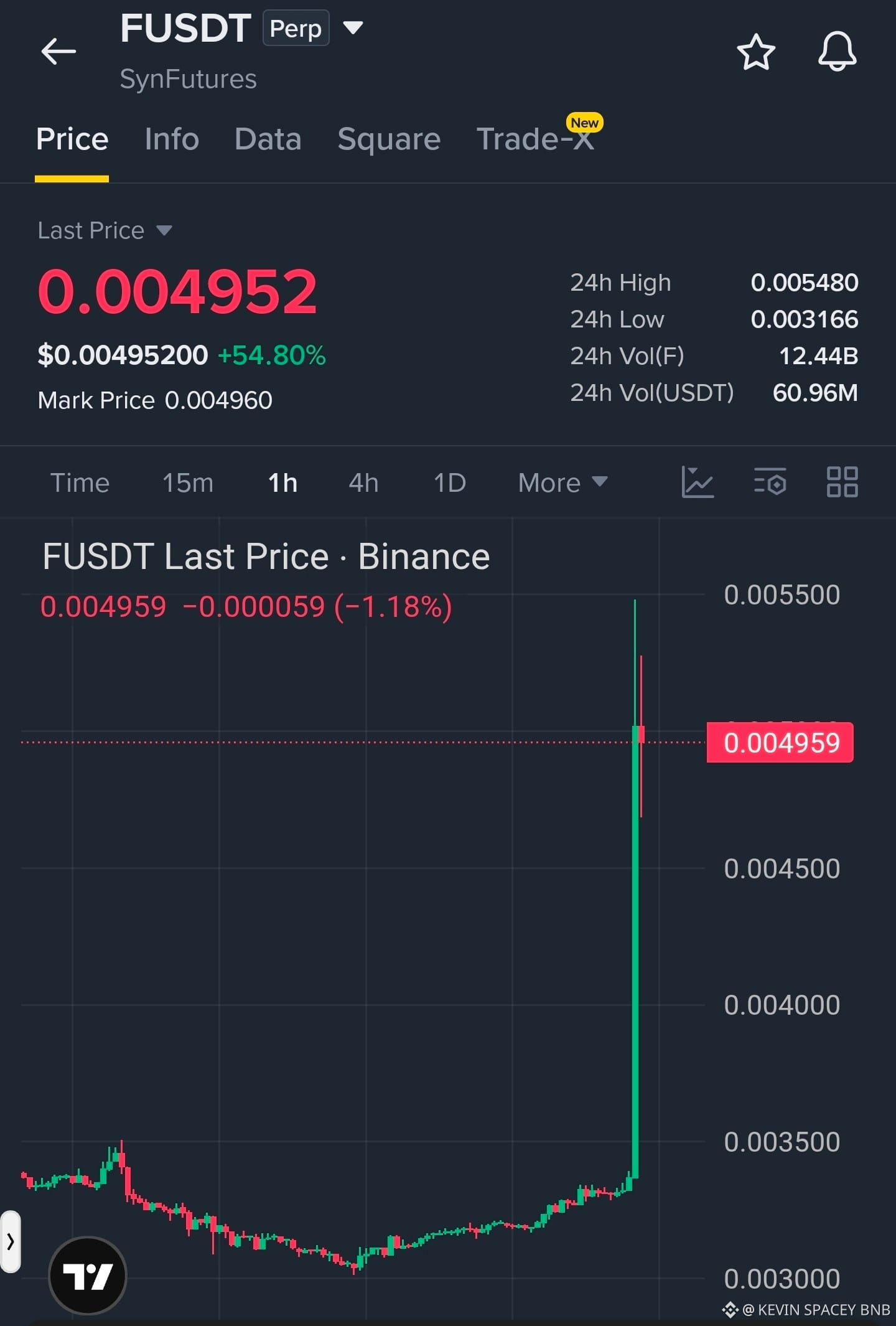
$F just exploded out of its base, and I’m watching the first pullback for a possible continuation toward the spike high.
Trade Setup: LONG
Entry Zone: $0.00465 – $0.00485
SL: $0.00438
TP1: $0.00515
TP2: $0.00548
TP3: $0.00575
I see a huge 1H expansion candle breaking price away from the $0.0033 area, followed by rejection near $0.0055. I’d look for buyers to defend the breakout rather than chase the top of this sharp move.
Trade Here On $F 👇
#HYPEJumpsOver11%
$F just exploded out of its base, and I’m watching the first pullback for a possible continuation toward the spike high.
Trade Setup: LONG
Entry Zone: $0.00465 – $0.00485
SL: $0.00438
TP1: $0.00515
TP2: $0.00548
TP3: $0.00575
I see a huge 1H expansion candle breaking price away from the $0.0033 area, followed by rejection near $0.0055. I’d look for buyers to defend the breakout rather than chase the top of this sharp move.
Trade Here On $F 👇
#HYPEJumpsOver11%
Trade Setup: LONG
Entry Zone: $0.00465 – $0.00485
SL: $0.00438
TP1: $0.00515
TP2: $0.00548
TP3: $0.00575
I see a huge 1H expansion candle breaking price away from the $0.0033 area, followed by rejection near $0.0055. I’d look for buyers to defend the breakout rather than chase the top of this sharp move.
Trade Here On $F 👇
#HYPEJumpsOver11%
1
173
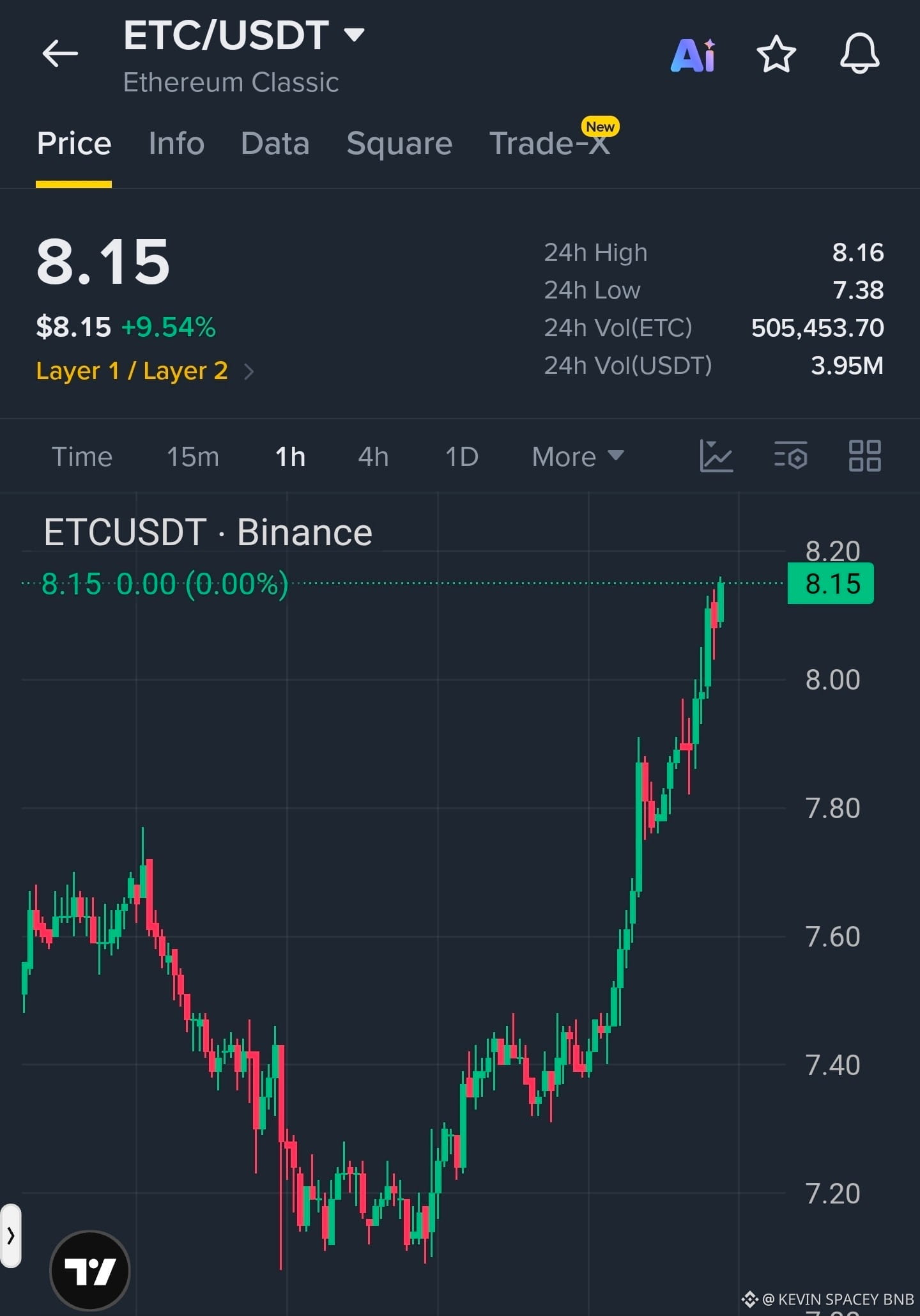
$ETC is climbing with a clean sequence of higher candles, and a hold above $8.00 could keep the move extending higher.
Trade Setup: LONG
Entry Zone: $8.00 – $8.10
SL: $7.84
TP1: $8.20
TP2: $8.35
TP3: $8.50
I see buyers repeatedly stepping in after shallow 1H pullbacks, with price pushing from the $7.40 region toward $8.15. The structure remains upward for me while the recent breakout around $8.00 stays supported.
Trade Here On $ETC 👇
#BTCBreaks80K
$ETC is climbing with a clean sequence of higher candles, and a hold above $8.00 could keep the move extending higher.
Trade Setup: LONG
Entry Zone: $8.00 – $8.10
SL: $7.84
TP1: $8.20
TP2: $8.35
TP3: $8.50
I see buyers repeatedly stepping in after shallow 1H pullbacks, with price pushing from the $7.40 region toward $8.15. The structure remains upward for me while the recent breakout around $8.00 stays supported.
Trade Here On $ETC 👇
#BTCBreaks80K
Trade Setup: LONG
Entry Zone: $8.00 – $8.10
SL: $7.84
TP1: $8.20
TP2: $8.35
TP3: $8.50
I see buyers repeatedly stepping in after shallow 1H pullbacks, with price pushing from the $7.40 region toward $8.15. The structure remains upward for me while the recent breakout around $8.00 stays supported.
Trade Here On $ETC 👇
#BTCBreaks80K
1
114
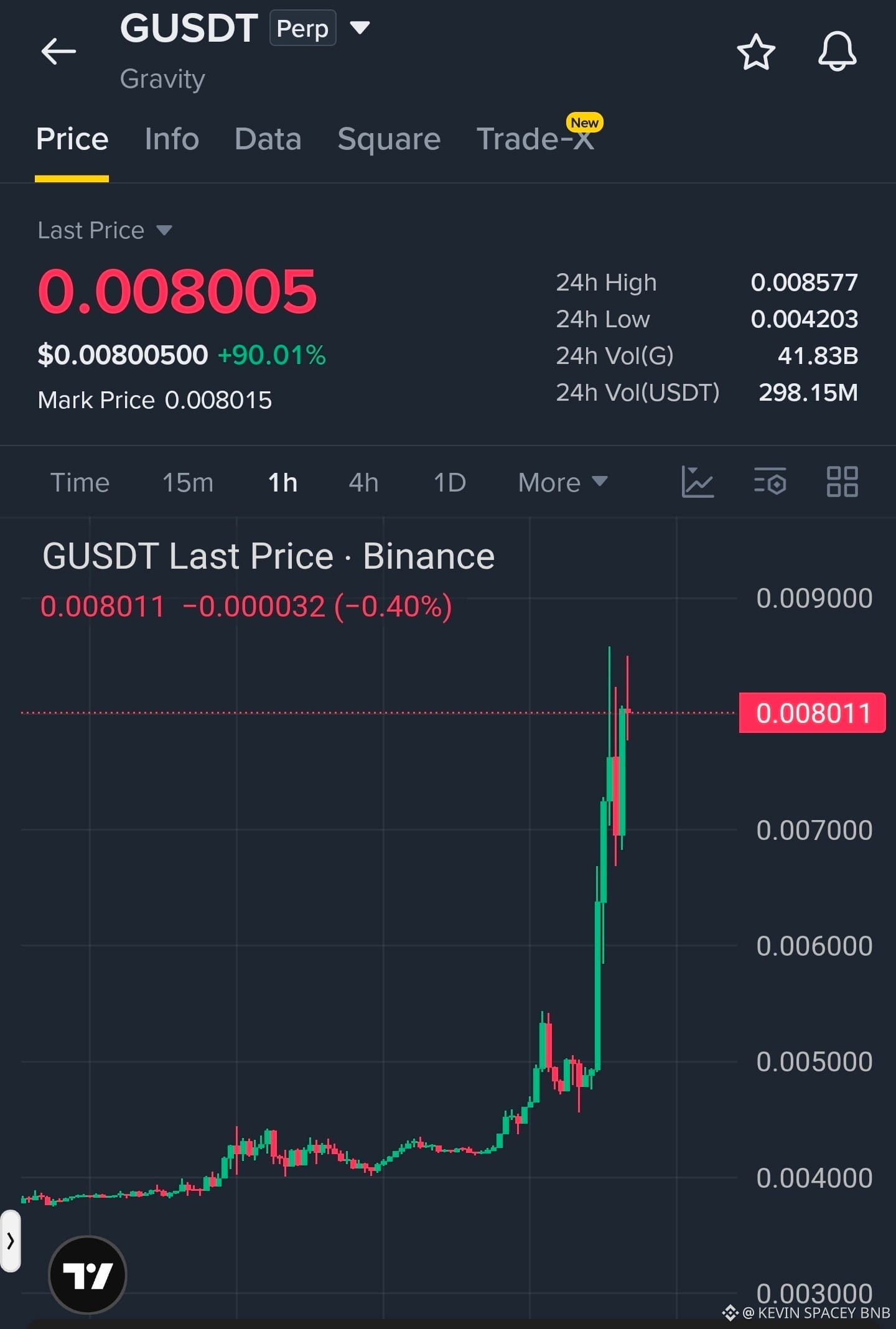
$G is pressing the highs after a vertical run, and holding above $0.0070 could open another push toward fresh short-term highs.
Trade Setup: LONG
Entry Zone: $0.00740 – $0.00780
TP1: $0.00830
TP2: $0.00858
TP3: $0.00900
SL: $0.00685
I see aggressive buying after the breakout from the $0.0050 area, while the latest candles are consolidating near the top rather than giving back the whole move. I’d favor continuation as long as the recent $0.0070 breakout area remains defended.
Trade Here On $G 👇.
#BOJHikesRatesTo31YearHigh
$G is pressing the highs after a vertical run, and holding above $0.0070 could open another push toward fresh short-term highs.
Trade Setup: LONG
Entry Zone: $0.00740 – $0.00780
TP1: $0.00830
TP2: $0.00858
TP3: $0.00900
SL: $0.00685
I see aggressive buying after the breakout from the $0.0050 area, while the latest candles are consolidating near the top rather than giving back the whole move. I’d favor continuation as long as the recent $0.0070 breakout area remains defended.
Trade Here On $G 👇.
#BOJHikesRatesTo31YearHigh
Trade Setup: LONG
Entry Zone: $0.00740 – $0.00780
TP1: $0.00830
TP2: $0.00858
TP3: $0.00900
SL: $0.00685
I see aggressive buying after the breakout from the $0.0050 area, while the latest candles are consolidating near the top rather than giving back the whole move. I’d favor continuation as long as the recent $0.0070 breakout area remains defended.
Trade Here On $G 👇.
#BOJHikesRatesTo31YearHigh
1
163
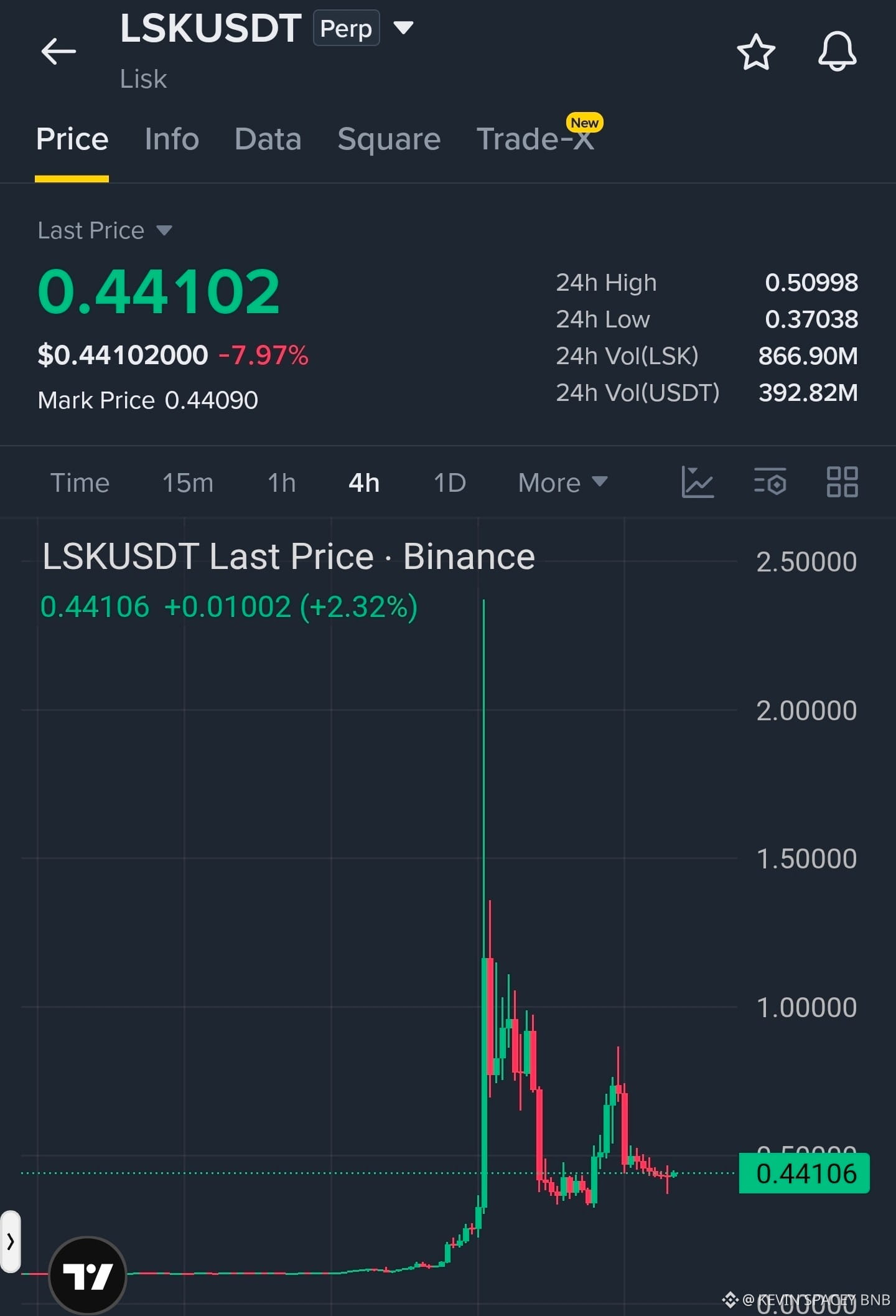
$LSK is trying to stabilize after the selloff, and I’m watching for a rebound from this base before the next push higher.
Trade Setup: LONG
Entry Zone: 0.425 – 0.445
SL: 0.395
TP1: 0.485
TP2: 0.550
TP3: 0.650
I can see price settling around the 0.42–0.44 area after the sharp rejection from the recent spike. The latest 4H candles are getting tighter, so I’d look for this support to hold and buyers to reclaim the 0.48–0.50 area.
Trade Here On $LSK 👇
#LSKUSDT
$LSK is trying to stabilize after the selloff, and I’m watching for a rebound from this base before the next push higher.
Trade Setup: LONG
Entry Zone: 0.425 – 0.445
SL: 0.395
TP1: 0.485
TP2: 0.550
TP3: 0.650
I can see price settling around the 0.42–0.44 area after the sharp rejection from the recent spike. The latest 4H candles are getting tighter, so I’d look for this support to hold and buyers to reclaim the 0.48–0.50 area.
Trade Here On $LSK 👇
#LSKUSDT
Trade Setup: LONG
Entry Zone: 0.425 – 0.445
SL: 0.395
TP1: 0.485
TP2: 0.550
TP3: 0.650
I can see price settling around the 0.42–0.44 area after the sharp rejection from the recent spike. The latest 4H candles are getting tighter, so I’d look for this support to hold and buyers to reclaim the 0.48–0.50 area.
Trade Here On $LSK 👇
#LSKUSDT
1
614
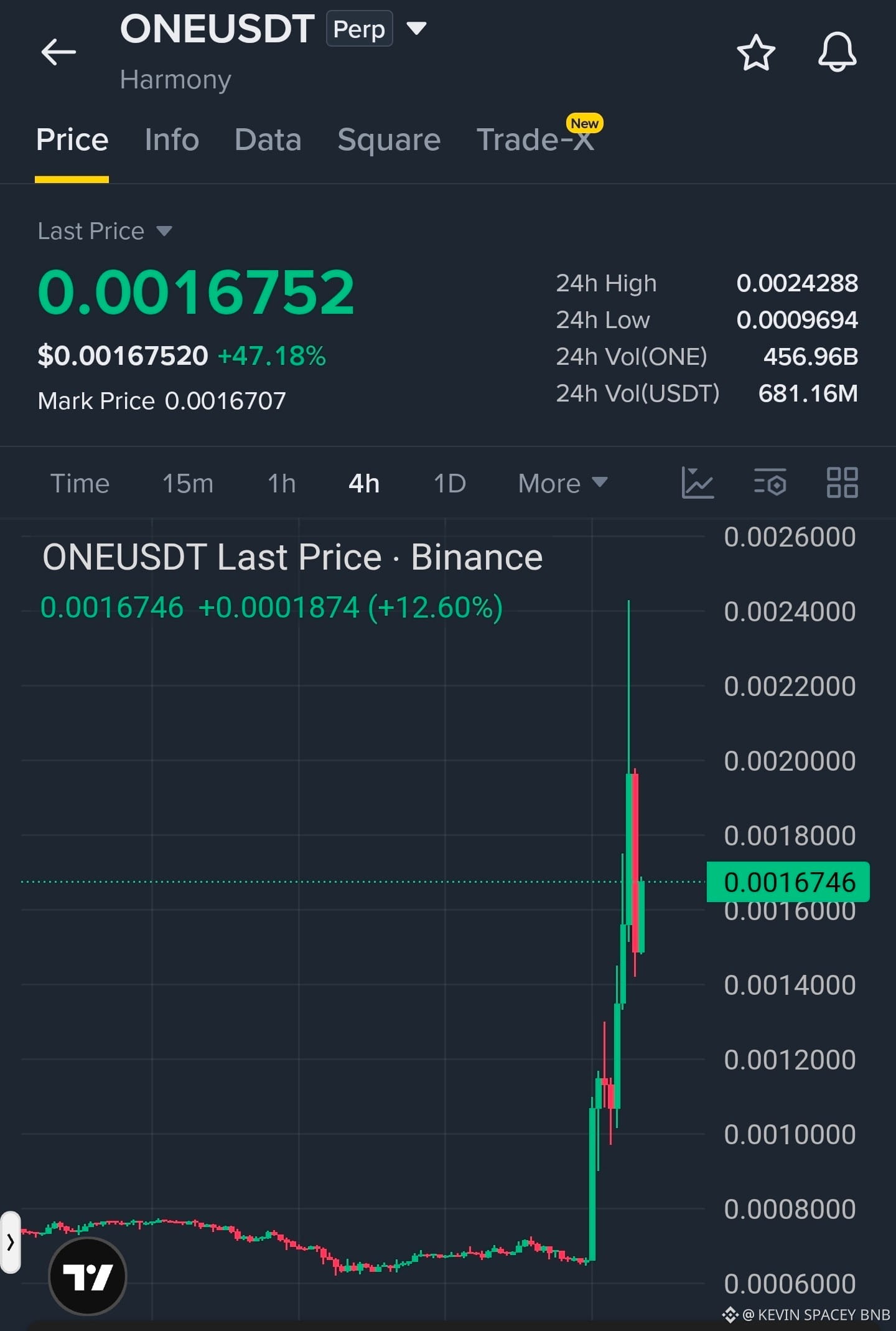
$ONE
ONE has already made the explosive move; I’m looking for the pullback to hold before price takes another shot at the recent highs.
Trade Setup: LONG
Entry Zone: $0.00148 – $0.00160
SL: $0.00138
TP1: $0.00180
TP2: $0.00200
TP3: $0.00240
I see a clean 4H expansion from the $0.00065 area followed by a sharp rejection near $0.00240. Price pulled back but buyers responded around $0.00145, so I’d watch that higher support area for a continuation attempt.
Trade Here On $ONE 👇
#SECGrantsInnovationExemptionForTokenizedStocks
$ONE
ONE has already made the explosive move; I’m looking for the pullback to hold before price takes another shot at the recent highs.
Trade Setup: LONG
Entry Zone: $0.00148 – $0.00160
SL: $0.00138
TP1: $0.00180
TP2: $0.00200
TP3: $0.00240
I see a clean 4H expansion from the $0.00065 area followed by a sharp rejection near $0.00240. Price pulled back but buyers responded around $0.00145, so I’d watch that higher support area for a continuation attempt.
Trade Here On $ONE 👇
#SECGrantsInnovationExemptionForTokenizedStocks
ONE has already made the explosive move; I’m looking for the pullback to hold before price takes another shot at the recent highs.
Trade Setup: LONG
Entry Zone: $0.00148 – $0.00160
SL: $0.00138
TP1: $0.00180
TP2: $0.00200
TP3: $0.00240
I see a clean 4H expansion from the $0.00065 area followed by a sharp rejection near $0.00240. Price pulled back but buyers responded around $0.00145, so I’d watch that higher support area for a continuation attempt.
Trade Here On $ONE 👇
#SECGrantsInnovationExemptionForTokenizedStocks
302
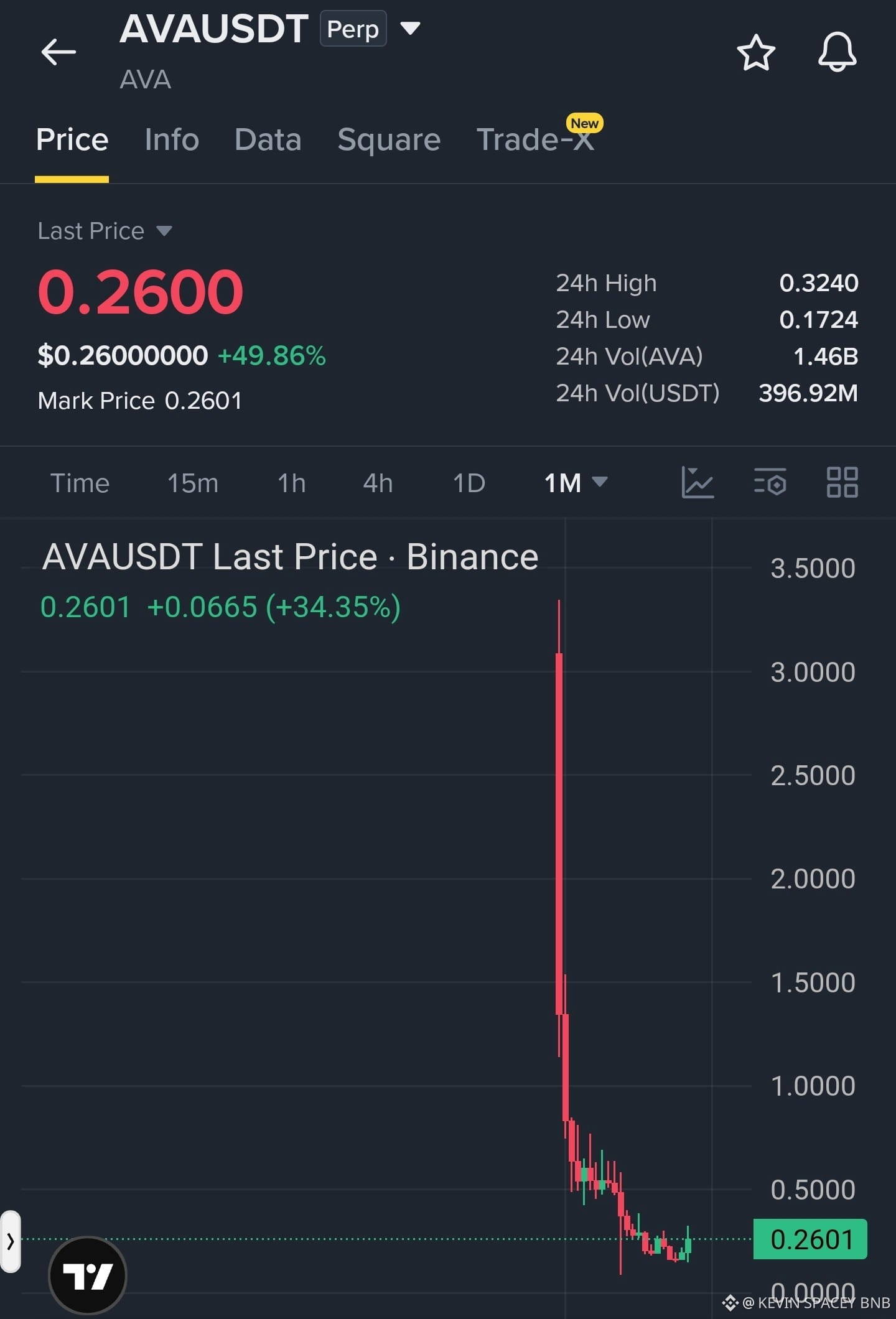
$AVA
The bounce is sharp, but I’m watching for AVA to hold the recent base before another push higher.
Trade Setup: LONG
Entry Zone: $0.235 – $0.260
SL: $0.170
TP1: $0.325
TP2: $0.400
TP3: $0.500
I see price recovering from the recent lows after a prolonged monthly decline, with the latest candle showing buyers stepping back in. If the $0.23–$0.26 area holds, I’d look for price to retest the visible resistance zones above.
Trade Here On $AVA 👇
#StellarActivatesProtocol28At211TPS
$AVA
The bounce is sharp, but I’m watching for AVA to hold the recent base before another push higher.
Trade Setup: LONG
Entry Zone: $0.235 – $0.260
SL: $0.170
TP1: $0.325
TP2: $0.400
TP3: $0.500
I see price recovering from the recent lows after a prolonged monthly decline, with the latest candle showing buyers stepping back in. If the $0.23–$0.26 area holds, I’d look for price to retest the visible resistance zones above.
Trade Here On $AVA 👇
#StellarActivatesProtocol28At211TPS
The bounce is sharp, but I’m watching for AVA to hold the recent base before another push higher.
Trade Setup: LONG
Entry Zone: $0.235 – $0.260
SL: $0.170
TP1: $0.325
TP2: $0.400
TP3: $0.500
I see price recovering from the recent lows after a prolonged monthly decline, with the latest candle showing buyers stepping back in. If the $0.23–$0.26 area holds, I’d look for price to retest the visible resistance zones above.
Trade Here On $AVA 👇
#StellarActivatesProtocol28At211TPS
160

🎙️ 建设币安广场,定投BNB|周五,法案投票和加息消息落地,BTC又在76400来回震荡,这个周末会不会有点特殊?来聊聊~

නිමාව
05 පැ 05 මි 55 ත
9.5k
45
50
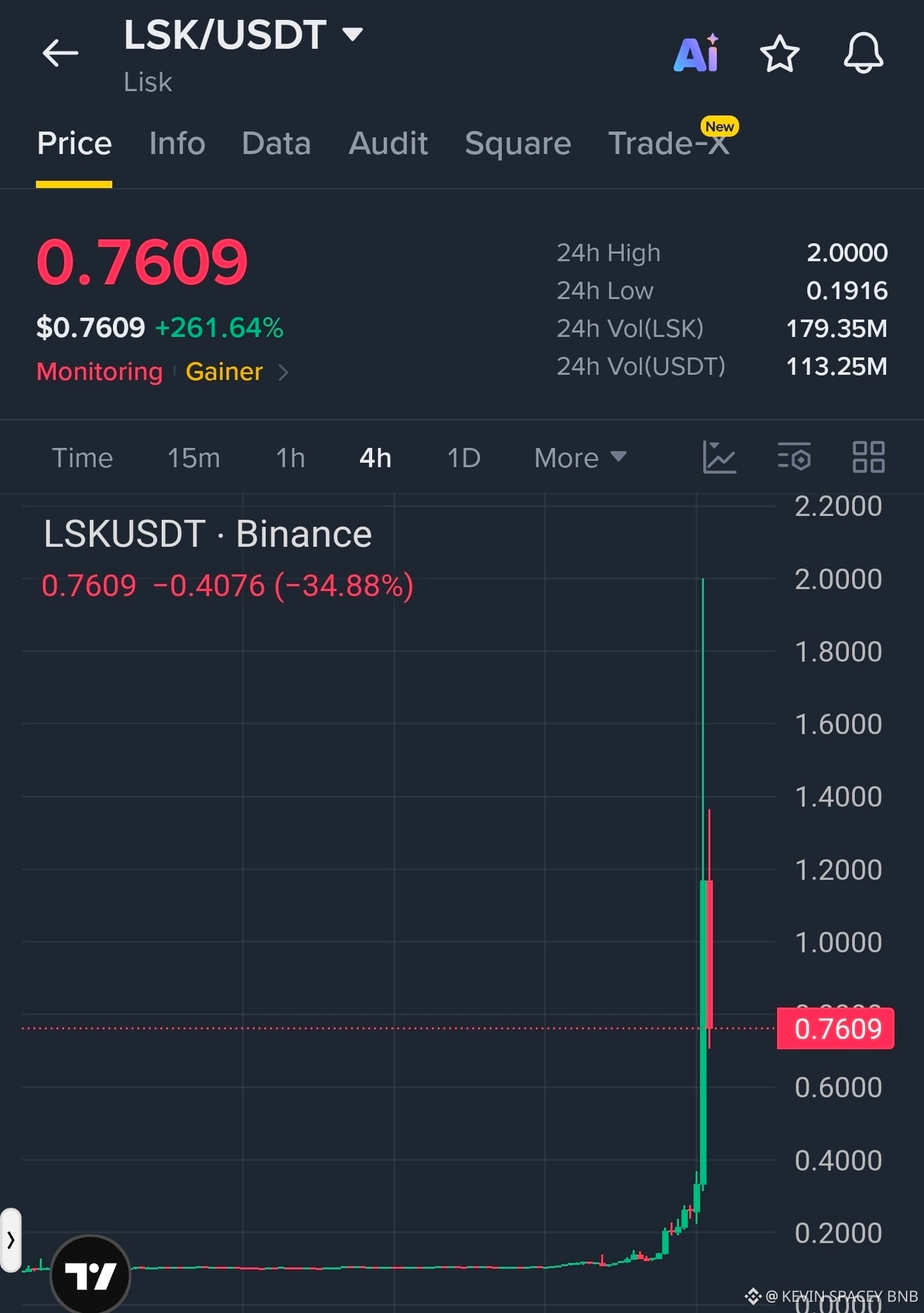
$LSK Looks Exhausted After the Massive Pump — I’m Watching for Another Leg Down Before Any Real Recovery
Trade Setup: Short
Entry zone: 0.78 – 0.86
TP1: 0.68
TP2: 0.55
TP3: 0.42
SL: 0.96
After pushing from the 0.19 area toward 2.00, LSK has faced a sharp rejection and dropped back near 0.76, showing heavy selling pressure.
I’d watch the 0.78–0.86 area for rejection; if sellers remain in control, the chart can retest lower support zones.
Trade Here On $LSK 👇
#SECReceivesGrayscaleLitecoinTrustETFFiling #ClarityActFacesProceduralVoteSept15
$LSK Looks Exhausted After the Massive Pump — I’m Watching for Another Leg Down Before Any Real Recovery
Trade Setup: Short
Entry zone: 0.78 – 0.86
TP1: 0.68
TP2: 0.55
TP3: 0.42
SL: 0.96
After pushing from the 0.19 area toward 2.00, LSK has faced a sharp rejection and dropped back near 0.76, showing heavy selling pressure.
I’d watch the 0.78–0.86 area for rejection; if sellers remain in control, the chart can retest lower support zones.
Trade Here On $LSK 👇
#SECReceivesGrayscaleLitecoinTrustETFFiling #ClarityActFacesProceduralVoteSept15
Trade Setup: Short
Entry zone: 0.78 – 0.86
TP1: 0.68
TP2: 0.55
TP3: 0.42
SL: 0.96
After pushing from the 0.19 area toward 2.00, LSK has faced a sharp rejection and dropped back near 0.76, showing heavy selling pressure.
I’d watch the 0.78–0.86 area for rejection; if sellers remain in control, the chart can retest lower support zones.
Trade Here On $LSK 👇
#SECReceivesGrayscaleLitecoinTrustETFFiling #ClarityActFacesProceduralVoteSept15
1
366
CPI is out, and honestly, I don’t think this is the kind of report where I want to chase the first Bitcoin move.
The headline came in at 0.4% for August, while core CPI was 0.3% month over month. The yearly core number did cool to 2.4%, which is a good sign, but that 0.3% monthly print still caught my attention.
Gasoline was also up 3.9%, so there’s still some pressure sitting underneath the headline number.
For me, this makes the Bitcoin setup a little tricky.
We can easily get a quick relief pump because the yearly inflation numbers look better. But if $BTC cannot hold that move, I would rather stay out than buy into the first green candle.
I’m watching how price behaves after the CPI volatility settles.
If Bitcoin breaks a key level and actually holds above it, then I’ll pay more attention to the long side. If it gets rejected, I’m happy to wait.
No FOMO here.
CPI gave us data. Now I want Bitcoin to show me the direction.
#CPIWatch
CPI is out, and honestly, I don’t think this is the kind of report where I want to chase the first Bitcoin move.
The headline came in at 0.4% for August, while core CPI was 0.3% month over month. The yearly core number did cool to 2.4%, which is a good sign, but that 0.3% monthly print still caught my attention.
Gasoline was also up 3.9%, so there’s still some pressure sitting underneath the headline number.
For me, this makes the Bitcoin setup a little tricky.
We can easily get a quick relief pump because the yearly inflation numbers look better. But if $BTC cannot hold that move, I would rather stay out than buy into the first green candle.
I’m watching how price behaves after the CPI volatility settles.
If Bitcoin breaks a key level and actually holds above it, then I’ll pay more attention to the long side. If it gets rejected, I’m happy to wait.
No FOMO here.
CPI gave us data. Now I want Bitcoin to show me the direction.
#CPIWatch
The headline came in at 0.4% for August, while core CPI was 0.3% month over month. The yearly core number did cool to 2.4%, which is a good sign, but that 0.3% monthly print still caught my attention.
Gasoline was also up 3.9%, so there’s still some pressure sitting underneath the headline number.
For me, this makes the Bitcoin setup a little tricky.
We can easily get a quick relief pump because the yearly inflation numbers look better. But if $BTC cannot hold that move, I would rather stay out than buy into the first green candle.
I’m watching how price behaves after the CPI volatility settles.
If Bitcoin breaks a key level and actually holds above it, then I’ll pay more attention to the long side. If it gets rejected, I’m happy to wait.
No FOMO here.
CPI gave us data. Now I want Bitcoin to show me the direction.
#CPIWatch

1
208
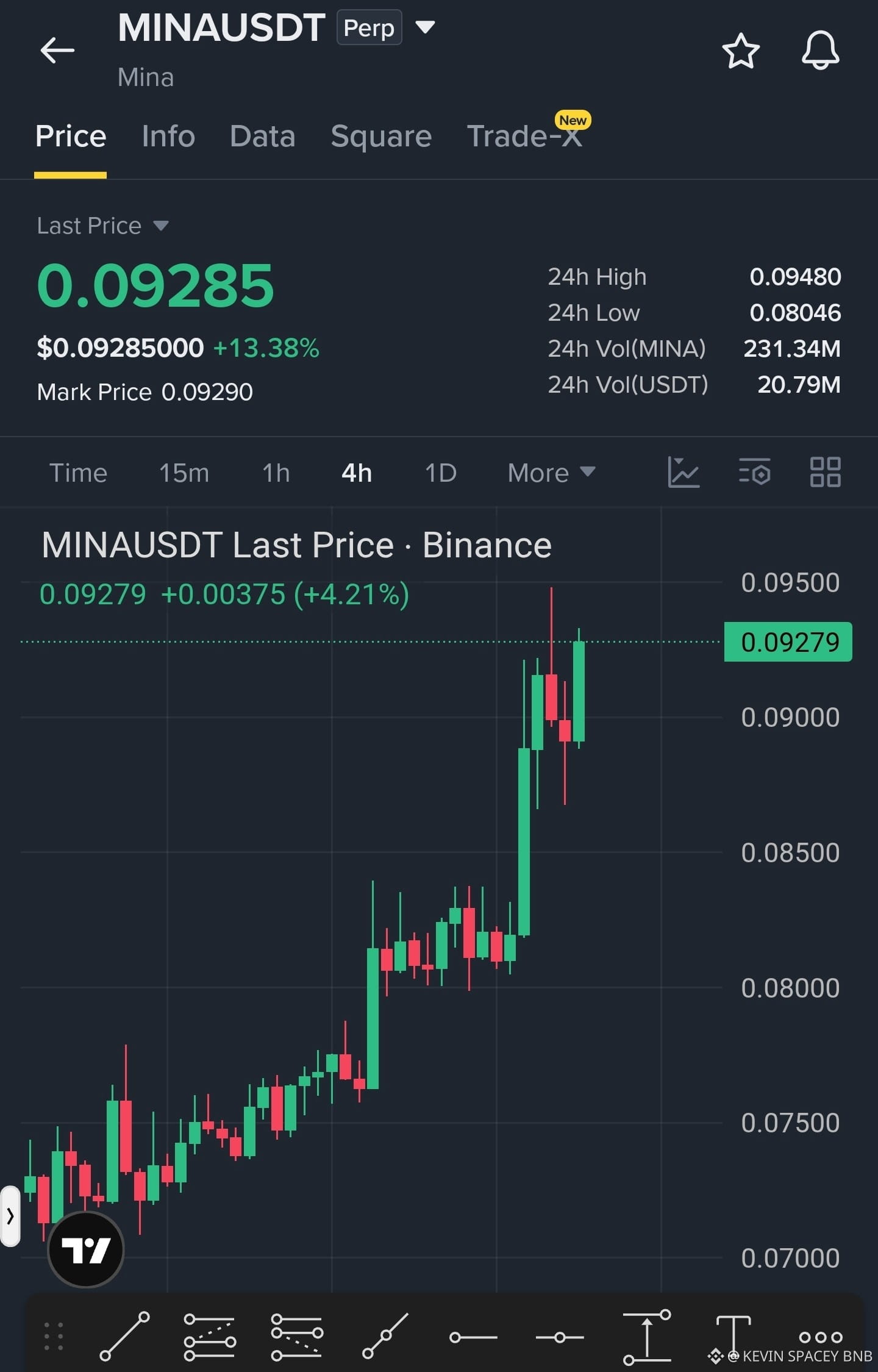
$MINA USDT looks ready for another push toward 0.09500 and potentially higher if buyers hold the 0.09000 support.
Trade Setup: Long
Entry zone: 0.08950 – 0.09250
Tp1: 0.09500
Tp2: 0.10000
Tp3: 0.10600
SL: 0.08550
MINA is showing strong short-term momentum after reclaiming the 0.09000 area, with price trading close to the recent 0.09480 high. A clean breakout above that resistance could open the way toward the next upside levels.
Trade Here On $MINA 👇
$MINA USDT looks ready for another push toward 0.09500 and potentially higher if buyers hold the 0.09000 support.
Trade Setup: Long
Entry zone: 0.08950 – 0.09250
Tp1: 0.09500
Tp2: 0.10000
Tp3: 0.10600
SL: 0.08550
MINA is showing strong short-term momentum after reclaiming the 0.09000 area, with price trading close to the recent 0.09480 high. A clean breakout above that resistance could open the way toward the next upside levels.
Trade Here On $MINA 👇
Trade Setup: Long
Entry zone: 0.08950 – 0.09250
Tp1: 0.09500
Tp2: 0.10000
Tp3: 0.10600
SL: 0.08550
MINA is showing strong short-term momentum after reclaiming the 0.09000 area, with price trading close to the recent 0.09480 high. A clean breakout above that resistance could open the way toward the next upside levels.
Trade Here On $MINA 👇
2
215
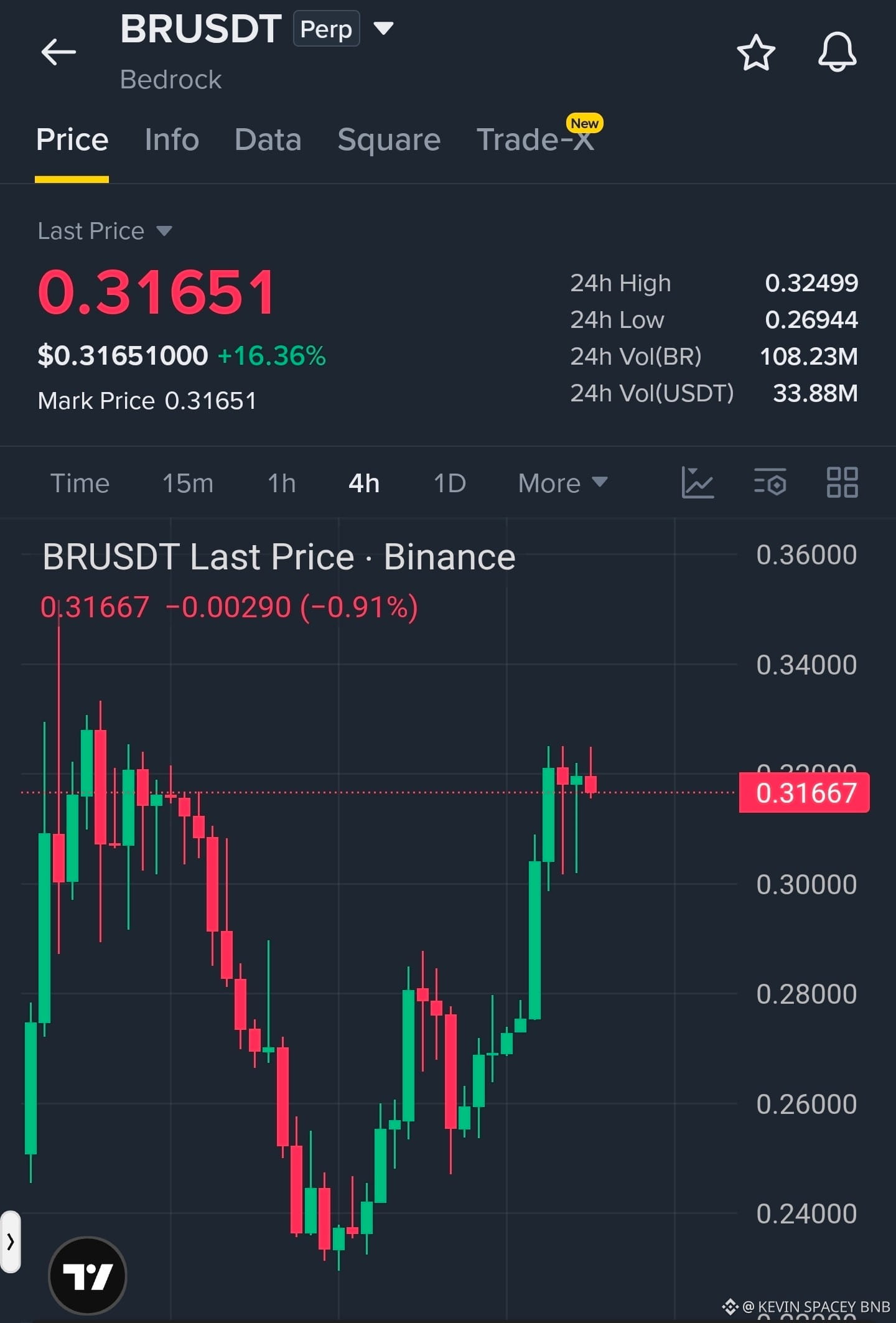
$BR USDT could retest the recent high before the next leg higher if support around 0.310 holds.
Trade Setup: Long
Entry zone: 0.309 – 0.316
Tp1: 0.325
Tp2: 0.340
Tp3: 0.360
SL: 0.298
BR has strong short-term momentum after the sharp move up, while 0.310–0.316 can act as the key continuation zone. A hold above this area keeps the bullish structure valid and opens room toward the recent high and higher resistance levels.
Trade Here On $BR 👇
$BR USDT could retest the recent high before the next leg higher if support around 0.310 holds.
Trade Setup: Long
Entry zone: 0.309 – 0.316
Tp1: 0.325
Tp2: 0.340
Tp3: 0.360
SL: 0.298
BR has strong short-term momentum after the sharp move up, while 0.310–0.316 can act as the key continuation zone. A hold above this area keeps the bullish structure valid and opens room toward the recent high and higher resistance levels.
Trade Here On $BR 👇
Trade Setup: Long
Entry zone: 0.309 – 0.316
Tp1: 0.325
Tp2: 0.340
Tp3: 0.360
SL: 0.298
BR has strong short-term momentum after the sharp move up, while 0.310–0.316 can act as the key continuation zone. A hold above this area keeps the bullish structure valid and opens room toward the recent high and higher resistance levels.
Trade Here On $BR 👇
2
258
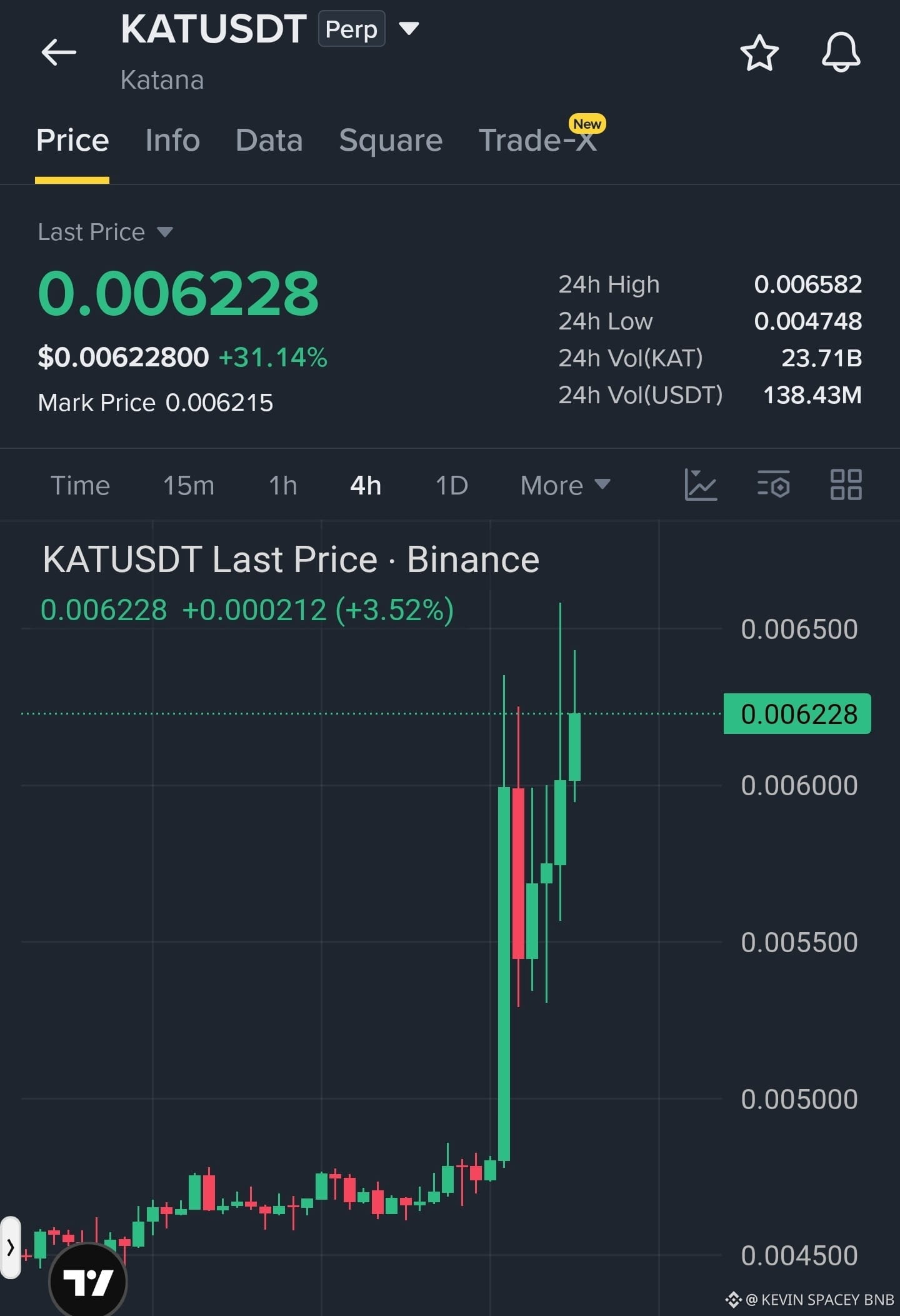
$KAT could retest support before buyers push toward the recent high
Trade Setup: Long
Entry zone: 0.00585 – 0.00605
TP1: 0.00635
TP2: 0.00658
TP3: 0.00690
SL: 0.00555
KAT is holding above the recent breakout area after a strong move, so I’m watching the 0.00585–0.00605 zone for a controlled pullback and buyer reaction.
If this support holds, momentum could return toward the 24h high and potentially extend the breakout.
Trade Here On $KAT 👇
$KAT could retest support before buyers push toward the recent high
Trade Setup: Long
Entry zone: 0.00585 – 0.00605
TP1: 0.00635
TP2: 0.00658
TP3: 0.00690
SL: 0.00555
KAT is holding above the recent breakout area after a strong move, so I’m watching the 0.00585–0.00605 zone for a controlled pullback and buyer reaction.
If this support holds, momentum could return toward the 24h high and potentially extend the breakout.
Trade Here On $KAT 👇
Trade Setup: Long
Entry zone: 0.00585 – 0.00605
TP1: 0.00635
TP2: 0.00658
TP3: 0.00690
SL: 0.00555
KAT is holding above the recent breakout area after a strong move, so I’m watching the 0.00585–0.00605 zone for a controlled pullback and buyer reaction.
If this support holds, momentum could return toward the 24h high and potentially extend the breakout.
Trade Here On $KAT 👇
172
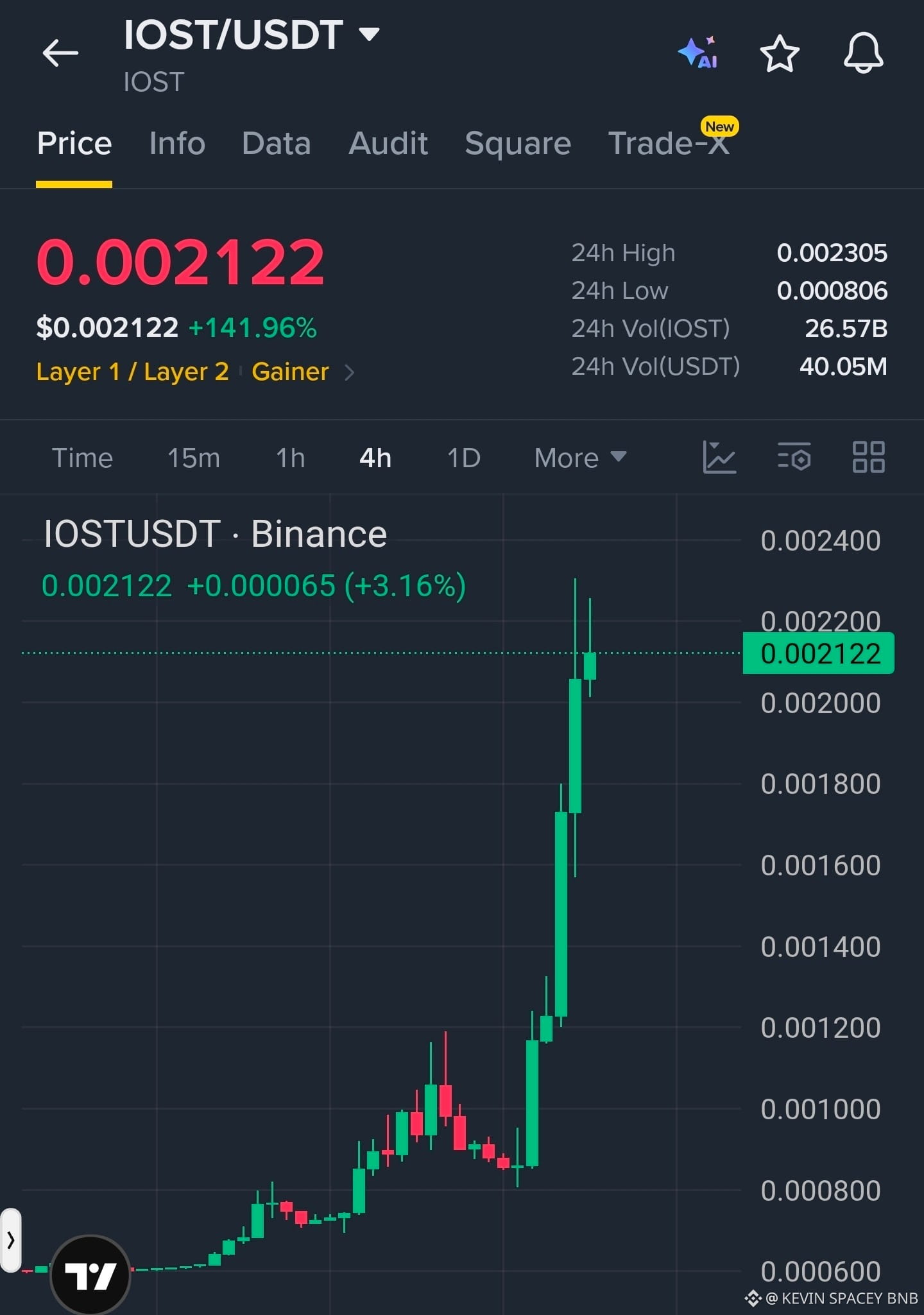
$IOST looks ready for a pullback before the next bullish move
Trade Setup: Long
Entry zone: 0.00195 – 0.00205
TP1: 0.00220
TP2: 0.00235
TP3: 0.00255
SL: 0.00182
After the massive breakout, I’m looking for a controlled retracement into the entry zone rather than chasing the current price. Holding this area could give buyers a chance to push toward the recent high and then extend higher.
Trade Here On $IOST 👇
$IOST looks ready for a pullback before the next bullish move
Trade Setup: Long
Entry zone: 0.00195 – 0.00205
TP1: 0.00220
TP2: 0.00235
TP3: 0.00255
SL: 0.00182
After the massive breakout, I’m looking for a controlled retracement into the entry zone rather than chasing the current price. Holding this area could give buyers a chance to push toward the recent high and then extend higher.
Trade Here On $IOST 👇
Trade Setup: Long
Entry zone: 0.00195 – 0.00205
TP1: 0.00220
TP2: 0.00235
TP3: 0.00255
SL: 0.00182
After the massive breakout, I’m looking for a controlled retracement into the entry zone rather than chasing the current price. Holding this area could give buyers a chance to push toward the recent high and then extend higher.
Trade Here On $IOST 👇
498
·
--
උසබ තත්ත්වය
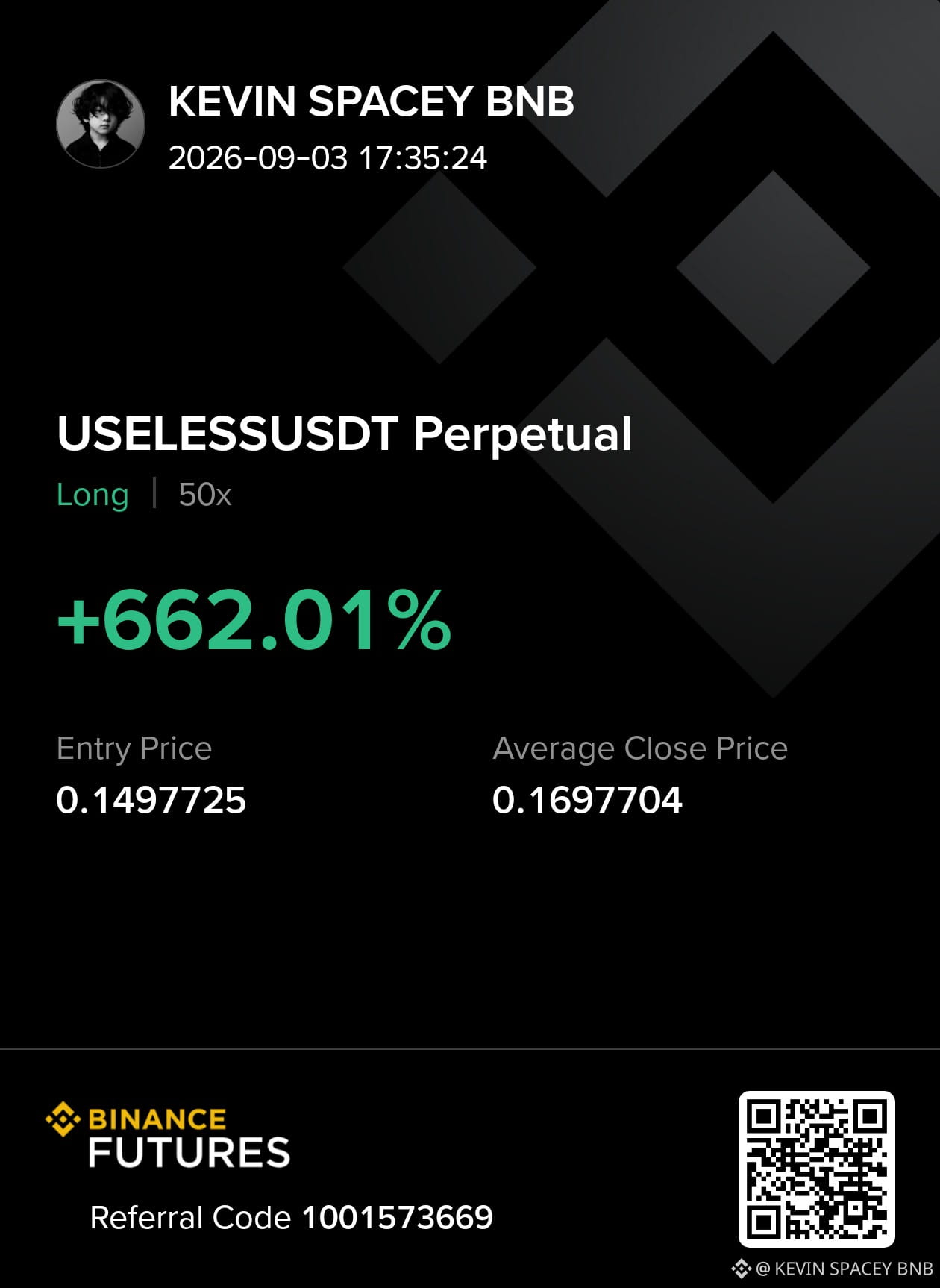
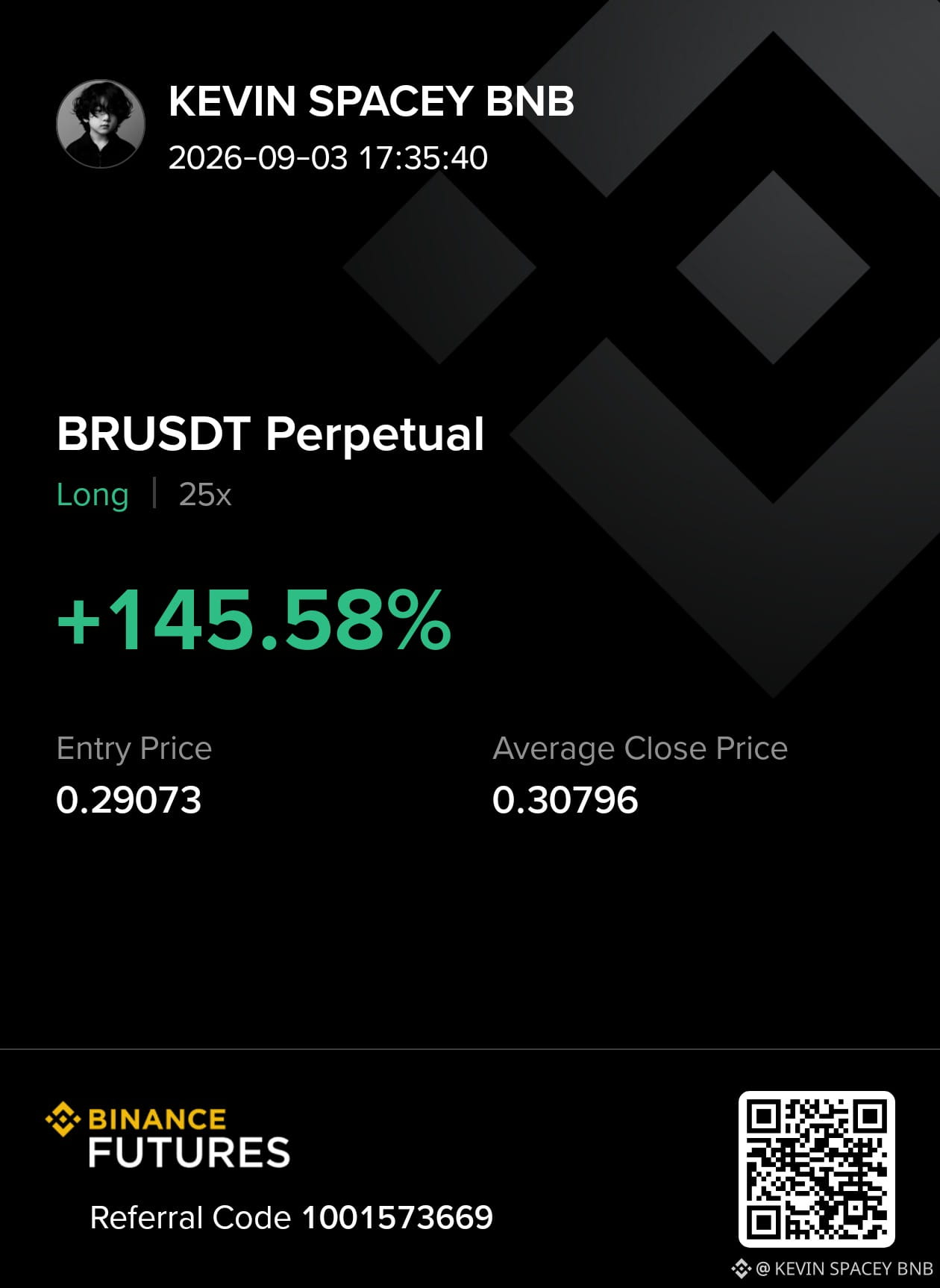
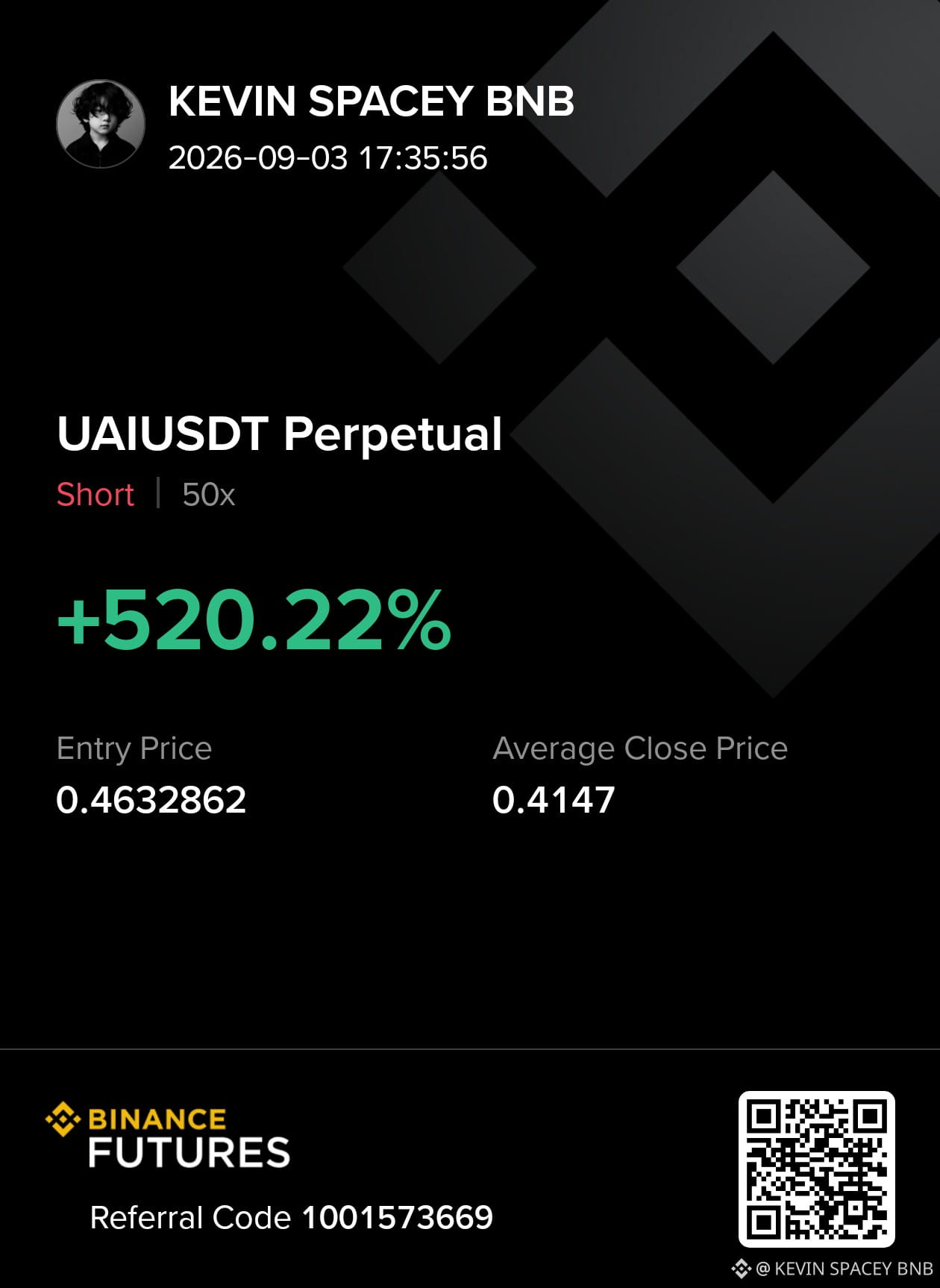
3 trades. 3 different setups. Real results.
I’m not here to make random calls or promise guaranteed profits. These are three trades I actually closed, with the entry and average close prices recorded on Binance Futures.
1️⃣ $USELESS — LONG 50x
Entry: 0.1497725
Close: 0.1697704
Result: +662.01%
2️⃣ $UAI — SHORT 50x
Entry: 0.4632862
Close: 0.4147
Result: +520.22%
3️⃣ $BR — LONG 25x
Entry: 0.29073
Close: 0.30796
Result: +145.58%
What matters to me is not just the percentage shown on the screenshot it’s having a defined entry, knowing where the trade is invalidated, and managing the position instead of blindly chasing candles.
These results are past trades, not a guarantee of future performance. Always manage your own risk, especially when leverage is involved.
Trade Here 👇
3 trades. 3 different setups. Real results.
I’m not here to make random calls or promise guaranteed profits. These are three trades I actually closed, with the entry and average close prices recorded on Binance Futures.
1️⃣ $USELESS — LONG 50x
Entry: 0.1497725
Close: 0.1697704
Result: +662.01%
2️⃣ $UAI — SHORT 50x
Entry: 0.4632862
Close: 0.4147
Result: +520.22%
3️⃣ $BR — LONG 25x
Entry: 0.29073
Close: 0.30796
Result: +145.58%
What matters to me is not just the percentage shown on the screenshot it’s having a defined entry, knowing where the trade is invalidated, and managing the position instead of blindly chasing candles.
These results are past trades, not a guarantee of future performance. Always manage your own risk, especially when leverage is involved.
Trade Here 👇
I’m not here to make random calls or promise guaranteed profits. These are three trades I actually closed, with the entry and average close prices recorded on Binance Futures.
1️⃣ $USELESS — LONG 50x
Entry: 0.1497725
Close: 0.1697704
Result: +662.01%
2️⃣ $UAI — SHORT 50x
Entry: 0.4632862
Close: 0.4147
Result: +520.22%
3️⃣ $BR — LONG 25x
Entry: 0.29073
Close: 0.30796
Result: +145.58%
What matters to me is not just the percentage shown on the screenshot it’s having a defined entry, knowing where the trade is invalidated, and managing the position instead of blindly chasing candles.
These results are past trades, not a guarantee of future performance. Always manage your own risk, especially when leverage is involved.
Trade Here 👇
1
427
👀 The Futures Movers tab is getting interesting…
🥇 $CATI — 0.05459 | **+1.22%**
🥈 $NEIRO — 0.00008599 | **+0.62%**
🥉 $ICP — 2.517 | **+3.41%**
🔻 $PHA — 0.0243 | **-0.41%**
What caught my attention is $ICP sitting at the top in terms of percentage move, while CATI and NEIRO are also holding green.
And then there’s PHA, slightly in the red while the others are moving up. That contrast makes this list more interesting than just looking at the biggest gainers.
I’m not chasing any of these just because they’re green. A move is easy to notice the real question is whether the momentum can actually hold.
If you had to watch one of these four right now, which one would you pick? 👇
#SaudiSaysIranAttackedShipInHormuz #OpenAISaysAstraFindsFlawsAutonomously #HangSengCloses18PointsLower
👀 The Futures Movers tab is getting interesting…
🥇 $CATI — 0.05459 | **+1.22%**
🥈 $NEIRO — 0.00008599 | **+0.62%**
🥉 $ICP — 2.517 | **+3.41%**
🔻 $PHA — 0.0243 | **-0.41%**
What caught my attention is $ICP sitting at the top in terms of percentage move, while CATI and NEIRO are also holding green.
And then there’s PHA, slightly in the red while the others are moving up. That contrast makes this list more interesting than just looking at the biggest gainers.
I’m not chasing any of these just because they’re green. A move is easy to notice the real question is whether the momentum can actually hold.
If you had to watch one of these four right now, which one would you pick? 👇
#SaudiSaysIranAttackedShipInHormuz #OpenAISaysAstraFindsFlawsAutonomously #HangSengCloses18PointsLower
🥇 $CATI — 0.05459 | **+1.22%**
🥈 $NEIRO — 0.00008599 | **+0.62%**
🥉 $ICP — 2.517 | **+3.41%**
🔻 $PHA — 0.0243 | **-0.41%**
What caught my attention is $ICP sitting at the top in terms of percentage move, while CATI and NEIRO are also holding green.
And then there’s PHA, slightly in the red while the others are moving up. That contrast makes this list more interesting than just looking at the biggest gainers.
I’m not chasing any of these just because they’re green. A move is easy to notice the real question is whether the momentum can actually hold.
If you had to watch one of these four right now, which one would you pick? 👇
#SaudiSaysIranAttackedShipInHormuz #OpenAISaysAstraFindsFlawsAutonomously #HangSengCloses18PointsLower
$CATI — 0.05459
33%
$NEIRO — 0.00008599
0%
$ICP — 2.517
67%
$PHA — 0.0243
0%
3 ඡන්ද • ඡන්දය අවසන්
229
i was mapping @Dusk_Foundation 's block reward structure last night and found an economic trap i hadnt seen documented anywhere clearly.
the surface level split looks simple. 80% to the block generator, 10% to the voting committee, 10% to Dusk. straightforward enough.
but the 80% isnt guaranteed.
the generator's reward is split into two portions. 70% is fixed they get that regardless. the remaining 10% is variable and depends entirely on how many votes they include in the block certificate. include all known votes, earn the full 80%. deliberately exclude votes, your own reward shrinks.
i kept thinking about why this specific design exists.
on Dusk, block generators for all iterations within a round are predictable before the round ends. a generator scheduled for iteration 5 knows they're coming. the temptation is obvious let earlier iterations fail, win the block reward yourself. higher iteration generators have an incentive to sabotage earlier ones.
the variable reward flips that incentive. if you exclude votes to slow down earlier iterations, you're directly reducing your own payout. the protocol makes sabotage economically self-defeating.
then theres the penalty layer. minor faults trigger suspension excluded from selection for defined epochs. major faults like double voting trigger hard slashing a portion of stake gets burned permanently. not locked. burned.
$DUSK is the asset at stake in every one of these economic decisions.
is Dusk's incentive design sophisticated enough to prevent validator misbehavior at scale, or does the predictability of future generators create attack vectors the reward structure cant fully close??
@Dusk_Foundation $DUSK #dusk
$CATI
{future}(CATIUSDT)
What stops validators from misbehaving?
i was mapping @Dusk 's block reward structure last night and found an economic trap i hadnt seen documented anywhere clearly.
the surface level split looks simple. 80% to the block generator, 10% to the voting committee, 10% to Dusk. straightforward enough.
but the 80% isnt guaranteed.
the generator's reward is split into two portions. 70% is fixed they get that regardless. the remaining 10% is variable and depends entirely on how many votes they include in the block certificate. include all known votes, earn the full 80%. deliberately exclude votes, your own reward shrinks.
i kept thinking about why this specific design exists.
on Dusk, block generators for all iterations within a round are predictable before the round ends. a generator scheduled for iteration 5 knows they're coming. the temptation is obvious let earlier iterations fail, win the block reward yourself. higher iteration generators have an incentive to sabotage earlier ones.
the variable reward flips that incentive. if you exclude votes to slow down earlier iterations, you're directly reducing your own payout. the protocol makes sabotage economically self-defeating.
then theres the penalty layer. minor faults trigger suspension excluded from selection for defined epochs. major faults like double voting trigger hard slashing a portion of stake gets burned permanently. not locked. burned.
$DUSK is the asset at stake in every one of these economic decisions.
is Dusk's incentive design sophisticated enough to prevent validator misbehavior at scale, or does the predictability of future generators create attack vectors the reward structure cant fully close??
@Dusk $DUSK #dusk
$CATI
What stops validators from misbehaving?
the surface level split looks simple. 80% to the block generator, 10% to the voting committee, 10% to Dusk. straightforward enough.
but the 80% isnt guaranteed.
the generator's reward is split into two portions. 70% is fixed they get that regardless. the remaining 10% is variable and depends entirely on how many votes they include in the block certificate. include all known votes, earn the full 80%. deliberately exclude votes, your own reward shrinks.
i kept thinking about why this specific design exists.
on Dusk, block generators for all iterations within a round are predictable before the round ends. a generator scheduled for iteration 5 knows they're coming. the temptation is obvious let earlier iterations fail, win the block reward yourself. higher iteration generators have an incentive to sabotage earlier ones.
the variable reward flips that incentive. if you exclude votes to slow down earlier iterations, you're directly reducing your own payout. the protocol makes sabotage economically self-defeating.
then theres the penalty layer. minor faults trigger suspension excluded from selection for defined epochs. major faults like double voting trigger hard slashing a portion of stake gets burned permanently. not locked. burned.
$DUSK is the asset at stake in every one of these economic decisions.
is Dusk's incentive design sophisticated enough to prevent validator misbehavior at scale, or does the predictability of future generators create attack vectors the reward structure cant fully close??
@Dusk $DUSK #dusk
$CATI
What stops validators from misbehaving?
💰 Economic rewards done right
67%
🔥 Stake slashing penalties
0%
👥 Committee oversight
0%
🔄 All three together
33%
6 ඡන්ද • ඡන්දය අවසන්
2
3
245
i saw "Chainlink partnership" and almost scrolled past it.
i'm glad i didnt.
most people hear oracle partnership and think price feed. one data point. one connection. done. the actual integration Dusk built is three separate infrastructure layers and each one solves a problem that regulated financial markets cant ignore.
first layer is cross-chain connectivity. regulated securities dont live on one chain forever. institutions need assets to move between networks without breaking compliance or settlement guarantees. CCIP handles that verified cross-chain messaging that maintains the integrity of the transaction as it moves.
second layer is verified data. DataLink brings institutional-grade data onto Dusk with cryptographic verification attached. for a regulated securities platform the data feeding into smart contracts cant be unverified. a stale price or corrupted input into a settlement contract doesnt just cause a bad trade it potentially triggers a compliance breach.
third layer stopped me completely. Data Streams delivers real-time market data at the speed financial applications actually need. deterministic settlement on Dusk means nothing if the market data driving the settlement decision is seconds behind.
i kept thinking about what breaks first if any one of these three layers fails. cross-chain connectivity fails assets get stranded. verified data fails contracts execute on corrupted inputs. real-time streams fail settlement happens on stale prices.
Dusk's financial infrastructure isnt just the blockchain layer. its everything feeding into it.
$DUSK settles every transaction that these three data layers make possible.
is Chainlink's three-layer integration what finally makes Dusk's regulated finance vision operationally complete, or does depending on external data infrastructure introduce a reliability risk the protocol itself cant control??
@Dusk_Foundation $DUSK #dusk $TUT
{future}(TUTUSDT)
Which data layer matters most for regulated onchain finance?
i saw "Chainlink partnership" and almost scrolled past it.
i'm glad i didnt.
most people hear oracle partnership and think price feed. one data point. one connection. done. the actual integration Dusk built is three separate infrastructure layers and each one solves a problem that regulated financial markets cant ignore.
first layer is cross-chain connectivity. regulated securities dont live on one chain forever. institutions need assets to move between networks without breaking compliance or settlement guarantees. CCIP handles that verified cross-chain messaging that maintains the integrity of the transaction as it moves.
second layer is verified data. DataLink brings institutional-grade data onto Dusk with cryptographic verification attached. for a regulated securities platform the data feeding into smart contracts cant be unverified. a stale price or corrupted input into a settlement contract doesnt just cause a bad trade it potentially triggers a compliance breach.
third layer stopped me completely. Data Streams delivers real-time market data at the speed financial applications actually need. deterministic settlement on Dusk means nothing if the market data driving the settlement decision is seconds behind.
i kept thinking about what breaks first if any one of these three layers fails. cross-chain connectivity fails assets get stranded. verified data fails contracts execute on corrupted inputs. real-time streams fail settlement happens on stale prices.
Dusk's financial infrastructure isnt just the blockchain layer. its everything feeding into it.
$DUSK settles every transaction that these three data layers make possible.
is Chainlink's three-layer integration what finally makes Dusk's regulated finance vision operationally complete, or does depending on external data infrastructure introduce a reliability risk the protocol itself cant control??
@Dusk $DUSK #dusk $TUT
Which data layer matters most for regulated onchain finance?
i'm glad i didnt.
most people hear oracle partnership and think price feed. one data point. one connection. done. the actual integration Dusk built is three separate infrastructure layers and each one solves a problem that regulated financial markets cant ignore.
first layer is cross-chain connectivity. regulated securities dont live on one chain forever. institutions need assets to move between networks without breaking compliance or settlement guarantees. CCIP handles that verified cross-chain messaging that maintains the integrity of the transaction as it moves.
second layer is verified data. DataLink brings institutional-grade data onto Dusk with cryptographic verification attached. for a regulated securities platform the data feeding into smart contracts cant be unverified. a stale price or corrupted input into a settlement contract doesnt just cause a bad trade it potentially triggers a compliance breach.
third layer stopped me completely. Data Streams delivers real-time market data at the speed financial applications actually need. deterministic settlement on Dusk means nothing if the market data driving the settlement decision is seconds behind.
i kept thinking about what breaks first if any one of these three layers fails. cross-chain connectivity fails assets get stranded. verified data fails contracts execute on corrupted inputs. real-time streams fail settlement happens on stale prices.
Dusk's financial infrastructure isnt just the blockchain layer. its everything feeding into it.
$DUSK settles every transaction that these three data layers make possible.
is Chainlink's three-layer integration what finally makes Dusk's regulated finance vision operationally complete, or does depending on external data infrastructure introduce a reliability risk the protocol itself cant control??
@Dusk $DUSK #dusk $TUT
Which data layer matters most for regulated onchain finance?
🌉 Cross-chain connectivity
100%
✅ Verified institutional data
0%
⚡ Real-time market streams
0%
🔄 All three or nothing
0%
1 ඡන්ද • ඡන්දය අවසන්
3
2
265
#TermMax
DeFi has kind of trained us to believe flexibility is always better.
Deposit whenever. Borrow whenever. Repay whenever.
Sounds ideal.
But I was looking at @termmax and started wondering if all that flexibility comes with a cost we're just used to ignoring.
With floating-rate borrowing, you keep the freedom to move. The trade-off is that your financing cost keeps moving too.
You don't know what the rate will look like next week. Or next month.
Fixed-term borrowing flips that trade.
You give up some flexibility, but in return you know the terms upfront. The uncertainty doesn't disappear, it just changes shape.
That made me think the real choice isn't between a flexible product and a restrictive one.
It's between different types of uncertainty.
One lets you exit more freely but leaves your borrowing cost exposed to the market. The other gives you predictable financing but asks you to commit to time.
Maybe the hidden cost of flexibility is uncertainty.
And maybe the real value of fixed-term markets like @termmax is simply knowing which uncertainty you're choosing.
$ACT still has my attention today.#USRefinersFaceLoomingCrudeSupplyDrop
{spot}(ACTUSDT)
$GALA
{future}(GALAUSDT)
$BOME
{future}(BOMEUSDT)
What matters more when borrowing?
#TermMax
DeFi has kind of trained us to believe flexibility is always better.
Deposit whenever. Borrow whenever. Repay whenever.
Sounds ideal.
But I was looking at @TermMax and started wondering if all that flexibility comes with a cost we're just used to ignoring.
With floating-rate borrowing, you keep the freedom to move. The trade-off is that your financing cost keeps moving too.
You don't know what the rate will look like next week. Or next month.
Fixed-term borrowing flips that trade.
You give up some flexibility, but in return you know the terms upfront. The uncertainty doesn't disappear, it just changes shape.
That made me think the real choice isn't between a flexible product and a restrictive one.
It's between different types of uncertainty.
One lets you exit more freely but leaves your borrowing cost exposed to the market. The other gives you predictable financing but asks you to commit to time.
Maybe the hidden cost of flexibility is uncertainty.
And maybe the real value of fixed-term markets like @TermMax is simply knowing which uncertainty you're choosing.
$ACT still has my attention today.#USRefinersFaceLoomingCrudeSupplyDrop
$GALA
$BOME
What matters more when borrowing?
DeFi has kind of trained us to believe flexibility is always better.
Deposit whenever. Borrow whenever. Repay whenever.
Sounds ideal.
But I was looking at @TermMax and started wondering if all that flexibility comes with a cost we're just used to ignoring.
With floating-rate borrowing, you keep the freedom to move. The trade-off is that your financing cost keeps moving too.
You don't know what the rate will look like next week. Or next month.
Fixed-term borrowing flips that trade.
You give up some flexibility, but in return you know the terms upfront. The uncertainty doesn't disappear, it just changes shape.
That made me think the real choice isn't between a flexible product and a restrictive one.
It's between different types of uncertainty.
One lets you exit more freely but leaves your borrowing cost exposed to the market. The other gives you predictable financing but asks you to commit to time.
Maybe the hidden cost of flexibility is uncertainty.
And maybe the real value of fixed-term markets like @TermMax is simply knowing which uncertainty you're choosing.
$ACT still has my attention today.#USRefinersFaceLoomingCrudeSupplyDrop
$GALA
$BOME
What matters more when borrowing?
Flexibility
75%
Fixed Rates
0%
Predictability
0%
Liquidity
25%
4 ඡන්ද • ඡන්දය අවසන්
1.6k
තවත් අන්තර්ගතයන් ගවේෂණය කිරීමට ඇතුල් වන්න
Binance චතුරශ්රය හි ගෝලීය ක්රිප්ටෝ පරිශීලකයින් හා එක්වන්න
⚡️ ක්රිප්ටෝ පිළිබඳ නවතම සහ ප්රයෝජනවත් තොරතුරු ලබා ගන්න.
💬 ලොව විශාලතම ක්රිප්ටෝ හුවමාරුව මගින් විශ්වාස කෙරේ.
👍 සත්යායනය කරන ලද නිර්මාණකරුවන්ගෙන් සැබෑ විදසුන් සොයා ගන්න.
විද්යුත් තැපෑල / දුරකථන අංකය
නැගී එන මාතෘකා
CFTCUpdatesGuidanceOnTokenizedAssets
1,010 views
84 සාකච්ඡා කරමින්
🚨 BREAKING: CFTC UPDATES TOKENIZATION GUIDANCE
The CFTC just updated its crypto guidance, clarifying that regulated firms may use tokenized versions of permitted assets under certain conditions. 🏦⛓️
The agency also confirmed that qualifying blockchain-based records can satisfy certain regulatory recordkeeping requirements.
This is another major step toward bringing tokenization and blockchain infrastructure deeper into traditional financial markets. 🌎
Tokenized assets are moving closer to the mainstream.
The real question: How big could the tokenization market become by 2029? 👀
#CFTC #blockchain #bitcoin
#cftcupdatesguidanceontokenizedassets
The07
·0 කැමත්ත දැක්වීම්
·11 views
BitgetSays$352MAffectedInHack
78 views
5 සාකච්ඡා කරමින්
BinanceWillListHyperliquid(HYPE)
158,429 views
2,651 සාකච්ඡා කරමින්