
oxygenx
43 පෝස්ටු

oxygenx
I am a responsible & professional person.. Community manager|| community MOD|| ambassador||
විවෘත වෙළෙඳාම
ඉඳහිට වෙළෙන්දා
{වේලාව} වසර
11 හඹා යමින්
40 හඹා යන්නන්
79 කැමති විය
පෝස්ටු
ආයෝජන කළඹ
සියල්ල
උපුටා දැක්වීම්
You see a price on the screen, place your order, and expect to get around that price.
But what actually determines how close you get?
A lot of it comes down to liquidity right... Liquidity is one of those things you dont really notice… until it disappears.
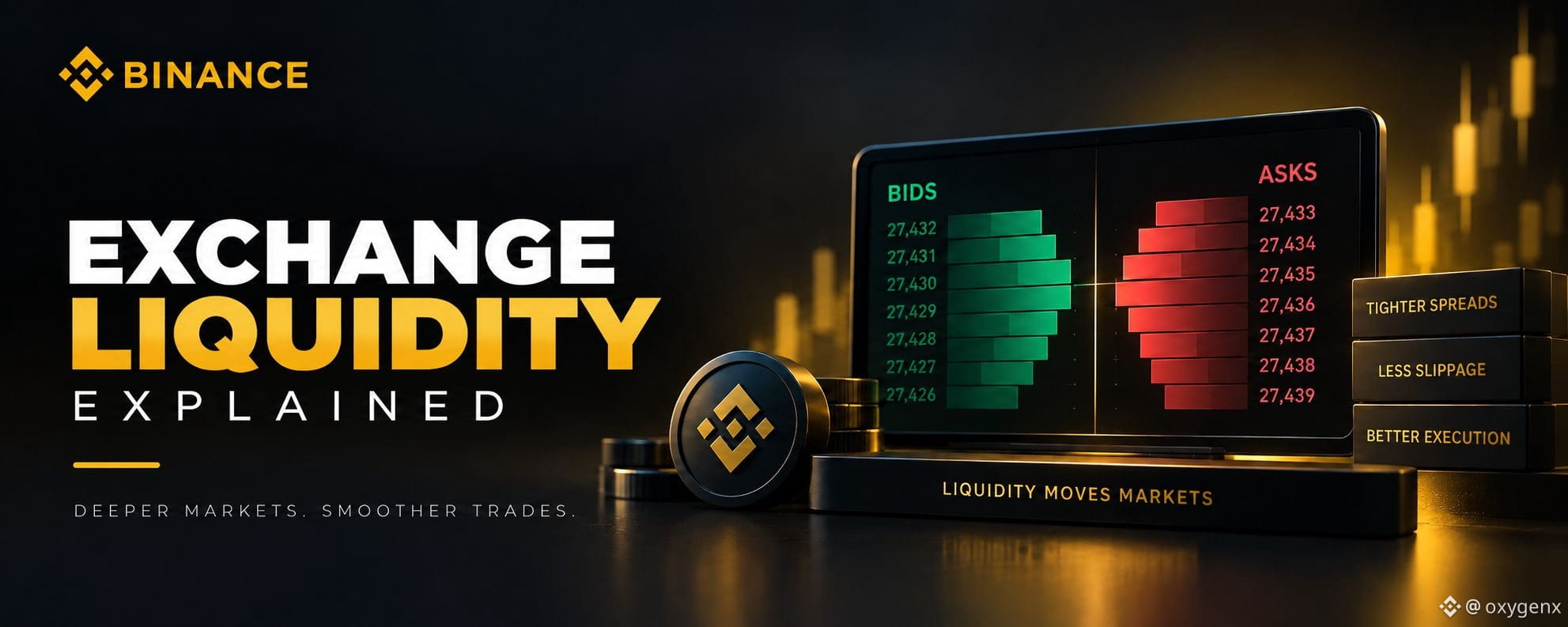
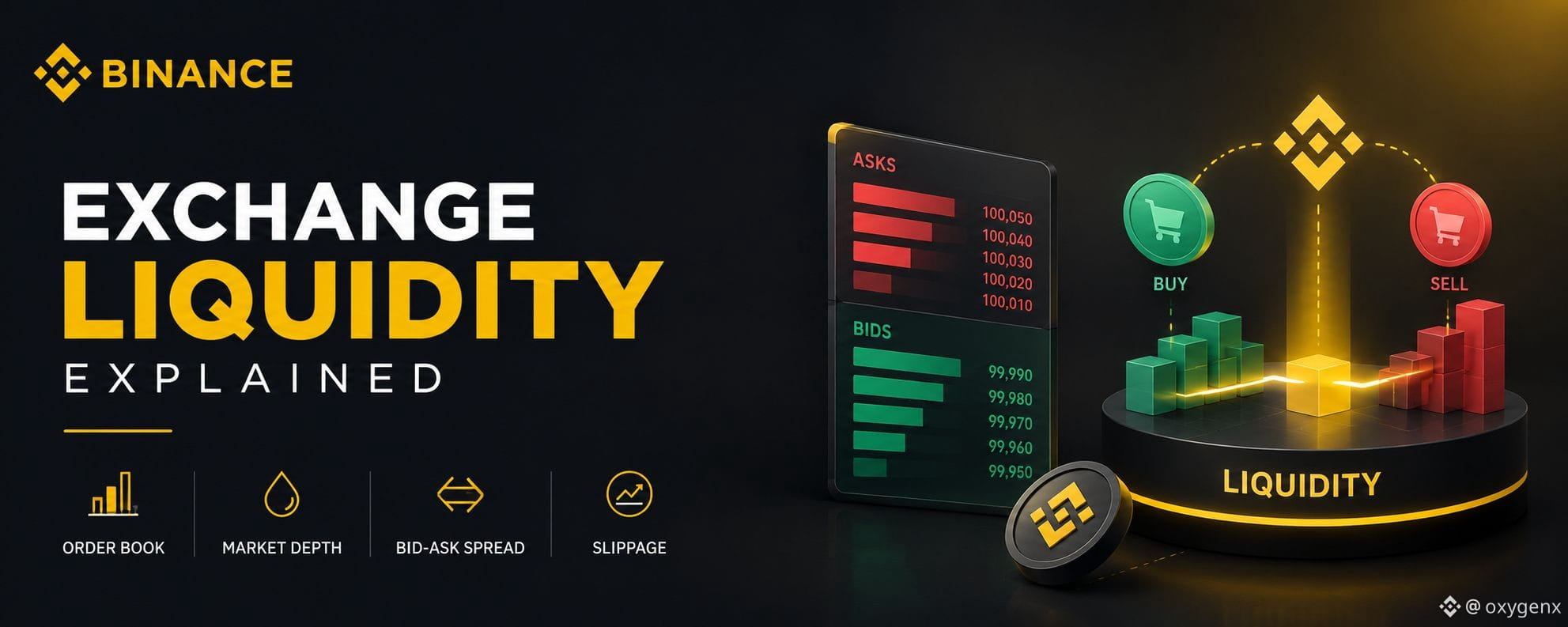
In simple terms, liquidity tells us how easily an asset can be bought or sold without moving the price too much.
On an exchange, liquidity mainly comes from the orders sitting in the order book.
More orders close to the current price = deeper liquidity.
And deeper liquidity usually means:
→ tighter bid-ask spreads
→ less slippage
→ smoother execution
→ less price impact from larger trades
But here's the important part:
High trading volume ≠ automatically high liquidity.
To understand the real market depth, look beyond volume. Check the order book, bid ask spread, and how much liquidity is actually available around the current price.
A large market order hitting a thin order book can move through multiple price levels meaning your final execution price may be very different from what you expected.
That's where slippage comes in. So when looking at an exchange, don't just ask what's the price?
you should ask, how much liquidity is sitting behind that price?
That tells you much more about the quality of the market.
But what actually determines how close you get?
A lot of it comes down to liquidity right... Liquidity is one of those things you dont really notice… until it disappears.
In simple terms, liquidity tells us how easily an asset can be bought or sold without moving the price too much.
On an exchange, liquidity mainly comes from the orders sitting in the order book.
More orders close to the current price = deeper liquidity.
And deeper liquidity usually means:
→ tighter bid-ask spreads
→ less slippage
→ smoother execution
→ less price impact from larger trades
But here's the important part:
High trading volume ≠ automatically high liquidity.
To understand the real market depth, look beyond volume. Check the order book, bid ask spread, and how much liquidity is actually available around the current price.
A large market order hitting a thin order book can move through multiple price levels meaning your final execution price may be very different from what you expected.
That's where slippage comes in. So when looking at an exchange, don't just ask what's the price?
you should ask, how much liquidity is sitting behind that price?
That tells you much more about the quality of the market.
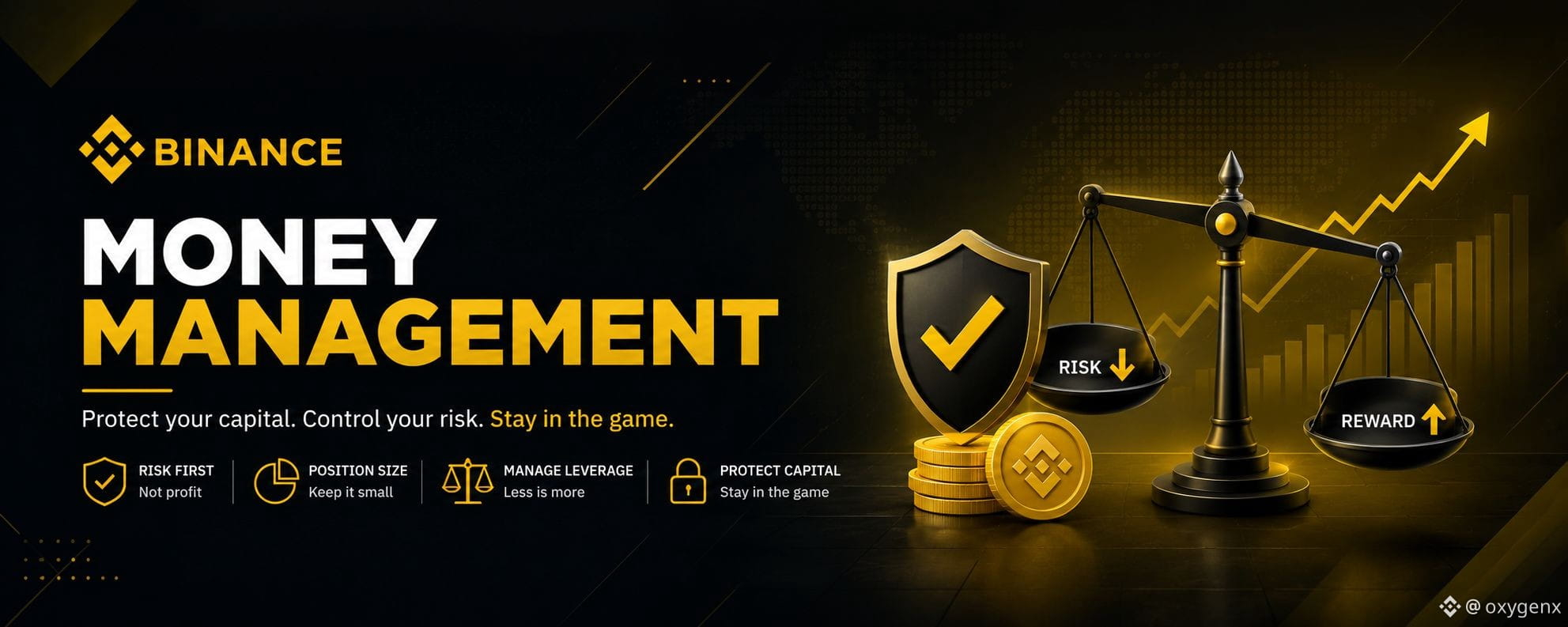
You can have a great strategy and still lose everything. Not because your entries are always wrong.
But because your money management is wrong.
This is something I've been thinking about while going deeper into Binance and trading.
A lot of beginners focus on:
> Where should I enter?
> Which coin will pump?
> Should I use 10x or 20x?
But a better question comes first:
How much am I actually willing to lose if I'm wrong?
That's where money management starts.
Imagine you have a $1,000 trading account. If you decide that you're only willing to risk 1% on a single trade, your maximum planned loss is $10.
That doesn't mean you can only open a $10 position.
Your position can be much larger but your actual risk up to the invalidation/stop level should be limited to that amount.
Binance Academy describes this distinction clearly position size is how much capital you put into the trade, while risk is how much you lose if your stop loss is hit.
So the basic relationship becomes:
★ Account size
★ × Risk per trade
★ ÷ Stop loss distance
★ = Position size
And suddenly, your trade isn't based on I'm feeling bullish.
It's based on what I'm risking, here's where I'm wrong, and here's how much capital I need to put behind the idea. That's a completely different mindset.
Then comes the second part:
Don't let one trade control your account. A losing trade is normal. A losing streak is normal.
What destroys accounts is allowing one position or a series of emotional decisions to become too large.
This is also why leverage deserves respect.
Leverage can increase your exposure without increasing your actual capital, but it also magnifies losses and can accelerate liquidation.
And money management isn't only about stop losses.
It also means:
• Keeping position sizes under control
• Avoiding excessive leverage
• Knowing your maximum daily/weekly loss
• Keeping trading capital separate from long-term holdings
• Accounting for fees, funding and slippage
• Diversifying when appropriate
• Never trading money you can't afford to lose
But because your money management is wrong.
This is something I've been thinking about while going deeper into Binance and trading.
A lot of beginners focus on:
> Where should I enter?
> Which coin will pump?
> Should I use 10x or 20x?
But a better question comes first:
How much am I actually willing to lose if I'm wrong?
That's where money management starts.
Imagine you have a $1,000 trading account. If you decide that you're only willing to risk 1% on a single trade, your maximum planned loss is $10.
That doesn't mean you can only open a $10 position.
Your position can be much larger but your actual risk up to the invalidation/stop level should be limited to that amount.
Binance Academy describes this distinction clearly position size is how much capital you put into the trade, while risk is how much you lose if your stop loss is hit.
So the basic relationship becomes:
★ Account size
★ × Risk per trade
★ ÷ Stop loss distance
★ = Position size
And suddenly, your trade isn't based on I'm feeling bullish.
It's based on what I'm risking, here's where I'm wrong, and here's how much capital I need to put behind the idea. That's a completely different mindset.
Then comes the second part:
Don't let one trade control your account. A losing trade is normal. A losing streak is normal.
What destroys accounts is allowing one position or a series of emotional decisions to become too large.
This is also why leverage deserves respect.
Leverage can increase your exposure without increasing your actual capital, but it also magnifies losses and can accelerate liquidation.
And money management isn't only about stop losses.
It also means:
• Keeping position sizes under control
• Avoiding excessive leverage
• Knowing your maximum daily/weekly loss
• Keeping trading capital separate from long-term holdings
• Accounting for fees, funding and slippage
• Diversifying when appropriate
• Never trading money you can't afford to lose
DeFi has been excellent at offering high yields, but terrible at offering certainty. TermMax focuses on the second part. Fixed rates + fixed terms mean lenders can underwrite returns properly and borrowers can manage risk without worrying about sudden rate spikes. When you add multi-chain deployment and composable strategies on top, it starts looking less like a simple lending market and more like actual on-chain fixed-income rails. Curious to see how the $TMX token and ecosystem grow from here.
@TermMax
#TermMax
#termmax
@TermMax
#TermMax
#termmax
he real value of TermMax is not just “fixed rates” as a marketing phrase. It’s the structure behind it. Markets have clear maturities, rates are locked at entry, and the token design (fixed-rate + yield components) allows more flexible strategies without constant monitoring. One-click leverage and looping become cleaner when you already know your cost of capital. In a market full of floating-rate protocols, this fixed-income style infrastructure feels like a missing piece. Supporting what @TermMax
is building. #TermMax
#termmax
is building. #TermMax
#termmax
One small number on Binance Futures can tell you a lot about the market.
If you've ever traded perpetual futures, you've probably seen something like:
+0.01%
-0.03%
+0.08%
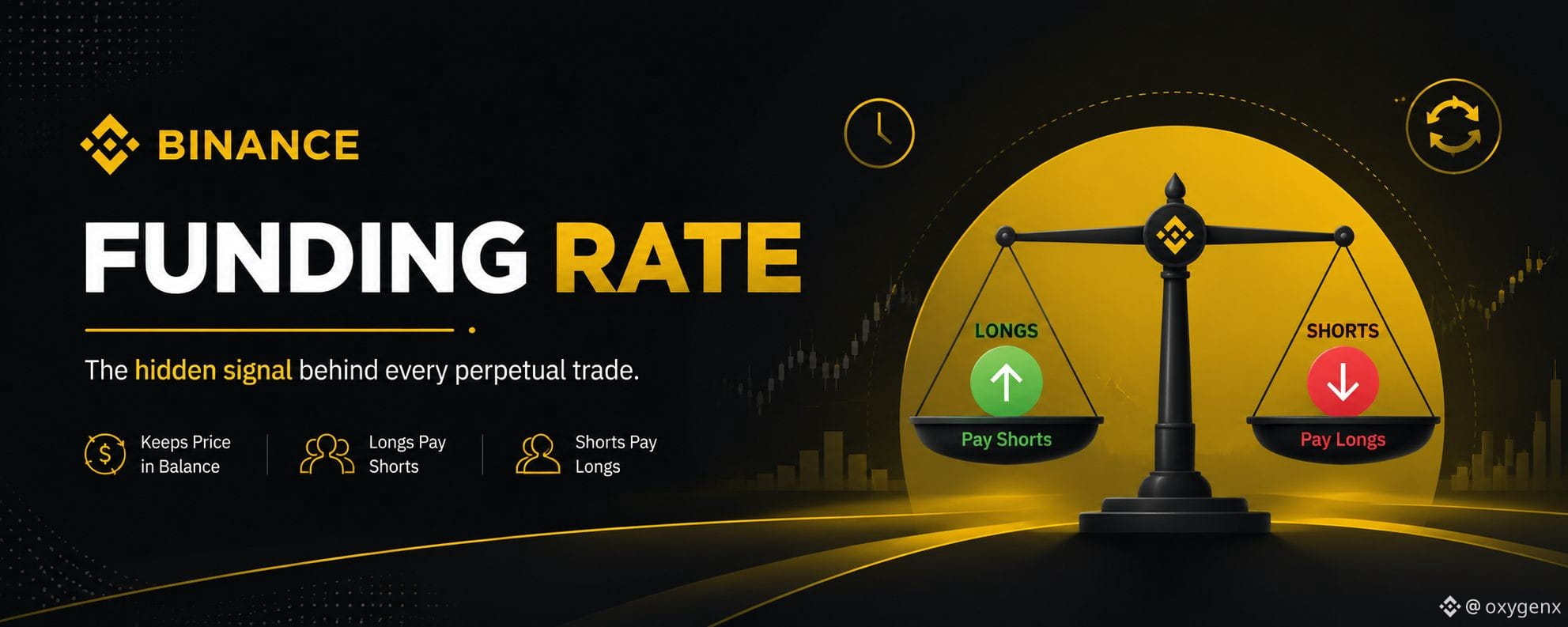
Funding rate is a periodic payment exchanged between long and short traders in perpetual futures.
It isn't a fee that Binance simply takes from you. When the funding rate is positive, longs pay shorts.
When it's negative, shorts pay longs. Because perpetual futures don't have an expiry date.
So the market needs a mechanism to keep the perpetual contract price close to the underlying spot price. Funding helps create that balance.
Here's the part I find more interesting:
> Funding rate can also give you a glimpse into market positioning.
> Consistently positive funding often means longs are paying shorts, which can reflect strong bullish demand for perpetuals.
> Consistently negative funding can indicate stronger demand for shorts.
But this is where people make a mistake.
- Positive funding ≠ guaranteed dump.
- Negative funding ≠ guaranteed pump.
Funding is a sentiment/positioning signal, not a crystal ball. And the cost can become meaningful when you're holding leveraged positions for a long time.
For example, a small funding payment might look irrelevant on a short-term trade.
One more thing beginners often miss:
The funding interval isn't necessarily identical across every Binance Futures contract. The standard interval is commonly 8 hours, but Binance has introduced dynamic adjustments for certain contracts, so you should always check the specific contract's current funding schedule.
So next time you open Binance Futures, don't just look at:
Price → Long/Short → Leverage
Sometimes that tiny percentage tells you more about the positioning behind the market than the price chart alone.
Price shows where the market is. Funding can give you a clue about who is paying to be there. $BNB
If you've ever traded perpetual futures, you've probably seen something like:
+0.01%
-0.03%
+0.08%
Funding rate is a periodic payment exchanged between long and short traders in perpetual futures.
It isn't a fee that Binance simply takes from you. When the funding rate is positive, longs pay shorts.
When it's negative, shorts pay longs. Because perpetual futures don't have an expiry date.
So the market needs a mechanism to keep the perpetual contract price close to the underlying spot price. Funding helps create that balance.
Here's the part I find more interesting:
> Funding rate can also give you a glimpse into market positioning.
> Consistently positive funding often means longs are paying shorts, which can reflect strong bullish demand for perpetuals.
> Consistently negative funding can indicate stronger demand for shorts.
But this is where people make a mistake.
- Positive funding ≠ guaranteed dump.
- Negative funding ≠ guaranteed pump.
Funding is a sentiment/positioning signal, not a crystal ball. And the cost can become meaningful when you're holding leveraged positions for a long time.
For example, a small funding payment might look irrelevant on a short-term trade.
One more thing beginners often miss:
The funding interval isn't necessarily identical across every Binance Futures contract. The standard interval is commonly 8 hours, but Binance has introduced dynamic adjustments for certain contracts, so you should always check the specific contract's current funding schedule.
So next time you open Binance Futures, don't just look at:
Price → Long/Short → Leverage
Sometimes that tiny percentage tells you more about the positioning behind the market than the price chart alone.
Price shows where the market is. Funding can give you a clue about who is paying to be there. $BNB
take the lead


CZ
·
--
(中文版在下面)
Too many people try to over interpret "what does it mean?"
I was testing Trust Wallet today. And saw too many meme coins in the wallet clustering the interface, to the point it was hard for me to find BNB, so I tried to burn some tokens. Even that caused many community discussions.
Then I realized that I will never be able to "clean out" meme coins on the address. The more I burn then, the more people will send meme coins to the address.
The transparency natural of the blockchain means any interaction with this address will be over interpreted by the community.
I even thought of requesting the Trust Wallet team to implement an "Ignore Coin" feature to avoid the clutter, but that feature will not be needed by 99.99% of people.
Here is plan, I will donate/send the BNB and 币安人生 (that was bought using BNB) tokens to Giggle Academy. Then I will stop using this address. It will effectively be a burn address.
太多人试图过度解读"他这么做代表什么?"
我今天测试 @TrustWallet。发现钱包里太多meme coin,多到连 BNB 都很难找到,所以我尝试销毁一些代币。结果连这个操作都引发了不少社区讨论。
我意识到,我永远无法把这个地址上的meme币"清理干净"。我烧得越多,就会有越多人往这个地址打币。
区块链的透明特性意味着,这个地址的任何操作都会被社区过度解读。
我甚至想过请 Trust Wallet 团队做一个"忽略代币"(Ignore Coin)的功能,避免界面被塞满,但这个功能 99.99% 的人根本用不上。
所以计划如下:我会把 BNB 以及用 BNB 买的"币安人生"代币捐给 Giggle Academy。之后我将停止使用这个地址,让它变成一个销毁地址(burn address)。
Too many people try to over interpret "what does it mean?"
I was testing Trust Wallet today. And saw too many meme coins in the wallet clustering the interface, to the point it was hard for me to find BNB, so I tried to burn some tokens. Even that caused many community discussions.
Then I realized that I will never be able to "clean out" meme coins on the address. The more I burn then, the more people will send meme coins to the address.
The transparency natural of the blockchain means any interaction with this address will be over interpreted by the community.
I even thought of requesting the Trust Wallet team to implement an "Ignore Coin" feature to avoid the clutter, but that feature will not be needed by 99.99% of people.
Here is plan, I will donate/send the BNB and 币安人生 (that was bought using BNB) tokens to Giggle Academy. Then I will stop using this address. It will effectively be a burn address.
太多人试图过度解读"他这么做代表什么?"
我今天测试 @TrustWallet。发现钱包里太多meme coin,多到连 BNB 都很难找到,所以我尝试销毁一些代币。结果连这个操作都引发了不少社区讨论。
我意识到,我永远无法把这个地址上的meme币"清理干净"。我烧得越多,就会有越多人往这个地址打币。
区块链的透明特性意味着,这个地址的任何操作都会被社区过度解读。
我甚至想过请 Trust Wallet 团队做一个"忽略代币"(Ignore Coin)的功能,避免界面被塞满,但这个功能 99.99% 的人根本用不上。
所以计划如下:我会把 BNB 以及用 BNB 买的"币安人生"代币捐给 Giggle Academy。之后我将停止使用这个地址,让它变成一个销毁地址(burn address)。
TermMax is one of the most interesting fixed-rate protocols in DeFi right now. Instead of dealing with constantly changing interest rates, you can lock in a fixed yield as a lender or a fixed borrowing cost as a borrower for a set term. Their zero-coupon bond style design makes everything predictable and clean. It already works across Ethereum, Base, BNB Chain and Berachain. Looking forward to seeing how $TMX develops. Check out
@TermMax
#TermMax
#termmax
@TermMax
#TermMax
#termmax
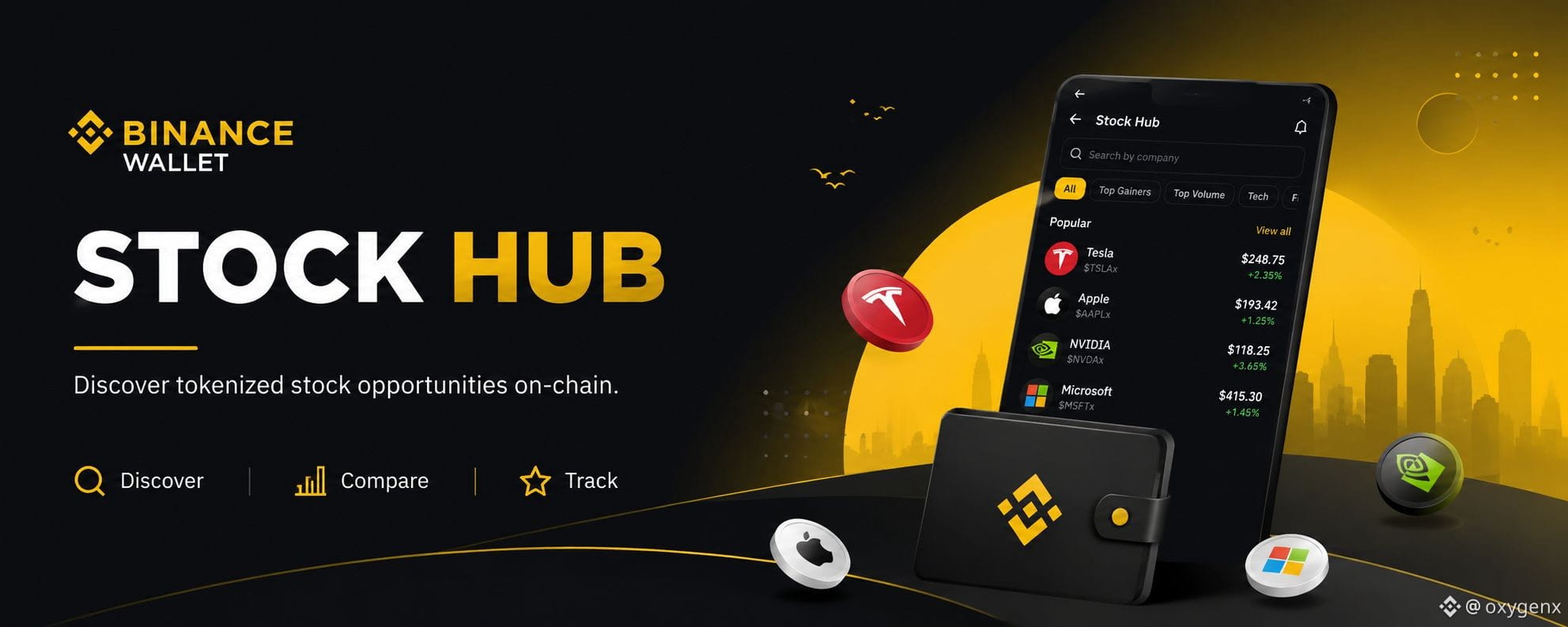
Binance Wallet just launched Stock Hub.
[Not available to users in the EEA]
At first glance, it looks like another new feature. But I think there's a bigger story here.
The problem with tokenized stocks today isnt only access.
Different issuers. Different tokenized versions. Stock perps in one place. Earn opportunities somewhere else. And sometimes, users have to search by unfamiliar token symbols just to find exposure to the company they actually care about.
Stock Hub tries to clean that up.
Users can search by company, discover different tokenized versions, compare available products, check metrics like price and 24h volume, explore themes, and organize the stocks they want to track all from one place inside Binance Wallet.
And that's where this becomes more interesting for Binance.
Binance is no longer positioning Wallet as just a place to hold crypto. It's becoming a discovery layer for onchain financial products.
That matters because tokenization only becomes truly useful when people can actually find, compare and use these assets without navigating a fragmented ecosystem.
We've already seen Binance move further into tokenized securities and on-chain finance, while BNB Chain is bringing tokenized assets into DeFi environments.
Stock Hub feels like another step in that direction.
"Discover and interact with a wider range of financial products through Binance."
Stock Hub aggregates third party products Binance says it does not issue, sell, broker or endorse the products displayed there. Users still need to understand issuer, liquidity, custody and regulatory risks.
Still, from a reputation and ecosystem perspective, I think this is a meaningful move.
And honestly, that bigger transition is what I'll be watching.
$NVDAB $AAPLB
[Not available to users in the EEA]
At first glance, it looks like another new feature. But I think there's a bigger story here.
The problem with tokenized stocks today isnt only access.
Different issuers. Different tokenized versions. Stock perps in one place. Earn opportunities somewhere else. And sometimes, users have to search by unfamiliar token symbols just to find exposure to the company they actually care about.
Stock Hub tries to clean that up.
Users can search by company, discover different tokenized versions, compare available products, check metrics like price and 24h volume, explore themes, and organize the stocks they want to track all from one place inside Binance Wallet.
And that's where this becomes more interesting for Binance.
Binance is no longer positioning Wallet as just a place to hold crypto. It's becoming a discovery layer for onchain financial products.
That matters because tokenization only becomes truly useful when people can actually find, compare and use these assets without navigating a fragmented ecosystem.
We've already seen Binance move further into tokenized securities and on-chain finance, while BNB Chain is bringing tokenized assets into DeFi environments.
Stock Hub feels like another step in that direction.
"Discover and interact with a wider range of financial products through Binance."
Stock Hub aggregates third party products Binance says it does not issue, sell, broker or endorse the products displayed there. Users still need to understand issuer, liquidity, custody and regulatory risks.
Still, from a reputation and ecosystem perspective, I think this is a meaningful move.
And honestly, that bigger transition is what I'll be watching.
$NVDAB $AAPLB
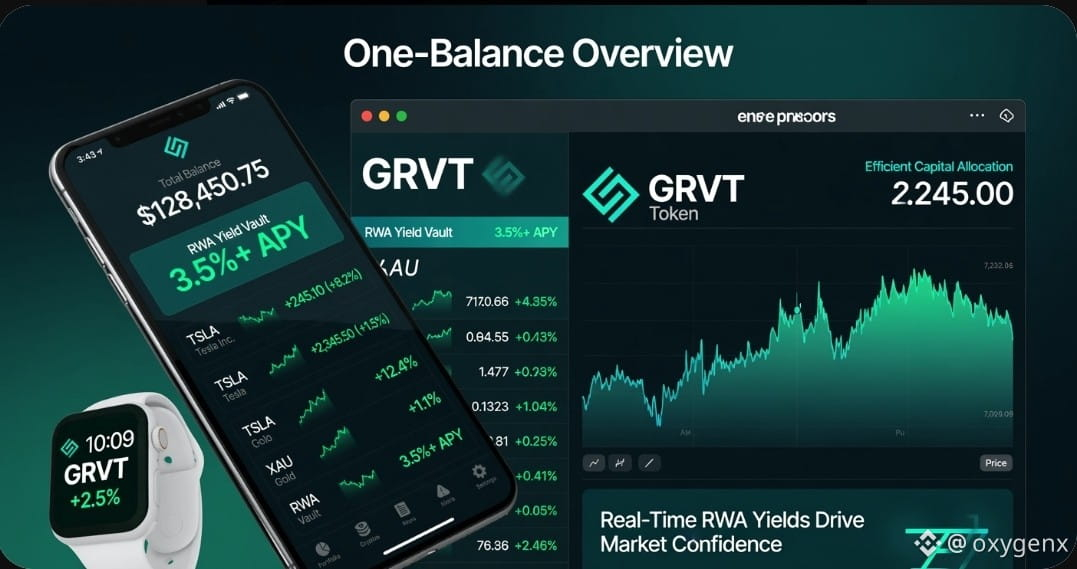
Grvt is straight-up game-changing if you're serious about making your money work.
No more parking funds in one place to earn and another to trade. One unified balance handles everything open leveraged positions on BTC, stocks, or gold while it quietly earns real yield from RWAs and Aave (I've seen double-digit APYs on stable collateral).
Capital finally pulls its weight 24/7. Clean zkSync execution, self-custody, zero fluff.
This is how on-chain finance should feel.
@grvt_io
#grvt
No more parking funds in one place to earn and another to trade. One unified balance handles everything open leveraged positions on BTC, stocks, or gold while it quietly earns real yield from RWAs and Aave (I've seen double-digit APYs on stable collateral).
Capital finally pulls its weight 24/7. Clean zkSync execution, self-custody, zero fluff.
This is how on-chain finance should feel.
@grvt_io
#grvt
Grvt just makes sense for anyone tired of idle capital.
One single balance trade BTC perps or stocks with leverage, and the same funds automatically earn real yield from RWAs and Aave. No switching wallets, no lockups, no choosing between earning and trading.
Finally capital that actually works overtime.
Loving the momentum on this one.
@grvt_io
#grvt
One single balance trade BTC perps or stocks with leverage, and the same funds automatically earn real yield from RWAs and Aave. No switching wallets, no lockups, no choosing between earning and trading.
Finally capital that actually works overtime.
Loving the momentum on this one.
@grvt_io
#grvt
Grvt is changing how we use capital in crypto. With their unified balance, I can trade perps on BTC or even stocks like TSLA while my idle funds keep earning yield from real-world assets and DeFi pools automatically. No more choosing between holding or trading – both at once!
Super bullish on this efficiency play as we head into TGE.
Follow for more updates @grvt_io
#grvt
Super bullish on this efficiency play as we head into TGE.
Follow for more updates @grvt_io
#grvt
Gm

Richard Teng
·
--
ᴳᴹ
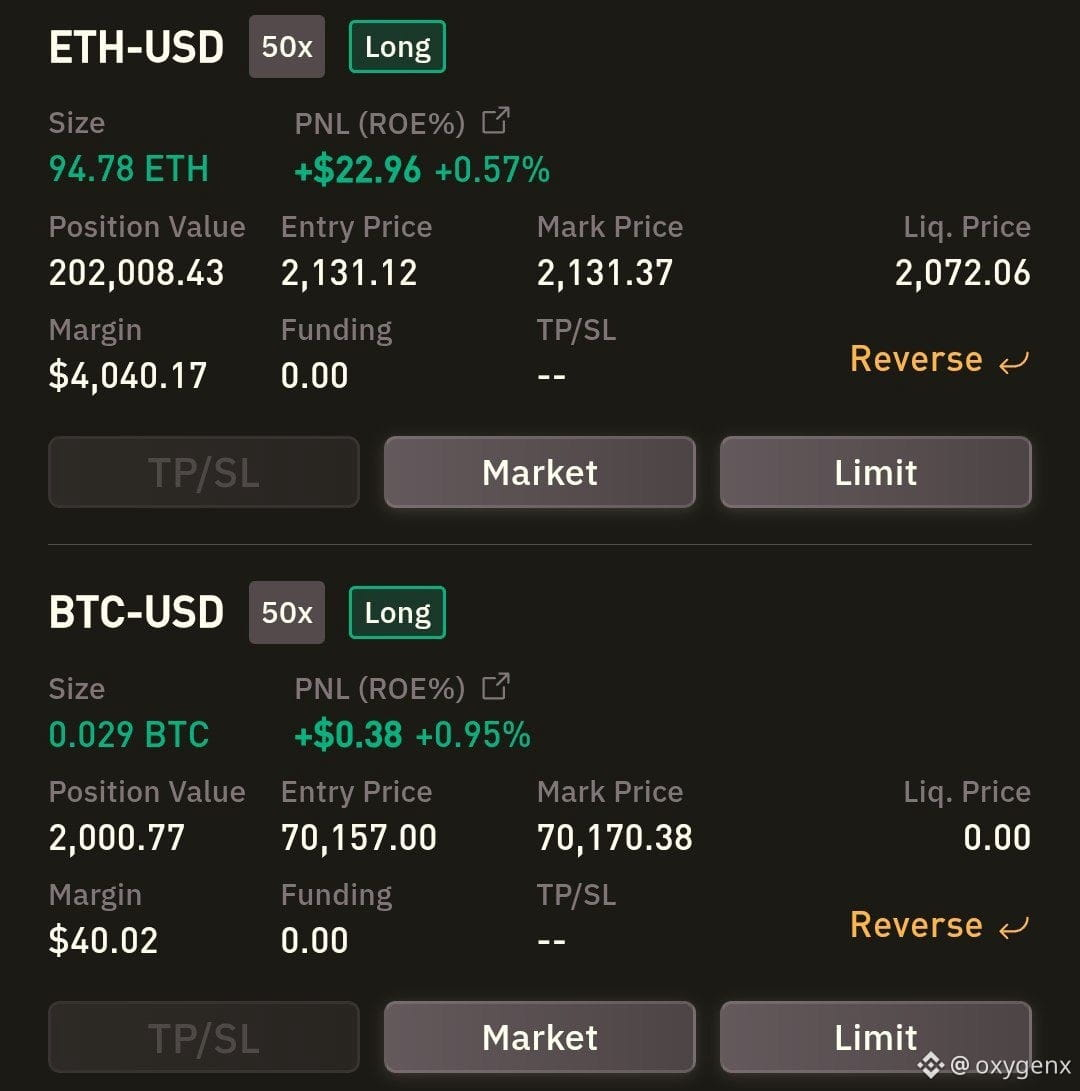
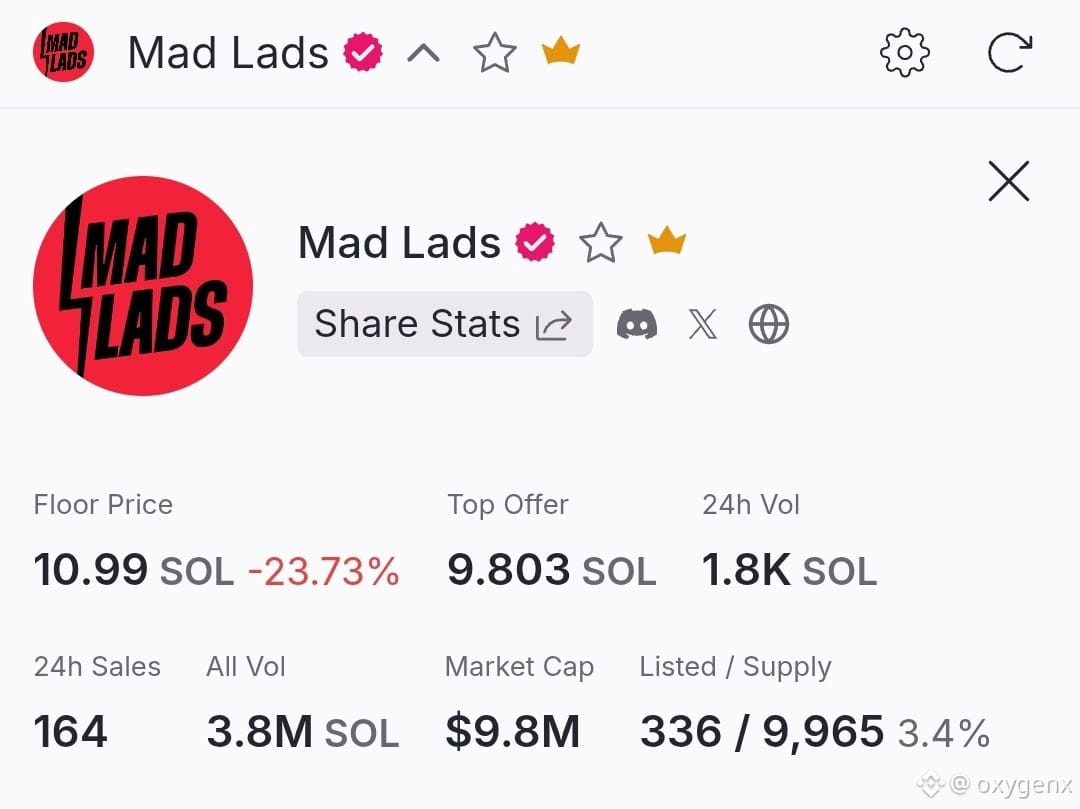
ready to reach
CZ
·
--
AMA tomorrow, in 21 hours or so: here.
are you cooking?
im at loss🥲
තවත් අන්තර්ගතයන් ගවේෂණය කිරීමට ඇතුල් වන්න